

Isotopic (δ13C, δ18O) Analysis of Small Amounts of Carbonate in Silicate Rocks by the Continuous Flow Isotope Ratio Mass Spectrometry Method
Open accessThe DOI matches its Crossref record; 38 of the 38 references it cites were found in a registry or an index; 1 of the 37 sources its claims cite were checked for support.
Abstract
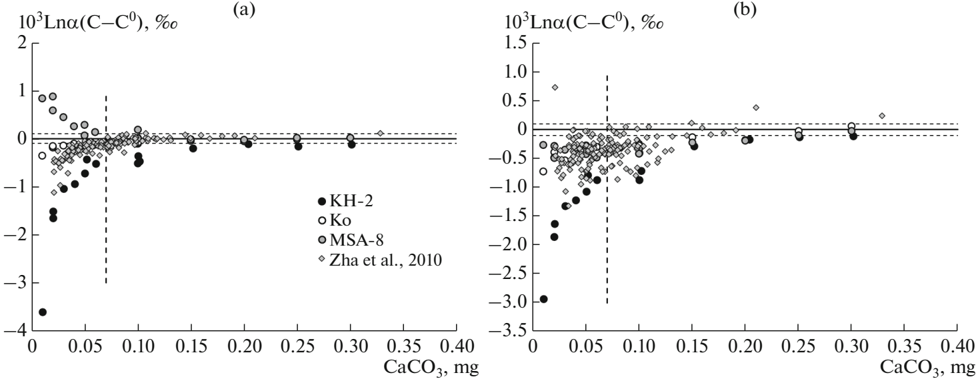
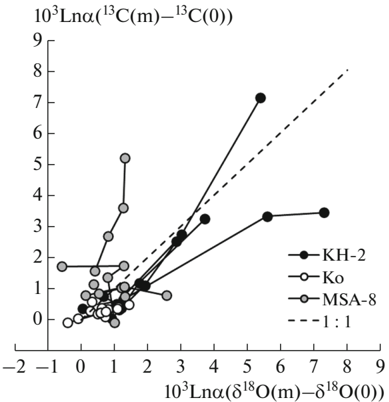
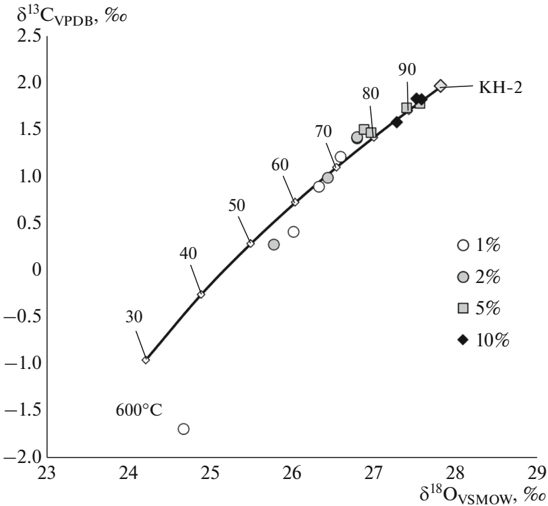
An experimental study of the main factors affecting the accuracy of oxygen and carbon isotopic analysis in carbonates dispersed in silicate matrix is carried out. Artificial 1, 2, 5, and 10% mixtures of quartz with carbonates with different isotopic parameters (KH-2, Ko, MCA-8) were analyzed by continuous flow isotope ratio mass spectrometry (CF IRMS). It is established that, in addition to the influence of the instrumental nonlinearity, the results are affected by two factors: trace amounts of CO 2 , constantly present in the system (the blank effect) and the presence of chemically neutral silicate particles (the matrix effect). The blank effect depends on the isotopic parameters of the sample and has very little influence on the estimated carbonate content in the rock. The matrix effect, on the contrary, strongly affects the estimated carbonate content, and produces the isotopic shift towards underestimated contents of heavy 13 C and 18 O isotopes. It is shown that this effect is related to the processes occurring near the CO 2 –acid–quartz interface, which are accompanied by kinetic fractionation of carbon and oxygen isotopes. Both effects are dependent on the amount of silicate matrix in the system and most clearly manifested during analysis of carbonate-poor rocks. When the carbonate content in the rock is about 1–2%, deviations from the true δ 13 C and δ 18 O values can reach the first ppm, while carbonate content obtained by chromatographic peak calibration can be underestimated by 20–40%.
Overview
CoChat Summary
## TL;DR
This experimental paper tests how well continuous-flow IRMS measures δ13C and δ18O in carbonate-poor silicate rocks by analyzing artificial quartz–carbonate mixtures with 1, 2, 5, and 10 wt % carbonate. It finds that measurement errors come from three sources—instrumental nonlinearity, a blank effect, and a silicate-matrix effect—with the matrix effect causing the largest bias in low-carbonate samples.
## Key findings
- Artificial quartz–carbonate mixtures were prepared from three carbonate standards (KH-2, Ko, MSA-8) at 1, 2, 5, and 10 wt % carbonate and measured by CF IRMS; pure carbonate standards were used for calibration.
- The blank effect was estimated at about 1–3% of the total analyzed gas, corresponding to approximately γ(b) ≈ 0.005 μmol CO2, and was judged to have little influence on carbonate-content estimates but to distort isotope values at low gas amounts.
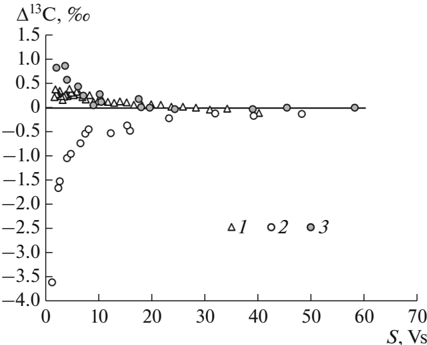
- Instrumental nonlinearity caused only small shifts: about 0.2–0.4‰ for δ13C and up to 0.6–0.7‰ for δ18O in the region of extremely low peak areas.
- The silicate-matrix effect strongly affected carbonate-content estimates: carbonate contents less than 10% and 5% were expected to be underestimated by 20% and 30–40%, respectively; at about 1–2% carbonate, δ13C and δ18O deviations could reach the first ppm, and carbonate content from chromatographic peak area could be underestimated by up to 40%.
## Methods
- The study used artificial silicate-carbonate mixtures made from Polaris quartz and three carbonate reference materials (KH-2 limestone, Ko calcite, MSA-8 calcite) at 1, 2, 5, and 10 wt % carbonate; pure carbonates were analyzed in the same measurement series.
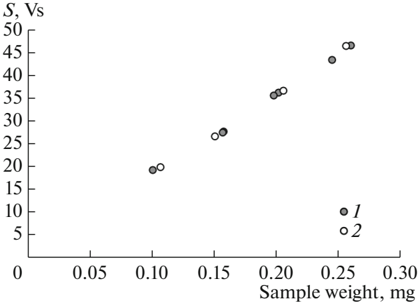
- Samples were ground, dried, baked in borosilicate vials, reacted with orthophosphoric acid in a GasBench II–Delta V+ CF IRMS system, and the fourth chromatographic peak area was used to estimate CO2 amount.
- The authors separately assessed instrumental nonlinearity with repeated portions of the same CO2 gas, checked blank contributions with empty vials, acid-only vials, and pure quartz, and compared mixtures based on different carbonates to distinguish blank from matrix effects.
## Limitations
- The paper states that matrix effects can only be accounted for if the exact mechanism of interaction between the matrix surface and CO2 is understood.
- It also states that further experiments, including studies of different matrix materials, are required; this is an explicit limitation of the current study.
- Evident from the text: the work uses artificial quartz-based mixtures rather than natural rocks, so the reported corrections and thresholds are demonstrated for these experimental systems rather than directly for all silicate rocks.
Model-written summary. Check it against the paper before relying on it.
Integrity signals
Registry
Cites
Statistics
Figures
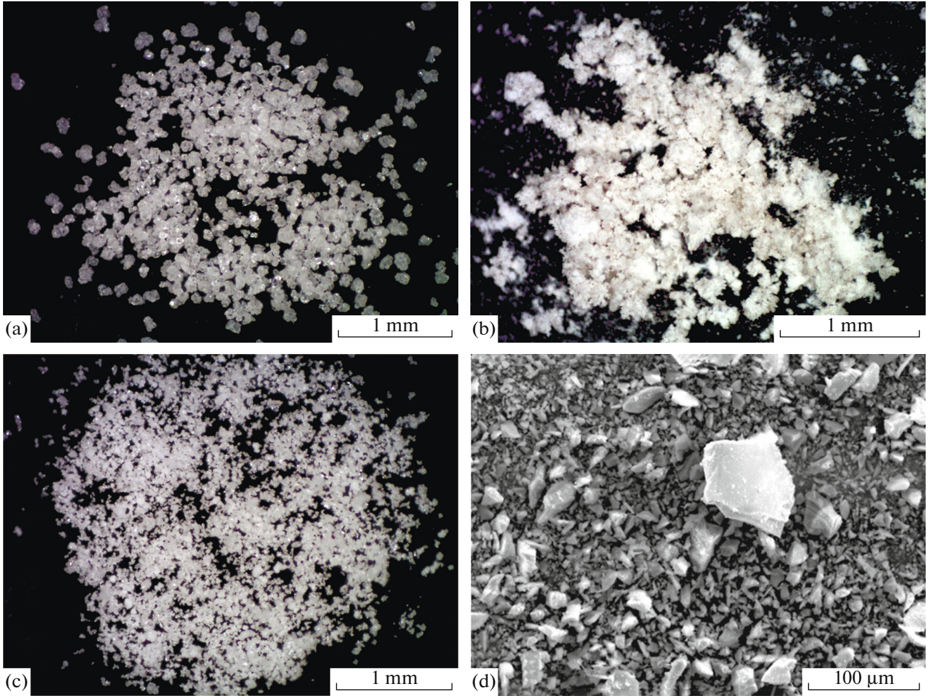
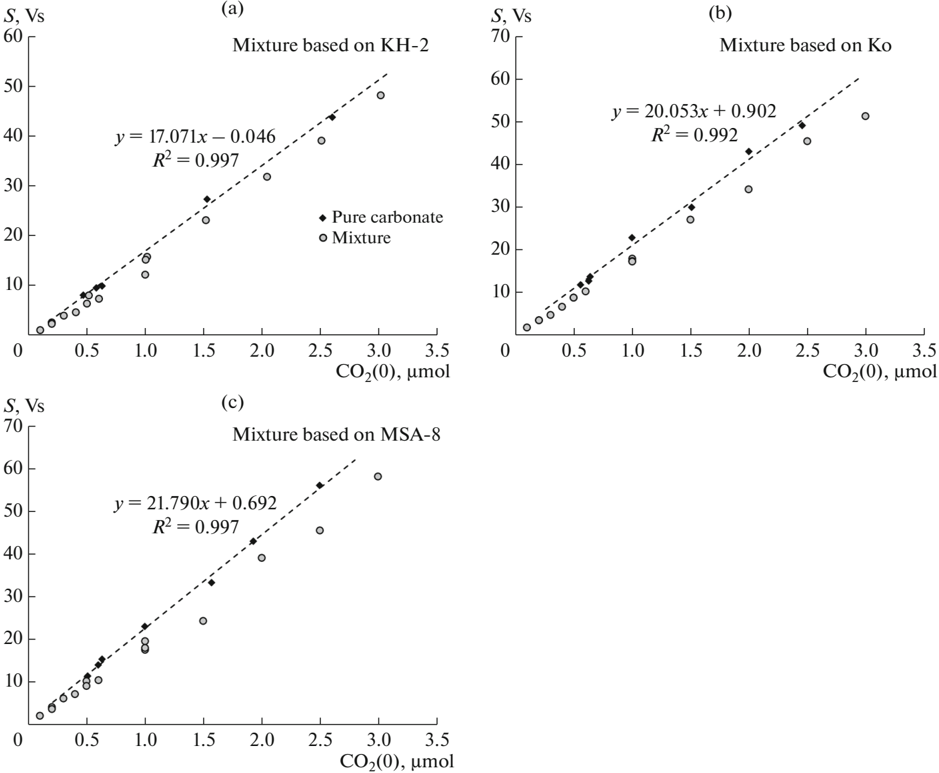
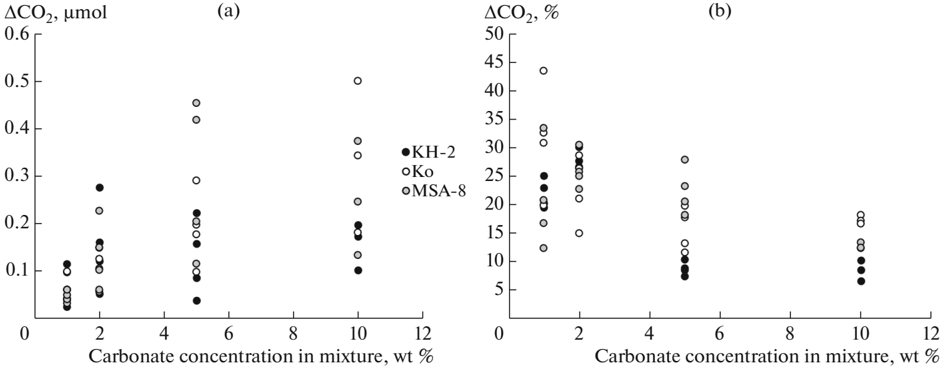
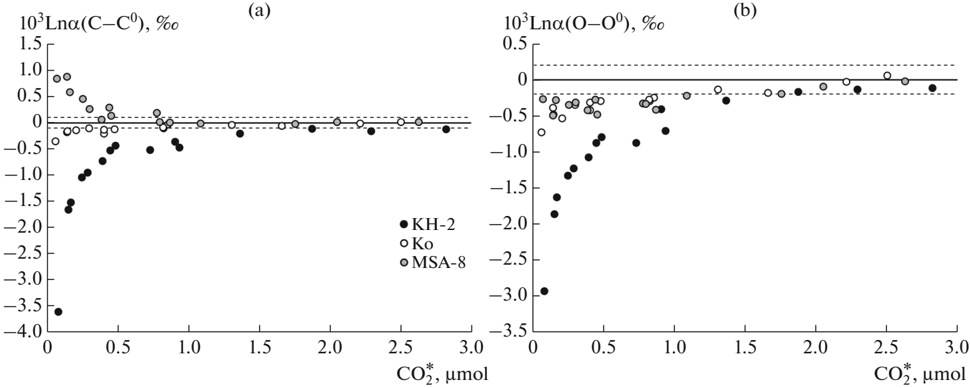
Verification
Claims the paper makes
0 Valid · 2 Not valid · 21 Not checked · 80 Own results and interpretations
The cited sources that could be checked couldn’t confirm or dispute this claim.
In the paper
“The carbon-isotopic composition of the blank is close to the δ 13 C values of atmospheric carbon dioxide (Gruber et al., 1999; NOAA ESRL GMD).”
What the sources say
- Could not verifycites Gruber et al., 1999 matched to “Spatiotemporal patterns of carbon‐13 in the global surface oceans and the oceanic suess effect” (1999) sourceExperimental — accuracy not yet measured
The section on the distribution of the 13C/12C ratio reports atmospheric δ13C values of approximately −7.4‰ to −7.8‰, but does not compare them with a blank. Searches for “blank” and for blank corrections in the measurement procedures found no passage giving the blank’s isotopic composition. (LLM, conf=0.75)
- Not matchedcites NOAA ESRL GMD
This doesn’t read as a citation we can look up.
plain- Asserted: passes — The authors put it forward as true.
- Checkable: passes — It can be checked against evidence.
- Load-bearing: unclear — It is unclear whether the paper’s conclusions depend on it.
- Based: passes — The paper gives a reason why it holds.
- Could not verify
A result the paper reports from its own data — it cites no other source for it, so there is none to check. The quote shows it is in the paper.
In the paper
“while the mixtures based on MSA-8 displayed heavier carbon compositions.”
plainstates an association- Asserted: passes — The authors put it forward as true.
- Checkable: passes — It can be checked against evidence.
- Load-bearing: unclear — It is unclear whether the paper’s conclusions depend on it.
- Based: passes — The paper gives a reason why it holds.
A result the paper reports from its own data — it cites no other source for it, so there is none to check. The quote shows it is in the paper.
In the paper
“A lighter isotopic composition of carbon was observed for mixtures prepared using KH-2 and Ko carbonates,”
plainstates an association- Asserted: passes — The authors put it forward as true.
- Checkable: passes — It can be checked against evidence.
- Load-bearing: unclear — It is unclear whether the paper’s conclusions depend on it.
- Based: passes — The paper gives a reason why it holds.
A result the paper reports from its own data — it cites no other source for it, so there is none to check. The quote shows it is in the paper.
In the paper
“Small deviations in the isotopic composition (up to ≈0.7‰) were also observed for small samples (≈50 μ g) of pure carbonates.”
plainstates an association- Asserted: passes — The authors put it forward as true.
- Checkable: passes — It can be checked against evidence.
- Load-bearing: passes — The paper’s conclusions depend on it.
- Based: passes — The paper gives a reason why it holds.
A result the paper reports from its own data — it cites no other source for it, so there is none to check. The quote shows it is in the paper.
In the paper
“It is established that, in addition to the influence of the instrumental nonlinearity, the results are affected by two factors: trace amounts of CO 2 , constantly present in the system (the blank effect) and the presence of chemically neutral silicate particles (the matrix effect).”
boostedstates a cause- Asserted: passes — The authors put it forward as true.
- Checkable: passes — It can be checked against evidence.
- Load-bearing: passes — The paper’s conclusions depend on it.
- Based: passes — The paper gives a reason why it holds.
47 more claims
Create a free account to see all 103 claims and to verify the 1 reference still open.
- Borderline: one of the tests for a substantial claim is unclear. 1
- It may state two separate claims as one. 41
- The quote only partly states this claim. 2
- Probably not a substantial claim. 15
Self-check
Percentages, sums and reported differences re-computed from the paper’s own numbers.
Each contradiction between two passages listed here was confirmed by an independent check.
Rated minor: it would not touch a result — a value no result rests on, a p-value that stays on the same side of the significance level, or a conflict that is clerical, resolved elsewhere in the paper, or outside its own findings.
In the paper
§ Isotopic ( δ 13 C, δ 18 O) Analysis of Small Amounts of Carbonate in Silicate Rocks by the Continuous Flow Isotope Ratio Mass Spectrometry Method
“Artificial 1, 2, 5, and 10% mixtures of quartz with carbonates with different isotopic parameters (KH-2, Ko, MCA-8) were analyzed by continuous flow isotope ratio mass spectrometry (CF IRMS).”
§ INTRODUCTION
“| KH-2 | Limestone | 1.93 ± 0.05 | 27.67 ± 0.09 | | Ko | Calcite | -8.50 ± 0.05 | 19.45 ± 0.09 | | MSA-8 | Calcite | -31.39 ± 0.04 | 16.25 ± 0.10 |”
Citations
Cites
On the Isotopic Chemistry of Carbonates and a Paleotemperature Scale
McCrea, J. M. (1950) · The Journal of Chemical Physics · doi:10.1063/1.1747785 · Cited by 3,742 · cited 1×
“Carbon and oxygen ( δ 13 C, δ 18 O) isotopic analysis of carbonates decomposed in orthophosphoric acid is conventional for isotopic geochemistry and was developed more than 70 years ago (McCrea, 1950).”
Referencing strategies and techniques in stable isotope ratio analysis
Werner, R. A., & Brand, W. A. (2001) · Rapid Communications in Mass Spectrometry · doi:10.1002/rcm.258 · Cited by 1,033
An isotopic study of siderites, dolomites and ankerites at high temperatures
Rosenbaum, J., & Sheppard, S. M. F. (1986) · Geochimica et Cosmochimica Acta · doi:10.1016/0016-7037(86)90396-0 · Cited by 905 · cited 2×
“…of applications, not much has been done to study limitations of the method, except for works devoted to selective acid decomposition of carbonates (Walters et al., 1972; Spotl and Wennemann, 2003; Rosenbaum and Sheppard, 1986; Liu et al., 2018; Du and Song, 2020; Sreenivasan et al., 2023 etc.).”
BackgroundMethodContinuous‐flow isotope ratio mass spectrometric analysis of carbonate minerals
Spötl, C., & Vennemann, T. W. (2003) · Rapid Communications in Mass Spectrometry · doi:10.1002/rcm.1010 · Cited by 679 · cited 1×
“First of all, it is easily controlled instrumental nonlinearity of measurements of chromatographic peaks of different area and breadth (Spotl and Vennemann, 2003).”
BackgroundBottinga, Y. (1968) · The Journal of Physical Chemistry · doi:10.1021/j100849a008 · Cited by 550 · cited 1×
“The fractionation factors of carbon and oxygen isotopes in the CO 2 –CaCO 3 system are taken from Bottinga (1968) and (Chacko and Deines, 2008).”
MethodNormalization of measured stable isotopic compositions to isotope reference scales – a review
Paul, D., Skrzypek, G., & Fórizs, I. (2007) · Rapid Communications in Mass Spectrometry · doi:10.1002/rcm.3185 · Cited by 536 · cited 1×
“…of the results against the international scales V-SMOW ( δ 18 O values) and V-PDB ( δ 13 C values) was carried out by three-point normalization (Paul et al., 2007) using the international standards NBS-18 and NBS-19 and internal standard ATS (repeatedly certified homogeneous natural…”
MethodCorrection of13C Mass Isotopomer Distributions for Natural Stable Isotope Abundance
Fernandez, C. A., Rosiers, C. D., Previs, S. F., David, F., & Brunengraber, H. (1996) · Journal of Mass Spectrometry · doi:10.1002/(sici)1096-9888(199603)31:3<255::aid-jms290>3.0.co;2-3 · Cited by 397
Stable isotope analysis of multiple carbonate samples using selective acid extraction
Al-Aasm, I. S., Taylor, B. E., & South, B. (1990) · Chemical Geology: Isotope Geoscience section · doi:10.1016/0168-9622(90)90020-d · Cited by 371 · cited 1×
“Despite abundant evidence of the matrix effect manifested in analysis of multicomponent carbonate and silicate–carbonate mixtures (Walters et al., 1972; Liu et al., 2018; Zha et al., 2017; Al-Aasm et al., 1990), this factor has not been specifically studied.”
BackgroundSpatiotemporal patterns of carbon‐13 in the global surface oceans and the oceanic suess effect
Gruber, N., Keeling, C. D., Bacastow, R. B., Guenther, P. R., Lueker, T. J., Wahlen, M., Meijer, H. A. J., Mook, W. G., & Stocker, T. F. (1999) · Global Biogeochemical Cycles · doi:10.1029/1999gb900019 · Cited by 338 · cited 1×
“The carbon-isotopic composition of the blank is close to the δ 13 C values of atmospheric carbon dioxide (Gruber et al., 1999; NOAA ESRL GMD).”
MethodExchange of oxygen isotopes in carbon dioxide-phosporic acid systems
Wachter, E. A., & Hayes, J. M. (1985) · Chemical Geology: Isotope Geoscience section · doi:10.1016/0168-9622(85)90046-6 · Cited by 240 · cited 1×
“…that the oxygen-isotope system appears to be more sensitive to the blank effect than the carbon-isotope system has been attributed to the presence of trace amounts of water (Zha et al., 2010), including that condensed on 2 * СО 2 * СО the vial walls above the acid surface (Wachter and Hayes, 1985).”
BackgroundJacob, H., & Sonntag, C. (1991) · Tellus B: Chemical and Physical Meteorology · doi:10.3402/tellusb.v43i3.15276 · Cited by 166 · cited 1×
“…atmospheric moisture, but this cannot be established precisely because moisture composition can vary significantly in the ground-level atmosphere and is only partially determined by the mean isotopic composition of precipitation and air temperature (Jacob and Sonntag, 1991, Bastrikov et al., 2014).”
BackgroundBreitenbach, S. F. M., & Bernasconi, S. M. (2011) · Rapid Communications in Mass Spectrometry · doi:10.1002/rcm.5052 · Cited by 164 · cited 2×
“…of continuous helium flow isotope ratio mass spectrometry (CF IRMS), which allows very small amounts of substance to be analyzed (Brand, 1996, 2004; Breitenbach and Bernasconi, 2011; Paul and Skrzypek, 2007; Skrzypek and Paul, 2006; Nelson, 2000; Revesz and Landwehr, 2002; Werner and Band, 2001).”
BackgroundTheoretical calculation of oxygen isotope fractionation factors in carbonate systems
Chacko, T., & Deines, P. (2008) · Geochimica et Cosmochimica Acta · doi:10.1016/j.gca.2008.06.001 · Cited by 164 · cited 2×
“We calculated the shift of δ 13 С and δ 18 О values in the residual carbonate with KH-2 isotopic parameters (Table 1) as it decarbonizes at 600 ° C (Bottinga, 1986; Chacko and Deines, 2008).”
MethodIsotope fractionation related to kimberlite magmatism and diamond formation
Галимов, Э. М. (1991) · Geochimica et Cosmochimica Acta · doi:10.1016/0016-7037(91)90140-z · Cited by 158 · cited 1×
“Analysis of silicate–carbonate material is also pertinent to studies of kimberlites (Giuliani et al., 2014; Galimov, 1991; etc.) and serpentinized ultramafic rocks of oceanic crust (Alt and Shanks III, 2006).”
BackgroundAlt, J. C., & SHANKSIII, W. (2006) · Earth and Planetary Science Letters · doi:10.1016/j.epsl.2005.11.063 · Cited by 147
Révész, K. M., & Landwehr, J. M. (2002) · Rapid Communications in Mass Spectrometry · doi:10.1002/rcm.833 · Cited by 131 · cited 1×
“…of continuous helium flow isotope ratio mass spectrometry (CF IRMS), which allows very small amounts of substance to be analyzed (Brand, 1996, 2004; Breitenbach and Bernasconi, 2011; Paul and Skrzypek, 2007; Skrzypek and Paul, 2006; Nelson, 2000; Revesz and Landwehr, 2002; Werner and Band, 2001).”
BackgroundStable isotope (C, O, S) compositions of volatile-rich minerals in kimberlites: A review
Giuliani, A., Phillips, D., Kamenetsky, V. S., Fiorentini, M. L., Farquhar, J. D., & Kendrick, M. A. (2014) · Chemical Geology · doi:10.1016/j.chemgeo.2014.03.003 · Cited by 115 · cited 1×
“Analysis of silicate–carbonate material is also pertinent to studies of kimberlites (Giuliani et al., 2014; Galimov, 1991; etc.) and serpentinized ultramafic rocks of oceanic crust (Alt and Shanks III, 2006).”
BackgroundReaction rates and δO18 variation for the carbonate-phosphoric acid preparation method
Walters, L. J., Claypool, G. E., & Choquette, P. W. (1972) · Geochimica et Cosmochimica Acta · doi:10.1016/0016-7037(72)90002-6 · Cited by 110 · cited 4×
“…of applications, not much has been done to study limitations of the method, except for works devoted to selective acid decomposition of carbonates (Walters et al., 1972; Spotl and Wennemann, 2003; Rosenbaum and Sheppard, 1986; Liu et al., 2018; Du and Song, 2020; Sreenivasan et al., 2023 etc.).”
BackgroundMethodInfluentialPaul, D., & Skrzypek, G. (2007) · International Journal of Mass Spectrometry · doi:10.1016/j.ijms.2006.11.006 · Cited by 92 · cited 1×
“…of continuous helium flow isotope ratio mass spectrometry (CF IRMS), which allows very small amounts of substance to be analyzed (Brand, 1996, 2004; Breitenbach and Bernasconi, 2011; Paul and Skrzypek, 2007; Skrzypek and Paul, 2006; Nelson, 2000; Revesz and Landwehr, 2002; Werner and Band, 2001).”
BackgroundContinuous measurements of atmospheric water vapour isotopes in western Siberia (Kourovka)
Bastrikov, V., Steen‐Larsen, H. C., Masson‐Delmotte, V., Gribanov, K. G., Cattani, O., Jouzel, J., & Zakharov, V. I. (2014) · Atmospheric measurement techniques · doi:10.5194/amt-7-1763-2014 · Cited by 91 · cited 1×
“…atmospheric moisture, but this cannot be established precisely because moisture composition can vary significantly in the ground-level atmosphere and is only partially determined by the mean isotopic composition of precipitation and air temperature (Jacob and Sonntag, 1991, Bastrikov et al., 2014).”
BackgroundPaul, D., & Skrzypek, G. (2006) · Rapid Communications in Mass Spectrometry · doi:10.1002/rcm.2559 · Cited by 70 · cited 3×
“Despite purging with high-purity helium and a high-quality preparation of vials and starting materials (Paul and Skrzypek, 2006; Nelson, 2000) CO 2 blank is extremely difficult to remove from the reaction space.”
BackgroundSkrzypek, G., & Paul, D. (2006) · Rapid Communications in Mass Spectrometry · doi:10.1002/rcm.2688 · Cited by 70 · cited 1×
“…of continuous helium flow isotope ratio mass spectrometry (CF IRMS), which allows very small amounts of substance to be analyzed (Brand, 1996, 2004; Breitenbach and Bernasconi, 2011; Paul and Skrzypek, 2007; Skrzypek and Paul, 2006; Nelson, 2000; Revesz and Landwehr, 2002; Werner and Band, 2001).”
BackgroundMass Spectrometer Hardware for Analyzing Stable Isotope Ratios
Brand, W. A. (2004) · Elsevier eBooks · doi:10.1016/b978-044451114-0/50040-5 · Cited by 63 · cited 1×
“…the modern method of continuous helium flow isotope ratio mass spectrometry (CF IRMS), which allows very small amounts of substance to be analyzed (Brand, 1996, 2004; Breitenbach and Bernasconi, 2011; Paul and Skrzypek, 2007; Skrzypek and Paul, 2006; Nelson, 2000; Revesz and Landwehr, 2002;…”
MethodZheng, Y., Gong, B., Zhao, Z., Fu, B., & Li, Y. (2003) · Lithos · doi:10.1016/s0024-4937(03)00104-x · Cited by 62 · cited 1×
“…were contaminated, at some point of their history, by sedimentary matter (Zhao et al., 2001; Dubinina et al., 2010); products of metamor-phism involving carbon dioxide; or rocks processed with aqueous carbonate fluid, e.g., during ore formation (Zheng et al., 2003, 2000; Dubinina et al., 2019).”
BackgroundCarbon concentrations and isotopic ratios of eclogites from the Dabie and Sulu terranes in China
Zheng, Y., Gong, B., Li, Y., Wang, Z., & Fu, B. (2000) · Chemical Geology · doi:10.1016/s0009-2541(00)00199-6 · Cited by 51 · cited 1×
“…were contaminated, at some point of their history, by sedimentary matter (Zhao et al., 2001; Dubinina et al., 2010); products of metamor-phism involving carbon dioxide; or rocks processed with aqueous carbonate fluid, e.g., during ore formation (Zheng et al., 2003, 2000; Dubinina et al., 2019).”
BackgroundFiebig, J., Schöne, B. R., & Oschmann, W. (2005) · Rapid Communications in Mass Spectrometry · doi:10.1002/rcm.2060 · Cited by 45 · cited 1×
“…of the standard variant GasBenchII (Thermo, Germany) provides isotopic analysis of carbonate carbon and oxygen from 100-to 250-μ g samples in terms of pure calcium carbonate (Finnigan, 2004); the improved version reduces that amount to 50 μ g (Fiebig et al., 2005; Velivetskaya et al., 2009).”
BackgroundA simplified method of preparing phosphoric acid for stable isotope analyses of carbonates
Burman, J., Gustafsson, O., Segl, M., & Schmitz, B. (2005) · Rapid Communications in Mass Spectrometry · doi:10.1002/rcm.2159 · Cited by 36 · cited 1×
“We used high-purity helium (grade 6.0) at a flow rate of 180 mL/min for 360 s, after which specially prepared 105% orthophos-phoric acid prevacuumed for 48 h was introduced into the vials (Burman et al., 2005).”
MethodInfluentialCarbon and oxygen isotope microanalysis of carbonate
Velivetskaya, T. A., Ignatiev, A. V., & Gorbarenko, S. A. (2009) · Rapid Communications in Mass Spectrometry · doi:10.1002/rcm.3989 · Cited by 34 · cited 1×
“…of the standard variant GasBenchII (Thermo, Germany) provides isotopic analysis of carbonate carbon and oxygen from 100-to 250-μ g samples in terms of pure calcium carbonate (Finnigan, 2004); the improved version reduces that amount to 50 μ g (Fiebig et al., 2005; Velivetskaya et al., 2009).”
BackgroundNelson, S. T. (2000) · Rapid Communications in Mass Spectrometry · doi:10.1002/(sici)1097-0231(20000229)14:4<293::aid-rcm869>3.0.co;2-l · Cited by 33
Zha, X., Zhao, Y., & Zheng, Y. (2010) · Rapid Communications in Mass Spectrometry · doi:10.1002/rcm.4632 · Cited by 27 · cited 10×
“The effect of blank, the residual amounts of CO 2 and water adsorbed on the vial and sample surface, is less studied (Zha et al., 2010; Nelson, 2000), and the effect of the silicate matrix, which is present directly in the reaction zone of carbonate with orthophosphoric acid, is almost completely…”
BackgroundMethodInfluentialBaudrand, M., Aloisi, G., Lécuyer, C., Martineau, F., Fourel, F., Escarguel, G., Blanc‐Valleron, M., Rouchy, J.-M., & Grossi, V. (2011) · Applied Geochemistry · doi:10.1016/j.apgeochem.2011.11.003 · Cited by 24 · cited 1×
“…shifts have been repeatedly documented in selective carbonate dissolution for the first portions of CO 2 produced by calcite dissolution when the matrix mass in the system was at its maximum (Walters et al., 1972; Liu et al., 2018; Du and Song, 2020; Al-Assam et al., 1990; Baudrand et al., 2012).”
BackgroundLiu, X., Deng, W., & Wei, G. (2019) · Rapid Communications in Mass Spectrometry · doi:10.1002/rcm.8365 · Cited by 11 · cited 4×
“…of applications, not much has been done to study limitations of the method, except for works devoted to selective acid decomposition of carbonates (Walters et al., 1972; Spotl and Wennemann, 2003; Rosenbaum and Sheppard, 1986; Liu et al., 2018; Du and Song, 2020; Sreenivasan et al., 2023 etc.).”
BackgroundMethodInfluentialДубинина, Е. О., Nosova, A. A., Аvdeenko, A. S., et al. (2010) · Petrology · doi:10.1134/s086959111003001x · Cited by 11 · cited 1×
“…of analysis is relevant to, e.g., igneous rocks that were contaminated, at some point of their history, by sedimentary matter (Zhao et al., 2001; Dubinina et al., 2010); products of metamor-phism involving carbon dioxide; or rocks processed with aqueous carbonate fluid, e.g., during ore…”
BackgroundCarbon concentration and isotope composition of granites from Southeast China
Zhao, Z.-F., Zheng, Y.-F., Wei, C.-S., & Gong, B. (2001) · Physics and Chemistry of the Earth Part A Solid Earth and Geodesy · doi:10.1016/s1464-1895(01)00130-2 · Cited by 10 · cited 1×
“This type of analysis is relevant to, e.g., igneous rocks that were contaminated, at some point of their history, by sedimentary matter (Zhao et al., 2001; Dubinina et al., 2010); products of metamor-phism involving carbon dioxide; or rocks processed with aqueous carbonate fluid, e.g., during ore…”
BackgroundRefined protocol for δ 13 C analysis of calcite and dolomite in carbonate mixture samples
Du, Y., & Song, H. (2020) · Rapid Communications in Mass Spectrometry · doi:10.1002/rcm.8743 · Cited by 9 · cited 3×
“…of applications, not much has been done to study limitations of the method, except for works devoted to selective acid decomposition of carbonates (Walters et al., 1972; Spotl and Wennemann, 2003; Rosenbaum and Sheppard, 1986; Liu et al., 2018; Du and Song, 2020; Sreenivasan et al., 2023 etc.).”
BackgroundMethodДубинина, Е. О., Filimonova, L. G., & Коssova, S. А. (2019) · Geology of Ore Deposits · doi:10.1134/s1075701519010033 · Cited by 9 · cited 1×
“…were contaminated, at some point of their history, by sedimentary matter (Zhao et al., 2001; Dubinina et al., 2010); products of metamor-phism involving carbon dioxide; or rocks processed with aqueous carbonate fluid, e.g., during ore formation (Zheng et al., 2003, 2000; Dubinina et al., 2019).”
BackgroundSelf-citationZha, X., Gong, B., Zheng, Y., & Chen, Y. (2018) · Rapid Communications in Mass Spectrometry · doi:10.1002/rcm.8008 · Cited by 6 · cited 3×
“Despite abundant evidence of the matrix effect manifested in analysis of multicomponent carbonate and silicate–carbonate mixtures (Walters et al., 1972; Liu et al., 2018; Zha et al., 2017; Al-Aasm et al., 1990), this factor has not been specifically studied.”
BackgroundMethodInfluentialSreenivasan, S. P., Bera, M. K., & Samanta, A. (2023) · Applied Geochemistry · doi:10.1016/j.apgeochem.2023.105600 · Cited by 6 · cited 4×
“…of applications, not much has been done to study limitations of the method, except for works devoted to selective acid decomposition of carbonates (Walters et al., 1972; Spotl and Wennemann, 2003; Rosenbaum and Sheppard, 1986; Liu et al., 2018; Du and Song, 2020; Sreenivasan et al., 2023 etc.).”
BackgroundMethodInfluential
Research works printed but not linked: 2
- 4. ESRL Global Monitoring Division (NOAA ESRL GMD). https://www.esrl.noaa.gov/gmd/ - J. Fiebig, B. Schöne, and W. Oschmann, 'High-precision oxygen and carbon isotope analysis of very small (1030 μg) amounts of carbonates using continuous flow isotope ratio mass spectrometry,' Rapid Commun. Mass Spectrom. 19 (16), 2355-2358 (2005).
- D. Yong and H. Song, “Refined protocol for the δ13C analysis of calcite and dolomite in carbonate mixture samples,” Rapid Commun Mass Spectrom. 34 (10), e8743 (2020). https://doi.org/10.1002/rcm.8743 · DOI
Cited by
Atomic spectrometry update – a review of advances in environmental analysis
Cairns, W. R. L., Butler, O. T., Cavoura, O., Davidson, C. M., Torró, J. L. T., & von der Au, M. (2024) · Journal of Analytical Atomic Spectrometry · doi:10.1039/d4ja90056a · Cited by 19
Metadata
- Authors
- Dubinina, E. O., Chizhova, Y. N., & Kossova, S. A.
- Venue
- Geochemistry International
- Publisher
- Pleiades Publishing Ltd
- Published
- 2023-11
- Volume
- 61
- Issue
- 11
- Pages
- 1164-1176
- ISSN
- 0016-7029 (ISSN-L)
- 1556-1968
- OpenAlex
- W4388706101
- Cited by
- 1
- References
- 38
- Citations by year
- 2024: 1
- FWCI
- 0.17
- Type
- journal article
- Language
- en
- Open access
- hybrid
- dx.doi.org
- Licence
- cc-by
- creativecommons.org/licenses/by/4.0 (tdm)
- creativecommons.org/licenses/by/4.0 (vor, 14 d)
- Locations
- Geochemistry International (publishedVersion, cc-by)
- Funders
- Russian Academy of Sciences
- Topics
- Physical Sciences › Earth and Planetary Sciences › Geochemistry and Petrology › Geological and Geochemical Analysis
- Physical Sciences › Earth and Planetary Sciences › Geochemistry and Petrology › Geochemistry and Elemental Analysis
- Physical Sciences › Chemistry › Analytical Chemistry › Analytical chemistry methods development
- Keywords
- carbonate isotopes, carbon-13, oxygen-18, silicate rocks, matrix effects, kinetic isotope fractionation, quartz, continuous-flow isotope ratio mass spectrometry, analytical accuracy
About these checks
Registry, retraction, Cites and statistics results are computed, not judged, with one exception: a printed reference that no index lists is read once by a model before it counts as a citation error. Claims are extracted by a model and kept only when their quote appears verbatim in the text; each cited source is then checked, with a model’s help, for whether it says what the claim relies on. Those verdicts can be wrong — read the claim’s quote and the cited source before relying on one.
The claim verdicts this report counts are experimental: their accuracy is not yet measured.
A language model drew the claims from the paper on 2026-09-30, under version 3 of the claim definition (model deepseek-v4.1-flash, prompt extract-v3).
A second model labelled each claim on 2026-09-30 (model jev-1.13-20260917, definition revision gold-guideline-v0.2).
Cited sources are checked with a language model’s help (gpt-6-sol).
Statistics and arithmetic are recomputed, not judged.
Confidence bands are shown only for fields calibrated on our annotated test set. None is calibrated yet, so no band is shown.
What counts as a claim ›How we measure confidence ›How we check this ›
Are you an author, or do you see a problem with this page? Request a review
Data sources
Bibliographic data: Semantic Scholar, OpenAlex, Crossref.
Contains information from the Semantic Scholar Academic Graph Datasets, made available under the ODC Attribution License (ODC-BY 1.0).
Semantic Scholar’s data is described in: Kinney, R., et al. (2023). The Semantic Scholar Open Data Platform. arXiv:2301.10140.
