

Development and evaluation of an ensemble resource linking medications to their indications
Open accessThe DOI matches its Crossref record; 43 of the 43 references it cites were found in a registry or an index.
Abstract
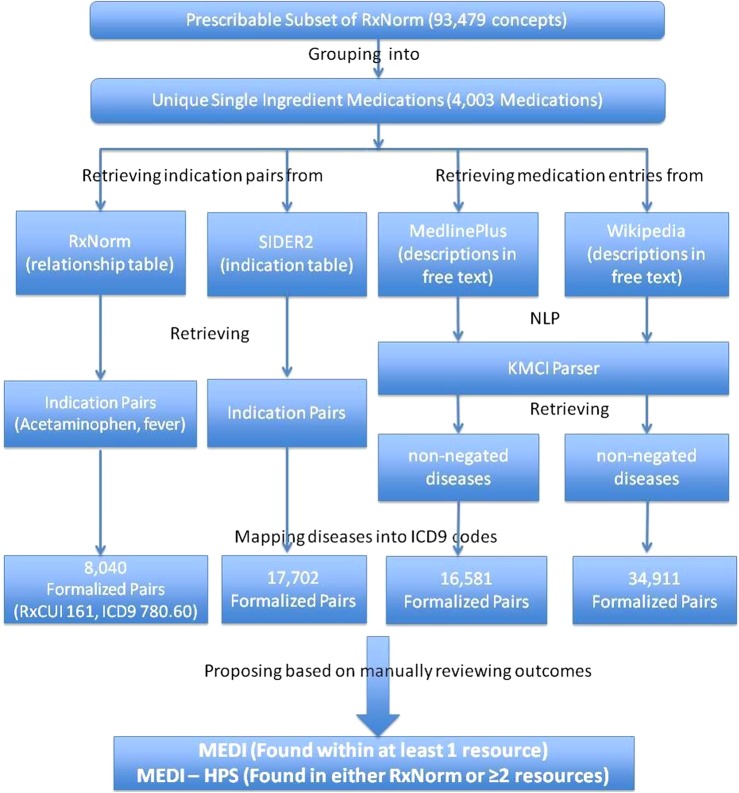
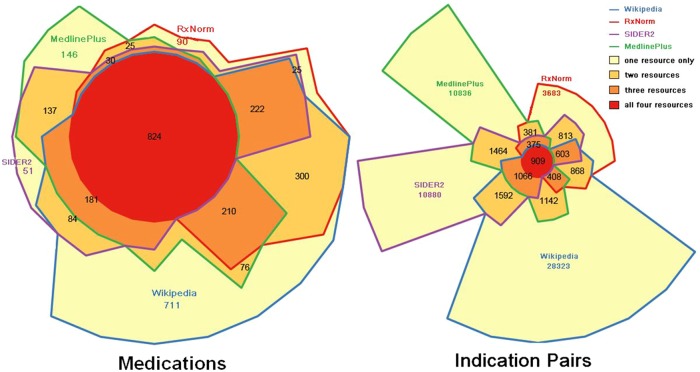
OBJECTIVE: To create a computable MEDication Indication resource (MEDI) to support primary and secondary use of electronic medical records (EMRs). MATERIALS AND METHODS: We processed four public medication resources, RxNorm, Side Effect Resource (SIDER) 2, MedlinePlus, and Wikipedia, to create MEDI. We applied natural language processing and ontology relationships to extract indications for prescribable, single-ingredient medication concepts and all ingredient concepts as defined by RxNorm. Indications were coded as Unified Medical Language System (UMLS) concepts and International Classification of Diseases, 9th edition (ICD9) codes. A total of 689 extracted indications were randomly selected for manual review for accuracy using dual-physician review. We identified a subset of medication-indication pairs that optimizes recall while maintaining high precision. RESULTS: MEDI contains 3112 medications and 63 343 medication-indication pairs. Wikipedia was the largest resource, with 2608 medications and 34 911 pairs. For each resource, estimated precision and recall, respectively, were 94% and 20% for RxNorm, 75% and 33% for MedlinePlus, 67% and 31% for SIDER 2, and 56% and 51% for Wikipedia. The MEDI high-precision subset (MEDI-HPS) includes indications found within either RxNorm or at least two of the three other resources. MEDI-HPS contains 13 304 unique indication pairs regarding 2136 medications. The mean±SD number of indications for each medication in MEDI-HPS is 6.22 ± 6.09. The estimated precision of MEDI-HPS is 92%. CONCLUSIONS: MEDI is a publicly available, computable resource that links medications with their indications as represented by concepts and billing codes. MEDI may benefit clinical EMR applications and reuse of EMR data for research.
Overview
The claims and statistics of this paper haven’t been checked yet.
Free: it reads the open-access text and checks the first 5 claims that cite a source we can check. Create a free account to check every claim.
Integrity signals
Registry
Cites
Statistics
Figures
Verification
Claims the paper makes
The claims and statistics of this paper haven’t been checked yet.
Free: it reads the open-access text and checks the first 5 claims that cite a source we can check. Create a free account to check every claim.
Claims other papers make about this one
Each is checked against this paper’s own text: does it say what the citing paper says it does?
The source backs part of the claim, not all of it — or backs it for a different population, condition or comparison.
In the citing paper
“DrugBank primarily contains drug indications extracted from drug labels, while MEDI utilizes public internet sources to drug indications, and is a well utilized resource of drug indications.”
From OnSIDES database: Extracting adverse drug events from drug labels using natural language processing models (2025) · cites this paper as [49]
Experimental — accuracy not yet measured
Self-check
Percentages, sums and reported differences re-computed from the paper’s own numbers.
The self-check needs the paper’s full text.
Citations
Cites
Collaborators, C. T. T. (. (2008) · The Lancet · doi:10.1016/s0140-6736(08)60104-x · Cited by 2,081
Internet encyclopaedias go head to head
Giles, J. (2005) · Nature · doi:10.1038/438900a · Cited by 1,978
An overview of MetaMap: historical perspective and recent advances
Aronson, A. R., & Lang, F.-M. (2010) · Journal of the American Medical Informatics Association · doi:10.1136/jamia.2009.002733 · Cited by 1,519
Preiss, D. (2011) · JAMA · doi:10.1001/jama.2011.860 · Cited by 1,390
PheWAS: demonstrating the feasibility of a phenome-wide scan to discover gene–disease associations
Denny, J. C., Ritchie, M. D., Basford, M. A., Pulley, J. M., Bastarache, L., Brown-Gentry, K., Wang, D., Masys, D. R., Roden, D. M., & Crawford, D. C. (2010) · Bioinformatics · doi:10.1093/bioinformatics/btq126 · Cited by 1,219
Self-citationA side effect resource to capture phenotypic effects of drugs
Kuhn, M., Campillos, M., Letunic, I., Jensen, L. J., & Bork, P. (2010) · Molecular Systems Biology · doi:10.1038/msb.2009.98 · Cited by 899
Next-generation phenotyping of electronic health records
Hripcsak, G., & Albers, D. J. (2013) · Journal of the American Medical Informatics Association · doi:10.1136/amiajnl-2012-001145 · Cited by 795
the eMERGE Team, McCarty, C. A., Chisholm, R. L., Chute, C. G., Kullo, I. J., Jarvik, G. P., Larson, E. B., Li, R., Masys, D. R., Ritchie, M. D., et al. (2011) · BMC Medical Genomics · doi:10.1186/1755-8794-4-13 · Cited by 699
Therapeutic target database update 2012: a resource for facilitating target-oriented drug discovery
Zhu, F., Shi, Z., Qin, C., Tao, L., Liu, X., Xu, F., Zhang, L., Song, Y., Liu, X., Zhang, J., et al. (2012) · Nucleic Acids Research · doi:10.1093/nar/gkr797 · Cited by 480
Deep phenotyping for precision medicine
Robinson, P. N. (2012) · Human Mutation · doi:10.1002/humu.22080 · Cited by 470
Cited by
Systematic integration of biomedical knowledge prioritizes drugs for repurposing
Himmelstein, D. S., Lizee, A., Hessler, C., Brueggeman, L., Chen, S. L., Hadley, D., Green, A., Khankhanian, P., & Baranzini, S. E. (2017) · eLife · doi:10.7554/elife.26726 · Cited by 666
Network-based in silico drug efficacy screening
Guney, E., Menche, J., Vidal, M., & Barábasi, A.-L. (2016) · Nature Communications · doi:10.1038/ncomms10331 · Cited by 625
“We gather the drug-target information on FDA approved drugs from DrugBank 16 and the indication information (the diseases the drug is used for) from the medication-indication resource high-precision subset (MEDI-HPS) 17 , which is then filtered by strong literature evidence using Metab2MeSH (ref.”
InfluentialLEAP: Learning to Prescribe Effective and Safe Treatment Combinations for Multimorbidity
Zhang, Y., Chen, R., Tang, J., Stewart, W. F., & Sun, J. (2017) · Proceedings of the 23rd ACM SIGKDD International Conference on Knowledge Discovery and Data Mining · doi:10.1145/3097983.3098109 · Cited by 224
“There have been previous e orts to create a medication-indication database by integrating resources from medical knowledge bases such as RxNorm, SIDER, and Wikipedia [36].”
MethodInfluentialExtracting research-quality phenotypes from electronic health records to support precision medicine
Wei, W.-Q., & Denny, J. C. (2015) · Genome Medicine · doi:10.1186/s13073-015-0166-y · Cited by 242
“This approach has led to several previously unavailable resources, such as SIDER [137] and MEDI [138-140].”
MethodSelf-citationPhenome-Wide Association Studies as a Tool to Advance Precision Medicine
Denny, J. C., Bastarache, L., & Roden, D. M. (2016) · Annual Review of Genomics and Human Genetics · doi:10.1146/annurev-genom-090314-024956 · Cited by 232
“For example, a highly accurate algorithm for type 2 diabetes includes billing codes, laboratory results, and medication data (35), and resources have been created that link medications to their diseases (78).”
BackgroundSelf-citationSMR: Medical Knowledge Graph Embedding for Safe Medicine Recommendation
Gong, F., Wang, M., Wang, H., Wang, S., & Liu, M. (2021) · Big Data Research · doi:10.1016/j.bdr.2020.100174 · Cited by 224
“Baselines We compare our SMR with the following state of the art methods: • Rule-based method [2] recommends medicines based on mappings from existing medicine categories to diseases in the MEDI database [18].”
MethodAnalysis of genome-wide association data highlights candidates for drug repositioning in psychiatry
So, H., Chau, C. K., Chiu, W.-T., Ho, K.-S., Lo, C.-P., Yim, S. H.-Y., & Sham, P. C. (2017) · Nature Neuroscience · doi:10.1038/nn.4618 · Cited by 149
Wei, Q., Ji, Z., Li, Z., Du, J., Wang, J., Xu, J., Xiang, Y., Tiryaki, F., Wu, S., Zhang, Y., et al. (2020) · Journal of the American Medical Informatics Association · doi:10.1093/jamia/ocz063 · Cited by 129
“For example, knowledge bases with existing drug indications, such as the MEDication Indication resource, 38 has the potential to further improve the performance.”
BackgroundSelf-citationTowards personalized medicine: leveraging patient similarity and drug similarity analytics.
Zhang, P., Wang, F., Hu, J., & Sorrentino, R. (2014) · PubMed Central · Cited by 141
Richesson, R. L., Sun, J., Pathak, J., Kho, A. N., & Denny, J. C. (2016) · Artificial Intelligence in Medicine · doi:10.1016/j.artmed.2016.05.005 · Cited by 107
Self-citationDrug repurposing to improve treatment of rheumatic autoimmune inflammatory diseases
Kingsmore, K. M., Grammer, A. C., & Lipsky, P. E. (2019) · Nature Reviews Rheumatology · doi:10.1038/s41584-019-0337-0 · Cited by 100
Zhao, K., & So, H. (2018) · IEEE Journal of Biomedical and Health Informatics · doi:10.1109/jbhi.2018.2856535 · Cited by 97
“sources, namely the Anatomical Therapeutic Chemical (ATC) classification system and the MEDication Indication Resource high precision subset (MEDI-HPS) [28].”
MethodInfluentialTeixeira, P. L., Wei, W.-Q., Cronin, R. M., Mo, H., VanHouten, J. P., Carroll, R. J., LaRose, E., Bastarache, L. A., Rosenbloom, S. T., Edwards, T. L., et al. (2017) · Journal of the American Medical Informatics Association · doi:10.1093/jamia/ocw071 · Cited by 91
Self-citationCD-REST: a system for extracting chemical-induced disease relation in literature
Xu, J., Wu, Y., Zhang, Y., Wang, J., Lee, H.-J., & Xu, H. (2016) · Database · doi:10.1093/database/baw036 · Cited by 78
“As shown in Table 2, we extracted all relations of the chemical–disease pair in the CTD, MEDI and SIDER as features.”
Self-citationIdentifying plausible adverse drug reactions using knowledge extracted from the literature
Shang, N., Xu, H., Rindflesch, T. C., & Cohen, T. (2014) · Journal of Biomedical Informatics · doi:10.1016/j.jbi.2014.07.011 · Cited by 72
“MEDI is a medication indication resource that was extracted from a set of commonly used medication resources, including RxNorm, MedlinePlus, SIDER2, and Wikipedia [81].”
BackgroundMethodInfluentialSelf-citationYan, C., Grabowska, M. E., Dickson, A. L., Li, B., Wen, Z., Roden, D. M., Michael Stein, C., Embí, P. J., Peterson, J. F., Feng, Q., et al. (2024) · npj Digital Medicine · doi:10.1038/s41746-024-01038-3 · Cited by 73
Self-citationWu, P., Feng, Q., Kerchberger, V. E., Nelson, S. D., Chen, Q., Li, B., Edwards, T. L., Cox, N. J., Phillips, E. J., Stein, C. M., et al. (2022) · Nature Communications · doi:10.1038/s41467-021-27751-1 · Cited by 71
Self-citationMapping anatomical related entities to human body parts based on wikipedia in discharge summaries
Wang, Y., Fan, X., Chen, L., Chang, E., Ananiadou, S., Tsujii, J., & Xu, Y. L. (2019) · BMC Bioinformatics · doi:10.1186/s12859-019-3005-0 · Cited by 71
Zheng, N. S., Feng, Q., Kerchberger, V. E., Zhao, J., Edwards, T. L., Cox, N. J., Stein, C. M., Roden, D. M., Denny, J. C., & Wei, W. (2020) · Journal of the American Medical Informatics Association · doi:10.1093/jamia/ocaa104 · Cited by 56
Self-citationData Driven Analytics for Personalized Healthcare
Hu, J., Perer, A., & Wang, F. (2015) · Health informatics · doi:10.1007/978-3-319-20765-0_31 · Cited by 62
LabeledIn: Cataloging labeled indications for human drugs
Khare, R., Li, J., & Lu, Z. (2014) · Journal of Biomedical Informatics · doi:10.1016/j.jbi.2014.08.004 · Cited by 43
“Wei and colleagues [26] created an ensemble indication resource called MEDI by integrating information from four resources: SIDER 2, NDF-RT, MedlinePlus, and Wikipedia.”
BackgroundSafe Medicine Recommendation via Medical Knowledge Graph EmbeddingPreprint
Wang, M., Mengyue, L., Liu, J., Wang, S., Long, G., & Qian, B. (2017) · arXiv (Cornell University) · Cited by 55
Scaling drug indication curation through crowdsourcing
Khare, R., Burger, J. D., Aberdeen, J. S., Tresner-Kirsch, D. W., Corrales, T. J., Hirchman, L., & Lu, Z. (2015) · Database · doi:10.1093/database/bav016 · Cited by 39
“Thus our study has more resemblance to (23, 24) than (22).”
ResultUsing Drug Expression Profiles and Machine Learning Approach for Drug Repurposing
Zhao, K., & So, H. (2018) · Methods in molecular biology · doi:10.1007/978-1-4939-8955-3_13 · Cited by 43
Serra, A., Letunić, I., Fortino, V., Handy, R. D., Fadeel, B., Tagliaferri, R., & Greco, D. (2019) · Scientific Reports · doi:10.1038/s41598-018-37411-y · Cited by 42
SWEET: a single-sample network inference method for deciphering individual features in disease
Chen, H., Hsueh, C., Lee, C., Hao, T.-Y., Tu, T.-Y., Chang, L.-Y., Lee, J., & Lin, C. (2023) · Briefings in Bioinformatics · doi:10.1093/bib/bbad032 · Cited by 36
“Based on drug–disease associations from the Kyoto Encyclopedia of Genes and Genomes (KEGG) [33] and MEDication Indication resource [34] databases, we used the MeSH disease IDs of 16 TCGA cancer types to define which drugs could be indicated for certain cancers and employed the DrugBank ID to screen out 69 unique drugs…”
MethodLuo, H., Zhang, P., Cao, X. H., Du, D., Ye, H., Huang, H., Li, C., Qin, S., Wan, C., Shi, L. M., et al. (2016) · Scientific Reports · doi:10.1038/srep35996 · Cited by 35
So, H., Chau, C. K., Lau, A., Wong, S., & Zhao, K. (2018) · Psychological Medicine · doi:10.1017/s0033291718003641 · Cited by 31
“Significant results were seen for antipsychotics and antidepressants/anxiolytics within ATC and MEDI-HPS categories.”
MethodInfluentialChemical-induced disease extraction via recurrent piecewise convolutional neural networks
Li, H., Yang, M. Y., Chen, Q., Tang, B., Wang, X., & Yan, J. (2018) · BMC Medical Informatics and Decision Making · doi:10.1186/s12911-018-0629-3 · Cited by 28
“(2) The Drugs and Indications Database (MEDI) [19] that records common drugs with common indications.”
BackgroundCIDExtractor: A chemical-induced disease relation extraction system for biomedical literature
Li, Z., Yang, Z., Lin, H., Wang, J., Gui, Y., Zhang, Y., & Wang, L. (2016) · IEEE International Conference on Bioinformatics and Biomedicine (BIBM) · doi:10.1109/bibm.2016.7822658 · Cited by 28
Medication-indication knowledge bases: a systematic review and critical appraisal
Salmasian, H., Tran, T. H., Chase, H. S., & Friedman, C. (2015) · Journal of the American Medical Informatics Association · doi:10.1093/jamia/ocv129 · Cited by 27
Extracting genetic alteration information for personalized cancer therapy from ClinicalTrials.gov
Xu, J., Lee, H.-J., Zeng, J., Wu, Y., Zhang, Y., Huang, L., Johnson, A. M., Holla, V. R., Bailey, A. M., Cohen, T., et al. (2016) · Journal of the American Medical Informatics Association · doi:10.1093/jamia/ocw009 · Cited by 24
Self-citationWei, W., Mosley, J. D., Bastarache, L. A., & Denny, J. C. (2013) · Europe PMC (PubMed Central) · Cited by 27
Self-citationWarikoo, N., Chang, Y., & Hsu, W.-L. (2018) · Database · doi:10.1093/database/bay108 · Cited by 23
“One of the top performing systems in this task developed by Xu et al. (44) experimented with a set of features contingent upon external KB using MeSH, MEDI (50), SIDER (20) and CTD (8) databases for prior mentions of entity pairs in association.”
BackgroundMower, J., Subramanian, D., & Cohen, T. (2018) · Journal of the American Medical Informatics Association · doi:10.1093/jamia/ocy077 · Cited by 24
Li, F., & Yu, H. Q. (2019) · Journal of the American Medical Informatics Association · doi:10.1093/jamia/ocz018 · Cited by 26
Bejan, C. A., Wei, W., & Denny, J. C. (2014) · Journal of the American Medical Informatics Association · doi:10.1136/amiajnl-2014-002954 · Cited by 22
“Similarly, based on the rule in (7), we used TRADENAME_OF to include pairs with medication brand names in Level 2.”
MethodSelf-citationDDIWAS: High-throughput electronic health record-based screening of drug-drug interactions
Wu, P., Nelson, S. D., Zhao, J., Stone, C. A., Feng, Q., Chen, Q., Larson, E. A., Li, B., Cox, N. J., Stein, C. M., et al. (2021) · Journal of the American Medical Informatics Association · doi:10.1093/jamia/ocab019 · Cited by 23
“To select indications for each potential precipitant drug, we used the 2 ICD-9-CM codes with the highest prevalence from MEDI.(20) We mapped these ICD-9-CM codes to their respective phecodes using the ICD-9-CM to phecode v1.”
MethodSelf-citationFrom gene networks to drugs: systems pharmacology approaches for AUD
Ferguson, L. B., Harris, R. A., & Mayfield, R. D. (2018) · Psychopharmacology · doi:10.1007/s00213-018-4855-2 · Cited by 23
“…only includes drug indications found in RxNorm or in at least two of the other three sources, with an estimated precision of 92%. vumc.org/cpm/center-precision-medicine-blog/mediensemble-medication-indication-resource Wei et al. (2013) ClinicalTrials.gov Contains information about clinical trials.”
BackgroundDisease–drug database for pharmacogenomic‐based prescribing
Hussain, S., Kenigsberg, B., Danahey, K., Lee, Y., Galecki, P., Ratain, M. J., & O'Donnell, P. (2016) · Clinical Pharmacology & Therapeutics · doi:10.1002/cpt.364 · Cited by 20
“In order to validate the strength and inclusivity of our disease–drug search engine, it was compared to three publicly available previously published knowledge bases, LabeledIn, 22 MEDI, 20 and NDF-RT.”
ResultInfluentialUsing predicate and provenance information from a knowledge graph for drug efficacy screening
Vlietstra, W. J., Vos, R., Sijbers, A. M., van Mulligen, E. M., & Kors, J. A. (2018) · Journal of Biomedical Semantics · doi:10.1186/s13326-018-0189-6 · Cited by 21
“The drug indications were obtained from the Medication Indication – High Precision Subset (MEDI-HPS) [23], which was further filtered for strong literature evidence by using the Metab2MeSH tool [24].”
BackgroundMethodTanaka, Y., Chen, H. Y., Belloni, P., Gisladottir, U., Kefeli, J., Patterson, J., Srinivasan, A., Zietz, M., Sirdeshmukh, G., Berkowitz, J., et al. (2025) · Med · doi:10.1016/j.medj.2025.100642 · Cited by 17
Fully memristive spiking neural network for energy-efficient graph learning
Shi, T., Gao, L., Zhou, R., Tian, Y., Chen, P., Ding, Y., Tang, S., Ma, H., Lu, J., Zhang, H., et al. (2025) · Science Advances · doi:10.1126/sciadv.adv2312 · Cited by 19
Wang, L., Markus, H., Chen, D., Chen, S., Zhang, F., Gao, S., Khunsriraksakul, C., Chen, F., Olsen, N. J., Foulke, G., et al. (2025) · Cell Genomics · doi:10.1016/j.xgen.2025.100820 · Cited by 17
Le, H.-Q., Tran, M.-V., Dang, T. H., Ha, Q.-T., & Collier, N. (2016) · Database · doi:10.1093/database/baw102 · Cited by 15
“According to the report of the best team in the DNER sub-task of BioCreative V (32), we know that they exploited many databases such as CTD, MEDI (37), SIDER (38), etc. to extract various useful knowledgebase features for their machine learning based participating system or to be as a dictionary for matching.”
MethodBravo, Á., Li, T. S., Su, A. I., Good, B. M., & Furlong, L. I. (2016) · Database · doi:10.1093/database/baw094 · Cited by 17
“This knowledge base was developed by integrating information from different resources (CTD (19), SIDER2 (20) and MEDI (21) databases) that contain information on drug therapeutic indications and SEs.”
MethodPons-Mesquida, M. À., Oms-Arias, M., Diogène, E., & Figueras, A. (2021) · BMC Medical Informatics and Decision Making · doi:10.1186/s12911-021-01710-8 · Cited by 14
“To optimise the use of PREFASEG and improve the management of clinical information, intelligent systems such as natural language processing could be applied that would allow the clinician to obtain and interact with the information recorded in text format in the patient’s clinical history [60, 61].”
MethodMonitoring prescribing patterns using regression and electronic health records
Backenroth, D., Chase, H. S., Wei, Y., & Friedman, C. (2017) · BMC Medical Informatics and Decision Making · doi:10.1186/s12911-017-0575-5 · Cited by 13
“…which medications are used to treat conditions, since adverse effects of medications may be unknown, whereas the medications used to treat conditions are generally known, for example, from drug labels and knowledge bases (like MEDI [7, 8]), although these sources are usually not complete [9].”
BackgroundMethodLearning Opportunities for Drug Repositioning via GWAS and PheWAS Findings.
Yin, W., Gao, C., Xu, Y., Li, B., Ruderfer, D. M., & Chen, Y. (2018) · PubMed Central · Cited by 14
Recurrent Neural Networks (RNN)
Xiao, C., & Sun, J. (2021) · Springer eBooks · doi:10.1007/978-3-030-82184-5_7 · Cited by 14
Learning to identify treatment relations in clinical text.
Bejan, C. A., & Denny, J. C. (2014) · PubMed · Cited by 12
Self-citationLessons Learned from Developing a Drug Evidence Base to Support Pharmacovigilance
Denny, J. C., Chen, Q., Nian, H., Spickard, A., Rosenbloom, S. T., Miller, R. A., & Smith, J. (2013) · Applied Clinical Informatics · doi:10.4338/aci-2013-08-ra-0062 · Cited by 12
Self-citationMachine Learning and Deep Learning Strategies in Drug Repositioning
Wang, F., Ding, Y., Lei, X., Liao, B., & Wu, F. (2021) · Current Bioinformatics · doi:10.2174/1574893616666211119093100 · Cited by 10
Tissue‐Specific Analysis of Pharmacological Pathways
Hao, Y., Quinnies, K. M., Realubit, R. B., Karan, C., & Tatonetti, N. P. (2018) · CPT Pharmacometrics & Systems Pharmacology · doi:10.1002/psp4.12305 · Cited by 10
Integrated molecular, clinical, and ontological analysis identifies overlooked disease relationshipsPreprint
Haynes, W. A., Vashisht, R., Vallania, F., Liu, C., Gaskin, G. L., Bongen, E., Lofgren, S., Sweeney, T. E., Utz, P. J., Shah, N. H., et al. (2017) · bioRxiv (Cold Spring Harbor Laboratory) · doi:10.1101/214833 · Cited by 10
Formalizing drug indications on the road to therapeutic intent
Nelson, S. J., Oprea, T. I., Ursu, O., Bologa, C. G., Zaveri, A., Holmes, J., Yang, J. J., Mathias, S. L., Mani, S., Tuttle, M. S., et al. (2017) · Journal of the American Medical Informatics Association · doi:10.1093/jamia/ocx064 · Cited by 9
Shepherd, J., Tu, K., Young, J., Chishtie, J., Craven, B. C., Moineddin, R., & Jaglal, S. B. (2021) · Journal of Spinal Cord Medicine · doi:10.1080/10790268.2021.1971357 · Cited by 10
A Multi‐Dimensional Approach to Map Disease Relationships Challenges Classical Disease Views
Möbus, L., Serra, A., Fratello, M., Pavel, A., Federico, A., & Greco, D. (2024) · Advanced Science · doi:10.1002/advs.202401754 · Cited by 10
“…chemicals were retrieved from CTD, SIDER, offsides and MEDI (retrieved 04/10/2019, 07/07/2020, 25/06/2020, and 02/07/2020, respectively) ( 38 , 42 – 44 ), (6) chemicals targeting disease-associated genes represented the intersection of chemical-target information retrieved from DrukBank…”
MethodAutomatic extraction of drug indications from FDA drug labels.
Khare, R., Wei, C.-H., & Lu, Z. (2014) · PubMed · Cited by 10
Zhao, K., & So, H. (2017) · arXiv (Cornell University) · doi:10.48550/arxiv.1706.03014 · Cited by 15
“This subset achieves a precision of up to 92% according to Wei et al.(18).”
MethodAn updated, computable MEDication-Indication resource for biomedical research
Zheng, N. S., Kerchberger, V. E., Borza, V. A., Eken, H. N., Smith, J., & Wei, W. (2021) · Scientific Reports · doi:10.1038/s41598-021-98579-4 · Cited by 8
Self-citationMedicine Package Recommendation via Dual-Level Interaction Aware Heterogeneous Graph
Zhu, F., Zhang, X., Zhang, B., Xu, Y., & Cui, L. (2024) · IEEE Journal of Biomedical and Health Informatics · doi:10.1109/jbhi.2024.3361552 · Cited by 9
“Over the years, several public medicine knowledge bases (KBs) have been established [6], [34].”
BackgroundOvercoming Sparseness of Biomedical Networks to Identify Drug Repositioning Candidates
Poleksić, A. (2021) · IEEE Transactions on Computational Biology and Bioinformatics · doi:10.1109/tcbb.2021.3059807 · Cited by 8
PerDREP: Personalized Drug Effectiveness Prediction from Longitudinal Observational Data
Dey, S., Zhang, P., Sow, D., & Ng, K. (2019) · ACM SIGKDD Conference on Knowledge Discovery and Data Mining (KDD) · doi:10.1145/3292500.3330928 · Cited by 10
“Ground Truth: We generated two different sets of drugs which are known to treat hyperglycemia and to cause hyperglycemia side effect using MEDication Indication resource (MEDI) [36] and SIDER database (version 4.1) [22] respectively.”
MethodInfluentialExploiting Electronic Health Records to Mine Drug Effects on Laboratory Test Results
Ghalwash, M. F., Li, Y., Zhang, P., & Hu, J. (2017) · ACM International Conference on Information and Knowledge Management (CIKM) · doi:10.1145/3132847.3132986 · Cited by 8
“In order to quantitatively evaluate the model, we have used the MEDication Indication resource (MEDI) [35] to generate a list of drugs that are known to treat hyperlipidemia and therefore should decrease LDL, and a list of drugs that are known to treat diabetes and therefore should decrease glycated hemoglobin.”
MethodEvaluating resources composing the PheMAP knowledge base to enhance high-throughput phenotyping
Wan, N. C., Yaqoob, A., Ong, H. H., Zhao, J., & Wei, W. (2022) · Journal of the American Medical Informatics Association · doi:10.1093/jamia/ocac234 · Cited by 7
Self-citationAnalysis of medication and indication occurrences in clinical notes.
Sohn, S., & Liu, H. (2014) · PubMed · Cited by 5
A Systematic Framework for Drug Repurposing based on Literature Mining
Dong, G., Zhang, P., Yang, J., Zhang, D., & Peng, J. (2019) · IEEE International Conference on Bioinformatics and Biomedicine (BIBM) · doi:10.1109/bibm47256.2019.8983320 · Cited by 5
“On the other hand, we extracted different classes of drugs (approved drugs and negative drugs) from MEDication Indication (MEDI) database [14].”
MethodLee, S., Lee, J. H., Kim, G. J., Kim, J., Shin, H., Ko, I., Choe, S., & Kim, J. H. (2022) · Journal of Medical Internet Research · doi:10.2196/35464 · Cited by 9
“Wei et al [24,25] combined RxNorm, Side Effect Resource (SIDER), MedlinePlus, and Wikipedia to compose a medication indication resource (MEDI).”
Using indication embeddings to represent patient health for drug safety studies
Melamed, R. (2020) · JAMIA Open · doi:10.1093/jamiaopen/ooaa040 · Cited by 5
“Similar to Li and Xiao, 6 we use MEDI as our gold standard, as it is based on human-curated databases.”
InfluentialMcNeer, E. A., Beck, C., Weeks, H. L., Williams, M. L., James, N. T., Bejan, C. A., & Choi, L. (2020) · Journal of the American Medical Informatics Association · doi:10.1093/jamia/ocaa291 · Cited by 5
Chronic Disease Management with Personalized Lab Test Response Prediction
Bhoi, S., Lee, M. L., Hsu, W., Fang, H. S. A., & Tan, N. C. (2022) · International Joint Conference on Artificial Intelligence · doi:10.24963/ijcai.2022/699 · Cited by 5
Knowledge-Driven New Drug RecommendationPreprint
Wu, Z., Yao, H., Zhe, S., Liebovitz, D., Glass, L. M., Zou, J., Finn, C., & Sun, J. (2022) · arXiv (Cornell University) · doi:10.48550/arxiv.2210.05572 · Cited by 10
“Lastly, to reduce the false-negative supervision signal, EDGE leverages the MEDI (Wei et al., 2013) drug-disease knowledge base to guide the negative sampling process.”
InfluentialLink between prescriptions and the electronic health record
Nelson, S. D., Woodroof, T., Liu, W., & Lehmann, C. U. (2018) · American Journal of Health-System Pharmacy · doi:10.2146/ajhp170455 · Cited by 5
So, H., & Wong, Y. H. (2018) · Journal of Psychiatric Research · doi:10.1016/j.jpsychires.2018.12.015 · Cited by 4
A bottom-up approach to creating an ontology for medication indications
Nelson, S. J., Flynn, A. J., & Tuttle, M. S. (2020) · Journal of the American Medical Informatics Association · doi:10.1093/jamia/ocaa331 · Cited by 4
InContext: curation of medical context for drug indications
Moodley, K., Rieswijk, L., Oprea, T. I., & Dumontier, M. (2021) · Journal of Biomedical Semantics · doi:10.1186/s13326-021-00234-4 · Cited by 4
Zhang, D., He, D., Zou, N., Zhou, X., & Pei, F. (2018) · IEEE International Conference on Bioinformatics and Biomedicine (BIBM) · doi:10.1109/bibm.2018.8621316 · Cited by 4
“studies [10], [11], [15] concentrated on improving knowledge extraction algorithms or combine several KBs to improve the utility.”
BackgroundZhong, X., Wei, Q., Tiwari, A., Wang, Q., Tan, Y., Chen, R., Yan, Y., Cox, N. J., & Bingshan, L. (2026) · npj Drug Discovery. · doi:10.1038/s44386-025-00032-3 · Cited by 3
Le, H.-Q., Tran, M.-V., Dang, T. H., Ha, Q.-T., & Collier, N. (2016) · Database · doi:10.1093/database/baw131 · Cited by 5
Li, Y., & Xiao, C. (2019) · PubMed · Cited by 3
Gnilopyat, S., DePietro, P. J., Parry, T. K., & McLaughlin, W. A. (2022) · Biomolecules · doi:10.3390/biom12111559 · Cited by 3
“The correspondences between medications and indications were retrieved from three sources: Medication-Indication (MEDI-C) resource [32], DrugCentral [12], and ChEMBL [7].”
MethodSharma, J., Lentzen, M., Krix, S., Lindén, T., Madan, S., Tran, V. D., & Fröhlich, H. (2025) · Cognitive technologies · doi:10.1007/978-3-031-83097-6_9 · Cited by 4
Abdalla, M., Lu, H., Pinzaru, B., Rudzicz, F., & Jaakkimainen, L. (2022) · PLoS ONE · doi:10.1371/journal.pone.0267964 · Cited by 2
“, high recall at the cost of precision) [38, 39].”
BackgroundDandala, B., Devarakonda, M. V., Bornea, M. A., & Nielson, C. (2016) · International Conference on Computational Linguistics · Cited by 2
Aggregation and analysis of indication-symptom relationships for drugs approved in the USA
Punyala, A., Lankapalli, R. H., Hindman, D. E., & Racz, R. (2020) · European Journal of Clinical Pharmacology · doi:10.1007/s00228-020-02898-w · Cited by 2
Network Pharmacology and Modern Drug R&D Cases
Zhang, W., & Zhao, J. (2021) · Springer eBooks · doi:10.1007/978-981-16-0753-0_6 · Cited by 3
Satish, K. S., Saraswathy, G. R., Hemasree, G. N. S., Saravanan, K. S., Marise, V. L. P., Murthy, M. K., & Murahari, M. (2023) · Springer eBooks · doi:10.1007/978-981-19-7952-1_9 · Cited by 1
Real-World Evidence and AI in Healthcare Analytics
Ozturk, N. (2025) · Advances in computational intelligence and robotics book series · doi:10.4018/979-8-3693-6270-9.ch003 · Cited by 1
Huang, Y., & Agarwal, S. K. (2026) · Rheumatology International · doi:10.1007/s00296-026-06195-0 · Cited by 1
“…indication or other pharmacoepide-miologic characteristics, which were usually unavailable in structured component of datasets (n = 5) [ 37–41]; (3) social media analysis for identifying patients perspectives towards medication related perspective, safety, effectiveness (n = 2) [ 42, 43].”
Schiffer, K., Choi, Y. A., & Weng, C. (2023) · PubMed Central · Cited by 2
Schulz, D., & Bauckhage, C. (2025) · Cognitive technologies · doi:10.1007/978-3-031-83097-6 · Cited by 2
Shang, N. (2014) · Digital Commons-TMC (Texas Medical Center) · Cited by 3
Gerlach, T. H., Lu, C., & Fröhlich, H. (2017) · doi:10.7287/peerj.preprints.3228v1 · Cited by 1
Luís, P., & Teixeira, J. (2015) · Cited by 1
Predicting Negative Control Drugs to Support Research in Drug SafetyPreprint
Hao, Y., & Tatonetti, N. P. (2018) · bioRxiv (Cold Spring Harbor Laboratory) · doi:10.1101/380832 · Cited by 1
Shepherd, J. D. (2020) · TSpace (University of Toronto) · Cited by 4
Integrating Multiple On-line Knowledge Bases for Disease-Lab Test Relation Extraction.
Zhang, Y., Soysal, E., Moon, S., Wang, J., Tao, C., & Xu, H. (2015) · PubMed Central
Self-citationWoodroof, T., Liu, W., & Nelson, S. D. (2016) · AMIA
Metadata
- Authors
- Wei, W.-Q., Cronin, R. M., Xu, H., Lasko, T. A., Bastarache, L., & Denny, J. C.
- Affiliations
- Vanderbilt University (US)
- The University of Texas Health Science Center at Houston (US)
- Corresponding author
- Denny, Joshua C
- Venue
- Journal of the American Medical Informatics Association
- Publisher
- Oxford University Press (OUP)
- Published
- 2013-09
- Volume
- 20
- Issue
- 5
- Pages
- 954-961
- ISSN
- 1067-5027 (ISSN-L)
- 1527-974X
- PMC
- PMC3756263
- OpenAlex
- W2121111666
- Cited by
- 106
- References
- 43
- Citations by year
- 2026: 3 · 2025: 6 · 2024: 5 · 2023: 4 · 2022: 7 · 2021: 9 · 2020: 7 · 2019: 8 · 2018: 15 · 2017: 11 · 2016: 14 · 2015: 7 · 2014: 8 · 2013: 2
- FWCI
- 4.63
- Type
- journal article
- Language
- en
- Open access
- hybrid
- doi.org
- Licence
- cc-by-nc-nd
- Locations
- Journal of the American Medical Informatics Association (publishedVersion, cc-by-nc-nd)
- Europe PMC (PubMed Central) (publishedVersion, cc-by-nc)
- PubMed Central (publishedVersion, cc-by-nc)
- PubMed (publishedVersion)
- Funders
- National Institutes of Health
- National Heart, Lung, and Blood Institute (U19HL065962)
- National Human Genome Research Institute (U01HG006378)
- National Institute of General Medical Sciences (R01GM105688)
- U.S. National Library of Medicine (R01LM010685, T15LM007450)
- Topics
- Health Sciences › Medicine › Health Informatics › Biomedical Text Mining and Ontologies
- Health Sciences › Health Professions › Health Information Management › Electronic Health Records Systems
- Health Sciences › Health Professions › Health Information Management › Medical Coding and Health Information
- Keywords
- RxNorm, MedlinePlus, Wikipedia, natural language processing, ontology relationships, UMLS concepts, ICD-9 codes, electronic health records
- MeSH terms
- Dictionaries as Topic, Drug Therapy, Pharmaceutical Preparations, Natural Language Processing, Internet, MedlinePlus, Electronic Health Records, RxNorm
About these checks
Registry, retraction, Cites and statistics results are computed, not judged, with one exception: a printed reference that no index lists is read once by a model before it counts as a citation error. Claims are extracted by a model and kept only when their quote appears verbatim in the text; each cited source is then checked, with a model’s help, for whether it says what the claim relies on. Those verdicts can be wrong — read the claim’s quote and the cited source before relying on one.
Statistics and arithmetic are recomputed, not judged.
Confidence bands are shown only for fields calibrated on our annotated test set. None is calibrated yet, so no band is shown.
What counts as a claim ›How we measure confidence ›How we check this ›
Are you an author, or do you see a problem with this page? Request a review
Data sources
Bibliographic data: Semantic Scholar, OpenAlex, Crossref.
Contains information from the Semantic Scholar Academic Graph Datasets, made available under the ODC Attribution License (ODC-BY 1.0).
Semantic Scholar’s data is described in: Kinney, R., et al. (2023). The Semantic Scholar Open Data Platform. arXiv:2301.10140.
