

HARVEST, a longitudinal patient record summarizer
Open accessThe DOI matches its Crossref record; 34 of the 35 references it cites were found in a registry or an index.
Abstract
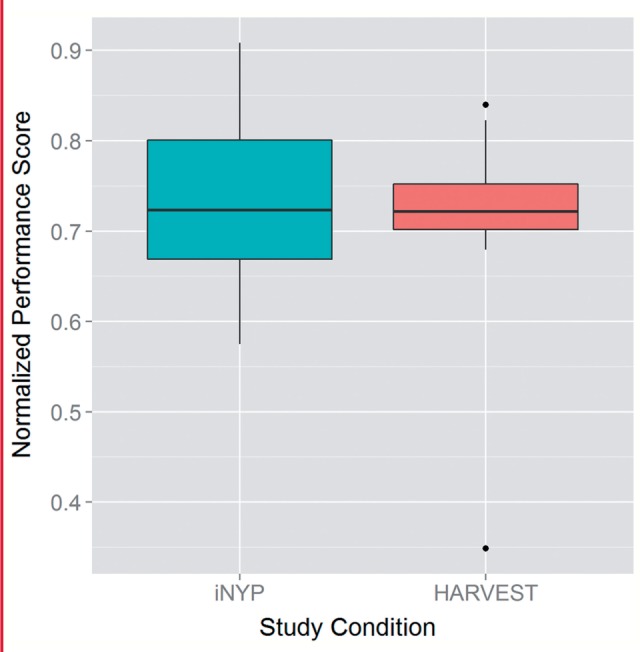
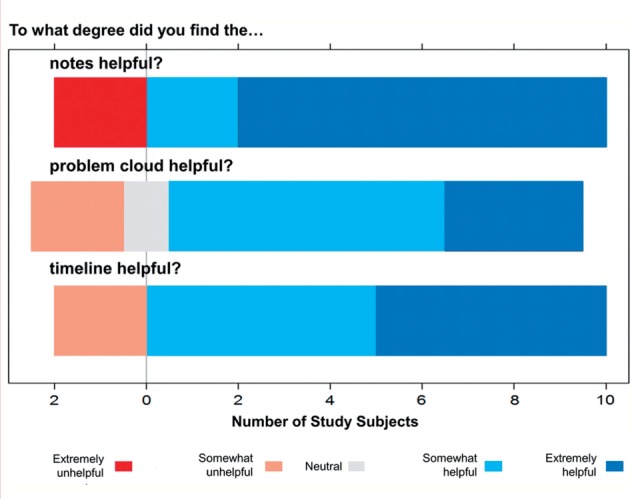
Objective To describe HARVEST, a novel point-of-care patient summarization and visualization tool, and to conduct a formative evaluation study to assess its effectiveness and gather feedback for iterative improvements. Materials and methods HARVEST is a problem-based, interactive, temporal visualization of longitudinal patient records. Using scalable, distributed natural language processing and problem salience computation, the system extracts content from the patient notes and aggregates and presents information from multiple care settings. Clinical usability was assessed with physician participants using a timed, task-based chart review and questionnaire, with performance differences recorded between conditions (standard data review system and HARVEST). Results HARVEST displays patient information longitudinally using a timeline, a problem cloud as extracted from notes, and focused access to clinical documentation. Despite lack of familiarity with HARVEST, when using a task-based evaluation, performance and time-to-task completion was maintained in patient review scenarios using HARVEST alone or the standard clinical information system at our institution. Subjects reported very high satisfaction with HARVEST and interest in using the system in their daily practice. Discussion HARVEST is available for wide deployment at our institution. Evaluation provided informative feedback and directions for future improvements. Conclusions HARVEST was designed to address the unmet need for clinicians at the point of care, facilitating review of essential patient information. The deployment of HARVEST in our institution allows us to study patient record summarization as an informatics intervention in a real-world setting. It also provides an opportunity to learn how clinicians use the summarizer, enabling informed interface and content iteration and optimization to improve patient care.
Overview
The claims and statistics of this paper haven’t been checked yet.
Free: it reads the open-access text and checks the first 5 claims that cite a source we can check. Create a free account to check every claim.
Integrity signals
Registry
Cites
Statistics
Figures
Verification
Claims the paper makes
The claims and statistics of this paper haven’t been checked yet.
Free: it reads the open-access text and checks the first 5 claims that cite a source we can check. Create a free account to check every claim.
Claims other papers make about this one
Each is checked against this paper’s own text: does it say what the citing paper says it does?
The source backs part of the claim, not all of it — or backs it for a different population, condition or comparison.
In the citing paper
“Using Oxford Levels of Evidence [19] to examine study quality to measure the extent that methodological safeguards (ie, internal study validity) against bias were implemented, 2 studies provided Level 2b evidence as modeling summarizations [20,23], and 2 studies provided Level 4 evidence [21,22].”
From Considering Clinician Competencies for the Implementation of Artificial Intelligence–Based Tools in Health Care: Findings From a Scoping Review (2022) · cites this paper as [22]
Experimental — accuracy not yet measuredThe cited source says what the claim attributes to it.
In the citing paper
“All 4 studies were undertaken to characterize the performance of internally developed niche AI software systems when used by health care professionals in specific practice settings (Table 1) [20-23].”
From Considering Clinician Competencies for the Implementation of Artificial Intelligence–Based Tools in Health Care: Findings From a Scoping Review (2022) · cites this paper as [22]
The cited source says what the claim attributes to it.
In the citing paper
“Only 4 research studies were identified in our search [20-23] that addressed professional competencies observed by this new AI landscape; however, none of the identified studies described new AI-related clinical competencies that had to be developed.”
From Considering Clinician Competencies for the Implementation of Artificial Intelligence–Based Tools in Health Care: Findings From a Scoping Review (2022) · cites this paper as [22]
The cited source says what the claim attributes to it.
In the citing paper
“Upon full-text screening, 4 articles met our inclusion criteria [20-23].”
From Considering Clinician Competencies for the Implementation of Artificial Intelligence–Based Tools in Health Care: Findings From a Scoping Review (2022) · cites this paper as [22]
Self-check
Percentages, sums and reported differences re-computed from the paper’s own numbers.
The self-check needs the paper’s full text.
Citations
Cites
Introduction to information retrieval
(2009) · Choice Reviews Online · doi:10.5860/choice.46-2715 · Cited by 12,278
Introduction to Information Retrieval
Manning, C. D., Raghavan, P., & Schütze, H. (2008) · doi:10.1017/cbo9780511809071 · Cited by 11,288
A correlated topic model of Science
Blei, D. M., & Lafferty, J. (2018) · doi:10.1184/r1/6587330.v1 · Cited by 1,088
Medical Records That Guide and Teach
Weed, L. L. (1968) · New England Journal of Medicine · doi:10.1056/nejm196803142781105 · Cited by 996
A correlated topic model of Science
Blei, D. M., & Lafferty, J. D. (2007) · The Annals of Applied Statistics · doi:10.1214/07-aoas114 · Cited by 953
Protocol-Based Computer Reminders, the Quality of Care and the Non-Perfectability of Man
McDonald, C. J. (1976) · New England Journal of Medicine · doi:10.1056/nejm197612092952405 · Cited by 798 · cited 1×
“whelming amount of complex, raw data points, with little time for making sense of them all.(1) This phenomenon of information overload has been observed in several care settings, from outpatient clinics to hospital admissions and the emergency department (ED).”
BackgroundWhat can natural language processing do for clinical decision support?
Demner-Fushman, D., Chapman, W. W., & McDonald, C. J. (2009) · Journal of Biomedical Informatics · doi:10.1016/j.jbi.2009.08.007 · Cited by 688 · cited 1×
“In contrast, traditional clinical NLP has been used for specific tasks and types of data to extract along with specific types of documents.(29,30)”
MethodMedical Records That Guide and Teach
Weed, L. L. (1968) · New England Journal of Medicine · doi:10.1056/nejm196803212781204 · Cited by 455
LifeLines: Using Visualization to Enhance Navigation and Analysis of Patient Records
Plaisant, C., Mushlin, R., Snyder, A., Li, J., Heller, D., & Shneiderman, B. (2003) · The Craft of Information Visualization · doi:10.1016/b978-155860915-0/50038-x · Cited by 366 · cited 1×
“Important research has been undertaken on visualization of patient histories, such as the LifeLine and the KNAVE projects.(10,11)”
MethodComputational Technology for Effective Health Care: Immediate Steps and Strategic Directions
(2009) · National Academies Press eBooks · doi:10.17226/12572 · Cited by 282
Research works printed but not linked: 3
- Weed LL Weed L Medicine in denial. Charleston, SC: CreateSpace Independent Publishing Platform, 2011.
- Graedon T Is Larry Weed right. J Particip Med. 2013; 5: e13.
- Lipsky-Gorman S Elhadad N ClinNote and HealthTermFinder: a pipeline for processing clinical notes. Columbia University Technical Report, 2011.
Cited by
Items 101–140 of 140
Hamed, B., Mohamed, I., Elsayed, R., Ibrahim, A. T. H., Mohamed, M., Ahmed, N., Abdalraheem, A., Ali, E., Osman, A., Saeed, S., et al. (2025) · Cureus · doi:10.7759/cureus.89980 · Cited by 2
“…across various care settings, the documentation process has become more challenging for junior doctors when writing follow-up progress notes, which can contribute to unfavorable outcomes, including an increased rate of readmission, treatment delay, and improper management and/or diagnosis [2,4,5].”
Parambath, A., Pulpo, G., & Hartman, V. (2026) · JMIR Human Factors · doi:10.2196/95644 · Cited by 2
“In contrast, longitudinal medical record summaries synthesize years of fragmented documentation across multiple encounters and specialties into a single narrative [3,12].”
A detailed study on temporal data visualization techniques in electronic health records
Younas, A., Malik, M. S. A., Khalil-ur-Rehman, & Rabia, S. (2016) · International Conference on Innovative Computing Technology · doi:10.1109/intech.2016.7845074 · Cited by 2
Beldi, A., Sassi, S., Chbeir, R., & Jemai, A. (2022) · Institution of Engineering and Technology eBooks · doi:10.1049/pbhe044e_ch5 · Cited by 2
do Prado, L. S., Allemann, S. S., Viprey, M., Schott, A., Dediu, D., & Dima, A. L. (2023) · Journal of Medical Internet Research · doi:10.2196/49996 · Cited by 2
Patient Record Summarization Through Joint Phenotype Learning and Interactive Visualization
Levy-Fix, G. (2020) · AMIA · doi:10.7916/d8-hba0-nx88 · Cited by 3
Chazard, E., Balayé, P., Balcaen, T., Génin, M., Cuggia, M., Bouzillé, G., & Lamer, A. (2022) · Studies in health technology and informatics · doi:10.3233/shti220141 · Cited by 5
VisualSphere: a Web-based Interactive Visualization System for Clinical Research Data.
Lin, S., Tao, S., Chou, W.-C., Zhang, G., & Li, X. (2024) · PubMed Central · Cited by 5
Towards Patient Record Summarization Through Joint Phenotype Learning in HIV PatientsPreprint
Levy-Fix, G., Zucker, J. E., Stojanovic, K., & Elhadad, N. (2020) · arXiv (Cornell University) · doi:10.48550/arxiv.2003.11474 · Cited by 2
“Previous work has shown that problem-oriented summary supports the needs of clinicians [10, 14, 15, 20].”
BackgroundSelf-citationTowards Scalable Structured Data from Clinical Text
Agrawal, M. (2023) · DSpace@MIT (Massachusetts Institute of Technology) · Cited by 3
Leveraging BERT and Network-Based Attention Analysis for Identifying Treatment Milestones in EHRs
Kim, M., Kim, S., & Park, B. S. (2024) · IEEE International Conference on Big Data (BigData) · doi:10.1109/bigdata62323.2024.10825271 · Cited by 1
Lakha, S. F., Sarmiento, S., Pennefather, P., Purdy, N., Holyoke, P., & Fels, D. I. (2025) · Digital Health · doi:10.1177/20552076251350932 · Cited by 1
“11,45 To meet diverse users need, MHMR should offer multiple visualization formats, allowing providers to select the most appropriate method for their clinical context.”
LabVis: usability testing of a prototype tool for integrating timeline graphs and clinical notes
Torsvik, T., Brun, A., Benjaminsen, B. S., & Steinsbekk, A. (2025) · BMC Medical Informatics and Decision Making · doi:10.1186/s12911-025-03173-7 · Cited by 2
“Notable exceptions include Doccurate [28] and HARVEST [29], which were designed to provide overviews of and access to large sets of clinical notes.”
Emén, A., Broks, M., Torsvik, T., Berntsen, G. R., & Steinsbekk, A. (2026) · BMC Health Services Research · doi:10.1186/s12913-026-14466-6 · Cited by 1
“As more information leads to more work in gaining an overview of the information, they have also worked on how to present this information, e.g., by presenting all the information in the same view [21].”
InfluentialDigitizing the Pre-consultation Experience: Impacts and Design Recommendations
Li, B., Bakar, L. O., Кирик, А. М., Guo, J., Mariakakis, A. T., & Truong, K. N. (2026) · CHI Conference on Human Factors in Computing Systems · doi:10.1145/3772318.3791354 · Cited by 1
“In a high-stakes and data-dense domain like healthcare, summaries are often an essential part of decision-making processes [20, 26].”
Data-Driven Approaches for Developing Clinical Practice Guidelines
Zhang, Y., & Padman, R. (2016) · Advances in healthcare information systems and administration book series · doi:10.4018/978-1-5225-0920-2.ch003 · Cited by 1
Feller, D. (2020) · Columbia Academic Commons (Columbia University) · doi:10.7916/d8-60pj-0831 · Cited by 1
Uma análise do papel feminino no programa Bolsa Família
de Souza, R. G., Nóbrega, J. C. D. S., Silva, P. A. M. E., Maia, T. F., Moura, F. D. S., Gadelha, H. S., & Oliveira, J. D. S. (2021) · Research Society and Development · doi:10.33448/rsd-v10i11.17809 · Cited by 1
Information Visualization in Mental Health Research and Practice
Hochheiser, H., & Verma, A. (2021) · Health informatics · doi:10.1007/978-3-030-70558-9_14 · Cited by 1
DG_summ: A schema-driven approach for personalized summarizing heterogeneous data graphs
Beldi, A., Sassi, S., Chbeir, R., & Jemai, A. (2023) · Computer Science and Information Systems · doi:10.2298/csis230331062b · Cited by 1
“[30] proposes a real-time summarization approach by aggregating clinical data from heterogeneous health care systems using HL7 messages and a distributed architecture.”
MethodNakikj, D., Kreda, D., Luthria, K. D., & Gehlenborg, N. (2025) · JMIR Human Factors · doi:10.2196/50331 · Cited by 1
“Addressing automatic support for collections may be challenging due to subtle relationships between medical records [32-34].”
Phạm, Q. (2019) · TSpace (University of Toronto) · Cited by 3
Clinical timelines development from textual medical reports in Italian
Viani, N., Sacchi, L., Tibollo, V., Napolitano, C., Priori, S. G., & Bellazzi, R. (2017) · IEEE International Forum on Research and Technology for Society and Industry (RTSI) · doi:10.1109/rtsi.2017.8065897
“As a more recent example, HARVEST is a longitudinal patient record summarizer that extracts content from patient notes and aggregates information from multiple care settings [8].”
BackgroundMethodAn Electronic Health Record Interface for Clinician Use in Inpatient Settings During Rounds
Axinn, T. S. (2018) · Digital Access to Scholarship at Harvard (DASH) (Harvard University)
Mining Time-Stamped Electronic Health Records Using Referenced SequencesPreprint
Woods, A., Meyer, C. S., Sauer, B. C., & Cohen, B. E. (2020) · arXiv (Cornell University) · doi:10.48550/arxiv.2007.14336
Mining Time-Stamped Electronic Health Records with Referenced Sequences
Woods, A., Meyer, C. S., Sauer, B. C., & Cohen, B. E. (2021) · Advances in intelligent systems and computing · doi:10.1007/978-3-030-73103-8_7
Data-Driven Approaches for Developing Clinical Practice Guidelines
Zhang, Y., & Padman, R. (2017) · IGI Global eBooks · doi:10.4018/978-1-5225-0978-3.ch059
Eun, J., Jung, K., Park, Y. E., Kim, H., Lee, E. Y., Kim, J. Y., Choi, J., Kim, K., Min, J., & Lee, J. (2023) · doi:10.2196/preprints.48528
Ouskine, A. (2023) · Carleton University's Institutional Repository (MacOdrum Library, Carleton University) · doi:10.22215/etd/2023-15696 · Cited by 2
Capturing Individual-level Social Determinants from Clinical Text.
Liang, J. J., Mahajan, D., Iyengar, A. S., & Tsou, C.-H. (2023) · PubMed Central
Park, H., Wang, T. D., Wattanasin, N., Castro, V. M., Gainer, V. S., & Murphy, S. N. (2024) · Applied Clinical Informatics · doi:10.1055/a-2269-0995
“For example, Harvest 32 uses a shape to display the time range selected.”
MethodInfluentialExploring Alternative Methods of Visualizing Patient Data
Tanvir, R., Chignell, M., & Fels, D. I. (2021) · TSpace (University of Toronto) · doi:10.20380/gi2021.26
Hanson, R. F., Zhu, V. J., Are, F. G., Espeleta, H. C., Wallis, E., Heider, P. M., Kautz, M. M., & Lenert, L. A. (2023) · Figshare · doi:10.6084/m9.figshare.24585949
Alkhalaf, M. (2024) · Research Online (University of Wollongong) · Cited by 1
Medi_Vizz: A tool for concurrent visualisation of medical data
Dyn'ko, U. (2024) · DSpace repository (University of Tartu)
HealthTale: A Patient-Centric Health Story Visualization ToolPreprint
Smith, R., Chin, K. D., & Munzner, T. (2026) · arXiv (Cornell University) · doi:10.48550/arxiv.2605.20207
“Visualization systems for electronic medical records (EMRs) commonly represent patient histories as timelines of diagnoses, treatments, and clinical Events [23, 42, 46, 57].”
Navigating the Zenith of Documentation at the Dawn of the AI Era
Soleymanjahi, S., Thakral, D., & Stein, D. J. (2026) · Digestive Diseases and Sciences · doi:10.1007/s10620-026-10133-2
“Other examples include HARVEST (provides a problem-based temporal demonstration of patient records) [11] and MedKnowts (integrates notetaking with information retrieval providing concise synthesis of clinical information) [12].”
Toward Complete Hospital Discharge Summarization with Abstract Meaning Representation
Landes, P., Rao, S., Chaise, A. J., & Eugenio, B. D. (2026) · IEEE International Conference on Healthcare Informatics (ICHI) · doi:10.1109/ichi69079.2026.00023 · Cited by 1
“The literature is rich with examples of clinical note summarization that include both longitudinal [26], and non-longitudinal [27] note types, two examples of mutual discipline interest.”
LLM-derived Progress Insights from Narrative Clinical Notes for Efficient and Fair Care AllocationPreprint
Mehrizi, H. A., Arzani, H., Behmanesh, P., Minaudo, C., Troper, L., & Wylie-Toal, B. (2026) · SSRN Electronic Journal · doi:10.2139/ssrn.7475198
Emén, A., Torsvik, T., Berntsen, G., Broks, M., & Steinsbekk, A. (2026) · Frontiers in Digital Health · doi:10.3389/fdgth.2026.1954602
Metadata
- Authors
- Hirsch, J. S., Tanenbaum, J. S., Lipsky Gorman, S., Liu, C., Schmitz, E., Hashorva, D., Ervits, A., Vawdrey, D., Sturm, M., & Elhadad, N.
- Affiliations
- Columbia University (US)
- Department of Biomedical Informatics, Columbia University, New York, USA
- NewYork–Presbyterian Hospital (US)
- Corresponding author
- Hirsch, Jamie S
- Venue
- Journal of the American Medical Informatics Association
- Publisher
- Oxford University Press (OUP)
- Published
- 2014-10-28
- Volume
- 22
- Issue
- 2
- Pages
- 263-274
- ISSN
- 1067-5027 (ISSN-L)
- 1527-974X
- PMC
- PMC4394965
- OpenAlex
- W2167976315
- Cited by
- 135
- References
- 35
- Citations by year
- 2026: 6 · 2025: 9 · 2024: 7 · 2023: 11 · 2022: 15 · 2021: 18 · 2020: 12 · 2019: 11 · 2018: 16 · 2017: 13 · 2016: 8 · 2015: 8
- FWCI
- 17.67
- Type
- journal article
- Language
- en
- Open access
- hybrid
- doi.org
- Licence
- Locations
- Journal of the American Medical Informatics Association (publishedVersion, cc-by-nc)
- PubMed Central (publishedVersion, cc-by-nc)
- PubMed (publishedVersion)
- Funders
- National Science Foundation (1344668)
- U.S. National Library of Medicine (LM007079, T15LM007079, R01LM010027)
- Topics
- Health Sciences › Health Professions › Health Information Management › Electronic Health Records Systems
- Physical Sciences › Computer Science › Computer Graphics and Computer-Aided Design › Data Visualization and Analytics
- Physical Sciences › Computer Science › Artificial Intelligence › Machine Learning in Healthcare
- Keywords
- longitudinal patient records, clinical note extraction, natural language processing, temporal data visualization, clinical usability, task-based assessment, physician satisfaction, clinical information systems
- MeSH terms
- Attitude to Computers, Data Display, Humans, Natural Language Processing, Surveys and Questionnaires, Software, User-Computer Interface, Electronic Health Records
About these checks
Registry, retraction, Cites and statistics results are computed, not judged, with one exception: a printed reference that no index lists is read once by a model before it counts as a citation error. Claims are extracted by a model and kept only when their quote appears verbatim in the text; each cited source is then checked, with a model’s help, for whether it says what the claim relies on. Those verdicts can be wrong — read the claim’s quote and the cited source before relying on one.
Statistics and arithmetic are recomputed, not judged.
Confidence bands are shown only for fields calibrated on our annotated test set. None is calibrated yet, so no band is shown.
What counts as a claim ›How we measure confidence ›How we check this ›
Are you an author, or do you see a problem with this page? Request a review
Data sources
Bibliographic data: Semantic Scholar, OpenAlex, Crossref.
Contains information from the Semantic Scholar Academic Graph Datasets, made available under the ODC Attribution License (ODC-BY 1.0).
Semantic Scholar’s data is described in: Kinney, R., et al. (2023). The Semantic Scholar Open Data Platform. arXiv:2301.10140.
