

HARVEST, a longitudinal patient record summarizer
Open accessThe DOI matches its Crossref record; 34 of the 35 references it cites were found in a registry or an index.
Abstract
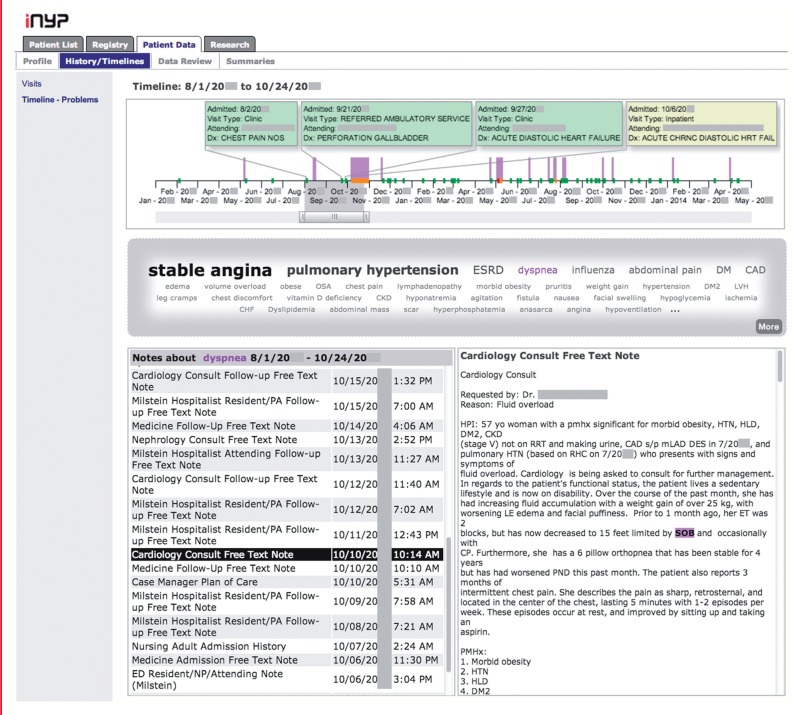
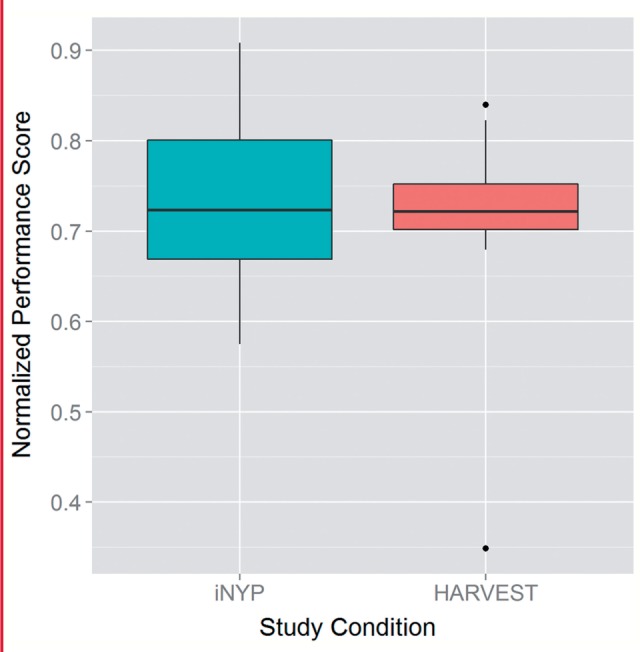
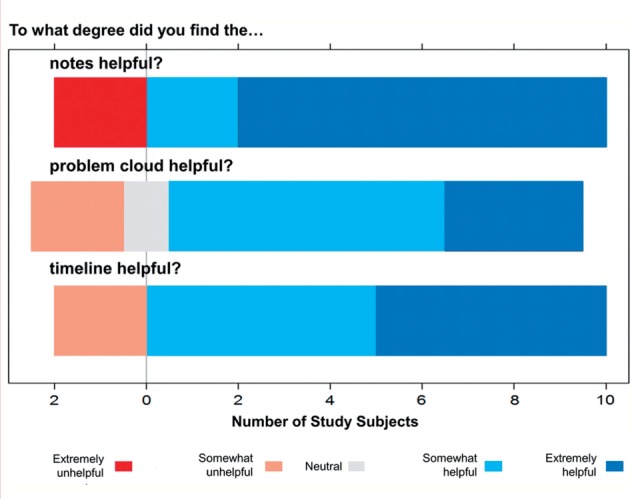
Objective To describe HARVEST, a novel point-of-care patient summarization and visualization tool, and to conduct a formative evaluation study to assess its effectiveness and gather feedback for iterative improvements. Materials and methods HARVEST is a problem-based, interactive, temporal visualization of longitudinal patient records. Using scalable, distributed natural language processing and problem salience computation, the system extracts content from the patient notes and aggregates and presents information from multiple care settings. Clinical usability was assessed with physician participants using a timed, task-based chart review and questionnaire, with performance differences recorded between conditions (standard data review system and HARVEST). Results HARVEST displays patient information longitudinally using a timeline, a problem cloud as extracted from notes, and focused access to clinical documentation. Despite lack of familiarity with HARVEST, when using a task-based evaluation, performance and time-to-task completion was maintained in patient review scenarios using HARVEST alone or the standard clinical information system at our institution. Subjects reported very high satisfaction with HARVEST and interest in using the system in their daily practice. Discussion HARVEST is available for wide deployment at our institution. Evaluation provided informative feedback and directions for future improvements. Conclusions HARVEST was designed to address the unmet need for clinicians at the point of care, facilitating review of essential patient information. The deployment of HARVEST in our institution allows us to study patient record summarization as an informatics intervention in a real-world setting. It also provides an opportunity to learn how clinicians use the summarizer, enabling informed interface and content iteration and optimization to improve patient care.
Overview
The claims and statistics of this paper haven’t been checked yet.
Free: it reads the open-access text and checks the first 5 claims that cite a source we can check. Create a free account to check every claim.
Integrity signals
Registry
Cites
Statistics
Figures
Verification
Claims the paper makes
The claims and statistics of this paper haven’t been checked yet.
Free: it reads the open-access text and checks the first 5 claims that cite a source we can check. Create a free account to check every claim.
Claims other papers make about this one
Each is checked against this paper’s own text: does it say what the citing paper says it does?
The source backs part of the claim, not all of it — or backs it for a different population, condition or comparison.
In the citing paper
“Using Oxford Levels of Evidence [19] to examine study quality to measure the extent that methodological safeguards (ie, internal study validity) against bias were implemented, 2 studies provided Level 2b evidence as modeling summarizations [20,23], and 2 studies provided Level 4 evidence [21,22].”
From Considering Clinician Competencies for the Implementation of Artificial Intelligence–Based Tools in Health Care: Findings From a Scoping Review (2022) · cites this paper as [22]
Experimental — accuracy not yet measuredThe cited source says what the claim attributes to it.
In the citing paper
“All 4 studies were undertaken to characterize the performance of internally developed niche AI software systems when used by health care professionals in specific practice settings (Table 1) [20-23].”
From Considering Clinician Competencies for the Implementation of Artificial Intelligence–Based Tools in Health Care: Findings From a Scoping Review (2022) · cites this paper as [22]
The cited source says what the claim attributes to it.
In the citing paper
“Only 4 research studies were identified in our search [20-23] that addressed professional competencies observed by this new AI landscape; however, none of the identified studies described new AI-related clinical competencies that had to be developed.”
From Considering Clinician Competencies for the Implementation of Artificial Intelligence–Based Tools in Health Care: Findings From a Scoping Review (2022) · cites this paper as [22]
The cited source says what the claim attributes to it.
In the citing paper
“Upon full-text screening, 4 articles met our inclusion criteria [20-23].”
From Considering Clinician Competencies for the Implementation of Artificial Intelligence–Based Tools in Health Care: Findings From a Scoping Review (2022) · cites this paper as [22]
Self-check
Percentages, sums and reported differences re-computed from the paper’s own numbers.
The self-check needs the paper’s full text.
Citations
Cites
Introduction to information retrieval
(2009) · Choice Reviews Online · doi:10.5860/choice.46-2715 · Cited by 12,278
Introduction to Information Retrieval
Manning, C. D., Raghavan, P., & Schütze, H. (2008) · doi:10.1017/cbo9780511809071 · Cited by 11,288
A correlated topic model of Science
Blei, D. M., & Lafferty, J. (2018) · doi:10.1184/r1/6587330.v1 · Cited by 1,088
Medical Records That Guide and Teach
Weed, L. L. (1968) · New England Journal of Medicine · doi:10.1056/nejm196803142781105 · Cited by 996
A correlated topic model of Science
Blei, D. M., & Lafferty, J. D. (2007) · The Annals of Applied Statistics · doi:10.1214/07-aoas114 · Cited by 953
Protocol-Based Computer Reminders, the Quality of Care and the Non-Perfectability of Man
McDonald, C. J. (1976) · New England Journal of Medicine · doi:10.1056/nejm197612092952405 · Cited by 798 · cited 1×
“whelming amount of complex, raw data points, with little time for making sense of them all.(1) This phenomenon of information overload has been observed in several care settings, from outpatient clinics to hospital admissions and the emergency department (ED).”
BackgroundWhat can natural language processing do for clinical decision support?
Demner-Fushman, D., Chapman, W. W., & McDonald, C. J. (2009) · Journal of Biomedical Informatics · doi:10.1016/j.jbi.2009.08.007 · Cited by 688 · cited 1×
“In contrast, traditional clinical NLP has been used for specific tasks and types of data to extract along with specific types of documents.(29,30)”
MethodMedical Records That Guide and Teach
Weed, L. L. (1968) · New England Journal of Medicine · doi:10.1056/nejm196803212781204 · Cited by 455
LifeLines: Using Visualization to Enhance Navigation and Analysis of Patient Records
Plaisant, C., Mushlin, R., Snyder, A., Li, J., Heller, D., & Shneiderman, B. (2003) · The Craft of Information Visualization · doi:10.1016/b978-155860915-0/50038-x · Cited by 366 · cited 1×
“Important research has been undertaken on visualization of patient histories, such as the LifeLine and the KNAVE projects.(10,11)”
MethodComputational Technology for Effective Health Care: Immediate Steps and Strategic Directions
(2009) · National Academies Press eBooks · doi:10.17226/12572 · Cited by 282
Research works printed but not linked: 3
- Weed LL Weed L Medicine in denial. Charleston, SC: CreateSpace Independent Publishing Platform, 2011.
- Graedon T Is Larry Weed right. J Particip Med. 2013; 5: e13.
- Lipsky-Gorman S Elhadad N ClinNote and HealthTermFinder: a pipeline for processing clinical notes. Columbia University Technical Report, 2011.
Cited by
Natural Language Processing in Oncology: A Review
Yim, W.-W., Yetisgen, M., Harris, W. P., & Kwan, S. W. (2016) · JAMA Oncology · doi:10.1001/jamaoncol.2016.0213 · Cited by 298
Automated methods for the summarization of electronic health records
Pivovarov, R., & Elhadad, N. (2015) · Journal of the American Medical Informatics Association · doi:10.1093/jamia/ocv032 · Cited by 217
“Within clinical summarization, normalization of words to concepts has only recently been investigated.(42,45) An alternative, and most common approach in clinical summarization, is to identify word-level similarity by finding redundant strings of words.”
BackgroundSelf-citationSavova, G. K., Danciu, I., Alamudun, F., Miller, T., Lin, C., Bitterman, D. S., Tourassi, G., & Warner, J. L. (2019) · Cancer Research · doi:10.1158/0008-5472.can-19-0579 · Cited by 170
Visual analytics in healthcare – opportunities and research challenges
Caban, J. J., & Gotz, D. (2015) · Journal of the American Medical Informatics Association · doi:10.1093/jamia/ocv006 · Cited by 155
“The study uses a large-scale database with over 14 000 patients and a Sankey-style visualization tool to help clinicians predict the outcome of complex disease based on comorbidities the patients have developed.9 Third, Hirsch et al.10 present a system called HARVEST, an interactive temporal visualization for longitud…”
BackgroundAlkhalaf, M., Yu, P., Yin, M., & Deng, C. (2024) · Journal of Biomedical Informatics · doi:10.1016/j.jbi.2024.104662 · Cited by 156
MedSTS: a resource for clinical semantic textual similarity
Wang, Y., Afzal, N., Fu, S., Wang, L., Shen, F., Rastegar-Mojarad, M., & Liu, H. (2020) · Language Resources and Evaluation · doi:10.1007/s10579-018-9431-1 · Cited by 124
Big Healthcare Data Analytics: Challenges and Applications
Lee, C., Luo, Z., Ngiam, K. Y., Zhang, M., Zheng, K., Chen, G., Ooi, B. C., & Yip, W. L. J. (2017) · Scalable computing and communications · doi:10.1007/978-3-319-58280-1_2 · Cited by 121
“HARVEST [38] is a summarizer for doctors to view patients’ longitudinal EMR data at the point of care.”
BackgroundProbabilistic Machine Learning for Healthcare
Chen, I. Y., Joshi, S. D., Ghassemi, M., & Ranganath, R. (2021) · Annual Review of Biomedical Data Science · doi:10.1146/annurev-biodatasci-092820-033938 · Cited by 92
Wang, J. K., Ouyang, D., Hom, J., Chi, J., & Chen, J. H. (2019) · PLOS ONE · doi:10.1371/journal.pone.0205379 · Cited by 63
Garvey, K. V., Thomas Craig, K. J., Russell, R., Novak, L. L., Moore, D., & Miller, B. M. (2022) · JMIR Medical Informatics · doi:10.2196/37478 · Cited by 62
“~9 months N/R (N/R) 12 (N/R) Implementation Graduate medical education (internal medicine residents and interns; nephrology fellows) Internal medicine physicians; nephrologists Large private hospital; large academic medical center; nephrology and internal medicine departments Evaluation; 4e Hirsch, 2015 [22] 2”
BackgroundMethodResultInfluentialWhat’s in a Summary? Laying the Groundwork for Advances in Hospital-Course Summarization
Adams, G., Alsentzer, E., Ketenci, M., Zucker, J., & Elhadad, N. (2021) · Proceedings of the 2021 Conference of the North American Chapter of the Association for Computational Linguistics: Human Language Technologies · doi:10.18653/v1/2021.naacl-main.382 · Cited by 44
Self-citationWronikowska, M. W., Malycha, J., Morgan, L. J., Westgate, V., Petrinic, T., Young, J. D., & Watkinson, P. J. (2021) · Journal of Evaluation in Clinical Practice · doi:10.1111/jep.13582 · Cited by 59
“The user must verbalize their thoughts as they interact with the interface 36,37,38,39,40,41,42,43,44,45,46,4748-51 Observation Direct and remote observation of users interacting with the system 52 Comparative Usability Testing Examines the time to acquire information and accuracy of information 53…”
MethodTransforming epilepsy research: A systematic review on natural language processing applications
Yew, A. N. J., Schraagen, M., Otte, W. M., & Diessen, E. G. A. L. V. (2022) · Epilepsia · doi:10.1111/epi.17474 · Cited by 62
“10,45,48,49 Achievements in other domains could serve as exemplars for advancements in epilepsy-specific NLP applications, such as quality assessment of clinical practice, 50 clinical outcome prediction, 51 patient record summarization, 52 and secondary use of scientific papers.”
BackgroundHEALTH BANK - A Workbench for Data Science Applications in Healthcare
Dalianis, H., Henriksson, A., Kvist, M., Velupillai, S. U., & Weegar, R. (2015) · Research Portal (King's College London) · Cited by 96
Chen, J., Druhl, E., Ramesh, B. P., Houston, T. K., Brandt, C., Zulman, D. M., Vimalananda, V. G., Malkani, S., & Yu, H. Q. (2018) · Journal of Medical Internet Research · doi:10.2196/jmir.8669 · Cited by 70
“We used a small group of physicians by following previous studies in usability research [40-44] and evaluating clinical NLP systems [30,45-47] and considering factors relevant to our case.”
MethodResultElhadad, N., & Demner-Fushman, D. (2016) · Yearbook of Medical Informatics · doi:10.15265/iy-2016-017 · Cited by 52
“More recently, there has been renewed work in problem-list generation based on patient notes [69, 70] and through patient record summarization [71] (for a review of patient record summarization techniques that use NLP, see [72]).”
BackgroundSelf-citationDoccurate: A Curation-Based Approach for Clinical Text Visualization
Sultanum, N., Singh, D., Brudno, M., & Chevalier, F. (2018) · IEEE Transactions on Visualization and Computer Graphics · doi:10.1109/tvcg.2018.2864905 · Cited by 56
Backonja, U., Haynes, S. C., & Kim, K. K. (2018) · JMIR Human Factors · doi:10.2196/11826 · Cited by 53
“This study has the potential to inform the growing domain of research in integrating visualizations into informatics solutions that support personalized patient care [45,62-71].”
BackgroundGlicksberg, B. S., Oskotsky, B., Thangaraj, P. M., Giangreco, N., Badgeley, M. A., Johnson, K. W., Datta, D., Rudrapatna, V. A., Rappoport, N., Shervey, M. M., et al. (2019) · Bioinformatics · doi:10.1093/bioinformatics/btz409 · Cited by 45
Usability Evaluation of a Dashboard for Home Care Nurses
Dowding, D., Merrill, J. A., Barrón, Y., Onorato, N., Jonas, K. E., & Russell, D. (2018) · CIN Computers Informatics Nursing · doi:10.1097/cin.0000000000000484 · Cited by 50
Quality improvement of medical records through internal auditing: a comparative analysis
Azzolini, E., Furia, G., Cambieri, A., Ricciardi, W., Volpe, M., & Poscia, A. (2019) · Journal of preventive medicine and hygiene · doi:10.15167/2421-4248/jpmh2019.60.3.1203 · Cited by 46
“This phenomenon has been observed in several care settings, from outpatient clinics to hospital admissions, for each care process and all the medical departments [1].”
BackgroundLinhares, C. D. G., de Lima, D. M., Ponciano, J. R., Olivatto, M. M., Gutierrez, M. A., Poco, J., Traina, C., & Traina, A. J. M. (2022) · IEEE Transactions on Visualization and Computer Graphics · doi:10.1109/tvcg.2022.3175626 · Cited by 46
“TABLE 1 Comparison of EHR Systems According to Seven Different Aspects: (1) Selecting; (2) Grouping; (3) Filtering; (4) Test Result Classification; (5) Clinical History and Outcome; (6) User Evaluation; (7) Scalability of Tests Over Time 1 2 3 4 5 6 7 VISITORS [19] ✓ ✓ ✓ ✓ ✓ LifeLines2 [41] ✓ ✓ ✓ ✓ ✓ MIVA [13] ✓ ✓ ✓ D…”
BackgroundMethodInfluentialEvaluating topic model interpretability from a primary care physician perspective
Arnold, C. W., Oh, A. S., Chen, S., & Speier, W. F. (2015) · Computer Methods and Programs in Biomedicine · doi:10.1016/j.cmpb.2015.10.014 · Cited by 46
Bettencourt‐Silva, J. H., Clark, J., Cooper, C. S., Mills, R., Rayward-Smith, V. J., & de la Iglesia, B. (2015) · JMIR Medical Informatics · doi:10.2196/medinform.4221 · Cited by 47
“This work contrasts with other established summarization and visualization systems, such as LifeLines [31], HARVEST [32], and others [33,34], in that it provides a succinct graphical and temporal representation that enables clinicians to promptly read a large number of data points and their…”
Sung, S., Chen, K., Wu, D. P., Hung, L.-C., Su, Y.-H., & Hu, Y. (2018) · International Journal of Medical Informatics · doi:10.1016/j.ijmedinf.2018.02.005 · Cited by 41
Healthcare Analysis in Smart Big Data Analytics: Reviews, Challenges and Recommendations
Ebada, A. I., Shehab, A., & Elhenawy, I. (2018) · Lecture notes in intelligent transportation and infrastructure · doi:10.1007/978-3-030-01560-2_2 · Cited by 43
A visual analytics approach for pattern-recognition in patient-generated data
Feller, D. J., Burgermaster, M., Levine, M. E., Smaldone, A. M., Davidson, P. G., Albers, D. J., & Mamykina, L. (2018) · Journal of the American Medical Informatics Association · doi:10.1093/jamia/ocy054 · Cited by 38
“15,23,24 25–27 However, visual analytics has not been extensively studied in the context of vo-luminous and heterogeneous self-monitoring data 28,19 and, specifically, data related to health behaviors such as nutritional intake.”
BackgroundBerman, A. N., Biery, D. W., Ginder, C. R., Hulme, O. L., Marcusa, D. P., Leiva, O., Wu, W. Y., Cardin, N., Hainer, J. M., Bhatt, D. L., et al. (2021) · Clinical Cardiology · doi:10.1002/clc.23687 · Cited by 36
Nolan, M. E., Siwani, R., Helmi, H., Pickering, B. W., Franco, P. M., & Herasevich, V. (2017) · Applied Clinical Informatics · doi:10.4338/aci-2017-06-ra-0110 · Cited by 37
“Although eye tracking/screen capture methods allow precise recording of clinician – EHR interactions, 4,18,21,22 manual observational methods are a common choice in critical care settings 9,11,23,24 likely due to greater fl exibility and less intrusion into native work fl ows, yet still providing…”
MethodProcedure prediction from symbolic Electronic Health Records via time intervals analytics
Moskovitch, R., Polubriaginof, F. C. G., Weiss, A., Ryan, P. B., & Tatonetti, N. P. (2017) · Journal of Biomedical Informatics · doi:10.1016/j.jbi.2017.07.018 · Cited by 36
MedKnowts: Unified Documentation and Information Retrieval for Electronic Health Records
Murray, L., Gopinath, D., Agrawal, M., Horng, S., Sontag, D. A., & Karger, D. R. (2021) · ACM Symposium on User Interface Software and Technology (UIST) · doi:10.1145/3472749.3474814 · Cited by 39
(2018) · Europe PMC (PubMed Central) · Cited by 30
Self-citationPatient Information Summarization in Clinical Settings: Scoping Review
Keszthelyi, D., Gaudet-Blavignac, C., Bjelogrlic, M., & Lovis, C. (2023) · JMIR Medical Informatics · doi:10.2196/44639 · Cited by 38
“Despite this need, very few [113,119,182] scientific publications are presenting adaptation in real clinical settings, suggesting a low success rate in clinical environments.”
BackgroundMethodOlex, A. L., & McInnes, B. T. (2021) · Journal of Biomedical Informatics · doi:10.1016/j.jbi.2021.103784 · Cited by 37
Chien, A., Tang, H., Jagessar, B., Chang, K.-W., Peng, N., Nael, K., & Salamon, N. (2024) · American Journal of Neuroradiology · doi:10.3174/ajnr.a8102 · Cited by 27
Burton, C. D., Iversen, L., Bhattacharya, S., Ayansina, D., Saraswat, L., & Sleeman, D. H. (2017) · British Journal of General Practice · doi:10.3399/bjgp17x693497 · Cited by 25
Gao, Y., Dligach, D., Miller, T. A., Xu, D., Churpek, M. M., & Afshar, M. (2022) · PubMed · doi:10.48550/arxiv.2208.08408 · Cited by 69
Design and Evaluation of an Interactive Proof-of-Concept Dashboard for General Practitioners
Croon, R. D., Klerkx, J., & Duval, E. (2015) · IEEE International Conference on Healthcare Informatics (ICHI) · doi:10.1109/ichi.2015.25 · Cited by 26
“O’Leary et al. [1] have in total 19 participants of which nine nurses, and only six GPs. Hirsch et al. [42] used twelve physicians in their formative evaluation and Zhang et al. [23] only use six physicians and two health informatics professionals.”
BackgroundMethodLee, E. K., & Uppal, K. (2020) · BMC Medical Informatics and Decision Making · doi:10.1186/s12911-020-01330-8 · Cited by 25
“In addition to natural language processing, visualization techniques are essential for representation of information in a form that facilitates pattern recognition and large volumes of data [27, 28].”
BackgroundMethodIdentifying peripheral arterial disease cases using natural language processing of clinical notes
Afzal, N., Sohn, S., Abram, S., Liu, H., Kullo, I. J., & Arruda-Olson, A. M. (2016) · IEEE-EMBS International Conference on Biomedical and Health Informatics (BHI ...) · doi:10.1109/bhi.2016.7455851 · Cited by 22
“NLP has been successfully applied in diverse clinical applications such as information extraction from clinical text [17], medical status extraction [18, 19], sentiment analysis [20], text summarization [21], genome-wide association studies [22, 23] diagnosis code assignment [24, 25] and cohort identification [26].”
MethodSultanum, N., Naeem, F., Brudno, M., & Chevalier, F. (2022) · IEEE Transactions on Visualization and Computer Graphics · doi:10.1109/tvcg.2022.3209444 · Cited by 23
“In parallel, natural language processing had been progressively introduced into graphical overviews to help scale the extraction of relevant overview details and populate timelines, from extracting medical problems [10, 25] to detecting medical events [22, 23, 28].”
BackgroundMethodTemporal information extraction from clinical text
Tourille, J., Ferret, O., Tannier, X., & Névéol, A. (2017) · Conference of the European Chapter of the Association for Computational Linguistics · doi:10.18653/v1/e17-2117 · Cited by 24
“Temporal information extraction from electronic health records has become a subject of interest, driven by the need for medical staff to access medical information from a temporal perspective (Hirsch et al., 2015).”
BackgroundTorsvik, T., Lillebo, B., & Hertzum, M. (2018) · Applied Clinical Informatics · doi:10.1055/s-0038-1653967 · Cited by 19
“Some have attempted to solve this problem by creating timelines that enable users to filter data by medical problem, utilizing advanced data mining techniques [36].”
BackgroundMelton, G. B., McDonald, C. J., Tang, P. C., & Hripcsak, G. M. (2021) · Springer eBooks · doi:10.1007/978-3-030-58721-5_14 · Cited by 33
Seals, A., Pilloni, G., Kim, J. R., Sanchez, R., Rizzo, J., Charvet, L. E., Nov, O., & Dove, G. (2022) · CHI Conference on Human Factors in Computing Systems · doi:10.1145/3491102.3501989 · Cited by 23
“This might be implemented through a ‘gait index score’ composed of several parameters, with the capacity to view and change how parameters are weighted in order to help clinicians interpret results; an approach used similarly by Hirsch et al. [52].”
BackgroundInitial development of tools to identify child abuse and neglect in pediatric primary care
Hanson, R. F., Zhu, V. J., Are, F. G., Espeleta, H. C., Wallis, E., Heider, P. M., Kautz, M. M., & Lenert, L. A. (2023) · BMC Medical Informatics and Decision Making · doi:10.1186/s12911-023-02361-7 · Cited by 21
“ACS technologies extract a structured event, perform natural language processing (NLP), and link different data types [30–35].”
BackgroundInformation Extraction Framework for Disability Determination Using a Mental Functioning Use-Case
Zirikly, A., Desmet, B., Newman-Griffis, D. R., Marfeo, E. E., McDonough, C. M., Goldman, H. H., & Chan, L. E. (2022) · JMIR Medical Informatics · doi:10.2196/32245 · Cited by 19
“Its importance comes from its applicability to many tasks such as summarization [25], question answering [26], and medical informatics [27].”
Representing and utilizing clinical textual data for real world studies: An OHDSI approach
Keloth, V. K., Banda, J. M., Gurley, M., Heider, P. M., Kennedy, G., Liu, H., Liu, F., Miller, T., Natarajan, K., V Patterson, O., et al. (2023) · Journal of Biomedical Informatics · doi:10.1016/j.jbi.2023.104343 · Cited by 16
Self-citationPredicting readmission risk from doctors' notesPreprint
Craig, E., Arias, C., & Gillman, D. (2017) · arXiv (Cornell University) · doi:10.48550/arxiv.1711.10663 · Cited by 16
Clinical Documentation as End-User Programming
Rule, A., Goldstein, I. H., Chiang, M. F., & Hribar, M. R. (2020) · CHI Conference on Human Factors in Computing Systems · doi:10.1145/3313831.3376205 · Cited by 15
“In addition to applications that provide rich but standardized visualizations of longitudinal patient records [23, 43], this might also involve developing tools that enable providers to interactively construct custom summaries from scratch.”
BackgroundLiang, J. J., Tsou, C.-H., Dandala, B., Poddar, A., Joopudi, V., Mahajan, D., Prager, J. M., Raghavan, P., & Payne, M. (2021) · PubMed · Cited by 15
i2b2t2: Unlocking Visualization for Clinical Research.
Harris, D. R., & Henderson, D. W. (2016) · PubMed Central · Cited by 13
Garvey, K. V., Craig, K. J. T., Russell, R. G., Novak, L. L., Moore, D. E., Preininger, A. M., Jackson, G. P., & Miller, B. M. (2021) · Medical Science Educator · doi:10.1007/s40670-021-01377-w · Cited by 13
Hybrid Summarization of Medical Records for Predicting Length of Stay in the Intensive Care Unit
Rhazzafe, S., Caraffini, F., Colreavy‐Donnelly, S., Dhassi, Y., Kühn, S., & Nikolov, N. S. (2024) · Applied Sciences · doi:10.3390/app14135809 · Cited by 13
Verma, R., Alsentzer, E., Strasser, Z. H., Chang, L., Roman, K., Gershanik, E., Hernandez, C., Linares, M. A., Rodriguez, J. A., Thakral, D., et al. (2026) · Journal of the American Medical Informatics Association · doi:10.1101/2025.06.02.25328807 · Cited by 16
“Several tools have been developed to address this challenge by enabling visualization of patient histories 7–10 .”
Kashyap, A., Burris, H. H., Callison-Burch, C., & Boland, M. R. (2020) · International Journal of Medical Informatics · doi:10.1016/j.ijmedinf.2020.104101 · Cited by 12
VIEWER: an extensible visual analytics framework for enhancing mental healthcare
Wang, T., Codling, D., Msosa, Y. J., Broadbent, M. T. M., Kornblum, D., Polling, C., Searle, T., Delaney-Pope, C., Arroyo, B., MacLellan, S., et al. (2025) · Journal of the American Medical Informatics Association · doi:10.1093/jamia/ocaf010 · Cited by 11
A Study on Automatic Generation of Chinese Discharge Summary
Xiong, Y., Tang, B., Chen, Q., Wang, X., & Yan, J. (2019) · IEEE International Conference on Bioinformatics and Biomedicine (BIBM) · doi:10.1109/bibm47256.2019.8983293 · Cited by 11
“Besides, some medical summarization tools such as Suregen [22] and HARVEST [23] were also publicly released.”
MethodNestor, J. G., Fedotov, A., Fasel, D. A., Marasà, M., Rasouly, H. M., Wynn, J., Chung, W. K., Gharavi, A. G., Hripcsak, G. M., Henry, S. B., et al. (2021) · JAMIA Open · doi:10.1093/jamiaopen/ooab014 · Cited by 12
“iNYP was the platform selected to input eMERGE results because of its flexibility for developing test result display functions, popularity among users and its easy-to-use reputation.(21,22) In the context of log analysis, we defined “clinician engagement” with genetic test results as any episode of patient record acce…”
Methodvan der Linden, S., Sevastjanova, R., Funk, M., & El‐Assady, M. (2023) · ACM Transactions on Management Information Systems · doi:10.1145/3564275 · Cited by 11
“Researchers have used this timeline structure to visualize EHRs of individual patients abundantly [6, 10, 24, 26, 28, 42, 56, 58] to, for example, display cause and efect [48] or disease progression [50]/risk [40] prediction.”
MethodCan Patient Record Summarization Support Quality Metric Abstraction?
Pivovarov, R., Coppleson, Y., Gorman, S. L., Vawdrey, D. K., & Elhadad, N. (2016) · PubMed · Cited by 10
Self-citationTowards automated calculation of evidence-based clinical scores
Aakre, C. A., Dziadzko, M. A., & Herasevich, V. (2017) · World Journal of Methodology · doi:10.5662/wjm.v7.i1.16 · Cited by 9
Digital networks for laboratory data: potentials, barriers and current initiatives
Ganslandt, T., & Neumaier, M. (2018) · Clinical Chemistry and Laboratory Medicine (CCLM) · doi:10.1515/cclm-2018-1131 · Cited by 9
Fan, H., Hardi, A., & Yen, P. (2025) · Journal of the American Medical Informatics Association · doi:10.1093/jamia/ocaf103 · Cited by 8
Discovering associations between problem list and practice setting
Wang, L., Wang, Y., Shen, F., Rastegar-Mojarad, M., & Liu, H. (2019) · BMC Medical Informatics and Decision Making · doi:10.1186/s12911-019-0779-y · Cited by 8
“With our negation function in NLP method, this analysis would be more accurate, compared with other studies [56].”
ResultSu, Y.-H., Chao, C.-P., Hung, L.-C., Sung, S., & Lee, P.-J. (2020) · Applied Sciences · doi:10.3390/app10082824 · Cited by 8
“Well-designed data visualization in EMR systems not only allows healthcare professionals to communicate information e ffi ciently and e ff ectively but also improves data interpretation and clinical reasoning [16,17].”
BackgroundMethodBashir, M. T., Iversen, L., & Burton, C. D. (2020) · BMC Family Practice · doi:10.1186/s12875-020-01149-2 · Cited by 8
“This sequence of steps is broadly comparable with other recent approaches to the summarisation of clinical data [16, 17].”
ResultAndo, K., Okumura, T., Komachi, M., Horiguchi, H., & Matsumoto, Y. (2022) · PLOS Digital Health · doi:10.1371/journal.pdig.0000099 · Cited by 8
Moon, S., Liu, S., Chen, D. J., Wang, Y., Wood, D. L., Chaudhry, R., Liu, H., & Kingsbury, P. (2019) · Journal of Healthcare Informatics Research · doi:10.1007/s41666-019-00044-5 · Cited by 8
Electronic Health Record Summarization over Heterogeneous and Irregularly Sampled Clinical Data
Pivovarov, R. (2015) · doi:10.7916/d89w0f6v · Cited by 12
“Word-level Similarity In clinical NLP, much work has been devoted to identifying lexical variants that are similar in meaning (Friedman and Elhadad 2014).”
BackgroundIdentifying Diagnostic Paths for Undifferentiated Abdominal Pain from Electronic Health Record Data.
Zhang, Y., Padman, R., Epner, P. L., Bauer, V., Solomonides, A. E., & Rao, G. (2018) · PubMed Central · Cited by 7
Roham, M., Gabrielyan, A. R., & Archer, N. (2019) · IntechOpen eBooks · doi:10.5772/intechopen.90266 · Cited by 8
Interactive Exploration of Longitudinal Cancer Patient Histories Extracted From Clinical Text
Yuan, Z., Finan, S., Warner, J. L., Savova, G., & Hochheiser, H. (2020) · JCO Clinical Cancer Informatics · doi:10.1200/cci.19.00115 · Cited by 7
Fu, J., Zhou, Y., & Wang, X. (2022) · Proceedings of the ACM on Human-Computer Interaction · doi:10.1145/3568491 · Cited by 9
“Hence, some integrated visualization systems (IVSs), such as Lifelines [73] and HARVEST [34], are proposed to aggregate patients’ medical data and organize them in time or problem sequence.”
MethodZhang, G., Cui, L., Chou, W.-C., Hampson, J. P., Lhatoo, S. D., & Tao, S. (2025) · bioRxiv (Cold Spring Harbor Laboratory) · doi:10.64898/2025.12.06.692733 · Cited by 7
Recent Advances in Digital System Diagnosis and Management of Healthcare
Sartipi, K., & Edoh, T. (2019) · IntechOpen eBooks · doi:10.5772/intechopen.83130 · Cited by 8
Henry, S. B., Dykes, P. C., Rossetti, S. C., & Ozbolt, J. G. (2021) · Springer eBooks · doi:10.1007/978-3-030-58721-5_17 · Cited by 11
Pomares, A., González, R. A., Múñoz, Ó., García, O. M., & Bohórquez, R. (2017) · Ingenieria y Universidad · doi:10.11144/javeriana.iyu22-1.spem · Cited by 5
ConVIScope: Visual Analytics for Exploring Patient Conversations
Li, R., Hoque, E., Carenini, G., Lester, R. T., & Chau, R. (2021) · Visualization · doi:10.1109/vis49827.2021.9623269 · Cited by 6
Defining a state-of-the-art POS-tagging environment for Brazilian Portuguese clinical texts
de Oliveira, L. F. A., Oliveira, L. E. S. E., Gumiel, Y. B., Carvalho, D. R., & Moro, C. M. C. (2020) · Research on Biomedical Engineering · doi:10.1007/s42600-020-00067-7 · Cited by 5
“As these clinical texts are taken from discharge summaries from patient ’ s EHR, they contain some known issues as grammatical errors, use of acronyms, and lack of a formal structure.”
BackgroundInfluentialMedical Care in the Digital Era
Mertz, L. (2021) · IEEE Pulse · doi:10.1109/mpuls.2021.3078600 · Cited by 5
“…funded projects uses natural language processing to create a timeline for all the visits a patient has,” she said, explaining that this allows the doctor to get a succinct and complete view of current health issues, including those reported by other providers, and then proceed accordingly [3], [4].”
BackgroundBerman, A. N., Ginder, C. R., Sporn, Z. A., Tanguturi, V. K., Hidrue, M. K., Shirkey, L., Zhao, Y., Blankstein, R., Turchin, A., & Wasfy, J. H. (2023) · The American Journal of Cardiology · doi:10.1016/j.amjcard.2023.08.109 · Cited by 6
TrialCompass: Visual Analytics for Enhancing the Eligibility Criteria Design of Clinical Trials
Sheng, R., Wang, X., Wang, J., Jin, X., Sheng, Z., Xu, Z., Rajendran, S., Qu, H., & Wang, F. (2025) · IEEE Transactions on Visualization and Computer Graphics · doi:10.1109/tvcg.2025.3634803 · Cited by 4
“The deployment of visualizations in clinical research is becoming essential [12,15,24,36,46,48,53].”
Usability Evaluation of a Dashboard for Home Care Nurses
(2019) · CIN Computers Informatics Nursing · doi:10.1097/01.ncn.0000550700.98276.1c · Cited by 4
Automated Detection of Substance-Use Status and Related Information from Clinical Text
Alzubi, R., Alzoubi, H., Katsigiannis, S., West, D., & Ramzan, N. (2022) · Sensors · doi:10.3390/s22249609 · Cited by 5
“NLP techniques have been widely adopted in different fields, including medical applications such as cohort identification [27], genome-wide association studies [28], sentiment analysis [29], medical status extraction [30], text summarisation [31], and diagnosis code assignment [32].”
MethodPatient Dashboards of Electronic Health Record Data to Support Clinical Care: A Systematic Review
Ramalho, B., Gama, S. P., & Nunes, F. (2023) · IEEE International Conference on Healthcare Informatics (ICHI) · doi:10.1109/ichi57859.2023.00060 · Cited by 4
“Structured data or notes usually entered in the EHR through a selection method were rare [43], [44], [47], [49], [50], [53], [63], [64].”
BackgroundMethodResultInfluentialPhysicians’ prism: illuminating history with structured expertise
Shimizu, T. (2025) · Diagnosis · doi:10.1515/dx-2025-0003 · Cited by 4
Data summarization method for chronic disease tracking
Aleksić, D., Rajkovic, P. J., Vučković, D., Jankovic, D. S., & Milenkovic, A. M. (2017) · Journal of Biomedical Informatics · doi:10.1016/j.jbi.2017.04.012 · Cited by 4
Data Science Applications inside Healthcare
Krishna, K. V. N. R. S., & Rao, A. S. (2020) · International Journal of Computer Science and Mobile Computing · doi:10.47760/ijcsmc.2020.v09i12.005 · Cited by 4
Garvey, K. V., Craig, K. J. T., Russell, R. G., Novak, L. L., Moore, D. E., & Miller, B. M. (2022) · doi:10.2196/preprints.37478 · Cited by 4
Ozbolt, J. G., Henry, S. B., & Dykes, P. C. (2013) · Springer eBooks · doi:10.1007/978-1-4471-4474-8_15 · Cited by 3
Xu, D. S., Matinmehr, S., Sawchuk, A. P., & Luo, X. (2024) · International Journal of Data Science and Analytics · doi:10.1007/s41060-024-00597-8 · Cited by 3
Can Coverscan Help COVID-19 Survivors?
Yan, W. (2021) · IEEE Pulse · doi:10.1109/mpuls.2021.3078603 · Cited by 3
“Perspectum went on to survey more COVID survivors, and published an update in March in BMJ Open, which looked at 201 people [3].”
BackgroundUsing Microservices to Design Patient-facing Research Software
Chapman, M., G-Medhin, A., Sassoon, I. K., Kökciyan, N., Sklar, E. I., & Ćurčin, V. (2022) · IEEE International Conference on eScience · doi:10.1109/escience55777.2022.00019 · Cited by 4
“In much the same way, the DSS developed as a part of the HARVEST project aims to support a clinician in understanding a patient’s medical record by summarising its content using Natural Language Processing (NLP) and visualisation techniques [11].”
BackgroundStructuring unstructured clinical narratives in OpenMRS with medical concept extraction
Eshleman, R., Yang, H., & Levine, B. (2015) · IEEE International Conference on Bioinformatics and Biomedicine (BIBM) · doi:10.1109/bibm.2015.7359782 · Cited by 3
“describes a longitudinal, problem oriented, patient history summarization tool—HARVEST—that operates on top of existing EMR systems [23].”
BackgroundAutomatic Generation of Conditional Diagnostic Guidelines.
Baldwin, T., Guo, Y., & Syeda-Mahmood, T. F. (2016) · PubMed Central · Cited by 8
Mining accompanying relationships between diseases from patient records
Lee, W. H., Wang, E. T., & Chen, A. L. P. (2017) · IEEE International Conference on Big Data (BigData) · doi:10.1109/bigdata.2017.8258390 · Cited by 3
A Home Care Practice Scenario Using Clinical Dashboards
Lee, S., & Huebner, T. (2017) · Home Healthcare Now · doi:10.1097/nhh.0000000000000500 · Cited by 3
“To review patient information, nurses must manually organize pieces of information from multiple screens because a portable EMR, which is an EMR in the nurse’s laptop, does not present information in a useful format (Hirsch et al., 2015; Russell et al., 2014; Tan et al., 2013).”
BackgroundPredicting Practice Setting Using Topic Modeling
Wang, L., Wang, Y., Shen, F., Rastegar-Mojarad, M., & Liu, H. (2018) · IEEE International Conference on Healthcare Informatics (ICHI) · doi:10.1109/ichi-w.2018.00020 · Cited by 3
“With our negation function in NLP method, this analysis would be more accurate, compared with other studies[8].”
ResultVisualizing Patient Timelines in the Intensive Care UnitPreprint
Levy-Lambert, D., Gong, J. J., Naumann, T., Pollard, T., & Guttag, J. V. (2018) · arXiv (Cornell University) · doi:10.48550/arxiv.1806.00397 · Cited by 3
“11 However, these works mostly focus on a single type of data, rather than integrating heterogeneous data.”
Background
Metadata
- Authors
- Hirsch, J. S., Tanenbaum, J. S., Lipsky Gorman, S., Liu, C., Schmitz, E., Hashorva, D., Ervits, A., Vawdrey, D., Sturm, M., & Elhadad, N.
- Affiliations
- Columbia University (US)
- Department of Biomedical Informatics, Columbia University, New York, USA
- NewYork–Presbyterian Hospital (US)
- Corresponding author
- Hirsch, Jamie S
- Venue
- Journal of the American Medical Informatics Association
- Publisher
- Oxford University Press (OUP)
- Published
- 2014-10-28
- Volume
- 22
- Issue
- 2
- Pages
- 263-274
- ISSN
- 1067-5027 (ISSN-L)
- 1527-974X
- PMC
- PMC4394965
- OpenAlex
- W2167976315
- Cited by
- 135
- References
- 35
- Citations by year
- 2026: 6 · 2025: 9 · 2024: 7 · 2023: 11 · 2022: 15 · 2021: 18 · 2020: 12 · 2019: 11 · 2018: 16 · 2017: 13 · 2016: 8 · 2015: 8
- FWCI
- 17.67
- Type
- journal article
- Language
- en
- Open access
- hybrid
- doi.org
- Licence
- Locations
- Journal of the American Medical Informatics Association (publishedVersion, cc-by-nc)
- PubMed Central (publishedVersion, cc-by-nc)
- PubMed (publishedVersion)
- Funders
- National Science Foundation (1344668)
- U.S. National Library of Medicine (LM007079, T15LM007079, R01LM010027)
- Topics
- Health Sciences › Health Professions › Health Information Management › Electronic Health Records Systems
- Physical Sciences › Computer Science › Computer Graphics and Computer-Aided Design › Data Visualization and Analytics
- Physical Sciences › Computer Science › Artificial Intelligence › Machine Learning in Healthcare
- Keywords
- longitudinal patient records, clinical note extraction, natural language processing, temporal data visualization, clinical usability, task-based assessment, physician satisfaction, clinical information systems
- MeSH terms
- Attitude to Computers, Data Display, Humans, Natural Language Processing, Surveys and Questionnaires, Software, User-Computer Interface, Electronic Health Records
About these checks
Registry, retraction, Cites and statistics results are computed, not judged, with one exception: a printed reference that no index lists is read once by a model before it counts as a citation error. Claims are extracted by a model and kept only when their quote appears verbatim in the text; each cited source is then checked, with a model’s help, for whether it says what the claim relies on. Those verdicts can be wrong — read the claim’s quote and the cited source before relying on one.
Statistics and arithmetic are recomputed, not judged.
Confidence bands are shown only for fields calibrated on our annotated test set. None is calibrated yet, so no band is shown.
What counts as a claim ›How we measure confidence ›How we check this ›
Are you an author, or do you see a problem with this page? Request a review
Data sources
Bibliographic data: Semantic Scholar, OpenAlex, Crossref.
Contains information from the Semantic Scholar Academic Graph Datasets, made available under the ODC Attribution License (ODC-BY 1.0).
Semantic Scholar’s data is described in: Kinney, R., et al. (2023). The Semantic Scholar Open Data Platform. arXiv:2301.10140.
