

The DOI matches its Crossref record; 44 of the 44 references it cites were found in a registry or an index.
Air pollution deaths attributable to fossil fuels: observational and modelling study
Open accessAbstract
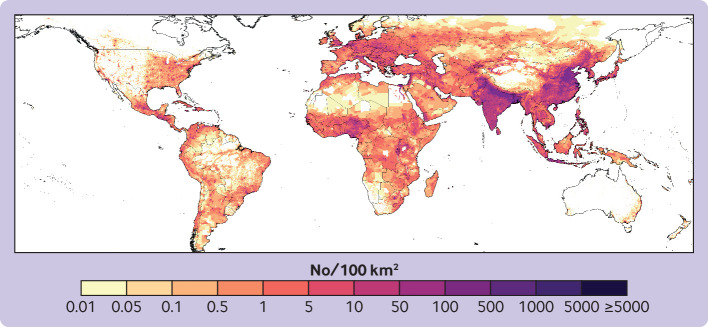
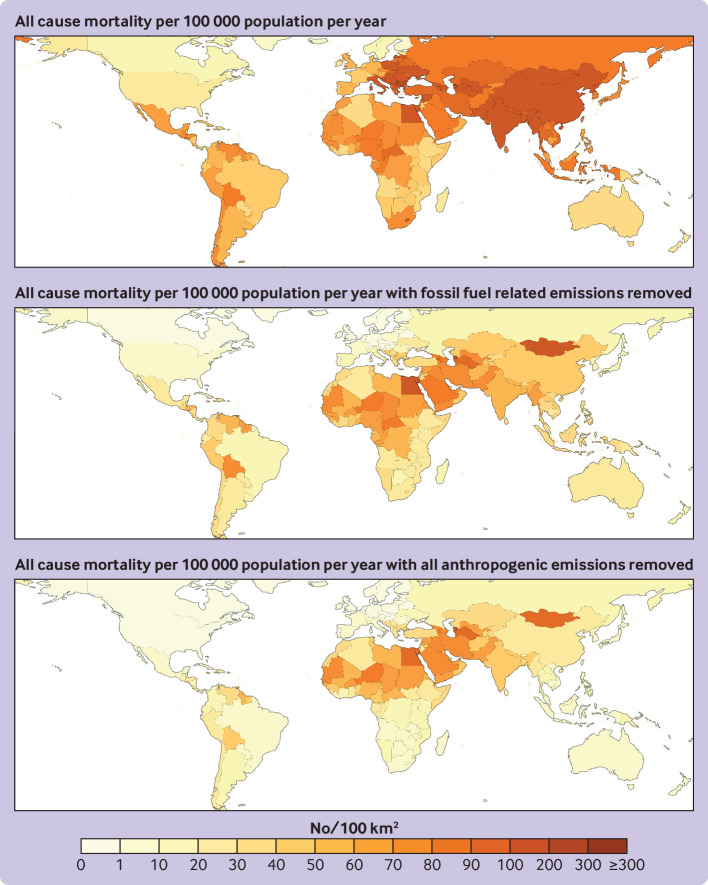
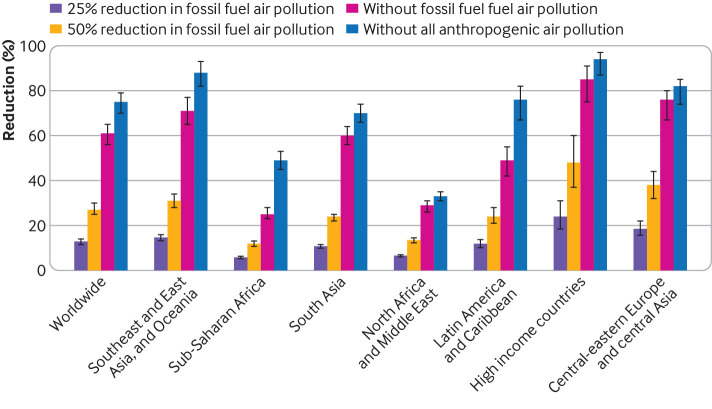
OBJECTIVES: To estimate all cause and cause specific deaths that are attributable to fossil fuel related air pollution and to assess potential health benefits from policies that replace fossil fuels with clean, renewable energy sources. DESIGN: Observational and modelling study. METHODS: An updated atmospheric composition model, a newly developed relative risk model, and satellite based data were used to determine exposure to ambient air pollution, estimate all cause and disease specific mortality, and attribute them to emission categories. DATA SOURCES: Data from the global burden of disease 2019 study, observational fine particulate matter and population data from National Aeronautics and Space Administration (NASA) satellites, and atmospheric chemistry, aerosol, and relative risk modelling for 2019. RESULTS: Globally, all cause excess deaths due to fine particulate and ozone air pollution are estimated at 8.34 million (95% confidence interval 5.63 to 11.19) deaths per year. Most (52%) of the mortality burden is related to cardiometabolic conditions, particularly ischaemic heart disease (30%). Stroke and chronic obstructive pulmonary disease both account for 16% of mortality burden. About 20% of all cause mortality is undefined, with arterial hypertension and neurodegenerative diseases possibly implicated. An estimated 5.13 million (3.63 to 6.32) excess deaths per year globally are attributable to ambient air pollution from fossil fuel use and therefore could potentially be avoided by phasing out fossil fuels. This figure corresponds to 82% of the maximum number of air pollution deaths that could be averted by controlling all anthropogenic emissions. Smaller reductions, rather than a complete phase-out, indicate that the responses are not strongly non-linear. Reductions in emission related to fossil fuels at all levels of air pollution can decrease the number of attributable deaths substantially. Estimates of avoidable excess deaths are markedly higher in this study than most previous studies for these reasons: the new relative risk model has implications for high income (largely fossil fuel intensive) countries and for low and middle income countries where the use of fossil fuels is increasing; this study accounts for all cause mortality in addition to disease specific mortality; and the large reduction in air pollution from a fossil fuel phase-out can greatly reduce exposure. CONCLUSION: Phasing out fossil fuels is deemed to be an effective intervention to improve health and save lives as part the United Nations' goal of climate neutrality by 2050. Ambient air pollution would no longer be a leading, environmental health risk factor if the use of fossil fuels were superseded by equitable access to clean sources of renewable energy.
Overview
The claims and statistics of this paper haven’t been checked yet.
Run the check — free, no account needed. It reads the open-access text and checks the sources it cites.
Integrity signals
Registry
Cites
Statistics
Figures
Verification
Claims the paper makes
The claims and statistics of this paper haven’t been checked yet.
Run the check — free, no account needed. It reads the open-access text and checks the sources it cites.
Claims other papers make about this one
Each is checked against this paper’s own text: does it say what the citing paper says it does?
The cited source doesn’t support the claim as written.
In the citing paper
“The extensively validated model used in this indicator suggests that exposure to fossil fuel-derived outdoor PM2·5 pollution contributed to 2·09 million of these deaths, with coal burning accounting for nearly 980 000 deaths.273”
From The 2024 report of the Lancet Countdown on health and climate change: facing record-breaking threats from delayed action (2024) · cites this paper as [273]
Checked by a reasoning model — may be wrong.
Experimental — accuracy not yet measuredThe check wasn’t confident either way, so it gives no verdict — never disputed.
In the citing paper
“The extensively validated model used in this indicator suggests that exposure to fossil fuel-derived outdoor PM2·5 pollution contributed to 2·09 million of these deaths, with coal burning accounting for nearly 980 000 deaths.273”
From The 2024 report of the Lancet Countdown on health and climate change: facing record-breaking threats from delayed action (2024) · cites this paper as [273]
Experimental — accuracy not yet measured
Self-check
Percentages, sums and reported differences re-computed from the paper’s own numbers.
The self-check needs the paper’s full text.
Citations
Cites
Hersbach, H., Bell, B., Berrisford, P., Hirahara, S., Horányi, A., Muñoz‐Sabater, J., Nicolas, J., Peubey, C., Radu, R., Schepers, D., et al. (2020) · Quarterly Journal of the Royal Meteorological Society · doi:10.1002/qj.3803 · Cited by 31,882
Murray, C. J. L., Aravkin, A. Y., Zheng, P., Abbafati, C., Abbas, K. M., Abbasi-Kangevari, M., Abd-Allah, F., Abdelalim, A., Abdollahi, M., Abdollahpour, I., et al. (2020) · The Lancet · doi:10.1016/s0140-6736(20)30752-2 · Cited by 9,854
(IPCC), I. P. O. C. C. (2023) · doi:10.1017/9781009157896 · Cited by 6,972
The contribution of outdoor air pollution sources to premature mortality on a global scale
Lelieveld, J., Evans, J. S., Fnais, M., Giannadaki, D., & Pozzer, A. (2015) · Nature · doi:10.1038/nature15371 · Cited by 5,977
Self-citationGuenther, A., Jiang, X., Heald, C. L., Sakulyanontvittaya, T., Duhl, T. R., Emmons, L. K., & Wang, X. (2012) · Geoscientific model development · doi:10.5194/gmd-5-1471-2012 · Cited by 4,126
Global estimates of mortality associated with long-term exposure to outdoor fine particulate matter
Burnett, R., Chen, H., Szyszkowicz, M., Fann, N., Hubbell, B., Pope, C. A., Apte, J. S., Brauer, M., Cohen, A., Weichenthal, S., et al. (2018) · Proceedings of the National Academy of Sciences · doi:10.1073/pnas.1803222115 · Cited by 2,504
Self-citationGinoux, P. A., Prospero, J. M., Gill, T. E., Hsu, N.-Y. C., & Zhao, M. (2012) · Reviews of Geophysics · doi:10.1029/2012rg000388 · Cited by 1,722
Emission of trace gases and aerosols from biomass burning – an updated assessment
Andreae, M. O. (2019) · Atmospheric Chemistry and Physics · doi:10.5194/acp-19-8523-2019 · Cited by 1,091
Effects of fossil fuel and total anthropogenic emission removal on public health and climate
Lelieveld, J., Klingmüller, K., Pozzer, A., Burnett, R. T., Haines, A., & Ramanathan, V. (2019) · Proceedings of the National Academy of Sciences · doi:10.1073/pnas.1819989116 · Cited by 984
Self-citationLoss of life expectancy from air pollution compared to other risk factors: a worldwide perspective
Lelieveld, J., Pozzer, A., Pöschl, U., Fnais, M. S., Haines, A., & Münzel, T. F. (2020) · Cardiovascular Research · doi:10.1093/cvr/cvaa025 · Cited by 861
Self-citation
Cited by
Sorted by citations
Romanello, M., Walawender, M., Hsu, S.-C., Moskeland, A., Palmeiro-Silva, Y., Scamman, D., Ali, Z., Ameli, N., Angelova, D., Ayeb-Karlsson, S., et al. (2024) · The Lancet · doi:10.1016/s0140-6736(24)01822-1 · Cited by 897
Photothermal fabrics for solar-driven seawater desalination
Hu, J., Sun, Y. P., Liu, Z., Zhu, B., Zhang, L., Xu, N., Zhu, M., Zhu, J., & Chen, Z. (2024) · Progress in Materials Science · doi:10.1016/j.pmatsci.2024.101407 · Cited by 160
Soil and water pollution and cardiovascular disease
Münzel, T. F., Hahad, O., Lelieveld, J., Aschner, M., Nieuwenhuijsen, M. J., Landrigan, P. J., & Daiber, A. (2024) · Nature Reviews Cardiology · doi:10.1038/s41569-024-01068-0 · Cited by 163
Self-citationRaduà, J., Prisco, M. D., Oliva, V., Fico, G., Vieta, E., & Fusar‐Poli, P. (2024) · World Psychiatry · doi:10.1002/wps.21219 · Cited by 154
Particulate Matter-Induced Emerging Health Effects Associated with Oxidative Stress and Inflammation
Lim, E. Y., & Kim, G.-D. (2024) · Antioxidants · doi:10.3390/antiox13101256 · Cited by 132
Metadata
- Authors
- Lelieveld, J., Haines, A., Burnett, R., Tonne, C., Klingmüller, K., Münzel, T., & Pozzer, A.
- Affiliations
- Cyprus Institute (CY)
- London School of Hygiene & Tropical Medicine (GB)
- University of Washington (US)
- Universitat Pompeu Fabra (ES)
- Max Planck Institute for Chemistry (DE)
- University Medical Center of the Johannes Gutenberg University Mainz (DE)
- Corresponding author
- Lelieveld, Jos
- ORCID
- Venue
- BMJ
- Publisher
- BMJ
- Published
- 2023-11-29
- Volume
- 383
- Pages
- e077784
- ISSN
- 1756-1833 (ISSN-L)
- PMC
- PMC10686100
- OpenAlex
- W4389154806
- Cited by
- 289
- References
- 44
- Citations by year
- 2026: 82 · 2025: 120 · 2024: 83 · 2023: 4
- FWCI
- 33.12
- Type
- journal article
- Language
- en
- Open access
- hybrid
- doi.org
- Licence
- Locations
- BMJ (publishedVersion, cc-by-nc)
- PubMed Central (publishedVersion, cc-by-nc)
- PubMed (publishedVersion)
- White Rose Research Online (University of Leeds, The University of Sheffield, University of York) (acceptedVersion)
- LSHTM Research Online (London School of Hygiene and Tropical Medicine) (acceptedVersion, other-oa)
- Repositori digital de la UPF (Universitat Pompeu Fabra) (submittedVersion, cc-by-nc-nd)
- HighWire Press Open Archive (submittedVersion)
- Funders
- European Union Agency for Cybersecurity
- Oak Foundation
- Wellcome Trust
- Topics
- Physical Sciences › Environmental Science › Health, Toxicology and Mutagenesis › Air Quality and Health Impacts
- Physical Sciences › Environmental Science › Pollution › Energy and Environment Impacts
- Physical Sciences › Environmental Science › Global and Planetary Change › COVID-19 impact on air quality
- Keywords
- air pollution mortality, fossil fuel phase-out, PM2.5, ozone, ischemic heart disease, stroke, chronic obstructive pulmonary disease, relative risk model, anthropogenic emissions, renewable energy transition, climate neutrality, global health burden, atmospheric chemistry modeling, low- and middle-income countries
- MeSH terms
- Air Pollutants, Air Pollution, Fossil Fuels, Humans, Income, Ozone, Particulate Matter
About these checks
Registry, retraction, Cites and statistics results are computed, not judged, with one exception: a printed reference that no index lists is read once by a model before it counts as a citation error. Claims are extracted by a model and kept only when their quote appears verbatim in the text; each cited source is then checked, with a model’s help, for whether it says what the claim relies on. Those verdicts can be wrong — read the claim’s quote and the cited source before relying on one.
Statistics and arithmetic are recomputed, not judged.
Confidence bands are shown only for fields calibrated on our annotated test set. None is calibrated yet, so no band is shown.
What counts as a claim ›How we measure confidence ›How we check this ›
Are you an author, or do you see a problem with this page? Request a review
