

Maternal paracetamol (acetaminophen) use during pregnancy and risk of autism spectrum disorder and attention deficit/hyperactivity disorder in offspring: umbrella review of systematic reviews
Open accessThe DOI matches its Crossref record; 48 of the 48 references it cites were found in a registry or an index.
Abstract
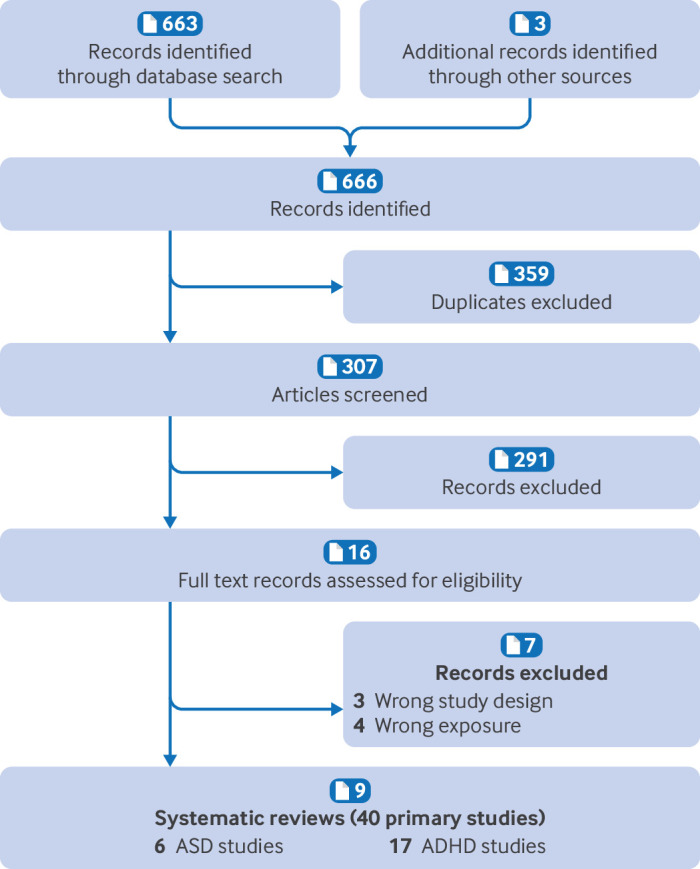
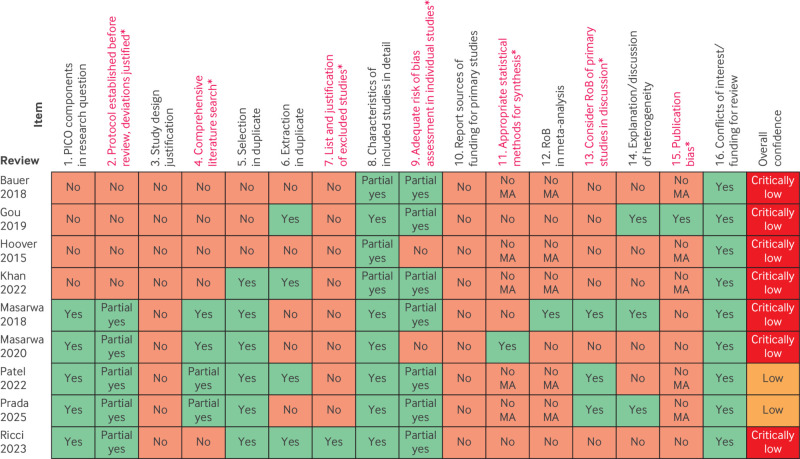
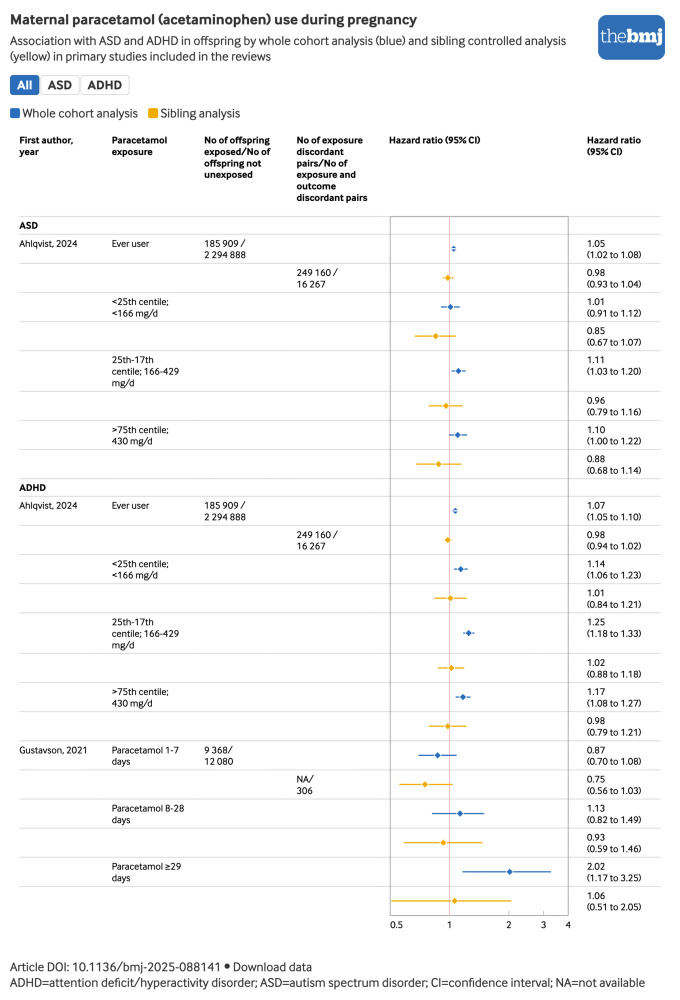
Objective: To assess the quality, biases, and validity of evidence on maternal paracetamol (acetaminophen) use during pregnancy and the risk of autism spectrum disorder (referred to as autism) and attention deficit/hyperactivity disorder (ADHD) in offspring. Design: Umbrella review of systematic reviews. Data sources: Medline, Embase, PsycINFO, and the Cochrane Database of Systematic Reviews, along with grey literature, Epistemonikos, and the reference lists of included studies (inception to 30 September 2025). Inclusion criteria: Systematic reviews of randomised trials and cohort, case-control, or cross sectional studies that reported maternal paracetamol use during pregnancy and the diagnosis of autism or ADHD in offspring. Details of the primary studies included in the reviews are reported, including adjustments for key confounders (maternal characteristics, indication for paracetamol use, and familial factors) and unmeasured confounders and ascertainment of outcomes. Results: Nine reviews (40 studies) reporting on autism (six studies) and ADHD (17 studies) in offspring were included. Four reviews undertook meta-analysis. The overlap of primary studies included in the reviews was very high (corrected covered area 23%). The reviews reported a possible to strong association between maternal paracetamol intake and autism or ADHD or both in offspring. Seven of the nine reviews advised caution when interpreting the findings owing to the potential risk of bias and confounding in the included studies. Confidence in the findings of the reviews was low (two reviews) to critically low (seven reviews) based on the AMSTAR 2 (A MeaSurement Tool to Assess Systematic Reviews) criteria. Only one review included studies (n=2) reporting autism and ADHD in offspring that appropriately adjusted for familial factors and unmeasured confounding through sibling controlled analyses. In both studies, the increased risk of autism in offspring (one study, hazard ratio 1.05, 95% confidence interval 1.02 to 1.08) and ADHD (two studies, 1.07, 1.05 to 1.10 and 2.02, 1.17 to 3.25 ) observed in the whole cohort analyses did not persist in sibling controlled analyses for autism (0.98, 0.93 to 1.04) and ADHD (0.98, 0.94 to 1.02 and 1.06, 0.51 to 2.05). Conclusion: Existing evidence does not clearly link maternal paracetamol use during pregnancy with autism or ADHD in offspring. Systematic review registration: PROSPERO CRD420251154052.
Overview
The claims and statistics of this paper haven’t been checked yet.
Free: it reads the open-access text and checks the first 5 claims that cite a source we can check. Create a free account to check every claim.
Integrity signals
Registry
Cites
Statistics
Figures
Verification
Claims the paper makes
The claims and statistics of this paper haven’t been checked yet.
Free: it reads the open-access text and checks the first 5 claims that cite a source we can check. Create a free account to check every claim.
Claims other papers make about this one
Each is checked against this paper’s own text: does it say what the citing paper says it does?
The cited source says what the claim attributes to it.
In the citing paper
“and a 2025 umbrella review of systematic reviews concluded that existing evidence does not clearly establish a link with autism or attention-deficit/hyperactivity disorder, which attributes earlier signals largely to unmeasured and familial confounding [ 23 ].”
From Paracetamol: A History of Assumptions, Errors, and Evidence Reversals in Pain Management (2026) · cites this paper as [23]
Self-check
Percentages, sums and reported differences re-computed from the paper’s own numbers.
The self-check needs the paper’s full text.
Citations
Cites
Meta-analysis of Observational Studies in Epidemiology<SUBTITLE>A Proposal for Reporting</SUBTITLE>
Stroup, D. F. (2000) · JAMA · doi:10.1001/jama.283.15.2008 · Cited by 20,623
Shea, B. J., Reeves, B. C., Wells, G., Thuku, M., Hamel, C., Moran, J., Moher, D., Tugwell, P., Welch, V., Kristjansson, E., et al. (2017) · BMJ · doi:10.1136/bmj.j4008 · Cited by 10,636 · cited 1×
“24 25 This justified our strategy to focus on primary studies with better control of bias that used a sibling (within family) design, because autism and ADHD show strong familial aggregation, 41 42 making it important to control for unmeasured genetic and stable family factors.”
Why Most Published Research Findings Are False
Ioannidis, J. P. A. (2005) · PLoS Medicine · doi:10.1371/journal.pmed.0020124 · Cited by 10,505
Wolraich, M. L., Hagan, J. F., Allan, C., Chan, E., Davison, D., Earls, M., Evans, S. W., Flinn, S. K., Froehlich, T., Frost, J., et al. (2019) · Pediatrics · doi:10.1542/peds.2019-2528 · Cited by 1,562
Genetics of attention deficit hyperactivity disorder
Faraone, S. V., & Larsson, H. (2019) · Molecular Psychiatry · doi:10.1038/s41380-018-0070-0 · Cited by 1,338
Gates, M., Gates, A., Pieper, D., Fernandes, R. M., Tricco, A. C., Moher, D., Brennan, S. E., Li, T., Pollock, M., Lunny, C., et al. (2022) · BMJ · doi:10.1136/bmj-2022-070849 · Cited by 856 · cited 1×
“23 We searched Medline, Embase, PsycINFO, the Cochrane Database of Systematic Reviews, grey literature, and Epistemonikos from inception to 30 September 2025 for systematic reviews and meta-analyses of studies reporting maternal paracetamol use and autism spectrum disorder and ADHD outcomes.”
Demontis, D., Walters, G. B., Athanasiadis, G., Walters, R., Therrien, K., Nielsen, T. T., Farajzadeh, L., Voloudakis, G., Bendl, J., Zeng, B., et al. (2023) · Nature Genetics · doi:10.1038/s41588-022-01285-8 · Cited by 768 · cited 1×
“24 25 This justified our strategy to focus on primary studies with better control of bias that used a sibling (within family) design, because autism and ADHD show strong familial aggregation, 41 42 making it important to control for unmeasured genetic and stable family factors.”
Association of Genetic and Environmental Factors With Autism in a 5-Country Cohort
Bai, D., Yip, B. H. K., Windham, G. C., Sourander, A., Francis, R., Yoffe, R., Glasson, E., Mahjani, B., Suominen, A., Leonard, H., et al. (2019) · JAMA Psychiatry · doi:10.1001/jamapsychiatry.2019.1411 · Cited by 683 · cited 1×
“24 25 This justified our strategy to focus on primary studies with better control of bias that used a sibling (within family) design, because autism and ADHD show strong familial aggregation, 41 42 making it important to control for unmeasured genetic and stable family factors.”
Sibling Comparison Designs: Bias From Non-Shared Confounders and Measurement Error
Frisell, T., Öberg, S., Kuja-Halkola, R., & Sjölander, A. (2012) · Epidemiology · doi:10.1097/ede.0b013e31825fa230 · Cited by 551
Li, D.-K., Liu, L., & Odouli, R. (2003) · BMJ · doi:10.1136/bmj.327.7411.368 · Cited by 434 · cited 1×
“…to adversely affect the fetal vascular system and can cause complications such as oligohydramnios and premature closure of the ductus arteriosus, 48-50 and considering the harmful effects of pyrexia on pregnancy, women should be advised to take paracetamol when needed to treat pain and pyrexia…”
Cited by
Milani, G. P., Nicolini, G., Cananzi, M., Spiezia, L., & Vidal, E. (2026) · Children · doi:10.3390/children13010071 · Cited by 5
“…the issue: a large Swedish sibling control cohort [115] found no causal link with autism, attention deficit and hyperactivity disorders (ADHD), or intellectual disability, and a comprehensive umbrella review [116] confirmed that the overall weight of evidence does not support such an association.”
Luo, S., Gong, Q., Ai, Y., Zhang, J., Chan, L., Wong, W. C. W., Ip, P. C. T., Chan, E. W., Tanuseputro, P., Wong, I. C. K., et al. (2026) · JAMA Internal Medicine · doi:10.1001/jamainternmed.2026.2215 · Cited by 11
Acetaminophen Exposure During Pregnancy and the Risk of Autism in Offspring
Prahm, K. P., Chen, P., Rode, L., Ekelund, C. K., Husby, K. R., Bergholt, T., Lidegaard, Ø., Scheller, N. M., & Mikkelsen, A. P. (2026) · Archives of Pediatrics and Adolescent Medicine · doi:10.1001/jamapediatrics.2026.0646 · Cited by 6
Wise, J. (2025) · BMJ · doi:10.1136/bmj.r2368 · Cited by 4
A Noisy Signal? Geographic Bias in FAERS Reports Linking Paracetamol to Autism Spectrum Disorder
Yalçın, H. T., Yalçın, N., Allegaert, K., & Erkekoğlu, P. (2026) · Journal of Clinical Medicine · doi:10.3390/jcm15020902 · Cited by 3
“Healthcare professionals generally base clinical practice on scientific consensus, which does not support a robust causal association between paracetamol exposure and ASD [18,35], whereas consumer reporting is more susceptible to media narratives and litigation-related messaging.”
InfluentialIdentifying and managing pregnancy-related pelvic girdle pain
Jakes, A., Chadha, K., & Igualada‐Martinez, P. (2026) · BMJ · doi:10.1136/bmj-2025-088930 · Cited by 4
“13 • Avoid non-steroidal anti-inflammatory drugs (NSAIDs) as symptoms of pelvic girdle pain may persist for prolonged periods (weeks to months) and prolonged use of NSAIDs should be avoided.”
Safety of acetaminophen use in pregnancy: review of existing evidence
Smith, R., & Zipursky, J. S. (2026) · American Journal of Obstetrics & Gynecology MFM · doi:10.1016/j.ajogmf.2026.101925 · Cited by 4
Paracetamol (acetaminophen) use in pregnancy and risk of autism and ADHD
Lee, B. K., Stephansson, O., & Gardner, R. M. (2025) · BMJ · doi:10.1136/bmj.r2438 · Cited by 2
‘Staggering’ number of people believe unproven claims about vaccines, raw milk and more
Pearson, H. (2026) · Nature · doi:10.1038/d41586-026-01285-2 · Cited by 2
Aggarwal, N. K., Bhui, K. S., Jarvis, G. E., Raikhel, E., Rousseau, C., & Kirmayer, L. J. (2026) · Transcultural Psychiatry · doi:10.1177/13634615261445844 · Cited by 2
“In the past year alone, researchers in obstetrics-gynecology, pediatrics, and child and adolescent psychiatry have emphasized that there is no evidence for a link between acetaminophen consumption and the development of autism (Bérard et al., 2025; Louwen et al., 2025; Sheikh et al., 2025).”
Autism, paracetamol and folic acid: the perils of health misinformation
Shah, R., & Hargreaves, D. S. (2026) · Archives of Disease in Childhood · doi:10.1136/archdischild-2025-329891 · Cited by 1
Triangulating Evidence on Prenatal Acetaminophen Use: Insights From a Large Japanese Cohort
Gardner, R. M., & Lee, B. K. (2025) · Paediatric and Perinatal Epidemiology · doi:10.1111/ppe.70105 · Cited by 1
Toxicologic Pathology Forum Opinion*: In Defense of Scientific Freedom
Sellers, R. S., Peterson, R. A., & Bolon, B. N. (2026) · Toxicologic Pathology · doi:10.1177/01926233261444692 · Cited by 1
“2,6,7,8,18,23,24 These errors coupled with the decimation of scientific staff and science advisory groups at such critical public health institutions as the US Centers for Disease Control and Prevention (CDC), the US Food and Drug Administration (FDA), the NIH, and the US National Academies of…”
A comprehensive overview of the biological foundations of ADHD
Folego-Temoteo, I., Lima, Y. C., Grevet, E. H., Vidor, M. V., Tavares, M. E., da Silva, B. S., Bau, C. H. D., & Rovaris, D. L. (2026) · Bioscience Reports · doi:10.1042/bsr20254061 · Cited by 1
Hasanain, R. S., Al-Kuraishy, H. M., Shokr, M. M., Kafy, S., Alshaikh, A. B. A., Mogharbel, H., Kashgari, F. A., Sebghatallah, A., & Batiha, G. E. (2026) · NeuroToxicology · doi:10.1016/j.neuro.2026.103555 · Cited by 1
Paracetamol (Tylenol) in pregnancy: fresh study dispels autism risk
Mahase, E. (2026) · BMJ · doi:10.1136/bmj.s113 · Cited by 1
Paracetamol: A History of Assumptions, Errors, and Evidence Reversals in Pain Management
Nicolas, J., Leoni, M. L. G., Van Tran, Y., Van Phong, P., Farì, G., Puttini, P. S., Kaye, A. D., & Varrassi, G. (2026) · Current Pain and Headache Reports · doi:10.1007/s11916-026-01553-w
The potential and limits of scrutiny in medical research
Abbasi, K. A. (2025) · BMJ · doi:10.1136/bmj.r2411 · Cited by 1
Role of maternal factors in autism; and more
Adams, J. U. (2025) · The Transmitter · doi:10.53053/npkq2267
Tufan, A. E. (2025) · Journal of Clinical Psychiatry · doi:10.5505/kpd.2025.93271
Is paracetamol in pregnancy a risk factor for ADHD?
Brown, C. (2026) · Nature · doi:10.1038/d41586-026-00097-8
Is it time for the removal of valproate restrictions in men? Further evidence from a new study
Angus‐Leppan, H. (2026) · Journal of Neurology Neurosurgery & Psychiatry · doi:10.1136/jnnp-2025-338176
Prevalence and predictors of analgesic use during early pregnancy in a Brazilian population
Passoni, M. T., Rompkovski, M. R., Rios, V. A. S., Ribeiro, D. C. K., Maltoni, A. A., Basso, C. G., Tolouei, S. E. L., Franco, J. M., da Silva, B. M., Martino‐Andrade, A. J., et al. (2026) · Frontiers in Pharmacology · doi:10.3389/fphar.2026.1730483
“However, the available data remain inconclusive, and some studies have found no evidence of associations between prenatal paracetamol use and these outcomes (Ahlqvist et al., 2024; Sheikh et al., 2025).”
Roca-Pogo, J. (2026) · Research Square · doi:10.21203/rs.3.rs-8971010/v1
Fermented Beverages, Ethanol and Health: A Critical Appraisal of Meta-Analytical Studies
Malfeito-Ferreira, J., & Malfeito‐Ferreira, M. (2026) · Fermentation · doi:10.3390/fermentation12030159
Vestibular brainstem impairment following in utero exposure to high dose paracetamol
Graeca, M., Donnelly, A., Cain, L., & Kulesza, R. J. (2026) · Brain Research · doi:10.1016/j.brainres.2026.150282
Epidemiology, Risk Factors, and Management of Pregnancy-Related Chronic Back Pain
Jung, H. S., Liongson, F. A. Z., Fonseca, A. C. G., Yuan, C., Thérond, A., Christo, P. J., Nguyen, A., Kulich, R. J., Hasoon, J. J., & Robinson, C. L. (2026) · Current Pain and Headache Reports · doi:10.1007/s11916-026-01470-y
The Prenatal Dilemma: Fever vs Acetaminophen? Navigating a Difficult Choice
Darayesh, M., Entezar-Almahdi, E., Jahromi, M. A. M., Falahi, S., Kenarkoohi, A., & Abdoli, A. (2026) · ACS Pharmacology & Translational Science · doi:10.1021/acsptsci.5c00749
Aluminium and vaccine safety: false hypotheses rarely die
Abbasi, K. (2026) · BMJ · doi:10.1136/bmj.s886
Paracetamol in Pregnancy: Uncertain Evidence, Certain Consequences
Tunnicliffe, D. J., Cumpston, M., Kennedy, D. S., Danchin, M. H., & Teixeira-Pinto, A. M. (2026) · The Medical Journal of Australia · doi:10.5694/mja2.70203
Moving beyond associations: The role of mechanistic evidence in prenatal paracetamol safety
SAMARA, A. A., & Khalil, A. A. (2026) · Med · doi:10.1016/j.medj.2026.101142
Impact of a careless comment about paracetamol
Narkhede, D. (2026) · MGM Journal of Medical Sciences · doi:10.4103/mgmj.mgmj_102_26
Olborska, A., Wrochna, B. M., Brzozowska, A., Stondzik, G., Garbacz, A. I., Kosiorek, P., Radziwonka, A., Majszyk, T. J., Głuski, J., Borowiecka, P. A., et al. (2026) · Quality in Sport · doi:10.12775/qs.2026.68.74297
Grover, A., Reis‐Pardal, J., Ellis, R. J., Ioannidis, J. P. A., & Patel, C. J. (2026) · medRxiv · doi:10.64898/2026.08.28.26361666
Tayebi‐Hillali, H., Blanco‐Suárez, M., Mundiña, B. R., Posse, M. J. L., Freitas, M. D., & Dios, P. D. (2026) · Developmental Medicine & Child Neurology · doi:10.1111/dmcn.70512
Exclusion by Design: Regulatory Reform and Evolving Frameworks for Clinical Trials in Pregnancy
Kearns, G. L., & Saint-Raymond, A. (2026) · Pediatric Drugs · doi:10.1007/s40272-026-00779-w
In Utero Exposure to the 1982 Tylenol Recall and Neurodevelopmental Outcomes
Worsham, C. M., Bray, C., Rothman, J. M., Kwan, B., & Jena, A. B. (2026) · National Bureau of Economic Research · doi:10.3386/w35873
Tayebi‐Hillali, H., Blanco‐Suárez, M., Mundiña, B. R., Limeres‐Posse, J., Freitas, M. D., & Dios, P. D. (2026) · Developmental Medicine & Child Neurology · doi:10.1111/dmcn.70536
Andonotopo, W., Suryawan, A., Putra, R. A., Rahardjo, T. M., Rumanti, R. T., Lengkey, R. F., Setiawan, A., Gunadi, J. W., Bachnas, M. A., Pramono, M. B. A., et al. (2025) · Journal of Pharmaceutical and BioSciences · doi:10.4103/jpbsonline.jpbsonline_5_26
Metadata
- Authors
- Sheikh, J., Allotey, J., Sobhy, S., Plana, M. N., Martinez-Barros, H., Naidu, H., Junaid, F., Sofat, R., Mol, B. W., Kenny, L. C., Gladstone, M., Teede, H., Zamora, J., & Thangaratinam, S.
- Affiliations
- University of Liverpool (GB)
- University of Birmingham (GB)
- Hospital Universitario Ramón y Cajal, IRYCIS, Madrid, Spain
- Monash University (AU)
- Corresponding author
- Thangaratinam, Shakila
- ORCID
- Venue
- BMJ
- Publisher
- BMJ
- Published
- 2025-11-09
- Volume
- 391
- Pages
- e088141
- ISSN
- 1756-1833 (ISSN-L)
- PMC
- PMC12838471
- OpenAlex
- W4416058376
- Cited by
- 33
- References
- 48
- Citations by year
- 2026: 28 · 2025: 5
- FWCI
- 6.32
- Type
- journal article
- Language
- en
- Open access
- hybrid
- doi.org
- Licence
- Locations
- BMJ (publishedVersion, cc-by-nc)
- PubMed (publishedVersion)
- PubMed Central (publishedVersion, cc-by-nc)
- University of Birmingham Research Portal (University of Birmingham) (publishedVersion, cc-by-nc)
- Funders
- National Institute for Health and Care Research
- Department of Health and Social Care
- Instituto de Salud Carlos III
- Topics
- Health Sciences › Medicine › Public Health, Environmental and Occupational Health › Pregnancy and Medication Impact
- Life Sciences › Neuroscience › Cognitive Neuroscience › Autism Spectrum Disorder Research
- Health Sciences › Medicine › Pediatrics, Perinatology and Child Health › Prenatal Substance Exposure Effects
- Keywords
- paracetamol, pregnancy, autism spectrum disorder, attention deficit hyperactivity disorder, confounding, risk of bias, AMSTAR 2, umbrella review of systematic reviews, prenatal drug exposure, unmeasured confounding
- MeSH terms
- Autism Spectrum Disorder, Systematic Reviews as Topic, Acetaminophen, Attention Deficit Disorder with Hyperactivity, Female, Humans, Pregnancy, Prenatal Exposure Delayed Effects, Risk Factors, Analgesics, Non-Narcotic
About these checks
Registry, retraction, Cites and statistics results are computed, not judged, with one exception: a printed reference that no index lists is read once by a model before it counts as a citation error. Claims are extracted by a model and kept only when their quote appears verbatim in the text; each cited source is then checked, with a model’s help, for whether it says what the claim relies on. Those verdicts can be wrong — read the claim’s quote and the cited source before relying on one.
Statistics and arithmetic are recomputed, not judged.
Confidence bands are shown only for fields calibrated on our annotated test set. None is calibrated yet, so no band is shown.
What counts as a claim ›How we measure confidence ›How we check this ›
Are you an author, or do you see a problem with this page? Request a review
Data sources
Bibliographic data: Semantic Scholar, OpenAlex, Crossref.
Contains information from the Semantic Scholar Academic Graph Datasets, made available under the ODC Attribution License (ODC-BY 1.0).
Semantic Scholar’s data is described in: Kinney, R., et al. (2023). The Semantic Scholar Open Data Platform. arXiv:2301.10140.
