

Maternal paracetamol (acetaminophen) use during pregnancy and risk of autism spectrum disorder and attention deficit/hyperactivity disorder in offspring: umbrella review of systematic reviews
Open accessThe DOI matches its Crossref record; 48 of the 48 references it cites were found in a registry or an index.
Abstract
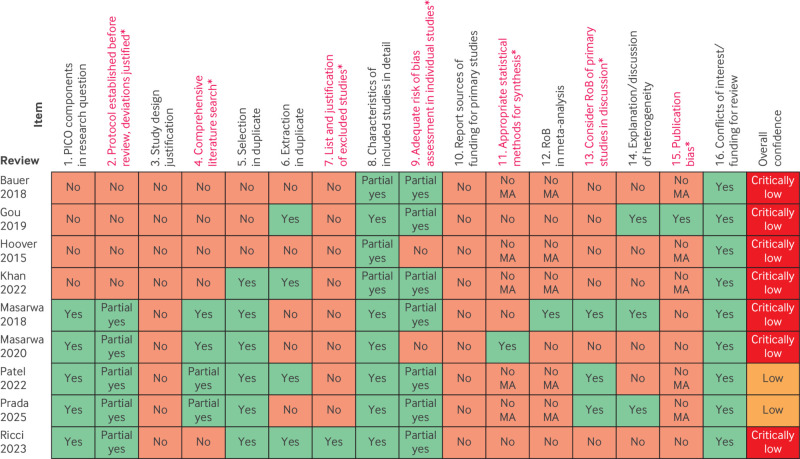
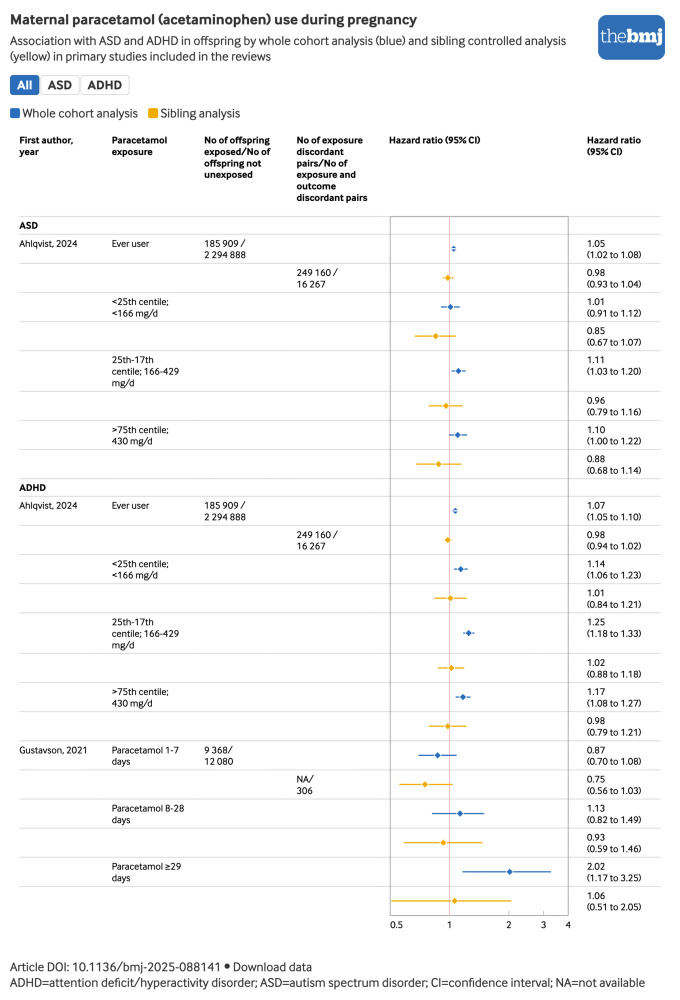
Objective: To assess the quality, biases, and validity of evidence on maternal paracetamol (acetaminophen) use during pregnancy and the risk of autism spectrum disorder (referred to as autism) and attention deficit/hyperactivity disorder (ADHD) in offspring. Design: Umbrella review of systematic reviews. Data sources: Medline, Embase, PsycINFO, and the Cochrane Database of Systematic Reviews, along with grey literature, Epistemonikos, and the reference lists of included studies (inception to 30 September 2025). Inclusion criteria: Systematic reviews of randomised trials and cohort, case-control, or cross sectional studies that reported maternal paracetamol use during pregnancy and the diagnosis of autism or ADHD in offspring. Details of the primary studies included in the reviews are reported, including adjustments for key confounders (maternal characteristics, indication for paracetamol use, and familial factors) and unmeasured confounders and ascertainment of outcomes. Results: Nine reviews (40 studies) reporting on autism (six studies) and ADHD (17 studies) in offspring were included. Four reviews undertook meta-analysis. The overlap of primary studies included in the reviews was very high (corrected covered area 23%). The reviews reported a possible to strong association between maternal paracetamol intake and autism or ADHD or both in offspring. Seven of the nine reviews advised caution when interpreting the findings owing to the potential risk of bias and confounding in the included studies. Confidence in the findings of the reviews was low (two reviews) to critically low (seven reviews) based on the AMSTAR 2 (A MeaSurement Tool to Assess Systematic Reviews) criteria. Only one review included studies (n=2) reporting autism and ADHD in offspring that appropriately adjusted for familial factors and unmeasured confounding through sibling controlled analyses. In both studies, the increased risk of autism in offspring (one study, hazard ratio 1.05, 95% confidence interval 1.02 to 1.08) and ADHD (two studies, 1.07, 1.05 to 1.10 and 2.02, 1.17 to 3.25 ) observed in the whole cohort analyses did not persist in sibling controlled analyses for autism (0.98, 0.93 to 1.04) and ADHD (0.98, 0.94 to 1.02 and 1.06, 0.51 to 2.05). Conclusion: Existing evidence does not clearly link maternal paracetamol use during pregnancy with autism or ADHD in offspring. Systematic review registration: PROSPERO CRD420251154052.
Overview
The claims and statistics of this paper haven’t been checked yet.
Free: it reads the open-access text and checks the first 5 claims that cite a source we can check. Create a free account to check every claim.
Integrity signals
Registry
Cites
Statistics
Figures
Verification
Claims the paper makes
The claims and statistics of this paper haven’t been checked yet.
Free: it reads the open-access text and checks the first 5 claims that cite a source we can check. Create a free account to check every claim.
Claims other papers make about this one
Each is checked against this paper’s own text: does it say what the citing paper says it does?
The cited source says what the claim attributes to it.
In the citing paper
“and a 2025 umbrella review of systematic reviews concluded that existing evidence does not clearly establish a link with autism or attention-deficit/hyperactivity disorder, which attributes earlier signals largely to unmeasured and familial confounding [ 23 ].”
From Paracetamol: A History of Assumptions, Errors, and Evidence Reversals in Pain Management (2026) · cites this paper as [23]
Self-check
Percentages, sums and reported differences re-computed from the paper’s own numbers.
The self-check needs the paper’s full text.
Citations
Cites
Meta-analysis of Observational Studies in Epidemiology<SUBTITLE>A Proposal for Reporting</SUBTITLE>
Stroup, D. F. (2000) · JAMA · doi:10.1001/jama.283.15.2008 · Cited by 20,623
Shea, B. J., Reeves, B. C., Wells, G., Thuku, M., Hamel, C., Moran, J., Moher, D., Tugwell, P., Welch, V., Kristjansson, E., et al. (2017) · BMJ · doi:10.1136/bmj.j4008 · Cited by 10,636 · cited 1×
“24 25 This justified our strategy to focus on primary studies with better control of bias that used a sibling (within family) design, because autism and ADHD show strong familial aggregation, 41 42 making it important to control for unmeasured genetic and stable family factors.”
Why Most Published Research Findings Are False
Ioannidis, J. P. A. (2005) · PLoS Medicine · doi:10.1371/journal.pmed.0020124 · Cited by 10,505
Wolraich, M. L., Hagan, J. F., Allan, C., Chan, E., Davison, D., Earls, M., Evans, S. W., Flinn, S. K., Froehlich, T., Frost, J., et al. (2019) · Pediatrics · doi:10.1542/peds.2019-2528 · Cited by 1,562
Genetics of attention deficit hyperactivity disorder
Faraone, S. V., & Larsson, H. (2019) · Molecular Psychiatry · doi:10.1038/s41380-018-0070-0 · Cited by 1,338
Gates, M., Gates, A., Pieper, D., Fernandes, R. M., Tricco, A. C., Moher, D., Brennan, S. E., Li, T., Pollock, M., Lunny, C., et al. (2022) · BMJ · doi:10.1136/bmj-2022-070849 · Cited by 856 · cited 1×
“23 We searched Medline, Embase, PsycINFO, the Cochrane Database of Systematic Reviews, grey literature, and Epistemonikos from inception to 30 September 2025 for systematic reviews and meta-analyses of studies reporting maternal paracetamol use and autism spectrum disorder and ADHD outcomes.”
Demontis, D., Walters, G. B., Athanasiadis, G., Walters, R., Therrien, K., Nielsen, T. T., Farajzadeh, L., Voloudakis, G., Bendl, J., Zeng, B., et al. (2023) · Nature Genetics · doi:10.1038/s41588-022-01285-8 · Cited by 768 · cited 1×
“24 25 This justified our strategy to focus on primary studies with better control of bias that used a sibling (within family) design, because autism and ADHD show strong familial aggregation, 41 42 making it important to control for unmeasured genetic and stable family factors.”
Association of Genetic and Environmental Factors With Autism in a 5-Country Cohort
Bai, D., Yip, B. H. K., Windham, G. C., Sourander, A., Francis, R., Yoffe, R., Glasson, E., Mahjani, B., Suominen, A., Leonard, H., et al. (2019) · JAMA Psychiatry · doi:10.1001/jamapsychiatry.2019.1411 · Cited by 683 · cited 1×
“24 25 This justified our strategy to focus on primary studies with better control of bias that used a sibling (within family) design, because autism and ADHD show strong familial aggregation, 41 42 making it important to control for unmeasured genetic and stable family factors.”
Sibling Comparison Designs: Bias From Non-Shared Confounders and Measurement Error
Frisell, T., Öberg, S., Kuja-Halkola, R., & Sjölander, A. (2012) · Epidemiology · doi:10.1097/ede.0b013e31825fa230 · Cited by 551
Li, D.-K., Liu, L., & Odouli, R. (2003) · BMJ · doi:10.1136/bmj.327.7411.368 · Cited by 434 · cited 1×
“…to adversely affect the fetal vascular system and can cause complications such as oligohydramnios and premature closure of the ductus arteriosus, 48-50 and considering the harmful effects of pyrexia on pregnancy, women should be advised to take paracetamol when needed to treat pain and pyrexia…”
Prenatal paracetamol exposure and child neurodevelopment: a sibling-controlled cohort study
Brandlistuen, R. E., Ystrom, E., Nulman, I., Koren, G., & Nordeng, H. (2013) · International Journal of Epidemiology · doi:10.1093/ije/dyt183 · Cited by 305
Werling, D. M., Brand, H., An, J.-Y., Stone, M. R., Zhu, L., Glessner, J. T., Collins, R. L., Dong, S., Layer, R. M., Markenscoff-Papadimitriou, E., et al. (2018) · Nature Genetics · doi:10.1038/s41588-018-0107-y · Cited by 293 · cited 1×
“38-40 Strengths and limitations of this review Our overview brings together all relevant evidence and applies established methods to assess quality.”
Systematic review and meta-analyses: fever in pregnancy and health impacts in the offspring
Dreier, J. W., Andersen, A.-M. N., & Berg-Beckhoff, G. (2014) · PEDIATRICS · doi:10.1542/peds.2013-3205 · Cited by 204
The contributions of rare inherited and polygenic risk to ASD in multiplex families
Cirnigliaro, M., Chang, T. S., Arteaga, S. A., Pérez‐Cano, L., Ruzzo, E. K., Gordon, A., Bicks, L. K., Jung, J.-Y., Lowe, J. K., Wall, D. P., et al. (2023) · Proceedings of the National Academy of Sciences · doi:10.1073/pnas.2215632120 · Cited by 151
Acetaminophen Use During Pregnancy and Children’s Risk of Autism, ADHD, and Intellectual Disability
Ahlqvist, V. H., Sjöqvist, H., Dalman, C., Karlsson, H., Stephansson, O., Johansson, S., Magnusson, C., Gardner, R. M., & Lee, B. K. (2024) · JAMA · doi:10.1001/jama.2024.3172 · Cited by 147 · cited 10×
“36 These studies were at low risk of bias, with limited concerns about missing data.”
InfluentialMasarwa, R., Levine, H., Gorelik, E., Reif, S., Perlman, A., & Matok, I. (2018) · American Journal of Epidemiology · doi:10.1093/aje/kwy086 · Cited by 132
Prenatal paracetamol exposure and child neurodevelopment: A review
Bauer, A. Z., Kriebel, D., Herbert, M. R., Bornehag, C.-G., & Swan, S. H. (2018) · Hormones and Behavior · doi:10.1016/j.yhbeh.2018.01.003 · Cited by 127 · cited 3×
“32 Seven reviews included only cohort studies 26-32 and two included cohort and case-control studies.”
Standards of diagnostic assessment for autism spectrum disorder
Brian, J. A., Zwaigenbaum, L., & Ip, A. (2019) · Paediatrics & Child Health · doi:10.1093/pch/pxz117 · Cited by 126 · cited 1×
“43 44 To be confident in a diagnosis, best practice guidelines always recommend a clinician’s diagnosis supported by evidence from well validated tools.”
Prenatal and perinatal analgesic exposure and autism: an ecological link
Bauer, A. Z., & Kriebel, D. (2013) · Environmental Health · doi:10.1186/1476-069x-12-41 · Cited by 118 · cited 1×
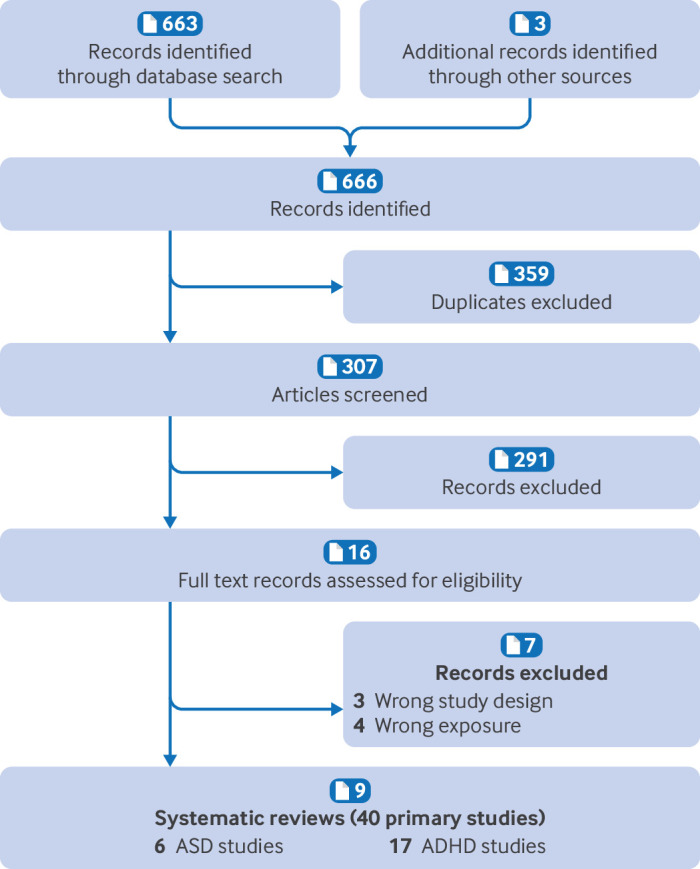
“From 663 citations, we included nine systematic reviews 16 17 26-32 that reported the findings from 40 primary studies (37 prospective cohorts, two case-control studies, 33 34 and one ecological study 35 ); four were meta-analyses.”
Kirvalidze, M., Abbadi, A., Dahlberg, L., Sacco, L. B., Calderón‐Larrañaga, A., & Morin, L. (2023) · Research Synthesis Methods · doi:10.1002/jrsm.1658 · Cited by 102 · cited 1×
“24 25 This justified our strategy to focus on primary studies with better control of bias that used a sibling (within family) design, because autism and ADHD show strong familial aggregation, 41 42 making it important to control for unmeasured genetic and stable family factors.”
Paracetamol (Acetaminophen) and the Developing Brain
Bührer, C., Endesfelder, S., Scheuer, T., & Schmitz, T. (2021) · International Journal of Molecular Sciences · doi:10.3390/ijms222011156 · Cited by 96 · cited 1×
“52 Various hypotheses based on animal, in vitro, and in silico work have proposed that paracetamol could influence fetal brain development through oxidative stress 53 ; mitochondrial effects 54 ; prostaglandin, endocannabinoid, or TRPV1 signalling 55 ; or epigenetic changes.”
Prada, D., Ritz, B. R., Bauer, A. Z., & Baccarelli, A. (2025) · Environmental Health · doi:10.1186/s12940-025-01208-0 · Cited by 88 · cited 2×
“Several criticisms of sibling designs have been raised, 16 57 which we consider in detail below.”
Alemany, S., Avella-García, C., Liew, Z., García-Esteban, R., Inoue, K., Cadman, T., López-Vicente, M., González, L., Riaño Galán, I., Andiarena, A., et al. (2021) · European Journal of Epidemiology · doi:10.1007/s10654-021-00754-4 · Cited by 87
Bandoli, G., Palmsten, K., & Chambers, C. (2020) · Paediatric and Perinatal Epidemiology · doi:10.1111/ppe.12595 · Cited by 86
Parker, W., Hornik, C. D., Bilbo, S., Holzknecht, Z. E., Gentry, L., Rao, R., Lin, S. S., Herbert, M. R., & Nevison, C. D. (2017) · Journal of International Medical Research · doi:10.1177/0300060517693423 · Cited by 81 · cited 1×
“52 Various hypotheses based on animal, in vitro, and in silico work have proposed that paracetamol could influence fetal brain development through oxidative stress 53 ; mitochondrial effects 54 ; prostaglandin, endocannabinoid, or TRPV1 signalling 55 ; or epigenetic changes.”
Fetal exposure to nonsteroidal anti-inflammatory drugs and spontaneous abortions
Daniel, S., Koren, G., Lunenfeld, E., Bilenko, N., Ratzon, R., & Levy, A. (2014) · Canadian Medical Association Journal · doi:10.1503/cmaj.130605 · Cited by 80
Antoun, S., Ellul, P., Peyre, H., Rosenzwajg, M., Gressèns, P., Klatzmann, D., & Delorme, R. (2021) · Molecular Autism · doi:10.1186/s13229-021-00464-4 · Cited by 73
Gustavson, K., Ystrøm, E., Ask, H., Torvik, F. A., Hornig, M., Susser, E., Lipkin, W. I., Lupattelli, A., Stoltenberg, C., Magnus, P. M., et al. (2021) · JCPP Advances · doi:10.1002/jcv2.12020 · Cited by 63 · cited 5×
“36 37 46 In the study by Gustavson et al, 37 out of the 29 090 siblings initially identified, 2477 were excluded owing to missing information on exposure and 5165 for missing information on covariates, which totalled about 25% of the sibling sample.”
InfluentialAntenatal and Postnatal Analgesia: Scientific Impact Paper No. 59
Bisson, D., Newell, S., & Laxton, C. (2018) · BJOG An International Journal of Obstetrics & Gynaecology · doi:10.1111/1471-0528.15510 · Cited by 55
Masarwa, R., Platt, R. W., & Filion, K. B. (2020) · Paediatric and Perinatal Epidemiology · doi:10.1111/ppe.12615 · Cited by 55
Mansour, O. E., Russo, R. G., Straub, L., Bateman, B. T., Gray, K. J., Huybrechts, K. F., & Hernández–Díaz, S. (2023) · American Journal of Obstetrics and Gynecology · doi:10.1016/j.ajog.2023.12.020 · Cited by 49
Gou, X., Wang, Y., Tang, Y., Qu, Y., Tang, J., Shi, J., Xiao, D., & Mu, D. (2019) · Australian & New Zealand Journal of Psychiatry · doi:10.1177/0004867418823276 · Cited by 48
Okubo, Y., Hayakawa, I., Sugitate, R., & Nariai, H. (2025) · Paediatric and Perinatal Epidemiology · doi:10.1111/ppe.70071 · Cited by 48 · cited 6×
“46 This short follow-up leaves many children without outcome information at older ages, increasing the potential for bias.”
InfluentialChen, M.-H., Pan, T.-L., Wang, P.-W., Hsu, J.-W., Huang, K.-L., Su, T.-P., Li, C.-T., Lin, W.-C., Tsai, S.-J., Chen, T.-J., et al. (2019) · The Journal of Clinical Psychiatry · doi:10.4088/jcp.18m12612 · Cited by 43 · cited 1×
“From 663 citations, we included nine systematic reviews 16 17 26-32 that reported the findings from 40 primary studies (37 prospective cohorts, two case-control studies, 33 34 and one ecological study 35 ); four were meta-analyses.”
Congenital heart defects after maternal fever
Botto, L. D., Panichello, J. D., Browne, M. L., Krikov, S. V., Feldkamp, M. L., Lammer, E. J., & Shaw, G. M. (2013) · American Journal of Obstetrics and Gynecology · doi:10.1016/j.ajog.2013.10.880 · Cited by 42
Hoover, R. M., Hayes, V. A. G., & Erramouspe, J. (2015) · Annals of Pharmacotherapy · doi:10.1177/1060028015606469 · Cited by 38 · cited 1×
“26-28 30 Our overview focused only on prenatal exposure to paracetamol and included five additional systematic reviews.”
Long-Term Safety of Prenatal and Neonatal Exposure to Paracetamol: A Systematic Review
Patel, R., Sushko, K., van den Anker, J. N., & Samiee‐Zafarghandy, S. (2022) · International Journal of Environmental Research and Public Health · doi:10.3390/ijerph19042128 · Cited by 38 · cited 2×
“32 Seven reviews included only cohort studies 26-32 and two included cohort and case-control studies.”
Khan, F. Y., Kabiraj, G., Ahmed, M. A., Adam, M., Mannuru, S. P., Ramesh, V., Ahmed, S., Chaduvula, P., & Khan, S. (2022) · Cureus · doi:10.7759/cureus.26995 · Cited by 36
Familial confounding in the associations between maternal health and autism
Khachadourian, V., Arildskov, E. S., Grove, J., O’Reilly, P. F., Buxbaum, J. D., Reichenberg, A., Sandin, S., Croen, L., Schendel, D., Hansen, S. N., et al. (2025) · Nature Medicine · doi:10.1038/s41591-024-03479-5 · Cited by 33 · cited 1×
“18 Erroneous conclusions could arise from ignoring the biases in primary studies and from inadequate definition and ascertainment of exposures and outcomes.”
Ricci, C., Albanese, C. M., Pablo, L. A., Li, J., Fatima, M., Barrett, K., Levis, B., & Brown, H. K. (2023) · Paediatric and Perinatal Epidemiology · doi:10.1111/ppe.12963 · Cited by 30 · cited 1×
“13 14 15-17 These reviews, based on observational studies, vary in methodological quality, findings, and the interpretation of evidence.”
Analgesic drug use in pregnancy and neurodevelopment outcomes: an umbrella review
Kwok, J., Luedecke, E., Hall, H. A., Murray, A. L., & Auyeung, B. (2022) · Neuroscience & Biobehavioral Reviews · doi:10.1016/j.neubiorev.2022.104607 · Cited by 24 · cited 2×
“A previous umbrella review, by Kwok et al, 15 examined the effect of prenatal exposure to various analgesic drugs and the risk of autism and ADHD in childhood and included four systematic reviews on paracetamol.”
Saunders, A., Woodland, J., & Gander, S. (2019) · Cureus · doi:10.7759/cureus.5223 · Cited by 23 · cited 1×
“From 663 citations, we included nine systematic reviews 16 17 26-32 that reported the findings from 40 primary studies (37 prospective cohorts, two case-control studies, 33 34 and one ecological study 35 ); four were meta-analyses.”
Autism: Trump links condition to Tylenol and touts leucovorin as “first” US therapeutic
Looi, M.-K., & Bowie, K. (2025) · BMJ · doi:10.1136/bmj.r2004 · Cited by 14 · cited 1×
“5 6 Therefore, we were unable to report the effects of paracetamol use on other neurodevelopmental outcomes.”
King, V. J., Nußbaumer-Streit, B., Shaw, B., Devane, D., Kahwati, L. C., Viswanathan, M., & Gartlehner, G. (2024) · BMJ Evidence-Based Medicine · doi:10.1136/bmjebm-2023-112617 · Cited by 13 · cited 1×
“22 Our findings are reported in line with the Preferred Reporting Items for Overviews of Reviews guidelines (see supplementary appendix 1).”
Acetaminophen’s Role in Autism and ADHD: A Mitochondrial Perspective
Chu, S., Woodfin, S., Bayliss, E., Smith, M., Fulp, A. B., Mirabelli, E., & Moore, W. (2025) · International Journal of Molecular Sciences · doi:10.3390/ijms26178585 · Cited by 10 · cited 1×
“52 Various hypotheses based on animal, in vitro, and in silico work have proposed that paracetamol could influence fetal brain development through oxidative stress 53 ; mitochondrial effects 54 ; prostaglandin, endocannabinoid, or TRPV1 signalling 55 ; or epigenetic changes.”
Kougias, D. G., Atillasoy, E. O., Southall, M. D., Scialli, A. R., Ejaz, S., Chu, C. S., Jeminiwa, B. O., Massarsky, A., Unice, K. M., Schaeffer, T. H., et al. (2025) · Critical Reviews in Toxicology · doi:10.1080/10408444.2024.2442344 · Cited by 8 · cited 1×
“52 Various hypotheses based on animal, in vitro, and in silico work have proposed that paracetamol could influence fetal brain development through oxidative stress 53 ; mitochondrial effects 54 ; prostaglandin, endocannabinoid, or TRPV1 signalling 55 ; or epigenetic changes.”
Furnary, T., García-Milian, R., Liew, Z., Whirledge, S., & Vasiliou, V. (2021) · Toxics · doi:10.3390/toxics9050097 · Cited by 3 · cited 1×
“56 But it is important to note that data from human studies to support any of these putative mechanisms is lacking.”
Paracetamol and pregnancy: the real story is a lack of funding for women’s health research
Dale, C. E., Kenny, L. C., Thakar, R., Thangaratinam, S., & Sofat, R. (2025) · BMJ · doi:10.1136/bmj.r2068 · Cited by 2 · cited 2×
“21 We therefore conducted an umbrella review of systematic reviews to assess the overall quality and validity of existing evidence and the strength of association between paracetamol use during pregnancy and the risks of autism and ADHD in offspring.”
Self-citation
Cited by
Milani, G. P., Nicolini, G., Cananzi, M., Spiezia, L., & Vidal, E. (2026) · Children · doi:10.3390/children13010071 · Cited by 5
“…the issue: a large Swedish sibling control cohort [115] found no causal link with autism, attention deficit and hyperactivity disorders (ADHD), or intellectual disability, and a comprehensive umbrella review [116] confirmed that the overall weight of evidence does not support such an association.”
Luo, S., Gong, Q., Ai, Y., Zhang, J., Chan, L., Wong, W. C. W., Ip, P. C. T., Chan, E. W., Tanuseputro, P., Wong, I. C. K., et al. (2026) · JAMA Internal Medicine · doi:10.1001/jamainternmed.2026.2215 · Cited by 11
Acetaminophen Exposure During Pregnancy and the Risk of Autism in Offspring
Prahm, K. P., Chen, P., Rode, L., Ekelund, C. K., Husby, K. R., Bergholt, T., Lidegaard, Ø., Scheller, N. M., & Mikkelsen, A. P. (2026) · Archives of Pediatrics and Adolescent Medicine · doi:10.1001/jamapediatrics.2026.0646 · Cited by 6
Wise, J. (2025) · BMJ · doi:10.1136/bmj.r2368 · Cited by 4
A Noisy Signal? Geographic Bias in FAERS Reports Linking Paracetamol to Autism Spectrum Disorder
Yalçın, H. T., Yalçın, N., Allegaert, K., & Erkekoğlu, P. (2026) · Journal of Clinical Medicine · doi:10.3390/jcm15020902 · Cited by 3
“Healthcare professionals generally base clinical practice on scientific consensus, which does not support a robust causal association between paracetamol exposure and ASD [18,35], whereas consumer reporting is more susceptible to media narratives and litigation-related messaging.”
Influential
Metadata
- Authors
- Sheikh, J., Allotey, J., Sobhy, S., Plana, M. N., Martinez-Barros, H., Naidu, H., Junaid, F., Sofat, R., Mol, B. W., Kenny, L. C., Gladstone, M., Teede, H., Zamora, J., & Thangaratinam, S.
- Affiliations
- University of Liverpool (GB)
- University of Birmingham (GB)
- Hospital Universitario Ramón y Cajal, IRYCIS, Madrid, Spain
- Monash University (AU)
- Corresponding author
- Thangaratinam, Shakila
- ORCID
- Venue
- BMJ
- Publisher
- BMJ
- Published
- 2025-11-09
- Volume
- 391
- Pages
- e088141
- ISSN
- 1756-1833 (ISSN-L)
- PMC
- PMC12838471
- OpenAlex
- W4416058376
- Cited by
- 33
- References
- 48
- Citations by year
- 2026: 28 · 2025: 5
- FWCI
- 6.32
- Type
- journal article
- Language
- en
- Open access
- hybrid
- doi.org
- Licence
- Locations
- BMJ (publishedVersion, cc-by-nc)
- PubMed (publishedVersion)
- PubMed Central (publishedVersion, cc-by-nc)
- University of Birmingham Research Portal (University of Birmingham) (publishedVersion, cc-by-nc)
- Funders
- National Institute for Health and Care Research
- Department of Health and Social Care
- Instituto de Salud Carlos III
- Topics
- Health Sciences › Medicine › Public Health, Environmental and Occupational Health › Pregnancy and Medication Impact
- Life Sciences › Neuroscience › Cognitive Neuroscience › Autism Spectrum Disorder Research
- Health Sciences › Medicine › Pediatrics, Perinatology and Child Health › Prenatal Substance Exposure Effects
- Keywords
- paracetamol, pregnancy, autism spectrum disorder, attention deficit hyperactivity disorder, confounding, risk of bias, AMSTAR 2, umbrella review of systematic reviews, prenatal drug exposure, unmeasured confounding
- MeSH terms
- Autism Spectrum Disorder, Systematic Reviews as Topic, Acetaminophen, Attention Deficit Disorder with Hyperactivity, Female, Humans, Pregnancy, Prenatal Exposure Delayed Effects, Risk Factors, Analgesics, Non-Narcotic
About these checks
Registry, retraction, Cites and statistics results are computed, not judged, with one exception: a printed reference that no index lists is read once by a model before it counts as a citation error. Claims are extracted by a model and kept only when their quote appears verbatim in the text; each cited source is then checked, with a model’s help, for whether it says what the claim relies on. Those verdicts can be wrong — read the claim’s quote and the cited source before relying on one.
Statistics and arithmetic are recomputed, not judged.
Confidence bands are shown only for fields calibrated on our annotated test set. None is calibrated yet, so no band is shown.
What counts as a claim ›How we measure confidence ›How we check this ›
Are you an author, or do you see a problem with this page? Request a review
Data sources
Bibliographic data: Semantic Scholar, OpenAlex, Crossref.
Contains information from the Semantic Scholar Academic Graph Datasets, made available under the ODC Attribution License (ODC-BY 1.0).
Semantic Scholar’s data is described in: Kinney, R., et al. (2023). The Semantic Scholar Open Data Platform. arXiv:2301.10140.
