

Long-term effect of intensive lifestyle intervention on cardiovascular risk factors in patients with diabetes in real-world clinical practice: a 5-year longitudinal study
Open accessThe DOI matches its Crossref record; 28 of the 28 references it cites were found in a registry or an index.
Abstract
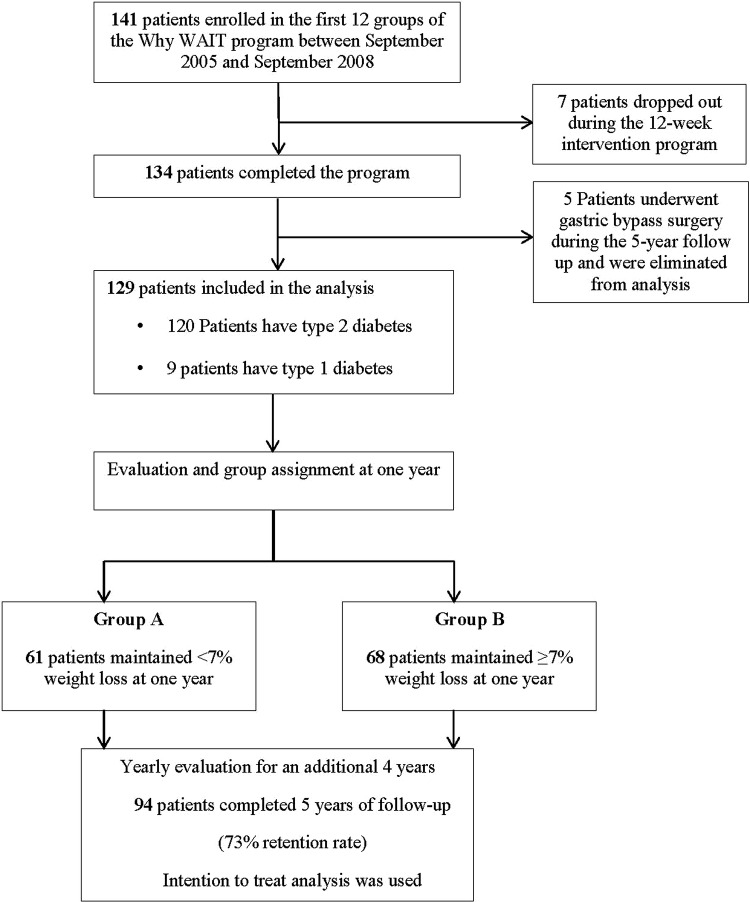
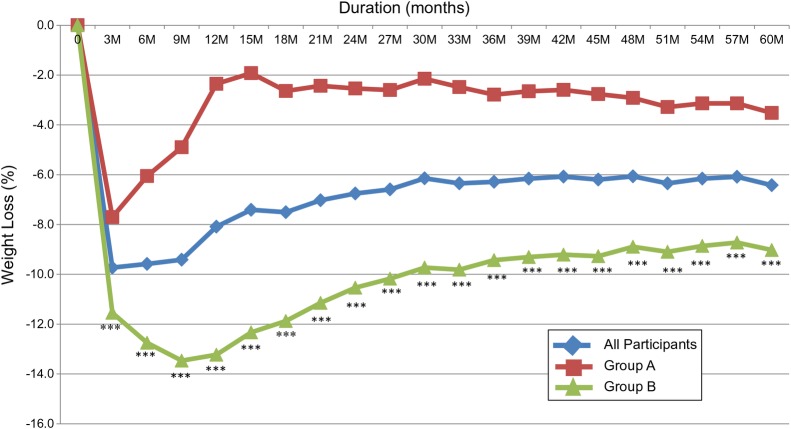
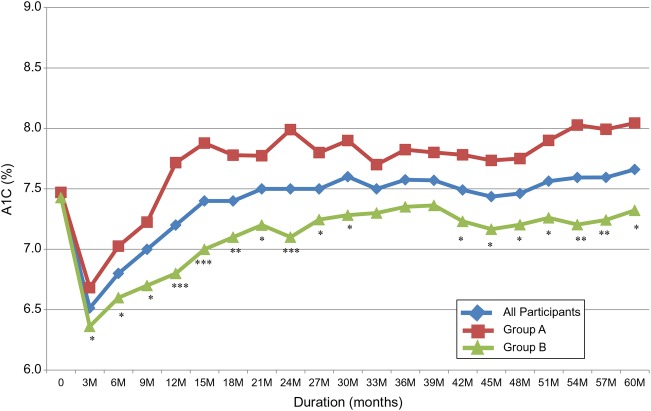
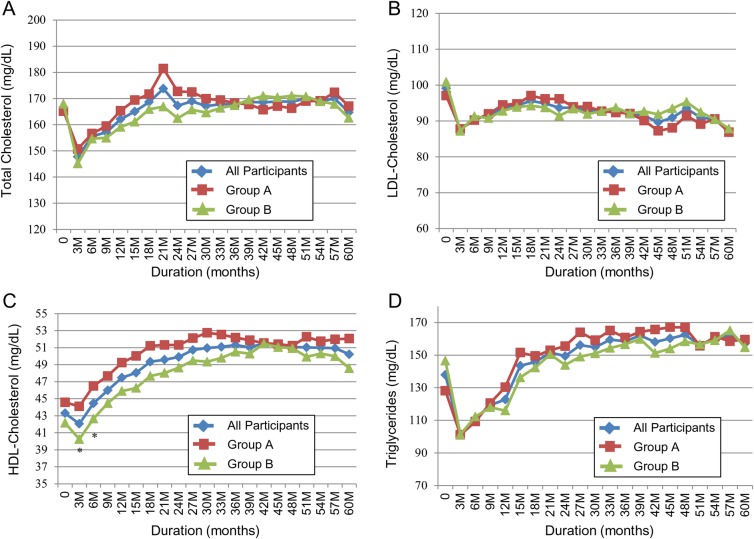
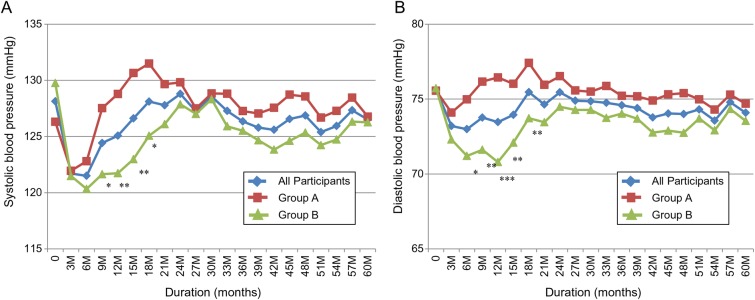
Objective: We evaluated long-term impact of sustained weight loss versus weight regain on cardiovascular risk factors in real-world clinical practice. Methods: We evaluated 129 obese patients with diabetes enrolled in Weight Achievement and Intensive Treatment (Why WAIT) program, a 12-week clinical model of intensive lifestyle intervention. After 1 year, we divided participants into group A, who maintained <7% weight loss (47.3%) and group B (52.7%), who maintained ≥7% weight loss. We continued to follow them for a total of 5 years. Results: The total cohort lost 23.8 lbs (−9.7%) at 12 weeks and maintained −16.2 lbs (−6.4%) at 5 years (p<0.001). Group A maintained −8.4 lbs (−3.5%) and group B maintained −23.1 lbs (−9.0%) at 5 years. In group A, A1C decreased from 7.5±1.3% to 6.7±0.9% at 12 weeks but increased to 7.7±1.4% at 1 year and 8.0±1.9% at 5 years. In group B, A1C decreased from 7.4±1.2% to 6.4±0.9% at 12 weeks and rose to 6.8±1.2% at 1 year and 7.3±1.5% at 5 years. Despite weight regain, group A maintained improvement in low-density lipoprotein-cholesterol and high-density lipoprotein-cholesterol with worsening of serum triglycerides and no change in blood pressure (BP). Group B maintained improvement in lipid profile for 5 years and had significantly lower BP for 18 months. Conclusions: Weight reduction in patients with diabetes can be maintained for 5 years and is predicted by patients’ ability to maintain ≥7% weight loss at 1 year. A1C and triglycerides deteriorate with weight regain, while other lipid improvements are maintained. Sustained weight loss is associated with significantly lower A1C for 5 years and lowers BP for 18 months. Trial registration number: NCT01937845.
Overview
The claims and statistics of this paper haven’t been checked yet.
Free: it reads the open-access text and checks the first 5 claims that cite a source we can check. Create a free account to check every claim.
Integrity signals
Registry
Cites
Statistics
Figures
Verification
Claims the paper makes
The claims and statistics of this paper haven’t been checked yet.
Free: it reads the open-access text and checks the first 5 claims that cite a source we can check. Create a free account to check every claim.
Claims other papers make about this one
Each is checked against this paper’s own text: does it say what the citing paper says it does?
The source backs part of the claim, not all of it — or backs it for a different population, condition or comparison.
In the citing paper
“Studies have demonstrated that a variety of eating plans, varying in macronutrient composition, can be used effectively and safely in the short term (1-2 years) to achieve weight loss in people with diabetes.”
From 5. Facilitating Positive Health Behaviors and Well-being to Improve Health Outcomes:Standards of Care in Diabetes—2023 (2023) · cites this paper as [117]
Experimental — accuracy not yet measuredThe cited source says what the claim attributes to it.
In the citing paper
“Structured weight loss programs with regular visits have been shown to enhance weight loss in T2DM [121,122,123].”
From Effects of diet, lifestyle, Chrononutrition and alternative dietary interventions on postprandial Glycemia and insulin resistance (2022) · cites this paper as [122]
In the citing paper
“Sustaining weight loss can be challenging (105,116) but has long-term benefits; maintaining weight loss for 5 years is associated with sustained improvements in A1C and lipid levels (117).”
From 5. Facilitating Positive Health Behaviors and Well-being to Improve Health Outcomes:Standards of Care in Diabetes—2023 (2023) · cites this paper as [117]
Self-check
Percentages, sums and reported differences re-computed from the paper’s own numbers.
The self-check needs the paper’s full text.
Citations
Cites
Reduction in the incidence of type 2 diabetes with lifestyle intervention or metformin
(2002) · New England Journal of Medicine · doi:10.1056/nejmoa012512 · Cited by 19,011
Diabetes Prevention Program Research Group (2009) · The Lancet · doi:10.1016/s0140-6736(09)61457-4 · Cited by 3,020
Nutrition therapy recommendations for the management of adults with diabetes
Evert, A. B., Boucher, J. L., Cypress, M., Dunbar, S. A., Franz, M. J., Mayer-Davis, E. J., Neumiller, J. J., Nwankwo, R., Verdi, C. L., Urbanski, P., et al. (2013) · Diabetes Care · doi:10.2337/dc13-2042 · Cited by 1,129 · cited 1×
“INTRODUCTION Weight reduction and lifestyle modification are strongly recommended for all overweight and obese patients with type 2 diabetes.(1) 2 We previously demonstrated that modest weight reduction of ∼7% over a 6-month period through caloric reduction and increased physical activity improved insulin sensitivity,…”
BackgroundEffects of weight loss on regional fat distribution and insulin sensitivity in obesity.
Goodpaster, B. H., Kelley, D. E., Wing, R. R., Meier, A., & Thaete, F. L. (1999) · Diabetes · doi:10.2337/diabetes.48.4.839 · Cited by 608 · cited 1×
“19 It was postulated that the reduction in visceral fat after weight loss might account for this improvement.(20) 21 In this study, average waist circumference decreased significantly from baseline.”
BackgroundHandbook of Obesity Treatment.
(2003) · The Journal of Nervous and Mental Disease · doi:10.1097/00005053-200306000-00024 · Cited by 534
Effect of Lifestyle Modification on Adipokine Levels in Obese Subjects with Insulin Resistance
Monzillo, L. U., Hamdy, O., Horton, E. S., Ledbury, S., Mullooly, C., Jarema, C., Porter, S., Ovalle, K., Moussa, A., & Mantzoros, C. S. (2003) · Obesity Research · doi:10.1038/oby.2003.144 · Cited by 397
Self-citationParker, B., Noakes, M., Luscombe, N., & Clifton, P. (2002) · Diabetes Care · doi:10.2337/diacare.25.3.425 · Cited by 340 · cited 1×
“One other trial reported similar reduction in LDL by using comparable macronutrients composition.(22) Figure 5 Change in (A) systolic blood pressure and (B) diastolic blood pressure over 5 years in response to 12-week intensive”
MethodHamdy, O., Ledbury, S., Mullooly, C., Jarema, C., Porter, S., Ovalle, K., Moussa, A., Caselli, A., Caballero, A. E., Economides, P. A., et al. (2003) · Diabetes Care · doi:10.2337/diacare.26.7.2119 · Cited by 337 · cited 2×
“2 We previously demonstrated that modest weight reduction of ∼7% over a 6-month period through caloric reduction and increased physical activity improved insulin sensitivity, endothelial function and several markers of inflammation and coagulation in obese patients with and without diabetes.(3) 4 Other studies showed…”
BackgroundSelf-citationExercise for the management of type 2 diabetes: a review of the evidence
Zanuso, S., Jimenez, A., Pugliese, G., Corigliano, G., & Balducci, S. (2010) · Acta Diabetologica · doi:10.1007/s00592-009-0126-3 · Cited by 282 · cited 1×
“4 Other studies showed that insulin sensitivity improved by 58–98% after intensive physical training.(5) 6 However, most of these studies were of short duration of <6 months.”
BackgroundGarber, A. J., Abrahamson, M. J., Barzilay, J. I., Blonde, L., Bloomgarden, Z. T., Bush, M. A., Dagogo-Jack, S., Davidson, M. B., Einhorn, D., Timothy Garvey, W., et al. (2013) · Endocrine Practice · doi:10.4158/ep13176.cs · Cited by 280
Research works printed but not linked: 1
- 26. Hamdy O, Elsayed N, Morsi A The role of GLP-1 analogs in long-term weight management within a multidisciplinary intensive lifestyle intervention for patients with type 2 diabetes. Diabetes 2013; 62(Suppl 1): A268.
Cited by
Cosentino, F., Grant, P. J., Aboyans, V., Bailey, C. J., Ceriello, A., Delgado, V., Federici, M., Filippatos, G., Grobbee, D. E., Hansen, T. B., et al. (2020) · European Heart Journal · doi:10.1093/eurheartj/ehz486 · Cited by 4,763
Nutrition Therapy for Adults With Diabetes or Prediabetes: A Consensus Report
Evert, A. B., Dennison, M., Gardner, C. D., Garvey, W. T., Lau, K. H. K., MacLeod, J., Mitri, J., Pereira, R. F., Rawlings, K., Robinson, S., et al. (2019) · Diabetes Care · doi:10.2337/dci19-0014 · Cited by 1,496
5. Lifestyle Management:Standards of Medical Care in Diabetes—2019
American Diabetes Association (2019) · Diabetes Care · doi:10.2337/dc19-s005 · Cited by 700
4. Lifestyle Management: Standards of Medical Care in Diabetes—2018
American Diabetes Association (2018) · Diabetes Care · doi:10.2337/dc18-s004 · Cited by 563
ElSayed, N. A., Aleppo, G., Aroda, V. R., Bannuru, R. R., Brown, F. M., Bruemmer, D., Collins, B. S., Hilliard, M. E., Isaacs, D., Johnson, E. L., et al. (2023) · Diabetes Care · doi:10.2337/dc23-s005 · Cited by 362
Self-citationAmerican Diabetes Association (2020) · Diabetes Care · doi:10.2337/dc20-s005 · Cited by 339
American Diabetes Association Professional Practice Committee (2022) · Diabetes Care · doi:10.2337/dc22-s005 · Cited by 445
American Diabetes Association (2021) · Diabetes Care · doi:10.2337/dc21-s005 · Cited by 299
American Diabetes Association Professional Practice Committee, ElSayed, N. A., Aleppo, G., Bannuru, R. R., Beverly, E. A., Bruemmer, D., Collins, B. S., Darville, A., Ekhlaspour, L., Hassanein, M., et al. (2024) · Diabetes Care · doi:10.2337/dc24-s005 · Cited by 285
Self-citationPapakonstantinou, E., Oikonomou, C., Nychas, G., & Dimitriadis, G. D. (2022) · Nutrients · doi:10.3390/nu14040823 · Cited by 199
Simonson, D. C., Halperin, F., Foster, K., Vernon, A., & Goldfine, A. B. (2018) · Diabetes Care · doi:10.2337/dc17-0487 · Cited by 136
Nonalcoholic fatty liver disease and type 2 diabetes: where do Diabetologists stand?
Tomah, S., Alkhouri, N., & Hamdy, O. (2020) · Clinical Diabetes and Endocrinology · doi:10.1186/s40842-020-00097-1 · Cited by 114
Self-citationPatient-Driven Diabetes Care of the Future in the Technology Era
Ashrafzadeh, S., & Hamdy, O. (2019) · Cell Metabolism · doi:10.1016/j.cmet.2018.09.005 · Cited by 111
Self-citationEslam, M., Ahmed, A., Després, J., Jha, V., Halford, J. C. G., Chieh, J. T. W., Harris, D. C. H., Nangaku, M., Colagiuri, S., Targher, G., et al. (2021) · The Lancet. Gastroenterology & hepatology · doi:10.1016/s2468-1253(21)00132-1 · Cited by 112
Mesinovic, J., Fyfe, J. J., Talevski, J., Wheeler, M. J., Leung, G. K. W., George, E. S., Hunegnaw, M. T., Glavas, C., Jansons, P., Daly, R. M., et al. (2023) · Diabetes & Metabolism Journal · doi:10.4093/dmj.2023.0112 · Cited by 115
“This intervention for individuals with obesity (BMI, 30 to 45 kg/m 2 ) and diabetes (type 1 or 2) [231] involved a hypocaloric diet and exercise, as well as a cognitive-behavioral intervention and group education.”
BackgroundThe Role of Dietary Carbohydrates in Gestational Diabetes
Mustad, V. A., Huynh, D. T. T., López-Pedrosa, J. M., Campoy, C., & Rueda, R. (2020) · Nutrients · doi:10.3390/nu12020385 · Cited by 104
“There is good evidence that meal replacement as part of a lifestyle intervention is effective in promoting weight loss and improving metabolic outcomes in individuals with type 2 diabetes [75,76] The current diabetes guidelines from the American Diabetes Association [77], the Canadian Diabetes Association [78], and Di…”
BackgroundNovel Smartphone Game Improves Physical Activity Behavior in Type 2 Diabetes
Höchsmann, C., Müller, O., Ambühl, M., Klenk, C., Königstein, K., Infanger, D., Walz, S. P., & Schmidt-Trucksäss, A. (2019) · American Journal of Preventive Medicine · doi:10.1016/j.amepre.2019.02.017 · Cited by 67
Moon, J. S., Kang, S., Choi, J. H., Lee, K. A., Moon, J. H., Chon, S., Kim, D. J., Kim, H. J., Seo, J. A., Kim, M. K., et al. (2024) · Diabetes & Metabolism Journal · doi:10.4093/dmj.2024.0249 · Cited by 90
Alternative Dietary Patterns for Americans: Low-Carbohydrate Diets
Volek, J. S., Phinney, S. D., Krauss, R. M., Johnson, R. J., Saslow, L. R., Gower, B., Yancy, W. S., King, J. C., Hecht, F. M., Teicholz, N., et al. (2021) · Nutrients · doi:10.3390/nu13103299 · Cited by 57
“A substantial body of published work over the past 20 years has documented that lowcarbohydrate diets induce favorable changes in cholesterol and other CVD risk markers, especially the cluster of abnormal risk factors associated with the IR phenotype, including high triglycerides, low HDL-cholesterol, increased small,…”
BackgroundSelf-citationSpreckley, M., Seidell, J., & Halberstadt, J. (2021) · International Journal of Qualitative Studies on Health and Well-being · doi:10.1080/17482631.2020.1862481 · Cited by 56
Diabetes mellitus type 2 in adults
Dedov, I. I., Shestakova, M. V., Mayorov, A. Y., Шамхалова, М. Ш., Sukhareva, O. Y., Galstyan, G. R., Tokmakova, A. Y., Nikonova, T. V., Surkova, E. V., Кононенко, И. В., et al. (2020) · Diabetes Mellitus · doi:10.14341/dm12507 · Cited by 69
Monnier, L., Schlienger, J.-L., Colette, C., & Bonnet, F. (2021) · Diabetes & Metabolism · doi:10.1016/j.diabet.2020.09.002 · Cited by 47
Berger, S. E., Huggins, G. S., McCaffery, J. M., Jacques, P. F., & Lichtenstein, A. H. (2019) · Journal of the American Heart Association · doi:10.1161/jaha.118.010951 · Cited by 41
Kang, S., Kang, S. M., Choi, J. H., Ko, S., Koo, B. K., Kwon, H.-S., Kim, M. K., Kim, S. Y., Kim, S., Kim, Y., et al. (2025) · Diabetes & Metabolism Journal · doi:10.4093/dmj.2025.0469 · Cited by 85
Yadav, R., Yadav, R. K., Khadgawat, R., Pandey, R. M., Upadhyay, A. D., & Mehta, N. (2019) · Behavioral Medicine · doi:10.1080/08964289.2018.1538098 · Cited by 40
Castillo‐Mayén, R., Cano-Espejo, C., Luque, B., Cuadrado, E., Gutiérrez‐Domingo, T., Arenas, A., Rubio, S. J., Delgado‐Lista, J., Pérez‐Martínez, P., & Tabernero, C. (2020) · Nutrients · doi:10.3390/nu12071903 · Cited by 43
Dreyfuss, J. M., Yuchi, Y., Dong, X., Efthymiou, V., Pan, H., Simonson, D. C., Vernon, A. H., Halperin, F., Aryal, P., Konkar, A. A., et al. (2021) · Nature Communications · doi:10.1038/s41467-021-27289-2 · Cited by 39
Limbachia, J., Ajmeri, M. S., Keating, B. J., de Souza, R. J., & Anand, S. S. (2022) · BMJ Open · doi:10.1136/bmjopen-2021-059666 · Cited by 37
Simonson, D. C., Vernon, A., Foster, K., Halperin, F., Patti, M. E., & Goldfine, A. B. (2019) · Surgery for Obesity and Related Diseases · doi:10.1016/j.soard.2019.03.038 · Cited by 30
Minari, T. P., Manzano, C. F., Tácito, L. H. B., Yugar, L. B. T., Sedenho‐Prado, L. G., Rubio, T. D. A., Pires, A. C., Vilela-Martin, J. F., Cosenso‐Martin, L. N., Moreno, H., et al. (2024) · Nutrients · doi:10.3390/nu16091378 · Cited by 34
Weight Management in Patients with Type 2 Diabetes: a Multidisciplinary Real-world Approach
Hamdy, O., Ashrafzadeh, S., & Mottalib, A. (2018) · Current Diabetes Reports · doi:10.1007/s11892-018-1030-4 · Cited by 31
Self-citationDietary Control of Inflammation and Resolution
Sears, B., & Saha, A. K. (2021) · Frontiers in Nutrition · doi:10.3389/fnut.2021.709435 · Cited by 35
“Longterm studies using the previously described anti-inflammatory diet have demonstrated success in the long-term management of type 2 diabetes (168, 169).”
BackgroundAl-Badri, M. R., Kilroy, C., Shahar, J., Tomah, S., Gardner, H. M., Sin, M., VOTTA, J. L., Phillips-Stoll, A., Price, A., BEATON, J. M., et al. (2022) · Therapeutic Advances in Endocrinology and Metabolism · doi:10.1177/20420188221093220 · Cited by 29
Self-citationType 2 Diabetes Remission with Significant Weight Loss: Definition and Evidence-Based Interventions
Ko, J. H., & Kim, T. N. (2022) · Journal of Obesity & Metabolic Syndrome · doi:10.7570/jomes22001 · Cited by 31
Li, M., Liu, L., Song, S., Shi, A., Ma, Y., Zhang, S., Wang, Z., Zhu, D., & Tian, G. (2018) · Medicine · doi:10.1097/md.0000000000011975 · Cited by 27
Tomah, S., Mahmoud, N., Mottalib, A., POBER, D. M., Tasabehji, M. W., Ashrafzadeh, S., & Hamdy, O. (2019) · BMJ Open Diabetes Research & Care · doi:10.1136/bmjdrc-2019-000659 · Cited by 25
Self-citationChazova, I. E., Shestakova, M. V., Zhernakova, Y. V., Blinova, N. V., Маркова, Т. Н., Mazurina, N. V., Владиславович, Е. М., Tereshchenko, S. N., Жиров, И. В., Komarov, A. L., et al. (2021) · Eurasian heart journal · doi:10.38109/2225-1685-2021-2-6-61 · Cited by 27
Demystifying Obesity: Understanding, Prevention, Treatment, and Stigmas
Minari, T. P., Manzano, C. F., Yugar, L. B. T., Sedenho‐Prado, L. G., Rubio, T. D. A., Tácito, L. H. B., Pires, A. C., Vilela-Martin, J. F., Cosenso‐Martin, L. N., Ludovico, N. D., et al. (2024) · Nutrition Reviews · doi:10.1093/nutrit/nuae144 · Cited by 22
ASGE EndoVators Summit: defining the role and value of endoscopic therapies in obesity management
ASGE EndoVators Task Force, Ryou, M. K., McQuaid, K. R., Thompson, C. C., Edmundowicz, S. A., & Mergener, K. (2017) · Surgical Endoscopy · doi:10.1007/s00464-017-5934-x · Cited by 17
Wu, J., Davis–Ajami, M. L., & Lu, K. (2019) · Primary care diabetes · doi:10.1016/j.pcd.2019.02.003 · Cited by 19
The effect of care intervention for obese patients with type II diabetes
Jiang, X., Fan, X., Wu, R., Geng, F., & Hu, C. (2017) · Medicine · doi:10.1097/md.0000000000007524 · Cited by 24
“T2DM is one of the health-related consequences of obesity; thus, diet control is important for obese T2DM patients.([16]) It has been reported that diet proceeding in reducing the energy value of the diet had a beneficial effect on reducing body weight and BMI (body mass index), thus reducing the risk factors for obes…”
BackgroundStandards of Care in Diabetes. The position of Diabetes Poland – 2024
Araszkiewicz, A., Bandurska-Stankiewicz, E. M., Borys, S., Broncel, M., Budzynski, A. Z., Cyganek, K., Cypryk, K., CYRANKA, K. M., Czupryniak, L., Dzida, G. J., et al. (2024) · Current Topics in Diabetes · doi:10.5114/ctd/183052 · Cited by 33
Strelitz, J., Sharp, S. J., Khunti, K., Vos, R. C., Rutten, G. E. H. M., Webb, D. R., Witte, D. R., Sandbæk, A., Wareham, N. J., & Griffin, S. J. (2020) · Diabetes Obesity and Metabolism · doi:10.1111/dom.14278 · Cited by 18
“Despite weight regain, weight loss early in the course of the disease may still yield long-term reductions in cardio-metabolic risk.(14,15) For example, in Look AHEAD, participants who had the largest 1-year weight loss but fully regained weight, had larger improvements in glycaemic control at 4 years than participant…”
BackgroundMottalib, A., Tomah, S., Hafida, S., Elseaidy, T., Kasetty, M., Ashrafzadeh, S., & Hamdy, O. (2019) · Diabetes, Obesity and Metabolism · doi:10.1111/dom.13478 · Cited by 15
“improvements in HbA1c and CVD risk factors after weight reduction.(14) However, it is not known whether IMWM would have similar”
BackgroundMethodSelf-citationMaston, G., Franklin, J., Hocking, S., Swinbourne, J., Gibson, A., Manson, E., Sainsbury, A., & Markovic, T. (2021) · PLOS ONE · doi:10.1371/journal.pone.0253127 · Cited by 14
Liu, M., Huang, R., Xu, L., Zhang, S., Zhong, X., Chen, X., Lin, Y., Xiong, Z., Wang, L., Liao, X., et al. (2022) · EClinicalMedicine · doi:10.1016/j.eclinm.2022.101451 · Cited by 18
Treat Obesity to Treat Type 2 Diabetes Mellitus
Sulu, C., & Yumuk, V. (2024) · Diabetes Therapy · doi:10.1007/s13300-024-01536-3 · Cited by 24
“This trend was supported by other studies reporting improvements in cardiovascular risk factors with weight loss [77, 78].”
ResultVISCERAL ADIPOSITY INDEX (VAI) – A POTENTIAL MARKER OF CARDIOMETABOLIC RISK
GÂRGAVU, S. R., Clenciu, D., ROȘU, M. M., Cojan, T. Ș. Ț., Costache, A. C., Vladu, I. M., & MOȚA, M. (2018) · Archives of the Balkan Medical Union · doi:10.31688/abmu.2018.53.2.11 · Cited by 13
Tomah, S., Zhang, H., Al-Badri, M. R., Salah, T., Dhaver, S., Khater, A., Tasabehji, M. W., & Hamdy, O. (2023) · BMJ Open Diabetes Research & Care · doi:10.1136/bmjdrc-2022-003179 · Cited by 18
Self-citationDietary Technologies to Optimize Healing from Injury-Induced Inflammation
Sears, B., Perry, M., & Saha, A. K. (2020) · Anti-Inflammatory & Anti-Allergy Agents in Medicinal Chemistry · doi:10.2174/1871523019666200512114210 · Cited by 13
Dhaver, S., Al-Badri, M. R., Salah, T., Kilroy, C., Shahar, J., Johnson, C., VOTTA, J. L., MITCHELL, C. M., BEATON, J. M., Khater, A., et al. (2023) · Frontiers in Endocrinology · doi:10.3389/fendo.2022.1050527 · Cited by 13
Self-citationAlternative therapeutic strategies in diabetes management
Annicchiarico, A., Barile, B., Buccoliero, C., Nicchia, G. P., & Brunetti, G. (2024) · World Journal of Diabetes · doi:10.4239/wjd.v15.i6.1142 · Cited by 14
“…can be utilized successfully and safely over the short term (1-2 years) to accomplish weight loss in diabetic patients ( e.g. , Mediterranean eating diet[60], structured low-calorie meal plans with meal replacements[57,59,61], and low-carbohydrate meal plans with additional support[62,63]).”
Transcultural Lifestyle Medicine in Type 2 Diabetes Care: Narrative Review of the Literature
Gonzalez-Rivas, J. P., Pavlovska, I., Polcrova, A. B., Nieto-Martínez, R. E., & Mechanick, J. I. (2022) · American Journal of Lifestyle Medicine · doi:10.1177/15598276221095048 · Cited by 12
Risk Factors Associated with All-Cause Death Among Dialysis Patients with Diabetes
Grzywacz, A., Lubas, A., Smoszna, J., & Niemczyk, S. (2021) · Medical Science Monitor · doi:10.12659/msm.930152 · Cited by 10
“Regular physical activity as a part of a healthy lifestyle contributes to improving prognosis by reducing cardiovascular risk [16].”
BackgroundTomah, S., Salah, T., Al-Badri, M. R., Dhaver, S., Gardner, H. M., Tasabehji, M. W., & Hamdy, O. (2023) · Clinical Diabetes and Endocrinology · doi:10.1186/s40842-023-00150-9 · Cited by 9
Self-citationASGE EndoVators Summit: Defining the role and value of endoscopic therapies in obesity management
Ryou, M. K., McQuaid, K. R., Thompson, C. C., Edmundowicz, S. A., Mergener, K., Dayyeh, B. A., Apovian, C. M., Burke, C. A., Chand, B., Chandraker, A. K., et al. (2017) · Gastrointestinal Endoscopy · doi:10.1016/j.gie.2017.08.004 · Cited by 9
“4% at 5 years with significant improvement in many cardiovascular risk factors.(41) Well-designed life-”
BackgroundSelf-citationRoux, S. B., Forde, L., MacNaughton, S., Shearer, R., Lindsay, R. S., Sattar, N. A., Morrison, D. S., Welsh, P. I., & Logue, J. (2018) · Diabetes Obesity and Metabolism · doi:10.1111/dom.13171 · Cited by 12
“A recent small study based on real-life clinic data from Boston, Massachusetts, also showed similar results of attenuation of HbA1c reduction over time, despite maintenance of weight loss.(21) The mechanisms of this attenuation in HbA1c are unknown and possible explanations include improved medication adherence during…”
ResultSpreckley, M., de Lange, J., Seidell, J. C., & Halberstadt, J. (2022) · PLoS ONE · doi:10.1371/journal.pone.0270426 · Cited by 10
Galstyan, G. R., Valeeva, F. V., Игоревна, М. С., Surkova, E. V., Савельева, Л. В., Rudina, L. M., Ramanathan, K., Sokareva, E., Bondareva, K. I., & Shestakova, M. V. (2021) · Obesity Science & Practice · doi:10.1002/osp4.502 · Cited by 6
“That follow‐up study demonstrated that patients who sustained ≥7% weight loss at 1 year were more likely to maintain significant weight loss after 5 years of follow‐up.(24) The results from Look AHEAD, a large randomized study demonstrated greater weight loss in the intervention group (decreased caloric intake and inc…”
BackgroundSuvada, K., Ali, M. K., Chwastiak, L., Poongothai, S., Emmert-Fees, K. M. F., Anjana, R. M., Sagar, R., Shankar, R., Sridhar, G. R., Kasuri, M., et al. (2023) · Journal of General Internal Medicine · doi:10.1007/s11606-022-07958-8 · Cited by 6
Eldib, A. H., Dhaver, S., Al-Badri, M. R., Salah, T., KIBAA, K., Elenani, O., Tomah, S., Gardner, H. M., & Hamdy, O. (2023) · Journal of Diabetes · doi:10.1111/1753-0407.13395 · Cited by 6
“So far, many studies have demonstrated the importance of the magnitude of A1C reduction as prime indicator of glycemic control and its role in slowing diabetes progression, and improving cardiovascular outcomes.(8,9,14) TABLE 3 Association of change in systolic BP and change in total cholesterol, and baseline A1C.”
BackgroundSelf-citationArai, K., Nishikawa, T., Yuasa, S., Shirabe, S., Matsuzawa, Y., Ohtsu, S., Hirao, K., & Mori, H. (2020) · Diabetes Therapy · doi:10.1007/s13300-020-00837-7 · Cited by 7
Johnston, S. S., Ammann, E. M., Kashyap, S. R., Stokes, A., Hsiao, C. C., Daskiran, M., & Scamuffa, R. F. (2019) · Diabetes Obesity and Metabolism · doi:10.1111/dom.13671 · Cited by 4
Maradni, A. A., Tomah, S., Mottalib, A., Rosas, S. E., Alsibai, K., POBER, D. M., Morsi, A., & Hamdy, O. (2021) · Human Nutrition & Metabolism · doi:10.1016/j.hnm.2021.200119 · Cited by 5
Self-citationÖzlem, T. O. K., Kişioğlu, S. V., Ersöz, H. Ö., KAHVECİ, B., & Göktaş, Z. (2021) · The Journal of Sports Medicine and Physical Fitness · doi:10.23736/s0022-4707.20.11188-5 · Cited by 5
Predictors of glycemic control after decline of insulin therapy by patients with type 2 diabetes
Florez, L., Shubina, M., & Turchin, A. (2019) · Journal of Diabetes and its Complications · doi:10.1016/j.jdiacomp.2019.107418 · Cited by 6
ASGE EndoVators Summit: Defining the role and value of endoscopic therapies in obesity management
Ryou, M. K., McQuaid, K. R., Thompson, C. C., Edmundowicz, S. A., Mergener, K., Dayyeh, B. A., Apovian, C. M., Burke, C. A., Chand, B., Chandraker, A. K., et al. (2017) · Surgery for Obesity and Related Diseases · doi:10.1016/j.soard.2017.08.024 · Cited by 7
Self-citationKranz, R., Kettler, C., Anand, C., Koeder, C., Husain, S., Schoch, N., Buyken, A. E., & Englert, H. S. (2023) · Nutrition and Health · doi:10.1177/02601060231164665 · Cited by 4
“Multiple clinical trials have already shown that lifestyle interventions have a great potential to halt the general deterioration of health status with increasing age (Burke et al., 2005; Hamdy et al., 2008, 2017; Hamdy and Carver, 2008; Johansen et al., 2017; Kempf et al., 2017; Ziv et al., 2013).”
Peningkatan visceral adiposity index berhubungan dengan sindrom metabolik remaja obesitas
Dieny, F. F., Jauharany, F. F., Tsani, A. F. A., & Fitranti, D. Y. (2020) · Jurnal Gizi Klinik Indonesia · doi:10.22146/ijcn.51465 · Cited by 11
Dietary Activation of AMP-Activated Protein Kinase (AMPK) to Treat Insulin Resistance
Sears, B., & Saha, A. K. (2022) · IntechOpen eBooks · doi:10.5772/intechopen.103787 · Cited by 6
Akehurst, H., Pesantes, M. A., Cornejo, S. D. P., Manrique, K., Lazo‐Porras, M., Portocarrero, J., Diez‐Canseco, F., Bernabé‐Ortiz, A., Trujillo, A. J., & Miranda, J. J. (2018) · Wellcome Open Research · doi:10.12688/wellcomeopenres.14552.2 · Cited by 2
“Difficulty of attempt to regularly exercise Very easy 1 (2)% Easy 21 (40%)”
BackgroundASGE EndoVators Summit: Defining the role and value of endoscopic therapies in obesity management
Ryou, M. K., McQuaid, K. R., Thompson, C. C., Edmundowicz, S. A., & Mergener, K. (2017) · Metabolism · doi:10.1016/j.metabol.2017.11.013 · Cited by 3
Tomah, S., Eldib, A. H., Tasabehji, M. W., Mitri, J., Salsberg, V., Al-Badri, M. R., Gardner, H. M., & Hamdy, O. (2020) · Nutrients · doi:10.3390/nu12061643 · Cited by 2
Self-citationASGE EndoVators Summit: Defining the Role and Value of Endoscopic Therapies in Obesity Management
ASGE EndoVators Task Force, Ryou, M. K., McQuaid, K. R., Thompson, C. C., Edmundowicz, S. A., & Mergener, K. (2017) · Obesity Surgery · doi:10.1007/s11695-017-2948-3 · Cited by 1
“4% at 5 years with significant improvement in many cardiovascular risk factors [40].”
BackgroundRehabilitace a preskripce pohybové aktivity u kardiovaskulárních a vybraných interních onemocnění
Vysoký, R., & Konečný, P. (2022) · doi:10.5507/fzv.22.24461250 · Cited by 1
Choi, J. H., Lee, J.-H., & Chon, S. (2025) · Journal of Korean Diabetes · doi:10.4093/jkd.2025.26.1.39 · Cited by 1
Nieto-Martínez, R. E., Gonzalez-Rivas, J. P., & Infante-García, M. M. (2018) · Current Geriatrics Reports · doi:10.1007/s13670-018-0243-3 · Cited by 1
Avery, A. (2021) · Archives of Diabetes & Obesity · doi:10.32474/ado.2021.03.000172
“Hamdy, Mottalib, Morsi et al, [26] report that for people with diabetes, achieving a weight reduction of 7% or more of initial weight at one year was associated with better weight and glycaemic control at five years.”
BackgroundVernieuwde NHG-Standaard DM2 negeert niet-gerandomiseerd onderzoek
van der Zijl, N. J., Wilmsen, N., & Pijl, H. (2022) · Huisarts en Wetenschap · doi:10.1007/s12445-022-1534-7 · Cited by 1
Shah, N., Perkovic, V., & Kotwal, S. S. (2022) · Expert Review of Clinical Pharmacology · doi:10.1080/17512433.2022.2108402 · Cited by 3
“including glycemic control, reductions in blood pressure, and improved lipid profiles [67,68].”
BackgroundASGE EndoVators Summit: Defining the Role and Value of Endoscopic Therapies in Obesity Management
Ryou, M. K., McQuaid, K. R., Thompson, C. C., Edmundowic, S., Mergener, K., Ryou, M. K., McQuaid, K. R., McQuaid, K. R., Thompson, C. C., Edmundowicz, S. A., et al. (2017) · Journal of Gastrointestinal Surgery · doi:10.1007/s11605-017-3609-5
“4% at 5 years with significant improvement in many cardiovascular risk factors [41].”
BackgroundSelf-citationPREDIABETO IR DIABETO BEI ŠIRDIES IR KRAUJAGYSLIŲ LIGŲ DIAGNOSTIKA IR PREVENCIJA
Valterytė, G. (2020) · Health Sciences · doi:10.35988/sm-hs.2020.130
Treatment: Lifestyle and Medication
Khan, A. A., & Hamdy, O. (2023) · Contemporary cardiology · doi:10.1007/978-3-031-13177-6_29
Self-citationSieczkowska, S. M. (2023) · Digital Library of Theses and Dissertations (Universidade de São Paulo) · doi:10.11606/t.5.2023.tde-08082023-163811
The Impact of Dr. Barry Sears’s Diet on Employee Physical Manifestations: A Preliminary Study
Gkiolia, E., Darvyri, P. P., Ktenidis, A., Kermeli, A., Christodoulakis, S., & Chrousos, G. P. (2023) · Psychology · doi:10.4236/psych.2023.1410092
Al-Badri, M. R., Dhaver, S., & Hamdy, O. (2025) · Journal of Diabetes · doi:10.1111/1753-0407.70054 · Cited by 1
“Other long-term weight loss studies showed that most of the benefit on blood pressure by weight reduction is seen in the first 18 months of weight loss, after which BP rebounds back even with the continuation of weight loss [17, 18].”
Self-citation
Metadata
- Authors
- Hamdy, O., Mottalib, A., Morsi, A., El-Sayed, N., Goebel-Fabbri, A., Arathuzik, G., Shahar, J., Kirpitch, A., & Zrebiec, J.
- Affiliations
- Joslin Diabetes Center (US)
- Joslin Diabetes Center, Harvard Medical School, Boston, Massachusetts, USA
- Corresponding author
- Hamdy, Osama
- Venue
- BMJ Open Diabetes Research & Care
- Publisher
- BMJ
- Published
- 2017-01
- Volume
- 5
- Issue
- 1
- Pages
- e000259
- ISSN
- 2052-4897 (ISSN-L)
- PMC
- PMC5223646
- OpenAlex
- W2569377704
- Cited by
- 87
- References
- 28
- Citations by year
- 2025: 3 · 2024: 6 · 2023: 11 · 2022: 12 · 2021: 13 · 2020: 13 · 2019: 11 · 2018: 9 · 2017: 9
- FWCI
- 9.09
- Type
- journal article
- Language
- en
- Open access
- gold
- doi.org
- Licence
- cc-by-nc
- Locations
- BMJ Open Diabetes Research & Care (publishedVersion, cc-by-nc)
- PubMed Central (publishedVersion, cc-by-nc)
- PubMed (publishedVersion)
- Digital Access to Scholarship at Harvard (DASH) (Harvard University) (submittedVersion, cc-by)
- Topics
- Health Sciences › Medicine › Endocrinology, Diabetes and Metabolism › Diabetes, Cardiovascular Risks, and Lipoproteins
- Health Sciences › Medicine › Endocrinology, Diabetes and Metabolism › Diabetes Treatment and Management
- Health Sciences › Medicine › Surgery › Bariatric Surgery and Outcomes
- Keywords
- intensive lifestyle intervention, weight loss maintenance, weight regain, type 2 diabetes, cardiovascular risk factors, HbA1c, lipid profile, triglycerides, blood pressure, obesity, long-term follow-up
About these checks
Registry, retraction, Cites and statistics results are computed, not judged, with one exception: a printed reference that no index lists is read once by a model before it counts as a citation error. Claims are extracted by a model and kept only when their quote appears verbatim in the text; each cited source is then checked, with a model’s help, for whether it says what the claim relies on. Those verdicts can be wrong — read the claim’s quote and the cited source before relying on one.
Statistics and arithmetic are recomputed, not judged.
Confidence bands are shown only for fields calibrated on our annotated test set. None is calibrated yet, so no band is shown.
What counts as a claim ›How we measure confidence ›How we check this ›
Are you an author, or do you see a problem with this page? Request a review
Data sources
Bibliographic data: Semantic Scholar, OpenAlex, Crossref.
Contains information from the Semantic Scholar Academic Graph Datasets, made available under the ODC Attribution License (ODC-BY 1.0).
Semantic Scholar’s data is described in: Kinney, R., et al. (2023). The Semantic Scholar Open Data Platform. arXiv:2301.10140.
