

Carbohydrate-last meal pattern lowers postprandial glucose and insulin excursions in type 2 diabetes
Open accessThe DOI matches its Crossref record; 16 of the 16 references it cites were found in a registry or an index.
Abstract
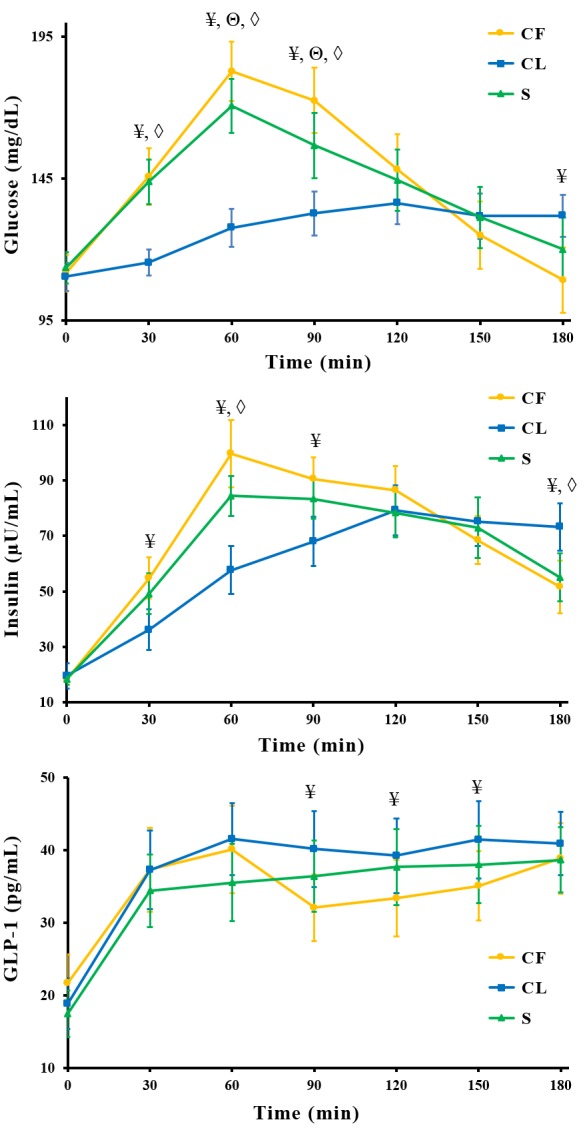
Background: There are limited data regarding the timing of carbohydrate ingestion during a meal and postprandial glucose regulation. Methods: Sixteen subjects with type 2 diabetes mellitus (T2DM) consumed the same meal on 3 days in random order: carbohydrate first, followed 10 min later by protein and vegetables; protein and vegetables first, followed 10 min later by carbohydrate; or all components together. Blood was sampled for glucose, insulin, glucagon-like peptide-1 (GLP-1), and glucagon measurements at baseline (just before meal ingestion) and subsequently at 30 min intervals up to 180 min. Results: The incremental areas under the curve for glucose (iAUC 0–180) and incremental glucose peaks were 53% and 54% lower, respectively, when carbohydrate was consumed last compared with carbohydrate consumed first (3124.7±501.2 vs 6703.5±904.6 mg/dL×180min, p<0.001; 34.7±4.1 vs 75.0±6.5 mg/dL, p<0.001) and 44% and 40% lower, respectively, compared with the all components together condition (3124.7±501.2 vs 5587.1±828.7 mg/dL×180min, p=0.003; 34.7±4.1 vs 58.2±5.9 mg/dL, p<0.001). Postprandial insulin excursions were lower (iAUC 0–180: 7354.1±897.3 vs 9769.7±1002.1 µU/mL×min, p=0.003) and GLP-1 excursions higher (iAUC 0–180: 3487.56±327.7 vs 2519.11±494.8 pg/mL×min, p=0.019) following the carbohydrate-last meal order compared with carbohydrate first. Conclusion: The carbohydrate-last meal pattern may be an effective behavioral strategy to improve postprandial glycemia.
Overview
The claims and statistics of this paper haven’t been checked yet.
Free: it reads the open-access text and checks the first 5 claims that cite a source we can check. Create a free account to check every claim.
Integrity signals
Registry
Cites
Statistics
Figures
Verification
Claims the paper makes
The claims and statistics of this paper haven’t been checked yet.
Free: it reads the open-access text and checks the first 5 claims that cite a source we can check. Create a free account to check every claim.
Claims other papers make about this one
Each is checked against this paper’s own text: does it say what the citing paper says it does?
The cited source says what the claim attributes to it.
In the citing paper
“Data suggest that nutrient order during a meal significantly impacts postprandial glucose and insulin excursions in type 2 diabetes, while its’ effects in prediabetes have not been reported.”
From The impact of food order on postprandial glycaemic excursions in prediabetes (2019) · cites this paper as [13]
Experimental — accuracy not yet measuredThe cited source says what the claim attributes to it.
In the citing paper
“Furthermore, we showed that the carbohydrate-last meal pattern stimulated a lower insulin response compared to consuming carbohydrate first.”
From The impact of food order on postprandial glycaemic excursions in prediabetes (2019) · cites this paper as [13]
The cited source says what the claim attributes to it.
In the citing paper
“In a previous crossover study of metformin-treated subjects with T2DM, we demonstrated that ingestion of protein plus vegetables before carbohydrate led to lower postprandial glucose excursions over 180 min, compared to eating the same foods in the reverse order (13).”
From The impact of food order on postprandial glycaemic excursions in prediabetes (2019) · cites this paper as [13]
Self-check
Percentages, sums and reported differences re-computed from the paper’s own numbers.
The self-check needs the paper’s full text.
Citations
Cites
Monnier, L., Lapinski, H., & Colette, C. (2003) · Diabetes Care · doi:10.2337/diacare.26.3.881 · Cited by 1,461
Beneficial Effects of High Dietary Fiber Intake in Patients with Type 2 Diabetes Mellitus
Chandalia, M., Garg, A., Lutjohann, D., von Bergmann, K., Grundy, S. M., & Brinkley, L. J. (2000) · New England Journal of Medicine · doi:10.1056/nejm200005113421903 · Cited by 1,129 · cited 1×
“Beyond carbohydrate type and amount, postmeal glucose excursions can be attenuated by fat and protein preloads and by a modified macronutrient composition that includes more protein(8) and dietary fiber.(9) A study in eight subjects with T2DM demonstrated that whey protein consumed before a carbohydrate meal can stimu…”
BackgroundCavalot, F., Petrelli, A., Traversa, M., Bonomo, K., Fiora, E., Conti, M., Anfossi, G., Costa, G., & Trovati, M. (2006) · The Journal of Clinical Endocrinology & Metabolism · doi:10.1210/jc.2005-1005 · Cited by 569
Ma, J., Stevens, J. E., Cukier, K., Maddox, A. F., Wishart, J. M., Jones, K. L., Clifton, P. M., Horowitz, M., & Rayner, C. K. (2009) · Diabetes Care · doi:10.2337/dc09-0723 · Cited by 392
Frid, A. H., Nilsson, M., Holst, J. J., & Björck, I. (2005) · American Journal of Clinical Nutrition · doi:10.1093/ajcn.82.1.69 · Cited by 388 · cited 2×
“7 The addition of whey to meals with rapidly digested and absorbed carbohydrates has also been shown to stimulate insulin release and reduce postprandial blood glucose excursion by 21% after a lunch meal consisting of mashed potatoes and meatballs in subjects with T2DM.”
BackgroundGentilcore, D., Chaikomin, R., Jones, K. L., Russo, A., Feinle-Bisset, C., Wishart, J. M., Rayner, C. K., & Horowitz, M. (2006) · The Journal of Clinical Endocrinology & Metabolism · doi:10.1210/jc.2005-2644 · Cited by 351
Relationships Between Gastric Emptying, Postprandial Glycemia, and Incretin Hormones
Marathe, C. S., Rayner, C. K., Jones, K. L., & Horowitz, M. (2013) · Diabetes Care · doi:10.2337/dc12-1609 · Cited by 335
Postprandial glucose regulation: New data andnew implications
Leiter, L. A., Ceriello, A., Davidson, J. A., Hanefeld, M., Monnier, L., Owens, D. R., Tajima, N., & Tuomilehto, J. (2005) · Clinical Therapeutics · doi:10.1016/j.clinthera.2005.11.020 · Cited by 161
Jakubowicz, D. J., Froy, O., Åhrén, B., Boaz, M., Landau, Z., Bar‐Dayan, Y., Ganz, T., Barnea, M., & Wainstein, J. (2014) · Diabetologia · doi:10.1007/s00125-014-3305-x · Cited by 158
Shimabukuro, M., Higa, N., Chinen, I., Yamakawa, K., & Takasu, N. (2006) · The Journal of Clinical Endocrinology & Metabolism · doi:10.1210/jc.2005-1566 · Cited by 142 · cited 1×
“The effect of food order on postprandial glycemia in this study is comparable to the magnitude observed with pharmacological agents that preferentially target postprandial glycemia; acarbose and nateglinide reduce iAUCs by 31% and 64%, respectively, compared with placebo.(13) 14 In non-insulin treated patients, manage…”
Result
Cited by
The impact of food order on postprandial glycaemic excursions in prediabetes
Shukla, A. P., Dickison, M., Coughlin, N., Karan, A., Mauer, E., Truong, W., Casper, A., Emiliano, A. B., Kumar, R. B., Saunders, K. H., et al. (2019) · Diabetes, Obesity and Metabolism · doi:10.1111/dom.13503 · Cited by 66
“postprandial glucose excursions over 180 minutes, compared with eating the same foods in the reverse order.(13) Furthermore, we showed that the carbohydrate-last meal pattern stimulated a lower”
BackgroundSelf-citation2023 Guidelines on the management of patients with diabetes - a position of Diabetes Poland
Araszkiewicz, A., Bandurska-Stankiewicz, E. M., Borys, S., Budzynski, A. Z., Cyganek, K., Cypryk, K., Czech, A., Czupryniak, L., Drzewoski, J., Dzida, G. J., et al. (2023) · Current Topics in Diabetes · doi:10.5114/ctd/160061 · Cited by 85
Sun, L., Goh, H. J., Govindharajulu, P., Leow, M. K.-S., & Henry, C. J. (2020) · Clinical Nutrition · doi:10.1016/j.clnu.2019.04.001 · Cited by 57
“[22] Shukla AP, Andono J, Touhamy SH, Casper A, Iliescu RG, Mauer E, et al.”
Nesti, L., Mengozzi, A., & Tricò, D. (2019) · Frontiers in Endocrinology · doi:10.3389/fendo.2019.00144 · Cited by 53
“Some studies with mixed preloads have reported different results (31, 39, 45, 46), likely due to a less rigorous estimation of β cell function (i.”
BackgroundResultAn autonomous channel deep learning framework for blood glucose prediction
Yang, T., Yu, X., Ma, N., Wu, R., & Li, H. (2022) · Applied Soft Computing · doi:10.1016/j.asoc.2022.108636 · Cited by 56
Takeuchi, M. (2020) · Diabetology & Metabolic Syndrome · doi:10.1186/s13098-020-00614-3 · Cited by 54
“A vegetables-first [109, 110] and carbohydrates-last meal sequence [111, 112], followed by physical activity to promote the utilization of glucose have been recommended to prevent postprandial hyperglycemia.”
Background2022 Guidelines on the management of patients with diabetes. A position of Diabetes Poland
Araszkiewicz, A., Bandurska-Stankiewicz, E. M., Borys, S., Budzynski, A. Z., Cyganek, K., Cypryk, K., Czech, A., Czupryniak, L., Drzewoski, J., Dzida, G. J., et al. (2022) · Current Topics in Diabetes · doi:10.5114/ctd/146259 · Cited by 70
The Future of Shift Work: Circadian Biology Meets Personalised Medicine and Behavioural Science
Potter, G. D., & Wood, T. R. (2020) · Frontiers in Nutrition · doi:10.3389/fnut.2020.00116 · Cited by 50
Manipulation of Post-Prandial Hyperglycaemia in Type 2 Diabetes: An Update for Practitioners
Shibib, L., Al-Qaisi, M., Guess, N. D., Miras, A. D., Greenwald, S. E., Pelling, M., & Ahmed, A. (2024) · Diabetes Metabolic Syndrome and Obesity · doi:10.2147/dmso.s458894 · Cited by 50
“Data from several studies 164–166 in patients with pre-diabetes and type 2 diabetes suggested that nutrient order and consuming carbohydrates last could reduce post-prandial glucose and insulin peaks by more than 40%.”
BackgroundLeahy, J. (. L., Aleppo, G., Fonseca, V. A., Garg, S. K., Hirsch, I. B., McCall, A. L., McGill, J. B., & Polonsky, W. H. (2019) · Journal of the Endocrine Society · doi:10.1210/js.2019-00222 · Cited by 34
Hengist, A., Ong, J. A., McNeel, K., Guo, J., & Hall, K. D. (2024) · American Journal of Clinical Nutrition · doi:10.1016/j.ajcnut.2024.10.007 · Cited by 46
Iizuka, K. (2021) · International Journal of Molecular Sciences · doi:10.3390/ijms222112058 · Cited by 39
Minari, T. P., Manzano, C. F., Tácito, L. H. B., Yugar, L. B. T., Sedenho‐Prado, L. G., Rubio, T. D. A., Pires, A. C., Vilela-Martin, J. F., Cosenso‐Martin, L. N., Moreno, H., et al. (2024) · Nutrients · doi:10.3390/nu16091378 · Cited by 34
“…legumes, proteins, poly-and monounsaturated fats, and even water (or other liquids) [10,23,24]; (4) the order of the ingestion of these foods [48,49]; (5) the daytime feeding windows [50]; (6) stress management and sleep deprivation [51]; (7) the encouragement to practice post-prandial physical…”
BackgroundResultDietary Control of Inflammation and Resolution
Sears, B., & Saha, A. K. (2021) · Frontiers in Nutrition · doi:10.3389/fnut.2021.709435 · Cited by 35
“Eating protein before consuming carbohydrates generates more significant glycemic control in type 2 diabetic subjects than consuming carbohydrates first before protein (82, 83).”
BackgroundKrzymień, J., & Ładyżyński, P. (2019) · Nutrients · doi:10.3390/nu11030607 · Cited by 43
“It was shown that peaks of the glucose rise after the meal were more than 50% lower, with a simultaneously lower increase of insulinemia and higher secretion of GLP-1 when carbohydrates had been consumed as the last part of the meal in comparison with consumption of carbohydrates at the beginning of the meal [37].”
BackgroundChiang, S.-W., Liu, H.-W., Loh, E.-W., Tam, K.-W., Wang, J.-Y., Huang, W.-L., & Kuan, Y.-C. (2022) · Nutrition Research · doi:10.1016/j.nutres.2022.04.002 · Cited by 28
Furthner, D., Lukas, A., Schneider, A. M., Mörwald, K., Maruszczak, K., Gombos, P., Gomahr, J., Steigleder-Schweiger, C., Weghuber, D., & Pixner, T. (2021) · Nutrients · doi:10.3390/nu13103558 · Cited by 27
Regulación circadiana, patrón horario de alimentación y sueño: Enfoque en el problema de obesidad
Chamorro, R., Farías, R., & Peirano, P. D. (2018) · Revista chilena de nutrición · doi:10.4067/s0717-75182018000400285 · Cited by 58
Nutritional strategies in managing postmeal glucose for type 2 diabetes: A narrative review
Lau, Z. C., Yusof, B. N. M., Zukiman, W. Z. H. H. W., Abas, F., & Wahab, N. A. (2019) · Diabetes & Metabolic Syndrome Clinical Research & Reviews · doi:10.1016/j.dsx.2019.05.026 · Cited by 29
Gut-Based Strategies to Reduce Postprandial Glycaemia in Type 2 Diabetes
Kamruzzaman, M., Horowitz, M., Jones, K. L., & Marathe, C. S. (2021) · Frontiers in Endocrinology · doi:10.3389/fendo.2021.661877 · Cited by 24
“demonstrated that protein and fat initially leads to higher GLP-1 levels and slower carbohydrate absorption, and also suggested that fiber from vegetables may be responsible (64, 67).”
BackgroundEating Speed and Incidence of Diabetes in a Japanese General Population: ISSA-CKD
Fujii, H., Funakoshi, S., Maeda, T., Satoh, A., Kawazoe, M., Ishida, S., Yoshimura, C., Yokota, S., Tada, K., Takahashi, K., et al. (2021) · Journal of Clinical Medicine · doi:10.3390/jcm10091949 · Cited by 27
Dawson, M. A., Cheung, S. N., Frano, M. R. L., Nagpal, R., & Berryman, C. E. (2024) · Cell Reports Medicine · doi:10.1016/j.xcrm.2023.101363 · Cited by 25
“47,48 While we assume that variability is reduced by participants eating foods and beverages in a similar order during each study arm in this crossover trial, we did not measure or instruct the order in which foods were consumed.”
BackgroundEffect of Food Order on Ghrelin Suppression
Shukla, A. P., Mauer, E. A., Igel, L. I., Truong, W., Casper, A., Kumar, R. B., Saunders, K. H., & Aronne, L. J. (2018) · Diabetes Care · doi:10.2337/dc17-2244 · Cited by 21
Self-citationYamauchi, T., Kamiya, H., Utsunomiya, K., Watada, H., Kawanami, D., Sato, J., Kitada, M., Koya, D., Harada, N., Shide, K., et al. (2020) · Diabetology International · doi:10.1007/s13340-020-00437-7 · Cited by 23
Yabe, D., Kuwata, H., Fujiwara, Y., Sakaguchi, M., Moyama, S., Noboru, M., Murotani, K., Asano, H., Ito, S., Mishima, H., et al. (2019) · Journal of Diabetes and its Complications · doi:10.1016/j.jdiacomp.2019.107450 · Cited by 20
Huang, Y., Zuniga, J. A., & García, A. A. (2020) · Ethnicity and Health · doi:10.1080/13557858.2020.1817339 · Cited by 14
“These practices include choosing high fiber foods and eating proteins and vegetables before consuming carbohydrates to avoid surges in blood sugar levels (Shukla et al. 2017).”
BackgroundChanging Meal Sequence Affects Glucose Excursions in Gestational Diabetes Mellitus
Yong, G., Jing, Q., Yao, Q., Yang, K., & Ye, X. (2022) · Journal of Diabetes Research · doi:10.1155/2022/7083106 · Cited by 11
“Crossover studies found that changing the meal sequence markedly improves postprandial glucose excursion, gastric emptying, and incretin secretion in individuals with and without diabetes [14 – 18].”
Ordered Eating and Its Effects on Various Postprandial Health Markers: A Systematic Review
Ferguson, B. K., & Wilson, P. B. (2022) · Journal of the American Nutrition Association · doi:10.1080/27697061.2022.2161664 · Cited by 12
Time Matters: An Insight into the Relationship Between Chrononutrition and Diabetes
López-Prieto, R. S., Romo-Romo, A., Gomez-Aviles, P., Sharma, S. S., Costilla-Orozco, X., Galán-Ramírez, G. A., & Almeda‐Valdés, P. (2024) · Revista de investigaci�n Cl�nica · doi:10.24875/ric.23000271 · Cited by 15
“Similar outcomes were illustrated in a study done by Shukla et al., where they evaluated the order of food intake 20 .”
Saito, J., & Kumano, H. (2025) · Frontiers in Psychology · doi:10.3389/fpsyg.2024.1464542 · Cited by 11
Efficacy of a meal sequence in patients with type 2 diabetes: a systematic review and meta-analysis
Okami, Y., Tsunoda, H., Watanabe, J., & Kataoka, Y. (2022) · BMJ Open Diabetes Research & Care · doi:10.1136/bmjdrc-2021-002534 · Cited by 12
Moreira, F. D., Reis, C. E. G., Gallassi, A. D., Moreira, D. C., & Welker, A. F. (2024) · PLoS ONE · doi:10.1371/journal.pone.0311501 · Cited by 12
Qin, Y., Aqeel, M. M., Zhu, F. M., Delp, E. J., & Eicher‐Miller, H. A. (2021) · Nutrients · doi:10.3390/nu13041179 · Cited by 11
Kida, S., Aoyama, N., Fujii, T., Taniguchi, K., Yata, T., Iwane, T., Yamamoto, T., Tamaki, K., Minabe, M., & Komaki, M. (2023) · Nutrients · doi:10.3390/nu15112602 · Cited by 10
Nutrition in Chronic Liver Disease
Reddy, Y. K., Maliakkal, B. J., & Agbim, U. A. (2019) · Current Treatment Options in Gastroenterology · doi:10.1007/s11938-019-00252-3 · Cited by 9
Shaheen, A. A. M., Sadiya, A., Mussa, B. M., & Abusnana, S. (2024) · Diabetes Metabolic Syndrome and Obesity · doi:10.2147/dmso.s468628 · Cited by 9
“13,21,29 The VPF meal sequence reduced glucose IAUC by 40.9%, which is considered comparable to the effect observed in the use of blood glucose-lowering pharmacological agents, such as acarbose and nateglinide, in which iAUC was reduced by 31% and 64%, respectively, compared with placebo.”
InfluentialCarbohydrates-Last Food Order Improves Time in Range and Reduces Glycemic Variability
Touhamy, S., PALEPU, K., Karan, A., Hootman, K. C., Riad, J., Sripadrao, S., Zhao, A. S., Giannita, A., D’Angelo, D., Alonso, L. C., et al. (2024) · Diabetes Care · doi:10.2337/dc24-1956 · Cited by 7
Self-citationA Randomized Controlled Pilot Study of the Food Order Behavioral Intervention in Prediabetes
Shukla, A. P., Karan, A., Hootman, K. C., Graves, M., Steller, I., Abel, B., Giannita, A., Tils, J., Hayashi, L., O’Connor, M., et al. (2023) · Nutrients · doi:10.3390/nu15204452 · Cited by 8
Self-citationYin, Y., Zhao, Z., Na, J., Xue, C., & Qin, K. (2025) · Biomedical Signal Processing and Control · doi:10.1016/j.bspc.2025.107998 · Cited by 7
Indarto, D., Rochmah, D. N., Wiboworini, B., Pratama, Y. M., & Wibowo, Y. C. (2022) · International Journal of Preventive Medicine · doi:10.4103/ijpvm.ijpvm_704_20 · Cited by 7
“International Journal of Preventive Medicine 2022, 13: 144 2 [10‐12] Growing evidence also indicates that the consumption of vegetables before carbohydrate decreases post prandial glucose and insulin levels and up‐regulates GLP‐1 secretion in healthy people,[13] pre diabetes patients[14] and T2DM patients.[10] Therefo…”
BackgroundResultInfluentialFood order affects blood glucose and insulin levels in women with gestational diabetes
Murugesan, R., Kumar, J. S., Thiruselvam, S., Leela, K. V., Geetha, K. M., Satheesan, A., Chaithanya, V., & Angelin, M. (2024) · Frontiers in Nutrition · doi:10.3389/fnut.2024.1512231 · Cited by 6
“Although food order has been studied in the context of managing blood glucose levels in individuals with T2DM (5, 7, 11), its potential effects on women with GDM have not been adequately explored much.”
InfluentialDietary Activation of AMP-Activated Protein Kinase (AMPK) to Treat Insulin Resistance
Sears, B., & Saha, A. K. (2022) · IntechOpen eBooks · doi:10.5772/intechopen.103787 · Cited by 6
Moore, J. M., Salmons, H., Vinoskey, C., Hooshmand, S., & Kressler, J. (2024) · Journal of Exercise Science & Fitness · doi:10.1016/j.jesf.2024.03.004 · Cited by 5
“19,20 Water intake as allowed ad libitum.”
Indarto, D., Dwipajati, D., Dirgahayu, P., Wibowo, Y. C., & Pratama, Y. M. (2022) · Journal of Obesity · doi:10.1155/2022/4875993 · Cited by 6
Hengist, A., Ong, J. A., McNeel, K., Guo, J., & Hall, K. D. (2024) · Current Developments in Nutrition · doi:10.1016/j.cdnut.2024.103636 · Cited by 5
Greenlee, M., Wu, B., Sun, M., Chen, K., Jia, W., Zweig, S. B., Melkus, G. D., Parekh, N., & Zheng, Y. (2025) · JMIR Diabetes · doi:10.2196/73381 · Cited by 4
“The dietary recommendation guidelines proposed by the American Diabetes Association (ADA) [6,7] suggest that the daily intake of carbohydrates be less than 130 grams and that patients should avoid consuming food rich in starch.”
Pafili, Z., & Dimosthenopoulos, C. (2021) · HORMONES · doi:10.1007/s42000-021-00314-1 · Cited by 4
Moore, J. M., Vinoskey, C., Salmons, H., Hooshmand, S., & Kressler, J. (2022) · Metabolism Open · doi:10.1016/j.metop.2022.100200 · Cited by 4
“subjects to minimize the meal order effect [26,27].”
BackgroundFeeding Pattern, Circadian Rhythm, and Immune Function: What do we know about?
Estanislau, T. B., Kruger, K., Neto, J. C. R., Padilha, C. S., Gonçalves, D. C., Minuzzi, L. G., & Lira, F. S. (2022) · Current Pharmaceutical Design · doi:10.2174/1381612828666220729091451 · Cited by 5
Song, Y., Yuan, Z., & Wu, Y. (2025) · Medical Engineering & Physics · doi:10.1016/j.medengphy.2025.104312 · Cited by 4
Snel, T., Krone, T., Kamstra, R. J. M., Eggink, H. M., Pijl, H., de Graaf, A. A., & de Hoogh, I. M. (2024) · BMJ Open Diabetes Research & Care · doi:10.1136/bmjdrc-2024-004506 · Cited by 3
Deguchi, K., Aoshima, M., Hiraiwa, E., Ono, C., Ushiroda, C., Yamamoto-Wada, R., Yoshida, M., & Iizuka, K. (2025) · Nutrients · doi:10.3390/nu17091576 · Cited by 3
“According to the 2009 National Health Survey in Japan, the rate of having 20 or more teeth is 100% for individuals aged 15–29 years, but the rate decreases to 80% for individuals aged 50–59 years [21].”
InfluentialLee, C. L., Shyam, S., Lee, Z. Y., & Tan, J. L. (2020) · Nutrition and Health · doi:10.1177/0260106020975573 · Cited by 4
“…during a meal produced a steadier PPG excursion, as compared with using a carbohydrate first/ protein last or composite eating strategy during a meal (Imai et al., 2013; Kuwata et al., 2016; Nishino et al., 2018; Shukla et al., 2017; Shukla et al., 2019; Sun et al., 2019; Tricò et al., 2016).”
BackgroundMethodSamakradhamrongthai, R. S. (2024) · Springer eBooks · doi:10.1007/978-3-031-62612-8_1 · Cited by 5
Personalizing dietary interventions by predicting individual vulnerability to glucose excursionsPreprint
Brügger, V., Kowatsch, T., & Jovanova, M. (2024) · medRxiv · doi:10.1101/2024.08.07.24311591 · Cited by 3
“However, the degree to which individuals differ in their vulnerability predictors has not been examined systematically, with some early studies often assuming that triggers (e.g., carbohydrate intake) remain consistent across individuals 36,37 .”
BackgroundThe challenge of meeting prescribed carbohydrate intake goals in low-carbohydrate diet studies
Orloff, J. N., Aronne, L. J., & Shukla, A. P. (2018) · The American Journal of Clinical Nutrition · doi:10.1093/ajcn/nqy023 · Cited by 2
Self-citationOptimizing Automated Insulin Delivery Systems for Pregnancy
Szmuilowicz, E. D., & Feig, D. S. (2025) · Diabetes Spectrum · doi:10.2337/dsi25-0009 · Cited by 3
Savkin, A. V., & Feng, X. (2026) · IET Control Theory and Applications · doi:10.1049/cth2.70113 · Cited by 2
Wu, Y., Fan, Z., Lou, X., Zhao, W., Lu, X., Hu, J., Han, Y., & Liu, A. (2022) · Nutrients · doi:10.3390/nu14071318 · Cited by 2
Toxic AGEs (TAGE) Cause Lifestyle-Related Diseases
Takeuchi, M. (2024) · Antioxidants · doi:10.3390/antiox13111372 · Cited by 3
The Effect of Aloe vera Juice Before Meals on Fasting Blood Sugar (FBS) Level of T2DM Patients
Rif’an Nur Surya1, S. (2020) · Indian Journal of Public Health Research & Development · doi:10.37506/ijphrd.v11i10.11170 · Cited by 2
糖尿病患者の栄養食事指導―エネルギー・炭水化物・タンパク質摂取量と栄養食事指導―
敏正, 山., 英紀, 神., 宇都宮, 一., 裕孝, 綿., 川浪, 大., 淳子, 佐., 北田, 宗., 古家, 大., 範雄, 原., 憲一郎, 幣., et al. (2020) · 糖尿病 · doi:10.11213/tonyobyo.63.91 · Cited by 4
Effect of Nutrient Preload and Food Order on Glucose, Insulin, and Gut Hormones
Bae, J. H., & Cho, Y. M. (2018) · Journal of Korean Diabetes · doi:10.4093/jkd.2018.19.4.193 · Cited by 2
“Metformin을 복용 중인 제2형 당뇨병 환자에게 전형적인 서양식 식사를 섭취하되 단백질과 채소를 탄수화물보다 먼 저 섭취하게 하면 반대의 경우와 비교해 식후 혈당과 혈중 총 인슐린 수치는 감소하고[36,37] GLP-1 분비는 증가하였 다[37].”
A Review of Type 1 Diabetes (T1D): To Assist Patients' and Carers' Understanding of This Condition
O’Donnell, E., & O’Donnell, L. (2018) · International Journal of User-Driven Healthcare · doi:10.4018/ijudh.2018070102 · Cited by 1
Dose-ranging study of BTI320 in type 2 diabetic patients
Luke, D. R., Cheng, E. M., Lee, K. K. Y., Rausch, C. W., Stokes, E., & Harris, R. W. (2020) · Trends in Diabetes and Metabolism · doi:10.15761/tdm.1000116 · Cited by 1
Shinohara, K., Izumiya, K., Nomura, S., & Yasoshima, Y. (2022) · Physiology & Behavior · doi:10.1016/j.physbeh.2022.113865 · Cited by 1
Modifiable Factors Affecting the Postprandial Glycemic Response
Wu, Y., McLaughlin, T., Gorgani, S., Scheideman, A. F., Shao, M. M., Hislop, B. D., Hoang, K., Perelman, D., McGinity, C., Rodgar, M., et al. (2026) · Journal of Diabetes Science and Technology · doi:10.1177/19322968261418614 · Cited by 2
“50”
Wie rückt man dem Zucker ohne Medikamente zu Leibe?
Martin, S. (2018) · Info Diabetologie · doi:10.1007/s15034-018-1311-7 · Cited by 1
A Patient with High Cardiometabolic Risk
Shukla, A. P., & Mandel, L. (2018) · Springer eBooks · doi:10.1007/978-3-030-01039-3_3
Self-citationPENGARUH JUS ALOE VERA SESUDAH MAKAN TERHADAP PENURUNAN TRIGLISERIDA PASIEN DMT2
Surya, R. (2019) · Pontianak Nutrition Journal (PNJ) · doi:10.30602/pnj.v2i1.481
Infante, M., & Fabbri, A. (2020) · L Endocrinologo · doi:10.1007/s40619-020-00662-x
A Review of Type 1 Diabetes (T1D): To Assist Patients' and Carers' Understanding of This Condition
O’Donnell, E., & O’Donnell, L. (2019) · IGI Global eBooks · doi:10.4018/978-1-7998-1204-3.ch002
RUPTURA ESPONTÂNEA DO BAÇO EM PACIENTES COM COVID-19: UMA SÉRIE DE CASOS DESAFIADORES E COMPLEXOS
Alvarez, E. T., & Campos, M. D. C. (2023) · doi:10.22533/at.ed.12523041218
AVANÇOS E DESAFIOS NA NEUROCIRURGIA FUNCIONAL: UMA REVISÃO DA LITERATURA
Salomão, J. P. D. P., Nascimento, J. S., Cunha, M. L. D. S., Martins, R. D. S., Freitas, L. D. O., Júnior, P. R. H., Rosa, J. D. S., Hernandes, N. N. F., Bastos, L. G. D., Bastos, R. M., et al. (2023) · doi:10.22533/at.ed.12523041225
AVANÇOS NA TERAPÊUTICA DA OBESIDADE: UMA REVISÃO DA LITERATURA
Nascimento, J. S., Salomão, J. P. D. P., Cunha, M. L. D. S., Martins, R. D. S., Júnior, P. R. H., Rosa, J. D. S., Hernandes, N. N. F., Bastos, L. G. D., Bastos, R. M., & Côrtes, P. P. D. R. (2023) · doi:10.22533/at.ed.12523041224 · Cited by 2
Ciências da saúde: bem-estar e qualidade de vida
Lauer, R. D. (2023) · doi:10.22533/at.ed.125230412
Lopes, J., & Zampier, E. J. (2023) · doi:10.22533/at.ed.1252304129
A SÍNDROME DE IRLEN: DESAFIOS E PERSPECTIVAS
Sacoman, M. B. (2023) · doi:10.22533/at.ed.1252304125
MANEJO DE PACIENTE IDOSO POLIMEDICADO
Zamboni, F. L., da Silva, A. P., Schwieder, M. G., Piana, M., de Oliveira, T. B., & Pagno, A. R. (2023) · doi:10.22533/at.ed.1252304123
Cezar, G. F. D. G., Carvalheira, G. M., de Abreu, F. P. R., Barbosa, V. M., Pimentel, L. G. D., Júnior, P. R. H., Rosa, J. D. S., Hernandes, N. N. F., Bastos, R. M., & Côrtes, P. P. D. R. (2023) · doi:10.22533/at.ed.12523041221
IMPORTÂNCIA DA ERGONOMIA ORGANIZACIONAL: REVISÃO DE LITERATURA
Barreto, T. R. D. V. S., & Alves, R. P. (2023) · doi:10.22533/at.ed.1252304128
O CUIDADOR FAMILIAR DE UMA PESSOA COM TRANSTORNO DO ESPECTRO AUTISTA (TEA): RELATO DE EXPERIÊNCIA
de Lacerda, E. P., de Oliveira, A. S., Ribeiro, F. R. S., Gomes, D. S. A., Ribeiro, R. M. S., Bauer, R. S., da Silva, B. V., Carvalho, K. A. D. C., Ribeiro, A. C. D. S., Sardinha, A. H. D. L., et al. (2023) · doi:10.22533/at.ed.1252304121
TRATAMENTO CIRÚRGICO DE FRATURA ORBITÁRIA BLOW-IN: RELATO DE CASO
da Silva, A. J., Moreira, J. B. U. D., Guedes, R. L., Silva, A. M. D. S., Gondim, F. M. L., de Souza, B. E. S., & de Paiva, R. G. (2023) · doi:10.22533/at.ed.1252304126
Fernandes, H. D. M., da Silva, A. C. B., dos Santos, T. H. M., Sczepanski, F., & Sczepanski, C. R. B. (2023) · doi:10.22533/at.ed.12523041217
Indarto, D., Fitri, N., Umagapi, F., Kisnawaty, S. W., Wibowo, Y. C., & Mahanani, M. R. (2024) · Clinical Nutrition Open Science · doi:10.1016/j.nutos.2024.09.005 · Cited by 2
Seley, J. J., & Gregory, N. S. (2019) · doi:10.2337/9781580406932.part2_ch03
Kohlenhydrate lieber am Ende einer Mahlzeit
Müssig, K. (2025) · Info Diabetologie · doi:10.1007/s15034-025-5114-3
“Im Einklang mit dieser Beobachtung ergab ein frühe-rer systematischer Review, dass ältere Menschen mit verschiedenen Begleiterkrankungen einem großen Risiko aus-gesetzt sind, eine unangemessen intensive Behandlung mit glukose senkenden Medikamenten zu erhalten [3].”
Ferguson, B. K., Reynolds, L. J., Haun, C. T., & Wilson, P. B. (2025) · Journal of science and medicine in sport · doi:10.1016/j.jsams.2025.08.010
Callejas, L. M. S., Ratan, P., Pasqualotto, E., KODALAK, S., Bovi, T. G., & Trevisan, T. (2025) · Acta Diabetologica · doi:10.1007/s00592-025-02586-0 · Cited by 1
AlShammari, A. A., & AlSahow, A. (2025) · World Journal of Nephrology · doi:10.5527/wjn.v14.i4.109875
Evaluation of Glycemic Index and Glycemic load of some Traditional Yemeni Foods
Alsebaeai, M., Alrahabi, L. M., Al-Absi, M., Al-Maqtari, A., Al-Galdi, A., Al-Mathhaji, L., Al-Ghariri, S., Akhli, S. A., & Al-Alee, T. (2025) · Queen Arwa University Journal · doi:10.58963/qausrj.v30i30.326
“This pattern suggests that Al-Zum produces a moderate and slightly delayed glycemic response compared to pure glucose, likely influenced by its composition, including moisture content, carbohydrates, and fat, which slow the absorption of glucose into the bloodstream (Shukla et al., 2017) .”
ストレス反応高値と心血管年齢高値には異なる生活習慣が関与する
村谷, 博. (2020) · Institutional Repositories DataBase (IRDB) · Cited by 1
Santos, M. D. S., Costa, F. R., Protásio, J., Santos, G. S., Martins, R. A., Pires, L., Kruel, A., Azzini, G. O. M., & Lana, J. F. (2026) · International Journal of Molecular Sciences · doi:10.3390/ijms27093749 · Cited by 1
“Shukla and colleagues demonstrated in a series of studies that this ‘carbohydrate-last’ eating pattern significantly reduces postprandial glucose and insulin excursions in patients with type 2 diabetes [76,77].”
Ernährungsempfehlungen für Menschen mit Diabetes (Update 2026)
Klammer, C., Schindler, K., Bugl, R., Plazek, D., Vötter, M., Kirchner, T., Martino, C., Klammer-Martin, J., Huber, J., Krzizek, E.-C., et al. (2026) · Wiener klinische Wochenschrift · doi:10.1007/s00508-025-02676-7
Louie, J. C. Y. (2026) · Current Obesity Reports · doi:10.1007/s13679-026-00765-w
Feng, X., & Savkin, A. V. (2026) · Applied Sciences · doi:10.3390/app162010007
Postprandial glucose management of people with insulin-treated diabetes
McGill, J. B., Hirsch, I. B., Levy, C. J., Cengiz, E., Aleppo, G., & Carlson, A. L. (2026) · Frontiers in Endocrinology · doi:10.3389/fendo.2026.1947837
Metadata
- Authors
- Shukla, A. P., Andono, J., Touhamy, S. H., Casper, A., Iliescu, R. G., Mauer, E., Shan Zhu, Y., Ludwig, D. S., & Aronne, L. J.
- Affiliations
- Weill Cornell Medicine (US)
- Department of Medicine, Clinical and Translational Science Center, Weill Cornell Medical College, New York, USA
- Boston Children's Hospital (US)
- Corresponding author
- Shukla, Alpana P
- Venue
- BMJ Open Diabetes Research & Care
- Publisher
- BMJ
- Published
- 2017-09
- Volume
- 5
- Issue
- 1
- Pages
- e000440
- ISSN
- 2052-4897 (ISSN-L)
- PMC
- PMC5604719
- OpenAlex
- W2755912073
- Cited by
- 96
- References
- 15
- Citations by year
- 2026: 6 · 2025: 12 · 2024: 15 · 2023: 16 · 2022: 13 · 2021: 7 · 2020: 9 · 2019: 10 · 2018: 8
- FWCI
- 5.84
- Type
- journal article
- Language
- en
- Open access
- gold
- doi.org
- Licence
- cc-by-nc
- Locations
- BMJ Open Diabetes Research & Care (publishedVersion, cc-by-nc)
- PubMed Central (publishedVersion, cc-by-nc)
- PubMed (publishedVersion)
- Funders
- Clinical and Translational Science Center at Weill Cornell Medical College
- Rachel and Louis Rudin Foundation
- Diane and Darryl Mallah
- Topics
- Health Sciences › Medicine › Endocrinology, Diabetes and Metabolism › Diabetes Treatment and Management
- Health Sciences › Medicine › Endocrinology, Diabetes and Metabolism › Diabetes Management and Research
- Health Sciences › Medicine › Endocrinology, Diabetes and Metabolism › Diabetes, Cardiovascular Risks, and Lipoproteins
- Keywords
- type 2 diabetes, meal timing, postprandial blood glucose, postprandial insulin, glucagon-like peptide-1, glucagon
About these checks
Registry, retraction, Cites and statistics results are computed, not judged, with one exception: a printed reference that no index lists is read once by a model before it counts as a citation error. Claims are extracted by a model and kept only when their quote appears verbatim in the text; each cited source is then checked, with a model’s help, for whether it says what the claim relies on. Those verdicts can be wrong — read the claim’s quote and the cited source before relying on one.
Statistics and arithmetic are recomputed, not judged.
Confidence bands are shown only for fields calibrated on our annotated test set. None is calibrated yet, so no band is shown.
What counts as a claim ›How we measure confidence ›How we check this ›
Are you an author, or do you see a problem with this page? Request a review
Data sources
Bibliographic data: Semantic Scholar, OpenAlex, Crossref.
Contains information from the Semantic Scholar Academic Graph Datasets, made available under the ODC Attribution License (ODC-BY 1.0).
Semantic Scholar’s data is described in: Kinney, R., et al. (2023). The Semantic Scholar Open Data Platform. arXiv:2301.10140.
