

Effect of medication adherence on clinical outcomes in type 2 diabetes: analysis of the SIMPLE study
Open accessThe DOI matches its Crossref record; 27 of the 28 references it cites were found in a registry or an index.
Abstract
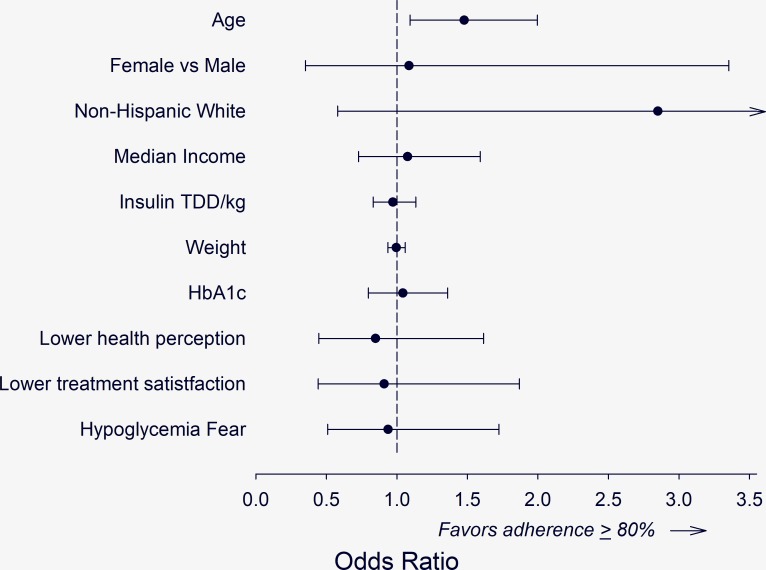
Objective: Medication adherence is impacted by regimen complexity. The SIMPLE (Simple basal Insulin titration, Metformin Plus Liraglutide for type 2 diabetes with very Elevated HbA1c) study compared GLP1RA plus basal insulin (GLP1RA+BI) to basal-bolus insulin (BBI) regimen in participants with very uncontrolled type 2 diabetes mellitus (T2DM). This analysis aimed to evaluate medication adherence to GLP1RA+BI compared with BBI, the effect of adherence on clinical and patient-reported outcomes, and baseline predictors of adherence. Research design and methods: This was an analysis of the SIMPLE study based on prespecified outcome. The study took place in pragmatic, real-world setting. A total of 120 adults with T2DM and HgbA1c≥10% were randomized to detemir plus liraglutide, or detemir plus aspart before each meal; 6-month follow-up. The main outcomes evaluated were: adherence, HgbA1c, weight, quality of life, and hypoglycemia. Adherence rate was calculated for each study medication at each follow-up visit; participants were classified as ≥80% or <80% adherent. Result: A higher percentage of participants in the GLP1RA+BI compared with the BBI group had ≥80% adherence to detemir (59.3% vs 35.7%, p=0.02) as well as liraglutide versus aspart (57.4% vs 30.4%, p=0.007). Higher age was predictive of ≥80% adherence (OR per 5-year increment=1.48, 95% CI 1.09 to 2.0, p=0.01). Higher adherence led to greater improvement in HbA1c and weight in both groups. Treatment with GLP1RA+BI compared with BBI led to greater improvement in HbA1c, weight, and quality of life and lower risk of hypoglycemia even after adjusting for the difference in adherence between groups. Conclusions: Adherence was higher with the simplified regimen of GLP1RA+BI compared with BBI. Greater adherence to the simpler regimen amplified the treatment effect on HbA1c, weight, quality of life, and risk of hypoglycemia, yet statistically significant greater benefits were noted even when adjusted for adherence. Trial registration number: NCT01966978
Overview
The claims and statistics of this paper haven’t been checked yet.
Free: it reads the open-access text and checks the first 5 claims that cite a source we can check. Create a free account to check every claim.
Integrity signals
Registry
Cites
Statistics
Figures
Verification
Claims the paper makes
The claims and statistics of this paper haven’t been checked yet.
Free: it reads the open-access text and checks the first 5 claims that cite a source we can check. Create a free account to check every claim.
Claims other papers make about this one
Each is checked against this paper’s own text: does it say what the citing paper says it does?
In the citing paper
“Restrictive conditions for the intake of oral medications may adversely affect treatment adherence and compliance and, consequently, patient outcomes [23,24].”
Self-check
Percentages, sums and reported differences re-computed from the paper’s own numbers.
The self-check needs the paper’s full text.
Citations
Cites
Adherence to Therapies in Patients with Type 2 Diabetes
García-Pérez, L.-E., Álvarez, M., Dilla, T., Gil-Guillén, V., & Orozco-Beltrán, D. (2013) · Diabetes Therapy · doi:10.1007/s13300-013-0034-y · Cited by 726
Comparing Adherence and Persistence Across 6 Chronic Medication Classes
Yeaw, J., Benner, J. S., Walt, J. G., Sian, S., & Smith, D. B. (2009) · Journal of Managed Care Pharmacy · doi:10.18553/jmcp.2009.15.9.728 · Cited by 549
Type 2 Diabetes in the Real World: The Elusive Nature of Glycemic Control
Edelman, S. V., & Polonsky, W. H. (2017) · Diabetes Care · doi:10.2337/dc16-1974 · Cited by 285
Adherence to insulin and its association with glycaemic control in patients with type 2 diabetes
Donnelly, L. A., Morris, A. D., Evans, J. M. M., & for the DARTS/MEMO collaboration (2007) · QJM · doi:10.1093/qjmed/hcm031 · Cited by 230
Billings, L. K., Doshi, A., Gouet, D., Oviedo, A., Rodbard, H. W., Tentolouris, N., Grøn, R., Halladin, N., & Jodar, E. (2018) · Diabetes Care · doi:10.2337/dc17-1114 · Cited by 193
Hertz, R. P., Unger, A. N., & Lustik, M. B. (2005) · Clinical Therapeutics · doi:10.1016/j.clinthera.2005.07.009 · Cited by 185
Abd El Aziz, M. S., Kahle, M., Meier, J. J., & Nauck, M. A. (2017) · Diabetes, Obesity and Metabolism · doi:10.1111/dom.12804 · Cited by 155
Carls, G. S., Tuttle, E., Tan, R.-D., Huynh, J., Yee, J., Edelman, S. V., & Polonsky, W. H. (2017) · Diabetes Care · doi:10.2337/dc16-2725 · Cited by 153
Rosenstock, J., Guerci, B., Hanefeld, M., Gentile, S., Aronson, R., Tinahones, F. J., Roy-Duval, C., Souhami, E., Wardecki, M., Ye, J., et al. (2016) · Diabetes Care · doi:10.2337/dc16-0014 · Cited by 133
Spain, C. V., Wright, J. J., Hahn, R. M., Wivel, A., & Martin, A. A. (2016) · Clinical Therapeutics · doi:10.1016/j.clinthera.2016.05.009 · Cited by 117
Cited by
Diagnosis, treatment and prevention of type 2 diabetes mellitus in children and adolescents
Serbis, A., Giapros, V. I., Kotanidou, E. P., Galli‐Τsinopoulou, A., & Siomou, E. C. (2021) · World Journal of Diabetes · doi:10.4239/wjd.v12.i4.344 · Cited by 130
Psychosocial Determinants of Treatment Adherence in Patients with Type 2 Diabetes – A Review
Świątoniowska-Lonc, N., Tański, W., Polański, J., Jankowska‐Polańska, B., & Mazur, G. J. (2021) · Diabetes Metabolic Syndrome and Obesity · doi:10.2147/dmso.s308322 · Cited by 134
Kellerer, M., Kaltoft, M. S., Lawson, J., Nielsen, L. L., Strojek, K., Tabak, Ö., & Jacob, S. (2022) · Diabetes, Obesity and Metabolism · doi:10.1111/dom.14765 · Cited by 86
“Goals include minimizing hypoglycaemia and weight gain, and reducing the risk of complications such as atherosclerotic cardiovascular (CV) disease.1,2 While some clinical guidelines recommend a glucagon-like peptide-1 receptor agonist (GLP-1RA) as the first injectable antihyperglycaemic during treatment intensificatio…”
BackgroundResultInfluentialKatsaridis, S., Grammatikopoulou, M. G., Gkiouras, K., Tzimos, C., Papageorgiou, S. Τ., Markaki, A. G., Exiara, T., Goulis, D. G., & Papamitsou, T. (2020) · Nutrients · doi:10.3390/nu12113516 · Cited by 44
“Concerning diet, studies have revealed an improved adherence rate with a more recent DM diagnosis (and subsequently, younger age) [53]; concerning medication, increasing age appears to ameliorate adherence [6,7,54,55].”
BackgroundChong, C. J., Makmor‐Bakry, M., Hatah, E., Tahir, N. A. M., & Mustafa, N. (2023) · Journal of Telemedicine and Telecare · doi:10.1177/1357633x231174933 · Cited by 40
“52,53 Our meta-analysis has highlighted the bene fi cial effects of mobile apps intervention on glycaemic outcomes, postulating that reduction of HbA1c was a result of improved adherence.”
Medication adherence of diabetes mellitus patients in Indonesia: A systematic review
Pertiwi, M. V., Alfian, R., Nita, Y., & Athiyah, U. (2022) · Pharmacy Education · doi:10.46542/pe.2022.222.188193 · Cited by 40
Teo, V., Weinman, J. A., & Yap, K. Z. (2024) · Annals of Behavioral Medicine · doi:10.1093/abm/kaae001 · Cited by 40
Ma, X., Liu, R., Pratt, E. J., Benson, C. T., Bhattachar, S. N., & Sloop, K. W. (2024) · Diabetes Therapy · doi:10.1007/s13300-024-01554-1 · Cited by 38
“Restrictive conditions for the intake of oral medications may adversely affect treatment adherence and compliance and, consequently, patient outcomes [23, 24].”
BackgroundLim, M. T., Rahman, N. A., Teh, X. R., Chan, C. L., Thevendran, S., Hamdi, N. A., Lim, K. K., & Sivasampu, S. (2021) · Therapeutic Advances in Chronic Disease · doi:10.1177/2040622321990264 · Cited by 37
He, X., Wang, X., Wang, B., & Zhu, A. (2023) · Cureus · doi:10.7759/cureus.47756 · Cited by 36
“Among elderly individuals with multiple chronic diseases who frequently require complex treatments, medication adherence plays a pivotal role in achieving optimal treatment targets [6,7].”
BackgroundAlemu, T., Tadesse, T., & Amogne, G. (2021) · SAGE Open Medicine · doi:10.1177/20503121211023000 · Cited by 32
Contreras‐Vergara, A. L., Sifuentes-Franco, S., Haack, S. L., Graciano‐Machuca, O., Rodríguez-Carrizález, A. D., López-Contreras, A. K., Reyes‐Pérez, I. V., & Huerta-Olvera, S. G. (2022) · Patient Preference and Adherence · doi:10.2147/ppa.s370323 · Cited by 32
“A systematic review also indicated that more than 90% of the included studies on pharmacist-led interventions for the management of type 2 diabetes demonstrated a greater reduction in glycosylated hemoglobin levels in the intervention group compared to the control group.(34) The degree of medication adherence was meas…”
MethodType 2 diabetes in children and adolescents: Challenges for treatment and potential solutions
Jia, I. L. J., Zampetti, S., Pozzilli, P., & Buzzetti, R. (2024) · Diabetes Research and Clinical Practice · doi:10.1016/j.diabres.2024.111879 · Cited by 32
CONSTRUÇÃO E VALIDAÇÃO DE CARTILHA EDUCATIVA PARA PROMOÇÃO DA ADESÃO A ANTIDIABÉTICOS ORAIS
Roquini, G. R., Avelar, N. R. N., Santos, T. R., Oliveira, M. R. A. D. C., Neto, N. M. G., Sousa, M. R., & Trevisan, D. D. (2021) · Cogitare Enfermagem · doi:10.5380/ce.v26i0.80659 · Cited by 28
Current Perspectives for Treating Adolescents with Obesity and Type 2 Diabetes: A Review
Niechciał, E., Wais, P., Bajtek, J., & Kędzia, A. W. (2024) · Nutrients · doi:10.3390/nu16234084 · Cited by 26
Optimizing Therapeutic Outcomes With Oral Semaglutide: A Patient-Centered Approach
Isaacs, D. M., Kruger, D. F., & Spollett, G. R. (2020) · Diabetes Spectrum · doi:10.2337/ds20-0016 · Cited by 26
“Either way, consistency in the use of medications is key for achieving optimal treatment outcomes (36,70).”
BackgroundWu, M., Xu, X., Zhao, R., Bai, X., Zhu, B., & Zhao, Z. (2023) · Patient Preference and Adherence · doi:10.2147/ppa.s394201 · Cited by 26
“Improvement in medication adherence can result in better health outcomes.(6) According to the control criterion for the prevention and treatment of type 2 diabetes in China, the glycemic control rate of T2DM in China was low, as shown by fasting plasma glucose (FPG), 2 h postprandial plasma glucose (2hPG),”
BackgroundMirzadeh, S. I., Arefeen, A., Ardo, J. C., Fallahzadeh, R., Minor, B., Lee, J., Hildebrand, J. A., Cook, D. J., Ghasemzadeh, H. G., & Evangelista, L. S. (2022) · Smart Health · doi:10.1016/j.smhl.2022.100328 · Cited by 19
Boye, K. S., Shinde, S., Kennedy-Martin, T., Robinson, S., & Thieu, V. T. (2022) · Patient Preference and Adherence · doi:10.2147/ppa.s328583 · Cited by 18
“Specifically, weight loss from baseline to 6 months was observed in individuals who were adherent with liraglutide plus basal insulin, while those who were non-adherent experienced little weight change (Table 3); PwD who were adherent to basal-bolus insulin gained numerically more weight compared with PwD non-adherent…”
BackgroundMethodResultInfluentialLi, X., Kan, Y., Liu, H.-Y., Pang, J., He, Y., Liu, L., Zou, Y., Zhang, N., & Zhang, Y. (2023) · Acta Diabetologica · doi:10.1007/s00592-023-02102-2 · Cited by 17
“High drug doses or short dosing intervals may cause a rapid drop in blood glucose, resulting in hypoglycemia [50].”
BackgroundSelf-citationPatient perceptions of copay card utilization and policies
Cavalier, D., Doherty, B., Geonnotti, G., Patel, A. A., Peters, W., Zona, S., & Shea, L. M. (2023) · Journal of Market Access & Health Policy · doi:10.1080/20016689.2023.2254586 · Cited by 13
“Furthermore, medication adherence is associated with improved clinical outcomes in patients with chronic illnesses such as cardiovascular and metabolic diseases [28–30].”
BackgroundHespanhol, L. C., Agarwal, S., Carvalhal, G., Bisneto, O. I. D. M., Chagas, G. C. L., Galindo, R. J., & Abreu, M. (2026) · Diabetes Care · doi:10.2337/dc25-2435 · Cited by 11
Self-citationConcept analysis of diabetes-related quality of life
Wicaksana, A. L., & Hertanti, N. S. (2025) · Health and Quality of Life Outcomes · doi:10.1186/s12955-025-02354-2 · Cited by 11
“…diabetes refers to all the actions taken by a patient to effectively control diabetes; it may include adherence to a treatment regime [26, 35], following an appropriate diet and eating habits [26, 31], concern about hypoglycemia [36, 37], diabetes control [29, 38], and self-care behavior [26, 27].”
InfluentialThe Association between Adherence to Oral Antihyperglycemic Agent and HbA1c Level
Soraya, I. A., Sauriasari, R., Prawiroharjo, P., & Risni, H. W. (2022) · Pharmaceutical Sciences and Research · doi:10.7454/psr.v9i2.1260 · Cited by 11
“Many research demonstrated that the decrease in HbA1c values is in line with high patient adherence to treatment (Krapek et al., 2004; Doggrell & Warot, 2014; Nichols et al., 2016; Patel et al., 2019).”
BackgroundNørlev, J. T. D., Hejlesen, O. K., Jensen, M. H., & Hangaard, S. (2023) · Diabetes & Metabolic Syndrome Clinical Research & Reviews · doi:10.1016/j.dsx.2023.102908 · Cited by 9
Teo, V., Weinman, J. A., & Yap, K. Z. (2025) · British Journal of Clinical Pharmacology · doi:10.1002/bcp.70059 · Cited by 8
Swart, E. C. S., Nguyen, J. L., Peasah, S. K., MAGER, D. E., Patel, U., & Good, C. B. (2025) · Journal of Managed Care & Specialty Pharmacy · doi:10.18553/jmcp.2025.31.9.862 · Cited by 7
Nicolucci, A., Chen, H., Cid‐Ruzafa, J., Cooper, A., Fenici, P., Gomes, M. B., Hammar, N., Khunti, K., Kosiborod, M., Leigh, P., et al. (2021) · Diabetes Research and Clinical Practice · doi:10.1016/j.diabres.2021.108974 · Cited by 7
Bae, J. H., Ahn, C. H., Yang, Y., Moon, S. J., Kwak, S. H., Jung, H. S., Park, K. S., & Cho, Y. M. (2021) · Diabetes & Metabolism Journal · doi:10.4093/dmj.2020.0274 · Cited by 7
The role of medication regimen complexity in diabetes management: a rapid review
Khayyat, S. M., & Ali, R. S. A. (2025) · Therapeutic Advances in Endocrinology and Metabolism · doi:10.1177/20420188251372294 · Cited by 6
“19,21,25,28,29 Other authors indicated using the most recent HbA1c or fasting blood glucose measures, but the exact timeframe was not reported.”
InfluentialBajorek, B. V., Sawalha, R., Liang, Y. M., Ganesh, L., & Afifi, M. (2025) · British Journal of Clinical Pharmacology · doi:10.1002/bcp.70286 · Cited by 6
“54,60 Two studies explored adherence beyond the type 2 diabetes mellitus (T2DM) context.”
Wang, Z., Pan, T., Lv, W., Tang, J., Chen, Y., Zhu, X., Zhang, Q., Jing, F., Yin, H., Lu, D., et al. (2025) · Signal Transduction and Targeted Therapy · doi:10.1038/s41392-025-02459-6 · Cited by 6
“4 In addition, the progressive nature of T2D often necessitates multiple medications, 5 which further complicates adherence and reduces long-term treatment effectiveness.”
Liu, C., Tang, S., An, K., Zhang, S., Zhou, Y., Su, N., Yang, R., Liao, X., An, Z., & Li, S. (2021) · Frontiers in Pharmacology · doi:10.3389/fphar.2021.634561 · Cited by 6
Verma, S., Mohanty, I. R., & Rai, S. (2024) · Journal of Diabetology · doi:10.4103/jod.jod_64_23 · Cited by 5
The same lesson over and over: drugs alone will not get us to 90--90--90
Cohen, J., Pepperrell, T., & Venter, F. (2020) · AIDS · doi:10.1097/qad.0000000000002494 · Cited by 6
Diabetes and Financial Well-Being: Differential Hardship Among Vulnerable Populations
Evans, E., & Jacobs, M. (2024) · The Science of Diabetes Self-Management and Care · doi:10.1177/26350106241256324 · Cited by 4
Kheniser, K. G., Aminian, A., & Kashyap, S. R. (2022) · Metabolic Syndrome and Related Disorders · doi:10.1089/met.2022.0039 · Cited by 4
Brunetti, V. C., Yu, O. H. Y., Platt, R. W., & Filion, K. B. (2021) · Diabetic Medicine · doi:10.1111/dme.14603 · Cited by 4
Lingvay, I., Catarig, A., Lawson, J., Chubb, B., Gorst‐Rasmussen, A., & Evans, L. M. (2022) · Diabetes Therapy · doi:10.1007/s13300-022-01344-7 · Cited by 3
Self-citationKhayyat, S. M., Ali, R. S. A., Alrammaal, H. H., Khayyat, S. M. S., Alqurashi, W. A., Alsaedi, R., Alotaibi, W. A., & AL‐AHMADI, A. A. (2024) · Annals of Saudi Medicine · doi:10.5144/0256-4947.2024.296 · Cited by 3
Hernandez, W., Walter, S. R., & Popp, R. A. (2023) · Clinical Diabetes · doi:10.2337/cd23-0006 · Cited by 2
Factors Associated With Improved A1C Values Among People With Uncontrolled Type 2 Diabetes
Walter, S. R., & Popp, R. A. (2022) · Clinical Diabetes · doi:10.2337/cd21-0120 · Cited by 2
Nelson, T., Wilkie, D. J., Yao, Y., Segal, R., DeVaughan-Circles, A., Donahoo, W. T., Goins, R. T., Manson, S. M., Legaspi, A. B., & Scarton, L. J. (2024) · The Science of Diabetes Self-Management and Care · doi:10.1177/26350106241259007 · Cited by 2
“35,36 The percentage of the sample that were not engaged (37.5”
InfluentialMedical Adherence among Type 2 Diabetes Mellitus Patents at Tertiary Care Teaching Hospital of Nepal
Raut, B., Poudel, N., & Thapa, D. (2024) · Journal of Diabetes and Endocrine Association of Nepal · doi:10.3126/jdean.v8i1.76642 · Cited by 2
da Costa, D. H. S., Morais, E. G. D. S., Maio, R., de Andrade, L. A. S. S., Calado, C. K. M., & Burgos, M. G. P. D. A. (2023) · Brazilian Journal of Implantology and Health Sciences · doi:10.36557/2674-8169.2023v5n3p256-275 · Cited by 2
Medication adherence in the elderly: A comprehensive review
Samajdar, S. S., Tripathi, R., Venkatraman, S., Mukherjee, S., Pal, J., Tripathi, S. K., Joshi, S., & Maheshwari, A. (2024) · National Journal of Pharmacology and Therapeutics · doi:10.4103/njpt.njpt_60_24 · Cited by 1
Khalifa, E., & Taguri, A. E. (2025) · Libyan Medical Journal · doi:10.69667/lmj.2517112 · Cited by 1
Wang, X., Ling, Y., Liu, Y., Ju, H., Li, X., Wang, H., & Bai, X. (2026) · Scientific Reports · doi:10.1038/s41598-025-34821-7 · Cited by 1
Self-citationAhmad, F., Abubakar, S., Alwi, S. S. S., Ng, O. C., & Saidi, H. I. (2026) · Journal of Racial and Ethnic Health Disparities · doi:10.1007/s40615-025-02803-0 · Cited by 1
Gandrakota, N., Ramakrishnan, M., Sudireddy, K., & Shah, M. K. (2026) · Primary Health Care Research & Development · doi:10.1017/s1463423626101054 · Cited by 1
“Chronic diseases like hypertension and diabetes often require the administration of complex multimodal medication regimens, and non-adherence can lead to disease exacerbation (Burnier and Egan, 2019; Patel et al. , 2019).”
Ortiz-Seller, A., Real, J. T., Morcillo, E. J., & Ortiz, J. L. (2026) · Survey of Ophthalmology · doi:10.1016/j.survophthal.2026.08.007 · Cited by 1
Xu, Z., Liu, Z., Wang, Y., Xue, J., Chang, T., Cui, Y., Cheng, Y., Liu, G., Wang, W., Zhou, Y., et al. (2023) · Expert Review of Clinical Pharmacology · doi:10.1080/17512433.2023.2188192 · Cited by 1
“Liraglutide is a GLP-1 receptor agonist and is a member of a new class of drugs called GLP-1 analogs [24,25].”
BackgroundJairoun, A. A., Al‐Hemyari, S. S., Shahwan, M. J., Hassan, N. A. G. M., Zyoud, S. H., Jaber, A. A. S., & Al‐Qirim, T. M. (2023) · Clinical Medicine Insights Endocrinology and Diabetes · doi:10.1177/11795514231203913 · Cited by 1
“22 Although there have been calls for continuous education of clinicians and prescription audits by clinical pharmacists, 33 this study demonstrates that the KAP of pharmacists can be similarly insufficient.”
BackgroundZhang, S., Gu, Y., Cheng, Y., Hu, Y., Li, B., Alvarez, A., Lauand, F., Melas‐Melt, L., Zhang, M., Jiang, Y., et al. (2026) · Diabetes Obesity and Metabolism · doi:10.1111/dom.71057 · Cited by 1
GLP-1 agonists and type 2 diabetes health outcomes among rural patients
Wadlow, H. E. (2024) · MOspace Institutional Repository (University of Missouri) · doi:10.32469/10355/99422
Assessment of basal insulin adherence in people with type 2 diabetes
Nørlev, J. T. D. (2024) · VBN Forskningsportal (Aalborg Universitet) · doi:10.54337/aau771502052
Štochl, J., Clarke, N. A., Green, D., Comins, J. D., Higgins, V., Piercy, J., Arbuckle, R., Halasa, T., da Rocha, T. J. C. M., & Khunti, K. (2025) · Diabetes Obesity and Metabolism · doi:10.1111/dom.16551
Sseguya, W., Bahendeka, S., MacLennan, S. J., & Guntupalli, A. M. (2025) · International Health · doi:10.1093/inthealth/ihaf112
“40 Therefore, it is plausible to argue that diabetes control may have generally deteriorated during the pandemic in rural Uganda, contributing to the deterioration in QoL.”
Diferencia de la Adherencia Terapéutica Posterior a la Intervención del Programa CADIMSS
Bautista, A. G., Flores-Canales, B. G., & Téllez, M. I. A. (2025) · Ciencia Latina Revista Científica Multidisciplinar · doi:10.37811/cl_rcm.v9i5.20175
Vipat, A., Budania, N., Bharadwaj, V., Singh, A. A., Kumar, N., Ahuja, S., & Kangra, H. (2024) · International Journal of Pharmaceutical and Clinical Research · doi:10.5281/zenodo.13908903
Laporan Kemajuan Riset Dasar DIPA Unand
Yosmar, R. (n.d.) · Document Repository (Universitas Andalas)
Laporan Kemajuan RDP Pelayanan Informasi Obat pada Pasien DM Tipe 2
Farmasi, A. F. (n.d.) · Document Repository (Universitas Andalas)
Laporan Kemajuan RDP PIO DM Tipe 2
Farmasi, A. F. (n.d.) · Document Repository (Universitas Andalas)
Wei, W., Wang, Y., Song, A., Kang, L., & Sun, J. (2025) · Psycho-Oncologie · doi:10.18282/po4355
Olatunji, O. O., Patnaik, P. K., SATHIYA, V., OTU-ANSAH, J. B., & MEDE, B. N. (2026) · MAEDICA – a Journal of Clinical Medicine · doi:10.26574/maedica.2026.21.1.42
de Andrade, R. C., Ueno, T. M. R. L., Farias, T. A. D. S., Monteiro, W. F., Campos, H. L. M., & de Leon, E. B. (2026) · Revista CUIDARTE · doi:10.15649/cuidarte.5207
“Adherence to therapy is a determining factor in maintaining metabolic control and ensuring treatment efficacy 7 .”
Mitter, M., Ruch, B. P., Zivkovic, J., Theodorou, D., Cınar, E., Niklaus, C., Lawrance, M., Popovic, M., Scheibner, K., Mayor, R., et al. (2026) · Diabetes Technology & Therapeutics · doi:10.1177/15209156261457747
Quỳnh, T. K., Anh, N. T. P., Lan, N. M., Vũ, Đ. N., & Mai, N. T. (2026) · Tạp chí Nghiên cứu Y học · doi:10.52852/tcncyh.v205i8.5220
Deo, P. (2024) · UWE Research Repository (UWE Bristol)
Metadata
- Authors
- Patel, S., Abreu, M., Tumyan, A., Adams-Huet, B., Li, X., & Lingvay, I.
- Affiliations
- Endocrinology, Diabetes and Metabolism, University of Texas Southwestern Medical Center at Dallas, Dallas, Texas, USA
- The University of Texas Southwestern Medical Center (US)
- Corresponding author
- Lingvay, Ildiko
- Venue
- BMJ Open Diabetes Research & Care
- Publisher
- BMJ
- Published
- 2019-11
- Volume
- 7
- Issue
- 1
- Pages
- e000761
- ISSN
- 2052-4897 (ISSN-L)
- PMC
- PMC6887507
- OpenAlex
- W2990909872
- Cited by
- 56
- References
- 28
- Citations by year
- 2026: 7 · 2025: 7 · 2024: 11 · 2023: 9 · 2022: 10 · 2021: 9 · 2020: 3
- FWCI
- 5.66
- Type
- journal article
- Language
- en
- Open access
- gold
- doi.org
- Licence
- cc-by-nc
- Locations
- BMJ Open Diabetes Research & Care (publishedVersion, cc-by-nc)
- PubMed Central (publishedVersion, cc-by-nc)
- PubMed (publishedVersion)
- DOAJ (DOAJ: Directory of Open Access Journals) (submittedVersion)
- Funders
- Novo Nordisk
- Topics
- Health Sciences › Medicine › Family Practice › Medication Adherence and Compliance
- Health Sciences › Medicine › Endocrinology, Diabetes and Metabolism › Diabetes Treatment and Management
- Health Sciences › Medicine › Endocrinology, Diabetes and Metabolism › Diabetes Management and Education
- Keywords
- medication adherence, type 2 diabetes, GLP-1 receptor agonists, liraglutide, basal insulin, detemir, multiple daily insulin injections, HbA1c, weight, quality of life, hypoglycemia, predictors of adherence, patient-reported outcomes, real-world evidence, pragmatic trials
- MeSH terms
- Liraglutide, Blood Glucose, Diabetes Mellitus, Type 2, Female, Follow-Up Studies, Glycated Hemoglobin, Humans, Hypoglycemic Agents, Insulin, Male, Metformin, Middle Aged, Prognosis, Prospective Studies, Quality of Life, Biomarkers, Drug Monitoring, Medication Adherence
About these checks
Registry, retraction, Cites and statistics results are computed, not judged, with one exception: a printed reference that no index lists is read once by a model before it counts as a citation error. Claims are extracted by a model and kept only when their quote appears verbatim in the text; each cited source is then checked, with a model’s help, for whether it says what the claim relies on. Those verdicts can be wrong — read the claim’s quote and the cited source before relying on one.
Statistics and arithmetic are recomputed, not judged.
Confidence bands are shown only for fields calibrated on our annotated test set. None is calibrated yet, so no band is shown.
What counts as a claim ›How we measure confidence ›How we check this ›
Are you an author, or do you see a problem with this page? Request a review
Data sources
Bibliographic data: Semantic Scholar, OpenAlex, Crossref.
Contains information from the Semantic Scholar Academic Graph Datasets, made available under the ODC Attribution License (ODC-BY 1.0).
Semantic Scholar’s data is described in: Kinney, R., et al. (2023). The Semantic Scholar Open Data Platform. arXiv:2301.10140.
