

Paradox of glycemic management: multimorbidity, glycemic control, and high-risk medication use among adults with diabetes
Open accessThe DOI matches its Crossref record; 36 of the 36 references it cites were found in a registry or an index.
Abstract
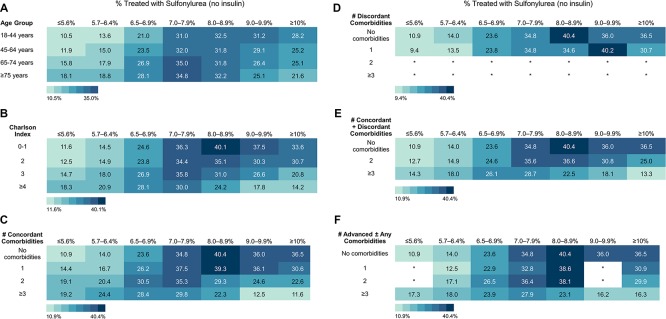
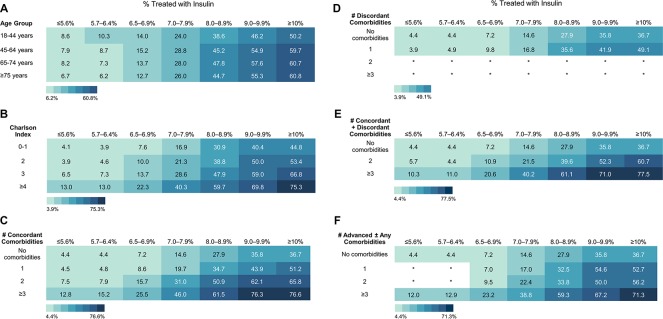
Introduction: Glycemic targets and glucose-lowering regimens should be individualized based on multiple factors, including the presence of comorbidities. We examined contemporary patterns of glycemic control and use of medications known to cause hypoglycemia among adults with diabetes across age and multimorbidity. Research design and methods: We retrospectively examined glycosylated hemoglobin (HbA 1c) levels and rates of insulin/sulfonylurea use as a function of age and multimorbidity using administrative claims and laboratory data for adults with type 2 diabetes included in OptumLabs Data Warehouse, 1 January 2014 to 31 December 2016. Comorbidity burden was assessed by counts of any of 16 comorbidities specified by guidelines as warranting relaxation of HbA 1c targets, classified as being diabetes concordant (diabetes complications or risk factors), discordant (unrelated to diabetes), or advanced (life limiting). Results: Among 194 157 patients with type 2 diabetes included in the study, 45.2% had only concordant comorbidities, 30.6% concordant and discordant, 2.7% only discordant, and 13.0% had ≥1 advanced comorbidity. Mean HbA 1c was 7.7% among 18–44 year-olds versus 6.9% among ≥75 year-olds, and was higher among patients with comorbidities: 7.3% with concordant only, 7.1% with discordant only, 7.1% with concordant and discordant, and 7.0% with advanced comorbidities compared with 7.4% among patients without comorbidities. The odds of insulin use decreased with age (OR 0.51 (95% CI 0.48 to 0.54) for age ≥75 vs 18–44 years) but increased with accumulation of concordant (OR 5.50 (95% CI 5.22 to 5.79) for ≥3 vs none), discordant (OR 1.72 (95% CI 1.60 to 1.86) for ≥3 vs none), and advanced (OR 1.45 (95% CI 1.25 to 1.68) for ≥2 vs none) comorbidities. Conversely, sulfonylurea use increased with age (OR 1.36 (95% CI 1.29 to 1.44) for age ≥75 vs 18–44 years) but decreased with accumulation of concordant (OR 0.76 (95% CI 0.73 to 0.79) for ≥3 vs none), discordant (OR 0.70 (95% CI 0.64 to 0.76) for ≥3 vs none), but not advanced (OR 0.86 (95% CI 0.74 to 1.01) for ≥2 vs none) comorbidities. Conclusions: The proportion of patients achieving low HbA 1c levels was highest among older and multimorbid patients. Older patients and patients with higher comorbidity burden were more likely to be treated with insulin to achieve these HbA 1c levels despite potential for hypoglycemia and uncertain long-term benefit.
Overview
The claims and statistics of this paper haven’t been checked yet.
Free: it reads the open-access text and checks the first 5 claims that cite a source we can check. Create a free account to check every claim.
Integrity signals
Registry
Cites
Statistics
Figures
Verification
Claims the paper makes
The claims and statistics of this paper haven’t been checked yet.
Free: it reads the open-access text and checks the first 5 claims that cite a source we can check. Create a free account to check every claim.
Claims other papers make about this one
Each is checked against this paper’s own text: does it say what the citing paper says it does?
The source backs part of the claim, not all of it — or backs it for a different population, condition or comparison.
In the citing paper
“Collectively, these findings underscore a consistent gap between evidence-based recommendations and real-world practice, particularly among patients with multiple chronic conditions who stand to benefit most from these therapies [2,33].”
From Unequal Access to Evidence-Based Cardiometabolic Therapies: Racial Disparities in SGLT2 Inhibitor and GLP-1 Receptor Agonist Use Among Patients With Type 2 Diabetes and Cardiovascular Disease (2026) · cites this paper as [2]
Experimental — accuracy not yet measuredThe source backs part of the claim, not all of it — or backs it for a different population, condition or comparison.
In the citing paper
“Despite these recommendations, data from studies in the clinical setting show that use of these newer drug classes have been paradoxically lower among patients with evidence of, or increased risk factors for, CVD.3,4,5,6”
From Evaluation of Out-of-Pocket Costs and Treatment Intensification With an SGLT2 Inhibitor or GLP-1 RA in Patients With Type 2 Diabetes and Cardiovascular Disease (2023) · cites this paper as [5]
Experimental — accuracy not yet measuredThe cited source says what the claim attributes to it.
In the citing paper
“These agents not only improve glycemic control but also deliver robust cardiovascular and renal protection, with additional anti-inflammatory and antioxidative effects that modify the underlying pathophysiology of cardiometabolic disease [2,3].”
Self-check
Percentages, sums and reported differences re-computed from the paper’s own numbers.
The self-check needs the paper’s full text.
Citations
Cites
Effects of Intensive Glucose Lowering in Type 2 Diabetes
(2008) · New England Journal of Medicine · doi:10.1056/nejmoa0802743 · Cited by 7,888
Intensive blood glucose control and vascular outcomes in patients with type 2 diabetes
(2008) · New England Journal of Medicine · doi:10.1056/nejmoa0802987 · Cited by 7,397
Validation of a combined comorbidity index
Charlson, M., Szatrowski, T. P., Peterson, J., & Gold, J. (1994) · Journal of Clinical Epidemiology · doi:10.1016/0895-4356(94)90129-5 · Cited by 6,587
Glucose control and vascular complications in veterans with type 2 diabetes
Duckworth, W., Abraira, C., Moritz, T., Reda, D., Emanuele, N., Reaven, P. D., Zieve, F. J., Marks, J., Davis, S. N., Hayward, R., et al. (2009) · New England Journal of Medicine · doi:10.1056/nejmoa0808431 · Cited by 4,762
How to measure comorbiditya critical review of available methods
DEGROOT, V, BECKERMAN, H., LANKHORST, G., & BOUTER, L. (2003) · Journal of Clinical Epidemiology · doi:10.1016/s0895-4356(02)00585-1 · Cited by 1,757
9. Pharmacologic Approaches to Glycemic Treatment: Standards of Medical Care in Diabetes—2019
American Diabetes Association (2019) · Diabetes Care · doi:10.2337/dc19-s009 · Cited by 739
The Impact of Comorbid Chronic Conditions on Diabetes Care
Piette, J. D., & Kerr, E. A. (2006) · Diabetes Care · doi:10.2337/diacare.29.03.06.dc05-2078 · Cited by 731
6. Glycemic Targets: Standards of Medical Care in Diabetes—2019
American Diabetes Association (2019) · Diabetes Care · doi:10.2337/dc19-s006 · Cited by 655
Diabetes in Older Adults: A Consensus Report
Sue Kirkman, M., Briscoe, V. J., Clark, N., Florez, H., Haas, L. B., Halter, J. B., Huang, E. S., Korytkowski, M. T., Munshi, M. N., Odegard, P. S., et al. (2012) · Journal of the American Geriatrics Society · doi:10.1111/jgs.12035 · Cited by 548
Optum Labs: Building A Novel Node In The Learning Health Care System
Wallace, P. J., Shah, N. D., Dennen, T., Bleicher, P. A., & Crown, W. H. (2014) · Health Affairs · doi:10.1377/hlthaff.2014.0038 · Cited by 445
Self-citation
Research works printed but not linked: 1
- OptumLabs OptumLabs and OptumLabs data Warehouse (OLDW) descriptions and citation. Cambridge, MA, 2019 PDF. Reproduced with permission from OptumLabs.
Cited by
Strain, W. D., Down, S., Brown, P., Puttanna, A., & Sinclair, A. (2021) · Diabetes Therapy · doi:10.1007/s13300-021-01035-9 · Cited by 194
McCoy, R. G., Van Houten, H. K., Deng, Y., Mandic, P. K., Ross, J. S., Montori, V. M., & Shah, N. D. (2021) · JAMA Network Open · doi:10.1001/jamanetworkopen.2020.35792 · Cited by 89
Self-citationLuo, J., Feldman, R., Callaway Kim, K., Rothenberger, S., Korytkowski, M., Hernandez, I., & Gellad, W. F. (2023) · JAMA Network Open · doi:10.1001/jamanetworkopen.2023.17886 · Cited by 82
McCoy, R. G., Galindo, R. J., Swarna, K. S., Van Houten, H. K., O’Connor, P. J., Umpierrez, G. E., & Shah, N. D. (2021) · JAMA Network Open · doi:10.1001/jamanetworkopen.2021.23471 · Cited by 69
Self-citationMcCoy, R. G., Van Houten, H. K., Karaca-Mandic, P., Ross, J. S., Montori, V. M., & Shah, N. D. (2021) · Diabetes Care · doi:10.2337/dc20-2977 · Cited by 57
Self-citationMultimorbidity, Frailty and Diabetes in Older People–Identifying Interrelationships and Outcomes
Sinclair, A. J., & Abdelhafiz, A. H. (2022) · Journal of Personalized Medicine · doi:10.3390/jpm12111911 · Cited by 67
“lower HbA1c targets with a potential high risk of hypoglycaemia and uncertain long-term benefit [70].”
BackgroundResultInfluentialValue of Patient-Centered Glycemic Control in Patients with Type 2 Diabetes
Rodríguez‐Gutiérrez, R., Millán-Alanís, J. M., Barrera, F. J., & McCoy, R. G. (2021) · Current Diabetes Reports · doi:10.1007/s11892-021-01433-0 · Cited by 38
Self-citationManagement of older adults with diabetes mellitus: Perspective from geriatric medicine
Umegaki, H. (2024) · Journal of Diabetes Investigation · doi:10.1111/jdi.14283 · Cited by 46
“However, in reality, a study reported that older and multimorbid patients achieved even lower glycated hemoglobin (HbA1c) levels than the non-multimorbid population, possibly due to treatment 15 , which could increase the risk of severe hypoglycemic events.”
BackgroundKoto, R., Nakajima, A., Miwa, T., & Sugimoto, K. (2023) · Diabetes Therapy · doi:10.1007/s13300-023-01421-5 · Cited by 33
“Patient comorbidities during the baseline period were considered to be any of the following 16 health conditions [13, 24], as specified in the guidelines [6, 25, 26] and consensus report [27]: dementia, end-stage renal disease (ESRD; dialysis), chronic kidney disease (CKD; excluding dialysis), myocardial infarction, c…”
MethodDinevari, M. F., Sanaie, S., Rasouli, K., Faramarzi, E., & Molani‐Gol, R. (2023) · BMC Endocrine Disorders · doi:10.1186/s12902-023-01515-y · Cited by 43
Rooney, M. R., Tang, O., Echouffo Tcheugui, J. B., Lutsey, P. L., Grams, M. E., Windham, B. G., & Selvin, E. (2021) · Diabetes Care · doi:10.2337/dc20-3045 · Cited by 21
Alshaikh, A. A., Al-Qahtani, F. S., Alqahtani, S. A. M., AlFarhan, A. A., Nuwayhidh, A. M. M. A., Madkhali, A. M., AlQahtani, R. S., AlAsmari, A. F., Alserhani, A. S., Alqubaisi, H. A., et al. (2024) · Frontiers in Endocrinology · doi:10.3389/fendo.2024.1347396 · Cited by 28
McCoy, R. G., Herrin, J., Galindo, R. J., Sindhu Swarna, K., Umpierrez, G. E., Hill Golden, S., & O'Connor, P. J. (2023) · Diabetes Research and Clinical Practice · doi:10.1016/j.diabres.2023.110263 · Cited by 20
Self-citationHtoo, P. T., Paik, J. M., Alt, E. M., Kim, D. H., Wexler, D. J., Kim, S. C., & Patorno, E. (2023) · The Journals of Gerontology Series A · doi:10.1093/gerona/glad075 · Cited by 14
Influence of Serum Albumin on HbA1c and HbA1c-Defined Glycemic Status: A Retrospective Study
Feng, X., Yang, Y., Zhuang, S., Fang, Y., Dai, Y., Fu, Y., Hu, Q., Yuan, Q., Tang, H., & Tang, L. (2021) · Frontiers in Medicine · doi:10.3389/fmed.2021.583093 · Cited by 13
“The importance of the HbA1c assay in evaluating long-term glycemic control is well established (10, 11).”
BackgroundDe-implementing low-value care in endocrinology
Ospina, N. S., Salloum, R. G., Maraka, S., & Brito, J. P. (2021) · Endocrine · doi:10.1007/s12020-021-02732-y · Cited by 14
“In addition to the example of inappropriate thyroid ultrasound for which passive de-implementation has not occurred, evidence suggests the same is true for other clinical situations such as less stringent hemoglobin A1c targets in older patients with type 2 diabetes or aggressive treatment for patients with thyroid ca…”
ResultBenning, T. J., Heien, H. C., Herges, J. R., Creo, A. L., Al Nofal, A., & McCoy, R. G. (2023) · Diabetes Research and Clinical Practice · doi:10.1016/j.diabres.2023.111026 · Cited by 11
Self-citationBiomarkers of multimorbidity: A systematic review
Zazzara, M. B., Triolo, F., Biscetti, L., Paparazzo, E., Fiorillo, M., Vetrano, D. L., & Onder, G. (2025) · Ageing Research Reviews · doi:10.1016/j.arr.2025.102870 · Cited by 18
“However, glycemic control markers might play a more intricated role as suggested by recent evidence implying that hypoglycaemia could also impact on multimorbidity (93,94).”
Benning, T. J., Heien, H. C., & McCoy, R. G. (2022) · Diabetes Care · doi:10.2337/dc21-2623 · Cited by 11
Self-citationMata‐Cases, M., Mauricio, D., Real, J., Vlacho, B., Liébana, L. R., Molist‐Brunet, N., Cedenilla, M., & Franch‐Nadal, J. (2022) · Journal of Clinical Medicine · doi:10.3390/jcm11175134 · Cited by 11
Ratzki‐Leewing, A. A., Harris, S. B., RABASA-LHORET, R. P. R., & Poon, Y. (2025) · Diabetes Obesity and Metabolism · doi:10.1111/dom.16266 · Cited by 10
“38 Reductions in HCRU similar to those reported here have been described in a series of retrospective cohort studies conducted in the French national health claims database.”
Bodoarca, R., Yeung, R. O., & Lau, D. (2022) · Canadian Journal of Diabetes · doi:10.1016/j.jcjd.2022.04.004 · Cited by 9
Shao, Y., Shi, L., Nauman, E., Price‐Haywood, E. G., & Stoecker, C. (2023) · Diabetes Obesity and Metabolism · doi:10.1111/dom.15293 · Cited by 10
McCoy, R. G., Lipska, K. J., Houten, H. K. V., & Shah, N. D. (2020) · BMJ Open Diabetes Research & Care · doi:10.1136/bmjdrc-2020-001878 · Cited by 7
Self-citationShao, Y., Stoecker, C., Hong, D., Nauman, E., Fonseca, V. A., Hu, G., Bazzano, A. N., Fort, D. G., Kabagambe, E. K., & Shi, L. (2023) · Medical Care · doi:10.1097/mlr.0000000000001816 · Cited by 8
Initiating second-line antidiabetic medication among older adults with type 2 diabetes on Metformin
DeCarlo, K., Wallia, A., Kang, R. H., Cooper, A., Cherupally, M., Harris, S. A., Aikman, C., Liss, D. T., Ackermann, R. T., & O’Brien, M. J. (2022) · BMC Geriatrics · doi:10.1186/s12877-022-02792-3 · Cited by 7
Shabnam, S., Gillies, C., Davies, M. J., DEX, T. A., Melson, E., Khunti, K., Webb, D. R., Zaccardi, F., & Seidu, S. (2023) · Diabetes Research and Clinical Practice · doi:10.1016/j.diabres.2023.110888 · Cited by 7
McCoy, R. G., Vandergrift, J. L., & Gray, B. M. (2025) · Diabetes Research and Clinical Practice · doi:10.1016/j.diabres.2025.112039 · Cited by 6
Self-citationLi, Y., Geng, S., Yuan, H., Ge, J., Li, Q., Chen, X., Zhu, Y., Liu, Y., Guo, X., Wang, X., et al. (2024) · Journal of Global Health · doi:10.7189/jogh.14.04263 · Cited by 8
Uddin, J., Uddin, H., Rahman, M., Saha, P., Hossin, M. Z., Hajizadeh, M., & Kirkland, S. (2023) · Public Health · doi:10.1016/j.puhe.2023.06.041 · Cited by 4
Ratzki-Leewing, A., Harris, S. B., Rabasa-Lhoret, R., & Poon, Y. (2025) · Diabetes Technology & Therapeutics · doi:10.1089/dia.2024.0609 · Cited by 3
“36 The younger age groups also experienced greater mean reductions in HbA1c after FSL acquisition than the older age groups.”
Kintzoglanakis, K., Pavlou-Skantzis, L., Themeli, T., Kyprianou, M., & Paschou, S. Α. (2024) · HORMONES · doi:10.1007/s42000-024-00545-y · Cited by 5
“…and LDL-C are surrogate markers of worse health outcomes, our finding appears paradoxical; however, MM has recently been shown to be associated even with lower A1C [15, 17, 18], although in a large study this was observed in older PwD treated with insulin and thus predisposed to hypoglycemia [18].”
InfluentialWeise, S., Oelschläger, C., Unverzagt, S., Abendroth, J., Heise, M., & Frese, T. (2025) · European Journal of General Practice · doi:10.1080/13814788.2024.2447723 · Cited by 3
“Differences may be due to different study settings and population selection criteria [8,9,17–19], but heterogeneity also occurs in the definition of overtreatment [9].”
Alexopoulos, A., Crowley, M. J., & Kahkoska, A. R. (2023) · Diabetes Care · doi:10.2337/dci23-0017 · Cited by 3
“with findings from prior studies (4,11), the authors report that physicians were, on average, more likely to deintensify therapy in healthy older adults than in”
ResultRisk of poor glycemic control in tamsulosin versus finasteride users with type 2 diabetes mellitus
Nguyen, M. T., Petrov, M. S., & Cho, J. (2025) · Heliyon · doi:10.1016/j.heliyon.2025.e41768 · Cited by 2
“For the second sensitivity analysis, considering that patients with multiple comorbidities are more likely to receive insulin for glycemic control [26], the cohort was stratified as a low CCI stratum (i.e., patients with lower than or equal to the median CCI score of 9.0) and a high CCI stratum…”
InfluentialObi, M. F., Ahmad, S., & Ezechukwu, K. (2026) · Cureus · doi:10.7759/cureus.106266 · Cited by 1
“Collectively, these findings underscore a consistent gap between evidence-based recommendations and real-world practice, particularly among patients with multiple chronic conditions who stand to benefit most from these therapies [2,33].”
Hypoglycemia: Turning the tide on crashing blood glucose
Beattie, S. (2023) · The Nurse Practitioner · doi:10.1097/01.npr.0000000000000100 · Cited by 1
Wing, A., & Mathur, R. (2025) · BMJ Open Diabetes Research & Care · doi:10.1136/bmjdrc-2024-004879 · Cited by 1
“%) were diagnosed after their T2DM diagnosis.”
Bessa, A. H. F. D. B. E. (2023) · Digital Library of Theses and Dissertations (Universidade de São Paulo) · doi:10.11606/d.17.2023.tde-05062023-141557 · Cited by 2
Uehira, Y., Ueno, H., Ebihara, E., Uchida, T., Nabekura, H., Sakoda, H., Yonekawa, T., Yamaguchi, H., & Nakazato, M. (2022) · Journal of Diabetes Investigation · doi:10.1111/jdi.13750
Rahimi, M., Poortaghi, S., & Negarandeh, R. (2024) · Nursing Practice Today · doi:10.18502/npt.v11i1.14942
Type 2 Diabetes at a Military Health Centre in Brazil: Clinical and Pharmacotherapeutic Profile
Bessa, A. H. F. D. B. E., Ueta, J. M., Mayrink, V. D., & de Oliveira, R. E. M. (2024) · Clinical Diabetology · doi:10.5603/cd.98362
“It should be emphasized that the subjects of the present study had an average of 3.3 diseases, a figure close to that reported in the literature (i.e., 3.1 diseases per individual) [25].”
BackgroundResultInfluentialTRATAMENTO E CONTROLE DO DIABETES MELLITUS NA ATENÇÃO PRIMÁRIA À SAÚDE EM RIO BRANCO, ACRE
Sampaio, A. F. S., Amaral, T. L. M., Amaral, C. D. A., de Vasconcellos, M. T. L., & Monteiro, G. T. R. (2026) · Revista Contemporânea · doi:10.56083/rcv6n1-070
SGLT2i and GLP-1RA Use in the USA
Steiger, K. G., & McCoy, R. G. (2026) · Journal of General Internal Medicine · doi:10.1007/s11606-026-10456-w
Self-citationPatterns of complication burden in people with diabetes: a latent class analysis approach
Kruschewsky, B. M. F., Rocha, R. M., Araújo, M., Andrade, R. E. A., & Ribeiro, I. J. S. (2026) · Acta Diabetologica · doi:10.1007/s00592-026-02703-7
“Furthermore, the coexistence of arterial hypertension, dyslipidemia, and obesity exacerbates cardio-vascular and metabolic risk, requiring integrated and multi-disciplinary approaches [11, 12].”
Ünal, F. T. Ş., Canpolat, A. G., Emral, R., Haymana, C., Demirci, İ., Salman, S., Ersoy, C., Bayram, F., Satman, İ., Sönmez, A., et al. (2026) · Postgraduate Medicine · doi:10.1080/00325481.2026.2673267
“These findings highlight the need for individualized glycemic targets and careful medication management in older patients with type 2 diabetes and multi-morbidity [33,34].”
Parmar, J. S., McCaffery, K. J., Rahaman, K. S., Sidhu, B., Zachariah, D., Hng, T., Jayaballa, R., Wong, V. W., Hibbert, E., Turalic, U., et al. (2026) · Patient Education and Counseling · doi:10.1016/j.pec.2026.109737 · Cited by 1
Ugwu, U. C., & Ene, O. C. (2026) · Discover Medicine · doi:10.1007/s44337-026-00643-3 · Cited by 1
“This contrasts with findings from Ghana, Ethiopia and elsewhere [20, 27, 31–34], and may reflect differences in health sys-tem engagement or patient perception of disease severity.”
Htoo, P. T., Cho, H., Paik, J. M., Bykov, K., Everett, B. M., Glynn, R. J., Shay, C. M., Schmedt, N., Wexler, D. J., & Patorno, E. (2026) · Cardiovascular Diabetology · doi:10.1186/s12933-026-03287-w · Cited by 1
(2026) · ADA Clinical Compendia · doi:10.2337/db20261-33
Gray, B. M., Vandergrift, J. L., Landon, B. E., & McCoy, R. (2026) · JAMA Network Open · doi:10.1001/jamanetworkopen.2026.40858
Self-citation
Metadata
- Authors
- McCoy, R. G., Lipska, K. J., Van Houten, H. K., & Shah, N. D.
- Affiliations
- Mayo Clinic (US)
- Yale University (US)
- Division of Health Care Policy & Research, Department of Health Sciences Research, Mayo Clinic, Rochester, Minnesota, USA
- Corresponding author
- McCoy, Rozalina G
- Venue
- BMJ Open Diabetes Research & Care
- Publisher
- BMJ
- Published
- 2020-02
- Volume
- 8
- Issue
- 1
- Pages
- e001007
- ISSN
- 2052-4897 (ISSN-L)
- PMC
- PMC7039576
- OpenAlex
- W3007546177
- Cited by
- 51
- References
- 36
- Citations by year
- 2026: 10 · 2025: 7 · 2024: 6 · 2023: 13 · 2022: 6 · 2021: 8 · 2020: 1
- FWCI
- 5.28
- Type
- journal article
- Language
- en
- Open access
- gold
- doi.org
- Licence
- Locations
- BMJ Open Diabetes Research & Care (publishedVersion, cc-by-nc)
- PubMed Central (publishedVersion, cc-by-nc)
- PubMed (publishedVersion)
- DOAJ (DOAJ: Directory of Open Access Journals) (submittedVersion, cc-by-sa)
- Funders
- National Institute of Diabetes and Digestive and Kidney Diseases (K23DK114497)
- Agency for Healthcare Research and Quality (1U19HS024075)
- Topics
- Health Sciences › Medicine › Endocrinology, Diabetes and Metabolism › Diabetes Treatment and Management
- Health Sciences › Medicine › Epidemiology › Chronic Disease Management Strategies
- Health Sciences › Medicine › Endocrinology, Diabetes and Metabolism › Diabetes Management and Research
- Keywords
- type 2 diabetes, glycemic control, HbA1c, multimorbidity, insulin use, sulfonylureas, hypoglycemic medications, age differences, individualized glycemic targets, diabetes complications, older adults, medication use patterns
- MeSH terms
- Multimorbidity, Glycemic Control, Adolescent, Adult, Aged, Diabetes Mellitus, Type 2, Female, Glycated Hemoglobin, Humans, Hypoglycemia, Hypoglycemic Agents, Insulin, Longitudinal Studies, Male, Middle Aged, Retrospective Studies, Risk Factors, Sulfonylurea Compounds, Diabetes Complications, Young Adult
About these checks
Registry, retraction, Cites and statistics results are computed, not judged, with one exception: a printed reference that no index lists is read once by a model before it counts as a citation error. Claims are extracted by a model and kept only when their quote appears verbatim in the text; each cited source is then checked, with a model’s help, for whether it says what the claim relies on. Those verdicts can be wrong — read the claim’s quote and the cited source before relying on one.
Statistics and arithmetic are recomputed, not judged.
Confidence bands are shown only for fields calibrated on our annotated test set. None is calibrated yet, so no band is shown.
What counts as a claim ›How we measure confidence ›How we check this ›
Are you an author, or do you see a problem with this page? Request a review
Data sources
Bibliographic data: Semantic Scholar, OpenAlex, Crossref.
Contains information from the Semantic Scholar Academic Graph Datasets, made available under the ODC Attribution License (ODC-BY 1.0).
Semantic Scholar’s data is described in: Kinney, R., et al. (2023). The Semantic Scholar Open Data Platform. arXiv:2301.10140.
