

Disease burden of primary biliary cholangitis and associated pruritus based on a cross-sectional US claims analysis
Open accessThe DOI matches its Crossref record; 33 of the 34 references it cites were found in a registry or an index, and 1 are not checked yet.
Abstract
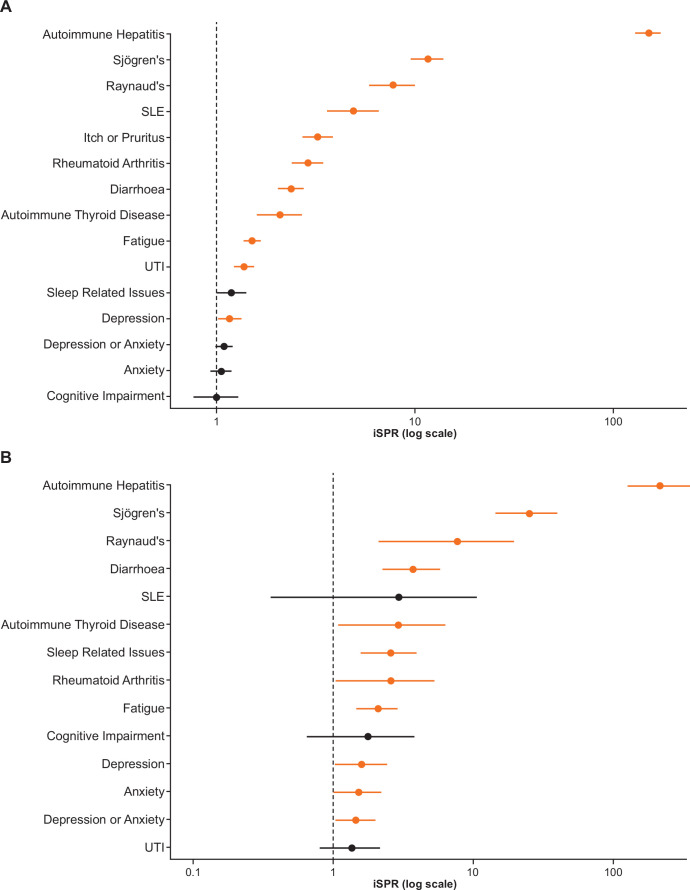
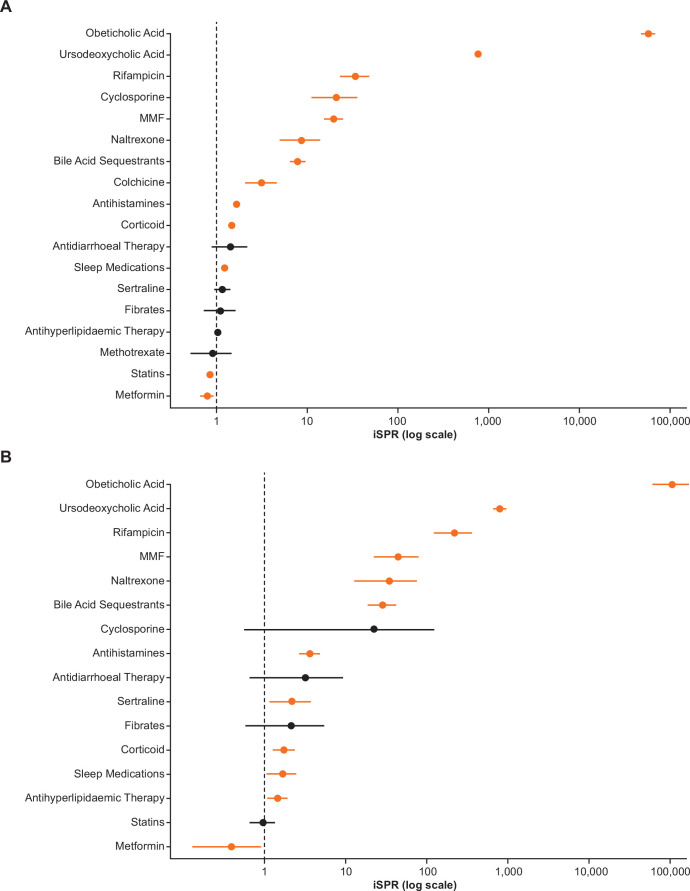
Objective: In order to identify areas of unmet need in patients with primary biliary cholangitis (PBC), this study sought to use real-world observational healthcare data to characterise the burden in patients with PBC and in PBC patients with a recorded diagnosis of pruritus. Design: This retrospective, cross-sectional database study compared prevalence of prespecified comorbidities and medications in the PBC population and PBC-pruritus subpopulation with non-cases using an indirect standardisation approach. The PBC population was identified from the US IBM MarketScan Commercial Claims and Medicare Supplemental Database during 2016 using International Classification of Diseases 10th Revision, Clinical Modification codes (≥2 claims for PBC); the PBC-pruritus subpopulation additionally had ≥1 claim for pruritus during this period. Non-cases had no claims for PBC. Indirect age-sex standardised prevalence ratios (iSPR) and 95% confidence intervals (CIs) were calculated for prespecified comorbidities and medications recorded during 2017. Results: The PBC population (N=1963) and PBC-pruritus subpopulation (N=139) had significantly higher prevalence of fatigue (19.9%, iSPR (95% CI): 1.51 (1.36 to 1.66); 26.6%, 2.10 (1.48 to 2.90)), depression/anxiety (21.3%, 1.09 (0.99 to 1.20); 28.1%, 1.46 (1.04 to 2.00)) and sleep-related issues (6.9%, 1.18 (0.99 to 1.40); 14.4%, 2.58 (1.58 to 3.99)) compared with non-cases. Bile acid sequestrants were prescribed in 5.8% and 18.0% of the PBC and PBC-pruritus populations, respectively. In general, a higher prevalence of comorbidities and medication use was observed in the PBC-pruritus subpopulation compared with the PBC population and non-cases. Conclusion: Despite availability of treatments for PBC, the PBC population had a higher burden of comorbidities than non-cases. This burden was even greater among the PBC-pruritus subpopulation, with a particularly high prevalence of sleep disorders and depression/anxiety. Despite this, pruritus remains undertreated highlighting a need for treatments specifically indicated for cholestatic pruritus.
Overview
The claims and statistics of this paper haven’t been checked yet.
Free: it reads the open-access text and checks the first 5 claims that cite a source we can check. Create a free account to check every claim.
Integrity signals
Registry
Cites
Statistics
Figures
Verification
Claims the paper makes
The claims and statistics of this paper haven’t been checked yet.
Free: it reads the open-access text and checks the first 5 claims that cite a source we can check. Create a free account to check every claim.
Claims other papers make about this one
Each is checked against this paper’s own text: does it say what the citing paper says it does?
The source backs part of the claim, not all of it — or backs it for a different population, condition or comparison.
In the citing paper
“Gungabissoon et al found in patients with primary biliary cholangitis a prevalence of 21.3% of depression and a 28.1% of anxiety in the US IBM MarketScan Commercial Claims and Medicare Supplemental Database during 2016.4”
From Management of depression/anxiety in patients with chronic liver disease (2024) · cites this paper as [4]
Experimental — accuracy not yet measuredThe source backs part of the claim, not all of it — or backs it for a different population, condition or comparison.
In the citing paper
“Gungabissoon et al found in patients with primary biliary cholangitis a prevalence of 21.3% of depression and a 28.1% of anxiety in the US IBM MarketScan Commercial Claims and Medicare Supplemental Database during 2016.4”
From Management of depression/anxiety in patients with chronic liver disease (2024) · cites this paper as [4]
Experimental — accuracy not yet measured
Self-check
Percentages, sums and reported differences re-computed from the paper’s own numbers.
The self-check needs the paper’s full text.
Citations
Cites
Hirschfield, G. M., Beuers, U., Corpechot, C., Invernizzi, P., Jones, D., Marzioni, M., & Schramm, C. (2017) · Journal of Hepatology · doi:10.1016/j.jhep.2017.03.022 · Cited by 1,480
(2011) · Encyclopedia of Cancer · doi:10.1007/978-3-642-16483-5_4730 · Cited by 1,240
A Placebo-Controlled Trial of Obeticholic Acid in Primary Biliary Cholangitis
Nevens, F., Andreone, P., Mazzella, G., Strasser, S. I., Bowlus, C., Invernizzi, P., Drenth, J. P. H., Pockros, P. J., Regula, J., Beuers, U., et al. (2016) · New England Journal of Medicine · doi:10.1056/nejmoa1509840 · Cited by 1,131
Lindor, K. D., Gershwin, E. M., Poupon, R., Kaplan, M., Bergasa, N. V., & Heathcote, J. E. (2009) · Hepatology · doi:10.1002/hep.22906 · Cited by 1,099
Lindor, K. D., Bowlus, C. L., Boyer, J., Levy, C., & Mayo, M. (2019) · Hepatology · doi:10.1002/hep.30145 · Cited by 913
Carey, E. J., Ali, A. H., & Lindor, K. D. (2015) · The Lancet · doi:10.1016/s0140-6736(15)00154-3 · Cited by 735
Epidemiology of primary sclerosing cholangitis and primary biliary cirrhosis: A systematic review
Boonstra, K., Beuers, U., & Ponsioen, C. Y. (2012) · Journal of Hepatology · doi:10.1016/j.jhep.2011.10.025 · Cited by 632
SIMPLE METHOD TO CALCULATE THE CONFIDENCE INTERVAL OF A STANDARDIZED MORTALITY RATIO (SMR)
ULM, K. (1990) · American Journal of Epidemiology · doi:10.1093/oxfordjournals.aje.a115507 · Cited by 550
Ursodeoxycholic acid in the treatment of primary biliary cirrhosis
Lindor, K. D., Dickson, E. R., Baldus, W. P., Jorgensen, R. A., Ludwig, J., Murtaugh, P. A., Harrison, J. M., Wiesner, R. H., Anderson, M. L., Lange, S. M., et al. (1994) · Gastroenterology · doi:10.1016/0016-5085(94)90021-3 · Cited by 487
Yosipovitch, G., & Bernhard, J. D. (2013) · New England Journal of Medicine · doi:10.1056/nejmcp1208814 · Cited by 405
Research works printed but not linked: 1
- Jones DE. Primary biliary cholangitis. BMJ best practice. Available: https://bestpractice.bmj.com/topics/en-gb/344
Cited by
Epidemiological and economical burden of cholestatic liver disease
Mol, B., Werner, E., Culver, E. L., van der Meer, A. J., Bogaards, J. A., & Ponsioen, C. Y. (2025) · Hepatology · doi:10.1097/hep.0000000000001341 · Cited by 31
Pruritus in primary biliary cholangitis is under-recorded in patient medical records
Gungabissoon, U., Smith, H. T., von Maltzahn, R., Logie, J., Fairburn-Beech, J., Ma, L., Dhirishiya, P., McGirr, A. A., Hunnicutt, J. N., Rowe, C. L., et al. (2024) · BMJ Open Gastroenterology · doi:10.1136/bmjgast-2023-001287 · Cited by 27
Self-citationKanda, T., Sasaki, R., Kimura, N., Abé, H., Yoshida, T., Hayashi, K., Sakamaki, A., Yokoo, T., Kamimura, H., Tsuchiya, A., et al. (2025) · International Journal of Molecular Sciences · doi:10.3390/ijms26051883 · Cited by 22
Koc, O. M., Toussaint, A. C., Untas, A., Milkiewicz, P., Ytting, H., Buck, L., Jones, D. E., Hirschfield, G. M., Leburgue, A., Schramm, C., et al. (2025) · The Lancet. Gastroenterology & hepatology · doi:10.1016/s2468-1253(25)00257-2 · Cited by 19
Management of depression/anxiety in patients with chronic liver disease
Garcia-Altieri, M., Carrera-Mejias, K., & Hernaez, R. (2024) · Clinical Liver Disease · doi:10.1097/cld.0000000000000179 · Cited by 11
Carreño, F., Karatza, E., Mehta, R. S., Collins, J. W., Austin, D. J., & Swift, B. (2023) · Clinical Pharmacology & Therapeutics · doi:10.1002/cpt.3103 · Cited by 14
“Although the pathophysiology of itch is not completely understood, BAs accumulate in the blood and skin of patients with PBC, induce pruritus in healthy participants following intradermal injection, and, if ingested, worsen pruritus in patients with cholestatis.”
BackgroundFreer, A., Williams, F. R., Durman, S., Hayden, J. K., Armstrong, M. J., & Trivedi, P. J. (2024) · JHEP Reports · doi:10.1016/j.jhepr.2024.101210 · Cited by 24
Primary biliary cholangitis (PBC): evolving approaches and expert perspectives
Invernizzi, P., Aghemo, A., Calvaruso, V., Lleò, A., Marzioni, M., Piscaglia, F., Rigamonti, C., Gentilucci, U. V., Brillanti, S., Carbone, M., et al. (2025) · Expert Review of Gastroenterology & Hepatology · doi:10.1080/17474124.2025.2601220 · Cited by 8
Gungabissoon, U., Hunnicutt, J. N., McDermott, E., Lovley, A., Frazer, M., LaGasse, K., Kosinski, M. R., McCausland, K. L., McGirr, A. A., Smith, H. T., et al. (2025) · BMJ Open Gastroenterology · doi:10.1136/bmjgast-2025-001809 · Cited by 6
Self-citationZaidi, M. H., Haider, Z., Sadia, F., Tayyab, M., Tariq, M., Ans, H., Javaid, M. B., Khan, A., Ahmad, M. H., Rasheed, R., et al. (2025) · JGH Open · doi:10.1002/jgh3.70196 · Cited by 4
Increased risk of fragility fractures in patients with primary biliary cholangitis
Lim, J., Kim, Y., Kim, S., & Choi, J. (2024) · JBMR Plus · doi:10.1093/jbmrpl/ziae056 · Cited by 10
Dong, S., Zhou, S., Liu, J., Chen, N., Li, J., Han, Z., Liu, R., Xuan, C., Wang, W., Guo, L., et al. (2024) · Advances in Medical Sciences · doi:10.1016/j.advms.2024.08.002 · Cited by 4
Carreño, F. O., Mehta, R., de Souza, A. R., Collins, J. W., & Swift, B. (2025) · CPT Pharmacometrics & Systems Pharmacology · doi:10.1002/psp4.13300 · Cited by 3
Gish, R. G., MacEwan, J. P., Liu, Y., Lebovitch, D. S., Nair, R., Bessonova, L., Li, J., & Younossi, Z. M. (2026) · Journal of Comparative Effectiveness Research · doi:10.57264/cer-2025-0110 · Cited by 1
Marenco‐Flores, A., Rojas-Amaris, N., Abadi-Ron, V., Garita, E., Polo-Ibarra, J., Munguia, F., Barba, R., Goyes, D., Morales, E. M., Sierra, L., et al. (2026) · Annals of Hepatology · doi:10.1016/j.aohep.2026.102431 · Cited by 2
Prognosis of Cirrhotic Patients After Osteoporotic Femoral Neck Fracture
Muallem, A., Kandel, L., & Ackerman, Z. (2024) · Journal of Clinical Medicine · doi:10.3390/jcm13226701
Gish, R. G., Mendler, M. H., Mena, E., Kim, C., Perez, C., Pan, Y., Samnaliev, M., Ito, D., & Agapova, M. (2025) · Journal of Medical Economics · doi:10.1080/13696998.2025.2595885
“In retrospective claims studies, PBC has been associated with higher rates of fatigue, depression, anxiety, and sleep-related issues 12 and with lower quality of life 13 .”
Baguley, E., Knaub, M., VanDyke, J. L., Hirschfield, G. M., Swain, M. G., Wright, G., McCaughey, D., & Shaheen, A. A. (2026) · PLoS ONE · doi:10.1371/journal.pone.0340475
“These results corroborate previous studies linking PBC with chronic symptoms of fatigue and anxiety, and contribute to social, emotional, and cognitive impairments [29–32].”
Sanai, F. M., Alghamdi, A. S., Khathlan, A. A., Qutub, A. A., Quraishi, H. A., Alghamdi, M., ALZaabi, M. E. H., Mawardi, M., Altarrah, M. Y., Alnahdi, N., et al. (2026) · Cureus · doi:10.7759/cureus.113526
“Consistent with regional observations, published studies report pruritus prevalence ranging from 7% to 80%, influenced by study design, patient populations, and potential under-reporting [53,54].”
Kumar, S., Shamseddine, N., Yang, H., Zhang, S., Chen, J., & Kowdley, K. V. (2026) · Journal of Comparative Effectiveness Research · doi:10.57264/cer-2025-0179
“The comorbidities observed in the present study generally align with those previously reported [7 , 20 , 29] .”
Influential
Metadata
- Authors
- Gungabissoon, U., Gibbons, D. C., Requena, G., Ribeiro de Souza, A., & Smith, H.
- Affiliations
- GlaxoSmithKline (United Kingdom) (GB)
- Value Evidence and Outcomes (Real World Analytics), GSK, Brentford, UK
- Research and Development, GSK, Madrid, Spain
- Value Evidence and Outcomes (Specialty), GSK, Brentford, UK
- Corresponding author
- Gungabissoon, Usha
- Venue
- BMJ Open Gastroenterology
- Publisher
- BMJ
- Published
- 2022-08
- Volume
- 9
- Issue
- 1
- Pages
- e000857
- ISSN
- 2054-4774 (ISSN-L)
- PMC
- PMC9386220
- OpenAlex
- W4292056559
- Semantic Scholar
- 36385d66c555374f5de1db3fd50c94490fc63794
- Cited by
- 20
- References
- 33
- Citations by year
- 2026: 5 · 2025: 8 · 2024: 6 · 2023: 1
- FWCI
- 2.23
- Type
- journal article
- Language
- en
- Open access
- gold
- doi.org
- Licence
- Locations
- BMJ Open Gastroenterology (publishedVersion, cc-by-nc)
- PubMed Central (publishedVersion, cc-by-nc)
- PubMed (publishedVersion)
- DOAJ (DOAJ: Directory of Open Access Journals) (submittedVersion, cc-by-sa)
- Funders
- GlaxoSmithKline (GSK212487/209984)
- Topics
- Health Sciences › Medicine › Hepatology › Liver Diseases and Immunity
- Health Sciences › Medicine › Surgery › Pediatric Hepatobiliary Diseases and Treatments
- Health Sciences › Medicine › Gastroenterology › Gallbladder and Bile Duct Disorders
- Keywords
- primary biliary cirrhosis, pruritus, disease burden, comorbidities, fatigue, anxiety and depression, bile acid sequestrants, medication use, unmet medical needs, claims data, real-world evidence, commercial claims, United States patients
- MeSH terms
- Aged, Medicare, Humans, Insurance Claim Review, Liver Cirrhosis, Biliary, Pruritus, Retrospective Studies, United States, Cost of Illness
About these checks
Registry, retraction, Cites and statistics results are computed, not judged, with one exception: a printed reference that no index lists is read once by a model before it counts as a citation error. Claims are extracted by a model and kept only when their quote appears verbatim in the text; each cited source is then checked, with a model’s help, for whether it says what the claim relies on. Those verdicts can be wrong — read the claim’s quote and the cited source before relying on one.
Statistics and arithmetic are recomputed, not judged.
Confidence bands are shown only for fields calibrated on our annotated test set. None is calibrated yet, so no band is shown.
What counts as a claim ›How we measure confidence ›How we check this ›
Are you an author, or do you see a problem with this page? Request a review
Data sources
Bibliographic data: Semantic Scholar, OpenAlex, Crossref.
Contains information from the Semantic Scholar Academic Graph Datasets, made available under the ODC Attribution License (ODC-BY 1.0).
Semantic Scholar’s data is described in: Kinney, R., et al. (2023). The Semantic Scholar Open Data Platform. arXiv:2301.10140.
