

Emerging implications of policies on malaria treatment: genetic changes in the Pfmdr-1 gene affecting susceptibility to artemether–lumefantrine and artesunate–amodiaquine in Africa
The DOI matches its Crossref record; 8 of the 8 references it cites were found in a registry or an index.
Abstract
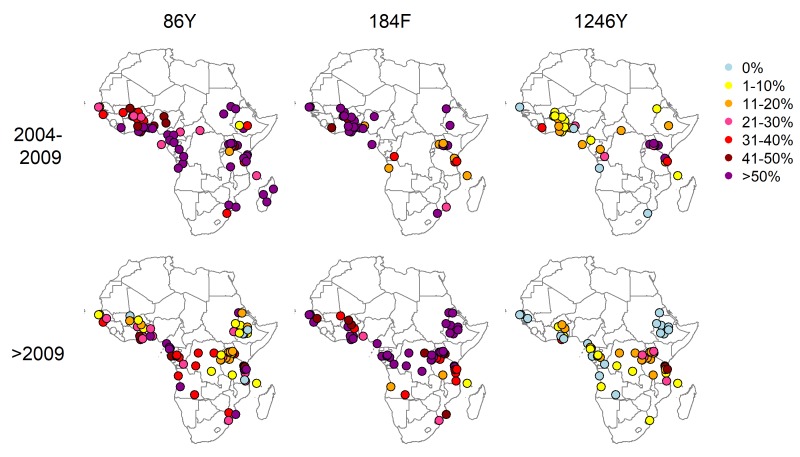
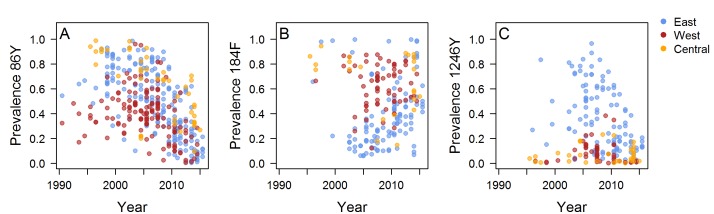
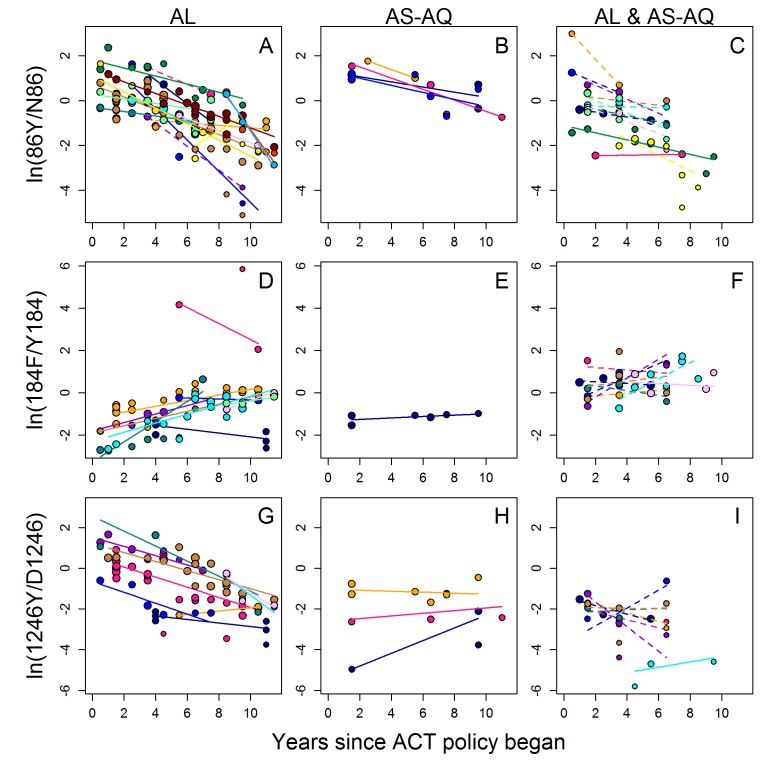
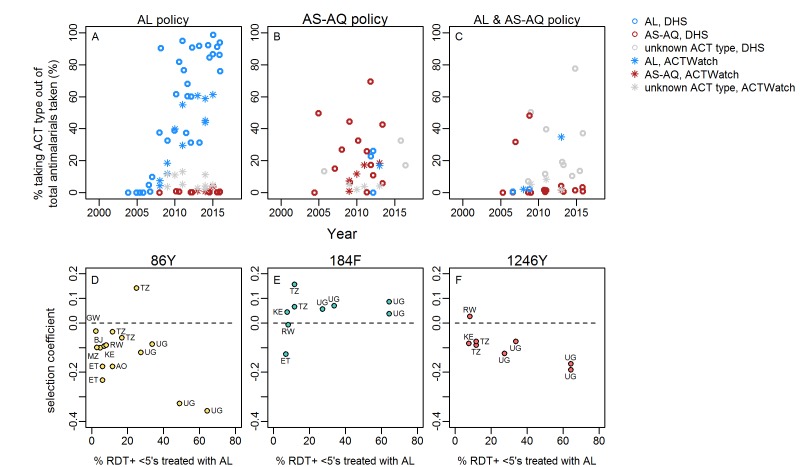
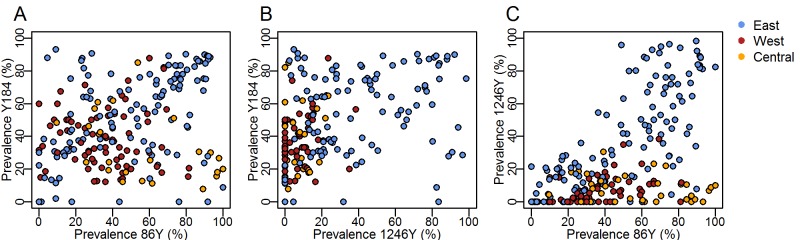
Artemether–lumefantrine (AL) and artesunate–amodiaquine (AS-AQ) are the most commonly used artemisinin-based combination therapies (ACT) for treatment of Plasmodium falciparum in Africa. Both treatments remain efficacious, but single nucleotide polymorphisms (SNPs) in the P lasmodium falciparum multidrug resistance 1 (Pfmdr1) gene may compromise sensitivity. AL and AS-AQ exert opposing selective pressures: parasites with genotype 86Y, Y184 and 1246Y are partially resistant to AS-AQ treatment, while N86, 184 F and D1246 are favoured by AL treatment. Through a systematic review, we identified 397 surveys measuring the prevalence of Pfmdr1 polymorphisms at positions 86 184 or 1246 in 30 countries in Africa. Temporal trends in SNP frequencies after introduction of AL or AS-AQ as first-line treatment were analysed in 32 locations, and selection coefficients estimated. We examined associations between antimalarial policies, consumption, transmission intensity and rate of SNP selection. 1246Y frequency decreased on average more rapidly in locations where national policy recommended AL (median selection coefficient(s) of −0.083), compared with policies of AS-AQ or both AL and AS-AQ (median s=−0.035 and 0.021, p<0.001 respectively). 86Y frequency declined markedly after ACT policy introduction, with a borderline significant trend for a more rapid decline in countries with AL policies (p=0.055). However, these trends could also be explained by a difference in initial SNP frequencies at the time of ACT introduction. There were non-significant trends for faster selection of N86 and D1246 in areas with higher AL consumption and no trend with transmission intensity. Recorded consumption of AS-AQ was low in the locations and times Pfmdr1 data were collected. SNP trends in countries with AL policies suggest a broad increase in sensitivity of parasites to AS-AQ, by 7–10 years after AL introduction. Observed rates of selection have implications for planning strategies to cycle drugs or use multiple first-line therapies to maintain drug efficacy.
Overview
The claims and statistics of this paper haven’t been checked yet.
Free: it reads the open-access text and checks the first 5 claims that cite a source we can check. Create a free account to check every claim.
Integrity signals
Registry
Cites
Statistics
Figures
Verification
Claims the paper makes
The claims and statistics of this paper haven’t been checked yet.
Free: it reads the open-access text and checks the first 5 claims that cite a source we can check. Create a free account to check every claim.
Claims other papers make about this one
Each is checked against this paper’s own text: does it say what the citing paper says it does?
In the citing paper
“almost all genotyped samples carrying the ACT partner drug lumefantrine resistance haplotype (pfmdr1 NFD)38,39”
From Plasmodium falciparum resistant to artemisinin and diagnostics have emerged in Ethiopia (2023) · cites this paper as [38]
In the citing paper
“Most of the genotyped samples carried the MDR1 NFD haplotype69–72”
From Rising prevalence of Plasmodium falciparum Artemisinin partial resistance mutations in Ethiopia (2025) · cites this paper as [69]
In the citing paper
“While the role of Y184F in lumefantrine and chloroquine susceptibility remains unclear, the 86Y allele has been linked to increased lumefantrine but reduced susceptibility to 4-aminoquinolines (amodiaquine and chloroquine)59–62, illustrating the complex interplay of drug pressures shaping resistance evolution.”
From Genomic surveillance reveals co-occurrence of Plasmodium falciparum drug resistance variants across diverse transmission settings in Ethiopia (2026) · cites this paper as [60]
Self-check
Percentages, sums and reported differences re-computed from the paper’s own numbers.
The self-check needs the paper’s full text.
Citations
Cites
Artemisinin Resistance in Plasmodium falciparum Malaria
Dondorp, A. M., Nosten, F., Yi, P., Das, D., Phyo, A. P., Tarning, J., Lwin, K. M., Ariey, F., Hanpithakpong, W., Lee, S. J., et al. (2009) · New England Journal of Medicine · doi:10.1056/nejmoa0808859 · Cited by 3,424
Outpatient antibiotic use in Europe and association with resistance: a cross-national database study
Goossens, H., Ferech, M., Vander Stichele, R., & Elseviers, M. (2005) · The Lancet · doi:10.1016/s0140-6736(05)17907-0 · Cited by 3,359
The effect of malaria control on Plasmodium falciparum in Africa between 2000 and 2015
Bhatt, S., Weiss, D. J., Cameron, E., Bisanzio, D., Mappin, B., Dalrymple, U., Battle, K. E., Moyes, C. L., Henry, A., Eckhoff, P. A., et al. (2015) · Nature · doi:10.1038/nature15535 · Cited by 3,225 · cited 2×
“Other covariates tested were the initial frequency/prevalence of the SNP at the start of the time series, antimalarial use (ACT use estimated by the Malaria Atlas Project, chloroquine use estimates from DHS, MIS and MICS surveys) and transmission intensity (measured by slide prevalence in 2–10 year olds.(42) Antimalar…”
MethodSelf-citationA molecular marker of artemisinin-resistant Plasmodium falciparum malaria
Ariey, F., Witkowski, B., Amaratunga, C., Beghain, J., Langlois, A.-C., Khim, N., Kim, S., Duru, V., Bouchier, C., Ma, L., et al. (2014) · Nature · doi:10.1038/nature12876 · Cited by 2,090
Fixed and random effects models: making an informed choice
Bell, A., Fairbrother, M., & Jones, K. (2019) · Quality & Quantity · doi:10.1007/s11135-018-0802-x · Cited by 1,085
Sisowath, C., Strömberg, J., Mårtensson, A., Msellem, M., Obondo, C., Björkman, A., & Gil, J. P. (2005) · The Journal of Infectious Diseases · doi:10.1086/427997 · Cited by 377
Veiga, M. I., Dhingra, S. K., Henrich, P. P., Straimer, J., Gnädig, N., Uhlemann, A.-C., Martin, R. E., Lehane, A. M., & Fidock, D. A. (2016) · Nature Communications · doi:10.1038/ncomms11553 · Cited by 335
Venkatesan, M., Gadalla, N. B., Stepniewska, K., Dahal, P., Nsanzabana, C., Moriera, C., Price, R. N., Mårtensson, A., Rosenthal, P. J., Dorsey, G., et al. (2014) · The American Society of Tropical Medicine and Hygiene · doi:10.4269/ajtmh.14-0031 · Cited by 285
Research works printed but not linked: 57
- Farooq U, Mahajan RC Drug resistance in malaria. J Vector Borne Dis 2004; 41: 45– 53. 15672556
- Phillips MA, Burrows JN, Manyando C, et al Malaria. Nat Rev Dis Primers 2017; 3: 17050 10.1038/nrdp.2017.50 28770814 · DOI · Paper page
- World Health Organization WHO Guidelines for the treatment of malaria. 3rd edn, 2015. 26020088
- Thanh NV, Thuy-Nhien N, Tuyen NT, et al Rapid decline in the susceptibility of Plasmodium falciparum to dihydroartemisinin-piperaquine in the south of vietnam. Malar J 2017; 16: 27 10.1186/s12936-017-1680-8 28086775 PMC5237149 · DOI · Paper page
- Borrmann S, Sasi P, Mwai L, et al Declining responsiveness of Plasmodium falciparum infections to artemisinin-based combination treatments on the Kenyan coast. PLoS One 2011; 6: e26005 10.1371/journal.pone.0026005 22102856 PMC3213089 · DOI
- Tinto H, Bonkian LN, Nana LA, et al Ex vivo anti-malarial drugs sensitivity profile of Plasmodium falciparum field isolates from Burkina Faso five years after the national policy change. Malar J 2014; 13: 207 10.1186/1475-2875-13-207 24885950 PMC4049403 · DOI
- Bennett A, Bisanzio D, Yukich JO, et al Population coverage of artemisinin-based combination treatment in children younger than 5 years with fever and Plasmodium falciparum infection in Africa, 2003-2015: a modelling study using data from national surveys. Lancet Glob Health 2017; 5: e418– 27. 10.1016/S2214-109X(17)30076-1 28288746 PMC5450656 · DOI · Paper page
- Foote SJ, Kyle DE, Martin RK, et al Several alleles of the multidrug-resistance gene are closely linked to chloroquine resistance in Plasmodium falciparum. Nature 1990; 345: 255– 8. 10.1038/345255a0 2185424 · DOI
- Petersen I, Eastman R, Lanzer M Drug-resistant malaria: molecular mechanisms and implications for public health. FEBS Lett 2011; 585: 1551– 62. 10.1016/j.febslet.2011.04.042 21530510 · DOI · Paper page
- Price RN, Uhlemann AC, Brockman A, et al Mefloquine resistance in Plasmodium falciparum and increased pfmdr1 gene copy number. Lancet 2004; 364: 438– 47. 10.1016/S0140-6736(04)16767-6 15288742 PMC4337987 · DOI · Paper page
- Holmgren G, Hamrin J, Svärd J, et al Selection of pfmdr1 mutations after amodiaquine monotherapy and amodiaquine plus artemisinin combination therapy in East Africa. Infect Genet Evol 2007; 7: 562– 9. 10.1016/j.meegid.2007.03.005 17467344 · DOI
- Baraka V, Tinto H, Valea I, et al In vivo selection of Plasmodium falciparum Pfcrt and Pfmdr1 variants by artemether-lumefantrine and dihydroartemisinin-piperaquine in Burkina Faso. Antimicrob Agents Chemother 2015; 59: 734– 7. 10.1128/AAC.03647-14 25403659 PMC4291431 · DOI
- Dokomajilar C, Nsobya SL, Greenhouse B, et al Selection of Plasmodium falciparum pfmdr1 alleles following therapy with artemether-lumefantrine in an area of Uganda where malaria is highly endemic. Antimicrob Agents Chemother 2006; 50: 1893– 5. 10.1128/AAC.50.5.1893-1895.2006 16641472 PMC1472234 · DOI
- Humphreys GS, Merinopoulos I, Ahmed J, et al Amodiaquine and artemether-lumefantrine select distinct alleles of the Plasmodium falciparum mdr1 gene in Tanzanian children treated for uncomplicated malaria. Antimicrob Agents Chemother 2007; 51: 991– 7. 10.1128/AAC.00875-06 17194834 PMC1803116 · DOI · Paper page
- Otienoburu SD, Maïga-Ascofaré O, Schramm B, et al Selection of Plasmodium falciparum pfcrt and pfmdr1 polymorphisms after treatment with artesunate-amodiaquine fixed dose combination or artemether-lumefantrine in Liberia. Malar J 2016; 15: 452 10.1186/s12936-016-1503-3 27596849 PMC5011943 · DOI
- Sondo P, Derra K, Diallo Nakanabo S, et al Artesunate-amodiaquine and artemether-lumefantrine therapies and Selection of Pfcrt and Pfmdr1 Alleles in Nanoro, Burkina Faso. PLoS One 2016; 11: e0151565 10.1371/journal.pone.0151565 27031231 PMC4816516 · DOI
- Dama S, Niangaly H, Ouattara A, et al Reduced ex vivo susceptibility of Plasmodium falciparum after oral artemether-lumefantrine treatment in Mali. Malar J 2017; 16: 59 10.1186/s12936-017-1700-8 28148267 PMC5289056 · DOI
- Mwai L, Kiara SM, Abdirahman A, et al In vitro activities of piperaquine, lumefantrine, and dihydroartemisinin in Kenyan Plasmodium falciparum isolates and polymorphisms in pfcrt and pfmdr1. Antimicrob Agents Chemother 2009; 53: 5069– 73. 10.1128/AAC.00638-09 19770282 PMC2786317 · DOI · Paper page
- Wurtz N, Fall B, Pascual A, et al Role of Pfmdr1 in in vitro Plasmodium falciparum susceptibility to chloroquine, quinine, monodesethylamodiaquine, mefloquine, lumefantrine, and dihydroartemisinin. Antimicrob Agents Chemother 2014; 58: 7032– 40. 10.1128/AAC.03494-14 25199781 PMC4249527 · DOI
- Henriques G, Hallett RL, Beshir KB, et al Directional selection at the pfmdr1, pfcrt, pfubp1, and pfap2mu loci of Plasmodium falciparum in Kenyan children treated with ACT. J Infect Dis 2014; 210: 2001– 8. 10.1093/infdis/jiu358 24994911 PMC4241946 · DOI
- Malmberg M, Ferreira PE, Tarning J, et al Plasmodium falciparum drug resistance phenotype as assessed by patient antimalarial drug levels and its association with pfmdr1 polymorphisms. J Infect Dis 2013; 207: 842– 7. 10.1093/infdis/jis747 23225895 PMC3563306 · DOI
- Yeka A, Kigozi R, Conrad MD, et al Artesunate/amodiaquine versus artemether/lumefantrine for the treatment of uncomplicated malaria in uganda: a randomized trial. J Infect Dis 2016; 213: 1134– 42. 10.1093/infdis/jiv551 26597254 PMC4836737 · DOI
- Nguyen TD, Olliaro P, Dondorp AM, et al Optimum population-level use of artemisinin combination therapies: a modelling study. Lancet Glob Health 2015; 3: e758– 66. 10.1016/S2214-109X(15)00162-X 26545449 PMC4641185 · DOI
- Baraka V, Mavoko HM, Nabasumba C, et al Impact of treatment and re-treatment with artemether-lumefantrine and artesunate-amodiaquine on selection of plasmodium falciparum multidrug resistance gene-1 polymorphisms in the democratic republic of Congo and Uganda. PLoS One 2018; 13: e0191922 10.1371/journal.pone.0191922 29390014 PMC5794077 · DOI
- Jovel IT, Kofoed PE, Rombo L, et al Temporal and seasonal changes of genetic polymorphisms associated with altered drug susceptibility to chloroquine, lumefantrine, and quinine in Guinea-Bissau between 2003 and 2012. Antimicrob Agents Chemother 2015; 59: 872– 9. 10.1128/AAC.03554-14 25421474 PMC4335894 · DOI
- Vardo-Zalik AM, Zhou G, Zhong D, et al Alterations in plasmodium falciparum genetic structure two years after increased malaria control efforts in western Kenya. Am J Trop Med Hyg 2013; 88: 29– 36. 10.4269/ajtmh.2012.12-0308 23166196 PMC3541741 · DOI
- Okell LC, Griffin JT, Roper C Mapping sulphadoxine-pyrimethamine-resistant Plasmodium falciparum malaria in infected humans and in parasite populations in Africa. Sci Rep 2017; 7: 7389 10.1038/s41598-017-06708-9 28785011 PMC5547055 · DOI
- Anderson TJ, Nair S, McDew-White M, et al Population parameters underlying an ongoing soft sweep in Southeast Asian Malaria Parasites. Mol Biol Evol 2017; 34: 131– 44. 10.1093/molbev/msw228 28025270 PMC5216669 · DOI
- Hartl DL, Dykhuizen DE Potential for selection among nearly neutral allozymes of 6-phosphogluconate dehydrogenase in Escherichia coli. Proc Natl Acad Sci U S A 1981; 78: 6344– 8. 10.1073/pnas.78.10.6344 7031648 PMC349035 · DOI
- Roper C, Pearce R, Bredenkamp B, et al Antifolate antimalarial resistance in southeast Africa: a population-based analysis. Lancet 2003; 361: 1174– 81. 10.1016/S0140-6736(03)12951-0 12686039 · DOI · Paper page
- Heisig J, Schaeffer M It Just ain't dope to drop the slope! why you should always include a random slope for the lower-level variable of a cross-level interaction. 2018 doi:doi:10.17605/OSF.IO/BWQTD · doi:10.17605/osf.io/bwqtd
- Fröberg G, Jörnhagen L, Morris U, et al Decreased prevalence of Plasmodium falciparum resistance markers to amodiaquine despite its wide scale use as ACT partner drug in Zanzibar. Malar J 2012; 11: 321 10.1186/1475-2875-11-321 22966778 PMC3468380 · DOI
- Hayward R, Saliba KJ, Kirk K pfmdr1 mutations associated with chloroquine resistance incur a fitness cost in Plasmodium falciparum. Mol Microbiol 2005; 55: 1285– 95. 10.1111/j.1365-2958.2004.04470.x 15686571 · DOI
- Fröberg G, Ferreira PE, Mårtensson A, et al Assessing the cost-benefit effect of a plasmodium falciparum drug resistance mutation on parasite growth in vitro. Antimicrob Agents Chemother 2013; 57: 887– 92. 10.1128/AAC.00950-12 23208719 PMC3553735 · DOI
- Ord R, Alexander N, Dunyo S, et al Seasonal carriage of pfcrt and pfmdr1 alleles in Gambian Plasmodium falciparum imply reduced fitness of chloroquine-resistant parasites. J Infect Dis 2007; 196: 1613– 9. 10.1086/522154 18008244 · DOI · Paper page
- Alam MT, de Souza DK, Vinayak S, et al Selective sweeps and genetic lineages of Plasmodium falciparum drug -resistant alleles in Ghana. J Infect Dis 2011; 203: 220– 7. 10.1093/infdis/jiq038 21288822 PMC3071065 · DOI
- Taylor AR, Flegg JA, Holmes CC, et al Artemether-lumefantrine and dihydroartemisinin-piperaquine exert inverse selective pressure on Plasmodium Falciparum drug sensitivity-associated haplotypes in Uganda. Open Forum Infect Dis 2017; 4: ofw229 10.1093/ofid/ofw229 28480232 PMC5413987 · DOI
- Morris U, Xu W, Msellem MI, et al Characterising temporal trends in asymptomatic Plasmodium infections and transporter polymorphisms during transition from high to low transmission in Zanzibar, 2005-2013. Infect Genet Evol 2015; 33: 110– 7. 10.1016/j.meegid.2015.04.018 25917493 PMC10445533 · DOI
- Morris U, Khamis M, Aydin-Schmidt B, et al Field deployment of loop-mediated isothermal amplification for centralized mass-screening of asymptomatic malaria in Zanzibar: a pre-elimination setting. Malar J 2015; 14: 205 10.1186/s12936-015-0731-2 25982190 PMC4440539 · DOI
- Klein EY, Smith DL, Boni MF, et al Clinically immune hosts as a refuge for drug-sensitive malaria parasites. Malar J 2008; 7: 67 10.1186/1475-2875-7-67 18439283 PMC2409364 · DOI
- Watson OJ, Slater HC, Verity R, et al Modelling the drivers of the spread of Plasmodium falciparum hrp2 gene deletions in sub-Saharan Africa. Elife 2017; 6: e25008 10.7554/eLife.25008 28837020 PMC5602420 · DOI
- O'Meara WP, Smith DL, McKenzie FE Potential impact of intermittent preventive treatment (IPT) on spread of drug-resistant malaria. PLoS Med 2006; 3: e141 10.1371/journal.pmed.0030141 16573365 PMC1440294 · DOI
- Raman J, Sharp B, Kleinschmidt I, et al Differential effect of regional drug pressure on dihydrofolate reductase and dihydropteroate synthetase mutations in southern Mozambique. Am J Trop Med Hyg 2008; 78: 256– 61. 10.4269/ajtmh.2008.78.256 18256426 PMC3748784 · DOI
- Nayyar GM, Breman JG, Newton PN, et al Poor-quality antimalarial drugs in southeast Asia and sub-Saharan Africa. Lancet Infect Dis 2012; 12: 488– 96. 10.1016/S1473-3099(12)70064-6 22632187 · DOI · Paper page
- Raman J, Little F, Roper C, et al Five years of large-scale dhfr and dhps mutation surveillance following the phased implementation of artesunate plus sulfadoxine-pyrimethamine in Maputo Province, Southern Mozambique. Am J Trop Med Hyg 2010; 82: 788– 94. 10.4269/ajtmh.2010.09-0401 20439956 PMC2861376 · DOI
- Huber JH, Johnston GL, Greenhouse B, et al Quantitative, model-based estimates of variability in the generation and serial intervals of Plasmodium falciparum malaria. Malar J 2016; 15: 490 10.1186/s12936-016-1537-6 27660051 PMC5034682 · DOI
- Eyase FL, Akala HM, Ingasia L, et al The role of Pfmdr1 and Pfcrt in changing chloroquine, amodiaquine, mefloquine and lumefantrine susceptibility in western-Kenya P. falciparum samples during 2008-2011. PLoS One 2013; 8: e64299 10.1371/journal.pone.0064299 23675533 PMC3652850 · DOI
- Shah M, Omosun Y, Lal A, et al Assessment of molecular markers for anti-malarial drug resistance after the introduction and scale-up of malaria control interventions in western Kenya. Malar J 2015; 14: 75 10.1186/s12936-015-0588-4 25889220 PMC4331436 · DOI
- Fançony C, Gamboa D, Sebastião Y, et al Various pfcrt and pfmdr1 genotypes of plasmodium falciparum cocirculate with P. malariae, P. ovale spp., and P. vivax in northern Angola. Antimicrob Agents Chemother 2012; 56: 5271– 7. 10.1128/AAC.00559-12 22850519 PMC3457352 · DOI
- Lucchi NW, Komino F, Okoth SA, et al In vitro and molecular surveillance for antimalarial drug resistance in plasmodium falciparum parasites in Western Kenya reveals sustained artemisinin sensitivity and increased chloroquine sensitivity. Antimicrob Agents Chemother 2015; 59: 7540– 7. 10.1128/AAC.01894-15 26392510 PMC4649220 · DOI
- Ly O, Gueye PE, Deme AB, et al Evolution of the pfcrt T76 and pfmdr1 Y86 markers and chloroquine susceptibility 8 years after cessation of chloroquine use in Pikine, Senegal. Parasitol Res 2012; 111: 1541– 6. 10.1007/s00436-012-2994-7 22706959 · DOI
- Mbaye A, Dieye B, Ndiaye YD, et al Selection of N86F184D1246 haplotype of Pfmrd1 gene by artemether-lumefantrine drug pressure on Plasmodium falciparum populations in Senegal. Malar J 2016; 15: 433 10.1186/s12936-016-1490-4 27562216 PMC5000460 · DOI
- Guerra M, Neres R, Salgueiro P, et al Plasmodium falciparum genetic diversity in continental equatorial guinea before and after introduction of artemisinin-based combination therapy. Antimicrob Agents Chemother 2017; 61 10.1128/AAC.02556-15 PMC5192141 27795385 · DOI
- Mawili-Mboumba DP, Kun JF, Lell B, et al Pfmdr1 alleles and response to ultralow-dose mefloquine treatment in gabonese patients. Antimicrob Agents Chemother 2002; 46: 166– 70. 10.1128/AAC.46.1.166-170.2002 11751128 PMC127001 · doi:10.1128/aac.46.1.166-170.2002
- Boni MF, Smith DL, Laxminarayan R Benefits of using multiple first-line therapies against malaria. Proc Natl Acad Sci U S A 2008; 105: 14216– 21. 10.1073/pnas.0804628105 18780786 PMC2544604 · DOI · Paper page
- Moser N, Rodriguez-Manzano J, Lande TS, et al A scalable ISFET sensing and memory array with sensor auto-calibration for on-chip real-time DNA Detection. IEEE Trans Biomed Circuits Syst 2018; 12: 390– 401. 10.1109/TBCAS.2017.2789161 29570065 · DOI
- Schallig HD, Tinto H, Sawa P, et al Randomised controlled trial of two sequential artemisinin-based combination therapy regimens to treat uncomplicated falciparum malaria in African children: a protocol to investigate safety, efficacy and adherence. BMJ Glob Health 2017; 2: e000371 10.1136/bmjgh-2017-000371 PMC5656137 29082016 · DOI
Cited by
Plasmodium falciparum resistant to artemisinin and diagnostics have emerged in Ethiopia
Fola, A. A., Feleke, S. M., Mohammed, H., Brhane, B. G., Hennelly, C. M., Assefa, A., Crudal, R. M., Reichert, E., Juliano, J. J., Cunningham, J., et al. (2023) · Nature Microbiology · doi:10.1038/s41564-023-01461-4 · Cited by 213
Rising prevalence of Plasmodium falciparum Artemisinin partial resistance mutations in Ethiopia
Brhane, B. G., Fola, A. A., Nigussie, H., Leonetti, A., Kassa, M., Hailgiorgis, H., Wuletaw, Y., Abera, A., Mohammed, H., Sime, H., et al. (2025) · Communications Medicine · doi:10.1038/s43856-025-01008-0 · Cited by 29
Letebo, A., Vanheer, L. N., Engdaw, M., Ejigu, L. A., Hailu Alemayehu, D., Deressa, J. D., Adnew, B., Ayele, A., Bezabih, M. K., Demisse, M., et al. (2026) · Nature Microbiology · doi:10.1038/s41564-026-02420-5 · Cited by 4
Metadata
- Authors
- Okell, L. C., Reiter, L. M., Ebbe, L. S., Baraka, V., Bisanzio, D., Watson, O. J., Bennett, A., Verity, R., Gething, P., Roper, C., & Alifrangis, M.
- Venue
- BMJ Global Health
- Publisher
- BMJ
- Published
- 2018-10
- Volume
- 3
- Issue
- 5
- Pages
- e000999
- ISSN
- 2059-7908
- PMC
- PMC6202998
- Semantic Scholar
- 5abc984f79eabee3c9915436b15822ae70b76368
- Cited by
- 110
- References
- 8
- Language
- en
- Funders
- Bill and Melinda Gates Foundation
- Royal Society (Dorothy Hodgkin Fellowship)
- Medicines for Malaria Venture
About these checks
Registry, retraction, Cites and statistics results are computed, not judged, with one exception: a printed reference that no index lists is read once by a model before it counts as a citation error. Claims are extracted by a model and kept only when their quote appears verbatim in the text; each cited source is then checked, with a model’s help, for whether it says what the claim relies on. Those verdicts can be wrong — read the claim’s quote and the cited source before relying on one.
Statistics and arithmetic are recomputed, not judged.
Confidence bands are shown only for fields calibrated on our annotated test set. None is calibrated yet, so no band is shown.
What counts as a claim ›How we measure confidence ›How we check this ›
Are you an author, or do you see a problem with this page? Request a review
Data sources
Bibliographic data: Semantic Scholar, OpenAlex, Crossref.
Contains information from the Semantic Scholar Academic Graph Datasets, made available under the ODC Attribution License (ODC-BY 1.0).
Semantic Scholar’s data is described in: Kinney, R., et al. (2023). The Semantic Scholar Open Data Platform. arXiv:2301.10140.
