

The impact of a cash transfer programme on tuberculosis treatment success rate: a quasi-experimental study in Brazil
Open accessThe DOI matches its Crossref record; 31 of the 31 references it cites were found in a registry or an index.
Abstract
Background: Evidence suggests that social protection policies such as Brazil’s Bolsa Família Programme (BFP), a governmental conditional cash transfer, may play a role in tuberculosis (TB) elimination. However, study limitations hamper conclusions. This paper uses a quasi-experimental approach to more rigorously evaluate the effect of BFP on TB treatment success rate. Methods: Propensity scores were estimated from a complete-case logistic regression using covariates from a linked data set, including the Brazil’s TB notification system (SINAN), linked to the national registry of those in poverty (CadUnico) and the BFP payroll. Results: The average effect of treatment on the treated was estimated as the difference in TB treatment success rate between matched groups (ie, the control and exposed patients, n=2167). Patients with TB receiving BFP showed a treatment success rate of 10.58 percentage points higher (95% CI 4.39 to 16.77) than patients with TB not receiving BFP. This association was robust to sensitivity analyses. Conclusions: This study further confirms a positive relationship between the provision of conditional cash transfers and TB treatment success rate. Further research is needed to understand how to enhance access to social protection so to optimise public health impact.
Overview
The claims and statistics of this paper haven’t been checked yet.
Free: it reads the open-access text and checks the first 5 claims that cite a source we can check. Create a free account to check every claim.
Integrity signals
Registry
Cites
Statistics
Figures
Verification
Claims the paper makes
The claims and statistics of this paper haven’t been checked yet.
Free: it reads the open-access text and checks the first 5 claims that cite a source we can check. Create a free account to check every claim.
Claims other papers make about this one
Each is checked against this paper’s own text: does it say what the citing paper says it does?
The source backs part of the claim, not all of it — or backs it for a different population, condition or comparison.
In the citing paper
“Previous research has indicated that treatment adherence interventions (eg, patient counselling and education, reminders, and digital health technologies)47, 48 and social protection interventions (eg, cash transfers and economic incentives)49, 50 can increase treatment adherence and prevent mortality.”
From Global, regional, and national age-specific progress towards the 2020 milestones of the WHO End TB Strategy: a systematic analysis for the Global Burden of Disease Study 2021 (2024) · cites this paper as [49]
Experimental — accuracy not yet measured
Self-check
Percentages, sums and reported differences re-computed from the paper’s own numbers.
The self-check needs the paper’s full text.
Citations
Cites
The central role of the propensity score in observational studies for causal effects
ROSENBAUM, P. R., & RUBIN, D. B. (1983) · Biometrika · doi:10.1093/biomet/70.1.41 · Cited by 31,241 · cited 1×
“balanced between groups by matching, it is as though the covariates that were used to 210 estimate the propensity score were themselves balanced.(22) 211”
MethodAustin, P. C. (2011) · Multivariate Behavioral Research · doi:10.1080/00273171.2011.568786 · Cited by 12,242 · cited 2×
“One of two criteria must be met for 212 a variable to be included in this logistic regression: a) conditional association with the outcome 213 given exposure, to improve precision or b) both association with exposure and conditional 214 association with outcome given exposure, to account for confounding.(23) These cri…”
BackgroundRUBIN, D. B. (1976) · Biometrika · doi:10.1093/biomet/63.3.581 · Cited by 9,925
SOME PRACTICAL GUIDANCE FOR THE IMPLEMENTATION OF PROPENSITY SCORE MATCHING
Caliendo, M., & Kopeinig, S. (2008) · Journal of Economic Surveys · doi:10.1111/j.1467-6419.2007.00527.x · Cited by 6,238 · cited 2×
“Throughout the literature, complete cases are used for propensity score matching, and 232 this is the approach used in this paper.(24) This reduced the dataset to 2167 individuals at 233”
MethodMultiple imputation by chained equations: what is it and how does it work?
Azur, M. J., Stuart, E. A., Frangakis, C., & Leaf, P. J. (2011) · International Journal of Methods in Psychiatric Research · doi:10.1002/mpr.329 · Cited by 3,542
Why Propensity Scores Should Not Be Used for Matching
King, G., & Nielsen, R. (2019) · Political Analysis · doi:10.1017/pan.2019.11 · Cited by 1,706
Bias-Corrected Matching Estimators for Average Treatment Effects
Abadie, A., & Imbens, G. W. (2011) · Journal of Business & Economic Statistics · doi:10.1198/jbes.2009.07333 · Cited by 1,416 · cited 1×
“240 The confidence intervals thus account for the uncertainty due to the matching procedure, 241 but do not account for the uncertainty due to the fact that the estimated propensity score 242 is itself a function of the data; this latter feature leads to conservative inferences.(25) The 243 ATT was also estimated by a…”
BackgroundDrivers of tuberculosis epidemics: The role of risk factors and social determinants
Lönnroth, K., Jaramillo, E., Williams, B. G., Dye, C., & Raviglione, M. (2009) · Social Science & Medicine · doi:10.1016/j.socscimed.2009.03.041 · Cited by 1,176 · cited 2×
“87 Social determinants impact vulnerability to TB at every stage of the disease pathway, 88 from TB infection to clinical outcomes, including whether or not the patient was 89 successfully treated.(3) Ending the global burden of TB requires bold policies and 90 supportive systems able to recognise and tackle these soc…”
BackgroundUplekar, M., Weil, D., Lonnroth, K., Jaramillo, E., Lienhardt, C., Dias, H. M., Falzon, D., Floyd, K., Gargioni, G., Getahun, H., et al. (2015) · The Lancet · doi:10.1016/s0140-6736(15)60570-0 · Cited by 1,117 · cited 1×
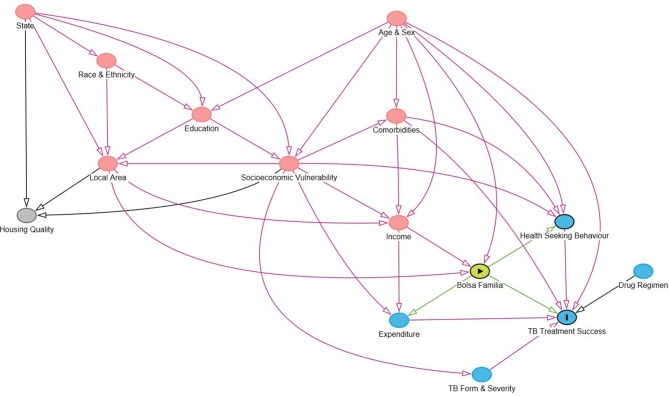
“A directed acyclic graph (DAG) was proposed for conceiving of the causal relationships between the outcome, the exposure and all the variables hypothesised to be on the causal pathway (figure 1).”
The Social Determinants of Tuberculosis: From Evidence to Action
Hargreaves, J. R., Boccia, D., Evans, C. A., Adato, M., Petticrew, M., & Porter, J. D. H. (2011) · American Journal of Public Health · doi:10.2105/ajph.2010.199505 · Cited by 625
Self-citation
Cited by
Ledesma, J. R., Ma, J., Zhang, M., Basting, A. V. L., Chu, H. T., Vongpradith, A., Novotney, A., LeGrand, K. E., Xu, Y. Y., Dai, X., et al. (2024) · The Lancet Infectious Diseases · doi:10.1016/s1473-3099(24)00007-0 · Cited by 146
Closing gaps in the tuberculosis care cascade: an action-oriented research agenda
Subbaraman, R., Jhaveri, T. A., & Nathavitharana, R. R. (2020) · Journal of Clinical Tuberculosis and Other Mycobacterial Diseases · doi:10.1016/j.jctube.2020.100144 · Cited by 149
Barreto, M. L., Ichihara, M. Y., Almeida, B. D. A., Barreto, M. E., Cabral, L., Fiaccone, R., Carreiro, R. P., Teles, C., Pita, R., Penna, G., et al. (2019) · International Journal of Population Data Science · doi:10.23889/ijpds.v4i2.1140 · Cited by 61
“In Brazil, studies focused on the impact of social protection policies on health outcomes have been designed using ecological (aggregate) approaches [7,19]; however, few studies to date have employed linked individual data [20-22].”
BackgroundSelf-citationPatel, B. H., Jeyashree, K., Chinnakali, P., Vijayageetha, M., Mehta, K. G., Modi, B., Chavda, P., Dave, P., Zala, C. C., Shewade, H. D., et al. (2019) · BMJ Open · doi:10.1136/bmjopen-2019-033158 · Cited by 70
Chenciner, L., Annerstedt, K. S., Pescarini, J. M., & Wingfield, T. (2021) · The Lancet Global Health · doi:10.1016/s2214-109x(21)00300-4 · Cited by 59
Wen, S., Yin, J., & Sun, Q. (2020) · BMJ Open · doi:10.1136/bmjopen-2020-036985 · Cited by 65
Pescarini, J. M., Williamson, E., Nery, J. S., Ramond, A., Ichihara, M. Y., Fiaccone, R. L., Penna, M. L. F., Smeeth, L. L., Rodrigues, L. C., Penna, G. O., et al. (2020) · The Lancet Infectious Diseases · doi:10.1016/s1473-3099(19)30624-3 · Cited by 57
Self-citationJesus, G. S., Gestal, P. F. P. S., da Silva, A. F., Cavalcanti, D. M., Lua, I., Ichihara, M. Y., Barreto, M. L., Boccia, D., Sanchez, M. N., & Rasella, D. (2025) · Nature Medicine · doi:10.1038/s41591-024-03381-0 · Cited by 66
“This can be associated with a reduction on TB incidence, facilitate TB early diagnosis and treatment adherence, increase the TB cure rate 3,28,29 and reduce complications and death from the disease 30 .”
Self-citationAhmed, A., Aune, D., Vineis, P., Pescarini, J. M., Millett, C. J., & Hone, T. (2022) · The Lancet Global Health · doi:10.1016/s2214-109x(22)00065-1 · Cited by 53
Leite, T. H., de Moraes, C. L., Marques, E. S., Caetano, R., Braga, J. U., & Reichenheim, M. E. (2019) · Cadernos de Saúde Pública · doi:10.1590/0102-311x00174818 · Cited by 51
Determinants of household catastrophic costs for drug sensitive tuberculosis patients in Kenya
Kirubi, B., Ong’ang’o, J. R., Nguhiu, P. K., Lönnroth, K., Rono, A., & Annerstedt, K. S. (2021) · Infectious Diseases of Poverty · doi:10.1186/s40249-021-00879-4 · Cited by 45
Ferreira, M. R. L., Bonfim, R. O., Bossonário, P. A., Maurin, V. P., Valênça, A. B. M., de Abreu, P. D., Andrade, R. L. D. P., Fronteira, I., & Monroe, A. A. (2023) · Infectious Diseases of Poverty · doi:10.1186/s40249-023-01157-1 · Cited by 45
Leddy, A. M., Jaganath, D., Triasih, R., Wobudeya, E., de Oliveira, M. C. B., Sheremeta, Y., Becerra, M. C., & Chiang, S. S. (2022) · Journal of the Pediatric Infectious Diseases Society · doi:10.1093/jpids/piac058 · Cited by 48
Social Protection Interventions for TB-Affected Households: A Scoping Review
Todd, H., Hudson, M., Grolmusova, N., Kazibwe, J., Pearman, J., Skender, K., Tran, P. B., Boccia, D., Shete, P. B., & Wingfield, T. (2023) · American Journal of Tropical Medicine and Hygiene · doi:10.4269/ajtmh.22-0470 · Cited by 39
“Carter et al.(48) Quasi-experimental TB treatment success Brazil Mixed Yes UMIC Wei et al.”
BackgroundSelf-citationMagalhães, J., Ziebold, C., Evans-Lacko, S. E., Matijasevich, A., & Paula, C. S. (2024) · BMC Public Health · doi:10.1186/s12889-024-20046-2 · Cited by 40
Jeyashree, K., Shanmugasundaram, P., Shanmugasundaram, D., Sri Lakshmi Priya, G., Thangaraj, J. W. V., Sumitha, T. S., Pandey, S., Sabarinathan, R., Sharma, R., Arunachalam, S., et al. (2024) · BMC Public Health · doi:10.1186/s12889-024-17777-7 · Cited by 33
Barreto‐Duarte, B., Araújo‐Pereira, M., Nogueira, B. M. F., Sobral, L. F., Rodrigues, M. M. D. S., Queiroz, A. T. L., Rocha, M. S., Nascimento, V., Souza, A. B., Cordeiro‐Santos, M., et al. (2021) · Frontiers in Medicine · doi:10.3389/fmed.2021.706689 · Cited by 32
Impact of social protection programs on adults diagnosed with Tuberculosis: systematic review
Aragão, F. B. A., Arcêncio, R. A., Fuentealba-Torres, M., Carneiro, T. S. G., Souza, L. L. L., Alves, Y. M., & Fiorati, R. C. (2021) · Revista Brasileira de Enfermagem · doi:10.1590/0034-7167-2019-0906 · Cited by 30
“Due to the relationship between TB and the situation of social vulnerability resulting from poverty(6-14), some low-income countries have created social protection programs to intervene in the health social determinants related to TB incidence and mortality.”
BackgroundInfluentialAvaliação de desempenho do controle da tuberculose em municípios brasileiros
Pinto, P. F. P. S., dos Santos, B. P. S., Teixeira, C. S. S., Nery, J. S., Amorim, L. D. A. F., Sanchez, M. N., Barreto, M. L., & Pescarini, J. M. (2022) · Revista de Saúde Pública · doi:10.11606/s1518-8787.2022056004020 · Cited by 25
“CL entre casos novos de tuberculose pulmonar (%) 77,4 (22,9) 69,5 (25,1) 11,8 (21,9) 70,6 (28,0) Teste HIV em casos novos de tuberculose (%) 80,3 (23,1) 70,3 (27,3) 68,5 (33,5) 75,6 (26,0) TDO em casos novos de tuberculose pulmonar (%) 85,3 (16,3) 21,4 (18,3) 52,5 (38,3) 57,7 (36,1) Exame de contatos em casos novos de…”
Self-citationIntroducing risk inequality metrics in tuberculosis policy development
Gomes, M. G. M., de Oliveira, J. F., Bertolde, A. I., Ayabina, D. V., Nguyễn, A. T., Maciel, E. L. N., Duarte, R., Nguyen, B. H., Shete, P. B., & Lienhardt, C. (2019) · Nature Communications · doi:10.1038/s41467-019-10447-y · Cited by 24
Self-citationAchieving universal social protection for people with tuberculosis
Fuady, A., Hutanamon, T., Herlinda, O., Luntungan, N. N., & Wingfield, T. (2024) · The Lancet Public Health · doi:10.1016/s2468-2667(24)00046-x · Cited by 27
Alves, L. C., Sanchez, M. N., Hone, T., Pinto, L. F., Nery, J. S., Tauil, P. L., Barreto, M. L., & Penna, G. O. (2021) · BMC Public Health · doi:10.1186/s12889-021-11255-0 · Cited by 19
Self-citationMasita, M., Hairi, F. M., Bachtiar, A., Mulyana, N., & Andriani, H. (2025) · Journal of Public Health Research · doi:10.1177/22799036251376872 · Cited by 17
“Brazil’s DOT Plus program, combining DOT with the pro-vision of conditional cash transfers, 15 offering a template for Banyumas to enhance cadre support.”
Xiong, Y., Yao, Y., Li, Y., Chen, S., Li, Y., Lin, K., & Li, X. (2025) · International Journal for Equity in Health · doi:10.1186/s12939-024-02368-0 · Cited by 17
Torres, N. M. C., Fadul, S., Escarcina, J. E. P., & Netto, E. M. (2021) · PLoS ONE · doi:10.1371/journal.pone.0249565 · Cited by 17
“This relationship between poverty and TB was studied in Brazil, where the authors concluded that TB patients who were beneficiaries of a government cash grant, in this case the Bolsa Familia Program (PBF), were more likely to experience favourable outcome in the TB treatment [26, 27].”
BackgroundSocial protection interventions could improve tuberculosis treatment outcomes
Ukwaja, K. N. (2018) · The Lancet Global Health · doi:10.1016/s2214-109x(18)30523-0 · Cited by 18
Liu, J., Zhou, Y., Guan, J., Liu, Y., Weijian, S., Liu, W., Yin, X., Liu, Y., Li, T., Jin, L. G., et al. (2025) · International Journal of Infectious Diseases · doi:10.1016/j.ijid.2025.107966 · Cited by 15
Timire, C., Sandy, C., Ferrand, R. A., Mubau, R., Shiri, P., Mbiriyawanda, O., Mbiba, F., Houben, R. M. G. J., Pedrazzoli, D., Bond, V. A., et al. (2022) · PLOS Global Public Health · doi:10.1371/journal.pgph.0001027 · Cited by 14
Ismail, N. A., Moultrie, H., Mwansa-Kambafwile, J. R. M., Copas, A. J., Rangaka, M. X., Izu, A., Moyo, S., Skinner, D. G., Ismail, F., Goscé, L., et al. (2025) · The Lancet Infectious Diseases · doi:10.1016/s1473-3099(24)00816-8 · Cited by 15
Baluku, J. B., Nakazibwe, B., Twinomugisha, B., Najjuuko, R., Isabella, N., Nassozi, S., Namiiro, S. M., Katagira, W., Byonanebye, D. M., Sekaggya‐Wiltshire, C., et al. (2021) · Scientific Reports · doi:10.1038/s41598-021-98770-7 · Cited by 15
Problems with the WHO TB model
Wallace, D., & Wallace, R. (2019) · Mathematical Biosciences · doi:10.1016/j.mbs.2019.05.002 · Cited by 13
The key factors influencing tuberculosis treatment outcomes: A literature review
Elmuttalut, M. A. (2024) · International Journal of Recent Innovations in Medicine and Clinical Research · doi:10.18231/j.ijrimcr.2024.054 · Cited by 11
Sodhi, R., Vatsyayan, V., Panibatla, V., Sayyad, K., Williams, J., Pattery, T., & Pal, A. (2024) · PLOS Digital Health · doi:10.1371/journal.pdig.0000421 · Cited by 14
Vassall, A., Sweeney, S., Barasa, E., Prinja, S., Keogh-Brown, M. R., Jensen, H. T., Smith, R., Baltussen, R. M. P. M., Eggo, R. M., & Jit, M. (2020) · Wellcome Open Research · doi:10.12688/wellcomeopenres.16380.2 · Cited by 13
Sodhi, R., Penkunas, M. J., & Pal, A. (2023) · BMC Infectious Diseases · doi:10.1186/s12879-023-08396-5 · Cited by 11
“Some previous studies have not included lost to follow-up in their analyses for similar reasons [48].”
BackgroundIncome Segregation, Conditional Cash Transfers, and Breast Cancer Mortality Among Women in Brazil
Guimarães, J. M. N., Pescarini, J. M., Filho, J. F. D. S., Ferreira, A. J. F., de Almeida, M. D. C. C., Gabrielli, L., dos‐Santos‐Silva, I., dos Santos, G. F., Barreto, M. L., & Aquino, E. M. L. (2024) · JAMA Network Open · doi:10.1001/jamanetworkopen.2023.53100 · Cited by 10
Self-citationProteção social em áreas vulneráveis à tuberculose: um estudo misto em São Luís, Maranhão
Aragão, F. B. A., Yamamura, M., Berra, T. Z., Ramos, A. C. V., Maciel, E. L. N., Cunha, J. H. D. S., de Souza, L. B., Neto, M. S., Arcêncio, R. A., & Fiorati, R. C. (2024) · Revista Brasileira de Enfermagem · doi:10.1590/0034-7167-2023-0428 · Cited by 9
“(17) , which demonstrated a substantial absolute increase in the success rate of TB treatment (7% and 11”
BackgroundSelf-citationRasella, D., Morais, G. A. D. S., Anderle, R. V. R., da Silva, A. F., Lua, I., Coelho, R. D. A., Rubio, F. A., Magno, L., Machado, D. B., Pescarini, J. M., et al. (2022) · PLoS ONE · doi:10.1371/journal.pone.0265253 · Cited by 10
“The PSM has also been used in with the same linked dataset to complementarily evaluate the impact of BFP on TB cure and mortality rate [21].”
MethodSelf-citationKyrbashov, B., Kulzhabaeva, A. A., Kadyrov, A. S., Toktogonova, A. A., Timire, C., Satyanarayana, S., & Istamov, K. (2023) · Tropical Medicine and Infectious Disease · doi:10.3390/tropicalmed8080407 · Cited by 9
Amimo, F., Lambert, B. C., Magit, A. E., & Hashizume, M. (2020) · Research Square · doi:10.21203/rs.3.rs-103235/v1 · Cited by 10
Effects of missed anti-tuberculosis therapy doses on treatment outcome: a multi-center cohort study
Ferreira, I. B. B., de Menezes, R. C., Araújo‐Pereira, M., Rolla, V. C., Kritski, A. L., Cordeiro‐Santos, M., Sterling, T. R., Staats, C., Amorim, G., Trajman, A., et al. (2025) · The Lancet Regional Health - Americas · doi:10.1016/j.lana.2025.101162 · Cited by 8
“16 Furthermore, predictive models could be developed and integrated into electronic health records to identify patients at high risk of nonadherence, enabling more targeted interventions throughout the treatment course and better resource allocation.”
Samal, J., Preetha, G. S., & Singh, H. (2026) · Journal of the Egyptian Public Health Association · doi:10.1186/s42506-025-00204-z · Cited by 9
Lourenço, L., Weber, L., Garcia, L. P., Ramos, V. F. C., & de Souza, J. H. I. (2024) · International Journal of Environmental Research and Public Health · doi:10.3390/ijerph21111484 · Cited by 9
Gouroumourty, R., Akshaya, K. M., Verma, M., Kandasamy, P., Dongre, A. R., Natarajan, M., Mathivanan, S., Prasad, S. W. R., Shewade, H. D., & Couppoussamy, V. (2025) · PLOS Global Public Health · doi:10.1371/journal.pgph.0005477 · Cited by 6
Strengthening Tuberculosis Control Among Migrant Workers
Shrivastava, S. R., Bobhate, P. S., Petkar, P. B., Mendhe, H. G., & Bandre, G. R. (2024) · Tropical Medicine and Infectious Disease · doi:10.3390/tropicalmed9110274 · Cited by 5
Fuady, A. (2022) · International Journal of Health Policy and Management · doi:10.34172/ijhpm.2022.7658 · Cited by 5
Incentives and Support Programs to Improve Adherence to Tuberculosis Treatment
Wells, C., & Severn, M. (2021) · Canadian Journal of Health Technologies · doi:10.51731/cjht.2021.35 · Cited by 7
Estimation of potential social support requirement for tuberculosis patients in India
Chatterjee, S., Stallworthy, G., Das, P., & Vassall, A. (2024) · Health Policy and Planning · doi:10.1093/heapol/czae065 · Cited by 4
“…rates, however, in South Africa, providing vouchers to TB patients did not show much improvement in treatment outcomes in a real-world setting because of low implementation fidelity (Lutge et al ., 2013; Ciobanu et al ., 2014; Wingfield et al ., 2017; Carter et al ., 2019; Dave and Rupani, 2022).”
BackgroundSantos, V. S., de Holanda, J. R. C., Neto, R. D. S. G., Maciel, E. L. N., Johansen, F. D. C., Júnior, J. N. D. B. S., Coelho, W. A. C., Silva, J. R. L. E., Silva, J. R. S., Gurgel, R. Q., et al. (2024) · The Lancet Regional Health - Americas · doi:10.1016/j.lana.2024.100938 · Cited by 3
Self-citationJohnson, L. F., Jamieson, L., Kubjane, M., & Meyer‐Rath, G. (2025) · PLoS Medicine · doi:10.1371/journal.pmed.1004826 · Cited by 2
“However, economic interventions can have important positive impacts beyond sexual and reproductive health, including on mental health [76,135–137], tuberculosis [138], child health [139], and social well-being [140].”
Sodhi, R., Kapoor, T., Vatsyayan, V., Seth, I., Chandra, H., Gill, N., Singh, M. K., Pal, A., & Mannan, S. (2025) · PLOS Global Public Health · doi:10.1371/journal.pgph.0004149 · Cited by 2
Pavinati, G., de Lima, L. V., Alves, K. B. A., López, M. A. A., & Magnabosco, G. T. (2025) · Revista Panamericana de Salud Pública · doi:10.26633/rpsp.2025.78 · Cited by 2
“No Brasil, o Programa Bolsa Família (PBF) aumentou a taxa de sucesso do tratamento da TB em 10,58 pontos percentuais (intervalo de confiança de 95%: 4,39–16,77 pontos percentuais) (14).”
Jock, J., Beidelman, E. T., Phillips, M. L., Kobayashi, L. C., Chen, X., Tollman, S., Kabudula, C. W., Bassil, D. T., Wagner, R. G., Berkman, L. F., et al. (2025) · PLoS ONE · doi:10.1371/journal.pone.0326321 · Cited by 2
Tekpertey, R., & *, A. E. B. (2025) · Cardiology Research and Reports · doi:10.31579/2692-9759/154 · Cited by 1
Mitigating costs for people living with TB: from measurement to action
Carter, D. J., & Pedrazzoli, D. (2020) · Public Health Action · doi:10.5588/pha.20.0044
Orlandi, G. M. (2020) · Digital Library of Theses and Dissertations (Universidade de São Paulo) · doi:10.11606/t.7.2020.tde-25022021-111327
A proteção social em áreas vulneráveis à tuberculose: um estudo misto em São Luís, Maranhão
Aragão, F. B. A. (2022) · Digital Library of Theses and Dissertations (Universidade de São Paulo) · doi:10.11606/t.83.2022.tde-09032023-085805
Iqbaal, S. D., Ansari, M. A., Abedi, A. J., Mehnaz, S., & Shamsi, J. (2024) · International Journal of Community Medicine and Public Health · doi:10.18203/2394-6040.ijcmph20240630
Bertoni, A. P. S., Rubio, F. A., Ordoñez, J. A., Anderle, R. V. R., Scaff, P., Boccia, D., Calvacanti, D., & Rasella, D. (2026) · BMJ Open · doi:10.1136/bmjopen-2026-121015
Self-citationGlobal Burden of Tuberculosis in Adults Aged 65 Years and Older, 1990–2021: A Population-Based StudyPreprint
Liu, Y., Zhang, C., Li, T., Fan, M., Li, Y., Chen, H., Cheng, J., Zhang, H., & Gao, Z. (2025) · Research Square · doi:10.21203/rs.3.rs-7602192/v1
Ferreira, M. R. L., de Abreu, P. D., Maurin, V. P., Andrade, R. L. D. P., Arakawa, T., Ballestero, J. G. D. A., Arcêncio, R. A., Fronteira, I., & Monroe, A. A. (2025) · BMC Public Health · doi:10.1186/s12889-025-24689-7
“Moreover, among people with TB enrolled in the BFP, there was an absolute increase in cure rates ranging from 7 to 11% [34], a 51% and 40% reduction in TB cases and mortality among the extremely poor, respectively, and a 63% decrease in incidence and a 65% decrease in mortality among indigenous…”
Kirubi, B., Ong’ang’o, J. R., Nguhiu, P., Lönnroth, K., Rono, A., & Sidney-Annerstedt, K. (2021) · Figshare · doi:10.6084/m9.figshare.14913549
Kirubi, B., Ong’ang’o, J. R., Nguhiu, P., Lönnroth, K., Rono, A., & Sidney-Annerstedt, K. (2021) · Figshare · doi:10.6084/m9.figshare.14913546
Jeyashree, K., Shanmugasundaram, P., Shanmugasundaram, D., Priya G, S. L., Thangaraj, J. W. V., Sumitha, T. S., Pandey, S., Ramasamy, S., Sharma, R., Arunachalam, S., et al. (2024) · Figshare · doi:10.6084/m9.figshare.26673132
Ferreira, M. R. L., Bonfim, R. O., Bossonário, P. A., Maurin, V. P., Valênça, A. B. M., de Abreu, P. D., Andrade, R. L. D. P., Fronteira, I., & Monroe, A. A. (2023) · Figshare · doi:10.6084/m9.figshare.24628091
Forse, R. (2024) · Open Archive (Karolinska Institutet)
Magalhães, J. Q. B. (2023) · LA Referencia (Red Federada de Repositorios Institucionales de Publicaciones Científicas)
Oliveira, C. W. D. M., Menezes, M. C. S., Corrêa, L. B. O., Galvez, T. D. M. H., Vicente, M. D. L. D. O., Leitão, A. D. P. A., de Oliveira, F. B., & Schlindwein, B. M. (2026) · Revista Tópicos. · doi:10.70773/revistatopicos/783360233
Konca, M., Durur, F., & Şeremet, G. G. (2026) · Türkiye Halk Sağlığı Dergisi · doi:10.20518/tjph.1821115
Karoly, M., Sinha, P., Dauphinais, M. R., Ilaiwy, G., Rich, C., Azad, S., Narvaez, L., Flynn, D., Steel, L. B., Hartmann, N., et al. (2026) · SSRN Electronic Journal · doi:10.2139/ssrn.7225378
Garcia, K. K. S., Abrahão, A. A., Peixoto, H. M., Duarte, E. C., de Araújo, W. N., & Ramalho, W. M. (2026) · Revista Brasileira de Epidemiologia · doi:10.1590/1980-549720260045
Dindar, E. K., Sayar, B., & ŞENOL, O. (2026) · Frontiers in Public Health · doi:10.3389/fpubh.2026.1961392
Metadata
- Authors
- J Carter, D., Daniel, R., Torrens, A. W., N Sanchez, M., Maciel, E. L. N., Bartholomay, P., Barreira, D. C., Rasella, D., Barreto, M. L., Rodrigues, L. C., & Boccia, D.
- Affiliations
- Department of Infectious Disease Epidemiology, London School of Hygiene and Tropical Medicine, London, UK
- London School of Hygiene & Tropical Medicine (GB)
- Universidade de Brasília (BR)
- Federal University of Brasília, Brasília, Brazil
- Universidade Federal do Espírito Santo (BR)
- National Tuberculosis Programme/Ministry of Health, Brasília, Brazil
- National Tuberculosis Programme/Ministry of Health of Brazil, Brasília, Brazil
- Fundação Oswaldo Cruz (BR)
- Institute of Collective Health, Federal University of Bahia, Salvador, Brazil
- Corresponding author
- Boccia, Delia
- ORCID
- Venue
- BMJ Global Health
- Publisher
- BMJ
- Published
- 2019-01
- Volume
- 4
- Issue
- 1
- Pages
- e001029
- ISSN
- 2059-7908 (ISSN-L)
- PMC
- PMC6347926
- OpenAlex
- W2912150396
- Cited by
- 69
- References
- 30
- Citations by year
- 2026: 5 · 2025: 13 · 2024: 15 · 2023: 6 · 2022: 8 · 2021: 10 · 2020: 7 · 2019: 5
- FWCI
- 5.75
- Type
- journal article
- Language
- en
- Open access
- gold
- doi.org
- Licence
- cc-by
- Locations
- BMJ Global Health (publishedVersion, cc-by)
- Europe PMC (PubMed Central) (publishedVersion, other-oa)
- PubMed Central (publishedVersion, cc-by)
- PubMed (publishedVersion)
- LA Referencia (Red Federada de Repositorios Institucionales de Publicaciones Científicas) (publishedVersion, other-oa)
- ORCA Online Research @Cardiff (Cardiff University) (acceptedVersion)
- LSHTM Research Online (London School of Hygiene and Tropical Medicine) (acceptedVersion)
- Americanae (AECID Library) (submittedVersion, other-oa)
- Arca - Repositório Institucional da Fiocruz (submittedVersion, other-oa)
- DOAJ (DOAJ: Directory of Open Access Journals) (submittedVersion)
- LSHTM Research Online (London School of Hygiene and Tropical Medicine) (submittedVersion)
- Greater South Information System
- Funders
- Wellcome Trust
- Topics
- Health Sciences › Medicine › Infectious Diseases › Tuberculosis Research and Epidemiology
- Social Sciences › Development › Poverty, Education, and Child Welfare
- Health Sciences › Medicine › Public Health, Environmental and Occupational Health › Healthcare Systems and Reforms
- Keywords
- tuberculosis, conditional cash transfers, Bolsa Família, TB treatment success, social protection, poverty, tuberculosis elimination, Brazil
About these checks
Registry, retraction, Cites and statistics results are computed, not judged, with one exception: a printed reference that no index lists is read once by a model before it counts as a citation error. Claims are extracted by a model and kept only when their quote appears verbatim in the text; each cited source is then checked, with a model’s help, for whether it says what the claim relies on. Those verdicts can be wrong — read the claim’s quote and the cited source before relying on one.
Statistics and arithmetic are recomputed, not judged.
Confidence bands are shown only for fields calibrated on our annotated test set. None is calibrated yet, so no band is shown.
What counts as a claim ›How we measure confidence ›How we check this ›
Are you an author, or do you see a problem with this page? Request a review
Data sources
Bibliographic data: Semantic Scholar, OpenAlex, Crossref.
Contains information from the Semantic Scholar Academic Graph Datasets, made available under the ODC Attribution License (ODC-BY 1.0).
Semantic Scholar’s data is described in: Kinney, R., et al. (2023). The Semantic Scholar Open Data Platform. arXiv:2301.10140.
