

Towards equitable surgical systems: development and outcomes of a national surgical, obstetric and anaesthesia plan in Tanzania
Open accessThe DOI matches its Crossref record; 13 of the 13 references it cites were found in a registry or an index; 2 of the 16 sources its claims cite were checked for support.
Abstract
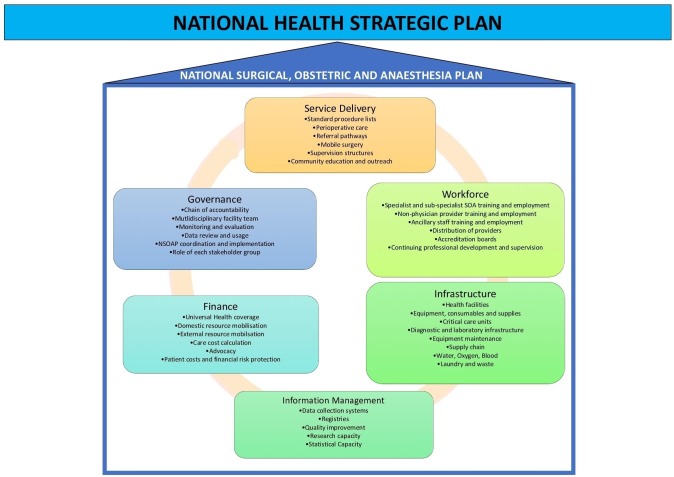
Despite emergency and essential surgery and anaesthesia care being recognised as a part of Universal Health Coverage, 5 billion people worldwide lack access to safe, timely and affordable surgery and anaesthesia care. In Tanzania, 19% of all deaths and 17 % of disability-adjusted life years are attributable to conditions amenable to surgery. It is recommended that countries develop and implement National Surgical, Obstetric and Anesthesia Plans (NSOAPs) to systematically improve quality and access to surgical, obstetric and anaesthesia (SOA) care across six domains of the health system including (1) service delivery, (2) infrastructure, including equipment and supplies, (3) workforce, (4) information management, (5) finance and (6) Governance. This paper describes the NSOAP development, recommendations and lessons learnt from undertaking NSOAP development in Tanzania. The NSOAP development driven by the Ministry of Health Community Development Gender Elderly and Children involved broad consultation with over 200 stakeholders from across government, professional associations, clinicians, ancillary staff, civil society and patient organisations. The NSOAP describes time-bound, costed strategic objectives, outputs, activities and targets to improve each domain of the SOA system. The final NSOAP is ambitious but attainable, reflects on-the-ground priorities, aligns with existing health policy and costs an additional 3% of current healthcare expenditure. Tanzania is the third country to complete such a plan and the first to report on the NSOAP development in such detail. The NSOAP development in Tanzania provides a roadmap for other countries wishing to undertake a similar NSOAP development to strengthen their SOA system.
Overview
CoChat Summary
## TL;DR
This paper describes how Tanzania developed and launched its first National Surgical, Obstetric and Anaesthesia Plan (NSOAP) in March 2018 through broad stakeholder consultation, situation analysis, drafting, and costing. The plan sets out time-bound, costed objectives across six health-system domains and was costed at US$597 million over 7 years.
## Key findings
- Tanzania’s NSOAP was developed with broad consultation involving over 200 stakeholders from government, professional associations, clinicians, ancillary staff, civil society, and patient organisations.
- The final plan covers the six standard NSOAP domains: service delivery, infrastructure, workforce, information management, finance, and governance.
- The plan was costed at US$597 million over 7 years, described as less than US$2 per capita per year, less than 3% of current per capita health expenditure ($52) and 1.2% of Abuja Declaration recommended per capita health expenditure for Tanzania.
- The paper reports baseline workforce shortages motivating the plan: physician SOA provider density of 0.46 per 100,000 population, and anaesthesia providers (specialist plus non-specialist) density of 0.09 per 100,000 population.
## Methods
- Descriptive paper on NSOAP development in Tanzania; no evaluation of patient outcomes is reported in the text provided.
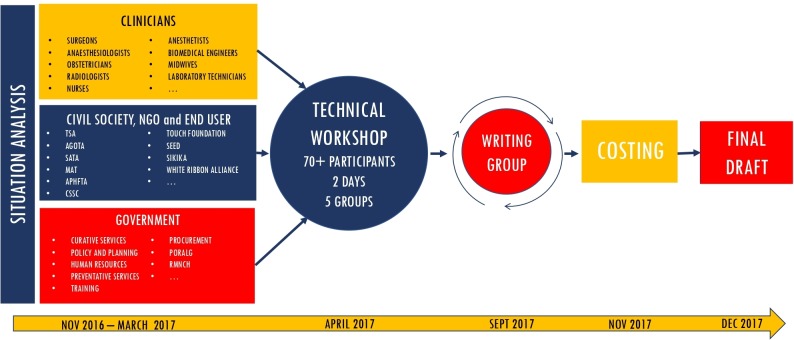
- Development process had four major steps: situation analysis, stakeholder engagement and priority setting, drafting and validation, and costing.
- Situation analysis used a systematic review of academic and grey literature, government policies/data, semistructured interviews, focus groups, site visits, and policy mapping; priority setting occurred in a 2-day national technical workshop with five technical working groups.
## Limitations
- The paper states that no full formal qualitative analysis was undertaken for the interview data because of lack of available resources.
- It notes that some data were unavailable, including the LCoGS indicators for postoperative mortality rate and 2-hour access to Bellwether procedures.
- Evident from the text: this is a planning/development paper, so it does not report implementation results or patient outcome effects of the NSOAP.
Model-written summary. Check it against the paper before relying on it.
Integrity signals
Registry
Cites
Statistics
Figures
Verification
Claims the paper makes
2 Valid · 1 Not valid · 14 Not checked · 42 Own results and interpretations
The cited sources support only part of this claim — read each source’s verdict below.
In the paper
“(1) NSOAP development itself improves visibility and accountability around the SOA system, an otherwise neglected area of the health system.6”
§ Towards equitable surgical systems: development and outcomes of a national surgical, obstetric and anaesthesia plan in Tanzania > Introduction
What the sources say
- Partly supportedcites [6] Citron I, Chokotho L, Lavy C Prioritisation of surgery in the National health strategic plans of Africa: a systematic review. World J Surg 2016; 40: 779– 83. 10.1007/s00268-015-3333-9 26711637 PMC4767853 sourceExperimental — accuracy not yet measured
The Discussion of our copy supports the accountability half: it states that the Lancet Commission's six key performance indicators, if included in national strategic plans, 'will allow accountability for current surgical services and the assessment of successes and failures generated by policy change,' and that 'the National health strategic surgical plan must be written with these targets in mind.' The 'otherwise neglected area' framing is also supported (Abstract Discussion: surgery 'is poorly represented and ... not widely recognised as a public health priority'; Conclusion: 'Surgery is poorly represented amongst the existing national health plans of Africa'). However, no passage states that developing a national surgical plan itself improves visibility/profile of surgery — our copy attributes growing traction to the Lancet Commission, DCP3 and WHA Resolution 68.15 (Discussion), and treats NHSPs as a measure of priorities rather than as a driver of visibility. Terminology also differs: the paper analyses NHSPs, not NSOAPs. (LLM, conf=0.72)
plainstates a cause- Asserted: passes — The authors put it forward as true.
- Checkable: passes — It can be checked against evidence.
- Load-bearing: passes — The paper’s conclusions depend on it.
- Based: passes — The paper gives a reason why it holds.
- Partly supported
A result the paper states — it cites no source for it, so there is none to check. The quote shows it is in the paper.
In the paper
“However, access to SOA care delivery is limited.”
§ Towards equitable surgical systems: development and outcomes of a national surgical, obstetric and anaesthesia plan in Tanzania > Tanzania situation
plain- Asserted: passes — The authors put it forward as true.
- Checkable: passes — It can be checked against evidence.
- Load-bearing: passes — The paper’s conclusions depend on it.
- Based: passes — The paper gives a reason why it holds.
A result the paper states — it cites no source for it, so there is none to check. The quote shows it is in the paper.
In the paper
“To address the deficiencies across the SOA system, illustrated in table 1, in 2018, the Tanzanian Ministry of Health, Community Development, Gender, Elderly and Children (MoHCDGEC) developed an NSOAP as a roadmap for SOA system improvement for 2018–2025.”
§ Towards equitable surgical systems: development and outcomes of a national surgical, obstetric and anaesthesia plan in Tanzania > Tanzania situation
plain- Asserted: passes — The authors put it forward as true.
- Checkable: passes — It can be checked against evidence.
- Load-bearing: passes — The paper’s conclusions depend on it.
- Based: passes — The paper gives a reason why it holds.
A result the paper states — it cites no source for it, so there is none to check. The quote shows it is in the paper.
In the paper
“The final NSOAP is ambitious but attainable, reflects on-the-ground priorities, aligns with existing health policy and costs an additional 3% of current healthcare expenditure.”
§ Towards equitable surgical systems: development and outcomes of a national surgical, obstetric and anaesthesia plan in Tanzania > Abstract
plain- Asserted: passes — The authors put it forward as true.
- Checkable: passes — It can be checked against evidence.
- Load-bearing: passes — The paper’s conclusions depend on it.
- Based: passes — The paper gives a reason why it holds.
In the paper
“Over the 7-year period of implementation, the NSOAP will cost US$597 million adjusted for inflation and exchange rate fluctuation (table 5).”
§ Towards equitable surgical systems: development and outcomes of a national surgical, obstetric and anaesthesia plan in Tanzania > Section 2: NSOAP content > Finance
What the sources say
- Not checked yetcites table 5
plain- Asserted: passes — The authors put it forward as true.
- Checkable: passes — It can be checked against evidence.
- Load-bearing: unclear — It is unclear whether the paper’s conclusions depend on it.
- Based: passes — The paper gives a reason why it holds.
13 more claims
Create a free account to see all 59 claims and to verify the 14 references still open.
- It may state two separate claims as one. 10
- Probably not a substantial claim. 39
Claims other papers make about this one
Each is checked against this paper’s own text: does it say what the citing paper says it does?
The cited source doesn’t support the claim as written.
In the citing paper
“To date, six countries have developed and launched NSOAPs.”
From Globalization of national surgical, obstetric and anesthesia plans: the critical link between health policy and action in global surgery (2020) · cites this paper as [22]
Checked by a reasoning model — may be wrong.
Experimental — accuracy not yet measured
Citations
Cites
Global Surgery 2030: evidence and solutions for achieving health, welfare, and economic development
Meara, J. G., Leather, A. J. M., Hagander, L., Alkire, B. C., Alonso, N., Ameh, E. A., Bickler, S. W., Conteh, L., Dare, A. J., Davies, J., et al. (2015) · The Lancet · doi:10.1016/s0140-6736(15)60160-x · Cited by 3,851
Self-citationPeters, D. H., Adam, T., Alonge, O., Agyepong, I. A., & Tran, N. (2014) · British Journal of Sports Medicine · doi:10.1136/bmj.f6753 · Cited by 1,109
Chao, T. E., Sharma, K., Mandigo, M., Hagander, L., Resch, S. C., Weiser, T. G., & Meara, J. G. (2014) · The Lancet Global Health · doi:10.1016/s2214-109x(14)70213-x · Cited by 369
Self-citationThe WFSA global anesthesia workforce survey
Kempthorne, P., Morriss, W. W., Mellin-Olsen, J., & Gore-Booth, J. (2017) · Anesthesia & Analgesia · doi:10.1213/ane.0000000000002258 · Cited by 313 · cited 1×
“23 per 100 000 population by training 1100 nurse anaesthesia providers and 567 anaesthesiologists by 2025.(21) To meet these targets, training is prioritised in the first phase of implementation by standardising anaesthesia curricula and ensuring that training goals reflect competencies, increasing training capacity a…”
BackgroundPrice, R., Makasa, E., & Hollands, M. (2015) · World Journal of Surgery · doi:10.1007/s00268-015-3153-y · Cited by 294
Rose, J., Chang, D. C., Weiser, T. G., Kassebaum, N. J., & Bickler, S. W. (2014) · PLoS ONE · doi:10.1371/journal.pone.0089693 · Cited by 89 · cited 1×
“TAnzAnIA SITuATIon In Tanzania, it is estimated that 19% of all deaths and 17% of disability-adjusted life years are attributable to conditions amenable to surgical treatment.(10) 11 However, access to SOA care delivery is limited.”
Seward, N., Hanlon, C., Abdulahi, A., Abrams, Z., Alem, A., Araya, R., Bachmann, M., Bogale, B., Brima, N., Chibanda, D., et al. (2021) · doi:10.1101/2021.01.06.20248468 · Cited by 84
Hutch, A., Bekele, A., O’Flynn, E., Ndonga, A., Tierney, S., Fualal, J. O., Samkange, C. A., & Erzingatsian, K. (2017) · World Journal of Surgery · doi:10.1007/s00268-017-4307-x · Cited by 64
Prioritisation of surgery in the National health strategic plans of Africa: a systematic review
Citron, I., Chokotho, L., & Lavy, C. (2016) · World Journal of Surgery · doi:10.1007/s00268-015-3333-9 · Cited by 47 · cited 2×
“Despite these advantages, a 2015 study of national health plans of sub Saharan Africa noted 63% of plans had less than five mentions of surgery and 33% had no relevant targets.(6) By 2016, only three countries, Senegal, Zambia and Ethiopia had developed NSOAPs.”
BackgroundSelf-citationThe Situation of Safe Surgery and Anaesthesia in Tanzania: A Systematic Review
Nyberger, K., Jumbam, D. T., Dahm, J. S., Maongezi, S., Makuwani, A., Kapologwe, N., Nguhuni, B., Mukhopadhay, S., Iverson, K. R., Maina, E., et al. (2018) · World Journal of Surgery · doi:10.1007/s00268-018-4767-7 · Cited by 44 · cited 2×
“12 The results of this have been reported by Nyberger et al. 13 Challenged by the inherent publication bias in the available literature, which most often originated from larger teaching hospitals, the systematic review was supplemented with semistructured interviews with stakeholders BMJ Global Health involved in the…”
Self-citation
Research works printed but not linked: 4
- Global Financing Facility Maximizing Impact: How the Gff Trust Fund Complements and Adds Value to IDA (Factsheet) 2017; 2020: 1– 3.
- Masanja H, Smithson P Tanzania service availability and readiness assessment (SARA) 2012, 2013: 92.
- World Health Organization WHO | increasing access to health workers in remote and rural areas through improved retention. WHO. 23741785
- United Nations The sustainable development goals report United Nations; 2016: 1– 56.
Cited by
Truché, P., Shoman, H., Reddy, C. L., Jumbam, D. T., Ashby, J., Mazhiqi, A., Wurdeman, T., Ameh, E. A., Smith, M., Lugazia, E., et al. (2020) · Globalization and Health · doi:10.1186/s12992-019-0531-5 · Cited by 330
Self-citationHanna, J., Herrera‐Almario, G., Roncancio, M. V. P., Tulloch, D. L., Valencia, S. A., Sabatino, M. E., Hamilton, C., Rehman, S. U., Mendoza, A. K., Bernal, L. C. G., et al. (2020) · The Lancet Global Health · doi:10.1016/s2214-109x(20)30090-5 · Cited by 93
Peters, A. W., Roa, L., Rwamasirabo, E., Ameh, E. A., Ulisubisya, M., Samad, L., Makasa, E. M. M., & Meara, J. G. (2020) · Global Health Science and Practice · doi:10.9745/ghsp-d-19-00314 · Cited by 98
Self-citationDisparities in Access to Trauma Care in Sub-Saharan Africa: a Narrative Review
Alayande, B. T., Chu, K., Jumbam, D. T., Kimto, O. E., Danladi, G. M., Alliance Niyukuri, Anderson, G. A., El-Gabri, D., Miranda, E., Taye, M., et al. (2022) · Current Trauma Reports · doi:10.1007/s40719-022-00229-1 · Cited by 102
Self-citationReddy, C. L., Peters, A. W., Jumbam, D. T., Caddell, L., Alkire, B. C., Meara, J. G., & Atun, R. A. (2020) · BMJ Global Health · doi:10.1136/bmjgh-2020-002375 · Cited by 60
Self-citationAlidina, S., Menon, G., Staffa, S. J., Alreja, S. S., Barash, D. M., Barringer, E., Cainer, M., Citron, I., DiMeo, A., Ernest, E., et al. (2021) · International Journal for Quality in Health Care · doi:10.1093/intqhc/mzab087 · Cited by 43
“Tanzania was among the first countries to develop a National Surgical, Obstetric, and Anaesthesia Plan [14], garnering significant buy-in to strengthen sur- gical services.”
BackgroundSelf-citationReddy, C. L., Vervoort, D., Meara, J. G., & Atun, R. A. (2020) · Journal of Global Health · doi:10.7189/jogh.10.020349 · Cited by 39
Self-citationMediratta, S., Lepard, J. R., Barthélemy, E. J., Corley, J. A., & Park, K. B. (2022) · Journal of neurosurgery · doi:10.3171/2021.9.jns21916 · Cited by 32
Philipo, G. S., Nagraj, S., Bokhary, Z. M., & Lakhoo, K. (2020) · BMJ Global Health · doi:10.1136/bmjgh-2019-002118 · Cited by 38
Landrum, K. R., Cotache-Condor, C. F., Liu, Y., Truché, P., Robinson, J., Thompson, N., Granzin, R., Ameh, E. A., Bickler, S. W., Samad, L., et al. (2021) · BMJ Open · doi:10.1136/bmjopen-2020-045981 · Cited by 33
Self-citationFinancing of surgery and anaesthesia in sub-Saharan Africa: a scoping review
Ifeanyichi, M., Aune, E. T., Shrime, M. G., Gajewski, J., Pittalis, C., Kachimba, J. S., Borgstein, E. S., Brugha, R., Baltussen, R. M. P. M., & Bijlmakers, L. A. (2021) · BMJ Open · doi:10.1136/bmjopen-2021-051617 · Cited by 33
“…prioritisation of surgery in government plans and UHC programmes in SSA generally: in a systematic review of National Health Strategic Plans (NHSPs) of 48 SSA countries by Citron et al17, 19% of NHSPs had no mention of surgery or surgical conditions and 63% had five or fewer mentions of surgery.”
BackgroundInterpreting the Lancet surgical indicators in Somaliland: a cross-sectional study
Dahir, S. M., Cotache-Condor, C. F., Concepcion, T. L., Mohamed, M., Poenaru, D., Ismail, E. A., Leather, A. J. M., Rice, H. E., & Smith, E. R. (2020) · BMJ Open · doi:10.1136/bmjopen-2020-042968 · Cited by 26
National Surgical Healthcare Policy Development and Implementation: Where do We Stand in Africa?
Bekele, A., Alayande, B. T., Powell, B. L., Obi, N., Seyi‐Olajide, J. O., Riviello, R. R., Ntirenganya, F., Ameh, E. A., & Makasa, E. M. M. (2023) · World Journal of Surgery · doi:10.1007/s00268-023-07131-0 · Cited by 25
“Innovative financing like voluntary solidarity levies, voluntary contributions, performance-based instruments, securities and bonds and investment funds are a few possibilities for funding national surgical policies [26, 30, 31].”
BackgroundHow much does it cost to scale up surgical systems in low-income and middle-income countries?
Jumbam, D. T., Reddy, C. L., Roa, L., & Meara, J. G. (2019) · BMJ Global Health · doi:10.1136/bmjgh-2019-001779 · Cited by 27
“27 per 100 000 people by 2025.(17) It should be noted that when Verguet and colleagues modelled costs for scaling up SOA care based on 2000–2013 data, they did not include training of surgical and anaesthesia providers and associated personnel.”
BackgroundSelf-citationA Financing Strategy to Expand Surgical Health Care
Jumbam, D. T., Reddy, C. L., Meara, J. G., Makasa, E. M. M., & Atun, R. A. (2023) · Global Health Science and Practice · doi:10.9745/ghsp-d-21-00295 · Cited by 21
Self-citationAlidina, S., Zanial, N., Meara, J. G., Barash, D. M., Buberwa, L., Chirangi, B., Hellar, A. M., Kisakye, S., Mazhiqi, A., Mnyonyela, W., et al. (2021) · Journal of the American College of Surgeons · doi:10.1016/j.jamcollsurg.2021.04.006 · Cited by 21
Self-citationVoices beyond the Operating Room: centring global surgery advocacy at the grassroots
Jumbam, D. T., Kanmounye, U. S., Alayande, B. T., Bekele, A., Maswime, S., Makasa, E. M. M., Park, K. B., Ayala, R., Onajin‐Obembe, B., Samad, L., et al. (2022) · BMJ Global Health · doi:10.1136/bmjgh-2022-008969 · Cited by 22
Self-citationNg-Kamstra, J. S., Nepogodiev, D., Lawani, I., Bhangu, A. A., & Workneh, R. S. (2020) · Anaesthesia Critical Care & Pain Medicine · doi:10.1016/j.accpm.2019.11.005 · Cited by 20
“Several countries have since developed such plans, addressing health infrastructure, workforce, financing, information management, and service delivery needs to achieve universal access to safe, affordable surgical and anaesthesia care when needed [77,78].”
BackgroundThe state of surgery, obstetrics, trauma, and anaesthesia care in Ghana: a narrative review
Jumbam, D. T., Amoako, E. F., Blankson, P., Xepoleas, M. D., Said, S., Nyavor, E., Gyedu, A., Ampomah, O. W., & Kanmounye, U. S. (2022) · Global Health Action · doi:10.1080/16549716.2022.2104301 · Cited by 16
“28) more likely to experience catastrophic health expenditure than men [77].”
BackgroundSelf-citationTruché, P., Botelho, F. M. N., Bowder, A. N., Levis, A. W., Greenberg, S. L. M., Smith, E. R., Corlew, S., Bickler, S. W., Rice, H. E., Ameh, E. A., et al. (2021) · World Journal of Surgery · doi:10.1007/s00268-021-06181-6 · Cited by 19
“Efforts to scale up surgical care have become the focus of national surgical planning, in which countries strategically integrate surgical care within national health systems through comprehensive National Surgical, Obstetric and Anesthesia Plans (NSOAPs) [3, 9, 10].”
BackgroundInfluentialSelf-citationIfeanyichi, M., Dim, C. C., Bognini, M. S., Kebede, M. A., Singh, D., Onwujekwe, O. E., Hargest, R., & Friebel, R. (2024) · Health Policy and Planning · doi:10.1093/heapol/czae021 · Cited by 13
“The base model assumed a 100% pass on rate, which has been used in previous studies in similar contexts, including Zambia and South Africa (Hangoma et al ., 2020).”
BackgroundInfluentialHellar, A. M., Akoko, L., Jumbam, D. T., Damian, C., Kapologwe, N., Kengia, J. T., Maongezi, S., Masuma, J. S., Giiti, G. C., Lugazia, E., et al. (2024) · East and Central African journal of surgery · doi:10.4314/ecajs.v29i2.4 · Cited by 13
Self-citationMengistie, C. T., Mesfin, S., Mengistie, B. T., Yigzaw, H. D., Tadesse, S. Z., Estifanos, H., Teferi, M. G., & Awad, A. K. (2025) · BMC Surgery · doi:10.1186/s12893-025-03204-0 · Cited by 14
“These examples highlight the importance of detailed, comprehensive planning while also underscoring the need for fully dedicated and sustained domestic and donor funding in order to successfully expand surgical capacity [33, 71].”
Clarke, M., Pittalis, C., Borgstein, E. S., Bijlmakers, L. A., Cheelo, M., Ifeanyichi, M., Mwapasa, G., Juma, A., Broekhuizen, H., Drury, G., et al. (2021) · BMJ Quality & Safety · doi:10.1136/bmjqs-2020-012751 · Cited by 12
“49 50 74 However, national plans alone will be insufficient.”
The role of non-governmental organizations in advancing the global surgery and anesthesia goals
Jumbam, D. T., Durnwald, L., Ayala, R., & Kanmounye, U. S. (2020) · Journal of Public Health and Emergency · doi:10.21037/jphe-2020-gs-07 · Cited by 15
“15 by the World Health Assembly in 2015 recognizating surgical and anesthesia care as components of universal health care and the adoption of National Surgical Obstetric and Anesthesia Plans (NSOAPs) by several countries to improve surgical care holistically (75-77).”
BackgroundSelf-citationBinnerts, J. J., Hendriks, T. C. C., Hussein, S., Bempong‐Ahun, N., Ibbotson, G., Harrison, W. J., Martin, C., Ranganathan, K., Ehsan, A. N., Chirangi, B., et al. (2025) · World Journal of Surgery · doi:10.1002/wjs.12503 · Cited by 12
The Current Status of Global Urology
Scotland, K. B., & Watson, G. M. (2020) · Current Bladder Dysfunction Reports · doi:10.1007/s11884-020-00609-w · Cited by 10
Safe obstetric anaesthesia in low- and middle-income countries—a perspective from Africa
Bishop, D. G., van Dyk, D., & Dyer, R. A. (2023) · BJA Education · doi:10.1016/j.bjae.2023.07.003 · Cited by 13
“38 They will perform training in a 1:2 ratio of anaesthetists to nurse anaesthetists, at a cost of 2 US dollars per person in the population.”
BackgroundBroekhuizen, H., Lansu, M. E. M., Gajewski, J., Pittalis, C., Ifeanyichi, M., Juma, A., Marealle, P., Kataika, E., Chilonga, K., Rouwette, E. A. J. A., et al. (2020) · International Journal of Health Policy and Management · doi:10.34172/ijhpm.2020.249 · Cited by 13
To advance global surgery and anaesthesia, train more advocates
Jumbam, D. T., Bustamante, A., Alayande, B. T., Ayala, R., Kouam, J., Dzirasa, I. D., Segura, C., Kum, F. V., Muhumuza, A., Riviello, R. R., et al. (2023) · BMJ Global Health · doi:10.1136/bmjgh-2023-012848 · Cited by 9
Self-citationThe Anesthesia Workforce Crisis Revisited
Morriss, W. W., & Enright, A. C. (2023) · Anesthesia & Analgesia · doi:10.1213/ane.0000000000006189 · Cited by 8
Anyomih, T. T. K., Agbeko, A. E., Aregawi, A. B., Chu, K., Crawford, R., Harrison, E., Kamarajah, S. K., Li, E., Meara, J. G., Mulliez, A., et al. (2025) · British journal of surgery · doi:10.1093/bjs/znaf289 · Cited by 7
Self-citationRegional anesthesia global health collaborations- a scoping review of current intervention methods
Dohlman, L. E., Thakkar, N., Jivanelli, B., Pakala, S., & Brouillette, M. A. (2022) · Current Opinion in Anaesthesiology · doi:10.1097/aco.0000000000001178 · Cited by 8
Iverson, K. R., Drown, L., Bari, S., Abate, M., Burssa, D., Garringer, K., Esseye, S., Ahearn, O., Incorvia, J., Sheferaw, E. D., et al. (2022) · East and Central African journal of surgery · doi:10.4314/ecajs.v26i3.1 · Cited by 6
Self-citationGathege, D., Abdallah, A., Odaba, D., & Mugambi, S. (2021) · World Journal of Surgery · doi:10.1007/s00268-021-06072-w · Cited by 5
Beyond technology: review of systemic innovation stories in global surgery
Ma, X., Thomas, H. S., & Kanmounye, U. S. (2020) · Journal of Public Health and Emergency · doi:10.21037/jphe-2020-gs-06 · Cited by 5
“They have been established in several LMICs, including Zambia and Tanzania, with an emphasis on local buy-in, transparency, and periodic evaluations throughout this innovation process (18,19).”
BackgroundA mixed-methods assessment of surgical capacity in Tanzania’s Lake Zone
DiMeo, A., Lama, T. N., Sydlowski, M. M., Barash, D. M., Maina, E., Menon, G., Gruendl, M., Cainer, M., Kapologwe, N., Maongezi, S., et al. (2021) · East and Central African journal of surgery · doi:10.4314/ecajs.v26i1.2 · Cited by 5
Self-citationAdjuvant therapy for brain tumors in LMICs: A systematic review of barriers and possible solutions
Shakir, M., Irshad, H. A., Khowaja, A. H., Tahir, I., Shariq, S. F., Rae, A. I., Hamzah, R., Gupta, S., Park, K. B., & Enam, S. A. (2024) · Clinical Neurology and Neurosurgery · doi:10.1016/j.clineuro.2024.108460 · Cited by 7
Who pays for surgical care in the global south? A narrative review
Yadav, S. K., Bakhsh, A., & Sharma, D. (2025) · PLOS Global Public Health · doi:10.1371/journal.pgph.0004781 · Cited by 4
“Such planning is at varying stages of development in different LMICs, offering valuable opportunities for countries for regional partnerships and to share experiences and learn from one another [34–38].”
Emergency surgery workforce and its inverse relationship with multidimensional poverty in Colombia
Manzano-Núñez, R., Sarmiento, C., Villegas-Vargas, S., Angel-Barrios, J. A., Puyana, J. C., Peck, G., Castro, F., Gaviría, A., & García, A. F. (2021) · European Journal of Trauma and Emergency Surgery · doi:10.1007/s00068-021-01690-4 · Cited by 4
“(2) The financing of national surgical, obstetric, and anesthesia plans [12, 13], with a differential allocation of resources to the country’s most socioeconomically disadvantaged regions.”
BackgroundHokororo, J. C., Habtu, M., Bahegwa, R. P., Ngowi, R. R., Msigwa, Y. S., Degeh, M. M., Kinyenje, E. S., Nassoro, O. A., Marandu, L. E., German, C. J., et al. (2022) · Advances in Infectious Diseases · doi:10.4236/aid.2022.123036 · Cited by 6
Shrime, M. G., Harter, E. A., Handforth, B., Phillips, C. L., Hendrika, W. C., Hamer, M., Alcorn, D., Bennette, T., Millimouno, E. F., Nieba, J., et al. (2021) · medRxiv · doi:10.1101/2021.03.20.21254039 · Cited by 4
Truché, P., Naus, A. E., Botelho, F., Ferreira, J., Bowder, A. N., Caddell, L., Zimmerman, K. D., Faria, I. M. D. F., Lopes, B. C., Costa, E. C., et al. (2023) · World Journal of Pediatric Surgery · doi:10.1136/wjps-2022-000534 · Cited by 3
Takoutsing, B. D., Endalle, G., Senyuy, W. P., Mbangtang, C. B., Kwasseu, G. K., Bobga, T. P., Jumbam, D. T., & Kanmounye, U. S. (2022) · Pan African Medical Journal · doi:10.11604/pamj.2024.47.143.38399 · Cited by 3
“In developing NSOAPs, existing health policies should be taken into account to avoid redundancy and conflicting policies [16].”
BackgroundSelf-citationShakir, M., Tahir, I., Shariq, S. F., Khowaja, A. H., Irshad, H. A., Rae, A. I., Hamzah, R., Gupta, S., Park, K. B., & Enam, S. A. (2024) · Neurosurgery · doi:10.1227/neu.0000000000003082 · Cited by 3
Ravelojaona, V., Ma, X., Samison, M.-F., Rabemalala, D., Ayala, R., Ramamonjisoa, A., Andriamanjato, H. H., Ravoniaritsoa, V., Jumbam, D. T., & Andriamanarivo, L. M. (2023) · Canadian Journal of Anesthesia/Journal canadien d anesthésie · doi:10.1007/s12630-023-02500-8 · Cited by 6
“the Madagascar’s PNDCHM, the decision to develop an NSOAP in Zambia and Tanzania was influenced by a nationwide baseline assessment of the surgical care system.(6,24)”
BackgroundInfluentialSelf-citationMakasa, E. M. M. (2021) · Journal of Public Health and Emergency · doi:10.21037/jphe-2020-gs-12 · Cited by 3
“Fortunately, the focus on the national surgical healthcare policy (NSOAP) is the improvement of access to appropriate (bellwether procedures proposed by the LCoGS) surgical healthcare services as close to the community as possible to be delivered at the District Hospital facility (7,14).”
BackgroundDevelopment of an Interactive Global Surgery Course for Interdisciplinary Learners
Fitzgerald, T. N., Muma, N. J. K., Gallis, J. A., Reavis, G., Ukachukwu, A.-E. K., Smith, E. R., Ogbuoji, O., & Rice, H. E. (2021) · Annals of Global Health · doi:10.5334/aogh.3178 · Cited by 5
Jumbam, D. T., Kanmounye, U. S., Citron, I., & Kamalo, P. D. (2022) · International Journal of Health Policy and Management · doi:10.34172/ijhpm.2022.6979 · Cited by 3
Self-citationSiow, S. L., Wahab, M. Y. A., Chuah, J. S., & Mahendran, H. A. (2022) · ANZ Journal of Surgery · doi:10.1111/ans.17705 · Cited by 3
“Data availability is crucial for informed decision-making, accountability and public advocacy.(22) Well-maintained and organized medical records are essential for the benefit of the patients and for reference by future health care providers.”
BackgroundInfluentialEspinoza, P., Mwakyembe, T. E., Kajoka, H. D., Stephano, P. J., Majaliwa, E., Mmbaga, B. T., Staton, C. A., Vissoci, J. R. N., Rice, H. E., & Smith, E. R. (2025) · PLOS Global Public Health · doi:10.1371/journal.pgph.0004448 · Cited by 2
Applying an Implementation Science Framework to Surgical Research and Practice in Tanzania
Sam-Agudu, N. A. (2021) · Journal of the American College of Surgeons · doi:10.1016/j.jamcollsurg.2021.04.024 · Cited by 2
Hodapp, J. W., Mganga, S., Kissima, G. P., Umeh, N., Harrison, N., Chakraborty, D., & Khoo, C. L. (2025) · Obstetric Anesthesia Digest · doi:10.1097/01.aoa.0001237976.66271.95 · Cited by 2
Belay, A., Getachew, M., Bekele, A., Beyene, A., Tadesse, A., Davies, J. I., Leather, A. J. M., & Hanlon, C. (2023) · medRxiv · doi:10.1101/2023.10.06.23296670 · Cited by 3
Nnaji, C. T. (2025) · Neuromethods · doi:10.1007/978-1-0716-4599-4_20 · Cited by 1
Brand, N. R., Akoko, L., Obedi, E., Mwanga, A. H., Philipo, G. S., Komba, C., & Boeck, M. A. (2026) · BMJ Open · doi:10.1136/bmjopen-2025-107672 · Cited by 1
Self-citationWharton, G., Jones, D., & Yates, R. (2025) · British journal of surgery · doi:10.1093/bjs/znaf212 · Cited by 1
Organizational learning in surgery in Tanzania’s health system: a descriptive cross-sectional study
Alidina, S., Hayirli, T. C., Amiri, A., Barash, D. M., Chwa, C., Hellar, A. M., Kengia, J. T., Kissima, I., Mayengo, C. D., Meara, J. G., et al. (2024) · International Journal for Quality in Health Care · doi:10.1093/intqhc/mzae048 · Cited by 1
Self-citationStrengthening Surgical Systems Through Cleft Care
Nagengast, E. S., & Magee, W. P. (2021) · Springer eBooks · doi:10.1007/978-3-030-59105-2_42
Reimagining Universal Health Coverage: Safe and Affordable Surgery
Kim, M., Park, K. B., & Yoon, S. (2021) · Journal of International Development Cooperation · doi:10.34225/jidc.2021.16.1.119
Anesthesiologists and Community Engagement: A Scoping Review of the Literature
Remmers, C., Conroy, M. M., Korom, B., Malloy, M., Sieracki, R., Fairbanks, S. L., & Nelson, D. A. (2023) · Anesthesia & Analgesia · doi:10.1213/ane.0000000000006740
“For example, connecting with local non-profits can be a way for the clinical care team to get to know the community as a starting point and build relationships over time.”
BackgroundWang, D. T., Reddy, A., Anant, S. A., Rafiq, M. Y., Juma, O. A., Ngude, H., Manyama, F., Blum, A. B., Sakran, J. V., Stevens, K. A., et al. (2025) · International Journal of Ophthalmology & Visual Science · doi:10.11648/j.ijovs.20251001.11
Contextual challenges and impacts on the surgical ecosystem in Chiapas, Mexico: A qualitative study
Fowler, Z. G., Rahimi, A., Aldana, A. C., Uribe‐Leitz, T., Carrillo‐Villaseñor, F., Roa, L., Hill, S. K., Macías, V., Castillo‐Angeles, M., & Reich, A. J. (2025) · PLoS ONE · doi:10.1371/journal.pone.0321969
“First, the surgical system domains are highly connected and interdependent, and this complexity should be considered when developing improvement strategies, which often focus on individual domains [14,37–39].”
Cholecystectomy outcomes across income levels: analysis of the SPRiMACC global database
Fugazzola, P., Markou-Pappas, N., Ansaloni, L., Frassini, S., Cicuttin, E., Biondo, L., Mas, F. D., Cobianchi, L., & The SPRiMACC Collaborative Group (2025) · Academia Medicine · doi:10.20935/acadmed7800
Bulfeta, N. G., Poh, D., Maswime, S., Johnson, W., Roy, N., & Park, K. (2025) · Journal of Global Surgery (ONE) · doi:10.52648/jogs.1253
Deng, M. D. A., Alayande, B. T., Sheferaw, E. D., Mukundwa, P. N., Fofanah, T., Peter, M. B., Lado, D. K., Bekele, A., & Dau, A. D. (2026) · medRxiv · doi:10.64898/2026.04.20.26351353
Kiwalya, H., Balwanaki, C. A., Wanyana, I., Amunyo, E., Namutebi, H., Fred, M., Kawiso, M., Gamubaka, R., Makumbi, F. E., & Hewitt-Smith, A. (2026) · Research Square · doi:10.21203/rs.3.rs-9253066/v1
Gender equity in neurosurgery requires structural reform
Liverani, L., Dwumfour-Poku, N., Vaca, S. D., & Zygourakis, C. C. (2026) · Frontiers in Health Services · doi:10.3389/frhs.2026.1850868
Costs of surgeries in low- and middle-income countries: a systematic literature review
Ifeanyichi, M., Tenkorang, P., Matey, E., Ezeaku, C. O., Ekor, O. E., Mukoro, G. D., Bandyopadhyay, S., Lara, J. L. M., Rabiee, P., Khan, D. Z., et al. (2026) · BMJ Global Health · doi:10.1136/bmjgh-2025-020596 · Cited by 1
ECO and NSOAPS in synergy for global health
Kapologwe, N., Makasa, E. M. M., Dzirasa, I. D., Khan, T. J., Borrero, A., McIff, C., Thambi-Pillai, T. C., Shah, M. K., Uribe‐Leitz, T., Park, K. B., et al. (2026) · The Lancet Surgery & Anaesthesiology · doi:10.1016/s3117-7778(26)00001-1
Self-citationHindawi, M. D., Işık, A., Rosa, F., Visconti, D., Nechay, T. V., Chowdhury, S., Ndong, A., Mishra, T. S., Cioffi, S. P. B., Kalmoush, A.-E., et al. (2026) · BMJ Global Health · doi:10.1136/bmjgh-2025-021056
Metadata
- Authors
- Citron, I., Jumbam, D., Dahm, J., Mukhopadhyay, S., Nyberger, K., Iverson, K., Akoko, L., Lugazia, E., D"Mello, B., Maongezi, S., Nguhuni, B., Kapologwe, N., Hellar, A., Maina, E., Kisakye, S., Mwai, P., Reynolds, C., Varghese, A., Barash, D., Steer, M., Meara, J., & Ulisubisya, M.
- Affiliations
- Harvard University (US)
- Muhimbili University of Health and Allied Sciences (TZ)
- Comprehensive Community Based Rehabilitation in Tanzania (CCBRT), Dar Es Salaam, Tanzania
- Ministry of Health, Community Development, Gender, Elderly and Children (TZ)
- Government of Tanzania (TZ)
- Jhpiego (US)
- Dalberg Global Development Advisors (CH)
- The G4 Alliance, Nairobi, Kenya
- Assist International, Ripon, California, USA
- GE Aerospace Foundation (US)
- Boston Children's Hospital (US)
- Corresponding author
- Citron, Isabelle
- ORCID
- Venue
- BMJ Global Health
- Publisher
- BMJ
- Published
- 2019-04
- Volume
- 4
- Issue
- 2
- Pages
- e001282
- ISSN
- 2059-7908 (ISSN-L)
- PMC
- PMC6509614
- OpenAlex
- W2936152481
- Semantic Scholar
- 9e8dfc4fc56508bb56f33cd2ffae925d6eddfc52
- Cited by
- 68
- References
- 13
- Citations by year
- 2026: 7 · 2025: 12 · 2024: 5 · 2023: 9 · 2022: 8 · 2021: 14 · 2020: 12 · 2019: 1
- FWCI
- 1.43
- Type
- journal article
- Language
- en
- Open access
- gold
- doi.org
- Licence
- cc-by-nc
- Locations
- BMJ Global Health (publishedVersion, cc-by-nc)
- Europe PMC (PubMed Central) (publishedVersion, cc-by-nc)
- PubMed Central (publishedVersion, cc-by-nc)
- PubMed (publishedVersion)
- Minerva Access (University of Melbourne) (submittedVersion, cc-by-nc)
- DOAJ (DOAJ: Directory of Open Access Journals) (submittedVersion)
- Lund University Publications (Lund University) (submittedVersion)
- Funders
- General Electric Foundation
- Topics
- Health Sciences › Medicine › Public Health, Environmental and Occupational Health › Global Health and Surgery
- Health Sciences › Medicine › Public Health, Environmental and Occupational Health › Healthcare Systems and Reforms
- Health Sciences › Medicine › Public Health, Environmental and Occupational Health › Healthcare Systems and Practices
- Keywords
- access to surgical care, anesthesia care, obstetric care, health system strengthening, health policy development, stakeholder consultation, surgical workforce, health system governance, Tanzania
About these checks
Registry, retraction, Cites and statistics results are computed, not judged, with one exception: a printed reference that no index lists is read once by a model before it counts as a citation error. Claims are extracted by a model and kept only when their quote appears verbatim in the text; each cited source is then checked, with a model’s help, for whether it says what the claim relies on. Those verdicts can be wrong — read the claim’s quote and the cited source before relying on one.
The claim verdicts this report counts are experimental: their accuracy is not yet measured.
A language model drew the claims from the paper on 2026-10-11, under version 3 of the claim definition (model deepseek-v4.1-flash, prompt extract-v3).
A second model labelled each claim on 2026-10-11 (model jev-1.13-20260917, definition revision gold-guideline-v0.2).
Cited sources are checked with a language model’s help (qwen3.8-omni-flash).
Statistics and arithmetic are recomputed, not judged.
Confidence bands are shown only for fields calibrated on our annotated test set. None is calibrated yet, so no band is shown.
What counts as a claim ›How we measure confidence ›How we check this ›
Are you an author, or do you see a problem with this page? Request a review
Data sources
Bibliographic data: Semantic Scholar, OpenAlex, Crossref.
Contains information from the Semantic Scholar Academic Graph Datasets, made available under the ODC Attribution License (ODC-BY 1.0).
Semantic Scholar’s data is described in: Kinney, R., et al. (2023). The Semantic Scholar Open Data Platform. arXiv:2301.10140.
