

Armed conflicts and national trends in reproductive, maternal, newborn and child health in sub-Saharan Africa: what can national health surveys tell us?
Open accessThe DOI matches its Crossref record; 28 of the 29 references it cites were found in a registry or an index.
Abstract
Armed conflicts are widespread in sub-Saharan Africa and considered to be an important factor in slowing down national progress in reproductive, maternal, newborn and child health (RMNCH). The measurement of the impact of conflicts on national levels and trends in RMNCH is difficult. National surveys conducted before and sometimes during and after conflicts are a major source of information on the national and local effects of conflicts on RMNCH. We examined data from national surveys in 13 countries in sub-Saharan Africa with major conflicts during 1990–2016 to assess the levels and trends in RMNCH intervention coverage, nutritional status and mortality in children under 5 years in comparison with subregional trends. The surveys provide substantive evidence of a negative association between levels and trends in national indicators of RMNCH service coverage, child growth and under-5 mortality with armed conflict, with some notable exceptions. National surveys are an important source of data to assess the longer term national consequences of conflicts for RMNCH in most countries, despite limitations due to sampling and timing of the surveys.
Overview
The claims and statistics of this paper haven’t been checked yet.
Free: it reads the open-access text and checks the first 5 claims that cite a source we can check. Create a free account to check every claim.
Integrity signals
Registry
Cites
Statistics
Figures
Verification
Claims the paper makes
The claims and statistics of this paper haven’t been checked yet.
Free: it reads the open-access text and checks the first 5 claims that cite a source we can check. Create a free account to check every claim.
Claims other papers make about this one
Each is checked against this paper’s own text: does it say what the citing paper says it does?
The cited source says what the claim attributes to it.
In the citing paper
“Humanitarian settings often represent situations of high risk for pregnant women and newborns [1–3]”
Self-check
Percentages, sums and reported differences re-computed from the paper’s own numbers.
The self-check needs the paper’s full text.
Citations
Cites
How and when armed conflicts end: Introducing the UCDP Conflict Termination dataset
Kreutz, J. (2010) · Journal of Peace Research · doi:10.1177/0022343309353108 · Cited by 676
Basinga, P., Gertler, P. J., Binagwaho, A., Soucat, A. L., Sturdy, J., & Vermeersch, C. M. (2011) · The Lancet · doi:10.1016/s0140-6736(11)60177-3 · Cited by 625
Health Effects of Drought: a Systematic Review of the Evidence
Stanke, C., Kerac, M., Prudhomme, C., Medlock, J., & Murray, V. (2013) · PLoS Currents · doi:10.1371/currents.dis.7a2cee9e980f91ad7697b570bcc4b004 · Cited by 441
Wars and child health: Evidence from the Eritrean–Ethiopian conflict
Akresh, R., Lucchetti, L., & Thirumurthy, H. (2012) · Journal of Development Economics · doi:10.1016/j.jdeveco.2012.04.001 · Cited by 343
(2008) · The Lancet · doi:10.1016/s0140-6736(08)60560-7 · Cited by 294 · cited 1×
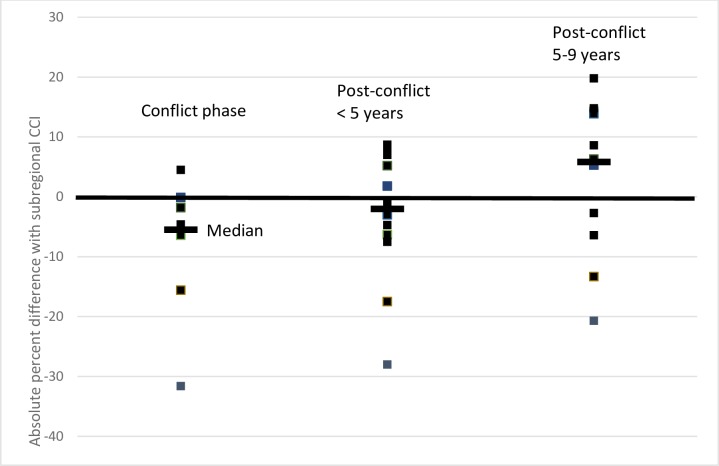
“AssoCIATIon wITH CoverAge of InTervenTIons To obtain a general picture of the coverage of RMNCH interventions, we computed the Countdown Composite Coverage Index (CCI) from the survey data.(25) The CCI comprises eight indicators in four intervention areas: family planning (demand satisfied with modern methods); matern…”
Methodde Onís, M., Brown, D. S., Blössner, M., & Borghi, E. (2012) · Cited by 292
Health and Civil War in Rural Burundi
Bundervoet, T., Verwimp, P., & Akresh, R. (2009) · Journal of Human Resources · doi:10.3368/jhr.44.2.536 · Cited by 237
Armed conflict and child mortality in Africa: a geospatial analysis
Wagner, Z., Heft-Neal, S., Bhutta, Z. A., Black, R. E., Burke, M., & Bendavid, E. (2018) · The Lancet · doi:10.1016/s0140-6736(18)31437-5 · Cited by 200 · cited 2×
“A recent study based on geospatial analysis of conflict location and survey cluster data in sub-Saharan Africa showed major effects of severe conflict events on infant mortality among children living within 50 km for up to 8 years following the conflict event.(20) The measurement of the impact of conflicts on RMNCH in…”
BackgroundSelf-citationReduced premature mortality in Rwanda: lessons from success
Farmer, P. E., Nutt, C. T., Wagner, C. M., Sekabaraga, C., Nuthulaganti, T., Weigel, J. L., Farmer, D. B., Habinshuti, A., Mugeni, S. D., Karasi, J.-C., et al. (2013) · BMJ · doi:10.1136/bmj.f65 · Cited by 195
Checchi, F., Warsame, A., Treacy-Wong, V., Polonsky, J. A., van Ommeren, M., & Prudhon, C. (2017) · The Lancet · doi:10.1016/s0140-6736(17)30702-x · Cited by 192 · cited 6×
“There was only limited evidence of a relationship between the size, duration and intensity of a conflict and the impact on RMNCH. Rwanda had the highest battle-related mortality rates and also the greatest effect on RMNCH, and localised conflicts had more limited national impact.”
Influential
Cited by
The effects of armed conflict on the health of women and children
Bendavid, E., Boerma, T., Akseer, N., Langer, A., Malembaka, E. B., Okiro, E. A., Wise, P. H., Heft-Neal, S., Black, R. E., Bhutta, Z. A., et al. (2021) · The Lancet · doi:10.1016/s0140-6736(21)00131-8 · Cited by 466
Self-citationThe impacts of armed conflict on human development: A review of the literature
Vesco, P., Baliki, G., Brück, T., Döring, S., Eriksson, A., Fjelde, H., Guha‐Sapir, D., Hall, J., Knutsen, C. H., Leis, M., et al. (2024) · World Development · doi:10.1016/j.worlddev.2024.106806 · Cited by 174
Victora, C. G., Hartwig, F. P., Vidaletti, L. P., Martorell, R., Osmond, C., Richter, L. M., Stein, A. D., Barros, A. J. D., Adair, L. S., Barros, F. C., et al. (2022) · The Lancet · doi:10.1016/s0140-6736(21)02716-1 · Cited by 117
Self-citationStress and Growth in Children and Adolescents
Mousikou, M., Kyriakou, A., & Skordis, N. (2021) · Hormone Research in Paediatrics · doi:10.1159/000521074 · Cited by 126
Akseer, N., Wright, J., Tasic, H., Everett, K., Scudder, E., Amsalu, R., Boerma, T., Bendavid, E., Kamali, M., Barros, A. J. D., et al. (2020) · BMJ Global Health · doi:10.1136/bmjgh-2019-002214 · Cited by 93
Self-citationAmouzou, A., Barros, A. J. D., Requejo, J. H., Fayé, C., Akseer, N., Bendavid, E., Blumenberg, C., Borghi, J., Baz, S. E., Federspiel, F., et al. (2025) · The Lancet · doi:10.1016/s0140-6736(25)00151-5 · Cited by 76
Self-citationFayé, C., Wehrmeister, F. C., Melesse, D. Y., Mutua, M. K., Maïga, A., Taylor, C. M., Amouzou, A., Jiwani, S. S., Crochemore‐Silva, I., Sidze, E., et al. (2020) · BMJ Global Health · doi:10.1136/bmjgh-2019-002232 · Cited by 61
Self-citationAmberg, F., Chansa, C., Niangaly, H., Sankoh, O. A., & Allegri, M. D. (2023) · The Lancet Global Health · doi:10.1016/s2214-109x(23)00152-3 · Cited by 56
Rammohan, A., Mavisakalyan, A., Vu, L., & Goli, S. (2021) · PLoS Medicine · doi:10.1371/journal.pmed.1003690 · Cited by 40
Malembaka, E. B., Altare, C., Bigirinama, R. N., Bisimwa, G. B., Banywesize, R., Tabbal, N., & Boerma, T. (2021) · BMC Health Services Research · doi:10.1186/s12913-021-06143-7 · Cited by 41
“In line with a few other studies on eastern DRC, our selection of key maternal and child health indicators reported higher levels in these conflict-affected provinces than in the rest of the country [2, 8, 55, 56].”
BackgroundResultSelf-citationInsecurity in northern Nigeria: Implications for maternal and child health
Olarewaju, O. A. (2021) · Clinical Epidemiology and Global Health · doi:10.1016/j.cegh.2021.100869 · Cited by 37
Ramadan, M., Tappis, H., Uribe, M. V., & Brieger, W. R. (2021) · International Journal for Equity in Health · doi:10.1186/s12939-021-01595-z · Cited by 41
“In a subnational analysis of maternal and child health service coverage in DRC, North Kivu consistently showed higher coverage compared to the national average from 2001 to 2013 [43].”
BackgroundSelf-citationWehrmeister, F. C., Fayé, C., Crochemore‐Silva, I., Amouzou, A., Ferreira, L. Z., Jiwani, S. S., Melesse, D. Y., Mutua, M. K., Maïga, A., Cá, T., et al. (2020) · Bulletin of the World Health Organization · doi:10.2471/blt.19.249078 · Cited by 38
Self-citationFonseka, R. W., McDougal, L., Raj, A., Reed, E., Lundgren, R., Urada, L. A., & Silverman, J. G. (2022) · SSM - Population Health · doi:10.1016/j.ssmph.2022.101074 · Cited by 32
Russell, N., Tappis, H., Mwanga, J. P., Black, B., Thapa, K., Handzel, E., Scudder, E., Amsalu, R., Reddi, J., Palestra, F., et al. (2022) · Conflict and Health · doi:10.1186/s13031-022-00440-6 · Cited by 27
Self-citationMarchant, T., Bhutta, Z. A., Black, R. E., Grove, J. T., Kyobutungi, C. K., & Peterson, S. S. (2019) · BMJ Global Health · doi:10.1136/bmjgh-2019-001512 · Cited by 25
Self-citationMizerero, S. A., Wilunda, C., Musumari, P. M., Ono‐Kihara, M., Mubungu, G. L., Kihara, M., & Nakayama, T. (2021) · Conflict and Health · doi:10.1186/s13031-021-00395-0 · Cited by 21
Conflict and Child Malnutrition: a Systematic Review of the Emerging Quantitative Literature
Sassi, M., & Thakare, H. (2022) · Current Nutrition Reports · doi:10.1007/s13668-021-00386-w · Cited by 20
Basha, S., Socarras, A., Akhter, M. W., Hamze, M., Albaik, A., Hussein, I., Tarakji, A. H., Hamadeh, M., Loutfi, R., Kewara, M., et al. (2022) · BMJ Global Health · doi:10.1136/bmjgh-2021-008001 · Cited by 18
Stress-induced menstrual disorders in adolescents during the Ukrainian war: cross-sectional study
Mykolayivna, N. I., Adebusoye, F. T., Awuah, W. A., Anatoliivna, S. A., Volodymyrivna, B. T., Fedorivna, H. S., & Abdul‐Rahman, T. (2023) · Annals of Medicine and Surgery · doi:10.1097/ms9.0000000000000974 · Cited by 14
Mary, M., Tappis, H., Scudder, E., & Creanga, A. A. (2024) · Conflict and Health · doi:10.1186/s13031-024-00607-3 · Cited by 13
Self-citationAntenatal Care: Utilization Rate and Barriers in Bosaso-Somalia, 2019
Elmi, E. O. H., Hussein, N. A., Hassan, A. M., Ismail, A. M., Abdulrahman, A., & Muse, A. M. (2021) · European Journal of Preventive Medicine · doi:10.11648/j.ejpm.20210901.15 · Cited by 12
Aboubaker, S., Evers, E. S., Kobeissi, L. H., Francis, L., Najjemba, R., Miller, N. P., Wall, S. N., García, D. M., Vargas, J., & Ashorn, P. (2020) · BMJ Global Health · doi:10.1136/bmjgh-2019-002060 · Cited by 13
Mafiana, J. J., Shen, X., Hu, W., & Wang, X. (2022) · BMJ Open · doi:10.1136/bmjopen-2022-061595 · Cited by 10
Makali, S. L., Malembaka, E. B., Lambert, A.-S., Karemere, H. B., Eboma, C. M., Mwembo, A. T.-A.-N., Ssali, S. B., Bisimwa, G. B., Donnen, P., & Macq, J. (2021) · Conflict and Health · doi:10.1186/s13031-021-00387-0 · Cited by 10
“A health zone which more than 5 BRD per 100,000 inhabitants was considered to be in conflict [32].”
BackgroundResultMulinganya, G. M., Malembaka, E. B., Akonkwa, M. L., Mpunga, D. M., Birindwa, E. K., Maheshe, G. B., Temmerman, M., Tambwe, A. M., Criel, B., & Bisimwa, G. B. (2020) · PLoS ONE · doi:10.1371/journal.pone.0237450 · Cited by 8
“Higher coverage rates were also reported for other interventions indicators in the reproductive, maternal, new-born and child health (RMNCH) continuum [22].”
BackgroundTiruneh, M. G., Fenta, E. T., Delie, A. M., Masresha, S. A., Mustofa, S. M., Kidie, A. A., Kodo, T. K., & Anagaw, T. F. (2023) · BMC Health Services Research · doi:10.1186/s12913-023-09165-5 · Cited by 7
“Unfortunately, the disruptive effect of conflict exacerbates health personnel shortages, damages health infrastructure, and weak supply chains, all of which contribute to increased vulnerability to adverse obstetric complications and mortality [15].”
BackgroundExcess Child Mortality Associated With Colombia’s Armed Conflict, 1998-2019
Moe, C. A., Villaveces, A., Montoya, P., & Rowhani‐Rahbar, A. (2024) · JAMA Network Open · doi:10.1001/jamanetworkopen.2024.8510 · Cited by 7
Challenges in reducing maternal and neonatal mortality in Niger: an in-depth case study
Kanté, A. M., Youssoufa, O., Mounkaila, A., Mahamadou, Y., Bamogo, A., Jiwani, S. S., Hazel, E., Maïga, A., Munos, M. K., Walton, S. M., et al. (2024) · BMJ Global Health · doi:10.1136/bmjgh-2023-011732 · Cited by 7
Turi, E., Gold, L. H., Le, H., Mannan, H., Lau, E. H. Y., & Abimanyi-Ochom, J. (2025) · Reproductive Health · doi:10.1186/s12978-025-02075-1 · Cited by 6
Abubakar, T. A., & Michael, A. (2022) · Problemy Ekorozwoju · doi:10.35784/pe.2023.1.23 · Cited by 9
Crellen, T., Ssonko, C., Piening, T., Simaléko, M. M., Calvaire, D. H. S., Gieger, K., & Siddiqui, R. (2019) · Conflict and Health · doi:10.1186/s13031-019-0236-7 · Cited by 6
Nsashiyi, R. S., Rahman, M. M., Ndam, L. M., & Hashizume, M. (2024) · BMC Global and Public Health · doi:10.1186/s44263-024-00071-4 · Cited by 8
“However, current levels wouldn’t be guaranteed due to the unpredictable nature of the impact of such events [15, 17].”
Atnafu, A., Dellie, E., Kebede, A., Fetene, S. M., Haile, T. G., Alemu, M. B., Park, J., Tefera, S., Alene, B. M., & Negash, W. D. (2024) · BMJ Open · doi:10.1136/bmjopen-2023-082507 · Cited by 5
Einfluss von psychosozialen Belastungsfaktoren auf das Längenwachstum
Gohlke, B. C., Bettendorf, M., Binder, G., Hauffa, B. P., Reinehr, T., Dörr, H., & Woelfle, J. (2021) · Klinische Pädiatrie · doi:10.1055/a-1672-4759 · Cited by 5
Childhood Stunting and Wasting Following Independence in South Sudan
Hoffman, D. J., Kassim, I., Ndiaye, B., McGovern, M. E., Le, H., Abebe, K. T., & Ayoya, M. A. (2022) · Food and Nutrition Bulletin · doi:10.1177/03795721221128126 · Cited by 7
Morales-Domínguez, M. D. C. (2025) · Revista Pueblos y fronteras digital · doi:10.22201/cimsur.18704115e.2025.v20.745 · Cited by 5
Tackling the complex links between climate change, conflict, and health
Šedová, B., & Haines, A. (2025) · BMJ · doi:10.1136/bmj.r1578 · Cited by 3
James, E. N., & Miteu, G. D. (2022) · GSC Advanced Research and Reviews · doi:10.30574/gscarr.2022.12.1.0188 · Cited by 3
Impact of Terrorist Violence on Child Health in Burkina Faso: Unpacking Potential Mechanisms
Nikiema, R. A., & Kafando, W. A. (2025) · Sustainable Development · doi:10.1002/sd.70066 · Cited by 1
Maternal Health in Sub-Saharan Africa
Edu, B. C. (2025) · Obstetrics and gynecology. · doi:10.5772/intechopen.1011062 · Cited by 1
Fonseka, R. W., McDougal, L., Raj, A., Reed, E., Lundgren, R., Urada, L. A., & Silverman, J. G. (2022) · Advances in Global Health · doi:10.1525/agh.2022.1539582 · Cited by 2
Mary, M., Tappis, H., Scudder, E., & Creanga, A. A. (2024) · Figshare · doi:10.6084/m9.figshare.26308978
Self-citationRamadan, M., Tappis, H., Uribe, M. V., & Brieger, W. R. (2021) · Figshare · doi:10.6084/m9.figshare.17162817
Self-citationMalembaka, E. B., Altare, C., Bigirinama, R. N., Bisimwa, G. B., Banywesize, R., Tabbal, N., & Boerma, T. (2021) · Figshare · doi:10.6084/m9.figshare.16608874
Self-citationStrom, C. N. (2023) · Uppsala University Publications (Uppsala University)
Alemayehu, M., Ebrahim, M. M., Gebreegzabher, B. G., Ayele, B. G., Chekole, M. K., Gebretnsae, H., Hadgu, T., Kahsay, Z. H., Shamie, R., Gebreslassie, H. A., et al. (2026) · Discover Public Health · doi:10.1186/s12982-026-01432-0
“Conflict affects maternal and child health service deliveries, as it destroys the health sys-tem [1–5].”
Bigirinama, R. N., Mothupi, M. C., Mwene-Batu, P. L., Chiribagula, C. Z., Card, K. S., Adler, A., Kozuki, N., Chimanuka, C., Ngaboyeka, G. A., Spiegel, P. B., et al. (2026) · Research Square · doi:10.21203/rs.3.rs-9103371/v1
Self-citationWandji, B., Olungah, C. O., Atsali, E., Kihara, A., Omanwa, K., Obimbo, M. M., & Ogeng’o, J. (2026) · medRxiv · doi:10.64898/2026.04.22.26351520
Müller, B., Umlauf, N., Seiler, J., Harttgen, K., & Lang, S. (2026) · Statistical Modelling · doi:10.1177/1471082x261435241
Ouedraogo, M., Macharia, P. M., Ly, B. A., Niangaly, H., Sissoko, R., Dao, L., KONATE, A., Ge, E., Brown, H. K., & Bassani, D. G. (2026) · Research Square · doi:10.21203/rs.3.rs-9588657/v1
Impact of Violent Conflicts on Maternal and Child Health
d’Harcourt, E., Bol, J., & Purdin, S. (2026) · Springer eBooks · doi:10.1007/978-1-0716-5432-3_10
Tiendrebeogo, C. O., Fregonese, F., Firouraghi, N., & Druetz, T. (2026) · BMJ Open · doi:10.1136/bmjopen-2026-116769
Conflicts and Early Childhood Development in Nigeria
Edobor, E. W., Emokpae, O. P., Umeokeke, N. I., Eronmwon, I., Ogunmayowa, O., Mbarie, I., Urhoghide, E. O., & Edobor, O. S. (2026) · Social Science & Medicine · doi:10.1016/j.socscimed.2026.120050
Metadata
- Authors
- Boerma, T., Tappis, H., Saad-Haddad, G., Das, J., Melesse, D. Y., DeJong, J., Spiegel, P., Black, R., Victora, C., Bhutta, Z. A., & Barros, A. J. D.
- Affiliations
- University of Manitoba (CA)
- Johns Hopkins University (US)
- Faculty of Health Sciences, American University of Beirut, Beirut, Lebanon
- Aga Khan University (PK)
- American University of Beirut (LB)
- Universidade Federal de Pelotas (BR)
- Hospital for Sick Children (CA)
- International Center for Equity in Health, Universidade Federal de Pelotas, Pelotas, Brazil
- Corresponding author
- Boerma, Ties
- ORCID
- Venue
- BMJ Global Health
- Publisher
- BMJ
- Published
- 2019-05
- Volume
- 4
- Issue
- Suppl 4
- Pages
- e001300
- ISSN
- 2059-7908 (ISSN-L)
- PMC
- PMC6590971
- OpenAlex
- W2955099516
- Cited by
- 50
- References
- 29
- Citations by year
- 2026: 4 · 2025: 6 · 2024: 7 · 2023: 3 · 2022: 11 · 2021: 12 · 2020: 5 · 2019: 2
- Type
- conference abstract
- Language
- en
- Open access
- gold
- doi.org
- Licence
- cc-by-nc
- Locations
- BMJ Global Health (publishedVersion, cc-by-nc)
- PubMed Central (publishedVersion, cc-by-nc)
- PubMed (publishedVersion)
- eCommons - AKU (Aga Khan University) (submittedVersion)
- Funders
- Bill and Melinda Gates Foundation
- Topics
- Health Sciences › Medicine › Pediatrics, Perinatology and Child Health › Global Maternal and Child Health
- Health Sciences › Health Professions › General Health Professions › Health and Conflict Studies
- Health Sciences › Nursing › Nutrition and Dietetics › Child Nutrition and Water Access
- Keywords
- armed conflict, reproductive, maternal, newborn and child health, National Health Survey, sub-Saharan Africa, under-five mortality, child nutritional status, child growth, health trends
About these checks
Registry, retraction, Cites and statistics results are computed, not judged, with one exception: a printed reference that no index lists is read once by a model before it counts as a citation error. Claims are extracted by a model and kept only when their quote appears verbatim in the text; each cited source is then checked, with a model’s help, for whether it says what the claim relies on. Those verdicts can be wrong — read the claim’s quote and the cited source before relying on one.
Statistics and arithmetic are recomputed, not judged.
Confidence bands are shown only for fields calibrated on our annotated test set. None is calibrated yet, so no band is shown.
What counts as a claim ›How we measure confidence ›How we check this ›
Are you an author, or do you see a problem with this page? Request a review
Data sources
Bibliographic data: Semantic Scholar, OpenAlex, Crossref.
Contains information from the Semantic Scholar Academic Graph Datasets, made available under the ODC Attribution License (ODC-BY 1.0).
Semantic Scholar’s data is described in: Kinney, R., et al. (2023). The Semantic Scholar Open Data Platform. arXiv:2301.10140.
