

The DOI matches its Crossref record; 1 of the 1 references it cites were found in a registry or an index.
Conceptualising Long COVID as an episodic health condition
Open accessAbstract
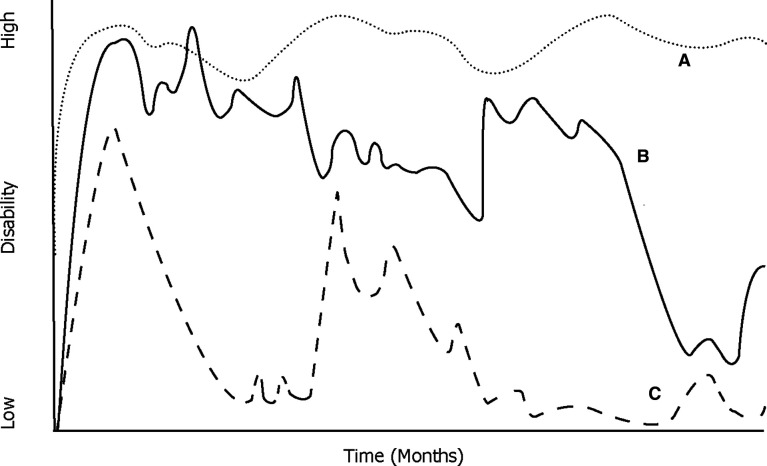
### Summary box Globally growing numbers of individuals are living with persistent signs and symptoms following infection consistent with COVID-19, referred to as Long COVID or Post-COVID Conditions. An estimated 6.2% of the U K population self-identified experiencing Long COVID, which negatively affected their general well-being and ability to exercise and work.1 Long COVID symptoms also adversely affected day-to-day activities among 64.7% of those self-reporting Long COVID, with 19.3% reporting significant limitations to daily activities.2 The long-term trajectory of Long COVID remains unknown. Therefore, conceptualising disability in Long COVID is essential for better understanding the lived experiences and health-related challenges of people living with and affected by Long COVID, to inform effective rehabilitation approaches and interventions to enhance clinical practice, policy and research. Our aim is to conceptualise Long COVID as an episodic health condition resulting in disability that may be characterised as multidimensional, episodic and unpredictable in nature and to highlight future …
Overview
The claims and statistics of this paper haven’t been checked yet.
Run the check — free, no account needed. It reads the open-access text and checks the sources it cites.
Integrity signals
Registry
Cites
Statistics
Figures
Verification
Claims the paper makes
The claims and statistics of this paper haven’t been checked yet.
Run the check — free, no account needed. It reads the open-access text and checks the sources it cites.
Claims other papers make about this one
Each is checked against this paper’s own text: does it say what the citing paper says it does?
The source backs part of the claim, not all of it — or backs it for a different population, condition or comparison.
In the citing paper
“Apart from this, patients suffering long COVID conditions may be at increased risk of ED chronification as they may have to cope not only with physical symptoms but also with loneliness and the stigma related to scepticism about their symptoms, which may in turn compromise their social and family life, work functionality and quality of life (Brown and O’Brien, 2021; Office of National Statistics,”
From Unified Protocol for the transdiagnostic treatment of emotional disorders in people with post COVID-19 condition: study protocol for a multiple baseline n-of-1 trial (2023) · cites this paper as Brown and O’Brien, 2021
Experimental — accuracy not yet measured
Self-check
Percentages, sums and reported differences re-computed from the paper’s own numbers.
The self-check needs the paper’s full text.
Citations
Cites
Characterizing long COVID in an international cohort: 7 months of symptoms and their impact
Davis, H. E., Assaf, G. S., McCorkell, L., Wei, H., Low, R. J., Re'em, Y., Redfield, S., Austin, J. P., & Akrami, A. (2021) · eClinicalMedicine · doi:10.1016/j.eclinm.2021.101019 · Cited by 2,881
Research works printed but not linked: 11
- Ziauddeen N , Gurdasani D , O'Hara ME . Characteristics of Long COVID: findings from a social media survey. medRxiv 2021. · DOI
- 10.1186/1477-7525-6-76 · DOI
- Solomon, 2018, Trajectories of episodic disability in people aging with HIV: a longitudinal qualitative study, J Int Assoc Provid AIDS Care, 17, 232595821875921, 10.1177/2325958218759210 · DOI
- O'Brien, 2019, Characterizing the disability experience among adults living with HIV: a structural equation model using the HIV disability questionnaire (HDQ) within the HIV, health and rehabilitation survey, BMC Infect Dis, 19, 10.1186/s12879-019-4203-0 · DOI
- 10.1080/09540121.2013.811209 · DOI
- 10.3109/09638288.2013.793408 · DOI
- Preston NJ , Parkin A , Makower S . The COVID-19 Yorkshire rehabilitation scale (C19-YRS): application and psychometric analysis in a post-COVID-19 syndrome cohort. medRxiv 2021. · DOI
- Tran, 2021, Development and validation of the Long COVID symptom and impact tools, a set of patient-reported instruments constructed from patients' lived experience, Clin Infect Dis
- O'Brien, 2015, Reliability and validity of a new HIV-specific questionnaire with adults living with HIV in Canada and ireland: the HIV disability questionnaire (HDQ), Health Qual Life Outcomes, 13, 10.1186/s12955-015-0310-9 · DOI
- National Institute for Health Research . Living with COVID19 - Second Review 2021.
- 10.1093/ptj/pzaa142 · DOI
Cited by
Sorted by citations
Hawke, L. D., Nguyen, A. T. P., Ski, C. F., Thompson, D. R., Ma, C., & Castle, D. (2022) · Psychological Medicine · doi:10.1017/s0033291722002203 · Cited by 67
Maras, D., Balfour, L., Lefebvre, M., & Tasca, G. (2022) · Research in Psychotherapy: Psychopathology, Process and Outcome · doi:10.4081/ripppo.2022.634 · Cited by 3
“This limits the generalizability of findings, as CID-psychological comorbidity is common (Daré et al., 2019) and multimorbidity of CIDs is the norm (Tinetti, Fried, & Boyd, 2012) and becoming more relevant in the COVID-19 context (Brown & O’Brien, 2021; Fernández-Nino, Guerra-Gómez, & Idrovo, 2021).”
BackgroundMartínez-Borba, V., Martínez-García, L., Peris-Baquero, Ó., Osma, J., & del Corral-Beamonte, E. (2023) · Frontiers in Psychology · doi:10.3389/fpsyg.2023.1160692 · Cited by 1
“…they may have to cope not only with physical symptoms but also with loneliness and the stigma related to scepticism about their symptoms, which may in turn compromise their social and family life, work functionality and quality of life (Brown and O’Brien, 2021; Office of National Statistics, 2021).”
Background
Metadata
- Authors
- Brown, D. A., & O’Brien, K. K.
- Affiliations
- Chelsea and Westminster Hospital NHS Foundation Trust (GB)
- University of Toronto (CA)
- Corresponding author
- O’Brien, Kelly K
- Venue
- BMJ Global Health
- Publisher
- BMJ
- Published
- 2021-09
- Volume
- 6
- Issue
- 9
- Pages
- e007004
- ISSN
- 2059-7908 (ISSN-L)
- PMC
- PMC8460526
- OpenAlex
- W3201236807
- Cited by
- 116
- References
- 1
- Citations by year
- 2026: 5 · 2025: 21 · 2024: 31 · 2023: 30 · 2022: 28 · 2021: 1
- FWCI
- 10.77
- Type
- journal article
- Language
- en
- Open access
- gold
- doi.org
- Licence
- Locations
- BMJ Global Health (publishedVersion, cc-by-nc)
- Europe PMC (PubMed Central) (publishedVersion, other-oa)
- PubMed Central (publishedVersion, cc-by-nc)
- PubMed (publishedVersion)
- DOAJ (DOAJ: Directory of Open Access Journals) (submittedVersion, cc-by-sa)
- Funders
- Canada Research Chairs Program (Not Applicable)
- Topics
- Health Sciences › Medicine › Clinical Neurology › Long-Term Effects of COVID-19
- Health Sciences › Health Professions › Physical Therapy, Sports Therapy and Rehabilitation › Medical Practices and Rehabilitation
- Health Sciences › Medicine › Clinical Neurology › Traumatic Brain Injury Research
- Keywords
- long COVID, disability, conceptualization, rehabilitation, lived experience, activity limitation
- MeSH terms
- COVID-19, SARS-CoV-2, Post-Acute COVID-19 Syndrome, Humans
About these checks
Registry, retraction, Cites and statistics results are computed, not judged, with one exception: a printed reference that no index lists is read once by a model before it counts as a citation error. Claims are extracted by a model and kept only when their quote appears verbatim in the text; each cited source is then checked, with a model’s help, for whether it says what the claim relies on. Those verdicts can be wrong — read the claim’s quote and the cited source before relying on one.
Statistics and arithmetic are recomputed, not judged.
Confidence bands are shown only for fields calibrated on our annotated test set. None is calibrated yet, so no band is shown.
What counts as a claim ›How we measure confidence ›How we check this ›
Are you an author, or do you see a problem with this page? Request a review
