

Evaluation framework to guide implementation of AI systems into healthcare settings
Open accessThe DOI matches its Crossref record; 23 of the 23 references it cites were found in a registry or an index.
Abstract
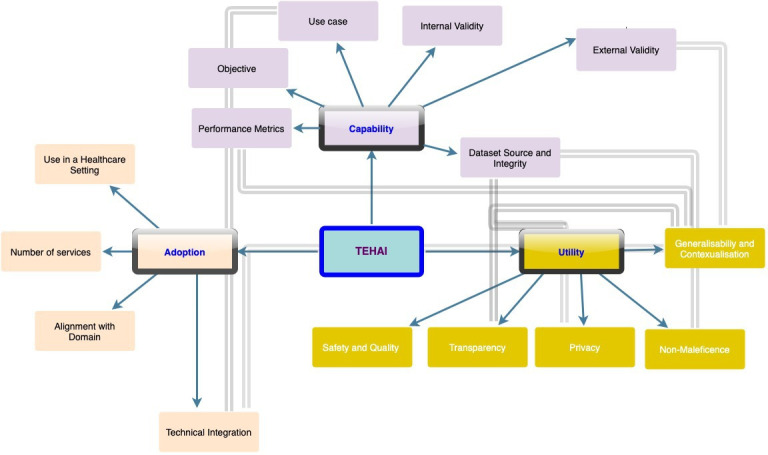
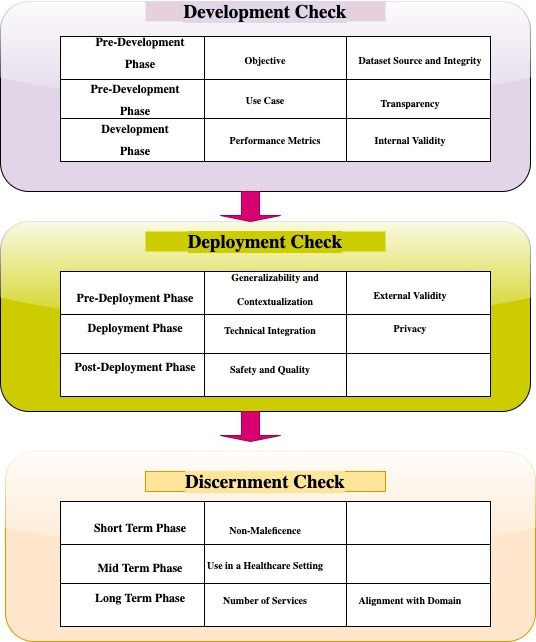
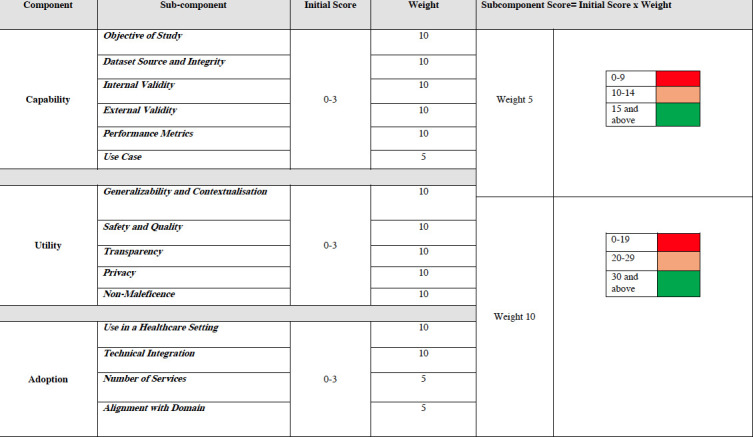
Objectives: To date, many artificial intelligence (AI) systems have been developed in healthcare, but adoption has been limited. This may be due to inappropriate or incomplete evaluation and a lack of internationally recognised AI standards on evaluation. To have confidence in the generalisability of AI systems in healthcare and to enable their integration into workflows, there is a need for a practical yet comprehensive instrument to assess the translational aspects of the available AI systems. Currently available evaluation frameworks for AI in healthcare focus on the reporting and regulatory aspects but have little guidance regarding assessment of the translational aspects of the AI systems like the functional, utility and ethical components. Methods: To address this gap and create a framework that assesses real-world systems, an international team has developed a translationally focused evaluation framework termed ‘Translational Evaluation of Healthcare AI (TEHAI)’. A critical review of literature assessed existing evaluation and reporting frameworks and gaps. Next, using health technology evaluation and translational principles, reporting components were identified for consideration. These were independently reviewed for consensus inclusion in a final framework by an international panel of eight expert. Results: TEHAI includes three main components: capability, utility and adoption. The emphasis on translational and ethical features of the model development and deployment distinguishes TEHAI from other evaluation instruments. In specific, the evaluation components can be applied at any stage of the development and deployment of the AI system. Discussion: One major limitation of existing reporting or evaluation frameworks is their narrow focus. TEHAI, because of its strong foundation in translation research models and an emphasis on safety, translational value and generalisability, not only has a theoretical basis but also practical application to assessing real-world systems. Conclusion: The translational research theoretic approach used to develop TEHAI should see it having application not just for evaluation of clinical AI in research settings, but more broadly to guide evaluation of working clinical systems.
Overview
The claims and statistics of this paper haven’t been checked yet.
Free: it reads the open-access text and checks the first 5 claims that cite a source we can check. Create a free account to check every claim.
Integrity signals
Registry
Cites
Statistics
Figures
Verification
Claims the paper makes
The claims and statistics of this paper haven’t been checked yet.
Free: it reads the open-access text and checks the first 5 claims that cite a source we can check. Create a free account to check every claim.
Claims other papers make about this one
Each is checked against this paper’s own text: does it say what the citing paper says it does?
The cited source doesn’t support the claim as written.
In the citing paper
“however, its lack of sociotechnical components, such as human-AI integration, culture and organization, and monitoring and support, which are essential for adoption and maximizing utility, is a drawback [3].”
From Checklist Approach to Developing and Implementing AI in Clinical Settings: Instrument Development Study (2025) · cites this paper as [3]
Checked by a reasoning model — may be wrong.
Experimental — accuracy not yet measuredThe source backs part of the claim, not all of it — or backs it for a different population, condition or comparison.
In the citing paper
“however, its lack of sociotechnical components, such as human-AI integration, culture and organization, and monitoring and support, which are essential for adoption and maximizing utility, is a drawback [3].”
From Checklist Approach to Developing and Implementing AI in Clinical Settings: Instrument Development Study (2025) · cites this paper as [3]
Experimental — accuracy not yet measuredThe source backs part of the claim, not all of it — or backs it for a different population, condition or comparison.
In the citing paper
“Without a shared framework, departments struggle to distinguish safe tools from risky ones,30, 31, 32”
From Artificial Intelligence Readiness in Emergency Medicine: Expert Consensus Opinion for Preparing the Workforce (2026) · cites this paper as [31]
Experimental — accuracy not yet measuredThe source backs part of the claim, not all of it — or backs it for a different population, condition or comparison.
In the citing paper
“Simulation exercises help reveal whether the projected gains are meaningful; if not, ED leaders can move on before investing more time.30,31,54”
From Artificial Intelligence Readiness in Emergency Medicine: Expert Consensus Opinion for Preparing the Workforce (2026) · cites this paper as [31]
Experimental — accuracy not yet measuredThe source backs part of the claim, not all of it — or backs it for a different population, condition or comparison.
In the citing paper
“Emergency physicians who develop a strong understanding of AI principles and gain hands-on experience through workflow simulation case studies can learn and apply clinician-led frameworks for vetting AI technology in the emergency department.30,31,33”
From Artificial Intelligence Readiness in Emergency Medicine: Expert Consensus Opinion for Preparing the Workforce (2026) · cites this paper as [31]
Experimental — accuracy not yet measured
8 more claims about this paper
Create a free account to see every claim other papers make about this one.
Self-check
Percentages, sums and reported differences re-computed from the paper’s own numbers.
The self-check needs the paper’s full text.
Citations
Cites
Collins, G. S., Reitsma, J. B., Altman, D. G., & Moons, K. G. M. (2015) · BMJ · doi:10.1136/bmj.g7594 · Cited by 4,388 · cited 1×
“6–8 13–15 The project team identified key components that could be considered in the framework and developed a draft initial version of the ‘TEHAI’ framework.”
BackgroundCollins, G. S., Reitsma, J. B., Altman, D. G., & Moons, K. G. M. (2015) · British Journal of Cancer · doi:10.1038/bjc.2014.639 · Cited by 3,293
Recent advances and applications of machine learning in solid-state materials science
Schmidt, J., Marques, M. R. G., Botti, S., & Marques, M. A. L. (2019) · npj Computational Materials · doi:10.1038/s41524-019-0221-0 · Cited by 2,607 · cited 1×
“16 This validation process includes the classical concept of goodness- of-fit, but also”
MethodDeep learning applications and challenges in big data analytics
Najafabadi, M. M., Villanustre, F., Khoshgoftaar, T. M., Seliya, N., Wald, R., & Muharemagic, E. (2015) · Journal of Big Data · doi:10.1186/s40537-014-0007-7 · Cited by 2,594
Moons, K. G. M., Wolff, R. F., Riley, R. D., Whiting, P. F., Westwood, M., Collins, G. S., Reitsma, J. B., Kleijnen, J., & Mallett, S. (2019) · Annals of Internal Medicine · doi:10.7326/m18-1377 · Cited by 1,669
Liu, X., Cruz Rivera, S., Moher, D., Calvert, M. J., Denniston, A. K., The SPIRIT-AI and CONSORT-AI Working Group, SPIRIT-AI and CONSORT-AI Steering Group, Chan, A.-W., Darzi, A., Holmes, C., et al. (2020) · Nature Medicine · doi:10.1038/s41591-020-1034-x · Cited by 1,421
A governance model for the application of AI in health care
Reddy, S., Allan, S., Coghlan, S., & Cooper, P. (2020) · Journal of the American Medical Informatics Association · doi:10.1093/jamia/ocz192 · Cited by 979
Self-citationCruz Rivera, S., Liu, X., Chan, A.-W., Denniston, A. K., Calvert, M. J., The SPIRIT-AI and CONSORT-AI Working Group, SPIRIT-AI and CONSORT-AI Steering Group, Darzi, A., Holmes, C., Yau, C., et al. (2020) · Nature Medicine · doi:10.1038/s41591-020-1037-7 · Cited by 933
Artificial intelligence-enabled healthcare delivery
Reddy, S., Fox, J., & Purohit, M. P. (2019) · Journal of the Royal Society of Medicine · doi:10.1177/0141076818815510 · Cited by 635
Self-citationLiu, X., Cruz Rivera, S., Moher, D., Calvert, M. J., Denniston, A. K., Ashrafian, H., Beam, A. L., Chan, A.-W., Collins, G. S., Deeks, A. D. J., et al. (2020) · The Lancet Digital Health · doi:10.1016/s2589-7500(20)30218-1 · Cited by 555
Cited by
Items 101–200 of 229
Adams, J. (2024) · AI and Ethics · doi:10.1007/s43681-024-00597-1 · Cited by 7
“Instead, Reddy et al.’s [43] evaluation framework, for example, claims to use “translational principles” to tackle ethical issues and functional issues that arise when applying trial-based interventions to real-world clinical contexts.”
Moral Values in Medical AI: A Scoping ReviewPreprint
Victor, G., Barbu, A., & Bélisle‐Pipon, J. (2024) · Research Square · doi:10.21203/rs.3.rs-4391239/v1 · Cited by 8
Checklist to Support the Development and Implementation of AI in Clinical SettingsPreprint
Owoyemi, A., Osuchukwu, J., Salwei, M. E., & Boyd, A. (2024) · medRxiv · doi:10.1101/2024.08.08.24311701 · Cited by 5
“[3], [14] CASoF stands out with its socio-technical checklist that integrates human, technical, and organizational culture in healthcare AI, while the SALIENT framework's structured approach focuses more on the AI deployment lifecycle, including stake-holder engagement and ethical considerations,…”
BackgroundAmaya-Santos, S., Vargas, C., & Bermúdez-Tamayo, C. (2026) · Public Health in Practice · doi:10.1016/j.puhip.2025.100713 · Cited by 4
“…in datasets during the development phase leads to several issues in AI systems, for instance, algorithms trained on datasets with a male bias may fail to detect gender-specific conditions or present inac-curacies in diagnosing diseases that exhibit gender differences in symptoms [13,45,46].”
Sezgin, M. G., & Bektaş, H. (2025) · Applied Nursing Research · doi:10.1016/j.apnr.2025.151987 · Cited by 4
Vita, E. D., Caivano, G., Sciarra, F. M., Bianco, S. L., Messina, P., Cumbo, E. M. G., Caradonna, L., Nigliaccio, S., Fontana, D. A., Scardina, A., et al. (2025) · Applied Sciences · doi:10.3390/app152212005 · Cited by 5
van Kessel, R., Schmidt, J., van Kolfschooten, H., Feudo, S., Young, K., Valtere, L., Minssen, T., & Mossialos, E. A. (2025) · npj Health Systems · doi:10.1038/s44401-025-00050-3 · Cited by 10
“In contrast, other exclusive rights, such as patents, require the disclosure information about the invention 8,9 .”
Qiao, Y., Min, X., Ge, S., Zhu, X., & Yang, N. (2026) · Journal of environmental chemical engineering · doi:10.1016/j.jece.2026.122522 · Cited by 7
Goirand, M., Austin, E. E., & Clay‐Williams, R. (2024) · AI and Ethics · doi:10.1007/s43681-024-00466-x · Cited by 9
“This trust could be improved by providing transparency of the purpose of an AIHA and questioning whether the AIHA should be developed in the first place, as advocated in Reddy et al. [27].”
Avaliação de Aplicações de Geração Aumentada de Recuperação por meio de Feedback Implícito
de Albuquerque, A. M., Wensing, I. M., Filho, N. L. J., & Dorneles, C. F. (2024) · Simpósio Brasileiro de Bancos de Dados (SBBD) · doi:10.5753/sbbd_estendido.2024.243903 · Cited by 6
Gal, H. C., & Margherita, A. (2025) · Technology Analysis and Strategic Management · doi:10.1080/09537325.2025.2467928 · Cited by 5
“Whereas most scholarly attention has presented speci fi c uses of AI for medical purposes, integrative studies gathering multiple dimensions are still required (Reddy et al. 2021; Saxena, Ness, and Khin-vasara 2024).”
Role of artificial intelligence in ICU therapeutic decision-making for severe infections
Giacobbe, D. R., Vena, A., & Bassetti, M. (2025) · Current Opinion in Critical Care · doi:10.1097/mcc.0000000000001304 · Cited by 8
Deploying artificial intelligence software in an NHS trust: a how-to guide for clinicians
Blake, S. R., & Das, N. (2023) · British Journal of Radiology · doi:10.1093/bjr/tqad043 · Cited by 4
Ethical Considerations and Bias in AI Applications in Healthcare
Ali, A. (2025) · Information systems engineering and management · doi:10.1007/978-3-031-84404-1_7 · Cited by 6
Generative Responsiveness in Assistive Care Ecosystem - GRACE
Baldissera, T. A., Faveri, C. D., & Camarinha-Matos, L. M. (2025) · IFIP advances in information and communication technology · doi:10.1007/978-3-032-05673-3_25 · Cited by 4
Bharath, M., Raman, R. K. S., & Alankar, A. (2025) · Progress in Materials Science · doi:10.1016/j.pmatsci.2025.101636 · Cited by 6
Spillo, G., Filippo, A. D., Musto, C., Milano, M., & Semeraro, G. M. (2025) · Sustainable Computing Informatics and Systems · doi:10.1016/j.suscom.2025.101286 · Cited by 4
Clinical Plausibility in Large Language Model Robustness Testing for Medicine: A Scoping Review
Chang, Y., Hsieh, M., Ju, P., Liu, Y., & Chang, C. (2026) · Journal of Medical Systems · doi:10.1007/s10916-026-02405-1 · Cited by 6
Evans, H., Sivakumar, N., Bhanderi, S., Graham, S., Snead, D. R. J., Patel, A., & Robinson, A. (2025) · BMJ Open Gastroenterology · doi:10.1136/bmjgast-2024-001649 · Cited by 3
AI ethics strategies and practices in organizations: a scoping review
Marcoux, A. M. (2025) · International Journal of Ethics and Systems · doi:10.1108/ijoes-02-2024-0060 · Cited by 4
Gerigoorian, A., Kloub, M., Dembrower, K., Engwall, M., & Strand, F. (2025) · BMC Health Services Research · doi:10.1186/s12913-025-13176-9 · Cited by 3
Fong, A., Bonk, C., Vasilchenko, V., De, S., Kovich, D., & Wyeth, J. (2022) · Frontiers in Drug Safety and Regulation · doi:10.3389/fdsfr.2022.1021068 · Cited by 3
“The assistance of an AI system in an existing workflow can be realized in time and resource savings or other measures of support (Reddy et al., 2021).”
BackgroundMethodInfluentialCasey, A., Ansari, S., Nakisa, B., Kelly, B., Brown, P., Cooper, P., Muhammad, I., Livingstone, S., Reddy, S., & Mäkinen, V. (2023) · JMIR AI · doi:10.2196/42313 · Cited by 7
“developed by a multidisciplinary international team through a vigorous process of review and consultation and systematically assesses AI models for their translational value [15].”
BackgroundMethodInfluentialSelf-citationRole of evaluation throughout the life cycle of biomedical and health AI applications
Shortliffe, E. H. (2023) · BMJ Health & Care Informatics · doi:10.1136/bmjhci-2023-100925 · Cited by 3
SOK: Application of machine learning models in child and youth mental health decision-making
Daneshvar, H., Boursalie, O., Samavi, R., Doyle, T. E., Duncan, L., Pires, P., & Sassi, R. B. (2024) · Elsevier eBooks · doi:10.1016/b978-0-443-13671-9.00003-x · Cited by 5
The role of artificial intelligence in pharmacovigilance for rare diseases
Jain, A., & Adenwala, Z. (2025) · Expert Opinion on Drug Safety · doi:10.1080/14740338.2025.2474645 · Cited by 3
Mensah, P. B., Quao, N. S. A., & Dagadu, S. (2024) · medRxiv · doi:10.1101/2024.04.17.24305971 · Cited by 6
Kohan, A., Xu, J., Xiao, L., Wu, X., Kukkar, A., Hussain, S., Roshanzamir, M., Alizadehsani, R., & Acharya, U. R. (2026) · Research Square · doi:10.21203/rs.3.rs-8976235/v1 · Cited by 5
Asaduzzaman, M., Rahman, M. A., Das, N. K., Iqbal, M., Kadir, A. K. M. S., Rabbany, M. G., Shemanto, M. U., Akhter, R., & Kundu, J. (2025) · ENVIRO Dental Journal · doi:10.12944/edj.06.si01.02 · Cited by 2
Artificial Intelligence and Machine Learning in Health Care
Liebovitz, D., Wu, A. Y., Reamer, C. B., & Vadasz, B. (2025) · Medical Clinics of North America · doi:10.1016/j.mcna.2025.07.011 · Cited by 2
Artificial intelligence in transitional care: practice, promise, and pitfalls—a scoping review
Fakha, A., & Boonstra, A. (2026) · Frontiers in Digital Health · doi:10.3389/fdgth.2025.1690223 · Cited by 4
A nursing perspective on human-AI collaboration in personalized breast cancer care pathways
Zhang, J., Zhao, X., Tao, J.-H., & Su, D.-C. (2026) · Frontiers in Oncology · doi:10.3389/fonc.2026.1784401 · Cited by 2
Recent advances in corneal specular microscopy image analysis through artificial intelligence
Marrugo, A. G., Quintero, F. J., Tello, A., Prada, A. M., Galvis, V., & Romero, L. A. (2026) · PLOS Digital Health · doi:10.1371/journal.pdig.0001305 · Cited by 4
“While AI-based methods in specular microscopy have shown remarkable potential, their translation into clinical practice faces significant challenges [63].”
Duan, M., Liu, X., Yeung, W. L. K., Hao, S., Raffa, J. D., Hu, P., Liu, C., Chen, L., Li, Z., Gao, Z., et al. (2026) · npj Digital Medicine · doi:10.1038/s41746-026-02472-1 · Cited by 3
“Furthermore, weencourageadoptingimplementationlifecycleframeworkslikeTEHAIto address technical, clinical, and system adoption challenges, bridging the translational gap in medical AI 16 .”
Zhao, Y., Miao, Y., Guo, R., Luo, Y., Wang, H., & Wu, Y. X. (2026) · Journal of Medical Internet Research · doi:10.2196/90046 · Cited by 2
“These considerations are intended to help align evaluation intensity with intended use context, while allowing task-and context-specific adaptation [11,22,23,197,198].”
InfluentialJawaid, S. A. (2024) · Journal of Advances in Artificial Intelligence · doi:10.18178/jaai.2024.2.1.47-59 · Cited by 2
Balancing Technology and Humanity: Perspectives on AI in Healthcare
Sachdeva, C., & Grover, V. (2024) · Advances in healthcare information systems and administration book series · doi:10.4018/979-8-3693-5468-1.ch001 · Cited by 3
Elia, M., Stieler, F., Ripke, F., Nann, M., Dopfer, S., & Bauer, B. (2024) · IEEE Conference on Evolving and Adaptive Intelligent Systems (EAIS) · doi:10.1109/eais58494.2024.10570023 · Cited by 2
“…approach for general AI QRM is presented by the NIST AI RMF which promotes risk adjustment to the real-world setting, transparent documentation [1, 6], the inclusion of a ” [...] broad set of perspectives and actors across the AI lifecycle” [1, 9], as well as continuous risk management [1, 20].”
BackgroundMethodAI usage in HealthcarePreprint
Ali, R. (2023) · OSF Preprints (OSF Preprints) · doi:10.31219/osf.io/b36y5 · Cited by 2
Commentary: Technological innovations for improved prevention and diagnosis of oral disease
Qamar, W. (2025) · Frontiers in Oral Health · doi:10.3389/froh.2024.1505435 · Cited by 2
Torous, J. B., Ledley, K. T., Gorban, C., Strudwick, G., Schwarz, J., Choudhary, S., Emerson, M. R., Patriquin, M. A., Dempsey, A. G., Bantjes, J. R., et al. (2025) · doi:10.2196/preprints.84501 · Cited by 2
Posselt, C., Avci, M. Y., Yiğitsoy, M., Schuenke, P., Kolbitsch, C., Schaeffter, T., & Remmele, S. (2024) · Journal of medical imaging · doi:10.1117/1.jmi.11.2.024013 · Cited by 2
The role of humans in the future of medicine: Completing the cycle
Kenig, N., & Vives, A. M. (2025) · Metaverse · doi:10.54517/m3129 · Cited by 4
David, N. (2025) · International Journal of Applied Linguistics and Translation · doi:10.11648/j.ijalt.20251102.11 · Cited by 1
Clinical Validation in AI for Healthcare: An Experiential Learning
Nabhani‐Gebara, S., Zacharias, L., Martí‐Bonmatí, L., Galiana-Bordera, A., Colantonio, S., Chouvarda, I., & Elkhoury, G. (2025) · Springer eBooks · doi:10.1007/978-3-031-89963-8_12 · Cited by 3
A comprehensive survey of AI trust frameworks in healthcare: current state and future directions
Eke, C. I., Shuib, L. M., & Phiri, M. (2025) · Health Services and Outcomes Research Methodology · doi:10.1007/s10742-025-00351-y · Cited by 2
Artificial intelligence for semen analysis and sperm selection
Kikuchi, J., Lorimer, J., Shahali, S., & Nosrati, R. (2025) · Elsevier eBooks · doi:10.1016/b978-0-443-26745-1.00010-4 · Cited by 2
Operationalizing Responsible AI in Health Systems: Delphi Based Governance Metrics for Indonesia
Puspitasari, D., & Veronika Yuni, T. (2025) · Data Journal of Information Systems and Management · doi:10.61978/data.v3i4.910 · Cited by 1
“Reddy et al. (2021) advocate for the continuous oversight of AI systems, highlighting the value of monitoring tools and evaluation metrics to ensure clinical safety.”
Strategien für die KI-Implementierung: Fachliche und ethische Grundlagen
Plafky, C. S., & Badertscher, H. (2025) · Springer eBooks · doi:10.1007/978-3-658-49009-6_11 · Cited by 1
A survey on mathematics behind AI models for disease prediction and diagnosis in healthcare
Mythatha, E., & Jenicka, S. (2025) · Network Modeling Analysis in Health Informatics and Bioinformatics · doi:10.1007/s13721-025-00671-6 · Cited by 1
Rabiee, P. (2026) · Biomedical visualization · doi:10.1007/978-3-032-06520-9_9 · Cited by 5
AS IMPLICAÇÕES ÉTICAS DO USO DE CHATBOTS GENERATIVOS NO ENSINO SUPERIOR
Ferigato, E., de Souza, S. M. N. L., Estender, A. C., Messias, J. F., & de Melo, S. E. (2026) · Revista Gestão e Conhecimento · doi:10.55908/rgcv20n1-001 · Cited by 1
Retrieval-Augmented LLMs with Indonesian Clinical Trials Guidelines: A Comparative Study
Raputri, E., Teguh, A. J., Hidayah, S. N., Anom, A. K., Setiawan, F., & Qomariyah, N. N. (2025) · International Seminar on Research of Information Technology and Intelligent Systems (ISRITI) · doi:10.1109/isriti68345.2025.11393253 · Cited by 2
“However, adoption and evaluation are still limited [6].”
Nuryanto, U. W., Basrowi, B., & Mahadewi, E. P. (2026) · Discover Sustainability · doi:10.1007/s43621-026-02812-x · Cited by 2
“Most literature emphasizes AI’s technical and operational applications, with less attention to its role in supporting employee sustainability behaviors [2, 59].”
Adapa, K., Metta, M., Kotte, S., Sathuluri, A., Mithal, V., Sethi, R., Kabaniha, G. A., & Mazur, L. M. (2026) · Asia-Pacific Journal of Oncology Nursing · doi:10.1016/j.apjon.2026.100972 · Cited by 2
“7,15,16 Reddy et al. emphasise that validation must encompass clinical workflow assessment, user acceptance, and patient-centred outcomes in the actual deployment setting.”
InfluentialAsamoah, K. O., Adjeisah, M., Darko, A. P., Mensah, P. K., Agyekum, K. O.-B. O., Kodjiku, S. L., & Aggrey, E. S. E. B. (2026) · Applied Soft Computing · doi:10.1016/j.asoc.2026.115450 · Cited by 1
Vigeant, T., Tam, A., Shi, Q., Allison, J. J., Kim, M., Sim, J.-A., Won, D.-O., Shin, D., McManus, D. D., Lee, J. J., et al. (2026) · JMIR AI · doi:10.2196/86220 · Cited by 4
“Recent instruments such as AI for Implementation and Management of Patient-centered AI and Clinical Translation Systems, Translational Evaluation of Healthcare AI, and multicriteria models have advanced structured approaches for evaluating individual AI systems [42-44].”
From principles to practice: an actionable framework for AI governance in healthcare organisations
Freeman, S., Wang, A., Saraf, S., Potts, E., McKimm, A., Coiera, E. W., & Magrabi, F. (2026) · BMJ Digital Health & AI · doi:10.1136/bmjdh-2026-000018 · Cited by 2
Self-citationMorfaki, C. (2026) · Hospitals · doi:10.3390/hospitals3040019 · Cited by 1
Booth, S. E., Gould, R. M., Cibotti, N., Fields, R. P., Horng, S., Jegadeesan, V., Li, S., Narayan, D., Rubins, D. M., O’Donoghue, A. L., et al. (2026) · Annals of Internal Medicine · doi:10.7326/annals-25-05294 · Cited by 1
Novel concept for systematic testing of AI models for MRI acquisition shifts with simulated data
Posselt, C., Gramotke, E., Parida, A., Yiğitsoy, M., & Remmele, S. (2023) · SPIE Medical Imaging: Image Perception, Observer Performance, and Technology Assessment · doi:10.1117/12.2653883 · Cited by 1
Thakur, S., Garg, V. K., & Kumar, A. V. (2024) · International Conference on Computational Intelligence and Communication Technologies (CCICT) · doi:10.1109/ccict62777.2024.00064 · Cited by 3
“Additionally, reliable internet connectivity is paramount for accessing cloud-based AI applications and databases, ensuring that healthcare providers can leverage AI insights without delay [23].”
BackgroundTechnology in Suicide Prevention: Fears and Functionality for Crisis Supporters
Hopkins, D., Mazzer, K., & Rickwood, D. (2024) · Human Behavior and Emerging Technologies · doi:10.1155/2024/6625037 · Cited by 2
Schneider, D., Brown, E. D. L., Ward, M., Sciubba, D. M., & Lo, S.-F. L. (2025) · AI and Ethics · doi:10.1007/s43681-025-00795-5 · Cited by 2
Casey, A., Ansari, S., Nakisa, B., Kelly, B., Brown, P., Cooper, P., Muhammad, I., Livingstone, S., Reddy, S., & Mäkinen, V. (2023) · medRxiv · doi:10.1101/2023.02.23.23286374 · Cited by 1
“To address this gap, we formed an international team and ran a systematic process over 18 months to develop an evaluation and guidance framework, termed 'Translational Evaluation of Healthcare AI (TEHAI) ’ [15].”
MethodInfluentialSelf-citationJacob, C., Brasier, N., Laurenzi, E., Heuss, S., Mougiakakou, S. G., Çöltekin, A., & Peter, M. K. (2024) · doi:10.2196/preprints.67485 · Cited by 1
Elia, M., Lopez, A. M., Páez, K. A. C., Bauer, B., & García-Cuesta, E. (2025) · SSRN Electronic Journal · doi:10.2139/ssrn.5149144 · Cited by 1
Paramedicine informatics – leveraging advancing technology to drive positive change
Hedderson, D., Courtney, K. L., & Blanchard, I. E. (2025) · Paramedicine · doi:10.1177/27536386251333517 · Cited by 3
“13 Often, technical evaluations fail to consider the clinical work fl ow and ethical application of AI in healthcare, and a theory-based approach to framework development is recommended.”
PREFER-IT: A transdisciplinary co-created framework to realise inclusive medical AIPreprint
Ferreira, P. P., Longarón, S. S., Bouisaghouane, W., Goris, J., Hoekman, A. H., Markos, B., Maus, B., Pozzi, G., Hasan, H., Kalinauskaitė, I., et al. (2025) · medRxiv · doi:10.1101/2025.11.03.25339443 · Cited by 1
Dash, D., Macalalad, J., Lum, D. L., Baker, M. W., Dalsey, W. C., Sangal, R. B., Dayton, J. R., Waseem, T. C., Sikka, N. K., & Chu, A. L. (2026) · JACEP Open · doi:10.1016/j.acepjo.2026.100503
(2023) · Elsevier eBooks · doi:10.1016/b978-0-323-90534-3.16001-9
(2024) · Internal Medicine Journal · doi:10.1111/imj.49_16398
(2024) · Compunet ( The Egyptian Information Journal ) · doi:10.21608/jstc.2024.355421
The Module Composition of New Artificial Intelligence System Based on Visual Communication
Wang, X.-J., & Gu, S. (2024) · 2024 Third International Conference on Distributed Computing and Electrical Circuits and Electronics (ICDCECE) · doi:10.1109/icdcece60827.2024.10548983 · Cited by 1
“Reddy S proposed that the current artificial intelligence system had begun to be developed in the medical care field, and now required sufficiently authoritative artificial intelligence evaluation standards to promote the subsequent application of artificial intelligence systems [1].”
BackgroundSilkens, M., Leusder, M., Woznitza, N., & Scarbrough, H. (2024) · doi:10.2196/preprints.63087 · Cited by 1
Deployment of Artificial Intelligence Models for Sleep Apnea Recognition in the Sleep Laboratory
Alarcón, Á. S., Gaiduk, M., Madrid, N. M., Seepold, R., & Ortega, J. A. (2024) · Procedia Computer Science · doi:10.1016/j.procs.2024.09.665
Artificial Intelligence and the Management of Viral Respiratory Infections inChildren
Grădinaru, M., Costin, S. A., Verga, G. I., Margareta, & Draganescu, M. L. (2024) · Technium BioChemMed · doi:10.47577/biochemmed.v11i.12091
“Furthermore, the literature, including research by Reddy et al. (2021), underscores the need for ongoing evaluation of AI algorithm performance across clinical environments to ensure their effectiveness and adaptability in various contexts [76].”
Learn from artificial intelligence: the pursuit of objectivity
Wang, F., Marouli, A., Charoenwongwatthana, P., & Chang, C. (2025) · Letters in Applied Microbiology · doi:10.1093/lambio/ovaf021 · Cited by 1
Chotalia, H., & Jain, A. (2024) · International Conference on Data, Computation and Communication (ICDCC) · doi:10.1109/icdcc62744.2024.10960852 · Cited by 2
“Future work should address the ethical challenges faced while integrating AI, particularly related to issues of patient confidentiality and algorithmic biases, in order to enhance the effectiveness and equity of AI applications in healthcare settings [24] .”
Rikan, W. S. D., Wahid, S., thabit, S. H. K., Abboud, S. M. H., & Salman, A. R. M. (2025) · Bright Sky Publications eBooks · doi:10.62906/bs.book.308
Mapping the Horizons of Translational Ethics: an NLP analysisPreprint
Spitale, G., Germani, F., & Bærøe, K. (2025) · Research Square · doi:10.21203/rs.3.rs-6990403/v1
Assessing Multimodal AI's Realized Value in Industrial Inspection with TEMAI
Ma, H., Li, Z., Deng, J., Zhang, C., & Xiao, D. (2025) · International Conference on Computer Science, Technology and Engineering (ICCSTE) · doi:10.1109/iccste65902.2025.11138360 · Cited by 2
“Originally proven successful in healthcare settings, TR methodology establishes a systematic knowledge transfer framework that effectively addresses various challenges in the transition from laboratory development to practical deployment [10, 11].”
Santosh, K., & Roy, D. G. (2025) · Studies in computational intelligence · doi:10.1007/978-981-95-1248-5_3
Nguyen, T. T., & Elmaleh, D. R. (2025) · Big Data and Cognitive Computing · doi:10.3390/bdcc9110275 · Cited by 1
“…at all levels, from functional departments, clinics/hospitals, health organizations like CDC, to government, poses a significant challenge for AI-driven healthcare innovations, as machine learning models require structured and standardized data for meaningful insights [12–16 , 40– 43 ].”
Human-Centered Artificial Intelligence: Designing Systems with Empathy and Ethics
Aeturu, S. (2025) · International Journal of Computational and Experimental Science and Engineering · doi:10.22399/ijcesen.4265
XAI-MRI: A Multilayered Framework for Explainable AI driven Medical Risk Identification
Akre, V. L., AlHajri, L., & Raman, R. (2025) · International Conference on Innovations in Intelligent Systems and Applications (INISTA) · doi:10.1109/inista68122.2025.11249512
“This lack of clarity is a big problem for critical decisions about a patient's care or their medications [5].”
Electronic health record developer adherence to federal AI risk transparency requirements
Manikkoth, N., Vo, N., Handley, J. L., Biro, J., Everson, J., Ratwani, R. M., & Miller, K. (2026) · npj Digital Medicine · doi:10.1038/s41746-026-03152-w
ARTIFICIAL INTELLIGENCE IN HEALTH: ETHICS AND LEGAL REGULATIONS
ÖZGÜLEŞ, R., Skender, F., & Ilker, A. L. I. (2024) · doi:10.55843/isc2024conf367o
Application of artificial intelligence in management of myasthenia gravis
Prajapati, J. B., Prajapati, B., Jadeja, P., & Patel, R. (2025) · Elsevier eBooks · doi:10.1016/b978-0-443-36647-5.00005-4
Wilkie, P. Y., Namdar, K., Samsel, K., Pasricha, S. V., Jaiswal, N., Salo, Z., So, M., Panchal, S., Malhotra, A. K., Nashnoush, E., et al. (2025) · FACETS · doi:10.1139/facets-2025-0117 · Cited by 1
Ethical Considerations in AI-Enabled Healthcare
Aldemir, E., Bloom, C., Honeyman, S. I., & Vardanyan, R. (2026) · Biomedical visualization · doi:10.1007/978-3-032-06520-9_5 · Cited by 1
Pasha, A., Jahanaray, M., Inusah, A. S., Li, X., & Qiao, S. (2026) · Research Square · doi:10.21203/rs.3.rs-8935464/v1 · Cited by 1
Halford, E. (2026) · The Police Journal Theory Practice and Principles · doi:10.1177/0032258x261430216 · Cited by 2
Chew, B., & Ngiam, K. Y. (2026) · JMIR AI · doi:10.2196/80340
“…[54], another translational-to-practice focused evaluation framework (Translational Evaluation of Health Care Artificial Intelligence framework) [55], another that is a publication appraising tool in radiology [56] to complement an existing one (Data Algorithm Training Output method) [57],…”
Role of AI and Machine Learning in the Future of Talent Management
Nisha, A. R., Subramani, A. K., Gayathri, A. R., & Pandian, R. D. (2026) · IGI Global eBooks · doi:10.4018/979-8-3373-4307-5.ch011
Evaluation Methods for AI in Public Health
Wu, M. (2026) · Springer eBooks · doi:10.1007/978-3-032-15872-7_4 · Cited by 1
Implementing responsible artificial intelligence-driven precision medicine in critical care
Ennouri, E., Boussarsar, M., Saida, I. B., Meddeb, K., & Toumi, R. (2026) · Elsevier eBooks · doi:10.1016/b978-0-443-36554-6.00021-0
Bhojani, D. R., Trivedi, R. J., Sangani, D. J., Jani, D. G., & Gohil, N. B. (2025) · International Journal of Computational and Experimental Science and Engineering · doi:10.22399/ijcesen.5205
Kim, J. Y., Hasan, A., Ahmed, R., Vladimirova, A., Prakash, A., Alwakeel, M., Jha, V., Patel, M. R., Mitchley, M., Theiler, E., et al. (2026) · SSRN Electronic Journal · doi:10.2139/ssrn.6647418
Khan, M. M. R., Lakshminarayanan, K., Wang, I., Barber, J., McGonigle, E., & Rahman, M. H. (2026) · Sensors · doi:10.3390/s26103043
Metadata
- Authors
- Reddy, S., Rogers, W., Makinen, V.-P., Coiera, E., Brown, P., Wenzel, M., Weicken, E., Ansari, S., Mathur, P., Casey, A., & Kelly, B.
- Affiliations
- Deakin University (AU)
- Macquarie University (AU)
- South Australian Health and Medical Research Institute, Adelaide, South Australia, Australia
- Orion Health, Auckland, Auckland, New Zealand
- Fraunhofer Institute for Telecommunications, Heinrich Hertz Institute (DE)
- Cleveland Clinic (US)
- South Australian Health and Medical Research Institute (AU)
- Corresponding author
- Reddy, Sandeep
- ORCID
- Venue
- BMJ Health & Care Informatics
- Publisher
- BMJ
- Published
- 2021-10
- Volume
- 28
- Issue
- 1
- Pages
- e100444
- ISSN
- 2632-1009 (ISSN-L)
- PMC
- PMC8513218
- OpenAlex
- W3207900783
- Semantic Scholar
- ed98f6de1a2af4ca006207490814f5830a3c7912
- Cited by
- 230
- References
- 23
- Citations by year
- 2026: 58 · 2025: 82 · 2024: 56 · 2023: 26 · 2022: 8
- FWCI
- 6.51
- Type
- journal article
- Language
- en
- Open access
- gold
- doi.org
- Licence
- Locations
- BMJ Health & Care Informatics (publishedVersion, cc-by-nc)
- Europe PMC (PubMed Central) (publishedVersion, other-oa)
- PubMed Central (publishedVersion, cc-by-nc)
- PubMed (publishedVersion)
- DOAJ (DOAJ: Directory of Open Access Journals) (submittedVersion, cc-by-sa)
- Deakin Research Online (Deakin University) (submittedVersion)
- QUT ePrints (Queensland University of Technology) (submittedVersion)
- Figshare (submittedVersion, cc-by-nc)
- Publikationsdatenbank der Fraunhofer-Gesellschaft (Fraunhofer-Gesellschaft) (submittedVersion, other-oa)
- Fraunhofer-Publica (Fraunhofer-Gesellschaft) (submittedVersion)
- Topics
- Health Sciences › Medicine › Health Informatics › Artificial Intelligence in Healthcare and Education
- Health Sciences › Health Professions › Health Information Management › Artificial Intelligence in Healthcare
- Physical Sciences › Computer Science › Artificial Intelligence › Ethics and Social Impacts of AI
- Keywords
- artificial intelligence in healthcare, AI evaluation framework, translational research, artificial intelligence adoption, AI ethics, generalizability, health technology assessment, AI safety
- MeSH terms
- Artificial Intelligence, Delivery of Health Care, Health Facilities, Program Evaluation
About these checks
Registry, retraction, Cites and statistics results are computed, not judged, with one exception: a printed reference that no index lists is read once by a model before it counts as a citation error. Claims are extracted by a model and kept only when their quote appears verbatim in the text; each cited source is then checked, with a model’s help, for whether it says what the claim relies on. Those verdicts can be wrong — read the claim’s quote and the cited source before relying on one.
Statistics and arithmetic are recomputed, not judged.
Confidence bands are shown only for fields calibrated on our annotated test set. None is calibrated yet, so no band is shown.
What counts as a claim ›How we measure confidence ›How we check this ›
Are you an author, or do you see a problem with this page? Request a review
Data sources
Bibliographic data: Semantic Scholar, OpenAlex, Crossref.
Contains information from the Semantic Scholar Academic Graph Datasets, made available under the ODC Attribution License (ODC-BY 1.0).
Semantic Scholar’s data is described in: Kinney, R., et al. (2023). The Semantic Scholar Open Data Platform. arXiv:2301.10140.
