

Evaluation framework to guide implementation of AI systems into healthcare settings
Open accessThe DOI matches its Crossref record; 23 of the 23 references it cites were found in a registry or an index.
Abstract
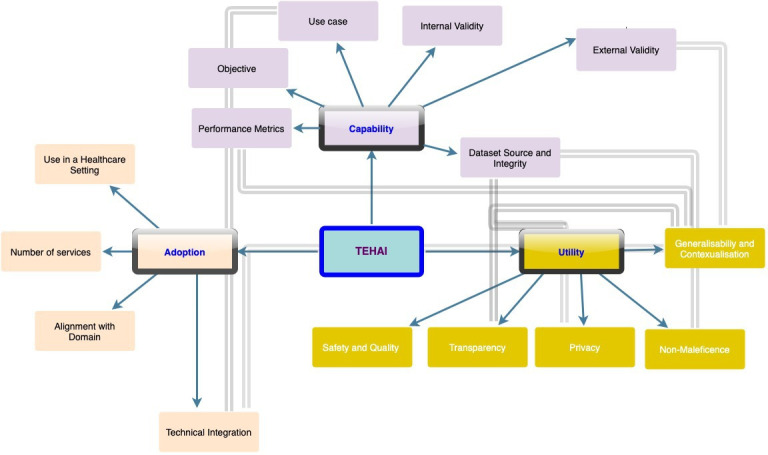
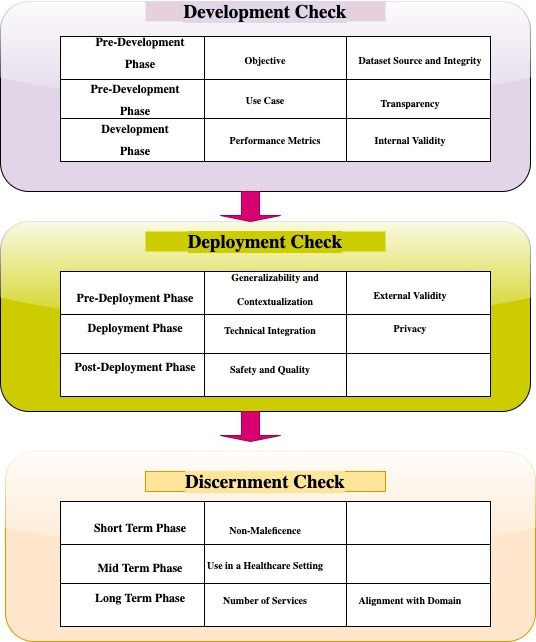
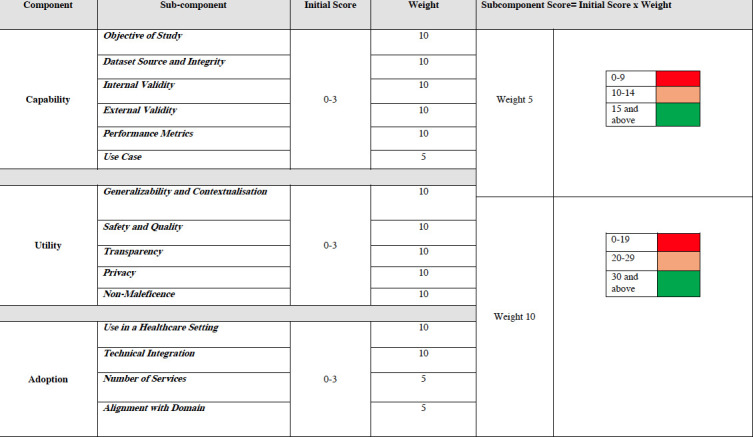
Objectives: To date, many artificial intelligence (AI) systems have been developed in healthcare, but adoption has been limited. This may be due to inappropriate or incomplete evaluation and a lack of internationally recognised AI standards on evaluation. To have confidence in the generalisability of AI systems in healthcare and to enable their integration into workflows, there is a need for a practical yet comprehensive instrument to assess the translational aspects of the available AI systems. Currently available evaluation frameworks for AI in healthcare focus on the reporting and regulatory aspects but have little guidance regarding assessment of the translational aspects of the AI systems like the functional, utility and ethical components. Methods: To address this gap and create a framework that assesses real-world systems, an international team has developed a translationally focused evaluation framework termed ‘Translational Evaluation of Healthcare AI (TEHAI)’. A critical review of literature assessed existing evaluation and reporting frameworks and gaps. Next, using health technology evaluation and translational principles, reporting components were identified for consideration. These were independently reviewed for consensus inclusion in a final framework by an international panel of eight expert. Results: TEHAI includes three main components: capability, utility and adoption. The emphasis on translational and ethical features of the model development and deployment distinguishes TEHAI from other evaluation instruments. In specific, the evaluation components can be applied at any stage of the development and deployment of the AI system. Discussion: One major limitation of existing reporting or evaluation frameworks is their narrow focus. TEHAI, because of its strong foundation in translation research models and an emphasis on safety, translational value and generalisability, not only has a theoretical basis but also practical application to assessing real-world systems. Conclusion: The translational research theoretic approach used to develop TEHAI should see it having application not just for evaluation of clinical AI in research settings, but more broadly to guide evaluation of working clinical systems.
Overview
The claims and statistics of this paper haven’t been checked yet.
Free: it reads the open-access text and checks the first 5 claims that cite a source we can check. Create a free account to check every claim.
Integrity signals
Registry
Cites
Statistics
Figures
Verification
Claims the paper makes
The claims and statistics of this paper haven’t been checked yet.
Free: it reads the open-access text and checks the first 5 claims that cite a source we can check. Create a free account to check every claim.
Claims other papers make about this one
Each is checked against this paper’s own text: does it say what the citing paper says it does?
The cited source doesn’t support the claim as written.
In the citing paper
“however, its lack of sociotechnical components, such as human-AI integration, culture and organization, and monitoring and support, which are essential for adoption and maximizing utility, is a drawback [3].”
From Checklist Approach to Developing and Implementing AI in Clinical Settings: Instrument Development Study (2025) · cites this paper as [3]
Checked by a reasoning model — may be wrong.
Experimental — accuracy not yet measuredThe source backs part of the claim, not all of it — or backs it for a different population, condition or comparison.
In the citing paper
“however, its lack of sociotechnical components, such as human-AI integration, culture and organization, and monitoring and support, which are essential for adoption and maximizing utility, is a drawback [3].”
From Checklist Approach to Developing and Implementing AI in Clinical Settings: Instrument Development Study (2025) · cites this paper as [3]
Experimental — accuracy not yet measuredThe source backs part of the claim, not all of it — or backs it for a different population, condition or comparison.
In the citing paper
“Without a shared framework, departments struggle to distinguish safe tools from risky ones,30, 31, 32”
From Artificial Intelligence Readiness in Emergency Medicine: Expert Consensus Opinion for Preparing the Workforce (2026) · cites this paper as [31]
Experimental — accuracy not yet measuredThe source backs part of the claim, not all of it — or backs it for a different population, condition or comparison.
In the citing paper
“Simulation exercises help reveal whether the projected gains are meaningful; if not, ED leaders can move on before investing more time.30,31,54”
From Artificial Intelligence Readiness in Emergency Medicine: Expert Consensus Opinion for Preparing the Workforce (2026) · cites this paper as [31]
Experimental — accuracy not yet measuredThe source backs part of the claim, not all of it — or backs it for a different population, condition or comparison.
In the citing paper
“Emergency physicians who develop a strong understanding of AI principles and gain hands-on experience through workflow simulation case studies can learn and apply clinician-led frameworks for vetting AI technology in the emergency department.30,31,33”
From Artificial Intelligence Readiness in Emergency Medicine: Expert Consensus Opinion for Preparing the Workforce (2026) · cites this paper as [31]
Experimental — accuracy not yet measured
8 more claims about this paper
Create a free account to see every claim other papers make about this one.
Self-check
Percentages, sums and reported differences re-computed from the paper’s own numbers.
The self-check needs the paper’s full text.
Citations
Cites
Collins, G. S., Reitsma, J. B., Altman, D. G., & Moons, K. G. M. (2015) · BMJ · doi:10.1136/bmj.g7594 · Cited by 4,388 · cited 1×
“6–8 13–15 The project team identified key components that could be considered in the framework and developed a draft initial version of the ‘TEHAI’ framework.”
BackgroundCollins, G. S., Reitsma, J. B., Altman, D. G., & Moons, K. G. M. (2015) · British Journal of Cancer · doi:10.1038/bjc.2014.639 · Cited by 3,293
Recent advances and applications of machine learning in solid-state materials science
Schmidt, J., Marques, M. R. G., Botti, S., & Marques, M. A. L. (2019) · npj Computational Materials · doi:10.1038/s41524-019-0221-0 · Cited by 2,607 · cited 1×
“16 This validation process includes the classical concept of goodness- of-fit, but also”
MethodDeep learning applications and challenges in big data analytics
Najafabadi, M. M., Villanustre, F., Khoshgoftaar, T. M., Seliya, N., Wald, R., & Muharemagic, E. (2015) · Journal of Big Data · doi:10.1186/s40537-014-0007-7 · Cited by 2,594
Moons, K. G. M., Wolff, R. F., Riley, R. D., Whiting, P. F., Westwood, M., Collins, G. S., Reitsma, J. B., Kleijnen, J., & Mallett, S. (2019) · Annals of Internal Medicine · doi:10.7326/m18-1377 · Cited by 1,669
Liu, X., Cruz Rivera, S., Moher, D., Calvert, M. J., Denniston, A. K., The SPIRIT-AI and CONSORT-AI Working Group, SPIRIT-AI and CONSORT-AI Steering Group, Chan, A.-W., Darzi, A., Holmes, C., et al. (2020) · Nature Medicine · doi:10.1038/s41591-020-1034-x · Cited by 1,421
A governance model for the application of AI in health care
Reddy, S., Allan, S., Coghlan, S., & Cooper, P. (2020) · Journal of the American Medical Informatics Association · doi:10.1093/jamia/ocz192 · Cited by 979
Self-citationCruz Rivera, S., Liu, X., Chan, A.-W., Denniston, A. K., Calvert, M. J., The SPIRIT-AI and CONSORT-AI Working Group, SPIRIT-AI and CONSORT-AI Steering Group, Darzi, A., Holmes, C., Yau, C., et al. (2020) · Nature Medicine · doi:10.1038/s41591-020-1037-7 · Cited by 933
Artificial intelligence-enabled healthcare delivery
Reddy, S., Fox, J., & Purohit, M. P. (2019) · Journal of the Royal Society of Medicine · doi:10.1177/0141076818815510 · Cited by 635
Self-citationLiu, X., Cruz Rivera, S., Moher, D., Calvert, M. J., Denniston, A. K., Ashrafian, H., Beam, A. L., Chan, A.-W., Collins, G. S., Deeks, A. D. J., et al. (2020) · The Lancet Digital Health · doi:10.1016/s2589-7500(20)30218-1 · Cited by 555
Cited by
Lekadir, K., Frangi, A. F., Porras, A. R., Glocker, B., Cintas, C., Langlotz, C. P., Weicken, E., Asselbergs, F. W., Prior, F., Collins, G. S., et al. (2025) · BMJ · doi:10.1136/bmj-2024-081554 · Cited by 957
“Initial efforts have focused on providing recommendations for the reporting of AI studies for different medical domains or clinical tasks (eg, TRIPOD+AI, 11 CLAIM, 12 CONSORT-AI, 13 DECIDE-AI, 14 PROBAST-AI, 15 CLEAR 16 ).”
Self-citationBias in artificial intelligence algorithms and recommendations for mitigation
Nazer, L. H., Zatarah, R., Waldrip, S., Ke, J. X. C., Moukheiber, M., Khanna, A. K., Hicklen, R. S., Moukheiber, L., Moukheiber, D., Ma, H., et al. (2023) · PLOS Digital Health · doi:10.1371/journal.pdig.0000278 · Cited by 621
“A number of comprehensive frameworks and checklists have been developed, such as the Translational Evaluation of Healthcare AI (TEHAI) [46], the DECIDE-AI [47], the Consolidated Standards of Reporting Trials-Artificial Intelligence (CONSORT-AI) [48], the prediction model risk of bias assessment tool (PROBAST) [49], an…”
MethodSelf-citationReddy, S. (2024) · Implementation Science · doi:10.1186/s13012-024-01357-9 · Cited by 554
“Col-laborate with regulatory authorities to establish guidelines specific to generative AI in healthcare Establishing procedures for ongoing monitoring and evaluation of the models is crucial in addition to the measures to enable governance for the generative AI models [67, 70].”
MethodSelf-citationLarge language models in healthcare and medical domain: A review
Nazi, Z. A., & Peng, W. (2024) · Informatics · doi:10.3390/informatics11030057 · Cited by 415
Artificial intelligence in nursing and midwifery: A systematic review
O'Connor, S., Yan, Y., Thilo, F. J. S., Felzmann, H., Dowding, D., & Lee, J. J. (2023) · Journal of Clinical Nursing · doi:10.1111/jocn.16478 · Cited by 351
AI, Health, and Health Care Today and Tomorrow: The JAMA Summit Report on Artificial Intelligence
Angus, D. C., Khera, R., Lieu, T., Liu, V., Ahmad, F. S., Anderson, B., Bhavani, S. V., Bindman, A., Brennan, T., Celi, L. A., et al. (2025) · JAMA · doi:10.1001/jama.2025.18490 · Cited by 195
Fountzilas, E., Pearce, T., Baysal, M. A., Chakraborty, A., & Tsimberidou, A. M. (2025) · npj Digital Medicine · doi:10.1038/s41746-025-01471-y · Cited by 190
Artificial intelligence in ophthalmology: The path to the real-world clinic
Li, Z., Wang, L., Wu, X., Jiang, J., Qiang, W., Xie, H., Zhou, H., Wu, S., Shao, Y., & Chen, W. (2023) · Cell Reports Medicine · doi:10.1016/j.xcrm.2023.101095 · Cited by 188
“In addition, an international team established an evaluation framework termed Translational Evaluation of Healthcare AI (TEHAI) focusing on the assessment of translational aspects of AI systems in medicine.(166) The evaluation components (e.”
The ethical implications of using generative chatbots in higher education
Williams, R. T. (2024) · Frontiers in Education · doi:10.3389/feduc.2023.1331607 · Cited by 183
Higgins, O., Short, B. L., Chalup, S. K., & Wilson, R. L. (2023) · International Journal of Mental Health Nursing · doi:10.1111/inm.13114 · Cited by 150
Implementation frameworks for end-to-end clinical AI: derivation of the SALIENT framework
van der Vegt, A. H., Scott, I. A., Dermawan, K., Schnetler, R. J., Kalke, V. R., & Lane, P. J. (2023) · Journal of the American Medical Informatics Association · doi:10.1093/jamia/ocad088 · Cited by 109
Reddy, S. (2023) · Informatics in Medicine Unlocked · doi:10.1016/j.imu.2023.101304 · Cited by 99
Self-citationJacob, C., Brasier, N., Laurenzi, E., Heuss, S., Mougiakakou, S. G., Çöltekin, A., & Peter, M. K. (2025) · Journal of Medical Internet Research · doi:10.2196/67485 · Cited by 147
“AI tools must be tailored to meet the unique requirements of their end users, whether clinicians, nurses, or patients, and address the particular medical conditions they aim to diagnose, monitor, or treat [42,56].”
InfluentialWells, B. J., Nguyen, H. M., McWilliams, A., Pallini, M., Bovi, A., Kuzma, A., Kramer, J., Chou, S.-H., Hetherington, T., Corn, P., et al. (2025) · npj Digital Medicine · doi:10.1038/s41746-025-01900-y · Cited by 90
Denecke, K., May, R., & Rivera-Romero, O. (2024) · Journal of Medical Systems · doi:10.1007/s10916-024-02043-5 · Cited by 109
“Reddy et al. proposed an evaluation framework for the application of LLMs in healthcare to address these risks [24].”
BackgroundScientific evidence for clinical text summarization using large language models: scoping review
Bednarczyk, L., Reichenpfader, D., Gaudet-Blavignac, C., Ette, A. K., Zaghir, J., Zheng, Y., Bensahla, A., Bjelogrlic, M., & Lovis, C. (2025) · Journal of Medical Internet Research · doi:10.2196/68998 · Cited by 83
Implementing Artificial Intelligence in Critical Care Medicine: a consensus of 22.
Cecconi, M., Greco, M., Shickel, B., Angus, D. C., Bailey, H., Bignami, E., Calandra, T., Celi, L. A., Einav, S., Elbers, P., et al. (2025) · Critical Care · doi:10.1186/s13054-025-05532-2 · Cited by 80
“…and computational resources needed to develop a large generative AI model, physicians and regulators should promote partnerships among healthcare institutions, technology companies, and governmental bodies to support the research, development, and deployment of AI-enabled care solutions [83].”
Hanneman, K., Playford, D., Dey, D., van Assen, M., Mastrodicasa, D., Cook, T. S., Gichoya, J. W., Williamson, E. E., Rubin, G. D., & on behalf of the American Heart Association Council on Cardiovascular Radiology and Intervention; and Council on Lifelong Congenital Heart Disease and Heart Health in the Young (2024) · Circulation · doi:10.1161/cir.0000000000001202 · Cited by 72
“23 As the US Food and Drug Administration regulatory pathway for approval evolves, AI developers should consider the importance of multisite AI deployment during the development phase.”
Backgroundvan der Vegt, A. H., Scott, I. A., Dermawan, K., Schnetler, R. J., Kalke, V. R., & Lane, P. J. (2023) · Journal of the American Medical Informatics Association · doi:10.1093/jamia/ocad075 · Cited by 72
Madanchian, M., & Taherdoost, H. (2025) · Frontiers in Artificial Intelligence · doi:10.3389/frai.2025.1619029 · Cited by 124
Egbemhenghe, A. U., Ojeyemi, T., Iwuozor, K. O., Emenike, E. C., Ogunsanya, T. I., Anidiobi, S. U., & Adeniyi, A. G. (2023) · Environmental Challenges · doi:10.1016/j.envc.2023.100782 · Cited by 80
Moving towards vertically integrated artificial intelligence development
Zhang, J., Budhdeo, S., William, W., Cerrato, P., Shuaib, H., Sood, H., Ashrafian, H., Halamka, J., & Teo, J. T. (2022) · npj Digital Medicine · doi:10.1038/s41746-022-00690-x · Cited by 54
“Recent frameworks 28 and maturity classi fi cations in literature reviews 1,29 adopt a high-level view of where an algorithm sits in its development roadmap.”
BackgroundMachine Learning Operations in Health Care: A Scoping Review
Rajagopal, A., Ayanian, S., Ryu, A. J., Qian, R., Legler, S. R., Peeler, E. A., Issa, M., Coons, T. J., & Kawamoto, K. (2024) · Mayo Clinic Proceedings: Digital Health · doi:10.1016/j.mcpdig.2024.06.009 · Cited by 52
“64 One exception is a recent study from the University Medical Center of Utrecht, which highlighted real-world operational integration of an in-house developed model for preterm neonate monitoring.”
The application and use of artificial intelligence in cancer nursing: A systematic review
O'Connor, S., Vercell, A., Wong, D., Yorke, J., Fallatah, F. A., Cave, L., & Anny Chen, L.-Y. (2024) · European Journal of Oncology Nursing · doi:10.1016/j.ejon.2024.102510 · Cited by 51
Mansoor, M. A., & Ibrahim, A. (2025) · Journal of Clinical Medicine · doi:10.3390/jcm14082698 · Cited by 68
“A framework for responsible innovation must balance technological advancement with ethical considerations, incorporating principles such as transparency, fairness, accountability, and respect for patient autonomy [143].”
Red teaming ChatGPT in medicine to yield real-world insights on model behavior
Chang, C. T., Farah, H., Gui, H., Rezaei, S. J., Bou-Khalil, C., Park, Y., Swaminathan, A., Omiye, J. A., Kolluri, A., Chaurasia, A., et al. (2025) · npj Digital Medicine · doi:10.1038/s41746-025-01542-0 · Cited by 80
“The relative dearth of appropriate healthcare AI evaluation metrics, many of which do not focus on realistic clinical scenarios 28 , further exacerbates this situation.”
Berman, G., Goyal, N., & Madaio, M. (2024) · Proceedings of the CHI Conference on Human Factors in Computing Systems · doi:10.1145/3613904.3642398 · Cited by 40
“…and development paradigms are increasingly incorporated into medical or education interventions, these domains are also starting to consider how to apply their familiar evaluation approaches to AI technologies, 8 and how to translate insights from RAI to their evaluation practices [e.g. , 185].”
BackgroundSpies, N. C., Farnsworth, C. W., Wheeler, S., & McCudden, C. R. (2024) · Clinical Chemistry · doi:10.1093/clinchem/hvae126 · Cited by 57
Implementation of a national AI technology program on cardiovascular outcomes and the health system
Fairbairn, T. A., Mullen, L., Nicol, E. D., Lip, G. Y. H., Schmitt, M., Shaw, M., Tidbury, L. P., Kemp, I., Crooks, J., Burnside, G., et al. (2025) · Nature Medicine · doi:10.1038/s41591-025-03620-y · Cited by 46
Akhlaghi, H., Freeman, S., Vari, C., McKenna, B., Braitberg, G., Karro, J., & Tahayori, B. (2024) · Emergency Medicine Australasia · doi:10.1111/1742-6723.14325 · Cited by 35
“Implementation frameworks have sought to provide a taxonomy of challenges for the implementation of AI, including autonomy, bene fi cence, nonmale fi cence and justice; 24,25 explainability; 25 validation and accuracy; 24,26 and safety and ef fi cacy.”
BackgroundKhan, S. D., Hoodbhoy, Z., Raja, M. H. R., Kim, J. Y., Hogg, H. D. J., Manji, A. A. A., Gulamali, F., Hasan, A., Shaikh, A., Tajuddin, S., et al. (2024) · PLOS Digital Health · doi:10.1371/journal.pdig.0000514 · Cited by 36
The Role of Artificial Intelligence Model Documentation in Translational Science: Scoping Review
Brereton, T. A., Malik, M. M., Lifson, M. A., Greenwood, J. D., Peterson, K. J., & Overgaard, S. M. (2023) · Interactive Journal of Medical Research · doi:10.2196/45903 · Cited by 50
“The successful integration of such tools into clinical settings necessitates a meticulous evaluation conducted by interdisciplinary teams throughout the AI life cycle, ensuring favorable outcomes; however, the promised value of delivering scalable and sustained value for patients has yet to be realized, as the field h…”
BackgroundCresswell, K. M., Rigby, M., Magrabi, F., Scott, P., Brender, J., Craven, C. K., Wong, Z. S.-Y., Kukhareva, P., Ammenwerth, E., Georgiou, A., et al. (2023) · Health Policy · doi:10.1016/j.healthpol.2023.104889 · Cited by 56
Segur-Ferrer, J., Moltó-Puigmartí, C., Pastells‐Peiró, R., & Vivanco‐Hidalgo, R. M. (2024) · Journal of Medical Internet Research · doi:10.2196/48694 · Cited by 39
“%) mHealth [52,53], AI [41] Validity (n=5, 1.6”
InfluentialEvans, R. P., Bryant, L. D., Russell, G., & Absolom, K. L. (2024) · International Journal of Medical Informatics · doi:10.1016/j.ijmedinf.2024.105342 · Cited by 41
Evaluation of AI Solutions in Health Care Organizations — The OPTICA Tool
Dagan, N., Devons-Sberro, S., Paz, Z., Zoller, L., Sommer, A., Shaham, G., Shahar, N., Ohana, R., Weinstein, O., Netzer, D., et al. (2024) · NEJM AI · doi:10.1056/aics2300269 · Cited by 27
Meyer, L. M., Stead, S., Salge, T. O., & Antons, D. (2024) · Technological Forecasting and Social Change · doi:10.1016/j.techfore.2024.123568 · Cited by 29
Dhanda, S. S., Panwar, D., Lin, C., Sharma, T. K., Rastogi, D., Bindewari, S., Singh, A. M., Li, Y., Agarwal, N. K., & Agarwal, S. (2025) · Journal Of Big Data · doi:10.1186/s40537-025-01201-x · Cited by 48
The use of large language models in clinical documentation: A scoping review
Woo, B., Cato, K., Cho, H., You, S. B., & Song, J. (2025) · International Journal of Nursing Studies · doi:10.1016/j.ijnurstu.2025.105322 · Cited by 43
Multi-Cohort Transcriptomic Subtyping of B-Cell Acute Lymphoblastic Leukemia
Mäkinen, V., Rehn, J. A., Breen, J., Yeung, D. T. O., & White, D. L. (2022) · International Journal of Molecular Sciences · doi:10.3390/ijms23094574 · Cited by 24
“Furthermore, we used additional datasets to help assess the quality of the samples and safety against misclassification, which is an important practical consideration outside research settings [31].”
MethodManaging Risk and Quality of AI in Healthcare: Are Hospitals Ready for Implementation?
Ranjbar, A., Mork, E. W., Ravn, J., Brøgger, H. M. B., Myrseth, P., Østrem, H. P., & Hallock, H. (2024) · Risk Management and Healthcare Policy · doi:10.2147/rmhp.s452337 · Cited by 42
“21,22 This is especially prevalent within research where AI has a longer history, and the primary focus on research quality metrics, e.g., reproducibility; 23 but also domain-specific validation requirements.”
BackgroundMichel, J., Manns, A., Boudersa, S., Jaubert, C., Dupic, L., Vivien, B., Burgun, A., Campeotto, F., & Tsopra, R. (2024) · International Journal of Medical Informatics · doi:10.1016/j.ijmedinf.2024.105347 · Cited by 26
Esmaeilzadeh, P. (2025) · BMC Medical Informatics and Decision Making · doi:10.1186/s12911-025-03182-6 · Cited by 26
“This domain encompasses transparency in relation to decision-making processes, cultural sensitivity, and the application of an ethical framework [40].”
The ethics of using artificial intelligence in medical research
Yu, S., Lee, S., & Hwang, H. (2024) · Kosin Medical Journal · doi:10.7180/kmj.24.140 · Cited by 47
Giacobbe, D. R., Marelli, C., Manna, B. L., Padua, D., Malva, A., Guastavino, S., Signori, A., Mora, S., Rosso, N., Campi, C., et al. (2025) · npj Antimicrobials and Resistance · doi:10.1038/s44259-025-00084-5 · Cited by 33
“Against this background, initiatives like the Translational Evaluation of Healthcare AI (TEHAI) have been taken with the aim to develop and standardize a comprehensive and multi-stage evaluation of AI models, including LLMs 50,51 .”
Developing AI literacy in healthcare education: bridging the gap in competency assessment
Ang, C. (2025) · Discover Education · doi:10.1007/s44217-025-00812-z · Cited by 33
“In doing so, it can support flexible assessments that capture meaningful learning across resource levels and practice settings, fostering equitable and effective AI literacy throughout the healthcare workforce [15].”
AI agent in healthcare: applications, evaluations, and future directions
Zhao, L., Liu, S., Xin, T., Tan, J., Wang, X., Li, Y., Bian, Z., Chen, Y., Kong, F., Bian, J., et al. (2026) · npj Artificial Intelligence · doi:10.1038/s44387-026-00076-4 · Cited by 53
Governance for safe and responsible AI in healthcare organisations: a scoping review of frameworks
Wang, A., Freeman, S., & Magrabi, F. (2026) · npj Digital Medicine · doi:10.1038/s41746-026-02679-2 · Cited by 35
“…principles (e.g. 28,62,104 ) (cid:129) Stage-based (process), where frameworks are structured by steps or stages, such as the stages in the AI lifecycle (e.g. 5,58,66 ) We added a third classi fi cation (theme x stage) for frameworks with both stage-based and theme-based elements (e.g. 40,48,68 ).”
Nogueira-Leite, D., Diniz, J. M., & Cruz-Correia, R. J. (2023) · JMIR Human Factors · doi:10.2196/45949 · Cited by 34
Artificial intelligence in nursing: A journey from data to wisdom
McGrow, K. (2025) · Nursing · doi:10.1097/nsg.0000000000000165 · Cited by 29
A Brief Review on Benchmarking for Large Language Models Evaluation in Healthcare
Cilar, L., Chen, H., Chen, A., Topaz, M., Tam, W., Bian, J., & Štiglic, G. (2025) · Wiley Interdisciplinary Reviews Data Mining and Knowledge Discovery · doi:10.1002/widm.70010 · Cited by 40
“The framework proposed by Reddy et al. (2021) includes ongoing monitoring mechanisms to maintain safety and quality in AI applications within healthcare settings.”
Using Large Language Models for Chronic Disease Management Tasks: Scoping Review
Mukalazi, S. H., Ouyang, J., Namatovu, H. K., Ssemaluulu, P. M., Kimbugwe, N., Orach, C. G., & Waiswa, P. (2025) · JMIR Medical Informatics · doi:10.2196/66905 · Cited by 27
Implementing AI models in clinical workflows: a roadmap
Wang, F., & Beecy, A. (2024) · BMJ Evidence-Based Medicine · doi:10.1136/bmjebm-2023-112727 · Cited by 35
Dwyer, B., Flathers, M., Sano, A., Dempsey, A. G., Cipriani, A., Gazi, A. H., Hill, B., Gorban, C., Rodríguez, C. I., Stromeyer, C., et al. (2025) · NPP—Digital Psychiatry and Neuroscience · doi:10.1038/s44277-025-00049-6 · Cited by 41
“In response, at least 60 AI evaluation/regulatory frameworks have been published to date [ 20 Formal regulatory pathways for LLMs in mental health, even when eventually developed, may not offer clinicians and patients the information needed to make informed choices.”
The algorithm journey map: a tangible approach to implementing AI solutions in healthcare
Boag, W., Hasan, A., Kim, J. Y., Revoir, M., Nichols, M., Ratliff, W., Gao, M., Zilberstein, S., Samad, Z., Hoodbhoy, Z., et al. (2024) · npj Digital Medicine · doi:10.1038/s41746-024-01061-4 · Cited by 19
“…have provided high-level summaries about how to build ML models in healthcare, with particular emphasis on initial considerations for deployment 5 , ethical implications and considerations for regulation 6 , post-deployment evaluation criteria for projects 7 , legal and governance guidance 8 .”
BackgroundDifferences in technical and clinical perspectives on AI validation in cancer imaging: mind the gap!
Chouvarda, I., Colantonio, S., Verde, A. S. C., Jiménez-Pastor, A., Cerdá-Alberich, L., Metz, Y., Zacharias, L., Nabhani‐Gebara, S., Bobowicz, M., Tsakou, G., et al. (2025) · European Radiology Experimental · doi:10.1186/s41747-024-00543-0 · Cited by 24
“They are also documented as criteria in the TEHAI [12, 13, 15] evaluation framework.”
Kumar, R., Singh, A. K., Kassar, A. S. A., Humaida, M. I., Joshi, S., & Sharma, M. (2025) · Computer Modeling in Engineering & Sciences · doi:10.32604/cmes.2025.059152 · Cited by 59
Park, J. Y., Seo, E. H., Yoon, H., Won, S., & Lee, K. H. (2023) · Alzheimer s Research & Therapy · doi:10.1186/s13195-023-01283-w · Cited by 21
Leveraging AI-Enabled Information Systems for Healthcare Management
Amiri, Z. (2024) · Journal of Computer Information Systems · doi:10.1080/08874417.2024.2414216 · Cited by 40
“95 This technology may also streamline data sharing within various healthcare practitioners when preserving patient privacy and control over their information.”
Responsible AI, ethics, and the AI lifecycle: how to consider the human influence?
Elia, M., Ziethmann, P., Krumme, J., Schlögl-Flierl, K., & Bauer, B. (2025) · AI and Ethics · doi:10.1007/s43681-025-00666-z · Cited by 17
“Methodologies that offer insights how to plan, and organize AI lifecycle processes can be found in [ 31 ] across sectors, and in [ 32 ] for medicine, for instance.”
AI-Enhanced Clinical Decision-Making Through a Collaborative Approach
Ravikumar, R. N., Aarthi, S., Saparbaevich, B. R., Satheesh Kumar, A., Xusinovna, J. M., & Toshova, S. (2025) · Advances in computational intelligence and robotics book series · doi:10.4018/979-8-3373-3311-3.ch010 · Cited by 15
Decisions are not all equal—Introducing a utility metric based on case-wise raters’ perceptions
Campagner, A., Sternini, F., & Cabitza, F. (2022) · Computer Methods and Programs in Biomedicine · doi:10.1016/j.cmpb.2022.106930 · Cited by 20
AI Workflow, External Validation, and Development in Eye Disease Diagnosis
Chen, Q., Keenan, T. D. L., Agrón, E., Allot, A., Guan, E., Duong, B., Elsawy, A. S., Hou, B., Xue, C., Bhandari, S., et al. (2025) · JAMA Network Open · doi:10.1001/jamanetworkopen.2025.17204 · Cited by 26
van Breugel, M., Greenhawt, M., Eguíluz‐Gracia, I., Torres, M. J., Anagnostou, A., & Koppelman, G. H. (2025) · Journal of Allergy and Clinical Immunology · doi:10.1016/j.jaci.2025.08.022 · Cited by 23
Artificial Intelligence for Cardiovascular Care in Action
Biswas, D., Thangaraj, P., Pedroso, A. F., Ogunniyi, M. O., Maddox, T. M., Ahmad, F. S., & Khera, R. (2025) · JACC Advances · doi:10.1016/j.jacadv.2025.102307 · Cited by 21
Torous, J. B., Ledley, K. T., Gorban, C., Strudwick, G., Schwarz, J., Choudhary, S., Emerson, M. R., Patriquin, M. A., Dempsey, A. G., Bantjes, J. R., et al. (2025) · JMIR Mental Health · doi:10.2196/84501 · Cited by 22
“Today, there are over 50 frameworks to evaluate AI, yet none of them are actionable and able to guide care considerations or research advances [ 22-86 22-86 ].”
Challenges of Machine Learning and AI (What Is Next?), Responsible and Ethical AI
Gkontra, P., Quaglio, G., Garmendia, A. T., & Lekadir, K. (2023) · Springer eBooks · doi:10.1007/978-3-031-36678-9_17 · Cited by 22
Revolutionizing Innovations and Impact of Artificial Intelligence in Healthcare
-, I. C., -, R. G., -, S. S., -, K. D., & Kundu, M. (2024) · International Journal For Multidisciplinary Research · doi:10.36948/ijfmr.2024.v06i03.19333 · Cited by 27
The Clinical Researcher Journey in the Artificial Intelligence Era: The PAC-MAN’s Challenge
Bignami, E. G., Vittori, A., Lanza, R., Compagnone, C., Cascella, M., & Bellini, V. (2023) · Healthcare · doi:10.3390/healthcare11070975 · Cited by 13
“The clinical implications of using AI tools can be significant, and, therefore, applying the correct methodology is imperative [32].”
BackgroundBhimani, M., Miller, A., Agnew, J. D., Ausin, M. S., Raglow-Defranco, M., Mangat, H. S., Voisard, M., Taylor, M., Bierman-Lytle, S., Parikh, V., et al. (2025) · medRxiv · doi:10.1101/2025.03.17.25324157 · Cited by 32
Owoyemi, A., Osuchukwu, J., Salwei, M. E., & Boyd, A. (2025) · JMIRx Med · doi:10.2196/65565 · Cited by 18
“The literature search identified 20 studies [1,3,7,14-30] that proposed a framework, guideline, or approach for the design, development, implementation, or evaluation of AI for clinical use cases (Figure 2).”
An Overview of Continuous Learning Artificial Intelligence-Enabled Medical Devices
SMITH, A. B., & Severn, M. (2022) · Canadian Journal of Health Technologies · doi:10.51731/cjht.2022.341 · Cited by 24
AI in the Field of Healthcare: A New Paradigm Examining Facilitators and Biases Through SEM-ANN
Tandon, U., Taneja, M., & Mittal, A. (2024) · International Journal of Human-Computer Interaction · doi:10.1080/10447318.2024.2375702 · Cited by 12
Ethical Challenges to the Adoption of AI in Healthcare: A Review
Pruski, M. (2024) · The New Bioethics · doi:10.1080/20502877.2025.2541438 · Cited by 15
“2021, Reddy et al .”
InfluentialMuthukumar, K. (2025) · Frontiers in Psychology · doi:10.3389/fpsyg.2025.1680552 · Cited by 17
“Healthcare-specific frameworks, such as the Translational Evaluation of Healthcare AI (TEHAI), assess capability, adoption, and utility through fifteen subcategories (Reddy, 2021).”
A Glossary of Terms in Artificial Intelligence for Healthcare
Rana, S., Ghahremani, J. S., Woo, J. J., Navarro, R. A., & Ramkumar, P. N. (2024) · Arthroscopy The Journal of Arthroscopic and Related Surgery · doi:10.1016/j.arthro.2024.08.010 · Cited by 12
Visual-Conversational Interface for Evidence-Based Explanation of Diabetes Risk Prediction
Samimi, R., Bhattacharya, A., Gosak, L., Štiglic, G., & Verbert, K. (2025) · ACM Conference on Conversational User Interfaces (CUI) · doi:10.1145/3719160.3736616 · Cited by 17
“The integration of artificial intelligence (AI) into healthcare decision support systems has shown promising potential for improving patient care and clinical outcomes [1, 47, 55].”
Transforming towards AI-augmented Healthcare: Experiences of physicians in Sweden
Ismail, M., Barth, H., Holmén, M., Petersson, L., & Irgang, L. (2025) · Technovation · doi:10.1016/j.technovation.2025.103333 · Cited by 17
Halford, E. (2025) · Policing A Journal of Policy and Practice · doi:10.1093/police/paaf027 · Cited by 20
Red Teaming Large Language Models in Medicine: Real-World Insights on Model BehaviorPreprint
Chang, C. T., Farah, H., Gui, H., Rezaei, S. J., Bou-Khalil, C., Park, Y., Swaminathan, A., Omiye, J. A., Kolluri, A., Chaurasia, A. R., et al. (2024) · medRxiv · doi:10.1101/2024.04.05.24305411 · Cited by 9
“The relative dearth of appropriate healthcare AI evaluation metrics, many of which do not focus on realistic clinical scenarios 17 , further exacerbates this situation.”
BackgroundReddy, S., Lebrun, A., Chee, A., & Kalogeropoulos, D. (2024) · Telehealth and Medicine Today · doi:10.30953/thmt.v9.485 · Cited by 12
Self-citationOh, J.-Y., Yoon, Y. T., & Sohn, J.-M. (2024) · Energies · doi:10.3390/en17133344 · Cited by 9
Adams, J. (2025) · AI & Society · doi:10.1007/s00146-025-02398-4 · Cited by 10
“In recent years, the rapid advancement of artificial intelligence (AI) technologies has led to various frameworks for evaluating their implications, particularly in high-stakes domains such as medicine (Reddy et al. 2021).”
Byberg, E., & Crimi, M. (2025) · Frontiers in Digital Health · doi:10.3389/fdgth.2025.1605006 · Cited by 10
Olugboyega, O., EJOHWOMU, O. A., Omopariola, E. D., & Osundare, O. K. (2025) · Frontiers in Engineering and Built Environment · doi:10.1108/febe-09-2024-0056 · Cited by 16
Goh, H. L., Sancenón, V., Chu, B. M. X., Koh, G. C. H., Koh, L., Teo, D., Ooi, M. S. L., Thng, C. N., Tan, C.-Z., Chua, D. W. L., et al. (2026) · npj Digital Medicine · doi:10.1038/s41746-026-02514-8 · Cited by 11
“Finally, successful integration into the healthcare ecosystem requires structured frameworks like TEHAI 48 , long-term effectiveness studies 47 , and a tight collaboration with policymakers, the public, and community partners.”
Artificial intelligence to support person-centred care in breast imaging - A scoping review
Champendal, M., Marmy, L., Malamateniou, C., & dos Reis, C. S. (2023) · Journal of medical imaging and radiation sciences · doi:10.1016/j.jmir.2023.04.001 · Cited by 7
Applications of Artificial Intelligence for Health Informatics: A Systematic Review
Hasan, M. E., Islam, M. J., Islam, R., Chen, D., Sanín, C., & Xu, G. (2023) · Journal of Artificial Intelligence for Medical Sciences · doi:10.55578/joaims.230920.001 · Cited by 18
New Advances in Artificial Intelligence for Biomedical Research and Clinical Decision-MakingPreprint
Iftimia, N. A., Pandya, R., & Mahoney, F. (2023) · Preprints.org · doi:10.20944/preprints202306.0243.v1 · Cited by 6
Sinha, C. (2025) · Oxford Open Digital Health · doi:10.1093/oodh/oqaf016 · Cited by 13
“This points to the need for evaluation frameworks and metrics to assess and learn from various stages of AI development, deployment, integration and adoption into health systems [46].”
Haugsten, E. R., Vestergaard, T., & Trettin, B. (2023) · JMIR Dermatology · doi:10.2196/44913 · Cited by 10
Pruski, M. (2024) · Journal of Medical Ethics · doi:10.1136/jme-2023-109675 · Cited by 6
“4 Similarly, it is not clear that if an AI was designed to be deployed in a remote rural clinic in China that its performance in local patients should be sacrificed for the sake of improved performance in the care of an unlikely white tourist, even if this worse AI performance was still acceptable…”
BackgroundAI in the NHS: a framework for adoption
Chada, B. V., & Summers, L. (2022) · Future Healthcare Journal · doi:10.7861/fhj.2022-0068 · Cited by 9
Wang, Y., Fu, W., Zhang, Y., Wang, D., Gu, Y., Wang, W., Xu, H. M., Ge, X., Ye, C., Fang, J., et al. (2024) · Scientific Reports · doi:10.1038/s41598-024-64893-w · Cited by 10
“Compared with the TEHAI 35 , this set is tailored explicitly for pediatric outpatient clinics and offers a more extensive range of detailed indicators to interpret the success of implementing AI systems.”
yman, C., & Azzouazi, M. (2023) · Research Square · doi:10.21203/rs.3.rs-3372485/v1 · Cited by 9
Eachempati, P., Supe, A. N., Nagraj, S. K., Cresswell-Boyes, A. J., Robinson, S., & Yalamanchili, S. (2025) · BDJ In Practice · doi:10.1038/s41404-025-3014-9 · Cited by 8
Fajkis-Zajączkowska, N., Zawada, A., Bojko, M., & Kolasa, K. (2025) · Computers in Biology and Medicine · doi:10.1016/j.compbiomed.2025.110750 · Cited by 8
Rethinking AI Workflows: Guidelines for Scientific Evaluation in Digital Health Companies
McAlister, K. L., Gonzales, L., & Huberty, J. (2025) · JMIR AI · doi:10.2196/71798 · Cited by 9
“While these frameworks emphasize preimplementation evaluation, others, such as Translational Evaluation of Healthcare AI (TEHAI; [31]) and Explainable AI (XAI; [32]), address specific aspects like performance, safety, ethical considerations, and user trust.”
Janssen, A. B., Kavisha, S., Johnson, A. T., Marinic, A., Teede, H. J., & Shaw, T. J. (2024) · Studies in health technology and informatics · doi:10.3233/shti231142 · Cited by 6
Choukou, M.-A., Alkhamis, M. A., Syed-Abdul, S., Alshawaf, H., & AlFadhli, S. M. (2024) · Health and Technology · doi:10.1007/s12553-024-00908-w · Cited by 7
“Research on AI-enabled health technologies is an emerging field, with most of the literature being related to needs assessment (e.g [ 7 ]). and macroscopic evaluations of AI implementation in healthcare applications (e.g [ 9 , 10]).”
Metadata
- Authors
- Reddy, S., Rogers, W., Makinen, V.-P., Coiera, E., Brown, P., Wenzel, M., Weicken, E., Ansari, S., Mathur, P., Casey, A., & Kelly, B.
- Affiliations
- Deakin University (AU)
- Macquarie University (AU)
- South Australian Health and Medical Research Institute, Adelaide, South Australia, Australia
- Orion Health, Auckland, Auckland, New Zealand
- Fraunhofer Institute for Telecommunications, Heinrich Hertz Institute (DE)
- Cleveland Clinic (US)
- South Australian Health and Medical Research Institute (AU)
- Corresponding author
- Reddy, Sandeep
- ORCID
- Venue
- BMJ Health & Care Informatics
- Publisher
- BMJ
- Published
- 2021-10
- Volume
- 28
- Issue
- 1
- Pages
- e100444
- ISSN
- 2632-1009 (ISSN-L)
- PMC
- PMC8513218
- OpenAlex
- W3207900783
- Cited by
- 230
- References
- 23
- Citations by year
- 2026: 58 · 2025: 82 · 2024: 56 · 2023: 26 · 2022: 8
- FWCI
- 6.51
- Type
- journal article
- Language
- en
- Open access
- gold
- doi.org
- Licence
- Locations
- BMJ Health & Care Informatics (publishedVersion, cc-by-nc)
- Europe PMC (PubMed Central) (publishedVersion, other-oa)
- PubMed Central (publishedVersion, cc-by-nc)
- PubMed (publishedVersion)
- DOAJ (DOAJ: Directory of Open Access Journals) (submittedVersion, cc-by-sa)
- Deakin Research Online (Deakin University) (submittedVersion)
- QUT ePrints (Queensland University of Technology) (submittedVersion)
- Figshare (submittedVersion, cc-by-nc)
- Publikationsdatenbank der Fraunhofer-Gesellschaft (Fraunhofer-Gesellschaft) (submittedVersion, other-oa)
- Fraunhofer-Publica (Fraunhofer-Gesellschaft) (submittedVersion)
- Topics
- Health Sciences › Medicine › Health Informatics › Artificial Intelligence in Healthcare and Education
- Health Sciences › Health Professions › Health Information Management › Artificial Intelligence in Healthcare
- Physical Sciences › Computer Science › Artificial Intelligence › Ethics and Social Impacts of AI
- Keywords
- artificial intelligence in healthcare, AI evaluation framework, translational research, artificial intelligence adoption, AI ethics, generalizability, health technology assessment, AI safety
- MeSH terms
- Artificial Intelligence, Delivery of Health Care, Health Facilities, Program Evaluation
About these checks
Registry, retraction, Cites and statistics results are computed, not judged, with one exception: a printed reference that no index lists is read once by a model before it counts as a citation error. Claims are extracted by a model and kept only when their quote appears verbatim in the text; each cited source is then checked, with a model’s help, for whether it says what the claim relies on. Those verdicts can be wrong — read the claim’s quote and the cited source before relying on one.
Statistics and arithmetic are recomputed, not judged.
Confidence bands are shown only for fields calibrated on our annotated test set. None is calibrated yet, so no band is shown.
What counts as a claim ›How we measure confidence ›How we check this ›
Are you an author, or do you see a problem with this page? Request a review
Data sources
Bibliographic data: Semantic Scholar, OpenAlex, Crossref.
Contains information from the Semantic Scholar Academic Graph Datasets, made available under the ODC Attribution License (ODC-BY 1.0).
Semantic Scholar’s data is described in: Kinney, R., et al. (2023). The Semantic Scholar Open Data Platform. arXiv:2301.10140.
