

The DOI matches its Crossref record; 36 of the 36 references it cites were found in a registry or an index.
Conducting a fully mobile and randomised clinical trial for depression: access, engagement and expense
Open accessAbstract
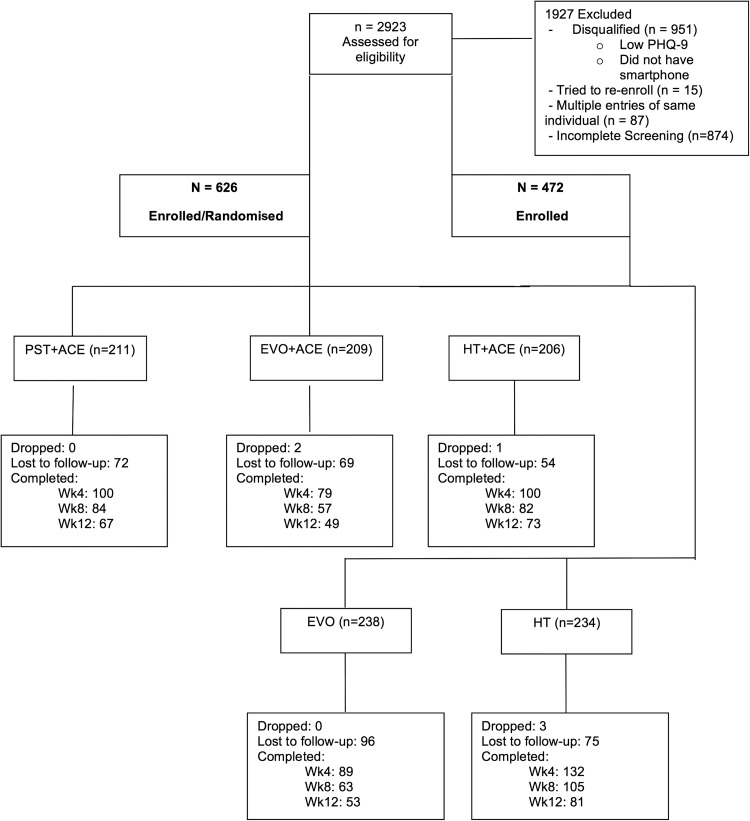
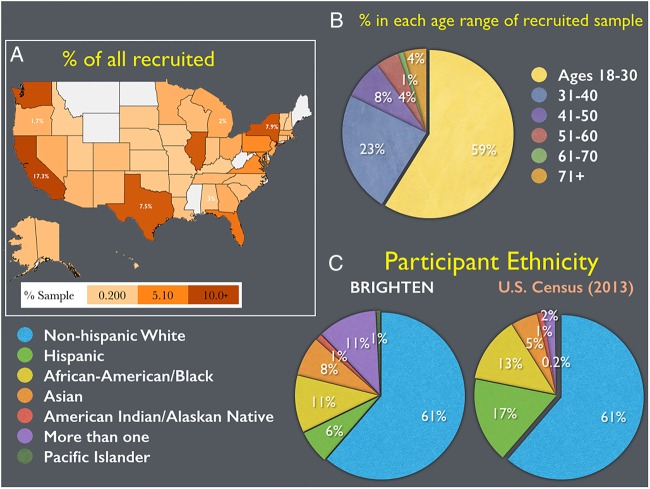
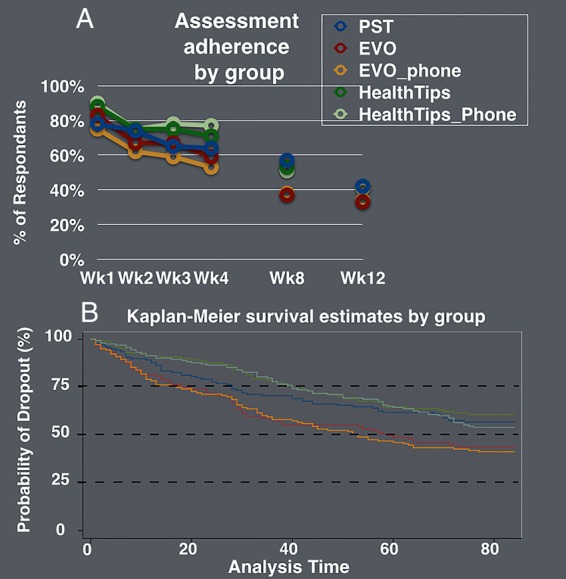
Importance: Advances in mobile technology have resulted in federal and industry-level initiatives to facilitate large-scale clinical research using smart devices. Although the benefits of technology to expand data collection are obvious, assumptions about the reach of mobile research methods (access), participant willingness to engage in mobile research protocols (engagement), and the cost of this research (cost) remain untested. Objective: To assess the feasibility of a fully mobile randomised controlled trial using assessments and treatments delivered entirely through mobile devices to depressed individuals. Design: Using a web-based research portal, adult participants with depression who also owned a smart device were screened, consented and randomised to 1 of 3 mental health apps for treatment. Assessments of self-reported mood and cognitive function were conducted at baseline, 4, 8 and 12 weeks. Physical and social activity was monitored daily using passively collected phone use data. All treatment and assessment tools were housed on each participant's smart phone or tablet. Interventions: A cognitive training application, an application based on problem-solving therapy, and a mobile-sensing application promoting daily activities. Results: Access: We screened 2923 people and enrolled 1098 participants in 5 months. The sample characteristics were comparable to the 2013 US census data. Recruitment via Craigslist.org yielded the largest sample. Engagement: Study engagement was high during the first 2 weeks of treatment, falling to 44% adherence by the 4th week. Cost: The total amount spent on for this project, including staff costs and β testing, was $314 264 over 2 years. Conclusions and relevance: These findings suggest that mobile randomised control trials can recruit large numbers of participants in a short period of time and with minimal cost, but study engagement remains challenging. Trial registration number: NCT00540865.
Overview
The claims and statistics of this paper haven’t been checked yet.
Run the check — free, no account needed. It reads the open-access text and checks the sources it cites.
Integrity signals
Registry
Cites
Statistics
Figures
Verification
Claims the paper makes
The claims and statistics of this paper haven’t been checked yet.
Run the check — free, no account needed. It reads the open-access text and checks the sources it cites.
Claims other papers make about this one
Each is checked against this paper’s own text: does it say what the citing paper says it does?
In the citing paper
“In depression, mobile apps have tracked changes in patient-reported mood [27-29] and have been used as part of randomized controlled trials to evaluate treatment efficacy [30].”
From Wearable technology for high-frequency cognitive and mood assessment in major depressive disorder: longitudinal observational study (2019) · cites this paper as [30]
Self-check
Percentages, sums and reported differences re-computed from the paper’s own numbers.
The self-check needs the paper’s full text.
Citations
Cites
The PHQ-9: Validity of a brief depression severity measure
Kroenke, K., Spitzer, R. L., & Williams, J. B. W. (2001) · Journal of General Internal Medicine · doi:10.1046/j.1525-1497.2001.016009606.x · Cited by 44,910
The Patient Health Questionnaire-2: Validity of a Two-Item Depression Screener
Kroenke, K., Spitzer, R. L., & Williams, J. B. W. (2003) · Medical Care · doi:10.1097/01.mlr.0000093487.78664.3c · Cited by 6,359
Ferrari, A. J., Charlson, F. J., Norman, R. E., Patten, S. B., Freedman, G., Murray, C. J. L., Vos, T., & Whiteford, H. A. (2013) · PLoS Medicine · doi:10.1371/journal.pmed.1001547 · Cited by 3,115 · cited 1×
“15 It is the leading cause of disability world-wide, 16 17 and the enrolment of depressed individuals into clinical trials is difficult.”
Sheehan, D. V., Harnett-Sheehan, K., & Raj, B. A. (1996) · International Clinical Psychopharmacology · doi:10.1097/00004850-199606003-00015 · Cited by 1,440
Assessing Psychiatric Impairment in Primary Care with the Sheehan Disability Scale
Leon, A. C., Olfson, M., Portera, L., Farber, L., & Sheehan, D. V. (1997) · The International Journal of Psychiatry in Medicine · doi:10.2190/t8em-c8yh-373n-1uwd · Cited by 987 · cited 1×
“27 28 We also asked participants to rate their health on a scale of excellent to poor.”
BackgroundmHealth: A Mechanism to Deliver More Accessible, More Effective Mental Health Care
Price, M., Yuen, E. K., Goetter, E. M., Herbert, J. D., Forman, E. M., Acierno, R., & Ruggiero, K. J. (2014) · Clinical Psychology & Psychotherapy · doi:10.1002/cpp.1855 · Cited by 488
Measuring the global burden of disease and epidemiological transitions: 2002–2030
López, A. D., & Mathers, C. D. (2006) · Annals of Tropical Medicine and Parasitology · doi:10.1179/136485906x97417 · Cited by 462 · cited 1×
“15 It is the leading cause of disability world-wide, 16 17 and the enrolment of depressed individuals into clinical trials is difficult.”
Increasing recruitment to randomised trials: a review of randomised controlled trials
Watson, J. M., & Torgerson, D. J. (2006) · BMC Medical Research Methodology · doi:10.1186/1471-2288-6-34 · Cited by 333
Strategies for Increasing Recruitment to Randomised Controlled Trials: Systematic Review
Caldwell, P. H. Y., Hamilton, S., Tan, A., & Craig, J. C. (2010) · PLoS Medicine · doi:10.1371/journal.pmed.1000368 · Cited by 307 · cited 1×
“12 13 However, retention issues are particularly problematic for internet studies, with one recent internet-based trial reporting a drop-out rate of over 90% in a sample of 3000 individuals.”
BackgroundImproving Primary Care for Depression in Late Life: The Design of a Multicenter Randomized Trial
Unützer, J., Katon, W. J., Williams, J. W., Callahan, C. M., Harpole, L. H., Hunkeler, E. M., Hoffing, M., Areán, P. A., Hegel, M. T., Schoenbaum, M., et al. (2001) · Medical Care · doi:10.1097/00005650-200108000-00005 · Cited by 288 · cited 1×
“…information on mental health status using the PHQ-9 24 for depression, the generalized anxiety disorder (GAD)-7, 22 for generalised anxiety, a four-item mania and psychosis-screening instrument 25 and the four-item National Institute on Alcohol Abuse and Alcoholism (NIAAA) Alcohol Screening Test.”
MethodSelf-citation
Cited by
Sorted by citations
Firth, J., Torous, J., Nicholas, J., Carney, R., Pratap, A., Rosenbaum, S., & Sarris, J. (2017) · World Psychiatry · doi:10.1002/wps.20472 · Cited by 1,097
The Use and Effectiveness of Mobile Apps for Depression: Results From a Fully Remote Clinical Trial
Arean, P. A., Hallgren, K. A., Jordan, J. T., Gazzaley, A., Atkins, D. C., Heagerty, P. J., & Anguera, J. A. (2016) · Journal of Medical Internet Research · doi:10.2196/jmir.6482 · Cited by 376
“We have already published the data on the methodological issues in the recruitment and retention of participants into a large-scale, remote RCT [10].”
Self-citationPratap, A., Neto, E. C., Snyder, P., Stepnowsky, C., Elhadad, N., Grant, D., Mohebbi, M. H., Mooney, S., Suver, C., Wilbanks, J., et al. (2020) · npj Digital Medicine · doi:10.1038/s41746-020-0224-8 · Cited by 410
“These studies are able to recruit at-scale because participants can be identified and consented(28) to participate in the study without ever having stepped foot in a research lab, with significantly lower costs than conventional clinical trials.(23,24) Mobile technologies also allow investigators an opportunity to col…”
Self-citationThe WPA-Lancet psychiatry commission on the future of psychiatry
Bhugra, D., Tasman, A., Pathare, S., Priebe, S., Smith, S., Torous, J., Arbuckle, M. R., Langford, A., Alarcón, R. D., Chiu, H. F. K., et al. (2017) · The Lancet Psychiatry · doi:10.1016/s2215-0366(17)30333-4 · Cited by 392
Torous, J. B., Onnela, J., & Keshavan, M. S. (2017) · Translational Psychiatry · doi:10.1038/tp.2017.25 · Cited by 349
“22 It is possible to imagine how the ubiquity of smartphones will enable studies to capture rare digital phenotypes from the general population, as well as ones we today do not yet recognize; digital phenotyping may also identify which subjects to conduct more extensive genetic, molecular, cellular…”
Background
Metadata
- Authors
- Anguera, J. A., Jordan, J. T., Castaneda, D., Gazzaley, A., & Areán, P. A.
- Affiliations
- University of California, San Francisco (US)
- University of Washington (US)
- Corresponding author
- Areán, Patricia A
- Venue
- BMJ Innovations
- Publisher
- BMJ
- Published
- 2016-01
- Volume
- 2
- Issue
- 1
- Pages
- 14-21
- ISSN
- 2055-642X (ISSN-L)
- 2055-8074
- PMC
- PMC4789688
- OpenAlex
- W2261303017
- Cited by
- 172
- References
- 34
- Citations by year
- 2026: 7 · 2025: 10 · 2024: 19 · 2023: 13 · 2022: 19 · 2021: 22 · 2020: 21 · 2019: 22 · 2018: 17 · 2017: 16 · 2016: 6
- FWCI
- 31.18
- Type
- journal article
- Language
- en
- Open access
- hybrid
- doi.org
- Licence
- cc-by-nc
- Locations
- BMJ Innovations (publishedVersion, cc-by-nc)
- PubMed Central (publishedVersion, cc-by-nc)
- PubMed (publishedVersion)
- eScholarship (California Digital Library) (submittedVersion)
- eScholarship (California Digital Library) (submittedVersion, cc-by-nc)
- Funders
- University of California, San Francisco
- National Institute of Mental Health (MH100466, R34MH100466, K24MH074717, T32MH018261)
- Topics
- Social Sciences › Psychology › Applied Psychology › Digital Mental Health Interventions
- Health Sciences › Health Professions › General Health Professions › Mobile Health and mHealth Applications
- Social Sciences › Psychology › Experimental and Cognitive Psychology › Mental Health Research Topics
- Keywords
- depression, mobile health apps, participant recruitment, participant engagement, trial costs, cognitive training, problem-solving therapy, mobile sensing, self-reported mood, cognitive function
About these checks
Registry, retraction, Cites and statistics results are computed, not judged, with one exception: a printed reference that no index lists is read once by a model before it counts as a citation error. Claims are extracted by a model and kept only when their quote appears verbatim in the text; each cited source is then checked, with a model’s help, for whether it says what the claim relies on. Those verdicts can be wrong — read the claim’s quote and the cited source before relying on one.
Statistics and arithmetic are recomputed, not judged.
Confidence bands are shown only for fields calibrated on our annotated test set. None is calibrated yet, so no band is shown.
What counts as a claim ›How we measure confidence ›How we check this ›
Are you an author, or do you see a problem with this page? Request a review
