

Comparative efficacy and acceptability of first-generation and second-generation antidepressants in the acute treatment of major depression: protocol for a network meta-analysis
Open accessThe DOI matches its Crossref record; 56 of the 57 references it cites were found in a registry or an index.
Abstract
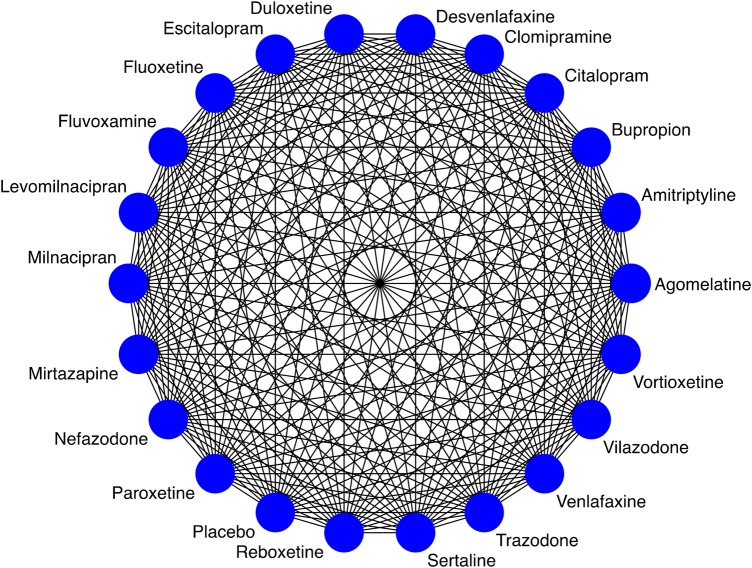
Introduction: Many antidepressants are indicated for the treatment of major depression. Two network meta-analyses have provided the most comprehensive assessments to date, accounting for both direct and indirect comparisons; however, these reported conflicting interpretation of results. Here, we present a protocol for a systematic review and network meta-analysis aimed at updating the evidence base and comparing all second-generation as well as selected first-generation antidepressants in terms of efficacy and acceptability in the acute treatment of major depression. Methods and analysis: We will include all randomised controlled trials reported as double-blind and comparing one active drug with another or with placebo in the acute phase treatment of major depression in adults. We are interested in comparing the following active agents: agomelatine, amitriptyline, bupropion, citalopram, clomipramine, desvenlafaxine, duloxetine, escitalopram, fluoxetine, fluvoxamine, levomilnacipran, milnacipran, mirtazapine, nefazodone, paroxetine, reboxetine, sertraline, trazodone, venlafaxine, vilazodone and vortioxetine. The main outcomes will be the proportion of patients who responded to or dropped out of the allocated treatment. Published and unpublished studies will be sought through relevant database searches, trial registries and websites; all reference selection and data extraction will be conducted by at least two independent reviewers. We will conduct a random effects network meta-analysis to synthesise all evidence for each outcome and obtain a comprehensive ranking of all treatments. To rank the various treatments for each outcome, we will use the surface under the cumulative ranking curve and the mean ranks. We will employ local as well as global methods to evaluate consistency. We will fit our model in a Bayesian framework using OpenBUGS, and produce results and various checks in Stata and R. We will also assess the quality of evidence contributing to network estimates of the main outcomes with the GRADE framework. Ethics and dissemination: This review does not require ethical approval. PROSPERO registration number: CRD42012002291.
Overview
The claims and statistics of this paper haven’t been checked yet.
Free: it reads the open-access text and checks the first 5 claims that cite a source we can check. Create a free account to check every claim.
Integrity signals
Registry
Cites
Statistics
Figures
Verification
Claims the paper makes
The claims and statistics of this paper haven’t been checked yet.
Free: it reads the open-access text and checks the first 5 claims that cite a source we can check. Create a free account to check every claim.
Claims other papers make about this one
Each is checked against this paper’s own text: does it say what the citing paper says it does?
The source backs part of the claim, not all of it — or backs it for a different population, condition or comparison.
In the citing paper
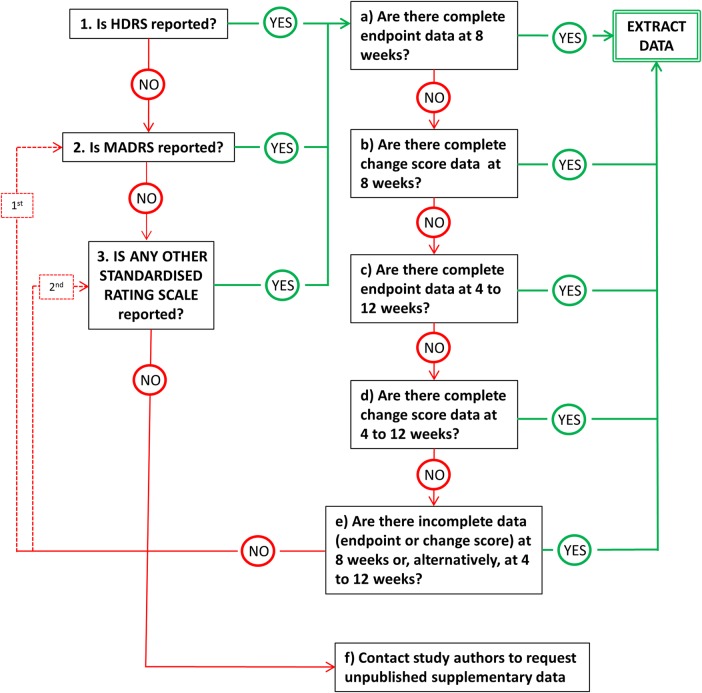
“When depressive symptoms had been measured with more than one standardised rating scale, we used a predefined hierarchy, based on psychometric properties and consistency of use across included trials.8”
From Comparative efficacy and acceptability of 21 antidepressant drugs for the acute treatment of adults with major depressive disorder: a systematic review and network meta-analysis (2018) · cites this paper as [8]
Experimental — accuracy not yet measuredThe cited source says what the claim attributes to it.
In the citing paper
“The full protocol of this network meta-analysis has been published.8”
From Comparative efficacy and acceptability of 21 antidepressant drugs for the acute treatment of adults with major depressive disorder: a systematic review and network meta-analysis (2018) · cites this paper as [8]
Experimental — accuracy not yet measuredThe cited source says what the claim attributes to it.
In the citing paper
“We extracted data following a predefined hierarchy described in our protocol and gave priority to unpublished information in case of disagreement.8”
The check wasn’t confident either way, so it gives no verdict — never disputed.
In the citing paper
“The overall risk of bias, according to Furukawa et al.(Furukawa et al., 2016), was high in 17.4 % of the studies, unclear 41.4 %, and low in 40.9 % of the studies.”
From Efficacy, acceptability and side-effects of oral versus long-acting- injectables antipsychotics: Systematic review and network meta-analysis (2024) · cites this paper as Furukawa et al., 2016
Experimental — accuracy not yet measured
Self-check
Percentages, sums and reported differences re-computed from the paper’s own numbers.
The self-check needs the paper’s full text.
Citations
Cites
Kessler, R. C., Berglund, P., Demler, O., Jin, R., Koretz, D., Merikangas, K. R., Rush, A. J., Walters, E. E., & Wang, P. S. (2003) · JAMA · doi:10.1001/jama.289.23.3095 · Cited by 7,988 · cited 1×
“population, affecting more than 16% of adults during their lifetime.(1) In 2000, the economic burden of depressive disorders in the USA was estimated to be around 80 billion dollars, with more than 30% of these costs being attributable to direct medical expenses.”
Background(2008) · Cited by 3,790
Salanti, G., Ades, A. E., & Ioannidis, J. P. A. (2011) · Journal of Clinical Epidemiology · doi:10.1016/j.jclinepi.2010.03.016 · Cited by 3,766 · cited 1×
“we will use the surface under the cumulative ranking curve (SUCRA) and the mean ranks.(42)”
MethodSelf-citationLeucht, S., Cipriani, A., Spineli, L., Mavridis, D., Örey, D., Richter, F., Samara, M., Barbui, C., Engel, R. R., Geddes, J. R., et al. (2013) · The Lancet · doi:10.1016/s0140-6736(13)60733-3 · Cited by 2,561
Self-citationChecking consistency in mixed treatment comparison meta-analysis
Dias, S., Welton, N. J., Caldwell, D. M., & Ades, A. E. (2010) · Statistics in Medicine · doi:10.1002/sim.3767 · Cited by 2,521 · cited 1×
“We will employ the loop-specific approach to evaluate inconsistency within each loop of evidence,(44) and a method that separates direct evidence from indirect evidence provided by the entire network.(45) We will also evaluate consistency in the entire network by calculating the I(2) for network heterogeneity, inconsi…”
MethodGraphical tools for network meta-analysis in STATA
Chaimani, A., Higgins, J. P. T., Mavridis, D., Spyridonos, P., & Salanti, G. (2013) · PLoS ONE · doi:10.1371/journal.pone.0076654 · Cited by 2,473 · cited 1×
“contribution of each direct meta-analysis to the entire body of evidence.(29) 30”
BackgroundSelf-citationSelective publication of antidepressant trials and its influence on apparent efficacy
Turner, E. H., Matthews, A. M., Linardatos, E., Tell, R. A., & Rosenthal, R. (2008) · New England Journal of Medicine · doi:10.1056/nejmsa065779 · Cited by 2,435 · cited 3×
“When published and unpublished studies provide different values, we will prioritise the unpublished data.(15)”
BackgroundMethodInfluentialSelf-citationConsistency and inconsistency in network meta-analysis: concepts and models for multi-arm studies
Higgins, J. P. T., Jackson, D., Barrett, J. K., Lu, G., Ades, A. E., & White, I. R. (2012) · Research Synthesis Methods · doi:10.1002/jrsm.1044 · Cited by 2,098 · cited 1×
“We will also evaluate consistency in the entire network by calculating the I(2) for network heterogeneity, inconsistency, and for both.(46) 47 Tests for inconsistency are known to have low power,(48) and empirical evidence has suggested that 10% of evidence loops published in the medical literature are expected to be…”
MethodPeters, J. L., Sutton, A. J., Jones, D. R., Abrams, K. R., & Rushton, L. (2008) · Journal of Clinical Epidemiology · doi:10.1016/j.jclinepi.2007.11.010 · Cited by 2,053 · cited 1×
“15 We will use the comparison-adjusted 30 and contour-enhanced 52 funnel plots to investigate whether results in imprecise trials differ from those in more precise trials.”
MethodBucher, H. C., Guyatt, G. H., Griffith, L. E., & Walter, S. D. (1997) · Journal of Clinical Epidemiology · doi:10.1016/s0895-4356(97)00049-8 · Cited by 2,052 · cited 1×
“We will employ the loop-speci fi c approach to evaluate inconsistency within each loop of evidence, 44 and a method that separates direct evidence from indirect evidence provided by the entire network.”
Method
Cited by
Cipriani, A., Furukawa, T. A., Salanti, G., Chaimani, A., Atkinson, L. Z., Ogawa, Y., Leucht, S., Ruhe, H. G., Turner, E. H., Higgins, J. P. T., et al. (2018) · The Lancet · doi:10.1016/s0140-6736(17)32802-7 · Cited by 3,541
Self-citationNature-based outdoor activities for mental and physical health: Systematic review and meta-analysis
Coventry, P. A., Brown, J. E., Pervin, J., Brabyn, S., Pateman, R., Breedvelt, J., Gilbody, S., Stancliffe, R., McEachan, R., & White, P. L. (2021) · SSM - Population Health · doi:10.1016/j.ssmph.2021.100934 · Cited by 453
Coventry, P. A., Meader, N., Melton, H., Temple, M., Dale, H., Wright, K., Cloitre, M., Karatzias, T., Bisson, J., Roberts, N. P., et al. (2020) · PLoS Medicine · doi:10.1371/journal.pmed.1003262 · Cited by 358
“All other cases were assumed to be at high risk of bias [19].”
Cipriani, A., Furukawa, T. A., Salanti, G., Chaimani, A., Atkinson, L. Z., Ogawa, Y., Leucht, S., Ruhe, H. G., Turner, E. H., Higgins, J. P. T., et al. (2018) · Focus · doi:10.1176/appi.focus.16407 · Cited by 328
Self-citationFurukawa, T. A., Cipriani, A., Cowen, P. J., Leucht, S., Egger, M., & Salanti, G. (2019) · The Lancet Psychiatry · doi:10.1016/s2215-0366(19)30217-2 · Cited by 322
Self-citationLack of evidence to favor specific preventive interventions in psychosis: a network meta‐analysis
Davies, C., Cipriani, A., Ioannidis, J. P. A., Radua, J., Stahl, D., Provenzani, U., McGuire, P., & Fusar‐Poli, P. (2018) · World Psychiatry · doi:10.1002/wps.20526 · Cited by 229
Self-citationFurukawa, T. A., Cipriani, A., Atkinson, L. Z., Leucht, S., Ogawa, Y., Takeshima, N., Hayasaka, Y., Chaimani, A., & Salanti, G. (2016) · The Lancet Psychiatry · doi:10.1016/s2215-0366(16)30307-8 · Cited by 219
Self-citationArteaga-Henríquez, G., Simon, M. S., Burger, B., Weidinger, E., Wijkhuijs, A., Arolt, V., Birkenhager, T. K., Musil, R., Müller, N., & Drexhage, H. A. (2019) · Frontiers in Psychiatry · doi:10.3389/fpsyt.2019.00458 · Cited by 215
Bighelli, I., Salanti, G., Huhn, M., Schneider‐Thoma, J., Krause, M., Reitmeir, C., Wallis, S., Schwermann, F., Pitschel‐Walz, G., Barbui, C., et al. (2018) · World Psychiatry · doi:10.1002/wps.20577 · Cited by 199
“A global score for Risk of Bias score was calculated according to the criteria proposed by Furukawa and colleagues (3): studies were”
MethodSelf-citationKishi, T., Ikuta, T., Matsuda, Y., Sakuma, K., Okuya, M., Nomura, I., Hatano, M., & Iwata, N. (2022) · Molecular Psychiatry · doi:10.1038/s41380-021-01334-4 · Cited by 161
Chaimani, A., Caldwell, D. M., Li, T., Higgins, J. P. T., & Salanti, G. (2017) · Journal of Clinical Epidemiology · doi:10.1016/j.jclinepi.2016.11.015 · Cited by 158
“For example, in the depression protocol both direct meta-analyses and NMA are described (20): “For each pair-wise comparison, we will synthesise data to obtain summary standardised mean differences (SMD, Cohen’ s d) for continuous outcomes or ORs for dichotomous outcomes, both with 95% Credible Intervals (CrI).”
BackgroundMethodInfluentialSelf-citationMunkholm, K., Paludan-Müller, A. S., & Boesen, K. (2019) · BMJ Open · doi:10.1136/bmjopen-2018-024886 · Cited by 151
“trial duration and long-term effects Cipriani et al(5) extracted outcome data as close to 8 weeks follow-up as possible within an interval of 4–12 weeks,(5) but they did not provide a rationale for this decision.(22) The common clinical practice is to prescribe antidepressants for much longer periods.”
BackgroundFakhri, Y., Bjørklund, G., Mohseni-Bandpei, A., Chirumbolo, S., Keramati, H., Pouya, R. H., Asadi, A., Amanidaz, N., Sarafraz, M., Sheikhmohammadi, A., et al. (2018) · Food and Chemical Toxicology · doi:10.1016/j.fct.2018.01.018 · Cited by 159
Antidepressants for pain management in adults with chronic pain: a network meta-analysis
Birkinshaw, H., Friedrich, C., Cole, P., Eccleston, C., Serfaty, M. A., Stewart, G. B., White, S. P., Moore, A., Phillippo, D., & Pincus, T. (2023) · Cochrane Database of Systematic Reviews · doi:10.1002/14651858.cd014682.pub2 · Cited by 223
Jansen, J. E., Gleeson, J., Bendall, S., Rice, S., & Alvarez-Jimenez, M. (2020) · Schizophrenia Research · doi:10.1016/j.schres.2019.11.016 · Cited by 144
Bahji, A., Ermacora, D., Stephenson, C., Hawken, E. R., & Vazquez, G. (2020) · Journal of Affective Disorders · doi:10.1016/j.jad.2020.03.030 · Cited by 139
Rahmani, J., Fakhri, Y., Shahsavani, A., Bahmani, Z., Urbina, M. A., Chirumbolo, S., Keramati, H., Moradi, B., Bay, A., & Bjørklund, G. (2018) · Food and Chemical Toxicology · doi:10.1016/j.fct.2018.06.023 · Cited by 145
“0 (Stata Corp, College Station, TX, USA) (Caldwell et al., 2005; Cipriani et al., 2013; Furukawa et al., 2016; Salanti et al., 2009).”
InfluentialSiafis, S., Çıray, O., Wu, H., Schneider-Thoma, J., Bighelli, I., Krause, M., Rodolico, A., Ceraso, A., Deste, G., Huhn, M., et al. (2022) · Molecular Autism · doi:10.1186/s13229-022-00488-4 · Cited by 126
“Studies were rated as having a low, moderate or high overall risk of bias [33].”
BackgroundSelf-citationROB-MEN: a tool to assess risk of bias due to missing evidence in network meta-analysis
Chiocchia, V., Nikolakopoulou, A., Higgins, J. P. T., Page, M. J., Papakonstantinou, T., Cipriani, A., Furukawa, T. A., Siontis, G. C. M., Egger, M., & Salanti, G. (2021) · BMC Medicine · doi:10.1186/s12916-021-02166-3 · Cited by 129
Self-citationZhu, Y., Krause, M., Huhn, M., Rothe, P., Schneider‐Thoma, J., Chaimani, A., Li, C., Davis, J. M., & Leucht, S. (2017) · The Lancet Psychiatry · doi:10.1016/s2215-0366(17)30270-5 · Cited by 143
Self-citationAksan, A., Işık, H., Radeke, H. H., Dignass, A., & Stein, J. (2017) · Alimentary Pharmacology & Therapeutics · doi:10.1111/apt.14043 · Cited by 124
Rahmani, J., Alipour, S., Miri, A., Fakhri, Y., Riahi, S.-M., Keramati, H., Moradi, M., Amanidaz, N., Pouya, R. H., Bahmani, Z., et al. (2018) · Food and Chemical Toxicology · doi:10.1016/j.fct.2018.06.016 · Cited by 118
Translating the HAM-D into the MADRS and vice versa with equipercentile linking
Leucht, S., Fennema, H., Engel, R. R., Kaspers–Janssen, M., & Szegedi, A. (2017) · Journal of Affective Disorders · doi:10.1016/j.jad.2017.09.042 · Cited by 117
Self-citationFakhri, Y., Rahmani, J., de Oliveira, C. A. F., Franco, L. T., Corassin, C. H., Saba, S., Rafique, J., & Khaneghah, A. M. (2019) · Trends in Food Science & Technology · doi:10.1016/j.tifs.2019.03.013 · Cited by 125
Cashin, A. G., Folly, T., Bagg, M. K., Wewege, M. A., Jones, M. D., Ferraro, M. C., Leake, H. B., Rizzo, R. R. N., Schabrun, S. M., Gustin, S. M., et al. (2021) · BMJ · doi:10.1136/bmj.n1446 · Cited by 146
“35 Two reviewers independently determined certainty of the evidence for each analysis using the GRADE system.”
MethodDavies, C., Radua, J., Cipriani, A., Stahl, D., Provenzani, U., McGuire, P., & Fusar-Poli, P. (2018) · Frontiers in Psychiatry · doi:10.3389/fpsyt.2018.00187 · Cited by 107
Self-citationKeramati, H., Ghorbani, R., Fakhri, Y., Khaneghah, A. M., Conti, G. O., Ferrante, M., Ghaderpoori, M., Taghavi, M., Baninameh, Z., Bay, A., et al. (2018) · Food and Chemical Toxicology · doi:10.1016/j.fct.2018.03.042 · Cited by 100
Strawn, J. R., Mills, J. A., Sauley, B. A., & Welge, J. A. (2018) · Journal of the American Academy of Child & Adolescent Psychiatry · doi:10.1016/j.jaac.2018.01.015 · Cited by 98
Gosmann, N. P., Costa, M. D. A., Jaeger, M. D. B., Motta, L. S., Frozi, J., Spanemberg, L., Manfro, G. G., Cuijpers, P., Pine, D. S., & Salum, G. A. (2021) · PLOS Medicine · doi:10.1371/journal.pmed.1003664 · Cited by 85
“001) and for all individual medications (Table 1), indicating moderate effect size on internalizing symptoms [26].”
BackgroundMethodChang, E., Josan, A. S., Purohit, R., Patel, C. K., & Xue, K. (2022) · Ophthalmology · doi:10.1016/j.ophtha.2022.06.042 · Cited by 91
Fornaro, M., Carvalho, A. F., Fusco, A., Anastasia, A., Solmi, M., Berk, M., Sim, K., Vieta, E., & de Bartolomeis, A. (2020) · Journal of Affective Disorders · doi:10.1016/j.jad.2020.07.109 · Cited by 86
Siafis, S., Çıray, R. O., Schneider‐Thoma, J., Bighelli, I., Krause, M., Rodolico, A., Ceraso, A., Deste, G., Huhn, M., Fraguas, D., et al. (2020) · Molecular Autism · doi:10.1186/s13229-020-00372-z · Cited by 81
Self-citationProtti, M., Mandrioli, R., Marasca, C., Cavalli, A., Serretti, A., & Mercolini, L. (2020) · Medicinal Research Reviews · doi:10.1002/med.21671 · Cited by 78
Suchting, R., Tirumalaraju, V., Gareeb, R., Bockmann, T., de Dios, C., Aickareth, J., Pinjari, O., Soares, J. C., Cowen, P. J., & Selvaraj, S. (2021) · Journal of Affective Disorders · doi:10.1016/j.jad.2021.01.021 · Cited by 73
Li, N.-X., Hu, Y.-R., Chen, W.-N., & Zhang, B. (2022) · Journal of Affective Disorders · doi:10.1016/j.jad.2021.09.041 · Cited by 72
Michopoulos, I., Furukawa, T. A., Noma, H., Kishimoto, S., Onishi, A., Ostinelli, E. G., Ciharova, M., Miguel, C., Karyotaki, E., & Cuijpers, P. (2021) · Journal of Clinical Epidemiology · doi:10.1016/j.jclinepi.2020.12.012 · Cited by 69
Self-citationGutsmiedl, K., Krause, M., Bighelli, I., Schneider‐Thoma, J., & Leucht, S. (2020) · BMC Psychiatry · doi:10.1186/s12888-020-02514-2 · Cited by 88
Self-citationRETRACTED: Individual Differences in Response to Antidepressants
Maslej, M. M., Furukawa, T. A., Cipriani, A., Andrews, P. W., & Mulsant, B. H. (2020) · JAMA Psychiatry · doi:10.1001/jamapsychiatry.2019.4815 · Cited by 68
Self-citationRetractedKongpakwattana, K., Sawangjit, R., Tawankanjanachot, I., Bell, J. S., Hilmer, S. N., & Chaiyakunapruk, N. (2018) · British Journal of Clinical Pharmacology · doi:10.1111/bcp.13604 · Cited by 69
Mills, K. A., Greene, M. C., Dezube, R., Goodson, C., Karmarkar, T., & Pontone, G. M. (2018) · International Journal of Geriatric Psychiatry · doi:10.1002/gps.4834 · Cited by 63
“3 | Analytic methods We analyzed classes of pharmacologic treatments separately because various mechanisms of action provide different degrees of efficacy in the non‐PD literature.(16) Within antidepressant class, clinical, methodological, and statistical heterogeneity was investigated by qualitative observation and l…”
MethodWewege, M. A., Bagg, M. K., Jones, M. D., Ferraro, M. C., Cashin, A. G., Rizzo, R. R. N., Leake, H. B., Hagstrom, A. D., Sharma, S., McLachlan, A. J., et al. (2023) · BMJ · doi:10.1136/bmj-2022-072962 · Cited by 84
Interplay between the key proteins of serotonin system in SSRI antidepressants efficacy
Kulikov, A. V., Gainetdinov, R. R., Ponimaskin, E. G., Kalueff, A. V., Naumenko, V. S., & Popova, N. K. (2018) · Expert Opinion on Therapeutic Targets · doi:10.1080/14728222.2018.1452912 · Cited by 71
Gulea, C., Zakeri, R., Alderman, V., Morgan, A., Ross, J., & Quint, J. K. (2021) · Respiratory Research · doi:10.1186/s12931-021-01661-8 · Cited by 70
Zheng, Y., Xu, T., Zhu, Y., Li, C., Wang, J., Livingstone, S., & Zhang, T. (2021) · Schizophrenia Bulletin · doi:10.1093/schbul/sbab044 · Cited by 67
“38”
Maslej, M. M., Furukawa, T. A., Cipriani, A., Andrews, P. W., Sanches, M., Tomlinson, A., Volkmann, C., McCutcheon, R. A., Howes, O. D., Guo, X., et al. (2021) · JAMA Psychiatry · doi:10.1001/jamapsychiatry.2020.4564 · Cited by 60
Self-citationTomlinson, A., Furukawa, T. A., Efthimiou, O., Salanti, G., De Crescenzo, F., Singh, I., & Cipriani, A. (2020) · Evidence Based Mental Health · doi:10.1136/ebmental-2019-300118 · Cited by 54
Self-citationDu, Y., Dou, Y., Wang, M., Wang, Y., Yan, Y., Fan, H., Fan, N., Yang, X., & Ma, X. (2024) · Frontiers in Psychiatry · doi:10.3389/fpsyt.2024.1407529 · Cited by 66
Chen, C., & Shan, W. (2019) · Psychiatry Research · doi:10.1016/j.psychres.2019.112595 · Cited by 49
Assessing Confidence in the Results of Network Meta-Analysis (Cinema)
Nikolakopoulou, A., Higgins, J. P., Papakonstantinou, T., Chaimani, A., Del Giovane, C., Egger, M., & Salanti, G. (2019) · bioRxiv (Cold Spring Harbor Laboratory) · doi:10.1101/597047 · Cited by 49
“According to the inclusion 565 criteria specified in the protocol only studies at low or moderate risk of bias were included 566 (58).”
MethodSelf-citationHu, X., Dong, Y., Jin, X., Zhang, C., Zhang, T., Zhao, J., Shi, J., & Li, J. (2017) · Brain Behavior and Immunity · doi:10.1016/j.bbi.2017.03.005 · Cited by 50
Duan, L., Zhang, S., Yan, Q., & Hu, X. (2025) · Psycho-Oncology · doi:10.1002/pon.70078 · Cited by 48
“Otherwise, the study had an overall high risk of bias [42].”
Salanti, G., Chaimani, A., Furukawa, T. A., Higgins, J. P. T., Ogawa, Y., Cipriani, A., & Egger, M. (2018) · International Journal of Epidemiology · doi:10.1093/ije/dyy076 · Cited by 46
“Full details about inclusion and exclusion criteria are reported in the published protocol, with full details about the rationale for selecting the investigational drugs.(18)”
BackgroundMethodResultSelf-citationCervin, M., Mcguire, J. F., D’Souza, J. M., Nadai, A. S. D., Aspvall, K., Goodman, W. K., Andrén, P., Schneider, S. C., GELLER, D. A., Mataix‐Cols, D., et al. (2024) · Journal of Child Psychology and Psychiatry · doi:10.1111/jcpp.13934 · Cited by 55
Wang, D., Schneider-Thoma, J., Siafis, S., Qin, M., Wu, H., Zhu, Y., Davis, J. M., Priller, J., & Leucht, S. (2024) · European Neuropsychopharmacology · doi:10.1016/j.euroneuro.2024.03.003 · Cited by 44
“The overall risk of bias, according to Furukawa et al.(Furukawa et al., 2016), was high in 17.4 % of the studies, unclear 41.4 %, and low in 40.9 % of the studies.”
BackgroundMethodInfluentialSelf-citationAntidepressants for pain management in adults with chronic pain: a network meta-analysis
Birkinshaw, H., Friedrich, C., Cole, P., Eccleston, C., Serfaty, M. A., Stewart, G. B., White, S. J., Moore, A., Phillippo, D., & Pincus, T. (2024) · Health Technology Assessment · doi:10.3310/mkrt2948 · Cited by 54
“To address this, we will only include studies with similar clinical populations (i.e. participants reporting pain lasting at least three months) (Furukawa 2016).”
BackgroundMethodRahmani, J., Miri, A., Mohseni-Bandpei, A., Fakhri, Y., Bjørklund, G., Keramati, H., Moradi, B., Amanidaz, N., Shariatifar, N., & Khaneghah, A. M. (2018) · Journal of Food Protection · doi:10.4315/0362-028x.jfp-18-301 · Cited by 47
Hang, X., Zhang, Y., Li, J., Li, Z., Zhang, Y., Ye, X., Tang, Q., & Sun, W. (2021) · Frontiers in Pharmacology · doi:10.3389/fphar.2021.691200 · Cited by 47
Yan, H., Shi, J., Li, X., Dai, Y., Wu, Y., Zhang, J., Gu, Z., Zhang, C., & Leng, J. (2022) · Fertility and Sterility · doi:10.1016/j.fertnstert.2022.08.856 · Cited by 48
Bighelli, I., Wallis, S., Reitmeir, C., Schwermann, F., Salahuddin, N. H., & Leucht, S. (2022) · European Archives of Psychiatry and Clinical Neuroscience · doi:10.1007/s00406-022-01526-1 · Cited by 48
Self-citationCheng, Q., Huang, J., Xu, L., Li, Y., Li, H., Shen, Y., Zheng, Q., & Li, L. (2020) · International Journal of Neuropsychopharmacology · doi:10.1093/ijnp/pyz062 · Cited by 38
Feng, S., Wang, X., Wang, Y., Yuan, Y., Li, Z., Chen, N., Wang, Z., & Zhang, Y. (2021) · The American Journal of Chinese Medicine · doi:10.1142/s0192415x21500282 · Cited by 36
Jochim, J., Rifkin-Zybutz, R. P., Geddes, J. R., & Cipriani, A. (2019) · Cochrane Database of Systematic Reviews · doi:10.1002/14651858.cd004052.pub2 · Cited by 47
Self-citationFerraro, M. C., Bagg, M. K., Wewege, M. A., Cashin, A. G., Leake, H. B., Rizzo, R. R. N., Jones, M. D., Gustin, S. M., Day, R. O., Loo, C. K. A., et al. (2021) · Systematic Reviews · doi:10.1186/s13643-021-01599-4 · Cited by 39
Yang, S., Zhao, L., He, W., & Mi, Y. (2022) · Drugs · doi:10.1007/s40265-022-01779-z · Cited by 33
Tsujii, N., Usami, M., Naya, N., Tsuji, T., Mishima, H., Horie, J., Fujiwara, M., & Iida, J. (2021) · Neurology and Therapy · doi:10.1007/s40120-021-00249-0 · Cited by 45
“However, following 2 years of maintenance therapy, there were no significant changes in expected body weight and, although Table 2 continued Study design Citation Treatment comparison Patients randomized (n) Patients analyzed (n) Main findings for ADHD-RS-IV Risk of bias [27] Effect size vs.”
BackgroundMethodInfluentialWang, X., Feng, S., Wang, Y., Chen, B., Wang, Z., Chen, N., & Zhang, Y. (2022) · European Journal of Pharmacology · doi:10.1016/j.ejphar.2022.175070 · Cited by 34
Yan, Y., Xiao, Y., Wang, M., Chen, B., Yin, L., & Ma, X. (2022) · Psychological Medicine · doi:10.1017/s0033291722001246 · Cited by 40
Bahji, A., Ermacora, D., Stephenson, C., Hawken, E. R., & Vazquez, G. (2021) · The Canadian Journal of Psychiatry · doi:10.1177/0706743720970857 · Cited by 31
Paracetamol, NSAIDS and opioid analgesics for chronic low back pain: a network meta-analysis
Bagg, M. K., McLachlan, A. J., Maher, C. G., Kamper, S. J., Williams, C. M., Henschke, N., Wand, B. M., Moseley, G. L., Hübscher, M., O'Connell, N. E., et al. (2018) · Cochrane Database of Systematic Reviews · doi:10.1002/14651858.cd013045 · Cited by 34
“We will determine single outcome-level risk of bias ratings for each study, using an adaptation of the criteria in Furukawa 2016 for the GRADE evaluation.”
MethodFlavonoids against depression: a comprehensive review of literature
Alizadeh, A., Pourfallah-Taft, Y., Khoshnazar, M., Safdari, A., Komari, S. V., Zanganeh, M., Sami, N., Valizadeh, M., Faridzadeh, A., Alijanzadeh, D., et al. (2024) · Frontiers in Pharmacology · doi:10.3389/fphar.2024.1411168 · Cited by 41
Koechlin, H., Whalley, B., Welton, N. J., & Locher, C. (2019) · Systematic Reviews · doi:10.1186/s13643-019-1174-6 · Cited by 36
Furukawa, T. A., Cipriani, A., Leucht, S., Atkinson, L. Z., Ogawa, Y., Takeshima, N., Hayasaka, Y., Chaimani, A., & Salanti, G. (2018) · BMJ Mental Health · doi:10.1136/eb-2017-102827 · Cited by 35
Self-citationTomlinson, A., Efthimiou, O., Boaden, K., New, E., Mather, S., Salanti, G., Imai, H., Ogawa, Y., Tajika, A., Kishimoto, S., et al. (2019) · Evidence-Based Mental Health · doi:10.1136/ebmental-2019-300087 · Cited by 29
Self-citationGosmann, N. P., Costa, M. D. A., Jaeger, M. D. B., Frozi, J., Spanemberg, L., Manfro, G. G., Cortese, S., Cuijpers, P., Pine, D. S., & Salum, G. A. (2023) · Psychological Medicine · doi:10.1017/s0033291723001630 · Cited by 28
Kulikova, E. A., Хоцкин, Н. В., Illarionova, N. B., Sorokin, I. E., Bazhenova, E. Y., Kondaurova, E. M., Volcho, K. P., Khomenko, T. M., Salakhutdinov, N. F., Ponimaskin, E. G., et al. (2018) · Neuroscience · doi:10.1016/j.neuroscience.2018.10.031 · Cited by 29
Doyle, F., Freedland, K. E., Carney, R. M., de Jonge, P., Dickens, C. M., Pedersen, S. S., Sørensen, J. R., & Dempster, M. (2021) · Psychosomatic Medicine · doi:10.1097/psy.0000000000000944 · Cited by 31
Shinohara, K., Efthimiou, O., Ostinelli, E. G., Tomlinson, A., Geddes, J. R., Nierenberg, A. A., Ruhe, H. G., Furukawa, T. A., & Cipriani, A. (2019) · BMJ Open · doi:10.1136/bmjopen-2018-027574 · Cited by 27
Self-citationFang, S., Yang, X., & Zhang, W. (2024) · Frontiers in Psychiatry · doi:10.3389/fpsyt.2024.1359088 · Cited by 36
Li, C., Liu, L., Gao, Z., Zhang, J., Chen, H., Ma, S., Liu, A., Mo, M., Wu, C., Chen, D., et al. (2021) · Frontiers in Medicine · doi:10.3389/fmed.2021.693188 · Cited by 37
Gu, J., Shi, L., Jiang, X., Wen, J., Zheng, X., Hu, C., & Zhang, W. (2022) · Cancer Immunology Immunotherapy · doi:10.1007/s00262-022-03140-5 · Cited by 29
“05 indicated that there is no inconsistency [47, 48].”
BackgroundFurukawa, T. A., Salanti, G., Cowen, P. J., Leucht, S., & Cipriani, A. (2020) · Acta Psychiatrica Scandinavica · doi:10.1111/acps.13145 · Cited by 26
Self-citationAntidepressants for pain management in adults with chronic pain: a network meta-analysis
Birkinshaw, H., Friedrich, C., Cole, P., Eccleston, C., Serfaty, M. A., Stewart, G. B., White, S. J., Moore, A., & Pincus, T. (2021) · Cochrane Database of Systematic Reviews · doi:10.1002/14651858.cd014682 · Cited by 28
Evsiukova, V. S., Базовкина, Д. В., Bazhenova, E., Kulikova, E. A., & Kulikov, A. V. (2021) · International Journal of Molecular Sciences · doi:10.3390/ijms222312851 · Cited by 30
“Selective serotonin reuptake inhibitors (SSRIs) occupy the leading position on the global antidepressant drug market [4].”
BackgroundParis, G., Bighelli, I., Deste, G., Siafis, S., Schneider‐Thoma, J., Zhu, Y., Davis, J. M., Vita, A., & Leucht, S. (2021) · Schizophrenia Research · doi:10.1016/j.schres.2021.01.021 · Cited by 30
Self-citationWade, T. D., Treasure, J. L., Schmidt, U. H., Fairburn, C. G., Byrne, S. M., Zipfel, S., & Cipriani, A. (2017) · Journal of Eating Disorders · doi:10.1186/s40337-017-0153-3 · Cited by 24
Self-citationErre, G. L., Sebastiani, M., Fenu, M. A., Zinellu, A., Floris, A., Cavagna, L., Renzoni, E. A., Manfredi, A., Passiu, G., Woodman, R. J., et al. (2020) · Journal of Clinical Medicine · doi:10.3390/jcm9082560 · Cited by 25
Hadwin, J. A., Lee, E. J., Kumsta, R., Cortese, S., & Kovshoff, H. (2019) · Evidence-Based Mental Health · doi:10.1136/ebmental-2019-300098 · Cited by 24
Johnson, C. F. A., Maxwell, M., Williams, B., Dougall, N. J., & MacGillivray, S. A. (2022) · BMJ Medicine · doi:10.1136/bmjmed-2021-000017 · Cited by 35
Doyle, F., Freedland, K. E., Carney, R. M., de Jonge, P., Dickens, C. M., Pedersen, S. S., Sørensen, J. R., & Dempster, M. (2019) · Systematic Reviews · doi:10.1186/s13643-019-0985-9 · Cited by 20
“[13, 36]), selective outcome reporting (for the primary outcomes only) and other domains (e.”
BackgroundMethodInfluentialZhang, X., Sun, D., Qin, N., Liu, M., Zhang, J., & Li, X. (2020) · Oral Oncology · doi:10.1016/j.oraloncology.2020.104751 · Cited by 20
Raduà, J., Davies, C., & Fusar‐Poli, P. (2020) · Schizophrenia Research · doi:10.1016/j.schres.2020.05.010 · Cited by 20
Zhao, T., Tang, C., Huang, Y., Lu, Q., Guo, M., & Wang, H. (2023) · International Journal of Nursing Studies · doi:10.1016/j.ijnurstu.2023.104452 · Cited by 19
Motta, L. S., Gosmann, N. P., Costa, M. D. A., Jaeger, M. D. B., Frozi, J., Grevet, L. T., Spanemberg, L., Manfro, G. G., Cuijpers, P. J., Pine, D. S., et al. (2023) · BMJ Mental Health · doi:10.1136/bmjment-2022-300630 · Cited by 27
“22 We assessed small study effects through a funnel plot.”
Gill, B. K., Cant, R., Lam, L., Cooper, S. J., & LOU, V. W. Q. (2020) · Archives of Gerontology and Geriatrics · doi:10.1016/j.archger.2020.104037 · Cited by 25
Furukawa, T. A., Cipriani, A., Cowen, P. J., Leucht, S., Egger, M., & Salanti, G. (2020) · FOCUS The Journal of Lifelong Learning in Psychiatry · doi:10.1176/appi.focus.18204 · Cited by 20
Self-citationXu, J., Hao, Q., Qian, R., Mu, X., Dai, M., Wu, Y., Tang, Y., Xie, M., & Wang, Q. (2021) · Frontiers in Psychiatry · doi:10.3389/fpsyt.2021.717999 · Cited by 20
Li, R., Chen, X., Ye, H., & Sheng, X. (2024) · South African Journal of Botany · doi:10.1016/j.sajb.2023.12.029 · Cited by 21
Juul, S., Siddiqui, F., Barbateskovic, M., Kamp, C. B., Hengartner, M. P., Kirsch, I., Gluud, C. N., & Jakobsen, J. C. (2021) · Systematic Reviews · doi:10.1186/s13643-021-01705-6 · Cited by 20
Charitakis, E., Karlsson, L., Rizas, K. D., Almroth, H., Jönsson, A. H., Schweiler, J., Sideris, S. K., Tsartsalis, D., Dragioti, E., & Chaimani, A. (2020) · BMJ Open · doi:10.1136/bmjopen-2020-041819 · Cited by 16
“Since most interventions listed above are combinations of other interventions, we also intend to run a component-level analysis given that sufficient number of studies per component will be available.”
BackgroundSelf-citationZhang, W., Gu, J., Bian, C., & Huang, G. (2021) · Frontiers in Pharmacology · doi:10.3389/fphar.2021.686876 · Cited by 19
“05 indicated that there is no inconsistency (Sterne and Egger, 2001; Furukawa et al., 2016).”
Background
Metadata
- Authors
- Furukawa, T. A., Salanti, G., Atkinson, L. Z., Leucht, S., Ruhe, H. G., Turner, E. H., Chaimani, A., Ogawa, Y., Takeshima, N., Hayasaka, Y., Imai, H., Shinohara, K., Suganuma, A., Watanabe, N., Stockton, S., Geddes, J. R., & Cipriani, A.
- Affiliations
- Kyoto University (JP)
- University of Bern (CH)
- University of Oxford (GB)
- Technical University of Munich (DE)
- Department of Psychiatry, Academic Medical Center, University of Amsterdam, Amsterdam, The Netherlands
- Oregon Health & Science University (US)
- University of Ioannina (GR)
- Oxford Health NHS Foundation Trust (GB)
- Corresponding author
- Cipriani, Andrea
- ORCID
- Venue
- BMJ Open
- Publisher
- BMJ
- Published
- 2016-07
- Volume
- 6
- Issue
- 7
- Pages
- e010919
- ISSN
- 2044-6055 (ISSN-L)
- PMC
- PMC4947714
- OpenAlex
- W2468146111
- Cited by
- 214
- References
- 55
- Citations by year
- 2026: 10 · 2025: 19 · 2024: 18 · 2023: 12 · 2022: 23 · 2021: 44 · 2020: 31 · 2019: 20 · 2018: 24 · 2017: 10 · 2016: 3
- FWCI
- 15.36
- Type
- journal article
- Language
- en
- Open access
- gold
- doi.org
- Licence
- cc-by-nc
- Locations
- BMJ Open (publishedVersion, cc-by-nc)
- Europe PMC (PubMed Central) (publishedVersion, cc-by-nc)
- PubMed Central (publishedVersion, cc-by-nc)
- PubMed (publishedVersion)
- Pure Amsterdam UMC (publishedVersion, other-oa)
- Institutional Repositories DataBase (IRDB) (submittedVersion, cc-by-nc)
- Data Archiving and Networked Services (DANS) (submittedVersion)
- BORIS (University Library Bern) (submittedVersion, cc-by-nc)
- mediaTUM – the media and publications repository of the Technical University Munich (Technical University Munich) (submittedVersion)
- HighWire Press Open Archive (submittedVersion)
- University of Groningen research database (University of Groningen / Centre for Information Technology) (submittedVersion, cc-by-nc)
- Kyoto University Research Information Repository (Kyoto University) (submittedVersion, cc-by-nc)
- Open Access CRIS of the University of Bern
- Funders
- Bristol-Myers Squibb
- Eli Lilly and Company
- Pfizer
- AstraZeneca
- GlaxoSmithKline
- Sanofi
- Teva Pharmaceutical Industries
- National Institute for Health and Care Research
- Servier
- H. Lundbeck A/S
- AOP Orphan
- Topics
- Health Sciences › Medicine › Pharmacology (medical) › Treatment of Major Depression
- Health Sciences › Medicine › Psychiatry and Mental health › Mental Health Treatment and Access
- Social Sciences › Psychology › Clinical Psychology › Psychotherapy Techniques and Applications
- Keywords
- major depressive disorder, antidepressants, second-generation antidepressants, acute treatment, treatment efficacy, treatment acceptability, treatment response, treatment discontinuation, drug comparison, surface under the cumulative ranking curve
- MeSH terms
- Network Meta-Analysis as Topic, Systematic Reviews as Topic, Antidepressive Agents, Bayes Theorem, Major Depressive Disorder, Humans, Treatment Outcome, Antidepressive Agents, Second-Generation
About these checks
Registry, retraction, Cites and statistics results are computed, not judged, with one exception: a printed reference that no index lists is read once by a model before it counts as a citation error. Claims are extracted by a model and kept only when their quote appears verbatim in the text; each cited source is then checked, with a model’s help, for whether it says what the claim relies on. Those verdicts can be wrong — read the claim’s quote and the cited source before relying on one.
Statistics and arithmetic are recomputed, not judged.
Confidence bands are shown only for fields calibrated on our annotated test set. None is calibrated yet, so no band is shown.
What counts as a claim ›How we measure confidence ›How we check this ›
Are you an author, or do you see a problem with this page? Request a review
Data sources
Bibliographic data: Semantic Scholar, OpenAlex, Crossref.
Contains information from the Semantic Scholar Academic Graph Datasets, made available under the ODC Attribution License (ODC-BY 1.0).
Semantic Scholar’s data is described in: Kinney, R., et al. (2023). The Semantic Scholar Open Data Platform. arXiv:2301.10140.
