

Comparative efficacy and acceptability of first-generation and second-generation antidepressants in the acute treatment of major depression: protocol for a network meta-analysis
Open accessThe DOI matches its Crossref record; 56 of the 57 references it cites were found in a registry or an index.
Abstract
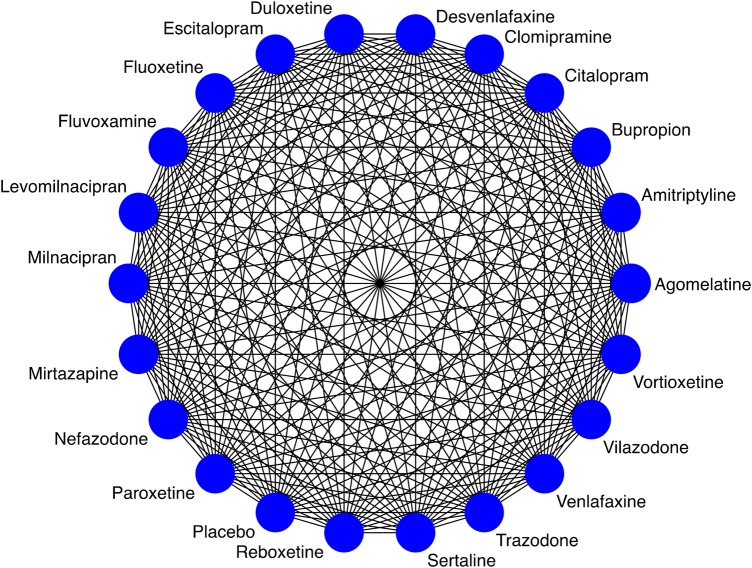
Introduction: Many antidepressants are indicated for the treatment of major depression. Two network meta-analyses have provided the most comprehensive assessments to date, accounting for both direct and indirect comparisons; however, these reported conflicting interpretation of results. Here, we present a protocol for a systematic review and network meta-analysis aimed at updating the evidence base and comparing all second-generation as well as selected first-generation antidepressants in terms of efficacy and acceptability in the acute treatment of major depression. Methods and analysis: We will include all randomised controlled trials reported as double-blind and comparing one active drug with another or with placebo in the acute phase treatment of major depression in adults. We are interested in comparing the following active agents: agomelatine, amitriptyline, bupropion, citalopram, clomipramine, desvenlafaxine, duloxetine, escitalopram, fluoxetine, fluvoxamine, levomilnacipran, milnacipran, mirtazapine, nefazodone, paroxetine, reboxetine, sertraline, trazodone, venlafaxine, vilazodone and vortioxetine. The main outcomes will be the proportion of patients who responded to or dropped out of the allocated treatment. Published and unpublished studies will be sought through relevant database searches, trial registries and websites; all reference selection and data extraction will be conducted by at least two independent reviewers. We will conduct a random effects network meta-analysis to synthesise all evidence for each outcome and obtain a comprehensive ranking of all treatments. To rank the various treatments for each outcome, we will use the surface under the cumulative ranking curve and the mean ranks. We will employ local as well as global methods to evaluate consistency. We will fit our model in a Bayesian framework using OpenBUGS, and produce results and various checks in Stata and R. We will also assess the quality of evidence contributing to network estimates of the main outcomes with the GRADE framework. Ethics and dissemination: This review does not require ethical approval. PROSPERO registration number: CRD42012002291.
Overview
The claims and statistics of this paper haven’t been checked yet.
Free: it reads the open-access text and checks the first 5 claims that cite a source we can check. Create a free account to check every claim.
Integrity signals
Registry
Cites
Statistics
Figures
Verification
Claims the paper makes
The claims and statistics of this paper haven’t been checked yet.
Free: it reads the open-access text and checks the first 5 claims that cite a source we can check. Create a free account to check every claim.
Claims other papers make about this one
Each is checked against this paper’s own text: does it say what the citing paper says it does?
The source backs part of the claim, not all of it — or backs it for a different population, condition or comparison.
In the citing paper
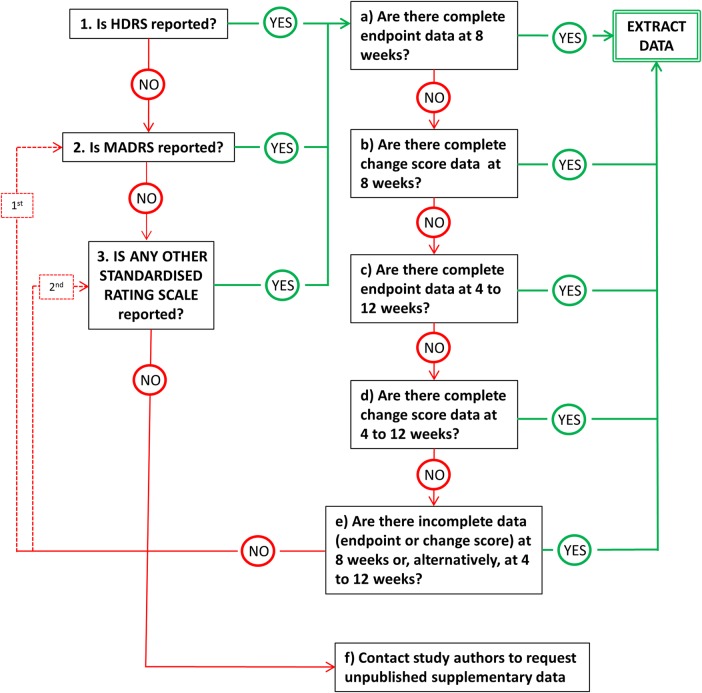
“When depressive symptoms had been measured with more than one standardised rating scale, we used a predefined hierarchy, based on psychometric properties and consistency of use across included trials.8”
From Comparative efficacy and acceptability of 21 antidepressant drugs for the acute treatment of adults with major depressive disorder: a systematic review and network meta-analysis (2018) · cites this paper as [8]
Experimental — accuracy not yet measuredThe cited source says what the claim attributes to it.
In the citing paper
“The full protocol of this network meta-analysis has been published.8”
From Comparative efficacy and acceptability of 21 antidepressant drugs for the acute treatment of adults with major depressive disorder: a systematic review and network meta-analysis (2018) · cites this paper as [8]
Experimental — accuracy not yet measuredThe cited source says what the claim attributes to it.
In the citing paper
“We extracted data following a predefined hierarchy described in our protocol and gave priority to unpublished information in case of disagreement.8”
The check wasn’t confident either way, so it gives no verdict — never disputed.
In the citing paper
“The overall risk of bias, according to Furukawa et al.(Furukawa et al., 2016), was high in 17.4 % of the studies, unclear 41.4 %, and low in 40.9 % of the studies.”
From Efficacy, acceptability and side-effects of oral versus long-acting- injectables antipsychotics: Systematic review and network meta-analysis (2024) · cites this paper as Furukawa et al., 2016
Experimental — accuracy not yet measured
Self-check
Percentages, sums and reported differences re-computed from the paper’s own numbers.
The self-check needs the paper’s full text.
Citations
Cites
Kessler, R. C., Berglund, P., Demler, O., Jin, R., Koretz, D., Merikangas, K. R., Rush, A. J., Walters, E. E., & Wang, P. S. (2003) · JAMA · doi:10.1001/jama.289.23.3095 · Cited by 7,988 · cited 1×
“population, affecting more than 16% of adults during their lifetime.(1) In 2000, the economic burden of depressive disorders in the USA was estimated to be around 80 billion dollars, with more than 30% of these costs being attributable to direct medical expenses.”
Background(2008) · Cited by 3,790
Salanti, G., Ades, A. E., & Ioannidis, J. P. A. (2011) · Journal of Clinical Epidemiology · doi:10.1016/j.jclinepi.2010.03.016 · Cited by 3,766 · cited 1×
“we will use the surface under the cumulative ranking curve (SUCRA) and the mean ranks.(42)”
MethodSelf-citationLeucht, S., Cipriani, A., Spineli, L., Mavridis, D., Örey, D., Richter, F., Samara, M., Barbui, C., Engel, R. R., Geddes, J. R., et al. (2013) · The Lancet · doi:10.1016/s0140-6736(13)60733-3 · Cited by 2,561
Self-citationChecking consistency in mixed treatment comparison meta-analysis
Dias, S., Welton, N. J., Caldwell, D. M., & Ades, A. E. (2010) · Statistics in Medicine · doi:10.1002/sim.3767 · Cited by 2,521 · cited 1×
“We will employ the loop-specific approach to evaluate inconsistency within each loop of evidence,(44) and a method that separates direct evidence from indirect evidence provided by the entire network.(45) We will also evaluate consistency in the entire network by calculating the I(2) for network heterogeneity, inconsi…”
MethodGraphical tools for network meta-analysis in STATA
Chaimani, A., Higgins, J. P. T., Mavridis, D., Spyridonos, P., & Salanti, G. (2013) · PLoS ONE · doi:10.1371/journal.pone.0076654 · Cited by 2,473 · cited 1×
“contribution of each direct meta-analysis to the entire body of evidence.(29) 30”
BackgroundSelf-citationSelective publication of antidepressant trials and its influence on apparent efficacy
Turner, E. H., Matthews, A. M., Linardatos, E., Tell, R. A., & Rosenthal, R. (2008) · New England Journal of Medicine · doi:10.1056/nejmsa065779 · Cited by 2,435 · cited 3×
“When published and unpublished studies provide different values, we will prioritise the unpublished data.(15)”
BackgroundMethodInfluentialSelf-citationConsistency and inconsistency in network meta-analysis: concepts and models for multi-arm studies
Higgins, J. P. T., Jackson, D., Barrett, J. K., Lu, G., Ades, A. E., & White, I. R. (2012) · Research Synthesis Methods · doi:10.1002/jrsm.1044 · Cited by 2,098 · cited 1×
“We will also evaluate consistency in the entire network by calculating the I(2) for network heterogeneity, inconsistency, and for both.(46) 47 Tests for inconsistency are known to have low power,(48) and empirical evidence has suggested that 10% of evidence loops published in the medical literature are expected to be…”
MethodPeters, J. L., Sutton, A. J., Jones, D. R., Abrams, K. R., & Rushton, L. (2008) · Journal of Clinical Epidemiology · doi:10.1016/j.jclinepi.2007.11.010 · Cited by 2,053 · cited 1×
“15 We will use the comparison-adjusted 30 and contour-enhanced 52 funnel plots to investigate whether results in imprecise trials differ from those in more precise trials.”
MethodBucher, H. C., Guyatt, G. H., Griffith, L. E., & Walter, S. D. (1997) · Journal of Clinical Epidemiology · doi:10.1016/s0895-4356(97)00049-8 · Cited by 2,052 · cited 1×
“We will employ the loop-speci fi c approach to evaluate inconsistency within each loop of evidence, 44 and a method that separates direct evidence from indirect evidence provided by the entire network.”
Method
Cited by
Items 101–200 of 214
Rimmer, R. M., Woodham, R. D., Cahill, S., & Fu, C. H. Y. (2024) · Mental Health Review Journal · doi:10.1108/mhrj-07-2022-0050 · Cited by 24
Luo, Y., Chaimani, A., Kataoka, Y., Ostinelli, E. G., Ogawa, Y., Cipriani, A., Salanti, G., & Furukawa, T. A. (2018) · BMJ Open · doi:10.1136/bmjopen-2018-023222 · Cited by 18
“For further details of the SR process, please see the published protocol and the main GRISELDA paper.(23) 24”
BackgroundMethodSelf-citationThe Role of Acid Sphingomyelinase Inhibition in Repetitive Mild Traumatic Brain Injury
Niziolek, G. M., Hoehn, R. S., Seitz, A. P., Jernigan, P. L., Makley, A. T., Gulbins, E., Edwards, M. J., & Goodman, M. D. (2020) · Journal of Surgical Research · doi:10.1016/j.jss.2020.09.034 · Cited by 16
Luo, T., Zhao, Z.-H., Wu, M., Ren, X., Xu, Z., Li, L., Yang, Y., Wang, H., & Wang, L.-M. (2024) · Phytomedicine · doi:10.1016/j.phymed.2024.155999 · Cited by 15
Li, X., Zhu, L., Su, Y., & Fang, S. (2017) · PLoS ONE · doi:10.1371/journal.pone.0185865 · Cited by 16
Therapy and prevention for mental health: What if mental diseases are mostly not brain disorders?
Ioannidis, J. P. A. (2019) · Behavioral and Brain Sciences · doi:10.1017/s0140525x1800105x · Cited by 15
Bighelli, I., Salanti, G., Reitmeir, C., Wallis, S., Barbui, C., Furukawa, T. A., & Leucht, S. (2018) · BMJ Open · doi:10.1136/bmjopen-2017-019280 · Cited by 20
Self-citationde Brito, A. F., Braga, P. C. C. S., Moreira, L. K. D. S., Silva, D. M., da Silva, D. P. B., Lobón, G. S., Vaz, B. G., de Carvalho, F. S., Lião, L. M., Silva, R. R., et al. (2017) · Naunyn-Schmiedeberg s Archives of Pharmacology · doi:10.1007/s00210-017-1451-7 · Cited by 13
Network meta-analysis of antidepressants
Boesen, K., Paludan‐Müller, A. S., & Munkholm, K. (2018) · The Lancet · doi:10.1016/s0140-6736(18)31783-5 · Cited by 10
The ANiMALIA investigators, Wewege, M. A., Bagg, M. K., Jones, M. D., & McAuley, J. H. (2020) · Systematic Reviews · doi:10.1186/s13643-020-01506-3 · Cited by 10
Ostinelli, E. G., D’Agostino, A., Shokraneh, F., Salanti, G., & Furukawa, T. A. (2019) · BMJ Open · doi:10.1136/bmjopen-2019-032726 · Cited by 13
Self-citationHuang, W., Yu, Y. Y., Chen, L., Tang, X., Fang, X., Ou, X., & Du, X. (2024) · American Journal of Obstetrics & Gynecology MFM · doi:10.1016/j.ajogmf.2024.101572 · Cited by 11
Wang, J., Yin, J., Wang, C., & Zhu, Y. (2025) · BMC Surgery · doi:10.1186/s12893-025-03176-1 · Cited by 10
IsHak, W. W., Hirsch, D., Renteria, S., Totlani, J., Murphy, N., Chang, T. Y., Abdelsalam, R., Salem, M., Meyer, A., Keerthana, S., et al. (2025) · BMC Psychiatry · doi:10.1186/s12888-025-07141-3 · Cited by 13
“Lastly, prior to 2009, nearly every antidepressant on the market functioned primarily via a monoaminergic mechanism of action, which may be designated first generation antidepressants (e.g., tricyclic antidepressants and MAOIs) and second-generation antidepressants (e.g., SSRIs and SNRIs) [142].”
Fu, H., Zhou, H., Tang, Y., Li, J., Zhang, D., Ding, S.-Y., Huang, Q., & Wang, C. (2022) · BMJ Open · doi:10.1136/bmjopen-2021-052137 · Cited by 9
Yang, S., He, W., Zhao, L., & Mi, Y. (2022) · PLoS ONE · doi:10.1371/journal.pone.0267025 · Cited by 10
“The transitivity assumption underlying network meta-analysis was evaluated by comparing the distribution of clinical variables that could act as effect modifiers across treatment comparisons [16].”
MethodTargeting neurotrophic factors for low back pain and sciatica: a systematic review and meta-analysis
Rizzo, R. R. N., Ferraro, M. C., Wewege, M. A., Cashin, A. G., Leake, H. B., O’Hagan, E. T., Jones, M. D., Gustin, S. M., McLachlan, A. J., Day, R. O., et al. (2021) · Rheumatology · doi:10.1093/rheumatology/keab785 · Cited by 10
Comparing robotic, laparoscopic, and laparotomy in endometrial cancer: a network meta-analysis
Huang, W., Ou, X., Fang, X., Tang, X., Chen, L., Ling, J., Song, W.-C., & Du, X. (2024) · International Journal of Surgery · doi:10.1097/js9.0000000000002175 · Cited by 10
Pharmacological treatment of neuropsychiatric symptoms of dementia: a network meta-analysis protocol
Huang, Y., Dou, K., Zhong, X.-L., Shen, X., Chen, S.-D., Li, H., Chen, K., Cui, M., Dong, Q., Tan, L., et al. (2020) · Annals of Translational Medicine · doi:10.21037/atm-20-611 · Cited by 7
Wang, Y., Li, H., Peng, W., Chen, Y., Qiu, M., Wang, J., Hao, Q., Tu, Y., Liu, Y., & Zhu, T. (2020) · Medicine · doi:10.1097/md.0000000000021496 · Cited by 11
Desaunay, P., Eslier, M., Alexandre, J., Dreyfus, M., Chrétien, B., & Guenolé, F. (2024) · Psychiatry Research · doi:10.1016/j.psychres.2024.116048 · Cited by 9
Designing multi-target drugs for the treatment of major depressive disorder
Halder, A. K., Mitra, S., & Cordeiro, M. N. D. S. (2023) · Expert Opinion on Drug Discovery · doi:10.1080/17460441.2023.2214361 · Cited by 9
“vision, constipation, sexual problems, etc [17].”
Placebo stimulates neuroplasticity in depression: implications for clinical practice and research
Seymour, J., & Mathers, N. J. (2024) · Frontiers in Psychiatry · doi:10.3389/fpsyt.2023.1301143 · Cited by 10
Tajika, A., Furukawa, T. A., Inagaki, M., Kato, T., Mantani, A., Kurata, K., Ogawa, Y., Takeshima, N., Hayasaka, Y., Noma, H., et al. (2019) · Acta Psychiatrica Scandinavica · doi:10.1111/acps.13115 · Cited by 9
Self-citationZhan, Z., Wang, X., Chen, Q., Xiao, Z., & Zhang, B. (2021) · BMJ Open · doi:10.1136/bmjopen-2020-043457 · Cited by 6
Shang, W., Guo, L., Liu, Y. J., Li, Y., Qian, W., Guo, K., Yang, M., Wei, L. S., Xu, Z., Niu, J., et al. (2023) · Campbell Systematic Reviews · doi:10.1002/cl2.1354 · Cited by 5
Luo, Y., Chaimani, A., Furukawa, T. A., Kataoka, Y., Ogawa, Y., Cipriani, A., & Salanti, G. (2020) · Research Synthesis Methods · doi:10.1002/jrsm.1413 · Cited by 6
Self-citationNetwork meta-analysis of antidepressants - Authors' reply.
Cipriani, A., Salanti, G., Furukawa, T., Turner, E. H., Ioannidis, J., & Geddes, J. (2018) · The Lancet · doi:10.1016/s0140-6736(18)31780-x · Cited by 2
Self-citationShen, Y., Guan, D., Gu, Y., Zheng, B., Ke, X., Hong, S., & Yang, Y. (2024) · International Immunopharmacology · doi:10.1016/j.intimp.2024.112462 · Cited by 6
Lu, F., Qin, S., Liu, C. X., Chen, X., Dai, Z., & Li, C. (2024) · Frontiers in Medicine · doi:10.3389/fmed.2024.1370481 · Cited by 5
Pertl, M., Pérez, S., Collier, S., Guinan, E. M., Monahan, G., Verling, K., Wallace, E., Walsh, A., & Doyle, F. (2022) · Systematic Reviews · doi:10.1186/s13643-022-02107-y · Cited by 8
“In line with previous NMAs [25, 28, 35], we will extract pertinent data to explain clustering from cluster randomised trials and extract only data relating to the first study period from cross-over trials to prevent carry-over effects.”
BackgroundMethodInfluentialA New Paradigm Shift in Antidepressant Therapy: From Dual-action to Multitarget-directed Ligands
Rodríguez-Lavado, J., Alarcón‐Espósito, J., Mallea, M., & Lorente, A. (2022) · Current Medicinal Chemistry · doi:10.2174/0929867329666220317121551 · Cited by 5
Zhu, Y., Sun, L., Guan, S., Li, R., Yang, J., Cao, Y., Zhang, L., Li, T., Zhang, H., Bueber, M. A., et al. (2025) · The Lancet Regional Health - Western Pacific · doi:10.1016/j.lanwpc.2025.101515 · Cited by 6
Pertl, M., Beghean, R., Collier, S., Guinan, E. M., Monahan, G., Verling, K., Wallace, E., Walsh, A., Ghoshal, A., Galvin, E., et al. (2025) · Journal of Psychosomatic Research · doi:10.1016/j.jpsychores.2025.112166 · Cited by 5
Kao, C., Wang, D., Pan, W., Hou, L., Zhou, P., Zhang, Z., Yu, L., Wang, F., & Liu, L. (2025) · Supportive Care in Cancer · doi:10.1007/s00520-025-09554-y · Cited by 11
“Discrepancies and uncertainties were resolved through discussions between the researchers [31].”
Brexpiprazole versus placebo or other antidepressive agents for treating depression
Ralovska, S., Koychev, I. G., Marinov, P., Furukawa, T. A., Mulsant, B. H., & Cipriani, A. (2023) · Cochrane Database of Systematic Reviews · doi:10.1002/14651858.cd013866.pub2 · Cited by 4
Self-citationAntidepressant Discontinuation Syndrome: A Common but Underappreciated Clinical Problem
Rizkalla, M. N., Kowalkowski, B., & Prozialeck, W. C. (2020) · Journal of Osteopathic Medicine · doi:10.7556/jaoa.2020.030 · Cited by 5
Bolzan, J. A., & de Oliveira, C. L. (2021) · BMJ Open Science · doi:10.1136/bmjos-2020-100077 · Cited by 4
Santana, I. G. C., Almeida, L. D. S., Moreira, L. K. D. S., de Carvalho, F. S., Menegatti, R., da Rocha, A. L. B., Mazurok, T. A., Vaz, B. G., Lião, L. M., de Brito, A. F., et al. (2022) · Canadian Journal of Physiology and Pharmacology · doi:10.1139/cjpp-2021-0729 · Cited by 4
Ogawa, Y., Furukawa, T. A., Takeshima, N., Hayasaka, Y., Atkinson, L. Z., Tanaka, S., Cipriani, A., & Salanti, G. (2017) · International Clinical Psychopharmacology · doi:10.1097/yic.0000000000000201 · Cited by 5
Self-citationWen, S., Yan, Y., Shao, J., Xie, H., Wang, M., Dou, Y., Liu, D., Xiao, Y., & Ma, X. (2025) · Translational Psychiatry · doi:10.1038/s41398-025-03751-3 · Cited by 7
Stefanou, A., Lampropoulou, P., Papageorgiou, P., Boskou, I., Lappas, A. S., Christodoulou, N., Bozikas, V., & Samara, M. T. (2026) · Sleep Medicine · doi:10.1016/j.sleep.2026.108792 · Cited by 3
Hu, W., Zhou, H., Zhu, W., Xie, S., Zeng, Y., & Wang, Z. (2025) · Frontiers in Neurology · doi:10.3389/fneur.2025.1381500 · Cited by 3
Xiong, Y., Huang, W., Wang, C., Ma, W., Jin, S., Lin, J., Deng, X., Peng, Y., Huang, Y., Du, X., et al. (2025) · BJOG An International Journal of Obstetrics & Gynaecology · doi:10.1111/1471-0528.70016 · Cited by 4
Deng, Z., Gao, W., Liu, X., Hu, J. X., Deng, P., & Chi, L. (2018) · Pharmacognosy Magazine · doi:10.4103/pm.pm_181_17 · Cited by 4
Wang, Y., Li, H., Wang, J., Hao, Q., Tu, Y., Chen, Y., Qiu, M., Peng, W., Liu, Y., & Zhu, T. (2020) · Medicine · doi:10.1097/md.0000000000021772 · Cited by 3
Li, T., Shan, Z., Shi, Y., Kuang, X., Liang, Y., Tang, S., Shao, N., & Lin, Y. (2022) · Translational Breast Cancer Research · doi:10.21037/tbcr-21-3 · Cited by 3
“Previously published meta-analyses focusing on chemo-endocrine therapy of HR+ early breast cancer were searched for supplements (19).”
Zhao, T., Tang, C., Huang, Y., Wang, H., & Guo, M. (2023) · PLoS ONE · doi:10.1371/journal.pone.0287445 · Cited by 4
“Studies will be classified as ‘low overall risk’ if none of the domains is rated as ‘high risk,’ or three or fewer are rated as ‘unclear risk;’ moderate if one is rated as ‘high risk’ or none is rated as ‘high risk’ but four or more are rated as ‘unclear risk;’ and otherwise as ‘high overall risk’ [53].”
BackgroundEl último metaanálisis sobre antidepresivos: Nada nuevo bajo el sol
Sierra, M. D. C. (2018) · Clínica Contemporánea · doi:10.5093/cc2018a7 · Cited by 3
Paudel, S., Kim, E., Zhu, A., Acharya, S., Min, X., Cheon, S. H., & Kim, K. (2021) · Biomolecules & Therapeutics · doi:10.4062/biomolther.2020.233 · Cited by 3
“Various neuropsychiatric health disorders, such as depression, anxiety, panic disorder, obsessive-compulsive disorder, and attention-deficit hyperactivity disorder, show overlap with respect to their pathogenic mechanisms and therapeutic regimens (Goodwin, 2015; Koyuncu et al., 2015).”
BackgroundWhether cognitive behavioral therapy is effective for Alzheimer's disease
Chen, W.-Q., Wu, F., Lv, H.-B., Xing, W., Liu, Q., Liu, J., Ge, Y.-G., & Lu, Y. (2021) · Medicine · doi:10.1097/md.0000000000023945 · Cited by 3
Björk, M., Gerdle, B. U. C., Liedberg, G., Svanholm, F., Solmi, M., Thompson, T., Chaimani, A., & Dragioti, E. (2020) · BMJ Open · doi:10.1136/bmjopen-2020-040962 · Cited by 5
Self-citationCernat, A., Pahwa, M., Hadid, D., Shen, K., Abelson, J., Samaan, Z., Ramdyal, A., & Vanstone, M. G. (2024) · PLOS mental health. · doi:10.1371/journal.pmen.0000128 · Cited by 6
Lou, Y., Wang, H., Wang, L., Huang, S., Xie, Y., Song, F., Lu, Z., Wang, F., Jiang, Q., & Cao, S. (2025) · Nutrients · doi:10.3390/nu17162683 · Cited by 3
“An overall risk of bias was classified for every study based on the individual risk of bias items [24,25].”
Xu, G., Zhang, R., Huang, W., Du, X., & Xu, W. (2025) · Frontiers in Medicine · doi:10.3389/fmed.2025.1640270 · Cited by 2
Genetic and Phenotypic Associations With Sustained Antidepressant Use in Major Depressive Disorder
Walker, A., Mitchell, B. L., Lin, T., Crouse, J. J., Albiñana, C., Yap, C. X., Lynall, M.-E., Lind, P. A., Cipriani, A., Byrne, E. M., et al. (2026) · JAMA Psychiatry · doi:10.1001/jamapsychiatry.2025.4372 · Cited by 3
Self-citationSiafis, S., & Leucht, S. (2023) · European Neuropsychopharmacology · doi:10.1016/j.euroneuro.2023.02.012 · Cited by 2
Self-citationShangguan, F., Liu, H., Guo, Y., Yu, J., Liang, Y., Yu, H., Su, Y., & Li, Z. (2024) · BMJ Open · doi:10.1136/bmjopen-2024-084815 · Cited by 2
“41 Lifestyle interventions often require long-term adherence, and so some drop-outs are typically unavoidable.”
BackgroundZhang, Z., Song, J., Li, L., & Li, Y. (2025) · BMC Complementary Medicine and Therapies · doi:10.1186/s12906-025-04930-x · Cited by 4
“Next, we generated a contribution graph to compute and summarize the contribution of each direct comparison to the estimated [10] for each network.”
Brexpiprazole versus placebo or other antidepressive agents for treating depression
Ralovska, S., Koychev, I. G., Crescenzo, F. D., Marinov, P., & Cipriani, A. (2021) · Cochrane Database of Systematic Reviews · doi:10.1002/14651858.cd013866 · Cited by 2
Self-citationKatakam, K. K., Sethi, N. J., Jakobsen, J. C., & Gluud, C. N. (2019) · Acta Neuropsychiatrica · doi:10.1017/neu.2019.24 · Cited by 2
“In contrast, the published protocol (Furukawa et al., 2016) of the Cipriani et al. review (Cipriani et al., 2018) states that a trial is classified at low risk of bias if none of the domains described above was rated at high risk of bias and three or less were rated at unclear risk; moderate risk…”
Hunter, C. E., Stammen, R. L., Hamlet, T., Bonenberger, D., Li, C., Zhang, X., Connor‐Stroud, F., & Chan, A. W. S. (2020) · Journal of Medical Primatology · doi:10.1111/jmp.12499 · Cited by 2
Psiquiatría y evidencia: lecciones de la pandemia
(2020) · Revista de Psiquiatría del uruguay · doi:10.46706/psi/84.2.5 · Cited by 3
Antidepressants During Lactation
Desaunay, P., Blouet, C., Alexandre, M., & Guenolé, F. (2025) · Springer eBooks · doi:10.1007/978-3-031-99720-4_7 · Cited by 1
Yang, L., Yan, M., Du, L., Hu, S., & Zhang, Z. (2020) · Medicine · doi:10.1097/md.0000000000022280 · Cited by 1
Psychiatry: The State of the Art
Fountoulakis, K. Ν. (2021) · Springer eBooks · doi:10.1007/978-3-030-86541-2_18 · Cited by 2
Muit, J. J., van Eijndhoven, P., Cipriani, A., Dalhuisen, I., van Bronswijk, S. C., Furukawa, T. A., & Ruhé, H. G. (2022) · BMJ Open · doi:10.1136/bmjopen-2021-056777 · Cited by 2
Self-citationCipriani, A., Furukawa, T. A., Atkinson, L. Z., Leucht, S., & Salanti, G. (2016) · The Lancet Psychiatry · doi:10.1016/s2215-0366(16)30415-1 · Cited by 1
Self-citation“Crying in a cupboard”: Five minutes with . . . Sarah Abrams
Mahase, E. (2023) · BMJ · doi:10.1136/bmj.p708 · Cited by 1
Decoding Treatment Choice: Genetic and Phenotypic Analyses of Long-term Antidepressant AcceptabilityPreprint
Walker, A., Mitchell, B. L., Lin, T., Crouse, J. J., Albiñana, C., Yap, C. X., Lynall, M.-E., Lind, P. A., Cipriani, A., Byrne, E. M., et al. (2025) · medRxiv · doi:10.1101/2025.08.19.25333784 · Cited by 1
Self-citationAntidepressants in unipolar major depression: what we need to know
Barber, S., & Cipriani, A. (2016) · British Journal of Hospital Medicine · doi:10.12968/hmed.2016.77.8.440
Self-citationSmith, K. (2018) · BJPsych Advances · doi:10.1192/bja.2017.21
Acute and Chronic Depressive Disorders in Head and Neck Cancer Patients
Барденштейн, Л. М., Leontiev, V., Drobyshev, A. Y., Цимбалистов, А. В., Malginov, N., Aleshkina, G. A., & Arutyunov, S. D. (2020) · Vestnik nevrologii psihiatrii i nejrohirurgii (Bulletin of Neurology Psychiatry and Neurosurgery) · doi:10.33920/med-01-2007-02
ОСОБЛИВОСТІ ВИВЧЕННЯ ЕФЕКТИВНОСТІ АНТИДЕПРЕСАНТІВ НА ОСНОВІ МЕТА-АНАЛІЗІВ
Венгер, О. П., & Grinko, N. (2022) · Вісник соціальної гігієни та організації охорони здоров я України · doi:10.11603/1681-2786.2021.4.12862
Wang, Y., Feng, S., Chen, B., Lan, L., & Zhang, Y. (2023) · Research Square · doi:10.21203/rs.3.rs-3118192/v1
Siafis, S., Çıray, O., Wu, H., Schneider‐Thoma, J., Bighelli, I., Krause, M., Rodolico, A., Ceraso, A., Deste, G., Huhn, M., et al. (2022) · Figshare · doi:10.6084/m9.figshare.19311361
Self-citationSiafis, S., Çıray, O., Wu, H., Schneider‐Thoma, J., Bighelli, I., Krause, M., Rodolico, A., Ceraso, A., Deste, G., Huhn, M., et al. (2022) · Figshare · doi:10.6084/m9.figshare.19311373
Self-citationChaudhry, N., Kiran, T., Khoso, A. B., Nisa, Z. U., Rasool, G., Dogar, I. A., Mahmood, K., Hamdani, S. U., Rajper, A. B., Minhas, F. A., et al. (2021) · Journal of Pakistan Psychiatric Society · doi:10.63050/jpps.18.03.118 · Cited by 1
“11 However, effective pharmacological treatments for patients with suicidal behaviours are limited; only one psychiatric medication clozapine is FDA-approved for suicidal behaviour.”
BackgroundXu, G., Huang, W., Fang, X., Ou, X., Chen, L., Tang, X., & Du, X. (2024) · Research Square · doi:10.21203/rs.3.rs-4927551/v1
Postoperative Adjuvant Treatments for Cervical Cancer: A Network Meta-Analysis
Huang, W., Fang, X., Ou, X., Chen, L., Tang, X., & Du, X. (2025) · International Journal of Radiation Oncology*Biology*Physics · doi:10.1016/j.ijrobp.2025.07.1440
Herder, T., Spoelstra, S. K., Niemeijer, A. S., & Knegtering, H. (2025) · PLoS ONE · doi:10.1371/journal.pone.0329559
Preferences of patients with depression for medication management: a discrete choice experiment
Xie, P., Guo, S., Yang, H., Wang, Y., Ming, W., Li, H., & Li, H.-Q. (2025) · Frontiers in Psychiatry · doi:10.3389/fpsyt.2025.1626653
Bighelli, I., Salanti, G., Huhn, M., Schneider‐Thoma, J., Krause, M., Reitmeir, C., Wallis, S., Schwermann, F., Pitschel‐Walz, G., Barbui, C., et al. (2025) · FOCUS The Journal of Lifelong Learning in Psychiatry · doi:10.1176/appi.focus.25023024
Self-citationWen, M., Zhang, J., Jiang, K., Liu, J., & Zhu, X. (2025) · Frontiers in Psychiatry · doi:10.3389/fpsyt.2025.1643496
Chiocchia, V., Nikolakopoulou, A., Higgins, J. P. T., Page, M. J., Papakonstantinou, T., Cipriani, A., Furukawa, T. A., Siontis, G. C. M., Egger, M., & Salanti, G. (2021) · Figshare · doi:10.6084/m9.figshare.17066025
Self-citationJuul, S., Siddiqui, F., Barbateskovic, M., Jørgensen, C. K., Hengartner, M. P., Kirsch, I., Gluud, C., & Jakobsen, J. C. (2021) · Figshare · doi:10.6084/m9.figshare.14677063
Chiocchia, V., Nikolakopoulou, A., Higgins, J. P. T., Page, M. J., Papakonstantinou, T., Cipriani, A., Furukawa, T. A., Siontis, G. C. M., Egger, M., & Salanti, G. (2021) · Figshare · doi:10.6084/m9.figshare.17066028
Self-citationFerraro, M. C., Bagg, M. K., Wewege, M. A., Cashin, A. G., Leake, H. B., Rizzo, R. R. N., Jones, M. D., Gustin, S. M., Day, R., Loo, C. K. A., et al. (2021) · Figshare · doi:10.6084/m9.figshare.14111264
Juul, S., Siddiqui, F., Barbateskovic, M., Jørgensen, C. K., Hengartner, M. P., Kirsch, I., Gluud, C., & Jakobsen, J. C. (2021) · Figshare · doi:10.6084/m9.figshare.14677060
Chiocchia, V., Nikolakopoulou, A., Higgins, J. P. T., Page, M. J., Papakonstantinou, T., Cipriani, A., Furukawa, T. A., Siontis, G. C. M., Egger, M., & Salanti, G. (2021) · Figshare · doi:10.6084/m9.figshare.17066019
Self-citationSiafis, S., Çıray, O., Wu, H., Schneider‐Thoma, J., Bighelli, I., Krause, M., Rodolico, A., Ceraso, A., Deste, G., Huhn, M., et al. (2022) · Figshare · doi:10.6084/m9.figshare.19311349
Self-citationGulea, C., Zakeri, R., Alderman, V., Morgan, A., Ross, J., & Quint, J. K. (2021) · Figshare · doi:10.6084/m9.figshare.14100592
Wewege, M. A., Bagg, M. K., Jones, M. D., & McAuley, J. H. (2020) · Figshare · doi:10.6084/m9.figshare.13192486
Wewege, M. A., Bagg, M. K., Jones, M. D., & McAuley, J. H. (2020) · Figshare · doi:10.6084/m9.figshare.13192498
Wewege, M. A., Bagg, M. K., Jones, M. D., & McAuley, J. H. (2020) · Figshare · doi:10.6084/m9.figshare.13192483
Siafis, S., Çıray, O., Wu, H., Schneider‐Thoma, J., Bighelli, I., Krause, M., Rodolico, A., Ceraso, A., Deste, G., Huhn, M., et al. (2022) · Figshare · doi:10.6084/m9.figshare.19311367
Self-citationWewege, M. A., Bagg, M. K., Jones, M. D., & McAuley, J. H. (2020) · Figshare · doi:10.6084/m9.figshare.13192492
Chiocchia, V., Nikolakopoulou, A., Higgins, J. P. T., Page, M. J., Papakonstantinou, T., Cipriani, A., Furukawa, T. A., Siontis, G., Egger, M., & Salanti, G. (2021) · Figshare · doi:10.6084/m9.figshare.17066007
Self-citationFerraro, M. C., Bagg, M. K., Wewege, M. A., Cashin, A. G., Leake, H. B., Rizzo, R. R. N., Jones, M. D., Gustin, S. M., Day, R., Loo, C. K. A., et al. (2021) · Figshare · doi:10.6084/m9.figshare.14111267
Chiocchia, V., Nikolakopoulou, A., Higgins, J. P. T., Page, M. J., Papakonstantinou, T., Cipriani, A., Furukawa, T. A., Siontis, G., Egger, M., & Salanti, G. (2021) · Figshare · doi:10.6084/m9.figshare.17066016
Self-citation
Metadata
- Authors
- Furukawa, T. A., Salanti, G., Atkinson, L. Z., Leucht, S., Ruhe, H. G., Turner, E. H., Chaimani, A., Ogawa, Y., Takeshima, N., Hayasaka, Y., Imai, H., Shinohara, K., Suganuma, A., Watanabe, N., Stockton, S., Geddes, J. R., & Cipriani, A.
- Affiliations
- Kyoto University (JP)
- University of Bern (CH)
- University of Oxford (GB)
- Technical University of Munich (DE)
- Department of Psychiatry, Academic Medical Center, University of Amsterdam, Amsterdam, The Netherlands
- Oregon Health & Science University (US)
- University of Ioannina (GR)
- Oxford Health NHS Foundation Trust (GB)
- Corresponding author
- Cipriani, Andrea
- ORCID
- Venue
- BMJ Open
- Publisher
- BMJ
- Published
- 2016-07
- Volume
- 6
- Issue
- 7
- Pages
- e010919
- ISSN
- 2044-6055 (ISSN-L)
- PMC
- PMC4947714
- OpenAlex
- W2468146111
- Cited by
- 214
- References
- 55
- Citations by year
- 2026: 10 · 2025: 19 · 2024: 18 · 2023: 12 · 2022: 23 · 2021: 44 · 2020: 31 · 2019: 20 · 2018: 24 · 2017: 10 · 2016: 3
- FWCI
- 15.36
- Type
- journal article
- Language
- en
- Open access
- gold
- doi.org
- Licence
- cc-by-nc
- Locations
- BMJ Open (publishedVersion, cc-by-nc)
- Europe PMC (PubMed Central) (publishedVersion, cc-by-nc)
- PubMed Central (publishedVersion, cc-by-nc)
- PubMed (publishedVersion)
- Pure Amsterdam UMC (publishedVersion, other-oa)
- Institutional Repositories DataBase (IRDB) (submittedVersion, cc-by-nc)
- Data Archiving and Networked Services (DANS) (submittedVersion)
- BORIS (University Library Bern) (submittedVersion, cc-by-nc)
- mediaTUM – the media and publications repository of the Technical University Munich (Technical University Munich) (submittedVersion)
- HighWire Press Open Archive (submittedVersion)
- University of Groningen research database (University of Groningen / Centre for Information Technology) (submittedVersion, cc-by-nc)
- Kyoto University Research Information Repository (Kyoto University) (submittedVersion, cc-by-nc)
- Open Access CRIS of the University of Bern
- Funders
- Bristol-Myers Squibb
- Eli Lilly and Company
- Pfizer
- AstraZeneca
- GlaxoSmithKline
- Sanofi
- Teva Pharmaceutical Industries
- National Institute for Health and Care Research
- Servier
- H. Lundbeck A/S
- AOP Orphan
- Topics
- Health Sciences › Medicine › Pharmacology (medical) › Treatment of Major Depression
- Health Sciences › Medicine › Psychiatry and Mental health › Mental Health Treatment and Access
- Social Sciences › Psychology › Clinical Psychology › Psychotherapy Techniques and Applications
- Keywords
- major depressive disorder, antidepressants, second-generation antidepressants, acute treatment, treatment efficacy, treatment acceptability, treatment response, treatment discontinuation, drug comparison, surface under the cumulative ranking curve
- MeSH terms
- Network Meta-Analysis as Topic, Systematic Reviews as Topic, Antidepressive Agents, Bayes Theorem, Major Depressive Disorder, Humans, Treatment Outcome, Antidepressive Agents, Second-Generation
About these checks
Registry, retraction, Cites and statistics results are computed, not judged, with one exception: a printed reference that no index lists is read once by a model before it counts as a citation error. Claims are extracted by a model and kept only when their quote appears verbatim in the text; each cited source is then checked, with a model’s help, for whether it says what the claim relies on. Those verdicts can be wrong — read the claim’s quote and the cited source before relying on one.
Statistics and arithmetic are recomputed, not judged.
Confidence bands are shown only for fields calibrated on our annotated test set. None is calibrated yet, so no band is shown.
What counts as a claim ›How we measure confidence ›How we check this ›
Are you an author, or do you see a problem with this page? Request a review
Data sources
Bibliographic data: Semantic Scholar, OpenAlex, Crossref.
Contains information from the Semantic Scholar Academic Graph Datasets, made available under the ODC Attribution License (ODC-BY 1.0).
Semantic Scholar’s data is described in: Kinney, R., et al. (2023). The Semantic Scholar Open Data Platform. arXiv:2301.10140.
