

Role of feasibility and pilot studies in randomised controlled trials: a cross-sectional study
Open accessThe DOI matches its Crossref record; 22 of the 23 references it cites were found in a registry or an index; 4 of the 40 sources its claims cite were checked for support.
Abstract
Objectives: To assess the value of pilot and feasibility studies to randomised controlled trials (RCTs) funded by the National Institute for Health Research (NIHR) Health Technology Assessment (HTA) programme. To explore the methodological components of pilot/feasibility studies and how they inform full RCTs. Study design: Cross-sectional study. Setting: Both groups included NIHR HTA programme funded studies in the period 1 January 2010–31 December 2014 (decision date). Group 1: stand-alone pilot/feasibility studies published in the HTA Journal or accepted for publication. Group 2: all funded RCT applications funded by the HTA programme, including reference to an internal and/or external pilot/feasibility study. The methodological components were assessed using an adapted framework from a previous study. Main outcome measures: The proportion of stand-alone pilot and feasibility studies which recommended proceeding to full trial and what study elements were assessed. The proportion of ‘HTA funded’ trials which used internal and external pilot and feasibility studies to inform the design of the trial. Results: Group 1 identified 15 stand-alone pilot/feasibility studies. Study elements most commonly assessed were testing recruitment (100% in both groups), feasibility (83%, 100%) and suggestions for further study/investigation (83%, 100%). Group 2 identified 161 ‘HTA funded’ applications: 59 cited an external pilot/feasibility study where testing recruitment (50%, 73%) and feasibility (42%, 73%) were the most commonly reported study elements: 92 reported an internal pilot/feasibility study where testing recruitment (93%, 100%) and feasibility (44%, 92%) were the most common study elements reported. Conclusions: ‘HTA funded’ research which includes pilot and feasibility studies assesses a variety of study elements. Pilot and feasibility studies serve an important role when determining the most appropriate trial design. However, how they are reported and in what context requires caution when interpreting the findings and delivering a definitive trial.
Overview
CoChat Summary
TL;DR
In a cross-sectional review of NIHR HTA-funded studies (2010–2014), pilot and feasibility studies commonly assessed testing recruitment and feasibility, with pilot studies assessing more design elements than feasibility studies. The authors conclude these studies help determine trial design, but inconsistent terminology and reporting limit interpretation and require caution when extrapolating to definitive trials.
Key findings
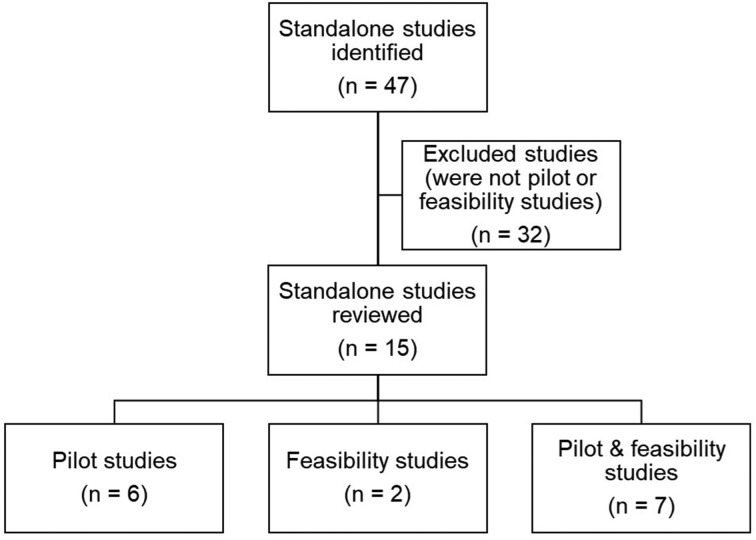
- Group 1 identified 15 stand-alone pilot/feasibility studies; testing recruitment was assessed in 100%, feasibility in 83%/100%, and suggestions for further study/investigation in 83%/100% (abstract). The median number of participants was 46.
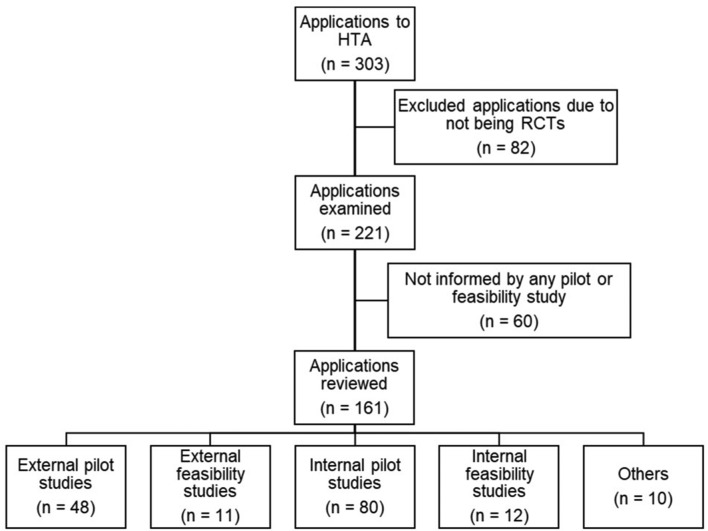
- Group 2 identified 161 HTA-funded applications: 59 cited an external pilot/feasibility study, where testing recruitment (50%, 73%) and feasibility (42%, 73%) were most commonly reported; 92 reported an internal pilot/feasibility study, where testing recruitment (93%, 100%) and feasibility (44%, 92%) were most common.
- Pilot studies assessed more study elements than feasibility studies: in group 1, 13 of 15 elements were assessed in stand-alone pilot studies versus 9 in feasibility studies; in group 2, external pilot studies assessed all 17 elements versus 13 for external feasibility studies, and internal pilot studies assessed 14 of 17 versus 10 for internal feasibility studies.
- Seven of the 15 stand-alone studies used the terms “pilot” and “feasibility” interchangeably, making it difficult to determine study type even with NIHR definitions.
Methods
- Retrospective cross-sectional study of the NIHR HTA Programme over a 5-year period (fund decision dates 1 January 2010–31 December 2014). Group 1 comprised stand-alone pilot/feasibility studies published in the HTA Journal or accepted for publication; group 2 comprised funded HTA RCT applications referencing an internal and/or external pilot/feasibility study.
- Data were extracted using an adapted framework from Arain et al (15 study elements in group 1; 17 in group 2), piloted on 10 studies, and analysed with descriptive statistics in SPSS; quality assurance included double extraction and consensus resolution of disagreements.
- There was no patient or public involvement, and no participant recruitment; all data came from published articles or HTA application forms.
Limitations
- The paper states that although data cover 5 years, the number of eligible studies is small and only reports from one NIHR programme are included; the adapted framework limits direct comparison with Arain et al; reliance on applicant reporting may have under-reported assessed elements and recommendations; internal pilot/feasibility outcomes were unavailable because the application form was the data source; and external pilot participant numbers were often missing and were not retrieved from original articles.
- Evident from the text: the cross-sectional design cannot determine whether pilot/feasibility recommendations influenced successful completion of definitive trials, and the authors note that without reviewing impact once the trial commences, there is no way to know whether preliminary work was instrumental in trial completion.
Model-written summary. Check it against the paper before relying on it.
Integrity signals
Registry
Cites
Statistics
Figures
Verification
Claims the paper makes
2 Valid · 1 Not valid · 28 Not checked · 52 Own results and interpretations
A result the paper reports from its own data — it cites no other source for it, so there is none to check. The quote shows it is in the paper.
In the paper
“Study elements most commonly assessed were testing recruitment (100% in both groups), feasibility (83%, 100%) and suggestions for further study/investigation (83%, 100%).”
plain- Asserted: passes — The authors put it forward as true.
- Checkable: passes — It can be checked against evidence.
- Load-bearing: unclear — It is unclear whether the paper’s conclusions depend on it.
- Based: passes — The paper gives a reason why it holds.
A result the paper reports from its own data — it cites no other source for it, so there is none to check. The quote shows it is in the paper.
In the paper
“The number of reported recommended changes based on the results of the external pilot or feasibility study was however minimal.”
plain- Asserted: passes — The authors put it forward as true.
- Checkable: passes — It can be checked against evidence.
- Load-bearing: unclear — It is unclear whether the paper’s conclusions depend on it.
- Based: passes — The paper gives a reason why it holds.
- Rests on an assumption not shown here.
A result the paper reports from its own data — it cites no other source for it, so there is none to check. The quote shows it is in the paper.
In the paper
“1. External pilot studies (n=48). 2. External feasibility studies (n=11). 3. Internal pilot studies (n=80). 4. Internal feasibility studies (n=12). 5. Other (n=10).”
plain- Asserted: passes — The authors put it forward as true.
- Checkable: passes — It can be checked against evidence.
- Load-bearing: unclear — It is unclear whether the paper’s conclusions depend on it.
- Based: passes — The paper gives a reason why it holds.
A result the paper reports from its own data — it cites no other source for it, so there is none to check. The quote shows it is in the paper.
In the paper
“We found that 13 of the 15 study elements included in the adapted framework were assessed in standalone pilot studies compared with nine study elements in feasibility studies.”
plainstates an association- Asserted: passes — The authors put it forward as true.
- Checkable: passes — It can be checked against evidence.
- Load-bearing: passes — The paper’s conclusions depend on it.
- Based: passes — The paper gives a reason why it holds.
A result the paper reports from its own data — it cites no other source for it, so there is none to check. The quote shows it is in the paper.
In the paper
“In both groups, we found pilot studies assessed more study elements than feasibility studies.”
- Also stated in: § Discussion · p. 7 · plain
“external and internal pilot studies were used to assess more study elements than feasibility studies.”
plain- Asserted: passes — The authors put it forward as true.
- Checkable: passes — It can be checked against evidence.
- Load-bearing: passes — The paper’s conclusions depend on it.
- Based: passes — The paper gives a reason why it holds.
- Also stated in: § Discussion · p. 7 · plain
23 more claims
Create a free account to see all 83 claims and to verify the 36 references still open.
- Probably not a substantial claim. 42
- It may state two separate claims as one. 26
Claims other papers make about this one
Each is checked against this paper’s own text: does it say what the citing paper says it does?
The source backs part of the claim, not all of it — or backs it for a different population, condition or comparison.
In the citing paper
“Feasibility trials are paramount to test recruitment strategies, acceptability of study design and viability of eligibility criteria, thus consequently informing the progression of large-scale definitive clinical trials [11].”
From Recruitment of low-income pregnant women into a dietary and dental care intervention: lessons from a feasibility trial (2020) · cites this paper as [11]
Experimental — accuracy not yet measuredThe source backs part of the claim, not all of it — or backs it for a different population, condition or comparison.
In the citing paper
“This tallies with the review by Blatch-Jones et al. [31] who reported that testing recruitment, determining the sample size and numbers available, and the intervention feasibility were the most commonly used targets of pilot evaluations.”
From Determining sample size for progression criteria for pragmatic pilot RCTs: the hypothesis test strikes back! (2021) · cites this paper as [31]
Experimental — accuracy not yet measured
Citations
Cites
Developing and evaluating complex interventions: the new Medical Research Council guidance
Craig, P., Dieppe, P., Macintyre, S., Michie, S., Nazareth, I., & Petticrew, M. (2008) · BMJ · doi:10.1136/bmj.a1655 · Cited by 10,995 · cited 1×
“However, the guidance did not attempt to explain or provide any definition for the terms ‘pilot’ and ‘feasibility’.(7) It was not until 2 years later that Thabane et al reviewed the key aspects of pilot studies and provided a detailed account of pilot studies which included a number of definitions.”
BackgroundCONSORT 2010 statement: extension to randomised pilot and feasibility trials.
Eldridge, S. M., Chan, C. L., Campbell, M. J., Bond, C. M., Hopewell, S., Thabane, L., & Lancaster, G. A. (2016) · BMJ · doi:10.1136/bmj.i5239 · Cited by 3,404
A tutorial on pilot studies: the what, why and how
Thabane, L., Ma, J., Chu, R., Cheng, J., Ismaila, A., Rios, L. P., Robson, R., Thabane, M., Giangregorio, L., & Goldsmith, C. H. (2010) · BMC Medical Research Methodology · doi:10.1186/1471-2288-10-1 · Cited by 3,384
CONSORT 2010 statement: extension to randomised pilot and feasibility trials
on behalf of the PAFS consensus group, Eldridge, S. M., Chan, C. L., Campbell, M. J., Bond, C. M., Hopewell, S., Thabane, L., & Lancaster, G. A. (2016) · Pilot and Feasibility Studies · doi:10.1186/s40814-016-0105-8 · Cited by 2,843
Design and analysis of pilot studies: recommendations for good practice
Lancaster, G. A., Dodd, S., & Williamson, P. R. (2004) · Journal of Evaluation in Clinical Practice · doi:10.1111/j..2002.384.doc.x · Cited by 2,572 · cited 1×
“Lancaster et al and Arain et al provided a methodological framework to assess how pilot studies are used to inform the conduct and reporting of pilot studies.(5) 10 Both described the challenges and complexities in the reporting of pilot studies.”
Avoidable waste in the production and reporting of research evidence
Chalmers, I., & Glasziou, P. (2009) · The Lancet · doi:10.1016/s0140-6736(09)60329-9 · Cited by 2,208
Whitehead, A. L., Julious, S. A., Cooper, C. L., & Campbell, M. J. (2016) · Statistical Methods in Medical Research · doi:10.1177/0962280215588241 · Cited by 1,936
Developing and evaluating complex interventions: the new Medical Research Council guidance
Craig, P., Dieppe, P., Macintyre, S., Michie, S., Nazareth, I., & Petticrew, M. (2013) · International Journal of Nursing Studies · doi:10.1016/j.ijnurstu.2012.09.010 · Cited by 1,658
Increasing value and reducing waste in research design, conduct, and analysis
Ioannidis, J. P. A., Greenland, S., Hlatky, M. A., Khoury, M. J., Macleod, M. R., Moher, D., Schulz, K. F., & Tibshirani, R. (2014) · The Lancet · doi:10.1016/s0140-6736(13)62227-8 · Cited by 1,597 · cited 1×
“For example, the Lancet series in 2014 did not make reference to the usefulness of pilot and feasibility studies in the context of increasing value and reducing waste in research design, conduct or analysis.(9) Lancaster et al and Arain et al provided a methodological framework to assess how pilot studies are used to…”
Eldridge, S. M., Lancaster, G. A., Campbell, M. J., Thabane, L., Hopewell, S., Coleman, C. L., & Bond, C. M. (2016) · PLOS ONE · doi:10.1371/journal.pone.0150205 · Cited by 1,581 · cited 3×
“However, it is important to note that the Eldridge et al conceptual framework is slightly different from that adopted by the NIHR.16 The clear lack of dichotomy between pilot and feasibility studies is an area for future consideration, not only for funders to encourage more conformity to the published definitions, but…”
ResultInfluential
Cited by
Lewis, M., Bromley, K., Sutton, C. J., McCray, G., Myers, H. L., & Lancaster, G. A. (2021) · Pilot and Feasibility Studies · doi:10.1186/s40814-021-00770-x · Cited by 330
Applying mixed methods to pilot feasibility studies to inform intervention trials
Aschbrenner, K. A., Kruse, G., Gallo, J. J., & Plano Clark, V. L. (2022) · Pilot and Feasibility Studies · doi:10.1186/s40814-022-01178-x · Cited by 175
Guest, E., Costa, B., Williamson, H., Meyrick, J., Halliwell, E., & Harcourt, D. (2019) · Body Image · doi:10.1016/j.bodyim.2019.04.002 · Cited by 184
Bentley, C. L., Powell, L., Potter, S., Parker, J., Mountain, G. A., Bartlett, Y. K., Farwer, J., O'Connor, C., Burns, J., Cresswell, R. L., et al. (2020) · JMIR mHealth and uHealth · doi:10.2196/16203 · Cited by 136
“The study was a randomized feasibility study [34] using both quantitative and qualitative methods.”
MethodNon-adherence in non-inferiority trials: pitfalls and recommendations
Mo, Y., Lim, C., Watson, J. A., White, N. J., & Cooper, B. S. (2020) · BMJ · doi:10.1136/bmj.m2215 · Cited by 76
Browne, S., Kechadi, T., O’Donnell, S., Dow, M., Tully, L., Doyle, G., & O’Malley, G. (2020) · JMIR mhealth and uhealth · doi:10.2196/16925 · Cited by 51
“Reporting process measures is increasingly important, as they contribute to moving the field forward and providing translational accuracy in research and practice [26].”
BackgroundProbiotics in Adolescent Prediabetes: A Pilot RCT on Glycemic Control and Intestinal Bacteriome
Stefanaki, C., Michos, A. G., Mastorakos, G. P., Mantzou, A., Landis, G., Zosi, P., & Bacopoulou, F. (2019) · Journal of Clinical Medicine · doi:10.3390/jcm8101743 · Cited by 30
“Future studies and further RCTs with larger samples, weekly meetings, and family psychologic counseling along with reminder systems are to be conducted to fully elucidate the potential effects of probiotics in the glucose control of prediabetic adolescents.”
MethodLane, C., Carson, V., Morton, K., Reno, K., Wright, C., Predy, M., & Naylor, P. (2021) · Pilot and Feasibility Studies · doi:10.1186/s40814-021-00849-5 · Cited by 34
“However, this is common of feasibility studies whose primary purpose is to determine whether future definitive trials of an intervention should take place and if so, what this trial should like [6].”
BackgroundWiguna, T., Wigantara, N. A., Ismail, R. I., Kaligis, F., Minayati, K., Bahana, R., & Dirgantoro, B. P. (2020) · Frontiers in Psychiatry · doi:10.3389/fpsyt.2020.00829 · Cited by 31
“Instead, it is usually focused on gathering data for use in optimizing diagnostic tool modi fi cations (36).”
BackgroundUsing Chapman’s Five Love Languages Theory to Predict Love and Relationship Satisfaction
Hughes, J. L., & Camden, A. A. (2020) · Psi Chi Journal of Psychological Research · doi:10.24839/2325-7342.jn25.3.234 · Cited by 40
Glazebrook, M. A., Burgesson, B. N., Younger, A. S. E., & Daniels, T. R. (2020) · Foot and Ankle Surgery · doi:10.1016/j.fas.2020.10.005 · Cited by 27
Daud, M. H., Ramli, A. S., Abdul-Razak, S., Isa, M. R., Yusoff, F. H., Baharudin, N., Mohamed-Yassin, M.-S., Badlishah-Sham, S. F., Nikmat, A. W., Jamil, N., et al. (2020) · Trials · doi:10.1186/s13063-020-04237-x · Cited by 29
Tang, N. K. Y., Moore, C., Parsons, H. M., Sandhu, H. K., Patel, S., Ellard, D. R., Nichols, V. P., Madan, J. J., Collard, V. E. J., Sharma, U., et al. (2020) · BMJ Open · doi:10.1136/bmjopen-2019-034764 · Cited by 26
Gabbard, J., McLouth, C. J., Brenes, G. A., Claudel, S. E., Martin, S. O., Burkart, J., Pajewski, N. M., Callahan, K. E., Williamson, J. D., & Murea, M. (2020) · American Journal of Hospice and Palliative Medicine® · doi:10.1177/1049909120954805 · Cited by 26
Pilot study to inform young adults about the risks of electronic cigarettes through text messaging
Calabro, K. S., Khalil, G. E., Chen, M., Perry, C. L., & Prokhorov, A. V. (2019) · Addictive Behaviors Reports · doi:10.1016/j.abrep.2019.100224 · Cited by 24
Leow, H. W., Koscielniak, M., Williams, L. J., Saunders, P. T. K., DANIELS, J. P., Doust, A. M., Jones, M.-C., Ferguson, G. D., Bagger, Y. Z., Horne, A. W., et al. (2021) · Pilot and Feasibility Studies · doi:10.1186/s40814-021-00797-0 · Cited by 23
“Given that many trials struggle with recruitment and often request extensions or become at risk of closure [23], investigating the feasibility and acceptability of Leow et al.”
BackgroundGreidanus, M. A., de Boer, A. G. E. M., de Rijk, A. E., Frings‐Dresen, M. H. W., & Tamminga, S. J. (2020) · Trials · doi:10.1186/s13063-020-04288-0 · Cited by 21
“Due to the innovative character of the online toolbox, the outcome measure and the study design, a pilot study prior to a randomised controlled trial (RCT) to study the effectiveness of the online toolbox is highly recommended [29, 30].”
MethodEvans, H. E. L., Forbes, C. C., Galvao, D. A., Vandelanotte, C., Newton, R. U., Wittert, G., Chambers, S. K., Vincent, A. D., Kichenadasse, G., Brook, N. R., et al. (2021) · Pilot and Feasibility Studies · doi:10.1186/s40814-020-00763-2 · Cited by 22
Exploring Families’ Acceptance of Wearable Activity Trackers: A Mixed-Methods Study
Creaser, A. V., Hall, J., Costa, S., Bingham, D. D., & Clemes, S. A. (2022) · International Journal of Environmental Research and Public Health · doi:10.3390/ijerph19063472 · Cited by 25
Fien, S., Dowsett, C., Hunter, C. L., Myooran, J., Sahay, A., Menzel, K., & Cardona, M. (2022) · Public Health · doi:10.1016/j.puhe.2022.04.007 · Cited by 23
Hmidah, N. A., Haron, N. A., Alias, A. H., Law, T. H., & Altohami, A. B. A. (2023) · Sustainability · doi:10.3390/su151310293 · Cited by 23
Lawlor, P. G., McNamara-Kilian, M., MacDonald, A. R., Momoli, F., Tierney, S., Lacaze-Masmonteil, N., Dasgupta, M., Agar, M. R., Pereira, J. L., Currow, D. C., et al. (2020) · BMC Palliative Care · doi:10.1186/s12904-020-00669-z · Cited by 21
“The study provided useful preliminary information to be cautiously interpreted in accordance with literature recommendations [72].”
ResultGreidanus, M. A., de Rijk, A. E., de Boer, A. G. E. M., Bos, M. E. M. M., Plaisier, P. W., Smeenk, R. M., Frings‐Dresen, M. H. W., & Tamminga, S. J. (2021) · BMC Public Health · doi:10.1186/s12889-021-11357-9 · Cited by 22
Crowe, M., Eggleston, K., Douglas, K. M., & Porter, R. (2020) · Bipolar Disorders · doi:10.1111/bdi.12971 · Cited by 22
Yoon, L. S., & Michels, K. B. (2021) · Nutrients · doi:10.3390/nu13061937 · Cited by 21
“To this end, large intervention trials on the human gut microbiome benefit from pilot and feasibility studies [14].”
BackgroundBureau, R., Bemmouna, D., Faria, C. G. F., Goethals, A.-A. C., Douhet, F., Mengin, A. C., Fritsch, A., Bertschy, A. Z., Frey, I., & Weiner, L. (2021) · Frontiers in Psychology · doi:10.3389/fpsyg.2021.760678 · Cited by 22
Dunphy, E., Button, K., Hamilton, F. L., Williams, J., Spasić, ., & Murray, E. (2021) · BMJ Open Sport & Exercise Medicine · doi:10.1136/bmjsem-2020-001002 · Cited by 18
Papachristou, N., Kartsidis, P. E., Anagnostopoulou, A., Marshall, R., Kotronoulas, G., Collantes, G., Valdivieso, B., Santaballa, A., Conde-Moreno, A. J., Domenech, J. R., et al. (2023) · Seminars in Oncology Nursing · doi:10.1016/j.soncn.2023.151437 · Cited by 19
Cox, S. R., Czuber‐Dochan, W., Wall, C. L., Clarke, H. A. K., Drysdale, C., Lomer, M. C. E., Lindsay, J. O., & Whelan, K. (2022) · Nutrients · doi:10.3390/nu14204292 · Cited by 18
“Since the web resource to address FR-QoL in IBD is entirely novel, a study was required to investigate the feasibility of a future effectiveness RCT, particularly with regard to patient willingness to participate, recruitment rates, and administering the intervention, and to explore the acceptability of the interventi…”
BackgroundMORITZ, G., Pizutti, L. T., Cancian, A. C. M., Dillenburg, M. S., de Souza, L. A. S., Lewgoy, L. B., Basso, P., Andreolla, M. M. P., Bau, C. H. D., Victor, M. M., et al. (2020) · Journal of Clinical Psychology · doi:10.1002/jclp.23049 · Cited by 20
El-Gabalawy, R. M., Sommer, J. L., Hebbard, P. C., Reynolds, K., Logan, G. S., Smith, M. S. D., Mutter, T. C., Mutch, W. A. C., Mota, N. P., Proulx, C., et al. (2024) · JMIR Research Protocols · doi:10.2196/55692 · Cited by 18
“This target sample size is consistent with recommended guidelines for determining the sample size of a feasibility study and previous studies of this nature [58,59].”
MethodIheukwumere-Esotu, L. O., & Yunusa‐Kaltungo, A. (2021) · Sustainability · doi:10.3390/su14010052 · Cited by 20
Parial, L. L., Leung, A. Y. M., Sumile, E. F., & Lam, S. C. (2021) · Geriatric Nursing · doi:10.1016/j.gerinurse.2021.09.013 · Cited by 13
Stimulating Sunscreen Use Among Outdoor Construction Workers: A Pilot Study
Keurentjes, A. J., Kežić, S., Rustemeyer, T., Hulshof, C. T. J., & van der Molen, H. F. (2022) · Frontiers in Public Health · doi:10.3389/fpubh.2022.857553 · Cited by 18
Aldosari, M. S., Olaish, A. H., Nashwan, S. Z., Abulmeaty, M. M. A., & BaHammam, A. S. (2020) · Sleep And Breathing · doi:10.1007/s11325-020-02065-6 · Cited by 14
“The findings of this pilot study will help to determine the effects of caffeine as add-on therapy in adult patients with narcolepsy and provide a foundation for further investigations in larger trials [17, 18].”
BackgroundYamamoto, K., Kaido, T., Yokoi, T., Shimada, G., Taketa, T., & Nakayama, K. (2022) · BMC Palliative Care · doi:10.1186/s12904-022-01068-2 · Cited by 12
“Although there is no clear definition of a feasibility study [21–23], it includes the assessment of the possibility of conducting a study that includes an RCT [21, 22] or the assessment of essential parameters for a study [23].”
BackgroundRodrigues Amorim Adegboye, A., Cocate, P. G., Benaim, C., da Veiga Soares Carvalho, M. C., Schlüssel, M. M., de Castro, M. B. T., Kac, G., & Heitmann, B. L. (2020) · Trials · doi:10.1186/s13063-020-4142-5 · Cited by 11
Verghese, T. S., Middleton, L., Cheed, V., Leighton, L., Daniels, J., & Latthe, P. M. (2020) · BMJ Open · doi:10.1136/bmjopen-2018-025141 · Cited by 11
Theodorou, C., Karekla, M., & Panayiotou, G. (2024) · International Journal of Environmental Research and Public Health · doi:10.3390/ijerph21060738 · Cited by 17
“This remains to be verified through future RCTs but the results are encouraging [76,77].”
ResultRosala‐Hallas, A., Gamble, C. L., Blazeby, J. M., & Williamson, P. R. (2019) · Trials · doi:10.1186/s13063-019-3669-9 · Cited by 11
collaborators, E. S. S., Appelboam, A., Green, J., Ewings, P., & Black, S. (2020) · Pilot and Feasibility Studies · doi:10.1186/s40814-020-00616-y · Cited by 13
Ryan, D., Rio, E., O’Donoghue, G., & O'Sullivan, C. M. (2023) · Journal of Foot and Ankle Research · doi:10.1186/s13047-023-00619-x · Cited by 11
Ditton, E., Knott, B., Hodyl, N., Horton, G., Walker, F. R., & Nilsson, M. (2023) · JMIR Formative Research · doi:10.2196/43263 · Cited by 9
Høeg, B. L., Løppenthin, K. B., Savard, J., Johansen, C., Christensen, J. F., Svendsen, M. N., Holländer, N. H., & Bidstrup, P. E. (2025) · Acta Oncologica · doi:10.2340/1651-226x.2025.42246 · Cited by 12
Xu, W., Varghese, C., Wells, C. I., Bissett, I. P., & O’Grady, G. (2020) · Neuromodulation Technology at the Neural Interface · doi:10.1111/ner.13242 · Cited by 12
Pulling, B. W., Braithwaite, F. A., Moseley, G. L., Jensen, M. P., Burke, A. L. J., Collins, K. L., Hull, M. J., Jones, H. G., Cyna, A. M., Ferencz, N., et al. (2022) · International Journal of Clinical and Experimental Hypnosis · doi:10.1080/00207144.2022.2105147 · Cited by 8
“Before undertaking a large trial on a novel intervention, feasibility and acceptability should be evaluated (Blatch-Jones et al., 2018).”
BackgroundExtending our reach: telehealth delivered grief support groups for rural hospice
Supiano, K. P., Koric, A., & Iacob, E. (2020) · Social Work With Groups · doi:10.1080/01609513.2020.1825153 · Cited by 10
“Pilot feasibility studies are a critical step in determining the success of program and clinical intervention implementation processes (Blatch-Jones et al., 2018; Eldridge et al., 2016).”
BackgroundKeahey, R., White, N. C., Duchesne, A., & Pelletier, C. (2021) · Health Education Journal · doi:10.1177/00178969211007163 · Cited by 9
Dunleavy, L., Moore, D. C., Korfage, I. J., Payne, S. A., Walshe, C., & Preston, N. J. (2021) · BMC Palliative Care · doi:10.1186/s12904-021-00714-5 · Cited by 11
“Reviews of feasibility/pilot studies, however, show that this is not always the case [42, 43].”
BackgroundRoberts, R. L., Cherry, K. D., Mohan, D. P., Statler, T. M., Kirkendall, E. S., Moses, A., McCraw, J., Brown, A. E., Fofanova, T. Y., & Gabbard, J. (2024) · JMIR Aging · doi:10.2196/54128 · Cited by 10
“Success was defined a priori by having ≥40% of enrolled participants complete using the Koda platform and obtaining an above-average SUS score of 68 or higher [50-52].”
MethodValero-Ramón, Z., Ibáñez-Sánchez, G., Martínez-Millana, A., & Fernández-Llatas, C. (2025) · Sensors · doi:10.3390/s25072097 · Cited by 7
Training Spanish-Speaking Latinx Adults in Mental Health First Aid: A Pilot Feasibility Trial
Corona, R., McDonald, S. E., Hitti, S. A., Avila, M., Trujillo, M. A., Cox, J. R., Velazquez, E., Edgar, K., Hershner, L., Benzel, G. K., et al. (2020) · Psi Chi Journal of Psychological Research · doi:10.24839/2325-7342.jn25.3.260 · Cited by 7
“This approach was taken to prepare for a larger randomized controlled trial (Blatch-Jones et al., 2018; Eldridge et al., 2016).”
MethodLiu, Y., Mensah, I. K., Fang, Z., & Mwakapesa, D. S. (2022) · International Journal of Information Systems in the Service Sector · doi:10.4018/ijisss.302884 · Cited by 11
Chambers, S. T., Storer, M., Scott-Thomas, A., Slow, S., Williman, J. A., Epton, M., Murdoch, D. R., Metcalf, S. C. L., Carr, A. C., Isenman, H. L., et al. (2023) · Scientific Reports · doi:10.1038/s41598-023-37934-z · Cited by 9
“Surveillance data from 26 countries, including New Zealand, demonstrated a 68% reduction in reported S. pneumoniae infections at 4 weeks and 82% at 8 weeks following the week population movements were restricted for COVID-19 28 .”
Amaefule, C. E., Bolou, A., Drymoussi, Z., Carreras, F. J. G., Pardo, M. D. C., Lanz, D., Dodds, J. P., Sweeney, L., Pizzo, E., D’Amico, M., et al. (2020) · BMJ Open · doi:10.1136/bmjopen-2019-036198 · Cited by 9
Leonard, J., & Duncan, A. B. (2020) · Psi Chi Journal of Psychological Research · doi:10.24839/2325-7342.jn25.3.224 · Cited by 8
Snippe, L., Boffo, M., Galvin, H. R., Willemen, R., Pronk, T., Dom, G., & Wiers, R. W. H. J. (2023) · Journal of Gambling Studies · doi:10.1007/s10899-023-10263-6 · Cited by 7
“Results from this study stress the importance of conducting pilot studies; these can speed up the development of new designs and interventions and pave the way for more complex and large-scale RCTs (Beebe, 2007; Blatch-Jones et al., 2018; Van Teijlingen et al., 2001).”
Rognsvåg, T., Bergvad, I. B., Furnes, O. N., Indrekvam, K., Lerdal, A., Lindberg, M. F., Skou, S. T., Stubberud, J., & Badawy, M. (2024) · Pilot and Feasibility Studies · doi:10.1186/s40814-024-01470-y · Cited by 7
“A feasibility study has an important role in designing an RCT [43].”
BackgroundKhatib, M. A., & Aljaaly, E. A. (2023) · Frontiers in Pediatrics · doi:10.3389/fped.2022.1055513 · Cited by 6
“Pilot studies represent vital phases of the research process, including examining research tools (17).”
BackgroundBrown, M., MURPHY, M. H., McDermott, L., McAneney, H., O’Sullivan, J. M., Jain, S., & Prue, G. (2019) · Pilot and Feasibility Studies · doi:10.1186/s40814-019-0486-6 · Cited by 7
“Feasibility trials also improve the chances of conducting a high-quality RCT and inform methodological design and resource requirements, to reduce the likelihood of research waste [28, 29].”
BackgroundMcConnell, T., Gillespie, K., Potvin, N., Roulston, A., Kirkwood, J., Thomas, D., McCullagh, A., Roche, L., O.’Sullivan, M., Binnie, K., et al. (2024) · BMC Palliative Care · doi:10.1186/s12904-024-01369-8 · Cited by 6
Brauer, M. C., & Foust, M. S. (2020) · Psi Chi Journal of Psychological Research · doi:10.24839/2325-7342.jn25.3.291 · Cited by 5
Lucchini‐Raies, C., Doren, F. M., Beca, P., Pérez, J. C., Campos, S., & López‐Dicastillo, O. (2020) · Journal of Advanced Nursing · doi:10.1111/jan.14534 · Cited by 5
Feldman, P. H., McDonald, M. V., Onorato, N., Stein, J. M., & Williams, O. A. (2022) · Pilot and Feasibility Studies · doi:10.1186/s40814-022-00979-4 · Cited by 5
Articulating the “So, What?” in Clinical Research: Insight from the M-CHOIR Group
Kim, Y. J., Mack, S. J., & Chung, K. C. (2020) · Plastic & Reconstructive Surgery Global Open · doi:10.1097/gox.0000000000002848 · Cited by 5
Anderson, A. S., Craigie, A. M., Gallant, S., McAdam, C., Macaskill, E. J., McKell, J., Mutrie, N., O’Carroll, R. E., Sattar, N. A., Stead, M., et al. (2020) · Trials · doi:10.1186/s13063-020-04405-z · Cited by 6
Hohenschurz‐Schmidt, D., Smith, S., Schmid, A. B., Bright, P., Draper‐Rodi, J., Evans, M. C., Kemp, H. I., Esteves, N. K., Pigott, E., Scott, W. A., et al. (2025) · Pain Management · doi:10.1080/17581869.2025.2515010 · Cited by 5
“Several patients had not been formally diagnosed with neuropathy or expressed the desire to know more about the condition (also see [41,42]).”
Short, C. E., Rawstorn, J. C., Jones, T. L., Edbrooke, L., Hayes, S. C., Maddison, R., Nightingale, S., Ismail, H., BOER, R. D., Hegi‐Johnson, F., et al. (2024) · JMIR Research Protocols · doi:10.2196/53301 · Cited by 4
“The findings will be used to inform features of a future, adequately powered efficacy trial, including but not limited to eligibility and recruitment strategy, app features and functions, and delivery preferences (eg, session timing) [64].”
Armstrong, M., Owen, R., Niekerk, K. S. V., & SAYNOR, Z. L. (2024) · Health Expectations · doi:10.1111/hex.70079 · Cited by 3
Li, X., Lampson, K., Ahles, T. A., Root, J. C., Li, Q. S., Li, Y., Ahsan, A., Mao, J. J. J., & Liou, K. T. (2025) · Current Oncology · doi:10.3390/curroncol32010027 · Cited by 4
“Informed Consent Statement: Informed consent was obtained from all subjects involved in the study.”
Frankling, M. H., Klasson, C., & Björkhem‐Bergman, L. (2021) · Life · doi:10.3390/life11111233 · Cited by 5
“The inconsistency between the studied cohorts in the pilot study and the RCT highlights the fact that even the use of pilot studies to plan larger trials does not ensure entirely successful study protocols [50,51].”
BackgroundImplementation of the e-IPOS in Home Palliative Cancer Care: A Quasiexperimental Pilot Study
Consolo, L., Rusconi, D., Colombo, S., Basile, I., Campa, T., Pezzera, D., Benenati, S., Caraceni, A. T., & Lusignani, M. (2024) · American Journal of Hospice and Palliative Medicine® · doi:10.1177/10499091241240667 · Cited by 3
“Primary Outcomes · Enrollment consent rate greater than or equal to 40% 44-49 ; 44-49 · Percentage of patients with a completed e-IPOS response in the planned follow-up period greater than or equal to 80% 44-49 ; · Percentage of completeness of each e-IPOS response greater than or equal to 50%…”
Banwell, H. A., Tsiros, M. D., Coventry, J., Ryan, N., & Williams, C. (2024) · Journal of Foot and Ankle Research · doi:10.1002/jfa2.12036 · Cited by 3
“A feasibility trial, described as ‘a study that can help investigators prepare for full ‐ scale research’ [12] allows investigators to identify enablers for engagement in research and make recommendations for protocol modifications, particularly around recruitment [13–15].”
Rao, A., DiGiacomo, M. L., Phillips, J. L., Newton, P. J., Zecchin, R. P., Denniss, A. R., & Hickman, L. (2021) · Collegian Journal of the Royal College of Nursing Australia · doi:10.1016/j.colegn.2021.09.002 · Cited by 5
Pereira, F., Dixe, M. D. A., Pereira, S. G., Meyer‐Massetti, C., & Verloo, H. (2022) · JMIR Research Protocols · doi:10.2196/39130 · Cited by 4
O’Neill, K. M., Schenck, C. S., Vega, C., Gawel, M., & Dodington, J. M. (2023) · The Journal of Trauma: Injury, Infection, and Critical Care · doi:10.1097/ta.0000000000004121 · Cited by 3
“17 Screening and Tool for Awareness and Relief of Trauma has not been rigorously tested in a randomized controlled trial design, and it has also not been piloted in a high-risk population such as survivors of gun violence.”
BackgroundChen, Y., Shah, A. D., Jani, Y. H., Higgins, D. J., Saleem, N., Chafer, K., Sydes, M. R., Asselbergs, F. W., & Lumbers, R. T. (2024) · BMJ Open · doi:10.1136/bmjopen-2023-080410 · Cited by 4
Lane, C., Carson, V., Morton, K., Reno, K., Wright, C., Predy, M., & Naylor, P. (2020) · Research Square · doi:10.21203/rs.3.rs-23520/v2 · Cited by 3
Franco, S. F., Carraça, E. V., Nobre, I., Rodrigues, B., Ilharco, V., Kahlert, L., & Silva, M. N. (2025) · Pilot and Feasibility Studies · doi:10.1186/s40814-024-01587-0 · Cited by 2
“…studies, which involve implementing the intervention before a main trial and evaluating participants’ feedback, may be useful in the early stages of planning and decision-making, making it easier to assess the practicality, acceptability, and potential success of an intervention [27, 28].”
Feasibility of conducting HIV prevention trials among key populations in Nairobi, Kenya
Mutisya, E. M., Muturi‐Kioi, V., Abaasa, A. M., Nyasani, D. K., Kabuti, R., Lunani, L. L., Kotikot, T., Muriuki, M., Mutua, G. N., Ombati, G., et al. (2022) · BMC Public Health · doi:10.1186/s12889-022-14875-2 · Cited by 2
Pellarin, M., Youmbi, C. T., Lotchuang, J., Tejpal, T., Thangathurai, G., Khan, A., Cohen, D., Simunovic, N., Duong, A., & Ayeni, O. R. (2023) · Clinical Journal of Sport Medicine · doi:10.1097/jsm.0000000000001117 · Cited by 3
“Pilot studies are often completed on a smaller scale, which limits their statistical power, to test the trial protocol, generate hypotheses, and determine feasibility of a larger definitive trial.(4,5) The sports medicine medical field typically involves the treatment of injuries that occur in athletes or during athle…”
BackgroundKaneta, G., Saratzis, A. N., & Zayed, H. A. (2023) · Journal of Vascular Societies Great Britain and Ireland · doi:10.54522/jvsgbi.2023.087 · Cited by 2
Sorting Fact From Fiction Without Source Evaluation Is a 50-50 Guess in the Disinformation Age
Endresen, A., Campbell, A. J., Torresson, B., & Terry, C. P. (2020) · Psi Chi Journal of Psychological Research · doi:10.24839/2325-7342.jn25.3.213 · Cited by 3
Grønkjær, L. L., Jacobsen, B. G., Teisner, A., Bager, P., Hamberg, M. L. S., Mendahl, J., Marsaa, K., Guldin, M.-B., Kimer, N., Lauridsen, M. M., et al. (2026) · BMC Palliative Care · doi:10.1186/s12904-026-02104-1 · Cited by 2
“However, feasibility studies play an important role in assessing recruitment potential and identifying barriers to inclusion before launching large-scale studies [34].”
Embodiment and the technologies of induction of labour
a, M. S., Meades, R., & Foya, V. (2024) · Midwifery · doi:10.1016/j.midw.2024.104144 · Cited by 1
Bhatt, G., Ishaq, K., Arsh, A., Dogar, O. F., Fenty, J., Jackson, C., Asif, M., Jothisha, C., Halmkan, S., Islam, F., et al. (2026) · Contemporary Clinical Trials Communications · doi:10.1016/j.conctc.2026.101620 · Cited by 2
“…a feasibility trial is therefore essential to assess intervention acceptability, relevance, and operational practicality of its delivery, and to enable refinement of our approach to its integration within the diverse contexts before evaluating effectiveness in a definitive trial [24 – 26].”
Mostafa, M. A., Plastow, N. A., & Savin‐Baden, M. (2026) · Occupational Therapy International · doi:10.1155/oti/8774897 · Cited by 1
“A pilot RCT is an acknowledged method of research to test intervention feasibility [25].”
InfluentialNalubega, S., Osuwat, L. O., Poku, B. A., Evans, C., & Matovu, J. B. (2022) · Contemporary Clinical Trials Communications · doi:10.1016/j.conctc.2022.100959 · Cited by 1
“Similarly, Blatch-Jones and colleagues [5], in their cross-sectional study to ascertain the role of feasibility and pilot studies in randomised clinical trials, reported that even though many (81%) of the pilot studies suggested the need for further research, it was not clear if these resulted into full-sized randomis…”
BackgroundResultInfluentialAjja, R., Skelton, J. A., Peluso, A. G., Singletary, C. R., Cohen, G. M., Turner‐McGrievy, G. M., Ip, E. H., MILLER, D. P., & Moore, J. B. (2024) · Translational Journal of the American College of Sports Medicine · doi:10.1249/tjx.0000000000000267 · Cited by 2
Moghadam, S., Husted, M., Aznar, A., & Gray, D. (2024) · JMIR Formative Research · doi:10.2196/51322 · Cited by 2
Reducing childhood externalizing behavior: A feasibility RCT of the being a Parent program
Maciel, L., Basto-Pereira, M., & Day, C. (2025) · Behaviour Research and Therapy · doi:10.1016/j.brat.2025.104737 · Cited by 1
Carter, L. A. (2020) · Digital Commons (Liberty University) · Cited by 1
Editor’s Corner: Negative Trials and Tribulations
Katz, J. D. (2019) · Canadian Journal of Pain · doi:10.1080/24740527.2019.1670494 · Cited by 1
Lane, C., Reno, K., Predy, M., Carson, V., Wright, C., Morton, K., & Naylor, P. (2020) · doi:10.21203/rs.3.rs-23520/v1 · Cited by 1
Correction to McKeon et al. (2020)
McKeon, J. W., Trumbull, K. M., & Hughes, J. L. (2024) · Psi Chi Journal of Psychological Research · doi:10.24839/2325-7342.jn29.2.167 · Cited by 1
Kit, A. K. (2020) · UVic’s Research and Learning Repository (University of Victoria)
Cochrane, M. (2020) · Liverpool John Moores University · doi:10.24377/ljmu.t.00013547
“Another advantage of incorporating economic procedures in a pilot trial is that it allows the trial team to assess the feasibility and acceptability of the data collection methods (Blatch-Jones et al., 2018) and refine their methods for future trials, as is the case with my framework.”
MethodPresident’s Welcome to the Special Issue
Gurung, R. A. R. (2020) · Psi Chi Journal of Psychological Research · doi:10.24839/2325-7342.jn25.3.212
Houston, L. (2020) · Research Online (University of Wollongong)
Spotlight on Randomised Controlled Trials
Tume, L. N., & Trapani, J. (2022) · Nursing in Critical Care · doi:10.1111/nicc.12784
Metadata
- Authors
- Blatch-Jones, A. J., Pek, W., Kirkpatrick, E., & Ashton-Key, M.
- Affiliations
- NIHR Evaluation Trials and Studies Coordinating Centre (GB)
- University of Southampton (GB)
- Corresponding author
- Blatch-Jones, Amanda Jane
- Venue
- BMJ Open
- Publisher
- BMJ
- Published
- 2018-09
- Volume
- 8
- Issue
- 9
- Pages
- e022233
- ISSN
- 2044-6055 (ISSN-L)
- PMC
- PMC6169762
- OpenAlex
- W2894197002
- Semantic Scholar
- 79598fdbecee4cd08d046398dbe63888eb2f6a30
- Cited by
- 139
- References
- 23
- Citations by year
- 2026: 14 · 2025: 15 · 2024: 14 · 2023: 12 · 2022: 18 · 2021: 21 · 2020: 39 · 2019: 6
- FWCI
- 13.69
- Type
- journal article
- Language
- en
- Open access
- gold
- doi.org
- Licence
- cc-by
- Locations
- BMJ Open (publishedVersion, cc-by)
- Europe PMC (PubMed Central) (publishedVersion, other-oa)
- PubMed Central (publishedVersion, cc-by)
- PubMed (publishedVersion)
- ePrints Soton (University of Southampton) (acceptedVersion)
- HighWire Press Open Archive (submittedVersion)
- Funders
- National Institute for Health and Care Research
- Health Technology Assessment Programme
- Topics
- Physical Sciences › Mathematics › Statistics and Probability › Statistical Methods in Clinical Trials
- Social Sciences › Decision Sciences › Statistics, Probability and Uncertainty › Meta-analysis and systematic reviews
- Health Sciences › Health Professions › General Health Professions › Health Policy Implementation Science
- Keywords
- pilot study, feasibility study, randomized controlled trials, trial design, recruitment feasibility, internal pilot study, health technology assessment, trial funding
- MeSH terms
- Feasibility Studies, Humans, Pilot Projects, Research Design, Technology Assessment, Biomedical, Program Evaluation, Randomized Controlled Trials as Topic, Program Development
About these checks
Registry, retraction, Cites and statistics results are computed, not judged, with one exception: a printed reference that no index lists is read once by a model before it counts as a citation error. Claims are extracted by a model and kept only when their quote appears verbatim in the text; each cited source is then checked, with a model’s help, for whether it says what the claim relies on. Those verdicts can be wrong — read the claim’s quote and the cited source before relying on one.
The claim verdicts this report counts are experimental: their accuracy is not yet measured.
A language model drew the claims from the paper on 2026-10-04, under version 3 of the claim definition (model deepseek-v4.1-flash, prompt extract-v3).
A second model labelled each claim on 2026-10-04 (model jev-1.13-20260917, definition revision gold-guideline-v0.2).
Statistics and arithmetic are recomputed, not judged.
Confidence bands are shown only for fields calibrated on our annotated test set. None is calibrated yet, so no band is shown.
What counts as a claim ›How we measure confidence ›How we check this ›
Are you an author, or do you see a problem with this page? Request a review
Data sources
Bibliographic data: Semantic Scholar, OpenAlex, Crossref.
Contains information from the Semantic Scholar Academic Graph Datasets, made available under the ODC Attribution License (ODC-BY 1.0).
Semantic Scholar’s data is described in: Kinney, R., et al. (2023). The Semantic Scholar Open Data Platform. arXiv:2301.10140.
