

The DOI matches its Crossref record; 78 of the 78 references it cites were found in a registry or an index.
Rationale and design of TransplantLines: a prospective cohort study and biobank of solid organ transplant recipients
Open accessAbstract
INTRODUCTION: In the past decades, short-term results after solid organ transplantation have markedly improved. Disappointingly, this has not been accompanied by parallel improvements in long-term outcomes after transplantation. To improve graft and recipient outcomes, identification of potentially modifiable risk factors and development of biomarkers are required. We provide the rationale and design of a large prospective cohort study of solid organ transplant recipients (TransplantLines). METHODS AND ANALYSIS: TransplantLines is designed as a single-centre, prospective cohort study and biobank including all different types of solid organ transplant recipients as well as living organ donors. Data will be collected from transplant candidates before transplantation, during transplantation, at 3 months, 6 months, 1 year, 2 years and 5 years, and subsequently every 5 years after transplantation. Data from living organ donors will be collected before donation, during donation, at 3 months, 1 year and 5 years after donation, and subsequently every 5 years. The primary outcomes are mortality and graft failure. The secondary outcomes will be cause-specific mortality, cause-specific graft failure and rejection. The tertiary outcomes will be other health problems, including diabetes, obesity, hypertension, hypercholesterolaemia and cardiovascular disease, and disturbances that relate to quality of life, that is, physical and psychological functioning, including quality of sleep, and neurological problems such as tremor and polyneuropathy. ETHICS AND DISSEMINATION: Ethical approval has been obtained from the relevant local ethics committee. The TransplantLines cohort study is designed to deliver pioneering insights into transplantation and donation outcomes. The study design allows comprehensive data collection on perioperative care, nutrition, social and psychological functioning, and biochemical parameters. This may provide a rationale for future intervention strategies to more individualised, patient-centred transplant care and individualisation of treatment. TRIAL REGISTRATION NUMBER: NCT03272841.
Overview
The claims and statistics of this paper haven’t been checked yet.
Run the check — free, no account needed. It reads the open-access text and checks the sources it cites.
Integrity signals
Registry
Cites
Statistics
Figures
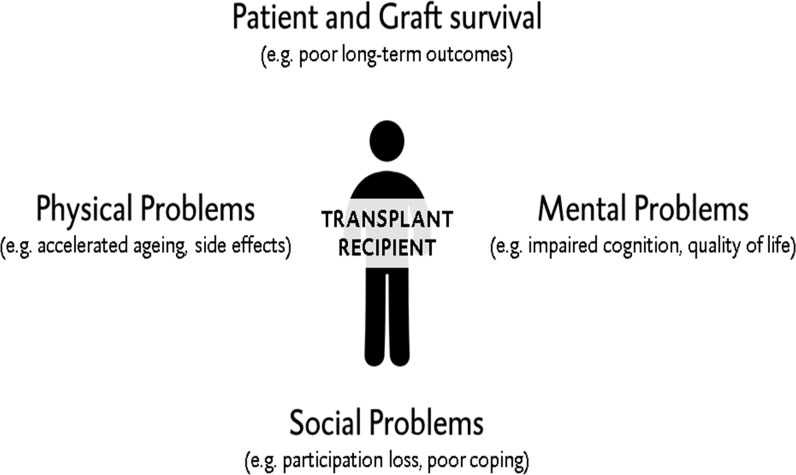

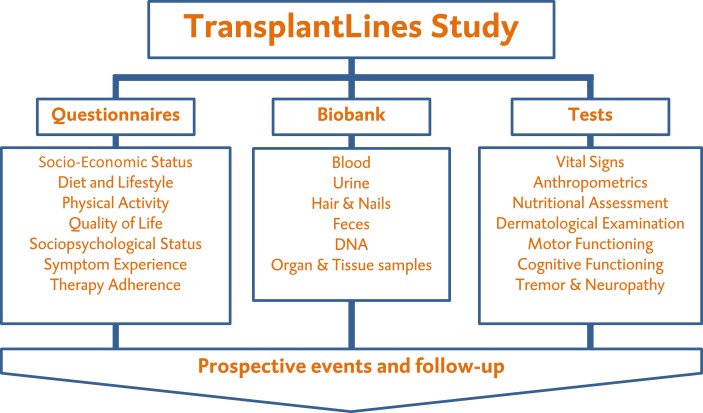
Verification
Claims the paper makes
The claims and statistics of this paper haven’t been checked yet.
Run the check — free, no account needed. It reads the open-access text and checks the sources it cites.
Claims other papers make about this one
Each is checked against this paper’s own text: does it say what the citing paper says it does?
The source backs part of the claim, not all of it — or backs it for a different population, condition or comparison.
In the citing paper
“was approved by the Institutional Review Board of the University Medical Center Groningen (UMCG; decision METc 2014/077 on 25 August 2014), adhered to the UMCG Biobank Regulation, the Declaration of Helsinki, and the Declaration of Istanbul, and collected informed consent from all the participants.”
From Pharmacometabolomics Study of Sulfamethoxazole and Trimethoprim in Kidney Transplant Recipients: Real-World Metabolism and Urinary Excretion (2025) · cites this paper as [25]
Experimental — accuracy not yet measured
Self-check
Percentages, sums and reported differences re-computed from the paper’s own numbers.
The self-check needs the paper’s full text.
Citations
Cites
The PHQ-9: Validity of a brief depression severity measure
Kroenke, K., Spitzer, R. L., & Williams, J. B. W. (2001) · Journal of General Internal Medicine · doi:10.1046/j.1525-1497.2001.016009606.x · Cited by 44,910
The Pittsburgh Sleep Quality Index: a new instrument for psychiatric practice and research
Buysse, D. J., Reynolds, C. F., Monk, T. H., Berman, S. R., & Kupfer, D. J. (1989) · Psychiatry Research · doi:10.1016/0165-1781(89)90047-4 · Cited by 35,234
(1992) · PubMed · Cited by 33,716
The MOS 36-ltem Short-Form Health Survey (SF-36): I. Conceptual Framework and Item Selection
Ware, J. E., & Sherbourne, C. D. (1992) · Medical Care · doi:10.1097/00005650-199206000-00002 · Cited by 30,033
Missing data: our view of the state of the art
Schafer, J. L., & Graham, J. W. (2002) · Psychological Methods · doi:10.1037/1082-989x.7.2.147 · Cited by 11,638
ATS Statement: Guidelines for the Six-Minute Walk Test
(2002) · American Journal of Respiratory and Critical Care Medicine · doi:10.1164/ajrccm.166.1.at1102 · Cited by 11,195
A global clinical measure of fitness and frailty in elderly people
Rockwood, K. (2005) · Canadian Medical Association Journal · doi:10.1503/cmaj.050051 · Cited by 8,968
Pearlin, L. I., & Schooler, C. (1978) · Journal of Health and Social Behavior · doi:10.2307/2136319 · Cited by 7,791
Pearlin, L. I., & Schooler, C. (1978) · PubMed · Cited by 6,764
Missing data analysis: making it work in the real world
Graham, J. W. (2009) · Annual Review of Psychology · doi:10.1146/annurev.psych.58.110405.085530 · Cited by 6,163
Research works printed but not linked: 3
- Schmand B , Lindeboom J , van Harskamp F . Nederlandse leestest voor volwassenen: handleiding (NLV). Amsterdam: Pearson Assessment and Information B.V, 1992.
- Wechsler D . WAIS-IV-NL: Wechsler Adult Intelligence Scale - Fourth Edition - Nederlandstalige bewerking: Technische handleiding en Afname en scoringshandleiding. Amsterdam: Pearson Assessment and Information B.V, 2012.
- Luteijn F , Barelds D . GIT2: Groninger Intelligentie Test 2. Amsterdam: Pearson Assessment and Information B.V, 2004.
Cited by
Sorted by citations
Characteristics and Dysbiosis of the Gut Microbiome in Renal Transplant Recipients
Swarte, J. C., Douwes, R. M., Hu, S., Vila, A. V., Eisenga, M. F., van Londen, M., Neto, A. W. G., Weersma, R. K., Harmsen, H. J. M., & Bakker, S. J. L. (2020) · Journal of Clinical Medicine · doi:10.3390/jcm9020386 · Cited by 110
Gut microbiome dysbiosis is associated with increased mortality after solid organ transplantation
Swarte, J. C., Li, Y., Hu, S., Björk, J. R., Gaćeša, R., Vila, A. V., Douwes, R. M., Collij, V., Kurilshikov, A., Post, A., et al. (2022) · Science Translational Medicine · doi:10.1126/scitranslmed.abn7566 · Cited by 102
ter Braake, A. D., Eelderink, C., Zeper, L. W., Pasch, A., Bakker, S. J. L., de Borst, M. H., Hoenderop, J. G. J., & de Baaij, J. H. F. (2019) · Nephrology Dialysis Transplantation · doi:10.1093/ndt/gfz190 · Cited by 89
Stam, S. P., Eisenga, M. F., Neto, A. W. G., van Londen, M., de Meijer, V. E., van Beek, A. P., Gansevoort, R. T., & Bakker, S. J. L. (2019) · Journal of Cachexia Sarcopenia and Muscle · doi:10.1002/jcsm.12399 · Cited by 48
de Jong, I. E. M., Overi, D., Carpino, G., Gouw, A. S. H., van den Heuvel, M. C., van Kempen, L. C. L. T., Mancone, C., Onori, P., Cardinale, V., Casadei, L., et al. (2021) · Hepatology · doi:10.1002/hep.32166 · Cited by 43
Metadata
- Authors
- Eisenga, M. F., Gomes-Neto, A. W., van Londen, M., Ziengs, A. L., Douwes, R. M., Stam, S. P., Osté, M. C. J., Knobbe, T. J., Hessels, N. R., Buunk, A. M., Annema, C., Siebelink, M. J., Racz, E., Spikman, J. M., Bodewes, F. A. J. A., Pol, R. A., Berger, S. P., Drost, G., Porte, R. J., Leuvenink, H. G. D., Damman, K., Verschuuren, E. A. M., de Meijer, V. E., Blokzijl, H., & Bakker, S. J. L.
- Affiliations
- University Medical Center Groningen (NL)
- Corresponding author
- Eisenga, Michele F
- ORCID
- Eisenga, Michele F
- Douwes, Rianne M
- Stam, Suzanne P
- Osté, Maryse C J
- Knobbe, Tim J
- Hessels, Niek R
- Buunk, Anne M
- Annema, Coby
- Siebelink, Marion J
- Spikman, Jacoba M
- Bodewes, Frank A J A
- Pol, Robert A
- Berger, Stefan P
- Drost, Gea
- Porte, Robert J
- Leuvenink, Henri G D
- Damman, Kevin
- Verschuuren, Erik A M
- Blokzijl, Hans
- Bakker, Stephan J L
- Venue
- BMJ Open
- Publisher
- BMJ
- Published
- 2018-12
- Volume
- 8
- Issue
- 12
- Pages
- e024502
- ISSN
- 2044-6055 (ISSN-L)
- PMC
- PMC6318532
- OpenAlex
- W2908082263
- Cited by
- 141
- References
- 77
- Citations by year
- 2026: 20 · 2025: 23 · 2024: 30 · 2023: 17 · 2022: 18 · 2021: 17 · 2020: 11 · 2019: 5
- FWCI
- 8.57
- Type
- journal article
- Language
- en
- Open access
- gold
- doi.org
- Licence
- cc-by-nc
- Locations
- BMJ Open (publishedVersion, cc-by-nc)
- Europe PMC (PubMed Central) (publishedVersion, cc-by-nc)
- PubMed Central (publishedVersion, cc-by-nc)
- PubMed (publishedVersion)
- EUR Research Repository (Erasmus University Rotterdam) (publishedVersion, other-oa)
- University of Groningen research database (University of Groningen / Centre for Information Technology) (publishedVersion, cc-by-nc)
- HighWire Press Open Archive (submittedVersion)
- University of Groningen research database (University of Groningen / Centre for Information Technology) (submittedVersion, cc-by-nc)
- University of Groningen research database (University of Groningen / Centre for Information Technology) (submittedVersion, other-oa)
- Funders
- Astellas BV
- Topics
- Health Sciences › Medicine › Surgery › Transplantation: Methods and Outcomes
- Health Sciences › Medicine › Surgery › Organ Transplantation Techniques and Outcomes
- Health Sciences › Medicine › Public Health, Environmental and Occupational Health › Organ Donation and Transplantation
- Keywords
- solid organ transplantation, living donor, transplant recipients, biobanks, graft failure, mortality, graft rejection, long-term outcomes, risk factors, biomarkers, post-transplant complications, diabetes mellitus, cardiovascular disease, quality of life, sleep disorders, neurological complications
- MeSH terms
- Graft Survival, Humans, Netherlands, Tissue and Organ Procurement, Prospective Studies, Research Design, Time Factors, Tissue Banks, Organ Transplantation, Living Donors, Observational Studies as Topic, Transplant Recipients
About these checks
Registry, retraction, Cites and statistics results are computed, not judged, with one exception: a printed reference that no index lists is read once by a model before it counts as a citation error. Claims are extracted by a model and kept only when their quote appears verbatim in the text; each cited source is then checked, with a model’s help, for whether it says what the claim relies on. Those verdicts can be wrong — read the claim’s quote and the cited source before relying on one.
Statistics and arithmetic are recomputed, not judged.
Confidence bands are shown only for fields calibrated on our annotated test set. None is calibrated yet, so no band is shown.
What counts as a claim ›How we measure confidence ›How we check this ›
Are you an author, or do you see a problem with this page? Request a review
