

Pharmacometabolomics Study of Sulfamethoxazole and Trimethoprim in Kidney Transplant Recipients: Real-World Metabolism and Urinary Excretion
Open accessThe DOI matches its Crossref record; 44 of the 45 references it cites were found in a registry or an index; 8 of the 32 sources its claims cite were checked for support.
Abstract
Background/Objectives: The increased use of antibiotics is raising concerns about environmental contamination and antibiotic resistance, exemplified by the case of cotrimoxazole, a widely prescribed combination of sulfamethoxazole and trimethoprim. After oral administration and absorption, both drugs are excreted in their parent and metabolized forms, which is a factor that is commonly considered in environmental studies. Many studies, however, rely on pharmacokinetic data from drug developers, who mostly investigate drug metabolism in healthy male volunteers rather than in actual patient populations. Methods: We investigated the real-world metabolism and urinary excretion of cotrimoxazole in an LC-SWATH/MS-based pharmacometabolomics study of 149 kidney transplant recipients who took part in the TransplantLines Biobank and Cohort Study (NCT0327284). Results: Our study confirmed (as “putatively characterized compound classes”) the presence of all the expected metabolites, and we (putatively) identified several previously unreported metabolites, including glucuronide conjugates of both drugs and two isoxazole ring-opened variants of sulfamethoxazole. The relative metabolite profiles furthermore indicated that the active drug trimethoprim accounted for 75% of the total signal intensity. For sulfamethoxazole, its acetylated metabolite was the main metabolite (59%), followed by the active parent drug (17%) and its glucuronide (7%). Alongside trimethoprim, these substances could serve as analytical targets for environmental cotrimoxazole monitoring, given their abundance (all three substances), activity (parent drug), and/or back-transformation potential (both conjugated metabolites). The isoxazole ring-opened variants (2–3%) may also warrant attention, considering their (presumed) absolute excreted quantities and potential pharmacological activity. Conclusions: This study underscores the value of pharmacometabolomics in elucidating real-world metabolite profiles, and it provides novel insights into cotrimoxazole metabolism and excretion, with implications for environmental and clinical monitoring.
Overview
CoChat Summary
TL;DR
This pharmacometabolomics study used LC-SWATH/MS on 24 h urine from kidney transplant recipients to characterize real-world cotrimoxazole metabolism and urinary excretion. It confirmed expected trimethoprim and sulfamethoxazole metabolites, identified previously unreported conjugates and isoxazole ring-opened sulfamethoxazole variants, and proposed trimethoprim, sulfamethoxazole, and acetylsulfamethoxazole as key analytical targets.
Key findings
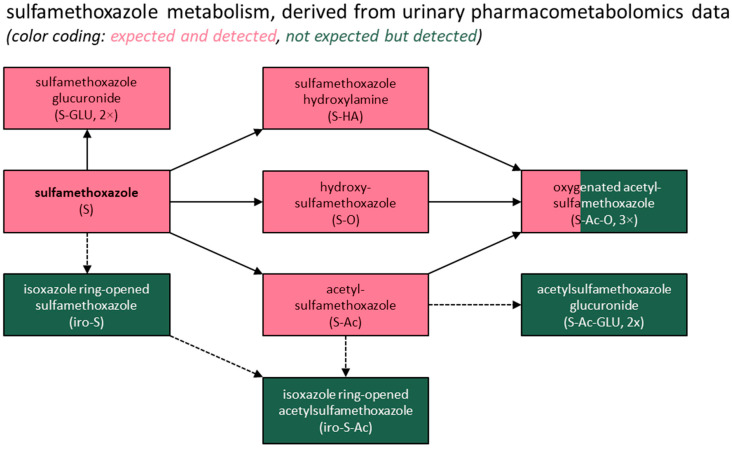
- In 149 kidney transplant recipients using cotrimoxazole, trimethoprim accounted for 75% of total trimethoprim-associated signal intensity; for sulfamethoxazole, acetylsulfamethoxazole was the main substance at 59%, followed by parent sulfamethoxazole at 17% and sulfamethoxazole glucuronide at 7%.
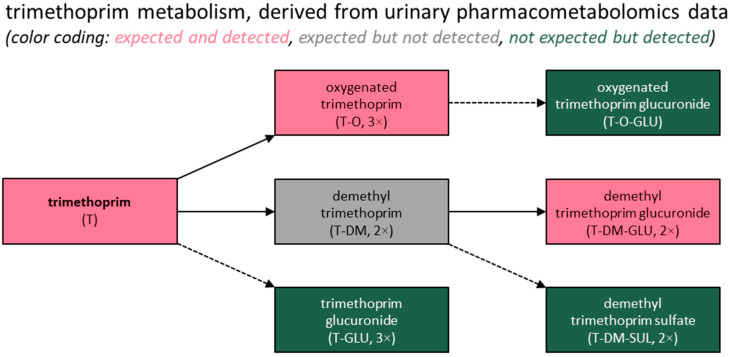
- The study identified 13 sulfamethoxazole-associated signals and 12 trimethoprim-associated signals; all expected metabolites were detected except two demethylated trimethoprim forms, while glucuronide conjugates of those two metabolites were found.
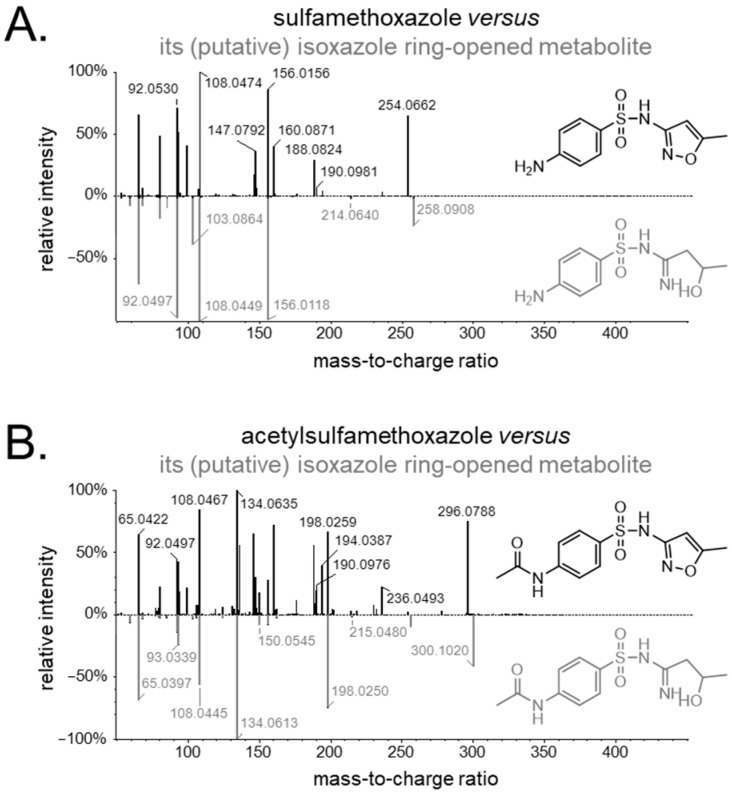
- Previously unreported metabolites included glucuronide conjugates of both drugs and two isoxazole ring-opened variants of sulfamethoxazole and acetylsulfamethoxazole; the ring-opened variants accounted for 1.6% and 3.0% of total sulfamethoxazole-associated signal intensities.
- The authors suggest trimethoprim, sulfamethoxazole, and acetylsulfamethoxazole—and potentially sulfamethoxazole glucuronide—as logical targets for environmental cotrimoxazole monitoring based on abundance, activity, and/or back-transformation potential.
Methods
- Existing 24 h urine pharmacometabolomics data from kidney transplant recipients in the TransplantLines Biobank and Cohort Study were analyzed; samples were taken at 3, 12, and 24 months after transplantation, and 149 participants used cotrimoxazole.
- Untargeted data-independent acquisition was performed using reversed-phase liquid chromatography coupled with time-of-flight mass spectrometry in SWATH mode; drug exposure for sulfamethoxazole and trimethoprim was based on urinary PMx data.
- Feature selection started with 103,681 features; 1,033 were significantly associated with PMx-verified sulfamethoxazole exposure, and 23 remained after excluding isotopes, adducts, in-source fragments, low-abundance features, and wrong-direction associations. Metabolites were manually assessed with PeakView and signal intensities extracted with MultiQuant at 3 months to calculate relative metabolite profiles.
Limitations
- The authors state the study includes individuals from a single, confined geographical area and a transplantation setting, while cotrimoxazole is used globally and chronically by other immunocompromised groups.
- The authors note untargeted analytical techniques in a non-regulatory environment applied to biobanked samples, with possible preanalytical bias including timing of cotrimoxazole intake relative to the 24 h urine collection and storage conditions; the technique provided only relative quantitative estimates.
- The authors state most reported substances were “level 3” identifications or “putatively characterized compound classes,” requiring further confirmatory studies with synthesized substances and complementary techniques; biobanked samples may not fully reflect metabolites at excretion or environmental entry, and the study did not correct for anthropometric, demographic, exposure, genetic, or (patho)physiological factors.
Model-written summary. Check it against the paper before relying on it.
Integrity signals
Registry
Cites
Statistics
Figures
Verification
Claims the paper makes
6 Valid · 1 Not valid · 16 Not checked · 28 Own results and interpretations
The sources with a verdict support this claim; the rest weren’t checked yet, have no full text we could read, or their verdicts aren’t rated yet.
In the paper
“trimethoprim is considered to be chemically stable in various environmental samples [37,38]”
§ Pharmacometabolomics Study of Sulfamethoxazole and Trimethoprim in Kidney Transplant Recipients: Real-World Metabolism and Urinary Excretion > 4. Discussion
What the sources say
- Supportedcites [37] Straub J. An Environmental Risk Assessment for Human-Use Trimethoprim in European Surface Waters Antibiotics 2013 2 115 162 10.3390/antibiotics2010115 27029296 PMC4790302 source
In §2.2 (Environmental Fate of TMP), the paper says hydrolysis and aquatic photodegradation are generally not significant in fresh and seawater, and that trimethoprim degrades only slowly under natural sunlight. This supports the characterization of chemical stability in various environmental water samples, although the section notes exceptions under particular conditions. (LLM, conf=0.86)
- Not checked — no full text of the sourcecites [38] Mpatani F.M. Aryee A.A. Kani A.N. Han R. Li Z. Dovi E. Qu L. A Review of Treatment Techniques Applied for Selective Removal of Emerging Pollutant-Trimethoprim from Aqueous Systems J. Clean. Prod. 2021 308 127359 10.1016/j.jclepro.2021.127359 source
plain- Asserted: passes — The authors put it forward as true.
- Checkable: passes — It can be checked against evidence.
- Load-bearing: passes — The paper’s conclusions depend on it.
- Based: passes — The paper gives a reason why it holds.
- Supported
The cited sources support only part of this claim — read each source’s verdict below.
In the paper
“the relative contribution of trimethoprim that we found appears consistent with the excretion fractions reported in recent environmental studies [2,36].”
§ Pharmacometabolomics Study of Sulfamethoxazole and Trimethoprim in Kidney Transplant Recipients: Real-World Metabolism and Urinary Excretion > 4. Discussion
What the sources say
- Partly supportedcites [2] Zillien C. Groenveld T. Schut O. Beeltje H. Blanco-Ania D. Posthuma L. Roex E. Ragas A. Assessing City-Wide Pharmaceutical Emissions to Wastewater via Modelling and Passive Sampling Environ. Int. 2024 185 108524 10.1016/j.envint.2024.108524 38458114 sourceExperimental — accuracy not yet measured
Section 2.4 says the study used literature-based excretion fractions to estimate pharmaceutical emissions, and Section 3.1 reports that trimethoprim’s estimated emissions agreed well with wastewater measurements. The copy does not give a trimethoprim-specific excretion fraction or compare it with the citing authors’ observed relative contribution, so that comparison is not directly supported. (LLM, conf=0.72)
- Could not verifycites [36] Meyer C. Stravs M.A. Hollender J. How Wastewater Reflects Human Metabolism─Suspect Screening of Pharmaceutical Metabolites in Wastewater Influent Environ. Sci. Technol. 2024 58 9828 9839 10.1021/acs.est.4c00968 38785362 PMC11154963 sourceExperimental — accuracy not yet measured
The Results and Discussion section, “Literature vs Monitored Metabolites/Parent Ratios” (page unavailable), compares measured ratios with literature expectations for other pharmaceuticals. Searches for trimethoprim and its excretion fraction returned no passage addressing whether the citing authors’ observed contribution is consistent with a reported fraction. (LLM, conf=0.73)
hedgedstates an association- Asserted: passes — The authors put it forward as true.
- Checkable: passes — It can be checked against evidence.
- Load-bearing: passes — The paper’s conclusions depend on it.
- Based: passes — The paper gives a reason why it holds.
- Partly supported
The cited sources support only part of this claim — read each source’s verdict below.
In the paper
“Despite most of the reported substances being ‘level 3’ identifications, or belonging to ‘putatively characterized compound classes’ (focusing on their accurate mass and spectral similarity to known compounds) [44], according to the Metabolomics Standards Initiative [45]”
§ Pharmacometabolomics Study of Sulfamethoxazole and Trimethoprim in Kidney Transplant Recipients: Real-World Metabolism and Urinary Excretion > 4. Discussion
What the sources say
- Partly supportedcites [44] Klont F. Kremer D. Gomes Neto A.W. Berger S.P. Touw D.J. Hak E. Bonner R. Bakker S.J.L. Hopfgartner G. Metabolomics Data Complemented Drug Use Information in Epidemiological Databases: Pilot Study of Potential Kidney Donors J. Clin. Epidemiol. 2021 135 10 16 10.1016/j.jclinepi.2021.02.008 33577985 sourceExperimental — accuracy not yet measured
Section 2.5 (Data processing) states that compounds were 'putatively' identified citing Sumner et al. 2007 (ref [14], the MSI Chemical Analysis Working Group minimum reporting standards), i.e. without chemical reference standards but based on accurate mass and spectral similarity to public/commercial spectral libraries — this backs the substance of the claim's parenthetical. However, our copy nowhere uses the MSI terms 'level 3' or 'putatively characterized compound classes' (searched: 'level 3', 'putatively characterized compound classes', 'confidence level', MSI), and nowhere quantifies that most reported substances fell in such a tier; the Results sections (3.1, 3.2) report identification counts and scores (85% MS-DIAL, 80% MasterView) but no MSI level assignment. The specific level-3/class designation attributed to this source is therefore not supported by our copy (any such tabulation would sit in the Supplementary Results/Tables, which we do not hold). (LLM, conf=0.72)
- Supportedcites [45] Sumner L.W. Amberg A. Barrett D. Beale M.H. Beger R. Daykin C.A. Fan T.W.M. Fiehn O. Goodacre R. Griffin J.L. Proposed Minimum Reporting Standards for Chemical Analysis: Chemical Analysis Working Group (CAWG) Metabolomics Standards Initiative (MSI) Metabolomics 2007 3 211 221 10.1007/s11306-007-0082-2 24039616 PMC3772505 source
Section 2.9 defines level 3 as “putatively characterized compound classes,” based on characteristic physicochemical properties or spectral similarity to known compounds of a chemical class. The source is cited for that MSI classification; the statement that most substances in the citing study fell into this category is the citing authors’ own description. (LLM, conf=0.91)
plain- Asserted: passes — The authors put it forward as true.
- Checkable: passes — It can be checked against evidence.
- Load-bearing: unclear — It is unclear whether the paper’s conclusions depend on it.
- Based: passes — The paper gives a reason why it holds.
- Partly supported
The cited sources support only part of this claim — read each source’s verdict below.
In the paper
“typically including around five healthy male volunteers receiving a single dose of the investigational drug [20].”
§ Pharmacometabolomics Study of Sulfamethoxazole and Trimethoprim in Kidney Transplant Recipients: Real-World Metabolism and Urinary Excretion > 1. Introduction
What the sources say
- Partly supportedcites [20] Ramamoorthy A. Bende G. Chow E.C.Y. Dimova H. Hartman N. Jean D. Pahwa S. Ren Y. Shukla C. Yang Y. Human Radiolabeled Mass Balance Studies Supporting the FDA Approval of New Drugs Clin. Transl. Sci. 2022 15 2567 2575 10.1111/cts.13403 36066467 PMC9652429 sourceExperimental — accuracy not yet measured
The Study Population section says mass balance studies are mostly conducted in healthy male volunteers, and the Investigational Drug Route, Dose, and Formulation section reports that 97% were single-dose studies. The sample-size detail differs: the Study Population section reports a typical sample size of six, with six also the recommended minimum, rather than around five. (LLM, conf=0.87)
plainn = 5- Asserted: passes — The authors put it forward as true.
- Checkable: passes — It can be checked against evidence.
- Load-bearing: passes — The paper’s conclusions depend on it.
- Based: passes — The paper gives a reason why it holds.
- Partly supported
A result the paper reports from its own data — it cites no other source for it, so there is none to check. The quote shows it is in the paper.
In the paper
“these were solely observed in samples from individuals exposed to cotrimoxazole.”
§ Pharmacometabolomics Study of Sulfamethoxazole and Trimethoprim in Kidney Transplant Recipients: Real-World Metabolism and Urinary Excretion > 4. Discussion
plainstates an association- Asserted: passes — The authors put it forward as true.
- Checkable: passes — It can be checked against evidence.
- Load-bearing: passes — The paper’s conclusions depend on it.
- Based: passes — The paper gives a reason why it holds.
23 more claims
Create a free account to see all 51 claims and every source verdict.
- Probably not a substantial claim. 10
- It may state two separate claims as one. 15
- The quote only partly states this claim. 1
Self-check
Percentages, sums and reported differences re-computed from the paper’s own numbers.
Each contradiction between two passages listed here was confirmed by an independent check.
Rated minor: it would not touch a result — a value no result rests on, a p-value that stays on the same side of the significance level, or a conflict that is clerical, resolved elsewhere in the paper, or outside its own findings.
In the paper
§ Pharmacometabolomics Study of Sulfamethoxazole and Trimethoprim in Kidney Transplant Recipients: Real-World Metabolism and Urinary Excretion > Abstract
“TransplantLines Biobank and Cohort Study (NCT0327284)”
§ Pharmacometabolomics Study of Sulfamethoxazole and Trimethoprim in Kidney Transplant Recipients: Real-World Metabolism and Urinary Excretion > 2. Materials and Methods > 2.1. Clinical and Pharmacometabolomics Data
“TransplantLines Biobank and Cohort Study (NCT identifier ‘NCT03272841’)”
Citations
Cites
Sumner, L. W., Amberg, A., Barrett, D., Beale, M. H., Beger, R., Daykin, C. A., Fan, T. W.-M., Fiehn, O., Goodacre, R., Griffin, J. L., et al. (2007) · Metabolomics · doi:10.1007/s11306-007-0082-2 · Cited by 5,368 · cited 1×
“…identifications, or belonging to ‘putatively characterized compound classes’ (focusing on their accurate mass and spectral similarity to known compounds) [44], according to the Metabolomics Standards Initiative [45], these were solely observed in samples from individuals exposed to cotrimoxazole.”
Gillet, L. C., Navarro, P., Tate, S., Röst, H., Selevsek, N., Reiter, L., Bonner, R., & Aebersold, R. (2012) · Molecular & Cellular Proteomics · doi:10.1074/mcp.o111.016717 · Cited by 2,877 · cited 1×
“PMx analyses were performed in an untargeted, data-independent acquisition (DIA) mode using reversed-phase liquid chromatography coupled with time-of-flight (TOF) mass spectrometry conducted in the ‘SWATH’ acquisition mode, first described by Hopfgartner et al. [27] and Gillet et al. [28] in 2012.”
Occurrence of Antibiotics in the Aquatic Environment
Hirsch, R., Ternes, T., Haberer, K., & Kratz, K.-L. (1999) · Science of The Total Environment · doi:10.1016/s0048-9697(98)00337-4 · Cited by 2,140
Collapse of a fish population after exposure to a synthetic estrogen
Kidd, K. A., Blanchfield, P. J., Mills, K. H., Palace, V. P., Evans, R. E., Lazorchak, J. M., & Flick, R. W. (2007) · Proceedings of the National Academy of Sciences · doi:10.1073/pnas.0609568104 · Cited by 2,094
Antibiotic resistance genes in water environment
Zhang, X.-X., Zhang, T., & Fang, H. H. P. (2009) · Applied Microbiology and Biotechnology · doi:10.1007/s00253-008-1829-z · Cited by 998 · cited 1×
“This last group of medicines in particular is raising increasing concern, with antibiotic resistance genes having been discovered in microorganisms found in groundwater, surface water, sewage water, wastewater treatment plants, and even drinking water [9].”
Göbel, A., Thomsen, A., McArdell, C. S., Joss, A., & Giger, W. (2005) · Environmental Science & Technology · doi:10.1021/es048550a · Cited by 760
Antibiotics in the environment: causes and consequences
Polianciuc, S. I., Gurzău, A. E., Kiss, B., Ștefan, M. G., & Loghin, F. (2020) · Medicine and Pharmacy Reports · doi:10.15386/mpr-1742 · Cited by 692 · cited 1×
“To illustrate this, medicines like painkillers can cause organ damage in fish, contraceptives can contribute to the feminization of male fish, antidepressants can alter fish behavior, and antibiotics can increase bacterial resistance [5–8].”
Rodriguez-Mozaz, S., Vaz-Moreira, I., Varela Della Giustina, S., Llorca, M., Barceló, D., Schubert, S., Berendonk, T. U., Michael-Kordatou, I., Fatta-Kassinos, D., Martinez, J. L., et al. (2020) · Environment International · doi:10.1016/j.envint.2020.105733 · Cited by 667
Boxall, A. B. A. (2004) · EMBO reports · doi:10.1038/sj.embor.7400307 · Cited by 575 · cited 1×
“The consequences of such contamination can affect the health and behavior of organisms living in this ecosystem and potentially pose risks to human health [4,5].”
Ecological effects of pharmaceuticals in aquatic systems—impacts through behavioural alterations
Brodin, T., Piovano, S., Fick, J., Klaminder, J., Heynen, M., & Jonsson, M. (2014) · Philosophical Transactions of the Royal Society B: Biological Sciences · doi:10.1098/rstb.2013.0580 · Cited by 499 · cited 2×
“The consequences of such contamination can affect the health and behavior of organisms living in this ecosystem and potentially pose risks to human health [4,5].”
Cited by
Contrasting persistence and sediment retention of pharmaceuticals in aquaculture systems
Cristaudo, F., Calza, P., Phuriragpitikhon, J., Hemwech, P., Giunchino, F., Sicuro, B., & Fabbri, D. (2026) · Aquaculture Reports · doi:10.1016/j.aqrep.2026.103624 · Cited by 1
Metadata
- Authors
- Hof, M. A. J., de Haan, H., Stepanovic, S., Bakker, S. J. L., Hak, E., Hopfgartner, G., Klont, F., & Investigators, T.
- Affiliations
- University of Groningen (NL)
- Unit of PharmacoTherapy, -Epidemiology & -Economics, Groningen Research Institute of Pharmacy, University of Groningen, Antonius Deusinglaan 1, 9713 AV Groningen, The Netherlands
- University of Geneva (CH)
- University Medical Center Groningen (NL)
- Life Sciences Mass Spectrometry, Department of Inorganic and Analytical Chemistry, University of Geneva, Quai Ernest Ansermet 24, 1211 Genève, Switzerland
- Corresponding author
- Klont, Frank
- ORCID
- Venue
- Metabolites
- Publisher
- MDPI AG
- Published
- 2025-07-11
- Volume
- 15
- Issue
- 7
- Pages
- 473
- ISSN
- 2218-1989 (ISSN-L)
- PMC
- PMC12299322
- OpenAlex
- W4412194071
- Cited by
- 1
- References
- 45
- Citations by year
- 2026: 1
- FWCI
- 0.24
- Type
- journal article
- Language
- en
- Open access
- gold
- doi.org
- Licence
- Locations
- Metabolites (publishedVersion, cc-by)
- PubMed Central (publishedVersion, cc-by)
- PubMed (publishedVersion)
- DOAJ (DOAJ: Directory of Open Access Journals) (submittedVersion, cc-by-sa)
- University of Groningen research database (University of Groningen / Centre for Information Technology) (submittedVersion, cc-by)
- Funders
- Netherlands Organisation for Scientific Research, NWO (Applied and Engineering Sciences domain) (19060, TransplantLines Biobank and Cohort Study, PA-SP/PRJ-2020-9136, 14939, PPP-2019-032, PPP-2022-015)
- Astellas BV (19060, TransplantLines Biobank and Cohort Study, PA-SP/PRJ-2020-9136, 14939, PPP-2019-032, PPP-2022-015)
- Chiesi Pharmaceuticals BV (19060, TransplantLines Biobank and Cohort Study, PA-SP/PRJ-2020-9136, 14939, PPP-2019-032, PPP-2022-015)
- NWO/TTW via a partnership program with DSM Animal Nutrition and Health, the Netherlands (19060, TransplantLines Biobank and Cohort Study, PA-SP/PRJ-2020-9136, 14939, PPP-2019-032, PPP-2022-015)
- Dutch Ministry of Economic Affairs and Climate Policy by means of so-called PPP allowances, made available by the Top Sector Life Sciences & Health to stimulate public–private partnerships (19060, TransplantLines Biobank and Cohort Study, PA-SP/PRJ-2020-9136, 14939, PPP-2019-032, PPP-2022-015)
- Topics
- Physical Sciences › Environmental Science › Pollution › Pharmaceutical and Antibiotic Environmental Impacts
- Life Sciences › Biochemistry, Genetics and Molecular Biology › Molecular Biology › Metabolomics and Mass Spectrometry Studies
- Life Sciences › Pharmacology, Toxicology and Pharmaceutics › Pharmacology › Pharmacogenetics and Drug Metabolism
- Keywords
- sulfamethoxazole, trimethoprim, trimethoprim-sulfamethoxazole, pharmacometabolomics, kidney transplant recipients, drug metabolism, urinary excretion, glucuronide conjugates, environmental monitoring, antibiotic resistance
About these checks
Registry, retraction, Cites and statistics results are computed, not judged, with one exception: a printed reference that no index lists is read once by a model before it counts as a citation error. Claims are extracted by a model and kept only when their quote appears verbatim in the text; each cited source is then checked, with a model’s help, for whether it says what the claim relies on. Those verdicts can be wrong — read the claim’s quote and the cited source before relying on one.
The claim verdicts this report counts are experimental: their accuracy is not yet measured.
A language model drew the claims from the paper on 2026-10-10, under version 3 of the claim definition (model deepseek-v4.1-flash, prompt extract-v3).
A second model labelled each claim on 2026-10-10 (model jev-1.13-20260917, definition revision gold-guideline-v0.2).
Cited sources are checked with a language model’s help (gpt-6-sol and qwen3.8-omni-flash).
Statistics and arithmetic are recomputed, not judged.
Confidence bands are shown only for fields calibrated on our annotated test set. None is calibrated yet, so no band is shown.
What counts as a claim ›How we measure confidence ›How we check this ›
Are you an author, or do you see a problem with this page? Request a review
How to cite
Cite CoChat for the checks on this page, and the paper for its own findings.
- This page
- CoChat. (2026). Citation check: Pharmacometabolomics Study of Sulfamethoxazole and Trimethoprim in Kidney Transplant Recipients: Real-World Metabolism and Urinary Excretion. https://app.cochat.ai/papers/10.3390/metabo15070473
- The paper
- Hof, M. A. J., de Haan, H., Stepanovic, S., Bakker, S. J. L., Hak, E., Hopfgartner, G., Klont, F., & Investigators, T. (2025). Pharmacometabolomics Study of Sulfamethoxazole and Trimethoprim in Kidney Transplant Recipients: Real-World Metabolism and Urinary Excretion. Metabolites. https://doi.org/10.3390/metabo15070473
Data sources
Bibliographic data: Semantic Scholar, OpenAlex, Crossref.
Contains information from the Semantic Scholar Academic Graph Datasets, made available under the ODC Attribution License (ODC-BY 1.0).
Semantic Scholar’s data is described in: Kinney, R., et al. (2023). The Semantic Scholar Open Data Platform. arXiv:2301.10140.
