

Work-related psychosocial risk factors for stress-related mental disorders: an updated systematic review and meta-analysis
Open accessThe DOI matches its Crossref record; 37 of the 40 references it cites were found in a registry or an index; 30 of the 63 sources its claims cite were checked for support.
Abstract
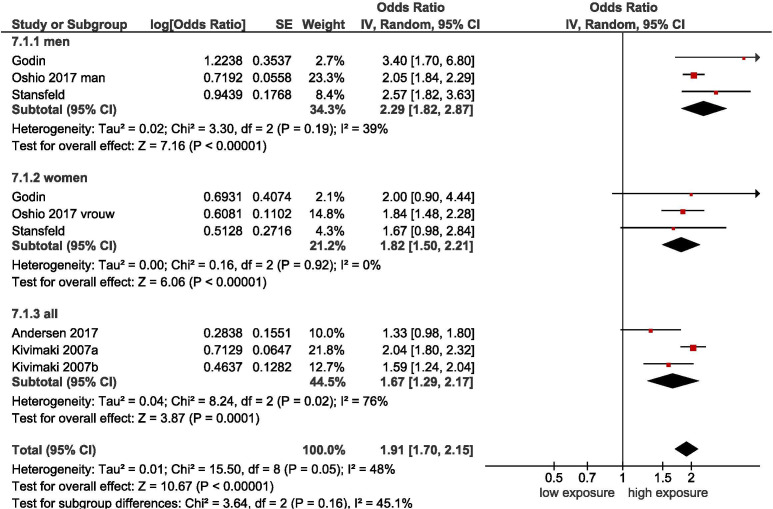
Objective: The objective was to conduct an update of a previously published review and meta-analysis on the association between work-related psychosocial risk factors and stress-related mental disorders (SRD). Design: Systematic review and meta-analysis. Data sources: Medline, Embase and PsycINFO were searched for articles published between 2008 and 12 August 2019 and references of a systematic review performed for the period before 2008 were included. Primary prospective studies were included when outcome data were described in terms of SRD assessment or a dichotomous outcome, based on a validated questionnaire, and at least two levels of work-related exposure were reported (exposed vs less or non-exposed). We used GRADE to assess the evidence for the associations between risk factors and the onset of SRD. Results: Seventeen studies met the inclusion criteria. In total, a population of 73 874 workers from Belgium, Denmark, England, Finland, Japan, the Netherlands and Sweden were included in the meta-analysis of 14 prospective cohort studies. This meta-analysis revealed moderate evidence for associations between SRD and effort reward imbalance (OR=1.9, 95% CI 1.70 to 2.15), high job demands (OR=1.6, 95% CI 1.41 to 1.72), organisational justice (ORs=1.6 to 1.7, CIs 1.44 to 1.86), social support (ORs=1.3 to 1.4, CIs 1.16 to 1.69), high emotional demands (OR=1.6, 95% CI 1.35 to 1.84) and decision authority (OR=1.3, CI 1.20 to 1.49). No significant or inconsistent associations were found for job insecurity, decision latitude, skill discretion and bullying. Conclusion: Moderate evidence was found that work-related psychosocial risk factors are associated with a higher risk of SRD. Effort-reward imbalance, low organisational justice and high job demands exhibited the largest increased risk of SRD, varying from 60% to 90%.
Overview
CoChat Summary
TL;DR
This updated systematic review and meta-analysis found moderate evidence that several work-related psychosocial risk factors increase the incidence of stress-related mental disorders (SRD). Effort-reward imbalance, low organisational justice, and high job demands showed the largest increased risks, varying from 60% to 90%.
Key findings
- In 14 prospective cohort studies including 73,874 workers from Belgium, Denmark, England, Finland, Japan, the Netherlands, and Sweden, moderate evidence supported associations between SRD and effort-reward imbalance (OR=1.9, 95% CI 1.70 to 2.15), high job demands (OR=1.6, 95% CI 1.41 to 1.72), organisational justice (ORs=1.6 to 1.7, CIs 1.44 to 1.86), social support (ORs=1.3 to 1.4, CIs 1.16 to 1.69), high emotional demands (OR=1.6, 95% CI 1.35 to 1.84), and decision authority (OR=1.3, CI 1.20 to 1.49).
- No significant or inconsistent associations were found for job insecurity, decision latitude, skill discretion, and bullying.
- Job insecurity had low-quality evidence for increased SRD in men (OR=1.63, 95% CI 1.18 to 2.27) but not women (OR=0.94, 95% CI 0.56 to 1.59).
- Bullying and violence showed very low-quality, inconsistent evidence, with ORs varying from 1.42 (95% CI 0.42 to 4.79) to 3.64 (95% CI 0.83 to 15.92).
Methods
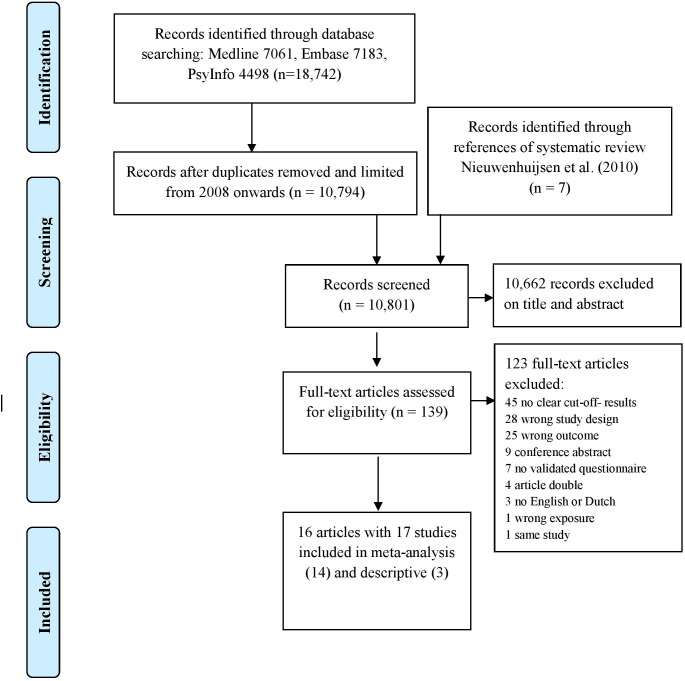
- Systematic review and meta-analysis updating a previous review; Medline, Embase, and PsycINFO were searched for articles published between 2008 and 12 August 2019, and references from the prior review were included for pre-2008 studies.
- Eligible studies were primary prospective cohort studies with SRD assessed by validated questionnaire or dichotomous outcome and at least two levels of work-related exposure; 17 studies met inclusion criteria, and 14 prospective cohort studies were included in the meta-analysis.
- Random-effects meta-analysis used log-transformed ORs and SEs in Review Manager; GRADE was used to assess quality of evidence, starting at moderate for prospective cohort studies identifying prognostic factor associations.
Limitations
- The paper states limitations including lack of harmonised assessments of SRD and detailed exposure assessment in the identified observational cohort studies.
- The paper notes that exposure categories and SRD case definitions varied, that reporting bias is a concern because both psychosocial factors and SRD were self-reported, and that only 4 of 17 prospective studies collected outcome data at three or more time points.
- The text also makes evident that meta-analyses were limited by few studies per risk factor, heterogeneity in measurement instruments and dichotomisation rules, and that bullying/violence could not be meta-analysed because of differing concepts; funnel plots were not provided because fewer than 10 cohort studies were available per risk factor.
Model-written summary. Check it against the paper before relying on it.
Integrity signals
Registry
Cites
Statistics
Figures
Verification
Claims the paper makes
19 Valid · 2 Not valid · 9 Not checked · 40 Own results and interpretations
The cited sources support only part of this claim — read each source’s verdict below.
In the paper
“No statistically significant difference between subgroups of men and women was found.16 18 25”
§ Work-related psychosocial risk factors for stress-related mental disorders: an updated systematic review and meta-analysis > Results > Psychosocial risk factors and SRD
What the sources say
- Could not verifycites [16] Stansfeld SA, Fuhrer R, Shipley MJ, et al Work characteristics predict psychiatric disorder: prospective results from the Whitehall II study. Occup Environ Med 1999; 56: 302– 7. 10.1136/oem.56.5.302 10472303 PMC1757742 sourceExperimental — accuracy not yet measured
The Results report an association between high effort and low reward and psychiatric disorder, and Table 1 presents analyses separately for men and women. Our copy does not report a statistical test comparing the men's and women's effort–reward imbalance subgroups or state that their difference was nonsignificant (searched for sex differences and interactions). (LLM, conf=0.74)
- Supportedcites [18] Godin I, Kittel F, Coppieters Y, et al A prospective study of cumulative job stress in relation to mental health. BMC Public Health 2005; 5: 67. 10.1186/1471-2458-5-67 15958170 PMC1177967 source
Table 2 (Data collection) compares men and women across the four effort–reward imbalance groups and labels the sex comparison “ns,” indicating no statistically significant difference in their group distributions. This supports the claim about the subgroups, rather than a claim that stress had identical mental-health effects in men and women. (LLM, conf=0.93)
- Could not verifycites [25] Oshio T, Inoue A, Tsutsumi A Examining the mediating effect of work-to-family conflict on the associations between job stressors and employee psychological distress: a prospective cohort study. BMJ Open 2017; 7: e015608. 10.1136/bmjopen-2016-015608 PMC5724069 28775183 sourceExperimental — accuracy not yet measured
The Results present effort–reward imbalance estimates separately for men and women and describe the findings as largely similar, while also noting some gender differences. They do not report a statistical test establishing that the difference between men and women for effort–reward imbalance was nonsignificant (searched for gender-difference and significance terms). (LLM, conf=0.72)
plain- Asserted: passes — The authors put it forward as true.
- Checkable: passes — It can be checked against evidence.
- Load-bearing: unclear — It is unclear whether the paper’s conclusions depend on it.
- Based: passes — The paper gives a reason why it holds.
- Could not verify
The cited sources that could be checked couldn’t confirm or dispute this claim.
In the paper
“No statistically significant difference between subgroups of men and women was found.3 25”
§ Work-related psychosocial risk factors for stress-related mental disorders: an updated systematic review and meta-analysis > Results > Psychosocial risk factors and SRD
What the sources say
- Not checked — no full text of the sourcecites [3] Inoue A, Kawakami N, Tsuno K, et al Organizational justice and psychological distress among permanent and non-permanent employees in Japan: a prospective cohort study. Int J Behav Med 2013; 20: 265– 76. 10.1007/s12529-012-9224-7 22314665 source
- Could not verifycites [25] Oshio T, Inoue A, Tsutsumi A Examining the mediating effect of work-to-family conflict on the associations between job stressors and employee psychological distress: a prospective cohort study. BMJ Open 2017; 7: e015608. 10.1136/bmjopen-2016-015608 PMC5724069 28775183 sourceExperimental — accuracy not yet measured
The Methods section measures procedural and interactional justice, but does not identify a measure called relational justice. The Results report separate estimates for men and women and describe some gender differences; they do not report a statistical test establishing no difference between the subgroups for either justice measure (pages unavailable in our copy). (LLM, conf=0.72)
plain- Asserted: passes — The authors put it forward as true.
- Checkable: passes — It can be checked against evidence.
- Load-bearing: unclear — It is unclear whether the paper’s conclusions depend on it.
- Based: passes — The paper gives a reason why it holds.
The sources with a verdict support this claim; the rest weren’t checked yet, have no full text we could read, or their verdicts aren’t rated yet.
In the paper
“Six studies also controlled for other work-related psychosocial risk factors in various models.3 19 20 22 27”
§ Work-related psychosocial risk factors for stress-related mental disorders: an updated systematic review and meta-analysis > Discussion > Psychosocial risk factors and SRD
What the sources say
- Not checked — no full text of the sourcecites [3] Inoue A, Kawakami N, Tsuno K, et al Organizational justice and psychological distress among permanent and non-permanent employees in Japan: a prospective cohort study. Int J Behav Med 2013; 20: 265– 76. 10.1007/s12529-012-9224-7 22314665 source
- Supportedcites [19] Kivimäki M, Vahtera J, Elovainio M, et al Effort-reward imbalance, procedural injustice and relational injustice as psychosocial predictors of health: complementary or redundant models? Occup Environ Med 2007; 64: 659– 65. 10.1136/oem.2006.031310 17259167 PMC2078405 source
The Data analysis section (page unavailable) says the fully adjusted models included effort-reward imbalance, procedural injustice and relational injustice as independent variables. This paper therefore supports its inclusion among studies that controlled for other work-related psychosocial factors; the citation is not, by itself, evidence for the total of six studies. (LLM, conf=0.91)
- Supportedcites [20] Devereux JJ, Rydstedt LW, Cropley M Psychosocial work characteristics, need for recovery and musculoskeletal problems predict psychological distress in a sample of British workers. Ergonomics 2011; 54: 840– 8. 10.1080/00140139.2011.595830 21851291 source
The Statistics section (p. 9) says the authors constructed a full model using each work characteristic, including job demands, decision latitude and social support, while adjusting for confounders. This supports the cited paper as one of the studies that controlled for other work-related psychosocial factors; the count of six refers to the group of cited studies, not this paper alone. (LLM, conf=0.90)
plain- Asserted: passes — The authors put it forward as true.
- Checkable: passes — It can be checked against evidence.
- Load-bearing: passes — The paper’s conclusions depend on it.
- Based: passes — The paper gives a reason why it holds.
The cited sources support only part of this claim — read each source’s verdict below.
In the paper
“No statistically significant difference between subgroups of men and women was found.1 2 15 16 25”
§ Work-related psychosocial risk factors for stress-related mental disorders: an updated systematic review and meta-analysis > Results > Psychosocial risk factors and SRD
What the sources say
- Not checked — no full text of the sourcecites [1] Bültmann U, Kant IJ, Van den Brandt PA, et al Psychosocial work characteristics as risk factors for the onset of fatigue and psychological distress: prospective results from the Maastricht cohort study. Psychol Med 2002; 32: 333– 45. 10.1017/S0033291701005098 11871373 source
- Not checked — no full text of the sourcecites [2] Magnusson Hanson LL, Theorell T, Oxenstierna G, et al Demand, control and social climate as predictors of emotional exhaustion symptoms in working Swedish men and women. Scand J Public Health 2008; 36: 737– 43. 10.1177/1403494808090164 18684778 source
- Partly supportedcites [15] Mino Y, Shigemi J, Tsuda T, et al Perceived job stress and mental health in precision machine workers of Japan: a 2 year cohort study. Occup Environ Med 1999; 56: 41– 5. 10.1136/oem.56.1.41 10341745 PMC1757649 sourceExperimental — accuracy not yet measured
The Methods of Analysis report that, among the job-stress items, only poor relationships with superiors showed a clear difference between men's and women's risk ratios. This supports a lack of a detected sex difference in the association between work-demand stressors and mental ill health, but the paper does not report a statistical comparison of job-demand levels between men and women. (LLM, conf=0.78)
plain- Asserted: passes — The authors put it forward as true.
- Checkable: passes — It can be checked against evidence.
- Load-bearing: unclear — It is unclear whether the paper’s conclusions depend on it.
- Based: passes — The paper gives a reason why it holds.
The cited sources that could be checked couldn’t confirm or dispute this claim.
In the paper
“No statistically significant difference between subgroups of men and women was found.1 2 15 16”
§ Work-related psychosocial risk factors for stress-related mental disorders: an updated systematic review and meta-analysis > Results > Psychosocial risk factors and SRD
What the sources say
- Not checked — no full text of the sourcecites [1] Bültmann U, Kant IJ, Van den Brandt PA, et al Psychosocial work characteristics as risk factors for the onset of fatigue and psychological distress: prospective results from the Maastricht cohort study. Psychol Med 2002; 32: 333– 45. 10.1017/S0033291701005098 11871373 source
- Not checked — no full text of the sourcecites [2] Magnusson Hanson LL, Theorell T, Oxenstierna G, et al Demand, control and social climate as predictors of emotional exhaustion symptoms in working Swedish men and women. Scand J Public Health 2008; 36: 737– 43. 10.1177/1403494808090164 18684778 source
- Could not verifycites [15] Mino Y, Shigemi J, Tsuda T, et al Perceived job stress and mental health in precision machine workers of Japan: a 2 year cohort study. Occup Environ Med 1999; 56: 41– 5. 10.1136/oem.56.1.41 10341745 PMC1757649 sourceExperimental — accuracy not yet measured
The Methods of Analysis and Two Year Risks in Relation to Perceived Job Stress and Sex sections compare how poor relationships with superiors relate to mental ill health in men and women; they do not compare levels of supervisor support between the sexes. A search for coworker and supervisor support found no such comparison in our copy. The reported sex difference in the health association does not establish whether support itself differed. (LLM, conf=0.77)
plain- Asserted: unclear — It is unclear whether the authors put it forward as true.
- Checkable: passes — It can be checked against evidence.
- Load-bearing: unclear — It is unclear whether the paper’s conclusions depend on it.
- Based: passes — The paper gives a reason why it holds.
43 more claims · 10 with their cited sources checked
Create a free account to see all 70 claims and every source verdict.
- Probably not a substantial claim. 13
- It may state two separate claims as one. 14
Self-check
Percentages, sums and reported differences re-computed from the paper’s own numbers.
Each contradiction between two passages listed here was confirmed by an independent check.
Rated minor: it would not touch a result — a value no result rests on, a p-value that stays on the same side of the significance level, or a conflict that is clerical, resolved elsewhere in the paper, or outside its own findings.
In the paper
§ Work-related psychosocial risk factors for stress-related mental disorders: an updated systematic review and meta-analysis > Results > Psychosocial risk factors and SRD
“low supervisor support1 2 15 16 21 with a pooled OR 1.27 (95% CI 1.14 to 1.40)”
§ Work-related psychosocial risk factors for stress-related mental disorders: an updated systematic review and meta-analysis > Results > Psychosocial risk factors and SRD
“| Low supervisor support | 23 382 | 5/5 | 1 | No | 0% | No | No | No | 1.27(1.16 to 1.38) | 0/5 | Moderate |”
Rated minor: it would not touch a result — a value no result rests on, a p-value that stays on the same side of the significance level, or a conflict that is clerical, resolved elsewhere in the paper, or outside its own findings.
In the paper
§ Work-related psychosocial risk factors for stress-related mental disorders: an updated systematic review and meta-analysis > Results > Psychosocial risk factors and SRD
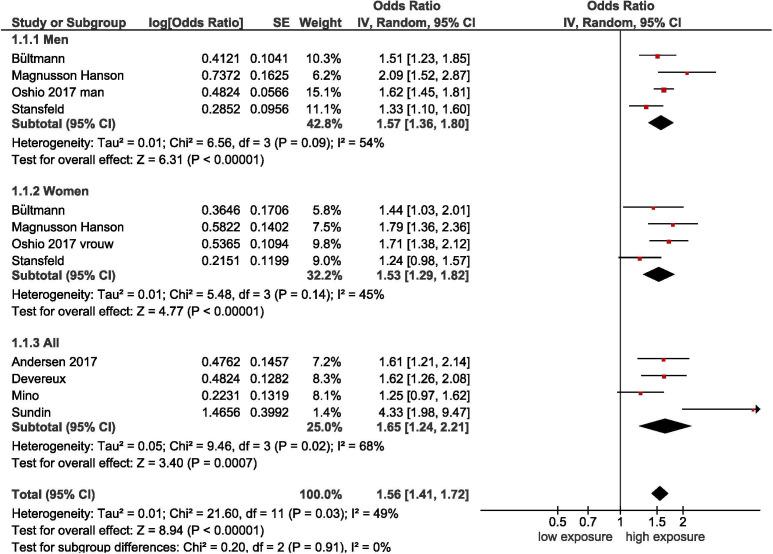
“high job demands increase the incidence of SRD, with a pooled OR of 1.55 (95% CI 1.41 to 1.71)”
§ Work-related psychosocial risk factors for stress-related mental disorders: an updated systematic review and meta-analysis > Results > Psychosocial risk factors and SRD
“| High job demands | 41 397 | 8/8 | 1 | No | 49% | No | No | No | 1.56(1.41 to 1.72) | 0/8 | Moderate |”
Rated minor: it would not touch a result — a value no result rests on, a p-value that stays on the same side of the significance level, or a conflict that is clerical, resolved elsewhere in the paper, or outside its own findings.
In the paper
§ Work-related psychosocial risk factors for stress-related mental disorders: an updated systematic review and meta-analysis > Results > Psychosocial risk factors and SRD
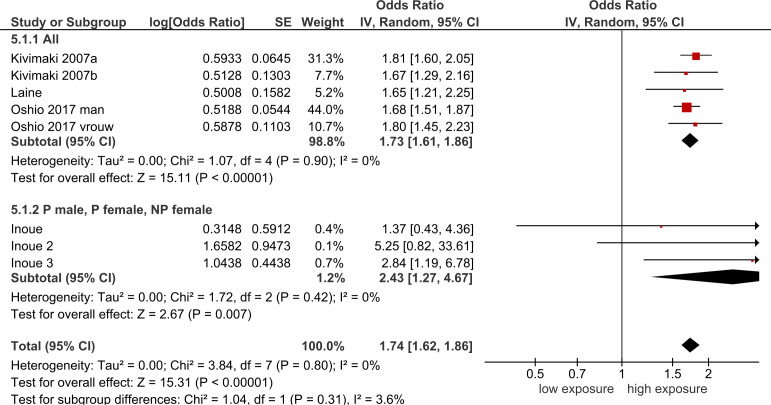
“low procedural justice with a pooled OR of 1.73 (95% CI 1.61 to 1.86)”
§ Work-related psychosocial risk factors for stress-related mental disorders: an updated systematic review and meta-analysis > Results > Psychosocial risk factors and SRD
“| Low procedural justice | 64 676 | 5/5 | 1 | No | 0% | No | No | No | 1.74(1.62 to 1.86) | 2/5 | Moderate |”
Rated minor: it would not touch a result — a value no result rests on, a p-value that stays on the same side of the significance level, or a conflict that is clerical, resolved elsewhere in the paper, or outside its own findings.
In the paper
§ Work-related psychosocial risk factors for stress-related mental disorders: an updated systematic review and meta-analysis > Results > Psychosocial risk factors and SRD
“| Effort-reward imbalance | 76 760 | 6/6 |”
§ Work-related psychosocial risk factors for stress-related mental disorders: an updated systematic review and meta-analysis > Abstract > Results
“a population of 73 874 workers from Belgium, Denmark, England, Finland, Japan, the Netherlands and Sweden were included in the meta-analysis of 14 prospective cohort studies.”
Rated minor: it would not touch a result — a value no result rests on, a p-value that stays on the same side of the significance level, or a conflict that is clerical, resolved elsewhere in the paper, or outside its own findings.
In the paper
§ Work-related psychosocial risk factors for stress-related mental disorders: an updated systematic review and meta-analysis > Results > Psychosocial risk factors and SRD
“Four cohort studies22 23 26 27 demonstrate very low-quality evidence that there is inconsistent evidence for increased incidence of SRD with different types of bullying and workplace violence”
§ Work-related psychosocial risk factors for stress-related mental disorders: an updated systematic review and meta-analysis > Results > Psychosocial risk factors and SRD
“| Bullying and violence | 9694 | 4/4 | 1 | No | Heterogeneity in definitions | No | Yes: ↓ | No | 1.42–3.64(0.42 to 15.92) | 0/4 | Low |”
Citations
Cites
Job Demands, Job Decision Latitude, and Mental Strain: Implications for Job Redesign
Karasek, R. A. (1979) · Administrative Science Quarterly · doi:10.2307/2392498 · Cited by 12,597
Understanding the burnout experience: Recent research and its implications for psychiatry
Maslach, C., & Leiter, M. P. (2016) · World Psychiatry · doi:10.1002/wps.20311 · Cited by 4,200
Moorman, R. H. (1991) · Journal of Applied Psychology · doi:10.1037//0021-9010.76.6.845 · Cited by 3,422
Interventions to prevent and reduce physician burnout: a systematic review and meta-analysis
West, C. P., Dyrbye, L. N., Erwin, P. J., & Shanafelt, T. D. (2016) · The Lancet · doi:10.1016/s0140-6736(16)31279-x · Cited by 2,362
A systematic review including meta-analysis of work environment and depressive symptoms
Theorell, T., Hammarström, A., Aronsson, G., Träskman Bendz, L., Grape, T., Hogstedt, C., Marteinsdottir, I., Skoog, I., & Hall, C. (2015) · BMC Public Health · doi:10.1186/s12889-015-1954-4 · Cited by 982
Work characteristics predict psychiatric disorder: prospective results from the Whitehall II Study.
Stansfeld, S. A., Fuhrer, R., Shipley, M. J., & Marmot, M. G. (1999) · Occupational and Environmental Medicine · doi:10.1136/oem.56.5.302 · Cited by 800
Harvey, S. B., Modini, M., Joyce, S., Milligan-Saville, J. S., Tan, L., Mykletun, A., Bryant, R. A., Christensen, H., & Mitchell, P. B. (2017) · Occupational and Environmental Medicine · doi:10.1136/oemed-2016-104015 · Cited by 799
Psychosocial work environment and stress-related disorders, a systematic review
Nieuwenhuijsen, K., Bruinvels, D., & Frings-Dresen, M. (2010) · Occupational Medicine · doi:10.1093/occmed/kqq081 · Cited by 696 · cited 7×
“This review was not registered in Prospero, but an update of a previous review by Nieuwenhuijsen et al.10”
BackgroundMethodResultInfluentialSelf-citationHuguet, A., Hayden, J. A., Stinson, J., McGrath, P. J., Chambers, C. T., Tougas, M. E., & Wozney, L. (2013) · Systematic Reviews · doi:10.1186/2046-4053-2-71 · Cited by 531
Foroutan, F., Guyatt, G., Zuk, V., Vandvik, P. O., Alba, A. C., Mustafa, R., Vernooij, R., Arevalo-Rodriguez, I., Munn, Z., Roshanov, P., et al. (2020) · Journal of Clinical Epidemiology · doi:10.1016/j.jclinepi.2019.12.023 · Cited by 465
Cited by
Items 101–200 of 215
Mental simulation of actions for learning optimal poses
Morasso, P. (2023) · Cognitive Robotics · doi:10.1016/j.cogr.2023.07.003 · Cited by 6
Emal, L. M., Tamminga, S. J., Beumer, A., Kežić, S., Timmermans, D. R. M., Schaafsma, F. G., & van der Molen, H. F. (2024) · Journal of Occupational and Environmental Medicine · doi:10.1097/jom.0000000000003228 · Cited by 4
“12 PD can vary from mild stress symptoms to stress-related disorders such as burnout, depression, and anxiety.”
Self-citationOkura, S., Iwasaki, S., Deguchi, Y., et al. (2025) · Work · doi:10.1177/10519815251332854 · Cited by 3
“7 Furthermore, occupational stress may be in fl u-enced by the gender composition of the workplace.”
Authors’ Response: If Anything, We Should Stigmatize Unhealthy Organizations
Kensbock, J. M., Alkærsig, L., & Lomberg, C. (2022) · Administrative Science Quarterly · doi:10.1177/00018392211073183 · Cited by 6
“…by applying a new perspective to mental disorders in business that complements many prior studies in the field that have identified important organization-specific characteristics as antecedents of mental disorders (e.g., Theorell et al., 2015; Madsen et al., 2017; van der Molen et al., 2020).”
ResultProtecting those who protect nature by supporting conservationists’ mental wellbeingPreprint
Pienkowski, T., Keane, A. M., y Tickell, S. C., de Lange, E., Hazenbosch, M., Khanyari, M., Arlidge, W. N. S., Baranyi, G., Brittain, S., Kapoor, V., et al. (2022) · Research Square · doi:10.21203/rs.3.rs-1132018/v1 · Cited by 7
Protecting those who protect nature by supporting conservationists’ mental healthPreprint
Pienkowski, T., Keane, A. M., y Tickell, S. C., de Lange, E., Hazenbosch, M., Khanyari, M., Arlidge, W. N. S., Baranyi, G., Brittain, S., Kapoor, V., et al. (2022) · Research Square · doi:10.21203/rs.3.rs-1804473/v1 · Cited by 4
Explaining presenteeism behaviour with the theory of planned behaviour – a longitudinal study
Golz, C., Hägerbäumer, M., Gerlach, M., Meichtry, A., Kilcher, G., Peter, K. A., & Blozik, E. (2024) · International Archives of Occupational and Environmental Health · doi:10.1007/s00420-024-02108-5 · Cited by 4
Stensland, S. Ø., Bondjers, K., Zwart, J., Rosseland, L. A., Atar, D., Christensen, J. O., Matre, D., Glad, K. A., Wentzel‐Larsen, T., Wøien, H., et al. (2025) · Public Health in Practice · doi:10.1016/j.puhip.2025.100582 · Cited by 5
Personalizing mHealth Interventions for Occupational Stress: Protocol for a Randomized Pilot Study
Kunas, B., Jung, O., Schranz, C., Schmoigl-Tonis, M., Ploessnig, M., & Laireiter, A. (2025) · JMIR Research Protocols · doi:10.2196/68012 · Cited by 6
“Loss of energy and efficiency, mental and physical strains, and absence from work owing to burnout or other forms of mental health impairments are common consequences of unaddressed stress [5-7].”
Hofmann, S., Schlachter, S., Gast, M., Erschens, R. S., Schröpel, C., Diebig, M., Gritzka, S., Lehmann, J., Schwarz, E., Jarczok, M. N., et al. (2026) · BMC Public Health · doi:10.1186/s12889-025-26088-4 · Cited by 5
“With regard to the latter, experiencing high levels of work-related stressors (e.g., high demands, role stress, perceived injustice) has been suggested as major detrimental contributor to employees’ mental health (e.g., [7, 8]).”
Habtu, Y., Kumie, A., Selamu, M., Hasen, H., Kusheta, S., Demelash, R., & Girma, E. (2026) · Discover Mental Health · doi:10.1007/s44192-026-00416-5 · Cited by 2
“These findings are supported by other studies [11, 12, 22, 74].”
Khanal, M. K., Saunders, P., Nguyen, K., Hatmi, M. A., Asiri, H. M. A., Shahin, W., Millar, R., Karimi, L., & de Courten, B. V. (2026) · Health Psychology Review · doi:10.1080/17437199.2026.2652892 · Cited by 4
Berkemeier, L., Kamphuis, W., de Vries, H., Brouwer, A.-M., van Baardewijk, J. U., Schadd, M. P. D., Oldenhuis, H. K. E., Verdaasdonk, R. M., & Gemert-Pijnen, L. V. (2023) · AHFE international · doi:10.54941/ahfe1003013 · Cited by 3
Habtu, Y., Kumie, A., Selamu, M., Harada, H., & Girma, E. (2025) · BMJ Open · doi:10.1136/bmjopen-2024-087811 · Cited by 3
Yousef, S. S., Gaafary, M. M. E., Sabbour, S. M., Hakim, S. A., El-Ghaffar, Y. S. A., Ahmed, A. H., Matar, O. A., & Fahim, H. I. (2025) · BMC Public Health · doi:10.1186/s12889-025-23200-6 · Cited by 3
“Research indicated that work-related psychosocial risk factors and low organizational justice are associated with a higher risk of stress-related mental disorders [7].”
Kowalski, L., Finnes, A., Koch, S., & Bujacz, A. (2025) · JMIR Formative Research · doi:10.2196/71032 · Cited by 8
Kotsakis, A., Avraam, D., Malliarou, M. M., Halkiopoulos, C., Galanakis, M., & Sfakianakis, M. (2024) · Preprints.org · doi:10.20944/preprints202407.1849.v1 · Cited by 2
Ohsugi, H., Anzai, S., & Shiba, Y. (2024) · Geriatrics · doi:10.3390/geriatrics9040105 · Cited by 1
Yazdanirad, S., Khoshakhlagh, A. H., Sulaie, S. A., Cousins, R., Dehghani, M., Khodakhah, R., & Shabanitabar, S. (2024) · Frontiers in Public Health · doi:10.3389/fpubh.2024.1437112 · Cited by 2
The Influence of Work Stress on Employee Performance at Hotel Aloft Bali Seminyak
Linda, T., Harefa, M. H., Febria, D., Kelana, J., & Siboro, L. (2024) · AURELIA Jurnal Penelitian dan Pengabdian Masyarakat Indonesia · doi:10.57235/aurelia.v4i1.3862 · Cited by 2
“This may impact the structure and coordination of facilities and resource management, resulting in interruptions to everyday operations (Molen, 2020).”
Rihm, L., Waibel, J., Karl, M., Mack, J. T., Weise, V., & Garthus‐Niegel, S. (2025) · BMC Public Health · doi:10.1186/s12889-025-21886-2 · Cited by 5
“This is surprising, given that we already know from previous research (mainly outside the peripartum period ) that the work environment is important for adult mental health [6, 52–57] and that (expectant) parents constitute a particularly vulnerable group [17, 45, 58, 59].”
InfluentialZahra, N. S., Faturochman, F., Putra, M. D. K., & Wirawan, H. (2025) · Measurement Interdisciplinary Research and Perspectives · doi:10.1080/15366367.2025.2474702 · Cited by 2
“Furthermore, studies showed that stress contributed to various physical and mental health conditions (van der Molen et al., 2020; Yaribeygi et al., 2017).”
Triches, M. I., Mininel, V. A., dos Santos, G. B., & Sato, T. D. O. (2025) · International Journal of Occupational Safety and Ergonomics · doi:10.1080/10803548.2025.2468158 · Cited by 2
Tanjung, K., Prakash, K. C., Kyrönlahti, S. M., Goldberg, M., Nygård, C., & Neupane, S. (2025) · International Journal of Epidemiology · doi:10.1093/ije/dyaf045 · Cited by 2
Rodrigues, J. G. (2025) · Revista da Escola Superior do Ministério Público da União · doi:10.63601/resmpu.2024.v2.n2.e-2201 · Cited by 1
Li, C., Zhang, H., & Yang, B. (2025) · Frontiers in Public Health · doi:10.3389/fpubh.2025.1598559 · Cited by 2
Mehraj, D., Nissa, S. N. U., Nissa, V. U., & Gulzar, S. (2025) · Business Strategy & Development · doi:10.1002/bsd2.70146 · Cited by 5
Vuelvas-Robles, G. M., Gutiérrez, J. C. C., Tiznado, J. E. O., Wilson, C. C., Barreras, J. A. L., & Cázares-Manríquez, M. A. (2025) · Safety · doi:10.3390/safety11030074 · Cited by 9
Singh, G., Viramgami, A., Makwana, B., Mishra, S., Padhariya, T., Dave, V., & Soundararajan, S. (2025) · Scientific Reports · doi:10.1038/s41598-025-17717-4 · Cited by 4
Huang, B., Zhou, M., Song, S., Jiang, M., Liu, L., Wang, L., Liu, X., Lyu, J., Wang, G., Liu, X., et al. (2025) · Medicine · doi:10.1097/md.0000000000044563 · Cited by 1
du Prel, J., Siegrist, J., Rohrbacher, M. J., & Hasselhorn, H. M. (2025) · Social Psychiatry and Psychiatric Epidemiology · doi:10.1007/s00127-025-03005-z · Cited by 1
Alali, M. S. A., Masood, M. A., Khaled, R., Alqaydi, S., Semerjian, L., Ahmed, F. R., Maharani, C. F., & Abass, K. M. (2025) · Discover Social Science and Health · doi:10.1007/s44155-025-00343-w · Cited by 4
“A prior study highlighted that stress was frequently reported in working populations, with incidence rates of 13% for psychological distress and 22% for emotional exhaustion [9].”
Noorwali, E. A., Aljaadi, A. M., Abusudah, W. F., Bakhdar, F. A., Bin-Ali, D. H., Alshinawi, A., Bawazir, A. A., Mutlaq, R. A., Maimany, H. A., Barnawi, L. A., et al. (2026) · Frontiers in Nutrition · doi:10.3389/fnut.2025.1717047 · Cited by 2
Chumo, I., Mberu, B. U., Gitau, H., Nandongwa, I., Wado, Y. D., & Kabaria, C. W. (2023) · SSM - Mental Health · doi:10.1016/j.ssmmh.2023.100240 · Cited by 1
Work-related mental health problems: a narrative review
Abou-ElWafa, H. S., Shouman, A., & El‐Gilany, A. (2023) · International Journal of Epidemiology and Health Sciences · doi:10.51757/ijehs.4.2023.705795 · Cited by 3
Rantonen, O., Ervasti, J. M., Alexanderson, K. A. E., Oksanen, T., Aalto, V., Mittendorfer‐Rutz, E., & Salo, P. (2024) · Scandinavian Journal of Work Environment & Health · doi:10.5271/sjweh.4171 · Cited by 5
“Job strain and ERI have been identified as major risk factors for CMD ( 7, 8 ), sickness absence (4) and disability pension (10, 11).”
BackgroundCovid-19 en la seguridad y salud en el trabajo, en un organismo público de Lima
Luque, M. L. E. A. E. G. V. (2022) · Ciencia Latina Revista Científica Multidisciplinar · doi:10.37811/cl_rcm.v6i1.1468 · Cited by 1
Stensland, S. Ø., Bondjers, K., Zwart, J., et al. (2024) · SSRN Electronic Journal · doi:10.2139/ssrn.4749774 · Cited by 1
Sleep Quality – A Potential Link in the Relation Between Occupational Stress and InflammationPreprint
Singh, G., Viramgami, A., Makwana, B., Mishra, S., Padhariya, T., Dave, V., & Soundararajan, S. (2024) · PsyArXiv (OSF Preprints) · doi:10.31234/osf.io/65dnw · Cited by 2
Kotsakis, A., Avraam, D., Malliarou, M. M., Soteriades, E. S., Halkiopoulos, C., Galanakis, M., & Sfakianakis, M. (2024) · Research Square · doi:10.21203/rs.3.rs-4888710/v1 · Cited by 1
Kotsakis, A., Avraam, D., Malliarou, M. M., Halkiopoulos, C., Galanakis, M., Sfakianakis, M., & Soteriades, E. S. (2024) · Preprints.org · doi:10.20944/preprints202407.1849.v2 · Cited by 1
Kotsakis, A., Avraam, D., Malliarou, M. M., Halkiopoulos, C., Galanakis, M., Sfakianakis, M., & Soteriades, E. S. (2024) · Preprints.org · doi:10.20944/preprints202407.1849.v3 · Cited by 1
Reducing uncertainty in assessment of occupational diseases informs prevention
van der Molen, H. F., Kežić, S., & Heederik, D. J. J. (2025) · Occupational Medicine · doi:10.1093/occmed/kqaf076 · Cited by 1
“10 Moreover, personal factors as perception of health and vulnerability, attitudes towards work, educational attainment and personality may modify their risk of future mental illness.”
Self-citationPrümper, J., Schneeberg, T., & Prümper, A. M. (2020) · Prävention und Gesundheitsförderung · doi:10.1007/s11553-020-00817-6
Urnberg, H. (2021) · Helda - University of Helsinki Institutional Repository
Occupational Psychosocial Risks Identification and Assessment in the Czech Republic
Lipšová, V., Mrázová, K., Bátrlová, K., et al. (2021) · Lecture notes in networks and systems · doi:10.1007/978-3-030-85540-6_149
Gurt, J., Weigelt, O., Universität Leipzig, I. F. P., & Staar, H. (2021) · Gemeinschaften in Neuen Medien · doi:10.25368/2022.44
The technostress questionnaire: a pilot study
Finstad, G. L., & Giorgi, G. (2021) · Journal of Advanced Health Care · doi:10.36017/jahc2111-001 · Cited by 12
Improving mental health in the construction industry
Sun, C. (2023) · Queensland University of Technology · doi:10.5204/thesis.eprints.239495 · Cited by 1
Psychosocial Risks at Work: Fundamentals and Stakes
Fauquet-Alekhine, P. (2023) · Springer eBooks · doi:10.1007/978-3-031-27349-0_8
Costa, R. M., de Almeida, C. P. S., SOUZA, A. P. D., et al. (2023) · doi:10.58871/ed.academic18092023.44
D'Antonio, C., & Lelli, R. (2021) · Journal of Advanced Health Care · doi:10.36017/jahc202133138
EAWOP WorkLab 2022: Improving psychological well-being through organizational interventions
Emal, L. M. (2023) · EWOP in Practice · doi:10.21825/ewopinpractice.89677
NURSE BURNOUT PREDICTORS IN HEALTHCARE UNITS DURING COVID-19 IN EAST JAVA, INDONESIA
Santoso, W., & Sudarsih, S. (2023) · Jurnal Administrasi Kesehatan Indonesia · doi:10.20473/jaki.v11i2.2023.252-263 · Cited by 1
Siegrist, J., & Li, J. (2024) · Oxford University Press eBooks · doi:10.1093/oso/9780192887924.003.0006
Ballarotti, B. (2023) · Digital Library of Theses and Dissertations (Universidade de São Paulo) · doi:10.11606/t.5.2023.tde-22022024-143636
Gelaw, A. Y., Parker, S. K., Johnson, A. M., Nguyen, H., Jolly, A. A., Forner, V. W., Deng, C., & Collie, A. (2024) · Work · doi:10.3233/wor-230426 · Cited by 1
Hovman, A. R., Pihl‐Thingvad, J., Elklit, A., et al. (2024) · Behavioral Sciences · doi:10.3390/bs14040332
“Thus, existing research suggests that the occupational mental health of lawyers can be negatively affected by their working environment and work content involving emotionally demanding work tasks [5,10,11,13,14].”
BackgroundMadsen, S. S., Andersen, T. L., Pihl‐Thingvad, J., Brandt, L. P. A., Olsen, B. B., Gerke, O., & Videbech, P. (2024) · Diagnostics · doi:10.3390/diagnostics14161730 · Cited by 2
“Multiple studies detail the etiology behind work-induced mental disorders and the prevailing stressors that cause these conditions [6,7], with the most pertinent factors being high job demands, high emotional demands, organizational injustice, low support, and decision authority [8].”
BackgroundKim, B., & Buzzelli, N. R. (2024) · Journalism Practice · doi:10.1080/17512786.2024.2393675 · Cited by 5
“The nature of media, at its core level, can be harmful to one’s physical or mental health because the environment is typically marked by an unconventional work schedule, a competitive job environment, and changes to news norms and culture because of technology (van der Molen et al. 2020).”
Kauppi, K., Korpela, K., Borg, P. T., Roos, E., & Torkki, P. M. (2024) · Digital Health · doi:10.1177/20552076241274018 · Cited by 1
“9 10 – 14 Due to the increasing burden of these work-related mental disorders, more understanding is needed of how to prevent work ability from declining and turning into a work disability.”
BackgroundStrategi for et psykisk sunnere folk 2024
Holte, A. (2024) · Tidsskrift for Norsk psykologforening · doi:10.52734/wjks5460
Khokhlova, O. I., Васильченко, Е. М., Versh, V. A., & Zhestikova, M. G. (2024) · Сибирский научный медицинский журнал · doi:10.18699/ssmj20240526
García‐Iglesias, J. J., Chirico, F., Rizzo, A., Szarpak, Ł., Khabbache, H., Yıldırım, M., Fagundo-Rivera, J., & Gómez-Salgado, J. C. (2024) · Risk Management and Healthcare Policy · doi:10.2147/rmhp.s487565 · Cited by 2
“48 Various structural, organisational, situational, and personal elements have been identified as stressors.”
ANÁLISIS DE LA SALUD MENTAL EN EL SECTOR PÚBLICO: DESAFÍOS Y ESTRATEGIAS DE INTERVENCIÓN PSICOSOCIAL
MORENO, A. A., Munduate, L., & Vidal, I. P. (2024) · Pertsonak eta Antolakunde Publikoak kudeatzeko Euskal Aldizkaria / Revista Vasca de Gestión de Personas y Organizaciones Públicas · doi:10.47623/ivap-rvgp.27.2024.02
Almén, N., Ekström, S., Grytzelius, O., & Jansson, B. (2025) · Nordic Psychology · doi:10.1080/19012276.2025.2472633 · Cited by 1
“Although stress behavior is primarily adaptive, high levels of stress are associated with a wide range of negative outcomes, such as mental disorders and burnout (e.g. Aronsson et al., 2017; Hintsa et al., 2016; van der Molen et al., 2020).”
Pariyanti, E. (2025) · International Journal of Ethics and Systems · doi:10.1108/ijoes-02-2025-0085 · Cited by 3
Wang, J., Liu, X., Li, S., & Wan, X. (2025) · Research Square · doi:10.21203/rs.3.rs-6543738/v1
Heylen, J., Szekér, L., & Lenaerts, K. (2025) · Human well-being research and policy making · doi:10.1007/978-3-031-87616-5_3
Singh, G., Viramgami, A., Makwana, B., Mishra, S., Padhariya, T., Dave, V., & Soundararajan, S. (2024) · PsyArXiv (OSF Preprints) · doi:10.31234/osf.io/65dnw_v1 · Cited by 1
Steiner, M. D., Mumenthaler, J., & Krause, A. (2025) · OSF Preprints (OSF Preprints) · doi:10.31219/osf.io/dgysc_v1
Halakou, S., & Aghaeinezhad, A. A. (2025) · Journal of Health and Hygiene · doi:10.61186/j.health.16.1.86
Fındık, G., & Ocaktan, M. C. (2025) · Çalışma ve Toplum · doi:10.54752/ct.1635222
Beno, A., Jónsdóttir, I. H., & Lindegård, A. (2025) · Journal of Occupational Rehabilitation · doi:10.1007/s10926-025-10311-5
“Decreased work participation due to stress-related disorders can be a consequence of many different negative factors connected to both the private sphere [5] as well as to unfavourable working conditions [6].”
Hof, E. V. ‘., & Deuze, M. (2025) · Journalism · doi:10.1177/14648849251365123 · Cited by 2
“…mental disorders, which together explain 60% to 90% of cases where circumstances on any job make people sick: lack of reciprocity, low organizational justice, and unusually high job demands (see reviews of the fi eld in Nieuwenhuijsen et al., 2010; Harvey et al., 2017; Van der Molen et al., 2020).”
Nguyen, H. H., & Nguyen, T. N. D. (2025) · Salud Ciencia y Tecnología · doi:10.56294/saludcyt20252297
Steel, E., Näswall, K., & Malinen, S. K. (2025) · Safety and Health at Work · doi:10.1016/j.shaw.2025.10.004
“Exposure to work-related psychosocial risks (PSRs) can lead to detrimental mental [1] and physical [2] health outcomes for employees.”
Siegrist, J. (2025) · Wiley eBooks · doi:10.1002/9781118410868.wbehibs126.pub2
Hu, F., Zhang, H., He, Q., Zhang, J., Zhang, J., Song, C., & Yang, C. Z. (2025) · Frontiers in Psychiatry · doi:10.3389/fpsyt.2025.1677304
Paquet-Beaudet, F., Nicolakakis, N., Roy, L., Coulombe, S., & Maltais, M. L. (2025) · doi:10.64490/mpnh3224
Emal, L. M., Tamminga, S. J., Beumer, A., Kežić, S., Timmermans, D. R. M., Schaafsma, F. G., & van der Molen, H. F. (2025) · BMC Psychology · doi:10.1186/s40359-025-03542-x · Cited by 1
Self-citationHuacache-Baldeón, R., & Condori-Yupanqui, R. (2025) · Revista Médica Basadrina · doi:10.33326/26176068.2025.2.2552
Tamekuni, Y., Okuyama, K., Motohiro, A., Shiratsuchi, D., Isomura, M., Abrahamsson, L., Lindström, M., Sundquist, K., & Abe, T. (2026) · European Journal of Investigation in Health Psychology and Education · doi:10.3390/ejihpe16020017 · Cited by 1
Faucher, E. C., & Cloutier, J. (2025) · Humain et Organisation · doi:10.7202/1122286ar
ISHIKAWA, A., & NISHIKAWA, H. (2026) · International Journal of Affective Engineering · doi:10.5057/ijae.ijae-d-25-00016
Martínez, C. M., Moriguchi, C. S., Andrade, M. A., & Sato, T. D. O. (2026) · Epidemiologia e Serviços de Saúde · doi:10.1590/s2237-96222026v35e20240798.en
Martinez, C. L. N., Moriguchi, C. S., Andrade, M. A., & Sato, T. D. O. (2026) · Epidemiologia e Serviços de Saúde · doi:10.1590/s2237-96222026v35e20240798.pt
Tanji, F., Nanbu, H., Kawajiri, M., Nishimoto, D., Akimoto, T., & Kurobe, M. (2026) · Comprehensive Psychoneuroendocrinology · doi:10.1016/j.cpnec.2026.100343 · Cited by 1
“Although few studies have directly examined workplace support in relation to andropause symptoms, several studies have investigated the association between workplace support and mental health outcomes, which are closely related to andropause symptoms [20,21,44,45].”
Sterud, T., & Østhus, S. (2026) · Social Science & Medicine · doi:10.1016/j.socscimed.2026.119231 · Cited by 1
Decoding workplace mental health: Automatic clustering of the Spanish workforce
Djourova, N. P., Freire, A., & Theben, A. (2026) · Acta Psychologica · doi:10.1016/j.actpsy.2026.106730 · Cited by 1
Post COVID-19 Condition in Healthcare Workers in Quebec : Functional impact Phase 1: May–July 2023
Carazo, S., Serres, G. D., Ouakki, M., Nicolakakis, N., Canitrot, E., Perron, S., Drescher, O., Grenier, S., Laforce, R. J., Coutu, M., et al. (2025) · doi:10.64490/rbsd4972 · Cited by 1
Marín, A. M., Rodríguez, G. G., & Calero, D. B. (2026) · Studies in systems, decision and control · doi:10.1007/978-3-032-11612-3_67
Plazas, V., & Palencia-Sánchez, F. (2026) · Protección & Seguridad · doi:10.63434/30730171.459
Altered salivary miRNA and microbial profiles reflect different responses to psychosocial stressPreprint
Naccarati, A., Garbarino, S., Magnavita, N., Pardini, B., Tarallo, S., Cipriani, F., Camandona, A., Ferrero, G., & Scoditti, E. (2026) · Research Square · doi:10.21203/rs.3.rs-9280394/v1
Araújo, D., Bártolo, A., Fernandes, C., Pereira, A., & Monteiro, S. O. M. (2026) · International Journal of Environmental Research and Public Health · doi:10.3390/ijerph23050556 · Cited by 5
“This approach provides a more practical and up-to-date view of how to prevent burnout in the workplace, especially in times of increasing psychological demands on workers [15].”
Kunas, B., Jung, O., Schranz, C., Schmoigl-Tonis, M., Mehlis, J., & Laireiter, A. (2026) · JMIR mhealth and uhealth · doi:10.2196/79642
“Depending on the individual situation, the consequences range from loss of performance and mental and physical issues [7-9] to economic consequences for the company [10].”
Tamarit, A., Torres‐Moraga, E., Santos, M. A. D., Sanchis-Giménez, L., Prado‐Gascó, V., & Lacomba‐Trejo, L. (2026) · International Journal of Occupational Safety and Ergonomics · doi:10.1080/10803548.2026.2656086
Kovlen, D. V., Ivashchev, V. V., Pronin, V. D., Пещеров, М. Е., Хозяинова, С. С., Кондратьева, Е. А., & Abuseva, G. R. (2026) · Современные проблемы науки и образования · doi:10.17513/spno.34643
Musgrave, G. (2026) · Creative Industries Journal · doi:10.1080/17510694.2026.2708534
“Research has consistently linked organ-isational justice to psychological wellbeing and mental health outcomes (ndjaboué et al., 2012; van der Molen et al. 2020).”
InfluentialCedeño, A. A. A., Bolaño-Moreira, A. M., Navarrete-Cusme, S. M., Pérez-Chila, W. K., Rosado-Daza, K. J., & Luna, A. A. V. (2026) · Erevna Research Reports · doi:10.70171/persc534 · Cited by 1
“…las elevadas demandas laborales y la baja justicia organizacional con diversos desenlaces adversos para la salud mental; sin embargo, la magnitud de estas asociaciones varía según el diseño metodológico y las características de los estudios analizados (van der Molen et al., 2020).”
Metadata
- Authors
- van der Molen, H. F., Nieuwenhuijsen, K., Frings-Dresen, M. H. W., & de Groene, G.
- Affiliations
- Coronel Institute of Occupational Health, Amsterdam UMC—Locatie AMC, Amsterdam, North Holland, The Netherlands
- Amsterdam UMC Location University of Amsterdam (NL)
- Venue
- BMJ Open
- Publisher
- BMJ
- Published
- 2020-07
- Volume
- 10
- Issue
- 7
- Pages
- e034849
- ISSN
- 2044-6055 (ISSN-L)
- PMC
- PMC7337889
- OpenAlex
- W3038544257
- Cited by
- 226
- References
- 40
- Citations by year
- 2026: 39 · 2025: 55 · 2024: 48 · 2023: 36 · 2022: 26 · 2021: 21 · 2020: 1
- FWCI
- 3.99
- Type
- journal article
- Language
- en
- Open access
- gold
- doi.org
- Locations
- BMJ Open (publishedVersion, cc-by)
- PubMed Central (publishedVersion, cc-by)
- PubMed (publishedVersion)
- Pure Amsterdam UMC (submittedVersion, cc-by)
- Data Archiving and Networked Services (DANS) (submittedVersion, other-oa)
- DOAJ (DOAJ: Directory of Open Access Journals) (submittedVersion, cc-by-sa)
- HighWire Press Open Archive (submittedVersion)
- Funders
- Ministry of Social Affairs and Employment, the Netherlands (5100-24108)
- Topics
- Health Sciences › Medicine › Public Health, Environmental and Occupational Health › Workplace Health and Well-being
- Health Sciences › Medicine › Public Health, Environmental and Occupational Health › Occupational Health and Burnout
- Health Sciences › Medicine › Public Health, Environmental and Occupational Health › Employment and Welfare Studies
- Keywords
- stress-related disorders, effort-reward imbalance, job demands, organizational justice, social support, emotional demands, decision-making power, job insecurity, bullying, skill discretion, workplace mental health
- MeSH terms
- Occupational Stress, Mental Disorders, Employment, Female, Humans, Male, Occupational Diseases, Prospective Studies, Risk Factors, Stress, Psychological, Workload, Workplace
About these checks
Registry, retraction, Cites and statistics results are computed, not judged, with one exception: a printed reference that no index lists is read once by a model before it counts as a citation error. Claims are extracted by a model and kept only when their quote appears verbatim in the text; each cited source is then checked, with a model’s help, for whether it says what the claim relies on. Those verdicts can be wrong — read the claim’s quote and the cited source before relying on one.
The claim verdicts this report counts are experimental: their accuracy is not yet measured.
A language model drew the claims from the paper on 2026-10-10, under version 3 of the claim definition (model deepseek-v4.1-flash, prompt extract-v3).
A second model labelled each claim on 2026-10-10 (model jev-1.13-20260917, definition revision gold-guideline-v0.2).
Cited sources are checked with a language model’s help (gpt-6-sol).
Statistics and arithmetic are recomputed, not judged.
Confidence bands are shown only for fields calibrated on our annotated test set. None is calibrated yet, so no band is shown.
What counts as a claim ›How we measure confidence ›How we check this ›
Are you an author, or do you see a problem with this page? Request a review
Data sources
Bibliographic data: Semantic Scholar, OpenAlex, Crossref.
Contains information from the Semantic Scholar Academic Graph Datasets, made available under the ODC Attribution License (ODC-BY 1.0).
Semantic Scholar’s data is described in: Kinney, R., et al. (2023). The Semantic Scholar Open Data Platform. arXiv:2301.10140.
