

Work-related psychosocial risk factors for stress-related mental disorders: an updated systematic review and meta-analysis
Open accessThe DOI matches its Crossref record; 37 of the 40 references it cites were found in a registry or an index; 30 of the 63 sources its claims cite were checked for support.
Abstract
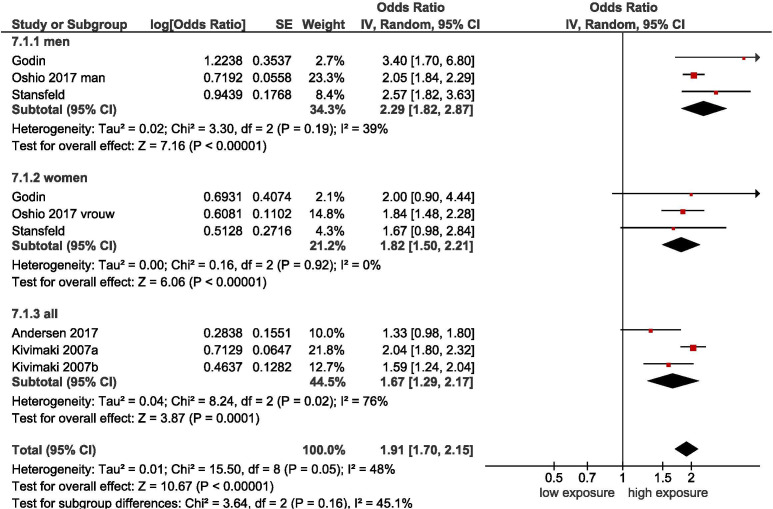
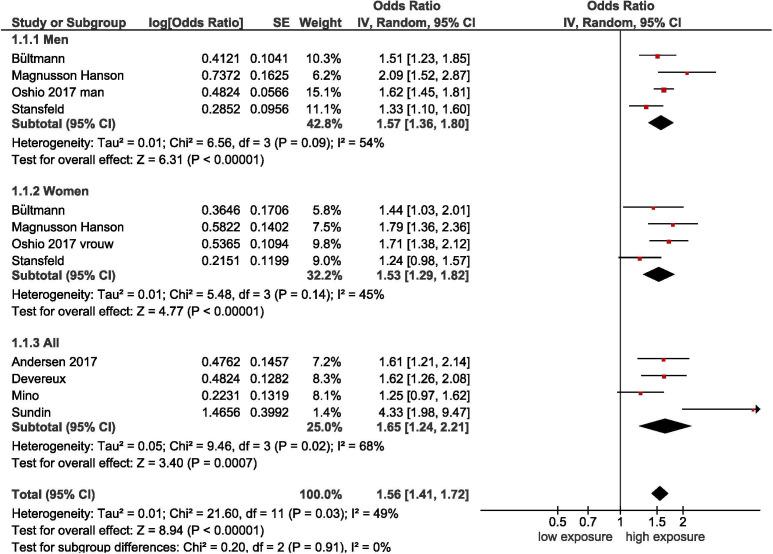
Objective: The objective was to conduct an update of a previously published review and meta-analysis on the association between work-related psychosocial risk factors and stress-related mental disorders (SRD). Design: Systematic review and meta-analysis. Data sources: Medline, Embase and PsycINFO were searched for articles published between 2008 and 12 August 2019 and references of a systematic review performed for the period before 2008 were included. Primary prospective studies were included when outcome data were described in terms of SRD assessment or a dichotomous outcome, based on a validated questionnaire, and at least two levels of work-related exposure were reported (exposed vs less or non-exposed). We used GRADE to assess the evidence for the associations between risk factors and the onset of SRD. Results: Seventeen studies met the inclusion criteria. In total, a population of 73 874 workers from Belgium, Denmark, England, Finland, Japan, the Netherlands and Sweden were included in the meta-analysis of 14 prospective cohort studies. This meta-analysis revealed moderate evidence for associations between SRD and effort reward imbalance (OR=1.9, 95% CI 1.70 to 2.15), high job demands (OR=1.6, 95% CI 1.41 to 1.72), organisational justice (ORs=1.6 to 1.7, CIs 1.44 to 1.86), social support (ORs=1.3 to 1.4, CIs 1.16 to 1.69), high emotional demands (OR=1.6, 95% CI 1.35 to 1.84) and decision authority (OR=1.3, CI 1.20 to 1.49). No significant or inconsistent associations were found for job insecurity, decision latitude, skill discretion and bullying. Conclusion: Moderate evidence was found that work-related psychosocial risk factors are associated with a higher risk of SRD. Effort-reward imbalance, low organisational justice and high job demands exhibited the largest increased risk of SRD, varying from 60% to 90%.
Overview
CoChat Summary
TL;DR
This updated systematic review and meta-analysis found moderate evidence that several work-related psychosocial risk factors increase the incidence of stress-related mental disorders (SRD). Effort-reward imbalance, low organisational justice, and high job demands showed the largest increased risks, varying from 60% to 90%.
Key findings
- In 14 prospective cohort studies including 73,874 workers from Belgium, Denmark, England, Finland, Japan, the Netherlands, and Sweden, moderate evidence supported associations between SRD and effort-reward imbalance (OR=1.9, 95% CI 1.70 to 2.15), high job demands (OR=1.6, 95% CI 1.41 to 1.72), organisational justice (ORs=1.6 to 1.7, CIs 1.44 to 1.86), social support (ORs=1.3 to 1.4, CIs 1.16 to 1.69), high emotional demands (OR=1.6, 95% CI 1.35 to 1.84), and decision authority (OR=1.3, CI 1.20 to 1.49).
- No significant or inconsistent associations were found for job insecurity, decision latitude, skill discretion, and bullying.
- Job insecurity had low-quality evidence for increased SRD in men (OR=1.63, 95% CI 1.18 to 2.27) but not women (OR=0.94, 95% CI 0.56 to 1.59).
- Bullying and violence showed very low-quality, inconsistent evidence, with ORs varying from 1.42 (95% CI 0.42 to 4.79) to 3.64 (95% CI 0.83 to 15.92).
Methods
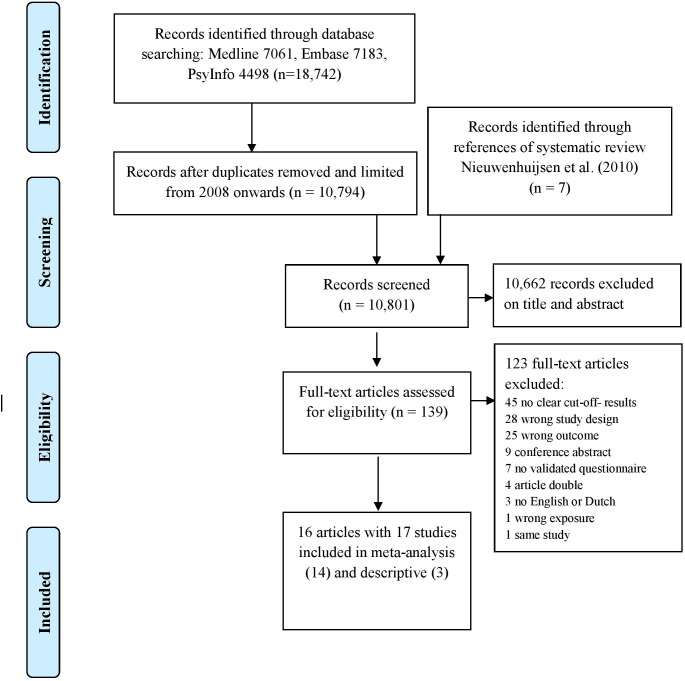
- Systematic review and meta-analysis updating a previous review; Medline, Embase, and PsycINFO were searched for articles published between 2008 and 12 August 2019, and references from the prior review were included for pre-2008 studies.
- Eligible studies were primary prospective cohort studies with SRD assessed by validated questionnaire or dichotomous outcome and at least two levels of work-related exposure; 17 studies met inclusion criteria, and 14 prospective cohort studies were included in the meta-analysis.
- Random-effects meta-analysis used log-transformed ORs and SEs in Review Manager; GRADE was used to assess quality of evidence, starting at moderate for prospective cohort studies identifying prognostic factor associations.
Limitations
- The paper states limitations including lack of harmonised assessments of SRD and detailed exposure assessment in the identified observational cohort studies.
- The paper notes that exposure categories and SRD case definitions varied, that reporting bias is a concern because both psychosocial factors and SRD were self-reported, and that only 4 of 17 prospective studies collected outcome data at three or more time points.
- The text also makes evident that meta-analyses were limited by few studies per risk factor, heterogeneity in measurement instruments and dichotomisation rules, and that bullying/violence could not be meta-analysed because of differing concepts; funnel plots were not provided because fewer than 10 cohort studies were available per risk factor.
Model-written summary. Check it against the paper before relying on it.
Integrity signals
Registry
Cites
Statistics
Figures
Verification
Claims the paper makes
19 Valid · 2 Not valid · 9 Not checked · 40 Own results and interpretations
The cited sources support only part of this claim — read each source’s verdict below.
In the paper
“No statistically significant difference between subgroups of men and women was found.16 18 25”
§ Work-related psychosocial risk factors for stress-related mental disorders: an updated systematic review and meta-analysis > Results > Psychosocial risk factors and SRD
What the sources say
- Could not verifycites [16] Stansfeld SA, Fuhrer R, Shipley MJ, et al Work characteristics predict psychiatric disorder: prospective results from the Whitehall II study. Occup Environ Med 1999; 56: 302– 7. 10.1136/oem.56.5.302 10472303 PMC1757742 sourceExperimental — accuracy not yet measured
The Results report an association between high effort and low reward and psychiatric disorder, and Table 1 presents analyses separately for men and women. Our copy does not report a statistical test comparing the men's and women's effort–reward imbalance subgroups or state that their difference was nonsignificant (searched for sex differences and interactions). (LLM, conf=0.74)
- Supportedcites [18] Godin I, Kittel F, Coppieters Y, et al A prospective study of cumulative job stress in relation to mental health. BMC Public Health 2005; 5: 67. 10.1186/1471-2458-5-67 15958170 PMC1177967 source
Table 2 (Data collection) compares men and women across the four effort–reward imbalance groups and labels the sex comparison “ns,” indicating no statistically significant difference in their group distributions. This supports the claim about the subgroups, rather than a claim that stress had identical mental-health effects in men and women. (LLM, conf=0.93)
- Could not verifycites [25] Oshio T, Inoue A, Tsutsumi A Examining the mediating effect of work-to-family conflict on the associations between job stressors and employee psychological distress: a prospective cohort study. BMJ Open 2017; 7: e015608. 10.1136/bmjopen-2016-015608 PMC5724069 28775183 sourceExperimental — accuracy not yet measured
The Results present effort–reward imbalance estimates separately for men and women and describe the findings as largely similar, while also noting some gender differences. They do not report a statistical test establishing that the difference between men and women for effort–reward imbalance was nonsignificant (searched for gender-difference and significance terms). (LLM, conf=0.72)
plain- Asserted: passes — The authors put it forward as true.
- Checkable: passes — It can be checked against evidence.
- Load-bearing: unclear — It is unclear whether the paper’s conclusions depend on it.
- Based: passes — The paper gives a reason why it holds.
- Could not verify
The cited sources that could be checked couldn’t confirm or dispute this claim.
In the paper
“No statistically significant difference between subgroups of men and women was found.3 25”
§ Work-related psychosocial risk factors for stress-related mental disorders: an updated systematic review and meta-analysis > Results > Psychosocial risk factors and SRD
What the sources say
- Not checked — no full text of the sourcecites [3] Inoue A, Kawakami N, Tsuno K, et al Organizational justice and psychological distress among permanent and non-permanent employees in Japan: a prospective cohort study. Int J Behav Med 2013; 20: 265– 76. 10.1007/s12529-012-9224-7 22314665 source
- Could not verifycites [25] Oshio T, Inoue A, Tsutsumi A Examining the mediating effect of work-to-family conflict on the associations between job stressors and employee psychological distress: a prospective cohort study. BMJ Open 2017; 7: e015608. 10.1136/bmjopen-2016-015608 PMC5724069 28775183 sourceExperimental — accuracy not yet measured
The Methods section measures procedural and interactional justice, but does not identify a measure called relational justice. The Results report separate estimates for men and women and describe some gender differences; they do not report a statistical test establishing no difference between the subgroups for either justice measure (pages unavailable in our copy). (LLM, conf=0.72)
plain- Asserted: passes — The authors put it forward as true.
- Checkable: passes — It can be checked against evidence.
- Load-bearing: unclear — It is unclear whether the paper’s conclusions depend on it.
- Based: passes — The paper gives a reason why it holds.
The sources with a verdict support this claim; the rest weren’t checked yet, have no full text we could read, or their verdicts aren’t rated yet.
In the paper
“Six studies also controlled for other work-related psychosocial risk factors in various models.3 19 20 22 27”
§ Work-related psychosocial risk factors for stress-related mental disorders: an updated systematic review and meta-analysis > Discussion > Psychosocial risk factors and SRD
What the sources say
- Not checked — no full text of the sourcecites [3] Inoue A, Kawakami N, Tsuno K, et al Organizational justice and psychological distress among permanent and non-permanent employees in Japan: a prospective cohort study. Int J Behav Med 2013; 20: 265– 76. 10.1007/s12529-012-9224-7 22314665 source
- Supportedcites [19] Kivimäki M, Vahtera J, Elovainio M, et al Effort-reward imbalance, procedural injustice and relational injustice as psychosocial predictors of health: complementary or redundant models? Occup Environ Med 2007; 64: 659– 65. 10.1136/oem.2006.031310 17259167 PMC2078405 source
The Data analysis section (page unavailable) says the fully adjusted models included effort-reward imbalance, procedural injustice and relational injustice as independent variables. This paper therefore supports its inclusion among studies that controlled for other work-related psychosocial factors; the citation is not, by itself, evidence for the total of six studies. (LLM, conf=0.91)
- Supportedcites [20] Devereux JJ, Rydstedt LW, Cropley M Psychosocial work characteristics, need for recovery and musculoskeletal problems predict psychological distress in a sample of British workers. Ergonomics 2011; 54: 840– 8. 10.1080/00140139.2011.595830 21851291 source
The Statistics section (p. 9) says the authors constructed a full model using each work characteristic, including job demands, decision latitude and social support, while adjusting for confounders. This supports the cited paper as one of the studies that controlled for other work-related psychosocial factors; the count of six refers to the group of cited studies, not this paper alone. (LLM, conf=0.90)
plain- Asserted: passes — The authors put it forward as true.
- Checkable: passes — It can be checked against evidence.
- Load-bearing: passes — The paper’s conclusions depend on it.
- Based: passes — The paper gives a reason why it holds.
The cited sources support only part of this claim — read each source’s verdict below.
In the paper
“No statistically significant difference between subgroups of men and women was found.1 2 15 16 25”
§ Work-related psychosocial risk factors for stress-related mental disorders: an updated systematic review and meta-analysis > Results > Psychosocial risk factors and SRD
What the sources say
- Not checked — no full text of the sourcecites [1] Bültmann U, Kant IJ, Van den Brandt PA, et al Psychosocial work characteristics as risk factors for the onset of fatigue and psychological distress: prospective results from the Maastricht cohort study. Psychol Med 2002; 32: 333– 45. 10.1017/S0033291701005098 11871373 source
- Not checked — no full text of the sourcecites [2] Magnusson Hanson LL, Theorell T, Oxenstierna G, et al Demand, control and social climate as predictors of emotional exhaustion symptoms in working Swedish men and women. Scand J Public Health 2008; 36: 737– 43. 10.1177/1403494808090164 18684778 source
- Partly supportedcites [15] Mino Y, Shigemi J, Tsuda T, et al Perceived job stress and mental health in precision machine workers of Japan: a 2 year cohort study. Occup Environ Med 1999; 56: 41– 5. 10.1136/oem.56.1.41 10341745 PMC1757649 sourceExperimental — accuracy not yet measured
The Methods of Analysis report that, among the job-stress items, only poor relationships with superiors showed a clear difference between men's and women's risk ratios. This supports a lack of a detected sex difference in the association between work-demand stressors and mental ill health, but the paper does not report a statistical comparison of job-demand levels between men and women. (LLM, conf=0.78)
plain- Asserted: passes — The authors put it forward as true.
- Checkable: passes — It can be checked against evidence.
- Load-bearing: unclear — It is unclear whether the paper’s conclusions depend on it.
- Based: passes — The paper gives a reason why it holds.
The cited sources that could be checked couldn’t confirm or dispute this claim.
In the paper
“No statistically significant difference between subgroups of men and women was found.1 2 15 16”
§ Work-related psychosocial risk factors for stress-related mental disorders: an updated systematic review and meta-analysis > Results > Psychosocial risk factors and SRD
What the sources say
- Not checked — no full text of the sourcecites [1] Bültmann U, Kant IJ, Van den Brandt PA, et al Psychosocial work characteristics as risk factors for the onset of fatigue and psychological distress: prospective results from the Maastricht cohort study. Psychol Med 2002; 32: 333– 45. 10.1017/S0033291701005098 11871373 source
- Not checked — no full text of the sourcecites [2] Magnusson Hanson LL, Theorell T, Oxenstierna G, et al Demand, control and social climate as predictors of emotional exhaustion symptoms in working Swedish men and women. Scand J Public Health 2008; 36: 737– 43. 10.1177/1403494808090164 18684778 source
- Could not verifycites [15] Mino Y, Shigemi J, Tsuda T, et al Perceived job stress and mental health in precision machine workers of Japan: a 2 year cohort study. Occup Environ Med 1999; 56: 41– 5. 10.1136/oem.56.1.41 10341745 PMC1757649 sourceExperimental — accuracy not yet measured
The Methods of Analysis and Two Year Risks in Relation to Perceived Job Stress and Sex sections compare how poor relationships with superiors relate to mental ill health in men and women; they do not compare levels of supervisor support between the sexes. A search for coworker and supervisor support found no such comparison in our copy. The reported sex difference in the health association does not establish whether support itself differed. (LLM, conf=0.77)
plain- Asserted: unclear — It is unclear whether the authors put it forward as true.
- Checkable: passes — It can be checked against evidence.
- Load-bearing: unclear — It is unclear whether the paper’s conclusions depend on it.
- Based: passes — The paper gives a reason why it holds.
43 more claims · 10 with their cited sources checked
Create a free account to see all 70 claims and every source verdict.
- Probably not a substantial claim. 13
- It may state two separate claims as one. 14
Self-check
Percentages, sums and reported differences re-computed from the paper’s own numbers.
Each contradiction between two passages listed here was confirmed by an independent check.
Rated minor: it would not touch a result — a value no result rests on, a p-value that stays on the same side of the significance level, or a conflict that is clerical, resolved elsewhere in the paper, or outside its own findings.
In the paper
§ Work-related psychosocial risk factors for stress-related mental disorders: an updated systematic review and meta-analysis > Results > Psychosocial risk factors and SRD
“low supervisor support1 2 15 16 21 with a pooled OR 1.27 (95% CI 1.14 to 1.40)”
§ Work-related psychosocial risk factors for stress-related mental disorders: an updated systematic review and meta-analysis > Results > Psychosocial risk factors and SRD
“| Low supervisor support | 23 382 | 5/5 | 1 | No | 0% | No | No | No | 1.27(1.16 to 1.38) | 0/5 | Moderate |”
Rated minor: it would not touch a result — a value no result rests on, a p-value that stays on the same side of the significance level, or a conflict that is clerical, resolved elsewhere in the paper, or outside its own findings.
In the paper
§ Work-related psychosocial risk factors for stress-related mental disorders: an updated systematic review and meta-analysis > Results > Psychosocial risk factors and SRD
“high job demands increase the incidence of SRD, with a pooled OR of 1.55 (95% CI 1.41 to 1.71)”
§ Work-related psychosocial risk factors for stress-related mental disorders: an updated systematic review and meta-analysis > Results > Psychosocial risk factors and SRD
“| High job demands | 41 397 | 8/8 | 1 | No | 49% | No | No | No | 1.56(1.41 to 1.72) | 0/8 | Moderate |”
Rated minor: it would not touch a result — a value no result rests on, a p-value that stays on the same side of the significance level, or a conflict that is clerical, resolved elsewhere in the paper, or outside its own findings.
In the paper
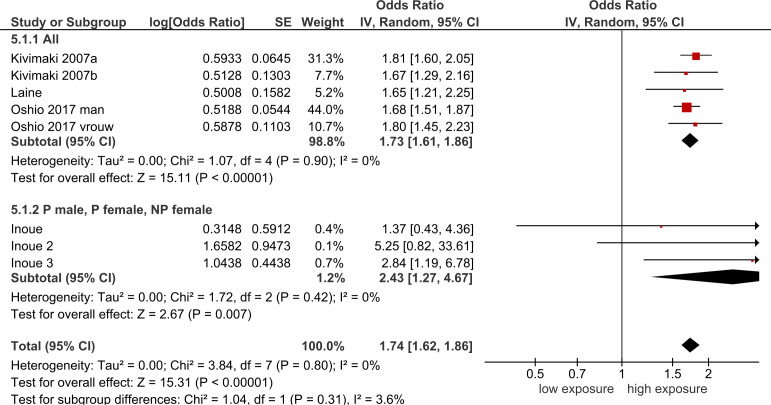
§ Work-related psychosocial risk factors for stress-related mental disorders: an updated systematic review and meta-analysis > Results > Psychosocial risk factors and SRD
“low procedural justice with a pooled OR of 1.73 (95% CI 1.61 to 1.86)”
§ Work-related psychosocial risk factors for stress-related mental disorders: an updated systematic review and meta-analysis > Results > Psychosocial risk factors and SRD
“| Low procedural justice | 64 676 | 5/5 | 1 | No | 0% | No | No | No | 1.74(1.62 to 1.86) | 2/5 | Moderate |”
Rated minor: it would not touch a result — a value no result rests on, a p-value that stays on the same side of the significance level, or a conflict that is clerical, resolved elsewhere in the paper, or outside its own findings.
In the paper
§ Work-related psychosocial risk factors for stress-related mental disorders: an updated systematic review and meta-analysis > Results > Psychosocial risk factors and SRD
“| Effort-reward imbalance | 76 760 | 6/6 |”
§ Work-related psychosocial risk factors for stress-related mental disorders: an updated systematic review and meta-analysis > Abstract > Results
“a population of 73 874 workers from Belgium, Denmark, England, Finland, Japan, the Netherlands and Sweden were included in the meta-analysis of 14 prospective cohort studies.”
Rated minor: it would not touch a result — a value no result rests on, a p-value that stays on the same side of the significance level, or a conflict that is clerical, resolved elsewhere in the paper, or outside its own findings.
In the paper
§ Work-related psychosocial risk factors for stress-related mental disorders: an updated systematic review and meta-analysis > Results > Psychosocial risk factors and SRD
“Four cohort studies22 23 26 27 demonstrate very low-quality evidence that there is inconsistent evidence for increased incidence of SRD with different types of bullying and workplace violence”
§ Work-related psychosocial risk factors for stress-related mental disorders: an updated systematic review and meta-analysis > Results > Psychosocial risk factors and SRD
“| Bullying and violence | 9694 | 4/4 | 1 | No | Heterogeneity in definitions | No | Yes: ↓ | No | 1.42–3.64(0.42 to 15.92) | 0/4 | Low |”
Citations
Cites
Job Demands, Job Decision Latitude, and Mental Strain: Implications for Job Redesign
Karasek, R. A. (1979) · Administrative Science Quarterly · doi:10.2307/2392498 · Cited by 12,597
Understanding the burnout experience: Recent research and its implications for psychiatry
Maslach, C., & Leiter, M. P. (2016) · World Psychiatry · doi:10.1002/wps.20311 · Cited by 4,200
Moorman, R. H. (1991) · Journal of Applied Psychology · doi:10.1037//0021-9010.76.6.845 · Cited by 3,422
Interventions to prevent and reduce physician burnout: a systematic review and meta-analysis
West, C. P., Dyrbye, L. N., Erwin, P. J., & Shanafelt, T. D. (2016) · The Lancet · doi:10.1016/s0140-6736(16)31279-x · Cited by 2,362
A systematic review including meta-analysis of work environment and depressive symptoms
Theorell, T., Hammarström, A., Aronsson, G., Träskman Bendz, L., Grape, T., Hogstedt, C., Marteinsdottir, I., Skoog, I., & Hall, C. (2015) · BMC Public Health · doi:10.1186/s12889-015-1954-4 · Cited by 982
Work characteristics predict psychiatric disorder: prospective results from the Whitehall II Study.
Stansfeld, S. A., Fuhrer, R., Shipley, M. J., & Marmot, M. G. (1999) · Occupational and Environmental Medicine · doi:10.1136/oem.56.5.302 · Cited by 800
Harvey, S. B., Modini, M., Joyce, S., Milligan-Saville, J. S., Tan, L., Mykletun, A., Bryant, R. A., Christensen, H., & Mitchell, P. B. (2017) · Occupational and Environmental Medicine · doi:10.1136/oemed-2016-104015 · Cited by 799
Psychosocial work environment and stress-related disorders, a systematic review
Nieuwenhuijsen, K., Bruinvels, D., & Frings-Dresen, M. (2010) · Occupational Medicine · doi:10.1093/occmed/kqq081 · Cited by 696 · cited 7×
“This review was not registered in Prospero, but an update of a previous review by Nieuwenhuijsen et al.10”
BackgroundMethodResultInfluentialSelf-citationHuguet, A., Hayden, J. A., Stinson, J., McGrath, P. J., Chambers, C. T., Tougas, M. E., & Wozney, L. (2013) · Systematic Reviews · doi:10.1186/2046-4053-2-71 · Cited by 531
Foroutan, F., Guyatt, G., Zuk, V., Vandvik, P. O., Alba, A. C., Mustafa, R., Vernooij, R., Arevalo-Rodriguez, I., Munn, Z., Roshanov, P., et al. (2020) · Journal of Clinical Epidemiology · doi:10.1016/j.jclinepi.2019.12.023 · Cited by 465
Cited by
Li, Y., Scherer, N., Felix, L., & Kuper, H. (2021) · PLOS ONE · doi:10.1371/journal.pone.0246454 · Cited by 536
Niedhammer, I., Bertrais, S., & Witt, K. (2021) · Scandinavian Journal of Work, Environment & Health · doi:10.5271/sjweh.3968 · Cited by 370
Sun, C., Hon, C. K. H., Way, K. A., Jimmieson, N. L., & Xia, B. (2021) · Safety Science · doi:10.1016/j.ssci.2021.105485 · Cited by 135
Individual-level interventions for reducing occupational stress in healthcare workers
Tamminga, S. J., Emal, L. M., Boschman, J. S., Levasseur, A., Thota, A. B., Ruotsalainen, J. H., Schelvis, R. M. C., Nieuwenhuijsen, K., & van der Molen, H. F. (2023) · Cochrane Database of Systematic Reviews · doi:10.1002/14651858.cd002892.pub6 · Cited by 194
Self-citationAn urgent call to address work‐related psychosocial hazards and improve worker well‐being
Schulte, P. A., Sauter, S. L., Pandalai, S. P., Tiesman, H. M., Chosewood, L. C., Cunningham, T. R., Wurzelbacher, S. J., Pana‐Cryan, R., Swanson, N. G., Chang, C., et al. (2024) · American Journal of Industrial Medicine · doi:10.1002/ajim.23583 · Cited by 143
An Online Framework for Cognitive Load Assessment in Industrial Tasks
Lagomarsino, M., Lorenzini, M., Momi, E. D., & Ajoudani, A. (2022) · Robotics and Computer-Integrated Manufacturing · doi:10.1016/j.rcim.2022.102380 · Cited by 130
Lagomarsino, M., Lorenzini, M., Balatti, P., Momi, E. D., & Ajoudani, A. (2022) · IEEE Transactions on Cognitive and Developmental Systems · doi:10.1109/tcds.2022.3182811 · Cited by 97
“Besides, recent surveys [3], [4] and systematic reviews [5] indicate that work-related stress and psychological risks affect to date hundreds of millions of people worldwide, having direct financial implications for private companies and governments [6].”
BackgroundWang, S., Li, L. Z., & Coutts, A. P. (2022) · BMJ Open · doi:10.1136/bmjopen-2022-066389 · Cited by 96
Mental health problems and their related factors among seafarers: a scoping review
Jonglertmontree, W., Kaewboonchoo, O., Morioka, I., & Boonyamalik, P. (2022) · BMC Public Health · doi:10.1186/s12889-022-12713-z · Cited by 106
Patient Safety Culture in European Hospitals: A Comparative Mixed Methods Study
Granel, N., Palmieri, P. A., Watson, C., Gómez‐Ibáñez, R., Leyva‐Moral, J. M., & Bernabeu‐Tamayo, M. D. (2022) · International Journal of Environmental Research and Public Health · doi:10.3390/ijerph19020939 · Cited by 101
“Importantly, these are classic signs of unhealthy stress in the workplace [62,63].”
BackgroundNixon, P., Boß, L., Heber, E., Ebert, D. D., & Lehr, D. (2021) · BMC Public Health · doi:10.1186/s12889-021-11504-2 · Cited by 43
“Work-related stress is associated with increased risk for development and maintenance of adverse physical [1–3] and mental health consequences [4].”
BackgroundLagomarsino, M., Lorenzini, M., Momi, E. D., & Ajoudani, A. (2022) · IEEE/RSJ International Conference on Intelligent Robots and Systems (IROS) · doi:10.1109/iros47612.2022.9981424 · Cited by 46
“Nevertheless, the coexistence of humans and Cobots in the same workplace may lead to adverse health outcomes in terms of mental stress and anxiety [4], which should be profoundly studied.”
BackgroundBillaudeau, N., Alexander, S., Magnard, L., Temam, S., & Vercambre, M. (2022) · International Journal of Environmental Research and Public Health · doi:10.3390/ijerph19159151 · Cited by 51
Hill, N. T. M., Bailey, E., Benson, R., Cully, G., Kirtley, O. J., Purcell, R., Rice, S., Robinson, J., & Walton, C. C. (2022) · BMC Psychology · doi:10.1186/s40359-022-00728-5 · Cited by 45
Wang, M., Shao, P., Wu, C., Zhang, L.-Y., Zhang, L., Liang, J., & Du, J. (2023) · Frontiers in Psychology · doi:10.3389/fpsyg.2022.1070809 · Cited by 39
Cross-cultural adaptation and psychometric properties of the short version of COPSOQ II-Brazil
Gonçalves, J. S., Moriguchi, C. S., Chaves, T. C., & Sato, T. D. O. (2021) · Revista de Saúde Pública · doi:10.11606/s1518-8787.2021055003123 · Cited by 28
Organizational Justice and Health: A Survey in Hospital Workers
Magnavita, N., Chiorri, C., Maran, D. A., Garbarino, S., Prinzio, R. R. D., Gasbarri, M., Matera, C., Cerrina, A., Gabriele, M., & Labella, M. (2022) · International Journal of Environmental Research and Public Health · doi:10.3390/ijerph19159739 · Cited by 40
Hultén, A.-M., Bjerkeli, P. J., & Holmgren, K. E. (2022) · BMC Public Health · doi:10.1186/s12889-022-13269-8 · Cited by 40
de Vries, H., Pennings, H. J. M., van der Schans, C. P., Sanderman, R., Oldenhuis, H. K. E., & Kamphuis, W. (2022) · Sensors · doi:10.3390/s23010332 · Cited by 32
“Stress is associated with an increased risk of numerous diseases [1–7] and mental disorders [8,9].”
BackgroundNilsson, K. H., Santander, N. M., Lee, M. K., Brulin, E., Bodin, T., & Håkansta, C. (2025) · Safety Science · doi:10.1016/j.ssci.2025.106863 · Cited by 53
Brym, S., Mack, J. T., Weise, V., Kopp, M., Steudte‐Schmiedgen, S., & Garthus‐Niegel, S. (2022) · BMC Public Health · doi:10.1186/s12889-022-14582-y · Cited by 34
Lim, K. H. J., Kamposioras, K. V., Élez, E., Haanen, J. B. A. G., Hardy, C., Murali, K., O’Connor, M., Oing, C., Punie, K., de Azambuja, E., et al. (2024) · ESMO Open · doi:10.1016/j.esmoop.2024.103634 · Cited by 25
Psychosocial work factors affecting mental health of young workers: a systematic review
van Veen, M., Hengel, K. M. O., Schelvis, R. M. C., Bongers, P. M., Ket, J. C. F., van der Beek, A. J., & Boot, C. R. L. (2022) · International Archives of Occupational and Environmental Health · doi:10.1007/s00420-022-01907-y · Cited by 36
Considering mental health and well-being in media work
Deuze, M. (2023) · The Australian Journalism Review · doi:10.1386/ajr_00115_7 · Cited by 39
Sørensen, J. B., Lasgaard, M., Willert, M. V., & Larsen, F. B. (2021) · BMC Public Health · doi:10.1186/s12889-021-10594-2 · Cited by 24
Psychological Distress, Japanese Teleworkers, and Supervisor Support During COVID-19
Kikunaga, K., Nakata, A., Kuwamura, M., Odagami, K., Mafune, K., Ando, H., Muramatsu, K., Tateishi, S., Fujino, Y., & for the CORoNa Work Project (2022) · Journal of Occupational and Environmental Medicine · doi:10.1097/jom.0000000000002756 · Cited by 21
Validity of mental and physical stress models
Hendry, E., McCallister, B., Elman, D. J., Freeman, R. L., Borsook, D., & Elman, I. (2024) · Neuroscience & Biobehavioral Reviews · doi:10.1016/j.neubiorev.2024.105566 · Cited by 19
Behrendt, D., Boß, L., Hannibal, S., Kunzler, A. M., Wessa, M., & Lehr, D. (2023) · Internet Interventions · doi:10.1016/j.invent.2023.100649 · Cited by 19
Kim, B., Kim, M., & Lee, J. (2024) · Current Psychology · doi:10.1007/s12144-024-06953-y · Cited by 21
“This concept has been linked to various negative outcomes, including decreased job satisfaction, reduced productivity, and increased turn-over intentions (Fox et al., 2022; Galanakis & Tsitouri, 2022; Guthier et al., 2020 ; Lazarus & Folkman, 1984; Van der Molen et al., 2020).”
Influentialde Vries, H., Kamphuis, W., Oldenhuis, H. K. E., van der Schans, C. P., & Sanderman, R. (2021) · JMIR Cardio · doi:10.2196/28731 · Cited by 18
“In an occupational setting, psychosocial risk factors such as high job demands are estimated to increase the risk of stress-related diseases (eg, burnout) by 60%-90% [8].”
BackgroundChacón, A., Navarro, M. L. A., Pérez-Chacón, M., & Mas, M. D. L. M. B. (2023) · Behavioral Sciences · doi:10.3390/bs13060496 · Cited by 25
Balancing making a difference with making a living in the conservation sector
Pienkowski, T., Keane, A. M., y Tickell, S. C., Hazenbosch, M., Arlidge, W. N. S., Baranyi, G., Brittain, S., de Lange, E., Khanyari, M., Papworth, S., et al. (2021) · Conservation Biology · doi:10.1111/cobi.13846 · Cited by 16
Hoven, H., Wahrendorf, M., Goldberg, M., Zins, M., & Siegrist, J. (2021) · European Journal of Public Health · doi:10.1093/eurpub/ckab181 · Cited by 16
Baka, Ł., Prusik, M., & Jasielska, D. (2023) · Frontiers in Psychiatry · doi:10.3389/fpsyt.2022.1037053 · Cited by 21
Supporting conservationists’ mental health through better working conditions
Pienkowski, T., Keane, A. M., y Tickell, S. C., de Lange, E., Hazenbosch, M., Khanyari, M., Arlidge, W. N. S., Baranyi, G., Brittain, S., Kapoor, V., et al. (2023) · Conservation Biology · doi:10.1111/cobi.14097 · Cited by 19
“The effort–reward imbalance (ERI) model, developed by Siegrist (1996), consistently predicts poor mental health in the workplace (Duchaine et al., 2020; Rugulies et al., 2017; van der Molen et al., 2020).”
Su, J. J., Dai, Z., Wu, Y., Liu, X., Ren, T., Liu, X., Zhang, L., Fu, J., Chen, X., Xiao, W., et al. (2023) · QJM · doi:10.1093/qjmed/hcad188 · Cited by 13
Larsen, F. B., Lasgaard, M., Willert, M. V., & Sørensen, J. B. (2023) · PLoS ONE · doi:10.1371/journal.pone.0290410 · Cited by 13
“The work situation is a well-known stressor [48,50], and the workplace has long been a major arena for stress prevention and management.”
BackgroundResultBolis, I., Sigahi, T. F. A. C., & Morioka, S. N. (2024) · Safety Science · doi:10.1016/j.ssci.2024.106439 · Cited by 19
Pavlista, V., Angerer, P., & Diebig, M. (2024) · BMC Public Health · doi:10.1186/s12889-024-20818-w · Cited by 31
Work-related mental health: current state of the art (literature review)
Bukhtiyarov, I. V., Denisov, E. I., Zhovnerchuk, E. V., Сериков, В. В., Khatin, D. E., & Moskovenko, A. (2021) · Hygiene and Sanitation · doi:10.47470/0016-9900-2021-100-11-1236-1243 · Cited by 11
Wijkander, M., Farrants, K., & Hanson, L. L. M. (2022) · International Archives of Occupational and Environmental Health · doi:10.1007/s00420-022-01917-w · Cited by 10
Evaluation of Psychosocial Risks Among High School Teachers in Morocco
Douelfiqar, I., Madhi, Y. E., Soulaymani, A., Wahbi, B. E., & Faylali, H. E. (2023) · International Journal of Engineering Pedagogy (iJEP) · doi:10.3991/ijep.v13i3.36521 · Cited by 13
Vivion, M., Jauvin, N., Nicolakakis, N., Pelletier, M., Letellier, M.-C., & Biron, C. (2023) · International Journal of Environmental Research and Public Health · doi:10.3390/ijerph20126116 · Cited by 14
Leka, S., & Jain, A. (2025) · SSRN Electronic Journal · doi:10.2139/ssrn.5114626 · Cited by 10
Pees, S. O., van Oostrom, S. H., Lettinga, H., Schaafsma, F. G., & Proper, K. I. (2024) · Occupational and Environmental Medicine · doi:10.1136/oemed-2024-109454 · Cited by 19
Berkemeier, L., Kamphuis, W., Brouwer, A.-M., de Vries, H., Schadd, M. P. D., van Baardewijk, J. U., Oldenhuis, H. K. E., Verdaasdonk, R. M., & van Gemert‐Pijnen, J. E. W. C. (2024) · IEEE Transactions on Affective Computing · doi:10.1109/taffc.2024.3474098 · Cited by 18
“For example, it can put employees at higher risk of developing mental disorders [5], burnout [6] or cardiovascular diseases [7].”
Margheritti, S., Corthésy-Blondin, L., Masse, S. V., & Negrini, A. (2025) · Journal of Occupational Rehabilitation · doi:10.1007/s10926-024-10265-0 · Cited by 20
“The most relevant work-related factors to consider are psychosocial risk factors [29, 30].”
Méndez-Rivero, F., Pozo, Ó. J., & Julià, M. (2022) · International Journal of Environmental Research and Public Health · doi:10.3390/ijerph192316073 · Cited by 14
Dell’Osso, L., Buselli, R., Corsi, M., Baldanzi, S., Bertelloni, C. A., Marino, R., Gravina, D., Chiumiento, M., Veltri, A., Massimetti, G., et al. (2022) · International Journal of Environmental Research and Public Health · doi:10.3390/ijerph19073809 · Cited by 9
“Nevertheless, international literature on work stress, to date, has been more focused on studying psychosocial risk factors closely linked to work organization, leaving a gap in defining a profile of subjects who are most likely to encounter occupational stress and negative health outcomes [9].”
BackgroundBalducci, C., Rafanelli, C., Menghini, L., & Consiglio, C. (2024) · International Journal of Environmental Research and Public Health · doi:10.3390/ijerph21020178 · Cited by 10
“Psychosocial factors have traditionally been considered for their impact on workers’ job stress and mental health [17], while less attention has been paid to the potential of certain psychosocial working conditions to be directly involved in the dynamic of third-party workplace violence, which may…”
BackgroundKnutsen, R. H., Nielsen, M. B., Lunde, L.-K., Skare, Ø., & Johannessen, H. A. (2024) · BMC Public Health · doi:10.1186/s12889-024-18299-y · Cited by 10
“Nevertheless, emotional demands are associated with long-term sick leave in longitudinal studies [49] and has been identified as a risk factor for mental disorders in a recent systematic review based on studies of different occupations [50, 51].”
Backgroundvon Gall, C., Muth, T., & Angerer, P. (2023) · Brain Sciences · doi:10.3390/brainsci13050818 · Cited by 11
“Subjective workload has a strong impact on mental health in general [9,10], as well as on motivation and academic performance [11].”
BackgroundEmal, L. M., Tamminga, S. J., Kežić, S., Schaafsma, F. G., Nieuwenhuijsen, K., & van der Molen, H. F. (2023) · International Journal of Environmental Research and Public Health · doi:10.3390/ijerph20126114 · Cited by 15
Self-citationKwon, D., Kwak, K., Baek, K., Chi, Y., Na, S., & Park, J. (2021) · Annals of Occupational and Environmental Medicine · doi:10.35371/aoem.2021.33.e33 · Cited by 32
Bouche, A., Jaussaud, J., Pic, O., Koleck, M., Dupuy, L., Ouvrard, C., Amieva, H., & Rascle, N. (2025) · Journal of Advanced Nursing · doi:10.1111/jan.16709 · Cited by 11
“ERI positively predicts burnout, anxiety and depression symptoms, as previously shown in the literature (Aronsson et al. 2017; Van Der Molen et al. 2020; Zhang et al. 2021).”
The Role of Chronic Stress in the Pathogenesis of Ischemic Heart Disease in Women
Cairns, M., Marais, E., Joseph, D. E., & Essop, M. F. (2025) · Comprehensive physiology · doi:10.1002/cph4.70000 · Cited by 8
“External factors such as poor work conditions and lack of social support structures, compounded by societal factors, can further impact stress levels (Ren et al. 2020; van der Molen et al. 2020).”
Maneen, S., Botha, N. N., Amoadu, M., & Ansah, E. W. (2025) · BMC Psychology · doi:10.1186/s40359-025-03251-5 · Cited by 18
“Evidence of the debilitating effects of waste collection on the health, safety, and well-being of the workers and their effects on productivity is growing [2–5, 13, 26, 30–33].”
Parent‐Lamarche, A., & Hallée, Y. (2023) · International Archives of Occupational and Environmental Health · doi:10.1007/s00420-023-02005-3 · Cited by 7
“Indeed, it has previously been demonstrated that demands and resources (or a lack of) are associated with stress-related mental disorders (van der Molen et al. 2020) and mental health (De Lange et al. 2004).”
BackgroundWork characteristics and emotional exhaustion among young workers: a latent class analysis
van Veen, M., Schelvis, R. M. C., Hoekstra, T., Bongers, P. M., Boot, C. R. L., & Hengel, K. M. O. (2023) · BMJ Open · doi:10.1136/bmjopen-2023-074386 · Cited by 13
Kuchenbaur, M., & Peter, R. (2022) · International Archives of Occupational and Environmental Health · doi:10.1007/s00420-022-01941-w · Cited by 12
Work-related stress, reason for consultation and diagnosis-specific sick leave: How do they add up?
Hultén, A.-M., Holmgren, K. E., & Bjerkeli, P. J. (2023) · PLoS ONE · doi:10.1371/journal.pone.0288751 · Cited by 12
“In a systematic review [30], van der Molen et al.”
BackgroundOakman, J., Young, S., Weale, V. P., & Pattinson, A. (2024) · Administrative Sciences · doi:10.3390/admsci14040072 · Cited by 9
Lönnqvist, K., Sinervo, T. S., Kaihlanen, A., & Elovainio, M. J. (2025) · BMC Health Services Research · doi:10.1186/s12913-024-12164-9 · Cited by 13
Heckendorf, H., & Lehr, D. (2025) · Journal of Medical Internet Research · doi:10.2196/58475 · Cited by 14
Arifi, D., Bitterlich, N., von Wolff, M., et al. (2021) · Archives of Gynecology and Obstetrics · doi:10.1007/s00404-021-06289-z · Cited by 6
“Particularly, the combination of high job demands and low job control seems to play an important role when examining the impact of work-related stress on mental-cognitive function [27], as we were able to observe with our investigations.”
ResultThe changing nature of work in the 21st century as a social determinant of mental health
Kawachi, I. (2024) · World Psychiatry · doi:10.1002/wps.21166 · Cited by 6
Yang, T., Peng, S., Oliffe, J. L., & Zhang, W. (2025) · Stress and Health · doi:10.1002/smi.70009 · Cited by 11
Caridade, S., Oliveira, A., Saavedra, R., Ribeiro, R., Santos, M., Almeida, I., & Soeiro, C. (2022) · BMC Psychology · doi:10.1186/s40359-022-00825-5 · Cited by 12
Vang, M. L., Hansen, N. B., Elklit, A., Melander-Nyboe, P., Høgsted, R. H., & Pihl‐Thingvad, J. (2023) · Psychology Crime and Law · doi:10.1080/1068316x.2023.2234543 · Cited by 8
“Here, a recent meta-study show that high job demands increase the risk of stress-related mental disorders with moderate effect sizes in both men and women (van der Molen et al., 2020).”
Matsubara, E., Matsui, N., & Kambara, K. (2023) · Wood Science and Technology · doi:10.1007/s00226-023-01490-6 · Cited by 8
Burin, D., Cavanna, G., Rabellino, D., Kotozaki, Y., & Kawashima, R. (2022) · International Journal of Environmental Research and Public Health · doi:10.3390/ijerph19106340 · Cited by 7
“They were all Japanese citizens, native Japanese speakers and university students.”
BackgroundInfluentialİş ve Sosyal Güvenlik Hukukunda İşe Bağlı Stres Kavramı
ELBİR, N. (2021) · Marmara Üniversitesi Hukuk Fakültesi Hukuk Araştırmaları dergisi · doi:10.33433/maruhad.895606 · Cited by 5
Hansen, N. B., Andersen, L. L., Møller, S. R., Elklit, A., & Pihl‐Thingvad, J. (2025) · European Journal of Work and Organizational Psychology · doi:10.1080/1359432x.2025.2509679 · Cited by 8
“…as demands, lack of support, role stressors, lack of influence, and perceived injustice (see for example Gerhardt et al., 2021; Madsen et al., 2017; van der Molen et al., 2020), has been adopted across various first responder professions, including law enforcement (Møller et al., 2023; Violanti et…”
Beno, A., Bertilsson, M., Holmgren, K. E., Glise, K., Pousette, A., Segerfelt, K., & Björk, L. (2023) · BMC Family Practice · doi:10.1186/s12875-023-02151-0 · Cited by 8
Liu, W., Wang, Q., Zheng, D., Mei, J., Lu, J., Chen, G., Wang, W., & Ding, F. (2024) · Journal of Medical Internet Research · doi:10.2196/45422 · Cited by 9
“The link between work-related stress and psychological distress is also well established [8], and according to a recent meta-analysis, the prevalence of depression, anxiety, and stress symptoms among health care workers (HCWs) was 24.3%, 25.8%, and 45%, respectively, which was higher than in other…”
InfluentialKuske, J., Zapkau, F. B., Gänser-Stickler, G. M., & Schwens, C. (2024) · Industrial Marketing Management · doi:10.1016/j.indmarman.2024.06.005 · Cited by 7
Psychosocial hazards and the weaponising of menstruation
Naznin, H., & Thornthwaite, L. (2025) · Journal of Industrial Relations · doi:10.1177/00221856241308988 · Cited by 5
“…of psychosocial hazards in organisations, their negative implications for well-being in terms of stress and burnout, and how employing organisations can eliminate such harms (Cox et al., 2000; Dollard et al., 2007; Nieuwenhuijsen et al., 2010; Salanova et al., 2014; van der Molen et al., 2020).”
Baek, S., Yoon, J., & Won, J. (2023) · Social Science & Medicine · doi:10.1016/j.socscimed.2023.116176 · Cited by 6
Strukčinskienė, B., Jurgaitis, J., Grigolienė, R., Karoblytė, D., Župerkienė, E., Martišauskienė, D., Gedvilė, Ž., Virketis, G., Venclauskas, L., & Genowska, A. (2025) · Healthcare · doi:10.3390/healthcare13233077 · Cited by 4
Danielsson, L., Frantz, A., & Holmgren, K. E. (2024) · Work · doi:10.3233/wor-230141 · Cited by 6
Vang, M. L., Andersen, L. P., Biering, K., Hyland, P., Shevlin, M. E., Linnet, J., & Pihl‐Thingvad, J. (2024) · Journal of Psychiatric Research · doi:10.1016/j.jpsychires.2024.09.035 · Cited by 4
van Veen, M., Schelvis, R. M. C., Bongers, P. M., Hengel, K. M. O., & Boot, C. R. L. (2024) · BMC Public Health · doi:10.1186/s12889-024-20760-x · Cited by 12
“Yet poor psychosocial work circumstances can have an adverse effect on mental health [2, 3].”
Shiri, R., Mattila‐Holappa, P., Kauppi, M., Aalto, V., Oksanen, T., & Ervasti, J. M. (2023) · European Journal of Public Health · doi:10.1093/eurpub/ckad211 · Cited by 7
Gutiérrez-Alvarez, R., Guerra, K., & Gutiérrez, M. (2024) · Heliyon · doi:10.1016/j.heliyon.2024.e33724 · Cited by 7
Mehlig, K., von Below, A., Holmgren, K. E., Björkelund, C., Lissner, L., Skoglund, I., Hakeberg, M., & Hange, D. (2024) · Scandinavian Journal of Primary Health Care · doi:10.1080/02813432.2024.2380925 · Cited by 7
“…and ability to work. a recent systematic review highlighted that poor working conditions increased the risk of stress-related mental disorders [8] and subsequent sick leave [9,10]. experiences of work-related stress have been related to sick leave in a working population seeking primary care…”
BackgroundSyre, R., Berntzen, S., Haukeland, J., & Teymoori, A. (2024) · Journal of Community & Applied Social Psychology · doi:10.1002/casp.70027 · Cited by 6
Ruzairi, K. M., Jamaludin, B. S., Sukadarin, E. H., & Widia, M. (2021) · Lecture notes in mechanical engineering · doi:10.1007/978-981-16-4115-2_54 · Cited by 5
Almén, N. (2022) · International Journal of Environmental Research and Public Health · doi:10.3390/ijerph192114005 · Cited by 5
“In particular, work stress has been shown to be associated with prolonged stress-related ill health [7].”
BackgroundGehanno, J.-F., Thaon, I., Pélissier, C., & Rollin, L. (2023) · Journal of Occupational Rehabilitation · doi:10.1007/s10926-023-10110-w · Cited by 5
“We also included recent meta-analyses on the subject and collected the articles cited in their reference list, when relevant [1, 2, 14, 15].”
BackgroundMethodHolte, A. (2024) · Mental Health & Prevention · doi:10.1016/j.mhp.2024.200321 · Cited by 9
Júnior, C. J. D. S., & Fischer, F. M. (2024) · Cadernos de Saúde Pública · doi:10.1590/0102-311xen031524 · Cited by 13
Prevalence of psychosocial risk severity, stress and cognitive dissonance in working conditions
Vykopalová, H. (2025) · Journal of Loss Prevention in the Process Industries · doi:10.1016/j.jlp.2025.105552 · Cited by 9
Honkley, T. (2024) · JURNAL EKUIVALENSI · doi:10.51158/95a8se65 · Cited by 3
Work demands, self-care, and mental health in lawyers
Chlap, N., & Murray, K. (2025) · Psychiatry Psychology and Law · doi:10.1080/13218719.2025.2497784 · Cited by 5
“…are consistent with previous research showing that work demands are associated with higher levels of distress and burnout (Sanne et al., 2005; Van Der Molen et al., 2020) and suggest the pressures characteristic of the legal profession pose risk for psychological distress and burnout as has…”
Sjöberg, O. (2025) · Employee Relations · doi:10.1108/er-10-2024-0595 · Cited by 7
Kotsakis, A., Avraam, D., Malliarou, M. M., Soteriades, E. S., Halkiopoulos, C., Galanakis, M., & Sfakianakis, M. (2025) · Healthcare · doi:10.3390/healthcare13161980 · Cited by 3
Heiden, B., & Herbig, B. (2023) · Springer eBooks · doi:10.1007/978-3-658-40615-8_11 · Cited by 4
Work stress and obsessive-compulsive symptoms in nurses and office workers: a comparative study
Kuzu, A., Öztürk, P. Ç., & Durmaz, Y. Ç. (2024) · International Journal of Occupational Safety and Ergonomics · doi:10.1080/10803548.2024.2335029 · Cited by 5
“Many situations related to work (the physical structure of the work environment, safety, conflicts due to role ambiguity, excessive workload, communication problems, job insecurity, low wages, responsibilities to the family and work, etc.) cause work stress [4,5].”
Li, J., Ma, X., Pan, W., Ke, H., & Xiao, Z. (2025) · BMC Psychology · doi:10.1186/s40359-025-02588-1 · Cited by 7
“Research has increasingly recognized the significant role of WR in the relationship between work requirements and mental health outcomes, such as depression, anxiety, and stress [31, 32].”
Gutiérrez, J. C. C., Pérez-Morán, J. C., Bernal-Baldenebro, B., Arenas-Meneses, D., Vázquez-Lira, R., & Tiznado, J. E. O. (2023) · Frontiers in Psychology · doi:10.3389/fpsyg.2022.1022707 · Cited by 9
Metadata
- Authors
- van der Molen, H. F., Nieuwenhuijsen, K., Frings-Dresen, M. H. W., & de Groene, G.
- Affiliations
- Coronel Institute of Occupational Health, Amsterdam UMC—Locatie AMC, Amsterdam, North Holland, The Netherlands
- Amsterdam UMC Location University of Amsterdam (NL)
- Venue
- BMJ Open
- Publisher
- BMJ
- Published
- 2020-07
- Volume
- 10
- Issue
- 7
- Pages
- e034849
- ISSN
- 2044-6055 (ISSN-L)
- PMC
- PMC7337889
- OpenAlex
- W3038544257
- Cited by
- 226
- References
- 40
- Citations by year
- 2026: 39 · 2025: 55 · 2024: 48 · 2023: 36 · 2022: 26 · 2021: 21 · 2020: 1
- FWCI
- 3.99
- Type
- journal article
- Language
- en
- Open access
- gold
- doi.org
- Locations
- BMJ Open (publishedVersion, cc-by)
- PubMed Central (publishedVersion, cc-by)
- PubMed (publishedVersion)
- Pure Amsterdam UMC (submittedVersion, cc-by)
- Data Archiving and Networked Services (DANS) (submittedVersion, other-oa)
- DOAJ (DOAJ: Directory of Open Access Journals) (submittedVersion, cc-by-sa)
- HighWire Press Open Archive (submittedVersion)
- Funders
- Ministry of Social Affairs and Employment, the Netherlands (5100-24108)
- Topics
- Health Sciences › Medicine › Public Health, Environmental and Occupational Health › Workplace Health and Well-being
- Health Sciences › Medicine › Public Health, Environmental and Occupational Health › Occupational Health and Burnout
- Health Sciences › Medicine › Public Health, Environmental and Occupational Health › Employment and Welfare Studies
- Keywords
- stress-related disorders, effort-reward imbalance, job demands, organizational justice, social support, emotional demands, decision-making power, job insecurity, bullying, skill discretion, workplace mental health
- MeSH terms
- Occupational Stress, Mental Disorders, Employment, Female, Humans, Male, Occupational Diseases, Prospective Studies, Risk Factors, Stress, Psychological, Workload, Workplace
About these checks
Registry, retraction, Cites and statistics results are computed, not judged, with one exception: a printed reference that no index lists is read once by a model before it counts as a citation error. Claims are extracted by a model and kept only when their quote appears verbatim in the text; each cited source is then checked, with a model’s help, for whether it says what the claim relies on. Those verdicts can be wrong — read the claim’s quote and the cited source before relying on one.
The claim verdicts this report counts are experimental: their accuracy is not yet measured.
A language model drew the claims from the paper on 2026-10-10, under version 3 of the claim definition (model deepseek-v4.1-flash, prompt extract-v3).
A second model labelled each claim on 2026-10-10 (model jev-1.13-20260917, definition revision gold-guideline-v0.2).
Cited sources are checked with a language model’s help (gpt-6-sol).
Statistics and arithmetic are recomputed, not judged.
Confidence bands are shown only for fields calibrated on our annotated test set. None is calibrated yet, so no band is shown.
What counts as a claim ›How we measure confidence ›How we check this ›
Are you an author, or do you see a problem with this page? Request a review
Data sources
Bibliographic data: Semantic Scholar, OpenAlex, Crossref.
Contains information from the Semantic Scholar Academic Graph Datasets, made available under the ODC Attribution License (ODC-BY 1.0).
Semantic Scholar’s data is described in: Kinney, R., et al. (2023). The Semantic Scholar Open Data Platform. arXiv:2301.10140.
