

The DOI matches its Crossref record; 79 of the 88 references it cites were found in a registry or an index; none of the 82 sources its claims cite is checked for support yet.
Socioeconomic inequalities and adverse pregnancy outcomes in the UK and Republic of Ireland: a systematic review and meta-analysis
Open accessAbstract
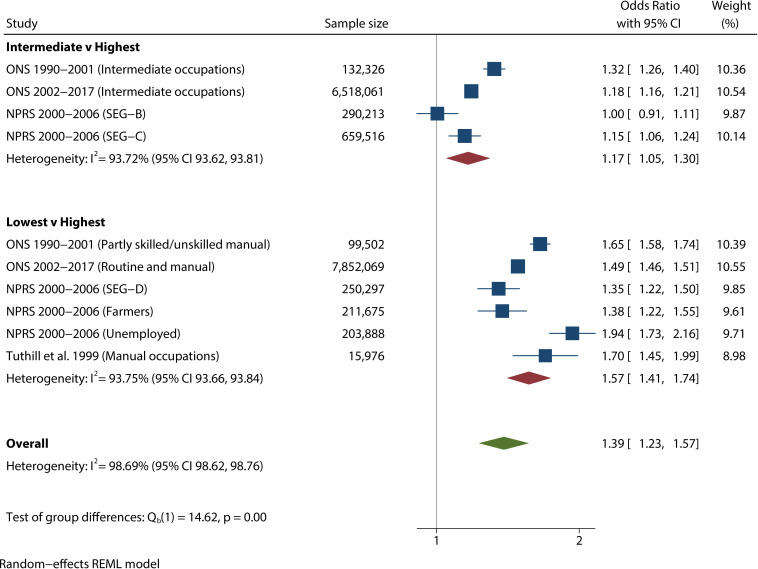
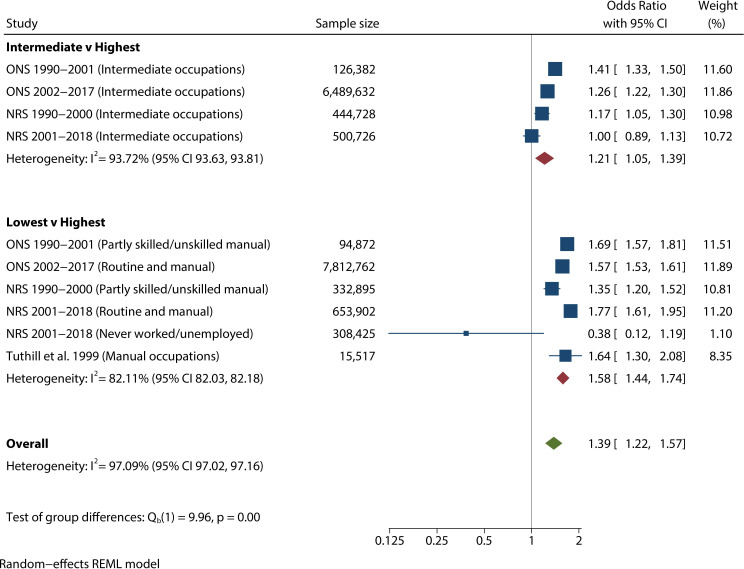
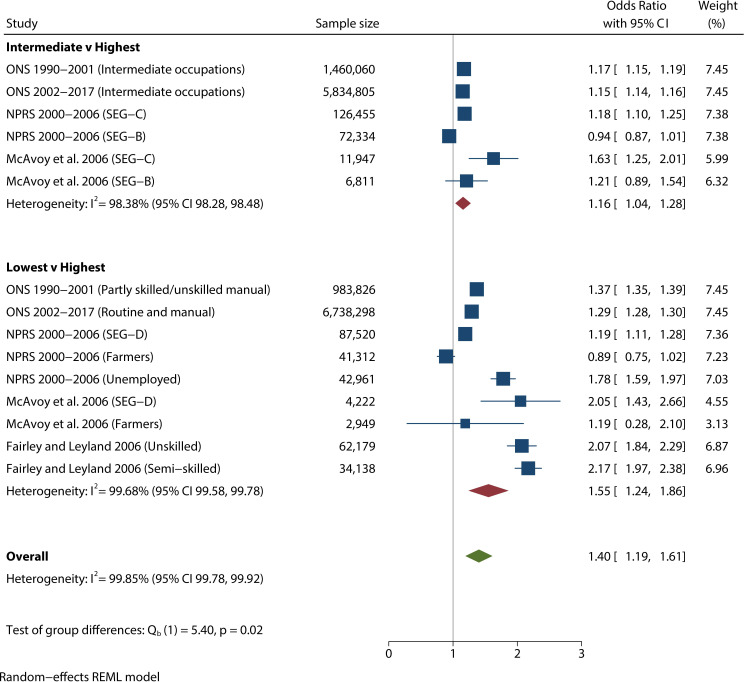
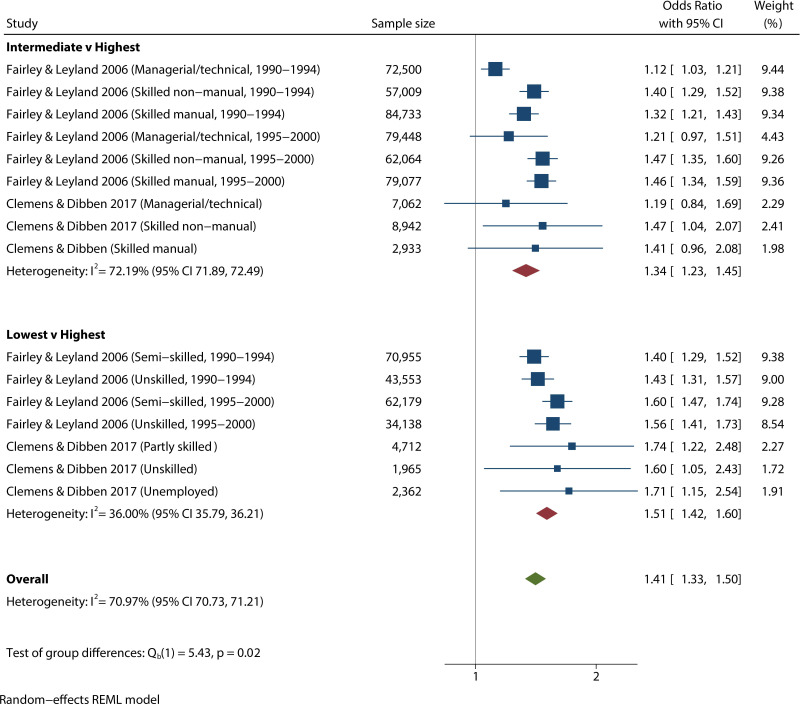
Objective: There has been an unprecedented rise in infant mortality associated with deprivation in recent years in the United Kingdom (UK) and Republic of Ireland. A healthy pregnancy can have significant impacts on the life chances of children. The objective of this review was to understand the association between individual-level and household-level measures of socioeconomic status and adverse pregnancy outcomes. Design: Systematic review and meta-analysis. Data sources: Nine databases were searched (Medline, Embase, Scopus, ASSIA, CINAHL, PsycINFO, BNI, MIDRIS and Google Scholar) for articles published between 1999 and August 2019. Grey literature searches were also assessed. Study selection criteria: Studies reporting associations between individual-level or household socioeconomic factors on pregnancy outcomes in the UK or Ireland. Results: Among the 82 353 search results, 53 821 titles were identified and 35 unique studies met the eligibility criteria. Outcomes reported were neonatal, perinatal and maternal mortality, preterm birth, birth weight and mode of delivery. Pooled effect sizes were calculated using random-effects meta-analysis. There were significantly increased odds of women from lower levels of occupation/social classes compared with the highest level having stillbirth (OR 1.40, 95% CI 1.23 to 1.59, I 2 98.62% ), neonatal mortality (OR 1.39, 95% CI 1.22 to 1.57, I 2 97.09% ), perinatal mortality (OR 1.39, 95% CI 1.23 to 1.57, I 2 98.69% ), preterm birth (OR 1.41, 95% CI 1.33 to 1.50, I 2 70.97% ) and low birth weight (OR 1.40, 95% CI 1.19 to 1.61, I 2 99.85% ). Limitations relate to available data, unmeasured confounders and the small number of studies for some outcomes. Conclusions: This review identified consistent evidence that lower occupational status, especially manual occupations and unemployment, were significantly associated with increased risk of multiple adverse pregnancy outcomes. Strategies to improve pregnancy outcomes should incorporate approaches that address wider determinants of health to provide women and families with the best chances of having a healthy pregnancy and baby and to decrease pregnancy-related health inequalities in the general population. PROSPERO registration number: PROSPERO CRD42019140893.
Overview
CoChat Summary
TL;DR
This systematic review and meta-analysis of 35 UK/Republic of Ireland studies (17,130,631 mothers and babies) found that lower occupation/social class was associated with significantly increased odds of stillbirth, neonatal and perinatal mortality, preterm birth, and low birth weight. Evidence was strongest for occupation-derived social class, with limited and inconsistent data for education, income, housing, and car ownership.
Key findings
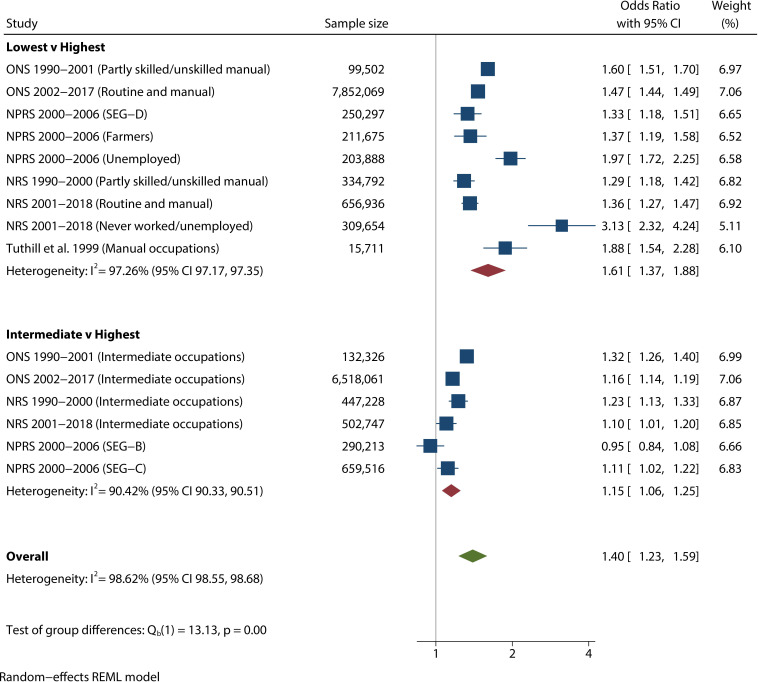
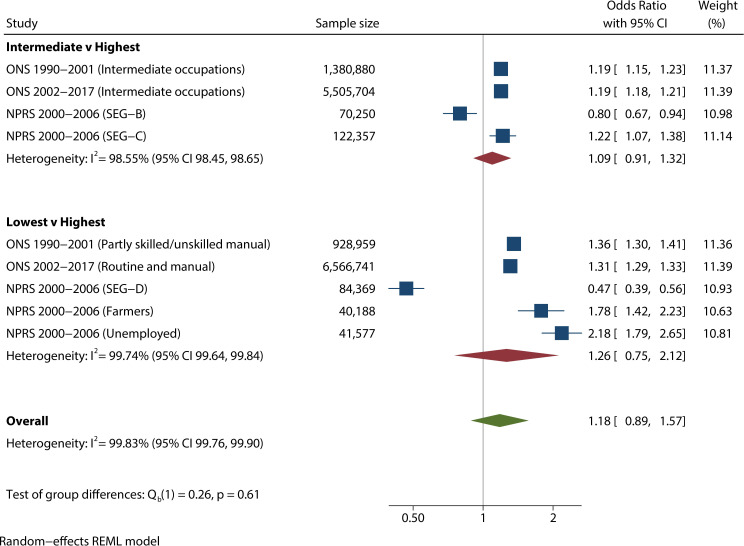
- Pooled lowest/intermediate versus highest occupation/social class showed increased odds of stillbirth (OR 1.40, 95% CI 1.23 to 1.59, I² 98.62%), neonatal mortality (OR 1.39, 95% CI 1.22 to 1.57, I² 97.09%), perinatal mortality (OR 1.39, 95% CI 1.23 to 1.57, I² 98.69%), preterm birth (OR 1.41, 95% CI 1.33 to 1.50, I² 70.97%), and low birth weight (OR 1.40, 95% CI 1.19 to 1.61, I² 99.85%); lowest-level occupation subgroups had higher odds (e.g., stillbirth OR 1.61, 95% CI 1.37 to 1.88; preterm birth OR 1.51, 95% CI 1.42 to 1.60; low birth weight OR 1.55, 95% CI 1.24 to 1.86).
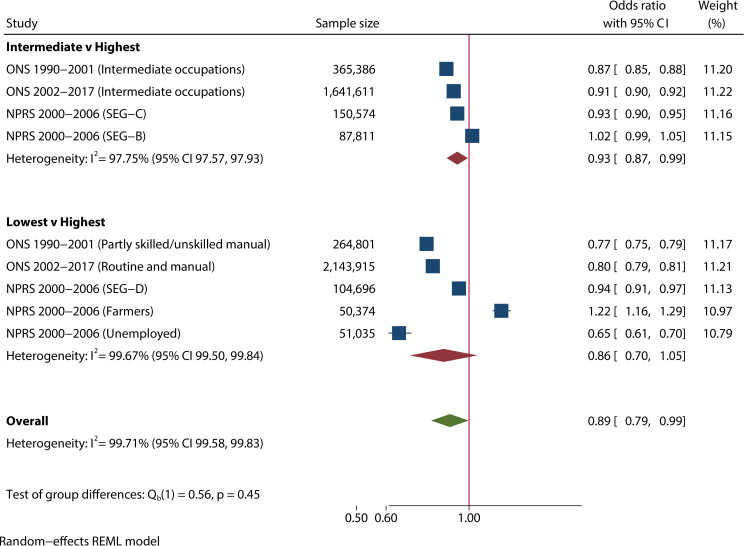
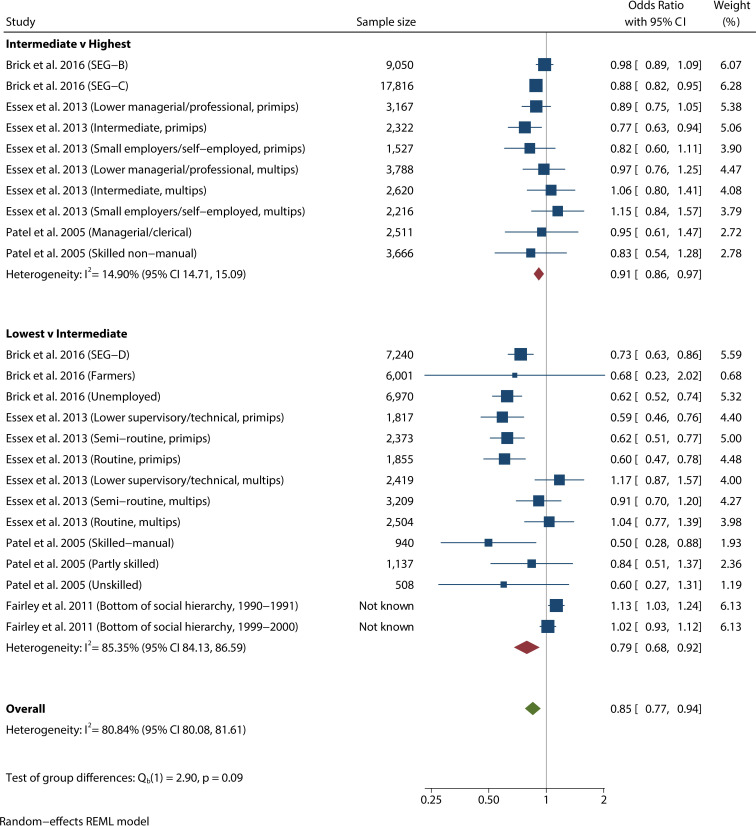
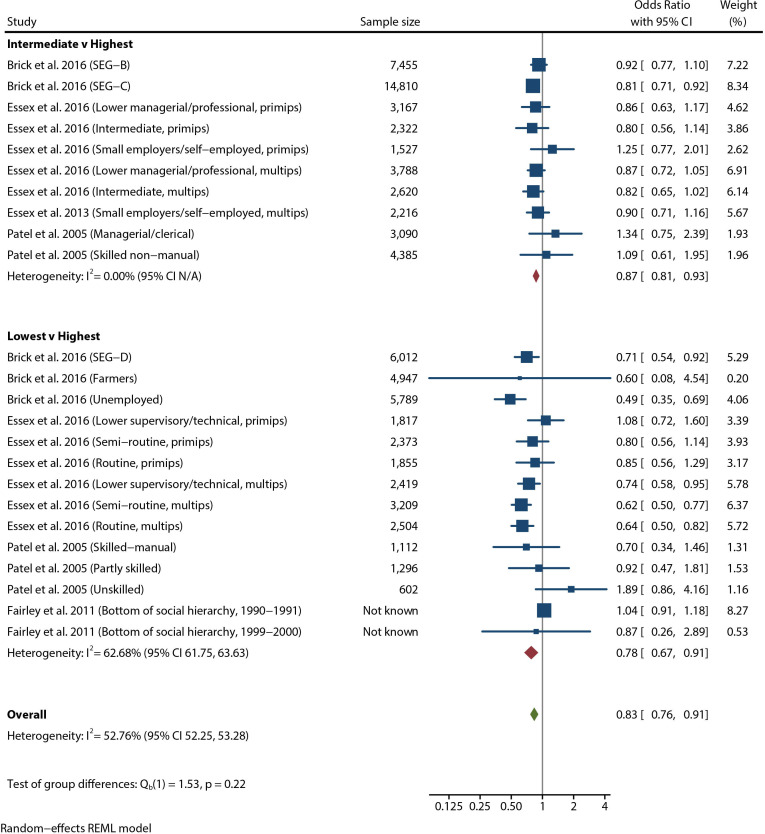
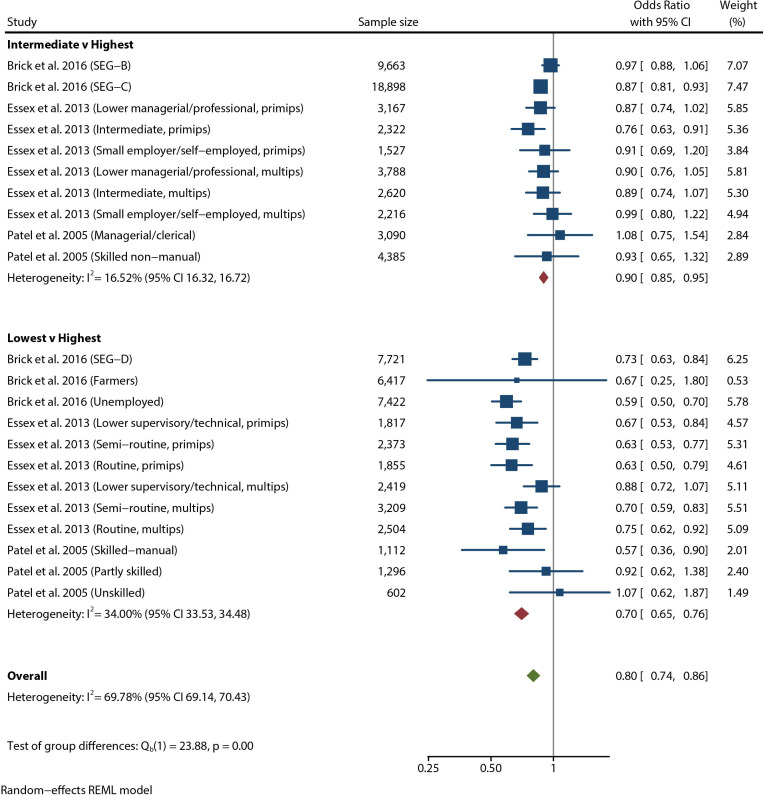
- No significant pooled association was found for very low birth weight (OR 1.18, 95% CI 0.89 to 1.57), while macrosomia showed decreased odds (OR 0.89, 95% CI 0.79 to 0.99); caesarean delivery showed reduced odds for lower occupation/social class (any caesarean OR 0.80, 95% CI 0.74 to 0.86; emergency OR 0.85, 95% CI 0.77 to 0.94; elective OR 0.83, 95% CI 0.76 to 0.91).
- Narrative findings included increased odds of stillbirth among unemployed mothers (OR 1.24, 95% CI 1.00 to 1.54) and fathers (OR 2.26, 95% CI 1.69 to 3.02), and increased maternal mortality among unemployed women (AOR 1.81, 95% CI 1.08 to 3.04); education, income, housing, and car ownership evidence was limited or inconsistent.
- Of 35 unique studies, 27 were UK and 8 ROI; 23 reported occupation-derived social class, 17 education, 7 employment and income/finances, 4 housing, and 1 car ownership; all studies were moderate or high quality, but GRADE evidence was low or very low for several outcomes.
Methods
- Systematic review and meta-analysis registered with PROSPERO (CRD42019140893) and conducted in line with MOOSE; nine databases were searched from 1 January 1999 to 7 August 2019, supplemented by citation chaining, grey literature searches, and expert contact.
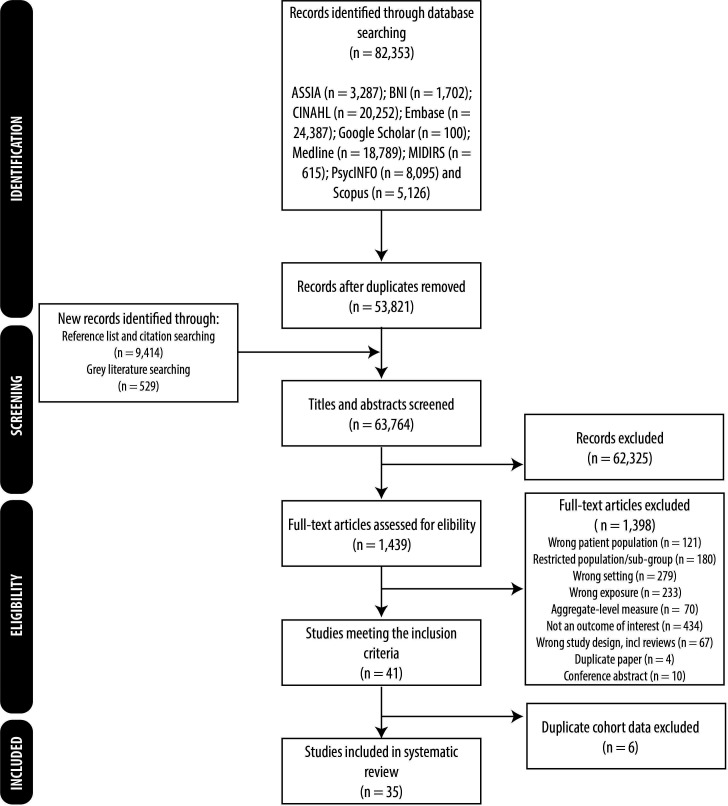
- Eligible studies were observational (cohort, case–control, longitudinal, or cross-sectional) in the UK or ROI, reporting individual-level or household-level socioeconomic exposures (not aggregate area-level measures) and pregnancy outcomes for the fetus, neonate, or mother up to 28 days postnatal; from 53,821 titles after duplicates, 1,439 full texts were screened, 41 met inclusion criteria, and 35 unique studies were included.
- Random-effects meta-analysis pooled odds ratios for occupation-derived social class where at least two studies reported comparable exposures and outcomes; narrative synthesis covered other exposures; Newcastle-Ottawa Scale and GRADE were used for quality appraisal, with analyses in Stata V.16.
Limitations
- The paper states that findings are limited to the UK and ROI; occupational classifications changed over time and broad groupings may not reflect within-group differences; national datasets required aggregate frequency data and could not account for potential confounders; adjusted data were limited for occupation-derived social class; some outcome/SES combinations had few studies; publication bias was evident for stillbirth; GRADE quality was typically low or very low; and there were protocol deviations (UK/ROI restriction and meta-analysis of two studies).
- The paper states that heterogeneity was high for all meta-analyses and was not explained by meta-regression, and sensitivity analyses showed birth weight results were not robust (e.g., significance changed for low birth weight intermediate subgroup, macrosomia, and very low birth weight).
- The text makes evident that causal inference is not possible from observational data, and that data were very limited for housing, income, car ownership, and other individual/household inequality measures such as poverty and social isolation.
Model-written summary. Check it against the paper before relying on it.
Integrity signals
Registry
Cites
Statistics
Figures
Verification
Claims the paper makes
0 Valid · 0 Not valid · 56 Not checked · 98 Own results and interpretations
A result the paper reports from its own data — it cites no other source for it, so there is none to check. The quote shows it is in the paper.
In the paper
“neonatal mortality: OR 1.58, 95% CI 1.44 to 1.74; figures 2–4).”
§ Socioeconomic inequalities and adverse pregnancy outcomes in the UK and Republic of Ireland: a systematic review and meta-analysis > Results > Mortality
plainstates an association- Asserted: passes — The authors put it forward as true.
- Checkable: passes — It can be checked against evidence.
- Load-bearing: passes — The paper’s conclusions depend on it.
- Based: passes — The paper gives a reason why it holds.
A result the paper reports from its own data — it cites no other source for it, so there is none to check. The quote shows it is in the paper.
In the paper
“There were significantly increased odds of women from lower levels of occupation/social classes compared with the highest level having stillbirth (OR 1.40, 95% CI 1.23 to 1.59, I2 98.62%), neonatal mortality (OR 1.39, 95% CI 1.22 to 1.57, I2 97.09%), perinatal mortality (OR 1.39, 95% CI 1.23 to 1.57, I2 98.69%), preterm birth (OR 1.41, 95% CI 1.33 to 1.50, I2 70.97%) and low birth weight (OR 1.40,”
§ Socioeconomic inequalities and adverse pregnancy outcomes in the UK and Republic of Ireland: a systematic review and meta-analysis > Abstract > Results
plainstates an association- Asserted: passes — The authors put it forward as true.
- Checkable: passes — It can be checked against evidence.
- Load-bearing: passes — The paper’s conclusions depend on it.
- Based: passes — The paper gives a reason why it holds.
In the paper
“There was significantly increased odds of LBW,83 SGA82 and IUGR84 for lower levels of education when studies used degree-level education as the comparison group (online supplemental appendix S11–table j);”
§ Socioeconomic inequalities and adverse pregnancy outcomes in the UK and Republic of Ireland: a systematic review and meta-analysis > Results > Birth weight
What the sources say
- Not checked yetcites [82] source
plainstates an association- Asserted: passes — The authors put it forward as true.
- Checkable: passes — It can be checked against evidence.
- Load-bearing: passes — The paper’s conclusions depend on it.
- Based: passes — The paper gives a reason why it holds.
None of the sources cited for this claim have been checked yet.
In the paper
“however, studies using other comparison groups reported no significant associations with high or LBWs.81 85–87”
§ Socioeconomic inequalities and adverse pregnancy outcomes in the UK and Republic of Ireland: a systematic review and meta-analysis > Results > Birth weight
What the sources say
plain- Asserted: passes — The authors put it forward as true.
- Checkable: passes — It can be checked against evidence.
- Load-bearing: unclear — It is unclear whether the paper’s conclusions depend on it.
- Based: passes — The paper gives a reason why it holds.
A result the paper reports from its own data — it cites no other source for it, so there is none to check. The quote shows it is in the paper.
In the paper
“All subgroup meta-analyses showed highest odds among the lowest level of occupation/social class compared with the highest level (stillbirth: OR 1.61 95% CI 1.37 to 1.88;”
§ Socioeconomic inequalities and adverse pregnancy outcomes in the UK and Republic of Ireland: a systematic review and meta-analysis > Results > Mortality
plainstates an association- Asserted: passes — The authors put it forward as true.
- Checkable: passes — It can be checked against evidence.
- Load-bearing: passes — The paper’s conclusions depend on it.
- Based: passes — The paper gives a reason why it holds.
77 more claims
Create a free account to see all 154 claims and to verify the 75 references still open.
- Probably not a substantial claim. 39
- It may state two separate claims as one. 50
- The quote only partly states this claim. 1
Claims other papers make about this one
Each is checked against this paper’s own text: does it say what the citing paper says it does?
In the citing paper
“Inequalities on the basis of various individual and area level measures of maternal socioeconomic status (SES) are consistently demonstrated [2], with estimates from Europe indicating an almost 50% higher prevalence among the least compared with most educated mothers [3, 4]”
From Mediators of socioeconomic inequalities in preterm birth: a systematic review (2022) · cites this paper as [4]
Self-check
Percentages, sums and reported differences re-computed from the paper’s own numbers.
Each contradiction between two passages listed here was confirmed by an independent check.
Rated minor: it would not touch a result — a value no result rests on, a p-value that stays on the same side of the significance level, or a conflict that is clerical, resolved elsewhere in the paper, or outside its own findings.
In the paper
“The controls were the two women who delivered immediately before the cases.Cases: n=25.Controls: n=1360.”
§ Socioeconomic inequalities and adverse pregnancy outcomes in the UK and Republic of Ireland: a systematic review and meta-analysis > Results
Reported 1360 · recomputed 50
Rated minor: it would not touch a result — a value no result rests on, a p-value that stays on the same side of the significance level, or a conflict that is clerical, resolved elsewhere in the paper, or outside its own findings.
In the paper
“The controls were the two women who delivered immediately before the case in the same hospital.Cases: n=120.Controls: n=3834.”
§ Socioeconomic inequalities and adverse pregnancy outcomes in the UK and Republic of Ireland: a systematic review and meta-analysis > Results
Reported 3834 · recomputed 240
Rated minor: it would not touch a result — a value no result rests on, a p-value that stays on the same side of the significance level, or a conflict that is clerical, resolved elsewhere in the paper, or outside its own findings.
In the paper
“Four controls per case were selected randomly.Cases: n=588.Controls: n=48 272.”
§ Socioeconomic inequalities and adverse pregnancy outcomes in the UK and Republic of Ireland: a systematic review and meta-analysis > Results
Reported 48272 · recomputed 2352
Rated minor: it would not touch a result — a value no result rests on, a p-value that stays on the same side of the significance level, or a conflict that is clerical, resolved elsewhere in the paper, or outside its own findings.
In the paper
§ Socioeconomic inequalities and adverse pregnancy outcomes in the UK and Republic of Ireland: a systematic review and meta-analysis > Discussion
“Although outcomes were downgraded (eg, for inconsistency as heterogeneity was high for all meta-analyses)”
§ Socioeconomic inequalities and adverse pregnancy outcomes in the UK and Republic of Ireland: a systematic review and meta-analysis > Results > Mode of delivery
“There was moderate heterogeneity for any caesarean delivery, and this was significantly reduced in the subgroup analysis (figure 11).”
Citations
Cites
Preferred Reporting Items for Systematic Reviews and Meta-Analyses: the PRISMA statement
Moher, D., Liberati, A., Tetzlaff, J., Altman, D. G., & for the PRISMA Group (2009) · BMJ · doi:10.1136/bmj.b2535 · Cited by 83,823
Preferred Reporting Items for Systematic Reviews and Meta-Analyses: The PRISMA Statement
Moher, D., Liberati, A., Tetzlaff, J., Altman, D. G., & The PRISMA Group (2009) · PLoS Medicine · doi:10.1371/journal.pmed.1000097 · Cited by 64,042
Measuring inconsistency in meta-analyses
Higgins, J. P. T., Thompson, S. G., Deeks, J. J., & Altman, D. G. (2003) · BMJ · doi:10.1136/bmj.327.7414.557 · Cited by 63,139
Preferred reporting items for systematic reviews and meta-analyses: the PRISMA Statement.
(2009) · PubMed Central · Cited by 44,859
Dermyshi, E., Wang, Y., Yan, C., Hong, W., Qiu, G., Gong, X., & Zhang, T. (2017) · Neonatology · doi:10.1159/000454668 · Cited by 24,587
GRADE: an emerging consensus on rating quality of evidence and strength of recommendations
Guyatt, G. H., Oxman, A. D., Vist, G. E., Kunz, R., Falck-Ytter, Y., Alonso-Coello, P., & Schünemann, H. J. (2008) · BMJ · doi:10.1136/bmj.39489.470347.ad · Cited by 23,305
Meta-analysis of Observational Studies in Epidemiology<SUBTITLE>A Proposal for Reporting</SUBTITLE>
Stroup, D. F. (2000) · JAMA · doi:10.1001/jama.283.15.2008 · Cited by 20,623
Wang, G., Ma, R., Qiao, G., Wada, K., Aizawa, Y., & Satoh, T. (2015) · Integrative Medicine International · doi:10.1159/000368408 · Cited by 18,762
(2014) · Medical Entomology and Zoology · Cited by 17,633
GRADE guidelines: 3. Rating the quality of evidence
Balshem, H., Helfand, M., Schünemann, H. J., Oxman, A. D., Kunz, R., Brozek, J., Vist, G. E., Falck-Ytter, Y., Meerpohl, J., & Norris, S. (2011) · Journal of Clinical Epidemiology · doi:10.1016/j.jclinepi.2010.07.015 · Cited by 8,285
Research works printed but not linked: 3
- Veritas Health Innovation . Covidence systematic review software, 2019. Available: www.covidence.org
- Office for National Statistics . Standard occupational classification 2010: volume 3 the National statistics socio-economic classification: (Rebased on the SOC2010) user manual. Palgrave Macmillan, 2010.
- Marmot M , Allen J , Goldblatt P . Fair society healthy lives (the Marmot review). 242. London: Institute of Health Equity, University College London, 2010.
Cited by
Management and outcomes of extreme preterm birth
Morgan, A. S., Mendonça, M., Thiele, N., & David, A. L. (2022) · BMJ · doi:10.1136/bmj-2021-055924 · Cited by 158
Biological and pathological mechanisms leading to the birth of a small vulnerable newborn
Hunter, P., Awoyemi, T., Ayede, A. I., Chico, R. M., David, A. L., Dewey, K. G., Duggan, C., Gravett, M. G., Prendergast, A. J., Ramakrishnan, U., et al. (2023) · The Lancet · doi:10.1016/s0140-6736(23)00573-1 · Cited by 98
Gurol‐Urganci, I., Waite, L., Webster, K., Jardine, J. E., Carroll, F. E., Dunn, G., Frémeaux, A. E., Harris, T., Hawdon, J. M., Muller, P., et al. (2022) · PLoS Medicine · doi:10.1371/journal.pmed.1003884 · Cited by 94
Mediators of socioeconomic inequalities in preterm birth: a systematic review
McHale, P., Maudsley, G., Pennington, A., Schlüter, D. K., Barr, B., Paranjothy, S., & Taylor-Robinson, D. (2022) · BMC Public Health · doi:10.1186/s12889-022-13438-9 · Cited by 89
Impact of Maternal Environment and Inflammation on Fetal Neurodevelopment
Lubrano, C., Parisi, F., & Cetin, I. (2024) · Antioxidants · doi:10.3390/antiox13040453 · Cited by 71
Metadata
- Authors
- Thomson, K., Moffat, M., Arisa, O., Jesurasa, A., Richmond, C., Odeniyi, A., Bambra, C., Rankin, J., Brown, H., Bishop, J., Wing, S., McNaughton, A., & Heslehurst, N.
- Affiliations
- Newcastle University (GB)
- Public Health Wales (GB)
- Corresponding author
- Heslehurst, Nicola
- ORCID
- Venue
- BMJ Open
- Publisher
- BMJ
- Published
- 2021-03
- Volume
- 11
- Issue
- 3
- Pages
- e042753
- ISSN
- 2044-6055 (ISSN-L)
- PMC
- PMC7959237
- OpenAlex
- W3136152613
- Semantic Scholar
- 0a7ae73c11d60f05e6bdd9af8cb3a508425db4db
- Cited by
- 154
- References
- 88
- Citations by year
- 2026: 28 · 2025: 42 · 2024: 36 · 2023: 23 · 2022: 16 · 2021: 9
- FWCI
- 4.67
- Type
- journal article
- Language
- en
- Open access
- gold
- doi.org
- Licence
- Locations
- BMJ Open (publishedVersion, cc-by-nc)
- PubMed (publishedVersion)
- PubMed Central (publishedVersion, cc-by-nc)
- DOAJ (DOAJ: Directory of Open Access Journals) (submittedVersion)
- Lancaster EPrints (Lancaster University) (submittedVersion)
- Newcastle University ePrints (Newcastle Univesity) (cc-by-nc)
- Funders
- Public Health Wales (NA)
- Topics
- Health Sciences › Medicine › Pediatrics, Perinatology and Child Health › Maternal and Neonatal Healthcare
- Social Sciences › Health › Health disparities and outcomes
- Health Sciences › Medicine › Pediatrics, Perinatology and Child Health › Global Maternal and Child Health
- Keywords
- socioeconomic disparities, adverse pregnancy outcomes, socioeconomic status, occupational status, social class, stillbirth, neonatal mortality, perinatal mortality, preterm birth, low birth weight, mode of delivery, unemployment, manual occupations, health determinants, infant mortality, United Kingdom, Republic of Ireland, child health outcomes, health disparities
- MeSH terms
- Child, Female, United Kingdom, Humans, Infant, Infant, Newborn, Ireland, Pregnancy, Pregnancy Outcome, Socioeconomic Factors, Premature Birth
About these checks
Registry, retraction, Cites and statistics results are computed, not judged, with one exception: a printed reference that no index lists is read once by a model before it counts as a citation error. Claims are extracted by a model and kept only when their quote appears verbatim in the text; each cited source is then checked, with a model’s help, for whether it says what the claim relies on. Those verdicts can be wrong — read the claim’s quote and the cited source before relying on one.
A language model drew the claims from the paper on 2026-11-13, under version 3 of the claim definition (model deepseek-v4.1-flash, prompt extract-v3).
A second model labelled each claim on 2026-11-13 (model jev-1.13-20260917, definition revision gold-guideline-v0.2).
Statistics and arithmetic are recomputed, not judged.
Confidence bands are shown only for fields calibrated on our annotated test set. None is calibrated yet, so no band is shown.
What counts as a claim ›How we measure confidence ›How we check this ›
Are you an author, or do you see a problem with this page? Request a review
How to cite
Cite CoChat for the checks on this page, and the paper for its own findings.
- This page
- CoChat. (2026). Citation check: Socioeconomic inequalities and adverse pregnancy outcomes in the UK and Republic of Ireland: a systematic review and meta-analysis. https://app.cochat.ai/papers/10.1136/bmjopen-2020-042753
- The paper
- Thomson, K., Moffat, M., Arisa, O., Jesurasa, A., Richmond, C., Odeniyi, A., Bambra, C., Rankin, J., Brown, H., Bishop, J., Wing, S., McNaughton, A., & Heslehurst, N. (2021). Socioeconomic inequalities and adverse pregnancy outcomes in the UK and Republic of Ireland: a systematic review and meta-analysis. BMJ Open. https://doi.org/10.1136/bmjopen-2020-042753
Data sources
Bibliographic data: Semantic Scholar, OpenAlex, Crossref.
Contains information from the Semantic Scholar Academic Graph Datasets, made available under the ODC Attribution License (ODC-BY 1.0).
Semantic Scholar’s data is described in: Kinney, R., et al. (2023). The Semantic Scholar Open Data Platform. arXiv:2301.10140.
