

The DOI matches its Crossref record; 39 of the 41 references it cites were found in a registry or an index; none of the 30 sources its claims cite is checked for support yet.
Preferred Reporting Items for Systematic Reviews and Meta-Analyses: The PRISMA Statement
Open accessAbstract
se ha posicionado como un centro de referencia asistencial y académica, con la proyección de conformar clínicas o centros de excelencia.Para lograr este objetivo, es indispensable que realice y se ciña a sus propias guías de práctica clínica o estándares clínicos basados en la evidencia (ECBE), que permita una adecuada y estandarizada atención de pacientes aplicando la mejor evidencia médica disponible.La obesidad es una patología de alta prevalencia en la población general, siendo uno de los motivos de consulta más
Overview
CoChat Summary
Written by AI from the paper’s full text.
## TL;DR
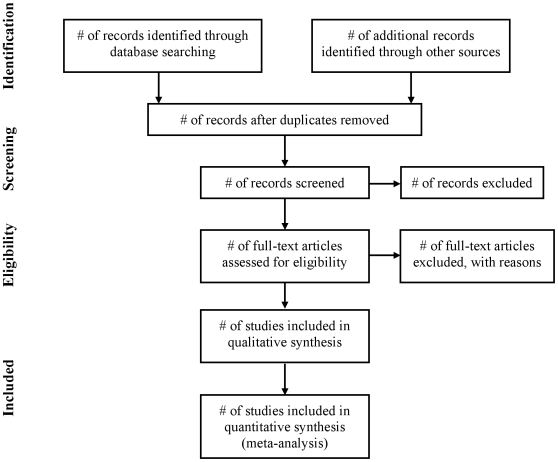
PRISMA is a reporting guideline that replaces QUOROM and provides a 27-item checklist plus a four-phase flow diagram to improve how systematic reviews and meta-analyses are reported. The paper argues that clearer reporting is needed because reporting quality had been suboptimal and often limited readers’ ability to judge review quality.
## Key findings
- The PRISMA Statement consists of a 27-item checklist and a four-phase flow diagram.
- The guideline was developed after a three-day meeting in Ottawa, Canada, in June 2005 with 29 participants including review authors, methodologists, clinicians, medical editors, and a consumer.
- The checklist was revised 11 times before group approval.
- The paper cites earlier evidence that reporting quality was poor: in one study of 83 meta-analyses, the number of adequately reported characteristics ranged from 1 to 14 (mean 7.7, SD 2.7); another study of 50 review articles found none met all eight explicit scientific criteria.
## Methods
- This is a guideline development / consensus paper, not an empirical effects study.
- The executive committee completed a systematic review of studies examining the quality of reporting of systematic reviews, plus a comprehensive literature search for methodological and other relevant articles.
- An international survey of review authors, consumers, and organizations using systematic reviews/meta-analyses was conducted; the Ottawa meeting informed revision of the QUOROM checklist and flow diagram.
## Limitations
- The paper states that no direct evidence was found to support retaining or adding some items, and some items were included because evidence from other domains was considered relevant.
- The paper says PRISMA is a living document and invites further comment, implying the guideline is not final or exhaustive.
- Evident from the text: the paper is a consensus/reporting guideline paper, so it does not test whether PRISMA improves reporting or review quality in practice.
Model-written summary. Check it against the paper before relying on it.
Integrity signals
Registry
Cites
Statistics
Figures
Verification
Claims the paper makes
21 Not checked yet · 10 Own interpretation · 1 Own method
In the paper
“A 1996 update of this study found little improvement [7].”
§ Preferred Reporting Items for Systematic Reviews and Meta-Analyses: The PRISMA Statement > Introduction
What the sources say
- Not checked yetcites [7] HS Sacks, 1996, Meta-analysis: An update., Mt Sinai J Med
plain- Asserted: passes — The authors put it forward as true.
- Checkable: passes — It can be checked against evidence.
- Load-bearing: passes — The paper’s conclusions depend on it.
- Based: passes — The paper gives a reason why it holds.
In the paper
“For studies included in a systematic review, a thorough assessment of the risk of bias requires both a “study-level” assessment (e.g., adequacy of allocation concealment) and, for some features, a newer approach called “outcome-level” assessment.”
§ Preferred Reporting Items for Systematic Reviews and Meta-Analyses: The PRISMA Statement > Introduction > Box 1: Conceptual Issues in the Evolution from QUOROM to PRISMA
What the sources say
- Not checked yetcites [38] GH Guyatt, 2008, GRADE: An emerging consensus on rating quality of evidence and strength of recommendations., BMJ source
plain- Asserted: passes — The authors put it forward as true.
- Checkable: passes — It can be checked against evidence.
- Load-bearing: passes — The paper’s conclusions depend on it.
- Based: passes — The paper gives a reason why it holds.
In the paper
“Aside from Cochrane reviews, all of which should have a protocol, only about 10% of systematic reviewers report working from a protocol [22].”
§ Preferred Reporting Items for Systematic Reviews and Meta-Analyses: The PRISMA Statement > Introduction > Box 1: Conceptual Issues in the Evolution from QUOROM to PRISMA
What the sources say
- Not checked yetcites [22] D Moher, 2007, Epidemiology and reporting characteristics of systematic reviews., PLoS Med source
plain- Asserted: passes — The authors put it forward as true.
- Checkable: passes — It can be checked against evidence.
- Load-bearing: passes — The paper’s conclusions depend on it.
- Based: passes — The paper gives a reason why it holds.
In the paper
“In 1987, Mulrow examined 50 review articles published in four leading medical journals in 1985 and 1986 and found that none met all eight explicit scientific criteria, such as a quality assessment of included studies [5].”
§ Preferred Reporting Items for Systematic Reviews and Meta-Analyses: The PRISMA Statement > Introduction
What the sources say
- Not checked yetcites [5] CD Mulrow, 1987, The medical review article: State of the science., Ann Intern Med source
plain- Asserted: passes — The authors put it forward as true.
- Checkable: passes — It can be checked against evidence.
- Load-bearing: passes — The paper’s conclusions depend on it.
- Based: passes — The paper gives a reason why it holds.
In the paper
“In 1996, to address the suboptimal reporting of meta-analyses, an international group developed a guidance called the QUOROM Statement (QUality Of Reporting Of Meta-analyses), which focused on the reporting of meta-analyses of randomized controlled trials [8].”
§ Preferred Reporting Items for Systematic Reviews and Meta-Analyses: The PRISMA Statement > Introduction
What the sources say
- Not checked yetcites [8] D Moher, 1994, Improving the quality of reporting of meta-analysis of randomized controlled trials: The QUOROM statement., Lancet source
plainstates a cause- Asserted: passes — The authors put it forward as true.
- Checkable: passes — It can be checked against evidence.
- Load-bearing: unclear — It is unclear whether the paper’s conclusions depend on it.
- Based: passes — The paper gives a reason why it holds.
- Probably not a substantial claim. 18
- It may state two separate claims as one. 9
Create a free account to see these claims.
Create a free account to see these assumptions.
7 more claims
Create a free account to see all 32 claims and to verify the 30 references still open.
Claims other papers make about this one
Each is checked against this paper’s own text: does it say what the citing paper says it does?
The cited source doesn’t support the claim as written.
In the citing paper
“This systematic review follows the MOOSE Guidelines for Meta-Analyses and Systematic Reviews of Observational Studies158.”
From A systematic review of worldwide causal and correlational evidence on digital media and democracy (2022) · cites this paper as [158]
Checked by a reasoning model — may be wrong.
Experimental — accuracy not yet measuredThe source backs part of the claim, not all of it — or backs it for a different population, condition or comparison.
In the citing paper
“To address the research aim, this study adopted a systematic literature review, following established methodological recommendations to ensure rigor, transparency, and replicability [20,21].”
From Sustainable Value Creation in Nonprofit Organizations: Processes, Determinants, and Strategic Dimensions (2026) · cites this paper as [20]
Experimental — accuracy not yet measuredThe source backs part of the claim, not all of it — or backs it for a different population, condition or comparison.
In the citing paper
“We first followed the PRISMA (Preferred Reporting Items for Systematic reviews and Meta-Analyses) (Moher etal., 2009) method to systematically review the literature.”
From Online peer feedback in higher education: A synthesis of the literature (2024) · cites this paper as Moher et al., 2009
Experimental — accuracy not yet measuredThe source backs part of the claim, not all of it — or backs it for a different population, condition or comparison.
In the citing paper
“The 'Preferred Reporting Items for Systematic Reviews and Meta-Analyses' (PRISMA) methodology was used to conduct a systematic literature review and qualitative synthesis (Moher et al., 2009).”
From AI adoption and diffusion in public administration: A systematic literature review and future research agenda (2023) · cites this paper as Moher et al., 2009
Experimental — accuracy not yet measuredThe source backs part of the claim, not all of it — or backs it for a different population, condition or comparison.
In the citing paper
“While there are general similarities in the application of these approaches across disciplines, the methodology, emphases, and terminology vary somewhat with the research field and the goals of the synthesis 12 .”
From Meta-analysis and the science of research synthesis (2018) · cites this paper as [12]
Experimental — accuracy not yet measured
178 more claims about this paper
Create a free account to see every claim other papers make about this one.
Citations
Cites
Liberati, A., Altman, D. G., Tetzlaff, J., Mulrow, C., Gøtzsche, P. C., Ioannidis, J. P. A., Clarke, M., Devereaux, P. J., Kleijnen, J., & Moher, D. (2009) · PLoS Medicine · doi:10.1371/journal.pmed.1000100 · Cited by 28,164
Self-citationGRADE: an emerging consensus on rating quality of evidence and strength of recommendations
Guyatt, G. H., Oxman, A. D., Vist, G. E., Kunz, R., Falck-Ytter, Y., Alonso-Coello, P., & Schünemann, H. J. (2008) · BMJ · doi:10.1136/bmj.39489.470347.ad · Cited by 23,305
Moher, D., Cook, D. J., Eastwood, S., Olkin, I., Rennie, D., & Stroup, D. F. (1999) · The Lancet · doi:10.1016/s0140-6736(99)04149-5 · Cited by 4,826
Self-citationThe Revised CONSORT Statement for Reporting Randomized Trials: Explanation and Elaboration
Altman, D. G., Schulz, K. F., Moher, D., Egger, M., Davidoff, F., Elbourne, D., Gøtzsche, P. C., Lang, T., & for the CONSORT Group (2001) · Annals of Internal Medicine · doi:10.7326/0003-4819-134-8-200104170-00012 · Cited by 3,835
Self-citationVandenbroucke, J. P., Elm, E. V., Altman, D. G., Gøtzsche, P. C., Mulrow, C. D., Pocock, S. J., Poole, C., Schlesselman, J. J., Egger, M., & initiative, F. T. S. (2007) · Annals of Internal Medicine · doi:10.7326/0003-4819-147-8-200710160-00010-w1 · Cited by 3,543
Self-citationChan, A.-W., Hróbjartsson, A., Haahr, M. T., Gøtzsche, P. C., & Altman, D. G. (2004) · JAMA · doi:10.1001/jama.291.20.2457 · Cited by 1,845 · cited 1×
“, publication bias) [28] as well as the more recently empirically demonstrated ‘‘outcome reporting bias’’ within individual studies [40,41] should be considered by authors when conducting a systematic review and reporting its results.”
Self-citationReplication validity of genetic association studies
Ioannidis, J. P. A., Ntzani, E., Trikalinos, T. A., & Contopoulos‐Ioannidis, D. G. (2001) · Nature Genetics · doi:10.1038/ng749 · Cited by 1,834 · cited 1×
“For example, systematic reviews are now conducted to investigate cost-effectiveness [31], diagnostic [32] or prognostic questions [33], genetic associations [34], and policy making [35].”
The case of the misleading funnel plot
Lau, J., Ioannidis, J. P. A., Terrin, N., Schmid, C. H., & Olkin, I. (2006) · BMJ · doi:10.1136/bmj.333.7568.597 · Cited by 1,766 · cited 1×
“Even when the possibility of publication bias is assessed, there is no guarantee that systematic reviewers have assessed or interpreted it appropriately [30].”
Systematic reviews of evaluations of diagnostic and screening tests
Deeks, J. J. (2001) · BMJ · doi:10.1136/bmj.323.7305.157 · Cited by 1,345
Meta-Analyses of Randomized Controlled Trials
Sacks, H. S., Berrier, J., Reitman, D., Ancona-Berk, V. A., & Chalmers, T. C. (1987) · New England Journal of Medicine · doi:10.1056/nejm198702193160806 · Cited by 1,257 · cited 1×
“In 1987, Sacks and colleagues (6) evaluated the adequacy of reporting of 83 meta-analyses on 23 characteristics in six domains.”
Cited by
The PRISMA 2020 statement: An updated guideline for reporting systematic reviews
Page, M. J., McKenzie, J. E., Bossuyt, P. M., Boutron, I., Hoffmann, T. C., Mulrow, C. D., Shamseer, L., Tetzlaff, J. M., Akl, E. A., Brennan, S. E., et al. (2021) · BMJ · doi:10.1136/bmj.n71 · Cited by 108,283
Self-citationLiberati, A., Altman, D. G., Tetzlaff, J., Mulrow, C., Gøtzsche, P. C., Ioannidis, J. P. A., Clarke, M., Devereaux, P. J., Kleijnen, J., & Moher, D. (2009) · PLoS Medicine · doi:10.1371/journal.pmed.1000100 · Cited by 28,164
Self-citationWang, G., Ma, R., Qiao, G., Wada, K., Aizawa, Y., & Satoh, T. (2015) · Integrative Medicine International · doi:10.1159/000368408 · Cited by 18,762
Liberati, A., Altman, D. G., Tetzlaff, J., Mulrow, C., Gotzsche, P. C., Ioannidis, J. P. A., Clarke, M., Devereaux, P. J., Kleijnen, J., & Moher, D. (2009) · BMJ · doi:10.1136/bmj.b2700 · Cited by 17,648
Self-citationThe PRISMA 2020 statement: an updated guideline for reporting systematic reviews
Page, M. J., McKenzie, J. E., Bossuyt, P. M., Boutron, I., Hoffmann, T. C., Mulrow, C. D., Shamseer, L., Tetzlaff, J. M., Akl, E. A., Brennan, S. E., et al. (2021) · Systematic Reviews · doi:10.1186/s13643-021-01626-4 · Cited by 13,874
Self-citation
Metadata
- Authors
- Moher, D., Liberati, A., Tetzlaff, J., Altman, D. G., & The PRISMA Group
- Affiliations
- University of Ottawa (CA)
- University of Modena and Reggio Emilia (IT)
- Ottawa Hospital Research Institute (CA)
- University of Oxford (GB)
- Corresponding author
- Moher, David
- Venue
- PLoS Medicine
- Publisher
- Public Library of Science (PLoS)
- Published
- 2009-07-21
- Volume
- 6
- Issue
- 7
- Pages
- e1000097
- ISSN
- 1549-1277 (ISSN-L)
- 1549-1676
- PMC
- PMC2707599
- OpenAlex
- W4294215472
- Semantic Scholar
- 245831b1ba9fa32fdb224555b37533010af903e6
- Cited by
- 64,042
- References
- 41
- Citations by year
- 2026: 3275 · 2025: 4811 · 2024: 4970 · 2023: 5595 · 2022: 8235 · 2021: 11170 · 2020: 8000 · 2019: 5340 · 2018: 3973 · 2017: 2684 · 2016: 1906 · 2015: 1401 · 2014: 1097 · 2013: 786 · 2012: 421
- FWCI
- 18.63
- Type
- journal article
- Language
- en
- Open access
- gold
- doi.org
- Locations
- PLoS Medicine (publishedVersion, cc-by)
- PubMed Central (publishedVersion, cc-by)
- PubMed (publishedVersion)
- IRIS UNIMORE (University of Modena and Reggio Emilia) (submittedVersion, cc-by)
- RePEc: Research Papers in Economics (submittedVersion)
- Archivio Istituzionale della Ricerca (Universita Degli Studi Di Milano) (submittedVersion, other-oa)
- DOAJ (DOAJ: Directory of Open Access Journals) (submittedVersion, cc-by-sa)
- Figshare (submittedVersion, cc-by)
- University of Birmingham Research Portal (University of Birmingham) (submittedVersion, other-oa)
- Funders
- GlaxoSmithKline
- Health Services Research and Development
- Johns Hopkins University
- University of Ottawa
- University of Bern
- Ottawa Hospital Research Institute
- McMaster University
- Cancer Research UK
- University of Ioannina
- Johns Hopkins Bloomberg School of Public Health
- Canadian Institutes of Health Research
- Medical Research Council
- Care and Public Health Research Institute, Universiteit Maastricht
- Topics
- Social Sciences › Decision Sciences › Statistics, Probability and Uncertainty › Meta-analysis and systematic reviews
- Health Sciences › Medicine › Public Health, Environmental and Occupational Health › Clinical practice guidelines implementation
- Social Sciences › Sociology and Political Science › Delphi Technique in Research
- Keywords
- PRISMA statement, reporting guidelines, systematic reviews, meta-analysis, evidence-based care, obesity
- MeSH terms
- Humans, Terminology as Topic, Periodicals as Topic, Publishing, Quality Control, Review Literature as Topic, Meta-Analysis as Topic, Publication Bias, Evidence-Based Practice
About these checks
Registry, retraction, Cites and statistics results are computed, not judged, with one exception: a printed reference that no index lists is read once by a model before it counts as a citation error. Claims are extracted by a model and kept only when their quote appears verbatim in the text; each cited source is then checked, with a model’s help, for whether it says what the claim relies on. Those verdicts can be wrong — read the claim’s quote and the cited source before relying on one.
A language model drew the claims from the paper on 2026-10-11, under version 3 of the claim definition (model deepseek-v4.1-flash, prompt extract-v3).
A second model labelled each claim on 2026-10-11 (model jev-1.13-20260917, definition revision gold-guideline-v0.2).
Statistics and arithmetic are recomputed, not judged.
Confidence bands are shown only for fields calibrated on our annotated test set. None is calibrated yet, so no band is shown.
What counts as a claim ›How we measure confidence ›How we check this ›
Are you an author, or do you see a problem with this page? Request a review
How to cite
Cite CoChat for the checks on this page, and the paper for its own findings.
- This page
- CoChat. (2026). Citation check: Preferred Reporting Items for Systematic Reviews and Meta-Analyses: The PRISMA Statement. https://app.cochat.ai/papers/10.1371/journal.pmed.1000097
- The paper
- Moher, D., Liberati, A., Tetzlaff, J., Altman, D. G., & The PRISMA Group. (2009). Preferred Reporting Items for Systematic Reviews and Meta-Analyses: The PRISMA Statement. PLoS Medicine. https://doi.org/10.1371/journal.pmed.1000097
