

Household cooking fuel type and childhood anaemia in sub-Saharan Africa: analysis of cross-sectional surveys of 123, 186 children from 29 countries
Open accessThe DOI matches its Crossref record; 56 of the 56 references it cites were found in a registry or an index.
Abstract
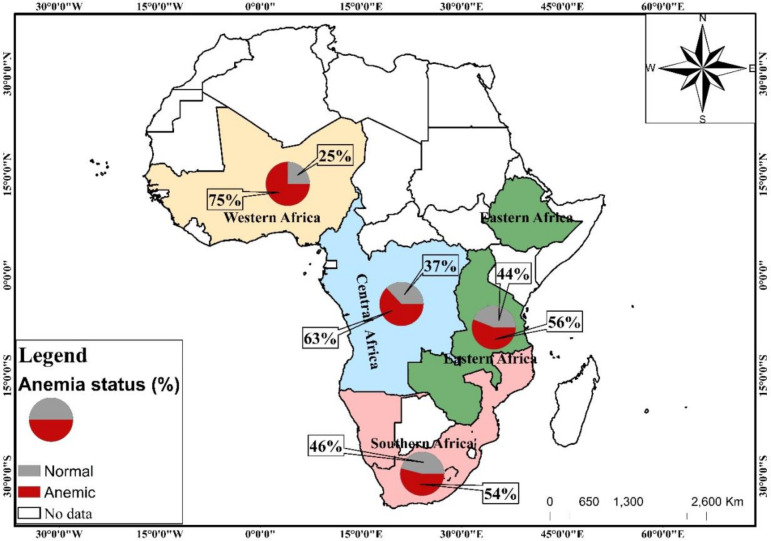
Objective: This study sought to investigate the joint effect of household cooking fuel type and urbanicity (rural–urban residency) on anaemia among children under the age of five in sub-Saharan Africa. Design: We analysed cross-sectional data of 123, 186 children under the age of five from 29 sub-Saharan African countries gathered between 2010 and 2019 by the Demographic and Health Survey programme. Bivariate (χ 2 test of independence) and multilevel logistic regression were used to examine the effect of urbanicity-household cooking fuel type on childhood anaemia. Results were reported as adjusted odds ratios (aORs) with 95% CIs at p<0.05. Outcome measures: Anaemia status of children. Results: More than half (64%) of children had anaemia. The percentage of children who suffered from anaemia was high in those born to mothers in Western Africa (75%) and low among those born in Southern Africa (54%). Children from rural households that depend on unclean cooking fuels (aOR=1.120; 95% CI 1.033 to 1.214) and rural households that depend on clean cooking fuels (aOR=1.256; 95% CI 1.080 to 1.460) were more likely to be anaemic as compared with children from urban households using clean cooking fuel. Child’s age, sex of child, birth order, perceived birth size, age of mother, body mass index of mother, education, marital status, employment status, antenatal care, wealth quintile, household size, access to electricity, type of toilet facility, source of drinking water and geographic region had significant associations with childhood anaemia status. Conclusions: Our study has established a joint effect of type of household cooking fuel and urbanicity on anaemia among children under the age of five in sub-Saharan Africa. It is therefore critical to promote the usage of clean cooking fuels among households and women in rural areas. These should be done taking into consideration the significant child, maternal, household, and contextual factors identified in this study.
Overview
The claims and statistics of this paper haven’t been checked yet.
Free: it reads the open-access text and checks the first 5 claims that cite a source we can check. Create a free account to check every claim.
Integrity signals
Registry
Cites
Statistics
Figures
Verification
Claims the paper makes
The claims and statistics of this paper haven’t been checked yet.
Free: it reads the open-access text and checks the first 5 claims that cite a source we can check. Create a free account to check every claim.
Claims other papers make about this one
Each is checked against this paper’s own text: does it say what the citing paper says it does?
The source backs part of the claim, not all of it — or backs it for a different population, condition or comparison.
In the citing paper
“The use of biomass fuel tends to correlate with several potential factors with joint or confounding effects, including household socioeconomic status and rural or urban setting [57, 60, 61].”
From Environmental Contaminants, Iron Deficiency, and Iron‐Deficiency Anemia: A Review of the Literature (2025) · cites this paper as [57]
Experimental — accuracy not yet measuredThe source backs part of the claim, not all of it — or backs it for a different population, condition or comparison.
In the citing paper
“Indoor cookstove and solid fuel use accounts for ten of these studies, eight of which found evidence that women and children living in homes with indoor cookstoves are more likely to have ID/IDA [52–54, 57–61].”
From Environmental Contaminants, Iron Deficiency, and Iron‐Deficiency Anemia: A Review of the Literature (2025) · cites this paper as [57]
Experimental — accuracy not yet measuredThe cited source says what the claim attributes to it.
In the citing paper
“Children living in homes in rural areas where unclean cooking fuels, including kerosene, coal, charcoal, wood, and plant and animal matter, were predominantly used were more likely to have anemia, though there was a joint effect of fuel type with rurality [57, 58].”
From Environmental Contaminants, Iron Deficiency, and Iron‐Deficiency Anemia: A Review of the Literature (2025) · cites this paper as [57]
Self-check
Percentages, sums and reported differences re-computed from the paper’s own numbers.
The self-check needs the paper’s full text.
Citations
Cites
Weiss, G., & Goodnough, L. T. (2005) · New England Journal of Medicine · doi:10.1056/nejmra041809 · Cited by 3,800
Thrombosis as an intravascular effector of innate immunity
Engelmann, B., & Massberg, S. (2013) · Nature Reviews Immunology · doi:10.1038/nri3345 · Cited by 1,989
Determinants of Anemia Among Young Children in Rural India
Pasricha, S.-R., Black, J., Muthayya, S., Shet, A., Bhat, V., Nagaraj, S., Prashanth, N. S., Sudarshan, H., Biggs, B.-A., & Shet, A. S. (2010) · Pediatrics · doi:10.1542/peds.2009-3108 · Cited by 284
Access to improved water and sanitation in sub-Saharan Africa in a quarter century
Armah, F. A., Ekumah, B., Yawson, D. O., Odoi, J. O., Afitiri, A.-R., & Nyieku, F. E. (2018) · Heliyon · doi:10.1016/j.heliyon.2018.e00931 · Cited by 240
Self-citation(2004) · Cited by 220
Disha, A., Kuntal K., S., Phuong H., N., Michael T., D., Marie T., R., Purnima, M., & Rahul, R. (2013) · The Journal of Nutrition · doi:10.3945/jn.113.175182 · Cited by 219
Does biofuel smoke contribute to anaemia and stunting in early childhood?
Mishra, V., & Retherford, R. D. (2007) · International Journal of Epidemiology · doi:10.1093/ije/dyl234 · Cited by 194
Epstein, M. B., Bates, M. N., Arora, N. K., Balakrishnan, K., Jack, D. W., & Smith, K. R. (2013) · International Journal of Hygiene and Environmental Health · doi:10.1016/j.ijheh.2012.12.006 · Cited by 189
Khan, J. R., Awan, N., & Misu, F. (2016) · BMC Pediatrics · doi:10.1186/s12887-015-0536-z · Cited by 189
de Pee, S., Bloem, M. W., Sari, M., Kiess, L., Yip, R., & Kosen, S. (2002) · The Journal of Nutrition · doi:10.1093/jn/132.8.2215 · Cited by 185
Air pollution and decreased semen quality: A comparative study of Chongqing urban and rural areas
Zhou, N., Cui, Z., San-ming, Y., Han, X., Chen, G., Zhou, Z., Zhai, C., Ma, M., Li, L., Cai, M., et al. (2014) · Environmental Pollution · doi:10.1016/j.envpol.2013.12.030 · Cited by 160
Hulin, M., Caillaud, D., & Annesi-Maesano, I. (2010) · Indoor Air · doi:10.1111/j.1600-0668.2010.00673.x · Cited by 160
Urban green spaces in Africa: Nature and challenges
Mensah, C. A. (2014) · Cited by 159
Begum, B. A., Paul, S. K., Hossain, M. D., Biswas, S. K., & Hopke, P. K. (2008) · Building and Environment · doi:10.1016/j.buildenv.2008.06.005 · Cited by 151
Implementation of the European health interview survey (EHIS) into the German health update (GEDA)
Lange, C., Finger, J. D., Allen, J., Born, S., Hoebel, J., Kuhnert, R., Müters, S., Thelen, J., Schmich, P., Varga, M., et al. (2017) · Archives of Public Health · doi:10.1186/s13690-017-0208-6 · Cited by 148
Pathak, U. K., Gupta, N. C., & Suri, J. C. (2019) · International Journal of Environmental Health Research · doi:10.1080/09603123.2019.1575951 · Cited by 148
Neighborhood Socioeconomic Status and Health: Context or Composition?
Ross, C. E., & Mirowsky, J. (2008) · City & Community · doi:10.1111/j.1540-6040.2008.00251.x · Cited by 139
Gebreweld, A., Ali, N., Ali, R., & Fisha, T. (2019) · PLOS ONE · doi:10.1371/journal.pone.0218961 · Cited by 128
Nambiema, A., Robert, A., & Yaya, I. (2019) · BMC Public Health · doi:10.1186/s12889-019-6547-1 · Cited by 116
Chakraborty, D., Mondal, N. K., & Datta, J. K. (2014) · International Journal of Sustainable Built Environment · doi:10.1016/j.ijsbe.2014.11.002 · Cited by 114
Prevalence of Anemia and Its Risk Factors Among Children 6–36 Months Old in Burma
Zhao, A., Zhang, Y., Peng, Y., Li, J., Yang, T., Liu, Z., Lv, Y., & Wang, P. (2012) · American Journal of Tropical Medicine and Hygiene · doi:10.4269/ajtmh.2012.11-0660 · Cited by 110
Kuziga, F., Adoke, Y., & Wanyenze, R. K. (2017) · BMC Pediatrics · doi:10.1186/s12887-017-0782-3 · Cited by 110
A comprehensive analysis on child mortality and its determinants in Bangladesh using frailty models
Khan, J. R., & Awan, N. (2017) · Archives of Public Health · doi:10.1186/s13690-017-0224-6 · Cited by 109
Magadi, M. A., & Desta, M. (2011) · Health & Place · doi:10.1016/j.healthplace.2011.06.004 · Cited by 102
Gebreegziabiher, G., Etana, B., & Niggusie, D. (2014) · Anemia · doi:10.1155/2014/245870 · Cited by 100
Ngnie-Teta, I., Receveur, O., & Kuate-Defo, B. (2007) · Food and Nutrition Bulletin · doi:10.1177/156482650702800109 · Cited by 100
Kothari, M. T., Coile, A., Huestis, A., Pullum, T., Garrett, D., & Engmann, C. (2019) · Annals of the New York Academy of Sciences · doi:10.1111/nyas.14109 · Cited by 98
Ntenda, P. A. M., Nkoka, O., Bass, P., & Senghore, T. (2018) · BMC Public Health · doi:10.1186/s12889-018-5568-5 · Cited by 96
Association of Household Environment and Prevalence of Anemia Among Children Under-5 in India
Baranwal, A., Baranwal, A., & Roy, N. (2014) · Frontiers in Public Health · doi:10.3389/fpubh.2014.00196 · Cited by 90
Engidaye, G., Melku, M., Yalew, A., Getaneh, Z., Asrie, F., & Enawgaw, B. (2019) · BMC Public Health · doi:10.1186/s12889-019-7293-0 · Cited by 83
Wirth, J. P., Rohner, F., Woodruff, B. A., Chiwile, F., Yankson, H., Koroma, A. S., Russel, F., Sesay, F. F., Dominguez, E., Petry, N., et al. (2016) · PLoS ONE · doi:10.1371/journal.pone.0155031 · Cited by 82
Muniz, P. T., de Castro, T. G., de Araújo, T. S., Nunes, N. B., da Silva‐Nunes, M., Hoffmann, E. H. E., Ferreira, M. U., & Cardoso, M. A. (2007) · Cadernos de Saúde Pública · doi:10.1590/s0102-311x2007000600004 · Cited by 80
Prevalence of anemia in under five-year-old children in a children's hospital in Recife, Brazil
Santos, R. F. D., Gonzalez, E. S. C., Albuquerque, E. C. D., Arruda, I. K. G. D., Diniz, A. D. S., Figueroa, J. N., & Pereira, A. P. C. (2010) · Revista Brasileira de Hematologia e Hemoterapia · doi:10.5581/1516-8484.20110028 · Cited by 78
Sreeramareddy, C. T., Shidhaye, R. R., & Sathiakumar, N. (2011) · BMC Public Health · doi:10.1186/1471-2458-11-403 · Cited by 72
Patron, A. P., van der Horst, K., Hutton, Z. V., & Detzel, P. (2018) · Nutrients · doi:10.3390/nu10091269 · Cited by 72
Naz, S., Page, A., & Agho, K. (2017) · PLoS ONE · doi:10.1371/journal.pone.0173256 · Cited by 68
Yaya, S., Uthman, O. A., Ekholuenetale, M., Bishwajit, G., & Adjiwanou, V. (2019) · The Journal of Maternal-Fetal & Neonatal Medicine · doi:10.1080/14767058.2019.1576623 · Cited by 68
Self-citationWoolley, K. E., Bagambe, T., Singh, A., Avis, W., Kabera, T., Weldetinsae, A., Mariga, S. T., Kirenga, B., Pope, F. D., Thomas, G. N., et al. (2020) · International Journal of Environmental Research and Public Health · doi:10.3390/ijerph17113974 · Cited by 57
Prevalence and Determinants of Anemia among Women of Reproductive Age in Developing Countries
Ali, S. A., Khan, U., & Feroz, A. S. (2020) · Journal of College of Physicians And Surgeons Pakistan · doi:10.29271/jcpsp.2020.02.177 · Cited by 55
Agbozo, F., Colecraft, E. K., Jahn, A., & Guetterman, T. C. (2018) · BMC Nursing · doi:10.1186/s12912-018-0294-y · Cited by 53
Roberts, D. J., Matthews, G., Snow, R. W., Zewotir, T. T., & Sartorius, B. K. D. (2020) · BMC Public Health · doi:10.1186/s12889-020-8189-8 · Cited by 50
Biofuel Smoke and Child Anemia in 29 Developing Countries: A Multilevel Analysis
Kyu, H. H., Georgiades, K., & Boyle, M. H. (2010) · Annals of Epidemiology · doi:10.1016/j.annepidem.2010.07.096 · Cited by 46
Machisa, M., Wichmann, J., & Nyasulu, P. S. (2013) · Transactions of the Royal Society of Tropical Medicine and Hygiene · doi:10.1093/trstmh/trt055 · Cited by 44
Solid fuel use is associated with anemia in children
Accinelli, R. A., & Leon-Abarca, J. A. (2017) · Environmental Research · doi:10.1016/j.envres.2017.06.032 · Cited by 44
An Analysis of Maternal, Social and Household Factors Associated with Childhood Anemia
Chandran, V., & Kirby, R. S. (2021) · International Journal of Environmental Research and Public Health · doi:10.3390/ijerph18063105 · Cited by 44
van Gemert, F. A., Chavannes, N. H., Kirenga, B., Jones, R. C. M., Williams, S., Tsiligianni, I., Vonk, J. M., Kocks, J. W. H., de Jong, C., & van der Molen, T. (2016) · npj Primary Care Respiratory Medicine · doi:10.1038/npjpcrm.2016.50 · Cited by 43
Armah, F. A., Ekumah, B., Yawson, D. O., Odoi, J. O., Afitiri, A., & Nyieku, F. E. (2019) · Environmental Justice · doi:10.1089/env.2019.0002 · Cited by 39
Self-citationAmadu, I., Seidu, A., Duku, E., Okyere, J., Hagan, J. E., Hormenu, T., & Ahinkorah, B. O. (2021) · Nutrients · doi:10.3390/nu13051541 · Cited by 37
Self-citationPage, C. M., Patel, A., & Hibberd, P. L. (2015) · PLOS ONE · doi:10.1371/journal.pone.0127890 · Cited by 36
Association of biomass fuel use with reduced body weight of adult Ghanaian women
Amegah, A. K., Boachie, J., Näyhä, S., & Jaakkola, J. J. K. (2019) · Journal of Exposure Science & Environmental Epidemiology · doi:10.1038/s41370-019-0129-2 · Cited by 25
Asresie, M. B., Fekadu, G. A., & Dagnew, G. W. (2020) · Advances in Public Health · doi:10.1155/2020/3634591 · Cited by 24
Kweku, M., Amu, H., Adjuik, M., Manu, E., Aku, F. Y., Tarkang, E. E., Komesuor, J., Asalu, G. A., Amuna, N. N., Boateng, L. A., et al. (2020) · Advances in Public Health · doi:10.1155/2020/2385742 · Cited by 21
Guled, R. A., Mamat, N. M., Balachew, T., Bakar, W. A. M. A., & Assefa, N. (2017) · Cited by 18
Parbey, P. A., Kye-Duodu, G., Takramah, W. K., Tarkang, E. E., Agboli, E., Takase, M., & Kweku, M. (2017) · Journal of Scientific Research and Reports · doi:10.9734/jsrr/2017/31465 · Cited by 11
Assessment of Biodentine as an indirect pulp capping material in young permanent molars
Soliman, A., Abu-Hamila, N., & El-Ebiary, M. A. (2019) · Tanta Dental Journal · doi:10.4103/tdj.tdj_16_18 · Cited by 7
Pinto, V. S. (2016) · Digital Archive @ GSU · doi:10.57709/8896689 · Cited by 5
Cited by
Kassaw, A. K., Yimer, A., Abey, W., Molla, T. L., & Zemariam, A. B. (2023) · Scientific Reports · doi:10.1038/s41598-023-50128-x · Cited by 39
The Non-Linear Effects of Energy Efficiency Gains on the Incidence of Energy Poverty
Al-Tal, R., Murshed, M., Ahmad, P., Alfar, A. J. K., Bassim, M., Elheddad, M., Nurmakhanova, M., & Mahmood, H. (2021) · Sustainability · doi:10.3390/su131911055 · Cited by 37
Amadu, I., Seidu, A., Mohammed, A., Duku, E., Miyittah, M. K., Ameyaw, E. K., Hagan, J. E., Musah, M. H., & Ahinkorah, B. O. (2023) · Heliyon · doi:10.1016/j.heliyon.2023.e16546 · Cited by 26
Self-citationDeng, Y.-L., Steenland, K., Sinharoy, S. S., Peel, J. L., Ye, W., Pillarisetti, A., Eick, S. M., Chang, H. H., Wang, J., Chen, Y., et al. (2024) · Environment International · doi:10.1016/j.envint.2024.108815 · Cited by 23
Dwomoh, D., Sewor, C., Annim, S. K., Stranges, S., Kandala, N.-B., & Amegah, A. K. (2022) · Public Health Nutrition · doi:10.1017/s1368980022002269 · Cited by 20
Metadata
- Authors
- Amadu, I., Seidu, A.-A., Afitiri, A.-R., Ahinkorah, B. O., & Yaya, S.
- Affiliations
- University of Cape Coast (GH)
- University of Technology Sydney (AU)
- University of Ottawa (CA)
- Corresponding author
- Seidu, Abdul-Aziz
- Venue
- BMJ Open
- Publisher
- BMJ
- Published
- 2021-07
- Volume
- 11
- Issue
- 7
- Pages
- e048724
- ISSN
- 2044-6055 (ISSN-L)
- PMC
- PMC8292815
- OpenAlex
- W3184052322
- Cited by
- 27
- References
- 56
- Citations by year
- 2026: 6 · 2025: 7 · 2024: 3 · 2023: 6 · 2022: 4 · 2021: 1
- FWCI
- 0.87
- Type
- journal article
- Language
- en
- Open access
- gold
- doi.org
- Licence
- Locations
- BMJ Open (publishedVersion, cc-by-nc)
- PubMed Central (publishedVersion, cc-by-nc)
- PubMed (publishedVersion)
- ResearchOnline at James Cook University (James Cook University) (submittedVersion)
- UTS ePRESS (University of Technology Sydney) (submittedVersion, public-domain)
- DOAJ (DOAJ: Directory of Open Access Journals) (submittedVersion, cc-by-sa)
- Topics
- Physical Sciences › Environmental Science › Pollution › Energy and Environment Impacts
- Health Sciences › Nursing › Nutrition and Dietetics › Child Nutrition and Water Access
- Health Sciences › Medicine › Hematology › Iron Metabolism and Disorders
- Keywords
- childhood anemia, household cooking fuel, clean cooking fuels, urbanicity, urban-rural residence, children under five, sub-Saharan Africa, maternal factors, household socioeconomic factors, environmental risk factors
- MeSH terms
- Africa, Southern, Africa, Western, Anemia, Child, Cooking, Cross-Sectional Studies, Female, Health Surveys, Humans, Pregnancy, Air Pollution, Indoor, Africa South of the Sahara
About these checks
Registry, retraction, Cites and statistics results are computed, not judged, with one exception: a printed reference that no index lists is read once by a model before it counts as a citation error. Claims are extracted by a model and kept only when their quote appears verbatim in the text; each cited source is then checked, with a model’s help, for whether it says what the claim relies on. Those verdicts can be wrong — read the claim’s quote and the cited source before relying on one.
Statistics and arithmetic are recomputed, not judged.
Confidence bands are shown only for fields calibrated on our annotated test set. None is calibrated yet, so no band is shown.
What counts as a claim ›How we measure confidence ›How we check this ›
Are you an author, or do you see a problem with this page? Request a review
Data sources
Bibliographic data: Semantic Scholar, OpenAlex, Crossref.
Contains information from the Semantic Scholar Academic Graph Datasets, made available under the ODC Attribution License (ODC-BY 1.0).
Semantic Scholar’s data is described in: Kinney, R., et al. (2023). The Semantic Scholar Open Data Platform. arXiv:2301.10140.
