

The DOI matches its Crossref record; 40 of the 42 references it cites were found in a registry or an index; 108 of the 156 sources its claims cite were checked for support.
Efficacy and safety of osteopathic manipulative treatment: an overview of systematic reviews
Open accessAbstract
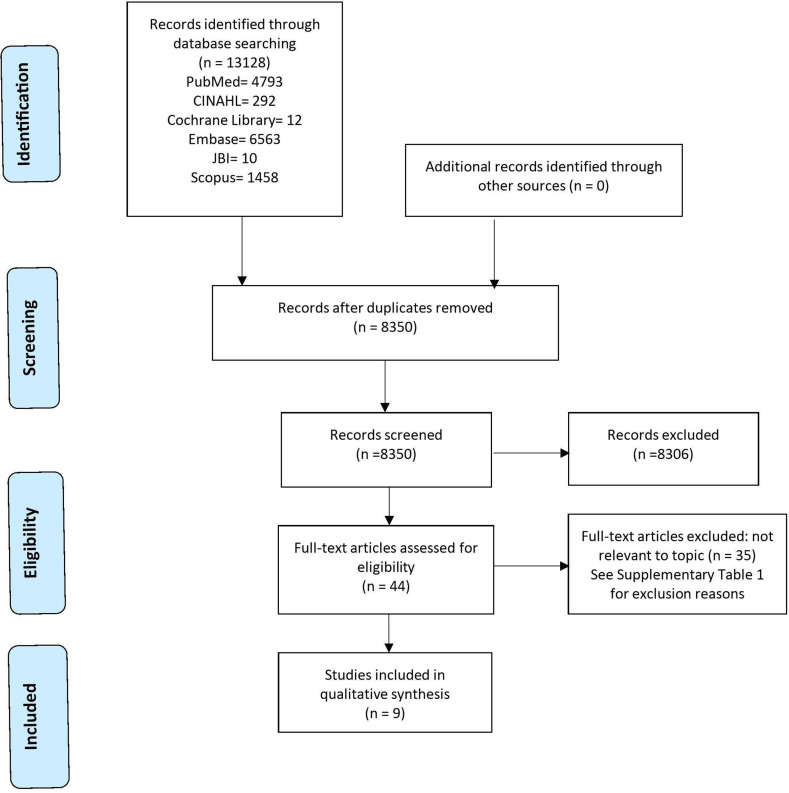
Objective: To summarise the available clinical evidence on the efficacy and safety of osteopathic manipulative treatment (OMT) for different conditions. Design: Overview of systematic reviews (SRs) and meta-analyses (MAs). PROSPERO CRD42020170983. Data sources: An electronic search was performed using seven databases: PubMed, EMBASE, CINAHL, Scopus, JBI, Prospero and Cochrane Library, from their inception until November 2021. Eligibility criteria for selecting studies: SRs and MAs of randomised controlled trials evaluating the efficacy and safety of OMT for any condition were included. Data extraction and synthesis: The data were independently extracted by two authors. The AMSTAR-2 tool was used to assess the methodological quality of the SRs and MAs. The overview was conducted and reported according to the Preferred Reporting Items for Systematic Reviews and Meta-Analyses statement. Results: The literature search revealed nine SRs or MAs conducted between 2013 and 2020 with 55 primary trials involving 3740 participants. The SRs reported a wide range of conditions including acute and chronic non-specific low back pain (NSLBP, four SRs), chronic non-specific neck pain (CNSNP, one SR), chronic non-cancer pain (CNCP, one SR), paediatric (one SR), neurological (primary headache, one SR) and irritable bowel syndrome (IBS, one SR). Although with a different effect size and quality of evidence, MAs reported that OMT is more effective than comparators in reducing pain and improving functional status in acute/chronic NSLBP, CNSNP and CNCP. Due to small sample size, presence of conflicting results and high heterogeneity, questionable evidence existed on OMT efficacy for paediatric conditions, primary headache and IBS. No adverse events were reported in most SRs. According to AMSTAR-2, the methodological quality of the included SRs was rated low or critically low. Conclusion: Based on the currently available SRs and MAs, promising evidence suggests the possible effectiveness of OMT for musculoskeletal disorders. Limited and inconclusive evidence occurs for paediatric conditions, primary headache and IBS. Further well-conducted SRs and MAs are needed to confirm and extend the efficacy and safety of OMT.
Overview
AI snapshot
Written from the paper’s full text.
TL;DR
This overview of nine systematic reviews/meta-analyses found promising evidence for osteopathic manipulative treatment (OMT) in musculoskeletal pain, especially acute/chronic non-specific low back pain, chronic neck pain, and chronic non-cancer pain, but limited or inconclusive evidence for paediatric conditions, primary headache, and IBS. No serious adverse events were reported, though the included reviews were mostly rated low or critically low methodological quality.
Key findings
- Nine SRs/MAs published between 2013 and 2020 were included; the abstract reports 55 primary trials and 3740 participants, while the results report 71 primary studies/5577 participants before overlap and 57 trials/3740 participants after accounting for overlap. Conditions covered acute/chronic non-specific low back pain (four SRs), chronic non-specific neck pain, chronic non-cancer pain, paediatric conditions, primary headache, and IBS.
- Meta-analyses reported OMT was more effective than comparators for pain and functional status in acute/chronic non-specific low back pain, chronic non-specific neck pain, and chronic non-cancer pain. For example, Franke 2014 reported ANSLBP/CNSLBP pain MD −12.91 (95% CI −20.00 to −5.82), I²=86%, and functional status SMD −0.36 (95% CI −0.58 to −0.14), I²=57%; CNSLBP pain MD −14.93 (95% CI −25.18 to −4.68), I²=89%, and functional status SMD −0.32 (95% CI −0.58 to −0.07), I²=49%.
- Evidence was limited or inconclusive for paediatric conditions, primary headache, and IBS due to small sample size, conflicting results, and high heterogeneity; the overall traffic-light evidence for these was red.
- No adverse events were reported in most SRs, and no severe incidents occurred after OMT; according to AMSTAR-2, seven included SRs were rated low quality and two critically low quality.
Methods
- Overview of systematic reviews and meta-analyses of randomised controlled trials, registered on PROSPERO (CRD42020170983), conducted according to the Cochrane Handbook and reported following PRISMA.
- Searched PubMed, EMBASE, CINAHL, Scopus, JBI, Prospero, and Cochrane Library from inception until 13 November 2021, with no language or date restrictions; two authors independently selected studies and extracted data, with disagreements resolved by discussion or a third author.
- Included SRs/MAs of RCTs evaluating OMT for any condition, where OMT was performed by osteopaths, osteopathic physicians, or osteopathic trainees; excluded reviews of animal models or healthy volunteers and reviews without an RCT subanalysis. Methodological quality was assessed with AMSTAR-2; overlapping primary studies were counted once; a critical synthesis, traffic-light evidence, and GRADE results as reported by SR authors were used.
Limitations
- The paper states that inclusion criteria may have missed relevant SRs because only RCTs were included and OMT had to be performed by osteopathic physicians or osteopaths; seven SRs were excluded, losing five RCTs, and 11 systematic reviews were excluded, losing 17 RCTs. Participants may not be generalisable because osteopathy is often conducted in the private sector in many countries.
- The paper states that included SRs were rated low or critically low by AMSTAR-2; only two of the seven SRs evaluating adverse events reported the definition used to measure them; high heterogeneity, small sample sizes, conflicting results, and inadequate blinding/reporting were common.
- Evident from the text: the abstract reports 55 primary trials while the results report 57 after overlap; most primary RCTs were rated high risk of bias by the overview authors using the Cochrane Back and Neck Group criteria; several conditions had no meta-analysis.
Model-written summary. Check it against the paper before relying on it.
Integrity signals
Registry
Cites
Statistics
Figures
Verification
Claims the paper makes
29 Partly supported · 20 Supported · 16 Own result · 15 No full text of the sources · 13 Own interpretation · 8 Couldn’t confirm · 8 Own method · 7 Supported so far · 3 Not checked yet · 3 No basis given · 1 Mixed support · 1 Not supported · 1 Sources not found · accuracy not yet measured
Some cited sources support this claim and some don’t — read each source’s verdict below.
In the paper
“Finally, domain 15 (publication bias assessment) was rated as not applicable for all the SRs due to lack of a meta-analysis24 30–32 or the inclusion in the meta-analysis of fewer than 10 trials.25–29”
§ Efficacy and safety of osteopathic manipulative treatment: an overview of systematic reviews > Results > Methodological quality of included reviews
What the sources say
- Not checked yetcites [24] de Oliveira Meirelies, 2013, A eficácia da osteopatia sobre a lombalgia: uma revisão sistemática, Man Ther Posturology Rehabil J
- Not checked — no full text of the sourcecites [30] source
- Supportedcites [31] Cerritelli, 2017, Osteopathy for primary headache patients: a systematic review, J Pain Res source
The Discussion’s Study limitations section states that heterogeneity, high risk of bias, and imprecise results made a meta-analysis impossible. This supports the no-meta-analysis rationale for rating publication-bias assessment not applicable to this review; the domain rating is the citing authors’ assessment, not a rating made by the source paper. (LLM, conf=0.90)
- Supportedcites [32] source
This citation is attached to the absence of a meta-analysis, not to the citing authors’ domain-15 rating. The source’s Results describe a systematic review of five studies, and its Discussion reports marked heterogeneity in outcomes and control interventions; our copy does not report a meta-analysis. The rating of domain 15 is the citing authors’ assessment, not a finding attributed to this source. (LLM, conf=0.85)
- Disputedcites [25] sourceExperimental — accuracy not yet measured
The Results section, under ‘OMT versus other interventions for acute and chronic nonspecific low back pain,’ reports a meta-analysis of pain involving 10 studies, contrary to the claim that this review’s meta-analysis included fewer than 10 trials. The paper does not report the citing authors’ domain 15 rating; that rating is their own assessment. (LLM, conf=0.88)
Checked by a reasoning model — may be wrong.
- Supportedcites [26] source
The paper’s Risk of Bias table (page unavailable) lists eight included trials, and its Effect of interventions section describes pooled results. This supports the fewer-than-10-trials basis for the citing authors’ domain 15 rating; the rating itself is the citing authors’ assessment, not a finding attributed to this paper. (LLM, conf=0.88)
- Disputedcites [27] sourceExperimental — accuracy not yet measured
The paper’s Studies selection section reports that all 10 included studies entered the quantitative analysis. Its functional-status results likewise say all trials were included in that meta-analysis. Thus, for this cited review, the stated reason of fewer than 10 trials in the meta-analysis conflicts with our copy; the paper does not itself report a domain 15 rating. Page numbers are unavailable in our copy. (LLM, conf=0.88)
Checked by a reasoning model — may be wrong.
- Not checked — no full text of the sourcecites [28] source
- Supportedcites [29] source
The Quality of Evidence section states that no pooled analysis contained 10 or more studies, so the authors could not assess publication bias. This supports the cited reason for treating publication-bias assessment as not applicable to this review; the domain rating is the citing authors’ own assessment. (LLM, conf=0.91)
plain- Asserted: passes — The authors put it forward as true.
- Checkable: passes — It can be checked against evidence.
- Load-bearing: unclear — It is unclear whether the paper’s conclusions depend on it.
- Based: passes — The paper gives a reason why it holds.
Every source the paper cites for this claim was checked and supports it.
In the paper
“With regards to adverse events, a trial reported an increase in back muscle spasticity in one patient treated with OMT.”
§ Efficacy and safety of osteopathic manipulative treatment: an overview of systematic reviews > Results > Musculoskeletal conditions
What the sources say
- Supportedcites [27] source
The Description of results section (page unavailable) reports that Licciardone’s 2013 trial recorded “increased back muscle spasticity” on one occasion. The review identifies that trial as an OMT study, supporting the citing sentence’s account of a single reported adverse event. (LLM, conf=0.87)
plaindirectSingle case- Asserted: passes — The authors put it forward as true.
- Checkable: passes — It can be checked against evidence.
- Load-bearing: unclear — It is unclear whether the paper’s conclusions depend on it.
- Based: passes — The paper gives a reason why it holds.
- Supported
The cited sources support only part of this claim — read each source’s verdict below.
In the paper
“The methodological quality of the included studies evaluated by the authors using the CBRG,18 identified a low RoB for all RCTs.”
§ Efficacy and safety of osteopathic manipulative treatment: an overview of systematic reviews > Results > Musculoskeletal conditions
What the sources say
- Partly supportedcites [26] sourceExperimental — accuracy not yet measured
The ‘Assessment of risk of bias in included studies’ section confirms that the authors used the Cochrane Back Review Group tool. Table 3 shows at least six low-risk criteria for each included RCT, but it also marks several criteria high risk, including dropouts in two trials. Because the authors’ overall low-risk definition also requires no serious flaws, the table does not establish a low overall risk of bias for every RCT. (LLM, conf=0.82)
- Not checked — no full text of the sourcecites [18] source
plain- Asserted: passes — The authors put it forward as true.
- Checkable: passes — It can be checked against evidence.
- Load-bearing: unclear — It is unclear whether the paper’s conclusions depend on it.
- Based: passes — The paper gives a reason why it holds.
- Partly supported
The cited sources that could be checked couldn’t confirm or dispute this claim.
In the paper
“Adverse events were not considered by the SR authors.”
§ Efficacy and safety of osteopathic manipulative treatment: an overview of systematic reviews > Results > Musculoskeletal conditions
What the sources say
- Could not verifycites [29] sourceExperimental — accuracy not yet measured
The Strengths and Limitations section (page unavailable) identifies pain, function, quality of life, and return to work as the review’s focus, but does not say whether the authors considered adverse events. Searches for “adverse,” “adverse events,” and safety found no decisive passage; omission alone does not establish that they were not considered. (LLM, conf=0.67)
plain- Asserted: passes — The authors put it forward as true.
- Checkable: passes — It can be checked against evidence.
- Load-bearing: unclear — It is unclear whether the paper’s conclusions depend on it.
- Based: passes — The paper gives a reason why it holds.
- Could not verify
The cited sources that could be checked couldn’t confirm or dispute this claim.
In the paper
“The OTLE for the outcomes of each condition was assessed to be yellow.”
§ Efficacy and safety of osteopathic manipulative treatment: an overview of systematic reviews > Results > Musculoskeletal conditions
What the sources say
- Could not verifycites [29] sourceExperimental — accuracy not yet measured
The Quality of Evidence section says the review used GRADE, and Strengths and Limitations describes its overall GRADE assessment as moderate. A search for OTLE, traffic-light ratings, and yellow found no passage assigning a yellow rating to the outcomes of each condition. The copy therefore does not verify the attributed assessment. (LLM, conf=0.72)
plain- Asserted: passes — The authors put it forward as true.
- Checkable: passes — It can be checked against evidence.
- Load-bearing: unclear — It is unclear whether the paper’s conclusions depend on it.
- Based: passes — The paper gives a reason why it holds.
- Could not verify
The cited sources that could be checked couldn’t confirm or dispute this claim.
In the paper
“The OTLE for the outcomes was assessed to be yellow.”
§ Efficacy and safety of osteopathic manipulative treatment: an overview of systematic reviews > Results > Musculoskeletal conditions
What the sources say
- Could not verifycites [27] sourceExperimental — accuracy not yet measured
Section 4.3 and Table 3 assess evidence using GRADE, with ratings ranging from very low to moderate. Searches for OTLE and traffic-light colours found no passage assigning an overall yellow rating; the cited paper therefore does not verify that assessment. (LLM, conf=0.76)
plain- Asserted: passes — The authors put it forward as true.
- Checkable: passes — It can be checked against evidence.
- Load-bearing: unclear — It is unclear whether the paper’s conclusions depend on it.
- Based: passes — The paper gives a reason why it holds.
- Could not verify
The cited sources support only part of this claim — read each source’s verdict below.
In the paper
“Similar meta-analysis results (effect and heterogeneity) have also been found in a subanalysis evaluating the effectiveness of OMT in CNSLBP patients (six trials, 771 participants).”
§ Efficacy and safety of osteopathic manipulative treatment: an overview of systematic reviews > Results > Musculoskeletal conditions
What the sources say
- Partly supportedcites [25] sourceExperimental — accuracy not yet measured
Split into 2 atoms — 0 confirmed, 2 partially supported, 0 disputed, 0 misattributed, 0 unverifiable. Expand the claim to see per-atom verdicts.
plainn = 771- Asserted: passes — The authors put it forward as true.
- Checkable: passes — It can be checked against evidence.
- Load-bearing: unclear — It is unclear whether the paper’s conclusions depend on it.
- Based: passes — The paper gives a reason why it holds.
- Partly supported
The cited sources support only part of this claim — read each source’s verdict below.
In the paper
“The OTLE for the outcomes of each condition was assessed to be yellow.”
§ Efficacy and safety of osteopathic manipulative treatment: an overview of systematic reviews > Results > Musculoskeletal conditions
What the sources say
- Partly supportedcites [26] sourceExperimental — accuracy not yet measured
The Data synthesis section says the review assessed evidence quality for each outcome using GRADE, not an overall traffic-light rating. Table 4 rates pregnancy outcomes as moderate, while the Discussion describes postpartum evidence as low. Our copy therefore supports outcome-level assessment but not the attributed yellow rating for each condition; page numbers are unavailable. (LLM, conf=0.85)
plain- Asserted: passes — The authors put it forward as true.
- Checkable: passes — It can be checked against evidence.
- Load-bearing: unclear — It is unclear whether the paper’s conclusions depend on it.
- Based: passes — The paper gives a reason why it holds.
- Partly supported
The cited sources support only part of this claim — read each source’s verdict below.
In the paper
“The OTLE for the outcomes of each condition was assessed to be yellow.”
§ Efficacy and safety of osteopathic manipulative treatment: an overview of systematic reviews > Results > Musculoskeletal conditions
What the sources say
- Partly supportedcites [25] sourceExperimental — accuracy not yet measured
The Methods (Data synthesis; page unavailable) say Franke and colleagues assessed evidence quality for each outcome using GRADE, not a traffic-light system. The Results (pregnant women and postpartum women; pages unavailable) rate the pregnancy outcomes low-quality and the postpartum outcomes moderate-quality. The paper therefore supports outcome-level assessments, but not a uniform yellow rating for every condition. (LLM, conf=0.84)
plain- Asserted: passes — The authors put it forward as true.
- Checkable: passes — It can be checked against evidence.
- Load-bearing: unclear — It is unclear whether the paper’s conclusions depend on it.
- Based: passes — The paper gives a reason why it holds.
- Partly supported
Every source the paper cites for this claim was checked and supports it.
In the paper
“GRADE evaluation by the authors reported a low quality of evidence for both outcomes.”
§ Efficacy and safety of osteopathic manipulative treatment: an overview of systematic reviews > Results > Musculoskeletal conditions
What the sources say
- Supportedcites [25] source
The Methods (Data synthesis) state that the authors assessed evidence quality for each outcome using GRADE. The Results section on pregnant women reports low-quality evidence for both pain and functional status in nonspecific low back pain. (LLM, conf=0.95)
plainn = 242- Asserted: passes — The authors put it forward as true.
- Checkable: passes — It can be checked against evidence.
- Load-bearing: unclear — It is unclear whether the paper’s conclusions depend on it.
- Based: passes — The paper gives a reason why it holds.
- Supported
- It may state two separate claims as one. 60
- Probably not a substantial claim. 24
- The quote only partly states this claim. 1
At least one cited source doesn’t support this claim or points to a different paper, and none confirmed it — see the verdicts below.
In the paper
“Similarly, evidence has been reported for the tension-type headache only when within-group analysis was performed; intergroup analyses reported conflicting results.”
§ Efficacy and safety of osteopathic manipulative treatment: an overview of systematic reviews > Results > Neurological conditions
What the sources say
- Disputedcites [31] Cerritelli, 2017, Osteopathy for primary headache patients: a systematic review, J Pain Res sourceExperimental — accuracy not yet measured
The Results section (“Outcomes reported”; page not available) reports a significantly lower headache frequency in the OMT group than in the control group in Rolle et al.’s tension-type headache trial. That between-group finding contradicts the claim that evidence was reported only from within-group analyses. The section also reports nonsignificant between-group results for some outcomes in another trial, so the comparative findings were mixed. (LLM, conf=0.86)
Checked by a reasoning model — may be wrong.
plainn = 88- Asserted: passes — The authors put it forward as true.
- Checkable: passes — It can be checked against evidence.
- Load-bearing: unclear — It is unclear whether the paper’s conclusions depend on it.
- Based: passes — The paper gives a reason why it holds.
It may state two separate claims as one.
- Disputed
The cited sources support only part of this claim — read each source’s verdict below.
In the paper
“Four reviews24–27 with 34 RCTs (41 comparators) and 3369 participants assessed the efficacy of OMT on LBP, including acute LBP, chronic LBP (CLBP), LBP with sciatica, CLBP with menopause symptoms, LBP in obese patients, acute non-specific LBP (ANSLBP), chronic non-specific LBP (CNSLBP) and/or LBP and pelvic girdle pain in pregnancy and postpartum (PP). Taking into account overlapping, there were 2”
§ Efficacy and safety of osteopathic manipulative treatment: an overview of systematic reviews > Results > Musculoskeletal conditions
What the sources say
- Not matchedcites [24] de Oliveira Meirelies, 2013, A eficácia da osteopatia sobre a lombalgia: uma revisão sistemática, Man Ther Posturology Rehabil J
Couldn’t be matched to a paper in Crossref, so it can’t be checked.
- Partly supportedcites [25] sourceExperimental — accuracy not yet measured
Split into 2 atoms — 1 confirmed, 1 partially supported, 0 disputed, 0 misattributed, 0 unverifiable. Expand the claim to see per-atom verdicts.
- Partly supportedcites [26] sourceExperimental — accuracy not yet measured
The Effect of interventions section (page unavailable) reports five studies with seven comparison groups and 677 participants for low back pain during pregnancy. The postpartum analysis (page unavailable) reports three studies with three comparisons and 180 participants. This source supports the pregnancy and postpartum portion of the citing sentence, but does not establish the aggregate figures for four reviews, 34 RCTs, 41 comparators, 3369 participants, or 22 effective trials involving 2053 participants. (LLM, conf=0.88)
- Partly supportedcites [27] sourceExperimental — accuracy not yet measured
Split into 2 atoms — 1 confirmed, 1 partially supported, 0 disputed, 0 misattributed, 0 unverifiable. Expand the claim to see per-atom verdicts.
plaindirectn = 2,053- Asserted: passes — The authors put it forward as true.
- Checkable: passes — It can be checked against evidence.
- Load-bearing: passes — The paper’s conclusions depend on it.
- Based: passes — The paper gives a reason why it holds.
It may state two separate claims as one.
- Not matched
The cited sources support only part of this claim — read each source’s verdict below.
In the paper
“reported following the Preferred Reporting Items for Systematic Reviews and Meta-Analyses (PRISMA) statement.8–10”
§ Efficacy and safety of osteopathic manipulative treatment: an overview of systematic reviews > Methods
What the sources say
- Not matchedcites [8] Becker LA , Oxman AD . Chapter 22 : Overviews of reviews. In: Higgins JPT , Green S , eds. Cochrane Handbook for systematic reviews of interventions. Version 5.1.0. The Cochrane Collaboration, 2011. www.cochrane-handbook.org
Couldn’t be matched to a paper in Crossref, so it can’t be checked.
- Not matchedcites [9] The Cochrane Collaboration . Chapter 9: Analysing data and undertaking meta-analyses(editors).. In: Deeks JJ , Higgins JPT , Altman DG , eds. Cochrane Handbook for systematic reviews of interventions. Version 5.1.0. The Cochrane Collaboration, 2011. https://training.cochrane.org/handbook
Couldn’t be matched to a paper in Crossref, so it can’t be checked.
- Supportedcites [10] Liberati A , Altman DG , Tetzlaff J . The PRISMA statement for reporting systematic reviews and meta-analyses of studies that evaluate health care interventions: explanation and elaboration 2009;62. source
The citation identifies the reporting guidance the citing authors say they followed; it does not ask the source to verify their adherence. Section 4, “Scope of PRISMA,” describes the PRISMA Statement as guidance for transparent and complete reporting of systematic reviews, and Section 8, “Discussion,” says the authors developed it for that purpose. (LLM, conf=0.90)
plain- Asserted: passes — The authors put it forward as true.
- Checkable: passes — It can be checked against evidence.
- Load-bearing: fails — The paper’s conclusions may not depend on it.
- Based: passes — The paper gives a reason why it holds.
Probably not a substantial claim. The paper’s conclusions may not depend on it.
- Not matched
Every source the paper cites for this claim was checked and supports it.
In the paper
“randomised controlled trials (RCTs), which are well known to be the gold standard for evaluating the efficacy of an intervention.11”
§ Efficacy and safety of osteopathic manipulative treatment: an overview of systematic reviews > Methods > Eligibility criteria
What the sources say
- Supportedcites [11] source
The section ‘What Is a Randomised Controlled Trial?’ explicitly calls the RCT the gold standard for evaluating the effectiveness of interventions. The Conclusions likewise describe it as the most rigorous scientific method for evaluating health care interventions. ‘Efficacy’ is a reasonable paraphrase in this broad claim. (LLM, conf=0.94)
boosted- Asserted: passes — The authors put it forward as true.
- Checkable: passes — It can be checked against evidence.
- Load-bearing: passes — The paper’s conclusions depend on it.
- Based: passes — The paper gives a reason why it holds.
Probably not a substantial claim.
- Supported
The cited sources that could be checked couldn’t confirm or dispute this claim.
In the paper
“The agreement on the eligibility of the included studies, performed by the two authors (DB and DR), resulted in a 0.78 kappa value.23”
§ Efficacy and safety of osteopathic manipulative treatment: an overview of systematic reviews > Results > Literature search results and study selection
What the sources say
- Could not verifycites [23] sourceExperimental — accuracy not yet measured
The Methods section explains that Fleiss’ K can measure agreement between two or more raters. The case-study Results concern breast-cancer assessments, not eligibility decisions by DB and DR. A search for the eligibility assessment and 0.78 found no passage reporting the claimed result. (LLM, conf=0.76)
plain- Asserted: passes — The authors put it forward as true.
- Checkable: passes — It can be checked against evidence.
- Load-bearing: fails — The paper’s conclusions may not depend on it.
- Based: passes — The paper gives a reason why it holds.
Probably not a substantial claim. The paper’s conclusions may not depend on it.
- Could not verify
The cited sources that could be checked couldn’t confirm or dispute this claim.
In the paper
“The AMSTAR-2 tool was used to assess the methodological quality of the SRs and MAs.”
- Also stated in: § Assessment of the methodological quality of included SRs and MAs · plain
“The methodological quality of the included SRs and MAs was assessed using the AMSTAR-2 tool”
§ Efficacy and safety of osteopathic manipulative treatment: an overview of systematic reviews > Abstract > Data extraction and synthesis
What the sources say
- Could not verifycites [10] Liberati A , Altman DG , Tetzlaff J . The PRISMA statement for reporting systematic reviews and meta-analyses of studies that evaluate health care interventions: explanation and elaboration 2009;62. sourceExperimental — accuracy not yet measured
The Abstract identifies this paper as an explanation of PRISMA, a reporting guideline for systematic reviews and meta-analyses. The risk-of-bias discussion addresses assessments of studies included in reviews, not AMSTAR-2 assessments of the reviews themselves. Searches for “AMSTAR-2” and “AMSTAR” found no passage supporting the attributed use of that tool. (LLM, conf=0.76)
plain- Asserted: passes — The authors put it forward as true.
- Checkable: passes — It can be checked against evidence.
- Load-bearing: passes — The paper’s conclusions depend on it.
- Based: passes — The paper gives a reason why it holds.
Probably not a substantial claim.
- Also stated in: § Assessment of the methodological quality of included SRs and MAs · plain
The cited sources support only part of this claim — read each source’s verdict below.
In the paper
“The methodological quality of all RCTs, evaluated by the authors using the RoB from the CBRG,18 reported a low and a high RoB for 13 and 2 RCTs, respectively.”
§ Efficacy and safety of osteopathic manipulative treatment: an overview of systematic reviews > Results > Musculoskeletal conditions
What the sources say
- Partly supportedcites [25] sourceExperimental — accuracy not yet measured
The Methods say the authors used the Cochrane Back Review Group Risk of Bias tool. The Results report 13 studies at low risk and name two at high risk, but also rate Licciardone et al. (2009) at high risk; the Discussion says three of 15 studies had high risk. Thus the claim's count of only two high-risk RCTs does not reflect the paper's full account. (LLM, conf=0.88)
- Not checked — no full text of the sourcecites [18] source
plain- Asserted: passes — The authors put it forward as true.
- Checkable: passes — It can be checked against evidence.
- Load-bearing: unclear — It is unclear whether the paper’s conclusions depend on it.
- Based: passes — The paper gives a reason why it holds.
It may state two separate claims as one.
- Partly supported
The cited sources support only part of this claim — read each source’s verdict below.
In the paper
“Considerable (pain) and substantial (functional status) heterogeneity were found.”
§ Efficacy and safety of osteopathic manipulative treatment: an overview of systematic reviews > Results > Musculoskeletal conditions
What the sources say
- Partly supportedcites [25] sourceExperimental — accuracy not yet measured
The Results section on pregnant women reports three studies and says the evidence for both pain and functional status was downgraded for inconsistency. The Methods defines “considerable” and “substantial” heterogeneity, but the available passages do not give outcome-specific heterogeneity values establishing considerable heterogeneity for pain and substantial heterogeneity for functional status. No page numbers are provided in our copy. (LLM, conf=0.82)
plainn = 242- Asserted: passes — The authors put it forward as true.
- Checkable: passes — It can be checked against evidence.
- Load-bearing: unclear — It is unclear whether the paper’s conclusions depend on it.
- Based: passes — The paper gives a reason why it holds.
It may state two separate claims as one.
- Partly supported
Every source the paper cites for this claim was checked and supports it.
In the paper
“Considering the CBN Group,19 we rated all RCTs as at high RoB [domains at high RoB (% of RCTs): patient binding (100%), care provider binding (100%), outcome assessor blinding (100%), dropouts described +acceptable (25%), group similar at the baseline (25%), intention to treat analysis (25%), similar timing outcome assessment (25%) and compliance acceptable (12%)].”
§ Efficacy and safety of osteopathic manipulative treatment: an overview of systematic reviews > Results > Musculoskeletal conditions
What the sources say
- Supportedcites [19] source
Split into 2 atoms — 2 confirmed, 0 partially supported, 0 disputed, 0 misattributed, 0 unverifiable. Expand the claim to see per-atom verdicts.
plain- Asserted: passes — The authors put it forward as true.
- Checkable: passes — It can be checked against evidence.
- Load-bearing: unclear — It is unclear whether the paper’s conclusions depend on it.
- Based: passes — The paper gives a reason why it holds.
It may state two separate claims as one.
- Supported
The cited sources support only part of this claim — read each source’s verdict below.
In the paper
“The methodological quality of the included studies was performed by the authors using a modified version of the Handbook of Cochrane33 where only six domains were considered (random sequence generation, allocation concealment, blinding of participants, healthcare provider, outcome assessors and dropout rates). According to this modified version, the quality of the RCTs was reported by the authors”
§ Efficacy and safety of osteopathic manipulative treatment: an overview of systematic reviews > Results > Musculoskeletal conditions
What the sources say
- Partly supportedcites [29] sourceExperimental — accuracy not yet measured
Split into 2 atoms — 1 confirmed, 1 partially supported, 0 disputed, 0 misattributed, 0 unverifiable. Expand the claim to see per-atom verdicts.
- Not checked — no full text of the sourcecites [33] Higgins JPT GS , ed. Cochrane Handbook for Systematic Reviews of Interventions. Version 5.0.0, 2008. source
plain- Asserted: passes — The authors put it forward as true.
- Checkable: passes — It can be checked against evidence.
- Load-bearing: unclear — It is unclear whether the paper’s conclusions depend on it.
- Based: passes — The paper gives a reason why it holds.
It may state two separate claims as one.
- Partly supported
Every source the paper cites for this claim was checked and supports it.
In the paper
“In another SR, Franke and colleagues26 identified eight RCTs with 850 participants evaluating the efficacy of OMT on NSLBP and pelvic girdle pain in pregnancy (five RCTs, seven comparisons) and on NSLBP in PP women (three trials and three comparisons)”
§ Efficacy and safety of osteopathic manipulative treatment: an overview of systematic reviews > Results > Musculoskeletal conditions
What the sources say
- Supportedcites [26] source
The Effect of interventions section reports five pregnancy studies, seven comparisons, and 677 participants. The postpartum section reports three studies and three comparisons; Table 5 gives 173 participants in the postpartum analysis, bringing the analyzed total to 850. The paper also describes 180 postpartum participants, so 850 refers to those included in the analyses rather than all postpartum participants. (LLM, conf=0.90)
plainn = 850- Asserted: passes — The authors put it forward as true.
- Checkable: passes — It can be checked against evidence.
- Load-bearing: passes — The paper’s conclusions depend on it.
- Based: passes — The paper gives a reason why it holds.
It may state two separate claims as one.
- Supported
The cited sources support only part of this claim — read each source’s verdict below.
In the paper
“Similarly, the pooled analysis of the other two trials with 210 participants found that OMT versus standard care improved the quality of life (medium effect, moderate quality of evidence and no heterogeneity).”
§ Efficacy and safety of osteopathic manipulative treatment: an overview of systematic reviews > Results > Musculoskeletal conditions
What the sources say
- Partly supportedcites [29] sourceExperimental — accuracy not yet measured
The Quality of life section reports that two studies found improved quality of life with OMTh versus standard care (SMD 0.67), with moderate-quality evidence, but their pooled sample was 120 participants, not 210. Table 4 lists low inconsistency for this outcome; it does not establish the claimed absence of heterogeneity. (LLM, conf=0.92)
plaindirectn = 210- Asserted: passes — The authors put it forward as true.
- Checkable: passes — It can be checked against evidence.
- Load-bearing: passes — The paper’s conclusions depend on it.
- Based: passes — The paper gives a reason why it holds.
It may state two separate claims as one.
- Partly supported
The cited sources support only part of this claim — read each source’s verdict below.
In the paper
“Moreover, another pooled analysis including two trials with 486 participants revealed the efficacy of OMT versus standard care in improving disability (large ES, moderate quality of evidence and no heterogeneity).”
§ Efficacy and safety of osteopathic manipulative treatment: an overview of systematic reviews > Results > Musculoskeletal conditions
What the sources say
- Partly supportedcites [29] sourceExperimental — accuracy not yet measured
Split into 2 atoms — 1 confirmed, 1 partially supported, 0 disputed, 0 misattributed, 0 unverifiable. Expand the claim to see per-atom verdicts.
plaindirectn = 486- Asserted: passes — The authors put it forward as true.
- Checkable: passes — It can be checked against evidence.
- Load-bearing: passes — The paper’s conclusions depend on it.
- Based: passes — The paper gives a reason why it holds.
It may state two separate claims as one.
- Partly supported
Every source the paper cites for this claim was checked and supports it.
In the paper
“However, considering the last version of the CBN Group,19 we rated all RCTs at high RoB [domains at high RoB (% of RCTs): care provider (100%), patient blinding (67%), outcome assessor blinding (67%), groups similar at baseline (27%), lack of intention to treat analysis use (27%), free of selective outcome report (13%), dropouts described+acceptable (7%), similar timing outcome assessment (7%) and”
§ Efficacy and safety of osteopathic manipulative treatment: an overview of systematic reviews > Results > Musculoskeletal conditions
What the sources say
- Supportedcites [19] source
Split into 2 atoms — 2 confirmed, 0 partially supported, 0 disputed, 0 misattributed, 0 unverifiable. Expand the claim to see per-atom verdicts.
plainn = 119- Asserted: passes — The authors put it forward as true.
- Checkable: passes — It can be checked against evidence.
- Load-bearing: passes — The paper’s conclusions depend on it.
- Based: passes — The paper gives a reason why it holds.
It may state two separate claims as one.
- Supported
Every source the paper cites for this claim was checked and supports it.
In the paper
“Three trials (four comparators) with 242 participants evaluated the effectiveness of OMT versus obstetric care, sham ultrasound and untreated, for NSLBP in pregnant women. A large and a medium effects in reducing pain and improving functional status, respectively, were identified.”
§ Efficacy and safety of osteopathic manipulative treatment: an overview of systematic reviews > Results > Musculoskeletal conditions
What the sources say
- Supportedcites [25] source
Split into 2 atoms — 2 confirmed, 0 partially supported, 0 disputed, 0 misattributed, 0 unverifiable. Expand the claim to see per-atom verdicts.
plaindirectn = 242- Asserted: passes — The authors put it forward as true.
- Checkable: passes — It can be checked against evidence.
- Load-bearing: passes — The paper’s conclusions depend on it.
- Based: passes — The paper gives a reason why it holds.
It may state two separate claims as one.
- Supported
Every source the paper cites for this claim was checked and supports it.
In the paper
“The meta-analysis including three studies with 173 PP participants revealed a significant effect in favour of OMT in reducing pain and improving functional status, although a large effect and substantial/considerable heterogeneity for both outcomes were reported. The GRADE performed by the authors also found a low quality of evidence.”
§ Efficacy and safety of osteopathic manipulative treatment: an overview of systematic reviews > Results > Musculoskeletal conditions
What the sources say
- Supportedcites [26] source
The Discussion reports three postpartum studies, 173 participants in the comparison, large effects on pain and functional status, and low GRADE quality due partly to heterogeneity. The Effect of interventions section reports significant effects favouring OMT for both outcomes. Although that section says 180 participants were analysed, Table 5 lists 173 for the postpartum comparison cited in the claim. (LLM, conf=0.93)
plaindirectn = 173- Asserted: passes — The authors put it forward as true.
- Checkable: passes — It can be checked against evidence.
- Load-bearing: passes — The paper’s conclusions depend on it.
- Based: passes — The paper gives a reason why it holds.
It may state two separate claims as one.
- Supported
The cited sources support only part of this claim — read each source’s verdict below.
In the paper
“The GRADE performed by the authors revealed both a moderate quality of evidence for pain and a high quality of evidence for functional status.”
§ Efficacy and safety of osteopathic manipulative treatment: an overview of systematic reviews > Results > Musculoskeletal conditions
What the sources say
- Partly supportedcites [25] sourceExperimental — accuracy not yet measured
The Methods (Data synthesis; page unavailable) confirm that the authors used GRADE to assess each outcome. A Results (Effect of interventions; page unavailable) table row reports MODERATE-quality evidence for a pain comparison, but the retrieved passages do not establish the claimed HIGH-quality rating for functional status. (LLM, conf=0.76)
plainn = 1,046- Asserted: passes — The authors put it forward as true.
- Checkable: passes — It can be checked against evidence.
- Load-bearing: unclear — It is unclear whether the paper’s conclusions depend on it.
- Based: passes — The paper gives a reason why it holds.
It may state two separate claims as one.
- Partly supported
Every source the paper cites for this claim was checked and supports it.
In the paper
“The SR by Rehman and colleagues29 evaluated the efficacy of osteopathic interventions performed by manual therapists in chronic non-cancer pain. Sixteen RCTs were identified; however, we considered pooled analyses in which the trials were only performed by osteopaths”
§ Efficacy and safety of osteopathic manipulative treatment: an overview of systematic reviews > Results > Musculoskeletal conditions
What the sources say
- Supportedcites [29] source
The Results section reports that 16 studies were eligible for data extraction, and the Methods section specifies that eligible studies were randomized controlled trials of osteopathic manual treatment in adults with chronic non-cancer pain (page numbers unavailable). The restriction to pooled analyses of trials performed only by osteopaths is described as the citing authors’ own selection, not as a decision attributed to Rehman and colleagues. (LLM, conf=0.92)
plain- Asserted: passes — The authors put it forward as true.
- Checkable: passes — It can be checked against evidence.
- Load-bearing: passes — The paper’s conclusions depend on it.
- Based: passes — The paper gives a reason why it holds.
Probably not a substantial claim. It may state two separate claims as one.
- Supported
The cited sources support only part of this claim — read each source’s verdict below.
In the paper
“The authors revealed a significant effect, clinically relevant according to the CBN Group,19 of OMT in reducing pain (medium effect) and improving functional status (small effect). However, substantial heterogeneity and a low quality of evidence (GRADE) were reported for both outcomes.”
§ Efficacy and safety of osteopathic manipulative treatment: an overview of systematic reviews > Results > Musculoskeletal conditions
What the sources say
- Supportedcites [27] source
Split into 2 atoms — 2 confirmed, 0 partially supported, 0 disputed, 0 misattributed, 0 unverifiable. Expand the claim to see per-atom verdicts.
- Could not verifycites [19] sourceExperimental — accuracy not yet measured
Split into 2 atoms — 0 confirmed, 0 partially supported, 0 disputed, 0 misattributed, 2 unverifiable. Expand the claim to see per-atom verdicts.
plaindirect- Asserted: passes — The authors put it forward as true.
- Checkable: passes — It can be checked against evidence.
- Load-bearing: passes — The paper’s conclusions depend on it.
- Based: passes — The paper gives a reason why it holds.
It may state two separate claims as one.
- Supported
The cited sources support only part of this claim — read each source’s verdict below.
In the paper
“A pooled analysis, including 6 RCTs with 728 participants (six comparators), found the efficacy of OMT versus standard care in reducing pain severity (small ES, moderate quality of evidence and low level of heterogeneity).”
§ Efficacy and safety of osteopathic manipulative treatment: an overview of systematic reviews > Results > Musculoskeletal conditions
What the sources say
- Partly supportedcites [29] sourceExperimental — accuracy not yet measured
The Pooled Analysis section reports six studies comparing OMTh with standard care and a significant reduction in pain severity, with a small standardized effect (−0.37) and moderate-quality evidence. The Strengths and Limitations section describes low heterogeneity. The participant count is incorrect: the Pooled Analysis and Table 4 both report 710, not 728; page numbers are unavailable in our copy. (LLM, conf=0.92)
plaindirectn = 728- Asserted: passes — The authors put it forward as true.
- Checkable: passes — It can be checked against evidence.
- Load-bearing: passes — The paper’s conclusions depend on it.
- Based: passes — The paper gives a reason why it holds.
It may state two separate claims as one.
- Partly supported
The cited sources support only part of this claim — read each source’s verdict below.
In the paper
“Moreover, considerable (pain) and moderate (functional status) heterogeneities were found.”
§ Efficacy and safety of osteopathic manipulative treatment: an overview of systematic reviews > Results > Musculoskeletal conditions
What the sources say
- Partly supportedcites [25] sourceExperimental — accuracy not yet measured
The Discussion (page not provided) reports considerable heterogeneity in many forest plots, supporting the claim that the review found considerable heterogeneity. It does not assign that description specifically to pain or report moderate heterogeneity specifically for functional status. The Methods define moderate heterogeneity but do not establish that finding for functional status. (LLM, conf=0.79)
plainn = 1,141- Asserted: passes — The authors put it forward as true.
- Checkable: passes — It can be checked against evidence.
- Load-bearing: unclear — It is unclear whether the paper’s conclusions depend on it.
- Based: passes — The paper gives a reason why it holds.
It may state two separate claims as one.
- Partly supported
The cited sources support only part of this claim — read each source’s verdict below.
In the paper
“The methodological quality of the primary studies, evaluated by the authors using the CBN Group,19 reported a high RoB for all RCTs [domains at high RoB (% of RCTs): high RoB for care provider (100%), patient blinding (50%), outcome assessor blinding (17%), participant allocation (33%) and reporting bias (17%)].”
§ Efficacy and safety of osteopathic manipulative treatment: an overview of systematic reviews > Results > Musculoskeletal conditions
What the sources say
- Partly supportedcites [27] sourceExperimental — accuracy not yet measured
Section 3.4 reports risk-of-bias concerns in all 10 included studies, with high risk for personnel blinding in all trials and participant blinding in 50%. But it reports only one of 10 trials at high risk for allocation concealment and outcome reporting, not 33% and 17%; Section 4.3 describes assessor blinding as low or unclear risk, not high risk in 17%. Section 2.6 names a 13-item tool based on the Cochrane Risk of Bias tool, not a CBN Group tool. (LLM, conf=0.90)
- Supportedcites [19] source
The citation identifies the CBN Group method used to assess risk of bias, rather than attributing Dal Farra and colleagues’ RCT percentages to the guideline. The guideline’s Assessing Risk of Bias section recommends its criteria in Tables 2 and 3; Table 2 lists the care-provider, patient, and outcome-assessor blinding, allocation, and reporting domains (pp. 1663–1665). (LLM, conf=0.92)
plain- Asserted: passes — The authors put it forward as true.
- Checkable: passes — It can be checked against evidence.
- Load-bearing: passes — The paper’s conclusions depend on it.
- Based: passes — The paper gives a reason why it holds.
It may state two separate claims as one.
- Partly supported
Every source the paper cites for this claim was checked and supports it.
In the paper
“Considering the CBN Group,19 we rated all RCTs at high RoB [domains at high RoB (% of RCTs): patient blinding (67%), care provider (100%), outcome assessor blinding (67%), dropouts described+acceptable (33%) and intention to treat analysis (100%)].”
§ Efficacy and safety of osteopathic manipulative treatment: an overview of systematic reviews > Results > Musculoskeletal conditions
What the sources say
- Supportedcites [19] source
Table 2 (pp. 1663–1665) lists the CBN Group risk-of-bias domains used in the citing sentence, including patient, care-provider and outcome-assessor blinding, dropout rates, and analysis in the allocated group. The cited guideline supports the choice of criteria; the percentages are the citing authors’ own ratings, introduced by “we rated,” rather than findings attributed to the guideline. (LLM, conf=0.91)
plain- Asserted: passes — The authors put it forward as true.
- Checkable: passes — It can be checked against evidence.
- Load-bearing: unclear — It is unclear whether the paper’s conclusions depend on it.
- Based: passes — The paper gives a reason why it holds.
It may state two separate claims as one.
- Supported
Every source the paper cites for this claim was checked and supports it.
In the paper
“Concerning the adverse events, one study reported occasional tiredness in some patients after OMT, two studies (personal communications to authors SR) did not find adverse events and the remaining five studies did not analyse adverse events.”
§ Efficacy and safety of osteopathic manipulative treatment: an overview of systematic reviews > Results > Musculoskeletal conditions
What the sources say
- Supportedcites [26] source
The Adverse events section reports occasional tiredness after treatment in one study and says the authors of two other studies reported no adverse events in personal communications. It says no other study reported adverse events; with eight studies in the review, that leaves five. The source establishes that those five did not report adverse events, rather than whether they assessed them privately. (LLM, conf=0.92)
plain- Asserted: passes — The authors put it forward as true.
- Checkable: passes — It can be checked against evidence.
- Load-bearing: unclear — It is unclear whether the paper’s conclusions depend on it.
- Based: passes — The paper gives a reason why it holds.
It may state two separate claims as one.
- Supported
The cited sources that could be checked couldn’t confirm or dispute this claim.
In the paper
“A subgroup analysis evaluating the effectiveness of OMT performed only by osteopaths identified six trials (eight comparisons) with 739 participants; five trials were also reported in other two further SRs”
§ Efficacy and safety of osteopathic manipulative treatment: an overview of systematic reviews > Results > Musculoskeletal conditions
What the sources say
- Could not verifycites [27] sourceExperimental — accuracy not yet measured
Split into 2 atoms — 0 confirmed, 0 partially supported, 0 disputed, 0 misattributed, 1 unverifiable, 1 not checked. Expand the claim to see per-atom verdicts.
plainn = 739- Asserted: passes — The authors put it forward as true.
- Checkable: passes — It can be checked against evidence.
- Load-bearing: unclear — It is unclear whether the paper’s conclusions depend on it.
- Based: passes — The paper gives a reason why it holds.
It may state two separate claims as one.
- Could not verify
The cited sources support only part of this claim — read each source’s verdict below.
In the paper
“A further subanalysis, including two trials (three comparisons) with 548 participants, did not find evidence of OMT efficacy on functional status after a long-term treatment (12 weeks follow-up). Low quality of evidence and no heterogeneity were reported.”
§ Efficacy and safety of osteopathic manipulative treatment: an overview of systematic reviews > Results > Musculoskeletal conditions
What the sources say
- Partly supportedcites [27] sourceExperimental — accuracy not yet measured
Split into 2 atoms — 0 confirmed, 2 partially supported, 0 disputed, 0 misattributed, 0 unverifiable. Expand the claim to see per-atom verdicts.
plainn = 548- Asserted: passes — The authors put it forward as true.
- Checkable: passes — It can be checked against evidence.
- Load-bearing: unclear — It is unclear whether the paper’s conclusions depend on it.
- Based: passes — The paper gives a reason why it holds.
It may state two separate claims as one.
- Partly supported
The cited sources support only part of this claim — read each source’s verdict below.
In the paper
“Adverse events were evaluated in only 4 out of the 15 primary studies. Two RCTs reported minor adverse events such as stiffness and tiredness, one no adverse event and the last one evidenced adverse events not related to the treatment intervention.”
§ Efficacy and safety of osteopathic manipulative treatment: an overview of systematic reviews > Results > Musculoskeletal conditions
What the sources say
- Partly supportedcites [25] sourceExperimental — accuracy not yet measured
Split into 2 atoms — 1 confirmed, 1 partially supported, 0 disputed, 0 misattributed, 0 unverifiable. Expand the claim to see per-atom verdicts.
plain- Asserted: passes — The authors put it forward as true.
- Checkable: passes — It can be checked against evidence.
- Load-bearing: unclear — It is unclear whether the paper’s conclusions depend on it.
- Based: passes — The paper gives a reason why it holds.
It may state two separate claims as one.
- Partly supported
The cited sources support only part of this claim — read each source’s verdict below.
In the paper
“Two RCTs with 119 participants evaluated the effectiveness of OMT for NSLBP in PP women. A large effect of OMT in reducing pain and improving functional status was identified. No heterogeneity was found. However, a moderate quality of evidence for both outcomes was revealed.”
§ Efficacy and safety of osteopathic manipulative treatment: an overview of systematic reviews > Results > Musculoskeletal conditions
What the sources say
- Partly supportedcites [25] sourceExperimental — accuracy not yet measured
The Results section on postpartum women (page unavailable) reports two studies and moderate-quality evidence of substantial improvements in pain and functional status with OMT. Our copy does not establish the claimed total of 119 participants or explicitly report no heterogeneity for the postpartum comparison; searches for those figures and the postpartum heterogeneity result did not resolve them. (LLM, conf=0.83)
plaindirectn = 119- Asserted: passes — The authors put it forward as true.
- Checkable: passes — It can be checked against evidence.
- Load-bearing: passes — The paper’s conclusions depend on it.
- Based: passes — The paper gives a reason why it holds.
It may state two separate claims as one.
- Partly supported
Every source the paper cites for this claim was checked and supports it.
In the paper
“The meta-analysis revealed a medium and small effect in reducing pain and improving functional status, respectively, and a moderate quality of evidence (downgraded due to inconsistency).”
§ Efficacy and safety of osteopathic manipulative treatment: an overview of systematic reviews > Results > Musculoskeletal conditions
What the sources say
- Supportedcites [25] source
The Results section reports pain relief of 12.91 points on a 100-point scale and a functional-status SMD of 0.36 in favour of OMT; it rates both findings as moderate-quality evidence downgraded due to inconsistency. The Methods section defines those magnitudes as medium and small effects, respectively. (LLM, conf=0.92)
plaindirectn = 1,141- Asserted: passes — The authors put it forward as true.
- Checkable: passes — It can be checked against evidence.
- Load-bearing: passes — The paper’s conclusions depend on it.
- Based: passes — The paper gives a reason why it holds.
It may state two separate claims as one.
- Supported
The cited sources support only part of this claim — read each source’s verdict below.
In the paper
“The pooled analysis of five RCTs with 677 pregnancy participants reported the efficacy of OMT in reducing pain and improving functional status; however, a medium effect and a considerable heterogeneity were revealed. The GRADE performed by the authors indicated a moderate quality of evidence.”
§ Efficacy and safety of osteopathic manipulative treatment: an overview of systematic reviews > Results > Musculoskeletal conditions
What the sources say
- Partly supportedcites [26] sourceExperimental — accuracy not yet measured
Split into 2 atoms — 1 confirmed, 1 partially supported, 0 disputed, 0 misattributed, 0 unverifiable. Expand the claim to see per-atom verdicts.
plaindirectn = 677- Asserted: passes — The authors put it forward as true.
- Checkable: passes — It can be checked against evidence.
- Load-bearing: passes — The paper’s conclusions depend on it.
- Based: passes — The paper gives a reason why it holds.
It may state two separate claims as one.
- Partly supported
The cited sources support only part of this claim — read each source’s verdict below.
In the paper
“The SR of Cerritelli and colleagues,31 including five RCTs with a total of 235 participants, evaluated two different types of primary headache: migraine (two RCTs, 147 participants) and tension-type headache (three RCTs, 88 participants).”
§ Efficacy and safety of osteopathic manipulative treatment: an overview of systematic reviews > Results > Neurological conditions
What the sources say
- Partly supportedcites [31] Cerritelli, 2017, Osteopathy for primary headache patients: a systematic review, J Pain Res sourceExperimental — accuracy not yet measured
The Results describe five included randomized trials involving migraine and tension-type headache. But Results > Sample size and length of study reports 265 participants, not 235; the passages do not establish the claimed 147/88 participant breakdown. (LLM, conf=0.90)
plainn = 235- Asserted: passes — The authors put it forward as true.
- Checkable: passes — It can be checked against evidence.
- Load-bearing: unclear — It is unclear whether the paper’s conclusions depend on it.
- Based: passes — The paper gives a reason why it holds.
It may state two separate claims as one.
- Partly supported
The sources with a verdict support this claim; the rest weren’t checked yet, have no full text we could read, or their verdicts aren’t rated yet.
In the paper
“The methodological quality of all RCTs, evaluated by the authors using the CBRG,18 reported a low RoB for all RCTs.”
§ Efficacy and safety of osteopathic manipulative treatment: an overview of systematic reviews > Results > Musculoskeletal conditions
What the sources say
- Supportedcites [32] source
The Methods define low risk of bias as meeting six criteria on the tool updated by the Cochrane Back Review Group. The Results state that all included studies met that threshold. The Discussion qualifies this overall assessment: most studies had high risk of bias in several individual categories. (LLM, conf=0.88)
- Not checked — no full text of the sourcecites [18] source
plain- Asserted: passes — The authors put it forward as true.
- Checkable: passes — It can be checked against evidence.
- Load-bearing: fails — The paper’s conclusions may not depend on it.
- Based: passes — The paper gives a reason why it holds.
Probably not a substantial claim. The paper’s conclusions may not depend on it.
- Supported
The cited sources that could be checked couldn’t confirm or dispute this claim.
In the paper
“Inter-rater agreement between the two overview authors (DB and FB) on the ranking of quality achieved a 0.89 kappa value.23”
§ Efficacy and safety of osteopathic manipulative treatment: an overview of systematic reviews > Results > Methodological quality of included reviews
What the sources say
- Could not verifycites [23] sourceExperimental — accuracy not yet measured
The Methods discuss kappa as a measure of agreement, and the case-study Results report estimates for clinical measures, not quality rankings by overview authors. Searches for “0.89 kappa” and “ranking of quality” found no passage reporting the claimed agreement between DB and FB. (LLM, conf=0.77)
plaincorrelational- Asserted: passes — The authors put it forward as true.
- Checkable: passes — It can be checked against evidence.
- Load-bearing: fails — The paper’s conclusions may not depend on it.
- Based: passes — The paper gives a reason why it holds.
Probably not a substantial claim. The paper’s conclusions may not depend on it.
- Could not verify
Every source the paper cites for this claim was checked and supports it.
In the paper
“In a SR, Muller and colleagues,32 including five primary studies and involving 204 participants, evaluated the efficacy of OMT in the treatment of irritable bowel syndrome (IBS).”
§ Efficacy and safety of osteopathic manipulative treatment: an overview of systematic reviews > Results > Visceral conditions
What the sources say
- Supportedcites [32] source
The Results state that five studies were included and that they involved 204 patients altogether. The Conclusion identifies them as five RCTs evaluating osteopathic manipulative therapy for the management of IBS. (LLM, conf=0.94)
plainn = 204- Asserted: passes — The authors put it forward as true.
- Checkable: passes — It can be checked against evidence.
- Load-bearing: passes — The paper’s conclusions depend on it.
- Based: passes — The paper gives a reason why it holds.
It may state two separate claims as one.
- Supported
The sources with a verdict support this claim; the rest weren’t checked yet, have no full text we could read, or their verdicts aren’t rated yet.
In the paper
“five SRs reported justification for the exclusion of primary studies.25 26 28 31 32”
§ Efficacy and safety of osteopathic manipulative treatment: an overview of systematic reviews > Results > Methodological quality of included reviews
What the sources say
- Supportedcites [25] source
The Results section, under “Excluded studies” (page not provided), states that 16 of 31 identified studies were excluded and gives reasons for their exclusion. This supports citing this review as one of the systematic reviews that justified excluding primary studies; the source is not being asked to establish the total of five reviews. (LLM, conf=0.94)
- Supportedcites [26] source
The Excluded studies section reports that five primary studies were excluded and gives the reasons: one duplicated data from an included study, and four were not RCTs. This supports citing this systematic review as one that justified its exclusions. (LLM, conf=0.92)
- Not checked — no full text of the sourcecites [28] source
plain- Asserted: passes — The authors put it forward as true.
- Checkable: passes — It can be checked against evidence.
- Load-bearing: fails — The paper’s conclusions may not depend on it.
- Based: passes — The paper gives a reason why it holds.
Probably not a substantial claim. The paper’s conclusions may not depend on it.
- Supported
Every source the paper cites for this claim was checked and supports it.
In the paper
“Although high heterogeneity (in outcome measures and follow-up period) was evidenced, the results indicated that OMT was effective in IBS.”
§ Efficacy and safety of osteopathic manipulative treatment: an overview of systematic reviews > Results > Visceral conditions
What the sources say
- Supportedcites [32] source
The Discussion reports marked heterogeneity in primary outcome measures, and the reviewed studies report outcomes at different times, from days to months. The Conclusion says the five trials yielded favorable results for osteopathic manipulative therapy in IBS, while cautioning that the evidence is limited by the small number and size of the studies. Page numbers were not available in our copy. (LLM, conf=0.86)
hedgeddirectn = 204- Asserted: passes — The authors put it forward as true.
- Checkable: passes — It can be checked against evidence.
- Load-bearing: passes — The paper’s conclusions depend on it.
- Based: passes — The paper gives a reason why it holds.
It may state two separate claims as one.
- Supported
Every source the paper cites for this claim was checked and supports it.
In the paper
“Due to high heterogeneity (different types of primary headaches, different outcome measures and variable length of follow-up), a meta-analysis was not conducted by the authors.”
§ Efficacy and safety of osteopathic manipulative treatment: an overview of systematic reviews > Results > Neurological conditions
What the sources say
- Supportedcites [31] Cerritelli, 2017, Osteopathy for primary headache patients: a systematic review, J Pain Res source
The Results section describes heterogeneity in headache types, outcomes, and length of follow-up. The Discussion (Study limitations) says heterogeneity made a meta-analysis impossible, while also naming high risk of bias and imprecise results as contributing factors. (LLM, conf=0.93)
plaindirect- Asserted: passes — The authors put it forward as true.
- Checkable: passes — It can be checked against evidence.
- Load-bearing: passes — The paper’s conclusions depend on it.
- Based: passes — The paper gives a reason why it holds.
Probably not a substantial claim.
- Supported
The cited sources support only part of this claim — read each source’s verdict below.
In the paper
“Two of the nine SRs registered a protocol before beginning the study.27 29”
§ Efficacy and safety of osteopathic manipulative treatment: an overview of systematic reviews > Results > Methodological quality of included reviews
What the sources say
- Partly supportedcites [27] sourceExperimental — accuracy not yet measured
Section 2.1 (Protocol registration; page unavailable) states that this systematic review’s protocol was approved and recorded on PROSPERO, supporting its identification as a review with a registered protocol. It does not state when registration occurred, so the claim that it happened before the study began is not established by this source. (LLM, conf=0.82)
- Partly supportedcites [29] sourceExperimental — accuracy not yet measured
The Methods section says this review’s protocol was registered with PROSPERO. It does not establish that registration occurred before the study began, and this source alone does not substantiate the count of two among nine reviews. (LLM, conf=0.83)
plain- Asserted: passes — The authors put it forward as true.
- Checkable: passes — It can be checked against evidence.
- Load-bearing: fails — The paper’s conclusions may not depend on it.
- Based: passes — The paper gives a reason why it holds.
Probably not a substantial claim. The paper’s conclusions may not depend on it.
- Partly supported
Every source the paper cites for this claim was checked and supports it.
In the paper
“Considering the CBN Group,19 we rated all RCTs at high RoB [domains at high RoB (% of RCTs): care provider blinding (100%), outcome assessor blinding (60%), randomisation (20%), patient blinding (20%), groups similar at the baseline (20%) and intention to treat analysis (20%)].”
§ Efficacy and safety of osteopathic manipulative treatment: an overview of systematic reviews > Results > Visceral conditions
What the sources say
- Supportedcites [19] source
Split into 2 atoms — 2 confirmed, 0 partially supported, 0 disputed, 0 misattributed, 0 unverifiable. Expand the claim to see per-atom verdicts.
plain- Asserted: passes — The authors put it forward as true.
- Checkable: passes — It can be checked against evidence.
- Load-bearing: unclear — It is unclear whether the paper’s conclusions depend on it.
- Based: passes — The paper gives a reason why it holds.
It may state two separate claims as one.
- Supported
The cited sources support only part of this claim — read each source’s verdict below.
In the paper
“Although the two RCTs evaluating efficacy in migraine reported positive results in favour of OMT (mainly in pain intensity reduction), intergroup analysis was performed only in one RCT.”
§ Efficacy and safety of osteopathic manipulative treatment: an overview of systematic reviews > Results > Neurological conditions
What the sources say
- Partly supportedcites [31] Cerritelli, 2017, Osteopathy for primary headache patients: a systematic review, J Pain Res sourceExperimental — accuracy not yet measured
The Results > Outcomes reported section (page not provided) describes positive OMT findings in two migraine trials, including improved pain scores, and explicitly compares the treated group with control and sham groups in one trial. It does not say that intergroup analysis was performed in only one of the two trials, so that limitation is not established by our copy. (LLM, conf=0.84)
plaindirectn = 147- Asserted: passes — The authors put it forward as true.
- Checkable: passes — It can be checked against evidence.
- Load-bearing: unclear — It is unclear whether the paper’s conclusions depend on it.
- Based: passes — The paper gives a reason why it holds.
It may state two separate claims as one.
- Partly supported
The sources with a verdict support this claim; the rest weren’t checked yet, have no full text we could read, or their verdicts aren’t rated yet.
In the paper
“According to the critical domain established in Shea et al,12 seven25–29 31 32 and two SRs 24 30 were rated as low and critically low quality, respectively.”
§ Efficacy and safety of osteopathic manipulative treatment: an overview of systematic reviews > Results > Methodological quality of included reviews
What the sources say
- Supportedcites [12] source
The 'Identification of critical domains' section lists the seven AMSTAR 2 critical domains, and Box 2 defines low and critically low ratings by the number of critical flaws. The counts of seven and two reviews are the citing authors’ ratings, not findings attributed to Shea et al. (LLM, conf=0.92)
- Not matchedcites [24] de Oliveira Meirelies, 2013, A eficácia da osteopatia sobre a lombalgia: uma revisão sistemática, Man Ther Posturology Rehabil J
Couldn’t be matched to a paper in Crossref, so it can’t be checked.
- Could not verifycites [25] sourceExperimental — accuracy not yet measured
The Methods > Data synthesis passage assesses evidence from included trials using GRADE, and Methods > Assessment of risk of bias evaluates those trials. Neither passage reports a Shea critical-domain assessment of systematic reviews or the claimed counts of seven low-quality and two critically low-quality reviews; searches for those terms found no supporting passage in our copy. (LLM, conf=0.72)
- Supportedcites [26] source
The Data synthesis section identifies this work as a systematic review. In the citing sentence, the numbered references identify the reviews that the citing authors rated; the ratings are the citing authors’ assessment, not a finding attributed to this source. (LLM, conf=0.84)
- Supportedcites [27] source
This is an identification citation: Dal Farra et al. is a systematic review and meta-analysis, as its title and the study-selection and synthesis methods (sections 2.4 and 2.7; pages unavailable) show. The low-quality rating is the citing authors’ appraisal under Shea et al.’s framework, not a rating this source needs to report about itself. (LLM, conf=0.84)
- Not checked — no full text of the sourcecites [28] source
- Could not verifycites [29] sourceExperimental — accuracy not yet measured
The Quality of Evidence section describes a GRADE assessment of evidence from trials, not quality ratings of systematic reviews using Shea et al’s critical domains. The Strengths and Limitations section calls this review’s GRADE assessment moderate, but does not report seven reviews rated low and two rated critically low. Searches for those ratings and Shea’s critical domains found no supporting passage in our copy. (LLM, conf=0.75)
- Not checked — no full text of the sourcecites [30] source
- Supportedcites [31] Cerritelli, 2017, Osteopathy for primary headache patients: a systematic review, J Pain Res source
The citation identifies this paper as one of the systematic reviews assessed by the citing authors; it does not attribute their quality rating to this paper. The Introduction calls the work a systematic review, and the Results describe its assessment of five included studies. The seven-versus-two ratings are the citing authors’ assessment, not a finding this source must report. (LLM, conf=0.88)
- Supportedcites [32] source
The citation identifies one of the systematic reviews the citing authors rated, rather than citing it as evidence for their ratings. The Results identify this paper as a systematic review that included five studies; its own text is not expected to report the citing authors’ later quality assessment. (LLM, conf=0.85)
plain- Asserted: passes — The authors put it forward as true.
- Checkable: passes — It can be checked against evidence.
- Load-bearing: unclear — It is unclear whether the paper’s conclusions depend on it.
- Based: passes — The paper gives a reason why it holds.
It may state two separate claims as one.
- Supported
The cited sources support only part of this claim — read each source’s verdict below.
In the paper
“The RCTs were reported by the authors to be at high RoB [domains at high RoB (% of RCTs): care provider blinding (100%), participant blinding (60%) and allocation concealment (20%)].”
§ Efficacy and safety of osteopathic manipulative treatment: an overview of systematic reviews > Results > Neurological conditions
What the sources say
- Partly supportedcites [31] Cerritelli, 2017, Osteopathy for primary headache patients: a systematic review, J Pain Res sourceExperimental — accuracy not yet measured
The Results > Allocation section rates one of five trials at high risk of bias for allocation concealment, supporting 20%. Results > Blinding of participants and personnel reports three trials with unblinded therapists and two with no information—not 100% rated high risk for care-provider blinding. It also does not establish that 60% were rated high risk for participant blinding. (LLM, conf=0.88)
plain- Asserted: passes — The authors put it forward as true.
- Checkable: passes — It can be checked against evidence.
- Load-bearing: passes — The paper’s conclusions depend on it.
- Based: passes — The paper gives a reason why it holds.
It may state two separate claims as one.
- Partly supported
The sources with a verdict support this claim; the rest weren’t checked yet, have no full text we could read, or their verdicts aren’t rated yet.
In the paper
“five SRs25–29 carried out a meta-analysis and used appropriate methods for the statistical combination of findings.”
§ Efficacy and safety of osteopathic manipulative treatment: an overview of systematic reviews > Results > Methodological quality of included reviews
What the sources say
- Supportedcites [25] source
The Methods (Measures of treatment effect) state that this systematic review performed meta-analyses using random-effects models, specified effect measures, and 95% confidence intervals. The cited paper is therefore an example of a review that carried out a meta-analysis and used established methods to combine findings; it does not itself establish the citing sentence’s count of five reviews. (LLM, conf=0.88)
- Supportedcites [26] source
The Measures of treatment effect section identifies this paper’s meta-analysis and specifies how findings were combined: pain scores were put on a common scale, effect estimates included 95% confidence intervals, and random-effects models were used. The Assessment of heterogeneity section also describes use of I². This confirms what the citation attributes to this review; the other four reviews are covered by the other citations in the sentence. (LLM, conf=0.90)
- Supportedcites [27] source
Section 2.7 states that this systematic review performed a meta-analysis and describes its statistical combination methods, including a random-effects model, standardized mean differences, confidence intervals, and heterogeneity assessment. The citation identifies this paper as one of the five reviews; it need not independently establish the count of five. (LLM, conf=0.90)
- Not checked — no full text of the sourcecites [28] source
- Supportedcites [29] source
The Methods section identifies this paper as a meta-analysis, and Data Collection and Analysis Plan describes how studies were selected for pooling and statistically combined. Strengths and Limitations describes the review's methods as rigorous. This source supports its inclusion as one of the cited systematic reviews; it does not independently establish the total of five. (LLM, conf=0.90)
plain- Asserted: passes — The authors put it forward as true.
- Checkable: passes — It can be checked against evidence.
- Load-bearing: unclear — It is unclear whether the paper’s conclusions depend on it.
- Based: passes — The paper gives a reason why it holds.
It may state two separate claims as one.
- Supported
Every source the paper cites for this claim was checked and supports it.
In the paper
“It is important to note that, although these findings have already been reported by Cerritelli and colleagues,38 to date, these suggestions have not been followed.”
§ Efficacy and safety of osteopathic manipulative treatment: an overview of systematic reviews > Discussion
What the sources say
- Supportedcites [38] source
The Discussion reports heterogeneity in sham therapies and missing details on placebo and control groups, then recommends more careful design and assessment of sham procedures. The Conclusions likewise call for guidelines for reliable sham treatments. The statement that these suggestions have not subsequently been followed is the citing authors’ assessment, not a finding attributed to this source. (LLM, conf=0.90)
plain- Asserted: passes — The authors put it forward as true.
- Checkable: fails — It may be too vague to check against evidence.
- Load-bearing: fails — The paper’s conclusions may not depend on it.
- Based: passes — The paper gives a reason why it holds.
Probably not a substantial claim. It may be too vague to check against evidence. The paper’s conclusions may not depend on it. It may state two separate claims as one.
- Supported
The cited sources support only part of this claim — read each source’s verdict below.
In the paper
“The lack of solid evidence stems from a small sample size,26 28–32 the presence of conflicting results24 30 31 and a high heterogeneity in participants,25 31 outcomes measures,31 32 interventions25–27 31 and comparison interventions.25–27 32”
§ Efficacy and safety of osteopathic manipulative treatment: an overview of systematic reviews > Discussion
What the sources say
- Partly supportedcites [26] sourceExperimental — accuracy not yet measured
The Discussion (page unavailable) attributes limited confidence to small studies, inconsistent results, and statistical heterogeneity; it also identifies differing comparison groups. The paper describes different outcome measures and pregnant versus postpartum groups, but does not establish high heterogeneity in participants or outcome measures as causes of weak evidence. It says the osteopathic techniques used across studies were similar, while their comparability was uncertain. (LLM, conf=0.84)
- Not checked — no full text of the sourcecites [28] source
- Partly supportedcites [29] sourceExperimental — accuracy not yet measured
The Strengths and Limitations section (page unavailable) identifies small sample sizes as a limitation and says that pooling studies by similar interventions and comparators reduced heterogeneity. The paper also discusses variation in outcomes, but it reports low heterogeneity in its own pooled analyses; it does not establish that high heterogeneity across every listed category caused the lack of solid evidence. (LLM, conf=0.85)
- Not checked — no full text of the sourcecites [30] source
- Partly supportedcites [31] Cerritelli, 2017, Osteopathy for primary headache patients: a systematic review, J Pain Res sourceExperimental — accuracy not yet measured
The Results (Description of heterogeneity) report wide variation in participants, outcomes, interventions, and comparison interventions. The Results (Sample size and length of study) report 265 participants across five trials, and the Discussion describes the evidence as preliminary and of low methodological quality. The passages do not identify conflicting results as a reason for the lack of solid evidence. (LLM, conf=0.85)
- Partly supportedcites [32] sourceExperimental — accuracy not yet measured
The Conclusion cautions that the favorable results rest on few studies with small sample sizes. The Discussion reports marked heterogeneity in primary outcome measures and control interventions. The passages do not establish conflicting results or high heterogeneity in participants and treatment interventions. (LLM, conf=0.85)
- Not matchedcites [24] de Oliveira Meirelies, 2013, A eficácia da osteopatia sobre a lombalgia: uma revisão sistemática, Man Ther Posturology Rehabil J
Couldn’t be matched to a paper in Crossref, so it can’t be checked.
plaindirect- Asserted: passes — The authors put it forward as true.
- Checkable: passes — It can be checked against evidence.
- Load-bearing: passes — The paper’s conclusions depend on it.
- Based: passes — The paper gives a reason why it holds.
It may state two separate claims as one.
- Partly supported
The cited sources support only part of this claim — read each source’s verdict below.
In the paper
“In our overview, we found that seven SRs25–28 30–32 evaluated adverse events, and from these SRs, it emerges that no severe incident involving musculoskeletal, neurological, visceral or paediatric disorders occurred after OMT.”
§ Efficacy and safety of osteopathic manipulative treatment: an overview of systematic reviews > Discussion > Adverse events
What the sources say
- Partly supportedcites [25] sourceExperimental — accuracy not yet measured
The Results > Adverse events section evaluates adverse events in this review of low back pain studies and says that none of the reported serious events appeared related to treatment. It does not say that no serious events occurred after OMT, or address neurological, visceral, or paediatric disorders. The count of seven reviews is the citing overview’s own finding, not a finding of this source. (LLM, conf=0.87)
- Partly supportedcites [26] sourceExperimental — accuracy not yet measured
The Adverse events section reports that one study found no serious adverse events and that authors of two other studies reported none in personal communications. It also says no other study reported on adverse events. This review concerns low back and pelvic girdle pain during and after pregnancy; it does not establish that no severe incidents occurred across neurological, visceral, or paediatric disorders. (LLM, conf=0.84)
- Partly supportedcites [27] sourceExperimental — accuracy not yet measured
The Description of results (page unavailable) reports no adverse effects in seven included studies and only increased pain or back-muscle spasticity in two others. This supports the absence of reported severe incidents in this review’s chronic low-back-pain studies, but the seven were studies, not systematic reviews; one study collected no adverse-event data, and this paper does not establish the claim across neurological, visceral, or paediatric disorders. (LLM, conf=0.87)
- Not checked — no full text of the sourcecites [28] source
- Not checked — no full text of the sourcecites [30] source
- Supportedcites [31] Cerritelli, 2017, Osteopathy for primary headache patients: a systematic review, J Pain Res source
In Results > Description of adverse events, this systematic review reports that two of its five headache studies collected adverse-event data and that neither reported an event attributable to treatment. It therefore supports its role as one of the reviews cited for the overview’s adverse-event finding; it does not itself assess all seven reviews. (LLM, conf=0.87)
- Supportedcites [32] source
The Discussion reports that no study in this systematic review of osteopathic manipulative therapy for IBS reported serious adverse events. The Conclusion identifies it as a review of five trials, making it one of the systematic reviews cited for the overview’s adverse-event finding. (LLM, conf=0.90)
plain- Asserted: passes — The authors put it forward as true.
- Checkable: passes — It can be checked against evidence.
- Load-bearing: passes — The paper’s conclusions depend on it.
- Based: passes — The paper gives a reason why it holds.
It may state two separate claims as one.
- Partly supported
The cited sources support only part of this claim — read each source’s verdict below.
In the paper
“In manual therapy, blinding is an issue, as patients tend to be aware of the manual treatment and therapists cannot be blinded to the treatment intervention they deliver.37”
§ Efficacy and safety of osteopathic manipulative treatment: an overview of systematic reviews > Discussion
What the sources say
- Partly supportedcites [37] sourceExperimental — accuracy not yet measured
The Introduction says blinding in nonpharmacological trials can be difficult, and the Results describe situations in which participants or providers could not be blinded to treatment. But the Results also describe hands-on sham manipulation used to blind participants, so the paper does not establish that manual-therapy patients generally know which treatment they receive. It does not state that therapists delivering manual therapy categorically cannot be blinded. (LLM, conf=0.85)
plaindirect- Asserted: passes — The authors put it forward as true.
- Checkable: passes — It can be checked against evidence.
- Load-bearing: passes — The paper’s conclusions depend on it.
- Based: passes — The paper gives a reason why it holds.
It may state two separate claims as one.
- Partly supported
A result the paper reports from its own data — it cites no other source for it, so there is none to check. The quote shows it is in the paper.
In the paper
“Although with a different effect size and quality of evidence, MAs reported that OMT is more effective than comparators in reducing pain and improving functional status in acute/chronic NSLBP, CNSNP and CNCP.”
§ Efficacy and safety of osteopathic manipulative treatment: an overview of systematic reviews > Abstract > Results
plaindirectn = 3,740- Asserted: passes — The authors put it forward as true.
- Checkable: passes — It can be checked against evidence.
- Load-bearing: passes — The paper’s conclusions depend on it.
- Based: passes — The paper gives a reason why it holds.
It may state two separate claims as one.
A result the paper reports from its own data — it cites no other source for it, so there is none to check. The quote shows it is in the paper.
In the paper
“The SRs included 71 primary studies with 5577 participants.”
§ Efficacy and safety of osteopathic manipulative treatment: an overview of systematic reviews > Results > Description of included reviews
plainn = 5,577- Asserted: passes — The authors put it forward as true.
- Checkable: passes — It can be checked against evidence.
- Load-bearing: unclear — It is unclear whether the paper’s conclusions depend on it.
- Based: passes — The paper gives a reason why it holds.
The quote only partly states this claim.
A result the paper reports from its own data — it cites no other source for it, so there is none to check. The quote shows it is in the paper.
In the paper
“The SRs reported a wide range of conditions including acute and chronic non-specific low back pain (NSLBP, four SRs), chronic non-specific neck pain (CNSNP, one SR), chronic non-cancer pain (CNCP, one SR), paediatric (one SR), neurological (primary headache, one SR) and irritable bowel syndrome (IBS, one SR).”
- Also stated in: § Description of included reviews · plain
“Six SRs focused on musculoskeletal conditions24–29 and one each on paediatric,30 neurological31 and visceral conditions.32”
§ Efficacy and safety of osteopathic manipulative treatment: an overview of systematic reviews > Abstract > Results
plain- Asserted: passes — The authors put it forward as true.
- Checkable: passes — It can be checked against evidence.
- Load-bearing: unclear — It is unclear whether the paper’s conclusions depend on it.
- Based: passes — The paper gives a reason why it holds.
It may state two separate claims as one.
- Also stated in: § Description of included reviews · plain
A result the paper reports from its own data — it cites no other source for it, so there is none to check. The quote shows it is in the paper.
In the paper
“The literature search yielded 13 128 potentially relevant articles, and after eliminating duplicate articles (4778), 8350 articles were screened (see figure 1). After reading the titles and abstracts, 44 full texts were selected for eligibility of which 35 were excluded (see online supplemental table 1) and 9 SRs were considered relevant and included in this overview.”
§ Efficacy and safety of osteopathic manipulative treatment: an overview of systematic reviews > Results > Literature search results and study selection
plain- Asserted: passes — The authors put it forward as true.
- Checkable: passes — It can be checked against evidence.
- Load-bearing: unclear — It is unclear whether the paper’s conclusions depend on it.
- Based: passes — The paper gives a reason why it holds.
It may state two separate claims as one.
In the paper
“No serious adverse events occurred in any RCTs (data reported in an RCT and as personal communications to SR authors in the other two studies).”
§ Efficacy and safety of osteopathic manipulative treatment: an overview of systematic reviews > Results > Musculoskeletal conditions
What the sources say
- Not checked — no full text of the sourcecites [28] source
plain- Asserted: passes — The authors put it forward as true.
- Checkable: passes — It can be checked against evidence.
- Load-bearing: unclear — It is unclear whether the paper’s conclusions depend on it.
- Based: passes — The paper gives a reason why it holds.
It may state two separate claims as one.
In the paper
“Using the PEDro tool, the methodological quality of the five RCTs was classified by the authors as fair to excellent (PEDro range: from 5 to 9 out of 11 points).”
§ Efficacy and safety of osteopathic manipulative treatment: an overview of systematic reviews > Results > Musculoskeletal conditions
What the sources say
- Not matchedcites [24] de Oliveira Meirelies, 2013, A eficácia da osteopatia sobre a lombalgia: uma revisão sistemática, Man Ther Posturology Rehabil J
Couldn’t be matched to a paper in Crossref, so it can’t be checked.
plainn = 278- Asserted: passes — The authors put it forward as true.
- Checkable: passes — It can be checked against evidence.
- Load-bearing: fails — The paper’s conclusions may not depend on it.
- Based: passes — The paper gives a reason why it holds.
Probably not a substantial claim. The paper’s conclusions may not depend on it.
- Not matched
In the paper
“Franke and colleagues28 evaluating 3 RCTs (three comparators) with 123 participants, provided evidence that OMT exerted beneficial effects on chronic non-specific neck pain (CNSNP). Specifically, a medium ES in reducing pain and a moderate quality of evidence on pain outcome were reported. A low level of heterogeneity was found. However, the meta-analysis did not show a significant effect on”
§ Efficacy and safety of osteopathic manipulative treatment: an overview of systematic reviews > Results > Musculoskeletal conditions
What the sources say
- Not checked — no full text of the sourcecites [28] source
plaindirectn = 123- Asserted: passes — The authors put it forward as true.
- Checkable: passes — It can be checked against evidence.
- Load-bearing: passes — The paper’s conclusions depend on it.
- Based: passes — The paper gives a reason why it holds.
It may state two separate claims as one.
In the paper
“By contrast, no significant effects of OMT on idiopathic scoliosis, obstructive apnoea or temporomandibular disorders compared with various control interventions have been evidenced by the single RCTs.”
§ Efficacy and safety of osteopathic manipulative treatment: an overview of systematic reviews > Results > Paediatric conditions
What the sources say
- Not checked — no full text of the sourcecites [30] source
plain- Asserted: passes — The authors put it forward as true.
- Checkable: passes — It can be checked against evidence.
- Load-bearing: passes — The paper’s conclusions depend on it.
- Based: passes — The paper gives a reason why it holds.
It may state two separate claims as one.
In the paper
“From the SR, it emerges that low-quality RCTs favoured OMT, while moderate and high-quality RCTs failed to find OMT effectiveness.”
§ Efficacy and safety of osteopathic manipulative treatment: an overview of systematic reviews > Results > Paediatric conditions
What the sources say
- Not checked — no full text of the sourcecites [30] source
plain- Asserted: passes — The authors put it forward as true.
- Checkable: passes — It can be checked against evidence.
- Load-bearing: passes — The paper’s conclusions depend on it.
- Based: passes — The paper gives a reason why it holds.
It may state two separate claims as one.
In the paper
“In 11 RCTs, adverse events were not analysed. No adverse events or serious adverse events following OMT were reported in four trials. Adverse events occurred in one RCT, but they were not related to OMT. One trial reported the aggravation of vegetative symptoms in four patients.”
§ Efficacy and safety of osteopathic manipulative treatment: an overview of systematic reviews > Results > Paediatric conditions
What the sources say
- Not checked — no full text of the sourcecites [30] source
plainn = 4- Asserted: passes — The authors put it forward as true.
- Checkable: passes — It can be checked against evidence.
- Load-bearing: passes — The paper’s conclusions depend on it.
- Based: passes — The paper gives a reason why it holds.
It may state two separate claims as one.
In the paper
“The single trials provided evidence that OMT exerted beneficial effects on congenital nasolacrimal duct obstruction (post-treatment), daily weight gain and length of hospital stay, dysfunctional voiding, infantile colic and postural asymmetry.”
§ Efficacy and safety of osteopathic manipulative treatment: an overview of systematic reviews > Results > Paediatric conditions
What the sources say
- Not checked — no full text of the sourcecites [30] source
plaindirect- Asserted: passes — The authors put it forward as true.
- Checkable: passes — It can be checked against evidence.
- Load-bearing: passes — The paper’s conclusions depend on it.
- Based: passes — The paper gives a reason why it holds.
It may state two separate claims as one.
A result the paper reports from its own data — it cites no other source for it, so there is none to check. The quote shows it is in the paper.
In the paper
“We identified nine SRs on the use of osteopathic care for the management of musculoskeletal, paediatric, visceral and neurological disorders with different effects and clinical relevance depending on the conditions.”
§ Efficacy and safety of osteopathic manipulative treatment: an overview of systematic reviews > Discussion
plaincorrelational- Asserted: passes — The authors put it forward as true.
- Checkable: passes — It can be checked against evidence.
- Load-bearing: passes — The paper’s conclusions depend on it.
- Based: passes — The paper gives a reason why it holds.
It may state two separate claims as one.
The paper states this without a source or data behind it here, so there is nothing to check it against. The quote shows it is in the paper.
In the paper
“In this regard, 11 systematic reviews were excluded and, considering the overlapping, 17 RCTs were lost”
§ Efficacy and safety of osteopathic manipulative treatment: an overview of systematic reviews > Discussion > Strengths and limitations
plaindirect- Asserted: passes — The authors put it forward as true.
- Checkable: passes — It can be checked against evidence.
- Load-bearing: unclear — It is unclear whether the paper’s conclusions depend on it.
- Based: passes — The paper gives a reason why it holds.
It may state two separate claims as one.
A result the paper reports from its own data — it cites no other source for it, so there is none to check. The quote shows it is in the paper.
In the paper
“Other issues that emerge from our overview are the lack of treatment description and timing of measuring outcomes (short term and long term) in the SRs as well as in primary trials.”
§ Efficacy and safety of osteopathic manipulative treatment: an overview of systematic reviews > Discussion
plain- Asserted: passes — The authors put it forward as true.
- Checkable: passes — It can be checked against evidence.
- Load-bearing: passes — The paper’s conclusions depend on it.
- Based: passes — The paper gives a reason why it holds.
It may state two separate claims as one.
A result the paper reports from its own data — it cites no other source for it, so there is none to check. The quote shows it is in the paper.
In the paper
“In this regard, we excluded seven SRs, and, therefore, considering the overlapping, five RCTs were lost”
§ Efficacy and safety of osteopathic manipulative treatment: an overview of systematic reviews > Discussion > Strengths and limitations
plaindirect- Asserted: passes — The authors put it forward as true.
- Checkable: passes — It can be checked against evidence.
- Load-bearing: unclear — It is unclear whether the paper’s conclusions depend on it.
- Based: passes — The paper gives a reason why it holds.
It may state two separate claims as one.
What the paper did — it cites no source for this, so there is none to check. The quote shows it is in the paper.
In the paper
“The data were independently extracted by two authors.”
- Also stated in: § Data collection and analysis · plain
“Two authors (DB and FB) independently extracted data using an Excel spreadsheet.”
§ Efficacy and safety of osteopathic manipulative treatment: an overview of systematic reviews > Abstract > Data extraction and synthesis
plain- Asserted: passes — The authors put it forward as true.
- Checkable: passes — It can be checked against evidence.
- Load-bearing: fails — The paper’s conclusions may not depend on it.
- Based: passes — The paper gives a reason why it holds.
Probably not a substantial claim. The paper’s conclusions may not depend on it.
- Also stated in: § Data collection and analysis · plain
What the paper did — it cites no source for this, so there is none to check. The quote shows it is in the paper.
In the paper
“Since only randomised controlled trials in which OMT was performed by osteopathic physicians or osteopaths were included, some relevant systematic reviews could have been missed.”
§ Efficacy and safety of osteopathic manipulative treatment: an overview of systematic reviews > Abstract > Conclusion
hedgedconditional- Asserted: passes — The authors put it forward as true.
- Checkable: passes — It can be checked against evidence.
- Load-bearing: passes — The paper’s conclusions depend on it.
- Based: passes — The paper gives a reason why it holds.
Probably not a substantial claim.
A conclusion the paper draws from its own results — it cites no other source for it, so there is none to check. The quote shows it is in the paper.
In the paper
“Limited and inconclusive evidence occurs for paediatric conditions, primary headache and IBS.”
§ Efficacy and safety of osteopathic manipulative treatment: an overview of systematic reviews > Abstract > Conclusion
plain- Asserted: passes — The authors put it forward as true.
- Checkable: passes — It can be checked against evidence.
- Load-bearing: passes — The paper’s conclusions depend on it.
- Based: passes — The paper gives a reason why it holds.
It may state two separate claims as one.
What the paper did — it cites no source for this, so there is none to check. The quote shows it is in the paper.
In the paper
“Weighted kappa statistics were calculated to measure agreement between the authors.”
§ Efficacy and safety of osteopathic manipulative treatment: an overview of systematic reviews > Methods > Data collection and analysis
plaincorrelational- Asserted: passes — The authors put it forward as true.
- Checkable: passes — It can be checked against evidence.
- Load-bearing: fails — The paper’s conclusions may not depend on it.
- Based: passes — The paper gives a reason why it holds.
Probably not a substantial claim. The paper’s conclusions may not depend on it.
What the paper did — it cites no source for this, so there is none to check. The quote shows it is in the paper.
In the paper
“The selection was performed independently by two authors (DB and DR).”
§ Efficacy and safety of osteopathic manipulative treatment: an overview of systematic reviews > Methods > Data collection and analysis
plain- Asserted: passes — The authors put it forward as true.
- Checkable: passes — It can be checked against evidence.
- Load-bearing: fails — The paper’s conclusions may not depend on it.
- Based: passes — The paper gives a reason why it holds.
Probably not a substantial claim. The paper’s conclusions may not depend on it.
What the paper did — it cites no source for this, so there is none to check. The quote shows it is in the paper.
In the paper
“The overview was conducted according to the Cochrane Handbook for the Systematic Review of Interventions (Cochrane Book)”
§ Efficacy and safety of osteopathic manipulative treatment: an overview of systematic reviews > Methods
plain- Asserted: passes — The authors put it forward as true.
- Checkable: passes — It can be checked against evidence.
- Load-bearing: fails — The paper’s conclusions may not depend on it.
- Based: passes — The paper gives a reason why it holds.
Probably not a substantial claim. The paper’s conclusions may not depend on it.
What the paper did — it cites no source for this, so there is none to check. The quote shows it is in the paper.
In the paper
“When more than one SR (which investigated the same research question and used the same primary studies) was identified, only the latest one was selected if it used the most rigorous criteria (eg, followed the PRISMA criteria, used the more recent SR/MA guidelines) to evaluate the methodological quality of the studies.”
§ Efficacy and safety of osteopathic manipulative treatment: an overview of systematic reviews > Methods > Overlapping SRs
plain- Asserted: passes — The authors put it forward as true.
- Checkable: passes — It can be checked against evidence.
- Load-bearing: passes — The paper’s conclusions depend on it.
- Based: passes — The paper gives a reason why it holds.
Probably not a substantial claim.
What the paper did — it cites no source for this, so there is none to check. The quote shows it is in the paper.
In the paper
“PROSPERO CRD42020170983.”
- Also stated in: § Methods · plain
“The protocol of the overview has been registered on PROSPERO (CRD42020170983).”
§ Efficacy and safety of osteopathic manipulative treatment: an overview of systematic reviews > Abstract > Design
plain- Asserted: passes — The authors put it forward as true.
- Checkable: passes — It can be checked against evidence.
- Load-bearing: fails — The paper’s conclusions may not depend on it.
- Based: passes — The paper gives a reason why it holds.
Probably not a substantial claim. The paper’s conclusions may not depend on it.
- Also stated in: § Methods · plain
What the paper did — it cites no source for this, so there is none to check. The quote shows it is in the paper.
In the paper
“The quality assessment was evaluated independently by two authors (DB and FB), with any disagreements resolved through discussion with the third author (DR).”
§ Efficacy and safety of osteopathic manipulative treatment: an overview of systematic reviews > Methods > Assessment of the methodological quality of included SRs and MAs
plain- Asserted: passes — The authors put it forward as true.
- Checkable: passes — It can be checked against evidence.
- Load-bearing: fails — The paper’s conclusions may not depend on it.
- Based: passes — The paper gives a reason why it holds.
Probably not a substantial claim. The paper’s conclusions may not depend on it.
A claim is checked only against the cited paper’s full text, never its abstract, and none is available for its sources.
In the paper
“we decided to count the primary studies present in more than one SR only once.”
§ Efficacy and safety of osteopathic manipulative treatment: an overview of systematic reviews > Methods > Overlapping SRs
What the sources say
plain- Asserted: passes — The authors put it forward as true.
- Checkable: passes — It can be checked against evidence.
- Load-bearing: passes — The paper’s conclusions depend on it.
- Based: passes — The paper gives a reason why it holds.
Probably not a substantial claim.
In the paper
“The vast majority of the RCTs were reported by the authors to be at high RoB (15 RCTs) [domains at high RoB (% of RCTs): allocation concealment (67%), patient blinding (67%), care provider blinding (100%), outcome assessor blinding (50%), addressing of incomplete data (33%), selective outcome reporting (33%), adequate sequence generation (28%)] with unclear or low RoB for the remaining two RCTs.”
§ Efficacy and safety of osteopathic manipulative treatment: an overview of systematic reviews > Results > Paediatric conditions
What the sources say
- Not checked — no full text of the sourcecites [30] source
plain- Asserted: passes — The authors put it forward as true.
- Checkable: passes — It can be checked against evidence.
- Load-bearing: passes — The paper’s conclusions depend on it.
- Based: passes — The paper gives a reason why it holds.
It may state two separate claims as one.
A conclusion the paper draws from its own results — it cites no other source for it, so there is none to check. The quote shows it is in the paper.
In the paper
“From our overview, some relevant questionable problems emerge related to the lack of appropriate guidelines for assessing the methodological quality of trials in manual therapy and problems due to inadequate reporting of trial methodology and results.”
§ Efficacy and safety of osteopathic manipulative treatment: an overview of systematic reviews > Discussion
plain- Asserted: passes — The authors put it forward as true.
- Checkable: passes — It can be checked against evidence.
- Load-bearing: passes — The paper’s conclusions depend on it.
- Based: passes — The paper gives a reason why it holds.
It may state two separate claims as one.
A conclusion the paper draws from its own results — it cites no other source for it, so there is none to check. The quote shows it is in the paper.
In the paper
“Considering that in most countries osteopathy is often conducted in the private sector (eg, the UK, France and Italy), the participants included in the primary studies might not be generalisable to the population.”
§ Efficacy and safety of osteopathic manipulative treatment: an overview of systematic reviews > Discussion > Strengths and limitations
hedgedconditional- Asserted: passes — The authors put it forward as true.
- Checkable: passes — It can be checked against evidence.
- Load-bearing: fails — The paper’s conclusions may not depend on it.
- Based: passes — The paper gives a reason why it holds.
Probably not a substantial claim. The paper’s conclusions may not depend on it.
A conclusion the paper draws from its own results — it cites no other source for it, so there is none to check. The quote shows it is in the paper.
In the paper
“The idea that manual therapies are safe could only be demonstrated if adverse events are defined and assessed in each clinical trial.”
§ Efficacy and safety of osteopathic manipulative treatment: an overview of systematic reviews > Discussion > Adverse events
hedged- Asserted: passes — The authors put it forward as true.
- Checkable: fails — It may be too vague to check against evidence.
- Load-bearing: passes — The paper’s conclusions depend on it.
- Based: passes — The paper gives a reason why it holds.
Probably not a substantial claim. It may be too vague to check against evidence.
A conclusion the paper draws from its own results — it cites no other source for it, so there is none to check. The quote shows it is in the paper.
In the paper
“For participant-reported outcomes, for which the patient is the outcome assessor, such as for pain and functional status outcomes, blinding of patients is mandatory, and, therefore, it is necessary to use, as a control group, sham procedures (including light touch therapy) that simulate manipulation.”
§ Efficacy and safety of osteopathic manipulative treatment: an overview of systematic reviews > Discussion
plaindirect- Asserted: passes — The authors put it forward as true.
- Checkable: passes — It can be checked against evidence.
- Load-bearing: passes — The paper’s conclusions depend on it.
- Based: passes — The paper gives a reason why it holds.
Probably not a substantial claim. It may state two separate claims as one.
In the paper
“In general, manual therapies have been reported to be well tolerated, and manual therapy-related adverse events are short lived and mild or moderate in intensity.43”
§ Efficacy and safety of osteopathic manipulative treatment: an overview of systematic reviews > Discussion > Adverse events
What the sources say
- Not checked — no full text of the sourcecites [43] source
plain- Asserted: passes — The authors put it forward as true.
- Checkable: passes — It can be checked against evidence.
- Load-bearing: passes — The paper’s conclusions depend on it.
- Based: passes — The paper gives a reason why it holds.
It may state two separate claims as one.
A conclusion the paper draws from its own results — it cites no other source for it, so there is none to check. The quote shows it is in the paper.
In the paper
“(2) limited and contradictory in the treatment of paediatric conditions (some conditions were evaluated by only one trial, some of which were of low methodological quality, and contradictory results were obtained for conditions in which two RCTs were performed, OTLE: red)”
§ Efficacy and safety of osteopathic manipulative treatment: an overview of systematic reviews > Discussion
plain- Asserted: passes — The authors put it forward as true.
- Checkable: passes — It can be checked against evidence.
- Load-bearing: passes — The paper’s conclusions depend on it.
- Based: passes — The paper gives a reason why it holds.
It may state two separate claims as one.
A conclusion the paper draws from its own results — it cites no other source for it, so there is none to check. The quote shows it is in the paper.
In the paper
“our overview highlights that evidence on the efficacy of OMT is: (1) promising in musculoskeletal disorders, mainly in reducing pain and improving functional status in acute and chronic NSLBP patients, NSLBP in pregnancy or PP (OTLE: yellow)”
§ Efficacy and safety of osteopathic manipulative treatment: an overview of systematic reviews > Discussion
plainconditional- Asserted: passes — The authors put it forward as true.
- Checkable: passes — It can be checked against evidence.
- Load-bearing: passes — The paper’s conclusions depend on it.
- Based: passes — The paper gives a reason why it holds.
It may state two separate claims as one.
A conclusion the paper draws from its own results — it cites no other source for it, so there is none to check. The quote shows it is in the paper.
In the paper
“This overview suggests that OMT could be effective in the management of musculoskeletal disorders, specifically with regard to CNSLBP patients and LBP in pregnant or PP women.”
§ Efficacy and safety of osteopathic manipulative treatment: an overview of systematic reviews > Conclusion
hedgedconditional- Asserted: passes — The authors put it forward as true.
- Checkable: passes — It can be checked against evidence.
- Load-bearing: passes — The paper’s conclusions depend on it.
- Based: passes — The paper gives a reason why it holds.
It may state two separate claims as one.
A conclusion the paper draws from its own results — it cites no other source for it, so there is none to check. The quote shows it is in the paper.
In the paper
“Although not all RCTs have investigated the safety of OMT, considering that no serious adverse events have been reported, OMT can be considered safe.”
§ Efficacy and safety of osteopathic manipulative treatment: an overview of systematic reviews > Conclusion
plain- Asserted: passes — The authors put it forward as true.
- Checkable: passes — It can be checked against evidence.
- Load-bearing: passes — The paper’s conclusions depend on it.
- Based: passes — The paper gives a reason why it holds.
It may state two separate claims as one.
- Rests on an assumption: Absence of reported serious adverse events in the included systematic reviews implies that OMT is safe.
The paper relies on this without support.
Due to differences in methodologies and quality of SRs, no clear conclusions on the efficacy and safety of osteopathic medicine had been achieved.
“However, due to differences in methodologies and the quality of SRs, no clear conclusions were achieved.”
The authors state this as an assumption.
The principles of osteopathic medicine are not followed by manual therapists other than osteopathic physicians or osteopaths.
“Therefore, our decision to consider only osteopathic physicians or osteopaths arises from the premise of avoiding the fact that the principles of osteopathic medicine are not followed.”
The paper relies on this without support.
Absence of reported serious adverse events in the included systematic reviews implies that OMT is safe.
“Although not all RCTs have investigated the safety of OMT, considering that no serious adverse events have been reported, OMT can be considered safe.”
Self-check
Percentages, sums and reported differences re-computed from the paper’s own numbers.
Each contradiction between two passages listed here was confirmed by an independent check.
Rated major: it would touch a result — a value a result rests on, reported and recomputed p-values on opposite sides of the significance level, two passages that conflict with no sign which is right, or a cited work retracted before this paper was published.
In the paper
§ Efficacy and safety of osteopathic manipulative treatment: an overview of systematic reviews > Abstract > Results
“MAs reported that OMT is more effective than comparators in reducing pain and improving functional status in acute/chronic NSLBP, CNSNP and CNCP.”
§ Efficacy and safety of osteopathic manipulative treatment: an overview of systematic reviews > Results > Musculoskeletal conditions
“However, the meta-analysis did not show a significant effect on functional status.”
Rated minor: it would not touch a result — a value no result rests on, a p-value that stays on the same side of the significance level, or a conflict that is clerical, resolved elsewhere in the paper, or outside its own findings.
In the paper
§ Efficacy and safety of osteopathic manipulative treatment: an overview of systematic reviews > Results > Description of included reviews
“Posadzki, 2013,30 South Korea | High risk (all RCTs). | NP”
§ Efficacy and safety of osteopathic manipulative treatment: an overview of systematic reviews > Results > Paediatric conditions
“with unclear or low RoB for the remaining two RCTs.”
Rated minor: it would not touch a result — a value no result rests on, a p-value that stays on the same side of the significance level, or a conflict that is clerical, resolved elsewhere in the paper, or outside its own findings.
In the paper
§ Efficacy and safety of osteopathic manipulative treatment: an overview of systematic reviews > Abstract > Results
“The literature search revealed nine SRs or MAs conducted between 2013 and 2020 with 55 primary trials involving 3740 participants.”
§ Efficacy and safety of osteopathic manipulative treatment: an overview of systematic reviews > Results > Description of included reviews
“Considering the overlapping of 14 trials and 1837 participants, the primary trials were 57 with 3740 participants (online supplemental tables 2, 3).”
Rated minor: it would not touch a result — a value no result rests on, a p-value that stays on the same side of the significance level, or a conflict that is clerical, resolved elsewhere in the paper, or outside its own findings.
In the paper
§ Efficacy and safety of osteopathic manipulative treatment: an overview of systematic reviews > Methods > Strategy for data synthesis
“OMT, in comparison to SC, was significantly effective in reducing pain and increasing disability as well as in improving QoL.”
§ Efficacy and safety of osteopathic manipulative treatment: an overview of systematic reviews > Results > Musculoskeletal conditions
“Moreover, another pooled analysis including two trials with 486 participants revealed the efficacy of OMT versus standard care in improving disability (large ES, moderate quality of evidence and no heterogeneity).”
Citations
Cites
Cochrane Handbook for Systematic Reviews of Interventions: Cochrane Book Series
(2008) · doi:10.1002/9780470712184 · Cited by 25,048 · cited 6×
“Different versions of RoB are available, which refer to different updates of the Cochrane Handbook for SRs of intervention.”
InfluentialDermyshi, E., Wang, Y., Yan, C., Hong, W., Qiu, G., Gong, X., & Zhang, T. (2017) · Neonatology · doi:10.1159/000454668 · Cited by 24,586
GRADE: an emerging consensus on rating quality of evidence and strength of recommendations
Guyatt, G. H., Oxman, A. D., Vist, G. E., Kunz, R., Falck-Ytter, Y., Alonso-Coello, P., & Schünemann, H. J. (2008) · BMJ · doi:10.1136/bmj.39489.470347.ad · Cited by 23,305
Cochrane Handbook for Systematic Reviews of Interventions
(2019) · doi:10.1002/9781119536604 · Cited by 14,828
Shea, B. J., Reeves, B. C., Wells, G., Thuku, M., Hamel, C., Moran, J., Moher, D., Tugwell, P., Welch, V., Kristjansson, E., et al. (2017) · BMJ · doi:10.1136/bmj.j4008 · Cited by 10,636 · cited 1×
“12 The quality assessment was evaluated independently by two authors (DB and FB), with any disagreements resolved through discussion with the third author (DR).”
Liberati, A., Altman, D. G., Tetzlaff, J., Mulrow, C., Gøtzsche, P. C., Ioannidis, J. P. A., Clarke, M., Devereaux, P. J., Kleijnen, J., & Moher, D. (2009) · Journal of Clinical Epidemiology · doi:10.1016/j.jclinepi.2009.06.006 · Cited by 10,578
Hoffmann, T. C., Glasziou, P. P., Boutron, I., Milne, R., Perera, R., Moher, D., Altman, D. G., Barbour, V., Macdonald, H., Johnston, M., et al. (2014) · BMJ · doi:10.1136/bmj.g1687 · Cited by 10,548 · cited 1×
“40 41 That said, our overview highlights that evidence on the efficacy of OMT is: (1) promising in musculoskeletal disorders, mainly in reducing pain and improving functional status in acute and chronic NSLBP patients, NSLBP in pregnancy or PP (OTLE: yellow), (2) limited and contradictory in the…”
BackgroundCohen, J. (1992) · Current Directions in Psychological Science · doi:10.1111/1467-8721.ep10768783 · Cited by 5,870
Aromataris, E., Fernandez, R., Godfrey, C. M., Holly, C., Khalil, H., & Tungpunkom, P. (2015) · International Journal of Evidence-Based Healthcare · doi:10.1097/xeb.0000000000000055 · Cited by 2,587
Updated Method Guidelines for Systematic Reviews in the Cochrane Collaboration Back Review Group
van Tulder, M., Furlan, A., Bombardier, C., & Bouter, L. (2003) · Spine · doi:10.1097/01.brs.0000065484.95996.af · Cited by 2,180
Research works printed but not linked: 5
- Osteopathic International Alliance . The OIA Global Report: Global review of osteopathic medicine and Osteopathy, 2020. Available: https://oialliance.org/resources/oia-status-report/
- Becker LA , Oxman AD . Chapter 22 : Overviews of reviews. In: Higgins JPT , Green S , eds. Cochrane Handbook for systematic reviews of interventions. Version 5.1.0. The Cochrane Collaboration, 2011. www.cochrane-handbook.org
- The Cochrane Collaboration . Chapter 9: Analysing data and undertaking meta-analyses(editors).. In: Deeks JJ , Higgins JPT , Altman DG , eds. Cochrane Handbook for systematic reviews of interventions. Version 5.1.0. The Cochrane Collaboration, 2011. https://training.cochrane.org/handbook
- Cochrane . Chapter 10: Analysing data and undertaking meta-analyses. In: Deeks JJ , Higgins JPT , Altman DG , et al , eds. Cochrane Handbook for systematic reviews of interventions. version 6.1, 2020. www.training.cochrane.org/handbook
- de Oliveira Meirelies, 2013, A eficácia da osteopatia sobre a lombalgia: uma revisão sistemática, Man Ther Posturology Rehabil J, 11, 123
Cited by
Sorted by citations
Somatic Dysfunction. Clinical Guidelines 2023
Мохов, Д. Е., Belash, V. O., Aptekar, I. А., Nenashkina, E. N., Potekhina, Y. P., Трегубова, Е. С., & Belyaev, A. F. (2023) · Russian Osteopathic Journal · doi:10.32885/2220-0975-2023-2-8-90 · Cited by 61
Moore, A., Fisher, E., & Eccleston, C. (2022) · British Journal of Anaesthesia · doi:10.1016/j.bja.2022.09.030 · Cited by 51
Farra, F. D., Buffone, F., Risio, R. G., Tarantino, A. G., Vismara, L., & Bergna, A. (2022) · Complementary Therapies in Clinical Practice · doi:10.1016/j.ctcp.2022.101655 · Cited by 24
Bohlen, L., Schwarze, J., Richter, J., Gietl, B., Lazarov, C., Kopyakova, A., Brandl, A., & Schmidt, T. (2022) · Scientific Reports · doi:10.1038/s41598-022-20452-9 · Cited by 22
Integrated manual therapies: IASP taskforce viewpoint
Draper‐Rodi, J., Newell, D., Barbe, M. F., & Bialosky, J. E. (2024) · PAIN Reports · doi:10.1097/pr9.0000000000001192 · Cited by 19
Arcuri, L., Consorti, G., Tramontano, M., Petracca, M., Esteves, J. E., & Lunghi, C. (2022) · Chiropractic & Manual Therapies · doi:10.1186/s12998-022-00444-2 · Cited by 25
“However, a recently published systematic review reported that further well conducted studies are needed to confirm and extend the safety of osteopathic care, despite no serious adverse events have been reported in the selected studies [54].”
BackgroundPseudoscience: A skeleton in osteopathy's closet?
Thomson, O. P., & Martini, C. M. C. (2024) · International journal of osteopathic medicine · doi:10.1016/j.ijosm.2024.100716 · Cited by 16
Farra, F. D., Bergna, A., Lunghi, C., Bruini, I., Galli, M., Vismara, L., & Tramontano, M. (2024) · Complementary Therapies in Medicine · doi:10.1016/j.ctim.2024.103043 · Cited by 18
Bagagiolo, D., Priolo, C., Favre, E. M., Pangallo, A., Didio, A., Sbarbaro, M., Borro, T., Daccò, S., Manzoni, P., & Farina, D. (2022) · American Journal of Perinatology · doi:10.1055/s-0042-1758723 · Cited by 14
Self-citationBuffone, F., Tarantino, A. G., Belloni, F., Spadafora, A., Bolzoni, G., Bruini, I., Bergna, A., & Vismara, L. (2023) · Healthcare · doi:10.3390/healthcare11172442 · Cited by 12
“[21] where they judged all the studies at high RoB, whereas it disagrees with the RoB assessment by Müller et al.”
BackgroundResultInfluentialTissutal and Fluidic Aspects in Osteopathic Manual Therapy: A Narrative Review
Verzella, M., Affede, E., Pietrantonio, L. D., Cozzolino, V., & Cicchitti, L. (2022) · Healthcare · doi:10.3390/healthcare10061014 · Cited by 12
An overview of systematic reviews on the efficacy and safety of osteopathic techniques
Zipp, C., Semlitsch, T., Tögel, G., Krenn, C., Loder, C., Jeitler, K., & Siebenhofer, A. (2025) · Journal of Bodywork and Movement Therapies · doi:10.1016/j.jbmt.2025.03.018 · Cited by 10
Bibliometric Analysis of Research Trends on Manual Therapy for Low Back Pain Over Past 2 Decades
Huang, L., Li, J., Xiao, B., Tang, Y., Huang, J., Li, Y., & Fang, F. (2023) · Journal of Pain Research · doi:10.2147/jpr.s418458 · Cited by 10
Liem, T., Bohlen, L., Jung, A.-M., Hitsch, S., & Schmidt, T. (2024) · Healthcare · doi:10.3390/healthcare12020138 · Cited by 11
“In sum, OMT and MBI were shown to improve MP [23,24], which may involve autonomic mechanisms [28,29].”
BackgroundMethodNg, J. Y., Uppal, M., & Steen, J. P. (2022) · European Spine Journal · doi:10.1007/s00586-022-07288-7 · Cited by 8
Licciardone, J. C., Moore, S., Fix, K., Blair, L. G., & Ta, K. (2023) · Journal of Osteopathic Medicine · doi:10.1515/jom-2022-0212 · Cited by 8
Sénéquier, A., Draper‐Rodi, J., Álvarez, G., BRAITHWAITE, F., Brown, J., Corcoran, D., Forrest, L., Godsi, E., MacMillan, A., Ménard, M., et al. (2025) · Journal of Clinical Epidemiology · doi:10.1016/j.jclinepi.2025.111788 · Cited by 7
Hope-Bell, J., Draper‐Rodi, J., & Edwards, D. J. (2023) · BMJ Open · doi:10.1136/bmjopen-2023-071680 · Cited by 7
“All 14–16 Specific techniques include myofascial release, lymphatic drainage, high-velocity, low amplitude, articulatory techniques and muscle energy techniques.”
Shah, B., Wewege, M. A., Gilanyi, Y. L., Clifford, B. K., Devonshire, J. J., McAuley, J. H., & Jones, M. D. (2022) · Musculoskeletal Science and Practice · doi:10.1016/j.msksp.2022.102679 · Cited by 7
Osteopathic manipulation and its applicability in the emergency department: A narrative review
Pelletier, J., Capistrant, T., & Nordt, S. P. (2024) · The American Journal of Emergency Medicine · doi:10.1016/j.ajem.2024.07.050 · Cited by 7
Starr, E. G., Smith, J. F., Hanson, R. B., et al. (2023) · Journal of Osteopathic Medicine · doi:10.1515/jom-2022-0174 · Cited by 6
Bergna, A., Galli, M., Todisco, F., & Berti, F. (2022) · Healthcare · doi:10.3390/healthcare10091647 · Cited by 6
“Furthermore, the lack of standardisation in osteopathy regarding assessment [75], OMT [90], sham treatment as placebo [91], osteopathic clinical reasoning [45], and adverse events [92], does not facilitate the significance level of osteopathic research findings, and thus dialogue between osteopaths and other professio…”
BackgroundBonanno, M., & Calabrò, R. S. (2023) · PubMed Central · Cited by 6
Ciardo, A., Sánchez, M. G., & Fernández, M. C. (2023) · Advances in Integrative Medicine · doi:10.1016/j.aimed.2023.09.003 · Cited by 5
Thomson, O. P., Treffel, L., Wagner, A., Jacquot, E., Draper‐Rodi, J., Morin, C., & Vaughan, B. (2025) · BMC Health Services Research · doi:10.1186/s12913-025-12540-z · Cited by 6
Hope-Bell, J., Draper‐Rodi, J., & Edwards, D. J. (2024) · Chiropractic & Manual Therapies · doi:10.1186/s12998-024-00556-x · Cited by 6
Gordon, T. C., Hope-Bell, J., Draper‐Rodi, J., MacMillan, A., Miller, D., & Edwards, D. J. (2025) · BMJ Open · doi:10.1136/bmjopen-2024-095933 · Cited by 7
Unger, M., Barr, J. N., Brower, J. A., et al. (2023) · BMC Complementary Medicine and Therapies · doi:10.1186/s12906-023-04230-2 · Cited by 4
“A recent overview of systematic reviews and meta-analyses of randomized controlled trials (RCTs) studying OMT for any condition concluded that the available evidence may support the effectiveness of OMT in adults with musculoskeletal disorders [4].”
BackgroundIntroduction to multimodal musculoskeletal treatment models: a viewpoint
Behringer, C. R., Nagib, N., & Nagib, N. (2025) · Discover Applied Sciences · doi:10.1007/s42452-025-07480-6 · Cited by 4
“The diversity of OMT techniques, such as myo-fascial release and energy techniques, allows osteopathic physicians to tailor treatment plans to address specific somatic dysfunctions contributing to these pain conditions [48].”
InfluentialPelletier, R., Morin, C., Noy, M., Thomson, O. P., Sundberg, T., & Leach, M. (2024) · International journal of osteopathic medicine · doi:10.1016/j.ijosm.2024.100721 · Cited by 4
Grace, S., Engel, R. M., Vogel, S. K., et al. (2024) · Complementary Therapies in Clinical Practice · doi:10.1016/j.ctcp.2024.101883 · Cited by 4
Draper-Rodi, J., Fawkes, C., & Bailey, D. (2025) · Scientific Reports · doi:10.1038/s41598-025-11527-4 · Cited by 4
“An umbrella review found promising evidence regarding osteopathic care for MSK disorders, but limited and inconclusive evidence for paediatric conditions, primary headache and irritable bowel syndrome 5 .”
Bagagiolo, D., Persiani, M., Cicchitti, L., Vismara, L., Bruini, I., Mauro, A., & Buffone, F. (2025) · BMJ Open · doi:10.1136/bmjopen-2024-088655 · Cited by 3
Self-citationHan, C., Chen, J., Gao, J., et al. (2025) · Frontiers in Bioengineering and Biotechnology · doi:10.3389/fbioe.2025.1651760 · Cited by 3
Integration of Osteopathic Manipulative Treatment for Patients with Chronic Pain.
Gustowski, S. M., Slicho, T., & Newsome, D. (2024) · PubMed Central · Cited by 3
A Retrospective Multicenter Analysis of Osteopathic Manipulation in Academic and Community Settings
Stacey, S. K., Harmelink, B., Gordon, B., Toor, J., Furlano, A. J., Genewick, J. E., & Westfall, E. C. (2025) · Cureus · doi:10.7759/cureus.83755 · Cited by 3
“Despite the first-line indication of OMT, most osteopathic physicians do not use it, and its use has been steadily declining over the past several decades [4,8,13].”
Martone, P., Marshall, G., Davidoff, C., et al. (2022) · Current Physical Medicine and Rehabilitation Reports · doi:10.1007/s40141-022-00371-6 · Cited by 2
McIntyre, C., McLeod, G. A., Ferreira, A. P. A., et al. (2025) · International journal of osteopathic medicine · doi:10.1016/j.ijosm.2025.100755 · Cited by 2
Bohlen, L., Biester, A., Rapp, O., Wentzel, J., Liem, T., Cerritelli, F., & Schmidt, T. (2025) · Complementary Therapies in Clinical Practice · doi:10.1016/j.ctcp.2025.101999 · Cited by 2
Friedman, A., Sheth, R., & Wallace-Ross, J. (2025) · Cureus · doi:10.7759/cureus.83524 · Cited by 2
Understanding specific, contextual and non-specific effects in osteopathy
Tripodi, N., Lawton, A., Corcoran, D., & Feehan, J. (2025) · International journal of osteopathic medicine · doi:10.1016/j.ijosm.2025.100773 · Cited by 3
Chen, A. I., Golshan, S., Schwartz, M. S., & Friedman, R. A. (2025) · Otology & Neurotology Open · doi:10.1097/ono.0000000000000077 · Cited by 2
“OMT has been documented to be safe in multiple clinical scenarios (18).”
Lorenz, N., Mathur, M., Saleem, N., Penn, A., Boesler, D. R., & Bishayee, A. (2025) · EXPLORE · doi:10.1016/j.explore.2025.103290 · Cited by 2
Strooper, M. D., Nys, L. D., Theys, L., Vermeersch, A., & Quaghebeur, J. (2024) · International journal of osteopathic medicine · doi:10.1016/j.ijosm.2024.100733 · Cited by 2
The role of osteopathic manipulative treatment for dystonia: a literature review
Phrathep, D. D., Abdo, Z., Tadros, M., Lewandowski, E., & Evans, J. (2024) · Journal of Osteopathic Medicine · doi:10.1515/jom-2024-0094 · Cited by 2
Chen, H., & Zhang, C. (2025) · Pakistan Journal of Medical Sciences · doi:10.12669/pjms.41.2.11355 · Cited by 2
“Similarly, Bagagiolo et al. 26 found that manual bone setting has a positive effect on the treatment of musculoskeletal diseases and was beneficial for alleviating pain and reducing the impact of the disease on the physical and mental health of patients.”
Exploring manual therapy in the management of irritable bowel syndrome in adults: A scoping review
Płóciennik-Korycka, P.-K., Pani, S. M., Bruc, B., Contu, P., & Wrzesińska, M. A. (2025) · Complementary Therapies in Medicine · doi:10.1016/j.ctim.2025.103136 · Cited by 3
Buchman, Z. J., Vinarski, B. M., DeFrancisis, J. S., et al. (2025) · Cureus · doi:10.7759/cureus.87908 · Cited by 2
“Despite the growing body of evidence supporting OMT, disagreement exists regarding its efficacy and the degree to which manual therapy contributes to measurable performance improvements in athletes [2,13].”
Bohlen, L., Eggart, M., Müller-Oerlinghausen, B., Lorenz, J., Schleip, R., Liem, T., Cerritelli, F., Esteves, J. E., Mora, M. C. S., & Schmidt, T. (2025) · BMJ Open · doi:10.1136/bmjopen-2024-094747 · Cited by 4
“25 26 Specifically, osteopathic care seems to improve spinal pain conditions.”
Khalaf, Z., Margulies, P., Moussa, M., Bohu, Y., Lefèvre, N., & Hardy, A. (2023) · Cureus · doi:10.7759/cureus.49674 · Cited by 4
The Fascial Distortion Model in Military Aircrew with Chronic Neck Pain: A Case Study
Fullenkamp, A. J. (2024) · Military Medicine · doi:10.1093/milmed/usae008 · Cited by 1
Rören, A., Yagappa, D. M., Zegarra-Parodi, R., Fabre, L., Krief, G., Daste, C., Lefèvre‐Colau, M., Rannou, F., & Nguyen, C. (2024) · Annals of Physical and Rehabilitation Medicine · doi:10.1016/j.rehab.2024.101831 · Cited by 1
Lo, C. N., Tsang, E. W., & Ngai, S. P. C. (2024) · International journal of osteopathic medicine · doi:10.1016/j.ijosm.2024.100731 · Cited by 1
Carr, J., Lane, T., Naylor, J., et al. (2024) · Complementary Therapies in Clinical Practice · doi:10.1016/j.ctcp.2024.101897 · Cited by 1
A Natural Approach to Bell's Palsy: An Osteopathic Treatment Option
Schneider, N., Shih, S., Rundquist, L. D., et al. (2024) · Cureus · doi:10.7759/cureus.67334 · Cited by 1
“OMT is a treatment modality that addresses muscles, bones, and fascial planes in order to reposition the body to enhance its self-healing properties [5].”
BackgroundPrevot, L. B., Bolcato, V., Fozzato, S., Tronconi, L., & Basile, G. (2025) · International journal of osteopathic medicine · doi:10.1016/j.ijosm.2025.100746 · Cited by 1
DeFrancisis, J. S., Vinarski, B. M., Abreu, M., Ibrahim, J., & Hostoffer, R. (2025) · Cureus · doi:10.7759/cureus.82724 · Cited by 2
“As a method of treatment, OMT is used to accentuate the body's natural ability to recover from displacements, derangements, and consequent disease, thereby returning to its normal form and function [2].”
Gameeva, E. V., Miryutova, N. F., Гаджиевич, Б. Н., Novikov, Y. О., Степанова, А. М., & Владимировна, Т. А. (2025) · Problems of Balneology Physiotherapy and Exercise Therapy · doi:10.17116/kurort202510204147 · Cited by 1
Bailey, D., Fawkes, C., & Draper-Rodi, J. (2025) · BMJ Open · doi:10.1136/bmjopen-2024-095191 · Cited by 1
Rehman, Y., Kirsch, J., Wang, M. Y.-F., Johnston, R., Will, M., Gibson, E., Spencer, D., Garcia, C., & Snider, K. T. (2025) · Journal of Osteopathic Medicine · doi:10.1515/jom-2025-0075 · Cited by 2
Zahra, H. T., Farheen, A., Bacha, Z. F., & Patni, M. A. (2025) · Dubai Medical Journal · doi:10.18502/dmj.v8i4.20493 · Cited by 1
Osteopathy for Musculoskeletal Pain: A Systematic and Umbrella Review of Effectiveness and Safety
Gassner, L., Hofer, V., Zechmeister‐Koss, I., & Reinsperger, I. (2026) · Healthcare · doi:10.3390/healthcare14070928 · Cited by 2
“A recent overview of systematic reviews found OMT more effective than comparators for reducing pain and improving functional status in musculoskeletal disorders, with no adverse events reported in most included reviews [86].”
Han, W. (2023) · Applied Mathematics and Nonlinear Sciences · doi:10.2478/amns.2023.1.00089 · Cited by 1
The double facets of osteopathy's identity
L’hermite, P.-L. (2024) · International journal of osteopathic medicine · doi:10.1016/j.ijosm.2024.100715 · Cited by 1
Kramer, J. L., Trombetti, K. A., Asis, K. D., et al. (2024) · Journal of Osteopathic Medicine · doi:10.1515/jom-2024-0082 · Cited by 1
Franke, H. (2023) · Osteopathische Medizin · doi:10.1016/s1615-9071(23)00017-5 · Cited by 1
Development of a national osteopathic practice-based research network: the NCOR Research NetworkPreprint
Draper-Rodi, J., Fawkes, C., & Bailey, D. (2024) · medRxiv · doi:10.1101/2024.09.03.24312982 · Cited by 1
Review Examines Efficacy and Safety of Osteopathic Manipulative Treatment
(2022) · Lippincott s Bone and Joint Newsletter · doi:10.1097/01.bonej.0000872696.99008.f2
Franke, H. (2023) · DO - Deutsche Zeitschrift für Osteopathie · doi:10.1055/a-1996-6934
Rören, A., Yagappa, D. M., Zegarra-Parodi, R., Fabre, L., Krief, G., Daste, C., Lefèvre‐Colau, M., Rannou, F., & Nguyen, C. (2023) · Kinésithérapie la Revue · doi:10.1016/j.kine.2022.12.059
Mazzanti, U. (2023) · Perspectives on Integrative Medicine · doi:10.56986/pim.2023.06.007
“Each technique manages pain differently, which is why they have limitations as individual treatments and work complementary as a combined treatment [1-4].”
BackgroundLuong, Q. V., Evitts, M., & Rakowsky, K. C. (2023) · International journal of osteopathic medicine · doi:10.1016/j.ijosm.2023.100677
Cases-Solé, R., Sebastiani, G., Varillas‐Delgado, D., López-Gil, F., Álvarez, G., Pino-Tamayo, M. A. C., & García‐Algar, Ó. (2024) · Revista Iberoamericana de Bioética · doi:10.14422/rib.i26.y2024.010
Steel, A., Draper‐Rodi, J., Fleischmann, M., Morin, C., Ferreira, A. P. A., Vaughan, B., & Orrock, P. J. (2024) · Complementary Therapies in Clinical Practice · doi:10.1016/j.ctcp.2024.101929
Leal, S. M. D. O., de Mello, D. B., Sodré, R. D. S., et al. (2024) · Cuadernos de Educación y Desarrollo · doi:10.55905/cuadv16n13-055
de Paula, A. L., Castro, R. Q., Souza, H. D. C., et al. (2025) · International journal of osteopathic medicine · doi:10.1016/j.ijosm.2025.100756
Die doppelte Facette der Identität der Osteopathie
L’hermite, P.-L. (2025) · Osteopathische Medizin · doi:10.1016/s1615-9071(25)00044-9
Reardon, L., Stucki, B., Akella, D. S., et al. (2025) · Journal of Osteopathic Medicine · doi:10.1515/jom-2025-0063
Bonanno, M., Cerritelli, F., & Calabrò, R. S. (2025) · Heliyon · doi:10.1016/j.heliyon.2025.e43565
Vaughan, B., Cerritelli, F., Draper‐Rodi, J., Feehan, J., Ferreira, A. P. A., Fleischmann, M., McLeod, G. A., McIntyre, C., Morin, C., Muddle, L., et al. (2025) · Chiropractic & Manual Therapies · doi:10.1186/s12998-025-00598-9
“High-level evidence for the efficacy of osteopathic management for non-MSK conditions is limited [14, 15] and evidence for techniques that might be used by osteo-paths for the management of non-MSK conditions have been reported to have little effect [16, 17].”
Rubi, M. A., Ngo, A. L. T., Cooper, G., & Nichols, J. (2025) · Cureus · doi:10.7759/cureus.90946
Gianneschi, G. B., Patel, S., & Hinfey, P. B. (2025) · International journal of osteopathic medicine · doi:10.1016/j.ijosm.2025.100785
Ngo, A. L., Alkhansari, N. G., Tadakamalla, R., Hess, M., Nguyen, U. T., Yazji, J., & Rogers, R. S. (2025) · Journal of Osteopathic Medicine · doi:10.1515/jom-2025-0055
Mazdeyasnan, L., Shabbir, Z., & Ham-Ying, J. (2025) · Cureus · doi:10.7759/cureus.96348
“This aligns with growing evidence for OMM's clinical benefits, backed by evidence-based meta-analysis of 55 trials, which demonstrated that OMT is effective for acute and chronic non-specific low back pain, neck pain, and chronic non-cancer pain [6].”
Valério, P., & Vasilyeva, M. (2025) · Cureus · doi:10.7759/cureus.94727
Arcuri, L., Consorti, G., Tramontano, M., Petracca, M., Esteves, J. E., & Lunghi, C. (2022) · Figshare · doi:10.6084/m9.figshare.20762853
Arcuri, L., Consorti, G., Tramontano, M., Petracca, M., Esteves, J. E., & Lunghi, C. (2022) · Figshare · doi:10.6084/m9.figshare.20762856
Gau, L.-S., Kao, M.-C., & Kim, J.-C. (2025) · International Conference on Artificial Intelligence for Medicine, Health and Care (AIxMHC) · doi:10.1109/aixmhc65380.2025.00053
“The regulatory use of the term “health conditioning” ( tiaoli 調理 ) deliberately aligned this practice with massage and wellness [4][8] while distancing it from higher-risk procedures such as bone realignment or orthopedic rehabilitation [9][10].”
Bridging the gaps: a holistic approach to strengthening the pediatric medical and surgical workforce
Okoroajuzie, A., Grewal, R. S., Dhillon, M. K., et al. (2026) · Journal of Osteopathic Medicine · doi:10.1515/jom-2025-0134
Chiropractic and osteopathic manipulative medicine in integrative oncology
Beverley-Waters, K., Browning, A. B., Farley, M., & Roseen, E. J. (2026) · Elsevier eBooks · doi:10.1016/b978-0-443-30194-0.00066-7
Spezifische, kontextuelle und unspezifische Effekte in der Osteopathie
Tripodi, N., Lawton, A., Corcoran, D., & Feehan, J. (2026) · Osteopathische Medizin · doi:10.1016/s1615-9071(26)00011-0
Osteopathic Manipulative Treatment for the Breastfeeding Dyad: A Scoping Review
Chen, A. I., Mercer, A., Conaway, E. M., et al. (2026) · Journal of Human Lactation · doi:10.1177/08903344261430249
“Consistent with findings from other reviews (Bagagiolo et al., 2022b; Degenhardt et al., 2018; DeMarsh et al., 2021), findings from this review suggests that OMT is a safe, low-risk procedure when performed by trained practitioners.”
InfluentialTehrani, L., Gamer, J., Ballarin, S., Arango, S., Widboom, N., Barry, P., Sandhouse, M., Wallace-Ross, J., Qureshi, Y., & Nathanson, L. (2026) · Frontiers in Pain Research · doi:10.3389/fpain.2026.1661536
Ménard, M., Draper‐Rodi, J., Bilhaut, A., et al. (2026) · International journal of osteopathic medicine · doi:10.1016/j.ijosm.2026.100845
Licciardone, J. C., Raphi, R., McKnight, K. N., Warnesuriye, R. N., Kim, J., Black, J., & Aryal, S. (2026) · Journal of Osteopathic Medicine · doi:10.1515/jom-2025-0228
Baroni, F., Corisio, A., Lunghi, C., et al. (2026) · Journal of Osteopathic Medicine · doi:10.1515/jom-2025-0268
de Mendonça, A. I., Pivetta, R. O. P., de Souza, H. M., et al. (2026) · Journal of Bodywork and Movement Therapies · doi:10.1016/j.jbmt.2026.07.022
van Dun, P. L. S., Bohlen, L., Ellwood, J., Ferreira, A. P. A., Steel, A., Draper‐Rodi, J., & Vaucher, P. (2026) · Chiropractic & Manual Therapies · doi:10.1186/s12998-026-00670-y
“Patients predominantly consult osteopathic practitioners for musculoskeletal complaints [4], and osteopathic treatment has been shown to be both safe and effective for conditions such as low back and neck pain [5–8].”
Baltazar, G. A., Thadathil, L., Noor, S., Weiss, L., Joutovsky, B., Vleet, J. V., Hart, S., Jakubowski, A., Suree, N., Machado, F., et al. (2026) · Journal of Osteopathic Medicine · doi:10.1515/jom-2025-0252
Metadata
- Authors
- Bagagiolo, D., Rosa, D., & Borrelli, F.
- Affiliations
- Research Department, Scuola Superiore di Osteopatia Italiana, Turin, Italy
- Department of Cardiovascular Neural and Metabolic Sciences, IRCCS Istituto Auxologico Italiano, Milan, Italy
- University of Naples Federico II (IT)
- Corresponding author
- Bagagiolo, Donatella
- Venue
- BMJ Open
- Publisher
- BMJ
- Published
- 2022-04
- Volume
- 12
- Issue
- 4
- Pages
- e053468
- ISSN
- 2044-6055 (ISSN-L)
- PMC
- PMC9021775
- OpenAlex
- W4223586198
- Semantic Scholar
- c3499deae3accad94720ab4d0a06b72982bde44c
- Cited by
- 104
- References
- 42
- Citations by year
- 2026: 16 · 2025: 36 · 2024: 23 · 2023: 16 · 2022: 13
- FWCI
- 5.10
- Type
- journal article
- Language
- en
- Open access
- gold
- doi.org
- Licence
- Locations
- BMJ Open (publishedVersion, cc-by-nc)
- PubMed (publishedVersion)
- PubMed Central (submittedVersion, cc-by-nc)
- DOAJ (DOAJ: Directory of Open Access Journals) (submittedVersion, cc-by-sa)
- Archivio Istituzionale della Ricerca - Università Vita-Salute San Raffaele (submittedVersion, cc-by)
- Topics
- Health Sciences › Health Professions › Physical Therapy, Sports Therapy and Rehabilitation › Musculoskeletal pain and rehabilitation
- Health Sciences › Medicine › Complementary and alternative medicine › Complementary and Alternative Medicine Studies
- Health Sciences › Health Professions › Physical Therapy, Sports Therapy and Rehabilitation › Myofascial pain diagnosis and treatment
- Keywords
- osteopathic manipulative treatment, efficacy, safety, non-specific low back pain, non-specific neck pain, chronic non-cancer pain, primary headache, irritable bowel syndrome, musculoskeletal disorders, adverse events
- MeSH terms
- Systematic Reviews as Topic, Analgesics, Opioid, Child, Headache, Humans, Low Back Pain, Neck Pain, Manipulation, Osteopathic, Irritable Bowel Syndrome, Chronic Pain
About these checks
Registry, retraction, Cites and statistics results are computed, not judged, with one exception: a printed reference that no index lists is read once by a model before it counts as a citation error. Claims are extracted by a model and kept only when their quote appears verbatim in the text; each cited source is then checked, with a model’s help, for whether it says what the claim relies on. Those verdicts can be wrong — read the claim’s quote and the cited source before relying on one.
A language model drew the claims from the paper on 2026-10-12, under version 3 of the claim definition (model deepseek-v4.1-flash, prompt extract-v3).
A second model labelled each claim on 2026-10-12 (model jev-1.13-20260917, definition revision gold-guideline-v0.2).
Cited sources are checked with a language model’s help (gpt-6-sol).
Statistics and arithmetic are recomputed, not judged.
Confidence bands are shown only for fields calibrated on our annotated test set. None is calibrated yet, so no band is shown.
What counts as a claim ›How we measure confidence ›How we check this ›
Are you an author, or do you see a problem with this page? Request a review
