

Determinants of accessing healthcare in Sub-Saharan Africa: a mixed-effect analysis of recent Demographic and Health Surveys from 36 countries
Open accessThe DOI matches its Crossref record; 45 of the 45 references it cites were found in a registry or an index.
Abstract
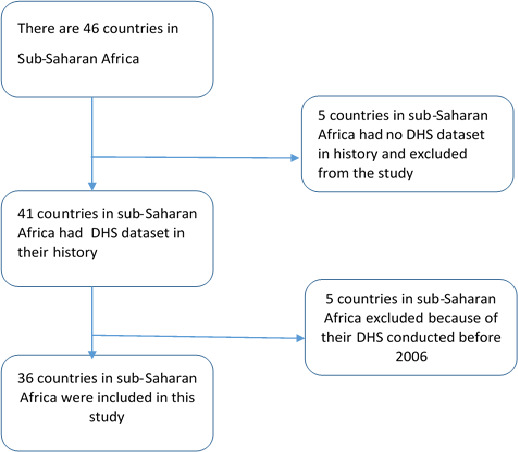
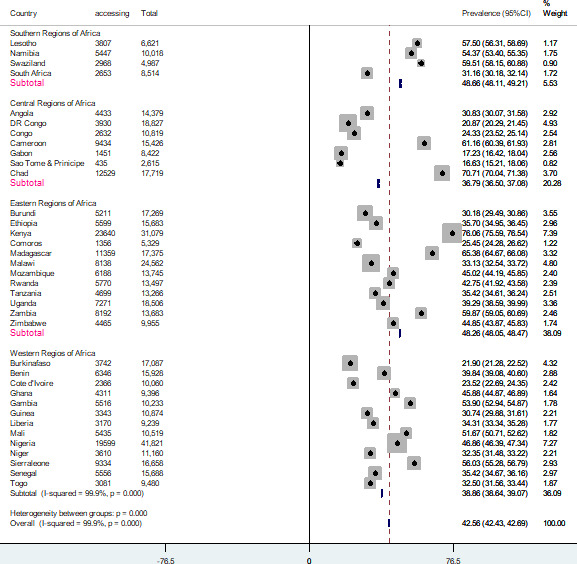
Objective: This study aimed to assess the determinants of accessing healthcare among reproductive-age women in Sub-Saharan Africa (SSA). Design, setting and analysis: Cross-sectional data were sourced from recent Demographic and Health Surveys in 36 SSA countries. We employed mixed-effect analysis to identify the determinants of accessing healthcare in SSA. OR and its 95% CI were reported for determinants associated with accessing healthcare. Outcome: The outcome for this study was whether accessing healthcare was a ‘big problem’ or ‘not a big problem’. Responses to these questions were categorised as a big problem and not a big problem. Participants: A total weighted sample of 500 439 reproductive-age (15–49 years) women from each country’s recent Demographic and Health Surveys from 2006 to 2018 were included in this study. Results: The pooled prevalence of healthcare access among reproductive-age women in SSA was 42.56% (95% CI 42.43% to 42.69%). The results of the mixed-effect analysis revealed that the determinants of accessing healthcare were urban residence (adjusted OR (AOR)=1.25, 95% CI 1.34 to 1.73), ability to read and write (AOR=1.15, 95% CI 1.22 to 1.28), primary education (AOR=1.08, 95% CI 1.07 to 1.12), secondary education and above (AOR=1.12, 95% CI 1.10 to 1.14), husband with primary education (AOR=1.06, 95% CI 1.07 to 1.1.12), husband with secondary education and above (AOR=1.22, 95% CI 1.18 to 1.27), middle wealth index (AOR=1.43, 95% CI 1.40 to 1.47), rich wealth index (AOR=2.19, 95% CI 2.13 to 2.24) and wanted pregnancy (AOR=1.27, 95% CI 1.19 to 1.29). Conclusion: Healthcare access in SSA was found at 42.56%, which is very low even if Sustainable Development Goal 3.8 targeted universal health coverage for everyone so they can obtain the health services they need. The major determinants of healthcare access among reproductive-age women in SSA were urban residence, higher educational level, higher wealth index and wanted pregnancy. The findings of this study suggest and recommend strengthening and improving healthcare access for women who reside in the countryside, women with low level of education and women of low socioeconomic status.
Overview
The claims and statistics of this paper haven’t been checked yet.
Free: it reads the open-access text and checks the first 5 claims that cite a source we can check. Create a free account to check every claim.
Integrity signals
Registry
Cites
Statistics
Figures
Verification
Claims the paper makes
The claims and statistics of this paper haven’t been checked yet.
Free: it reads the open-access text and checks the first 5 claims that cite a source we can check. Create a free account to check every claim.
Claims other papers make about this one
Each is checked against this paper’s own text: does it say what the citing paper says it does?
The source backs part of the claim, not all of it — or backs it for a different population, condition or comparison.
In the citing paper
“this study found that women in wealth quintile 5 faced the least financial barriers to access healthcare compared to their counterparts in other groups.”
From Financial barriers to healthcare access among reproductive-age women in Sierra Leone: evidence from demographic health surveys of 2008, 2013, and 2019 (2026) · cites this paper as [39]
Experimental — accuracy not yet measured
Self-check
Percentages, sums and reported differences re-computed from the paper’s own numbers.
The self-check needs the paper’s full text.
Citations
Cites
The role of telehealth during COVID-19 outbreak: a systematic review based on current evidence
Monaghesh, E., & Hajizadeh, A. (2020) · BMC Public Health · doi:10.1186/s12889-020-09301-4 · Cited by 1,941
What does 'access to health care' mean?
Gulliford, M., Figueroa-Munoz, J., Morgan, M., Hughes, D., Gibson, B., Beech, R., & Hudson, M. (2002) · Journal of Health Services Research & Policy · doi:10.1258/135581902760082517 · Cited by 1,130
Randhawa, G. S., Soltysiak, M. P. M., El Roz, H., de Souza, C. P. E., Hill, K. A., & Kari, L. (2020) · PLOS ONE · doi:10.1371/journal.pone.0232391 · Cited by 1,023
Ladds, E., Rushforth, A., Wieringa, S., Taylor, S., Rayner, C., Husain, L., & Greenhalgh, T. (2020) · BMC Health Services Research · doi:10.1186/s12913-020-06001-y · Cited by 669
Mahmud, R., Rahman, M. M., Rassel, M. A., Monayem, F. B., Sayeed, S. K. J. B., Islam, M. S., & Islam, M. M. (2021) · PLOS ONE · doi:10.1371/journal.pone.0249644 · Cited by 571
Gender equality in science, medicine, and global health: where are we at and why does it matter?
Shannon, G., Jansen, M., Williams, K., Cáceres, C., Motta, A., Odhiambo, A., Eleveld, A., & Mannell, J. (2019) · The Lancet · doi:10.1016/s0140-6736(18)33135-0 · Cited by 534
Gender inequity in health: why it exists and how we can change it
Sen, G., & Östlin, P. (2008) · Global Public Health · doi:10.1080/17441690801900795 · Cited by 455
Steenbeek, R., Schellart, A. J., Mulders, H., Anema, J. R., Kroneman, H., & Besseling, J. (2011) · BMC Public Health · doi:10.1186/1471-2458-11-1 · Cited by 420
Igbinosa, E. O., Odjadjare, E. E., Chigor, V. N., Igbinosa, I. H., Emoghene, A. O., Ekhaise, F. O., Igiehon, N. O., & Idemudia, O. G. (2013) · The Scientific World Journal · doi:10.1155/2013/460215 · Cited by 346
Profit and loss analysis for an intensive care unit (ICU) in Japan: a tool for strategic management
Cao, P., Toyabe, S.-I., Abe, T., & Akazawa, K. (2006) · BMC Health Services Research · doi:10.1186/1472-6963-6-1 · Cited by 320
Research works printed but not linked: 2
- Cho. HHS public access. Physiol Behav 2016; 176: 100– 6. · doi:10.1002/bdr2.1435.maternal
- National Academies of Sciences E, Medicine. Health-care utilization as a proxy in disability determination, 2018. 29782136
Cited by
Laksono, A. D., Wulandari, R. D., Rohmah, N., Rukmini, R., & Tumaji, T. (2023) · BMJ Open · doi:10.1136/bmjopen-2022-064532 · Cited by 81
Terefe, B., Workneh, B. S., Zeleke, G. A., Mekonen, E. G., Zegeye, A. F., Aemro, A., Tekeba, B., Tamir, T. T., Wassie, M., & Ali, M. S. (2025) · PLoS ONE · doi:10.1371/journal.pone.0314309 · Cited by 69
“This matches the findings from previous studies conducted in places like sub–Saharan Africa, Saudi Arabia, the USA, Washington, and Ethiopia [12,36,55,56].”
InfluentialKutz, J.-M., Rausche, P., Rasamoelina, T., Ratefiarisoa, S., Razafindrakoto, R., Klein, P. M., Jaeger, A., Rakotomalala, R. S., Rakotomalala, Z., Randrianasolo, B. S., et al. (2023) · Infectious Diseases of Poverty · doi:10.1186/s40249-023-01139-3 · Cited by 36
“In general, the lack of accessibility to health care services in rural communities [73] makes these data even more alarming because the management of the consequences of long-term HPV infections (namely, CC) can be more complicated in rural than in urban communities [74].”
BackgroundHinata, H., Lwin, K. S., Eguchi, A., Ghaznavi, C., Hashizume, M., & Nomura, S. (2024) · PLOS ONE · doi:10.1371/journal.pone.0289324 · Cited by 28
Invisible illness: The consequences of limited health insurance in Africa
Aderinto, N., & Olatunji, G. D. (2023) · Health Science Reports · doi:10.1002/hsr2.1313 · Cited by 25
“There is a need for increased collaboration and partnership between governments, private sector stakeholders, and civil society organizations to support the expansion and sustainability of health insurance programs in Africa.”
BackgroundResultInfluentialWomen empowerment and health insurance utilisation in Rwanda: a nationwide cross-sectional survey
Kawuki, J., Gatasi, G., & Sserwanja, Q. (2022) · BMC Women s Health · doi:10.1186/s12905-022-01976-8 · Cited by 22
Oke, G. I., & Sibomana, O. (2025) · Public Health Challenges · doi:10.1002/puh2.70040 · Cited by 20
Implementing health economics for pharmacogenomics research translation in Africa
Alimohamed, M. Z., Obeng, G. D., Csanádi, M., Masimirembwa, C. M., & Dandara, C. (2025) · Communications Medicine · doi:10.1038/s43856-025-00955-y · Cited by 16
Mohammed, A., Donkoh, I. E., Aboagye, R. G., Ahinkorah, B. O., & Seidu, A. (2024) · Contraception and Reproductive Medicine · doi:10.1186/s40834-024-00267-x · Cited by 16
“This may be attributed to their limited access to healthcare services, including contraceptive counselling services [54].”
BackgroundEl‐Maradny, Y. A., Nortey, M. A., Hakayuwa, C. M., Anyamene, E. L., Mary, J. J. F., Engmann, S. T., Tsikata, C. Y., Ahmed, D. A., Onyeaghala, C. A., Heniedy, A. M., et al. (2025) · Discover Public Health · doi:10.1186/s12982-025-00631-5 · Cited by 18
“This includes the inappropriate prescription of antibiotics, inadequate patient adherence to prescribed treatment regimens, and the use of counterfeit or substandard drugs, all of which contribute to the development of resistance [25, 26].”
Ewunetu, M., Belay, B. M., Abere, Y., Melkamu, B., Eshetie, Y., & Dires, T. (2025) · Scientific Reports · doi:10.1038/s41598-025-02196-4 · Cited by 15
“In a six sub-Saharan African countries study revealed that only 29% of the patients had good glycemic control 18 .”
Farih, O. A., Mohamed, S. H., Abdillahi, A. M., Abokor, A. H., Ali, M. A., Muse, A. H., & Abdikarim, H. (2026) · Frontiers in Reproductive Health · doi:10.3389/frph.2025.1730560 · Cited by 15
Negash, H. K., Endale, H. T., Aragie, H., Tesfaye, W., Getnet, M., Asefa, T., Gela, Y. Y., & Zegeye, A. F. (2025) · BMC Public Health · doi:10.1186/s12889-025-21690-y · Cited by 14
Osborne, A., James, P. B., & Bangura, C. (2025) · BMC Health Services Research · doi:10.1186/s12913-025-12363-y · Cited by 12
Gupta, N. K., Singh, R., Seas, A., Antwi, P., Kaddumukasa, M. N., Mwesige, A. K., Kaddumukasa, M., Haglund, M. M., Fuller, A. T., Koltai, D. C., et al. (2023) · Epilepsy & Behavior · doi:10.1016/j.yebeh.2023.109402 · Cited by 14
Muhajarine, N., Shakurun, N., Ahmed, M. S., Andre, F., & Chicumbe, S. (2025) · BMJ Global Health · doi:10.1136/bmjgh-2024-018121 · Cited by 12
Embleton, L., Boal, A., Sawarkar, S., Chory, A., Bandanapudi, R. M., Patel, T. R., Levinson, C., Vreeman, R., Wu, W., Díaz, Á., et al. (2024) · International Journal of Adolescent Medicine and Health · doi:10.1515/ijamh-2024-0001 · Cited by 11
Tiruneh, M. G., Fenta, E. T., Endeshaw, D., Eshetu, H. B., Adal, O. T., Tareke, A. A., Kebede, N., Delie, A. M., Bogale, E. K., & Anagaw, T. F. (2024) · BMC Health Services Research · doi:10.1186/s12913-024-10934-z · Cited by 9
“The independent variables were considered because of their clinical and statistical relationship with healthcare access in the previous studies [6, 13, 15, 22, 24–26, 31, 36, 37].”
BackgroundMethodResultInfluentialLalla‐Edward, S. T., & Venter, F. (2024) · Current HIV/AIDS Reports · doi:10.1007/s11904-024-00710-3 · Cited by 12
“…one investigation into determinants of healthcare access for women in 36 sub-Saharan countries, found that factors like distance from healthcare facilities, transport service availability and cost factors amongst others, influenced the extent to which they were able to access healthcare [8].”
Prevalence of metabolic syndrome in ankylosing spondylitis: a multi national meta-analysis study
Nayak, S. S., Agyeman, K. B., Janani, K. V., Jafari, M. T., Lichahi, M. A., Biswas, P., Hashemi, M. M., Shafi, N., Sahli, Y., Amini‐Salehi, E., et al. (2025) · Diabetology & Metabolic Syndrome · doi:10.1186/s13098-025-01720-w · Cited by 9
“Additionally, variability in healthcare infrastructure and accessibility—particularly in the availability of routine metabolic screening—may contribute to differences in detection and diagnosis of MetS across regions [69, 70].”
Hammond, B., Abu, K. A., Anyitey-Kokor, D., Baidoo, P. K., Leat, M., Awoonor‐Williams, R., Konadu‐Yeboah, D., Wilson, A. A., Vormawor, K. K., Bukari, M. I. S., et al. (2024) · Journal of Orthopaedic Reports · doi:10.1016/j.jorep.2024.100528 · Cited by 10
Mugambi, M. L., Pintye, J. C., Heffron, R. A., Barnabas, R. V., & John-Stewart, G. C. (2022) · Current HIV/AIDS Reports · doi:10.1007/s11904-022-00621-1 · Cited by 10
Zeleke, G. A., Mekonen, E. G., Terefe, B., Wassie, M., Aemro, A., Zegeye, A. F., Ali, M. S., Tekeba, B., Tamir, T. T., & Workneh, B. S. (2026) · PLoS ONE · doi:10.1371/journal.pone.0331328 · Cited by 9
“This implies that governments better to expand infrastructure services in a rural areas and encourage male involvement and support for improving healthcare access for reproductive age women [14].”
InfluentialThe Impact of Travel Distance on Cancer Stage at Diagnosis for Cancer: A Systematic Review
Elattabi, C., Lamchabbek, N., Boutayeb, S., Belyamani, L., Huybrechts, I., Faure, É., & Khalis, M. (2025) · International Journal of Environmental Research and Public Health · doi:10.3390/ijerph22040518 · Cited by 7
“…that requires long travel distances for patients living in rural areas, potentially leading to delays in cancer diagnosis [25] Sub-Saharan Africa also presents healthcare infrastructure limitations related to distribution of cancer treatment facilities and poor transportation networks [29].”
Wamalwa, P., Strupat, C., Singh, K., Kuloba, M. N., Kazungu, J., & Allegri, M. D. (2025) · Global Health Research and Policy · doi:10.1186/s41256-025-00461-7 · Cited by 6
“In sub-Saharan Africa (SSA), where a significant portion of the population lacks access to essential services [5–7], expanding social health protection mechanisms, such as health insurance, is crucial for achieving UHC targets.”
Geleta, B. E., & Mulu, A. (2025) · PLOS ONE · doi:10.1371/journal.pone.0311686 · Cited by 5
Owuor, P. M., Odhiambo, S. A., Orero, W. O., Owuor, J., & Onyango, E. O. (2025) · PLOS Global Public Health · doi:10.1371/journal.pgph.0004220 · Cited by 6
“In rural areas, this is exacerbated by sparse health facilities, poor physical spaces with little to no privacy, and costly transport [27,28].”
Veletzky, L., Schlicker, V., Hergeth, J., Stelzl, D., Manego, R. Z., Mombo‐Ngoma, G., Eberhardt, K. A., McCall, M. B. B., Adégnika, A. A., Lell, B., et al. (2024) · PLoS neglected tropical diseases · doi:10.1371/journal.pntd.0012389 · Cited by 4
“[25 ] Future studies should address these differences and look at specific needs of loiasis patients in rural and (semi-)urban populations in more detail.”
BackgroundTsegaw, T. K., Alemu, E. A., Arage, F. G., Tadese, Z. B., Taye, E. A., & Abate, T. G. (2025) · PLoS ONE · doi:10.1371/journal.pone.0336498 · Cited by 4
“[30,31] where limited access to high-quality healthcare services, poor infrastructure, long distances to healthcare facilities, and shortages of healthcare workers may explain the similarities [32,33].”
Belay, D. G., Dunne, J., Lassi, Z. S., Mengistu, T. S., Alemu, M. B., Pereira, G. F., Norman, R., & Tessema, G. A. (2026) · BMJ Public Health · doi:10.1136/bmjph-2024-001391 · Cited by 5
Rice, I., Opondo, C., Nyesigomwe, L., Ekude, D., Magezi, J., Kalanzi, A., Kerac, M., Hayes, J., Robello, M., Halfman, S., et al. (2024) · Maternal and Child Nutrition · doi:10.1111/mcn.13642 · Cited by 4
“…despite a high need for nutrition and health services (NaHS) in SSA, access is low (42.56%), particularly for women, children and people with low socioeconomic status, low levels of education, rural residence and those with disabilities (Tessema et al., 2022; World Health Organization, 2011).”
BackgroundResultInfluentialArntson, L., McLaughlin, K. R., & Smit, E. (2024) · Malaria Journal · doi:10.1186/s12936-024-04951-w · Cited by 4
“…have found associations between child care-and treatment-seeking choices and: household wealth; direct costs (i.e., point of service fees); indirect costs (e.g., transportation); and/or opportunity costs (e.g., the cost of time away from farming and household chores) of healthcare [45–50, 56, 57].”
BackgroundGelaw, K. A., Atalay, Y. A., Azeze, G. A., Yitayew, A. M., & Gebeyehu, N. A. (2024) · International Journal of Gynecology & Obstetrics · doi:10.1002/ijgo.15560 · Cited by 4
Sartorello, A., Benoni, R., Ramirez, L., Mundjane, A., Kalombola, F., Ramos, A., Meque, E., Massaro, P., Jessen, N., Putoto, G., et al. (2024) · Global Heart · doi:10.5334/gh.1339 · Cited by 4
Estimating Demand for Healthcare Facilities in Rural Developing Countries
Lloyd, B. (2023) · Agricultural & Rural Studies · doi:10.59978/ar01030018 · Cited by 4
“These health risk factors are some of the major indicators of health and preventative care in Burkina Faso and also in Sub-Saharan Africa (SSA) (Kana-mori & Pullman, 2013; Lingani et al., 2022; Tessema et al., 2022; World Bank, 2008).”
BackgroundSesay, U., Bangura, C., Abu, B., & Osborne, A. (2025) · BMC Public Health · doi:10.1186/s12889-025-23407-7 · Cited by 4
Oppong, J., Letsa, B. S., Botwey, G., Mbiba, F., Amu, S., & Amu, H. (2025) · Digital Health · doi:10.1177/20552076251390927 · Cited by 4
Wambua, G. N., Corvetto, J. F., Wekesah, F. M., Bunker, A., Mthiyane, N., Muanido, A., Cumbe, V., Omondi, E., Hunt, X., & Iwuji, C. C. (2026) · Climate Risk Management · doi:10.1016/j.crm.2026.100797 · Cited by 4
McClintock, H. F. D. V., Peacock, V., & Asong, R. N. (2024) · Journal of Human Hypertension · doi:10.1038/s41371-024-00945-y · Cited by 3
Dimbuene, Z. T., Ahinkorah, B. O., & Amugsi, D. A. (2025) · Reproductive Health · doi:10.1186/s12978-025-02037-7 · Cited by 3
“There are increasingly studies in SSA pooling data from different countries and estimating the associations between outcomes and independent variables [66, 67].”
Ezeanochie, M. C., & Yamah, O. E. (2023) · International Journal of Gynecology & Obstetrics · doi:10.1002/ijgo.14812 · Cited by 4
Benign breast disease and breast cancer risk in African women: a case–control study
Omoleye, O. J., Freeman, J. Q., Oluwasanu, M. M., Adeniji-Sofoluwe, A. T., Woodard, A. E., Aribisala, B. S., Adejumo, P. O., Ntekim, A., Makumbi, T., Ndom, P., et al. (2024) · Cancer Causes & Control · doi:10.1007/s10552-023-01837-1 · Cited by 3
Knowledge of mother-to-child transmission of HIV among women living with HIV in Malawi
Antabe, R., Sano, Y., & Kangmennaang, J. (2024) · International Journal of STD & AIDS · doi:10.1177/09564624241246297 · Cited by 3
“27 In respect of our fi ndings in Malawi, we believe concerted efforts to increase women ’ s access to MTCT of HIV services in rural Malawi may have worked over time to increase women living with HIV in rural communities to have improved knowledge of MTCT of HIV relative to their urban counterparts.”
BackgroundAbdul-Samed, A.-B., Peprah, E. B., Jahan, Y., Reichenberger, V., Balabanova, D., Mirzoev, T. N., Lawson, H. J. O., Odei, E., Antwi, E., & Agyepong, I. A. (2024) · PLoS ONE · doi:10.1371/journal.pone.0294917 · Cited by 3
Drivers of COVID-19 vaccine uptake among rural populations in Madagascar: a cross-sectional study
Kislaya, I., Andrianarimanana, D. K., Marchese, V., Hosay, L., Rakotonavalona, R., Ramananjanahary, H., Rasamoelina, T., Zafinimampera, A. O., Ratefiarisoa, S., Totofotsy, O., et al. (2024) · BMC Public Health · doi:10.1186/s12889-024-20414-y · Cited by 5
“Consistent with other studies in LMICs and SSA [22], urban residency was associated with higher COVID-19 vaccine uptake due to better access to services [38, 39].”
ResultSurgical outcomes of brain tumors in Africa: challenges, progress, and future perspectives
Aderinto, N., Olatunji, G. D., Kokori, E., Ogieuhi, I. J., Babalola, A. E., Lawal, Z. D., Woldehana, N. A., Isarinade, D. T., Aboje, J. E., Nazar, M. W., et al. (2025) · The Egyptian Journal of Neurosurgery : the official publication of the Egyptian Society of Neurological Surgeons/Egyptian journal of neurosurgery · doi:10.1186/s41984-025-00439-0 · Cited by 2
“Socioeconomic factors such as poor education, poverty, racism, bias, stereotyping, and socioeconomic status have been found to further negatively impact surgical outcomes of brain tumor management in Africa [47, 48].”
Leiomyomatosis peritonealis disseminata presenting as acute abdomen: A rare case report
Gebreslase, M. N., Reta, B. K., Girmay, H. G., Zeray, M. A., & Gebremariam, A. S. (2025) · International Journal of Surgery Case Reports · doi:10.1016/j.ijscr.2025.111711 · Cited by 2
“Additionally, the under-reporting of LPD in sub-Saharan Africa could be due to a real lower incidence that has not yet been discovered, diagnostic difficulties, or restricted access to sophisticated imaging and histopathology [16].”
Muliani, M., Neeraja, B., & Arliani, S. (2025) · Civic Governance and Public Administration · doi:10.64021/cgpa.1.2.70-91.2025 · Cited by 2
“When educational institutions are able to adapt to individual needs, this contributes to a better and more effective learning experience for students (Tessema et al., 2022).”
Toit, S. D., Haag, K., Tomlinson, M., Sherr, L., Marlow, M., Stewart, J., & Skeen, S. (2026) · Social Psychiatry and Psychiatric Epidemiology · doi:10.1007/s00127-026-03048-w · Cited by 2
Women’s Empowerment and Women’s Health in sub Saharan Africa
Taka, A., & Tandrayen‐Ragoobur, V. (2026) · Scientific African · doi:10.1016/j.sciaf.2026.e03408 · Cited by 5
Chigaro, S. (2023) · Texila international journal of public health · doi:10.21522/tijph.2013.11.03.art007 · Cited by 2
Access to Decentralised Public Healthcare Service Delivery in Rural Areas of Lesotho
Dick-Sagoe, C., Ernawaty, E., & Odoom, D. (2024) · Journal of Asian and African Studies · doi:10.1177/00219096241270684 · Cited by 3
“Gulliford et al., as cited in Tessema et al. (2022), argued that discussions on access to health-care services will be incomplete when issues such as affordability, accessibility, availability and acceptability of healthcare services are ignored.”
Byaruhanga, I. K., Coninx, F., & Schäfer, K. (2025) · Audiology Research · doi:10.3390/audiolres15030054 · Cited by 1
“Recent studies show that people from rural areas have less access to health information, mass media, and scientific literature [8–10].”
Simpong, D. L., Cartey, C. E. S., Timpo, O. M., Boachie, J., & Adu, P. (2025) · Discover Medicine · doi:10.1007/s44337-025-00334-5 · Cited by 1
The role of folate and placental DNA methylation in sickle cell disease: A scoping review
Nwofor, Y., Rousham, E. K., & Mastana, S. S. (2025) · Next research. · doi:10.1016/j.nexres.2025.100459 · Cited by 1
Nyamupangedengu, K., Twesigomwe, D., May, A. K., Masimirembwa, C. M., Martinson, N. A., Waja, Z., Letutu, M., & Ramsay, M. (2025) · Clinical and Translational Science · doi:10.1111/cts.70302 · Cited by 1
“This disparity is likely influenced by factors such as healthcare accessibility [41, 42], the burden of comorbidities, urbanization [43, 44], and socioeconomic disparities [45, 46].”
Women’s Healthcare Accessibility and Utilisation Post-COVID-19 in the Niger-Delta Region of Nigeria
John-Abebe, R. O. (2025) · Journal of African Population Studies · doi:10.59147/chjv5c20 · Cited by 1
Yin, Z., Feng, S., & Xu, D. (2026) · Case Studies on Transport Policy · doi:10.1016/j.cstp.2026.101772 · Cited by 1
Tamuzi, J. L., Katoto, P. D., Sakala, D. Y., Wiysonge, C. S., & Nyasulu, P. S. (2026) · Vaccines · doi:10.3390/vaccines14050417 · Cited by 1
“This was in the line with studies that revealed that rich children were at an advantage compared to the poor in terms of vaccination uptake [31,56,57].”
Ebadi, N., & Diabaté, S. (2026) · BMC Health Services Research · doi:10.1186/s12913-026-14751-4 · Cited by 1
“Perceptions of justified violence sums five scenarios where wife-beating is perceived as justified: [1] going out without informing her husband [2], neglecting the children [3], arguing with her husband [59], refusing sex, and [4] burning food.”
Inusah, A., Nwuzoh, M. I., Seidu, A., & Ziblim, S. (2026) · Discover Public Health · doi:10.1186/s12982-026-02117-4 · Cited by 1
“In Africa, inequalities in healthcare access remain pronounced, with earlier estimates suggesting that only about half of the population had access to modern healthcare facilities [13].”
Oreh, A. C., Ajayi, K. V., Okoroiwu, H. U., Obeta, U. M., Maduoma, C., Owusu‐Ofori, S., Postma, M., Nwagha, T. U., & van Hulst, M. (2026) · Frontiers in Health Services · doi:10.3389/frhs.2026.1837188 · Cited by 1
Letsa, B. S., Oppong, J., Ahmed, H., Kubio, C., Adofo, A. O., Amu, H., & Baiden, F. (2026) · Frontiers in Digital Health · doi:10.3389/fdgth.2026.1864794 · Cited by 1
“In Sub-Saharan Africa (SSA), healthcare accessibility remains challenged in most parts of the continent, with only 42.6% of people having access to healthcare, which has increased the mortality and morbidity rates of diseases (4).”
InfluentialKiyingi, J., Mayo‐Wilson, L. J., Nabunya, P., Kizito, S., Nabayinda, J., Nattabi, J., Nsubuga, E., Bahar, O. S., Namuwonge, F., Nakabuye, F., et al. (2024) · AIDS and Behavior · doi:10.1007/s10461-024-04333-y · Cited by 1
“This observation could be attributed to women with higher education having better access to health information, enabling them to utilize available medical services more effectively [43].”
Solagbade, A. J., Omodara, F., Isiek, E., & Ishatah, G. C. (2024) · Razi International Medical Journal · doi:10.56101/rimj.v4i1.138 · Cited by 1
“Generally, in Nigeria, there is an increase access to improved water sources in the urban centres as compared to the rural areas (23).”
BackgroundInfluentialShoemaker, E. S., Sandstrom, E., Prakash, R., Anthony, J., Wehrmeister, F. C., Tennakoon, A., Pelly, L., Dehury, B., Agrawal, A. K., Namasivayam, V., et al. (2026) · BMJ Public Health · doi:10.1136/bmjph-2026-005227 · Cited by 1
Mukomafhedzi, N., Tshitangano, T. G., & Tshivhase, S. (2025) · The Open Public Health Journal · doi:10.2174/0118749445346686241030050617 · Cited by 1
Hormonal contraception for women at risk of HIV infection
Rohwer, C., McCaul, M., Hofmeyr, G. J., & Rohwer, A. C. (2025) · Cochrane Database of Systematic Reviews · doi:10.1002/14651858.cd015701.pub2 · Cited by 2
Kanini, D. N., Nyakundi, C., Okemwa, S., Toweet, S. K., Akoth, C., Mbuthia, G. W., Adjagba, A., & Oguta, J. O. (2025) · Research Square · doi:10.21203/rs.3.rs-7652528/v1 · Cited by 1
Sesay, U. (2026) · Reproductive Health · doi:10.1186/s12978-026-02321-0
“Consistent with a multi-country study conducted across 36 SSA countries [39], this study found that women in wealth quintile 5 faced the least financial barriers to access healthcare compared to their counterparts in other groups.”
Women empowerment and Health insurance utilisation in Rwanda: a nationwide cross-sectional surveyPreprint
Kawuki, J., Gatasi, G., & Sserwanja, Q. (2022) · Research Square · doi:10.21203/rs.3.rs-1560276/v1
Women empowerment and Health insurance utilisation in Rwanda: a nationwide cross-sectional surveyPreprint
Kawuki, J., Gatasi, G., & Sserwanja, Q. (2022) · Research Square · doi:10.21203/rs.3.rs-1560276/v2
Immunotherapy in HIV-associated Kaposi Sarcoma: Challenges and Prospects
Tawana, T., du Plessis, J., & Omar, A. (2024) · Current Cancer Therapy Reviews · doi:10.2174/0115733947296874240524074647
Enhancing Vision Care through Psychological Assessment in Sub-Saharan Africa: An Overview
(2024) · Journal of Advocacy, Research and Education/Journal of advocacy, research and education · doi:10.13187/jare.2024.1.7
Phogole, B., & Yessoufou, K. (2024) · Environmental Research Communications · doi:10.1088/2515-7620/ad6d3a
Older Persons and HIV Prevention
Mhaka‐Mutepfa, M., Mogomotsi, R. P., & Mpofu, E. (2024) · Springer eBooks · doi:10.1007/978-981-92-1288-0_91
Khan, M., & Kritzinger, A. (2025) · African vision and eye health · doi:10.4102/aveh.v84i1.994
“29 Our study also underscores significant implications for resource-limited settings where access to surgical interventions may be constrained.”
Dank, M., Zhang, S. X., Abeyta, S., Moton, L. N., Stoklosa, H., Cuadrado, N., Dahlen, A., & Farabee, D. J. (2025) · PLoS ONE · doi:10.1371/journal.pone.0317733
“The surveys also included the Short Form-12 [7], along with measures of trafficking experiences [8,9], healthcare access [10], healthcare spending [11], and stages of change (adapted from the URICA [7].”
Milanzi, E. B., & Orero, L. O. (2025) · Oxford University Press eBooks · doi:10.1093/9780198945215.003.0038
Psychosocial Impact of Head and Neck Cancer
Azu, O. O., Edagha, I. A., Olojede, S. O., Maimela, C., Lyantagaye, S., Mabonga, L., & Dlamini, Z. (2025) · Oxford University Press eBooks · doi:10.1093/med/9780197794197.003.0017
Social Determinants of Health and Effects on Cardiovascular Disease
Amireh, K., & Makaryus, A. N. (2025) · International Journal of Angiology · doi:10.1055/a-2645-8778 · Cited by 1
Yedemie, Y. Y. (2025) · Journal of Child & Adolescent Trauma · doi:10.1007/s40653-025-00763-5 · Cited by 1
“For example, Tessema et al. (2022) reported that 55.05% of teachers in public universities experienced high levels of emotional exhaustion, 67.8% exhibited depersonalization, and 65.1% felt a diminished sense of personal achievement.”
InfluentialMboungou, T. K., Isabella, O. A., Akem, T. E., & Wongnaah, F. G. (2025) · Research Square · doi:10.21203/rs.3.rs-7676025/v1
Mboungou, T. K., Isabella, O. A., Akem, T. E., & Wongnaah, F. G. (2025) · Research Square · doi:10.21203/rs.3.rs-7676025/v2
Kutz, J.-M., Rausche, P., Rasamoelina, T., Ratefiarisoa, S., Razafindrakoto, R., Klein, P. M., Jaeger, A., Rakotomalala, R. S., Rakotomalala, Z., Randrianasolo, B. S., et al. (2024) · Figshare · doi:10.6084/m9.figshare.26619499
Kutz, J.-M., Rausche, P., Rasamoelina, T., Ratefiarisoa, S., Razafindrakoto, R., Klein, P. M., Jaeger, A., Rakotomalala, R. S., Rakotomalala, Z., Randrianasolo, B. S., et al. (2024) · Figshare · doi:10.6084/m9.figshare.26619502
Kutz, J.-M., Rausche, P., Rasamoelina, T., Ratefiarisoa, S., Razafindrakoto, R., Klein, P. M., Jaeger, A., Rakotomalala, R. S., Rakotomalala, Z., Randrianasolo, B. S., et al. (2024) · Figshare · doi:10.6084/m9.figshare.26619505
WATKINS, K. L., Nwajiaku, K., & Kovach, H. (2024) · Econstor (Econstor) · Cited by 9
Nieminen, A. (2025) · Theseus (Ammattikorkeakoulujen)
Krohn, J., Bountogo, M., Ouèrmi, L., Sie, A. B., Bärnighausen, T., & Harling, G. (2026) · SSM - Mental Health · doi:10.1016/j.ssmmh.2026.100586
Amenah, M. A., Anaseba, D., Awalime, D. K., Mirzoev, T. N., Agyepong, I. A., & Akazili, J. (2026) · BMC Health Services Research · doi:10.1186/s12913-026-14032-0
“Economic indicators were also considered, including the unemployment rate (%), which serves as a proxy for financial stability and access to healthcare [39–42].”
Jahun, I., Udod, S. A., Roskoshnyi, I., Kurawa, M. S., & Mohammed, A. M. M. (2024) · British journal of healthcare and medical research · doi:10.14738/bjhmr.113.17102
Aw-Ali, Y. D., Abdikarim, H., Abdilleh, M. M., Muse, A. H., & Nadarajah, S. (2026) · BMJ Open · doi:10.1136/bmjopen-2025-108492
Abdi, M. S., Bashir, S., Salad, H. A., Abdullahi, Y. B., Ahmed, N., & Abdi, Y. H. (2026) · Discover Social Science and Health · doi:10.1007/s44155-026-00393-8
Abdikarim, H., Aw-Ali, Y. D., Omer, A. A., & Muse, A. H. (2026) · Frontiers in Global Women s Health · doi:10.3389/fgwh.2026.1644372 · Cited by 1
“Consistent with findings from studies in Ethiopia (48) and Sub-Saharan Africa (10).”
InfluentialPoverty and access to healthcare in rural Nigeria: A control function approach
Yaqoob, A. M., E., G. F., & K., K. S. (2026) · Journal of Development and Agricultural Economics · doi:10.5897/jdae2025.1452
A retrospective review of nephrectomies at a tertiary hospital in northern Ghana
Muntaka, A.-J., Yenli, E., & Der, E. M. (2026) · African Urology · doi:10.36303/auj.0321
Fakhfakh, M., Murenzi, G., Niyonsenga, S. P., Hagenimana, J. D., Felix, K., Condo, J., Absolomon, G., Ruzindana, K. B., Hagenimana, M., Kabukye, J. K., et al. (2026) · Research Square · doi:10.21203/rs.3.rs-9418957/v1
Abdulle, A. A., Omar, M. A., Hassan, F. A., Shidane, H. M., Moallim, F. H., & Osman, W. A. (2026) · Global Pediatrics · doi:10.1016/j.gpeds.2026.100340
Ahishakiye, E., Nakirijja, J., & Ahimbisibwe, S. (2026) · Discover Artificial Intelligence · doi:10.1007/s44163-026-01358-1
“Models developed in high-income populations may not generalize well due to differences in genetics, nutrition, healthcare access, and demographic structure [15].”
Metadata
- Authors
- Tessema, Z. T., Worku, M. G., Tesema, G. A., Alamneh, T. S., Teshale, A. B., Yeshaw, Y., Alem, A. Z., Ayalew, H. G., & Liyew, A. M.
- Affiliations
- University of Gondar (ET)
- Wollo University (ET)
- Corresponding author
- Tessema, Zemenu Tadesse
- ORCID
- Venue
- BMJ Open
- Publisher
- BMJ
- Published
- 2022-01
- Volume
- 12
- Issue
- 1
- Pages
- e054397
- ISSN
- 2044-6055 (ISSN-L)
- PMC
- PMC8804632
- OpenAlex
- W4210525134
- Cited by
- 129
- References
- 45
- Citations by year
- 2026: 53 · 2025: 35 · 2024: 29 · 2023: 8 · 2022: 4
- FWCI
- 13.92
- Type
- journal article
- Language
- en
- Open access
- gold
- doi.org
- Licence
- Locations
- BMJ Open (publishedVersion, cc-by-nc)
- PubMed Central (publishedVersion, cc-by-nc)
- PubMed (publishedVersion)
- DOAJ (DOAJ: Directory of Open Access Journals) (submittedVersion, cc-by-sa)
- Topics
- Health Sciences › Medicine › Public Health, Environmental and Occupational Health › Healthcare Systems and Reforms
- Health Sciences › Medicine › Pediatrics, Perinatology and Child Health › Global Maternal and Child Health
- Social Sciences › Health › Public Health and Social Inequalities
- Keywords
- health care access, women of reproductive age, sub-Saharan Africa, urban residence, literacy, household wealth, spousal education, pregnancy intention, barriers to care, maternal health, Demographic and Health Surveys, wealth index, urban-rural differences, fertility intentions, maternal morbidity, maternal health service utilization, maternal health policy
- MeSH terms
- Adolescent, Adult, Cross-Sectional Studies, Female, Health Services Accessibility, Health Surveys, Humans, Middle Aged, Pregnancy, Prevalence, Africa South of the Sahara, Young Adult
About these checks
Registry, retraction, Cites and statistics results are computed, not judged, with one exception: a printed reference that no index lists is read once by a model before it counts as a citation error. Claims are extracted by a model and kept only when their quote appears verbatim in the text; each cited source is then checked, with a model’s help, for whether it says what the claim relies on. Those verdicts can be wrong — read the claim’s quote and the cited source before relying on one.
Statistics and arithmetic are recomputed, not judged.
Confidence bands are shown only for fields calibrated on our annotated test set. None is calibrated yet, so no band is shown.
What counts as a claim ›How we measure confidence ›How we check this ›
Are you an author, or do you see a problem with this page? Request a review
Data sources
Bibliographic data: Semantic Scholar, OpenAlex, Crossref.
Contains information from the Semantic Scholar Academic Graph Datasets, made available under the ODC Attribution License (ODC-BY 1.0).
Semantic Scholar’s data is described in: Kinney, R., et al. (2023). The Semantic Scholar Open Data Platform. arXiv:2301.10140.
