

What are the treatment remission, response and extent of improvement rates after up to four trials of antidepressant therapies in real-world depressed patients? A reanalysis of the STAR*D study’s patient-level data with fidelity to the original research protocol
Open accessThe DOI matches its Crossref record; 37 of the 37 references it cites were found in a registry or an index.
Abstract
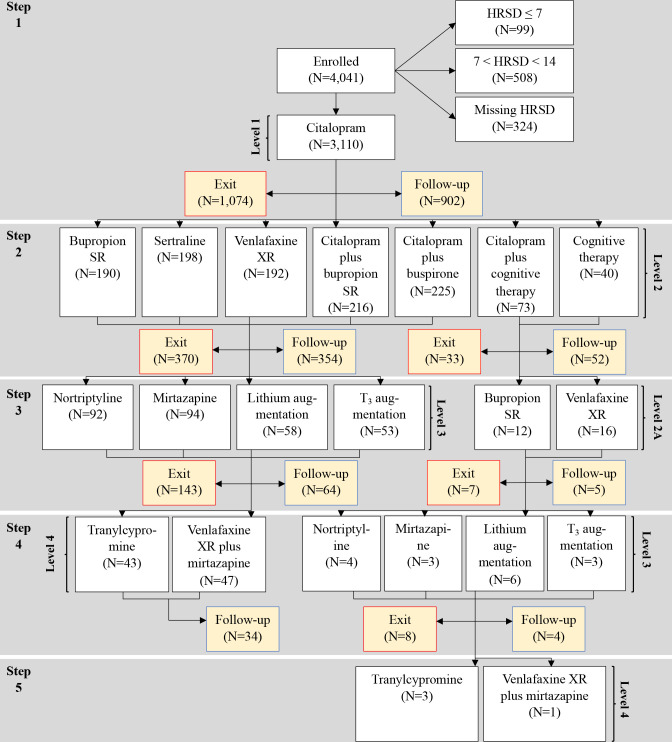
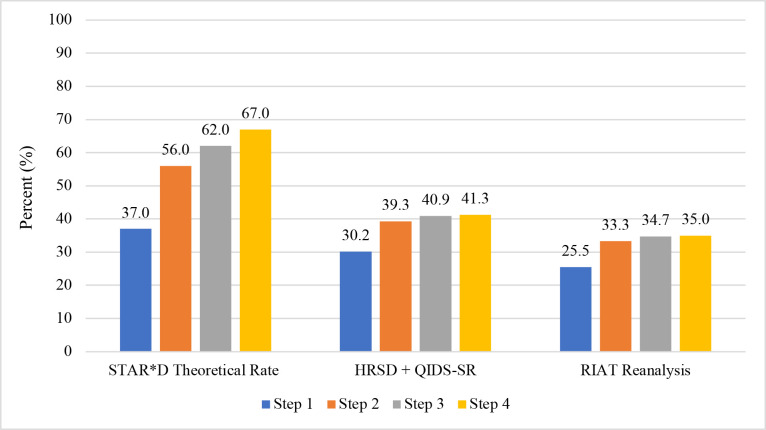
Objective: Reanalyse the patient-level data set of the Sequenced Treatment Alternatives to Relieve Depression (STAR*D) study with fidelity to the original research protocol and related publications. Design: The study was open label and semirandomised examining the effectiveness of up to four optimised and increasingly aggressive, antidepressant therapies in depressed adults. Patients who failed to gain adequate relief from their level 1 trial on the SSRI citalopram could receive up to three additional treatment trials in levels 2–4. Setting: 41 North American psychiatry and primary care treatment centres. Participants: 4041 adults screened positive for major depressive disorder. In contrast to most clinical trials, STAR*D enrolled patients seeking care (vs recruited) and included patients with a wide range of common comorbid medical and psychiatric conditions to enhance the generalisability of findings to real-world clinical practice. Interventions: STAR*D evaluated the relative effectiveness of 13 antidepressants therapies in treatment levels 2–4 for depressed patients who failed to gain adequate benefit from their level 1 medication trial. Main outcome measures: According to the STAR*D protocol, the primary outcome was remission, defined as a score <8 on the blinded Hamilton Rating Scale for Depression (HRSD). Response was a secondary outcome defined as ≥50% reduction in HRSD scores. STAR*D’s protocol specifically excluded all non-blinded clinic-administered assessments from use as research outcome measures. Results: STAR*D investigators did not use the protocol-stipulated HRSD to report cumulative remission and response rates in their summary article and instead used a non-blinded clinic-administered assessment. This inflated their report of outcomes, as did their inclusion of 99 patients who scored as remitted on the HRSD at study outset as well as 125 who scored as remitted when initiating their next-level treatment. These patients should have been excluded from data analysis. In contrast to the STAR*D-reported 67% cumulative remission rate after up to four antidepressant treatment trials, the rate was 35.0% when using the protocol-stipulated HRSD and inclusion in data analysis criteria. Conclusion: STAR*D’s cumulative remission rate was approximately half of that reported.
Overview
The claims and statistics of this paper haven’t been checked yet.
Free: it reads the open-access text and checks the first 5 claims that cite a source we can check. Create a free account to check every claim.
Integrity signals
Registry
Cites
Statistics
Figures
Verification
Claims the paper makes
The claims and statistics of this paper haven’t been checked yet.
Free: it reads the open-access text and checks the first 5 claims that cite a source we can check. Create a free account to check every claim.
Self-check
Percentages, sums and reported differences re-computed from the paper’s own numbers.
The self-check needs the paper’s full text.
Citations
Cites
Rush, A. J., Trivedi, M. H., Wisniewski, S. R., Nierenberg, A. A., Stewart, J. W., Warden, D., Niederehe, G., Thase, M. E., Lavori, P. W., Lebowitz, B. D., et al. (2006) · American Journal of Psychiatry · doi:10.1176/ajp.2006.163.11.1905 · Cited by 5,643
Trivedi, M. H., Rush, A. J., Wisniewski, S. R., Nierenberg, A. A., Warden, D., Ritz, L., Norquist, G., Howland, R. H., Lebowitz, B., McGrath, P. J., et al. (2006) · American Journal of Psychiatry · doi:10.1176/appi.ajp.163.1.28 · Cited by 3,879
Rush, A. J., Trivedi, M. H., Ibrahim, H. M., Carmody, T. J., Arnow, B., Klein, D. N., Markowitz, J. C., Ninan, P. T., Kornstein, S., Manber, R., et al. (2003) · Biological Psychiatry · doi:10.1016/s0006-3223(02)01866-8 · Cited by 3,829 · cited 1×
“Objective Reanalyse the patient-level data set of the Sequenced Treatment Alternatives to Relieve Depression (STAR*D) study with fidelity to the original research protocol and related publications.”
MethodSequenced treatment alternatives to relieve depression (STAR*D): Rationale and design
Rush, A. J., Fava, M., Wisniewski, S. R., Lavori, P. W., Trivedi, M. H., Sackeim, H. A., Thase, M. E., Nierenberg, A. A., Quitkin, F. M., Kashner, T. M., et al. (2004) · Controlled Clinical Trials · doi:10.1016/s0197-2456(03)00112-0 · Cited by 1,076
Bupropion-SR, Sertraline, or Venlafaxine-XR after Failure of SSRIs for Depression
Rush, A. J., Trivedi, M. H., Wisniewski, S. R., Stewart, J. W., Nierenberg, A. A., Thase, M. E., Ritz, L., Biggs, M. M., Warden, D., Luther, J. F., et al. (2006) · New England Journal of Medicine · doi:10.1056/nejmoa052963 · Cited by 1,033
Medication Augmentation after the Failure of SSRIs for Depression
Trivedi, M. H., Fava, M., Wisniewski, S. R., Thase, M. E., Quitkin, F., Warden, D., Ritz, L., Nierenberg, A. A., Lebowitz, B. D., Biggs, M. M., et al. (2006) · New England Journal of Medicine · doi:10.1056/nejmoa052964 · Cited by 1,002
Rush, A. J. (2006) · American Journal of Psychiatry · doi:10.1176/appi.ajp.163.11.1905 · Cited by 870
Nierenberg, A. A., Fava, M., Trivedi, M. H., Wisniewski, S. R., Thase, M. E., McGrath, P. J., Alpert, J. E., Warden, D., Luther, J. F., Niederehe, G., et al. (2006) · American Journal of Psychiatry · doi:10.1176/ajp.2006.163.9.1519 · Cited by 559
Fava, M., Rush, A. J., Trivedi, M. H., Nierenberg, A. A., Thase, M. E., Sackeim, H. A., Quitkin, F. M., Wisniewski, S., Lavori, P. W., Rosenbaum, J. F., et al. (2003) · Psychiatric Clinics of North America · doi:10.1016/s0193-953x(02)00107-7 · Cited by 519
Rush, A. J., Bernstein, I. H., Trivedi, M. H., Carmody, T. J., Wisniewski, S., Mundt, J. C., Shores-Wilson, K., Biggs, M. M., Woo, A., Nierenberg, A. A., et al. (2006) · Biological Psychiatry · doi:10.1016/j.biopsych.2005.08.022 · Cited by 385
Research works printed but not linked: 1
- 18. Pigott HE, Dubin W, Kirsch I, et al. Call to action: RIAT Reanalysis of the sequenced treatment alternatives to relieve depression (STAR*D) study. BMJ March 6, 2019. Available: https://www.bmj.com/content/346/bmj.f2865/rr-10
Cited by
Glutamatergic Modulators for Major Depression from Theory to Clinical Use
McIntyre, R. S., & Jain, R. (2024) · CNS Drugs · doi:10.1007/s40263-024-01114-y · Cited by 69
“In patients who underwent multiple rounds of therapy, the probability of response or remission decreased with subsequent treatments, with only 21% response (22/106) and 10% remission (11/106) by the fourth therapy option [18].”
BackgroundAdvancing precision psychiatry and targeted treatments: Insights from immunopsychiatry
Miller, A. H., Berk, M., Bloch, G., Briquet-Laugier, V., Brouillon, C., Cuthbert, B. N., Dantzer, R., Davis, M. C., Picker, L. D., Drevets, W. C., et al. (2025) · Brain Behavior and Immunity · doi:10.1016/j.bbi.2025.01.002 · Cited by 61
Pardossi, S., Fagiolini, A., & Cuomo, A. (2024) · International Journal of Molecular Sciences · doi:10.3390/ijms252313098 · Cited by 51
“However, when adhering strictly to protocol-specified criteria, the remission rate was approximately 35% [11].”
Spaced Transcranial Direct Current Stimulation for Major Depression
Couture, M., Jodoin, V. D., Bousseau, E., Sarshoghi, A., Nitsche, M. A., Blumberger, D. M., Bolduc, C., Weissman, C. R., Appelbaum, L. G., Daskalakis, Z. J., et al. (2025) · American Journal of Psychiatry · doi:10.1176/appi.ajp.20240083 · Cited by 24
Constantino, J. L., Godschalk, M., van Dalfsen, J. H., Veraart, J. K. E., Spijker, J., van Exel, E. R., Schoevers, R. A., & Kamphuis, J. (2025) · Psychiatry Research · doi:10.1016/j.psychres.2025.116355 · Cited by 23
“Pigott et al. (2023).”
Malhi, G. S., Bell, E., Stavdal, A., Wu, C., Naylor, A., & Kumari, V. (2026) · The Lancet · doi:10.1016/s0140-6736(26)00201-1 · Cited by 23
Odermatt, J., Sarlon, J., Schaefer, N., Ulrich, S., Ridder, M., Schneider, E., Lang, U. E., Liwinski, T., & Brühl, A. B. (2025) · Neuroscience Applied · doi:10.1016/j.nsa.2025.105520 · Cited by 19
“However, the efficacy of antidepressants may be lower than previously assumed, as evidenced by a cumulative remission rate of 35.0 % following up to four antidepressant treatment trials (Pigott et al., 2023).”
InfluentialBottaccioli, A. G., Bologna, M., & Bottaccioli, F. (2025) · International Journal of Molecular Sciences · doi:10.3390/ijms26062759 · Cited by 19
“This explains the very low efficacy and efficiency rate of current pharmacological treatments [20].”
Barnhofer, T., Dunn, B. D., Strauss, C., Ruths, F. A., Barrett, B. M., Ryan, M. T., Ladwa, A., Stafford, F., Fichera, R., Baber, H., et al. (2025) · The Lancet Psychiatry · doi:10.1016/s2215-0366(25)00105-1 · Cited by 21
Ramli, F. F., Singh, N., Emir, U. E., Villa, L. M., Waters, S., Harmer, C. J., Cowen, P. J., & Godlewska, B. R. (2024) · Translational Psychiatry · doi:10.1038/s41398-024-02899-8 · Cited by 18
Psychedelic Therapy: A Primer for Primary Care Clinicians—Psilocybin
Tabaac, B. J., Shinozuka, K., Arenas, A., Beutler, B. D., Cherian, K. N., Evans, V. D., Fasano, C., & Muir, O. S. (2024) · American Journal of Therapeutics · doi:10.1097/mjt.0000000000001724 · Cited by 17
Molero, P., Ibáñez, Á., de Diego-Adeliño, J., Ramos‐Quiroga, J. A., Dorado, M. G., Rengel, P. M. L., & Sáiz, P. A. (2025) · Advances in Therapy · doi:10.1007/s12325-025-03149-z · Cited by 15
Public psychology and holistic approaches to prevention and treatment of depression
Patterson, E. H., Miller, C., & Hannapel, M. (2025) · Frontiers in Psychiatry · doi:10.3389/fpsyt.2025.1600094 · Cited by 14
McIntyre, R. S., Stahl, S. M., Shim, S. R., Pompili, M., Goldberg, J. F., Correll, C. U., Kwan, A. T. H., Dri, C. E., Xu, H., Vinberg, M., et al. (2026) · JAMA Psychiatry · doi:10.1001/jamapsychiatry.2026.0658 · Cited by 12
Petrozzi, B. P., Spangemacher, M., Deicher, A., Drews, L., Defert, J., Silva-Colmenero, A. Y., Wein, P., Riedinger, E., Gründer, G., Gilles, M., et al. (2024) · Frontiers in Psychiatry · doi:10.3389/fpsyt.2024.1415505 · Cited by 12
Treatment-resistant depression and intranasal esketamine: Spanish consensus on theoretical aspects
Mora, F., Ramos‐Quiroga, J. A., Baca‐García, E., Crespo, J. M., Gutiérrez-Rojas, L., Madrazo, A., Pérez-Costillas, L., Sáiz, P. A., Tordera, V., & Vieta, E. (2025) · Frontiers in Psychiatry · doi:10.3389/fpsyt.2025.1623659 · Cited by 11
Durgam, S., Earley, W. R., Kozauer, S. G., Chen, C., Lakkis, H. D., McIntyre, R. S., & Stahl, S. M. (2025) · The Journal of Clinical Psychiatry · doi:10.4088/jcp.25m15848 · Cited by 11
Zhang, J., Sun, R., Cai, Y., Peng, B., Yang, X., & Gao, K. (2024) · Journal of Clinical Medicine · doi:10.3390/jcm13041172 · Cited by 10
Constantino, J. L., van Dalfsen, J. H., Massetti, S., Kamphuis, J., & Schoevers, R. A. (2025) · Progress in Neuro-Psychopharmacology and Biological Psychiatry · doi:10.1016/j.pnpbp.2025.111251 · Cited by 10
The right treatment for each patient: unlocking the potential of personalized psychiatry
(2023) · Nature Mental Health · doi:10.1038/s44220-023-00131-y · Cited by 10
Hongler, K., Lounici, A., Maurer, E., Lanz, U., Szathmári, O., Reuter, Y., Nussbaum, S., Steinborn, I., Haedrich, A., Mölling, M. A., et al. (2024) · NeuroImmunoModulation · doi:10.1159/000542979 · Cited by 9
“A recent reanalysis of the STAR * D trial indicates a cumulative remission rate of 35.0% after up to four antidepressant treatment trials [4].”
InfluentialGenotype-Guided Antidepressant Prescribing for Patients With Depression: A Randomized Clinical Trial
Blake, K., Hines, L. J., Liu, M., Myers, R. A., Baye, J. F., Cavanaugh, K. L., Duong, B. Q., Hulvershorn, L. A., Mathews, C. A., Murrough, J. W., et al. (2026) · JAMA Network Open · doi:10.1001/jamanetworkopen.2026.10609 · Cited by 8
Drug development in psychopharmacology: Insights from evolutionary psychiatry
Troisi, A. (2024) · Neuroscience & Biobehavioral Reviews · doi:10.1016/j.neubiorev.2024.105818 · Cited by 8
Rajkumar, R. P. (2024) · Brain Sciences · doi:10.3390/brainsci14060543 · Cited by 9
“It is estimated that at least 30–40% of patients will not respond to initial treatment with antidepressants, and the likelihood of response to subsequent treatments is of a similar order [5–8].”
BackgroundDepression and Anxiety Disorders
Karamustafalıoğlu, O., & Yumrukçal, H. (2025) · Wiley eBooks · doi:10.1002/9781119870203.mpg003.pub2 · Cited by 8
Hajcak, G., Santopetro, N. J., & Okuda, K. (2024) · Progress in Neuro-Psychopharmacology and Biological Psychiatry · doi:10.1016/j.pnpbp.2024.111233 · Cited by 6
Razidlo, J. A., Cataldo, N., & Wenthur, C. J. (2025) · ACS Pharmacology & Translational Science · doi:10.1021/acsptsci.5c00462 · Cited by 6
Tonini, E., Crouse, J. J., Shin, M., Carpenter, J. S., Mitchell, B. L., Byrne, E. M., Lind, P. A., Gordon, S. D., Parker, R., Hockey, S. J., et al. (2026) · The British Journal of Psychiatry · doi:10.1192/bjp.2026.10798 · Cited by 6
Muzyk, A. J., Syed, F. Z., Zhou, H., Cong, J., Tabuteau, H., & Zhao, Y. (2024) · Journal of Medical Economics · doi:10.1080/13696998.2024.2382641 · Cited by 6
Kim, T. T., Xu, C., & Amsterdam, J. (2025) · Journal of Affective Disorders · doi:10.1016/j.jad.2025.02.003 · Cited by 6
Self-citationSabbah, S. G., Li, S., Wong, S., Le, G. H., Badulescu, S., Hawco, C. S., Rosenblat, J. D., & McIntyre, R. S. (2025) · Journal of Affective Disorders · doi:10.1016/j.jad.2025.120335 · Cited by 5
The STAR*D Data Remain Strong: Reply to Pigott et al.
Rush, A. J., Trivedi, M. H., Fava, M., Thase, M., & Wisniewski, S. R. (2023) · American Journal of Psychiatry · doi:10.1176/appi.ajp.20230869 · Cited by 5
Borikar, S. P., Bokade, B. A., Jain, S. P., Zore, P. S., Tapre, D. N., Paliwal, N. P., & Shelke, S. P. (2025) · Next research. · doi:10.1016/j.nexres.2025.101210 · Cited by 4
Teo, M. T. L. (2024) · Journal of Medical Ethics · doi:10.1136/jme-2023-109644 · Cited by 4
Squassina, A., Paribello, P., Pinna, M., Contu, M., Pisanu, C., Congiu, D., Severino, G., Meloni, A., Carta, A., Conversano, C., et al. (2025) · Progress in Neuro-Psychopharmacology and Biological Psychiatry · doi:10.1016/j.pnpbp.2025.111292 · Cited by 4
Venkata, P. K. T., Bolla, D., Donthu, R. K., Pathak, A., & Gudimetla, A. (2024) · Middle East Current Psychiatry · doi:10.1186/s43045-024-00420-x · Cited by 4
“However, recent reanalysis by Pigott H. E. et al. [21] suggests a lower rate of 35%.”
ResultConsidering New and Emerging Treatment Strategies for Depression: Beyond STAR*D and the Monoamines
McInnes, L. A., & Marton, T. F. (2024) · Current Psychiatry Research and Reviews · doi:10.2174/0126660822284575240130053259 · Cited by 4
Antidepressant Use and Withdrawal
Cohen, D., Strassle, C. L., & Badre, N. (2025) · Psychiatric Clinics of North America · doi:10.1016/j.psc.2025.10.002 · Cited by 3
SMARTs with treatment preference: Pragmatic SMART design and methods motivated by STAR*D
Medley, S., Wank, M., Tamura, R., Braun, T., & Kidwell, K. (2025) · Contemporary Clinical Trials · doi:10.1016/j.cct.2025.108162 · Cited by 3
Blocking the Reflection: Milestones and Hurdles for Digital Twins in Mental Health
Verhees, F. G., Wiest, I. C., Kather, J. N., Kambeitz, J., & Mikoláš, P. (2026) · Pharmacopsychiatry · doi:10.1055/a-2816-2869 · Cited by 3
Spulber, S. D., Ceccatelli, S., & Forsell, Y. (2025) · Journal of Affective Disorders · doi:10.1016/j.jad.2025.01.097 · Cited by 3
Gupta, M., & Petti, T. A. (2025) · CNS Spectrums · doi:10.1017/s1092852925000161 · Cited by 2
“73”
Reduced prevalence of periodontitis in antidepressant users: Findings from a large‐scale US sample
Martínez, M., Fraguas, D., Figuero, E., & D’Aiuto, F. (2025) · Journal of Periodontology · doi:10.1002/jper.70014 · Cited by 2
Stimpson, K. H., Feyder, M. T., Maron‐Katz, A., Kiris, E., Ford, T. J., Carreon, D. M., DeSouza, D. D., Cole, E. J., Meng, N. F., Williams, N., et al. (2025) · Transcranial magnetic stimulation . · doi:10.1016/j.transm.2025.100203 · Cited by 2
Kamishikiryo, T., Itai, E., Mitsuyama, Y., Masuda, Y., yamamoto, O., Tamura, T., Jitsuiki, H., Mantani, A., yokota, N., & Okada, G. (2025) · Translational Psychiatry · doi:10.1038/s41398-025-03796-4 · Cited by 2
Predictors of the Effectiveness of Psychedelics in Treating Depression—A Scoping Review
Chmiel, J., & Rybakowski, F. (2026) · International Journal of Molecular Sciences · doi:10.3390/ijms27052202 · Cited by 2
“Standard antidepressant treatments (e.g., SSRIs) often have delayed efficacy and side effects—only about 35% of patients achieve full remission on initial therapy [2], and up to one-third develop treatment-resistant depression (TRD) after failing multiple adequate trials [3,4].”
Barnhofer, T., Niemi, M., Michalak, J., Velana, M., Williams, J. M. G., Chiesa, A., Eisendrath, S. J., Delucchi, K., Segal, Z. V., Cladder-Micus, M. B., et al. (2026) · Psychotherapy and Psychosomatics · doi:10.1159/000552831 · Cited by 2
Boskovic, D. H., Huang, D., Severtson, S. G., Marci, C. D., Awasthi, S., Ardic, F. C., Eisenberg, D. F., & Kapadia, S. (2026) · Neurology and Therapy · doi:10.1007/s40120-026-01027-6 · Cited by 2
Kennedy, K. P., Heldt, J. P., & Oslin, D. W. (2025) · Journal of Clinical Psychopharmacology · doi:10.1097/jcp.0000000000002025 · Cited by 3
Xu, C., Kim, T. T., Kirsch, I., Plöderl, M., Amsterdam, J. D., & Pigott, H. E. (2025) · medRxiv · doi:10.1101/2025.02.10.25321991 · Cited by 2
Self-citationAddae, E., Abotsi, W. K. M., Boakye‐Gyasi, E., & Arthur, M. (2024) · Scientific African · doi:10.1016/j.sciaf.2024.e02267 · Cited by 1
Die Geschichte des medizinischen Modells der Depression – mit (fast) all ihren Vor- und Nachteilen
Padberg, T., & Plöderl, M. (2025) · Kontext · doi:10.13109/kont.2025.56.2.125 · Cited by 1
Antidepressant Therapy and Depression Disorder
Trajanovska, A. S., Pereska, Z., & Mitic, Z. (2025) · PRILOZI · doi:10.2478/prilozi-2025-0016 · Cited by 1
Adler, U. C., Adler, M. S., Nogueira, R. D. S., Filho, M. N. B. C., Campos, E. D. M., Magalhães, P. A. D. F., Júnior, A. B. V., Sabino, S. M. D. V., Frota, A. F., Soares, M. V. R., et al. (2025) · Brain Behavior and Immunity Integrative · doi:10.1016/j.bbii.2025.100133 · Cited by 2
Kim, T. T., & Xu, C. (2025) · Cognitive Therapy and Research · doi:10.1007/s10608-025-10665-3 · Cited by 1
Self-citationHan, B., Xu, N., Ma, C., Ju, G., Xi, X., Qian, C., Guo, N., Liu, X., Zhu, X., Li, C., et al. (2025) · Pharmaceutics · doi:10.3390/pharmaceutics17121516 · Cited by 1
“However, one study reported that the remission rate of the initial treatment was only 25–30%, and the cumulative remission rate after multiple treatment steps was approximately 40–50%, highlighting the necessity of individualized dosing for adolescent patients with depression [4–6].”
Bot, M., Ligthart, S. A., Burger, H., Mil, N. H. G., Arnold, I. A., van Belkum, S. M., Bet, P. M., Birkenhäger, T. K., Göttgens, W., Hugtenburg, J. G., et al. (2025) · Journal of Affective Disorders · doi:10.1016/j.jad.2025.121011 · Cited by 1
Beidas, Z., Ragnhildstveit, A., Blackman, A., Anderson, T., Fewster, E. C., Syed, O. A., Sobolenko, V., Kanca, I. K., Jaglinska, M., Son, T., et al. (2026) · BJPsych Open · doi:10.1192/bjo.2025.10968 · Cited by 1
Rodríguez‐Ramírez, A. M., Benitez-Valenzuela, M., Alcántara-Garcés, M. T., Sanabrais‐Jiménez, M. A., Zaragoza-Hoyos, J. U., Valle-Ramírez, H. D., Hernandez-Romero, V., ROJAS-MARTINEZ, A., García-Ulloa, A. C., & Camarena, B. (2026) · Brain Sciences · doi:10.3390/brainsci16030268 · Cited by 1
“In a recent reanalysis of the STAR*D trial [16,41], 41% of patients with MDD treated with a first-line SSRI responded to treatment; however, 70% did not achieve remission.”
Segal, S. K., Weber, C. L., Gruschkus, S. K., Kaplan, A. M., Miller, S., & Ivany, C. (2026) · Psychiatric Services · doi:10.1176/appi.ps.20250258 · Cited by 1
Durgam, S., Earley, W. R., Kozauer, S. G., Chen, C., Lakkis, H. D., & Cutler, A. J. (2026) · European Neuropsychopharmacology · doi:10.1016/j.euroneuro.2026.112786 · Cited by 1
Malhotra, K., Fangue‐Nelon, J., & Singh, G. (2026) · Hemodialysis International · doi:10.1111/hdi.70102 · Cited by 1
“STAR*D emphasized the need for antidepressant trials of adequate dose and duration ( ≥ 8 weeks), highlighted that the probability of remission drops after two adequate trials, and recommended early referral to psychiatry or addition of cognitive therapy for patients with inadequate response [50].”
Krupa, A. J., Kania, M. J., Podkowa, K., Krawczyk, E., Plencler, I., & Siwek, M. (2026) · Frontiers in Pharmacology · doi:10.3389/fphar.2026.1770558 · Cited by 1
“However, more recent reanalyses of these data, conducted in strict accordance with the study’s original protocol, indicate that the actual cumulative remission rate was considerably lower—approximately half of the initially reported value (Pigott et al., 2023).”
Systems-based psychiatry: insights from psychedelic research on mechanisms of healing
Shannon, S., & Weil, A. (2026) · Frontiers in Psychiatry · doi:10.3389/fpsyt.2026.1789902 · Cited by 1
“Psychiatrists frequently encounter treatment resistance, partial response, relapse, and chronic symptom persistence despite adherence to evidence-based pharmacologic approaches (9 – 11).”
Cognitive flexibility and depression remission: A narrative review
Roberge, C., Borgmann, L., & Batail, J.-M. V. (2026) · L Encéphale · doi:10.1016/j.encep.2026.03.022 · Cited by 1
The role of psilocybin in depressive disorders
Najib, J. S. (2024) · Current Medical Research and Opinion · doi:10.1080/03007995.2024.2396536 · Cited by 1
“…were approximately 48% and 65%, respectively, and only 25% and 41%, respectively, as noted in the Sequenced Treatment Alternatives to Relieve Depression (STAR � D) trial level 1 patients, and diminished in treatment levels 2 to 4, which were associated with more treatment resistant patients 51 .”
Engineering the Mind: Actionable Technical Requirements for Innovation in Clinical NeurosciencePreprint
Jamalabadi, H., Koppe, G., Nozari, E., & Hahn, T. (2023) · PsyArXiv (OSF Preprints) · doi:10.31234/osf.io/mh26v · Cited by 1
Xu, C., Kim, T. T., Plöderl, M., Kennedy, K. P., Kirsch, I., Amsterdam, J. D., & Pigott, H. E. (2025) · medRxiv · doi:10.1101/2025.10.27.25338365 · Cited by 1
Self-citationA RIGOROUS DOUBLE-BLIND RANDOMIZED-CONTROLLED TRIAL ON MICRODOSING PSILOCYBIN OVER EIGHT WEEKS
Petranker, R. (2025) · MacSphere (McMaster University) · doi:10.71548/11826 · Cited by 1
Biomarkers from bench to bedside: Realizing a future of EEG-based stratified psychiatry
Voetterl, H. (2024) · Research Publications (Maastricht University) · doi:10.26481/dis.20240625hv
Lanocha, K. I., Bermudes, R. A., & Janicak, P. G. (2024) · American Psychiatric Association Publishing eBooks · doi:10.1176/appi.books.9798894550671.lg11
Antidepressant Medication and Psychotherapy: Why It Matters
Chiesa, M. (2024) · British Journal of Psychotherapy · doi:10.1111/bjp.12938
Successful Grant Implementation: How to Avoid the Pitfalls
Penckofer, S. M., & Martyn-Nemeth, P. A. (2025) · Nursing Science Quarterly · doi:10.1177/08943184241311900
“Recently, a large depression study (STAR*D) did a reanalysis of patient level data with fidelity to the original protocol and found less favorable outcomes for treatment remission response than those previously published (Pigott et al., 2023).”
Xiao, W., Woodham, R. D., Antoniades, M., Srinivasan, D., Fan, Y., Erus, G., García, J., Arnott, S. R., Chen, T., Choi, K. S., et al. (2026) · Biological Psychiatry Global Open Science · doi:10.1016/j.bpsgos.2026.100750
Skowron, C. S., Miłkowska, U., Piech, G. M., Lis, I., & Kurzyna, P. F. (2025) · Biuletyn Głównej Biblioteki Lekarskiej · doi:10.2478/bgbl-2025-0011
What Happened to the Antidepressants? Response to Marques and Singh
Dalhuisen, I., Arns, M., Spijker, J., Tendolkar, I., & van Eijndhoven, P. (2025) · American Journal of Psychiatry · doi:10.1176/appi.ajp.20240863r
Modulation of Religious and Spiritual Neural Networks for Improving Mental HealthPreprint
Tyler, W. J. (2025) · Preprints.org · doi:10.20944/preprints202511.0227.v1
Thatisetti Venkata, P. K., Bolla, D., Donthu, R. K., Pathak, A., & Gudimetla, A. (2024) · Figshare · doi:10.6084/m9.figshare.26694966
Intérêt thérapeutique des psychédéliques classiques : DMT & psilocybine
Germon, T. (2024) · HAL
Medication Treatment of Mental Disorders
Hatcher, S., Frye, L., & Herk, K. V. (2025) · Springer eBooks · doi:10.1007/978-3-032-00663-9_4
O’Shields, J., Soni, H., & Mowbray, O. P. (2025) · Brain Behavior and Immunity · doi:10.1016/j.bbi.2025.106243
“Despite the pressing need for effective treatment options, many individuals do not experience symptom relief with the available front-line treatments (Gaynes et al., 2009; Pigott et al., 2023).”
Pharmacopsychology of Prescribing: An Introduction to the PoP Model
Tan, V. T. Y., & van Oeveren, M. (2026) · Mental Illness · doi:10.1155/mij/3939110 · Cited by 1
Without Informed Consent: The Global Export of a Failed Paradigm of Care.
Whitaker, R. (2025) · PubMed Central
Dahrendorff, J. (2025) · Digital Commons - University of South Florida (University of South Florida)
Alsaad, H. A., Alfaraj, W. A., Alrababi, M. M., Sonbaa, A. M., Albakr, D. M., Abensaad, A. S., & Alomar, F. A. (2026) · Saudi Medical Journal · doi:10.15537/1658-3175.1044
“Therapeutic response to antidepressants is not uniform, and approximately 30%–40% of patients fail to achieve adequate improvement with their initial medication, often necessitating a switch to an alternative agent [10, 11].”
Predictive value of EEG/ECG biomarkers for treatment response in depression
Provaznikova, B., de Bardeci, M., Altamiranda, E., Ip, C.-T., Monn, A., Weber, S., Jungwirth, J., Rohde, J., Prinz, S., Kronenberg, G., et al. (2026) · Clinical Neurophysiology · doi:10.1016/j.clinph.2026.2112444
Ambalavanar, N., Tang, B., Galinato, D. J. A., Spoelma, M. J., Newby, J. M., & Whitton, A. E. (2026) · Neuroscience & Biobehavioral Reviews · doi:10.1016/j.neubiorev.2026.106667
Bu, F., Qin, L., Zi-yang, L. O. U., Xie, Y., Zhang, S. Z., Xiong, L., & Wen, Y. (2026) · Drug Design Development and Therapy · doi:10.2147/dddt.s609327
Chapter 2. Transcranial Magnetic Stimulation Therapy for Major Depression
Lanocha, K. I., Bermudes, R. A., & Janicak, P. G. (2024) · American Psychiatric Association Publishing eBooks · doi:10.1176/appi.books.9798894550671.lg02
Karttunen, S., Leppäaho, M., Haapea, M., Hakko, H. H., & Jääskeläinen, E. (2026) · Journal of Ect · doi:10.1097/yct.0000000000001283
Szuleta, U., Zawada, W., Kaczmarek, K., Leszczyńska, Z. J., Romaniuk, V., Benecka, A., Pietrończyk, J., Benecka, A., Wieczorek, Z., Tartas, I., et al. (2026) · Journal of Education Health and Sport · doi:10.12775/jehs.2026.93.72419
Ortiz, B. O. M., Medinilla-Orozco, S., Dueñas, L. L., Ramírez-Emiliano, J., & Lemus, V. H. B. (2026) · Research Square · doi:10.21203/rs.3.rs-9657245/v1
Turning Toward Mental Health - The Hinge Between Lived Experience and Developing the Keys for Growth
Johsnon, J. (2026) · PhilPapers (PhilPapers Foundation) · doi:10.5281/zenodo.21192751
Glozier, N., Morris, R. W., Stratton, E., Somogyi, A. A., Sarma, S., Rodgers, A., Gálvez, V., Nikolin, S., Mitchell, P. B., Mills, N. T., et al. (2026) · The British Journal of Psychiatry · doi:10.1192/bjp.2026.10692
Tang, B., Jin, L., Hu, H., Lv, Q., Yi, Z., Ji, Y., & Yi, Q. (2026) · PLOS mental health. · doi:10.1371/journal.pmen.0000544
Earley, W. R., Durgam, S., Kozauer, S. G., Chen, C., Migliore, R., & Correll, C. U. (2026) · CNS Drugs · doi:10.1007/s40263-026-01314-8
“Inadequate response to ADT is common, with approximately 40% of patients achieving response after initial ADT in the real-world Sequenced Treatment Alternatives to Relieve Depression (STAR*D) study [12].”
Massetti, S., Smith-Apeldoorn, S. Y., Veraart, J. K. E., Kamphuis, J., Muller, K. A., Tzavara, E. T., Meerlo, P., Schoevers, R. A., & van Dalfsen, J. H. (2026) · Journal of Affective Disorders · doi:10.1016/j.jad.2026.122265
Birkholm, M. W., Søltoft‐Jensen, A., Marker, S., Vinberg, M., Riise, J., Koldby, K., Gronemann, F. H., Osler, M., & Petersen, J. (2026) · Journal of Affective Disorders Reports · doi:10.1016/j.jadr.2026.101144
Metadata
- Authors
- Pigott, H. E., Kim, T., Xu, C., Kirsch, I., & Amsterdam, J.
- Affiliations
- None, Wakefield, Rhode Island, USA
- University of Pennsylvania (US)
- Harvard University (US)
- Corresponding author
- Pigott, H Edmund
- Venue
- BMJ Open
- Publisher
- BMJ
- Published
- 2023-07
- Volume
- 13
- Issue
- 7
- Pages
- e063095
- ISSN
- 2044-6055 (ISSN-L)
- PMC
- PMC10373710
- OpenAlex
- W4385257581
- Cited by
- 93
- References
- 35
- Citations by year
- 2026: 35 · 2025: 37 · 2024: 19 · 2023: 2
- FWCI
- 14.64
- Type
- journal article
- Language
- en
- Open access
- gold
- doi.org
- Licence
- Locations
- BMJ Open (publishedVersion, cc-by-nc)
- PubMed Central (publishedVersion, cc-by-nc)
- PubMed (publishedVersion)
- DOAJ (DOAJ: Directory of Open Access Journals) (submittedVersion, cc-by-sa)
- HighWire Press Open Archive (submittedVersion)
- Funders
- The RIAT Support Center (N/A)
- Topics
- Health Sciences › Medicine › Pharmacology (medical) › Treatment of Major Depression
- Health Sciences › Medicine › Psychiatry and Mental health › Mental Health Treatment and Access
- Social Sciences › Psychology › Experimental and Cognitive Psychology › Anxiety, Depression, Psychometrics, Treatment, Cognitive Processes
- Keywords
- major depressive disorder, antidepressant treatment, treatment remission, treatment response, Hamilton Depression Rating Scale, protocol fidelity, selective reporting, citalopram, antidepressant trials, real-world clinical practice
- MeSH terms
- Adult, Antidepressive Agents, Major Depressive Disorder, Depressive Disorder, Major, Humans, Psychotherapy, Citalopram, Treatment Outcome
About these checks
Registry, retraction, Cites and statistics results are computed, not judged, with one exception: a printed reference that no index lists is read once by a model before it counts as a citation error. Claims are extracted by a model and kept only when their quote appears verbatim in the text; each cited source is then checked, with a model’s help, for whether it says what the claim relies on. Those verdicts can be wrong — read the claim’s quote and the cited source before relying on one.
Statistics and arithmetic are recomputed, not judged.
Confidence bands are shown only for fields calibrated on our annotated test set. None is calibrated yet, so no band is shown.
What counts as a claim ›How we measure confidence ›How we check this ›
Are you an author, or do you see a problem with this page? Request a review
Data sources
Bibliographic data: Semantic Scholar, OpenAlex, Crossref.
Contains information from the Semantic Scholar Academic Graph Datasets, made available under the ODC Attribution License (ODC-BY 1.0).
Semantic Scholar’s data is described in: Kinney, R., et al. (2023). The Semantic Scholar Open Data Platform. arXiv:2301.10140.
