

Association of 15 common dietary factors with tinnitus: a systematic review and meta-analysis of observational studies
Open accessThe DOI matches its Crossref record; 55 of the 55 references it cites were found in a registry or an index; none of the 40 sources its claims cite is checked for support yet.
Abstract
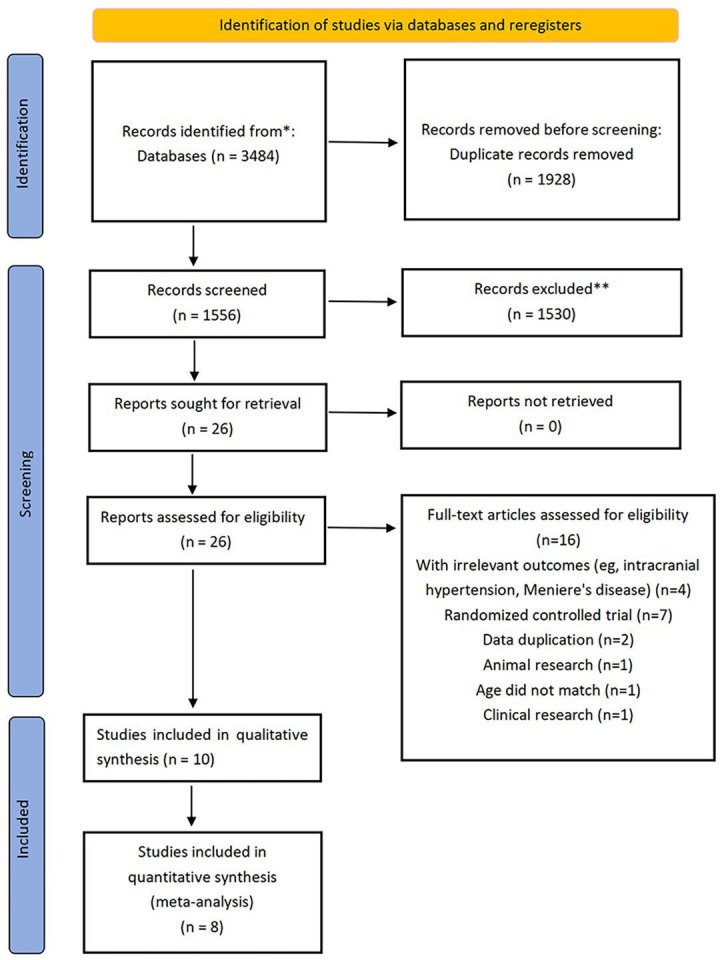
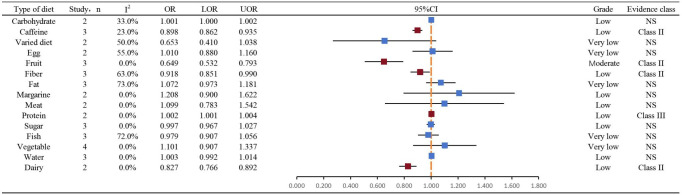
Objective: A systematic analysis was conducted to investigate the association between tinnitus incidence and daily dietary patterns. Design: We conducted a systematic review and meta-analysis of observational studies. Data sources: The PubMed, Embase, Web of Science and Cochrane Library databases were searched from their inception to 25 May 2024. Eligibility criteria for selecting studies: We included observational studies from peer-reviewed English-language journals that examined tinnitus presence or severity in adults aged 18 years or older, including associated prevalence estimates. Data extraction and synthesis: Data extraction was independently conducted by two evaluators, who assessed research bias using the Agency for Newcastle-Ottawa Scale and applied evidence classification criteria for aggregate grade strength assessment. This study adhered to the guidelines of the Preferred Reporting Project (Preferred Reporting Items for Systematic Reviews and Meta-Analyses) and Meta-Analysis of Epidemiological Observational Studies, as well as the PROSPERO Registry protocols. A mixed-effect model combined maximum adjusted estimates, with heterogeneity measured using the I 2 statistic. Sensitivity analysis validated the robustness of the analysis, and publication bias was assessed qualitatively and quantitatively. Results: A total of 10 retrospective studies were identified and included in this analysis, with the last eight studies incorporated into the meta-analysis. Fifteen dietary factors were examined. Fruit intake, dietary fibre, caffeine and dairy product consumption were negatively correlated with tinnitus incidence (OR=0.649 (95% CI 0.532, 0.793), p<0.0001), (OR=0.918 (95% CI 0.851, 0.990), p=0.03), (OR=0.898 (95% CI 0.862, 0.935), p<0.00001), (OR=0.827 (95% CI 0.766, 0.892), p<0.00001), respectively. A sensitivity analysis confirmed the robustness of the findings. Conclusions: This systematic review and meta-analysis suggest a link between particular dietary elements and a lower incidence of tinnitus. PROSPERO registration number: CRD42023493856.
Overview
CoChat Summary
TL;DR
This systematic review and meta-analysis of observational studies found that higher intake of fruit, dietary fibre, caffeine, and dairy products was associated with lower tinnitus prevalence, while no significant associations were found for the other examined dietary factors. Evidence quality was limited mainly by cross-sectional designs and few included studies.
Key findings
- In 8 meta-analyzed studies with 301,533 participants, fruit (OR=0.649, 95% CI 0.532–0.793, p<0.0001), dietary fibre (OR=0.918, 95% CI 0.851–0.990, p=0.03), caffeine (OR=0.898, 95% CI 0.862–0.935; p<0.00001 in abstract, p<0.003 in results), and dairy products (OR=0.827, 95% CI 0.766–0.892, p<0.00001) were negatively associated with tinnitus incidence.
- Reported risk reductions were 35.1% (20.7–46.8) for fruit, 9.2% (1–14.9) for dietary fibre, 17.3% (10.8–23.4) for dairy, and 10.2% (6.5–13.8) for caffeine.
- No associations were found for other dietary factors; examples include sugar (OR=0.997, 95% CI 0.967–1.027), varied diet (OR=0.653, 95% CI 0.410–1.038), and protein (OR=1.002, 95% CI 1.001–1.004, p=0.009), though the text states protein did not increase tinnitus occurrence.
- Sensitivity analyses supported fruit and fibre; caffeine sensitivity showed contradictory results attributed to McCormack 2014. Publication bias was detected for caffeine, fruit, vegetables, diet, sugar, and fat, but trim-and-fill analysis yielded consistent results.
Methods
- Systematic review and meta-analysis of observational studies; searched PubMed, Embase, Web of Science, and Cochrane Library from inception to 25 May 2024; registered as PROSPERO CRD42023493856 and reported per PRISMA/MOOSE.
- Included cohort, case-control, or cross-sectional studies in adults aged 18 years or older examining dietary intake and tinnitus; excluded therapeutic interventions, randomised controlled trials, animal/cell studies, case reports, and incomplete/invalid sources. Two reviewers extracted data and assessed bias with a modified Newcastle-Ottawa Scale.
- Mixed-effect models pooled maximally adjusted ORs; heterogeneity was measured with I²; sensitivity analysis used one-by-one exclusion; publication bias was assessed with funnel plots, Egger’s test, and trim-and-fill. The meta-analysis included 8 studies, 301,533 participants, and 15 dietary factors.
Limitations
- Stated: the relatively small number of included articles may have prevented some conventionally accepted beneficial dietary factors, such as vegetables and eggs, from showing significant differences; limited original data precluded a dose–effect meta-analysis.
- Stated: the majority of included articles were cross-sectional, so further cohort studies or Mendelian randomisation studies are needed to investigate causal relationships.
- Stated: the overall quality of evidence was low, and findings should be interpreted cautiously. Also evident from the text: publication bias was detected for several factors, caffeine sensitivity analysis was contradictory, and dietary fibre showed substantial heterogeneity (I²=63%).
Model-written summary. Check it against the paper before relying on it.
Integrity signals
Registry
Cites
Statistics
Figures
Verification
Claims the paper makes
0 Valid · 0 Not valid · 32 Not checked · 54 Own results and interpretations
A result the paper reports from its own data — it cites no other source for it, so there is none to check. The quote shows it is in the paper.
In the paper
“These reductions were 35.1% (20.7%–46.8%) for fruit intake, 9.2% (1%–14.9%) for dietary fibre, 17.3% (10.8%–23.4%) for dairy products, and 10.2% (6.5%–13.8%) for caffeine intake.”
§ Association of 15 common dietary factors with tinnitus: a systematic review and meta-analysis of observational studies > Discussion
plainstates an association- Asserted: passes — The authors put it forward as true.
- Checkable: passes — It can be checked against evidence.
- Load-bearing: passes — The paper’s conclusions depend on it.
- Based: passes — The paper gives a reason why it holds.
- Rests on 5 assumptions not shown here.
A result the paper reports from its own data — it cites no other source for it, so there is none to check. The quote shows it is in the paper.
In the paper
“Our combined analysis revealed no correlation between vegetable consumption and tinnitus.”
§ Association of 15 common dietary factors with tinnitus: a systematic review and meta-analysis of observational studies > Discussion
plain- Asserted: passes — The authors put it forward as true.
- Checkable: passes — It can be checked against evidence.
- Load-bearing: passes — The paper’s conclusions depend on it.
- Based: passes — The paper gives a reason why it holds.
- Rests on 5 assumptions not shown here.
A result the paper reports from its own data — it cites no other source for it, so there is none to check. The quote shows it is in the paper.
In the paper
“No associations were found between other dietary factors and tinnitus.”
- Also stated in: § Sensitivity analysis · plain
“No significant associations between other dietary intakes and tinnitus were found.”
§ Association of 15 common dietary factors with tinnitus: a systematic review and meta-analysis of observational studies > Results > A meta-analysis of dietary factors
plain- Asserted: passes — The authors put it forward as true.
- Checkable: passes — It can be checked against evidence.
- Load-bearing: passes — The paper’s conclusions depend on it.
- Based: passes — The paper gives a reason why it holds.
- Also stated in: § Sensitivity analysis · plain
A result the paper reports from its own data — it cites no other source for it, so there is none to check. The quote shows it is in the paper.
In the paper
“Our findings indicate that protein does not increase the occurrence of tinnitus (OR=1.002 (95% CI 1.001 to 1.004), p=0.009).”
§ Association of 15 common dietary factors with tinnitus: a systematic review and meta-analysis of observational studies > Discussion
hedged- Asserted: passes — The authors put it forward as true.
- Checkable: passes — It can be checked against evidence.
- Load-bearing: passes — The paper’s conclusions depend on it.
- Based: passes — The paper gives a reason why it holds.
- Rests on 5 assumptions not shown here.
27 more claims
Create a free account to see all 86 claims and to verify the 39 references still open.
- Probably not a substantial claim. 44
- It may state two separate claims as one. 27
Self-check
Percentages, sums and reported differences re-computed from the paper’s own numbers.
Each contradiction between two passages listed here was confirmed by an independent check.
Rated major: it would touch a result — a value a result rests on, reported and recomputed p-values on opposite sides of the significance level, two passages that conflict with no sign which is right, or a cited work retracted before this paper was published.
In the paper
§ Association of 15 common dietary factors with tinnitus: a systematic review and meta-analysis of observational studies > Results > A meta-analysis of dietary factors
“No associations were found between other dietary factors and tinnitus.”
§ Association of 15 common dietary factors with tinnitus: a systematic review and meta-analysis of observational studies > Discussion
“Our findings indicate that protein does not increase the occurrence of tinnitus (OR=1.002 (95% CI 1.001 to 1.004), p=0.009).”
Rated major: it would touch a result — a value a result rests on, reported and recomputed p-values on opposite sides of the significance level, two passages that conflict with no sign which is right, or a cited work retracted before this paper was published.
In the paper
§ Association of 15 common dietary factors with tinnitus: a systematic review and meta-analysis of observational studies > Abstract > Results
“A sensitivity analysis confirmed the robustness of the findings.”
§ Association of 15 common dietary factors with tinnitus: a systematic review and meta-analysis of observational studies > Results > Sensitivity analysis
“Contradictory outcomes were noted in the aggregated results for caffeine (refer to online supplemental efigure 16), with the analysis attributing these contradictions to data within the same article (Abby McCormack, 2014).”
Rated minor: it would not touch a result — a value no result rests on, a p-value that stays on the same side of the significance level, or a conflict that is clerical, resolved elsewhere in the paper, or outside its own findings.
In the paper
§ Association of 15 common dietary factors with tinnitus: a systematic review and meta-analysis of observational studies > Results > A meta-analysis of dietary factors
“fruits (3/9, online supplemental efigure 5)”
§ Association of 15 common dietary factors with tinnitus: a systematic review and meta-analysis of observational studies > Results > A meta-analysis of dietary factors
“The meta-analysis included eight studies with a total of 301 533 people”
Rated minor: it would not touch a result — a value no result rests on, a p-value that stays on the same side of the significance level, or a conflict that is clerical, resolved elsewhere in the paper, or outside its own findings.
In the paper
§ Association of 15 common dietary factors with tinnitus: a systematic review and meta-analysis of observational studies > Discussion
“We found only one study that investigated the impact of chocolate and flavonoids on the onset of tinnitus,23”
§ Association of 15 common dietary factors with tinnitus: a systematic review and meta-analysis of observational studies > Results
“Among these, two articles delved into individual dietary factors, namely, chocolate23 and flavonoids,22”
Citations
Cites
The PRISMA 2020 statement: An updated guideline for reporting systematic reviews
Page, M. J., McKenzie, J. E., Bossuyt, P. M., Boutron, I., Hoffmann, T. C., Mulrow, C. D., Shamseer, L., Tetzlaff, J. M., Akl, E. A., Brennan, S. E., et al. (2021) · BMJ · doi:10.1136/bmj.n71 · Cited by 108,283
Meta-analysis of Observational Studies in Epidemiology<SUBTITLE>A Proposal for Reporting</SUBTITLE>
Stroup, D. F. (2000) · JAMA · doi:10.1001/jama.283.15.2008 · Cited by 20,623
The Health Benefits of Dietary Fibre
Barber, T. M., Kabisch, S., Pfeiffer, A. F. H., & Weickert, M. O. (2020) · Nutrients · doi:10.3390/nu12103209 · Cited by 892 · cited 1×
“33 Studies indicate that hyperinsulinaemia resulting from low insulin sensitivity could disturb the inner ear environment, potentially increasing tinnitus risk.”
Tinnitus: causes and clinical management
Langguth, B., Kreuzer, P. M., Kleinjung, T., & De Ridder, D. (2013) · The Lancet Neurology · doi:10.1016/s1474-4422(13)70160-1 · Cited by 799
Global Prevalence and Incidence of Tinnitus: A Systematic Review and Meta-analysis
Jarach, C. M., Lugo, A., Scala, M., van den Brandt, P. A., Cederroth, C. R., Odone, A., Garavello, W., Schlee, W., Langguth, B., & Gallus, S. (2022) · JAMA Neurology · doi:10.1001/jamaneurol.2022.2189 · Cited by 548
The neuroprotective effects of cocoa flavanol and its influence on cognitive performance
Nehlig, A. (2013) · British Journal of Clinical Pharmacology · doi:10.1111/j.1365-2125.2012.04378.x · Cited by 248
Diet, cardiovascular disease, and mortality in 80 countries
Mente, A., Dehghan, M., Rangarajan, S., O’Donnell, M., Hu, W., Dagenais, G., Wielgosz, A., A. Lear, S., Wei, L., Diaz, R., et al. (2023) · European Heart Journal · doi:10.1093/eurheartj/ehad269 · Cited by 158
Sound therapy (using amplification devices and/or sound generators) for tinnitus.
Sereda, M., Xia, J., El Refaie, A., Hall, D. A., & Hoare, D. J. (2018) · Cochrane Database of Systematic Reviews · doi:10.1002/14651858.cd013094.pub2 · Cited by 135
S3 Guideline: Chronic Tinnitus
Mazurek, B., Hesse, G., Sattel, H. C., Kratzsch, V., Lahmann, C., & Dobel, C. (2022) · HNO · doi:10.1007/s00106-022-01207-4 · Cited by 78
The Current State of Tinnitus Diagnosis and Treatment: a Multidisciplinary Expert Perspective
Kleinjung, T., Peter, N., Schecklmann, M., & Langguth, B. (2024) · Journal of the Association for Research in Otolaryngology · doi:10.1007/s10162-024-00960-3 · Cited by 74
Relationship Between Diet, Tinnitus, and Hearing Difficulties
Dawes, P., Cruickshanks, K. J., Marsden, A., Moore, D. R., & Munro, K. J. (2020) · Ear & Hearing · doi:10.1097/aud.0000000000000765 · Cited by 71
Tsai, S., Wu, H., Chen, P., Chen, Y., Yu, M., Wang, T.-F., Wu, S.-Y., Tzeng, S., & Kuo, Y. (2018) · Brain Research · doi:10.1016/j.brainres.2018.07.017 · Cited by 69
Assessment and management of tinnitus: summary of NICE guidance
Lewis, S., Chowdhury, E., Stockdale, D., & Kennedy, V. (2020) · BMJ · doi:10.1136/bmj.m976 · Cited by 69
Mozaffari, H., Hosseini, Z., Lafrenière, J., & Conklin, A. (2021) · Obesity Reviews · doi:10.1111/obr.13174 · Cited by 69
Spankovich, C., Hood, L. J., Silver, H. J., Lambert, W., Flood, V. M., & Mitchell, P. (2011) · Journal of the American Academy of Audiology · doi:10.3766/jaaa.22.1.6 · Cited by 52
Sardone, R., Lampignano, L., Guerra, V., Zupo, R., Donghia, R., Castellana, F., Battista, P., Bortone, I., Procino, F., Castellana, M., et al. (2020) · Nutrients · doi:10.3390/nu12020426 · Cited by 50
High Protein Diet Induces Oxidative Stress in Rat Cerebral Cortex and Hypothalamus
Żebrowska, E., Maciejczyk, M., Żendzian-Piotrowska, M., Zalewska, A., & Chabowski, A. (2019) · International Journal of Molecular Sciences · doi:10.3390/ijms20071547 · Cited by 48
Min, J., Cao, Z., Cui, L., Li, F., Lu, Z., Hou, Y., Yang, H., Wang, X., & Xu, C. (2023) · Psychiatry Research · doi:10.1016/j.psychres.2023.115307 · Cited by 45
Self-citationA prospective study of caffeine intake and risk of incident tinnitus
Glicksman, J. T., Curhan, S. G., & Curhan, G. C. (2014) · The American Journal of Medicine · doi:10.1016/j.amjmed.2014.02.033 · Cited by 42
Medeiros, N. D. S., Marder, R. K., Wohlenberg, M. F., Funchal, C., & Dani, C. (2015) · Biochemistry Research International · doi:10.1155/2015/294659 · Cited by 37
Spankovich, C., Bishop, C., Johnson, M. F., Elkins, A., Su, D., Lobarinas, E., & Le Prell, C. G. (2017) · International Journal of Audiology · doi:10.1080/14992027.2017.1331049 · Cited by 34
Association of dietary factors with presence and severity of tinnitus in a middle-aged UK population
McCormack, A., Edmondson-Jones, M., Mellor, D., Dawes, P., Munro, K. J., Moore, D. R., & Fortnum, H. (2014) · PLoS ONE · doi:10.1371/journal.pone.0114711 · Cited by 34
Effects of dietary interventions on cardiovascular outcomes: a network meta-analysis
Doundoulakis, I., Farmakis, I. T., Theodoridis, X., Konstantelos, A., Christoglou, M., Kotzakioulafi, E., Chrysoula, L., Siargkas, A., Karligkiotis, A., Kyprianou, G., et al. (2023) · Nutrition Reviews · doi:10.1093/nutrit/nuad080 · Cited by 33
Zhou, F., Zhang, T., Jin, Y., Ma, Y., Xian, Z., Zeng, M., & Yu, G. (2022) · Frontiers in Neurology · doi:10.3389/fneur.2022.828299 · Cited by 32
Tan, L., Stagg, L., Hanlon, E., Li, T., McGrattan, A., Siervo, M., Matu, J., Griffiths, A., & Shannon, O. M. (2024) · Nutrients · doi:10.3390/nu16101511 · Cited by 31
Ocagli, H., Berti, G., Rango, D., Norbiato, F., Chiaruttini, M. V., Lorenzoni, G., & Gregori, D. (2023) · Nutrients · doi:10.3390/nu15194103 · Cited by 30
Current and Emerging Therapies for Chronic Subjective Tinnitus
Park, K. W., Kullar, P., Malhotra, C., & Stanković, K. M. (2023) · Journal of Clinical Medicine · doi:10.3390/jcm12206555 · Cited by 30
Lee, S.-Y., Jung, G., Jang, M.-J., Suh, M.-W., Lee, J. H., Oh, S. H., & Park, M. K. (2018) · Nutrients · doi:10.3390/nu10101429 · Cited by 29
Relationship Between Diet and Tinnitus: Korea National Health and Nutrition Examination Survey
Lee, D. Y., & Kim, Y. H. (2018) · Clinical and Experimental Otorhinolaryngology · doi:10.21053/ceo.2017.01221 · Cited by 29
Glucose, Insulin and Inner Ear Pathology
Mangabeira Albernaz, P. L., & Fukuda, Y. (1984) · Acta Oto-Laryngologica · doi:10.3109/00016488409132927 · Cited by 26
Effects of Diet and Lifestyle on Audio-Vestibular Dysfunction in the Elderly: A Literature Review
Chen, H.-L., Tan, C.-T., Wu, C.-C., & Liu, T.-C. (2022) · Nutrients · doi:10.3390/nu14224720 · Cited by 22
Borghi, C., Cosentino, E. R., Rinaldi, E. R., Brandolini, C., Rimondi, M. C., Veronesi, M., Cicero, A. F., Dormi, A., & Pirodda, A. (2011) · BMC Medicine · doi:10.1186/1741-7015-9-80 · Cited by 21
Dietary Factors and Tinnitus among Adolescents
Tomanic, M., Belojevic, G., Jovanovic, A., Vasiljevic, N., Davidovic, D., & Maksimovic, K. (2020) · Nutrients · doi:10.3390/nu12113291 · Cited by 20
Tinnitus, Suicide, and Suicidal Ideation: A Scoping Review of Primary Research
MacDonald, C., Caimino, C., Burns-O’Connell, G., Hartley, D., Lockwood, J., Sereda, M., Whitmer, W., Cima, R., Turton, L., & Hoare, D. J. (2023) · Brain Sciences · doi:10.3390/brainsci13101496 · Cited by 19
Polyphenols protect against age-associated apoptosis in female rat cochleae
Sánchez-Rodríguez, C., Cuadrado, E., Riestra-Ayora, J., & Sanz-Fernández, R. (2018) · Biogerontology · doi:10.1007/s10522-018-9747-7 · Cited by 19
Association between all aspects of dietary diversity and risk of depressive symptoms in US adults
Li, Z., Li, P.-W., & Zhang, D. (2023) · Food & Function · doi:10.1039/d3fo00642e · Cited by 18
Understanding Factors That Cause Tinnitus: A Mendelian Randomization Study in the UK Biobank
Cresswell, M., Casanova, F., Beaumont, R. N., Wood, A. R., Ronan, N., Hilton, M. P., & Tyrrell, J. (2022) · Ear & Hearing · doi:10.1097/aud.0000000000001074 · Cited by 18
Vitamin D Deficiency as a Risk Factor of Tinnitus: An Epidemiological Study
Aliyeva, A., Han, J. S., Kim, Y., Lim, J. H., Seo, J., & Park, S. N. (2024) · Annals of Otology Rhinology & Laryngology · doi:10.1177/00034894241242330 · Cited by 18
Castro, A., Gili, M., Visser, M., Penninx, B. W. J. H., Brouwer, I. A., Montaño, J. J., Pérez-Ara, M. Á., García-Toro, M., Watkins, E., Owens, M., et al. (2023) · Nutrients · doi:10.3390/nu15183865 · Cited by 17
Abey, N. O., Ebuehi, O. A. T., & Imaga, N. O. A. (2019) · Frontiers in Neuroscience · doi:10.3389/fnins.2019.00826 · Cited by 14
Cicvaric, A., Bulat, T., Bormann, D., Yang, J., Auer, B., Milenković, I., Cabatic, M., Milicevic, R., & Monje, F. J. (2018) · Food & Function · doi:10.1039/c7fo01668a · Cited by 14
Dietary Fibre Intake and the 10-Year Incidence of Tinnitus in Older Adults
Tang, D., Tran, Y., Shekhawat, G. S., Burlutsky, G., Mitchell, P., & Gopinath, B. (2021) · Nutrients · doi:10.3390/nu13114126 · Cited by 14
The Influence of Diet on Tinnitus Severity: Results of a Large-Scale, Online Survey
Marcrum, S. C., Engelke, M., Goedhart, H., Langguth, B., Schlee, W., Vesala, M., & Simoes, J. P. (2022) · Nutrients · doi:10.3390/nu14245356 · Cited by 13
The Role of Diet in Tinnitus Onset: A Hospital-Based Case-Control Study from Italy
Jarach, C. M., Lugo, A., Garavello, W., van den Brandt, P. A., Odone, A., Cederroth, C. R., Bosetti, C., & Gallus, S. (2023) · Nutrients · doi:10.3390/nu15030621 · Cited by 13
Hyperlipidemia and Its Relation with Tinnitus: Cross-Sectional Approach
Musleh, A., Alshehri, S., & Qobty, A. (2022) · Nigerian Journal of Clinical Practice · doi:10.4103/njcp.njcp_1465_21 · Cited by 12
Makki, N. M., Alharbi, S. T., Alharbi, A. M., Alsharif, A. S., & Aljabri, A. M. (2023) · Cureus · doi:10.7759/cureus.48018 · Cited by 11
Tang, D., Tran, Y., Lewis, J. R., Bondonno, N. P., Bondonno, C. P., Hodgson, J. M., Domingo, D., McAlpine, D., Burlutsky, G., Mitchell, P. L. R., et al. (2022) · European Journal of Nutrition · doi:10.1007/s00394-021-02784-w · Cited by 11
Dietary Flavonoid Intake and Chronic Sensory Conditions: A Scoping Review
Tang, D., Tran, Y., Shekhawat, G. S., & Gopinath, B. (2022) · Antioxidants · doi:10.3390/antiox11071214 · Cited by 10
Lee, S.-Y., Jung, G., Jang, M.-J., Suh, M.-W., Lee, J. H., Oh, S.-H., & Park, M. K. (2019) · Nutrients · doi:10.3390/nu11040746 · Cited by 10
The effect of vitamin B12 on idiopathic tinnitus
Dadgarnia, M. H., Mandegari, M., Zand, V., Vaziribozorg, S., Zare‐Zardini, H., Mousaviyazdi, K., & Kheradmandi, M. (2023) · American Journal of Otolaryngology · doi:10.1016/j.amjoto.2023.104028 · Cited by 10
Knäpper, J., Girauta, M. V., & Coromina, J. (2021) · Journal of Dietary Supplements · doi:10.1080/19390211.2021.1944947 · Cited by 9
Micronutrients in tinnitus: A National Health and Nutrition Examination Survey analysis
Narayanan, S. S., Murali, M., Lucas, J. C., & Sykes, K. J. (2022) · American Journal of Otolaryngology · doi:10.1016/j.amjoto.2022.103460 · Cited by 7
Effect Of Caffeine and Adrenaline on Memory and Anxiety in Male Wistar Rats
Imam-Fulani, A., & Owoyele, B. V. (2022) · Nigerian Journal of Physiological Sciences · doi:10.54548/njps.v37i1.9 · Cited by 6
Cui, F., Li, H., Cao, Y., Wang, W., & Zhang, D. (2024) · Nutrients · doi:10.3390/nu16091284 · Cited by 4
Jeong, Y., Lee, K. W., Kim, H., & Kim, Y. (2023) · Nutrition Research and Practice · doi:10.4162/nrp.2023.17.6.1225 · Cited by 3
Cited by
Clinical Practice Guideline: Tinnitus Update
Adams, M. E., Cramer, J. D., Tunkel, D. E., Lee, V. S., Bourgeois, J. A., Eshraghi, A. A., Fagelson, M. A., White, K. B., Juliano, A. F., Kim, H., et al. (2026) · Otolaryngology–Head and Neck Surgery · doi:10.1002/ohn.70417 · Cited by 1
Klimas, M., Jucha, D., & Krupa, S. (2026) · Nutrients · doi:10.3390/nu18132102 · Cited by 1
The Role of Nutritional Factors and Age in the Pathogenesis and Treatment of Tinnitus
Mędrek, E., Kawczyńska, N., & Zegarska, P. (2025) · Medical Science · doi:10.54905/disssi.v29i161.e113ms3602
Tomanić, M., Milovanović, S., Stanojlović, O. P., Mladenović, D. R., Davidović, D., Dobric, M. R., Vesković, M. N., Djurdjevic, K., Madžgalj, Š., Zdravković, D., et al. (2026) · Nutrients · doi:10.3390/nu18162603
Metadata
- Authors
- Zhang, M., Wang, X., Zhang, S., He, X., Chen, X., Wang, L., Fu, L., Wang, H., Fu, Q., Jiang, Y., Li, X., & Zhang, Q.
- Affiliations
- Chengdu University of Traditional Chinese Medicine (CN)
- Hospital of Chengdu University of Traditional Chinese Medicine, Chengdu, Sichuan, China
- Nanjing University of Chinese Medicine (CN)
- World Health Organization (CH)
- Corresponding author
- Li, Xinrong
- Zhang, Qinxiu
- ORCID
- Venue
- BMJ Open
- Publisher
- BMJ
- Published
- 2025-03
- Volume
- 15
- Issue
- 3
- Pages
- e091507
- ISSN
- 2044-6055 (ISSN-L)
- PMC
- PMC12010292
- OpenAlex
- W4408555578
- Cited by
- 6
- References
- 55
- Citations by year
- 2026: 3 · 2025: 3
- FWCI
- 0.89
- Type
- journal article
- Language
- en
- Open access
- gold
- doi.org
- Licence
- Locations
- BMJ Open (publishedVersion, cc-by-nc)
- PubMed Central (publishedVersion, cc-by-nc)
- PubMed (publishedVersion)
- DOAJ (DOAJ: Directory of Open Access Journals) (submittedVersion, cc-by-sa)
- Funders
- National Natural Science Foundation of China (82174198)
- Chengdu University of Traditional Chinese Medicine (XKTD2021003)
- Chengdu University
- Natural Science Foundation of Sichuan Province (2023NSFSC0668)
- Topics
- Life Sciences › Neuroscience › Sensory Systems › Hearing, Cochlea, Tinnitus, Genetics
- Health Sciences › Health Professions › Speech and Hearing › Hearing Loss and Rehabilitation
- Health Sciences › Medicine › Public Health, Environmental and Occupational Health › Nutritional Studies and Diet
- Keywords
- tinnitus, dietary factors, fruit consumption, dietary fiber, caffeine consumption, dairy consumption, tinnitus severity
- MeSH terms
- Diet, Humans, Tinnitus, Incidence, Observational Studies as Topic
About these checks
Registry, retraction, Cites and statistics results are computed, not judged, with one exception: a printed reference that no index lists is read once by a model before it counts as a citation error. Claims are extracted by a model and kept only when their quote appears verbatim in the text; each cited source is then checked, with a model’s help, for whether it says what the claim relies on. Those verdicts can be wrong — read the claim’s quote and the cited source before relying on one.
A language model drew the claims from the paper on 2026-11-21, under version 3 of the claim definition (model deepseek-v4.1-flash, prompt extract-v3).
A second model labelled each claim on 2026-11-21 (model jev-1.13-20260917, definition revision gold-guideline-v0.2).
Statistics and arithmetic are recomputed, not judged.
Confidence bands are shown only for fields calibrated on our annotated test set. None is calibrated yet, so no band is shown.
What counts as a claim ›How we measure confidence ›How we check this ›
Are you an author, or do you see a problem with this page? Request a review
Data sources
Bibliographic data: Semantic Scholar, OpenAlex, Crossref.
Contains information from the Semantic Scholar Academic Graph Datasets, made available under the ODC Attribution License (ODC-BY 1.0).
Semantic Scholar’s data is described in: Kinney, R., et al. (2023). The Semantic Scholar Open Data Platform. arXiv:2301.10140.
