

Difficult intravenous access (DIVA) in the adult population: an umbrella review
Open accessThe DOI matches its Crossref record; 41 of the 41 references it cites were found in a registry or an index; 32 of the 52 sources its claims cite were checked for support.
Abstract
Objectives: To synthesise evidence from systematic reviews on difficult intravenous access (DIVA) in adults, focusing on definitions, diagnostic criteria, risk factors and clinical interventions to guide clinical practice and health policy. Design: Umbrella review of systematic reviews and meta-analyses. Setting: Any clinical setting involving adult patients requiring peripheral venous access (including hospital, emergency and outpatient care). Data sources: A systematic search was performed in PubMed, CINAHL, Cochrane, Scopus and Web of Science in July 2025. Eligibility criteria: Systematic reviews and meta-analyses published from 2014 to 2025 that addressed DIVA in the adult population were included. Primary studies and protocols were excluded. Data extraction and synthesis: Methodological quality was assessed using the Risk Of Bias In Systematic Reviews tool. Data extraction followed the Joanna Briggs Institute methodology for overviews and the Preferred Reporting Items for Overviews of Reviews reporting guideline. Results: Seven reviews (six systematic reviews and one meta-analysis) were included. Three analytical dimensions emerged: (1) the conceptual and operational definition of DIVA, identifying common elements such as ≥2 failed attempts, lack of visible or palpable veins and a documented history of difficult access; (2) risk factors and clinical assessment, highlighting obesity, chronic diseases, prior chemotherapy, venous invisibility or non-palpability and the limited validation of diagnostic tools and (3) interventions, including organisational strategies (escalation protocols, specialised teams), technological resources (ultrasound guidance) and clinical measures (pain management and technique optimisation). Conclusions: DIVA is a multifactorial challenge that requires a standardised definition to improve clinical identification. Effective management relies on a combination of specialised training, the use of ultrasound technology and the implementation of escalation protocols to ensure patient safety and efficiency. PROSPERO registration number: CRD420251084947.
Overview
CoChat Summary
TL;DR
This umbrella review synthesized seven systematic reviews/meta-analyses on difficult intravenous access (DIVA) in adults, covering definitions, risk factors/assessment, and interventions. It found no standardized DIVA definition but common criteria—≥2 failed attempts, non-visible/non-palpable veins, and documented prior difficulty—and supports ultrasound, specialized teams, escalation protocols, and training.
Key findings
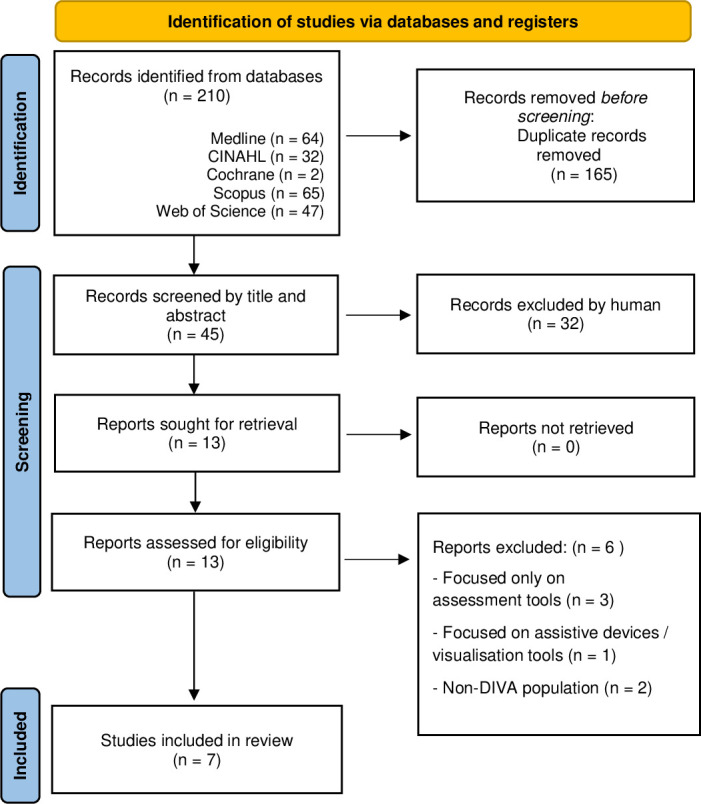
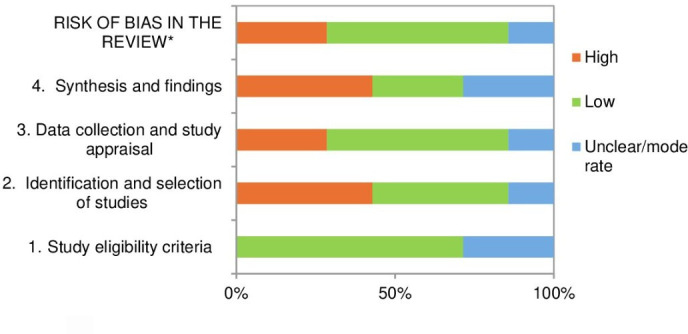
- Seven reviews were included (six systematic reviews and one meta-analysis), encompassing 102 primary studies; overlap was moderate (Corrected Covered Area 6.36%). Risk of bias was low in four reviews, moderate in one, and high in two.
- DIVA definitions were highly heterogeneous: 15 different criteria were identified, with the most frequent operational elements being ≥2 failed attempts, absence of visible or palpable veins, and a documented history of difficult access. The introduction cites incidence estimates of 17%–59.3% depending on context and population.
- Risk factors and assessment highlighted obesity, chronic diseases, prior chemotherapy, venous invisibility/non-palpability, and history of DIVA. More than 16 tools for anticipating DIVA were reported, but most lacked exhaustive validation; one review found 82 potential factors, of which only 10 were stable.
- Interventions were grouped as organisational (escalation protocols, specialised teams, maximum two attempts per operator), technological (ultrasound guidance; infrared/transilluminator devices showed scarce efficacy in adults), clinical (pain/anxiety management, communication), and educational (structured training).
Methods
- Umbrella review of systematic reviews and meta-analyses, registered in PROSPERO (CRD420251084947), following Joanna Briggs Institute methodology and PRIOR reporting; methodological quality assessed with ROBIS by two independent reviewers.
- Searched PubMed, CINAHL, Cochrane, Scopus, and Web of Science in July 2025; included reviews published January 2014–July 2025 on adults or mixed populations requiring peripheral venous access, with no language restrictions; excluded primary studies, protocols, and non-systematised narrative reviews.
- Data extraction was done by two reviewers and verified by a third; synthesis used three analytical dimensions (definition/diagnostic criteria, risk factors/clinical assessment, clinical interventions), with overlap assessed via Corrected Covered Area.
Limitations
- The paper states moderate overlap between primary studies (CCA 6.36%), which must be considered when assessing independence of the synthesised evidence.
- The paper states large heterogeneity in DIVA definitions, outcomes evaluated, and clinical contexts, limiting comparability and preventing quantitative synthesis; differences in methodological quality of included reviews could also have influenced findings.
- The paper notes a publication date restriction (2014–2025) that may have excluded earlier systematic reviews, and high terminological heterogeneity across included reviews may have limited comparability. The text also makes evident that participant characteristics were heterogeneous and generally limited, so detailed population description was not possible.
Model-written summary. Check it against the paper before relying on it.
Integrity signals
Registry
Cites
Statistics
Figures
Verification
Claims the paper makes
21 Valid · 3 Not valid · 7 Not checked · 35 Own results and interpretations
Some cited sources support this claim and some don’t — read each source’s verdict below.
In the paper
“the results show more than 16 tools for anticipating DIVA,22 23 25”
§ Difficult intravenous access (DIVA) in the adult population: an umbrella review > Discussion
What the sources say
- Partly supportedcites [22] Bahl A Alsbrooks K Zazyczny KA et al An improved definition and SAFE rule for predicting difficult intravascular access (DIVA) in hospitalized adults J Infus Nurs 2024 47 96 107 10.1097/NAN.0000000000000535 38377305 PMC10913859 sourceExperimental — accuracy not yet measured
The Discussion says that various DIVA prediction tools exist, and the introductory discussion describes an abundance of screening rules, tools, or algorithms. Neither passage gives a count establishing that there are more than 16 tools; searches for that number did not find one in our copy. (LLM, conf=0.84)
- Disputedcites [23] Paterson RS Schults JA Slaughter E et al Review article: Peripheral intravenous catheter insertion in adult patients with difficult intravenous access: a systematic review of assessment instruments, clinical practice guidelines and escalation pathways Emerg Medicine Australasia 2022 34 862 70 10.1111/1742-6723.14069 PMC9804581 36038953 sourceExperimental — accuracy not yet measured
The Results section, under “DIVA assessment instruments,” says the review identified 16 instruments, not more than 16. Table 2 also lists 16 instruments. The cited review therefore does not support the number attributed to its results. (LLM, conf=0.88)
Checked by a reasoning model — may be wrong.
- Not checked — no full text of the sourcecites [25] Hallam C Denton A Weston V et al UK Vessel Health and Preservation (VHP) Framework: a commentary on the updated VHP 2020 J Infect Prev 2021 22 147 55 10.1177/1757177420976806 34295375 PMC8274140 source
plain- Asserted: passes — The authors put it forward as true.
- Checkable: passes — It can be checked against evidence.
- Load-bearing: unclear — It is unclear whether the paper’s conclusions depend on it.
- Based: passes — The paper gives a reason why it holds.
- Partly supported
The cited sources support only part of this claim — read each source’s verdict below.
In the paper
“These divergences could explain the low adoption of DIVA assessment instruments in clinical practice,22 29”
§ Difficult intravenous access (DIVA) in the adult population: an umbrella review > Discussion
What the sources say
- Partly supportedcites [22] Bahl A Alsbrooks K Zazyczny KA et al An improved definition and SAFE rule for predicting difficult intravascular access (DIVA) in hospitalized adults J Infus Nurs 2024 47 96 107 10.1097/NAN.0000000000000535 38377305 PMC10913859 sourceExperimental — accuracy not yet measured
The Statistical Analysis passage describes DIVA tools as similar but not directly comparable, and the Discussion says none appears widely adopted in clinical practice. The Discussion instead suspects that implementation complexity and perceived inconvenience explain low adoption; it does not link the tools’ divergences to that outcome. (LLM, conf=0.82)
- Partly supportedcites [29] Schults JA Calleja P Slaughter E et al Peripheral intravenous catheter insertion and use of ultrasound in patients with difficult intravenous access: Australian patient and practitioner perspectives to inform future implementation strategies PLoS ONE 2022 17 10.1371/journal.pone.0269788 PMC9231778 35749443 sourceExperimental — accuracy not yet measured
In Results, Theme 1, patients report that their identification of DIVA was sometimes dismissed; in Theme 2, practitioners describe DIVA recognition and assessment as most commonly lacking a formal process. These passages support a gap between patient experience and clinical practice, and limited use of formal assessment, but the paper does not specifically link those divergences to low adoption of DIVA assessment instruments. (LLM, conf=0.82)
hedgedstates a possible cause- Asserted: passes — The authors put it forward as true.
- Checkable: passes — It can be checked against evidence.
- Load-bearing: passes — The paper’s conclusions depend on it.
- Based: passes — The paper gives a reason why it holds.
- Partly supported
The cited sources support only part of this claim — read each source’s verdict below.
In the paper
“some studies19 21 25 on organisational interventions underlined the value of specialised teams, such as infusion therapy groups or critical care nurses, who act as expert leads in the treatment of patients with DIVA.”
§ Difficult intravenous access (DIVA) in the adult population: an umbrella review > Discussion
What the sources say
- Partly supportedcites [19] Rodríguez-Calero MA Blanco-Mavillard I Morales-Asencio JM et al Defining risk factors associated with difficult peripheral venous Cannulation: a systematic review and meta-analysis Heart & Lung 2020 49 273 86 10.1016/j.hrtlng.2020.01.009 32057426 sourceExperimental — accuracy not yet measured
The Discussion (page unavailable) says patients at risk of difficult peripheral cannulation could be referred to vascular access specialist teams or infusion therapy specialists, and suggests prioritising such teams in higher-risk units. It does not identify critical care nurses as expert leads or report an evaluation of specialised teams as an organisational intervention. (LLM, conf=0.83)
- Not checked — no full text of the sourcecites [21] Bahl A Johnson S Alsbrooks K et al Defining difficult intravenous access (DIVA): a systematic review J Vasc Access 2023 24 904 10 10.1177/11297298211059648 34789023 source
- Not checked — no full text of the sourcecites [25] Hallam C Denton A Weston V et al UK Vessel Health and Preservation (VHP) Framework: a commentary on the updated VHP 2020 J Infect Prev 2021 22 147 55 10.1177/1757177420976806 34295375 PMC8274140 source
plainstates an association- Asserted: passes — The authors put it forward as true.
- Checkable: passes — It can be checked against evidence.
- Load-bearing: unclear — It is unclear whether the paper’s conclusions depend on it.
- Based: passes — The paper gives a reason why it holds.
- Partly supported
The cited sources support only part of this claim — read each source’s verdict below.
In the paper
“The clinical interventions that emerged from this review were centred on practices focused on improving the experience of individuals with DIVA, through strategies directed to reduce pain, anxiety and complications derived from the procedure.20 23 25”
§ Difficult intravenous access (DIVA) in the adult population: an umbrella review > Discussion
What the sources say
- Not matchedcites [20] Proietti S Marche B Lorenzetti C et al Strumenti di valutazione del paziente adulto con accesso venoso difficile (DIVA): revisione narrativa della letteratura Infermiere Oggi 2023 3 27 37
We searched by its title and found no matching paper.
- Partly supportedcites [23] Paterson RS Schults JA Slaughter E et al Review article: Peripheral intravenous catheter insertion in adult patients with difficult intravenous access: a systematic review of assessment instruments, clinical practice guidelines and escalation pathways Emerg Medicine Australasia 2022 34 862 70 10.1111/1742-6723.14069 PMC9804581 36038953 sourceExperimental — accuracy not yet measured
The Results section (Clinical efficacy of CPGs and escalation pathways; page unavailable) reports reduced patient-reported pain after one escalation pathway was implemented. The Discussion (page unavailable) says preliminary evidence suggests DIVA resources can reduce post-insertion complications, but it does not establish that the interventions were centred on patient experience or addressed anxiety; it describes patient experience as neglected. (LLM, conf=0.84)
- Not checked — no full text of the sourcecites [25] Hallam C Denton A Weston V et al UK Vessel Health and Preservation (VHP) Framework: a commentary on the updated VHP 2020 J Infect Prev 2021 22 147 55 10.1177/1757177420976806 34295375 PMC8274140 source
plainstates a cause- Asserted: passes — The authors put it forward as true.
- Checkable: passes — It can be checked against evidence.
- Load-bearing: passes — The paper’s conclusions depend on it.
- Based: passes — The paper gives a reason why it holds.
- Not matched
Every source the paper cites for this claim was checked and supports it.
In the paper
“this practice not always responds to clinical criteria, but tends to be conditioned by structural factors, such as a lack of trained staff or the absence of formal guidelines.29”
§ Difficult intravenous access (DIVA) in the adult population: an umbrella review > Discussion
What the sources say
- Supportedcites [29] Schults JA Calleja P Slaughter E et al Peripheral intravenous catheter insertion and use of ultrasound in patients with difficult intravenous access: Australian patient and practitioner perspectives to inform future implementation strategies PLoS ONE 2022 17 10.1371/journal.pone.0269788 PMC9231778 35749443 source
In Results, Theme 2, the paper reports that recommendations to escalate after two attempts were often ignored, while absent policies, limited training, and staff availability shaped when escalation occurred. The Discussion likewise links the persistence of initial attempts to uncertain guidelines and human-resource constraints. These passages support the claim that limits on attempts are not determined solely by clinical criteria. (LLM, conf=0.87)
plainstates an association- Asserted: passes — The authors put it forward as true.
- Checkable: passes — It can be checked against evidence.
- Load-bearing: passes — The paper’s conclusions depend on it.
- Based: passes — The paper gives a reason why it holds.
- Supported
13 more claims · 1 with their cited sources checked
Create a free account to see all 66 claims and to verify the 2 references still open.
- It may state two separate claims as one. 34
- Probably not a substantial claim. 21
Citations
Cites
The PRISMA 2020 statement: An updated guideline for reporting systematic reviews
Page, M. J., McKenzie, J. E., Bossuyt, P. M., Boutron, I., Hoffmann, T. C., Mulrow, C. D., Shamseer, L., Tetzlaff, J. M., Akl, E. A., Brennan, S. E., et al. (2021) · BMJ · doi:10.1136/bmj.n71 · Cited by 108,283
JBI Manual for Evidence Synthesis
(2024) · doi:10.46658/jbimes-24-01 · Cited by 2,483
ROBIS: A new tool to assess risk of bias in systematic reviews was developed
Whiting, P., Savović, J., Higgins, J. P. T., Caldwell, D. M., Reeves, B. C., Shea, B., Davies, P., Kleijnen, J., & Churchill, R. (2016) · Journal of Clinical Epidemiology · doi:10.1016/j.jclinepi.2015.06.005 · Cited by 2,272
Gates, M., Gates, A., Pieper, D., Fernandes, R. M., Tricco, A. C., Moher, D., Brennan, S. E., Li, T., Pollock, M., Lunny, C., et al. (2022) · BMJ · doi:10.1136/bmj-2022-070849 · Cited by 856
Bruxism: An umbrella review of systematic reviews
Melo, G., Duarte, J., Pauletto, P., Porporatti, A. L., Stuginski‐Barbosa, J., Winocur, E., Flores‐Mir, C., & De Luca Canto, G. (2019) · Journal of Oral Rehabilitation · doi:10.1111/joor.12801 · Cited by 236 · cited 1×
“Based on these results, a global assessment of risk was established for each review, as low, moderate or high, following the criteria proposed by Melo et al , 18 who applied this tool with a comparable methodological approach.”
A clinical pathway for the management of difficult venous access
Sou, V., McManus, C., Mifflin, N., Frost, S. A., Ale, J., & Alexandrou, E. (2017) · BMC Nursing · doi:10.1186/s12912-017-0261-z · Cited by 137
Umbrella reviews: a methodological guide
Fernandez, R. S., Sharifnia, A. M., & Khalil, H. (2025) · European Journal of Cardiovascular Nursing · doi:10.1093/eurjcn/zvaf012 · Cited by 103 · cited 1×
“12 Given the above, the main aim of this study was to synthesise the existing evidence on systematic reviews about DIVA in the adult population, addressing its diagnostic definition, the associated risk factors and the reported clinical interventions, in order to identify areas of consensus and…”
Best practice in the use of peripheral venous catheters: A scoping review and expert consensus
Zingg, W., Barton, A., Bitmead, J., Eggimann, P., Pujol, M., Simon, A., & Tatzel, J. (2023) · Infection Prevention in Practice · doi:10.1016/j.infpip.2023.100271 · Cited by 85
Defining difficult intravenous access (DIVA): a systematic review
Bahl, A., Johnson, S., Alsbrooks, K., Mares, A., Gala, S., & Hoerauf, K. (2023) · The Journal of Vascular Access · doi:10.1177/11297298211059648 · Cited by 82
Rodríguez-Calero, M. A., Blanco-Mavillard, I., Morales-Asencio, J. M., Fernández-Fernández, I., Castro-Sánchez, E., & de Pedro-Gómez, J. E. (2020) · Heart & Lung · doi:10.1016/j.hrtlng.2020.01.009 · Cited by 78
Davis, E. M., Feinsmith, S., Amick, A. E., Sell, J., McDonald, V., Trinquero, P., Moore, A., Gappmaier, V., Colton, K., Cunningham, A., et al. (2021) · The American Journal of Emergency Medicine · doi:10.1016/j.ajem.2020.11.013 · Cited by 77 · cited 1×
“7 In addition, this situation creates anxiety, fear and frustration in individuals who have a PIVC, 2 and also implies a higher workload, consumption of resources and healthcare costs.”
Carr, P. J., Higgins, N. S., Cooke, M. L., Rippey, J., & Rickard, C. M. (2017) · Journal of Hospital Medicine · doi:10.12788/jhm.2836 · Cited by 77
Paterson, R. S., Schults, J. A., Slaughter, E., Cooke, M., Ullman, A., Kleidon, T. M., Keijzers, G., Marsh, N., & Rickard, C. M. (2022) · Emergency Medicine Australasia · doi:10.1111/1742-6723.14069 · Cited by 70
Piredda, M., Biagioli, V., Barrella, B., Carpisassi, I., Ghinelli, R., Giannarelli, D., & De Marinis, M. G. (2017) · Journal of Clinical Nursing · doi:10.1111/jocn.13444 · Cited by 70
Lim, S., Gangoli, G., Adams, E., Hyde, R., Broder, M. S., Chang, E., Reddy, S. R., Tarbox, M. H., Bentley, T., Ovington, L., et al. (2019) · INQUIRY: The Journal of Health Care Organization, Provision, and Financing · doi:10.1177/0046958019875562 · Cited by 66 · cited 1×
“8 To mitigate these negative consequences and improve the experience of the patient, many strategies have been explored to improve the treatment of a person with DIVA.”
Rodriguez-Calero, M. A., de Pedro-Gomez, J. E., Molero-Ballester, L. J., Fernandez-Fernandez, I., Matamalas-Massanet, C., Moreno-Mejias, L., Blanco-Mavillard, I., Moya-Suarez, A. B., Personat-Labrador, C., & Morales-Asencio, J. M. (2020) · Journal of Clinical Medicine · doi:10.3390/jcm9030799 · Cited by 60
UK Vessel Health and Preservation (VHP) Framework: a commentary on the updated VHP 2020
Hallam, C., Denton, A., Weston, V., Dunn, H., Jackson, T., Keeling, S., & Hill, S. (2021) · Journal of Infection Prevention · doi:10.1177/1757177420976806 · Cited by 40
Management of difficult intravenous access: a qualitative review
Ng, M., Kwok Fai Mark, L., & Fatimah, L. (2022) · World Journal of Emergency Medicine · doi:10.5847/wjem.j.1920-8642.2022.104 · Cited by 37
Schults, J. A., Calleja, P., Slaughter, E., Paterson, R., Rickard, C. M., Booker, C., Marsh, N., Fenn, M., Kelly, J., Snelling, P. J., et al. (2022) · PLOS ONE · doi:10.1371/journal.pone.0269788 · Cited by 35
Gorski (2024) · doi:10.1097/nhh.0000000000001270 · Cited by 34
Sweeny, A. L., Archer‐Jones, A., Watkins, S., Johnson, L., Gunter, A., & Rickard, C. M. (2021) · Australasian Emergency Care · doi:10.1016/j.auec.2021.07.003 · Cited by 34
Poulsen, E., Aagaard, R., Bisgaard, J., Sørensen, H. T., & Juhl-Olsen, P. (2023) · European Journal of Emergency Medicine · doi:10.1097/mej.0000000000000993 · Cited by 30 · cited 1×
“9 10 Likewise, some recent qualitative studies have delved into the experience of the patient during these procedures, underlining the importance of more humanised care centred on their perceptions.”
Sharp, R., Muncaster, M., Baring, C. L., Manos, J., Kleidon, T. M., & Ullman, A. J. (2023) · Journal of Clinical Nursing · doi:10.1111/jocn.16759 · Cited by 29
Piredda, M., Fiorini, J., Facchinetti, G., Biagioli, V., Marchetti, A., Conti, F., Iacorossi, L., Giannarelli, D., Matarese, M., & De Marinis, M. G. (2019) · Journal of Clinical Nursing · doi:10.1111/jocn.14941 · Cited by 22
DAT, M., JC, D. L. T.-M., AC, N., Reis, R., MH, B., & SEM, T. (2021) · The Journal of Vascular Access · doi:10.1177/1129729820939335 · Cited by 21
Bahl, A., Alsbrooks, K., Zazyczny, K. A., Johnson, S., & Hoerauf, K. (2024) · Journal of Infusion Nursing · doi:10.1097/nan.0000000000000535 · Cited by 20
Salleras-Duran, L., Fuentes-Pumarola, C., Fontova-Almató, A., Roqueta-Vall-Llosera, M., Cámara-Liebana, D., & Ballester-Ferrando, D. (2024) · Pain Management Nursing · doi:10.1016/j.pmn.2023.07.010 · Cited by 19
Schults, J. A., Marsh, N. M., Ullman, A. J., Kleidon, T. M., Ware, R. S., Byrnes, J., Young, E., Hall, L., Keijzers, G., Cullen, L., et al. (2023) · BMC Health Services Research · doi:10.1186/s12913-023-09499-0 · Cited by 18
Salleras-Duran, L., Fuentes-Pumarola, C., Ballester-Ferrando, D., Congost-Devesa, L., Delclós-Rabassa, J., & Fontova-Almató, A. (2020) · Journal of Emergency Nursing · doi:10.1016/j.jen.2020.06.013 · Cited by 12
Anderssen, L. M., Petersen, M. S., Wang, A. G., Mohr, M., & Fjallheim, A. S. (2026) · The Journal of Vascular Access · doi:10.1177/11297298251347816 · Cited by 11
Hansen, Ø. M., & Solbakken, R. (2024) · BMJ Open · doi:10.1136/bmjopen-2023-078106 · Cited by 10
Optimizing Strategies for Managing Difficult Intravenous Access
Saad, A., Simsekler, M. C. E., Ahmed, S., Ouda, R., Khaddam, O., Sanousi, M., Benny, M., Sunbati, H., Kashiwagi, D., Al Rifai, A., et al. (2025) · Risk Management and Healthcare Policy · doi:10.2147/rmhp.s500340 · Cited by 10
Calculate the actual overlap in an overview
Arian, M., Valinejadi, A., & Soleimani, M. (2021) · Nursing Practice Today · doi:10.18502/npt.v8i2.5119 · Cited by 9 · cited 1×
“16”
Acceso venoso difícil en pediatría
Borchert B., E., Lacassie, H. J., Concha P., M., Rattalino F., M., & Lema F., G. (2021) · Revista Chilena de Anestesia · doi:10.25237/revchilanestv50-03-08 · Cited by 7
Hosseini, S. J., Firooz, M., Yazdi, K., Abdollahi, M., Hosseini, S. R., & Ramezani, M. (2025) · The Journal of Vascular Access · doi:10.1177/11297298241259843 · Cited by 6
Punção venosa periférica difícil: revisão integrativa
Marinho, A. M., Sabino, F. H. O., Monteiro, D. A. T., Filgueira, V. D. S. A., Azevedo, G. N. D., & Toffano, S. E. M. (2019) · Revista Enfermagem UERJ · doi:10.12957/reuerj.2019.42567 · Cited by 6
Slosse, C., Manneville, F., Ricci, L., Ostermann, A., Klein, S., Bouaziz, H., & Ambroise-Grandjean, G. (2024) · BMJ Open · doi:10.1136/bmjopen-2023-078002 · Cited by 4
Patients’ experiences in ultrasound-guided intravenous catheter insertion: a qualitative study
Rivera, R., He, S., McManus, C., Mifflin, N., Tran, T., Harrowell, L., Kuzmins, K., Rihari-Thomas, J., Drury, P., Frost, S. A., et al. (2025) · Enfermería Clínica (English Edition) · doi:10.1016/j.enfcle.2025.102149 · Cited by 3 · cited 1×
“11 Nevertheless, the evidence on the compared efficacy and the standardised implementation of this evidence still requires a more rigorous synthesis.”
Drugeon, B., Schults, J. A., Ray‐Barruel, G., Xu, G. (., Ball, D., Yasuda, H., Drugeon, R., Mercier, J., Mihala, G., Barker, N., et al. (2026) · Journal of Advanced Nursing · doi:10.1111/jan.17007 · Cited by 3
Predicting difficult peripheral venous access in hospitalized adult patients: A scoping review
Nannini, F., Mancin, S., Morales Palomares, S., Pettinari, G., Cosmai, S., Lopane, D., Cattani, D., & Mazzoleni, B. (2026) · The Journal of Vascular Access · doi:10.1177/11297298251374415 · Cited by 2
Nandapalan, K., Smallwood, A., Gething, K., & Alberti, H. (2025) · Cureus · doi:10.7759/cureus.91007 · Cited by 1
Research works printed but not linked: 1
- Proietti S Marche B Lorenzetti C et al Strumenti di valutazione del paziente adulto con accesso venoso difficile (DIVA): revisione narrativa della letteratura Infermiere Oggi 2023 3 27 37
Metadata
- Authors
- Torné-Ruiz, A., Delgado, M., Moreno, S., Corral-Núñez, A., Cemeli, T., & Roca, J.
- Affiliations
- Nursing and Physioterapy, Universitat de Lleida, Lleida, Spain
- Universitat de Lleida (ES)
- Consorci Sociosanitari de l’Anoia, Igualada, Spain
- Althaia Xarxa Assistencial Universitària de Manresa, Manresa, Spain
- Venue
- BMJ Open
- Publisher
- BMJ
- Published
- 2026-06
- Volume
- 16
- Issue
- 6
- Pages
- e121458
- ISSN
- 2044-6055 (ISSN-L)
- PMC
- PMC13288886
- OpenAlex
- W7164481579
- Semantic Scholar
- e29e3cd682abb4515f83a919ed719860653c936c
- Cited by
- 0
- References
- 41
- FWCI
- 0.00
- Type
- journal article
- Language
- en
- Open access
- gold
- doi.org
- Licence
- Locations
- BMJ Open (publishedVersion, cc-by-nc)
- PubMed (publishedVersion)
- PubMed Central (publishedVersion, cc-by-nc)
- DOAJ (DOAJ: Directory of Open Access Journals) (submittedVersion)
- Repositori ObertUDL (University of Lleida) (submittedVersion, cc-by-nc)
- Topics
- Health Sciences › Medicine › Critical Care and Intensive Care Medicine › Central Venous Catheters and Hemodialysis
- Physical Sciences › Engineering › Biomedical Engineering › Intravenous Infusion Technology and Safety
- Health Sciences › Medicine › Pulmonary and Respiratory Medicine › Vascular Procedures and Complications
- Keywords
- difficult venous access, peripheral venous access, adults, risk factors, ultrasound-guided venipuncture, escalation protocols, obesity, pain management, venipuncture technique, diagnostic criteria
- MeSH terms
- Adult, Catheterization, Peripheral, Humans, Risk Factors
About these checks
Registry, retraction, Cites and statistics results are computed, not judged, with one exception: a printed reference that no index lists is read once by a model before it counts as a citation error. Claims are extracted by a model and kept only when their quote appears verbatim in the text; each cited source is then checked, with a model’s help, for whether it says what the claim relies on. Those verdicts can be wrong — read the claim’s quote and the cited source before relying on one.
The claim verdicts this report counts are experimental: their accuracy is not yet measured.
A language model drew the claims from the paper on 2026-09-30, under version 3 of the claim definition (model deepseek-v4.1-flash, prompt extract-v3).
A second model labelled each claim on 2026-09-30 (model jev-1.13-20260917, definition revision gold-guideline-v0.2).
Cited sources are checked with a language model’s help (gpt-6-sol).
Statistics and arithmetic are recomputed, not judged.
Confidence bands are shown only for fields calibrated on our annotated test set. None is calibrated yet, so no band is shown.
What counts as a claim ›How we measure confidence ›How we check this ›
Are you an author, or do you see a problem with this page? Request a review
Data sources
Bibliographic data: Semantic Scholar, OpenAlex, Crossref.
Contains information from the Semantic Scholar Academic Graph Datasets, made available under the ODC Attribution License (ODC-BY 1.0).
Semantic Scholar’s data is described in: Kinney, R., et al. (2023). The Semantic Scholar Open Data Platform. arXiv:2301.10140.
