

Exploring coping strategies among caregivers of children who have survived paediatric cancer in Jordan
Open accessThe DOI matches its Crossref record; 40 of the 43 references it cites were found in a registry or an index, and 1 are not checked yet.
Abstract
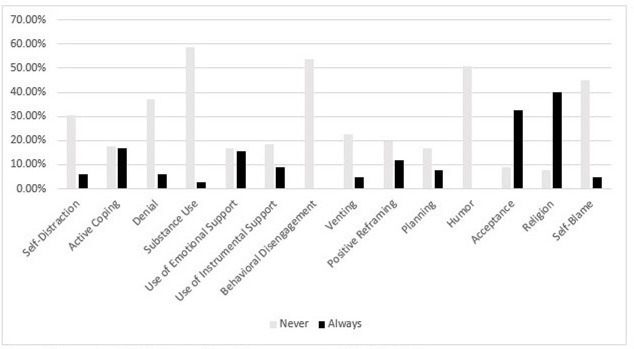
Objective: To explore the coping strategies of caregivers of children who have survived paediatric cancer in Jordan. Materials and methods: This study used a cross-sectional survey design and convenient sampling. The sample included 102 caregivers of children who have survived cancer, and outcome measures included the Arabic-translated Brief COPE, and caregiver and child demographic and condition questionnaire. Data analyses included descriptive statistics, analysis of frequencies, Spearman-rank order correlations and linear regression. Results: Caregivers most frequently used religion coping (mean=6.42, SD=1.85), followed by acceptance (mean=5.95, SD=1.96) and planning (mean=5.05, SD=1.94). The least used coping strategies were humour (mean=2.98, SD=1.24) and behavioural disengagement as coping strategies (mean=3.01, SD=1.42). Having a female child predicted more self-distraction utilisation (β=0.265, p=0.007). Conclusion: Caregivers of children who have survived cancer in Jordan frequently use passive coping strategies like religion and acceptance coping to overcome daily life stressors. Caregivers might benefit from psychosocial occupational therapy interventions to support their engagement in more active or problem-focused coping strategies.
Overview
The claims and statistics of this paper haven’t been checked yet.
Free: it reads the open-access text and checks the first 5 claims that cite a source we can check. Create a free account to check every claim.
Integrity signals
Registry
Cites
Statistics
Figures
Verification
Claims the paper makes
The claims and statistics of this paper haven’t been checked yet.
Free: it reads the open-access text and checks the first 5 claims that cite a source we can check. Create a free account to check every claim.
Claims other papers make about this one
Each is checked against this paper’s own text: does it say what the citing paper says it does?
The cited source says what the claim attributes to it.
In the citing paper
“However, religious coping may sometimes fall short in adequately addressing the underlying stressors and their effects [9], leading to mixed evidence about its overall health impact [61,62].”
From Coping strategies among family caregivers of community-dwelling older adults in Lebanon amid the economic crisis (2026) · cites this paper as [9]
Self-check
Percentages, sums and reported differences re-computed from the paper’s own numbers.
The self-check needs the paper’s full text.
Citations
Cites
Assessing coping strategies: A theoretically based approach.
Carver, C. S., Scheier, M. F., & Weintraub, J. K. (1989) · Journal of Personality and Social Psychology · doi:10.1037/0022-3514.56.2.267 · Cited by 11,507 · cited 2×
“17 Subscales’ scores are generated by summing items for each subscale.”
BackgroundMethodUser’s guide to correlation coefficients
Akoglu, H. (2018) · Turkish Journal of Emergency Medicine · doi:10.1016/j.tjem.2018.08.001 · Cited by 5,849
Carver, C. S., & Connor-Smith, J. (2010) · Annual Review of Psychology · doi:10.1146/annurev.psych.093008.100352 · Cited by 2,424 · cited 1×
“16 Coping strategies are highly individualised because of people’s differences in resources, experiences, motivation, preferences and skills for coping.”
BackgroundLazarus and Folkman's Psychological Stress and Coping Theory
Biggs, A., Brough, P., & Drummond, S. (2017) · The Handbook of Stress and Health · doi:10.1002/9781118993811.ch21 · Cited by 780 · cited 1×
“Ways of coping influence people’s adaptations to various conditions 14 and contribute to their health and well-being.”
BackgroundThe American Cancer Society’s Facts & Figures: 2020 Edition
Hallquist Viale, R. (2020) · Journal of the Advanced Practitioner in Oncology · doi:10.6004/jadpro.2020.11.2.1 · Cited by 484
Parenting stress in caregivers of children with chronic physical condition—A meta‐analysis
Pinquart, M. (2018) · Stress and Health · doi:10.1002/smi.2780 · Cited by 341
Nipp, R. D., El‐Jawahri, A., Fishbein, J. N., Eusebio, J., Stagl, J. M., Gallagher, E. R., Park, E. R., Jackson, V. A., Pirl, W. F., Greer, J. A., et al. (2016) · Cancer · doi:10.1002/cncr.30025 · Cited by 283 · cited 1×
“37 Acceptance is also viewed as the step after denial, 38 and before searching for treatment options, and solving any related stressors.”
BackgroundThe Handbook of Stress and Health: A Guide to Research and Practice
(2017) · Wiley eBooks · doi:10.1002/9781118993811 · Cited by 252
Women's mental health in the Muslim world: Cultural, religious, and social issues
Douki, S., Zineb, S. B., Nacef, F., & Halbreich, U. M. (2007) · Journal of Affective Disorders · doi:10.1016/j.jad.2006.09.027 · Cited by 209
Physical Performance Limitations in the Childhood Cancer Survivor Study Cohort
Ness, K. K., Hudson, M. M., Ginsberg, J. P., Nagarajan, R., Kaste, S. C., Marina, N., Whitton, J., Robison, L. L., & Gurney, J. G. (2009) · Journal of Clinical Oncology · doi:10.1200/jco.2008.21.1482 · Cited by 187
Coping strategies in parents of children with cancer
Norberg, A. L., Lindblad, F., & Boman, K. K. (2004) · Social Science & Medicine · doi:10.1016/j.socscimed.2004.06.030 · Cited by 186 · cited 1×
“39 Therefore, it might be considered as a passive way of coping and should be used with more active ways like planning and active coping.”
BackgroundQuality of life and mental health in family caregivers of patients with terminal cancer
Song, J. I., Shin, D. W., Choi, J. Y., Kang, J., Baik, Y. J., Mo, H. N., Park, M., Choi, S. E., Kwak, J. H., & Kim, E. J. (2011) · Supportive Care in Cancer · doi:10.1007/s00520-010-0977-8 · Cited by 151
Knowles, S. R., Apputhurai, P., O’Brien, C. L., Ski, C. F., Thompson, D. R., & Castle, D. J. (2019) · Psychology Health & Medicine · doi:10.1080/13548506.2019.1695865 · Cited by 120 · cited 1×
“21 Unlike stress in caregivers of children with cancer, caregivers’ coping strategies were scarcely studied in the literature.”
BackgroundReligious coping strategies in patients diagnosed with breast cancer in the UK
Thuné‐Boyle, I. C. V., Stygall, J., Keshtgar, M. R. S., Davidson, T. I., & Newman, S. P. (2011) · Psycho-Oncology · doi:10.1002/pon.1784 · Cited by 119
The Impact of Humor on Patients With Cancer
Christie, W., & Moore, C. (2005) · Clinical Journal of Oncology Nursing · doi:10.1188/05.cjon.211-218 · Cited by 116 · cited 1×
“42 43 It is worth further investigating if promoting the use of humour in caregivers of children who have survived cancer can alleviate caregivers’ psychosocial health and improve the quality of life of caregivers and their families.”
Background“Leaving it to God” Religion and Spirituality among Filipina Immigrant Breast Cancer Survivors
Lagman, R. A., Yoo, G. J., Levine, E. G., Donnell, K. A., & Lim, H. R. (2012) · Journal of Religion and Health · doi:10.1007/s10943-012-9648-z · Cited by 114
Li, W. H. C., López, V., Chung, J. O. K., Ho, K. Y., & Chiu, S. Y. (2012) · European Journal of Oncology Nursing · doi:10.1016/j.ejon.2012.07.010 · Cited by 114
Quality of life, caregiver burden, and resilience among the family caregivers of cancer survivors
Üzar-Özçeti̇n, Y. S., & Dursun, S. İ. (2020) · European Journal of Oncology Nursing · doi:10.1016/j.ejon.2020.101832 · Cited by 112
Prognostic factors and treatment of pediatric acute lymphoblastic leukemia
Lee, J. W., & Cho, B. (2017) · Korean Journal of Pediatrics · doi:10.3345/kjp.2017.60.5.129 · Cited by 103
Anxiety and Depression in Cancer Patients: The Association with Religiosity and Religious Coping
Ng, G. C., Mohamed, S., Sulaiman, A. H., & Zainal, N. Z. (2017) · Journal of Religion and Health · doi:10.1007/s10943-016-0267-y · Cited by 98 · cited 1×
“35 36 While not as frequent as religion, caregivers in this study also engaged in acceptance and planning coping.”
BackgroundAttachment, Coping, Acculturative Stress, and Quality of Life Among Haitian Immigrants
Belizaire, L. S., & Fuertes, J. N. (2011) · Journal of Counseling & Development · doi:10.1002/j.1556-6678.2011.tb00064.x · Cited by 88
Hagan, T. L., Fishbein, J. N., Nipp, R. D., Jacobs, J. M., Traeger, L., Irwin, K. E., Pirl, W. F., Greer, J. A., Park, E. R., Jackson, V. A., et al. (2017) · Journal of Pain and Symptom Management · doi:10.1016/j.jpainsymman.2016.06.005 · Cited by 88
Pierce, L., Hocking, M. C., Schwartz, L. A., Alderfer, M. A., Kazak, A. E., & Barakat, L. P. (2017) · Psycho-Oncology · doi:10.1002/pon.4171 · Cited by 83 · cited 1×
“11 There is accumulating evidence that looked at caregivers’ negative psychological states like stress, anxiety or depression 12 13 ; however, there is little evidence on how caregivers of WHAT IS ALREADY KNOWN ON THIS TOPIC ⇒ Caregivers of adults’ cancer survivors engage in emotion-focused coping…”
BackgroundReligion, Culture and Meaning-Making Coping: A Study Among Cancer Patients in Malaysia
Ahmadi, F., Hussin, N. A. M., & Mohammad, M. T. (2018) · Journal of Religion and Health · doi:10.1007/s10943-018-0636-9 · Cited by 79 · cited 1×
“34 Religious coping, especially in the early stages of cancer treatment, may help caregivers in rede-fining potential stressors as beneficial, 32 and accepting the condition and its consequences.”
BackgroundGage‐Bouchard, E. A., Devine, K. A., & Heckler, C. E. (2013) · Journal of Clinical Psychology in Medical Settings · doi:10.1007/s10880-013-9362-3 · Cited by 60 · cited 2×
“6 While this later study investigated potential factors that affect caregiver coping during paediatric cancer, evidence on caregiver coping after surviving paediatric cancer remains poorly understood.”
BackgroundOutlook and adaptation in advanced cancer: a systematic review
O'Brien, C. W., & Moorey, S. (2010) · Psycho-Oncology · doi:10.1002/pon.1704 · Cited by 60 · cited 1×
“19 Engaging in adaptive or problem-focused coping strategies like planning or active coping contributes to better caregiver psychosocial and physical health and quality of life.”
BackgroundLitzelman, K., Kent, E. E., & Rowland, J. H. (2018) · Health Education & Behavior · doi:10.1177/1090198117705164 · Cited by 58
Greer, T. M. (2007) · Journal of Black Psychology · doi:10.1177/0095798407302539 · Cited by 57 · cited 1×
“22 Several studies explored the psychometric properties of Brief COPE.”
BackgroundHill, E. M. (2015) · Psychology Health & Medicine · doi:10.1080/13548506.2015.1109674 · Cited by 57
Vrettos, I., Kamposioras, K., Kontodimopoulos, N., Pappa, E., Georgiadou, E., Haritos, D., Papadopoulos, A. A., & Niakas, D. (2012) · The Scientific World Journal · doi:10.1100/2012/135283 · Cited by 54 · cited 1×
“10 While stress is greater in caregivers of recently diagnosed individuals, it continues to affect caregivers during treatment and even after cancer recovery.”
BackgroundKirby, L. D., Qian, W., Adıgüzel, Z., Jahanshahi, A. A., Bakracheva, M., Ballestas, M. C. O., Cruz, J. F. A., Dash, A., Dias, C., Ferreira, M. J., et al. (2021) · International Journal of Psychology · doi:10.1002/ijop.12770 · Cited by 50 · cited 1×
“15 Coping refers to the thoughts and actions people use to manage stressful situations.”
BackgroundCoping Strategies in Egyptian Ladies with Breast Cancer
Elsheshtawy, E. A., Abo-Elez, W. F., Ashour, H. S., Farouk, O., & zaafarany, M. I. E. E. (2014) · Breast Cancer: Basic and Clinical Research · doi:10.4137/bcbcr.s14755 · Cited by 48
Fladeboe, K., King, K. M., Kawamura, J., Gurtovenko, K., Stettler, N. M., Compas, B. E., Friedman, D. L., Lengua, L. J., Breiger, D., & Katz, L. F. (2018) · Journal of Pediatric Psychology · doi:10.1093/jpepsy/jsy008 · Cited by 47 · cited 1×
“11 There is accumulating evidence that looked at caregivers’ negative psychological states like stress, anxiety or depression 12 13 ; however, there is little evidence on how caregivers of WHAT IS ALREADY KNOWN ON THIS TOPIC ⇒ Caregivers of adults’ cancer survivors engage in emotion-focused coping…”
BackgroundParekh, N. K. (2016) · Annals of Gastroenterology · doi:10.20524/aog.2016.0084 · Cited by 45 · cited 1×
“40 41 In other studies, humour was viewed as a comforting and relaxing mechanism that promotes caregivers’ health.”
Background(2013) · PubMed · Cited by 34
Additional Evidence of a Nonverbal Learning Disability in Survivors of Pediatric Brain Tumors
Bonner, M. J., Hardy, K. K., Willard, V. W., & Gururangan, S. (2009) · Children s Health Care · doi:10.1080/02739610802615849 · Cited by 26
Humor as a Coping Strategy for Adult-Child Caregivers of Individuals with Alzheimer's Disease
Tan, T., & Schneider, M. A. (2009) · Geriatric Nursing · doi:10.1016/j.gerinurse.2009.09.004 · Cited by 25 · cited 1×
“42 43 It is worth further investigating if promoting the use of humour in caregivers of children who have survived cancer can alleviate caregivers’ psychosocial health and improve the quality of life of caregivers and their families.”
BackgroundHispanic adolescents coping with parental cancer
Costas-Muñíz, R. (2011) · Supportive Care in Cancer · doi:10.1007/s00520-011-1283-9 · Cited by 24 · cited 1×
“40 41 In other studies, humour was viewed as a comforting and relaxing mechanism that promotes caregivers’ health.”
BackgroundResilience and Coping as Predictors of Well-Being in Adults
Mayordomo, T., Viguer, P., Sales, A., Satorres, E., & Meléndez, J. C. (2021) · Routledge eBooks · doi:10.4324/9781003243601-15 · Cited by 23
Nunes, C., Padilla, J. P., Martins, C. S., Pechorro, P. S., Ayala‐Nunes, L., & Ferreira, L. I. (2021) · International Journal of Environmental Research and Public Health · doi:10.3390/ijerph18062806 · Cited by 20
Coping Strategies among Caregivers of Children with Autism Spectrum Disorders: A Cluster Analysis
Ismael, N., Lawson, L. M., Moqbel, M., & Little, L. M. (2018) · ScholarWorks @ UTRGV (The University of Texas Rio Grande Valley) · Cited by 9
Self-citationCoping strategies and caregiver's anxiety in pediatric oncohematology
Kohlsdorf, M., & Costa Junior, Á. L. (2011) · Americanae (AECID Library) · Cited by 8
Mental Health and Psychopathology
Rokach, A. (2021) · Routledge eBooks · doi:10.4324/9781003243601 · Cited by 8
Research works printed but not linked: 3
- Lazarus RS, Folkman S. Stress, Appraisal, and Coping. Springer publishing company, 1984.
- Rafferty KA. n.d. Everything remains uncertain: theorizing parents' communication about uncertainty, hope, and hopelessness while managing complex pediatric chronic conditions (Doctoral Dissertation, the University of Wisconsin-Milwaukee).
- Kübler-Ross E, Kessler D. The Five Stages of Grief. InLibrary of Congress Catalogin in Publication Data (Ed.), On Grief and Grieving. 2009: 7– 30.
Cited by
Ferraz, A., Faria, S., Jerónimo, M., & Pereira, M. G. (2025) · Cancers · doi:10.3390/cancers17030338 · Cited by 19
“Thus, identifying caregiver coping strategies is essential for developing interventions to improve caregivers’ psychological well-being [54].”
Lillekroken, D., Bye, A., Halvorsrud, L., & Lundeby, T. (2025) · International Journal of Qualitative Studies on Health and Well-Being · doi:10.1080/17482631.2025.2555228 · Cited by 4
“Ismael et al. (2024) investigated the coping strategies of caregivers of children who survived paediatric cancer in Jordan, revealing that caregivers frequently rely on passive coping mechanisms, including religion and acceptance, to handle daily stressors.”
Barakat, Z., Sacre, H., El Khatib, S., Abou Abbas, L., Barakat, M., Salameh, P., & Rachidi, S. (2026) · PLOS One · doi:10.1371/journal.pone.0340972 · Cited by 2
“However, religious coping may sometimes fall short in adequately addressing the underlying stressors and their effects [9], leading to mixed evidence about its overall health impact [61,62].”
Treatment Access and Caregiver Experience in Pediatric Rhabdomyosarcoma: Results of an Online Survey
Almohtasib, J., Boswell, T. C., Granberg, C. F., & Gargollo, P. C. (2025) · Children · doi:10.3390/children12040435
“Caregivers of children with cancer experience significant emotional and psychological distress, often facing challenges related to navigating the healthcare system, the financial burden, and decision making regarding treatment options [2,3].”
Ramos, O. P., Mayo‐Puchoc, N., & Gálvez-Arévalo, R. A. (2025) · Psicooncología · doi:10.5209/psic.96426 · Cited by 1
Metadata
- Authors
- Ismael, N., Jaber, A., Malkawi, S., Al Awady, S., & Ismael, T.
- Affiliations
- Jordan University of Science and Technology (JO)
- University of Jordan (JO)
- King Hussein Cancer Center (JO)
- Corresponding author
- Ismael, Noor
- Ismael, Taleb
- Venue
- BMJ Paediatrics Open
- Publisher
- BMJ
- Published
- 2024-04
- Volume
- 8
- Issue
- 1
- Pages
- e002453
- ISSN
- 2399-9772 (ISSN-L)
- PMC
- PMC11015291
- OpenAlex
- W4394728087
- Semantic Scholar
- 9c299abfcbb7f17911ee0f395c0c54d4675fd257
- Cited by
- 9
- References
- 42
- Citations by year
- 2026: 4 · 2025: 5
- FWCI
- 6.06
- Type
- journal article
- Language
- en
- Open access
- diamond
- doi.org
- Licence
- Locations
- BMJ Paediatrics Open (publishedVersion, cc-by-nc)
- PubMed Central (publishedVersion, cc-by-nc)
- PubMed (publishedVersion)
- DOAJ (DOAJ: Directory of Open Access Journals) (submittedVersion)
- Topics
- Health Sciences › Medicine › Pediatrics, Perinatology and Child Health › Childhood Cancer Survivors' Quality of Life
- Health Sciences › Medicine › Oncology › Cancer survivorship and care
- Social Sciences › Psychology › Clinical Psychology › Family Support in Illness
- Keywords
- coping strategies, caregivers, childhood cancer survivors, childhood cancer, acceptance coping, self-distraction, psychosocial occupational therapy
- MeSH terms
- Coping Skills, Adaptation, Psychological, Child, Cross-Sectional Studies, Female, Humans, Jordan, Neoplasms, Psychological Tests, Caregivers, Self Report
About these checks
Registry, retraction, Cites and statistics results are computed, not judged, with one exception: a printed reference that no index lists is read once by a model before it counts as a citation error. Claims are extracted by a model and kept only when their quote appears verbatim in the text; each cited source is then checked, with a model’s help, for whether it says what the claim relies on. Those verdicts can be wrong — read the claim’s quote and the cited source before relying on one.
Statistics and arithmetic are recomputed, not judged.
Confidence bands are shown only for fields calibrated on our annotated test set. None is calibrated yet, so no band is shown.
What counts as a claim ›How we measure confidence ›How we check this ›
Are you an author, or do you see a problem with this page? Request a review
Data sources
Bibliographic data: Semantic Scholar, OpenAlex, Crossref.
Contains information from the Semantic Scholar Academic Graph Datasets, made available under the ODC Attribution License (ODC-BY 1.0).
Semantic Scholar’s data is described in: Kinney, R., et al. (2023). The Semantic Scholar Open Data Platform. arXiv:2301.10140.
