

The DOI matches its Crossref record; 50 of the 51 references it cites were found in a registry or an index.
Determining the role of sport coaches in promoting athlete mental health: a narrative review and Delphi approach
Open accessAbstract
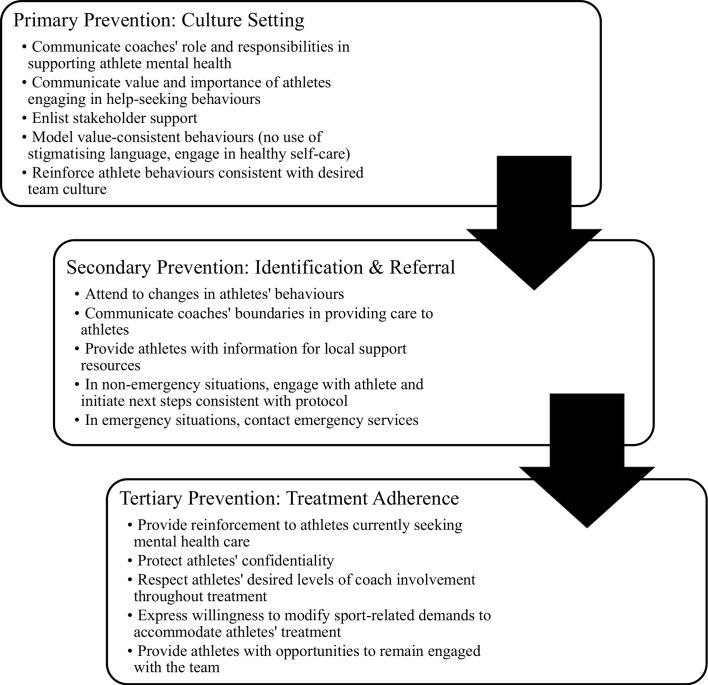
Background: Coaches have the potential to support athlete mental wellness, but many are unsure what to do and concerned they may unintentionally engage in behaviours that negatively impact their athletes. Education has the potential to help coaches engage in primary, secondary and tertiary preventive behaviours related to athlete mental health; however, there exists no empirical or consensus basis for specifying the target behaviours that should be included in such education. Objective: The aim of this research was to review extant literature about the role of sport coaches in mental health prevention and promotion, and obtain expert consensus about useful, appropriate and feasible coach behaviours. Design: Modified Delphi methodology with exploration (ie, narrative review) and evaluation phase. Data sources: Twenty-one articles from PubMed, PsycINFO and ProQuest, and grey literature published by prominent sport organisations. Eligibility criteria for selecting studies: All studies were English-language articles that focused on the role of coaches as they relate to (1) culture setting in sport, (2) addressing athlete mental health and (3) providing ongoing support to athletes with mental health concerns. No study design, publication date limits or sport characteristics were applied. Results: The coach’s role should include fostering team cultures that support athlete mental health, encouraging care-seeking and supporting athletes currently receiving mental healthcare. Summary/Conclusion: The behaviours specified herein have implications for coach education programme development. This study is the first to use a structured Delphi process to develop specific recommendations about the role coaches can play in supporting athlete mental health.
Overview
The claims and statistics of this paper haven’t been checked yet.
Run the check — free, no account needed. It reads the open-access text and checks the sources it cites.
Integrity signals
Registry
Cites
Statistics
Figures
Verification
Claims the paper makes
The claims and statistics of this paper haven’t been checked yet.
Run the check — free, no account needed. It reads the open-access text and checks the sources it cites.
Claims other papers make about this one
Each is checked against this paper’s own text: does it say what the citing paper says it does?
The source backs part of the claim, not all of it — or backs it for a different population, condition or comparison.
In the citing paper
“This may include a decisive role in shaping the cultural and institutional attitudes towards mental health in elite sports organisations (e.g. help-seeking) [26, 27].”
From The Mental Health of Elite-Level Coaches: A Systematic Scoping Review (2024) · cites this paper as [26]
Experimental — accuracy not yet measured
Self-check
Percentages, sums and reported differences re-computed from the paper’s own numbers.
The self-check needs the paper’s full text.
Citations
Cites
Organizational culture and leadership
(1993) · Long Range Planning · doi:10.1016/0024-6301(93)90120-5 · Cited by 16,530
A typology of reviews: an analysis of 14 review types and associated methodologies
Grant, M. J., & Booth, A. (2009) · Health Information & Libraries Journal · doi:10.1111/j.1471-1842.2009.00848.x · Cited by 10,817
The mental health continuum: from languishing to flourishing in life.
Keyes, C. L. M. (2002) · Journal of Health and Social Behavior · doi:10.2307/3090197 · Cited by 5,133
Eime, R. M., Young, J. A., Harvey, J. T., Charity, M. J., & Payne, W. R. (2013) · International Journal of Behavioral Nutrition and Physical Activity · doi:10.1186/1479-5868-10-98 · Cited by 2,366
Gazing into the oracle : the Delphi method and its application to social policy and public health
Ziglio, E., & Adler, M. E. (1996) · Jessica Kingsley Publishers eBooks · Cited by 1,429
Mental health in elite athletes: International Olympic Committee consensus statement (2019)
Reardon, C. L., Hainline, B., Aron, C. M., Baron, D., Baum, A. L., Bindra, A., Budgett, R., Campriani, N., Castaldelli-Maia, J. M., Currie, A., et al. (2019) · British Journal of Sports Medicine · doi:10.1136/bjsports-2019-100715 · Cited by 1,277
The Mental Health of Elite Athletes: A Narrative Systematic Review
Rice, S. M., Purcell, R., De Silva, S., Mawren, D., McGorry, P. D., & Parker, A. G. (2016) · Sports Medicine · doi:10.1007/s40279-016-0492-2 · Cited by 1,205 · cited 2×
“Once athletes have chosen to seek help for mental health concerns, encouraging treatment adherence should theoretically help limit morbidity.”
BackgroundYouth sport programs: An avenue to foster positive youth development
Fraser-Thomas, J. L., Côté, J., & Deakin, J. (2005) · Physical Education & Sport Pedagogy · doi:10.1080/1740898042000334890 · Cited by 1,162
Intervention Mapping: A Process for Developing Theory and Evidence-Based Health Education Programs
Bartholomew, L. K., Parcel, G. S., & Kok, G. (1998) · Health Education & Behavior · doi:10.1177/109019819802500502 · Cited by 1,102 · cited 1×
“23 Thus, there is a critical need to establish consensus about the role of the coach related to mental health promotion.”
BackgroundThe National Collegiate Athletic Association
Pierce, P. E. (1912) · American Physical Education Review · doi:10.1080/23267224.1912.10651691 · Cited by 768
Cited by
Sorted by citations
An Evidence-Informed Framework to Promote Mental Wellbeing in Elite Sport
Purcell, R., Pilkington, V., Carberry, S., Reid, D., Gwyther, K., Hall, K., Deacon, A., Manon, R., Walton, C. C., & Rice, S. (2022) · Frontiers in Psychology · doi:10.3389/fpsyg.2022.780359 · Cited by 156
Breslin, G., Shannon, S., Cummings, M., & Leavey, G. (2022) · Systematic Reviews · doi:10.1186/s13643-022-01932-5 · Cited by 107
“Sport coaches are often viewed as a conduit to, or gatekeepers of, athlete mental health promotion [3].”
BackgroundKuettel, A., Pedersen, A. K., & Larsen, C. H. (2021) · Psychology of Sport and Exercise · doi:10.1016/j.psychsport.2020.101837 · Cited by 89
Li, Z., Li, J., Kong, J., Li, Z., Wang, R., & Jiang, F. (2024) · Frontiers in Psychology · doi:10.3389/fpsyg.2024.1433698 · Cited by 80
Kegelaers, J., Wylleman, P., van Bree, I. (. N. A., Wessels, F., & Oudejans, R. R. D. (2021) · International Sport Coaching Journal · doi:10.1123/iscj.2020-0066 · Cited by 71
Mental Health Among Elite Youth Athletes: A Narrative Overview to Advance Research and Practice
Walton, C. C., Purcell, R., Henderson, J. L., Kim, J., Kerr, G., Frost, J., Gwyther, K., Pilkington, V., Rice, S., & Tamminen, K. A. (2024) · Sports Health: A Multidisciplinary Approach · doi:10.1177/19417381231219230 · Cited by 74
“8,14,76 As noted earlier, Gulliver et al 43 found that EYAs perceived a coach’s positive attitude toward mental health help-seeking as a decisive facilitator in accessing support.”
BackgroundThe Mental Health of Elite-Level Coaches: A Systematic Scoping Review
Frost, J., Walton, C. C., Purcell, R., Fisher, K., Gwyther, K., Kocherginsky, M., & Rice, S. M. (2024) · Sports Medicine - Open · doi:10.1186/s40798-023-00655-8 · Cited by 59
“This may include a decisive role in shaping the cultural and institutional attitudes towards mental health in elite sports organisations (e.g. help-seeking) [26, 27].”
BackgroundMental health and well-being of elite youth athletes: a scoping review
Gwyther, K., Pilkington, V., Bailey, A. P., Mountjoy, M. L., Bergeron, M. F., Rice, S., & Purcell, R. (2024) · British Journal of Sports Medicine · doi:10.1136/bjsports-2024-108244 · Cited by 56
Mental Health in the Specialized Athlete
Daley, M., Shoop, J., & Christino, M. A. (2023) · Current Reviews in Musculoskeletal Medicine · doi:10.1007/s12178-023-09851-1 · Cited by 57
Exploring Mental Health and Illness in the UK Sports Coaching Workforce
Smith, A., Haycock, D., Jones, J., Greenough, K., Wilcock, R., & Braid, I. (2020) · International Journal of Environmental Research and Public Health · doi:10.3390/ijerph17249332 · Cited by 40
“Future research also needs to examine, among other things, the following in greater detail: the prevalence and patterns of mental illness among coaches; how coaches manage their own and others’ mental health, including through seeking help from others and service use [4]; the mental health literacy of coaches and how…”
BackgroundWilczyńska, D., Qi, W., Jaenes, J. C., Alarcón, D., Arenilla, M., & Lipowski, M. (2022) · International Journal of Environmental Research and Public Health · doi:10.3390/ijerph191710662 · Cited by 36
“Furthermore, sports coaches, who are expected to play the role of the gatekeepers of athletes’ mental health, suffer similar mental disorders as those of athletes [35].”
BackgroundUnderstanding and Improving Athlete Mental Health: A Social Identity Approach
Stevens, M. R., Cruwys, T., OLIVE, L. S., & Rice, S. (2024) · Sports Medicine · doi:10.1007/s40279-024-01996-4 · Cited by 51
“However, researchers have highlighted the important influence that team environments can have on athlete mental health [30], and suggested that coaches have a key role to play in fostering a team environment that supports athlete mental health [5, 115].”
BackgroundAckeret, N., Röthlin, P., Allemand, M., Krieger, T., Berger, T., Znoj, H., Kenttä, G., Birrer, D., & Horvath, S. (2022) · Psychology of sport and exercise · doi:10.1016/j.psychsport.2022.102207 · Cited by 31
Making Sense of Coach Development Worldwide During the COVID-19 Pandemic
Callary, B., Brady, A., Kiosoglous, C., Clewer, P., Resende, R., Mehrtens, T., Wilkie, M., & Horvath, R. (2020) · International Journal of Sport Communication · doi:10.1123/ijsc.2020-0221 · Cited by 30
Dean, F., Kavanagh, E. J., Wilding, A. J., & Rees, T. (2022) · Sports · doi:10.3390/sports10040060 · Cited by 26
“This quote thus underpins that, although sport psychology is of course concerned with athletes’ performance, its focus may also be taking a more holistic wellbeing approach [28,29].”
BackgroundGarver, M. J., Gordon, A. M., Philipp, N. M., Huml, M. R., & Wakeman, A. J. (2021) · Journal of Multidisciplinary Healthcare · doi:10.2147/jmdh.s320243 · Cited by 25
Supporting The Mental Health Of Elite‐Level Coaches Through Early Intervention
Frost, J., Walton, C. C., Purcell, R., & Rice, S. (2023) · Arthroscopy Sports Medicine and Rehabilitation · doi:10.1016/j.asmr.2023.04.017 · Cited by 28
Şenel, E., Küttel, A., Adiloğulları, İ., & Jowett, S. (2025) · Psychology of sport and exercise · doi:10.1016/j.psychsport.2025.102850 · Cited by 27
The Importance of Positive Relationships for Coaches’ Effectiveness and Well-Being
Davis, L., Jowett, S., & Sörman, D. E. (2022) · International Sport Coaching Journal · doi:10.1123/iscj.2021-0065 · Cited by 20
Annesi, N., Battaglia, M., & Frey, M. (2023) · Physical Culture and Sport Studies and Research · doi:10.2478/pcssr-2023-0007 · Cited by 20
Lundqvist, C., Camps, J., Vertommen, T., Barker‐Ruchti, N., & Kolbeinsson, Ö. (2025) · International Review of Sport and Exercise Psychology · doi:10.1080/1750984x.2025.2457038 · Cited by 24
“Leadership within a team or sports organization can significantly influence group norms, and leaders’ actions are also likely to be shaped by what is valued through reward systems (e.g. Bissett et al., 2020; Fransen et al., 2020; Roberts et al., 2020).”
Promoting mental health among young males in sporting contexts: A systematic review
Petersen, J. M., Drummond, M., Rasheed, K., Elliott, S., Drummond, C., Smith, J. A., Wadham, B., & Prichard, I. J. (2023) · Psychology of sport and exercise · doi:10.1016/j.psychsport.2023.102551 · Cited by 20
Barrio, M. R., Ley, C., Schomöller, A., & Dumon, D. (2021) · International Journal of Environmental Research and Public Health · doi:10.3390/ijerph18126543 · Cited by 26
“[97] conducted a narrative review of literature and a Delphi-study on the role of coaches in the prevention of athletes’ mental illness, framed within the World Health Organization’s prevention framework.”
MethodThe Team Denmark applied model of athlete mental health
Henriksen, K., Diment, G. M., & Küttel, A. (2023) · International Journal of Sport and Exercise Psychology · doi:10.1080/1612197x.2023.2281525 · Cited by 26
“The group often includes cliques that can lead to division among members, and relationships between team members are often uncertain and lack mutual trust (Bissett, Kroshus, and Hebard 2020).”
InfluentialMarheni, E., Afrizal, S., Purnomo, E., Jermaina, N., & Cahyani, F. I. (2023) · Retos · doi:10.47197/retos.v51.101053 · Cited by 16
Boldi, A., Rapp, A., & Birk, M. (2024) · International journal of human computer interactions · doi:10.1080/10447318.2024.2423343 · Cited by 16
“These findings are not surprising as they align with studies from traditional sports, where social support and coaching positively impact players’ mental well-being (Bissett et al., 2020; Gilbert et al., 2007; Liu et al., 2023; McLean, 2020; Simons & Bird, 2023).”
Sandgren, S. S., Haycraft, E., Pearce, R., & Plateau, C. R. (2022) · Journal of Applied Sport Psychology · doi:10.1080/10413200.2022.2032476 · Cited by 15
An evaluation of a mental health literacy program for community sport leaders
O’Connor, J. P., Grové, C., Jeanes, R., Lambert, K., & Bevan, N. (2023) · Mental Health & Prevention · doi:10.1016/j.mhp.2023.200259 · Cited by 13
On the Frontline of Athlete Mental Health: The Mental Health Literacy of NCAA Coaches
Beebe, K. E., & Petrie, T. A. (2024) · The Sport Psychologist · doi:10.1123/tsp.2023-0007 · Cited by 12
The relationship between athletes’ grit, mental toughness, and sport resilience
Mendizabal, B. (2024) · Physical Education of Students · doi:10.15561/20755279.2024.0401 · Cited by 12
“Professionals such as coaches, trainers, and sports psychologists are tasked with creating specific strategies and training methods to develop these mental qualities [31, 32].”
BackgroundOjio, Y., Amemiya, R., Oliffe, J. L., & Rice, S. (2025) · BMJ Open Sport & Exercise Medicine · doi:10.1136/bmjsem-2024-002275 · Cited by 11
“Acute stressors, such as career instability or high-performance pressures, may lead to adjustment disorders, which often resolve within 6 months if the stressor is removed.”
The role of identity leadership in promoting athletes' mental health: A cross‐cultural study
Butalia, R., Boen, F., Haslam, S. A., Puyenbroeck, S. V., Meeussen, L., Coffee, P., Biglari, N., Bruner, M. W., Chaudhary, A., Chmura, P., et al. (2025) · Applied Psychology · doi:10.1111/apps.70008 · Cited by 13
Wilson, O. W. A., Whatman, C. S., Walters, S., Keung, S., Enari, D., Chiet, A., Millar, S., Ferkins, L., Hinckson, E. A., Hapeta, J., et al. (2022) · International Journal of Environmental Research and Public Health · doi:10.3390/ijerph19148597 · Cited by 12
“Our findings are consistent with evidence indicating that coaches and the climate they create play an important role in promoting adolescent wellbeing [34,35].”
ResultA systematic review of psychological difficulties among elite sports coaches
Kang, S., & Lee, S. (2025) · Frontiers in Psychology · doi:10.3389/fpsyg.2025.1666035 · Cited by 9
“It is also worth noting that most counseling-related studies in sport psychology have primarily emphasized the role of coaches as supporters or facilitators of athletes’ psychological wellbeing (Bissett et al., 2020; Simons and Bird, 2023).”
Hebard, S. P., Oakes, L. R., Davoren, A. K., Milroy, J. J., Redman, J., Ehrmann, J., & Wyrick, D. L. (2021) · Journal of Research in Innovative Teaching & Learning · doi:10.1108/jrit-01-2021-0006 · Cited by 17
Self-citationKusier, A. O., Ubbesen, T. R., & Folker, A. P. (2024) · Frontiers in Public Health · doi:10.3389/fpubh.2024.1336736 · Cited by 11
Liddelow, C., Schweickle, M. J., Sutcliffe, J., Swann, C., Keegan, R. J., Rice, S., Okely, A. D., & Vella, S. A. (2023) · Psychology of sport and exercise · doi:10.1016/j.psychsport.2023.102553 · Cited by 13
Mental ill-health in semi-elite women’s soccer in England: a mixed-methods approach
Bramley, O., Healy, L. C., & Sarkar, M. (2024) · International Journal of Sport and Exercise Psychology · doi:10.1080/1612197x.2024.2311752 · Cited by 9
“Coaches are key to striving to improve the narrative toward mental health in sports settings (Purcell et al., 2022), by helping to establish team cultures that normalise, de-stigmatise, and support mental health (Bissett et al., 2020).”
Development of mental education through sports to enhance adolescent personal resilience
Marheni, E., Purnomo, E., Okilanda, A., Oktavianus, I., Hambali, B., Burstiando, R., Cahyani, F. I., & Jermaina, N. (2024) · Journal of Human Sport and Exercise · doi:10.55860/5vantg56 · Cited by 12
“Education has the potential to help coaches engage in primary, secondary and tertiary preventive behaviours related to athlete mental health; however, there is no empirical basis or consensus to determine the target behaviour’s that should be included in such education (Bissett et al., 2020).”
BackgroundOoms, L., van Stam, W., Sevdalis, V., Overbye, M., Algurén, B., Heck, S., & Hoye, A. V. (2025) · BMC Public Health · doi:10.1186/s12889-025-25916-x · Cited by 13
“Furthermore, the strategies complement the expert consensus on coach behaviors that support athlete mental health, particularly those within the domain of primary prevention of mental health issues [104].”
Mental health and well‐being in esports: A scoping review
Poulus, D., Nicholson, M., Obine, E. A. C., Drew, M., FISHER, K., Vella, S. A., Seidler, Z. E., & Sharpe, B. T. (2026) · Applied Psychology · doi:10.1111/apps.70055 · Cited by 18
In Between the Lines: Black and Brown Adolescents Creating a Homeplace Across School Settings
Germinaro, K. (2022) · Urban Education · doi:10.1177/00420859221086519 · Cited by 10
“As a coach, I have a role to facilitate the mental wellbeing of my players, including their motivation to learn about sociopolitical topics (Bissett et al., 2020).”
BackgroundThe Coach's Role in Understanding the Athletes' Condition: Maximizing Communication Functions
Purnomo, E., Aisyah, S. N., Hadjarati, H., Azis, A. C. K., Suardika, I. K., Jermaina, N., Nurkhoiroh, N., & Gumilar, A. (2024) · Retos · doi:10.47197/retos.v55.105991 · Cited by 9
“Therefore, coaches need to motivate athletes and create the right conditions for training (Akbar, Abd Karim, et al. 2024; Bissett, Kroshus, and Hebard 2020; Marheni et al. 2024).”
BackgroundExamining the Impact of COVID-19 on Sport Coaches
Battaglia, A., & Kerr, G. A. (2022) · International Sport Coaching Journal · doi:10.1123/iscj.2022-0025 · Cited by 9
Profiling of expert bouldering routesetters
Henz, J., Sánchez, X., Memmert, D., & Medernach, J. P. (2024) · International Journal of Sports Science & Coaching · doi:10.1177/17479541241248583 · Cited by 8
“1,17 Research fi ndings across different sport domains show that soft skills such as appropriate communication, 22 motivationally and supportive communication, 23 leadership 21 and care-seeking team cultures 28 can positively impact social cohesion, motivational engagement and collective ef fi cacy.”
Investigating coaches’ recognition of symptoms of eating disorders in track athletes
Macpherson, M. C., Harrison, R. E., Marie, D., & Miles, L. K. (2022) · BMJ Open Sport & Exercise Medicine · doi:10.1136/bmjsem-2022-001333 · Cited by 6
Mental Health Training for Coaches: A Policy, Practice, and Research Commentary
Bates, S. M., & Atkinson, O. (2024) · Sport Social Work Journal · doi:10.33043/sswj.2z3d359 · Cited by 7
“Finally, at the tertiary level, coaches can protect confidentiality and modify sport-related demands to keep athletes engaged with the team and accommodate their treatment needs while engaged in mental health services (Bissett et al., 2020).”
BackgroundMethodLane, D. S. (2024) · Mental Health & Prevention · doi:10.1016/j.mhp.2024.200364 · Cited by 8
The Association Between Sports Participation and Mental Health Across the Lifespan
Tahira, S. (2023) · International journal of Sport Studies for Health · doi:10.5812/intjssh-134601 · Cited by 7
“…mental health through the prevention of mental health problems,promotionof mentalhealth,andearlyinterven-tion,assistingathleteswhoarealreadyundergoingmental healthcare, facilitating care-seeking, and promoting team cultures that encourage athletes’ mental health (60, 61).”
BackgroundTapering in the Sport of Karate: Narrative Review
Yudhistira, D., Kurnianto, H., Candra, A. R. D., Ulinnuha, R. A. N., & Wicaksono, A. (2023) · International Seminar of Public Health and Education (ISPHE) · doi:10.4108/eai.29-6-2022.2326103 · Cited by 10
McGuire, C. S., Brown, D. J., McEwan, D., Arnold, R., & Martin, L. J. (2023) · International Review of Sport and Exercise Psychology · doi:10.1080/1750984x.2023.2204320 · Cited by 8
Mental training strategies in improving sport performance: A literature review
Ihsan, F., Nasrulloh, A., Nugroho, S., & Yuniana, R. (2024) · doi:10.56984/8zg020atip · Cited by 7
Schinke, R. J., Henriksen, K., Petersen, B., Wylleman, P., Si, G., Zhang, L., McCann, S. C., & Papaioannou, A. G. (2021) · International Journal of Sport and Exercise Psychology · doi:10.1080/1612197x.2021.1892940 · Cited by 11
“The primary (i.e., daily) points of contact for high-performance athletes have often been personal coaches and teammates, both of whom have been found to lack in mental health literacy (Bissett et al., 2020).”
BackgroundMatthews, J. J., Booth, A., Rooney, L., Brennan, C., & McGovern, T. (2023) · Children s Health Care · doi:10.1080/02739615.2023.2207831 · Cited by 6
“Consequently, there is an increasing recognition of how coaches can engage with their athletes on topics such as mental health (Bissett et al., 2020).”
BackgroundChen, W., Wang, H., Liu, Z., Yao, J., Chu, D., Zhu, X., & Niu, H. (2025) · Frontiers in Psychiatry · doi:10.3389/fpsyt.2025.1558351 · Cited by 6
“Notably, support from family members, coaches, and teammates played a crucial role in maintaining athletes ’ psychological health (38).”
O’Connor, J. P., Jeanes, R., Lambert, K., Bevan, N., Young, L. M., Powers, T., & Grové, C. (2024) · Mental Health & Prevention · doi:10.1016/j.mhp.2024.200326 · Cited by 6
Consensus recommendations to inform an update of the NCAA Mental Health Best Practices
Kroshus, E., Wheelhouse, C., Houle, J. L. W., Bartley, J. D., Gruttadaro, D., Pick, C. J., Rao, A. L., Fine, A., Merrill, J., Casiero, D. C., et al. (2025) · British Journal of Sports Medicine · doi:10.1136/bjsports-2024-109183 · Cited by 9
Self-citationParrott, S. (2023) · International Journal of Sport Communication · doi:10.1123/ijsc.2023-0075 · Cited by 6
Bunch, N., Beasley, L., & Copple, J. (2024) · International Journal of Sport Communication · doi:10.1123/ijsc.2024-0035 · Cited by 6
Schwab, L., Röthlin, P., Philippe, R. A., & Horvath, S. (2026) · Journal of Interpersonal Violence · doi:10.1177/08862605251408112 · Cited by 5
Meeting Basic Psychological Needs: One Coach’s Application of Self-Determination Theory in Practice
Gano‐Overway, L. A., & Harrison, G. A. (2024) · Journal of Sport Psychology in Action · doi:10.1080/21520704.2024.2396303 · Cited by 5
“The coach plays a key role in supporting athletes’ physical and mental well-being by not only being a conduit for resources within the athletic program but also creating sporting environments which focus on holistic athlete development (Bissett et al., 2020).”
A process map of flourishing between the coach and athlete in Canadian university sport
Pankow, K., Mosewich, A. D., McHugh, T.-L., & Holt, N. L. (2022) · Qualitative Research in Sport Exercise and Health · doi:10.1080/2159676x.2022.2127859 · Cited by 8
“Coach WB (and subsequently coach flourishing) has received comparatively less attention in the literature than athlete WB and flourishing, and largely focused on coaches’ roles in supporting athletes (e.g. Bissett, Kroshus, and Hebard 2020).”
BackgroundKaski, S., Arvinen‐Barrow, M., Kinnunen, U. M., & Parkkari, J. P. (2022) · Journal of Clinical Sport Psychology · doi:10.1123/jcsp.2021-0083 · Cited by 10
“For example, our research found that satisfaction with coaching (a resource) was a 325 significant contributor to good mental well-being, supporting the notion that having a 326 trusting, open, and supportive relationship(s) with coach(es) can protect athlete mental well327 being (Bissett et al., 2020; Kuettel & Larse…”
MethodO’Leary, C., Rooney, B., Donohue, B. C., & Matthews, J. J. (2022) · Journal of Applied Sport Psychology · doi:10.1080/10413200.2022.2126908 · Cited by 5
“One such role is the coach, who is the key gate-keeper of the sporting environment (Bissett et al., 2020), and is an integral part of an athlete ’ s life, creating the environment to facilitate the athlete ’ s physical and psycho-social development (Otterbein et al., 2021; Simons & Bird, 2022).”
BackgroundTopping, R., Paradis, K. F., & Ferguson, K. (2023) · International Sport Coaching Journal · doi:10.1123/iscj.2022-0090 · Cited by 5
“…mental health support as part of their role (role breadth) however, many do not feel that they have the adequate mental health literacy to provide appropriate support (role efficacy) and are concerned that they may unintentionally have a negative impact on their athletes (Bissett et al., 2020).”
BackgroundGutman, T., Lev-Arey, D., Gottlieb, A., & Tarrasch, R. (2025) · Psychology of sport and exercise · doi:10.1016/j.psychsport.2025.102893 · Cited by 4
Coach mental health literacy: a scoping review
Worley, J. T., Sullivan, L., Ferguson, E., Anderson‐Butcher, D., Mack, S., Houle, J. L. W., & Ault, K. J. (2025) · International Review of Sport and Exercise Psychology · doi:10.1080/1750984x.2025.2575494 · Cited by 4
“…role in supporting athlete mental health, the number of appropriate athlete referrals coaches have made to mental health providers, or whether coaches have actively enlisted the support of relevant stakeholders (e.g. parents, support staff) for athlete mental health concerns (Bissett et al., 2020).”
Developing sport officials: What can we learn from our knowledge on coach development?
Kittel, A. B., Cunningham, I., Lascu, A., Larkin, P., Vickery, W., & MacMahon, C. (2026) · International Journal of Sports Science & Coaching · doi:10.1177/17479541251408003 · Cited by 5
The Psychology of Golf Performance under Pressure
Hill, D. M., Barker, J. B., & Steptoe, K. (2023) · Routledge eBooks · doi:10.4324/9781003299042 · Cited by 4
Henderson, H., Shipway, R., Nicholson, R., & Marmion, V. (2025) · Leisure Studies · doi:10.1080/02614367.2025.2481564 · Cited by 4
A Content Analysis of Mental Health Literacy Education for Sport Coaches
Hebard, S. P., Bissett, J. E., Kroshus, E., Beamon, E. R., & Reich, A. L. (2021) · Journal of Clinical Sport Psychology · doi:10.1123/jcsp.2021-0011 · Cited by 4
Self-citationActions speak louder than coaches: Eating disorder behaviour among student-athletes
Button, T. A. J., & Ouellette, G. P. (2024) · PLoS ONE · doi:10.1371/journal.pone.0308795 · Cited by 4
Brown, B. J., Aller, T. B., Lyons, L. K., Jenson, A., Juhasz, A., Jensen, J. F., & Hodgson, J. L. (2024) · Journal of Clinical Sport Psychology · doi:10.1123/jcsp.2023-0059 · Cited by 4
Beebe, K. E., & Petrie, T. A. (2025) · Journal of Applied Sport Psychology · doi:10.1080/10413200.2025.2463590 · Cited by 4
“As stakeholders who spend substantial time with their athletes, coaches are influential in defining their teams’ culture around mental health and related help-seeking behaviors (Bissett et al., 2020; Gulliver et al., 2012; Moreland et al., 2018; Purcell et al., 2019; Rice et al., 2016).”
Küttel, A., Melin, A., Larsen, C. H., & Lichtenstein, M. B. (2022) · Scandinavian Journal of Sport and Exercise Psychology · doi:10.7146/sjsep.v4i1.128360 · Cited by 7
Examining the value of mental health awareness training for soccer coaching license candidates
McLane, L., Oliva‐Lozano, J. M., Kerulis, M., Cost, R., Bartley, J. D., & Chiampas, G. (2024) · Apunts Sports Medicine · doi:10.1016/j.apunsm.2024.100459 · Cited by 3
The impact of abusive supervision by coaches on athlete burnout in Chinese culture
Li, J., Li, X., Sun, J., Li, J., Li, C., Fu, Y., & Yan, C. (2025) · Frontiers in Psychology · doi:10.3389/fpsyg.2025.1643356 · Cited by 4
“Li et al. 10.3389/fpsyg.2025.1643356 Frontiers in Psychology 07 frontiersin.org behavior, positively impact athlete burnout (Altahayneh, 2013; Bissett et al., 2020; Choi et al., 2020).”
InfluentialBon, M., & Doupona, M. (2020) · International Journal of Occupational Medicine and Environmental Health · doi:10.13075/ijomeh.1896.01633 · Cited by 3
Kraus, A. D., & Tibbetts, E. (2022) · Journal of Clinical Sport Psychology · doi:10.1123/jcsp.2021-0061 · Cited by 5
Dithurbide, L., Boudreault, V., Durand‐Bush, N., Delage, G., MacLeod, L., & Gauthier, V. (2025) · Frontiers in Psychology · doi:10.3389/fpsyg.2025.1540372 · Cited by 2
Mental health literacy in elite-level coaches: Recognition and management of depression and burnout
Frost, J., Purcell, R., Rice, S. M., Tamminen, K. A., Gouttebarge, V., Adams, W. M., & Walton, C. C. (2026) · Journal of Applied Sport Psychology · doi:10.1080/10413200.2025.2589723 · Cited by 2
“Considering their role and influence, coaches are strategically positioned to act as either gate-keepers or gate-openers in promoting and supporting the mental health of athletes (Bissett et al., 2020; Brown et al., 2017; Mazzer & Rickwood, 2009).”
Shipway, R., Henderson, H., Nicholson, R., & Marmion, V. (2025) · Leisure Sciences · doi:10.1080/01490400.2025.2501213 · Cited by 2
Validation of the athlete psychological strain questionnaire among United States collegiate athletes
Yang, J., & Parent, M. C. (2025) · Psychology of sport and exercise · doi:10.1016/j.psychsport.2025.102933 · Cited by 2
Motivation in coaching: Promoting adaptive psychological outcomes
Kingston, K. M., Wixey, D., & Cropley, B. (2021) · Society for Transparency, Openness, and Replication in Kinesiology eBooks · doi:10.51224/b1021 · Cited by 2
“This situation is by no means unique, and the availability of sport psychology resources for coaches has been raised previously (e.g., Bissett et al., 2020; Pope et al., 2015).”
BackgroundBenefits of the SHC System on Publication Management and Promotion of Sports Actor Services
Adi, S., & Fathoni, A. F. (2022) · Physical Education and Sports Studies and Research · doi:10.56003/pessr.v1i1.71 · Cited by 2
National Initiative Pivots Amid a Global Pandemic: Lessons Learned From the InSideOut Initiative
Milroy, J. J., Davoren, A. K., Hebard, S. P., Grist, P., Kelly, S. E., Weaver, G. M., & Wyrick, D. L. (2024) · Health Promotion Practice · doi:10.1177/15248399241285058 · Cited by 1
“…can have positive impacts on physical, social, and mental health (Pate et al., 2000; Taliaferro et al., 2008), preliminary evidence suggests the coach-athlete relationship is a critical moderator between sports participation and student-athlete outcomes (Bissett et al., 2020; Rhind & Jowett, 2010).”
Self-citationStringer, J., Tasawar, A., Pearl, D. L., Lumley, M. N., & Papadopoulos, A. (2025) · Journal of Amateur Sport · doi:10.17161/jas.v11i1.22920 · Cited by 3
Walk the walk or talk the talk: elite coaches espoused thoughts and actions
Nash, C. S., Beckmann, J., Crespo, M., & Martínez-Gallego, R. (2025) · Physical Education and Sport Pedagogy · doi:10.1080/17408989.2025.2522446 · Cited by 1
Lim, A. S. X., Schweickle, M. J., & Vella, S. A. (2025) · Journal of Applied Sport Psychology · doi:10.1080/10413200.2025.2523868 · Cited by 1
“Although sports coaches possess the potential to champion and endorse health-promoting behaviors and overall wellness in athletes (Bissett et al., 2020), it is essential to recognize that coaches and parents may not be adequately equipped to address the mental health needs of athletes.”
Cultural attitudes toward sport psychology: insights from Italian athletes and coaches
Simonti, G., Kamphoff, C. S., McAlarnen, M. M., Kratimenos, P., & Quartiroli, A. (2025) · Frontiers in Psychology · doi:10.3389/fpsyg.2025.1630005 · Cited by 1
“Tailoring interventions to align with cultural values and norms, particularly among coaches, may enhance acceptance and reduce stigma (Bissett et al., 2020).”
An Investigation of Canada’s National Coaching Certification Program’s Coaching Outcomes
Gurgis, J., & Callary, B. (2025) · International Sport Coaching Journal · doi:10.1123/iscj.2024-0136 · Cited by 1
Jewett, R., Durand‐Bush, N., Primeau, C., & Slingerland, K. J. V. (2026) · The Sport Psychologist · doi:10.1123/tsp.2025-0095 · Cited by 1
Lobo, J. T. (2022) · Edu Sportivo Indonesian Journal of Physical Education · doi:10.25299/es:ijope.2022.vol3(3).10605 · Cited by 1
Mental Health and Sport-Related Concussion
Vu, V., & Jeckell, A. S. (2022) · Springer eBooks · doi:10.1007/978-3-031-08364-8_13 · Cited by 1
Creating an Environment That Supports Mental Well-Being and Resilience
Kroshus, E. (2022) · Springer eBooks · doi:10.1007/978-3-031-08364-8_4 · Cited by 2
Self-citationOliveira, S., Cunha, M. I. V. A., Rosado, A. F. B., & Ferreira, C. (2023) · Australian Psychologist · doi:10.1080/00050067.2023.2234071 · Cited by 1
“Coaches can also help their athletes to cope with failures (Haglind, 2003) and other events that can provoke suffering (Bissett et al., 2020).”
BackgroundRaibowo, S., Fathoni, A. F., Sugihartono, T., Nopiyanto, Y. E., Prabowo, A., Permadi, A., & Rizky, O. B. (2023) · Jurnal Inovasi Pengabdian Masyarakat Pendidikan · doi:10.33369/jurnalinovasi.v3i2.27174 · Cited by 1
“Peran pelatih sudah jelas yaitu melatih keterampilan teknik dan fisik atlet (Bissett et al., 2020).”
BackgroundDecisions about the management of mental distress in professional footballers
James, I. A., Turner, M. J., & James, C. A. (2025) · The Cognitive Behaviour Therapist · doi:10.1017/s1754470x25000121 · Cited by 1
“A helpful review of the area concerning the role of sports coaches in promoting athlete MH was undertaken by Bissett et al .”
From cognition to competition: enhancing indonesian football development through sports psychology
Akbar, A., Guspa, A., Muspita, R., Karim, Z. A., Purnomo, E., Cahyani, F. I., & Hon, G. Y. (2025) · Salud Ciencia y Tecnología · doi:10.56294/saludcyt20252082 · Cited by 1
Metadata
- Authors
- Bissett, J. E., Kroshus, E., & Hebard, S.
- Affiliations
- University of Toronto (CA)
- University of Washington (US)
- University of North Carolina at Greensboro (US)
- Corresponding author
- Bissett, James E.
- Venue
- BMJ Open Sport & Exercise Medicine
- Publisher
- BMJ
- Published
- 2020-01
- Volume
- 6
- Issue
- 1
- Pages
- e000676
- ISSN
- 2055-7647 (ISSN-L)
- PMC
- PMC7011013
- OpenAlex
- W3003480518
- Cited by
- 147
- References
- 51
- Citations by year
- 2026: 26 · 2025: 31 · 2024: 32 · 2023: 24 · 2022: 23 · 2021: 7 · 2020: 4
- FWCI
- 3.09
- Type
- journal article
- Language
- en
- Open access
- gold
- doi.org
- Licence
- Locations
- BMJ Open Sport & Exercise Medicine (publishedVersion, cc-by-nc)
- PubMed Central (publishedVersion, cc-by-nc)
- PubMed (publishedVersion)
- DOAJ (DOAJ: Directory of Open Access Journals) (submittedVersion, cc-by-sa)
- Funders
- Social Sciences and Humanities Research Council of Canada (Michael Smith Foreign Study Supplement)
- Topics
- Social Sciences › Psychology › Developmental and Educational Psychology › Sport Psychology and Performance
- Social Sciences › Psychology › Clinical Psychology › Psychological Treatments and Assessments
- Social Sciences › Psychology › Clinical Psychology › COVID-19 and Mental Health
- Keywords
- sports coaches, athlete mental health, coach education, mental health prevention, mental health promotion, team culture, care seeking, athlete support, primary, secondary and tertiary prevention, expert consensus
About these checks
Registry, retraction, Cites and statistics results are computed, not judged, with one exception: a printed reference that no index lists is read once by a model before it counts as a citation error. Claims are extracted by a model and kept only when their quote appears verbatim in the text; each cited source is then checked, with a model’s help, for whether it says what the claim relies on. Those verdicts can be wrong — read the claim’s quote and the cited source before relying on one.
Statistics and arithmetic are recomputed, not judged.
Confidence bands are shown only for fields calibrated on our annotated test set. None is calibrated yet, so no band is shown.
What counts as a claim ›How we measure confidence ›How we check this ›
Are you an author, or do you see a problem with this page? Request a review
