

Dual role of tumour-infiltrating T helper 17 cells in human colorectal cancer
Open accessThe DOI matches its Crossref record, with a small difference in title or year; 50 of the 50 references it cites were found in a registry or an index.
Abstract
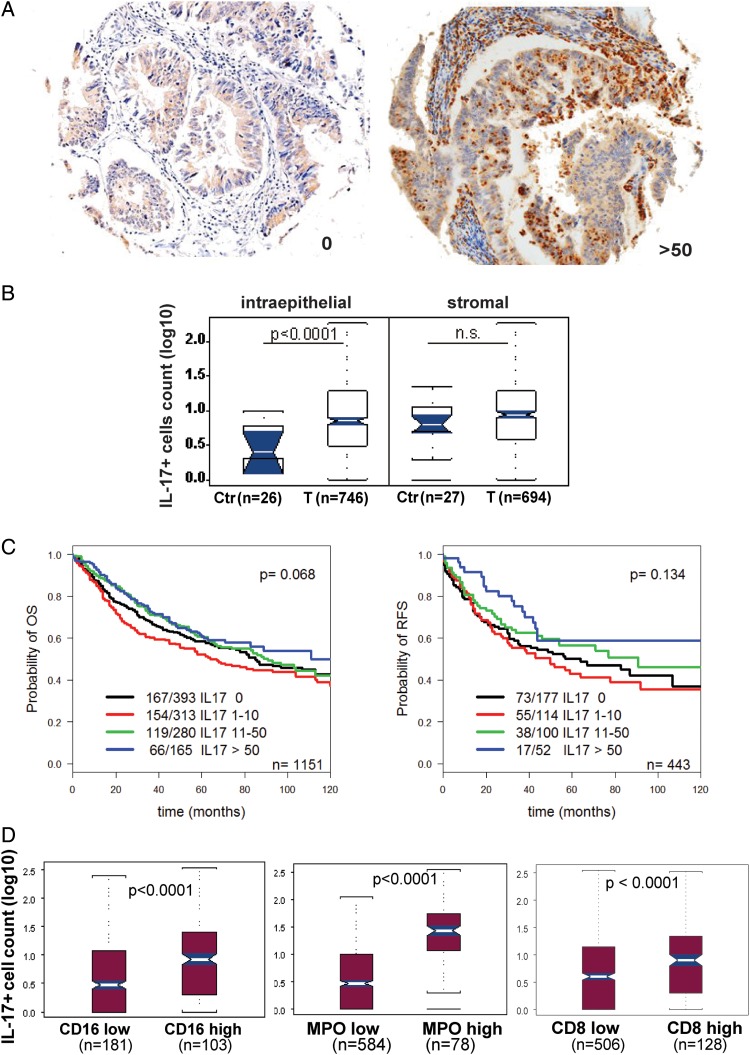
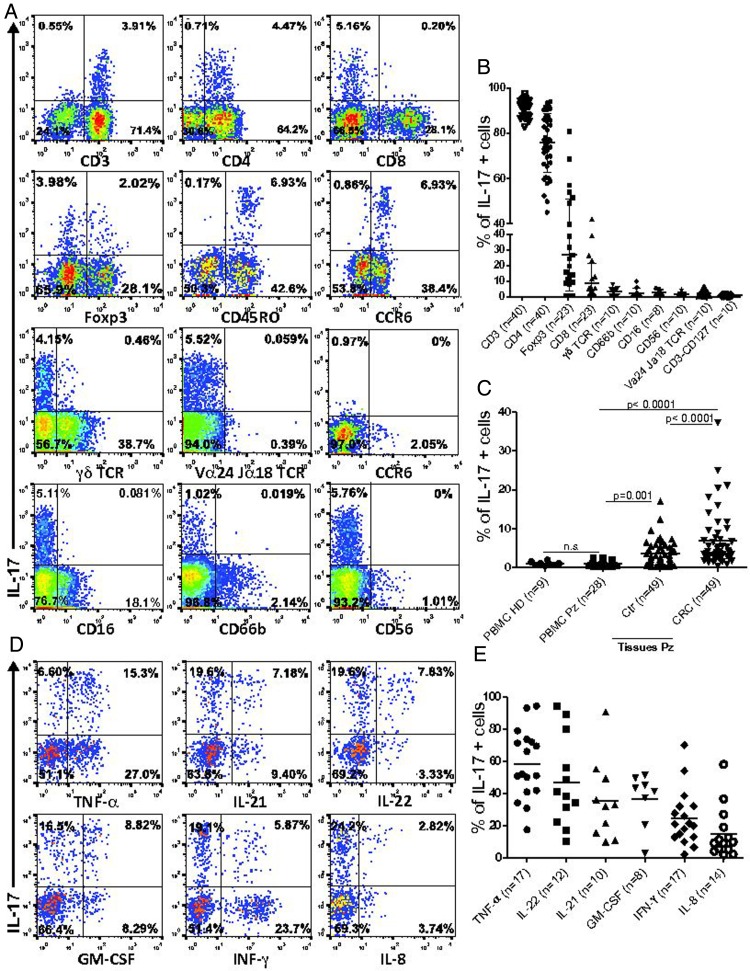
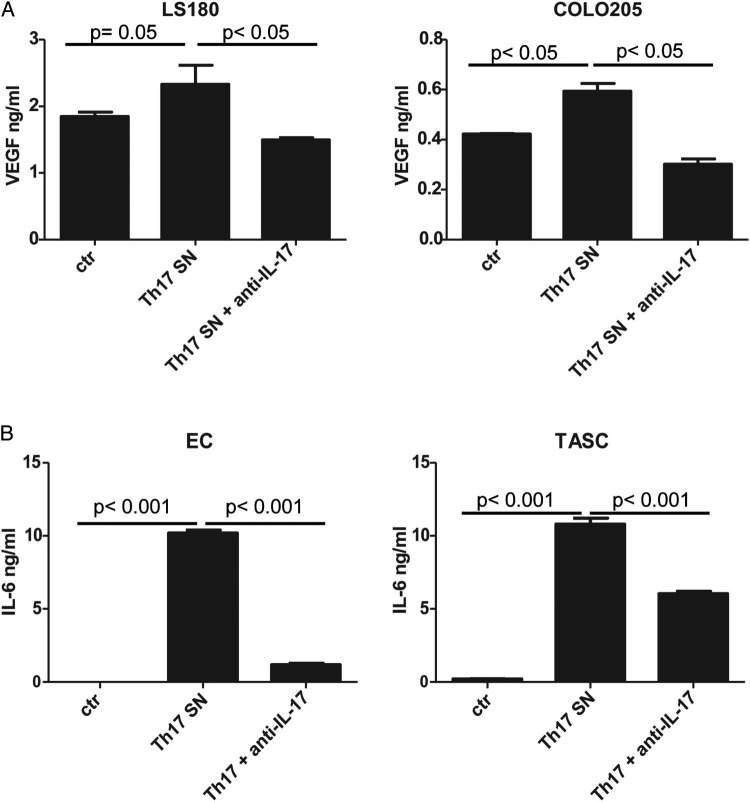
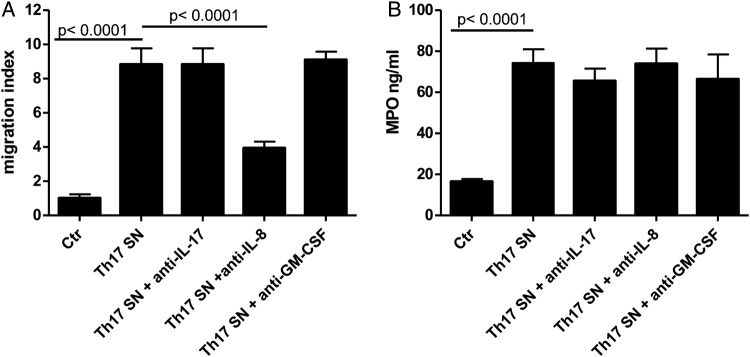
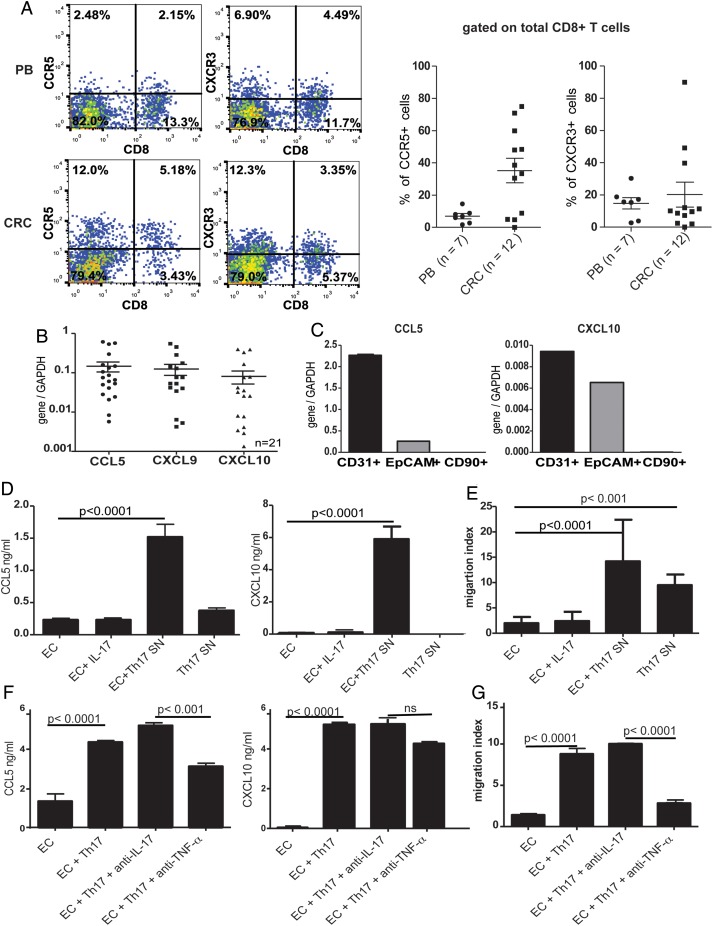
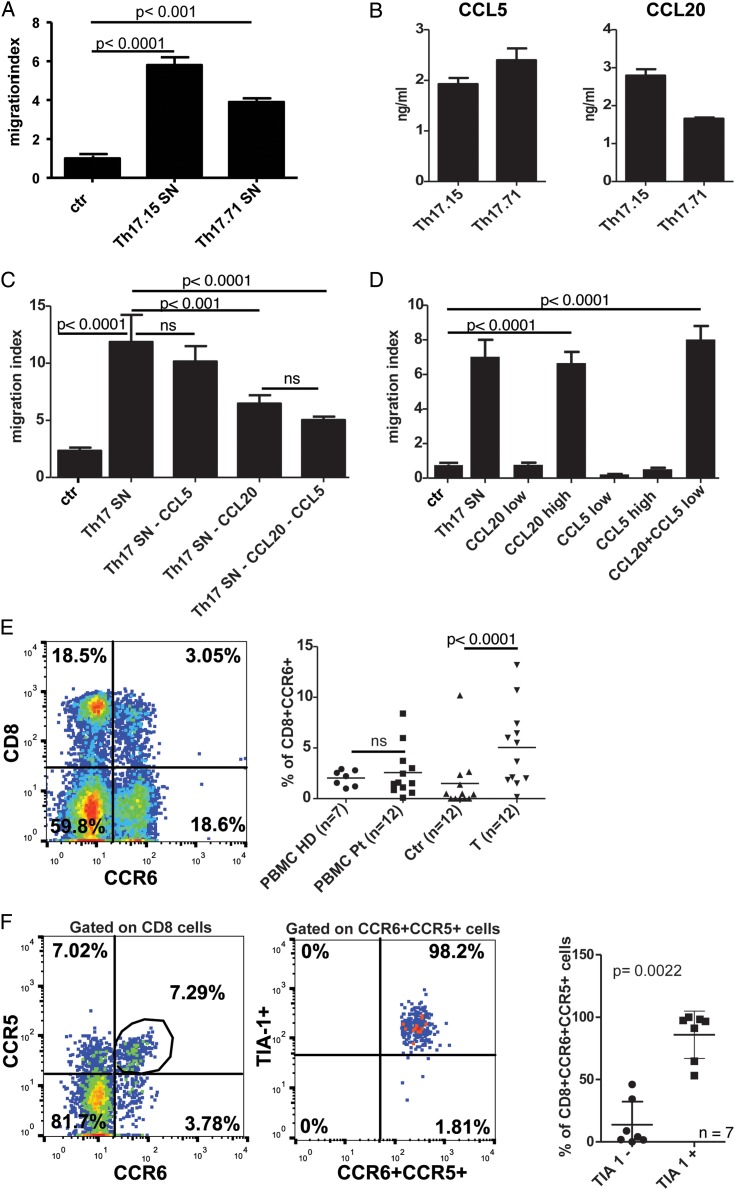
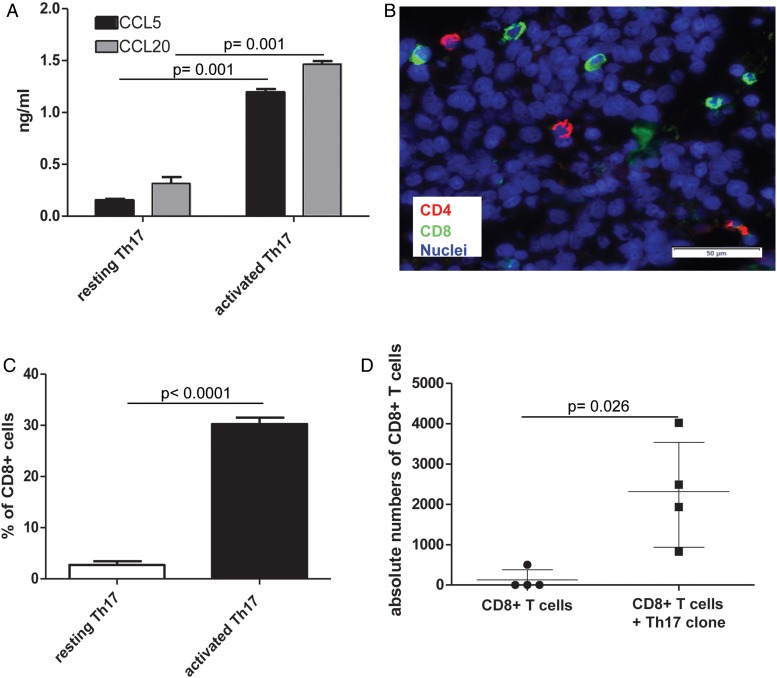
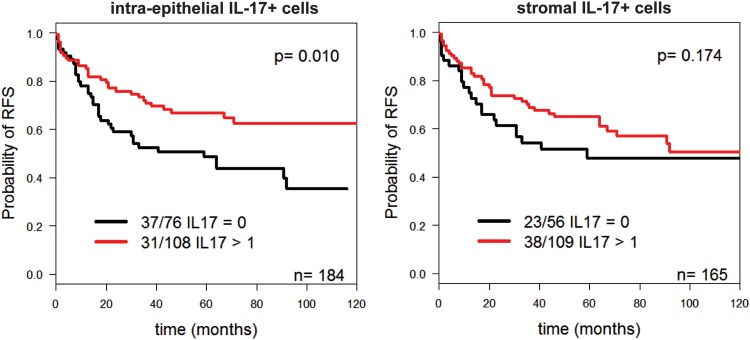
BACKGROUND: The immune contexture predicts prognosis in human colorectal cancer (CRC). Whereas tumour-infiltrating CD8+ T cells and myeloid CD16+ myeloperoxidase (MPO)+ cells are associated with favourable clinical outcome, interleukin (IL)-17-producing cells have been reported to correlate with severe prognosis. However, their phenotypes and functions continue to be debated. OBJECTIVE: To investigate clinical relevance, phenotypes and functional features of CRC-infiltrating, IL-17-producing cells. METHODS: IL-17 staining was performed by immunohistochemistry on a tissue microarray including 1148 CRCs. Phenotypes of IL-17-producing cells were evaluated by flow cytometry on cell suspensions obtained by enzymatic digestion of clinical specimens. Functions of CRC-isolated, IL-17-producing cells were assessed by in vitro and in vivo experiments. RESULTS: IL-17+ infiltrates were not themselves predictive of an unfavourable clinical outcome, but correlated with infiltration by CD8+ T cells and CD16+ MPO+ neutrophils. Ex vivo analysis showed that tumour-infiltrating IL-17+ cells mostly consist of CD4+ T helper 17 (Th17) cells with multifaceted properties. Indeed, owing to IL-17 secretion, CRC-derived Th17 triggered the release of protumorigenic factors by tumour and tumour-associated stroma. However, on the other hand, they favoured recruitment of beneficial neutrophils through IL-8 secretion and, most importantly, they drove highly cytotoxic CCR5+CCR6+CD8+ T cells into tumour tissue, through CCL5 and CCL20 release. Consistent with these findings, the presence of intraepithelial, but not of stromal Th17 cells, positively correlated with improved survival. CONCLUSIONS: Our study shows the dual role played by tumour-infiltrating Th17 in CRC, thus advising caution when developing new IL-17/Th17 targeted treatments.
Overview
The claims and statistics of this paper haven’t been checked yet.
Free: it reads the open-access text and checks the first 5 claims that cite a source we can check. Create a free account to check every claim.
Integrity signals
Registry
Cites
Statistics
Figures
Verification
Claims the paper makes
The claims and statistics of this paper haven’t been checked yet.
Free: it reads the open-access text and checks the first 5 claims that cite a source we can check. Create a free account to check every claim.
Claims other papers make about this one
Each is checked against this paper’s own text: does it say what the citing paper says it does?
The source backs part of the claim, not all of it — or backs it for a different population, condition or comparison.
In the citing paper
“Of interest, the MSS patient population shows elevated level of IL-17 and associated expression of stromal factors that improve tumor cell survival, proliferation, and angiogenesis including PGE1, PGE2, VEGF, and MIP-2”
From The IL-17 Family of Cytokines in Health and Disease (2019) · cites this paper as Amicarella et al., 2017
Experimental — accuracy not yet measured
Self-check
Percentages, sums and reported differences re-computed from the paper’s own numbers.
The self-check needs the paper’s full text.
Citations
Cites
Human gut microbiome viewed across age and geography
Yatsunenko, T., Rey, F. E., Manary, M. J., Trehan, I., Dominguez-Bello, M. G., Contreras, M., Magris, M., Hidalgo, G., Baldassano, R. N., Anokhin, A. P., et al. (2012) · Nature · doi:10.1038/nature11053 · Cited by 7,815
The immune contexture in human tumours: impact on clinical outcome
Fridman, W. H., Pagès, F., Sautès-Fridman, C., & Galon, J. (2012) · Nature reviews. Cancer · doi:10.1038/nrc3245 · Cited by 4,981
Korn, T., Bettelli, E., Oukka, M., & Kuchroo, V. K. (2009) · Annual Review of Immunology · doi:10.1146/annurev.immunol.021908.132710 · Cited by 4,873
Induction of Intestinal Th17 Cells by Segmented Filamentous Bacteria
Ivanov, I. I., Atarashi, K., Manel, N., Brodie, E. L., Shima, T., Karaoz, U., Wei, D., Goldfarb, K. C., Santee, C. A., Lynch, S. V., et al. (2009) · Cell · doi:10.1016/j.cell.2009.09.033 · Cited by 4,554
Interactions Between the Microbiota and the Immune System
Hooper, L. V., Littman, D. R., & Macpherson, A. J. (2012) · Science · doi:10.1126/science.1223490 · Cited by 4,173
Innate lymphoid cells — a proposal for uniform nomenclature
Spits, H., Artis, D., Colonna, M., Diefenbach, A., Di Santo, J. P., Eberl, G., Koyasu, S., Locksley, R. M., McKenzie, A. N. J., Mebius, R. E., et al. (2013) · Nature Reviews Immunology · doi:10.1038/nri3365 · Cited by 2,389
IL-17 family cytokines and the expanding diversity of effector T cell lineages
Weaver, C. T., Hatton, R. D., Mangan, P. R., & Harrington, L. E. (2007) · Annual Review of Immunology · doi:10.1146/annurev.immunol.25.022106.141557 · Cited by 1,842
Surface phenotype and antigenic specificity of human interleukin 17–producing T helper memory cells
Acosta-Rodriguez, E. V., Rivino, L., Geginat, J., Jarrossay, D., Gattorno, M., Lanzavecchia, A., Sallusto, F., & Napolitani, G. (2007) · Nature Immunology · doi:10.1038/ni1467 · Cited by 1,828
Wu, S., Rhee, K.-J., Albesiano, E., Rabizadeh, S., Wu, X., Yen, H.-R., Huso, D. L., Brancati, F. L., Wick, E., McAllister, F., et al. (2009) · Nature Medicine · doi:10.1038/nm.2015 · Cited by 1,812
Innate IL-17-producing cells: the sentinels of the immune system
Cua, D. J., & Tato, C. M. (2010) · Nature Reviews Immunology · doi:10.1038/nri2800 · Cited by 1,578
Cited by
Items 101–193 of 193
Role of IL-23 signaling in the progression of premalignant oral lesions to cancer
Caughron, B., Yang, Y., & Young, M. R. (2018) · PLoS ONE · doi:10.1371/journal.pone.0196034 · Cited by 19
Shan, Z., Yan, Z., Peng, L., Cheng, P., Teng, Y., Mao, F.-Y., Fan, K., Zhuang, Y., & Zhao, Y. (2021) · Journal of Immunology Research · doi:10.1155/2021/6613247 · Cited by 19
“It is shown that B7-H4-mediated immune suppression in antitumor immunity is one of the main mechanisms contributing to the dysfunction of T cells [23].”
BackgroundRodin, W. C. I., Szeponik, L., Rangelova, T., Kebede, F. T., Österlund, T., Sundström, P., Hogg, S., Wettergren, Y., Cosma, A., Ståhlberg, A., et al. (2024) · Cancer Immunology Immunotherapy · doi:10.1007/s00262-024-03758-7 · Cited by 18
“Based on our current results and previous literature, it is likely that a major part of IL-17 produced in the tumour micro-environment is provided by CD4 + Th17 cells, rather than γδ17 cells [35, 46].”
Functional impairment of infiltrating T cells in human colorectal cancer
Taylor, E. S., McCall, J. L., Girardin, A., Munro, F. M., Black, M. A., & Kemp, R. A. (2016) · OncoImmunology · doi:10.1080/2162402x.2016.1234573 · Cited by 21
Shi, Q., Shen, L., Gan, J., He, L., Lin, J., Guo, S., Xiong, Z., Lin, J., & Zhang, S. (2019) · Epigenetics · doi:10.1080/15592294.2019.1588684 · Cited by 17
Anti-inflammatory microenvironment of esophageal adenocarcinomas negatively impacts survival
Karstens, K.-F., Kempski, J., Giannou, A. D., Pelczar, P., Steglich, B., Steurer, S. A., Freiwald, E., Woestemeier, A., Konczalla, L., Tachezy, M., et al. (2020) · Cancer Immunology Immunotherapy · doi:10.1007/s00262-020-02517-8 · Cited by 17
Prognostic roles for IL ‐2‐producing and CD 69+ T cell subsets in colorectal cancer patients
Taylor, E. S., McCall, J. L., Shen, S., Girardin, A., Munro, F. M., Black, M. A., Ward‐Hartstonge, K. A., & Kemp, R. A. (2018) · International Journal of Cancer · doi:10.1002/ijc.31598 · Cited by 19
“Specifically, IL-17(1) T cells have been associated with negative prognosis(9) or were not themselves predictive of prognosis.(10) Regulatory T cells have been associated with positive prognosis,(11,12) and two subsets of putative regulatory T cells also led to distinct prognoses in human CRC.”
BackgroundJanus or Hydra: The Many Faces of T Helper Cells in the Human Tumour Microenvironment
Guisier, F., Barros‐Filho, M. C., Rock, L. D., Strachan-Whaley, M. R., Marshall, E. A., Dellaire, G., & Lam, W. L. (2020) · Advances in experimental medicine and biology · doi:10.1007/978-3-030-35723-8_3 · Cited by 18
Miteva, L. D., Stanilov, N., Cirovski, G., & Stanilova, S. A. (2017) · Cancer Microenvironment · doi:10.1007/s12307-017-0198-5 · Cited by 18
GPR15 in colon cancer development and anti-tumor immune responses
Namkoong, H., Lee, B., Swaminathan, G., Koh, S., Rogalla, S., Paraskevopoulou, M. D., Tang, J., Mikhail, D., Becker, L. S., & Habtezion, A. (2023) · Frontiers in Oncology · doi:10.3389/fonc.2023.1254307 · Cited by 14
Xing, C., Duan, T., Li, L., Chen, L., Zhang, P., Du, Y., Liu, S., Annaparthi, N., Wang, S., Chen, Q., et al. (2025) · Science Advances · doi:10.1126/sciadv.ads3530 · Cited by 16
“Similarly, in patients with CRC, T H 17 cells are increased and associated with tumor progression ( 12 – 14 ); however, tumor-infiltrated T H 17 cells positively correlate with improved survival ( 15 ).”
Rationalizing heptadecaphobia: TH17 cells and associated cytokines in cancer and metastasis
Lücke, J., Shiri, A. M., Zhang, T., Kempski, J., Giannou, A. D., & Huber, S. (2021) · FEBS Journal · doi:10.1111/febs.15711 · Cited by 14
Clinical challenges in neoadjuvant immunotherapy for non-small cell lung cancer
Guo, H., Li, W., Qian, L., & Cui, J. (2021) · Chinese Journal of Cancer Research · doi:10.21147/j.issn.1000-9604.2021.02.08 · Cited by 14
A Novel Multi-Mode Thermal Therapy for Colorectal Cancer Liver Metastasis: A Pilot Study
Li, W., Lou, Y., Wang, G., Zhang, K., Xu, L., Ping, L. I. U., & Xu, L. X. (2022) · Biomedicines · doi:10.3390/biomedicines10020280 · Cited by 14
“However, in colorectal cancer, IL-17 may trigger the release of pro-tumorigenic factors by tumor cells and tumor-associated stroma [33].”
BackgroundWang, Z., Zhou, Q., Zeng, H., Zhang, H., Liu, Z., Huang, Q., Xiong, Y., Wang, J., Chang, Y., Bai, Q., et al. (2020) · OncoImmunology · doi:10.1080/2162402x.2020.1747332 · Cited by 14
“However, their role in cancer remained fascinating and required further investigation.(20,31) Our study revealed that IL-17A cells were”
Absence of CCR2 reduces spontaneous intestinal tumorigenesis in the ApcMin /+ mouse model
Jala, V. R., Bodduluri, S. R., Ghosh, S., Chheda, Z. S., Singh, R., Smith, M. E., Chilton, P. M., Fleming, C., Mathis, S., Sharma, R., et al. (2021) · International Journal of Cancer · doi:10.1002/ijc.33477 · Cited by 11
“In contrast to the tumor promoting role of IL-17, recent studies indicate that human CRC-infiltrating IL-17 cells consisting of poly functional Th17 cells are responsible for recruitment of neutrophils and cytotoxic CD8 T cells trough CCL5 and CCL20.(59) Undoubtedly, our observations”
ResultLi, F., Zhou, J., Li, Z., & Zhang, L. (2021) · Bioscience Reports · doi:10.1042/bsr20203496 · Cited by 11
Sánchez-Menéndez, C., Rodríguez-Pérez, J., Fuertes, D., Leguizamon, V., González-Sanmartin, M., Mateos, E., Cervero, M., José, E. S., Sanz, G., Álvaro, E., et al. (2025) · Frontiers in Immunology · doi:10.3389/fimmu.2025.1692382 · Cited by 10
Role of Nox4 in Mitigating Inflammation and Fibrosis in Dextran Sulfate Sodium–Induced Colitis
Lee, Y., Kim, S., Jeong, H., Kim, K. H., Jeon, D., Cho, Y., Lee, D., & Nam, K. T. (2023) · Cellular and Molecular Gastroenterology and Hepatology · doi:10.1016/j.jcmgh.2023.05.002 · Cited by 10
Ye, F., Song, J., Wang, Y., Xu, X., & Zhang, K. (2018) · Pathobiology · doi:10.1159/000492393 · Cited by 10
Galon, J., & Bruni, D. (2020) · Cancer treatment and research · doi:10.1007/978-3-030-38862-1_7 · Cited by 11
Nair, V. S., Saleh, R., Taha, R. Z., Toor, S. M., Murshed, K., Ahmed, A., Kurer, M. A., Nada, M. A., Al‐Ejeh, F., & Elkord, E. (2020) · OncoImmunology · doi:10.1080/2162402x.2020.1825178 · Cited by 11
“In contrast to these reports, it has been reported that Th17 cells are multifaceted, favor the recruitment of cytotoxic CD8 T cells to the tumor microenvironment and are associated with better survival of CRC patients.(24) Moreover, in prostate tumor, it has been reported that the differentiation of Th17 cells was red…”
BackgroundResultAtreya, I., & Neurath, M. F. (2022) · Biomedicines · doi:10.3390/biomedicines10112940 · Cited by 11
“Together with γδT cells, Th17 cells appeared as the predominant source of IL-17 in the micromilieu of colon tumors, where their development turned out to be particularly dependent on the transcription factor Batf [14,75,76].”
BackgroundAkhmedov, A. A., Terenteva, O. S., Subakaeva, E. V., Zelenikhin, P., Shurpik, R., Shurpik, D. N., Леонидович, П. П., & Stoikov, I. I. (2022) · Pharmaceutics · doi:10.3390/pharmaceutics14112340 · Cited by 10
“Dysregulation of the immune response plays a significant role in the pathogenesis of cancer [2,3].”
BackgroundSong, Y., Wang, X., Lu, X., & Wang, T. (2024) · Ecotoxicology and Environmental Safety · doi:10.1016/j.ecoenv.2024.116750 · Cited by 9
Toor, S. M., Nair, V. S., Saleh, R., Taha, R. Z., Murshed, K. A. H., Al‐Dhaheri, M., Khawar, M., Ahmed, A., Kurer, M. A., Nada, M. A., et al. (2021) · Vaccines · doi:10.3390/vaccines9040334 · Cited by 10
“However, Th17 cell levels have been shown to be involved in pro- and antitumor roles [50], and evidences have been provided on their negative influence on disease prognosis in CRC patients [51].”
BackgroundA Tc1‐ and Th1‐T‐lymphocyte‐rich tumor microenvironment is a hallmark of MSI colorectal cancer
Huang, Z., Mandelkow, T., Debatin, N. F., Lurati, M. C. J., Ebner, J., Raedler, J. B., Bady, E., Müller, J. H., Simon, R., Vettorazzi, E., et al. (2025) · The Journal of Pathology · doi:10.1002/path.6415 · Cited by 9
Yang, W., Chen, J., Liang, H., & Wu, W. K. (2022) · The Turkish Journal of Gastroenterology · doi:10.5152/tjg.2022.211071 · Cited by 8
Gies, S., Melchior, P., Stroeder, R., Tänzer, T., Theobald, L., Pohlers, M., Glombitza, B., Sester, M., Solomayer, E., & Walch‐Rückheim, B. (2023) · International Journal of Cancer · doi:10.1002/ijc.34745 · Cited by 8
“37 In other tumor entities, Th17 cells mediated anti-tumor properties by recruiting immune cells into tumors or stimulating effector CD8 + T cells 38,39 as well as tumor-promoting responses driving proliferation, invasion, metastasis and angiogenesis.”
BackgroundAgalioti, T., Cortesi, F., & Gagliani, N. (2023) · Current Opinion in Immunology · doi:10.1016/j.coi.2023.102333 · Cited by 8
Phenotypic and Functional Diversity of Neutrophils in Gut Inflammation and Cancer
Sumagin, R. (2023) · American Journal Of Pathology · doi:10.1016/j.ajpath.2023.10.009 · Cited by 8
Conceptual Development of Immunotherapeutic Approaches to Gastrointestinal Cancer
Aderonke, A. B., Ibrahim, R. B., & Huang, Y. (2019) · International Journal of Molecular Sciences · doi:10.3390/ijms20184624 · Cited by 9
“[182] reported that IL-17 promotes the recruitment of cytotoxic CD8+ T cells and beneficial neutrophils via CCL5-CCL20 and IL-8, respectively.”
BackgroundContextualizing TH17 cells in cancer
Pang, D., Bertocchi, A., Powrie, F. M., & Pohin, M. (2026) · Nature reviews. Immunology · doi:10.1038/s41577-025-01250-6 · Cited by 9
Luo, J., Ng, W., Liu, Y., Wang, L., Gong, C., Zhou, Y., Cheng, F., Zhu, S., & Yao, C. (2024) · Cancer Immunology Immunotherapy · doi:10.1007/s00262-024-03706-5 · Cited by 8
“The debate about whether tumor-infiltrating Th17 cells inhibit or promote cancer progression continues, the nature of these cells depends on the various cancer environment [41–43].”
BackgroundEich, C., Vogt, J. F., Längst, V., Clausen, B. E., & Hövelmeyer, N. (2024) · Frontiers in Immunology · doi:10.3389/fimmu.2024.1295863 · Cited by 7
Rubinkiewicz, M. (2019) · Acta Clinica Croatica · doi:10.20471/acc.2019.58.02.18 · Cited by 7
Interaction between Gut Microbiota and Dendritic Cells in Colorectal Cancer
Zaher, K. A., & Basingab, F. S. (2023) · Biomedicines · doi:10.3390/biomedicines11123196 · Cited by 6
Loss of Interleukin-17RA Expression is Associated with Tumour Progression in Colorectal Carcinoma
Chai, B., Yip, W. K., Dusa, N. M., Mohtarrudin, N., & Seow, H. F. (2020) · Pathology & Oncology Research · doi:10.1007/s12253-020-00820-4 · Cited by 6
“However, IL-17 can play a role in anti-tumour immunity by recruiting the infiltration of IFN-γ effector T-cells, NK cells [21] and, cytotoxic CD8 T cells into the tumour nests [22].”
BackgroundPrognostic significance of interleukin-17A-producing colorectal tumour antigen-specific T cells
Thomson, A., Bento, D. F. C., Scurr, M. J., Smart, K., Somerville, M. S., Keita, Å. V., Gallimore, A., & Godkin, A. J. (2021) · British Journal of Cancer · doi:10.1038/s41416-021-01283-3 · Cited by 6
A brief glimpse of a tangled web in a small world: Tumor microenvironment
Talaat, I. M., & Kim, B. (2022) · Frontiers in Medicine · doi:10.3389/fmed.2022.1002715 · Cited by 6
Stat5−/− CD4+ T cells elicit anti-melanoma effect by CD4+ T cell remolding and Notch1 activation
Jin, K., Li, T., Miao, Z., Ran, J., Chen, L., Mou, D., Wang, C., Wu, S., Yang, H., & Fu, X.-Y. (2022) · Science China Life Sciences · doi:10.1007/s11427-021-2078-6 · Cited by 7
“Recently, Th17 cells are reported to own paradoxical roles in melanoma and other tumors due to their pro- or antiinflammatory effect and plasticity (Amicarella et al., 2017; Chang et al., 2014; Chen and Gao, 2019; Martin et al., 2012; Stockinger and Omenetti, 2017).”
BackgroundMicrobiome and Diseases: Colorectal Cancer
Iftekhar, A., Sperlich, A., Janssen, K., & Sigal, M. J. (2018) · Springer eBooks · doi:10.1007/978-3-319-90545-7_15 · Cited by 7
Mouse CCL9 Chemokine Acts as Tumor Suppressor in a Murine Model of Colon Cancer
Łazarczyk, M., Kurzejamska, E., Mickael, M., Poznański, P., Skiba, D. S., Sacharczuk, M., Gaciong, Z. A., & Religa, P. (2023) · Current Issues in Molecular Biology · doi:10.3390/cimb45040226 · Cited by 5
“However, the same cells increased the recruitment of neutrophils through interleukin 8 (IL-8) secretion and attracted cytotoxic CCR5+CCR6+CD8+T cells into tumor tissue through CCL5 and CCL20 production [27].”
BackgroundChen, K., Zeng, Z., Ma, C., Dang, Y., & Zhang, H. (2021) · Bioscience Reports · doi:10.1042/bsr20211096 · Cited by 5
Fleszar, M. G., Zawadzki, M., Fortuna, P., Bednarz‐Misa, I., Krauze, I., Maciejewska, K., Klekowski, J., Chabowski, M., Witkiewicz, W., & Krzystek‐Korpacka, M. (2025) · International Journal of Molecular Sciences · doi:10.3390/ijms262010041 · Cited by 6
“Intraepithelial IL-17A may enhance anti-tumor responses via recruitment of cytotoxic immune cells [72].”
Hepatobiliary surgeons meet immunologists: the case of colorectal liver metastases patients
Donadon, M., Cortese, N., Marchesi, F., Cimino, M., Mantovani, A., & Torzilli, G. (2019) · HepatoBiliary Surgery and Nutrition · doi:10.21037/hbsn.2019.03.06 · Cited by 5
“For instance, the colocalization of T cells and neutrophils in a specific area in CRC patients was found to be associated with a better outcome (34).”
BackgroundMolecular Mechanisms of Gut Microbiota-Associated Colorectal Carcinogenesis
Shao, Y., & Zeng, X. (2020) · Infectious Microbes & Diseases · doi:10.1097/im9.0000000000000030 · Cited by 5
Wang, Y., Wei, Q., Lü, B., Chen, K., Wang, Q., Jiang, R., & Wang, X. (2026) · International Immunopharmacology · doi:10.1016/j.intimp.2026.116577 · Cited by 3
Zhang, Z., Wang, H., Xu, Z.-X., Luan, W.-Y., Lin, S.-X., & Miao, Y. (2025) · World Journal of Gastrointestinal Oncology · doi:10.4251/wjgo.v17.i6.107382 · Cited by 3
“On the other hand, Th17 also tends to recruit neutrophils and CD8+ T cells into tumor tissues to exert antitumor effects[75,76].”
Farc, O., Berindan‐Neagoe, I., & Zaharie, F. V. (2021) · Romanian Archives of Microbiology and Immunology · doi:10.54044/rami.2021.04.04 · Cited by 3
Kubick, N., Paszkiewicz, J., Bieńkowska, I., Ławiński, M., Horbańczuk, J. O., Sacharczuk, M., & Mickael, M. (2023) · International Journal of Molecular Sciences · doi:10.3390/ijms241511940 · Cited by 3
Developing New Immunotherapy Approaches for Colorectal Cancer
Kelly, G., Nowlan, B., Tria, S. M., Nikkhoo, A., Bond, C., & Whitehall, V. (2025) · Cancers · doi:10.3390/cancers17243929 · Cited by 3
“Th17 cells release chemokines that influence cytotoxic T cell and neutrophil infiltration, and pro-tumourigenic molecules including IL-6 and VEGF [40].”
Abuhassan, Q., Atoom, A. M., Rekha, M. M., Kanwar, J. B., Bavanilatha, M., Arora, V., Sinha, A., & Khazratov, A. (2026) · Human Immunology · doi:10.1016/j.humimm.2026.111703 · Cited by 2
γδ T cells in colorectal and liver cancer
Kabelitz, D., & Zeißig, S. (2026) · Nature Reviews Gastroenterology & Hepatology · doi:10.1038/s41575-026-01196-7 · Cited by 2
“145).”
Promoting intestinal regeneration without tumor risk in immune-mediated inflammatory diseases
Díaz‐Basabe, A., He, N., & Villablanca, E. J. (2026) · Trends in Immunology · doi:10.1016/j.it.2026.05.004 · Cited by 2
Regulatory T-Cells and Th17 Cells in Tumor Microenvironment
Kim, C. H. (2020) · Springer eBooks · doi:10.1007/978-3-030-30845-2_6 · Cited by 3
Fatemi, N., Jahdkaran, M., Mirbahari, S. N., & Houri, H. (2024) · Expert Reviews in Molecular Medicine · doi:10.1017/erm.2024.31 · Cited by 2
“43).”
The Role of the JAK/STAT Signalling Pathway in Immunoregulation of Gastrointestinal Cancers
Vaddi, K. (2017) · Springer eBooks · doi:10.1007/978-3-319-43063-8_7 · Cited by 3
Сергеевич, П. В., Kolobovnikova, Y. V., Urazova, O. I., Васильева, О. А., Дмитриева, А. И., Игоревна, Я. К., Novitsky, V. V., Ryabova, L. M., & Grishchenko, M. Y. (2020) · Bulletin of Siberian Medicine · doi:10.20538/1682-0363-2020-3-76-82 · Cited by 3
The dual role of interleukin-17 in the growth of human papillomavirus-negative cervical cancer cells
Pan, Y., Luo, X., Ma, J., Feng, Z., Hu, Y., & Xue, J. (2022) · European Journal of Inflammation · doi:10.1177/1721727x221128089 · Cited by 3
Yang, Z., Luo, B., Li, M., He, Z., Ren, C., Chen, X., Kang, X., Chen, H., Xu, E., Guan, W., et al. (2024) · Frontiers in Immunology · doi:10.3389/fimmu.2024.1504806 · Cited by 1
李, 昌. (2017) · World Journal of Cancer Research · doi:10.12677/wjcr.2017.72006
Immunomodulation and Vaccination with RHDV VLP
Donaldson, B. (2017) · Otago University Research Archive (University of Otago) · Cited by 1
Pharmacogenomics of miRNA for personalized anticancer treatment
Dreussi, E. (2016) · ArTS Archivio della ricerca di Trieste (University of Trieste https://www.units.it/)
Busi, S. B. (2018) · MOspace Institutional Repository (University of Missouri) · doi:10.32469/10355/67675
Huan, M., Tian, W., & Zhang, Z. (2020) · Experimental and Therapeutic Medicine · doi:10.3892/etm.2020.9407
“IL‐17, also a member of the IL family, is a pro‐inflammatory cytokine, which is one of the early promoters of the inflammatory response amplifying the inflammatory response (20).”
BackgroundKrieg, C., Weber, L. M., Fosso, B., Hardiman, G., Mileti, E., Aidy, S. E., Marzano, M., Robinson, M. D., & Guglietta, S. (2021) · bioRxiv (Cold Spring Harbor Laboratory) · doi:10.1101/2021.01.18.426963
“mouse models is in line with published literature showing that Tregs can promote Th17 cell infiltration during CRC and that Th17 in human CRC recruit CD8+T cells (Amicarella et al., 2017; Watanabe et al., 2016).”
ResultIntratumor Bacterial Presence and Serum Amyloid A in Colorectal CancerPreprint
de Waal, G. M., de Villiers, W. J. S., Rigby, J., Roberts, T. J., & Pretorius, E. (2021) · Research Square · doi:10.21203/rs.3.rs-403105/v1
Mimicking Mechanical Features of the Tumor Microenvironment
Mierke, C. T. (2022) · Royal Society of Chemistry eBooks · doi:10.1039/9781839166013-00060
Neutrophil Migration and Signaling in Response to Tumor-Secreted Factors From Breast Cancer Cells
Hein, L. E. (2023) · Deep Blue (University of Michigan) · doi:10.7302/7471
TOWARDS A NETWORK APPROACH IN THE CHARACTERIZATION OF THE IMMUNE RESPONSE IN COLORECTAL CANCER
Farc, O., Zaharie, F. V., & Țăulean, R. (2022) · Romanian Archives of Microbiology and Immunology · doi:10.54044/rami.2022.02.03
Comprehensive bioinformatic analysis of mind bomb 1 gene in stomach adenocarcinoma
Wang, D., Wang, Q., Luo, T., Wen, J., & Wang, J. (2023) · World Journal of Gastrointestinal Oncology · doi:10.4251/wjgo.v15.i7.1295
Park, W., Bang, Y. H., Choi, J. H., Park, K., Lim, J., Lee, B., Han, K. Y., Pyo, D. H., Cho, Y. B., Kim, T., et al. (2023) · Research Square · doi:10.21203/rs.3.rs-3375190/v1
Characterization of the Immune Microenvironment in Colorectal Precancerous Lesions
Morgand, E. (2022) · theses.fr (ABES) · doi:10.70675/5a510606z35abz4814za4c5z80784911304e · Cited by 1
Conventional T Cell Subsets and Their Roles Within the Tumor Microenvironment
Azimnasab-sorkhabi, P., Soltani-asl, M., Ansa-Addo, E. A., & Kfoury, J. R. (2024) · Interdisciplinary cancer research · doi:10.1007/16833_2024_332
MicroRNAs and target genes as regulators of colon cancer immune signaling
Kit, O. I., Gvaldin, D. Y., Petrusenko, N. A., Тимошкина, Н. Н., Savchenko, D. A., & Novikova, I. A. (2025) · Medical Immunology (Russia) · doi:10.15789/1563-0625-mat-3150
Xiong, F.-C., Luo, M.-P., & Ruan, S. (2025) · World Journal of Gastrointestinal Oncology · doi:10.4251/wjgo.v17.i9.107968
“High NLR is frequently accompanied by reduced absolute lymphocyte counts, which impair immune surveillance mechanisms and promote residual tumor cell evasion[29].”
Aran, A., Lázaro, G., Marco, V., Peg, V., Faus, M., Garrigós, L., Pérez-García, J. M., Cortés, J., & Martí, M. (2025) · Frontiers in Immunology · doi:10.3389/fimmu.2025.1699262
“…responses through secretion of IL-2, TNF-a and IFN-g , promoting activation of other effector T cells and antigen presentation (25, 26); Th2 generally promote tumor growth (27): and Th17 cells play dual roles, enhancing CTL recruitment via chemokine secretion but also promoting angiogenesis (28).”
Interplay between innate epithelial sensing and mucosal immunity
Scarfe, L. (2024) · University of Birmingham Institutional Research Archive (University of Birmingham)
Galectin-1 and galectin-3 as modulators of systemic CD4+ T-lymphocyte balance in colorectal cancer
Сергеевич, П. В., Reingardt, G. V., Васильевна, К. А., Kolobovnikova, Y. V., & Urazova, O. I. (2026) · Bulletin of Siberian Medicine · doi:10.20538/1682-0363-2025-4-78-86
Li, X., Zhang, C., Li, J., Yuan, J., Xing, T., Yang, H., & Shi, H. (2026) · Medicine · doi:10.1097/md.0000000000047629
“Despite its dual role in regulating tumor immunity, [34-36] study has confirmed that interleukin-17 can trigger immunity against tumors through promoting recruitment as well as activation of advantageous neutrophils in ESCC.”
Rôle de l'E3 ubiquitine ligase ASB2α dans le contrôle de la réponse immunitaire anti-tumorale
Spinner, C. A. (2018) · theses.fr (ABES) · doi:10.70675/20536a75za7d8z4249zbc3fz16ff73ed2d76
Chraa, D. (2019) · theses.fr (ABES) · doi:10.70675/8ad0de1ezeb55z4983z9084z94cc8799b353
Fidelle, M. (2021) · theses.fr (ABES) · doi:10.70675/2168c5d5zc7cez4351zb678z1a8c9761484f
Fathi, S., Solhjoo, A., Bagheri, A., Sakhteman, A., Ghasemi, Y., & Negahdaripour, M. (2026) · Bioinformatics and Biology Insights · doi:10.1177/11779322261437247
“75 In ovarian cancer, increased IL-17 production improved the survival rate.”
Zhi-Hong, C. H. E. N., (65477), Y. W., & Jian, M. A. (2026) · Shengming kexue · doi:10.3724/cbls.2026072
Aguiari, G., Bianchi, N., & Franzese, O. (2026) · Cells · doi:10.3390/cells15121074
CCL20-CCR6 axis in autoimmune disease and cancer progression: clinical and therapeutic implications
Gr, Y., Zhang, A., Liu, Y., Fan, T., Wen, X. L., Li, C., & Jiang, Z. H. (2026) · Cell Communication and Signaling · doi:10.1186/s12964-026-02969-y · Cited by 1
“By contrast, the role of Th17 cells appears more nuanced, as their infiltration may be associated with both protumor inflammatory signaling and, in specific spatial contexts, improved survival through coordination with CD8 ⁺ T cells and neutrophils [146].”
Human γδ T cells in colorectal carcinoma: friends or foes
Poggi, A. D. (2026) · Exploration of Immunology · doi:10.37349/ei.2026.1003262
Microbiome and Diseases: Colorectal Cancer
Zeißig, S., Jokisch, F., Peuker, K., & Janssen, K. (2026) · Springer eBooks · doi:10.1007/978-3-032-26410-7_15
Anti-proliferative and cytotoxic effects of CBD and CBDA in human colorectal cancer
Tasker, C. (2019) · Nottingham ePrints (University of Nottingham)
Metadata
- Authors
- Amicarella, F., Muraro, M. G., Hirt, C., Cremonesi, E., Padovan, E., Mele, V, Governa, V, Han, J., Huber, X., Droeser, R. A., Zuber, M., Adamina, M., Bolli, M., Rosso, R., Lugli, A., Zlobec, I., Terracciano, L., Tornillo, L., Zajac, P., Eppenberger-Castori, S., Trapani, F., Oertli, D., & Iezzi, G.
- Affiliations
- University of Basel (CH)
- Tongji University (CN)
- University Hospital of Basel (CH)
- Kantonsspital St. Gallen (CH)
- St. Claraspital (CH)
- University of Bern (CH)
- Corresponding author
- Iezzi, G
- ORCID
- Venue
- Gut
- Publisher
- BMJ
- Published
- 2015-12-30
- Volume
- 66
- Issue
- 4
- Pages
- 692-704
- ISSN
- 0017-5749 (ISSN-L)
- 1468-3288
- PMC
- PMC5529969
- OpenAlex
- W2267145743
- Cited by
- 189
- References
- 50
- Citations by year
- 2026: 13 · 2025: 13 · 2024: 14 · 2023: 19 · 2022: 22 · 2021: 25 · 2020: 36 · 2019: 16 · 2018: 13 · 2017: 16 · 2016: 2
- FWCI
- 4.51
- Type
- journal article
- Language
- en
- Open access
- hybrid
- doi.org
- Licence
- cc-by-nc
- Locations
- Gut (publishedVersion, cc-by-nc)
- PubMed Central (publishedVersion, cc-by-nc)
- PubMed (publishedVersion)
- BORIS (University Library Bern) (submittedVersion, cc-by-nc)
- edoc (University of Basel) (submittedVersion)
- HighWire Press Open Archive (submittedVersion)
- Open Access CRIS of the University of Bern
- Funders
- National Science Foundation (310030)
- Freiwillige Akademische Gesellschaft
- Schweizerischer Nationalfonds zur Förderung der Wissenschaftlichen Forschung (159262, 133699, 127490, 310030)
- Topics
- Health Sciences › Medicine › Oncology › Cancer Immunotherapy and Biomarkers
- Life Sciences › Immunology and Microbiology › Immunology › Immune cells in cancer
- Life Sciences › Immunology and Microbiology › Immunology › T-cell and B-cell Immunology
- Keywords
- colorectal cancer, IL-17, CD8+ T cells, neutrophils, RANTES, CCL20, interleukin-8, tumor immune microenvironment, prognosis, survival
- MeSH terms
- Adult, Aged, Aged, 80 and over, Female, Humans, Male, Middle Aged, Peroxidase, Neutrophils, Phenotype, Prognosis, T-Lymphocytes, Cytotoxic, Colorectal Neoplasms, Survival Rate, Interleukin-8, Lymphocytes, Tumor-Infiltrating, Receptors, IgG, CD8-Positive T-Lymphocytes, Chemokine CCL5, HT29 Cells, Interleukin-17, Chemokine CXCL10, Chemokine CXCL9, Chemokine CCL20, Th17 Cells
About these checks
Registry, retraction, Cites and statistics results are computed, not judged, with one exception: a printed reference that no index lists is read once by a model before it counts as a citation error. Claims are extracted by a model and kept only when their quote appears verbatim in the text; each cited source is then checked, with a model’s help, for whether it says what the claim relies on. Those verdicts can be wrong — read the claim’s quote and the cited source before relying on one.
Statistics and arithmetic are recomputed, not judged.
Confidence bands are shown only for fields calibrated on our annotated test set. None is calibrated yet, so no band is shown.
What counts as a claim ›How we measure confidence ›How we check this ›
Are you an author, or do you see a problem with this page? Request a review
Data sources
Bibliographic data: Semantic Scholar, OpenAlex, Crossref.
Contains information from the Semantic Scholar Academic Graph Datasets, made available under the ODC Attribution License (ODC-BY 1.0).
Semantic Scholar’s data is described in: Kinney, R., et al. (2023). The Semantic Scholar Open Data Platform. arXiv:2301.10140.
