

British Society of Gastroenterology guidelines on the diagnosis and management of patients at risk of gastric adenocarcinoma
Open accessThe DOI matches its Crossref record; 304 of the 304 references it cites were found in a registry or an index.
Abstract
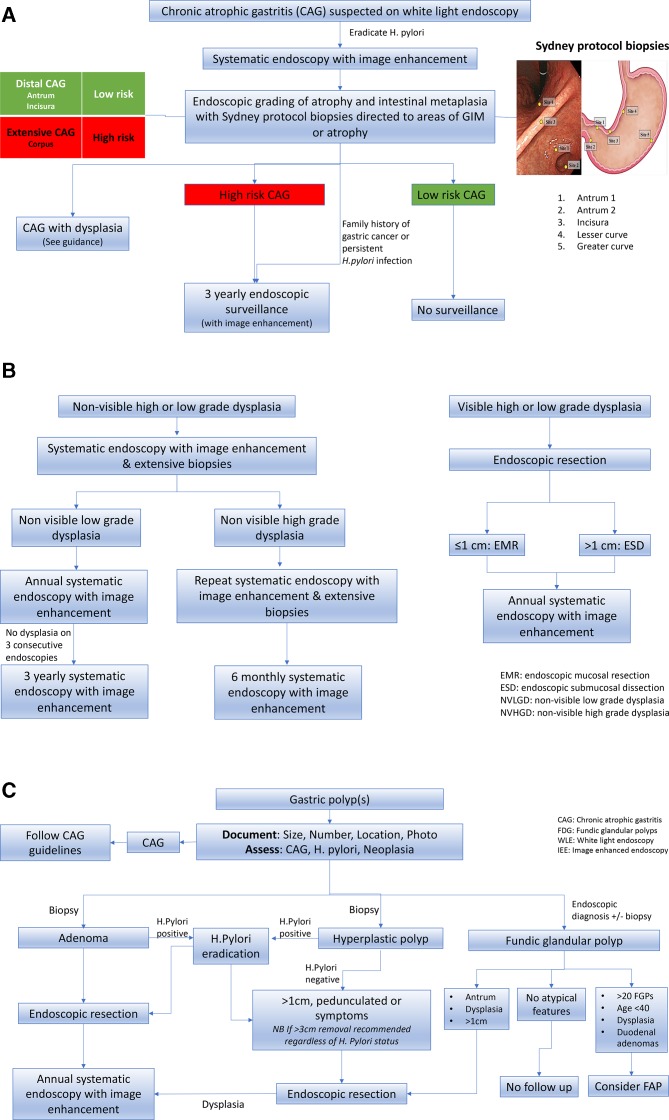
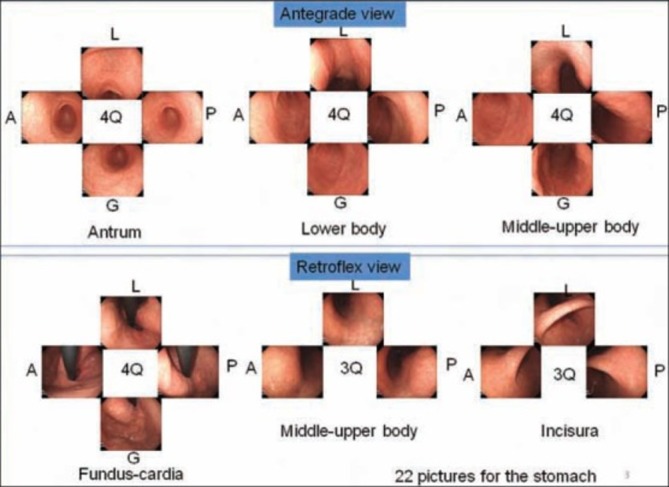
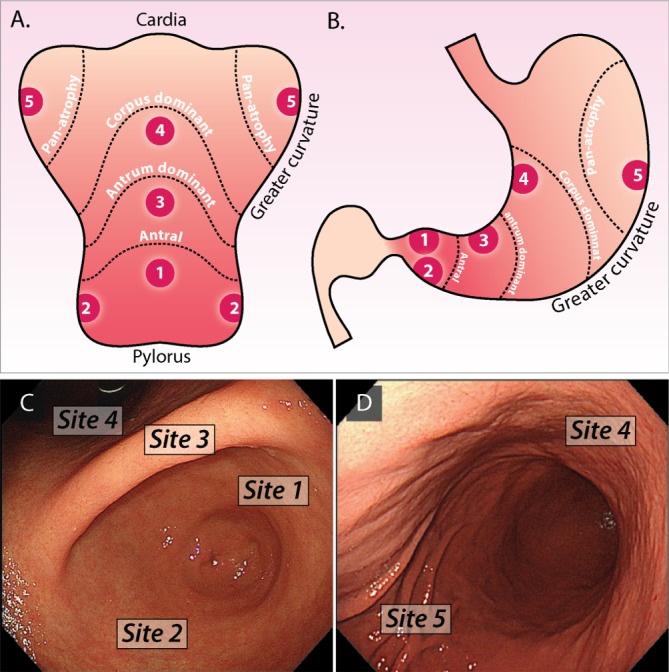
infection, family history of gastric cancer-in particular, hereditary diffuse gastric cancer and pernicious anaemia. The stages in the progression to cancer include chronic gastritis, gastric atrophy (GA), gastric intestinal metaplasia (GIM) and dysplasia. The key to early detection of cancer and improved survival is to non-invasively identify those at risk before endoscopy. However, although biomarkers may help in the detection of patients with chronic atrophic gastritis, there is insufficient evidence to support their use for population screening. High-quality endoscopy with full mucosal visualisation is an important part of improving early detection. Image-enhanced endoscopy combined with biopsy sampling for histopathology is the best approach to detect and accurately risk-stratify GA and GIM. Biopsies following the Sydney protocol from the antrum, incisura, lesser and greater curvature allow both diagnostic confirmation and risk stratification for progression to cancer. Ideally biopsies should be directed to areas of GA or GIM visualised by high-quality endoscopy. There is insufficient evidence to support screening in a low-risk population (undergoing routine diagnostic oesophagogastroduodenoscopy) such as the UK, but endoscopic surveillance every 3 years should be offered to patients with extensive GA or GIM. Endoscopic mucosal resection or endoscopic submucosal dissection of visible gastric dysplasia and early cancer has been shown to be efficacious with a high success rate and low rate of recurrence, providing that specific quality criteria are met.
Overview
The claims and statistics of this paper haven’t been checked yet.
Free: it reads the open-access text and checks the first 5 claims that cite a source we can check. Create a free account to check every claim.
Integrity signals
Registry
Cites
Statistics
Figures
Verification
Claims the paper makes
The claims and statistics of this paper haven’t been checked yet.
Free: it reads the open-access text and checks the first 5 claims that cite a source we can check. Create a free account to check every claim.
Claims other papers make about this one
Each is checked against this paper’s own text: does it say what the citing paper says it does?
The source backs part of the claim, not all of it — or backs it for a different population, condition or comparison.
In the citing paper
“Both OLGA and OLGIM are advocated by international guidelines for risk stratification of individuals diagnosed with precancerous gastric mucosal changes38,39”
From AGA Clinical Practice Update on the Diagnosis and Management of Atrophic Gastritis: Expert Review (2021) · cites this paper as [39]
Experimental — accuracy not yet measured
Self-check
Percentages, sums and reported differences re-computed from the paper’s own numbers.
The self-check needs the paper’s full text.
Citations
Cites
Cancer incidence and mortality worldwide: Sources, methods and major patterns in GLOBOCAN 2012
Ferlay, J., Soerjomataram, I., Dikshit, R., Eser, S., Mathers, C., Rebelo, M., Parkin, D. M., Forman, D., & Bray, F. (2015) · International Journal of Cancer · doi:10.1002/ijc.29210 · Cited by 28,766 · cited 1×
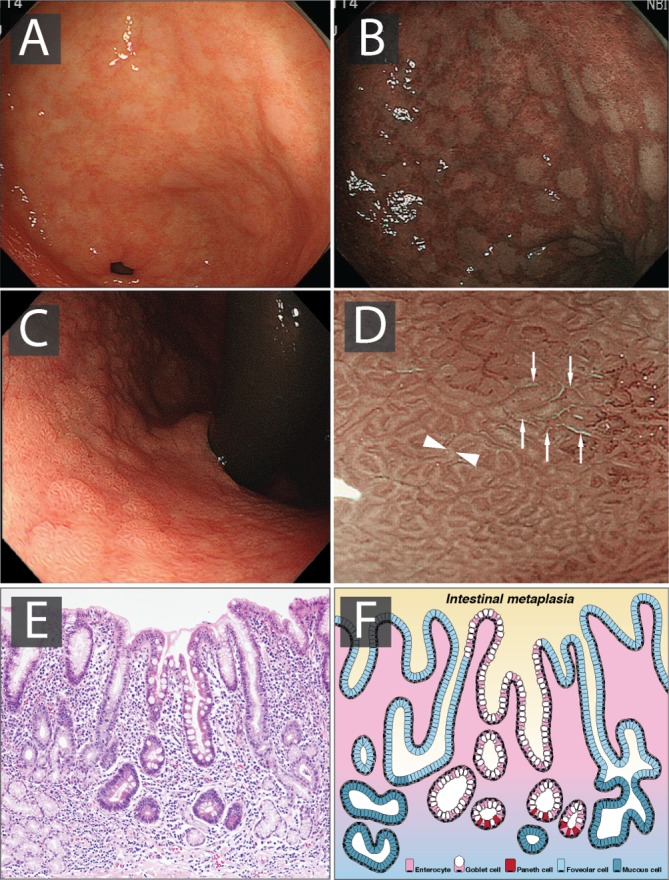
“The brown colour on NBI is due to the subepithelial vessels, which are obscured by lipid droplets accumulated above the subepi-thelial vessels.”
GRADE: an emerging consensus on rating quality of evidence and strength of recommendations
Guyatt, G. H., Oxman, A. D., Vist, G. E., Kunz, R., Falck-Ytter, Y., Alonso-Coello, P., & Schünemann, H. J. (2008) · BMJ · doi:10.1136/bmj.39489.470347.ad · Cited by 23,305 · cited 1×
“The quality of the evidence was assessed following The Grading of Recommendations, Assessment, Development, and Evaluation (GRADE) terminology using table 2 (14).”
LAURÉN, P. (1965) · Acta Pathologica Microbiologica Scandinavica · doi:10.1111/apm.1965.64.1.31 · Cited by 6,133 · cited 1×
“These recommendations apply to the intestinal type of gastric cancer as defined by the Lauren Classification(228,229).”
Jemal, A., Siegel, R., Ward, E., Murray, T., Xu, J., Smigal, C., & Thun, M. J. (2006) · CA: A Cancer Journal for Clinicians · doi:10.3322/canjclin.56.2.106 · Cited by 5,314 · cited 1×
“74 79 This does not apply to cases of gastric adenocarcinoma occurring before the age of 40 years, which are probably due to the domineering genetic background responsible for early-onset cancer.”
Helicobacter pylori Infection and the Development of Gastric Cancer
Uemura, N., Okamoto, S., Yamamoto, S., Matsumura, N., Yamaguchi, S., Yamakido, M., Taniyama, K., Sasaki, N., & Schlemper, R. J. (2001) · New England Journal of Medicine · doi:10.1056/nejmoa001999 · Cited by 4,465 · cited 2×
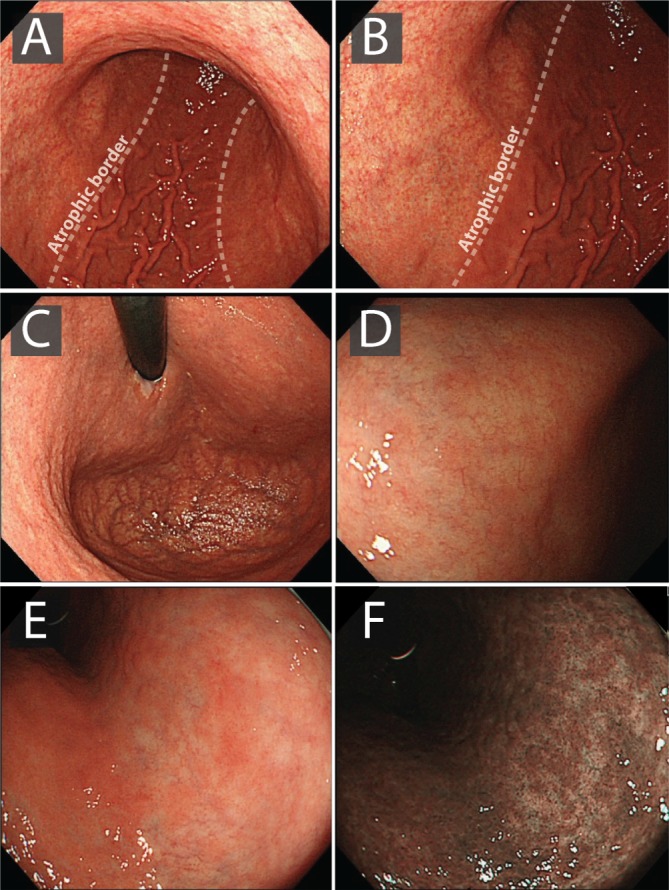
“26 31 156 Essentially this tool uses the extent of the atrophic border (the border between the pale atrophy and normal red-coloured stomach) to stage the extent of GA (Figure 4).”
Lichtenstein, P., Holm, N. V., Verkasalo, P. K., Iliadou, A., Kaprio, J., Koskenvuo, M., Pukkala, E., Skytthe, A., & Hemminki, K. (2000) · New England Journal of Medicine · doi:10.1056/nejm200007133430201 · Cited by 4,114 · cited 1×
“54 It is important to consider that familial aggregation occurs in approximately 10% of cases, which in low-incidence countries of gastric adenocarcinoma probably relates to heritable pathogenic mutations.”
Japanese gastric cancer treatment guidelines 2014 (ver. 4)
Japanese Gastric Cancer Association (2017) · Gastric Cancer · doi:10.1007/s10120-016-0622-4 · Cited by 2,429 · cited 1×
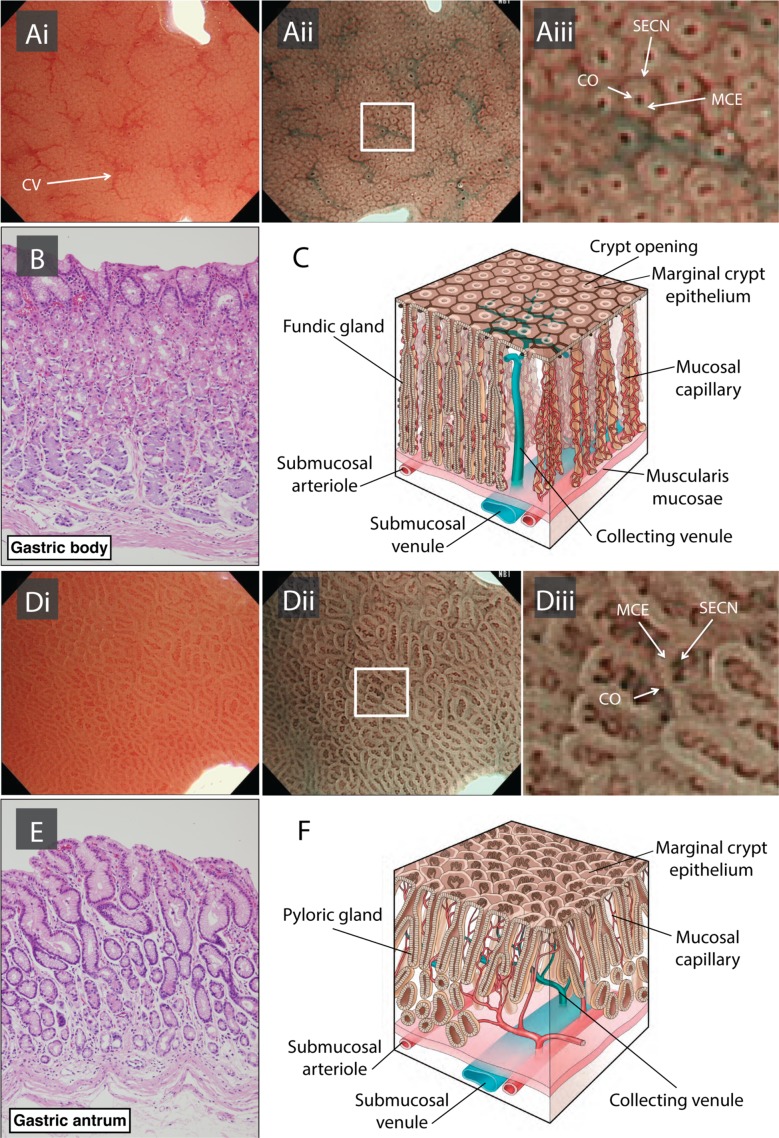
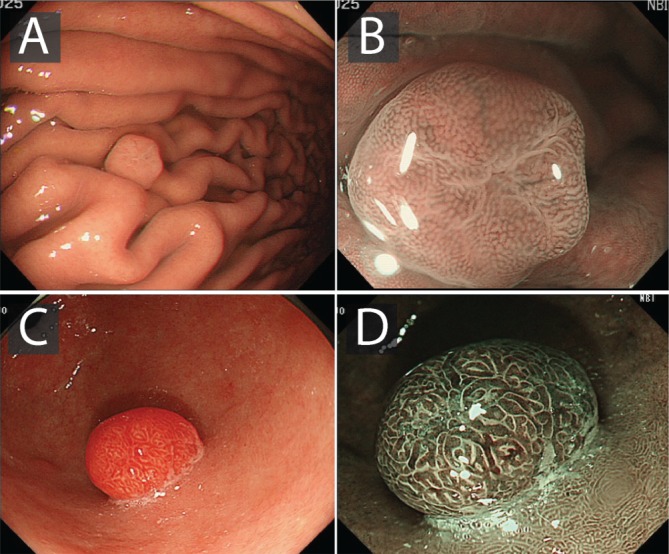
“On enhanced imaging such as NBI, FICE or i-Scan, the surface architecture becomes more prominent.”
Japanese gastric cancer treatment guidelines 2010 (ver. 3)
Japanese Gastric Cancer Association (2011) · Gastric Cancer · doi:10.1007/s10120-011-0042-4 · Cited by 2,168
Gotoda, T., Yanagisawa, A., Sasako, M., Ono, H., Nakanishi, Y., Shimoda, T., & Kato, Y. (2000) · Gastric Cancer · doi:10.1007/pl00011720 · Cited by 1,791
Self-citationSyngal, S., Brand, R. E., Church, J. M., Giardiello, F. M., Hampel, H. L., & Burt, R. W. (2015) · American Journal of Gastroenterology · doi:10.1038/ajg.2014.435 · Cited by 1,662 · cited 1×
“Outside the context of specialised genetic counselling clinic, where the three-generation comprehensive pedigree is recommended, in standard clinical practice it is recognised that it is sufficient to focus on first-degree (parents, children and siblings) and second degree relatives (grandparents, aunts/uncles, nieces…”
Research works printed but not linked: 2
- Hosokawa O, Hattori M, Takeda T, et al Accuracy of endoscopy in detecting gastric cancer. J Gastroenterol Mass Surv 2004; 14: 33– 9.
- Otsuji M, Kouno Y, Otsuji A, et al Assessment of small diameter panendoscopy for diagnosis of gastric cancer: comparative study with follow-up survey date. Stomach Intest 1989; 24: 1291– 7.
Cited by
Items 301–400 of 721
Zhou, Y., Zhang, L.-Y., Ding, S., Zhang, A.-L., Zhu, Y., Chen, Y., Zhang, Q., Sun, L., & Yu, J.-R. (2022) · PubMed · Cited by 7
Hung, K. W., Maratt, J. K., Cho, W. K., Shah, B. J., Anjou, C. I., & Leiman, D. A. (2022) · Gastroenterology · doi:10.1053/j.gastro.2022.03.023 · Cited by 7
Endoscopic and clinical characteristics of autoimmune atrophic gastritis: Retrospective study
Khalaf, K., Fujiyoshi, Y., & Bechara, R. (2024) · Endoscopy International Open · doi:10.1055/a-2477-4666 · Cited by 6
“These findings emphasize the importance of the endoscopic exam in identifying AIG and notably pres-ent the key magnifying endoscopy findings in a Western setting for the first time. vanced gastric cancer [2 ].”
Clinical Practice Guideline for Gastritis in Korea
Kang, S. J., Kim, J. G., Moon, H. S., Kook, M., Lee, J. Y., Bang, C. S., Tae, C. H., Gong, E. J., Nam, S. Y., & Kim, H. J. (2024) · The Korean Journal of Helicobacter and Upper Gastrointestinal Research · doi:10.7704/kjhugr.2024.0013 · Cited by 6
柏木, 和., Yoshida, T., Fukuhara, K., Bessho, R., Ichikawa, H., Inoue, N., Takaishi, H., Iwao, Y., & Kanai∥, T. (2024) · Medicine · doi:10.1097/md.0000000000038774 · Cited by 6
“[28,29] Future large-scale studies are essential to validate the appropriate time interval for repeated screening depending on the severity of gastric lesions.”
Chronic Atrophic Gastritis and Intestinal Metaplasia: A Latin American Perspective
Riquelme, A. J., da Silva, F. P., Reyes, D., & Latorre, G. (2024) · The Korean Journal of Helicobacter and Upper Gastrointestinal Research · doi:10.7704/kjhugr.2024.0017 · Cited by 6
“The British Society of Gastroenterology guidelines 96 recommend EGD screening in all individuals aged ≥50 years, particularly in those with known risk factors for GC such as male sex, smokers, patients with pernicious anemia, and in those with first-degree relatives diagnosed with GC. Additionally,…”
BackgroundEndoscopic Screening and Surveillance of Gastrointestinal Cancer
Barauskaitė, E., Raciunas, A., & Vaicekauskas, R. (2025) · Cureus · doi:10.7759/cureus.79274 · Cited by 6
“Biomarkers like low serum pepsinogen have limited evidence for widespread screening [20].”
InfluentialLiang, Z., Xu, Y.-M., Song, J., Gao, Z.-H., Qian, H., & Xu, X. (2025) · World Journal of Gastroenterology · doi:10.3748/wjg.v31.i16.104920 · Cited by 6
“Precancerous lesion of gastric cancer including gastric mucosal atrophy, intestinal metaplasia, and atypical hyperplasia, are histopathological changes that predispose to gastric cancer[11].”
Gastric Cancer Endoscopic Screening in an Intermediate‐Risk Country—A Dual‐Center Pilot Program
Mourato, M. B., Pratas, N., Pereira, A. B., Pinto, F. C., Dinis, R., Fronteira, I., & Areia, M. (2025) · Helicobacter · doi:10.1111/hel.70061 · Cited by 6
Advances in the management of gastric cancer
Ghaffar, S. A., McCarter, M. D., Kim, S. S., Bilal, M., Chiaro, M. D., & Mungo, B. (2025) · BMJ · doi:10.1136/bmj-2024-081304 · Cited by 6
Trinh, N. A., Luu, M. N., Nguyen, D. T. N., Tran, T. L. T., Le, Q. D., Tran, V. L. T., Vo, U. P.-P., Vu, N. T. H., Le, H. M., Le, N. Q., et al. (2026) · Digestive Diseases and Sciences · doi:10.1007/s10620-025-09634-3 · Cited by 6
“According to the British Society of Gastro-enterology (BSG) guidelines, patients with extensive IM (involving both the antrum and corpus) or incomplete IM are considered high risk [5].”
InfluentialLiu, J., Gu, Y., Li, F., Ma, S., Li, X., Wang, X., Lv, T., Hu, J., & Han, C. (2026) · Biosensors and Bioelectronics · doi:10.1016/j.bios.2026.118475 · Cited by 6
Advanced diffuse gastric adenocarcinoma in young Syrian woman. A case report
Alhalabi, M. M., Alsayd, S. A., & Albattah, M. E. (2022) · Annals of Medicine and Surgery · doi:10.1016/j.amsu.2022.103728 · Cited by 6
Advances in Endoscopic Diagnosis and Treatment of Gastric Neuroendocrine Neoplasms
Guo, X., Zhao, X., Huang, G., & Yu, Y. (2023) · Digestive Diseases and Sciences · doi:10.1007/s10620-023-08180-0 · Cited by 6
“Given the evidence that g-NEN patients have an elevated risk of gastric premalignant and malignant disease [30–32], endoscopic surveillance every 2–3 years is necessary for them.”
Awadh, M., Darwish, A., Alqatari, H. M., Buzaid, F. M., & Darwish, A. H. (2023) · Saudi Medical Journal · doi:10.15537/smj.2023.44.12.20230246 · Cited by 6
Role of serum matrix metalloproteinase in the diagnosis of gastric cancer
Liu, J., Zhou, L., Lin, S., & Yao, B. (2020) · Pakistan Journal of Medical Sciences · doi:10.12669/pjms.36.5.2059 · Cited by 6
“The exclusion criteria were as follows: (1) patients with non-adenocarcinoma gastric tumors such as neuroendocrine carcinoma or lymphoma; (2) gastrointestinal submucosal tumor or gastric polyp; (3) multiple chronic disorders such as chronic renal insufficiency, autoimmune diseases, or concurrent neoplasms on clinical…”
BackgroundMethodH.pylori infection, part I: clinical burden and diagnosis
HACKETT, R. J., & Preston, S. L. (2021) · Trends in Urology & Men s Health · doi:10.1002/tre.801 · Cited by 6
“21 However, the detection of a t(11,18) chromosomal translocation predicts expected failure of eradication therapy, and its testing informs the clinical management algorithm and the likelihood for adjuvant chemotherapy.”
BackgroundEvaluation of the reporting quality of guidelines for gastric cancer using the RIGHT checklist
Wu, X., Ding, L., Chen, H., Han, J., Zhou, H., He, Z., Ma, Y., Dong, B., Wu, Y., Matkowskyj, K. A., et al. (2021) · Annals of Translational Medicine · doi:10.21037/atm-21-2491 · Cited by 6
“Therefore, the treatment practices differ between regions, and clinical practice guidelines for the management of gastric cancer have been drawn up in different countries to optimize patient care in the local context (11-16).”
Construction and Validation of a Novel Prognostic Signature for Intestinal Type of Gastric Cancer
Zhang, F., Maswikiti, E. P., Wei, Y., Wu, W., & Li, Y. (2021) · Disease Markers · doi:10.1155/2021/5567392 · Cited by 6
“HGD is an obvious premalignant lesion, requiring aggressive treatments such as endoscopic interventions [14].”
BackgroundHuang, Z., He, A., Wang, J., Lu, H., Xu, X., Zhang, R., Liao, W., Feng, Q., & Wu, L. (2021) · Cancer Biomarkers · doi:10.3233/cbm-210354 · Cited by 6
“Eighty percent of STAD patients are diagnosed at advanced stages because of the lack of symptoms at early stages, endoscopy, and cancer screening [2,3].”
Li, Q., Zhang, H., Hu, J., Zhang, L., Zhao, A., & Feng, H. (2023) · Frontiers in Pharmacology · doi:10.3389/fphar.2023.1124262 · Cited by 6
“Survival rate of patients with early-stage STAD has improved significantly over the past few decades, whereas those suffering from late-stage STAD with distant metastasis have a poor prognosis (Harada et al., 2017; Banks et al., 2019).”
BackgroundLlach, J., Salces, I., Guerra, A., Peñas, B., Rodríguez‐Alcalde, D., Díez‐Redondo, P., Cubiella, J., Murcia, Ó., Escalante, M., Gratacós‐Ginès, J., et al. (2023) · International Journal of Cancer · doi:10.1002/ijc.34714 · Cited by 6
Laszkowska, M., Oh, A., & Hur, C. (2019) · Gastroenterology · doi:10.1053/j.gastro.2019.09.047 · Cited by 6
Bright future for endoscopy: the new frontier of gastric cancer secondary prevention
Bornschein, J., & Rugge, M. (2020) · Gut · doi:10.1136/gutjnl-2020-321570 · Cited by 6
Low Risk of Neoplasia and Intraprocedural Adverse Events in Gastric Hyperplastic Polypectomy
Bar, N., Kinaani, F., Sperber, A. D., Amir-Barak, H., & Dekel, R. (2020) · Journal of Clinical Gastroenterology · doi:10.1097/mcg.0000000000001446 · Cited by 6
Nationwide survey ofHelicobacter pyloriseropositivity and gastric atrophy in Zambia
Kayamba, V. J., Munshi, H., Hankolwe, M. N., Kaluba, C. K., Chongwe, G., Knaze, V., Park, J. Y., & Kelly, P. M. (2024) · Helicobacter · doi:10.1111/hel.13096 · Cited by 5
“29,30 The prevalence of gastric atrophy increased at higher cutoffs.”
BackgroundHe, S., Zhang, Z., Song, G., Wang, Z., Dai, C., Yan, S., Jiang, K., Song, B., Li, H., Cao, M., et al. (2024) · Science China Life Sciences · doi:10.1007/s11427-023-2558-x · Cited by 5
“Several European guidelines summarized the surveillance recommendations by the type and stage of precancerous lesions (Banks et al., 2019; Pimentel-Nunes et al., 2019).”
InfluentialParticipation and Yield of Gastric Cancer Screening Programs: A Systematic Review and Meta-analysis
Wang, J., Zhou, X., Zhu, H., Zhu, W., Wang, Z., Wu, S. Y., Xu, S., Qiu, Y., Wang, C., Li, Z., et al. (2025) · Clinical Gastroenterology and Hepatology · doi:10.1016/j.cgh.2025.01.029 · Cited by 5
Jia, Q., Jia, Y., Chen, Y., Guo, L.-K., Wu, C., Cong, J., Gu, Z., Li, X., Fang, S.-Q., Liu, Z., et al. (2025) · Frontiers in Pharmacology · doi:10.3389/fphar.2025.1545313 · Cited by 5
Turkot, M. H., Zaborowska, M., Pilonis, N., Lenarcik, M., Mróz, A., Wojciechowska, U. E., Didkowska, J. A., Rupiński, M., Reguła, J., Kaminski, M. F., et al. (2025) · Endoscopy · doi:10.1055/a-2631-5146 · Cited by 5
Jian, C., Zhang, M., Zhong, X., Li, X., Fu, H., Chen, Y., & Shen, Y. (2025) · BMC Anesthesiology · doi:10.1186/s12871-025-03360-z · Cited by 5
Srinivasa, A., Bendall, O., Babikir, A., Mohamed, S. A., Griffiths, H. R., Haslam, N., Catton, J. A., Cripps, N. P. J., Oates, B. C., Morris, A. J., et al. (2025) · Frontline Gastroenterology · doi:10.1136/flgastro-2025-103316 · Cited by 5
Self-citationLatorre, G., Espino, A., Araya, R., Arteaga, M., Benites-Goñi, H., Bufadel, M. E., Cabrera-Hinojosa, D., Cândia, R., Cordero, J., Corsi, Ó., et al. (2025) · Gastroenterología y Hepatología · doi:10.1016/j.gastrohep.2025.502633 · Cited by 5
Jin, B., Jin, X., Huang, L., Zhang, C., & Lü, B. (2023) · Surgical Endoscopy · doi:10.1007/s00464-023-09991-y · Cited by 5
“Endoscopy is an accurate screening method for neoplastic lesions in the upper gastrointestinal tract [10, 11].”
MethodChatrangsun, B., Aumpan, N., Pornthisarn, B., Chonprasertsuk, S., Siramolpiwat, S., Bhanthumkomol, P., Nunanan, P., Issariyakulkarn, N., Mahachai, V., Yamaoka, Y., et al. (2024) · BMC Gastroenterology · doi:10.1186/s12876-024-03132-y · Cited by 5
“Adequate air insufflation and application of mucosal cleaning techniques were used to achieve satisfactory endoscopic visualization [14].”
MethodDisparities in Gastric Cancer Screening Worldwide
Deane, C., Kelly, O., & O’Morain, C. A. (2024) · Cancer Screening and Prevention · doi:10.14218/csp.2024.00008 · Cited by 5
“43”
Ability of detection in different resolution endoscopy for upper gastrointestinal mucosal lesions
Jin, X., Zhou, Q., Lü, B., Zhang, C., & Huang, L. (2024) · Surgical Endoscopy · doi:10.1007/s00464-024-11186-y · Cited by 5
“Endoscopy is an effective method for diagnosing and screening precancerous lesions and early gastric cancer [10–12].”
MethodAasarød, K. M., Waldum, H. L., Stunes, A. K., Sandvik, A. K., Flatberg, A., Mjønes, P., Syversen, U., Bakke, I., & Fossmark, R. (2020) · International Journal of Molecular Sciences · doi:10.3390/ijms21030927 · Cited by 5
“The following primary antibodies and conditions were used: anti-chromogranin A (CgA) (ImmunoStar 20080, dilution 1:2000, incubation for 1h at room temperature), goat anti-clusterin (C-18, sc-6419, Santa Cruz Biotechnology Inc., TX, USA; dilution 1:1300, incubation overnight at 4 ◦C) and rabbit anti-Trefoil Factor 2 (T…”
BackgroundKnockdown of RREB1 inhibits cell proliferation via enhanced p16 expression in gastric cancer
Gao, Q., Wu, Y., Lu, C., Wang, K., Xie, W., Wang, Q., Wang, L., Liu, S., & Pan, Y. (2021) · Cell Cycle · doi:10.1080/15384101.2021.1987676 · Cited by 5
“In China, most patients are diagnosed with GC in advanced stages, which leads to a poor prognosis and causes a serious threat to human health [2].”
BackgroundLinhares, M., Pinto, C. M. M., Libânio, D., Teixeira, M. R., Dinis-Ribeiro, M. J., & Brandão, C. (2022) · GE Portuguese Journal of Gastroenterology · doi:10.1159/000527208 · Cited by 5
“If present, management according to MAPS II is recommended; if absent, no further screening is recommended [41].”
InfluentialSelf-citationWang, S., Meng, Q., Wu, M., Feng, S., & Zhang, K. (2023) · Heliyon · doi:10.1016/j.heliyon.2023.e21905 · Cited by 5
“Hp infection is the most common cause of AG [6].”
BackgroundInfluentialUchita, K., Kobara, H., Yorita, K., Shigehisa, Y., Kuroiwa, C., Nishiyama, N., Takahashi, Y., Kai, Y., Kunikata, J., Shimokawa, T., et al. (2021) · Diagnostics · doi:10.3390/diagnostics11020360 · Cited by 5
“In the field of gastrointestinal endoscopy, targeted biopsy under endoscopic direct vision has been standardized since the 1970s [17], demonstrating excellent outcomes with the combination of image-enhanced technology [18,19].”
BackgroundSelf-citationGao, H., Zhang, Q., Wu, W., Gu, J., & Li, J. (2023) · Expert Review of Molecular Diagnostics · doi:10.1080/14737159.2023.2254237 · Cited by 5
“Early detection and treatment of gastritis is of great significance for reducing GC [53].”
BackgroundScreening for and surveillance of premalignant conditions of the stomach
Luzko, I., Moreira, L., & Bornschein, J. (2025) · Best Practice & Research Clinical Gastroenterology · doi:10.1016/j.bpg.2025.101978 · Cited by 4
Xu, Q., Jinlei, Y., Shi, Z., Fang, D., Bao, D., & Wang, L. (2025) · Frontiers in Oncology · doi:10.3389/fonc.2025.1569739 · Cited by 4
Zhang, T., & Tang, X. (2025) · Biological Procedures Online · doi:10.1186/s12575-025-00316-y · Cited by 4
Dong, N., Guo, R., Gong, Y., & Yuan, Y. (2021) · PeerJ · doi:10.7717/peerj.10822 · Cited by 4
Jing, L., Yu, H., Yuan, Z., Tang, W., & Wang, C. (2024) · Frontiers in Bioscience-Landmark · doi:10.31083/j.fbl2906212 · Cited by 4
“Current diagnostic protocols for GC are primarily reliant on a combination of clinical symptoms, endoscopic examinations, histopathological analyses, and imaging techniques [21, 22].”
Prado, Á. D., Cal‐Sabater, P., Fiz‐López, A., Izquierdo, S., Corrales-Cruz, D., Pérez‐Cózar, F., H-Vázquez, J., Arribas‐Rodríguez, E., Perez-Segurado, C., Muñoz, Á. M., et al. (2024) · Scientific Reports · doi:10.1038/s41598-024-78908-z · Cited by 4
“…and body allows the stratification of gastric cancer by differentiating high versus low gastric cancer risk patients when metaplasia is spreading 13 , a strength derived from our study is that immune studies can avoid the sampling from the 3 locations given the lack of regional variability.”
Ang, T. L. (2024) · Journal of Digestive Diseases · doi:10.1111/1751-2980.13330 · Cited by 4
“Such chronic mucosal changes increase the risk of developing gastric cancer (GC), necessitating endoscopic surveillance [14, 15].”
Differential Rates of Early Gastric Cancer in the Urban and Rural Medical Centers of Hangzhou, China
Sun, L., Yang, Q., Lü, B., Shen, Y., He, Y., Zhang, Y., & Han, L. (2025) · Clinical and Translational Gastroenterology · doi:10.14309/ctg.0000000000000851 · Cited by 4
“CAG is a precancerous condition that carries a risk of progression to GC, and recent multinational guidelines recommend regular endoscopic surveillance for individuals with CAG (22,23).”
InfluentialQuach, D. T., Luu, M. N., Nguyen, D. T. N., Phan, D. Q., Ha, Q. V., Do, K., & Hiyama, T. (2025) · Digestive Diseases · doi:10.1159/000546653 · Cited by 4
Alfei, S., Reggio, C., & Zuccari, G. (2025) · International Journal of Molecular Sciences · doi:10.3390/ijms26189201 · Cited by 4
“Additionally, despite gastric adenocarcinoma (GAC) not being among the five most lethal tumours, it carries a very poor prognosis, mainly due to the late stage of diagnosis [78].”
Cruz-Cruz, J., González‐Pons, M., Cora-Morges, A., Soto‐Salgado, M., Colón, G., Alicea, K., Rosado, K., Morgan, D. R., & Cruz-Correa, M. R. (2021) · Gastroenterology Research and Practice · doi:10.1155/2021/9806156 · Cited by 4
Shao, C., Cheng, C., Shao, Q., & Chen, B. (2021) · International Journal of General Medicine · doi:10.2147/ijgm.s321641 · Cited by 4
RetractedWang, Q., Cui, L., Li, P., & Wang, Y. (2022) · Frontiers in Medicine · doi:10.3389/fmed.2022.873836 · Cited by 4
“Unfortunately, the majority of patients with STAD worldwide except Japan and South Korea are first clinically diagnosed at an advanced stage, resulting in a poor overall prognosis, which might be attributed to multiple factors such as clinical, histopathological, and genetic differences (5).”
BackgroundPanarese, A., Saitō, Y., & Zagari, R. M. (2023) · Artificial Intelligence in Gastrointestinal Endoscopy · doi:10.37126/aige.v4.i1.1 · Cited by 4
Shin, G., Park, J. Y., Lee, S. H., Choi, M., Choi, M.-G., & Park, J. M. (2023) · PLoS ONE · doi:10.1371/journal.pone.0280735 · Cited by 4
“Therefore, the cause of upgraded pathology to HGD may have been from interobserver variations among pathologists [30].”
BackgroundInfluentialClinical Application of the Kyoto Classification of Gastritis
Kim, G. H. (2023) · The Korean Journal of Helicobacter and Upper Gastrointestinal Research · doi:10.7704/kjhugr.2023.0013 · Cited by 4
Early-onset gasrtric cancer (review)
Pugaev, D. M., Lyubchenko, L. N., Ryabov, А. B., & Каприн, А. Д. (2024) · Siberian Journal of Oncology · doi:10.21294/1814-4861-2023-22-6-153-171 · Cited by 4
Pathology and Clinical Relevance of Gastric Epithelial Dysplasia
Ushiku, T., & Lauwers, G. Y. (2024) · Gastroenterology Clinics of North America · doi:10.1016/j.gtc.2023.11.003 · Cited by 4
Yin, P., Cai, R., Zhou, X., Yao, X., Yang, Q., Jin, Y., Jiao, X., Lu, C., & Qiao, Z. (2024) · Translational Cancer Research · doi:10.21037/tcr-23-1681 · Cited by 4
Zeng, X., Yang, L., Dong, Z., Gong, D., Li, Y., Deng, Y., Du, H., Li, X., Xu, Y., Luo, C., et al. (2024) · Journal of Gastroenterology and Hepatology · doi:10.1111/jgh.16525 · Cited by 4
Lee, J., Lee, J., Na, J. E., Park, Y. E., Choi, J. H., Heo, N., Park, S. H., Kim, T. O., & Park, J. (2024) · The Korean Journal of Helicobacter and Upper Gastrointestinal Research · doi:10.7704/kjhugr.2023.0046 · Cited by 4
Jalaeefar, A., Mousavi, S. Z., Shirkhoda, M., Mahmoodzadeh, H., Mohammadzadeh, N., & Sharifi, A. (2024) · Cancer Reports · doi:10.1002/cnr2.2076 · Cited by 4
Negut, C. C., Ilie‐Mihai, R., & Staden, R. S. (2024) · International Journal of Molecular Sciences · doi:10.3390/ijms25126720 · Cited by 4
Gastritis: Pathophysiology and Clinical Management
Fansiwala, K. M., Lewis, M. S., & Pisegna, J. R. (2024) · The American Journal of Gastroenterology · doi:10.14309/ajg.0000000000003216 · Cited by 4
“However, both European and UK guidelines recommend endo-scopicsurveillance every3 yearsshouldbeo ff eredtopatientswith extensive atrophic gastritis or gastric intestinal metaplasia (15,16).”
Gastric cancer: incidence, risk factors, screening
Tsukanov, V. V., Tonkikh, Y. L., & Vasyutin, A. V. (2024) · Russian Journal of Preventive Medicine · doi:10.17116/profmed202427121135 · Cited by 4
Advances and global trends of precancerous lesions of gastric cancer: A bibliometric analysis
Jia, Y.-P., Liu, D., Cao, T.-L., Jiang, H., Li, T., Li, Y., & Ding, X. (2025) · World Journal of Gastrointestinal Oncology · doi:10.4251/wjgo.v17.i3.102111 · Cited by 4
Tadesse, N., Liu, Y., Li, J., & Liu, H. (2025) · Biomedicines · doi:10.3390/biomedicines13040964 · Cited by 4
“Treatment modalities for GIM mainly include endoscopic surgical therapy, but they are challenged with detecting residual metaplastic lesions [38], which is also attributed to the incidence and recurrence of interval early GC [23].”
InfluentialCorreia, A. C. P., Straub, D., Calpe, S., & Krishnadath, K. K. (2021) · Methods and Protocols · doi:10.3390/mps4010006 · Cited by 4
“Acid suppressive therapies increase the pH in the stomach and decrease reflux, which reduces the inflammation of the mucosa [12,18].”
BackgroundLerch, J. M., Pai, R. K., Brown, I., Gill, A. J., Jain, D., Kovari, B. P., Kushima, R., Sheahan, K. D., Slavík, T., Srivastava, A., et al. (2021) · Archiv für Pathologische Anatomie und Physiologie und für Klinische Medicin · doi:10.1007/s00428-021-03245-9 · Cited by 4
“The extent of GIM in patients with chronic gastritis has prognostic relevance and identifies patients at higher risk of gastric cancer who could benefit from endoscopic surveillance [3] Current guidelines by the European Society of Gastrointestinal Endoscopy (ESGE) [13], the British Society of Gastroenterology (BSG) […”
BackgroundKakushima, N., Fujishiro, M., Chan, S. M., Cortas, G. A., Dinis-Ribeiro, M. J., Gonzalez, R. G., Kodashima, S., Lee, S., Linghu, E., Mabe, K., et al. (2022) · DEN Open · doi:10.1002/deo2.97 · Cited by 4
Self-citationWu, D., Li, X., Li, T., Xie, W., Liu, Y., Tan, Q., Wu, W. D., Sun, Z., Chen, T., Jiang, H., et al. (2022) · Journal of Clinical Medicine · doi:10.3390/jcm11237050 · Cited by 4
Early detection of gastric neoplasia: is artificial intelligence the solution?
Ahmad, O. F. (2021) · The Lancet. Gastroenterology & hepatology · doi:10.1016/s2468-1253(21)00254-5 · Cited by 4
Gingold‐Belfer, R., Issa, N., Boltin, D., Beloosesky, Y., Koren‐Morag, N., Meyerovitch, J., Sharon, E., Peleg, N., & Schmilovitz‐Weiss, H. (2023) · European Journal of Gastroenterology & Hepatology · doi:10.1097/meg.0000000000002603 · Cited by 4
Pourmodjib, K., Sebesta, C., & Sebesta, C. (2023) · Current Trends in Internal Medicine · doi:10.29011/2638-003x.100097 · Cited by 4
“According to Maastricht IV/ Florence consensus, endoscopy with biopsies is recommended in patients with family history of gastric cancer at the age of 45 years and more [86].”
MethodBhandari, P., Longcroft‐Wheaton, G., Libânio, D., Pimentel‐Nunes, P., Albéniz, E., Pioche, M., Sidhu, R., Spada, C., Anderloni, A. A., Repici, A., et al. (2021) · Endoscopy · doi:10.1055/a-1397-3005 · Cited by 4
“In the last 5 years, several studies have confirmed the importance of surveillance in patients with these conditions and this is reflected in two recent guidelines that recommend new surveillance intervals, according to different risk factors [4, 25].”
BackgroundSelf-citationThere is much more to rely on histology than the sole endoscopy tells us
Ghisa, M., Rugge, M., Fassan, M., Farinati, F., & Savarino, E. V. (2019) · Gut · doi:10.1136/gutjnl-2019-319649 · Cited by 4
Banks, M. R., Uedo, N., Bhandari, P., & Gotoda, T. (2019) · Gut · doi:10.1136/gutjnl-2019-319925 · Cited by 4
Self-citationKang, S., Li, H., Zhou, H., & Zhang, L. (2024) · Asian Journal of Surgery · doi:10.1016/j.asjsur.2024.02.134 · Cited by 3
Huang, M., Luo, S., Yang, J., Xiong, H., Lu, X., Ma, X., Zeng, J., & Efferth, T. (2024) · EXCLI journal · doi:10.17179/excli2024-7618 · Cited by 3
Translating evidence into action: overcoming barriers to gastric cancer prevention in Aotearoa
Schauer, C., Teng, A. M., Signal, V., Stanley, J., Mules, T. C., Koea, J., & Inns, S. J. (2024) · Journal of the Royal Society of New Zealand · doi:10.1080/03036758.2024.2427818 · Cited by 3
“In lower prevalence countries, approaches have been tailored based on older age, male gender, smoking status or family history (Banks et al. 2019; Malfertheiner et al. 2022).”
Albadrani, A. A., Zacharakis, G., Alqahtani, M. S., Alharbi, A., Alkudam, A. N., Bawazir, A., Albulayhid, N. A., Bahader, M. Z., Alghayyamah, A. M., & Alzaher, Z. S. (2025) · Current Oncology · doi:10.3390/curroncol32080428 · Cited by 3
“The gastric mucosa was systematically evaluated to identify H. pylori infection, PGLs (AG, GIM, and dysplasia), and EOGC in accordance with international guidelines [12,13,16].”
Xiang, L., Zhou, Y., Guo, X., Mommersteeg, M. C., Nieuwenburg, S. A. V., Peppelenbosch, M. P., Spaander, M. C. W., & Fuhler, G. M. (2025) · Helicobacter · doi:10.1111/hel.70066 · Cited by 3
Vernygorodskyi, S. V., Tonchev, A. B., & Bratoeva, K. Z. (2025) · Journal of Molecular Pathology · doi:10.3390/jmp6030024 · Cited by 3
Assessment of intestinal metaplasia at the lesser curvature guides mapping biopsies strategy
Ma, M., Liu, M., Liang, X., & Zuo, X. (2025) · Scandinavian Journal of Gastroenterology · doi:10.1080/00365521.2025.2561058 · Cited by 3
“In contrast, patients with mild focal atrophic gastritis may not require follow-up in regions with low gastric cancer incidence, or the follow-up interval may be extended in high-incidence areas [6].”
Ciechański, K., Ciechański, E., Kłosowska-Kapica, K., & Skrzydło-Radomańska, B. (2025) · Journal of Clinical Medicine · doi:10.3390/jcm14196910 · Cited by 3
“In contrast, the British Society of Gastroenterology recommends screening in individuals aged ≥ 50 with high-risk features, including pernicious anemia, male sex, smoking and/or a positive family history of GC [24].”
Okuno, K., Joshi, A., Watanabe, S., Oba, S., Yao, K., Tanioka, T., Tokunaga, M., Ban, D., & Kinugasa, Y. (2025) · United European Gastroenterology Journal · doi:10.1002/ueg2.70132 · Cited by 3
Biomarkers for Gastric Cancer and Premalignant Gastric Conditions
Yoon, J. Y., Li, D., & Shah, S. C. (2025) · Gastroenterology Clinics of North America · doi:10.1016/j.gtc.2025.08.001 · Cited by 3
New insights in metaplasia in autoimmune gastritis
Driva, T. S., Sakellariou, S., Theochari, I., Gadetsakis, G., Koutsoumpas, A. L., & Delladetsima, I. K. (2025) · Histopathology · doi:10.1111/his.70061 · Cited by 3
Prevalence of Helicobacter pylori infection and gastric intestinal metaplasia in Greek patients
Kouvaras, S., Koumarianos, I. G., Ekmektzoglou, K., Kounis, G. A., Spiliadi, C., Georgopoulos, S. D., & Rokkas, T. (2025) · Annals of Gastroenterology · doi:10.20524/aog.2025.1014 · Cited by 4
“The American Society of Gastrointestinal Endoscopy, the European Society of Gastrointestinal Endoscopy, and other European academic societies have developed guidelines for the management of patients with GIM [23].”
Latorre, G., Espino, A., Araya, R., Arteaga, M., Benites-Goñi, H., Bufadel, M. E., Cabrera-Hinojosa, D., Roberto Candia, B., Cordero, J., Corsi, Ó., et al. (2026) · Gastroenterología y Hepatología (English Edition) · doi:10.1016/j.gastre.2026.502633 · Cited by 3
Banks, M. R., & Graham, D. G. (2026) · Cancers · doi:10.3390/cancers18111846 · Cited by 3
“There are now a number of international and national guidelines that have been developed to create a framework for the surveillance of those at risk of gastric cancer [11–14].”
Self-citationYang, L., Ma, X., Wang, X., Xu, J.-F., Zhang, H., Tao, Y., Li, N., Su, H., He, Y., Sheng, J., et al. (2023) · Surgical Endoscopy · doi:10.1007/s00464-023-09968-x · Cited by 2
Guan, S., Yan, R., Chen, X., Chen, W., Xi, Z., Zhou, M., Xie, Z., Tan, W., He, Y., Fu, J., et al. (2023) · Frontiers in Oncology · doi:10.3389/fonc.2023.1218800 · Cited by 3
“Therefore, they have limited value in GC screening (20, 21).”
BackgroundThe durability of previous examinations for cancer: Danish nationwide cohort study
Lykkegaard, J., Olsen, J., Wehberg, S., & Jarbøl, D. E. (2024) · Scandinavian Journal of Primary Health Care · doi:10.1080/02813432.2024.2305942 · Cited by 3
“…demonstrating that relying too long on negative findings can lead to delays in cancer diagnosis [23,24]. the ability to detect and remove cancer and precursors during endoscopy may explain why the hRs for colonoscopy and cystos-copy are lower compared to other examinations (Figure 2) [2,4,19].”
BackgroundResultSafavian, N., Toh, S. K. C., Pani, M., & Lee, R. (2024) · Surgical Endoscopy · doi:10.1007/s00464-024-10758-2 · Cited by 3
“Symptomatic hyperplastic polyps larger than 10 mm with pedunculated morphology should be resected [1].”
BackgroundMethodAn, F., Ge, Y., Ye, W., Ji, L., Chen, K., Wang, Y., Zhang, X., Dong, S., Shen, Y., Zhao, J., et al. (2024) · Cancer Biomarkers · doi:10.3233/cbm-240023 · Cited by 3
“In this study, we collectively referred to GA and GIM as Chronic At-rophic Gastritis (CAG) [33].”
MethodBurke, E. P., Harkins, P., & Arumugasamy, M. (2025) · Journal of Gastrointestinal Cancer · doi:10.1007/s12029-025-01291-z · Cited by 3
Metadata
- Authors
- Banks, M., Graham, D., Jansen, M., Gotoda, T., Coda, S., di Pietro, M., Uedo, N., Bhandari, P., Pritchard, D. M., Kuipers, E. J., Rodriguez-Justo, M., Novelli, M. R., Ragunath, K., Shepherd, N., & Dinis-Ribeiro, M.
- Affiliations
- University College Hospital (GB)
- University College London (GB)
- Nihon University (JP)
- Endoscopy, Inhealth Group, London, UK
- MRC Cancer Unit, University of Cambridge, Cambridge, UK
- Osaka International Cancer Institute (JP)
- Gastroenterology, Portsmouth, Portsmouth, UK
- University of Liverpool (GB)
- Erasmus MC (NL)
- Department of Histopathology, University College London, London, UK
- Nottingham University Hospitals NHS Trust (GB)
- Cheltenham General Hospital (GB)
- Gastroenterology, IPO Porto, Porto, Portugal
- ORCID
- Venue
- Gut
- Publisher
- BMJ
- Published
- 2019-07-05
- Volume
- 68
- Issue
- 9
- Pages
- 1545-1575
- ISSN
- 0017-5749 (ISSN-L)
- 1468-3288
- PMC
- PMC6709778
- OpenAlex
- W2953923712
- Semantic Scholar
- 2d7fd1c1b0cd6027e315c4287a842ca9f6677d90
- Cited by
- 647
- References
- 303
- Citations by year
- 2026: 70 · 2025: 104 · 2024: 116 · 2023: 103 · 2022: 77 · 2021: 100 · 2020: 64 · 2019: 13
- FWCI
- 46.88
- Type
- journal article
- Language
- en
- Open access
- hybrid
- doi.org
- Licence
- other-oa
- Locations
- Gut (publishedVersion, other-oa)
- Europe PMC (PubMed Central) (publishedVersion, cc-by-nc)
- PubMed Central (publishedVersion, cc-by-nc)
- PubMed (publishedVersion)
- EUR Research Repository (Erasmus University Rotterdam) (publishedVersion, other-oa)
- EUR Research Repository (Erasmus University Rotterdam) (submittedVersion, other-oa)
- RePub (Erasmus University Rotterdam) (submittedVersion, other-oa)
- UCL Discovery (University College London) (submittedVersion)
- HighWire Press Open Archive (submittedVersion)
- Spiral (Imperial College London) (submittedVersion, cc-by-nc)
- Topics
- Health Sciences › Medicine › Oncology › Gastric Cancer Management and Outcomes
- Health Sciences › Medicine › Gastroenterology › Helicobacter pylori-related gastroenterology studies
- Health Sciences › Medicine › Gastroenterology › Gastrointestinal Bleeding Diagnosis and Treatment
- Keywords
- gastric adenocarcinoma, atrophic gastritis, intestinal metaplasia, gastric dysplasia, cancer risk stratification, early cancer detection, image-enhanced endoscopy, endoscopic biopsy, endoscopic surveillance, endoscopic mucosal resection, endoscopic submucosal dissection, biomarkers, hereditary diffuse gastric cancer, pernicious anemia, Helicobacter pylori infection, family history of gastric cancer
- MeSH terms
- Adenocarcinoma, Gastritis, Atrophic, Gastroscopy, Humans, Precancerous Conditions, Stomach Neoplasms, Biomarkers, Tumor, Helicobacter pylori, Helicobacter Infections, Disease Progression, Risk Assessment, Evidence-Based Medicine, Disease Management, Early Detection of Cancer
About these checks
Registry, retraction, Cites and statistics results are computed, not judged, with one exception: a printed reference that no index lists is read once by a model before it counts as a citation error. Claims are extracted by a model and kept only when their quote appears verbatim in the text; each cited source is then checked, with a model’s help, for whether it says what the claim relies on. Those verdicts can be wrong — read the claim’s quote and the cited source before relying on one.
Statistics and arithmetic are recomputed, not judged.
Confidence bands are shown only for fields calibrated on our annotated test set. None is calibrated yet, so no band is shown.
What counts as a claim ›How we measure confidence ›How we check this ›
Are you an author, or do you see a problem with this page? Request a review
Data sources
Bibliographic data: Semantic Scholar, OpenAlex, Crossref.
Contains information from the Semantic Scholar Academic Graph Datasets, made available under the ODC Attribution License (ODC-BY 1.0).
Semantic Scholar’s data is described in: Kinney, R., et al. (2023). The Semantic Scholar Open Data Platform. arXiv:2301.10140.
