

Combination therapy for non-alcoholic steatohepatitis: rationale, opportunities and challenges
Open accessThe DOI matches its Crossref record; 69 of the 74 references it cites were found in a registry or an index.
Abstract
Non-alcoholic steatohepatitis (NASH) is becoming a leading cause of cirrhosis with the burden of NASH-related complications projected to increase massively over the coming years. Several molecules with different mechanisms of action are currently in development to treat NASH, although reported efficacy to date has been limited. Given the complexity of the pathophysiology of NASH, it will take the engagement of several targets and pathways to improve the results of pharmacological intervention, which provides a rationale for combination therapies in the treatment of NASH. As the field is moving towards combination therapy, this article reviews the rationale for such combination therapies to treat NASH based on the current therapeutic landscape as well as the advantages and limitations of this approach.
Overview
The claims and statistics of this paper haven’t been checked yet.
Free: it reads the open-access text and checks the first 5 claims that cite a source we can check. Create a free account to check every claim.
Integrity signals
Registry
Cites
Statistics
Figures
Verification
Claims the paper makes
The claims and statistics of this paper haven’t been checked yet.
Free: it reads the open-access text and checks the first 5 claims that cite a source we can check. Create a free account to check every claim.
Claims other papers make about this one
Each is checked against this paper’s own text: does it say what the citing paper says it does?
The check wasn’t confident either way, so it gives no verdict — never disputed.
In the citing paper
“| Loomba et al. | TVB-2640 | NAFLD + fibrosis | PDFF -4.8 % | ↔ | ↔ | TG ↔; | NR |”
From Obesity and MASLD: Is weight loss the (only) key to treat metabolic liver disease? (2024) · cites this paper as [227]
Experimental — accuracy not yet measuredThe check wasn’t confident either way, so it gives no verdict — never disputed.
In the citing paper
“| Loomba et al. | TVB-2640 | NAFLD + fibrosis | PDFF -4.8 % | ↔ | ↔ | TG ↔; | NR |”
From Obesity and MASLD: Is weight loss the (only) key to treat metabolic liver disease? (2024) · cites this paper as [227]
Experimental — accuracy not yet measuredIn the citing paper
“New therapeutic approaches in NASH suggest combination therapies with anti-steatosis, anti-inflammatory, and anti-fibrotic drugs may be effective.68”
From Intestinal B cells license metabolic T-cell activation in NASH microbiota/antigen-independently and contribute to fibrosis by IgA-FcR signalling (2023) · cites this paper as [68]
In the citing paper
“As broadly acting drugs NR (eg, FXR) ligands are also explored in combination with anti-diabetic (eg, GLP-1 RA; SGLT2 inhibitors) or anti-inflammatory drugs (eg, CVC) to achieve a higher therapeutic efficacy in NASH which is still in an unsatisfactory range for single agents.236”
From Novel therapeutic targets for cholestatic and fatty liver disease (2022) · cites this paper as [236]
Self-check
Percentages, sums and reported differences re-computed from the paper’s own numbers.
The self-check needs the paper’s full text.
Citations
Cites
1 retracted
Portillo-Sanchez, P., Bril, F., Maximos, M., Lomonaco, R., Biernacki, D., Orsak, B., Subbarayan, S., Webb, A., Hecht, J., & Cusi, K. (2020) · The Journal of Clinical Endocrinology & Metabolism · doi:10.1210/jc.2014-2739 · Cited by 200
RetractedEmpagliflozin, Cardiovascular Outcomes, and Mortality in Type 2 Diabetes
Zinman, B., Wanner, C., Lachin, J. M., Fitchett, D., Bluhmki, E., Hantel, S., Mattheus, M., Devins, T., Johansen, O. E., Woerle, H. J., et al. (2015) · New England Journal of Medicine · doi:10.1056/nejmoa1504720 · Cited by 12,315
Canagliflozin and Cardiovascular and Renal Events in Type 2 Diabetes
Neal, B., Perkovic, V., Mahaffey, K. W., de Zeeuw, D., Fulcher, G., Erondu, N., Shaw, W., Law, G., Desai, M., & Matthews, D. R. (2017) · New England Journal of Medicine · doi:10.1056/nejmoa1611925 · Cited by 7,830
Liraglutide and Cardiovascular Outcomes in Type 2 Diabetes
Marso, S. P., Daniels, G. H., Brown-Frandsen, K., Kristensen, P., Mann, J. F. E., Nauck, M. A., Nissen, S. E., Pocock, S., Poulter, N. R., Ravn, L. S., et al. (2016) · New England Journal of Medicine · doi:10.1056/nejmoa1603827 · Cited by 7,629
Chalasani, N., Younossi, Z., Lavine, J. E., Charlton, M., Cusi, K., Rinella, M., Harrison, S. A., Brunt, E. M., & Sanyal, A. J. (2018) · Hepatology · doi:10.1002/hep.29367 · Cited by 7,239
Dapagliflozin in Patients with Heart Failure and Reduced Ejection Fraction
McMurray, J. J. V., Solomon, S. D., Inzucchi, S. E., Køber, L., Kosiborod, M. N., Martinez, F. A., Ponikowski, P., Sabatine, M. S., Anand, I. S., Bělohlávek, J., et al. (2019) · New England Journal of Medicine · doi:10.1056/nejmoa1911303 · Cited by 7,140
Semaglutide and Cardiovascular Outcomes in Patients with Type 2 Diabetes
Marso, S. P., Bain, S. C., Consoli, A., Eliaschewitz, F. G., Jódar, E., Leiter, L. A., Lingvay, I., Rosenstock, J., Seufert, J., Warren, M. L., et al. (2016) · New England Journal of Medicine · doi:10.1056/nejmoa1607141 · Cited by 6,900
Dapagliflozin and Cardiovascular Outcomes in Type 2 Diabetes
Wiviott, S. D., Raz, I., Bonaca, M. P., Mosenzon, O., Kato, E. T., Cahn, A., Silverman, M. G., Zelniker, T. A., Kuder, J. F., Murphy, S. A., et al. (2019) · New England Journal of Medicine · doi:10.1056/nejmoa1812389 · Cited by 6,382
EASL–EASD–EASO Clinical Practice Guidelines for the management of non-alcoholic fatty liver disease
(2016) · Journal of Hepatology · doi:10.1016/j.jhep.2015.11.004 · Cited by 4,836
Zelniker, T. A., Wiviott, S. D., Raz, I., Im, K., Goodrich, E. L., Bonaca, M. P., Mosenzon, O., Kato, E. T., Cahn, A., Furtado, R. H. M., et al. (2019) · The Lancet · doi:10.1016/s0140-6736(18)32590-x · Cited by 2,845
Research works printed but not linked: 3
- Amin N, Carvajal-Gonzalez S, Arggawal N, et al PF-05221304 (PF’1304), a liver-targeted acetyl-CoA carboxylase inhibitor (ACCI), in afults with non-alcoholic fatty liver disease demonstrates robust reductions in liver fat and ALT - phase 2a, dose ranging study. Hepatology 2019; 70 Suppl: 21.
- Nahra r, Wang T, Oscarsson J, et al Effects of cotadutide (MEDI0382) on biomarkers of non-alcoholic steatohepatitis in overweight or obese subjects with type 2 diabetes mellitus: a 26-week analysis of a randomized phase 2B study. Hepatology 2019; 70: 24A.
- Press release: Gilead Announces Topline results from phase 2 atlas study in patients with bridging fibrosis (F3) and compensated cirrhosis (F4) due to nonalcoholic steatohepatitis (NASH) 2019.
Cited by
Metabolic dysfunction-associated steatotic liver disease in adults
Huang, D. Q., Wong, V. W. S., Rinella, M. E., Boursier, J., Lazarus, J. V., Yki-Järvinen, H., & Loomba, R. (2025) · Nature Reviews Disease Primers · doi:10.1038/s41572-025-00599-1 · Cited by 293
“Combination therapies, coupled with non-pharmaceutical interventions, are likely to become the cornerstone of treatment for MASH by targeting synergistic pathways and lowering toxicity 335 .”
Self-citationNonalcoholic fatty liver disease (NAFLD) from pathogenesis to treatment concepts in humans
Pafili, K., & Roden, M. (2021) · Molecular Metabolism · doi:10.1016/j.molmet.2020.101122 · Cited by 330
Current treatment of non‐alcoholic fatty liver disease
Paternostro, R., & Trauner, M. (2022) · Journal of Internal Medicine · doi:10.1111/joim.13531 · Cited by 305
Mantovani, A., Petracca, G., Beatrice, G., Csermely, A., Lonardo, A., & Targher, G. (2021) · Metabolites · doi:10.3390/metabo11020073 · Cited by 299
“Several drug molecules with different mechanisms of action are under development to treat this common and burden-some liver disease, although their efficacy has been limited [18].”
Pathogenesis and treatment of non-alcoholic steatohepatitis and its fibrosis
Lee, K.-C., Wu, P.-S., & Lin, H.-C. (2023) · Clinical and Molecular Hepatology · doi:10.3350/cmh.2022.0237 · Cited by 246
The Relationship Between Type 2 Diabetes, NAFLD, and Cardiovascular Risk
Caussy, C., Aubin, A., & Loomba, R. (2021) · Current Diabetes Reports · doi:10.1007/s11892-021-01383-7 · Cited by 230
Self-citationTreatments for NAFLD: State of Art
Mantovani, A., & Dalbeni, A. (2021) · International Journal of Molecular Sciences · doi:10.3390/ijms22052350 · Cited by 202
“The FXR agonist tropifexor is also being investigated in combina‐ tion with the SGLT‐1/2 inhibitor licogliflozin in NASH patients with varying stages of liver fibrosis (NCT04065841) [145].”
BackgroundMethodInfluentialAlkhouri, N., Herring, R., Kabler, H., Kayali, Z., Hassanein, T., Kohli, A., Huss, R. S., Zhu, Y., Billin, A. N., Damgaard, L. H., et al. (2022) · Journal of Hepatology · doi:10.1016/j.jhep.2022.04.003 · Cited by 230
Self-citationTherapeutic landscape of metabolic dysfunction-associated steatohepatitis (MASH)
Do, A., Zahrawi, F., & Mehal, W. Z. (2025) · Nature Reviews Drug Discovery · doi:10.1038/s41573-024-01084-2 · Cited by 169
“Several clinical trials of agonists for single receptors have not been successful in meeting primary end points, and these agents have not advanced to phase III trials 151 .”
Novel therapeutic targets for cholestatic and fatty liver disease
Trauner, M., & Fuchs, C. D. (2022) · Gut · doi:10.1136/gutjnl-2021-324305 · Cited by 204
FXR agonists in NASH treatment
Adorini, L., & Trauner, M. (2023) · Journal of Hepatology · doi:10.1016/j.jhep.2023.07.034 · Cited by 184
Obesity and MASLD: Is weight loss the (only) key to treat metabolic liver disease?
Huttasch, M., Roden, M., & Kahl, S. (2024) · Metabolism · doi:10.1016/j.metabol.2024.155937 · Cited by 169
Portincasa, P., Khalil, M., Mahdi, L., Perniola, V., Idone, V., Graziani, A., Baffy, G., & Ciaula, A. D. (2024) · International Journal of Molecular Sciences · doi:10.3390/ijms25115640 · Cited by 183
“…as a liver-directed medication is indeed a culmination of many years of research, it is important to note that drug combinations likely represent the way forward in MASLD pharmacotherapy, promising increased efficacy rooted in the complex pathophysiology and reduced rates of adverse events [225].”
BackgroundSangro, P., de la Torre‐Aláez, M., Sangro, B., & D’Avola, D. (2023) · Journal of Physiology and Biochemistry · doi:10.1007/s13105-023-00954-4 · Cited by 180
Fraile, J. M., Palliyil, S., Barelle, C. J., Porter, A. J., & Kovaleva, M. (2021) · Drug Design Development and Therapy · doi:10.2147/dddt.s315724 · Cited by 175
Arab, J. P., Dirchwolf, M., Álvares-da-Silva, M. R., Barrera, F., Benítez, C., Castellanos-Fernandez, M., Castro-Narro, G., Chavez-Tapia, N., Chiodi, D., Cotrim, H., et al. (2020) · Annals of Hepatology · doi:10.1016/j.aohep.2020.09.006 · Cited by 141
Clinical Trial Landscape in NASH
Harrison, S. A., Loomba, R., Dubourg, J., Ratziu, V., & Noureddin, M. (2023) · Clinical Gastroenterology and Hepatology · doi:10.1016/j.cgh.2023.03.041 · Cited by 137
Self-citationNonalcoholic Fatty Liver Disease (NAFLD). Mitochondria as Players and Targets of Therapies?
Ciaula, A. D., Passarella, S., Shanmugam, H., Noviello, M., Bonfrate, L., Wang, D. Q. ‐., & Portincasa, P. (2021) · International Journal of Molecular Sciences · doi:10.3390/ijms22105375 · Cited by 154
“As assessed by histological improvement of liver fibrosis in NASH patients, therapies confirm that only about 30% of patients improve the histological picture, as compared with the placebo group [204].”
BackgroundInfluentialHarrison, S. A., Ruane, P. J., Freilich, B., Neff, G., Patil, R., Behling, C., Hu, C., Shringarpure, R., de Temple, B., Fong, E., et al. (2023) · JHEP Reports · doi:10.1016/j.jhepr.2022.100563 · Cited by 110
Kotsiliti, E., Leone, V., Schuehle, S., Govaere, O., Li, H., Wolf, M. J., Horvatic, H., Bierwirth, S., Hundertmark, J., Inverso, D., et al. (2023) · Journal of Hepatology · doi:10.1016/j.jhep.2023.04.037 · Cited by 108
Genome‐Wide Association Study of NAFLD Using Electronic Health Records
Fairfield, C. J., Drake, T. M., Pius, R., Bretherick, A. D., Campbell, A., Clark, D. W., Fallowfield, J. A., Hayward, C., Henderson, N. C., Joshi, P. K., et al. (2022) · Hepatology Communications · doi:10.1002/hep4.1805 · Cited by 97
Hepatic macrophage targeted siRNA lipid nanoparticles treat non-alcoholic steatohepatitis
Zhou, J.-E., Sun, L., Liu, L., Jia, Y., Han, Y., Shao, J., Wang, J., Wang, Y., Yu, L., & Yan, Z. (2022) · Journal of Controlled Release · doi:10.1016/j.jconrel.2022.01.038 · Cited by 104
Majzoub, A. M., Nayfeh, T., Barnard, A., Munaganuru, N., Dave, S., Singh, S., Murad, M. H., & Loomba, R. (2021) · Alimentary Pharmacology & Therapeutics · doi:10.1111/apt.16583 · Cited by 92
Self-citationPPAR-Targeted Therapies in the Treatment of Non-Alcoholic Fatty Liver Disease in Diabetic Patients
Lange, N. F., Graf, V., Caussy, C., & Dufour, J. (2022) · International Journal of Molecular Sciences · doi:10.3390/ijms23084305 · Cited by 96
“While data indicate a possible positive effect on steatosis, no anti-fibrotic effects have been demonstrated for saroglitazar and effects regarding inflammatory activity remain inconclusive.”
Self-citationTargeting cell-intrinsic metabolism for antifibrotic therapy
Gilgenkrantz, H., Mallat, A., Moreau, R., & Lotersztajn, S. (2021) · Journal of Hepatology · doi:10.1016/j.jhep.2021.02.012 · Cited by 76
Lan, T., Hu, Y., Hu, F., Li, H., Chen, Y., Zhang, J., Yu, Y., Jiang, S., Weng, Q., Tian, S., et al. (2022) · Journal of Hepatology · doi:10.1016/j.jhep.2021.09.040 · Cited by 75
The hepatic lipidome: From basic science to clinical translation
ten Hove, M., Pater, L. V., Storm, G., Weiskirchen, S., Weiskirchen, R., Lammers, T., & Bansal, R. (2020) · Advanced Drug Delivery Reviews · doi:10.1016/j.addr.2020.06.027 · Cited by 79
The Role of Innate Immune Cells in Nonalcoholic Fatty Liver Disease
Nati, M., Chung, K.-J., & Chavakis, T. (2022) · Journal of Innate Immunity · doi:10.1159/000518407 · Cited by 71
Gege, C. (2021) · Expert Opinion on Drug Discovery · doi:10.1080/17460441.2021.1948833 · Cited by 76
Lin, R., Sun, Q., Xin, X., Ng, C. H., Valenti, L. V. C., Hu, Y., Zheng, M., & Feng, Q. (2024) · Metabolism · doi:10.1016/j.metabol.2024.156043 · Cited by 73
Kindlin-2 haploinsufficiency protects against fatty liver by targeting Foxo1 in mice
Gao, H., Zhou, L. F., Zhong, Y., Ding, Z., Lin, S., Hou, X., Zhou, X., Shao, J., Yang, F., Zou, X., et al. (2022) · Nature Communications · doi:10.1038/s41467-022-28692-z · Cited by 68
Xu, F., Wang, X., Huang, Y., Zhang, X., Sun, W., Du, Y., Xu, Z., Kou, H., Zhu, S., Liu, C., et al. (2023) · Cell Reports · doi:10.1016/j.celrep.2023.113424 · Cited by 68
Zhang, L., El-Shabrawi, M. H. F., Baur, L. A., Byrne, C. D., Targher, G., Kehar, M., Porta, G., Lee, W. S., Lefere, S., Turan, S., et al. (2024) · Med · doi:10.1016/j.medj.2024.03.017 · Cited by 74
Ji, L., Li, Q., He, Y., Zhang, X., Zhou, Z., Gao, Y., Fang, M., Yu, Z., Rodrigues, R. M., Gao, Y., et al. (2022) · Acta Pharmaceutica Sinica B · doi:10.1016/j.apsb.2022.05.001 · Cited by 64
The therapeutic landscape of hepatocellular carcinoma
Gallage, S., Beccaria, M. G., Szydlowska, M., Rahbari, M., Mohr, R. U., Tacke, F., & Heikenwälder, M. F. (2021) · Med · doi:10.1016/j.medj.2021.03.002 · Cited by 64
Hepatic MIR20B promotes nonalcoholic fatty liver disease by suppressing PPARA
Lee, Y. H., Jang, H., Kim, S., Choi, S. S., Khim, K. W., Eom, H.-J., Hyun, J., Shin, K. J., Chae, Y. C., Kim, H., et al. (2021) · eLife · doi:10.7554/elife.70472 · Cited by 68
A small molecule targeting ALOX12-ACC1 ameliorates nonalcoholic steatohepatitis in mice and macaques
Zhang, X., Ji, Y., Cheng, X., Cheng, Y., Yang, H., Wang, J., Zhao, L., Huang, Y., Sun, D., Xiang, H., et al. (2021) · Science Translational Medicine · doi:10.1126/scitranslmed.abg8116 · Cited by 61
Self-citationYilmaz, Y. N., Byrne, C. D., & Musso, G. (2020) · Expert Review of Gastroenterology & Hepatology · doi:10.1080/17474124.2021.1860019 · Cited by 63
“ment of NASH’ as one of the end points [54,55].”
BackgroundTreating inflammation to combat non-alcoholic fatty liver disease
Wiering, L., & Tacke, F. (2023) · Journal of Endocrinology · doi:10.1530/joe-22-0194 · Cited by 56
Chen, Y., Lian, C., Sun, Q.-W., Wang, T.-T., Liu, Y.-Y., Ye, J., Gao, L.-L., Yang, Y.-F., Liu, S., Shen, Z.-F., et al. (2022) · Antioxidants · doi:10.3390/antiox11050905 · Cited by 64
“In addition, combination therapies with different targets represent a new approach to treat NAFLD because the therapeutic effects of monotherapy drugs with a single target are limited [17].”
BackgroundHuang, D. Q., Fowler, K. J., Liau, J., Cunha, G. M., Louie, A. L., An, J. Y., Bettencourt, R., Jung, J., Gitto, Z., Hernandez, C., et al. (2022) · Alimentary Pharmacology & Therapeutics · doi:10.1111/apt.16844 · Cited by 55
Self-citationAbdelmalek, M. F., Suzuki, A., Sanchez, W., Lawitz, E., Filozof, C., Cho, H., Baek, E., Choi, J., & Baek, S. (2023) · Contemporary Clinical Trials · doi:10.1016/j.cct.2023.107176 · Cited by 51
Lawitz, E., Bhandari, B. R., Ruane, P. J., Kohli, A., Harting, E., Ding, D., Chuang, J.-C., Huss, R. S., Chung, C., Myers, R. P., et al. (2022) · Clinical Gastroenterology and Hepatology · doi:10.1016/j.cgh.2021.12.044 · Cited by 56
Self-citationAntioxidant hepatic lipid metabolism can be promoted by orally administered inorganic nanoparticles
Cai, J., Peng, J., Feng, J., Li, R., Ren, P., Zang, X., Wu, Z., Lu, Y., Luo, L., Hu, Z., et al. (2023) · Nature Communications · doi:10.1038/s41467-023-39423-3 · Cited by 55
Hepatic MIR20B promotes nonalcoholic fatty liver disease by suppressing PPARA
Lee, Y., & Choi, J. H. (2023) · Scholarworks@UNIST (Ulsan National Institute of Science and Technology) · Cited by 50
Chew, N., Ng, C. H., Muthiah, M. D., & Sanyal, A. J. (2022) · Current Atherosclerosis Reports · doi:10.1007/s11883-022-01027-5 · Cited by 53
Efficacy and underlying mechanisms of berberine against lipid metabolic diseases: a review
Cai, Y., Yang, Q., Yu, Y., Yang, F., Bai, R., & Fan, X. (2023) · Frontiers in Pharmacology · doi:10.3389/fphar.2023.1283784 · Cited by 54
Zarei, M., Aguilar-Recarte, D., Palomer, X., & Vázquez‐Carrera, M. (2020) · Metabolism · doi:10.1016/j.metabol.2020.154342 · Cited by 53
Mantovani, A., Dalbeni, A., Beatrice, G., Cappelli, D., & Peralta, F. G. (2022) · Journal of Clinical Medicine · doi:10.3390/jcm11040968 · Cited by 52
“, GLP-1 receptor agonists plus SGLT-2 inhibitors) will be more appropriate for treating NAFLD patients [86,87,89].”
BackgroundRNA nanotherapeutics with fibrosis overexpression and retention for MASH treatment
Shan, X., Zhao, Z., Lai, P., Liu, Y., Li, B., Ke, Y., Jiang, H., Zhou, Y., Li, W., Wang, Q., et al. (2024) · Nature Communications · doi:10.1038/s41467-024-51571-8 · Cited by 52
Immunological distinctions between nonalcoholic steatohepatitis and hepatocellular carcinoma
Koo, S.-Y., Park, E.-J., & Lee, C.-W. (2020) · Experimental & Molecular Medicine · doi:10.1038/s12276-020-0480-3 · Cited by 47
The New Therapeutic Approaches in the Treatment of Non-Alcoholic Fatty Liver Disease
Filipović, B. F., Lukić, S., Mijac, D. D., Marjanovic-Haljilji, M., Vojnović, M., Bogdanović, J. M., Glišić, T., Filipović, N., Kiswani, J. A., Djoković, A., et al. (2021) · International Journal of Molecular Sciences · doi:10.3390/ijms222413219 · Cited by 46
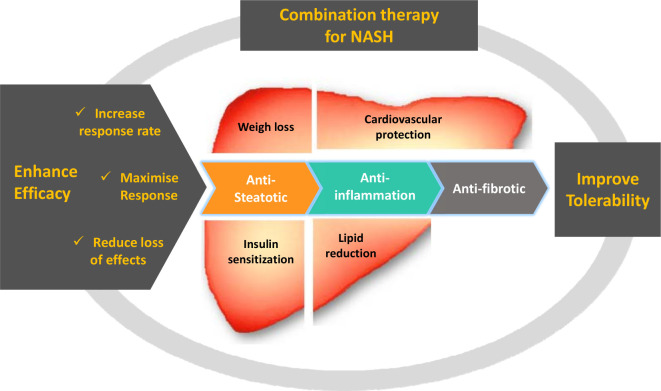
“The ideal combination of drugs should have beneficial effects on the liver, weight loss, cardiovascular system, glucoregulation, and lipid regulation [66,67].”
BackgroundNonalcoholic Steatohepatitis Drug Development Pipeline: An Update
Chew, N., Ng, C. H., Truong, E., Noureddin, M., & Kowdley, K. V. (2022) · Seminars in Liver Disease · doi:10.1055/a-1877-9656 · Cited by 52
Review article: current and emerging therapies for the management of cirrhosis and its complications
Tapper, E. B., Ufere, N. N., Huang, D. Q., & Loomba, R. S. (2022) · Alimentary Pharmacology & Therapeutics · doi:10.1111/apt.16831 · Cited by 53
Self-citationHudert, C. A., Adams, L. A., Alisi, A., Anstee, Q. M., Crudele, A., Draijer, L. G., EU‐PNAFLD investigators, Furse, S., Hengstler, J. G., Jenkins, B., et al. (2022) · Hepatology Communications · doi:10.1002/hep4.1955 · Cited by 45
Treatment Candidacy for Pharmacologic Therapies for NASH
Rowe, I. A., Wong, V. W.-S., & Loomba, R. (2022) · Clinical Gastroenterology and Hepatology · doi:10.1016/j.cgh.2021.03.005 · Cited by 41
Self-citationPerakakis, N., Stefanakis, K., Feigh, M., Veidal, S. S., & Mantzoros, C. S. (2021) · Liver International · doi:10.1111/liv.14888 · Cited by 42
Incretin-based investigational therapies for the treatment of MASLD/MASH
Brouwers, B., Rao, G., Tang, Y., Rodríguez, Á., Glass, L. C., & Hartman, M. L. (2024) · Diabetes Research and Clinical Practice · doi:10.1016/j.diabres.2024.111675 · Cited by 40
Li, S., Zhang, N., Yang, X., Huang, T., Lin, Y., Jiang, Z., Yi, Y., & Liu, E. (2023) · Journal of Agricultural and Food Chemistry · doi:10.1021/acs.jafc.2c08637 · Cited by 40
Emerging synthetic drugs for the treatment of liver cirrhosis
Fallowfield, J. A., Jimenez-Ramos, M., & Robertson, A. (2021) · Expert Opinion on Emerging Drugs · doi:10.1080/14728214.2021.1918099 · Cited by 38
“did not meet its primary endpoint (possibly due to a small sample size), the complex interactions between drugs in different combination regimens will continue to inform future development [101].”
BackgroundXu, Y., He, P., He, B., & Chen, Z. (2025) · Frontiers in Pharmacology · doi:10.3389/fphar.2025.1552171 · Cited by 50
Brown, E. A., Minnich, A., Sanyal, A. J., Loomba, R. S., Du, S., Schwarz, J., Ehman, R. L., Karsdal, M. A., Leeming, D. J., Cizza, G., et al. (2023) · JHEP Reports · doi:10.1016/j.jhepr.2022.100661 · Cited by 44
“The pathophysiology of NASH is complex and multifactorial, with a metabolic component and additional drivers that can lead to hepatocyte stress, inflammation, cell death, and fibrosis.(6,7) Because of the complexity and heterogeneity of NASH, a range”
Self-citationMicroRNA regulation of AMPK in nonalcoholic fatty liver disease
Sun, H., & Kemper, J. K. (2023) · Experimental & Molecular Medicine · doi:10.1038/s12276-023-01072-3 · Cited by 37
Rau, M., & Geier, A. (2021) · Expert Review of Clinical Pharmacology · doi:10.1080/17512433.2021.1884068 · Cited by 39
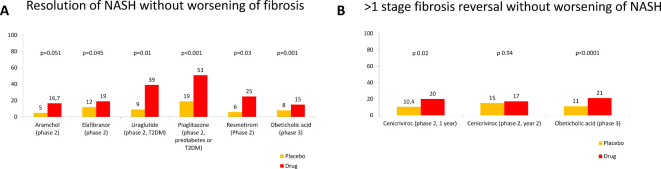
“However, monotherapy with these drugs led to a histological resolution of NASH at the maximum of 32% of patients compared to a 10–15% response in placebo [20].”
BackgroundDiagnostic and therapeutic strategies for non-alcoholic fatty liver disease
Fu, Y., Zhou, Y., Shen, L., Li, X., Zhang, H., Cui, Y., Zhang, K., Li, W., Chen, W., Zhao, S., et al. (2022) · Frontiers in Pharmacology · doi:10.3389/fphar.2022.973366 · Cited by 40
Resmetirom's approval: Highlighting the need for comprehensive approaches in NASH therapeutics
Alshehade, S. A. (2024) · Clinics and Research in Hepatology and Gastroenterology · doi:10.1016/j.clinre.2024.102377 · Cited by 36
Xu, S., Jin, H., Jin, X., Xu, B., Zhang, Y., Xie, T., Wang, G., Wang, J., & Zhen, L. (2023) · Journal of Pharmaceutical and Biomedical Analysis · doi:10.1016/j.jpba.2023.115595 · Cited by 36
Yan, M., Man, S., Ma, L., & Gao, W. (2022) · Metabolism · doi:10.1016/j.metabol.2022.155264 · Cited by 35
Cui, S., Pan, X., Ge, C., Guo, Y., Zhang, P., Yan, T., Zhou, J., He, Q., Cheng, L.-H., Wang, G., et al. (2021) · Chinese Journal of Natural Medicines · doi:10.1016/s1875-5364(21)60039-0 · Cited by 51
Desjardins, E. M., Wu, J., Lavoie, D. C. T., Ahmadi, E., Townsend, L. K., Morrow, M. R., Wang, D., Tsakiridis, E. E., Batchuluun, B., Fayyazi, R., et al. (2023) · Cell Reports Medicine · doi:10.1016/j.xcrm.2023.101193 · Cited by 33
“6 And although combinatorial therapies may increase the difficulty of designing trials and present more challenges in patient recruitment/retain-ment, these efforts may improve the benefit:risk ratio compared with monotherapies.”
Alkhouri, N., Charlton, M., Gray, M. E., & Noureddin, M. (2025) · Expert Opinion on Investigational Drugs · doi:10.1080/13543784.2025.2473062 · Cited by 34
“Due to its complex, multi-systemic nature, use of two or more drug classes with different but complementary mechanisms of action (e.g. metabolic, anti-fibrotic, and/or anti-inflammatory) may improve the efficacy of pharmacologic intervention [179,180].”
Minetti, E. T., Hamburg, N. M., & Matsui, R. (2024) · Frontiers in Cardiovascular Medicine · doi:10.3389/fcvm.2024.1469492 · Cited by 38
Is it time for chronopharmacology in NASH?
Marjot, T., Ray, D. W., & Tomlinson, J. (2022) · Journal of Hepatology · doi:10.1016/j.jhep.2021.12.039 · Cited by 35
Muthiah, M. D., Ng, C. H., Xiao, J., Chin, Y. H., Lim, G., Lim, W. H., Tay, P. W. L., Tan, D. J. H., Yong, J. N., Pan, X., et al. (2022) · Alimentary Pharmacology & Therapeutics · doi:10.1111/apt.16808 · Cited by 32
Self-citationPotential therapeutic strategies for MASH: from preclinical to clinical development
Xie, Z., Li, Y., Cheng, L., Huang, Y., Rao, W., Shi, H., & Li, J. (2024) · Life Metabolism · doi:10.1093/lifemeta/loae029 · Cited by 33
Koh, B., Xiao, J., Ng, C. H., Law, M., Gunalan, S. Z., Danpanichkul, P., Ramadoss, V., Sim, B., Tan, E. Y., Teo, C. B., et al. (2024) · Hepatology · doi:10.1097/hep.0000000000001028 · Cited by 33
Self-citationInfluence of Genistein on Hepatic Lipid Metabolism in an In Vitro Model of Hepatic Steatosis
Seidemann, L., Krüger, A., Kegel, V., Seehofer, D., & Damm, G. (2021) · Molecules · doi:10.3390/molecules26041156 · Cited by 35
“To date, the growing global disease burden of NAFLD has not been remedied by an adequate pharmaceutical treatment [36].”
BackgroundBile acid signaling in MASLD: From pathogenesis to therapeutic applications
Simbrunner, B., Paternostro, R., Reiberger, T., & Trauner, M. (2025) · Hepatology · doi:10.1097/hep.0000000000001539 · Cited by 33
Wang, L., Li, M., Yu, B., Shi, S., Liu, J., Zhang, R., Ayada, I., Verstegen, M. M. A., van der Laan, L. J. W., Peppelenbosch, M. P., et al. (2022) · Journal of Molecular Medicine · doi:10.1007/s00109-021-02176-x · Cited by 32
“These drugs are primarily aimed at reversing hepatic fibrosis or anti-inflammation [45].”
BackgroundGuan, L., Guo, L., Zhang, H., Liu, H., Qiao, Y., Zhou, W., Zhai, Y., Men, X., Cheng, D., Men, X., et al. (2023) · Molecular Nutrition & Food Research · doi:10.1002/mnfr.202200812 · Cited by 30
Xin, X., Chen, C., Bei-yu, C., Li, H., Tian, H., Wang, X., An, Z., Qin-mei, S., Hu, Y., & Qin, F. (2021) · Frontiers in Nutrition · doi:10.3389/fnut.2021.784354 · Cited by 32
Nonalcoholic Fatty Liver Disease and Staging of Hepatic Fibrosis
Engin, A. (2024) · Advances in experimental medicine and biology · doi:10.1007/978-3-031-63657-8_18 · Cited by 33
Alkhouri, N., Tincopa, M. A., Loomba, R. S., & Harrison, S. A. (2021) · Hepatology Communications · doi:10.1002/hep4.1814 · Cited by 32
Self-citationYADAV, Y. R., Dunagan, K. T., Khot, R., Venkatesh, S. K., Port, J. D., Galderisi, A., Cobelli, C., Wegner, C. D., Basu, A., Carter, R. E., et al. (2022) · Diabetes Obesity and Metabolism · doi:10.1111/dom.14646 · Cited by 29
A data-driven approach to decode metabolic dysfunction-associated steatotic liver disease
Ramos, M. J., Kendall, T. J., Drozdov, I. A., & Fallowfield, J. A. (2023) · Annals of Hepatology · doi:10.1016/j.aohep.2023.101278 · Cited by 27
“Given the complexity of disease pathogenesis, combination drug therapy may be required to improve patient outcomes [11], but the optimal combinations or treatment regimens are unknown.”
BackgroundPathogenesis from Inflammation to Cancer in NASH-Derived HCC
Yu, S., Wang, J., Zheng, H., Wang, R., Johnson, N. L., Li, T., Li, P., Lin, J., Li, Y., Jin, Y., et al. (2022) · Journal of Hepatocellular Carcinoma · doi:10.2147/jhc.s377768 · Cited by 29
Immunological dynamics in MASH: from landscape analysis to therapeutic intervention
Rabiu, L., Zhang, P., Afolabi, L. O., Saliu, M. A., Dabai, S. M., Suleiman, R. B., Gidado, K. I., Ige, M. A., Ibrahim, A., Zhang, G., et al. (2024) · Journal of Gastroenterology · doi:10.1007/s00535-024-02157-0 · Cited by 26
“These combination therapies aim to enhance treatment efficacy and are particularly beneficial for patients with MASH who also have type 2 diabetes mellitus [157].”
Combined Use of Bicyclol and Berberine Alleviates Mouse Nonalcoholic Fatty Liver Disease
Li, H., Liu, N., Li, J., Dong, B., Wang, M., Tan, J., Wang, X., Jiang, J., Lei, L., Li, H., et al. (2022) · Frontiers in Pharmacology · doi:10.3389/fphar.2022.843872 · Cited by 28
Chen, J. Y. S., Chua, D., Lim, C. O., Ho, W. X., & Tan, N. S. (2022) · International Journal of Molecular Sciences · doi:10.3390/ijms24010158 · Cited by 27
“An ongoing phase 3 study (NCT03970031) [48] on 1800 NAFLD patients with T2DM will evaluate the histological benefits of MSDC-0602K.”
BackgroundInfluentialTsuji, Y., Kaji, K., Kitade, M., Kaya, D., Kitagawa, K., Ozutsumi, T., Fujinaga, Y., Takaya, H., Kawaratani, H., Namisaki, T., et al. (2020) · Microorganisms · doi:10.3390/microorganisms8060925 · Cited by 25
Hung, C., Tsai, Y.-W., Wu, Y., Yeh, C., & Yang, K. (2022) · Journal of Biomedical Science · doi:10.1186/s12929-022-00850-x · Cited by 25
miR-33 deletion in hepatocytes attenuates MASLD-MASH-HCC progression
Fernández-Tussy, P., Cardelo, M. P., Zhang, H., Sun, J., Price, N. L., Boutagy, N. E., Goedeke, L., Cadena-Sandoval, M., Xirouchaki, C. E., Brown, W., et al. (2024) · JCI Insight · doi:10.1172/jci.insight.168476 · Cited by 21
“The beneficial or detrimental effects of enhanced FAO in MASLD/MASH have been extensively discussed in the past, and our present results bring insight into the beneficial role of FAO in the disease (15, 25, 101, 102).”
BackgroundCombination Therapy of Endoscopic Gastric Remodeling with GLP-1RA for the Treatment of MASLD
Jirapinyo, P., Jaroenlapnopparat, A., Zucker, S. D., & Thompson, C. C. (2024) · Obesity Surgery · doi:10.1007/s11695-024-07178-5 · Cited by 22
“…specific regard to MASLD [25], there currently are several ongoing phase 2 trials assessing the safety and efficacy of combination therapy to increase response rates using medications with different mechanisms of action, such as anti-inflammatory agents in combination with antifibrotic agents [25].”
Novo, E., Cappon, A., Villano, G., Quarta, S., Cannito, S., Bocca, C., Turato, C., Guido, M., Maggiora, M., Protopapa, F., et al. (2022) · Frontiers in Immunology · doi:10.3389/fimmu.2022.910526 · Cited by 21
Perakakis, N., Joshi, A., Peradze, N., Stefanakis, K., Li, G., Feigh, M., Veidal, S. S., Rosen, G., Fleming, M., & Mantzoros, C. S. (2020) · Hepatology Communications · doi:10.1002/hep4.1558 · Cited by 19
Choi, Y., Johnson, J. D., Lee, J.-J., Song, J., Matthews, M. D., Hellerstein, M. K., & McWherter, C. A. (2023) · American Journal of Physiology-Gastrointestinal and Liver Physiology · doi:10.1152/ajpgi.00158.2023 · Cited by 17
Proteomic Biomarkers of Intrahepatic Cholestasis of Pregnancy
Zeng, W., Hou, Y., Gu, W. T., & Chen, Z. (2024) · Reproductive Sciences · doi:10.1007/s43032-023-01437-z · Cited by 18
“PPARα, PPARδ, and PPARγ are three transcription factors of the PPARs family, which are involved in glucose and lipid metabolism and have anti-inflammatory effects [25].”
BackgroundKim, H., Lee, K., Kim, J., Shim, J.-J., Lim, J., Kim, J.-Y., & Lee, J.-L. (2023) · Microorganisms · doi:10.3390/microorganisms11102466 · Cited by 17
“At present, NAFLD is treated using drugs designed to treat diabetes, obesity, and hyperlipidemia [32,33].”
BackgroundNuclear hormone and peptide hormone therapeutics for NAFLD and NASH
Finan, B., Parlee, S. D., & Yang, B. S. (2020) · Molecular Metabolism · doi:10.1016/j.molmet.2020.101153 · Cited by 17
“At least 10 combinations are already in clinical evaluation or progressing to clinical trials, and mostly involve combination of a metabolism-focused agent with an agent geared toward inflammation or fibrosis [156].”
BackgroundSinakos, E., Liava, C., & Loomba, R. (2022) · Annals of Gastroenterology · doi:10.20524/aog.2022.0704 · Cited by 19
Metadata
- Authors
- Dufour, J.-F., Caussy, C., & Loomba, R.
- Affiliations
- University of Bern (CH)
- University of California San Diego (US)
- Corresponding author
- Dufour, Jean-François
- Venue
- Gut
- Publisher
- BMJ
- Published
- 2020-05-07
- Volume
- 69
- Issue
- 10
- Pages
- 1877-1884
- ISSN
- 0017-5749 (ISSN-L)
- 1468-3288
- PMC
- PMC7497577
- OpenAlex
- W3020979243
- Cited by
- 193
- References
- 74
- Citations by year
- 2026: 11 · 2025: 23 · 2024: 31 · 2023: 36 · 2022: 43 · 2021: 38 · 2020: 11
- FWCI
- 4.67
- Type
- journal article
- Language
- en
- Open access
- hybrid
- doi.org
- Licence
- Locations
- Gut (publishedVersion, cc-by-nc)
- PubMed Central (publishedVersion, cc-by-nc)
- PubMed (publishedVersion)
- HAL (submittedVersion)
- Bern Open Repository and Information System (University of Bern) (submittedVersion, cc-by-nc)
- eScholarship (California Digital Library) (submittedVersion, cc-by-nc)
- HighWire Press Open Archive (submittedVersion)
- Open Access CRIS of the University of Bern
- Funders
- U.S. Department of Defense (5UL1TR001442, CA170674P2)
- National Institutes of Health (UL1TR001442)
- National Institute of Diabetes and Digestive and Kidney Diseases (R01DK106419, P30DK120515)
- National Institute of Environmental Health Sciences (P42ES010337)
- National Center for Advancing Translational Sciences
- DOD Peer Reviewed Cancer Research Program
- Topics
- Health Sciences › Medicine › Hepatology › Liver Disease Diagnosis and Treatment
- Health Sciences › Medicine › Hepatology › Liver Diseases and Immunity
- Life Sciences › Pharmacology, Toxicology and Pharmaceutics › Pharmacology › Drug-Induced Hepatotoxicity and Protection
- Keywords
- nonalcoholic steatohepatitis, combination therapy, NASH treatment, liver cirrhosis, therapeutic target, pathophysiology, drug development, pharmacological interventions
- MeSH terms
- Clinical Trials as Topic, Drug Therapy, Combination, Humans, Treatment Outcome, Medication Therapy Management, Non-alcoholic Fatty Liver Disease
About these checks
Registry, retraction, Cites and statistics results are computed, not judged, with one exception: a printed reference that no index lists is read once by a model before it counts as a citation error. Claims are extracted by a model and kept only when their quote appears verbatim in the text; each cited source is then checked, with a model’s help, for whether it says what the claim relies on. Those verdicts can be wrong — read the claim’s quote and the cited source before relying on one.
Statistics and arithmetic are recomputed, not judged.
Confidence bands are shown only for fields calibrated on our annotated test set. None is calibrated yet, so no band is shown.
What counts as a claim ›How we measure confidence ›How we check this ›
Are you an author, or do you see a problem with this page? Request a review
Data sources
Bibliographic data: Semantic Scholar, OpenAlex, Crossref.
Contains information from the Semantic Scholar Academic Graph Datasets, made available under the ODC Attribution License (ODC-BY 1.0).
Semantic Scholar’s data is described in: Kinney, R., et al. (2023). The Semantic Scholar Open Data Platform. arXiv:2301.10140.
