

Elevated resting heart rate, physical fitness and all-cause mortality: a 16-year follow-up in the Copenhagen Male Study
Open accessThe DOI matches its Crossref record; 35 of the 36 references it cites were found in a registry or an index.
Abstract
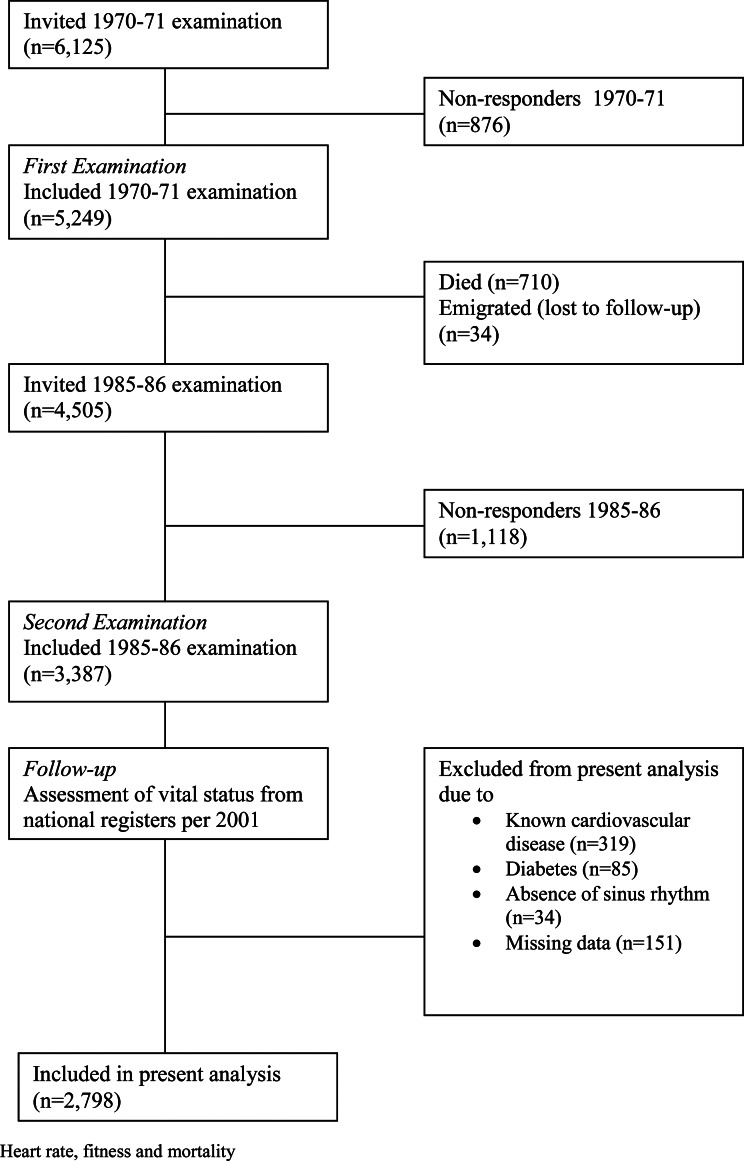
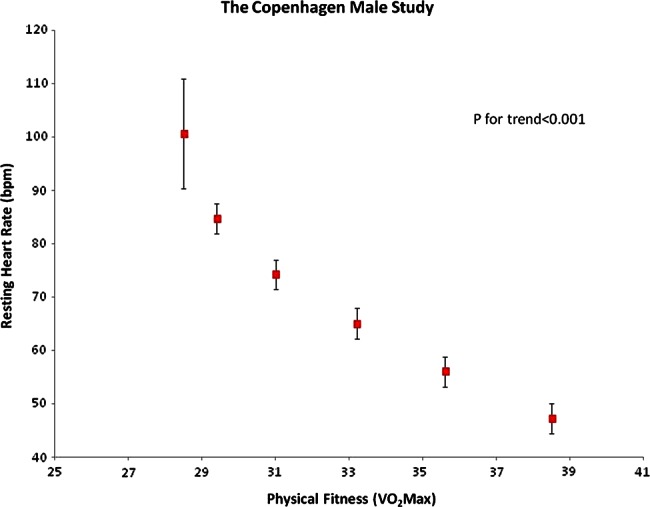
Objective: To examine whether elevated resting heart rate (RHR) is an independent risk factor for mortality or a mere marker of physical fitness (VO 2 Max). Methods: This was a prospective cohort study: the Copenhagen Male Study, a longitudinal study of healthy middle-aged employed men. Subjects with sinus rhythm and without known cardiovascular disease or diabetes were included. RHR was assessed from a resting ECG at study visit in 1985–1986. VO 2 Max was determined by the Åstrand bicycle ergometer test in 1970–1971. Subjects were classified into categories according to level of RHR. Associations with mortality were studied in multivariate Cox models adjusted for physical fitness, leisure-time physical activity and conventional cardiovascular risk factors. Results: 2798 subjects were followed for 16 years. 1082 deaths occurred. RHR was inversely related to physical fitness (p<0.001). Overall, increasing RHR was highly associated with mortality in a graded manner after adjusting for physical fitness, leisure-time physical activity and other cardiovascular risk factors. Compared to men with RHR ≤50, those with RHR >90 had an HR (95% CI) of 3.06 (1.97 to 4.75). With RHR as a continuous variable, risk of mortality increased with 16% (10–22) per 10 beats per minute (bpm). There was a borderline interaction with smoking (p=0.07); risk per 10 bpm increase in RHR was 20% (12–27) in smokers, and 14% (4–24) in non-smokers. Conclusions: Elevated RHR is a risk factor for mortality independent of physical fitness, leisure-time physical activity and other major cardiovascular risk factors.
Overview
The claims and statistics of this paper haven’t been checked yet.
Free: it reads the open-access text and checks the first 5 claims that cite a source we can check. Create a free account to check every claim.
Integrity signals
Registry
Cites
Statistics
Figures
Verification
Claims the paper makes
The claims and statistics of this paper haven’t been checked yet.
Free: it reads the open-access text and checks the first 5 claims that cite a source we can check. Create a free account to check every claim.
Self-check
Percentages, sums and reported differences re-computed from the paper’s own numbers.
The self-check needs the paper’s full text.
Citations
Cites
Friedewald, W. T., Levy, R. I., & Fredrickson, D. S. (1972) · Clinical Chemistry · doi:10.1093/clinchem/18.6.499 · Cited by 32,423
Heart-Rate Profile during Exercise as a Predictor of Sudden Death
Jouven, X., Empana, J.-P., Schwartz, P. J., Desnos, M., Courbon, D., & Ducimetière, P. (2005) · New England Journal of Medicine · doi:10.1056/nejmoa043012 · Cited by 1,005
Diaz, A., Bourassa, M. G., Guertin, M.-C., & Tardif, J.-C. (2005) · European Heart Journal · doi:10.1093/eurheartj/ehi190 · Cited by 790
Physical Fitness as a Predictor of Mortality among Healthy, Middle-Aged Norwegian Men
Sandvik, L., Erikssen, J., Thaulow, E., Erikssen, G., Mundal, R., & Rodahl, K. (1993) · New England Journal of Medicine · doi:10.1056/nejm199302253280803 · Cited by 788
DYER, A. R., PERSKY, V., STAMLER, J., PAUL, O., SHEKELLE, R. B., BERKSON, D. M., LEPPER, M., SCHOENBERGER, J. A., & LINDBERG, H. A. (1980) · American Journal of Epidemiology · doi:10.1093/oxfordjournals.aje.a113046 · Cited by 554
Association Between Smoking and Blood Pressure: Evidence From the Health Survey for England
Primatesta, P., Falaschetti, E., Gupta, S., Marmot, M. G., & Poulter, N. R. (2001) · Hypertension · doi:10.1161/01.hyp.37.2.187 · Cited by 481
Blood pressure in smokers and nonsmokers: Epidemiologic findings
Green, M. S., Jucha, E., & Luz, Y. (1986) · American Heart Journal · doi:10.1016/0002-8703(86)90645-9 · Cited by 421
DiFrancesco, D., & Camm, J. A. (2004) · Drugs · doi:10.2165/00003495-200464160-00003 · Cited by 409
Sajadieh, A. (2004) · European Heart Journal · doi:10.1016/j.ehj.2003.12.003 · Cited by 393
Self-citationNewby, D. E., Wright, R. A., Labinjoh, C., Ludlam, C. A., Fox, K. A. A., Boon, N. A., & Webb, D. J. (1999) · Circulation · doi:10.1161/01.cir.99.11.1411 · Cited by 382
Cited by
Items 101–200 of 338
Cui, X., Mandalenakis, Z., Thunström, E. Ö., Fu, M. L. X., Svärdsudd, K., & Hansson, P. (2020) · Clinical Research in Cardiology · doi:10.1007/s00392-020-01714-w · Cited by 18
A common variation in HCN1 is associated with heart rate variability in schizophrenia
Refisch, A., Chung, H., Komatsuzaki, S., Schumann, A., Mühleisen, T. W., Nöthen, M. M., Hübner, C. A., & Bär, K. (2020) · Schizophrenia Research · doi:10.1016/j.schres.2020.11.017 · Cited by 18
Repeated warm water baths decrease sympathetic activity in humans
Cui, J. G., Gao, Z., Leuenberger, U. A., Blaha, C., Luck, J. C., Herr, M. D., & Sinoway, L. I. (2022) · Journal of Applied Physiology · doi:10.1152/japplphysiol.00684.2021 · Cited by 19
Markers of cardiovascular autonomic dysfunction predict COPD in middle-aged subjects
Ricci, F., Wollmer, P., Engström, G., Fedorowski, A., & Hamrefors, V. (2018) · European Respiratory Journal · doi:10.1183/13993003.02481-2017 · Cited by 18
on behalf of PURE-China Investigator group, Wang, Y., Yin, L., Hu, B., Tse, L. A., Liu, Y., Ma, H., & Li, W. (2021) · Annals of Translational Medicine · doi:10.21037/atm-21-706 · Cited by 18
Jung, M., Ihm, S., Lee, D. H., Chung, W., Jung, H. O., & Youn, H. (2016) · International Journal of Cardiology · doi:10.1016/j.ijcard.2016.11.044 · Cited by 18
The Influence of Continuous Exercising on Chronotropic Incompetence in Multi-Episode Schizophrenia
Herbsleb, M., Keller-Varady, K., Wobrock, T., Hasan, A., Schmitt, A., Falkai, P., Gabriel, H. H. W., Bär, K., & Malchow, B. (2019) · Frontiers in Psychiatry · doi:10.3389/fpsyt.2019.00090 · Cited by 17
Cardiorespiratory fitness, fatness and incident diabetes
Holtermann, A., Gyntelberg, F., Bauman, A. E., & Jensen, M. T. (2017) · Diabetes Research and Clinical Practice · doi:10.1016/j.diabres.2017.10.001 · Cited by 17
Self-citationGreve, A. M., Bang, C. N., Berg, R. M. G., Egstrup, K., Rossebø, A. B., Boman, K., Nienaber, C. A., Ray, S. G., Gohlke-Baerwolf, C., Nielsen, O. W., et al. (2014) · International Journal of Cardiology · doi:10.1016/j.ijcard.2014.11.181 · Cited by 16
Wu, J., Ye, Y., Li, C., Zhou, W., & Chang, R. (2019) · Journal of Cardiovascular Pharmacology · doi:10.1097/fjc.0000000000000705 · Cited by 16
“The exclusion criteria were as follows: (1) patients with a CVD complication, a history of asthma or acute attacks within the past 3 months; (2) the experimental group contained a non-ILABs or no placebo control was set; (3) the treatment lasted for less than 12 weeks or the end point did not include the above 4 CAEs;…”
MethodYang, X., Hidru, T. H., Han, X., Zhang, X., Liu, Y., Wang, B., Li, H., Wu, S., & Xia, Y. (2020) · Journal of the American Heart Association · doi:10.1161/jaha.119.014122 · Cited by 16
Guo, Q., Xiao, Z., Lin, M.-H., Yuan, G., Qiu, Q., Yang, Y., Zhao, H., Zhang, Y., Zhou, S., & Wang, J. (2021) · Annals of Translational Medicine · doi:10.21037/atm-20-7897 · Cited by 16
Kraeh, A., Froese, F. J., & Kim, S. G. (2016) · International Journal of Intercultural Relations · doi:10.1016/j.ijintrel.2016.02.001 · Cited by 15
Ariansen, I., Mortensen, L., Graff-Iversen, S., Stigum, H., Kjøllesdal, M., & Næss, Ø. (2017) · BMC Public Health · doi:10.1186/s12889-017-4123-0 · Cited by 12
Khanade, K., & Sasangohar, F. (2017) · Proceedings of the Human Factors and Ergonomics Society Annual Meeting · doi:10.1177/1541931213601927 · Cited by 14
“The risk of mortality increased 16% per 10-bpm rise in resting heart rate (RHR) when RHR was taken as a continuous variable (Jensen et al., 2013).”
BackgroundModified Isoinertial-Based Ruffier Test in Healthy Individuals: A Feasibility Study
Trovato, B., Roggio, F., Petrigna, L., & Musumeci, G. (2023) · Journal of Functional Morphology and Kinesiology · doi:10.3390/jfmk8020036 · Cited by 14
Zhang, Y., Wang, X., Pathiravasan, C. H., Spartano, N. L., Lin, H., Borrelli, B., Benjamin, E. J., McManus, D. D., Larson, M. G., Vasan, R. S., et al. (2024) · Journal of Medical Internet Research · doi:10.2196/56676 · Cited by 13
“Others have also observed an inverse association between resting HR and CRF [32,33] and importantly between resting HR and adverse outcomes such as mortality independent of physical fitness [32,34].”
Oliver, M. D., Morton, A. L., Baldwin, D. R., & Datta, S. (2019) · Journal of American College Health · doi:10.1080/07448481.2019.1596919 · Cited by 13
BayesHeart: A Probabilistic Approach for Robust, Low-Latency Heart Rate Monitoring on Camera Phones
Fan, X., & Wang, J. (2015) · ACM International Conference on Intelligent User Interfaces (IUI) · doi:10.1145/2678025.2701364 · Cited by 13
“As one crucial physiological signal, resting heart rate (RHR) is a key indicator of health condition [8, 10], fitness [9, 17], and expected life span [18, 32].”
BackgroundCorella, D., Sorlí, J. V., González, J. I., Ortega, C., Fitó, M., Bulló, M., Martínez‐González, M. Á., Ros, E., Arós, F., Lapetra, J., et al. (2014) · Cardiovascular Diabetology · doi:10.1186/1475-2840-13-5 · Cited by 13
Wen, C. P., Chen, C. H., Nauman, J., Wai, J. P. M., Tsai, M., Lee, J.-H., Chu, T.-W. D., Ingeström, E., Chiou, H. Y., Hsu, C. C., et al. (2025) · Progress in Cardiovascular Diseases · doi:10.1016/j.pcad.2025.01.007 · Cited by 12
da Silva, C. F., Burgos, M. S., da Silva, P. T., Burgos, L. T., Welser, L., Sehn, A. P., Horta, J. A., de Mello, E. D., & Reuter, C. P. (2017) · Arquivos Brasileiros de Cardiologia · doi:10.5935/abc.20170103 · Cited by 12
Andreas, S., Bothner, U., Trampisch, M., Haensel, M., Buhl, R., & Alter, P. J. (2018) · Pulmonary Pharmacology & Therapeutics · doi:10.1016/j.pupt.2018.08.002 · Cited by 12
Zambach, C., Fedorowski, A., Gerward, S., Johansson, M., Engström, G., & Hamrefors, V. (2023) · Journal of Hypertension · doi:10.1097/hjh.0000000000003397 · Cited by 12
“We confirm previous results of manifest orthostatic hypotension being strongly associated with cardiovascular risk factors [1,2,5,6,19,23,24] and that orthostatic hypotension should be regarded as a risk factor that should direct special attention to individuals with overweight, diabetes, hypertension and smoking.”
BackgroundResultKuo, Y., Lee, M., Huang, Y.-C., & Lee, J.-D. (2021) · BMC Neurology · doi:10.1186/s12883-021-02252-2 · Cited by 12
Wang, L., Zhang, N., Sun, B.-G., Wang, Z., & Cao, Z. (2015) · Journal of Stroke and Cerebrovascular Diseases · doi:10.1016/j.jstrokecerebrovasdis.2015.08.030 · Cited by 12
Lee, I., Kim, J., & Kang, H. (2022) · International Journal of Environmental Research and Public Health · doi:10.3390/ijerph19010510 · Cited by 12
Andreas, S., McGarvey, L. P., Bothner, U., Trampisch, M., de la Hoz, A., Fležar, M., Buhl, R., & Alter, P. J. (2020) · International Journal of COPD · doi:10.2147/copd.s246348 · Cited by 11
Subhashri, S., Pal, P., Pal, G. K., Papa, D., & Nanda, N. (2020) · Clinical and Experimental Hypertension · doi:10.1080/10641963.2020.1817475 · Cited by 11
Wiersema, J. M., Kamphuis, A. E. P., Rohling, J. H. T., Kervezee, L., Akintola, A. A., Jansen, S. W. M., Slagboom, P. E., van Heemst, D., & van der Spoel, E. (2022) · Aging · doi:10.18632/aging.204219 · Cited by 11
Pal, P., Pal, G., Sridhar, M., Manivannan, S., Habeebullah, S., & Adithan, C. (2014) · International Journal of Clinical and Experimental Physiology · doi:10.4103/2348-8093.137404 · Cited by 11
Low autonomic arousal as a risk factor for reoffending: A population-based study
Oskarsson, S., Kuja‐Halkola, R., Latvala, A., Andersson, A., Garcia‐Argibay, M., Bertoldi, B. M., Raine, A., Patrick, C. J., Larsson, H., & Tuvblad, C. (2021) · PLoS ONE · doi:10.1371/journal.pone.0256250 · Cited by 10
Hinder, M., Yi, B. A., & Langenickel, T. (2018) · Clinical Pharmacology & Therapeutics · doi:10.1002/cpt.1010 · Cited by 11
Vestberg, T., Tedeholm, P. G., Ingvar, M., Larsson, A. C., & Petrović, P. (2021) · Frontiers in Psychology · doi:10.3389/fpsyg.2021.580463 · Cited by 10
“…also tested for the relation between baseline scores and percent drop in test results during the re-test, adjusting for the cognitive support functions as Processing speed, Working memory accuracy, and Resting heart rate (as a proxy for physical fitness; Sandvik et al., 1993; Jensen et al., 2013).”
BackgroundMethodvan Ockenburg, S. L., Rosmalen, J. G. M., Bakker, S. J. L., de Jonge, P., & Gans, R. O. B. (2016) · Atherosclerosis · doi:10.1016/j.atherosclerosis.2016.02.030 · Cited by 10
Tamarappoo, B. K., Ling, L. F., Cerqueira, M. D., & Hachamovitch, R. (2017) · European Heart Journal - Cardiovascular Imaging · doi:10.1093/ehjci/jex157 · Cited by 10
Resting heart rate and incident venous thromboembolism: the Multi-Ethnic Study of Atherosclerosis
Awotoye, J., Fashanu, O. E., Lutsey, P. L., Zhao, D., O’Neal, W. T., & Michos, E. D. (2020) · Open Heart · doi:10.1136/openhrt-2019-001080 · Cited by 10
May, B. K., & Treadwell, R. E. (2020) · Behavior Analysis in Practice · doi:10.1007/s40617-020-00428-9 · Cited by 10
Physical Activity As a Preventive Measure against Cardiovascular Disease in Elderly Patients
Kotovskaya, Y. V., Tkacheva, O. N., Рунихина, Н. К., & Вячеславовна, Л. А. (2019) · Doctor Ru · doi:10.31550/1727-2378-2019-157-2-19-22 · Cited by 9
Hubungan Rasio Perilaku Konsumsi Makro Nutrisi dengan Tingkat Kebugaran Jasmani pada Remaja
Anggita, G. M., Ali, M. A., Subiyono, H. S., & Kurniawati, D. M. (2021) · Jurnal Pendidikan Kesehatan Rekreasi · doi:10.5281/zenodo.4434567 · Cited by 9
Monitoring Pulse Rate in the Background Using Front Facing Cameras of Mobile Devices
Savur, C., Dautov, R., Bukum, K., Xia, X., Couderc, J., & Tsouri, G. R. (2022) · IEEE Journal of Biomedical and Health Informatics · doi:10.1109/jbhi.2022.3197076 · Cited by 9
“According to the American Heart Association, long-term monitoring of HR is a crucial vital sign in assessing overall health and cardiac status [6], especially at rest [7].”
BackgroundUsing machine learning to estimate the calendar age based on autonomic cardiovascular function
Schumann, A., Gaser, C., Sabeghi, R., Schulze, P. C., Festag, S., Spreckelsen, C., & Bär, K. (2023) · Frontiers in Aging Neuroscience · doi:10.3389/fnagi.2022.899249 · Cited by 9
Aneni, E. C., Oni, E., Osondu, C. U., Martin, S. S., Blaha, M. J., Veledar, E., Agatston, A. S., Feldman, T., Carvalho, J. A. M., Conceição, R., et al. (2015) · Cardiology · doi:10.1159/000435907 · Cited by 9
Pal, G. K., Adithan, C., Umamaheswaran, G., Pal, P., Nanda, N., Jagadeeswaran, I., & Syamsunder, A. N. (2016) · Journal of the American Society of Hypertension · doi:10.1016/j.jash.2016.09.001 · Cited by 9
Escala, A. (2019) · Theoretical Ecology · doi:10.1007/s12080-019-0408-5 · Cited by 9
Andreas, S., Bothner, U., de la Hoz, A., Kloer, I. M., Trampisch, M., & Alter, P. J. (2020) · International Journal of COPD · doi:10.2147/copd.s246350 · Cited by 9
Geraci, C., Geraci, G., Buonauro, A., Morello, V., Rocca, F. L., & Esposito, R. (2026) · Journal of Clinical Medicine · doi:10.3390/jcm15020617 · Cited by 8
Bae, S. W., Chung, T. A., Zhang, T., Dey, A. K., & Islam, R. (2025) · JMIR AI · doi:10.2196/52270 · Cited by 8
“To exclude outliers, we refined data selection to omit instances where HR was below 40 bpm, as recommended by the American Heart Association [29,30].”
Vargas‐Hitos, J. A., Soriano‐Maldonado, A., Martínez-Bordonado, J., Sánchez‐Berná, I., Fernandez-Berges, D. J., & Sabio, J. M. (2017) · Angiology · doi:10.1177/0003319717746525 · Cited by 8
Jagadeeswaran, I., Pal, G. K., Pal, P., Ananthanarayanan, P. H., Parija, S. C., Balachander, J., & Dutta, T. K. (2018) · The Indian Journal of Medical Research · doi:10.4103/ijmr.ijmr_1751_16 · Cited by 8
Investigating Cardiovascular Activation of Young Adults in Routine Driving
Hasan, M. T., Alghamdi, H., Taamneh, S., Manser, M. P., Wunderlich, R., Tsiamyrtzis, P., & Pavlidis, I. T. (2023) · IEEE Transactions on Affective Computing · doi:10.1109/taffc.2023.3291330 · Cited by 7
Ivabradine: Do the Benefits Outweigh the Risks?
Alshammari, T. M. (2016) · Journal of Cardiovascular Pharmacology and Therapeutics · doi:10.1177/1074248416672008 · Cited by 7
Pal, G. K., Habeebullah, S., Pal, P., Manivannan, S., Saranya, K., & Nanda, N. (2019) · International Journal of Clinical and Experimental Physiology · doi:10.5530/ijcep.2018.5.4.20 · Cited by 8
Parra, M. T., Esmeaeli, N., Kohn, J. N., Henry, B. L., Klagholz, S. D., Jain, S., Pruitt, C., Vicario, D., Jonas, W. B., & Mills, P. J. (2020) · Integrative Cancer Therapies · doi:10.1177/1534735420921439 · Cited by 7
Testing the efficacy of a brief exercise intervention for enhancing exposure therapy outcomes
Weisman, J. S., & Rodebaugh, T. L. (2020) · Journal of Anxiety Disorders · doi:10.1016/j.janxdis.2020.102266 · Cited by 7
Night-time cardiac metrics from a wearable sensor predict intensity of next-day chronic pain
Dudarev, V., Zhang, C., Barral, O., Davis, G., & Enns, J. T. (2022) · Procedia Computer Science · doi:10.1016/j.procs.2022.09.083 · Cited by 8
Does cardiac reactivity in the laboratory predict ambulatory heart rate? Baseline counts
Schwerdtfeger, A. R., Schienle, A., Leutgeb, V., & Rathner, E. (2014) · Psychophysiology · doi:10.1111/psyp.12199 · Cited by 7
Park, H., Lee, J., Kim, J. Y., Kim, D., & Jeon, J. Y. (2015) · The Korean Journal of Obesity · doi:10.7570/kjo.2015.24.3.166 · Cited by 7
Cholinergic Signaling and Muscle Contraction
Kramer, I. M. (2015) · Elsevier eBooks · doi:10.1016/b978-0-12-394803-8.00004-8 · Cited by 7
Resting Heart Rate Is Not Associated with Cognitive Function
Wod, M., Jensen, M. T., Galatius, S., Hjelmborg, J., Jensen, G. B., & Christensen, K. (2018) · Neuroepidemiology · doi:10.1159/000487802 · Cited by 7
Self-citationPhysical activity may compensate for prolonged TV time regarding pulse rate—a cross-sectional study
Beijer, K., Lampa, E., Sundström, J., Nilsson, P. M., Elmståhl, S., Pedersen, N. L., & Lind, L. (2018) · Upsala Journal of Medical Sciences · doi:10.1080/03009734.2018.1540505 · Cited by 7
Park, D., Hong, S.-H., Cho, W., & Jeon, J. Y. (2020) · Exercise Science · doi:10.15857/ksep.2020.29.4.416 · Cited by 7
“이 외에도 여러 인종과 연령의 참여자들을 대상으로 안정시심박수가 체력과 매우 밀접한 상관관계가 있음이 증 명되었다[13-15].”
Choi, Y., Kim, G., Yoon, J., & Kim, Y. S. (2024) · Journal of Sports Sciences · doi:10.1080/02640414.2024.2400807 · Cited by 6
“…PA guidelines is associated with a lower risk of CVD mortality regardless of RHR. Previous studies have noted that elevated RHR is an independent risk factor for CVD outcomes (Aune et al., 2017; Jensen, Suadicani, et al., 2013; Zhang et al., 2016), aligning with the findings of the present study.”
Refisch, A., Schumann, A., Gupta, Y., Schulz, S., Voss, A., Malchow, B., & Bär, K. (2025) · Schizophrenia · doi:10.1038/s41537-025-00589-y · Cited by 6
“…noteworthy because “ simply taking the pulse ” serves as an immediate indicator of cardiovascular risk 16 , as HR is an independent predictor of reduced life expectancy in both the general population and CVD patients 55,56 , with a 10 bpm increase associated with a 30% increase in mortality 57 .”
Predicting Volleyball Season Performance Using Pre-Season Wearable Data and Machine Learning
Ozolcer, M., Zhang, T., & Bae, S. W. (2025) · International Conference on Activity and Behavior Computing (ABC) · doi:10.1109/abc64332.2025.11118608 · Cited by 7
“…indicate better athletic performance and cardiovascular fitness; resting heart rate (RHR), with lower RHR signifying higher cardiovascular fitness [37]; heart rate variability (HRV), with higher HRV indicating better cardiovascular health [38]; and more intricate measurements that concern…”
A glossary for social-to-biological research
Robertson, T., Benzeval, M., Betzer, M., Booker, C. L., Castagné, R., Delpierre, C., Gallagher, I. J., Kelly‐Irving, M., McCrory, C., Morris, T., et al. (2024) · Longitudinal and Life Course Studies · doi:10.1332/17579597y2024d000000032 · Cited by 7
“Elevated resting heart rate has been shown to be a risk factor for mortality independent of age, physical fitness, leisure-time physical activity and other cardiovascular risk factors (smoking, alcohol, body mass index [BMI], blood pressure and cholesterol) (Jensen et al, 2013).”
Pal, G., Pal, P., Jagadeeswaran, I., Suchitra, B., & Sirisha, A. (2016) · International Journal of Clinical and Experimental Physiology · doi:10.4103/2348-8093.180035 · Cited by 6
“Resting HR is an index of vagal tone,[18] and increased BHR has recently been reported to be associated with increased CV risks.[19] In FDR of diabetic patients, heart and BP parameters were significantly reduced after yoga therapy for 12 weeks, further establishing the evidence of decreased CV risks.”
BackgroundKitilya, B., Peck, R. N., Changalucha, J. M., Jeremiah, K., Kavishe, B. B., Friis, H., Filteau, S., Krogh‐Madsen, R., Brage, S., Faurholt‐Jepsen, D., et al. (2022) · Frontiers in Endocrinology · doi:10.3389/fendo.2022.885988 · Cited by 7
“PAEE ((kj/kg/day) was a proxy measure of physical activity, whereas sleeping heart rate (SHR) (beats/min) and VO2max were the proxy measures of cardiorespiratory fitness (30, 31).”
BackgroundKnijff, J. M., Houdijk, E. C. A. M., van der Kaay, D. C. M., van Berkel, Y., Filippini, L. H., Stuurman, F. E., Cohen, A. F., Driessen, G. J. A., & Kruizinga, M. D. (2022) · Digital Biomarkers · doi:10.1159/000522185 · Cited by 6
Assessment of heart rate variability indices in overweight and obese Indian population
Pal, G., Dutta, T., Jagadeeswaran, I., & Pal, P. (2014) · International Journal of Clinical and Experimental Physiology · doi:10.4103/2348-8093.143507 · Cited by 6
Action-Dependent Photobiomodulation on Health, Suboptimal Health, and Disease
Liu, T. C., Liu, L., Chen, J.-G., Zeng, P., & Yang, X. (2014) · International Journal of Photoenergy · doi:10.1155/2014/832706 · Cited by 6
“[33] have done a prospective cohort study, the CopenhagenMale Study, a longitudinal study of healthy middle-aged employed men, and found that elevated resting heart rate was a risk factor for mortality independent of physical fitness, leisure-time physical activity, and other major cardiovascular risk factors.”
Backgroundde Oliveira, A. J., Neto, G. D. A. M., Barros, O. D., Pedreiro, R. C. D. M., Murillo‐Rodríguez, E., de León, A. P., & Machado, S. E. D. C. (2018) · Sport Sciences for Health · doi:10.1007/s11332-018-0503-9 · Cited by 6
Resting heart rate and mortality in the very old
Wod, M., Jensen, M. T., Galatius, S., Hjelmborg, J., Jensen, G. B., & Christensen, K. (2019) · Scandinavian Journal of Clinical and Laboratory Investigation · doi:10.1080/00365513.2019.1672085 · Cited by 6
“In these very old subjects, RHR did not significantly predict death, which is in contrast to results from studies in younger individuals [7,8,10,11].”
ResultSelf-citationRole of ivabradine and heart rate lowering in chronic heart failure: guideline update
Chow, S. L., Page, R. L., II, & Depré, C. (2018) · Expert Review of Cardiovascular Therapy · doi:10.1080/14779072.2018.1489235 · Cited by 6
Taking Care of Persistent Sleepiness in Patients with Sleep Apnea
Kapur, V. K., & Donovan, L. M. (2018) · American Journal of Respiratory and Critical Care Medicine · doi:10.1164/rccm.201812-2291ed · Cited by 6
Jo, Y., Puri, S., Haaland, B. A., Coletta, A. M., Chipman, J., Embrey, K., Kerrigan, K. C., Patel, S. B., Moynahan, K., Gumbleton, M., et al. (2024) · Clinical Lung Cancer · doi:10.1016/j.cllc.2024.10.001 · Cited by 5
Adopción de la inteligencia artificial y tecnologías digitales en la educación superior, Volumen 1
California, U. A. D. B. (2025) · Qartuppi eBooks · doi:10.29410/qtp.25.05 · Cited by 5
Paschoal, M. A. (2021) · Cardiorespiratory Physiotherapy Critical Care and Rehabilitation · doi:10.4322/2675-9977.cpcr.42591 · Cited by 5
Zheng, M., Liu, C., Lv, Y., Mi, J., Qiu, D., He, L., & Zhao, L. (2022) · Frontiers in Physiology · doi:10.3389/fphys.2022.900661 · Cited by 5
Oskarsson, S., Andersson, A., Bertoldi, B. M., Latvala, A., Kuja‐Halkola, R., Evans, B. E., Raine, A., Patrick, C. J., Larsson, H., & Tuvblad, C. (2024) · PLoS ONE · doi:10.1371/journal.pone.0297639 · Cited by 5
“Physical energy capacity, another correlate of RHR [29] and potentially also of ciminal offending [9], was also included as a covariate.”
BackgroundTsai, M., Gao, W., Chien, K., Hsu, C., & Wen, C.-P. (2022) · Clinical Kidney Journal · doi:10.1093/ckj/sfac119 · Cited by 5
Assessment of Heart Rate Variability in Early Post-menopausal Women
Subhashri, S., Pal, P., Papa, D., Nanda, N., Pal, G. K., & Packirisamy, R. M. (2019) · International Journal of Clinical and Experimental Physiology · doi:10.5530/ijcep.2019.6.1.4 · Cited by 5
Development and evaluation of a cardiac coherence index for sleep analysis
Celka, P., Granqvist, N., Schwabl, H., & Edwards, S. D. (2020) · Journal of Psychology in Africa · doi:10.1080/14330237.2019.1689460 · Cited by 5
Zyśko, D., Persson, A., Obremska, M., Leśkiewicz, M., Fedorowski, A., Sutton, R., & Johnson, L. (2021) · Kardiologia Polska · doi:10.33963/kp.15820 · Cited by 5
Feng, K. Y., Short, S. A., Saeb, S., Carroll, M. K., Olivier, C. B., Simard, E. P., Swope, S., Williams, D., Eckstrand, J., Pagidipati, N. J., et al. (2024) · Journal of Medical Internet Research · doi:10.2196/60493 · Cited by 4
“These findings are consistent with previous studies suggesting that more difficult SES and psychosocial circumstances were associated with higher chronic stress and higher HR [22-28].”
Moraes, D. N., Nascimento, B. R., Pires, M. C., Paixão, G. M., Macfarlane, P. W., & Ribeiro, A. L. P. (2025) · The American Journal of Cardiology · doi:10.1016/j.amjcard.2025.03.038 · Cited by 4
Association between diet quality and all-cause mortality in a large Dutch cohort
Kirk, D., Baart, A. M., McLean, J., & Feskens, E. J. M. (2024) · PLoS ONE · doi:10.1371/journal.pone.0302905 · Cited by 4
Physical activity and heart rate in PTSD inpatients: Moderation by custody of a service dog
Woodward, S. H., Jamison, A. L., Gala, S., Villasenor, D., Tamayo, G. C., & Puckett, M. (2024) · Journal of Psychiatric Research · doi:10.1016/j.jpsychires.2024.10.017 · Cited by 4
Huang, S., Jafari, R., & Mortazavi, B. J. (2024) · IEEE Open Journal of Engineering in Medicine and Biology · doi:10.1109/ojemb.2024.3398444 · Cited by 4
Clinical presentation and management of stable coronary artery disease in Austria
Pichlhöfer, O., Maier, M., Eslam, R. B., Ristl, R., Żebrowska, M., & Lang, I. M. (2017) · PLoS ONE · doi:10.1371/journal.pone.0176257 · Cited by 4
Costa, R. R., Reichert, T. L., Coconcelli, L., Simmer, N. M., Bagatini, N. C., Buttelli, A. C. K., Bracht, C. G., Stein, R., & Kruel, L. F. M. (2017) · Complementary Therapies in Clinical Practice · doi:10.1016/j.ctcp.2017.06.001 · Cited by 4
de Souza, A. G. L., da Silva, L. B., de Leon, E. B., Trimer, R., & Mendonça, A. S. G. B. (2018) · Work · doi:10.3233/wor-182808 · Cited by 4
Rahbar, S., Naimi, S. S., Soltani, A. R., Rahimi, A., Baghban, A. A., & Khorami, N. (2018) · PubMed Central · Cited by 4
Prognostic Value and Limits of Heart Rate and QT—Corrected in A Large Population
Giovanardi, P., Vernia, C., Roversi, S., Tincani, E., Spadafora, G., Silipo, F., & Giberti, C. (2024) · Hearts · doi:10.3390/hearts5020015 · Cited by 4
“Similarly to the QT interval, the HR is also influenced by many conditions such as genetics, cardiovascular risk factors and cardiovascular diseases, infections, inflammatory diseases, drug use, physical activity, and sympathetic and vagal imbalance [12–15].”
BackgroundIvabradine in Management of Heart Failure: a Critical Appraisal
Orasanu, G., Al-Kindi, S. G., & Oliveira, G. H. (2016) · Current Heart Failure Reports · doi:10.1007/s11897-016-0276-x · Cited by 4
Pal, G. K., Pal, P., Nanda, N., Lalitha, V., Syamsunder, A. N., Saranya, K., Jagadeeswaran, I., Sirisha, A., & Jayakrishnan, G. (2014) · Journal of Cardiovascular Disease Research · doi:10.5530/jcdr.2014.2.9 · Cited by 4
Franklin, B. A., & Chaddha, A. (2018) · Journal of Cardiopulmonary Rehabilitation and Prevention · doi:10.1097/hcr.0000000000000376 · Cited by 5
Frese, D. A. (2015) · K-State Research Exchange (Kansas State University) · Cited by 4
A novel health risk model based on intraday physical activity time series collected by smartphonesPreprint
Getmantsev, E., Zhurov, B., Pyrkov, T. V., & Fedichev, P. O. (2018) · arXiv (Cornell University) · doi:10.48550/arxiv.1812.02522 · Cited by 4
Towards Integrative Multi-Modal Personal Health Navigation Systems: Framework and ApplicationPreprint
Nag, N., Oh, H., Tang, M., Shi, M., & Jain, R. (2021) · arXiv (Cornell University) · doi:10.48550/arxiv.2111.10403 · Cited by 4
“These health state techniques were pulled from the knowledge layer [22, 23, 43, 84].”
Method
Metadata
- Authors
- Jensen, M. T., Suadicani, P., Hein, H. O., & Gyntelberg, F.
- Affiliations
- Gentofte Hospital (DK)
- Bispebjerg Hospital (DK)
- Corresponding author
- Jensen, Magnus Thorsten
- Venue
- Heart
- Publisher
- BMJ
- Published
- 2013-04-17
- Volume
- 99
- Issue
- 12
- Pages
- 882-887
- ISSN
- 1355-6037 (ISSN-L)
- 1468-201X
- PMC
- PMC3664385
- OpenAlex
- W2126772717
- Semantic Scholar
- b4544f6f349dde4789a835600798431c8de0b7d9
- Cited by
- 297
- References
- 36
- Citations by year
- 2026: 9 · 2025: 15 · 2024: 20 · 2023: 20 · 2022: 27 · 2021: 21 · 2020: 27 · 2019: 27 · 2018: 34 · 2017: 24 · 2016: 24 · 2015: 21 · 2014: 16 · 2013: 11
- FWCI
- 56.92
- Type
- journal article
- Language
- en
- Open access
- hybrid
- doi.org
- Licence
- cc-by-nc
- Locations
- Heart (publishedVersion, cc-by-nc)
- Europe PMC (PubMed Central) (publishedVersion, other-oa)
- PubMed Central (publishedVersion, cc-by-nc)
- PubMed (publishedVersion)
- Funders
- Hjerteforeningen
- Sundhed og Sygdom, Det Frie Forskningsråd
- Medical Research Council
- Topics
- Health Sciences › Medicine › Physiology (medical) › Cardiovascular and exercise physiology
- Health Sciences › Medicine › Public Health, Environmental and Occupational Health › Physical Activity and Health
- Health Sciences › Medicine › Cardiology and Cardiovascular Medicine › Cardiovascular Effects of Exercise
- Keywords
- resting heart rate, all-cause mortality, physical fitness, VO2max, cardiovascular risk factors, leisure-time physical activity, smoking, middle-aged men
- MeSH terms
- Aged, Cardiovascular Diseases, Cause of Death, Denmark, Electrocardiography, Follow-Up Studies, Heart Rate, Humans, Male, Middle Aged, Motor Activity, Physical Fitness, Prognosis, Prospective Studies, Rest, Risk Factors, Time Factors, Proportional Hazards Models
About these checks
Registry, retraction, Cites and statistics results are computed, not judged, with one exception: a printed reference that no index lists is read once by a model before it counts as a citation error. Claims are extracted by a model and kept only when their quote appears verbatim in the text; each cited source is then checked, with a model’s help, for whether it says what the claim relies on. Those verdicts can be wrong — read the claim’s quote and the cited source before relying on one.
Statistics and arithmetic are recomputed, not judged.
Confidence bands are shown only for fields calibrated on our annotated test set. None is calibrated yet, so no band is shown.
What counts as a claim ›How we measure confidence ›How we check this ›
Are you an author, or do you see a problem with this page? Request a review
Data sources
Bibliographic data: Semantic Scholar, OpenAlex, Crossref.
Contains information from the Semantic Scholar Academic Graph Datasets, made available under the ODC Attribution License (ODC-BY 1.0).
Semantic Scholar’s data is described in: Kinney, R., et al. (2023). The Semantic Scholar Open Data Platform. arXiv:2301.10140.
