

Vaccine efficacy against primary and metastatic cancer with in vitro-generated CD103 + conventional dendritic cells
Open accessThe DOI matches its Crossref record; 47 of the 48 references it cites were found in a registry or an index.
Abstract
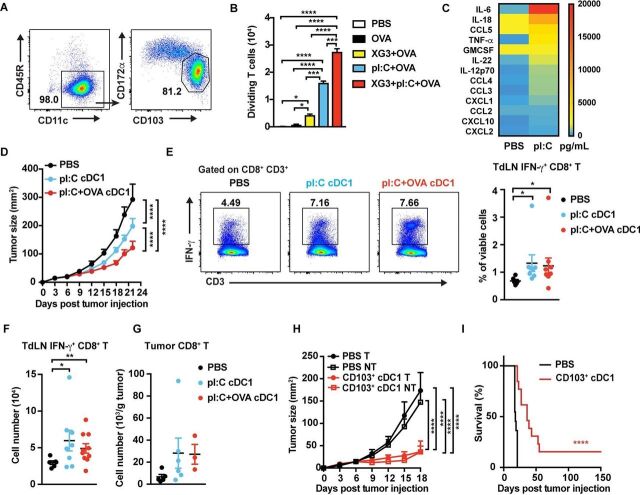
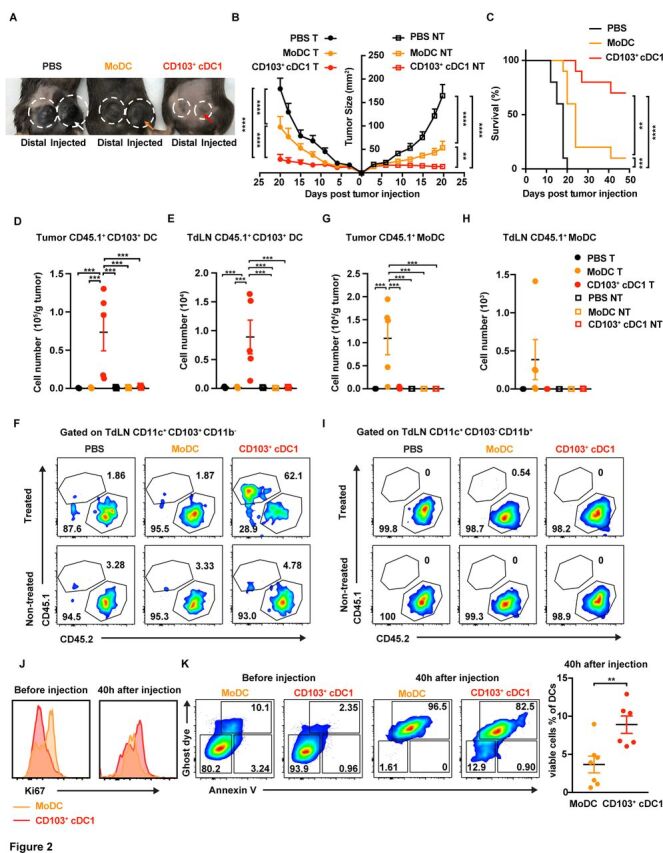
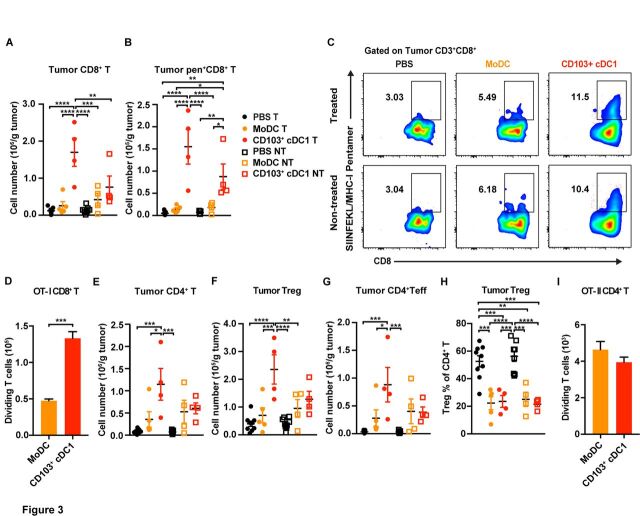
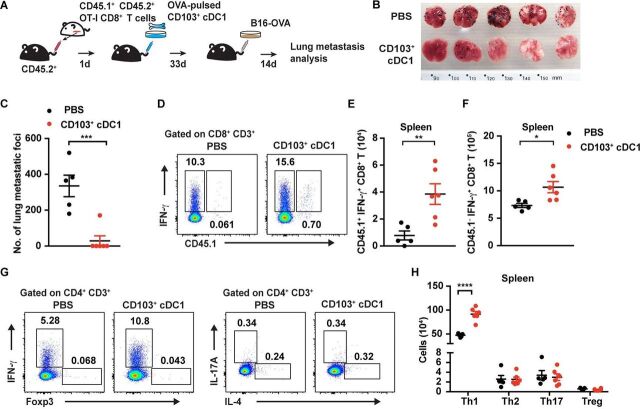
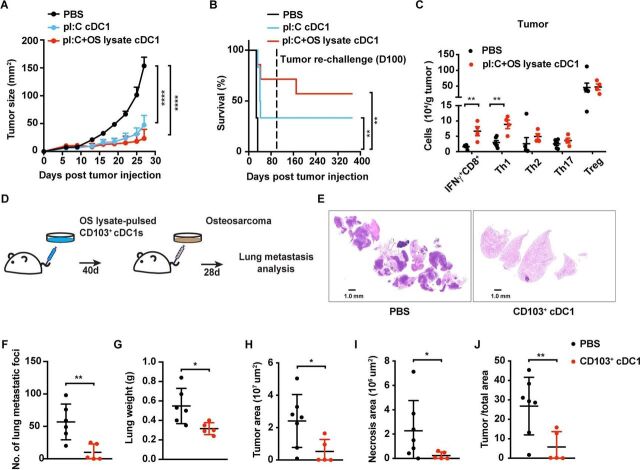
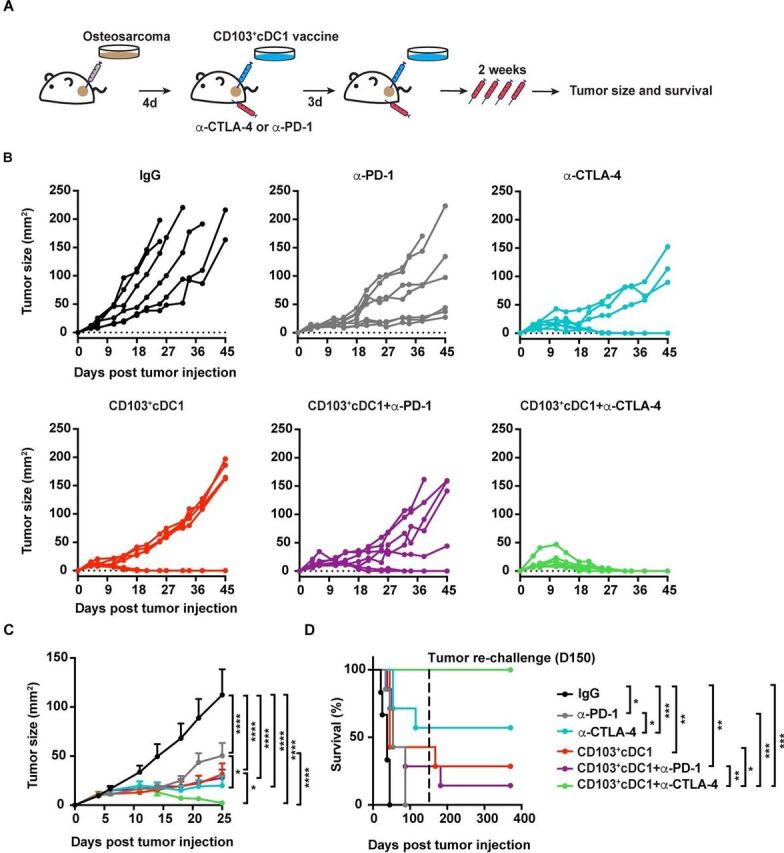
Background Type 1 conventional dendritic cells (cDC1s) possess efficient antigen presentation and cross-presentation activity, as well as potent T cell priming ability. Tissue-resident cDC1s (CD103 + cDC1s in mice, CD141 + cDC1s in humans) are linked with improved tumor control, yet the efficacy of immunotherapy using this population is understudied. Methods We generated murine CD103 + cDC1s in vitro and examined their expression of cDC1-related factors, antigen cross-presentation activity, and accumulation in tumor-draining lymph nodes (TdLNs). The antitumor efficacy of the in vitro-generated CD103 + cDC1s was studied in murine melanoma and osteosarcoma models. We evaluated tumor responses on vaccination with CD103 + cDC1s, compared these to vaccination with monocyte-derived DCs (MoDCs), tested CD103 + cDC1 vaccination with checkpoint blockade, and examined the antimetastatic activity of CD103 + cDC1s. Results In vitro-generated CD103 + cDC1s produced cDC1-associated factors such as interleukin-12p70 and CXCL10, and demonstrated antigen cross-presentation activity on stimulation with the toll-like receptor 3 agonist polyinosinic:polycytidylic acid (poly I:C). In vitro-generated CD103 + cDC1s also migrated to TdLNs following poly I:C treatment and intratumoral delivery. Vaccination with poly I:C-activated and tumor antigen-loaded CD103 + cDC1s enhanced tumor infiltration of tumor antigen-specific and interferon-γ + CD8 + T cells, and suppressed melanoma and osteosarcoma growth. CD103 + cDC1s showed superior antitumor efficacy compared with MoDC vaccination, and led to complete regression of 100% of osteosarcoma tumors in combination with CTLA-4 antibody-mediated checkpoint blockade. In vitro-generated CD103 + cDC1s effectively protected mice from pulmonary melanoma and osteosarcoma metastases. Conclusions Our data indicate an in vitro-generated CD103 + cDC1 vaccine elicits systemic and long-lasting tumor-specific T cell-mediated cytotoxicity, which restrains primary and metastatic tumor growth. The CD103 + cDC1 vaccine was superior to MoDCs and enhanced response to immune checkpoint blockade. These results indicate the potential for new immunotherapies based on use of cDC1s alone or in combination with checkpoint blockade.
Overview
The claims and statistics of this paper haven’t been checked yet.
Free: it reads the open-access text and checks the first 5 claims that cite a source we can check. Create a free account to check every claim.
Integrity signals
Registry
Cites
Statistics
Figures
Verification
Claims the paper makes
The claims and statistics of this paper haven’t been checked yet.
Free: it reads the open-access text and checks the first 5 claims that cite a source we can check. Create a free account to check every claim.
Claims other papers make about this one
Each is checked against this paper’s own text: does it say what the citing paper says it does?
The source backs part of the claim, not all of it — or backs it for a different population, condition or comparison.
In the citing paper
“This treatment activates and loads tumor antigens onto CD103+ myeloid/conventional DC1s, enhancing the immune system’s capacity to target cancer cells [151].”
From Advances on immunotherapy for osteosarcoma (2024) · cites this paper as [151]
Experimental — accuracy not yet measuredThe source backs part of the claim, not all of it — or backs it for a different population, condition or comparison.
In the citing paper
“A variety of vaccines have shown encouraging results, including the CD1c+ DC vaccine, which harnesses the power of antigen-presenting DCs, and the innovative approach of vaccinating with polyinosinic: polycytidylic acid (poly I: C).”
From Advances on immunotherapy for osteosarcoma (2024) · cites this paper as [151]
Experimental — accuracy not yet measuredIn the citing paper
“Recent preclinical studies have shown that vaccination with CD103+ cDC1s in combination with CTLA-4 blockade were highly effective in inducing tumor regression in murine models of osteosarcoma and melanoma (Zhou et al., 2020).”
From Hallmarks of response, resistance, and toxicity to immune checkpoint blockade (2021) · cites this paper as Zhou et al., 2020
Self-check
Percentages, sums and reported differences re-computed from the paper’s own numbers.
The self-check needs the paper’s full text.
Citations
Cites
The future of immune checkpoint therapy
Sharma, P., & Allison, J. P. (2015) · Science · doi:10.1126/science.aaa8172 · Cited by 4,878
Melanoma-intrinsic β-catenin signalling prevents anti-tumour immunity
Spranger, S., Bao, R., & Gajewski, T. F. (2015) · Nature · doi:10.1038/nature14404 · Cited by 2,830
CTLA-4 and PD-1 Pathways: Similarities, Differences, and Implications of Their Inhibition
Buchbinder, E. I., & Desai, A. (2016) · American Journal of Clinical Oncology · doi:10.1097/coc.0000000000000239 · Cited by 2,360
Tumor metastasis: mechanistic insights and clinical challenges
Steeg, P. S. (2006) · Nature Medicine · doi:10.1038/nm1469 · Cited by 2,134
Batf3 Deficiency Reveals a Critical Role for CD8α + Dendritic Cells in Cytotoxic T Cell Immunity
Hildner, K., Edelson, B. T., Purtha, W. E., Diamond, M., Matsushita, H., Kohyama, M., Calderon, B., Schraml, B. U., Unanue, E. R., Diamond, M. S., et al. (2008) · Science · doi:10.1126/science.1164206 · Cited by 2,081
Tawbi, H. A., Burgess, M., Bolejack, V., Van Tine, B. A., Schuetze, S. M., Hu, J., D'Angelo, S., Attia, S., Riedel, R. F., Priebat, D. A., et al. (2017) · The Lancet Oncology · doi:10.1016/s1470-2045(17)30624-1 · Cited by 1,452
Spranger, S., Dai, D., Horton, B., & Gajewski, T. F. (2017) · Cancer Cell · doi:10.1016/j.ccell.2017.04.003 · Cited by 1,441
Distinct cellular mechanisms underlie anti-CTLA-4 and anti-PD-1 checkpoint blockade
Wei, S. C., Levine, J. H., Cogdill, A. P., Zhao, Y., Anang, N.-A. A. S., Andrews, M. C., Sharma, P., Wang, J., Wargo, J. A., Pe’er, D., et al. (2017) · Cell · doi:10.1016/j.cell.2017.07.024 · Cited by 1,302
Salmon, H., Idoyaga, J., Rahman, A., Leboeuf, M., Remark, R., Jordan, S., Casanova-Acebes, M., Khudoynazarova, M., Agudo, J., Tung, N., et al. (2016) · Immunity · doi:10.1016/j.immuni.2016.03.012 · Cited by 1,201
Engineered T cells: the promise and challenges of cancer immunotherapy
Fesnak, A. D., June, C. H., & Levine, B. L. (2016) · Nature Reviews Cancer · doi:10.1038/nrc.2016.97 · Cited by 1,074
Cited by
Hallmarks of response, resistance, and toxicity to immune checkpoint blockade
Morad, G., Helmink, B. A., Sharma, P., & Wargo, J. A. (2021) · Cell · doi:10.1016/j.cell.2021.09.020 · Cited by 1,648
Immunotherapy for osteosarcoma: Fundamental mechanism, rationale, and recent breakthroughs
Chen, C., Xie, L., Ren, T., Huang, Y., Xu, J., & Guo, W. (2021) · Cancer Letters · doi:10.1016/j.canlet.2020.12.024 · Cited by 569
Dendritic cells as orchestrators of anticancer immunity and immunotherapy
Heras-Murillo, I., Adán-Barrientos, I., Galán, M., Wculek, S. K., & Sancho, D. (2024) · Nature Reviews Clinical Oncology · doi:10.1038/s41571-024-00859-1 · Cited by 383
“Furthermore, endogenous mouse and human cDCs are more efficient antigen presenters and inducers of T cell responses than DCs generated ex vivo with GM-CSF 214–217 .”
InfluentialAdvances on immunotherapy for osteosarcoma
Yu, S., & Yao, X. (2024) · Molecular Cancer · doi:10.1186/s12943-024-02105-9 · Cited by 270
Managing the immune microenvironment of osteosarcoma: the outlook for osteosarcoma treatment
Tian, H., Cao, J., Li, B., Nice, E. C., Mao, H., Zhang, Y., & Huang, C. (2023) · Bone Research · doi:10.1038/s41413-023-00246-z · Cited by 232
Advances in immune checkpoint inhibitors for bone sarcoma therapy
Thanindratarn, P., Dean, D. C., Nelson, S. D., Hornicek, F. J., & Duan, Z. (2019) · Journal of Bone Oncology · doi:10.1016/j.jbo.2019.100221 · Cited by 165
Tumor Microenvironment: Implications in Melanoma Resistance to Targeted Therapy and Immunotherapy
Falcone, I., Conciatori, F., Bazzichetto, C., Ferretti, G., Cognetti, F., Ciuffreda, L., & Milella, M. (2020) · Cancers · doi:10.3390/cancers12102870 · Cited by 173
Cross-priming in cancer immunology and immunotherapy
Luri‐Rey, C., Teijeira, Á., Wculek, S. K., de Andrea, C. E., Herrero, C., López‐Janeiro, Á., Rodriguez-Ruiz, M. E., Heras‐Murillo, I., Aggelakopoulou, M., Berraondo, P., et al. (2025) · Nature reviews. Cancer · doi:10.1038/s41568-024-00785-5 · Cited by 166
Trial watch: Dendritic cell (DC)-based immunotherapy for cancer
Laureano, R. S., Sprooten, J., Vanmeerbeerk, I., Borràs, D., Govaerts, J., Naulaerts, S., Berneman, Z. N., Beuselinck, B., Bol, K. F., Borst, J. G., et al. (2022) · OncoImmunology · doi:10.1080/2162402x.2022.2096363 · Cited by 144
Zhu, T., Han, J., Liu, Y., Cai, Z., Sun, W. Y., Hua, Y., & Xu, J. (2022) · Frontiers in Immunology · doi:10.3389/fimmu.2022.907550 · Cited by 134
Immune checkpoints in osteosarcoma: Recent advances and therapeutic potential
Yang, W., Tang, F., Tu, C., Hornicek, F. J., Duan, Z., & Min, L. (2022) · Cancer Letters · doi:10.1016/j.canlet.2022.215887 · Cited by 114
Engineered tumor cell-derived vaccines against cancer: The art of combating poison with poison
Zhang, X., Cui, H., Zhang, W., Li, Z., & Gao, J. (2022) · Bioactive Materials · doi:10.1016/j.bioactmat.2022.10.016 · Cited by 96
Nanovaccines: An effective therapeutic approach for cancer therapy
Gurunathan, S., Pratheep, T., Wang, L., Cao, Q., & Kim, J. (2023) · Biomedicine & Pharmacotherapy · doi:10.1016/j.biopha.2023.115992 · Cited by 89
Janes, M. E., Gottlieb, A. P., Park, K. S., Zhao, Z., & Mitragotri, S. (2023) · Bioengineering & Translational Medicine · doi:10.1002/btm2.10588 · Cited by 82
Synergistic potential of immune checkpoint inhibitors and therapeutic cancer vaccines
Oladejo, M., Paulishak, W., & Wood, L. M. (2022) · Seminars in Cancer Biology · doi:10.1016/j.semcancer.2022.12.003 · Cited by 80
Harnessing epithelial-mesenchymal plasticity to boost cancer immunotherapy
Gu, Y., Zhang, Z., & ten Dijke, P. (2023) · Cellular and Molecular Immunology · doi:10.1038/s41423-023-00980-8 · Cited by 80
Cell and tissue engineering in lymph nodes for cancer immunotherapy
Najibi, A. J., & Mooney, D. J. (2020) · Advanced Drug Delivery Reviews · doi:10.1016/j.addr.2020.07.023 · Cited by 80
AIM2 regulates anti-tumor immunity and is a viable therapeutic target for melanoma
Fukuda, K., Okamura, K., Riding, R. L., Fan, X., Afshari, K., Haddadi, N., McCauley, S. M., Guney, M. H., Luban, J., Funakoshi, T., et al. (2021) · The Journal of Experimental Medicine · doi:10.1084/jem.20200962 · Cited by 76
“However, they present limited efficacy (Anguille et al., 2014), in part due to reduced migration and T cell priming capacity relative to natural DC subsets (Perez and De Palma, 2019; Zhou et al., 2020).”
BackgroundType I conventional dendritic cells facilitate immunotherapy in pancreatic cancer
Mahadevan, K. K., Dyevoich, A. M., Chen, Y., Li, B., Sugimoto, H., Sockwell, A. M., McAndrews, K. M., Sthanam, L. K., Wang, H., Shalapour, S., et al. (2024) · Science · doi:10.1126/science.adh4567 · Cited by 78
Self-citationDendritic Cell Vaccines in Ovarian Cancer
Zhang, X., He, T., Li, Y., Chen, L., Liu, H., Wu, Y., & Guo, H. (2021) · Frontiers in Immunology · doi:10.3389/fimmu.2020.613773 · Cited by 70
“Additionally, cDCs could enhance the efficacy of immune check point blockers (49).”
BackgroundcDC1 Vaccines Drive Tumor Rejection by Direct Presentation Independently of Host cDC1
Ferris, S. T., Ohara, R. A., Ou, F., Wu, R., Huang, X., Kim, S. K., Chen, J., Liu, T., Schreiber, R. D., Murphy, T. L., et al. (2022) · Cancer Immunology Research · doi:10.1158/2326-6066.cir-21-0865 · Cited by 72
Intestinal toxicity to CTLA-4 blockade driven by IL-6 and myeloid infiltration
Zhou, Y., Medik, Y. B., Patel, B., Zamler, D. B., Chen, S., Chapman, T., Schneider, S., Park, E. M., Babcock, R. L., Chrisikos, T. T., et al. (2023) · Journal of Experimental Medicine · doi:10.1084/jem.20221333 · Cited by 62
“Murine melanoma and α CTLA-4 therapy Murine B16-F10 melanoma cells stably expressing OVA (B16-OVA cells) were cultured in DMEM medium (Gibco) containing 10% FBS and 1% penicillin – streptomycin (Zhou et al., 2020).”
Self-citationLi, Y., Xiang, S., Pan, W., Wang, J., Zhan, H., & Liu, S. (2023) · Frontiers in Oncology · doi:10.3389/fonc.2023.1166860 · Cited by 72
“It is reported that the recruitment of effector T cell subsets into TME depended on the expression of CXCL9 and CXCL10 which mainly released from CD103 DCs in tumors (110).”
BackgroundNovel Immunotherapies for Osteosarcoma
Lu, Y., Zhang, J., Chen, Y., Kang, Y., Liao, Z., He, Y., & Zhang, C. (2022) · Frontiers in Oncology · doi:10.3389/fonc.2022.830546 · Cited by 67
“proved that type 1 conventional dendritic cells can also elicit systemic and sustaining tumor-specific T cell-mediated cytotoxicity in a mice model loaded with OS (175).”
BackgroundImmunotherapy in soft tissue and bone sarcoma: unraveling the barriers to effectiveness
Panagi, M., Pilavaki, P., Constantinidou, A., & Stylianopoulos, T. (2022) · Theranostics · doi:10.7150/thno.72800 · Cited by 61
“Cancer vaccines OS [241, 287-291] OS [90, 292]”
Heras‐Murillo, I., Mañanes, D., Munné, P., Núñez, V., Herrera, J., Català-Montoro, M., Álvarez, M., del Pozo, M. Á., Melero, I., Wculek, S. K., et al. (2025) · Nature Communications · doi:10.1038/s41467-025-58289-1 · Cited by 65
Lee, Y. S., O’Brien, L., Walpole, C., Pearson, F. E., Rojas, I. L., Masterman, K., Atkinson, V. G., Barbour, A. P., & Radford, K. J. (2021) · Journal for ImmunoTherapy of Cancer · doi:10.1136/jitc-2020-001963 · Cited by 57
Conventional type 1 dendritic cells (cDC1) in cancer immunity
Liu, P., Zhao, L., Kroemer, G., & Kepp, O. (2023) · Biology Direct · doi:10.1186/s13062-023-00430-5 · Cited by 51
Yuan, J. X., Li, Y., Zhang, H., Beeraka, N. M., Zhang, D., Wang, Q., Wang, M., Hemanth Vikram, P. R., Sethi, G., & Wang, G. (2024) · Biomedicine & Pharmacotherapy · doi:10.1016/j.biopha.2024.117714 · Cited by 52
RetractedType 1 conventional dendritic cells: ontogeny, function, and emerging roles in cancer immunotherapy
Zhang, S., Chopin, M., & Nutt, S. L. (2021) · Trends in Immunology · doi:10.1016/j.it.2021.10.004 · Cited by 47
Chemotherapy, immunotherapy, and targeted therapy for osteosarcoma: Recent advancements
Adewuyi, E. E., Chorya, H. P., Muili, A. O., Moradeyo, A. A., Kayode, A. T., Naik, A., Odedele, J. T., & Obasanjo, O. M. (2024) · Critical Reviews in Oncology/Hematology · doi:10.1016/j.critrevonc.2024.104575 · Cited by 50
Transcriptional regulation of dendritic cell development and function
Zhang, S., Audiger, C., Chopin, M., & Nutt, S. L. (2023) · Frontiers in Immunology · doi:10.3389/fimmu.2023.1182553 · Cited by 54
Multiple influence of immune cells in the bone metastatic cancer microenvironment on tumors
Chen, S., Lei, J., Mou, H., Zhang, W., Jin, L., Lu, S., Yinwang, E., Xue, Y., Shao, Z., Chen, T., et al. (2024) · Frontiers in Immunology · doi:10.3389/fimmu.2024.1335366 · Cited by 42
Chen, Y., Fan, W., Zhao, Y., Liu, M., Hu, L., & Zhang, W. (2024) · Molecules · doi:10.3390/molecules29102374 · Cited by 40
“DCs possess a unique ability to transport tumor antigens to draining lymph nodes, initiating T cell activation, a crucial step for T cell-dependent immunity and immune checkpoint blockade (ICB) therapies [59].”
BackgroundIntegrin αE(CD103)β7 in Epithelial Cancer
Hoffmann, J. C., & Schön, M. P. (2021) · Cancers · doi:10.3390/cancers13246211 · Cited by 36
“Indeed, vaccination with CD103+ DC appeared to limit tumor growth of both primary and metastatic tumors and also resulted in a higher response rate to immune checkpoint blockade (ICB) in a murine model [67].”
BackgroundSánchez-León, M. L., Jiménez‐Cortegana, C., Cabrera, G., Vermeulen, E. M., de la Cruz‐Merino, L., & Sánchez‐Margalet, V. (2022) · Frontiers in Immunology · doi:10.3389/fimmu.2022.1050484 · Cited by 37
Liang, H., Cui, M., Tu, J., & Chen, X. (2024) · Frontiers in Cell and Developmental Biology · doi:10.3389/fcell.2024.1394339 · Cited by 34
Advances and challenges in the treatment of osteosarcoma
Wang, X., Zhu, K., Hu, J., & Zhang, C. (2025) · Progress in Biophysics and Molecular Biology · doi:10.1016/j.pbiomolbio.2025.07.001 · Cited by 38
GM-CSF, Flt3-L and IL-4 affect viability and function of conventional dendritic cell types 1 and 2
Lellahi, S. M., Azeem, W., Hua, Y., Gabriel, B., Rye, K. P., Reikvam, H., & Kalland, K. (2023) · Frontiers in Immunology · doi:10.3389/fimmu.2022.1058963 · Cited by 33
“According to one study, the viability of CD103+ cDCs in mice was improved upon antigen and TLR agonist stimulation, although viability dropped after 40hrs (45).”
BackgroundChao, C.-J., Endong, Z., Trinh, D. N., Udofa, E., Lin, H., Silvers, C., Huo, J., He, S., Zheng, J., Cai, X., et al. (2025) · Nature Communications · doi:10.1038/s41467-025-59840-w · Cited by 32
Osteosarcoma immune microenvironment: cellular struggle and novel therapeutic insights
Zhang, Y., Jiang, S., Lv, J., Feng, W., Yu, Y., & Zhao, H. (2025) · Frontiers in Immunology · doi:10.3389/fimmu.2025.1584450 · Cited by 29
The chemical biology of IL-12 production via the non-canonical NFkB pathway
Koch, P. D., Pittet, M. J., & Weissleder, R. (2020) · RSC Chemical Biology · doi:10.1039/d0cb00022a · Cited by 29
Dendritic cells: the yin and yang in disease progression
Jiménez‐Cortegana, C., Palomares, F., Álba, G., Santa‐María, C., de la Cruz‐Merino, L., Sánchez‐Margalet, V., & López-Enríquez, S. (2024) · Frontiers in Immunology · doi:10.3389/fimmu.2023.1321051 · Cited by 32
Gao, T., Yuan, S., Liang, S., Huang, X., Liu, J., Gu, P., Fu, S., Zhang, N., & Liu, Y. (2024) · Advanced Science · doi:10.1002/advs.202305832 · Cited by 27
Controlling Antigen Fate in Therapeutic Cancer Vaccines by Targeting Dendritic Cell Receptors
Wijfjes, Z., van Dalen, F. J., Gall, C. M. L., & Verdoes, M. (2023) · Molecular Pharmaceutics · doi:10.1021/acs.molpharmaceut.3c00330 · Cited by 27
Mitochondrial metabolism and signaling direct dendritic cell function in antitumor immunity
You, Z., Kim, J., Guo, C., Hu, H., Chapman, N. M., Meng, X., Shi, H., Wang, Y., Guy, C. S., Anil, K. C., et al. (2026) · Science · doi:10.1126/science.adv6582 · Cited by 28
Abascal, J. W., Oh, M. S., Liclican, E. L., Dubinett, S. M., Salehi‐Rad, R., & Liu, B. (2023) · Cells · doi:10.3390/cells12192404 · Cited by 26
STAT3 Inhibits CD103+ cDC1 Vaccine Efficacy in Murine Breast Cancer
Chrisikos, T. T., Zhou, Y., Li, H. S., Babcock, R. L., Wan, X., Patel, B., Newton, K., Mancuso, J. J., & Watowich, S. S. (2020) · Cancers · doi:10.3390/cancers12010128 · Cited by 28
Self-citationPan, Z., Li, S., Guo, H., Li, Z., Fei, X., Chang, S., Yang, Q., & Cheng, D. (2022) · International Journal of Biological Sciences · doi:10.7150/ijbs.69541 · Cited by 25
“Reports have suggested that human interferon can be used as an adjuvant therapy to osteosarcoma patients [20-21].”
Mehrani, Y., Morovati, S., Keivan, F., Sarmadi, S., Shojaei, S., Forouzanpour, D., Bridle, B. W., & Karimi, K. (2025) · Cells · doi:10.3390/cells14110812 · Cited by 20
Reviewing the significance of dendritic cell vaccines in interrupting breast cancer development
Gautam, N., Ramamoorthi, G., Champion, N., Han, H. S., & Czerniecki, B. J. (2023) · Molecular Aspects of Medicine · doi:10.1016/j.mam.2023.101239 · Cited by 20
Conventional type 1 dendritic cells (cDC1) as cancer therapeutics: challenges and opportunities
Johnson, P. C., Rosendahl, N., & Radford, K. J. (2021) · Expert Opinion on Biological Therapy · doi:10.1080/14712598.2022.1994943 · Cited by 19
Dual roles of innate immune cells and cytokines in shaping the breast cancer microenvironment
Zhang, C., Liu, W., Yang, P., Lin, R., Pu, L., & Zhang, H. (2025) · Frontiers in Immunology · doi:10.3389/fimmu.2025.1654947 · Cited by 20
Strategies to Overcome Resistance to Immune-Based Therapies in Osteosarcoma
Hattinger, C. M., Salaroglio, I. C., Fantoni, L., Godel, M., Casotti, C., Kopecka, J., Scotlandi, K., Ibrahim, T., Riganti, C., & Serra, M. (2023) · International Journal of Molecular Sciences · doi:10.3390/ijms24010799 · Cited by 16
“Using a complementary approach, several works have increased killing activity of tumoricidal populations, by activating the phagocytic capacity of DCs with stimulating agents such as capsaicin [66] or anti-TGF-β antibodies [104], and/or using DC-based vaccines, based on tumor antigen-loaded CD103+ DCs or on CD1+ DCs c…”
BackgroundWu, Y., Yin, M., Xia, W., Dou, B., Liu, X., & Sun, R. B. (2025) · Phytotherapy Research · doi:10.1002/ptr.8456 · Cited by 16
“DCs serve as specialized antigen-presenting cells, enhance the effector functions of NK cells, and collaborate to effectively regulate antitumor immunity (Zhou et al. 2020; Sabado et al. 2017).”
Developing dendritic cell for SARS-CoV-2 vaccine: Breakthrough in the pandemic
Jonny, J., Putranto, T. A., Irfon, R., & Sitepu, E. C. (2022) · Frontiers in Immunology · doi:10.3389/fimmu.2022.989685 · Cited by 13
“However, some studies have shown the potential for moDC inferiority in priming T cells compared to cDC and pDC (104).”
ResultModulation of immunosuppressive cells and noncoding RNAs as immunotherapy in osteosarcoma
Xia, Y., Wang, D., Piao, Y., Chen, M., Wang, D., Jiang, Z., & Liu, B. (2022) · Frontiers in Immunology · doi:10.3389/fimmu.2022.1025532 · Cited by 14
CD103+ cDC1 Dendritic Cell Vaccine Therapy for Osteosarcoma Lung Metastases
Yang, Y., Zhou, Y., Wang, J., Zhou, Y. L., Watowich, S. S., & Kleinerman, E. S. (2024) · Cancers · doi:10.3390/cancers16193251 · Cited by 13
“Ex vivo generation and expansion of CD103 + cDC1s cells from Balb/c mice bone marrow was based on our previous studies [14] and optimized for maximal production efficiency and high yields of CD103 + cDC1s cells.”
BackgroundMethodResultInfluentialSelf-citationImmunotherapeutic Strategies in the Management of Osteosarcoma
Supra, R., & Agrawal, D. K. (2023) · Journal of Orthopaedics and Sports Medicine · doi:10.26502/josm.511500076 · Cited by 12
“[72] affirmed that conventional type 1 dendritic cells can elicit tumor-specific T cell cytotoxicity in a murine OS model.”
BackgroundImmunotherapy: A new target for cancer cure (Review)
Zhao, F., Shen, D.-F., Shang, M., Yu, H. N., Zuo, X., Chen, L., Huang, Z., Li, L., & Wang, L. (2023) · Oncology Reports · doi:10.3892/or.2023.8537 · Cited by 13
Harnessing dendritic cell diversity in cancer immunotherapy
Park, H., Ashayeripanah, M., & Chopin, M. (2023) · Current Opinion in Immunology · doi:10.1016/j.coi.2023.102341 · Cited by 12
Tumor Microenvironment Heterogeneity, Potential Therapeutic Avenues, and Emerging Therapies
Peng, X., Zheng, J., Liu, T., Zhou, Z., Chen, S., Geng, Y., Wang, Z., & Huang, Y. (2023) · Current Cancer Drug Targets · doi:10.2174/1568009623666230712095021 · Cited by 12
Swartz, A. M., & Nair, S. K. (2022) · Current Protocols · doi:10.1002/cpz1.410 · Cited by 13
“These cells are superior to MoDCs in migrating to draining lymph nodes and inducing antitumor effects (Zhou et al., 2020).”
BackgroundCancer Vaccines and Beyond: The Transformative Role of Nanotechnology in Immunotherapy
Delgado-Almenta, V., Blaya-Cánovas, J. L., Calahorra, J., López-Tejada, A., Griñán‐Lisón, C., & Granados-Principal, S. M. (2025) · Pharmaceutics · doi:10.3390/pharmaceutics17020216 · Cited by 12
“For this process to be carried out effectively, the CCR7 chemokine receptor is necessary [81,82].”
Microsystem technologies for accelerating the discovery and translation of immunotherapies
Wang, Z., Liu, C. Y., Chen, K., Song, J. W., & Kelley, S. O. (2025) · Nature Reviews Drug Discovery · doi:10.1038/s41573-025-01268-4 · Cited by 12
Advances in osteosarcoma research: Pathogenesis and emerging therapeutic strategies
Yan, L. ‐., Dong, X., & Chen, S. (2026) · Critical Reviews in Oncology/Hematology · doi:10.1016/j.critrevonc.2026.105252 · Cited by 11
Sun, C., MA, X., ZHOU, C., Zhang, Z., & GUO, J. (2023) · Anticancer Research · doi:10.21873/anticanres.16514 · Cited by 10
Balan, S., O’Brien, L., Peros, A., Wang, X., Rojas, I. L., McClain, C. B., Radford, K. J., & Bhardwaj, N. (2025) · Cancer Immunology Research · doi:10.1158/2326-6066.cir-25-0034 · Cited by 9
STAT3 Inhibits Autocrine IFN Signaling in Type I Conventional Dendritic Cells
Chrisikos, T. T., Zhou, Y., Kahn, L. M., Patel, B., Denne, N., Brooks, A., Shen, L., Wang, J., & Watowich, S. S. (2022) · The Journal of Immunology · doi:10.4049/jimmunol.2101104 · Cited by 11
Self-citationCho, S., Jeong, S. M., Jeon, Y. J., Yang, S. J., Hwang, J. E., Yoo, B. M., & Kim, H. S. (2023) · International Journal of Molecular Sciences · doi:10.3390/ijms24021501 · Cited by 9
“Although studies on cDC1 vaccines are on the rise, cDC1 has not yet been explored in a clinical trial [15].”
BackgroundJia, X., Shi, Y., Su, J., Zhou, Y., Li, W., Li, Y., Di, B., An, F., & Yan, C. (2025) · International Immunopharmacology · doi:10.1016/j.intimp.2025.115876 · Cited by 10
Self-citationImmune-based prognostic biomarkers associated with metastasis of osteosarcoma
Ma, T., Peng, C., Wu, D., Yang, S., Li, J., Zhang, C., & Gao, C. (2023) · General Physiology and Biophysics · doi:10.4149/gpb_2022050 · Cited by 8
McAndrews, K. M., Mahadevan, K. K., & Kalluri, R. (2024) · Cold Spring Harbor Perspectives in Medicine · doi:10.1101/cshperspect.a041411 · Cited by 8
Zheng, D., Yang, K., Chen, X., Li, Y., & Chen, Y. (2021) · Frontiers in Genetics · doi:10.3389/fgene.2021.699385 · Cited by 11
Wang, Y., Hu, Z., Ma, W., Niu, Y., Su, J., Zhang, L., & Zhao, P. (2020) · Investigational New Drugs · doi:10.1007/s10637-020-01024-y · Cited by 7
Li, Z., Zhang, F., Luyu, H., Wenqiang, Z., Ismail, M., & Rueckert, J.-C. (2026) · Cancer Treatment Reviews · doi:10.1016/j.ctrv.2026.103125 · Cited by 6
Leveraging cDC1 biology and function for enhanced immunotherapy
Ward, R. W., Kar, U., Balan, S., & Bhardwaj, N. (2026) · The Journal of Experimental Medicine · doi:10.1084/jem.20241199 · Cited by 7
Lyu, X., Han, J., Chen, L., Zhou, Y., & Wang, W. (2025) · International Journal of Oncology · doi:10.3892/ijo.2025.5762 · Cited by 6
“Specialized dendritic cells (DCs) transport tumor antigens from the TME to tdLNs (109), where resident DCs activate naive T cells, initi‑ ating a cycle of T‑cell trafficking between the lymph nodes and the TME (110). tdLNs harbor TCF1 + T cells with supe‑ rior functionality compared to TILs…”
Self-citationHe, T., Yu, S., & Wu, C. (2025) · Integrative Cancer Therapies · doi:10.1177/15347354251349824 · Cited by 6
Research and Clinical Progress of Therapeutic Tumor Vaccines
Dong, C., Zhuang, L., Tan, D., Sun, H., Liang, J., Wei, D., Zheng, Y., Zhang, L., Liu, S., Zhang, Y., et al. (2025) · Vaccines · doi:10.3390/vaccines13070672 · Cited by 6
Yamada, M., Tazawa, H., Suemori, K., Okada, N., Kajiwara, Y., Shoji, R., Nagai, Y., Inoue, H., Hashimoto, N., Kanaya, N., et al. (2025) · npj Vaccines · doi:10.1038/s41541-025-01219-5 · Cited by 6
“Regarding the routes of DC administration,Zhouetal.demonstratedthatintratumoraladministrationof CD103 + DCs is a promising approach to induce systemic and long-lasting tumor-speci fi c CTLs 35 .”
Transcriptional divergence between cDC1s and cDC2s: an AP1–IRF composite element-dependent program
Zhu, S., Niu, C. S., & Chen, J. (2021) · Cellular and Molecular Immunology · doi:10.1038/s41423-020-00628-x · Cited by 5
Cai, J., Qiu, S., Sun, B., Ge, J., Yu, Z., & Wang, C. (2025) · Discover Oncology · doi:10.1007/s12672-025-04315-z · Cited by 5
Regulation and function of Id2 in plasmacytoid dendritic cells
Babcock, R. L., Zhou, Y., Patel, B., Chrisikos, T. T., Kahn, L. M., Dyevoich, A. M., Medik, Y. B., & Watowich, S. S. (2022) · Molecular Immunology · doi:10.1016/j.molimm.2022.05.009 · Cited by 5
Self-citationKoeneman, B. J., Schreibelt, G., de Boer, T. D. , Bos, K., van Oorschot, T. G. M., Pots, J. M., Scharenborg, N. M., de Boer, A. J., Bree, S. H.-D., de Haas, N., et al. (2025) · BMJ Open · doi:10.1136/bmjopen-2025-102184 · Cited by 5
Wang, J., Wang, X., Dai, X., Tian, L., Shen, W., Liu, X., Xue, W., Pan, J., & Yang, Y. P. (2026) · Advanced Science · doi:10.1002/advs.202522169 · Cited by 4
“…them indispensable for effective anti-tumor immunity [ 28–30 ]. cDC1s efficiently process and present tumor antigens via the MHC class I pathway, secrete chemokines such as CXCL9/10 to recruit effector T cells to the tumor site, and maintain T cell activation through IL-12 production [ 31– 34 ].”
Modern Methods of Obtaining Immune Dendritic Cells With Anti-Tumor Potential
Goltsev, А., Bondarovych, M. O., Gaevska, Y., Dubrava, T., Babenko, N. M., & Ostankov, M. V. (2024) · Innovative Biosystems and Bioengineering · doi:10.20535/ibb.2024.8.1.291879 · Cited by 4
Liao, S., Gao, X., Zhou, K., Kang, Y., Ji, L., Zhong, X., & Lv, J. (2024) · Heliyon · doi:10.1016/j.heliyon.2024.e41358 · Cited by 5
“Also, the CD103 + cDC1 vaccine performed well in enhancing the cytotoxicity mediated by T cells, which restrained primary and metastatic tumor growth in murine OS models [54].”
A multidimensional analysis and future perspectives of cellular cancer vaccines
Li, X., Song, R., Zhu, J., He, J. B., & Liu, X. (2025) · Biochemical and Biophysical Research Communications · doi:10.1016/j.bbrc.2025.152380 · Cited by 4
Ashayeripanah, M., Coughlan, H. D., Zhang, S., Yan, J., Bandala‐Sanchez, E., Jenika, D., Lin, D. S. Y., Tullett, K. M., Naik, S. H., Groom, J. R., et al. (2025) · Cell Reports · doi:10.1016/j.celrep.2025.116772 · Cited by 3
Feng, X., Zhao, Z., Zhao, Y., Song, Z., Ma, Y., & Wang, W. (2022) · Frontiers in Molecular Biosciences · doi:10.3389/fmolb.2021.783915 · Cited by 3
“A recent study showed that dendritic cells can effectively inhibit tumor growth and metastasis in OS mouse models (Zhou et al., 2020).”
BackgroundChaib, M., Aminu, M., Herbrich, S. M., Arabi, M., Xuan, Y., Basi, A., Casasent, T. D., Macaluso, M. D., Hu, K. H., Gubin, M. M., et al. (2025) · bioRxiv (Cold Spring Harbor Laboratory) · doi:10.64898/2025.12.24.696419 · Cited by 5
Self-citationThe lung pre‐metastatic niche in osteosarcoma: Mechanism and therapeutic intervention
Wang, D., Liu, T., Yin, B., Chang, Y., Hyon-U, P., Zhang, Y., & Li, H. (2025) · International Journal of Cancer · doi:10.1002/ijc.70188 · Cited by 2
Self-citationAbascal, J. W., Dumitras, C., Tran, L. M., Crosson, W., Kahangi, B. P., Oh, M. S., Rennels, A. K., Lim, R. J., Jiang, H., Reyimjan, D., et al. (2026) · Journal for ImmunoTherapy of Cancer · doi:10.1136/jitc-2026-014914 · Cited by 2
Preparation and identification of monoclonal antibodies against porcine CD103
Zhang, T., Yu, H., Aryal, M., Yang, J., Li, M., Li, S., Zhang, N., Shi, H., Li, B., Liu, G., et al. (2022) · Applied Microbiology and Biotechnology · doi:10.1007/s00253-022-11950-x · Cited by 2
Sorteberg, A. L., Ek, L., Lilienthal, I., & Herold, N. (2023) · Springer eBooks · doi:10.1007/978-3-030-80962-1_236-1 · Cited by 2
Chi, W., Zhang, L., Wang, X., Li, J., Li, F., Ma, Y., & Zhang, Q. (2022) · Investigational New Drugs · doi:10.1007/s10637-022-01243-5 · Cited by 2
Combinatorial Strategies for T Lymphocyte-Based Cancer Immunotherapy
Hargadon, K. M., & Wall, J. B. (2022) · Springer eBooks · doi:10.1007/978-3-030-80962-1_211-1 · Cited by 2
Single-cell characterization of subsolid and solid lesions in the lung adenocarcinoma spectrumPreprint
Yanagawa, J., Tran, L. M., Fung, E., Wallace, W. D., Prosper, A. E., Fishbein, G. A., Shea, C. V., Hong, R., Liu, B., Salehi‐Rad, R., et al. (2020) · bioRxiv (Cold Spring Harbor Laboratory) · doi:10.1101/2020.12.25.424416 · Cited by 3
A gene silencing pipeline to interrogate human cDC1 and pDC development and functionsPreprint
Luo, X., Lahaye, X., Jaeger, A., Michea-Veloso, P., Manel, N., & Dalod, M. (2023) · bioRxiv (Cold Spring Harbor Laboratory) · doi:10.1101/2023.05.16.540909 · Cited by 2
Metadata
- Authors
- Zhou, Y., Slone, N., Chrisikos, T. T., Kyrysyuk, O., Babcock, R. L., Medik, Y. B., Li, H. S., Kleinerman, E. S., & Watowich, S. S.
- Affiliations
- The University of Texas MD Anderson Cancer Center (US)
- Corresponding author
- Watowich, Stephanie S
- ORCID
- Venue
- Journal for ImmunoTherapy of Cancer
- Publisher
- BMJ
- Published
- 2020-04
- Volume
- 8
- Issue
- 1
- Pages
- e000474
- ISSN
- 2051-1426 (ISSN-L)
- PMC
- PMC7254126
- OpenAlex
- W3015270738
- Cited by
- 112
- References
- 48
- Citations by year
- 2026: 9 · 2025: 26 · 2024: 14 · 2023: 22 · 2022: 22 · 2021: 11 · 2020: 7
- FWCI
- 5.43
- Type
- journal article
- Language
- en
- Open access
- gold
- doi.org
- Licence
- Locations
- Journal for ImmunoTherapy of Cancer (publishedVersion, cc-by-nc)
- PubMed Central (publishedVersion, cc-by-nc)
- PubMed (publishedVersion)
- DOAJ (DOAJ: Directory of Open Access Journals) (submittedVersion, cc-by-sa)
- Funders
- National Institute of Allergy and Infectious Diseases (3R01AI109294-04S1, R01AI109294)
- Cancer Prevention and Research Institute of Texas (RP170067)
- National Cancer Institute (P30CA016672)
- Topics
- Life Sciences › Immunology and Microbiology › Immunology › Immunotherapy and Immune Responses
- Health Sciences › Medicine › Oncology › Cancer Immunotherapy and Biomarkers
- Life Sciences › Immunology and Microbiology › Immunology › T-cell and B-cell Immunology
- Keywords
- dendritic cell vaccine, cancer immunotherapy, cross-presentation, tumor-draining lymph nodes, melanoma, osteosarcoma, metastasis, CTLA-4 blockade, immune checkpoint blockade, monocyte-derived dendritic cells, IL-12, CXCL10, tumor-specific T cells, poly(I:C)
- MeSH terms
- Animals, Antigens, Neoplasm, Bone Neoplasms, Dendritic Cells, Immunotherapy, Lung Neoplasms, Melanoma, Experimental, Mice, Inbred C57BL, Sarcoma, Experimental, Osteosarcoma, Tumor Cells, Cultured, Vaccines, Antigens, CD, Antigen Presentation, Integrin alpha Chains, Cross-Priming, Mice, In Vitro Techniques
About these checks
Registry, retraction, Cites and statistics results are computed, not judged, with one exception: a printed reference that no index lists is read once by a model before it counts as a citation error. Claims are extracted by a model and kept only when their quote appears verbatim in the text; each cited source is then checked, with a model’s help, for whether it says what the claim relies on. Those verdicts can be wrong — read the claim’s quote and the cited source before relying on one.
Statistics and arithmetic are recomputed, not judged.
Confidence bands are shown only for fields calibrated on our annotated test set. None is calibrated yet, so no band is shown.
What counts as a claim ›How we measure confidence ›How we check this ›
Are you an author, or do you see a problem with this page? Request a review
Data sources
Bibliographic data: Semantic Scholar, OpenAlex, Crossref.
Contains information from the Semantic Scholar Academic Graph Datasets, made available under the ODC Attribution License (ODC-BY 1.0).
Semantic Scholar’s data is described in: Kinney, R., et al. (2023). The Semantic Scholar Open Data Platform. arXiv:2301.10140.
