

Apatinib plus camrelizumab (anti-PD1 therapy, SHR-1210) for advanced osteosarcoma (APFAO) progressing after chemotherapy: a single-arm, open-label, phase 2 trial
Open accessThe DOI matches its Crossref record; 29 of the 29 references it cites were found in a registry or an index.
Abstract
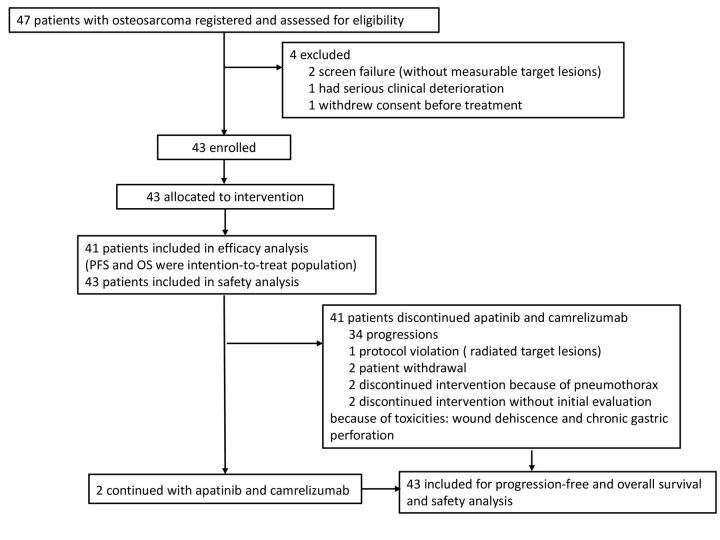
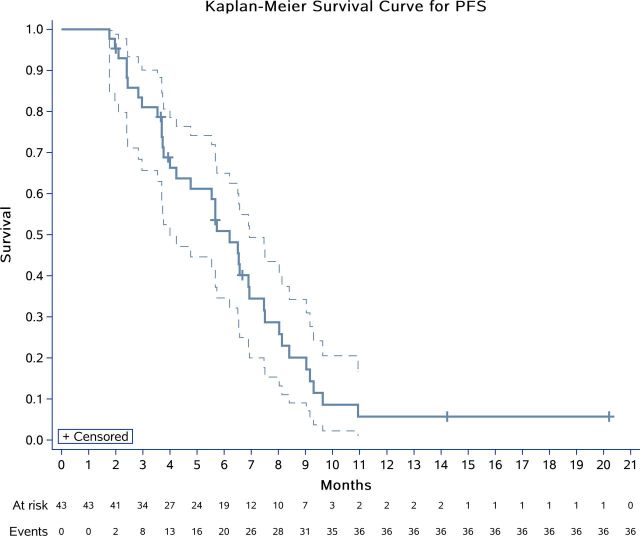
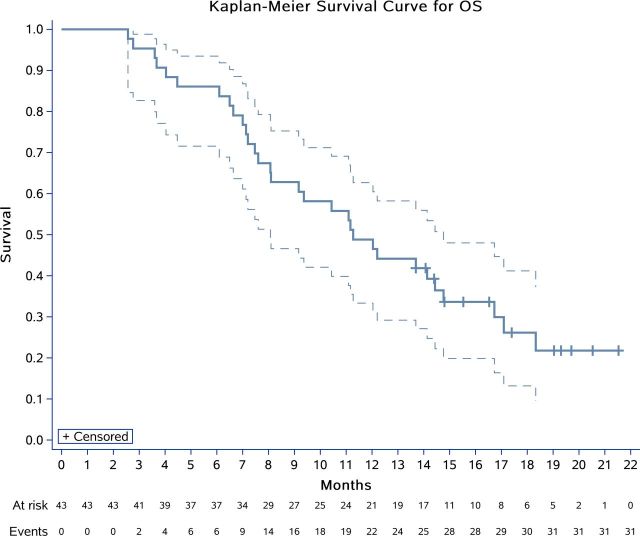
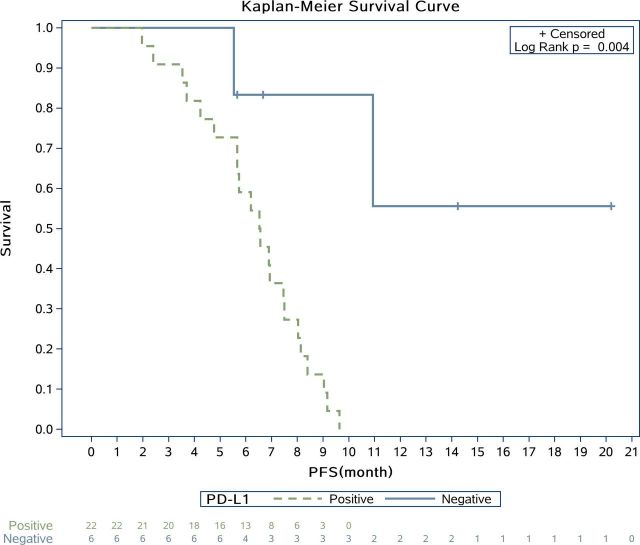
Background: Results of our previous study showed high objective response but short-term activity of apatinib in advanced osteosarcoma. We aimed to investigate the activity of apatinib in combination with camrelizumab in patients with inoperable high-grade osteosarcoma progressing after chemotherapy. Methods: This open-label, phase 2 trial was conducted at Peking University People’s Hospital. We enrolled patients with advanced osteosarcoma progressed after chemotherapy. Patients received 500 mg apatinib orally once daily plus 200 mg camrelizumab by intravenous infusion every 2 weeks until disease progression or unacceptable toxicity. The primary endpoint was progression-free survival (PFS) and clinical benefit rate at 6 months, which were based on RECIST V.1.1. Results: 43 patients were enrolled between January 25 and September 4, 2018. With median follow-up time of 48.3 (Q1, Q3, 30.6, 66.6) weeks, 13 (30.23%, 95% CI 17.2%, 40.1%) of 43 patients were progression free at 6 months and the 6-month PFS rate was 50.9% (95% CI 34.6%, 65.0%). Until final follow-up, the objective response rate was 20.9% (9/43) and two patients with durable disease control were observed. Patients with programmed cell death 1 ligand-1 (PD-L1) tumor proportion score ≥5% and pulmonary metastases tended to have a longer PFS in comparison to the others (p=0.004 and 0.017, respectively). Toxic effects led to dose reductions, or interruptions, or both in 24 (55.8%) of 43 patients and permanent discontinuation in 4 (9.3%) patients. There were no treatment-related deaths. Conclusions: Although the combination of apatinib and camrelizumab seemed to prolong PFS in comparison to single agent apatinib in treating advanced osteosarcoma, it did not reach the prespecified target of 6-month PFS of 60% or greater. Overexpression of PD-L1 and the presence of pulmonary metastases only were associated with longer PFS. Trial registration number: NCT03359018.
Overview
The claims and statistics of this paper haven’t been checked yet.
Free: it reads the open-access text and checks the first 5 claims that cite a source we can check. Create a free account to check every claim.
Integrity signals
Registry
Cites
Statistics
Figures
Verification
Claims the paper makes
The claims and statistics of this paper haven’t been checked yet.
Free: it reads the open-access text and checks the first 5 claims that cite a source we can check. Create a free account to check every claim.
Claims other papers make about this one
Each is checked against this paper’s own text: does it say what the citing paper says it does?
The source backs part of the claim, not all of it — or backs it for a different population, condition or comparison.
In the citing paper
“Apatinib, a multi-targeted TKI utilized in the treatment of gastric, non-small cell lung, and esophageal cancers8, has demonstrated efficacy in inhibiting the proliferation, migration, and invasion of osteosarcoma in both preclinical and clinical trials4,6 (Supplementary Table 1).”
From Apatinib plus ifosfamide and etoposide versus ifosfamide and etoposide in patients with advanced osteosarcomas (OAIE/PKUPH-sarcoma 11): a randomized phase II study (2025) · cites this paper as [6]
Experimental — accuracy not yet measuredThe source backs part of the claim, not all of it — or backs it for a different population, condition or comparison.
In the citing paper
“Combination therapies such as sintilimab plus anlotinib, sintilimab plus IBI305 (bevacizumab biosimilar), camrelizumab plus apatinib, and toripalimab plus axitinib demonstrated potent antitumor effects in multiple types of cancers [22, 114–120].”
From Combination strategies with PD-1/PD-L1 blockade: current advances and future directions (2022) · cites this paper as [114]
Experimental — accuracy not yet measuredThe source backs part of the claim, not all of it — or backs it for a different population, condition or comparison.
In the citing paper
“the ORR was 20.9%”
From Advances on immunotherapy for osteosarcoma (2024) · cites this paper as [159]
Experimental — accuracy not yet measuredThe cited source says what the claim attributes to it.
In the citing paper
“Although multi-targeted TKIs can induce measurable responses, durable disease control continues to be a major challenge1,4–6,13,14,18.”
The cited source says what the claim attributes to it.
In the citing paper
“13 of 43 patients were progression free at 6 months and the 6-month PFS rate was 50.9% [159].”
From Advances on immunotherapy for osteosarcoma (2024) · cites this paper as [159]
1 more claim about this paper
Create a free account to see every claim other papers make about this one.
Self-check
Percentages, sums and reported differences re-computed from the paper’s own numbers.
The self-check needs the paper’s full text.
Citations
Cites
New response evaluation criteria in solid tumours: revised RECIST guideline (version 1.1)
Eisenhauer, E. A., Therasse, P., Bogaerts, J., Schwartz, L. H., Sargent, D., Ford, R., Dancey, J., Arbuck, S., Gwyther, S., Mooney, M., et al. (2009) · European Journal of Cancer · doi:10.1016/j.ejca.2008.10.026 · Cited by 29,534
iRECIST: guidelines for response criteria for use in trials testing immunotherapeutics
Seymour, L., Bogaerts, J., Perrone, A., Ford, R., Schwartz, L. H., Mandrekar, S., Lin, N. U., Litière, S., Dancey, J., Chen, A., et al. (2017) · The Lancet Oncology · doi:10.1016/s1470-2045(17)30074-8 · Cited by 2,472
Antiangiogenesis Strategies Revisited: From Starving Tumors to Alleviating Hypoxia
Jain, R. K. (2014) · Cancer Cell · doi:10.1016/j.ccell.2014.10.006 · Cited by 1,589 · cited 1×
“Jain 13 proposed that hypoxia and acidosis during the development of malignant tumors resulted in a decrease in pH, thereby triggering a series of cellular signaling pathways and altering the local tumor microenvironment.”
Tawbi, H. A., Burgess, M., Bolejack, V., Van Tine, B. A., Schuetze, S. M., Hu, J., D'Angelo, S., Attia, S., Riedel, R. F., Priebat, D. A., et al. (2017) · The Lancet Oncology · doi:10.1016/s1470-2045(17)30624-1 · Cited by 1,452 · cited 1×
“However, from the prospective trials of Alliance A091401 11 and SARC028, 12 we have only observed the inclusion of a few cases of osteosarcoma with even fewer long-term survivors.”
Osteosarcoma treatment – Where do we stand? A state of the art review
Luetke, A., Meyers, P. A., Lewis, I., & Juergens, H. (2014) · Cancer Treatment Reviews · doi:10.1016/j.ctrv.2013.11.006 · Cited by 1,234
D'Angelo, S. P., Mahoney, M. R., Van Tine, B. A., Atkins, J., Milhem, M. M., Jahagirdar, B. N., Antonescu, C. R., Horvath, E., Tap, W. D., Schwartz, G. K., et al. (2018) · The Lancet Oncology · doi:10.1016/s1470-2045(18)30006-8 · Cited by 759 · cited 2×
“However, from the prospective trials of Alliance A091401 11 and SARC028, 12 we have only observed the inclusion of a few cases of osteosarcoma with even fewer long-term survivors.”
Smeland, S., Bielack, S. S., Whelan, J., Bernstein, M., Hogendoorn, P., Krailo, M. D., Gorlick, R., Janeway, K. A., Ingleby, F. C., Anninga, J., et al. (2019) · European Journal of Cancer · doi:10.1016/j.ejca.2018.11.027 · Cited by 704
Anti-angiogenesis for cancer revisited: Is there a role for combinations with immunotherapy?
Ramjiawan, R. R., Griffioen, A. W., & Duda, D. G. (2017) · Angiogenesis · doi:10.1007/s10456-017-9552-y · Cited by 672
Cocks, K., King, M. T., Velikova, G., Martyn St-James, M., Fayers, P. M., & Brown, J. M. (2011) · Journal of Clinical Oncology · doi:10.1200/jco.2010.28.0107 · Cited by 658
Fang, W., Yang, Y., Ma, Y., Hong, S., Lin, L., He, X., Xiong, J., Li, P., Zhao, H., Huang, Y., et al. (2018) · The Lancet Oncology · doi:10.1016/s1470-2045(18)30495-9 · Cited by 489
Self-citation
Cited by
Combination strategies with PD-1/PD-L1 blockade: current advances and future directions
Yi, M., Zheng, X., Niu, M., Zhu, S., Ge, H., & Wu, K. (2022) · Molecular Cancer · doi:10.1186/s12943-021-01489-2 · Cited by 1,445
Advances on immunotherapy for osteosarcoma
Yu, S., & Yao, X. (2024) · Molecular Cancer · doi:10.1186/s12943-024-02105-9 · Cited by 270
“13 of 43 patients were progression free at 6 months and the 6-month PFS rate was 50.9% [159].”
BackgroundInfluentialManaging the immune microenvironment of osteosarcoma: the outlook for osteosarcoma treatment
Tian, H., Cao, J., Li, B., Nice, E. C., Mao, H., Zhang, Y., & Huang, C. (2023) · Bone Research · doi:10.1038/s41413-023-00246-z · Cited by 232
“Trials exploring checkpoint blockers in combination with adjuvant and neoadjuvant chemotherapy or site-specific treatment are also ongoing, such as studies assessing camrelizumab in combination with apatinib (NCT03359018) or pembrolizumab in combination with axitinib.(312,387,388) These combination treatments may play…”
BackgroundMei, Y., Wang, X., Zhang, J., Liu, D., He, J., Huang, C., Liao, J., Wang, Y., Feng, Y., Li, H., et al. (2023) · Nature Cancer · doi:10.1038/s43018-023-00598-9 · Cited by 224
Self-citationNew clinical trial design in precision medicine: discovery, development and direction
Duan, X.-P., Qin, B.-D., Jiao, X.-D., Liu, K., Wang, Z., & Zang, Y.-S. (2024) · Signal Transduction and Targeted Therapy · doi:10.1038/s41392-024-01760-0 · Cited by 197
“191,192 193 – 206 Similar omnipotent combined drug design include lenvatinib with pembrolizumab and sulfatinib with toripalimab.”
BackgroundSelf-citationRecent and Ongoing Research into Metastatic Osteosarcoma Treatments
Harris, M. A., & Hawkins, C. J. (2022) · International Journal of Molecular Sciences · doi:10.3390/ijms23073817 · Cited by 162
“They did, however, note that the two patients with overexpression of PD-L1 experienced durable disease control [71].”
BackgroundResultJiang, X., Zeng, F., Yang, X., Jian, C., Zhang, L., Yu, A., & Lu, A. (2022) · Acta Biomaterialia · doi:10.1016/j.actbio.2021.12.036 · Cited by 142
Pathogenesis and Current Treatment of Osteosarcoma: Perspectives for Future Therapies
Rathore, R., & Tine, B. A. V. (2021) · Journal of Clinical Medicine · doi:10.3390/jcm10061182 · Cited by 140
Immune checkpoints in osteosarcoma: Recent advances and therapeutic potential
Yang, W., Tang, F., Tu, C., Hornicek, F. J., Duan, Z., & Min, L. (2022) · Cancer Letters · doi:10.1016/j.canlet.2022.215887 · Cited by 114
Macrophage Repolarization as a Therapeutic Strategy for Osteosarcoma
Anand, N., Peh, K. H., & Kolesar, J. (2023) · International Journal of Molecular Sciences · doi:10.3390/ijms24032858 · Cited by 100
“evaluated camrelizumab in combination with a VEGFR-2 antagonist, apatinib, in a phase 2, single arm trial that enrolled 43 patients with locally advanced or metastatic relapsed refractory OS [8].”
BackgroundRepurposing anticancer drugs for the management of COVID-19
Bairi, K. E., Trapani, D., Petrillo, A., Page, C. L., Zbakh, H., Daniele, B., Belbaraka, R., Curigliano, G., & Afqir, S. (2020) · European Journal of Cancer · doi:10.1016/j.ejca.2020.09.014 · Cited by 83
“Camrelizumab was tested in phases II/III clinical trials for advanced or metastatic oesophageal squamous cell carcinoma [91,92], osteosarcoma [212], relapsed or refractory classical Hodgkin lymphoma [177,178] Q and advanced hepatocellular carcinoma [145].”
BackgroundTargeting signaling pathways in osteosarcoma: Mechanisms and clinical studies
Ji, Z., Shen, J., Lan, Y., Yi, Q., & Liu, H. (2023) · MedComm · doi:10.1002/mco2.308 · Cited by 82
Osteosarcoma: Current Concepts and Evolutions in Management Principles
Pilavaki, P., Ardakani, A. H. G., Gikas, P. D., & Constantinidou, A. (2023) · Journal of Clinical Medicine · doi:10.3390/jcm12082785 · Cited by 81
“The role of apatinib in osteosarcoma management has not been explored extensively in prospective clinical trials; however, the results may encourage further investigation [45,46].”
BackgroundTargeting CXCL9/10/11–CXCR3 axis: an important component of tumor-promoting and antitumor immunity
Pan, M., Wei, X., Xiang, X., Liu, Y., Zhou, Q., & Yang, W.-B. (2023) · Clinical & Translational Oncology · doi:10.1007/s12094-023-03126-4 · Cited by 63
“A phase II clinical trial involving patients with advanced osteosarcoma showed that apatinib plus camrelizumab prolongs patients’ PFS compared to apatinib monotherapy [135].”
BackgroundNovel Immunotherapies for Osteosarcoma
Lu, Y., Zhang, J., Chen, Y., Kang, Y., Liao, Z., He, Y., & Zhang, C. (2022) · Frontiers in Oncology · doi:10.3389/fonc.2022.830546 · Cited by 67
“In addition, a trial (NCT03359018) of apatinib plus camrelizumab showed no extra survival benefits in the comparison of singe-agent apatinib (106).”
BackgroundImmune Checkpoint Inhibitory Therapy in Sarcomas: Is There Light at the End of the Tunnel?
Siozopoulou, V., Domen, A., Zwaenepoel, K., Beeck, A. V., Smits, E., Pauwels, P., & Marcq, E. (2021) · Cancers · doi:10.3390/cancers13020360 · Cited by 50
“Moreover, apatinib combined with pembrolizumab in osteosarcomas (NCT03359018) [43] showed that tumors with PD-L1 ≥ 5% correlated significantly with PFS.”
BackgroundWang, D., Yang, X., Long, J., Lin, J., Mao, J., Xie, F., Wang, Y., Wang, Y., Xun, Z., Bai, Y., et al. (2021) · Frontiers in Oncology · doi:10.3389/fonc.2021.646979 · Cited by 54
Chen, C., Guo, Y., Huang, Q., Wang, B., Wang, W., Niu, J., Lou, J., Xu, J., Ren, T., Huang, Y., et al. (2022) · Cancer Letters · doi:10.1016/j.canlet.2022.215660 · Cited by 50
Self-citationImmune checkpoint inhibitors in osteosarcoma: A hopeful and challenging future
Zhang, Z., Tan, X., Jiang, Z., Wang, H., & Yuan, H. (2022) · Frontiers in Pharmacology · doi:10.3389/fphar.2022.1031527 · Cited by 55
Immunotherapy in Sarcoma: Current Data and Promising Strategies
Wood, G. E., Meyer, C. F., Petitprez, F., & D’Angelo, S. P. (2024) · American Society of Clinical Oncology Educational Book · doi:10.1200/edbk_432234 · Cited by 54
Chemotherapy, immunotherapy, and targeted therapy for osteosarcoma: Recent advancements
Adewuyi, E. E., Chorya, H. P., Muili, A. O., Moradeyo, A. A., Kayode, A. T., Naik, A., Odedele, J. T., & Obasanjo, O. M. (2024) · Critical Reviews in Oncology/Hematology · doi:10.1016/j.critrevonc.2024.104575 · Cited by 50
Promise and Challenges of T Cell Immunotherapy for Osteosarcoma
Park, J. A., & Cheung, N. V. (2023) · International Journal of Molecular Sciences · doi:10.3390/ijms241512520 · Cited by 51
“Bevacizumab has proven synergistic effects with the PD-1 inhibitor in advanced renal cell carcinoma and hepatocellular carcinoma [161,162], and many clinical trials are testing the efficacy of ICIs plus anti-angiogenic agents in a variety of solid cancers [50].”
BackgroundReceptor Tyrosine Kinase Inhibitors for the Treatment of Recurrent and Unresectable Bone Sarcomas
Albarrán, V., Villamayor, M. L., Chamorro, J., Rosero, D. I., Pozas, J., Román, M. S., Calvo, J. C., de Aguado, P. P., Moreno, J. A., Guerrero, P., et al. (2022) · International Journal of Molecular Sciences · doi:10.3390/ijms232213784 · Cited by 40
“(APFAO) (phase II) [86] Apatinib + camrelizumab OS 43 11–43 ORR: 9/43 (20.”
Yu, L., Xu, J., Qiao, R., Han, B., Zhong, H., & Zhong, R. (2022) · Cancer Medicine · doi:10.1002/cam4.5360 · Cited by 43
Self-citationEfficacy and Response Biomarkers of Apatinib in the Treatment of Malignancies in China: A Review
Tian, Z., Niu, X., & Yao, W. (2021) · Frontiers in Oncology · doi:10.3389/fonc.2021.749083 · Cited by 37
Current progress and open challenges for applying tyrosine kinase inhibitors in osteosarcoma
Chen, C., Shi, Q., Xu, J., Ren, T., Huang, Y., & Guo, W. (2022) · Cell Death Discovery · doi:10.1038/s41420-022-01252-6 · Cited by 30
Self-citationAdvances and challenges in the treatment of osteosarcoma
Wang, X., Zhu, K., Hu, J., & Zhang, C. (2025) · Progress in Biophysics and Molecular Biology · doi:10.1016/j.pbiomolbio.2025.07.001 · Cited by 38
Starzer, A. M., Wolff, L., Popov, P., Kiesewetter, B., Preusser, M., & Berghoff, A. S. (2024) · Cancer Treatment Reviews · doi:10.1016/j.ctrv.2024.102718 · Cited by 30
Tyrosine kinase inhibitors in sarcoma treatment (Review)
Kyriazoglou, A. I., Gkaralea, L. E., Kotsantis, I., Anastasiou, Μ., Pantazopoulos, A., Prevezanou, M., Chatzidakis, I., Kavourakis, G., Economopoulou, P., Nixon, I., et al. (2022) · Oncology Letters · doi:10.3892/ol.2022.13303 · Cited by 29
“An open‐label, phase II trial studying the combination of apatinib with camrelizumab (an anti‐programmed cell death 1 antibody) revealed prolongation of PFS compared with apatinib only in treating advanced OST (51).”
Current Landscape of Immunotherapy for Advanced Sarcoma
Albarrán, V., Villamayor, M. L., Pozas, J., Chamorro, J., Rosero, D. I., Román, M. S., Guerrero, P., de Aguado, P. P., Calvo, J. C., de Quevedo, C. G., et al. (2023) · Cancers · doi:10.3390/cancers15082287 · Cited by 29
“(phase II) [103] Camrelizumab + apatinib CT-refractory OST 43 11–43 ORR 20.”
MethodInfluentialMu, H., Zhang, Q., Zuo, D., Wang, J., Tao, Y., Li, Z., He, X., Meng, H., Wang, H., Shen, J., et al. (2025) · Cell Reports Medicine · doi:10.1016/j.xcrm.2025.101977 · Cited by 28
“3,4 Unlike Ewing sarcoma or liposarcoma, OS exhibits a deficiency in tumor-infiltrating lymphocytes (TILs).”
Self-citationLiang, C., Xiong, N., Liu, M., Chen, Y., Li, W., Xu, J., Sun, Y., Wang, Y., Dong, Y., Fan, W., et al. (2022) · Nano Today · doi:10.1016/j.nantod.2022.101670 · Cited by 23
Self-citationImmune checkpoint inhibitors in sarcomas: a systematic review
Anastasiou, Μ., Kyriazoglou, A. I., Kotsantis, I., Economopoulou, P., Kyrkasiadou, M., Giannopoulou, A. E., Kosmidou, A., Smerdi, D., Moutafi, M. K., Gavrielatou, N., et al. (2023) · Immuno-Oncology Technology · doi:10.1016/j.iotech.2023.100407 · Cited by 30
“Patients with only pulmonary metastases and overexpression of PD-L1 showed better PFS. 56 Axitinib is a TKI selectively against vascular endothelial growth factor (VEGF) receptors 1-3, c-KIT and platelet-derived growth factor receptor.”
BackgroundZhou, Y., Li, M., Zhang, B., Yang, C., Wang, Y., Zheng, S., Tang, L., Zhou, C., Qian, G., Huang, Y., et al. (2023) · BMC Medicine · doi:10.1186/s12916-023-03132-x · Cited by 22
“…osteosarcomas in this study, promising anti-tumor activity was observed with an ORR of 33.3%, compared with 13.6% or less following treatment with TKIs regorafenib and cabozantinib and 20.9% following camrelizumab plus apatinib [4, 6, 13, 14], while no obvious improvement was found in terms of PFS.”
MethodResultInfluentialSelf-citationPrimary Soft Tissue Sarcoma of the Heart: An Emerging Chapter in Cardio-Oncology
Scicchitano, P., Sergi, M. C., Cameli, M., Miglioranza, M. H., Ciccone, M. M., Gentile, M., Porta, C., & Tucci, M. (2021) · Biomedicines · doi:10.3390/biomedicines9070774 · Cited by 24
Ding, L., Wu, L., Cao, Y., Wang, H., Li, D., Chen, W., Huang, P., & Jiang, Z. (2024) · Journal of Orthopaedic Surgery and Research · doi:10.1186/s13018-024-04950-2 · Cited by 23
“However, approved immune checkpoint therapies, including programmed cell death ligand 1 (PD-L1), show poor efficacy in osteosarcoma patients [10]`.”
BackgroundAnlotinib for Recurrent or Metastatic Primary Malignant Bone Tumor: A Multicenter, Single-Arm Trial
Tang, L., Niu, X., Wang, Z., Cai, Q., Tu, C., Fan, Z., & Yao, Y. (2022) · Frontiers in Oncology · doi:10.3389/fonc.2022.811687 · Cited by 23
“9 months), which is notably longer than 4 months with apatinib (31).”
BackgroundLiang, H., Jiang, Y.-F., Liu, G., Wang, L., Wang, J., Lu, N., Xia, W., Ke, L., Ye, Y., Duan, J., et al. (2024) · Nature Communications · doi:10.1038/s41467-024-45126-0 · Cited by 28
Xie, L., Xu, J., Sun, X., Li, X., Liu, K., Liang, X., Zhou, Z., Zhuang, H., Sun, K., Wu, Y., et al. (2021) · Oncology Letters · doi:10.3892/ol.2021.12813 · Cited by 19
“7] months compared with pulmonary lesions (12,13).”
BackgroundInfluentialSelf-citationTellez, C. M., Leyfman, Y., D’Angelo, S. P., Wilky, B. A., & Dufresne, A. (2022) · Surgical Oncology Clinics of North America · doi:10.1016/j.soc.2022.03.004 · Cited by 22
Exploring the impact of PDGFD in osteosarcoma metastasis through single-cell sequencing analysis
Huang, Y., Cao, D., Zhang, M., Yang, Y., Niu, G., Tang, L., Shen, Z., Zhang, Z., Bai, Y., Min, D., et al. (2024) · Cellular Oncology · doi:10.1007/s13402-024-00949-3 · Cited by 23
“Limited efficacy has been observed in responses to second-line chemotherapy [ 7 – 11 ], targeted therapies [ 12 – 14 ], and immunotherapies [ 15 – 17 ] in the context of metastatic osteosarcoma.”
BackgroundSelf-citationLi, L., Wen, Q., & Ding, R. (2022) · Frontiers in Oncology · doi:10.3389/fonc.2022.905520 · Cited by 33
van Ewijk, R., Cleirec, M., Herold, N., le Deley, M.-C., van Eijkelenburg, N., Boudou-Rouquette, P., Risbourg, S., Strauss, S. J., Palmerini, E., Boye, K., et al. (2023) · Cancer Treatment Reviews · doi:10.1016/j.ctrv.2023.102625 · Cited by 19
Yao, H., Chen, X., & Tan, X. (2021) · BMC Cancer · doi:10.1186/s12885-021-08154-3 · Cited by 22
“The combination seemed to prolong progression-free survival, but the effect was limited, with 60% of patients failing to achieve progression-free survival at 6 months [33].”
BackgroundTargeted treatment of solid tumors in pediatric precision oncology
Bertacca, I., Pegoraro, F., Tondo, A., & Favre, C. (2023) · Frontiers in Oncology · doi:10.3389/fonc.2023.1176790 · Cited by 22
Liu, Q., Xu, J.-Y., Xu, Y.-H., Chen, M., Deng, L., Wu, J., Zhou, T., Zhang, L., Tan, J., Pu, X., et al. (2022) · Translational Lung Cancer Research · doi:10.21037/tlcr-22-313 · Cited by 15
“Furthermore, apatinib has shown efficacy in other solid tumors with a high level of safety, such as in NSCLC (21), breast cancer (22), gestational trophoblastic neoplasia (23), cervical cancer (24), esophageal squamous cell carcinoma (25), chordoma (26), and osteosarcoma (27), participants who received apatinib as sec…”
BackgroundSelf-citationLiu, Z., Liu, B., Feng, C., Li, C., Wang, H., Zhang, H., Liu, P., Li, Z., He, S., & Tu, C. (2022) · Frontiers in Immunology · doi:10.3389/fimmu.2022.1071636 · Cited by 18
“Recently, immune checkpoint blockade therapy has become the most promising immunotherapy, and the reaction to immune checkpoint inhibitors is a critical feature of satisfactory treatment (45, 46).”
BackgroundTargeted anti-angiogenesis therapy for advanced osteosarcoma
Zhang, Q., Xia, Y., Wang, L., Wang, Y., Bao, Y., & Zhao, G. (2024) · Frontiers in Oncology · doi:10.3389/fonc.2024.1413213 · Cited by 20
Xie, L., Liang, X., Xu, J., Sun, X., Liu, K., Sun, K., Li, Y., Tang, X., Li, X., Zhan, X., et al. (2023) · BMC Cancer · doi:10.1186/s12885-023-11390-4 · Cited by 14
Self-citationLi, L., Zhang, L., Yuan, Y., Lu, X., Zhang, Y., Liu, Y., Wen, J., Khader, M. A., Liu, T., Li, J., et al. (2021) · Cancer Medicine · doi:10.1002/cam4.3984 · Cited by 17
Cisplatin-Loaded M1 Macrophage-Derived Vesicles Have Anti-Cancer Activity in Osteosarcoma
Anand, N., McCorkle, J. R., Schweer, D. S., Li, L., Hill, K. S., Fath, M. A., Allison, D. B., Richards, C. I., & Kolesar, J. (2025) · Cells · doi:10.3390/cells14201616 · Cited by 15
“Although primarily immune checkpoint inhibitors (ICIs) have revolutionized the treatment of many cancers, ICIs have been relatively ineffective for OS [4–6].”
Xie, L., Chen, C., Liang, X., Xu, J. H., Sun, X., Sun, K., Yang, R., Tang, X., & Guo, W. (2022) · Orthopaedic Surgery · doi:10.1111/os.13620 · Cited by 13
“4%) seemed to benefit from combination therapy more and have a longer PFS.(10) The reported positivity of PD-L1 in osteosarcoma seems to be variable (Table S2).”
BackgroundSelf-citationRole of Immunotherapy in Sarcomas
Dalal, S., Shan, K. S., Dar, N. N. T., Hussein, A. M., & Ergle, A. (2024) · International Journal of Molecular Sciences · doi:10.3390/ijms25021266 · Cited by 16
“The study showed an ORR of 20.9% and a PFS of 6.2 months, with the longest PFS observed in patients with lung metastasis and a PD-L1 tumor proportion score of 5% [49].”
MethodInfluentialStrategies to Overcome Resistance to Immune-Based Therapies in Osteosarcoma
Hattinger, C. M., Salaroglio, I. C., Fantoni, L., Godel, M., Casotti, C., Kopecka, J., Scotlandi, K., Ibrahim, T., Riganti, C., & Serra, M. (2023) · International Journal of Molecular Sciences · doi:10.3390/ijms24010799 · Cited by 16
“The combined treatment seemed to improve progression-free survival compared with the arm using apatinib alone, but additional studies are needed to further support the hypothesis that this might be considered as a new promising therapeutic perspective for HGOS [143].”
Identification of two immune subtypes in osteosarcoma based on immune gene sets
Yang, M., Cao, Y., Wang, Z., Zhang, T., Hua, Y., & Cai, Z. (2021) · International Immunopharmacology · doi:10.1016/j.intimp.2021.107799 · Cited by 15
Liu, Z., Wang, X., Li, C., & Zhao, R. (2023) · Cancer Cell International · doi:10.1186/s12935-023-03164-6 · Cited by 12
“Increasing data demonstrated that tyrosine kinase inhibitors (TKIs), such as cabozantinib, anlotinib, and apatinib, achieved significant efficacy with minimal toxicity in advanced osteosarcoma [3–5].”
BackgroundFleuren, E. D. G., Terry, R. L., Meyran, D., Omer, N., Trapani, J. A., Haber, M., Neeson, P. J., & Ekert, P. G. (2021) · Biomedicines · doi:10.3390/biomedicines9121798 · Cited by 12
“5 months [61], and this combination was particularly effective in osteosarcoma patients with pulmonary metastatic lesions, it did not reach the overall prespecified endpoint of 6-month PFS of 60% or greater [60].”
BackgroundInfluentialJia, L., #x0026, #x2019, #x0026, #x2019, #x0026, & #x2019 (2021) · Cancer Biology and Medicine · doi:10.20892/j.issn.2095-3941.2021.0270 · Cited by 13
Wang, J., Gao, S., Yang, Y., Liu, X., Zhang, P., Dong, S., Wang, X., & Yao, W. (2021) · Cancer Management and Research · doi:10.2147/cmar.s337253 · Cited by 13
“Camrelizumab is a PD-1 inhibitor marketed in China and is also widely used off-label for the treatment of sarcomas.(18,19) As a major sarcoma diagnosis and treatment center in a province with a population of nearly 100 million in central China, we have rich experience in sarcoma diagnosis and treatment.”
BackgroundLin, Y., Gao, X. H., Liu, Z., Liu, Z., Li, Y., Liang, R., Liao, Z., & Ye, J. (2022) · Pharmacogenomics and Personalized Medicine · doi:10.2147/pgpm.s359492 · Cited by 12
“Preclinical studies have shown that apatinib can directly inhibit the VEGFR2-STAT3 signaling pathway and reduce the expression of PD-L1 in tumor cells.(22,23) In the report by Zhu et al, 31 patients with bone and soft tissue sarcoma were treated with apatinib, the clinical benefit rate was 75.”
BackgroundSelf-citationLi, L., Li, Y., Lu, M., Wang, Y., Li, Z., Hu, X., He, X., Gong, T., Luo, Y., Zhou, Y., et al. (2023) · Frontiers in Oncology · doi:10.3389/fonc.2023.1235158 · Cited by 12
Self-citationLi, Y., Li, H.-L., Hu, H., Shao, S.-S., Chen, C., Guo, C.-Y., Zhao, Y., & Yao, Q.-J. (2021) · Journal of Cancer Research and Therapeutics · doi:10.4103/jcrt.jcrt_1310_21 · Cited by 11
Self-citationLi, L., Wang, Y., He, X., Li, Z., Lu, M., Gong, T., Chang, Q., Lin, J., Liu, C., Luo, Y., et al. (2022) · Frontiers in Immunology · doi:10.3389/fimmu.2022.879560 · Cited by 11
Li, J., Zhang, X., Mu, Z., Sun, D., Sun, Y., & Lin, Y. (2022) · Frontiers in Immunology · doi:10.3389/fimmu.2022.943916 · Cited by 15
Shi, B., Chang, J., Sun, X., Ma, X., Zhao, P., Zhou, C., Wang, Y., & Yang, Y. (2023) · Frontiers in Oncology · doi:10.3389/fonc.2023.1148735 · Cited by 10
Self-citationWang, L., Huang, Y., Zhang, X., Chen, W., & Dai, Z. (2025) · APOPTOSIS · doi:10.1007/s10495-024-02071-z · Cited by 13
“Osteosarcoma (OS) is an aggressive bone cancer that originates from the primitive transformed cells with mes - enchymal origin [1, 2].”
Self-citationEmerging mechanisms of immunotherapy resistance in sarcomas
Florou, V., & Wilky, B. A. (2022) · Cancer Drug Resistance · doi:10.20517/cdr.2021.111 · Cited by 13
Tornes, A. J. K., Stenberg, V. Y., Larsen, R. H., Bruland, Ø. S., Revheim, M.-E. R., & Juzeniene, A. (2022) · Frontiers in Medicine · doi:10.3389/fmed.2022.1058863 · Cited by 11
Xie, L., Xu, J., Guo, W., Wang, Z., Yao, Y., Li, J., Lin, J., Xiao, J., Yu, X., Zhang, W., et al. (2021) · Frontiers in Oncology · doi:10.3389/fonc.2021.696865 · Cited by 9
“In the two trials, proteinuria usually occurred 158 (95% CI: 12–186) days after the initiation of apatinib treatment in 11% of the cohort (6, 7).”
BackgroundSelf-citationZhang, Z., Bao, Q., Fu, Y., Wen, J., Li, M., Liu, Z., He, G., Wang, B., Shen, Y., & Zhang, W. (2022) · Journal of Clinical Medicine · doi:10.3390/jcm12010325 · Cited by 9
“While AA-TKI monotherapy demonstrated a favorable tumor response in some patients (5–22% ORR), such a ratio is likely to increase with the combination therapy of AA-TKIs with chemotherapy [8], and immunotherapy [26,27], and other modalities [28] are currently being explored.”
BackgroundSergi, C. M., Burnett, M., Jantuan, E., Hakoum, M., Beug, S. T., Leng, R. P., & Shen, F. (2025) · Biomedicines · doi:10.3390/biomedicines13030664 · Cited by 9
“[ 109,110].”
Advances in osteosarcoma research: Pathogenesis and emerging therapeutic strategies
Yan, L. ‐., Dong, X., & Chen, S. (2026) · Critical Reviews in Oncology/Hematology · doi:10.1016/j.critrevonc.2026.105252 · Cited by 11
Gao, M., Liu, W., Li, T., Song, Z., Wang, X., & Zhang, X. (2023) · Biochemical Genetics · doi:10.1007/s10528-023-10497-4 · Cited by 10
“However, it is unclear which TKI targets play a key role in the treatment of osteosarcoma (Tian et al. 2020; Grignani et al. 2012; Casali et al. 2022; Xie et al. 2019, 2020; Italiano et al. 2020).”
Gong, T., Tang, F., Zheng, C., Wang, J., Wang, Y., Zhang, Y., Luo, Y., Zhou, Y., Li, M., & Tu, C. (2021) · Frontiers in Oncology · doi:10.3389/fonc.2021.728437 · Cited by 8
Martín‐Broto, J., Moura, D. S., & Hindi, N. (2025) · Current Opinion in Oncology · doi:10.1097/cco.0000000000001149 · Cited by 8
“Likewise, the combination of apatinib plus camrelizumab , an anti-PD-1 compound, obtained a 6-month PFS rate of 50% in individuals with progressing osteosarcoma [26].”
Oyama, R., Nabeshima, A., Endo, M., Novikov, A., Fujiwara, T., Phelip, C., Yokoyama, N., Oda, Y., Caroff, M., Matsumoto, Y., et al. (2025) · BJC Reports · doi:10.1038/s44276-024-00120-3 · Cited by 6
Expression of programmed death ligand 1 in drug-resistant osteosarcoma: An exploratory study
Skertich, N. J., Chu, F., Tarhoni, I., Szajek, S., Borgia, J. A., & Madonna, M. B. (2021) · Surgery Open Science · doi:10.1016/j.sopen.2021.07.001 · Cited by 6
Zhang, C., Xu, Y., Cai, L., Zhou, S., Feng, J., Fu, S., Wang, W., Liang, W., Li, C., Guo, W., et al. (2025) · Scientific Reports · doi:10.1038/s41598-025-08170-4 · Cited by 5
Self-citationRole of tumor-derived exosomes and immune cells in osteosarcoma progression and targeted therapy
Wang, J., & Shi, K. (2025) · Frontiers in Immunology · doi:10.3389/fimmu.2025.1658358 · Cited by 9
Liu, Z., Zheng, Z., Dong, L., Guo, X., Jia, X., Wang, J., Meng, L., Cui, X., & Jiang, X. M. (2022) · Scientific Reports · doi:10.1038/s41598-022-20272-x · Cited by 7
Precision Oncology in Pediatric Cancer Surgery
Lee, W. G., & Kim, E. S. (2023) · Hematology/Oncology Clinics of North America · doi:10.1016/j.hoc.2026.05.022 · Cited by 6
Evaluation of the efficacy and safety of immunotherapy in sarcoma: a two-center study
Liao, Z., Teng, J., Li, T., Liu, H., Li, T., Zhang, C., Xing, R., Teng, S., Yang, Y., Zhao, J. L., et al. (2024) · Frontiers in Immunology · doi:10.3389/fimmu.2024.1292325 · Cited by 7
Yang, Y., Li, J., Till, B. G., Wang, J., Zhang, B., Wang, H., Huang, H., Li, T., Gao, Q., Li, H., et al. (2021) · Frontiers in Oncology · doi:10.3389/fonc.2021.728253 · Cited by 5
Hu, T., Sun, W., Jin, Y., Dong, Y., Liu, W., Sun, Z., Xiang, Y., & Chen, Y. (2024) · Heliyon · doi:10.1016/j.heliyon.2024.e36016 · Cited by 5
“They found patients with programmed cell death 1 ligand-1 (PD-L1) tumor proportion score ≥ 5 % tended to have a longer PFS in comparison to the others [39].”
ResultGBP1-CDK9-STAT3 signaling axis promotes osteosarcoma PD-L1 expression and immune escape
Jing, D., Chen, B., Liang, R., Li, F., Zhao, B., Pu, F., & Wu, W. (2025) · Neoplasia · doi:10.1016/j.neo.2025.101232 · Cited by 4
“…characterized by a highly unstable genome, elevated tumor mutational burden, and active immune infiltration, theoretically presents a suitable candidate for immunotherapy [4], clinical studies have shown limited ICI efficacy in osteosarcoma, with response rates remaining around 10 – 20 % [5 – 8].”
Yan, Q., Yang, J., Yao, Y., Jia, Z. H., Wang, Y., Cheng, M., Yan, X., & Xu, Y. (2022) · Computational and Mathematical Methods in Medicine · doi:10.1155/2022/7994425 · Cited by 3
Xie, L., Xu, J., Sun, X., Liu, K., Sun, K., Li, Y., Liu, R., Wang, D., Shao, S., Chen, Z., et al. (2025) · Nature Communications · doi:10.1038/s41467-025-65467-8 · Cited by 3
Self-citationJarroudi, O. A., Bairi, K. E., Brahmi, S. A., & Afqir, S. (2025) · Frontiers in Oncology · doi:10.3389/fonc.2025.1418537 · Cited by 3
TREM2 as a Prognostic Biomarker for Osteosarcoma Microenvironment Remodeling
Shen, Z. Z., Chen, Z.-Y., Ji, Y., Jiang, H., Zhu, Z.-P., Yuan, H., Li, B., Xu, W., & Xiao, J. (2023) · Journal of Oncology · doi:10.1155/2023/3677789 · Cited by 3
“For the last few years, tremendous progress was acquired in immunotherapy, and the inhibition of immune checkpoint inhibitors (ICIs) in OS made signifcant progress [21, 22].”
BackgroundZhou, X., Yan, X., & Wu, Y. F. (2024) · Biomedical Reports · doi:10.3892/br.2024.1743 · Cited by 3
“…(16) or advanced esophagogastric junction carcinoma (15), metastatic colorectal cancer (17), nasopharyngeal carcinoma (18), advanced osteosarcoma (19), advanced non‑squamous non‑small cell lung cancer (20), advanced or recurrent cervical cancer (21,22), and advanced triple‑negative breast cancer…”
BackgroundShalitin, S. (2024) · Hormone Research in Paediatrics · doi:10.1159/000537969 · Cited by 6
Combination treatment with PD1/PDL-1 inhibitors for sarcomas: state of the art, next questions
Martín‐Broto, J., Hindi, N., & Moura, D. S. (2024) · Current Opinion in Oncology · doi:10.1097/cco.0000000000001050 · Cited by 3
Sharif, P. M., Khoshbin, A. P., Nasrollahzadeh, E., Keshavarz‐Fathi, M., & Rezaei, N. (2023) · Elsevier eBooks · doi:10.1016/b978-0-12-818006-8.00003-7 · Cited by 8
Distinct genomic features between osteosarcomas firstly metastasing to bone and to lung
Xie, L., Cai, Z., Lu, H., Meng, F., Zhang, X., Luo, K., Su, X., Yan, L., Xu, J., Lou, J., et al. (2023) · Heliyon · doi:10.1016/j.heliyon.2023.e15527 · Cited by 3
Self-citationSong, L., Fang, X., Jiang, P., Li, Y., Li, X., Xu, X., Liang, Y., Li, C., & Zheng, Y. (2023) · Journal of Gastrointestinal Oncology · doi:10.21037/jgo-23-741 · Cited by 4
Self-citationYang, C., Li, B., Dong, S., Xu, J. H., Sun, X., Liang, X., Liu, K., Sun, K., Yang, Y., Ji, T., et al. (2024) · Orthopaedic Surgery · doi:10.1111/os.14163 · Cited by 5
Self-citationGu, J., Ni, X., Ji, J., Wei, G., Shi, L., & Xu, C. (2022) · Evidence-based Complementary and Alternative Medicine · doi:10.1155/2022/8060026 · Cited by 3
“-e reason may be that apatinib inhibits tumor tissue cell proliferation and angiogenesis, thereby improving serum tumor marker levels [18].”
BackgroundSelf-citationRetractedPolypharmacology in Old Drug Rediscovery: Drug Repurposing
Wang, Z., & Yang, B. (2022) · Springer eBooks · doi:10.1007/978-3-031-04998-9_13 · Cited by 7
Mu, H., Tao, Y., Wang, J., He, X., Zhang, Q., Chen, W., Yao, B., Ding, S., Yang, X., Zhang, L., et al. (2024) · bioRxiv (Cold Spring Harbor Laboratory) · doi:10.1101/2024.08.11.607471 · Cited by 4
Self-citationSun, W., Tao, Y.-N., He, X., Zhang, Q., Yang, X.-Y., Dong, H.-R., Wang, H.-Y., Chen, W., Yao, B., Zhang, L.-Y., et al. (2026) · Cell Reports Medicine · doi:10.1016/j.xcrm.2026.102644 · Cited by 6
Metadata
- Authors
- Xie, L., Xu, J., Sun, X., Guo, W., Gu, J., Liu, K., Zheng, B., Ren, T., Huang, Y., Tang, X., Yan, T., Yang, R., Sun, K., Shen, D., & Li, Y.
- Affiliations
- Peking University People's Hospital (CN)
- Peking University Shougang Hospital (CN)
- Corresponding author
- Guo, Wei
- ORCID
- Venue
- Journal for ImmunoTherapy of Cancer
- Publisher
- BMJ
- Published
- 2020-05
- Volume
- 8
- Issue
- 1
- Pages
- e000798
- ISSN
- 2051-1426 (ISSN-L)
- PMC
- PMC7223462
- OpenAlex
- W3021046581
- Cited by
- 145
- References
- 29
- Citations by year
- 2026: 14 · 2025: 23 · 2024: 25 · 2023: 28 · 2022: 32 · 2021: 21 · 2020: 2
- FWCI
- 11.70
- Type
- journal article
- Language
- en
- Update notices
- correction (2020-06-21)
- Open access
- gold
- doi.org
- Licence
- Locations
- Journal for ImmunoTherapy of Cancer (publishedVersion, cc-by-nc)
- PubMed Central (publishedVersion, cc-by-nc)
- PubMed (publishedVersion)
- DOAJ (DOAJ: Directory of Open Access Journals) (submittedVersion, cc-by-sa)
- Funders
- National Natural Science Foundation of China (81572633)
- Topics
- Health Sciences › Medicine › Oncology › Sarcoma Diagnosis and Treatment
- Health Sciences › Medicine › Oncology › Cancer Immunotherapy and Biomarkers
- Health Sciences › Medicine › Orthopedics and Sports Medicine › Bone Tumor Diagnosis and Treatments
- Keywords
- apatinib, camrelizumab, anti-PD-1 therapy, PD-L1 expression, lung metastasis, progression-free survival, combination therapy, chemotherapy-refractory disease, predictive biomarkers, treatment toxicity, VEGFR-2 inhibition, immune checkpoint inhibitors, clinical benefit rate, objective response rate, prognostic factors, durable disease control
- MeSH terms
- Progression-Free Survival, Immune Checkpoint Inhibitors, Administration, Oral, Adolescent, Adult, Antineoplastic Combined Chemotherapy Protocols, Bone Neoplasms, Child, Drug Administration Schedule, Female, Follow-Up Studies, Humans, Infusions, Intravenous, Male, Middle Aged, Pyridines, Osteosarcoma, Disease Progression, Protein Kinase Inhibitors, Young Adult, Programmed Cell Death 1 Receptor, Antibodies, Monoclonal, Humanized
About these checks
Registry, retraction, Cites and statistics results are computed, not judged, with one exception: a printed reference that no index lists is read once by a model before it counts as a citation error. Claims are extracted by a model and kept only when their quote appears verbatim in the text; each cited source is then checked, with a model’s help, for whether it says what the claim relies on. Those verdicts can be wrong — read the claim’s quote and the cited source before relying on one.
Statistics and arithmetic are recomputed, not judged.
Confidence bands are shown only for fields calibrated on our annotated test set. None is calibrated yet, so no band is shown.
What counts as a claim ›How we measure confidence ›How we check this ›
Are you an author, or do you see a problem with this page? Request a review
Data sources
Bibliographic data: Semantic Scholar, OpenAlex, Crossref.
Contains information from the Semantic Scholar Academic Graph Datasets, made available under the ODC Attribution License (ODC-BY 1.0).
Semantic Scholar’s data is described in: Kinney, R., et al. (2023). The Semantic Scholar Open Data Platform. arXiv:2301.10140.
