

Precision enhancement of CAR-NK cells through non-viral engineering and highly multiplexed base editing
Open accessPublished version of a preprint
The DOI matches its Crossref record; 108 of the 108 references it cites were found in a registry or an index.
Abstract
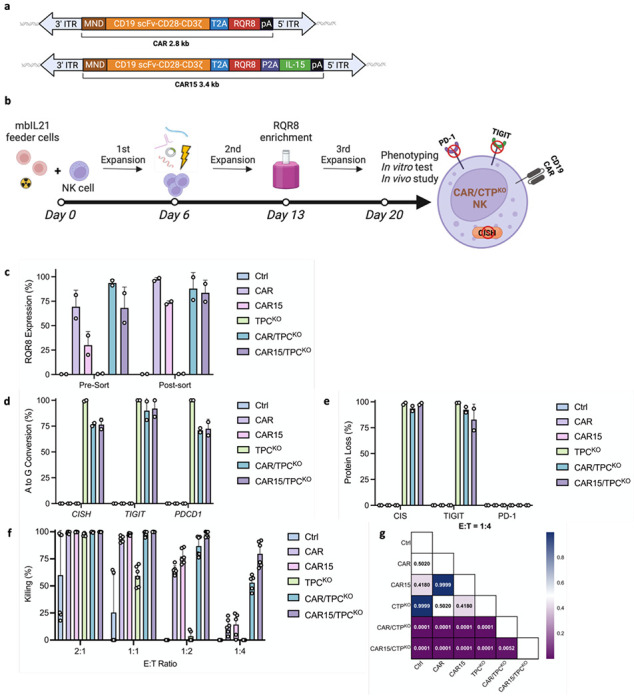
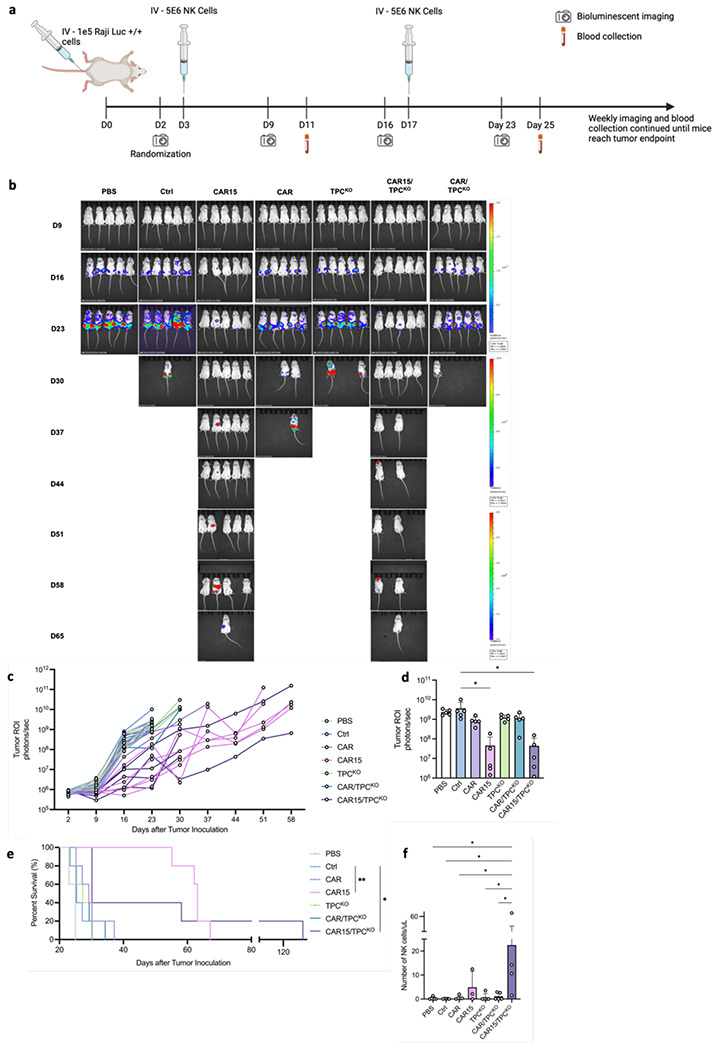
BACKGROUND: Natural killer (NK) cells' unique ability to kill transformed cells expressing stress ligands or lacking major histocompatibility complexes (MHC) has prompted their development for immunotherapy. However, NK cells have demonstrated only moderate responses against cancer in clinical trials. METHODS: Advanced genome engineering may thus be used to unlock their full potential. Multiplex genome editing with CRISPR/Cas9 base editors (BEs) has been used to enhance T cell function and has already entered clinical trials but has not been reported in human NK cells. Here, we report the first application of BE in primary NK cells to achieve both loss-of-function and gain-of-function mutations. RESULTS: transposon-based integration to generate interleukin-15 armored CD19 chimeric antigen receptor (CAR)-NK cells with significantly improved functionality in a highly suppressive model of Burkitt's lymphoma both in vitro and in vivo. CONCLUSIONS: The use of concomitant non-viral transposon engineering with multiplex base editing thus represents a highly versatile and efficient platform to generate CAR-NK products for cell-based immunotherapy and affords the flexibility to tailor multiple gene edits to maximize the effectiveness of the therapy for the cancer type being treated.
Overview
The claims and statistics of this paper haven’t been checked yet.
Free: it reads the open-access text and checks the first 5 claims that cite a source we can check. Create a free account to check every claim.
Integrity signals
Registry
Cites
Statistics
Figures
Verification
Claims the paper makes
The claims and statistics of this paper haven’t been checked yet.
Free: it reads the open-access text and checks the first 5 claims that cite a source we can check. Create a free account to check every claim.
Claims other papers make about this one
Each is checked against this paper’s own text: does it say what the citing paper says it does?
The source backs part of the claim, not all of it — or backs it for a different population, condition or comparison.
In the citing paper
“Some cell types, such as primary human natural killer (NK) cells and monocytes, may benefit from addition of RNase inhibitor (Millipore Sigma, Cat #3335399001) to reduce degradation of the mRNA and gRNA by endogenous RNases.27,54”
From Adenine base editor for knockout of proteins: A practical guide from design to analysis with updated MultiEditRbatch (2026) · cites this paper as [27]
Experimental — accuracy not yet measuredThe cited source says what the claim attributes to it.
In the citing paper
“One of the main advantages of ABE-based gene knockout is how amenable the system is to multiplex knockouts.11,12,27”
From Adenine base editor for knockout of proteins: A practical guide from design to analysis with updated MultiEditRbatch (2026) · cites this paper as [27]
Self-check
Percentages, sums and reported differences re-computed from the paper’s own numbers.
The self-check needs the paper’s full text.
Citations
Cites
Improving Bioscience Research Reporting: The ARRIVE Guidelines for Reporting Animal Research
Kilkenny, C., Browne, W. J., Cuthill, I. C., Emerson, M., & Altman, D. G. (2010) · PLoS Biology · doi:10.1371/journal.pbio.1000412 · Cited by 7,300
Programmable editing of a target base in genomic DNA without double-stranded DNA cleavage
Komor, A. C., Kim, Y. B., Packer, M. S., Zuris, J. A., & Liu, D. R. (2016) · Nature · doi:10.1038/nature17946 · Cited by 5,437 · cited 1×
“28 29–32 However, BEs have yet to be deployed for primary NK cell engineering to achieve similar multiplex base editing.”
Programmable base editing of A•T to G•C in genomic DNA without DNA cleavage
Gaudelli, N. M., Komor, A. C., Rees, H. A., Packer, M. S., Badran, A. H., Bryson, D. I., & Liu, D. R. (2017) · Nature · doi:10.1038/nature24644 · Cited by 4,184
Effectiveness of donor natural killer cell alloreactivity in mismatched hematopoietic transplants
Ruggeri, L., Capanni, M., Urbani, E., Perruccio, K., Shlomchik, W. D., Tosti, A., Posati, S., Rogaia, D., Frassoni, F., Aversa, F., et al. (2002) · Science · doi:10.1126/science.1068440 · Cited by 3,380 · cited 1×
“From simply infusing allogeneic donor NK cells for treating hematological malignancies 1 to adoptive therapy harnessing NK cells with chimeric antigen receptor (CAR) for a wide range of solid tumors, NK cells have exhibited many advantages over T cell-based therapy.”
Rosenberg, S. A., Lotze, M. T., Muul, L. M., Leitman, S., Chang, A. E., Ettinghausen, S. E., Matory, Y. L., Skibber, J. M., Shiloni, E., Vetto, J. T., et al. (1985) · New England Journal of Medicine · doi:10.1056/nejm198512053132327 · Cited by 2,653 · cited 1×
“11 Notably, NK cell persistence, metabolic fitness, and functionality have been enhanced through supplementation with exogenous interleukin (IL)- 15 or IL-2 in vitro and in vivo, 12–17 suggesting gamma chain cytokine support may be a prerequisite to successful NK-based immunotherapies.”
Use of CAR-Transduced Natural Killer Cells in CD19-Positive Lymphoid Tumors
Liu, E., Marin, D., Banerjee, P., Macapinlac, H. A., Thompson, P., Basar, R., Nassif Kerbauy, L., Overman, B., Thall, P., Kaplan, M., et al. (2020) · New England Journal of Medicine · doi:10.1056/nejmoa1910607 · Cited by 2,217
Self-citationAn endogenous tumour-promoting ligand of the human aryl hydrocarbon receptor
Opitz, C. A., Litzenburger, U. M., Sahm, F., Ott, M., Tritschler, I., Trump, S., Schumacher, T., Jestaedt, L., Schrenk, D., Weller, M., et al. (2011) · Nature · doi:10.1038/nature10491 · Cited by 1,898 · cited 1×
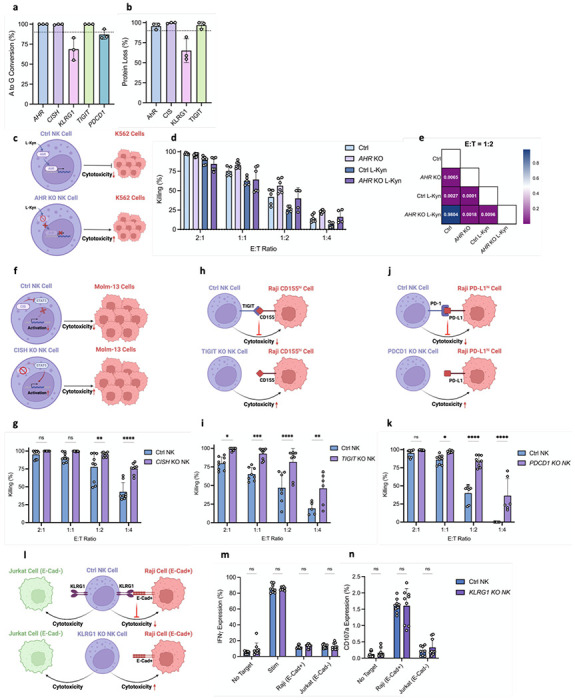
“40 54 Thus, we cultured NK cells with an AHR agonist, L-Kynurenine (L-Kyn), for two rounds of 7 day expansion (14 days) before co-culturing them with K562 target cells at various effector- to-target (E:T) ratios (figure 1C).”
Base editing: precision chemistry on the genome and transcriptome of living cells
Rees, H. A., & Liu, D. R. (2018) · Nature Reviews Genetics · doi:10.1038/s41576-018-0059-1 · Cited by 1,675
CRISPResso2 provides accurate and rapid genome editing sequence analysis
Clement, K., Rees, H., Canver, M. C., Gehrke, J. M., Farouni, R., Hsu, J. Y., Cole, M. A., Liu, D. R., Joung, J. K., Bauer, D. E., et al. (2019) · Nature Biotechnology · doi:10.1038/s41587-019-0032-3 · Cited by 1,660
Self-citationExploring the NK cell platform for cancer immunotherapy
Myers, J. A., & Miller, J. S. (2021) · Nature Reviews Clinical Oncology · doi:10.1038/s41571-020-0426-7 · Cited by 1,276 · cited 1×
“Given that suppression of inhibitory signals is one of the most common strategies for enhancing NK-based therapy, 39 we assembled a panel of targets focusing largely on intracellular and extracellular inhibitory proteins expressed by NK cells (table 1).”
Cited by
Kim, H.-Y. (2025) · Biomolecules · doi:10.3390/biom15070935 · Cited by 36
“These concerns highlight the need for fine-tuning rather than full deregulation, possibly through inducible CISH repression or partial editing approaches [42,43].”
Petri, K., D’Ippolito, E., Künkele, A., Koehl, U., Busch, D. H., Einsele, H., & Hudecek, M. (2025) · Nature Reviews Clinical Oncology · doi:10.1038/s41571-025-01072-4 · Cited by 36
Baughan, S. L., Folsom, T. D., Johnson, M., Kreuger, J., Webber, B. R., & Moriarity, B. S. (2025) · Frontiers in Immunology · doi:10.3389/fimmu.2025.1704404 · Cited by 20
“Engineering strategies for cell-based therapeutics including increasing resistance to TGF-b signaling (49), knockout of inhibitory ligands (50), and cytokine armoring (see multiple studies in detail, below) or co-stimulation (51) have been employed with success in pre-clinical models.”
Self-citationThe role of NK cells in regulating tumorimmunity: current state, challenges and future strategies
Zhu, W., Fan, C., Zhao, Y., Li, W., Niu, J., Dong, S., Yang, Z., & Zhou, W. (2025) · Cancer Cell International · doi:10.1186/s12935-025-03980-y · Cited by 19
Self-citationCAR-NK cell therapy for hematologic malignancies: advances, challenges and optimization strategies
Liu, W., Miao, H., Weng, L., & Cao, X. (2026) · Molecular Cancer · doi:10.1186/s12943-026-02648-z · Cited by 17
Assessment of CRISPRa-mediated gdnf overexpression in an In vitro Parkinson’s disease model
Guzmán-Sastoque, P., Sotelo, S., Esmeral, N. P., Albarracín, S. L., Sutachan, J. J., Reyes, L. H., Muñoz-Camargo, C., Cruz, J. C., & Bloch, N. I. (2024) · Frontiers in Bioengineering and Biotechnology · doi:10.3389/fbioe.2024.1420183 · Cited by 16
CAR NK cell therapy for solid tumors: potential and challenges
Yu, Y., & Ho, M. (2025) · Antibody Therapeutics · doi:10.1093/abt/tbaf019 · Cited by 16
Dark NKnight rising: a current perspective on NK cell and CAR-NK cell therapy
Caporale, J. R., Kararoudi, M. N., Lamb, M. G., & Lee, D. A. (2025) · Cytotherapy · doi:10.1016/j.jcyt.2025.04.064 · Cited by 13
Next-generation multiplex-edited CAR-NK cells: more edits, more power?
Bexte, T., & Wagner, D. L. (2025) · Journal for ImmunoTherapy of Cancer · doi:10.1136/jitc-2025-012841 · Cited by 11
Precision genome editing with DNA base editors
Mawson, S. J., Dunne-Dombrink, K., Pollak, B. R., & Komor, A. C. (2026) · Nature Reviews Methods Primers · doi:10.1038/s43586-026-00478-3 · Cited by 9
Multidimensional plasticity of natural killer cells in tumours
Yang, X., Song, Z., Chen, L., Jia, Q., & Li, M. (2025) · Cell Death and Disease · doi:10.1038/s41419-025-08361-x · Cited by 8
“By knocking out inhibitory receptors, such as TIGIT and CD96, it synergises with CAR signalling to reverse TME-induced exhaustion [101, 102].”
Strategies for the Development of NK Cell-Based Therapies for Cancer Treatment
Budagova, T., Efremova, A. S., Maiak, M. A., & Goldshtein, D. V. (2025) · Cells · doi:10.3390/cells14231858 · Cited by 6
“…the soluble form of IL-15 and with the knockout of TIGIT , PDCD1, and CISH had better indicators of antitumor activity and longer survival compared to the other three groups: anti-CD19-CAR-NK, anti-CD19-CAR-NK with IL-15 expression, and anti-CD19 CAR with only TIGIT , PDCD1 and CISH knockout [91].”
Zhou, Z., Zhao, K., Xiao, X., Yang, W., Miao, Y., Wu, T., Kong, X., Tao, Y., Wang, W., & Dong, Z. (2026) · Critical Reviews in Oncology/Hematology · doi:10.1016/j.critrevonc.2026.105208 · Cited by 6
Engineering with care: safety assessment platforms for CRISPR-modified natural killer cells
Fazeli, A., Ullrich, E., Cathomen, T., & Bexte, T. (2025) · Frontiers in Immunology · doi:10.3389/fimmu.2025.1711414 · Cited by 7
Qutub, M., Premchandani, T., Bhagat, S., Tatode, A., Taksande, J., Umekar, M. J., Hussain, U., & Khan, R. (2026) · Human Immunology · doi:10.1016/j.humimm.2026.111728 · Cited by 5
Glaser, V., Jo, B. L., Fuster‐García, C., Aird, E. J., Huth, L., Nitulescu, A.-M., Pu, Y., Kassing, I., Hartmann, L. M., Flugel, C., et al. (2026) · Molecular Therapy · doi:10.1016/j.ymthe.2026.07.034 · Cited by 5
Blood cancer therapy with synthetic receptors and CRISPR technology
Zhang, H., Zhong, M., Zhang, J., & Chen, C. (2025) · Leukemia Research · doi:10.1016/j.leukres.2025.107646 · Cited by 4
A singular base-editing platform for polyfunctional multiplex engineering of immune cells
Skeate, J. G., Slipek, N. J., Lahr, W. S., Roy, S., Wick, B. J., Kar, B., Chang, J.-W., Stelljes, E. M., Gilkey, A. K., Thenge, P. P., et al. (2026) · Molecular Therapy · doi:10.1016/j.ymthe.2026.07.033 · Cited by 3
Self-citationInstallation of dominant-negative mutations in FAS and TGFβR2 via base editing in primary T cells
Wick, B. J., Kluesner, M. G., Slipek, N. J., Skeate, J. G., Niemeyer, E. M., Webber, B. R., & Moriarity, B. S. (2025) · Molecular Therapy Oncology · doi:10.1016/j.omton.2025.201063 · Cited by 3
Self-citationCliCAR: A non-genetic CAR engineering strategy to empower NK cells for targeted cancer immunotherapy
Lim, S. Y., Kim, Y., Han, S., Kim, H., Ha, S.-J., Park, J., Yun, J., Chae, S., Won, Y., & Lim, K. S. (2025) · Biomedicine & Pharmacotherapy · doi:10.1016/j.biopha.2025.118691 · Cited by 3
Mansoor, M. J., Al-Taie, S. F., Al-Khafaji, Z., Alkhathami, A. G., RenukaJyothi, S., Panigrahi, R., Negi, H., Jassal, P., Mustafa, Y. F., & Hamzah, H. F. (2025) · Functional & Integrative Genomics · doi:10.1007/s10142-025-01778-9 · Cited by 4
Emerging CRISPR Approaches for Countering Immune Evasion: Insight from Recent Studies
Abubakar, S., Abdulsalam, L., Fatty, L., Kanwal, R., Naeem, M., & Ahmad, I. (2026) · International Journal of Molecular Sciences · doi:10.3390/ijms27072930 · Cited by 3
Re-balancing immunity with CRISPR-Cas9: Novel strategies for cancer and autoimmune disorders
Ren, X., Zhou, Z., Kong, L., Guo, Y., Liu, Y., Li, J., Gu, X., Jiang, C., & Wu, J. (2026) · Biotechnology Advances · doi:10.1016/j.biotechadv.2026.108921 · Cited by 3
Ciganek, I., Delehedde, C., Galy, A. H. M., Cogné, M., Rameix, N., Bordeianu, C., & Pichon, C. (2026) · Materials Today Bio · doi:10.1016/j.mtbio.2026.103334 · Cited by 3
Ng, C. X., Mustafa, S., Yap, X. Y., & Lee, S. H. (2026) · Frontiers in Oncology · doi:10.3389/fonc.2026.1888734 · Cited by 3
Eaton, E. J., Wick, B. J., Chacón, J. S., Wang, A. J., Kluesner, M., Barnes, J. T., Kar, B., Wang, M., Johnson, M. J., Skeate, J. G., et al. (2026) · Molecular Therapy Nucleic Acids · doi:10.1016/j.omtn.2026.102908 · Cited by 2
Self-citationRobbins, G. M., Chang, J., Krueger, J. B., Vue, Y. Y., Gilkey, A. K., Folsom, T. D., Jubenville, T. A., Skeate, J. G., Langworthy, B., Fitzgerald, K. M., et al. (2025) · Molecular Therapy Oncology · doi:10.1016/j.omton.2025.201119 · Cited by 2
Self-citationInduced pluripotent stem cells as platforms for engineering NK cell immunotherapies
Jezierski, A., Huang, J., Desbiens, L., Benabdallah, B., McComb, S., & Beausejour, C. M. (2026) · Frontiers in Cell and Developmental Biology · doi:10.3389/fcell.2026.1810206 · Cited by 2
Enhancing CAR-NK persistence to unlock its full therapeutic potentials
Amarasinghe, O., Ma, H., Tremblay, C. S., & Kung, S. K. P. (2026) · Frontiers in Immunology · doi:10.3389/fimmu.2026.1870668 · Cited by 2
“Together, CRISPR screen platforms and multiplex editing strategies are essential to overcome the persistence barrier (101, 118).”
InfluentialResistance to CAR-based cell therapy: Mechanisms and overcoming strategies
Sha, S., Pang, X.-Y., Wang, N., Wang, Y., Zhang, C., Guo, Z., Du, Z., Li, L., Liu, N., & Qu, L. (2026) · Drug Resistance Updates · doi:10.1016/j.drup.2026.101452 · Cited by 2
Leão, L. M., Lima, J. D. A., Lima, K. B. M., dos Santos, G. M. R. F., Fernandes, K. J. D. M., Belmonte, B. D. R., Tenório, J. O. C., de Almeida, M. T. G., Lima, R., de Melo, P. M. N., et al. (2025) · Research Society and Development · doi:10.33448/rsd-v14i8.49317 · Cited by 2
Zhao, L., Li, R., Meng, X.-Y., Guo, Y.-X., Liu, L., Li, S.-Y., Liu, Z. C., Hu, L.-W., Ma, H., Shi, C., et al. (2026) · Cellular and Molecular Immunology · doi:10.1038/s41423-026-01432-9 · Cited by 1
Chang, J., Krueger, J. B., Folsom, T. D., Skeate, J. G., Stelljes, E. M., Lahr, W. S., Slipek, N. J., Pomeroy, E. J., Webber, B. R., & Moriarity, B. S. (2026) · Molecular Therapy Advances · doi:10.1016/j.omta.2026.201734 · Cited by 1
Self-citationNK cell immunotherapy after analytic treatment interruption is associated with HIV viral control
Thron, L. K., Pumtang-on, P., Chang, J., Cantor, M. E., Gorrell-Brown, I., Becklin, K. L., Quinn, Z. E., Karim, A. F., Rendahl, A., Pampusch, M. S., et al. (2026) · Molecular Therapy Advances · doi:10.1016/j.omta.2026.201778 · Cited by 1
Self-citationDeneault, É. (2025) · Genetics. · doi:10.5772/intechopen.1013143 · Cited by 1
Allain, V., Rothrock, A., Bernard, P.-L., Nyberg, W. A., Talbot, A., Muldoon, J. J., Chung, J.-Y., To, A., Chang, C. R., Kimmerly, G. R., et al. (2025) · bioRxiv (Cold Spring Harbor Laboratory) · doi:10.1101/2025.10.05.680386
Engineering Cancer with Next-Generation Genome Editing Tools
Roth, J. F., Chen, E., Cevasco, H., & Rivera, F. J. S. (2025) · Annual Review of Cancer Biology · doi:10.1146/annurev-cancerbio-070824-123431
Liu, W., Moriarity, B. S., & Webber, B. R. (2025) · Journal for ImmunoTherapy of Cancer · doi:10.1136/jitc-2025-013537
Self-citationCome together: The BE-TILs—Efficient multiplex base editing of tumor-infiltrating lymphocytes
Glaser, V., Wagner, D. L., & Bexte, T. (2026) · Molecular Therapy Oncology · doi:10.1016/j.omton.2026.201135
Jia, K., Soupène, E., Sinha, R., Lesch, B. J., Pendergast, M. A., Choi, R., Zhang, X., Foppiani, E. M., Kostamo, Z., Chu, S. N., et al. (2026) · bioRxiv (Cold Spring Harbor Laboratory) · doi:10.64898/2026.04.13.718029
You, Y., Dong, H., & Xu, J. (2026) · Journal of Shanghai Jiaotong University (Science) · doi:10.1007/s12204-026-2936-7
CRISPRessoSea: streamlined analysis and comparison of pooled amplicon CRISPR screens
Coleman, S., Tye, J., Furniss, D., Sainsbury, R., Rastogi, A., Xi, X., Murnyák, B., Bell, J., Skeate, J. G., Wang, M., et al. (2026) · BMC Bioinformatics · doi:10.1186/s12859-026-06518-9
Self-citationGallina, A. M. (2026) · Nova Science Publishers (Nova Science Publishers, Inc.)
Luo, W., Zhang, H., Li, W., Xu, C., Zhu, H., Pereira, M. D. S. F., Lyberger, J. M., Eguchi, S., Liao, Y., Rosenblum, J., et al. (2026) · Journal for ImmunoTherapy of Cancer · doi:10.1136/jitc-2025-014633
“Our findings suggest that ex vivo expanded TGF β 1-imprinted IL1RAP- CAR-NK cells in combination with NKTR-255 and dinutuximab is a promising novel alternative combinatorial immunotherapy approach for M/R/R ES and potentially other IL1RAP+malignancies.”
Cai, S., Tan, Y., Yang, Q., & Huang, J. (2026) · Frontiers in Genome Editing · doi:10.3389/fgeed.2026.1878460
Genetic Engineering of Natural Killer Cells: Unleashing Their Killer Instincts
Kluge, P., Lai, K.-Y., Knapp, L. R., Sapre, A., Tarannum, M., Raskó, T., Romee, R., Bexte, T., & Ullrich, E. (2026) · Springer eBooks · doi:10.1007/978-3-662-68816-8_48-1 · Cited by 1
Receptor-ligand matching for precision allogeneic NK cell cancer therapies
Castro-Córdova, P., Torres, I. P., Tapia-Rybertt, F., Jerez, J., & Khoury, M. (2026) · Molecular Therapy · doi:10.1016/j.ymthe.2026.09.036
Bahr, A. R., Basem, Y., Alhejely, A., Alaa, A. R., Abozeid, S. M., Basem, A., Khormi, M. A., & Abo‐Zaid, M. A. (2026) · Frontiers in Genome Editing · doi:10.3389/fgeed.2026.1943068
Next-generation CAR-NK therapies: molecular engineering strategies for solid tumors
Kim, M. E., Lim, Y., & Lee, J. S. (2026) · Cellular Immunology · doi:10.1016/j.cellimm.2026.105167
Ding, H., Liu, J., Deng, M., Shi, G., Zhou, Y., Ran, X., Guo, K., Luo, K., Liu, G., & Sun, B. (2026) · Cancer Pathogenesis and Therapy · doi:10.1016/j.cpt.2026.11.001
Metadata
- Authors
- Wang, M., Krueger, J. B., Gilkey, A. K., Stelljes, E. M., Kluesner, M. G., Pomeroy, E. J., Skeate, J. G., Slipek, N. J., Lahr, W. S., Claudio Vázquez, P. N., Zhao, Y., Bell, J. B., Clement, K., Eaton, E. J., Laoharawee, K., Chang, J.-W., Webber, B. R., & Moriarity, B. S.
- Affiliations
- University of Minnesota (US)
- Department of Pediatrics, University of Minnesota, Minneapolis, Minnesota, USA
- University of Utah (US)
- Corresponding author
- Webber, Beau R
- Moriarity, Branden S
- ORCID
- Venue
- Journal for ImmunoTherapy of Cancer
- Publisher
- BMJ
- Published
- 2025-05
- Volume
- 13
- Issue
- 5
- Pages
- e009560
- ISSN
- 2051-1426 (ISSN-L)
- PMC
- PMC10942345
- OpenAlex
- W4410215311
- Cited by
- 45
- References
- 107
- Citations by year
- 2026: 24 · 2025: 19
- FWCI
- 17.81
- Type
- journal article
- Language
- en
- Open access
- gold
- doi.org
- Licence
- Locations
- Journal for ImmunoTherapy of Cancer (publishedVersion, cc-by-nc)
- bioRxiv (Cold Spring Harbor Laboratory) (acceptedVersion, cc-by-nc-nd)
- PubMed Central (publishedVersion, cc-by-nc)
- PubMed (publishedVersion)
- PubMed Central (submittedVersion, cc-by-nc-nd)
- DOAJ (DOAJ: Directory of Open Access Journals) (submittedVersion, cc-by-sa)
- Funders
- Alex’s Lemonade Stand Foundation (N/A)
- National Institutes of Health (P01CA254849, P30CA077598, P50CA136393, R01AI146009, R01AI161017, R21AI163731, R21CA237789, U24OD026641, U54CA268069)
- Children’s Cancer Research Fund (N/A)
- Hematology Research Training Program (T32HL007062-46)
- The Fanconi Anemia Research Fund (N/A)
- The Randy Shaver Cancer Research and Community Fund (N/A)
- Rein in Sarcoma (N/A)
- Topics
- Health Sciences › Medicine › Oncology › CAR-T cell therapy research
- Life Sciences › Biochemistry, Genetics and Molecular Biology › Molecular Biology › CRISPR and Genetic Engineering
- Life Sciences › Immunology and Microbiology › Immunology › Immune Cell Function and Interaction
- Keywords
- CAR-NK cells, natural killer cells, CRISPR/Cas9 base editing, multiplex genome editing, IL-15, CD19 chimeric antigen receptor, Burkitt lymphoma, NK cell engineering, cellular immunotherapy
About these checks
Registry, retraction, Cites and statistics results are computed, not judged, with one exception: a printed reference that no index lists is read once by a model before it counts as a citation error. Claims are extracted by a model and kept only when their quote appears verbatim in the text; each cited source is then checked, with a model’s help, for whether it says what the claim relies on. Those verdicts can be wrong — read the claim’s quote and the cited source before relying on one.
Statistics and arithmetic are recomputed, not judged.
Confidence bands are shown only for fields calibrated on our annotated test set. None is calibrated yet, so no band is shown.
What counts as a claim ›How we measure confidence ›How we check this ›
Are you an author, or do you see a problem with this page? Request a review
Data sources
Bibliographic data: Semantic Scholar, OpenAlex, Crossref.
Contains information from the Semantic Scholar Academic Graph Datasets, made available under the ODC Attribution License (ODC-BY 1.0).
Semantic Scholar’s data is described in: Kinney, R., et al. (2023). The Semantic Scholar Open Data Platform. arXiv:2301.10140.
