

Malignant mesothelioma due to non-occupational asbestos exposure from the Italian national surveillance system (ReNaM): epidemiology and public health issues
Open accessThe DOI matches its Crossref record; 38 of the 40 references it cites were found in a registry or an index; 8 of the 27 sources its claims cite were checked for support.
Abstract
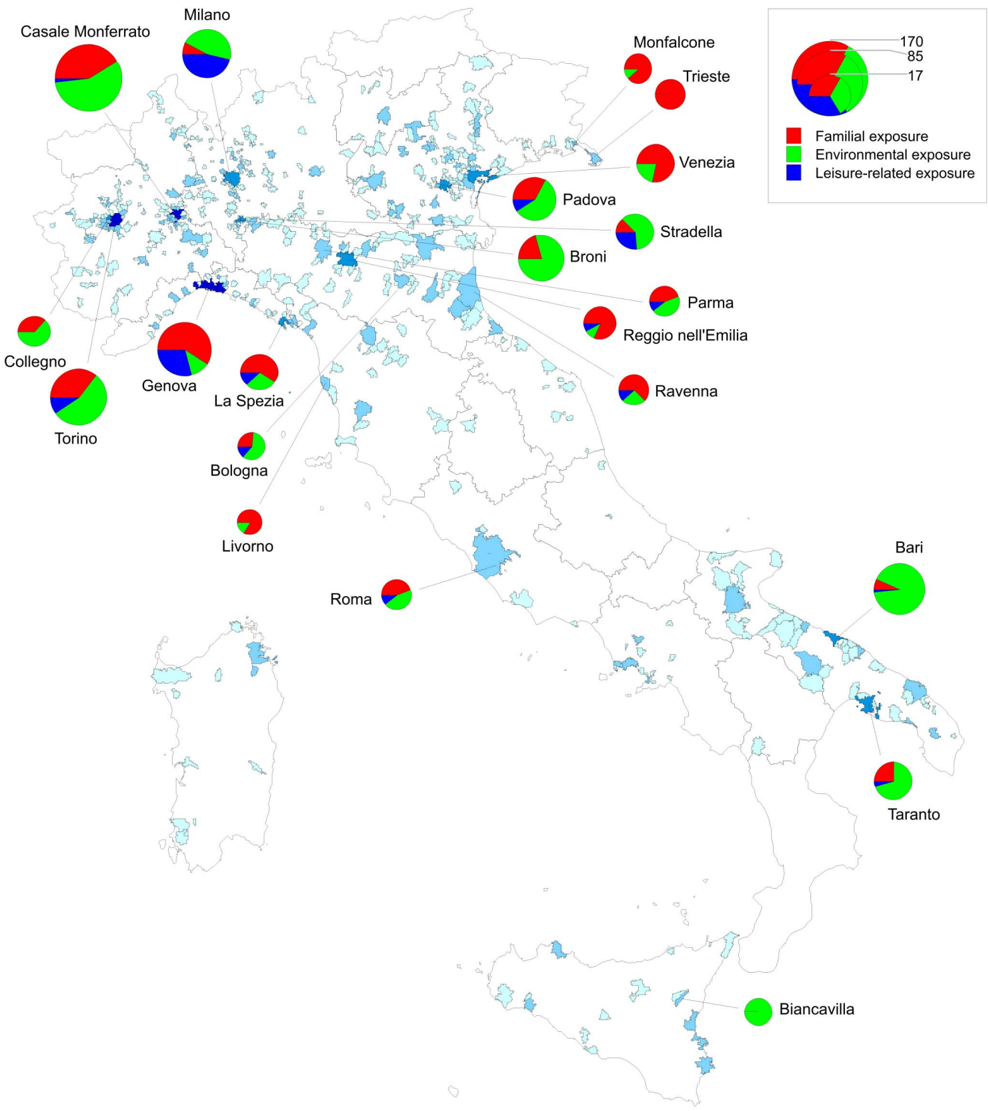
INTRODUCTION: Italy produced and imported a large amount of raw asbestos, up to the ban in 1992, with a peak in the period between 1976 and 1980 at about 160,000 tons/year. The National Register of Mesotheliomas (ReNaM, "Registro Nazionale dei Mesoteliomi" in Italian), a surveillance system of mesothelioma incidence, has been active since 2002, operating through a regional structure. METHODS: The Operating Regional Center (COR) actively researches cases and defines asbestos exposure on the basis of national guidelines. Diagnostic, demographic and exposure characteristics of non-occupationally exposed cases are analysed and described with respect to occupationally exposed cases. RESULTS: Standardised incidence rates for pleural mesothelioma in 2008 were 3.84 (per 100,000) for men and 1.45 for women, respectively. Among the 15,845 mesothelioma cases registered between 1993 and 2008, exposure to asbestos fibres was investigated for 12,065 individuals (76.1%), identifying 530 (4.4%) with familial exposure (they lived with an occupationally exposed cohabitant), 514 (4.3%) with environmental exposure to asbestos (they lived near sources of asbestos pollution and were never occupationally exposed) and 188 (1.6%) exposed through hobby-related or other leisure activities. Clusters of cases due to environmental exposure are mainly related to the presence of asbestos-cement industry plants (Casale Monferrato, Broni, Bari), to shipbuilding and repair activities (Monfalcone, Trieste, La Spezia, Genova) and soil contamination (Biancavilla in Sicily). CONCLUSIONS: Asbestos pollution outside the workplace contributes significantly to the burden of asbestos-related diseases, suggesting the need to prevent exposures and to discuss how to deal with compensation rights for malignant mesothelioma cases induced by non-occupational exposure to asbestos.
Overview
CoChat Summary
TL;DR
Using Italy’s national mesothelioma register (ReNaM), the study estimates that 10.2% of malignant mesothelioma cases with known exposure were attributable to non-occupational asbestos exposure. Familial cohabitation with an occupationally exposed person and residence near asbestos-cement plants were the most prominent non-occupational sources.
Key findings
- Among 15,845 mesothelioma cases registered in 1993–2008, asbestos exposure was investigated for 12,065 (76.1%); 530 cases (4.4%) had familial exposure, 514 (4.3%) environmental exposure, and 188 (1.6%) leisure/hobby-related exposure, totaling 1,232 non-occupationally exposed cases (10.2%).
- Standardised incidence rates for pleural mesothelioma in 2008 were 3.84 per 100,000 men and 1.45 per 100,000 women; peritoneal rates were 0.26 and 0.12, respectively, and pericardial/testicular forms were less than 1 case per million inhabitants.
- Non-occupational exposure proportions varied geographically, with the highest values in Piedmont (24.4%), Trento autonomous province (15.6%), Puglia (14.4%), and Veneto (13.5%).
- Environmental clusters were mainly linked to asbestos-cement plants (Casale Monferrato, Broni, Bari), shipbuilding/repair (Monfalcone, Trieste, La Spezia, Genova), and soil contamination (Biancavilla, Sicily). The female/male ratio was 2.3:1 for all non-occupational cases and 5.9:1 for exclusively familial exposure.
Methods
- ReNaM is a national mesothelioma incidence surveillance system active since 2002, operating through Regional Operating Centres (CORs) that actively search for cases and classify asbestos exposure using national guidelines.
- Occupational history, lifestyle, and residential history were collected via a standardised questionnaire administered to patients or next of kin; exposure was classified hierarchically and exclusively as occupational (definite, probable, possible), familial, environmental, or leisure-related.
- The analysis covered cases diagnosed in 1993–2008; standardised incidence rates were calculated by the direct method using the 2001 national census population for age standardisation, and analyses used SPSS V.21.0.
Limitations
- The paper states that some regions began collecting cases later or did not participate, limiting evaluation of mesothelioma incidence trends; interview percentages varied between 45% and 95% by region, and possible lack of homogeneity among CORs in applying national procedures is a crucial issue.
- The paper states that the incidence surveillance design, possible competitive causes of death, and limited observation period prevent statistical inferences on the association between exposure and time to event (age or latency).
- The paper notes that asbestos exposure during leisure activities is difficult to identify and probably underestimated.
Model-written summary. Check it against the paper before relying on it.
Integrity signals
Registry
Cites
Statistics
Figures

Verification
Claims the paper makes
8 Valid · 2 Not valid · 8 Not checked · 52 Own results and interpretations
The sources with a verdict support this claim; the rest weren’t checked yet, have no full text we could read, or their verdicts aren’t rated yet.
In the paper
“Similar experiences to the Italian mesothelioma incidence surveillance system, with regard to methods and extension, are scarce and, to the best of our knowledge, currently ongoing only in France 24 and Australia.25”
§ Malignant mesothelioma due to non-occupational asbestos exposure from the Italian national surveillance system (ReNaM): epidemiology and public health issues > DISCUSSION
What the sources say
- Supportedcites [24] 24. Goldberg M, Imbernon E, Rolland P, et al. The French National Mesothelioma Surveillance Program. Occup Environ Med 2006;63:390-5. source
The France citation supports the existence of a comparable, ongoing mesothelioma incidence surveillance program. The Methods and Abstract describe incidence monitoring across 21 French districts, while the Discussion calls it a permanent epidemiological surveillance system. The separate Australia citation and the authors’ qualified claim of scarcity are not attributed specifically to this source. (LLM, conf=0.88)
- Not checked — no full text of the sourcecites [25] 25. Yeung P, Rogers A, Johnson A. Distribution of mesothelioma cases in different occupational groups and industries in Australia, 1979-1995. Appl Occup Environ Hyg 1999;14:759-67. source
hedged- Asserted: passes — The authors put it forward as true.
- Checkable: passes — It can be checked against evidence.
- Load-bearing: unclear — It is unclear whether the paper’s conclusions depend on it.
- Based: passes — The paper gives a reason why it holds.
- Supported
The cited sources support only part of this claim — read each source’s verdict below.
In the paper
“Natural contamination of the soil with tremolite fibres has also been detected in Cyprus 28 and Corsica, 6 as evidenced by occurrences of asbestos-related diseases without any asbestos use for industrial applications.”
§ Malignant mesothelioma due to non-occupational asbestos exposure from the Italian national surveillance system (ReNaM): epidemiology and public health issues > DISCUSSION
What the sources say
- Partly supportedcites [28] 29. McConnochie K, Simonato L, Mavrides P, et al. Mesothelioma in Cyprus: the role of tremolite. Thorax 1987;42:342-7. sourceExperimental — accuracy not yet measured
The Discussion reports naturally occurring tremolite in Cyprus, fibres in environmental samples, and mesothelioma cases among residents with only environmental exposure. But the paper also describes a chrysotile mine and says there was no *other* appreciable industrial asbestos source; it does not support the claim that Cyprus had no industrial asbestos use. Corsica is attached to a different citation in the citing sentence. (LLM, conf=0.86)
- Not checked — no full text of the sourcecites [6] 6. Boutin C, Viallat JR, Steinbauer J, et al. Bilateral pleural plaques in Corsica: a non-occupational asbestos exposure marker. Eur J Respir Dis 1986;69:4-9.
plainstates an association- Asserted: passes — The authors put it forward as true.
- Checkable: passes — It can be checked against evidence.
- Load-bearing: unclear — It is unclear whether the paper’s conclusions depend on it.
- Based: passes — The paper gives a reason why it holds.
- Partly supported
The sources with a verdict support this claim; the rest weren’t checked yet, have no full text we could read, or their verdicts aren’t rated yet.
In the paper
“As environmental exposure related to residence near asbestos-cement plants has been repeatedly reported for Casale Monferrato, 15 Bari, 16 Broni 17 and La Spezia, 18”
§ Malignant mesothelioma due to non-occupational asbestos exposure from the Italian national surveillance system (ReNaM): epidemiology and public health issues > INTRODUCTION
What the sources say
- Supportedcites [15] 15. Magnani C, Dalmasso P, Biggeri A, et al. Increased risk of malignant mesothelioma of the pleura after residential or domestic exposure to asbestos: a case-control study in Casale Monferrato, Italy. Environ Health Perspect 2001;109:915-19. source
The citation is attached to Casale Monferrato, not to the other cities. The paper reports an association between environmental asbestos exposure and pleural mesothelioma in Casale (p. 1), and the Discussion (p. 4) says this independent study confirms the association alongside a previous study. (LLM, conf=0.92)
- Not checked — no full text of the sourcecites [16] 16. Musti M, Pollice A, Cavone D, et al. The relationship between malignant mesothelioma and an asbestos cement plant environmental risk: a spatial case-control study in the city of Bari (Italy). Int Arch Occup Environ Health 2009;82:489-97. source
- Not checked — no full text of the sourcecites [17] 17. Oddone E, Ferrante D, Cena C, et al. Asbestos cement factory in Broni (Pavia, Italy): a mortality study. Med Lav 2014;105:15-29.
plainstates an association- Asserted: passes — The authors put it forward as true.
- Checkable: passes — It can be checked against evidence.
- Load-bearing: unclear — It is unclear whether the paper’s conclusions depend on it.
- Based: passes — The paper gives a reason why it holds.
- Supported
Every source the paper cites for this claim was checked and supports it.
In the paper
“The spatial variation in the mesothelioma risk in an area highly polluted by the asbestos-cement plant in Casale Monferrato has been discussed, adjusting for occupational and domestic exposures, highlighting the fact that the effect on the general population of pollution from industrial sources decreases with increasing distance from the factory.34”
§ Malignant mesothelioma due to non-occupational asbestos exposure from the Italian national surveillance system (ReNaM): epidemiology and public health issues > DISCUSSION
What the sources say
- Supportedcites [34] 35. Maule MM, Magnani C, Dalmasso P, et al. Modeling mesothelioma risk associated with environmental asbestos exposure. Environ Health Perspect 2007;115:1066-71. source
Split into 2 atoms — 2 confirmed, 0 partially supported, 0 disputed, 0 misattributed, 0 unverifiable. Expand the claim to see per-atom verdicts.
plainstates a cause- Asserted: passes — The authors put it forward as true.
- Checkable: passes — It can be checked against evidence.
- Load-bearing: unclear — It is unclear whether the paper’s conclusions depend on it.
- Based: passes — The paper gives a reason why it holds.
- Supported
The cited sources support only part of this claim — read each source’s verdict below.
In the paper
“An Italian cohort study of wives of Casale Monferrato asbestos-cement factory workers showed a large excess of pleural mesothelioma (standardised mortality ratio, SMR=18.00,21 observed vs 1.2 expected).35”
§ Malignant mesothelioma due to non-occupational asbestos exposure from the Italian national surveillance system (ReNaM): epidemiology and public health issues > DISCUSSION
What the sources say
- Partly supportedcites [35] 36. Ferrante D, Bertolotti M, Todesco A, et al. Cancer mortality and incidence of mesothelioma in a cohort of wives of asbestos workers in Casale Monferrato, Italy. Environ Health Perspect 2007;115:1401-5. sourceExperimental — accuracy not yet measured
The Abstract Results report 21 observed versus 1.2 expected and an SMR of 18.00 for pleural cancer mortality in the wives’ cohort. The paper reports pleural mesothelioma separately as 11 incident cases, so the cited figures should not be presented specifically as a mesothelioma SMR. (LLM, conf=0.88)
plainstates an association- Asserted: passes — The authors put it forward as true.
- Checkable: passes — It can be checked against evidence.
- Load-bearing: unclear — It is unclear whether the paper’s conclusions depend on it.
- Based: passes — The paper gives a reason why it holds.
- Partly supported
38 more claims
Create a free account to see all 70 claims and to verify the 1 reference still open.
- It may state two separate claims as one. 23
- Probably not a substantial claim. 11
Citations
Cites
Competing risks in epidemiology: possibilities and pitfalls
Andersen, P. K., Geskus, R. B., de Witte, T., & Putter, H. (2012) · International Journal of Epidemiology · doi:10.1093/ije/dyr213 · Cited by 985 · cited 1×
“39 40 Non-occupational exposure exhibits some distinctive features that deserve special attention.”
Residential Proximity to Naturally Occurring Asbestos and Mesothelioma Risk in California
Pan, X.-L., Day, H. W., Wang, W., Beckett, L. A., & Schenker, M. B. (2005) · American Journal of Respiratory and Critical Care Medicine · doi:10.1164/rccm.200412-1731oc · Cited by 191
The French National Mesothelioma Surveillance Program
Goldberg, M., Imbernon, E., Rolland, P., Soit Ilg, A. G., Savès, M., de Quillacq, A., Frenay, C., Chamming’s, S., Arveux, P., Boutin, C., et al. (2006) · Occupational and Environmental Medicine · doi:10.1136/oem.2005.023200 · Cited by 184 · cited 1×
“Similar experiences to the Italian mesothelioma incidence surveillance system, with regard to 24 25 Critical limitations of the ReNaM data set have to be discussed preliminarily.”
Magnani, C., Dalmasso, P., Biggeri, A., Ivaldi, C., Mirabelli, D., & Terracini, B. (2001) · Environmental Health Perspectives · doi:10.1289/ehp.01109915 · Cited by 165
Self-citationFerrante, D., Bertolotti, M., Todesco, A., Mirabelli, D., Terracini, B., & Magnani, C. (2007) · Environmental Health Perspectives · doi:10.1289/ehp.10195 · Cited by 140 · cited 1×
“35 Evidence is also accumulating about passive asbestos exposure in asbestos-containing buildings, such as public of fi ces or schools, where the people involved have no awareness 36 102297 4 asbestos-containing material. non-occupational and occupational exposures to incidence, are rarely…”
Self-citationOlsen, N. J., Franklin, P. J., Reid, A., Klerk, N. H., Threlfall, T. J., Shilkin, K., & Musk, B. (2011) · Medical Journal of Australia · doi:10.5694/mja11.10125 · Cited by 138 · cited 1×
“38 Our une 2015 .”
Marinaccio, A., Binazzi, A., Marzio, D. D., Scarselli, A., Verardo, M., Mirabelli, D., Gennaro, V., Mensi, C., Riboldi, L., Merler, E., et al. (2012) · International Journal of Cancer · doi:10.1002/ijc.26229 · Cited by 138
Self-citationMapping the risk of mesothelioma due to neighborhood asbestos exposure
Kurumatani, N., & Kumagai, S. (2008) · American Journal of Respiratory and Critical Care Medicine · doi:10.1164/rccm.200801-063oc · Cited by 126 · cited 1×
“32 33 The spatial variation in the mesothelioma risk in an area highly polluted by the asbestos-cement plant in Casale Monferrato has been discussed, adjusting for occupational and domestic exposures, highlighting the fact that the li s s 10 .”
Marinaccio, A., Montanaro, F., Mastrantonio, M., Uccelli, R., Altavista, P., Nesti, M., Costantini, A. S., & Gorini, G. (2005) · International Journal of Cancer · doi:10.1002/ijc.20820 · Cited by 123
Self-citationModeling mesothelioma risk associated with environmental asbestos exposure
Maule, M. M., Magnani, C., Dalmasso, P., Mirabelli, D., Merletti, F., & Biggeri, A. (2007) · Environmental Health Perspectives · doi:10.1289/ehp.9900 · Cited by 113 · cited 1×
“1136 effect on the general population of pollution from industrial sources decreases with increasing distance from 34 / m brought home.”
Self-citation
Research works printed but not linked: 5
- 1. IARC Working Group on the Evaluation of Carcinogenic Risks to Humans. Arsenic, metals, fibres, and dusts. IARC Monogr Eval Carcinog Risks Hum 2012;100(Pt C):11-465.
- 19. Marinaccio A, Binazzi A, Branchi C, et al. Italian National Mesothelioma Register (ReNaM)-IV Report (in Italian). Monograph. Milan, Italy: INAIL, 2012. http://www. ispesl.it/renam/Report.asp
- 20. Nesti M, Adamoli S, Ammirabile F, et al. Guidelines for the identification and definition of malignant mesothelioma cases and the transmission to Ispesl by Regional Operating centres. Monograph. Rome, Italy: ISPESL, 2003. http://www. ispesl.it/dml/leo/download/RenamGuidelines.pdf
- 27. Marinaccio A, et al. Occup Environ Med 2015;72:648-655. doi:10.1136/oemed-2014-102297 Environment Protected by copyright, including for uses related to text and data mining, AI training, and similar technologies. . by guest on March 20, 2026 http://oem.bmj.com/ Downloaded from 4 June 2015. 10.1136/oemed-2014-102297 on Occup Environ Med: first published as 27
- 42. Marinaccio A, et al. Occup Environ Med 2015;72:648-655. doi:10.1136/oemed-2014-102297 655 Environment Protected by copyright, including for uses related to text and data mining, AI training, and similar technologies. . by guest on March 20, 2026 http://oem.bmj.com/ Downloaded from 4 June 2015. 10.1136/oemed-2014-102297 on Occup Environ Med: first published as
Cited by
ERS/ESTS/EACTS/ESTRO guidelines for the management of malignant pleural mesothelioma
Scherpereel, A., Opitz, I., Berghmans, T., Psallidas, I., Glatzer, M., Rigau, D., Astoul, P., Bölükbas, S., Boyd, J., Coolen, J., et al. (2020) · European Respiratory Journal · doi:10.1183/13993003.00953-2019 · Cited by 273
Occupational lung diseases: from old and novel exposures to effective preventive strategies
Cullinan, P., Muñoz, X., Suojalehto, H., Agius, R., Jindal, S., Sigsgaard, T., Blomberg, A., Charpin, D., Annesi-Maesano, I., Gulati, M., et al. (2017) · The Lancet Respiratory Medicine · doi:10.1016/s2213-2600(16)30424-6 · Cited by 167
ERS/ESTS/EACTS/ESTRO guidelines for the management of malignant pleural mesothelioma
Opitz, I., Scherpereel, A., Berghmans, T., Psallidas, I., Glatzer, M., Comas, D. R., Astoul, P. J., Bölükbas, S., Boyd, J., Coolen, J., et al. (2020) · European Journal of Cardio-Thoracic Surgery · doi:10.1093/ejcts/ezaa158 · Cited by 121
Epidemiology of Environmental Exposure and Malignant Mesothelioma
Liu, B., van Gerwen, M. A. G., Bonassi, S., & Taioli, E. (2017) · Journal of Thoracic Oncology · doi:10.1016/j.jtho.2017.04.002 · Cited by 118
Marinaccio, A., Corfiati, M., Binazzi, A., Marzio, D. D., Scarselli, A., Ferrante, P., Bonafede, M., Verardo, M., Mirabelli, D., Gennaro, V., et al. (2017) · Occupational and Environmental Medicine · doi:10.1136/oemed-2016-104119 · Cited by 108
Self-citationMicolucci, L., Akhtar, M. M., Olivieri, F., Rippo, M. R., & Procopio, A. D. (2016) · Oncotarget · doi:10.18632/oncotarget.9686 · Cited by 86
“In addition, because there is no safe level of exposure, even merely living near plants using asbestos involves a high risk [3, 5, 6].”
BackgroundEpidemiology of mesothelioma of the pericardium and tunica vaginalis testis
Mezei, G., Chang, E. T., Mowat, F. S., & Moolgavkar, S. H. (2017) · Annals of Epidemiology · doi:10.1016/j.annepidem.2017.04.001 · Cited by 79
Mesothelioma from asbestos exposures: Epidemiologic patterns and impact in the United States
Lemen, R. A. (2016) · Journal of Toxicology and Environmental Health Part B · doi:10.1080/10937404.2016.1195323 · Cited by 65
Mensi, C., Matteis, S. D., Dallari, B., Riboldi, L., Bertazzi, P. A., & Consonni, D. (2016) · Occupational and Environmental Medicine · doi:10.1136/oemed-2016-103652 · Cited by 55
Self-citationPrevention of Asbestos Exposure in Latin America within a Global Public Health Perspective
Algranti, E., Ramos-Bonilla, J. P., Terracini, B., Santana, V. S., Comba, P., Pasetto, R., Mazzeo, A., Cavariani, F., Trotta, A., & Marsili, D. (2019) · Annals of Global Health · doi:10.5334/aogh.2341 · Cited by 49
Vimercati, L., Cavone, D., Lovreglio, P., Maria, L. D., Caputi, A., Ferri, G. M., & Serio, G. (2018) · Environmental Science and Pollution Research · doi:10.1007/s11356-018-1618-x · Cited by 43
“The national register of mesothelioma (ReNaM) documented that 10.2% of MM cases are due to nonoccupational exposure to asbestos (Marinaccio et al. 2015).”
BackgroundMethodInfluentialSelf-citationBronte, G., Incorvaia, L., Rizzo, S., Passiglia, F., Galvano, A., Rizzo, F., Rolfo, C. D., Fanale, D., Listì, A., Natoli, C., et al. (2016) · Critical Reviews in Oncology/Hematology · doi:10.1016/j.critrevonc.2016.08.011 · Cited by 43
Magnani, C., Bianchi, C., Chellini, E., Consonni, D., Fubini, B., Gennaro, V., Marinaccio, A., Menegozzo, M., Mirabelli, D., Merler, E., et al. (2015) · PubMed · Cited by 47
Self-citationArulananda, S., O’Brien, M., Evangelista, M., Jenkins, L. J., Poh, A. R., Walkiewicz, M., Leong, T. Y.-M., Mariadason, J. M., Cebon, J. S., Balachander, S. B., et al. (2021) · Cell Death Discovery · doi:10.1038/s41420-021-00505-0 · Cited by 38
Ferrari, L., Carugno, M., Mensi, C., & Pesatori, A. C. (2020) · Frontiers in Oncology · doi:10.3389/fonc.2020.00445 · Cited by 36
Self-citationAsbestos in High-Risk Communities: Public Health Implications
Emmett, E. A. (2021) · International Journal of Environmental Research and Public Health · doi:10.3390/ijerph18041579 · Cited by 33
“According to van Gerwen et al. [89], five countries currently operate a mesothelioma-specific registry, including Italy, France, the UK, Australia. and South Korea, all but the UK use interviews to collect exposure data.”
BackgroundInfluentialBurden of Mortality from Asbestos-Related Diseases in Italy
Fazzo, L., Binazzi, A., Ferrante, D., Minelli, G., Consonni, D., Bauleo, L., Bruno, C., Bugani, M., Santis, M. D., Iavarone, I., et al. (2021) · International Journal of Environmental Research and Public Health · doi:10.3390/ijerph181910012 · Cited by 33
“The major source of asbestos exposure is in work settings, but the health effects of environmental exposure are also recognized, with estimates of the proportion of total malignant mesothelioma cases ranging between 5 and 20% [4,5].”
BackgroundSelf-citationMarinaccio, A., Binazzi, A., Bonafede, M., Marzio, D. D., & Scarselli, A. (2018) · Journal of Thoracic Disease · doi:10.21037/jtd.2017.12.146 · Cited by 40
“The characteristics, and the extent of non-occupational exposure (above all environmental and familial modalities of exposure), have been estimated around 10% of cases (23) mainly due to the residence near asbestos cement plants and to the cohabitation with occupationally exposed subjects.”
BackgroundSelf-citationCavone, D., Caputi, A., Maria, L. D., Cannone, E. S. S., Mansi, F., Birtolo, F., Delfino, M. C., & Vimercati, L. (2019) · Environments · doi:10.3390/environments6070076 · Cited by 39
Self-citationAsbestos Ban in Italy: A Major Milestone, Not the Final Cut
Marsili, D., Angelini, A., Bruno, C., Corfiati, M., Marinaccio, A., Silvestri, S., Zona, A., & Comba, P. (2017) · International Journal of Environmental Research and Public Health · doi:10.3390/ijerph14111379 · Cited by 32
“The situation also determined a broad environmental asbestos exposure affecting surrounding communities [13].”
BackgroundSelf-citationMeasurement of asbestos emissions associated with demolition of abandoned residential dwellings
Neitzel, R. L., Sayler, S. K., Demond, A. H., d'Arcy, H., Garabrant, D. H., & Franzblau, A. (2020) · Science of The Total Environment · doi:10.1016/j.scitotenv.2020.137891 · Cited by 30
Dalsgaard, S. B., Würtz, E. T., Hansen, J., Røe, O. D., & Omland, Ø. (2019) · Occupational and Environmental Medicine · doi:10.1136/oemed-2018-105392 · Cited by 30
Bonafede, M., Ghelli, M., Corfiati, M., Rosa, V., Guglielmucci, F., Granieri, A., Branchi, C., Iavicoli, S., & Marinaccio, A. (2018) · American Journal of Industrial Medicine · doi:10.1002/ajim.22831 · Cited by 31
“Consequently, the territorial distribution of mesothelioma cases is related to the location of industrial plants that feature intensive asbestos use and other sites of environmental contamination.(4,5) Many Western countries are currently suffering from MM epidemics due to extensive industrial use of asbestos between…”
Self-citationTargeting CXCR4 with [68Ga]Pentixafor: a suitable theranostic approach in pleural mesothelioma?
Lapa, C., Kircher, S., Schirbel, A., et al. (2017) · Oncotarget · doi:10.18632/oncotarget.18235 · Cited by 26
“Despite aggressive treatment algorithms including radiation and/ or chemotherapy, the prognosis of mesothelioma has remained poor for decades, with an average survival of 9–12 months [3].”
BackgroundVisoná, S. D., Capella, S., Bodini, S., Borrelli, P., Villani, S., Crespi, E., Frontini, A., Colosio, C., & Belluso, E. (2021) · International Journal of Environmental Research and Public Health · doi:10.3390/ijerph18042053 · Cited by 29
“Regarding the type of exposure, in this paper we adopt the term “anthropogenic en‐ vironmental exposure,” referring to people who lived in an area with air‐dispersed asbes‐ tos from the asbestos cement plant [30,31].”
MethodMukhopadhyay, D., Cocco, P., Orrù, S., Cherchi, R., & Matteis, S. D. (2024) · Pulmonology · doi:10.1016/j.pulmoe.2024.02.002 · Cited by 31
Current and future risks of asbestos exposure in the Australian community
Gray, C., Carey, R. N., & Reid, A. (2016) · International Journal of Occupational and Environmental Health · doi:10.1080/10773525.2016.1227037 · Cited by 25
Visoná, S. D., Capella, S., Bodini, S., Borrelli, P., Villani, S., Crespi, E., Colosio, C., Previderè, C., & Belluso, E. (2021) · Frontiers in Public Health · doi:10.3389/fpubh.2021.678040 · Cited by 22
Saito, C. A., Bussacos, M. A., Salvi, L., Mensi, C., Consonni, D., Fernandes, F. T., Campos, F., Cavalcante, F., & Algranti, E. (2022) · International Journal of Environmental Research and Public Health · doi:10.3390/ijerph19063656 · Cited by 21
“Of these, environmental and domestic exposures tended to be more prevalent in women [33] although at lower levels compared to those reported in workplaces.”
ResultSelf-citationMarsh, G. M., Ierardi, A. M., Benson, S. M., & Finley, B. L. (2019) · Inhalation Toxicology · doi:10.1080/08958378.2019.1645768 · Cited by 18
“For example, Piedmont has the highest proportion of mesothelioma cases attributed to nonoccupational exposures in all of Italy (24.4%, as reported in Marinaccio et al. (2015)), which is consistent with the fact that the rate of mesothelioma for women in the Piedmont region (3.18 per 100,000) is…”
BackgroundResultInfluentialMesothelioma incidence and asbestos exposure in Italian national priority contaminated sites
Binazzi, A., Marinaccio, A., Corfiati, M., Bruno, C., Fazzo, L., Pasetto, R., Pirastu, R., Biggeri, A., Catelan, D., Comba, P., et al. (2017) · Scandinavian Journal of Work Environment & Health · doi:10.5271/sjweh.3676 · Cited by 23
“The ReNaM archive recently provided a reliable estimation of 10% of MM due to a non-occupational exposure to asbestos, based on more than 15 845 detected cases, of which 12 065 were individually interviewed (10).”
BackgroundInfluentialSelf-citationVimercati, L., Cavone, D., Delfino, M. C., Caputi, A., Maria, L. D., Sponselli, S., Corrado, V., Ferri, G. M., & Serio, G. (2020) · International Journal of Environmental Research and Public Health · doi:10.3390/ijerph17082636 · Cited by 20
“These data are consistent with previous evidence of a long latency period and a median latency of 48 years [15,42,43].”
BackgroundResultInfluentialSelf-citationMoolgavkar, S. H., Chang, E. T., Mezei, G., & Mowat, F. S. (2017) · Current cancer research · doi:10.1007/978-3-319-53560-9_3 · Cited by 24
Magnani, C., Mensi, C., Binazzi, A., Marsili, D., Grosso, F., Ramos-Bonilla, J. P., Ferrante, D., Migliore, E., Mirabelli, D., Terracini, B., et al. (2023) · International Journal of Environmental Research and Public Health · doi:10.3390/ijerph20020936 · Cited by 21
“2% of mesothelioma cases are due to non-occupational exposure to asbestos [69,70].”
Self-citationAgostin, F., Michieli, P. D., & Negro, C. (2017) · International Journal of Occupational Medicine and Environmental Health · doi:10.13075/ijomeh.1896.00890 · Cited by 16
Self-citationLung Asbestos Fibre Burden and Pleural Mesothelioma in Women with Non-occupational Exposure
Barbieri, P. G., Somigliana, A. B., Chen, Y., Consonni, D., Vignola, R., & Finotto, L. (2020) · Annals of Work Exposures and Health · doi:10.1093/annweh/wxaa009 · Cited by 13
Migliore, E., Consonni, D., Peters, S., Vermeulen, R. C. H., Kromhout, H., Baldassarre, A., Cavone, D., Chellini, E., Magnani, C., Mensi, C., et al. (2022) · Environmental Health · doi:10.1186/s12940-022-00869-5 · Cited by 19
“Interestingly, it was found that about 10% of all Italian cases had no recognized exposure at work but had been exposed to asbestos in non-occupational settings [5].”
BackgroundMethodInfluentialSelf-citationGeographical patterns of mesothelioma incidence and asbestos exposure in Lombardy, Italy.
Mensi, C., Matteis, S. D., Catelan, D., Dallari, B., Riboldi, L., Pesatori, A. C., & Consonni, D. (2016) · La Medicina del Lavoro · Cited by 19
Self-citationFazzo, L., Minelli, G., Bruno, C., Comba, P., Conti, S., Santis, M. D., Zona, A., Binazzi, A., Magnani, C., Marinaccio, A., et al. (2020) · Annali dell Istituto Superiore di Sanità · doi:10.4415/ann_20_04_10 · Cited by 14
Self-citationCapella, S., Bellis, D., Fioretti, E., Marinelli, R., & Belluso, E. (2020) · Environmental Pollution · doi:10.1016/j.envpol.2020.114384 · Cited by 16
Marinaccio, A., Marzio, D. D., Mensi, C., Consonni, D., Gioscia, C., Migliore, E., Genova, C., Giaccherino, R. R., Eccher, S., Murano, S., et al. (2023) · Occupational and Environmental Medicine · doi:10.1136/oemed-2023-108983 · Cited by 11
Self-citationCurrent causes of mesothelioma: how has the asbestos ban changed the perspective?
Janošíková, M., Nakládalová, M., & Štěpánek, L. (2023) · Biomedical Papers · doi:10.5507/bp.2023.008 · Cited by 14
Visoná, S. D., Capella, S., Borrelli, P., Villani, S., Favaron, C., Kurzhunbaeva, Z., Colosio, C., & Belluso, E. (2023) · Journal of Thoracic Disease · doi:10.21037/jtd-23-1061 · Cited by 9
“…National Mesothelioma Registry, anthropogenic environmental and household exposures (AEH) to asbestos are responsible for a remarkable proportion of MM cases in Italy, respectively of 4.9% and 4.4% of all MM cases, most of which observed in the areas adjacent to asbestos-cement industries (9).”
InfluentialCause specific mortality in an Italian pool of asbestos workers cohorts
Ferrante, D., Angelini, A., Barbiero, F., Barbone, F., Bauleo, L., Binazzi, A., Bovenzi, M., Bruno, C., Casotto, V., Cernigliaro, A., et al. (2023) · American Journal of Industrial Medicine · doi:10.1002/ajim.23546 · Cited by 9
“17 The study by Marinaccio et al. 18 based on the Italian Register of Mesothelioma (ReNaM) provided an estimation of 10% (1232 cases) for malignant mesothelioma cases due to nonoccupational asbestos exposure based on more than 15,845 detected cases, of which 12,065 individually interviewed.”
BackgroundSelf-citationBertolotti, M., Tamburro, M., Salzo, A., Cassinari, A., Crivellari, S., Bertolina, C., Farotto, M., Adesso, C., Palma, M. A. D., Natale, A., et al. (2024) · Preventive Medicine Reports · doi:10.1016/j.pmedr.2024.102940 · Cited by 8
“Additionally, many cases of para-occupational exposure (including environmental and family exposure) (Marinaccio et al., 2015) are still reported today.”
Health impact of exposure to asbestos in polluted area of Southern Italy
Vimercati, L. (2019) · Journal of preventive medicine and hygiene · doi:10.15167/2421-4248/jpmh2019.60.4.1330 · Cited by 6
Finley, B. L., Benson, S. M., & Marsh, G. M. (2018) · Inhalation Toxicology · doi:10.1080/08958378.2018.1438540 · Cited by 5
“…the Val Chisone mines (Figure 1 in the Marinaccio et al. 2012 paper) and a majority of the mesotheliomas near this area (e.g. in Collegno and Torino) were classified as “environmental”, i.e. they were not due to occupational exposure nor living with an asbestos worker (Marinaccio et al., 2015).”
BackgroundResultInfluentialGlobal patterns and trends in mesothelioma incidence: A retrospective cross-sectional study
Fu, L., Liu, K., Liu, Y., Gao, Y., Wang, B., Sun, Y., Shu, W., Ning, Y., Zhang, M., Du, J., et al. (2025) · Lung Cancer · doi:10.1016/j.lungcan.2025.108878 · Cited by 6
Zhang, S., Du, D., Li, P., Chen, Y., & Zhang, X. (2025) · BMC Public Health · doi:10.1186/s12889-025-23343-6 · Cited by 4
Sex differences in asbestos exposure
Patel, K. R., Tuminello, S., & Taioli, E. (2025) · Frontiers in Public Health · doi:10.3389/fpubh.2025.1588415 · Cited by 5
Bloise, A., Parisi, F., Russa, M. F. L., Apollaro, C., Godbert, N., Aiello, I., Giorno, E., Croce, A., Cagna, L., Díaz, A. J. L., et al. (2024) · Heliyon · doi:10.1016/j.heliyon.2024.e39624 · Cited by 4
“In this case, we could talk of risk exposition under non-occupational contexts [40].”
BackgroundCommunities at High Risk in the Third Wave of Mesothelioma
Emmett, E. A., & Cakouros, B. E. (2017) · Current cancer research · doi:10.1007/978-3-319-53560-9_5 · Cited by 4
Stival, M., Schiavon, L., Bertarelli, G., & Campostrini, S. (2025) · Research Square · doi:10.21203/rs.3.rs-6403583/v1 · Cited by 3
Malignant mesothelioma in Sub-Saharan Africa: A case report from Lubumbashi, DR Congo.
Kitenge, J. P., Kayembe, D. K., Muamba, M., Kachil, H., Vos, B. D., Bouwel, J. V., & Nemery, B. (2019) · Environmental Research · doi:10.1016/j.envres.2019.108556 · Cited by 4
Mirabelli, D., Marinaccio, A., Comba, P., & Magnani, C. (2019) · Springer eBooks · doi:10.1007/978-3-030-16884-1_1 · Cited by 4
Self-citationOccupational diseases in Italian national priority contaminated sites
Marinaccio, A., Binazzi, A., Bonafede, M., Altimari, A., Boscioni, R., Corfiati, M., Clemente, M., & Brusco, A. (2018) · American Journal of Industrial Medicine · doi:10.1002/ajim.22866 · Cited by 3
Self-citationIppoliti, R., Falavigna, G., Grosso, F., Maconi, A., Randi, L., & Numico, G. (2018) · International Journal of Health Policy and Management · doi:10.15171/ijhpm.2018.13 · Cited by 5
Moyano‐Ariza, L. F., Villamizar, G. A., Henríquez-Mendoza, G., Frank, A. L., & Camero, G. (2025) · International Journal of Environmental Research and Public Health · doi:10.3390/ijerph22050787 · Cited by 3
“Countries such as Italy (ReNaM) [39], Australia (AMR) [40], and the United Kingdom [41] maintain mesothelioma registries that integrate mortality records, occupational history, and exposure data.”
Fontana, L., Massari, S., Maisonneuve, P., et al. (2020) · Health Policy · doi:10.1016/j.healthpol.2020.11.013 · Cited by 2
Self-citationMarsh, G. M., Ierardi, A. M., Benson, S. M., & Finley, B. L. (2019) · Inhalation Toxicology · doi:10.1080/08958378.2019.1702744 · Cited by 2
“For example, Piedmont has the highest proportion of mesothelioma cases attributed to nonoccupational exposures in all of Italy (24.4%, as reported in Marinaccio et al. (2015)), which is consistent with the fact that the rate of mesothelioma for women in the Piedmont region (3.18 per 100,000) is…”
BackgroundResultInfluentialDi Maria, G., Bruno, C., Vancheri, A., Di Maria, C., & Comba, P. (2022) · Encyclopedia of Respiratory Medicine · doi:10.1016/b978-0-08-102723-3.00061-5 · Cited by 1
Evidence From Epidemiology and Health Surveillance
Lucchini, R. G., Hashim, D., Lambertini, L., & Placidi, D. (2019) · Elsevier eBooks · doi:10.1016/b978-0-12-812724-7.00001-0 · Cited by 1
Mesothelioma from household asbestos exposure
Agostin, F., Michieli, P. D., & Negro, C. (2018) · Journal of Lung Health and Diseases · doi:10.29245/2689-999x/2017/1.1110 · Cited by 1
Self-citationChellini, E., Martini, A., Giovannetti, L., et al. (2017) · International Journal of Occupational Medicine and Environmental Health · doi:10.13075/ijomeh.1896.01246 · Cited by 1
Self-citationMTE29.02 Advances in Malignant Pleural Mesothelioma
van Zandwijk, N., Soeberg, M., & Reid, G. (2017) · Journal of Thoracic Oncology · doi:10.1016/j.jtho.2016.11.163 · Cited by 1
Historical aspects of asbestos use and modern problems
Drugova, O. G., Fedoruk, A. A., Tskhomariia, I. M., & Kovalevskiy, E. V. (2025) · Russian Journal of Occupational Health and Industrial Ecology · doi:10.31089/1026-9428-2025-65-10-672-681
Epidemiology, Etiology, and Pathogenesis of Malignant Mesothelioma
Marchevsky, A. M. (2018) · Cambridge University Press eBooks · doi:10.1017/9781316402009.009
Metadata
- Authors
- Marinaccio, A., Binazzi, A., Bonafede, M., Corfiati, M., Di Marzio, D., Scarselli, A., Verardo, M., Mirabelli, D., Gennaro, V., Mensi, C., Schallemberg, G., Merler, E., Negro, C., Romanelli, A., Chellini, E., Silvestri, S., Cocchioni, M., Pascucci, C., Stracci, F., Ascoli, V., Trafficante, L., Angelillo, I., Musti, M., Cavone, D., Cauzillo, G., Tallarigo, F., Tumino, R., Melis, M., & ReNaM Working Group
- Affiliations
- Istituto Nazionale per l'Assicurazione Contro gli Infortuni sul Lavoro (IT)
- Piedmont Reference Center for Epidemiology and Cancer Prevention (IT)
- Ospedale Policlinico San Martino (IT)
- University of Milan (IT)
- Provincia Autonoma di Trento (IT)
- University of Trieste (IT)
- Azienda Sanitaria Unità Locale di Reggio Emilia (IT)
- Università di Camerino (IT)
- University of Perugia (IT)
- Sapienza University of Rome (IT)
- University of Campania "Luigi Vanvitelli" (IT)
- University of Bari Aldo Moro (IT)
- Regione Basilicata (IT)
- Azienda Usl 8 Arezzo (IT)
- Corresponding author
- Marinaccio, Alessandro
- ORCID
- Venue
- Occupational and Environmental Medicine
- Publisher
- BMJ
- Published
- 2015-06-04
- Volume
- 72
- Issue
- 9
- Pages
- 648-655
- ISSN
- 0007-1072 (ISSN-L)
- 1351-0711
- 1470-7926
- OpenAlex
- W2155985359
- Semantic Scholar
- 7627036f9cbfdffb7c755ab8dde075e7b339f0b1
- Cited by
- 68
- References
- 40
- Citations by year
- 2025: 6 · 2024: 3 · 2023: 5 · 2022: 3 · 2021: 6 · 2020: 9 · 2019: 9 · 2018: 8 · 2017: 12 · 2016: 6 · 2015: 1
- FWCI
- 7.11
- Type
- journal article
- Language
- en
- Open access
- green
- hdl.handle.net
- Licence
- cc-by-nc
- Locations
- Occupational and Environmental Medicine (publishedVersion)
- PubMed (publishedVersion)
- ArTS Archivio della ricerca di Trieste (University of Trieste https://www.units.it/) (submittedVersion, cc-by-nc)
- Florence Research (University of Florence) (submittedVersion, other-oa)
- Archivio Istituzionale della Ricerca - Università degli Studi della Campania "Luigi Vanvitelli" (submittedVersion)
- IRIS Research product catalog (Sapienza University of Rome) (submittedVersion)
- Unicam Scientific Publications (University of Camerino) (submittedVersion, other-oa)
- Funders
- Ministero della Salute
- Istituto Nazionale per l'Assicurazione Contro Gli Infortuni sul Lavoro
- Topics
- Health Sciences › Medicine › Pulmonary and Respiratory Medicine › Occupational and environmental lung diseases
- Social Sciences › Health › Occupational Health and Global Justice
- Health Sciences › Medicine › Oncology › Global Cancer Incidence and Screening
- Keywords
- malignant mesothelioma, environmental asbestos exposure, pleural mesothelioma, asbestos-cement industry, shipbuilding, soil contamination, Italy
- MeSH terms
- Mesothelioma, Malignant, Adolescent, Adult, Aged, Aged, 80 and over, Asbestos, Child, Child, Preschool, Environmental Exposure, Environmental Pollutants, Female, Humans, Infant, Infant, Newborn, Italy, Lung Neoplasms, Male, Mesothelioma, Middle Aged, Pleural Neoplasms, Population Surveillance, Public Health, Sex Factors, Incidence, Occupational Exposure, Young Adult
About these checks
Registry, retraction, Cites and statistics results are computed, not judged, with one exception: a printed reference that no index lists is read once by a model before it counts as a citation error. Claims are extracted by a model and kept only when their quote appears verbatim in the text; each cited source is then checked, with a model’s help, for whether it says what the claim relies on. Those verdicts can be wrong — read the claim’s quote and the cited source before relying on one.
The claim verdicts this report counts are experimental: their accuracy is not yet measured.
A language model drew the claims from the paper on 2026-10-11, under version 3 of the claim definition (model deepseek-v4.1-flash, prompt extract-v3).
A second model labelled each claim on 2026-10-11 (model jev-1.13-20260917, definition revision gold-guideline-v0.2).
Cited sources are checked with a language model’s help (gpt-6-sol).
Statistics and arithmetic are recomputed, not judged.
Confidence bands are shown only for fields calibrated on our annotated test set. None is calibrated yet, so no band is shown.
What counts as a claim ›How we measure confidence ›How we check this ›
Are you an author, or do you see a problem with this page? Request a review
Data sources
Bibliographic data: Semantic Scholar, OpenAlex, Crossref.
Contains information from the Semantic Scholar Academic Graph Datasets, made available under the ODC Attribution License (ODC-BY 1.0).
Semantic Scholar’s data is described in: Kinney, R., et al. (2023). The Semantic Scholar Open Data Platform. arXiv:2301.10140.
