

Corticobasal syndrome: a practical guide
Open accessThe DOI matches its Crossref record; 74 of the 74 references it cites were found in a registry or an index.
Abstract
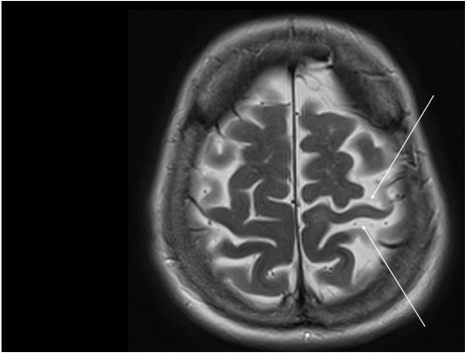
Corticobasal syndrome is a disorder of movement, cognition and behaviour with several possible underlying pathologies, including corticobasal degeneration. It presents insidiously and is slowly progressive. Clinicians should consider the diagnosis in people presenting with any combination of extrapyramidal features (with poor response to levodopa), apraxia or other parietal signs, aphasia and alien-limb phenomena. Neuroimaging showing asymmetrical perirolandic cortical changes supports the diagnosis, while advanced neuroimaging may give insight into the underlying pathology. Identifying corticobasal syndrome carries some management implications (especially if protein-based treatments arise in the future) and prognostic significance. Its treatment is largely symptomatic and is best undertaken within a multidisciplinary setting, including a neurologist, physiotherapist, occupational therapist, speech language therapist, psychiatrist and, ultimately, a palliative care clinician. Corticobasal syndrome can be a confusing entity for neurologists, not least because it has over time evolved from being considered predominantly as a movement disorder to a condition spanning a wide range of cognitive and motor manifestations. In this practical review, we attempt to disentangle this syndrome and provide clarity around diagnosis, its underlying pathological substrates, key clinical features and potential treatments.
Overview
The claims and statistics of this paper haven’t been checked yet.
Free: it reads the open-access text and checks the first 5 claims that cite a source we can check. Create a free account to check every claim.
Integrity signals
Registry
Cites
Statistics
Figures
Verification
Claims the paper makes
The claims and statistics of this paper haven’t been checked yet.
Free: it reads the open-access text and checks the first 5 claims that cite a source we can check. Create a free account to check every claim.
Claims other papers make about this one
Each is checked against this paper’s own text: does it say what the citing paper says it does?
In the citing paper
“The prevalence of MSA increases with age, with a peak occurrence in individuals aged 50–70 years. Recent statistics indicate that MSA affects approximately 4.6 per 100,000 people aged 50–59 years, increasing to 7.8 per 100,000 in those aged 70–79 years.25”
From Antiageing strategy for neurodegenerative diseases: from mechanisms to clinical advances (2025) · cites this paper as [25]
Self-check
Percentages, sums and reported differences re-computed from the paper’s own numbers.
The self-check needs the paper’s full text.
Citations
Cites
The Neuropsychiatric Inventory: Comprehensive assessment of psychopathology in dementia
Cummings, J. L., Mega, M., Gray, K., Rosenberg-Thompson, S., Carusi, D. A., & Gornbein, J. (1994) · Neurology · doi:10.1212/wnl.44.12.2308 · Cited by 7,568
Criteria for the diagnosis of corticobasal degeneration
Armstrong, M. J., Litvan, I., Lang, A. E., Bak, T. H., Bhatia, K. P., Borroni, B., Boxer, A. L., Dickson, D. W., Grossman, M., Hallett, M., et al. (2013) · Neurology · doi:10.1212/wnl.0b013e31827f0fd1 · Cited by 1,904
Core assessment program for surgical interventional therapies in Parkinson's disease (CAPSIT-PD)
Defer, G.-L., Widner, H., Mari�, R.-M., R�my, P., Levivier, M., & Conference Participants: Conference Participants: G. L. Defer, M. (. (1999) · Movement Disorders · doi:10.1002/1531-8257(199907)14:4<572::aid-mds1005>3.0.co;2-c · Cited by 865
Office of Rare Diseases Neuropathologic Criteria for Corticobasal Degeneration
Dickson, D. W., Bergeron, C., Chin, S. S., Duyckaerts, C., Horoupian, D., Ikeda, K., Jellinger, K., Lantos, P. L., Lippa, C. F., Mirra, S. S., et al. (2002) · Journal of Neuropathology & Experimental Neurology · doi:10.1093/jnen/61.11.935 · Cited by 724 · cited 1×
“14 Its pathological features are cortical and striatal tau-positive neuronal and glial lesions of both white and grey matter, coupled with focal cortical and substantia nigra neuronal loss.”
BackgroundCorticodentatonigral Degeneration With Neuronal Achromasia
Rebeiz, J. J., Kolodny, E. H., & Richardson, E. P. (1968) · Archives of Neurology · doi:10.1001/archneur.1968.00470310034003 · Cited by 627
Cortical‐basal ganglionic degeneration
Riley, D. E., Lang, A. E., Lewis, A., Resch, L., Ashby, P., Hornykiewicz, O., & Black, S. (1990) · Neurology · doi:10.1212/wnl.40.8.1203 · Cited by 573
Boeve, B. F., Lang, A. E., & Litvan, I. (2003) · Annals of Neurology · doi:10.1002/ana.10570 · Cited by 525
DeVos, S. L., Miller, R. L., Schoch, K. M., Holmes, B. B., Kebodeaux, C. S., Wegener, A. J., Chen, G., Shen, T., Tran, H., Nichols, B., et al. (2017) · Science Translational Medicine · doi:10.1126/scitranslmed.aag0481 · Cited by 516 · cited 1×
“Recent advances in the treatment of tauopathies with immunotherapies and gene expression show promise, 60 61 but for the moment we emphasise the importance of making a diagnosis that can explain a puzzling array of problems for a patient and their family.”
BackgroundGIBB, W. R. G., LUTHERT, P. J., & MARSDEN, C. D. (1989) · Brain · doi:10.1093/brain/112.5.1171 · Cited by 499
Frontotemporal Dementia and Corticobasal Degeneration in a Family with a P301S Mutation in Tau
Bugiani, O., Murrell, J. R., Giaccone, G., Hasegawa, M., Ghigo, G., Tabaton, M., Morbin, M., Primavera, A., Carella, F., Solaro, C., et al. (1999) · Journal of Neuropathology and Experimental Neurology · doi:10.1097/00005072-199906000-00011 · Cited by 450
Research works printed but not linked: 3
- Armstrong MJ, Litvan I, Lang AE, et al. Criteria for the diagnosis of corticobasal degeneration. Neurology 2013;80:496-503.
- Mathew R, Bak TH, Hodges JR. Diagnostic criteria for corticobasal syndrome: a comparative study. J Neurol Neurosurg Psychiatry 2012;83:405-10.
- Pardini M, Huey ED, Spina S, et al. FDG-PET patterns associated with underlying pathology in corticobasal syndrome. Neurology 2019;92:e1121-35.
Cited by
Antiageing strategy for neurodegenerative diseases: from mechanisms to clinical advances
Jiang, Q., Liu, J., Huang, S., Wang, X.-Y., Chen, X., Liu, G.-H., Ye, K., Song, W., Masters, C. L., Wang, J., et al. (2025) · Signal Transduction and Targeted Therapy · doi:10.1038/s41392-025-02145-7 · Cited by 165
Peripherally-induced Movement Disorders: An Update
Lenka, A., & Jankovic, J. J. (2023) · Tremor and Other Hyperkinetic Movements · doi:10.5334/tohm.758 · Cited by 36
Targeting tau in Alzheimer’s and beyond: Insights into pathology and therapeutic strategies
Singh, S., Khan, S., Shahid, M., Sardar, M., Hassan, M. I., & Islam, A. (2024) · Ageing Research Reviews · doi:10.1016/j.arr.2024.102639 · Cited by 23
Uchida, W., Kamagata, K., Andica, C., Takabayashi, K., Saito, Y., Owaki, M., Fujita, S., Hagiwara, A., Wada, A., Akashi, T., et al. (2023) · npj Parkinson's Disease · doi:10.1038/s41531-023-00565-2 · Cited by 11
Diagnosis and Management of Progressive Corticobasal Syndrome
Nouh, C. D., & Younes, K. (2024) · Current Treatment Options in Neurology · doi:10.1007/s11940-024-00797-4 · Cited by 14
Gawęda-Walerych, K., Sitek, E. J., Borczyk, M., Narożańska, E., Brockhuis, B., Korostyński, M., Schinwelski, M. J., Siemiński, M., Sławek, J. W., & Żekanowski, C. (2022) · Genes · doi:10.3390/genes13122361 · Cited by 7
“Additionally, at least 2 other features should be present: (a) orobuccal or limb apraxia, (b) cortical sensory deficit, (c) alien limb phenomena [18,19].”
BackgroundToward Biology-Driven Diagnosis of Atypical Parkinsonian Disorders
Arias-Carrión, Ó., Romero-Gutiérrez, E., & Ortega‐Robles, E. (2025) · NeuroSci · doi:10.3390/neurosci6040107 · Cited by 5
The Effectiveness of Transcranial Magnetic Stimulation in Treating Apraxia
AlRuwaili, A., Fatima, R., Hussain, A., Uzair, M., Abualait, T., Kaleem, I., & Bashir, S. (2023) · CNS & Neurological Disorders - Drug Targets · doi:10.2174/0118715273249412231010171926 · Cited by 3
Corticobasal Syndrome: Are There Central or Peripheral Triggers?
Lenka, A., & Jankovic, J. J. (2024) · Neurology Clinical Practice · doi:10.1212/cpj.0000000000200365 · Cited by 4
Seniów, J. B., Roessler‐Górecka, M., Cudo, A., & Członkowska, A. (2024) · Neurology and Clinical Neuroscience · doi:10.1111/ncn3.12847 · Cited by 2
Seltene Demenzformen – atypische Varianten der Alzheimer-Demenz
Arnim, C. A. F. V., & Uttner, I. (2023) · Die Innere Medizin · doi:10.1007/s00108-022-01461-2 · Cited by 1
The three clap test: a window into cognitive and frontal lobe dysfunction
Brežná, Z., Typčuková, K. Ď., & Necpál, J. (2024) · Neurological Sciences · doi:10.1007/s10072-024-07902-0 · Cited by 1
Imaging biomarkers for the diagnosis of corticobasal ganglia syndrome: DaTSCAN and [18F]FDG PET
Missir, E., & Cornwell, M. (2025) · NeuroMarkers. · doi:10.1016/j.neumar.2025.100079 · Cited by 1
Corticobasal Degeneration: A Review
Lopez, A. M., Johnson, S., Wax, N., Cutchin, C., May, D., Curtain, T., Bynum, Z., Galliher, M., Jones Diamond, A., Sudhakar, S., et al. (2025) · Journal of Neuroscience and Neurological Disorders · doi:10.29328/journal.jnnd.1001113 · Cited by 1
The Benson Complex Figure Test for the Differential Diagnosis of Dementias
Papadogiani, M., Fasilis, T., Despoti, A., Kamtsadeli, V., Hantzopoulou, M., Tsinia, N., Lykou, E., Chatziantoniou, L., Chousos, D., Siarkos, K., et al. (2026) · NeuroSci · doi:10.3390/neurosci7020038 · Cited by 1
“In corticobasal dementia (CBD), the visuoconstructive abilities often compromised due to asymmetric cortical and subcortical abnormalities, primarily affect the peri-Rolandic, parietal, and basal ganglia structures [27].”
Apraxia Associated With Superficial Siderosis in Cerebral Amyloid Angiopathy
Giorelli, M. (2023) · Journal of Clinical Neurology · doi:10.3988/jcn.2023.0159
Saadatpour, L. (2024) · Elsevier eBooks · doi:10.1016/b978-0-323-95702-1.00139-1
Idemudia, O. U., & Ataman, J. (2024) · Journal of applied science and environmental management · doi:10.4314/jasem.v28i3.12 · Cited by 2
“This could lead to hormonal imbalances, irregular menstrual cycles, and potential fertility issues (Wilson et al .”
BackgroundInfluentialFrucht, S. J., & Termsarasab, P. (2024) · Springer eBooks · doi:10.1007/978-3-031-52573-5_6
Chan, M. M. Y., O’Sullivan, J. D., Adam, R. J., Mosley, P. E., Breakspear, M. J., & Robinson, G. A. (2025) · bioRxiv (Cold Spring Harbor Laboratory) · doi:10.1101/2025.04.22.650134
“The clinical profiles of our CBS patients were characterised by prominent asymmetric motor and cortical signs (e.g., apraxia, dystonia, alien limb phenomenon), rather than early memory or visuospatial deficits typically seen in CBS with underlying AD pathology (Wilson et al., 2021).”
Macoir, J., Landry, M., & Hudon, C. (2025) · Archives of Clinical Neuropsychology · doi:10.1093/arclin/acaf086
Kim, D.-J., Heo, K.-H., Kwak, M.-J., Kim, N.-Y., Cho, S.-Y., Park, J.-M., Ko, C., & Park, S.-U. (2025) · The Journal of Internal Korean Medicine · doi:10.22246/jikm.2025.46.5.1110
Saim, M. S., Al-Kazzaz, H., & Ahmad, H. (2026) · Neurological Sciences · doi:10.1007/s10072-026-09276-x
“CBS still is the more clinically actionable designation where neuropathology is often unknown [ 36 ].”
Salinas, M., & Hartmann, C. (2026) · Springer eBooks · doi:10.1007/978-3-032-13040-2_9
Gulati, K., & Pandey, S. (2026) · Tremor and Other Hyperkinetic Movements · doi:10.5334/tohm.1243
Metadata
- Authors
- Wilson, D., Le Heron, C., & Anderson, T.
- Affiliations
- Christchurch Hospital (NZ)
- Neurology Department, Christchurch Hospital, Christchurch, New Zealand
- Corresponding author
- Anderson, Tim
- Venue
- Practical Neurology
- Publisher
- BMJ
- Published
- 2021-07-23
- Volume
- 21
- Issue
- 4
- Pages
- 276-285
- ISSN
- 1474-7758 (ISSN-L)
- 1474-7766
- OpenAlex
- W3185957202
- Cited by
- 25
- References
- 74
- Citations by year
- 2026: 4 · 2025: 7 · 2024: 8 · 2023: 5 · 2022: 1
- FWCI
- 2.51
- Type
- journal article
- Language
- en
- Open access
- hybrid
- doi.org
- Licence
- Locations
- Practical Neurology (publishedVersion, cc-by-nc)
- Topics
- Health Sciences › Medicine › Psychiatry and Mental health › Dementia and Cognitive Impairment Research
- Health Sciences › Medicine › Clinical Neurology › Parkinson's Disease Mechanisms and Treatments
- Health Sciences › Medicine › Clinical Neurology › Amyotrophic Lateral Sclerosis Research
- Keywords
- corticobasal syndrome, corticobasal degeneration, extrapyramidal features, apraxia, aphasia, alien limb phenomenon, neuroimaging, multidisciplinary management, prognosis, protein-based therapy, movement disorders, cognitive impairment
About these checks
Registry, retraction, Cites and statistics results are computed, not judged, with one exception: a printed reference that no index lists is read once by a model before it counts as a citation error. Claims are extracted by a model and kept only when their quote appears verbatim in the text; each cited source is then checked, with a model’s help, for whether it says what the claim relies on. Those verdicts can be wrong — read the claim’s quote and the cited source before relying on one.
Statistics and arithmetic are recomputed, not judged.
Confidence bands are shown only for fields calibrated on our annotated test set. None is calibrated yet, so no band is shown.
What counts as a claim ›How we measure confidence ›How we check this ›
Are you an author, or do you see a problem with this page? Request a review
Data sources
Bibliographic data: Semantic Scholar, OpenAlex, Crossref.
Contains information from the Semantic Scholar Academic Graph Datasets, made available under the ODC Attribution License (ODC-BY 1.0).
Semantic Scholar’s data is described in: Kinney, R., et al. (2023). The Semantic Scholar Open Data Platform. arXiv:2301.10140.
