

Corticobasal syndrome: a practical guide
Open accessThe DOI matches its Crossref record; 74 of the 74 references it cites were found in a registry or an index.
Abstract
Corticobasal syndrome is a disorder of movement, cognition and behaviour with several possible underlying pathologies, including corticobasal degeneration. It presents insidiously and is slowly progressive. Clinicians should consider the diagnosis in people presenting with any combination of extrapyramidal features (with poor response to levodopa), apraxia or other parietal signs, aphasia and alien-limb phenomena. Neuroimaging showing asymmetrical perirolandic cortical changes supports the diagnosis, while advanced neuroimaging may give insight into the underlying pathology. Identifying corticobasal syndrome carries some management implications (especially if protein-based treatments arise in the future) and prognostic significance. Its treatment is largely symptomatic and is best undertaken within a multidisciplinary setting, including a neurologist, physiotherapist, occupational therapist, speech language therapist, psychiatrist and, ultimately, a palliative care clinician. Corticobasal syndrome can be a confusing entity for neurologists, not least because it has over time evolved from being considered predominantly as a movement disorder to a condition spanning a wide range of cognitive and motor manifestations. In this practical review, we attempt to disentangle this syndrome and provide clarity around diagnosis, its underlying pathological substrates, key clinical features and potential treatments.
Overview
The claims and statistics of this paper haven’t been checked yet.
Free: it reads the open-access text and checks the first 5 claims that cite a source we can check. Create a free account to check every claim.
Integrity signals
Registry
Cites
Statistics
Figures
Verification
Claims the paper makes
The claims and statistics of this paper haven’t been checked yet.
Free: it reads the open-access text and checks the first 5 claims that cite a source we can check. Create a free account to check every claim.
Claims other papers make about this one
Each is checked against this paper’s own text: does it say what the citing paper says it does?
In the citing paper
“The prevalence of MSA increases with age, with a peak occurrence in individuals aged 50–70 years. Recent statistics indicate that MSA affects approximately 4.6 per 100,000 people aged 50–59 years, increasing to 7.8 per 100,000 in those aged 70–79 years.25”
From Antiageing strategy for neurodegenerative diseases: from mechanisms to clinical advances (2025) · cites this paper as [25]
Self-check
Percentages, sums and reported differences re-computed from the paper’s own numbers.
The self-check needs the paper’s full text.
Citations
Cites
The Neuropsychiatric Inventory: Comprehensive assessment of psychopathology in dementia
Cummings, J. L., Mega, M., Gray, K., Rosenberg-Thompson, S., Carusi, D. A., & Gornbein, J. (1994) · Neurology · doi:10.1212/wnl.44.12.2308 · Cited by 7,568
Criteria for the diagnosis of corticobasal degeneration
Armstrong, M. J., Litvan, I., Lang, A. E., Bak, T. H., Bhatia, K. P., Borroni, B., Boxer, A. L., Dickson, D. W., Grossman, M., Hallett, M., et al. (2013) · Neurology · doi:10.1212/wnl.0b013e31827f0fd1 · Cited by 1,904
Core assessment program for surgical interventional therapies in Parkinson's disease (CAPSIT-PD)
Defer, G.-L., Widner, H., Mari�, R.-M., R�my, P., Levivier, M., & Conference Participants: Conference Participants: G. L. Defer, M. (. (1999) · Movement Disorders · doi:10.1002/1531-8257(199907)14:4<572::aid-mds1005>3.0.co;2-c · Cited by 865
Office of Rare Diseases Neuropathologic Criteria for Corticobasal Degeneration
Dickson, D. W., Bergeron, C., Chin, S. S., Duyckaerts, C., Horoupian, D., Ikeda, K., Jellinger, K., Lantos, P. L., Lippa, C. F., Mirra, S. S., et al. (2002) · Journal of Neuropathology & Experimental Neurology · doi:10.1093/jnen/61.11.935 · Cited by 724 · cited 1×
“14 Its pathological features are cortical and striatal tau-positive neuronal and glial lesions of both white and grey matter, coupled with focal cortical and substantia nigra neuronal loss.”
BackgroundCorticodentatonigral Degeneration With Neuronal Achromasia
Rebeiz, J. J., Kolodny, E. H., & Richardson, E. P. (1968) · Archives of Neurology · doi:10.1001/archneur.1968.00470310034003 · Cited by 627
Cortical‐basal ganglionic degeneration
Riley, D. E., Lang, A. E., Lewis, A., Resch, L., Ashby, P., Hornykiewicz, O., & Black, S. (1990) · Neurology · doi:10.1212/wnl.40.8.1203 · Cited by 573
Boeve, B. F., Lang, A. E., & Litvan, I. (2003) · Annals of Neurology · doi:10.1002/ana.10570 · Cited by 525
DeVos, S. L., Miller, R. L., Schoch, K. M., Holmes, B. B., Kebodeaux, C. S., Wegener, A. J., Chen, G., Shen, T., Tran, H., Nichols, B., et al. (2017) · Science Translational Medicine · doi:10.1126/scitranslmed.aag0481 · Cited by 516 · cited 1×
“Recent advances in the treatment of tauopathies with immunotherapies and gene expression show promise, 60 61 but for the moment we emphasise the importance of making a diagnosis that can explain a puzzling array of problems for a patient and their family.”
BackgroundGIBB, W. R. G., LUTHERT, P. J., & MARSDEN, C. D. (1989) · Brain · doi:10.1093/brain/112.5.1171 · Cited by 499
Frontotemporal Dementia and Corticobasal Degeneration in a Family with a P301S Mutation in Tau
Bugiani, O., Murrell, J. R., Giaccone, G., Hasegawa, M., Ghigo, G., Tabaton, M., Morbin, M., Primavera, A., Carella, F., Solaro, C., et al. (1999) · Journal of Neuropathology and Experimental Neurology · doi:10.1097/00005072-199906000-00011 · Cited by 450
Pathologic heterogeneity in clinically diagnosed corticobasal degeneration
Boeve, B. F., Maraganore, D. M., Parisi, J. E., Ahlskog, J. E., Graff-Radford, N., Caselli, R. J., Dickson, D. W., Kokmen, E., & Petersen, R. C. (1999) · Neurology · doi:10.1212/wnl.53.4.795 · Cited by 417
Corticobasal degeneration and progressive supranuclear palsy share a common tau haplotype
Houlden, H., Baker, M., Morris, H. R., MacDonald, N., Pickering–Brown, S., Adamson, J., Lees, A. J., Rossor, M. N., Quinn, N. P., Kertesz, A., et al. (2001) · Neurology · doi:10.1212/wnl.56.12.1702 · Cited by 409 · cited 1×
“28”
Eye movements in patients with neurodegenerative disorders
Anderson, T. J., & MacAskill, M. R. (2013) · Nature Reviews Neurology · doi:10.1038/nrneurol.2012.273 · Cited by 363 · cited 2×
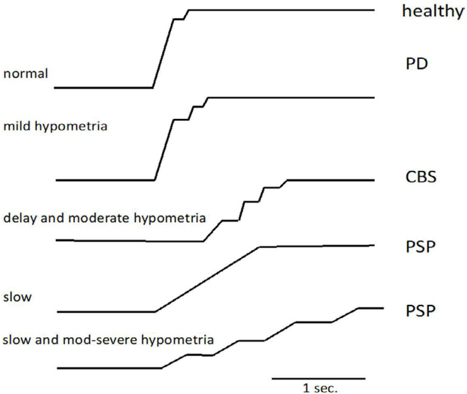
“42 43 In contrast to PSP, saccade velocities in patients with corticobasal syndrome are normal 46 47 (figure 3).”
BackgroundSelf-citationWenning, G. K., Litvan, I., Jankovic, J., Granata, R., Mangone, C. A., McKee, A., Poewe, W., Jellinger, K., Chaudhuri, K. R., D'Olhaberriague, L., et al. (1998) · Journal of Neurology, Neurosurgery & Psychiatry · doi:10.1136/jnnp.64.2.184 · Cited by 334 · cited 1×
“71 In summary, on present knowledge, average survival in corticobasal syndrome is 7–8 years but with a considerable range of some 3–15 years.”
BackgroundNovak, P., Schmidt, R., Kontsekova, E., Zilka, N., Kovacech, B., Skrabana, R., Vince-Kazmerova, Z., Katina, S., Fialova, L., Prcina, M., et al. (2017) · The Lancet Neurology · doi:10.1016/s1474-4422(16)30331-3 · Cited by 304 · cited 1×
“Recent advances in the treatment of tauopathies with immunotherapies and gene expression show promise, 60 61 but for the moment we emphasise the importance of making a diagnosis that can explain a puzzling array of problems for a patient and their family.”
BackgroundCorticobasal degeneration: a pathologically distinct 4R tauopathy
Kouri, N., Whitwell, J. L., Josephs, K. A., Rademakers, R., & Dickson, D. W. (2011) · Nature Reviews Neurology · doi:10.1038/nrneurol.2011.43 · Cited by 246
Imaging correlates of pathology in corticobasal syndrome
Whitwell, J. L., Jack, C. R., Boeve, B. F., Parisi, J. E., Ahlskog, J. E., Drubach, D. A., Senjem, M. L., Knopman, D. S., Petersen, R. C., Dickson, D. W., et al. (2010) · Neurology · doi:10.1212/wnl.0b013e3181feb2e8 · Cited by 244 · cited 2×
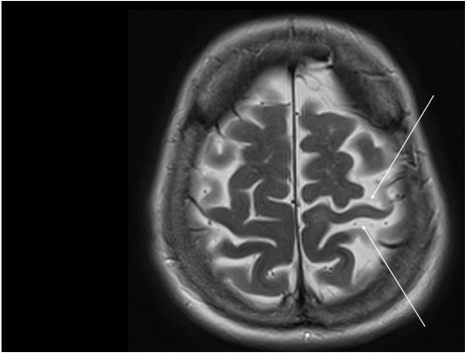
“This particularly affects frontal-parietal regions encompassing premotor, motor and sensory association cortex, and typically develop contralateral to the more affected side of the body 33 52 53 (figure 4).”
BackgroundPillon, B., Blin, J., Vidailhet, M., Deweer, B., Sirigu, A., Dubois, B., & Agid, Y. (1995) · Neurology · doi:10.1212/wnl.45.8.1477 · Cited by 243
Kouri, N., Ross, O. A., Dombroski, B., Younkin, C. S., Serie, D. J., Soto-Ortolaza, A., Baker, M., Finch, N. C. A., Yoon, H., Kim, J., et al. (2015) · Nature Communications · doi:10.1038/ncomms8247 · Cited by 239
Oculomotor function in frontotemporal lobar degeneration, related disorders and Alzheimer's disease
Garbutt, S., Matlin, A., Hellmuth, J., Schenk, A. K., Johnson, J. K., Rosen, H., Dean, D., Kramer, J., Neuhaus, J., Miller, B. L., et al. (2008) · Brain · doi:10.1093/brain/awn047 · Cited by 211 · cited 1×
“42 43 In contrast to PSP, saccade velocities in patients with corticobasal syndrome are normal 46 47 (figure 3).”
BackgroundClinical Presentation and Pharmacological Therapy in Corticobasal Degeneration
Kompoliti, K., Goetz, C. G., Boeve, B. F., Maraganore, D. M., Ahlskog, J. E., Marsden, C. D., Bhatia, K. P., Greene, P. E., Przedborski, S., Seal, E. C., et al. (1998) · Archives of Neurology · doi:10.1001/archneur.55.7.957 · Cited by 196 · cited 2×
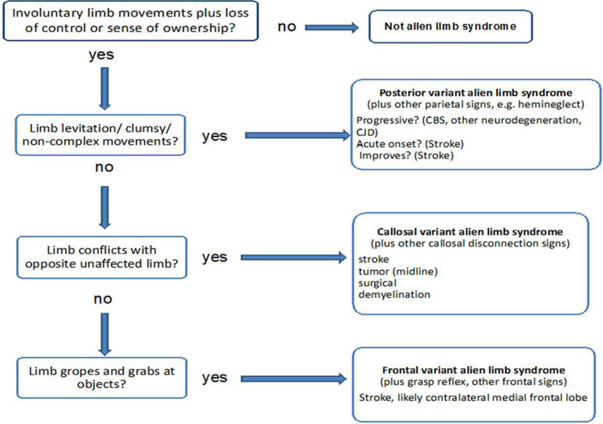
“35 37 While the asymmetry of corticobasal syndrome involves the left and right hemispheres equally, alien limb in this condition usually develops in the non-dominant limb, for unclear reasons.”
BackgroundDiagnostic criteria for corticobasal syndrome: a comparative study
Mathew, R., Bak, T. H., & Hodges, J. R. (2012) · Journal of Neurology, Neurosurgery & Psychiatry · doi:10.1136/jnnp-2011-300875 · Cited by 196
Cognition in corticobasal syndrome and progressive supranuclear palsy: A review
Burrell, J. R., Hodges, J. R., & Rowe, J. B. (2014) · Movement Disorders · doi:10.1002/mds.25872 · Cited by 180
Neuropsychiatric features of corticobasal degeneration
Litvan, I., Cummings, J. L., & Mega, M. (1998) · Journal of Neurology, Neurosurgery & Psychiatry · doi:10.1136/jnnp.65.5.717 · Cited by 179 · cited 1×
“50 This latter point suggests that the presence of visual hallucinations in a patient with parkinsonism and cognitive deficits should raise concerns they may in fact have an alpha-synucleinopathy such as dementia with Lewy bodies.”
BackgroundValidation of the new consensus criteria for the diagnosis of corticobasal degeneration
Alexander, S. K., Rittman, T., Xuereb, J. H., Bak, T. H., Hodges, J. R., & Rowe, J. B. (2014) · Journal of Neurology, Neurosurgery & Psychiatry · doi:10.1136/jnnp-2013-307035 · Cited by 170
Longitudinal ocular motor study in corticobasal degeneration and progressive supranuclear palsy
Rivaud-Péchoux, S., Vidailhet, M., Gallouedec, G., Litvan, I., Gaymard, B., & Pierrot-Deseilligny, C. (2000) · Neurology · doi:10.1212/wnl.54.5.1029 · Cited by 159
The myoclonus in corticobasal degeneration: Evidence for two forms of cortical reflex myoclonus
Thompson, P. D., Day, B. L., Rothwell, J. C., Brown, P., Britton, T. C., & Marsden, C. D. (1994) · Brain · doi:10.1093/brain/117.5.1197 · Cited by 157
Corticobasal and ataxia syndromes widen the spectrum of C9ORF72 hexanucleotide expansion disease
Lindquist, S., Duno, M., Batbayli, M., Puschmann, A., Braendgaard, H., Mardosiene, S., Svenstrup, K., Pinborg, L., Vestergaard, K., Hjermind, L., et al. (2013) · Clinical Genetics · doi:10.1111/j.1399-0004.2012.01903.x · Cited by 143
Is the pathology of corticobasal syndrome predictable in life?
Shelley, B. P., Hodges, J. R., Kipps, C. M., Xuereb, J. H., & Bak, T. H. (2009) · Movement Disorders · doi:10.1002/mds.22558 · Cited by 139
A novel deletion in progranulin gene is associated with FTDP-17 and CBS
Benussi, L., Binetti, G. G., Sina, E., Gigola, L., Bettecken, T., Meitinger, T., & Ghidoni, R. (2006) · Neurobiology of Aging · doi:10.1016/j.neurobiolaging.2006.10.028 · Cited by 132 · cited 1×
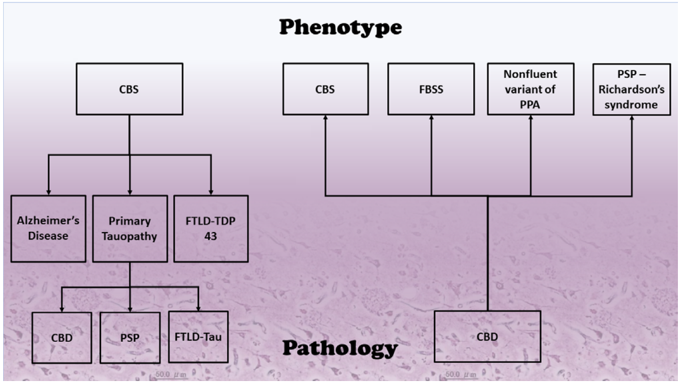
“21 More recently corti-cobasal syndrome has been associated with FTLD with ubiquitin-immunoreactive inclusions (FTLD) 22 or TAR DNA-binding protein 43 (TDP-43) leading to frontal temporal lobe degeneration (FTLD-TDP) 23 both of which are most often caused by progranulin mutations 24 but not always.”
BackgroundGross, R. G., & Grossman, M. (2008) · Current Neurology and Neuroscience Reports · doi:10.1007/s11910-008-0078-y · Cited by 119 · cited 2×
“41 Apraxia is defined as a disorder of higher level motor control, manifesting as impaired skilled and learnt motor acts, despite intact primary sensory and motor pathways 39 Apraxia generally affects both sides of the body.”
BackgroundSerisier, D. (1995) · Journal of Clinical Neuroscience · doi:10.1016/0967-5868(95)90015-2 · Cited by 119
FDG-PET patterns associated with underlying pathology in corticobasal syndrome
Pardini, M., Huey, E. D., Spina, S., Kreisl, W. C., Morbelli, S., Wassermann, E. M., Nobili, F., Ghetti, B., & Grafman, J. (2019) · Neurology · doi:10.1212/wnl.0000000000007038 · Cited by 116 · cited 2×
“This particularly affects frontal-parietal regions encompassing premotor, motor and sensory association cortex, and typically develop contralateral to the more affected side of the body 33 52 53 (figure 4).”
BackgroundSaccade Abnormalities in Autopsy-Confirmed Frontotemporal Lobar Degeneration and Alzheimer Disease
Garbutt, S. (2012) · Archives of Neurology · doi:10.1001/archneurol.2011.1021 · Cited by 114 · cited 1×
“42 43 In contrast to PSP, saccade velocities in patients with corticobasal syndrome are normal 46 47 (figure 3).”
BackgroundProgranulin Leu271LeufsX10 is one of the most common FTLD and CBS associated mutations worldwide
Benussi, L., Ghidoni, R., Pegoiani, E., Moretti, D. V., Zanetti, O., & Binetti, G. (2009) · Neurobiology of Disease · doi:10.1016/j.nbd.2008.11.008 · Cited by 107
Dopamine Transporter SPECT Imaging in Corticobasal Syndrome
Cilia, R., Rossi, C. A., Frosini, D., Volterrani, D., Siri, C., Pagni, C., Benti, R., Pezzoli, G., Bonuccelli, U., Antonini, A., et al. (2011) · PLoS ONE · doi:10.1371/journal.pone.0018301 · Cited by 107 · cited 1×
“54 One follow-up study suggests that in time all such patients will have a positive result.”
BackgroundHassan, A., & Josephs, K. A. (2016) · Current Neurology and Neuroscience Reports · doi:10.1007/s11910-016-0676-z · Cited by 97
Value of in vivo α‐synuclein deposits in Parkinson's disease: A systematic review and meta‐analysis
Tsukita, K., Sakamaki‐Tsukita, H., Tanaka, K., Suenaga, T., & Takahashi, R. (2019) · Movement Disorders · doi:10.1002/mds.27794 · Cited by 96 · cited 1×
“70 An earlier study of 14 patients with pathologically confirmed corticobasal degeneration reported a median survival time after onset of symptoms of 7.9 years with a considerable range of 2.5–12.5 years.”
BackgroundInfluentialGraff‐Radford, J., Rubin, M. N., Jones, D. T., Aksamit, A. J., Ahlskog, J. E., Knopman, D. S., Petersen, R. C., Boeve, B. F., & Josephs, K. A. (2013) · Journal of Neurology · doi:10.1007/s00415-013-6898-y · Cited by 95
Incidence of Parkinson's disease and atypical parkinsonism: Russian population‐based study
Winter, Y., Bezdolnyy, Y., Katunina, E., Avakjan, G., Reese, J. P., Klotsche, J., Oertel, W. H., Dodel, R., & Gusev, E. (2010) · Movement Disorders · doi:10.1002/mds.22966 · Cited by 91
Limb apraxia in corticobasal degeneration and progressive supranuclear palsy
Soliveri, P., Piacentini, S. H. M. J., & Girotti, F. (2005) · Neurology · doi:10.1212/01.wnl.0000150732.92567.ba · Cited by 89 · cited 1×
“40 When screening patients for the presence of apraxia, it can help to test different types of complex move-ments—thought to correspond to different underlying neurobiological processes that can be disrupted by brain pathology.”
BackgroundKertesz, A., Davidson, W., & Munoz, D. G. (1999) · Dementia and Geriatric Cognitive Disorders · doi:10.1159/000051212 · Cited by 82
Language impairment in progressive supranuclear palsy and corticobasal syndrome
Peterson, K. A., Patterson, K., & Rowe, J. B. (2021) · Journal of Neurology · doi:10.1007/s00415-019-09463-1 · Cited by 79
Pathology and sensitivity of current clinical criteria in corticobasal syndrome
Ouchi, H., Toyoshima, Y., Tada, M., Oyake, M., Aida, I., Tomita, I., Satoh, A., Tsujihata, M., Takahashi, H., Nishizawa, M., et al. (2013) · Movement Disorders · doi:10.1002/mds.25746 · Cited by 73
Pathophysiology and Treatment of Alien Hand Syndrome
Sarva, H., Deik, A., & Severt, W. (2014) · Tremor and Other Hyperkinetic Movements · doi:10.5334/tohm.225 · Cited by 72
Sporadic corticobasal syndrome due to FTLD-TDP
Tartaglia, M. C., Sidhu, M., Laluz, V., Racine, C., Rabinovici, G. D., Creighton, K., Karydas, A., Rademakers, R., Huang, E. J., Miller, B. L., et al. (2010) · Acta Neuropathologica · doi:10.1007/s00401-009-0605-1 · Cited by 69
Corticobasal syndrome with tau pathology
Cordato, N. J., Halliday, G. M., McCann, H., Davies, L., Williamson, P., Fulham, M., & Morris, J. G. L. (2001) · Movement Disorders · doi:10.1002/mds.1124 · Cited by 59
Ghirelli, A., Tosakulwong, N., Weigand, S. D., Clark, H. M., Ali, F., Botha, H., Duffy, J. R., Utianski, R. L., Buciuc, M., Murray, M. E., et al. (2020) · Annals of Neurology · doi:10.1002/ana.25893 · Cited by 59
Clinical Profile of PiB-Positive Corticobasal Syndrome
Burrell, J. R., Hornberger, M., Villemagne, V. L., Rowe, C. C., & Hodges, J. R. (2013) · PLoS ONE · doi:10.1371/journal.pone.0061025 · Cited by 58
Motor neuron disease-inclusion dementia presenting as cortical-basal ganglionic degeneration
Grimes, D. A., Bergeron, C. B., & Lang, A. E. (1999) · Movement Disorders · doi:10.1002/1531-8257(199907)14:4<674::aid-mds1019>3.0.co;2-x · Cited by 58 · cited 2×
“However, familial clustering can occur with up to 31% have a family history of parkinsonism or dementia 19 The most common monogenic mutations associated with familial corticobasal syndrome are in microtubule-associated protein tau (MAPT) resulting in frontotemporal lobar degeneration (FTLD)- tau pathology strongly re…”
BackgroundCORTICOBASAL SYNDROME AND PRIMARY PROGRESSIVE APHASIA AS MANIFESTATIONS OF LRRK2 GENE MUTATIONS
Ross, O. A., Toft, M., & Haugarvoll, K. (2008) · Neurology · doi:10.1212/01.wnl.0000320511.30222.dd · Cited by 57 · cited 1×
“25 Pathogenic GGGCC expansion with mutations in C9orf72 (chromosome 9 open reading frame 72) and mutations in LRRK2 (previously limited to Parkinson’s disease) 26 are also associated with corticobasal syndrome.”
BackgroundTogasaki, D. M., & Tanner, C. M. (2000) · PubMed · Cited by 55
Corticobasal syndrome: neuroimaging and neurophysiological advances
Stasio, F. D., Suppa, A., Marsili, L., Upadhyay, N., Asci, F., Bologna, M., Colosimo, C., Fabbrini, G., Pantano, P., & Berardelli, A. (2019) · European Journal of Neurology · doi:10.1111/ene.13928 · Cited by 54 · cited 3×
“33 Ultimately their utility will depend on their ability to distinguish between pathologies at individual rather than at group level.”
BackgroundGerstenecker, A. T. (2017) · Archives of Clinical Neuropsychology · doi:10.1093/arclin/acx093 · Cited by 50 · cited 1×
“49 A study of 15 patients with what we would now refer to as corticobasal syndrome found particularly high rates of depression and apathy and also an absence of hallucinations.”
BackgroundWeigand, A. J., Bondi, M. W., Thomas, K. R., Campbell, N. L., Galasko, D. R., Salmon, D. P., Sewell, D. D., Brewer, J. B., Feldman, H., Delano‐Wood, L., et al. (2020) · Neurology · doi:10.1212/wnl.0000000000010643 · Cited by 49
Therapeutic interventions in parkinsonism: Corticobasal degeneration
Marsili, L., Suppa, A., Berardelli, A., & Colosimo, C. (2015) · Parkinsonism & Related Disorders · doi:10.1016/j.parkreldis.2015.09.023 · Cited by 37
A Model-Based Approach to Understanding Apraxia in Corticobasal Syndrome
Stamenova, V., Roy, É., & Black, S. E. (2008) · Neuropsychology Review · doi:10.1007/s11065-008-9079-5 · Cited by 37 · cited 1×
“41 Apraxia is defined as a disorder of higher level motor control, manifesting as impaired skilled and learnt motor acts, despite intact primary sensory and motor pathways 39 Apraxia generally affects both sides of the body.”
BackgroundBrain network efficiency is influenced by the pathologic source of corticobasal syndrome
Medaglia, J. D., Huang, W., Segarra, S., Olm, C. A., Gee, J. C., Grossman, M., Ribeiro, A., McMillan, C. T., & Bassett, D. S. (2017) · Neurology · doi:10.1212/wnl.0000000000004324 · Cited by 35 · cited 1×
“59 summary, a corticobasal syndrome diagnosis can be supported—but not refuted—by imaging features, while emerging techniques may direct the neurologist to the underlying pathological cause of a patient’s syndrome—information that over time will have practical relevance.”
BackgroundEvidence of delayed nigrostriatal dysfunction in corticobasal syndrome: A SPECT follow-up study
Ceravolo, R., Rossi, C. A., Cilia, R., Tognoni, G., Antonini, A., Volterrani, D., & Bonuccelli, U. (2013) · Parkinsonism & Related Disorders · doi:10.1016/j.parkreldis.2013.01.013 · Cited by 34 · cited 1×
“55 For the clinician, the DAT scan’s limitation is that it does not differentiate corticobasal syndrome from other parkinsonian disorders.”
BackgroundAlien limb syndrome: A Bayesian account of unwanted actions
Wolpe, N., Hezemans, F. H., & Rowe, J. B. (2020) · Cortex · doi:10.1016/j.cortex.2020.02.002 · Cited by 23
A Case of Creutzfeldt-Jakob Disease Mimicking Corticobasal Degeneration
Zhang, Y., Minoshima, S., Vesselle, H. J., & Lewis, D. H. (2012) · Clinical Nuclear Medicine · doi:10.1097/rlu.0b013e31824c5f0e · Cited by 21
Eye movement disorders in corticobasal degeneration.
Vidailhet, M., & Rivaud-Péchoux, S. (2000) · PubMed · Cited by 21
Primary antiphospholipid syndrome presenting as a corticobasal degeneration syndrome
Morris, H. R., & Lees, A. J. (1999) · Movement Disorders · doi:10.1002/1531-8257(199905)14:3<530::aid-mds1030>3.0.co;2-8 · Cited by 20
Brown, J., Lantos, P. L., & Rossor, M. N. (1998) · Journal of Neurology, Neurosurgery & Psychiatry · doi:10.1136/jnnp.65.4.600 · Cited by 19
Individual Brain Metabolic Signatures in Corticobasal Syndrome
Cerami, C., Dodich, A., Iannaccone, S., Magnani, G., Marcone, A., Guglielmo, P., Vanoli, G., Cappa, S. F., & Perani, D. (2020) · Journal of Alzheimer s Disease · doi:10.3233/jad-200153 · Cited by 18 · cited 1×
“52 58 More complicated techniques assessing brain structural (white matter) or functional connectivity are also showing promise for distinguishing between pathologies but are not yet clinically useful.”
BackgroundFamilial aggregation in Progressive Supranuclear Palsy and Corticobasal Syndrome
Borroni, B., Goldwurm, S., Cerini, C., Cosseddu, M., Meucci, N., Mariani, C. B., Pezzoli, G., & Padovani, A. (2010) · European Journal of Neurology · doi:10.1111/j.1468-1331.2010.03081.x · Cited by 14 · cited 1×
“However, familial clustering can occur with up to 31% have a family history of parkinsonism or dementia 19 The most common monogenic mutations associated with familial corticobasal syndrome are in microtubule-associated protein tau (MAPT) resulting in frontotemporal lobar degeneration (FTLD)- tau…”
BackgroundStiff Limb Syndrome Mimicking Corticobasal Syndrome
Balint, B., Mahant, N., Meinck, H., & Fung, V. S. C. (2014) · Movement Disorders Clinical Practice · doi:10.1002/mdc3.12059 · Cited by 14
A Wolf in Sheep’s Clothing: An ‘‘Alien Leg’’ in Corticobasal Syndrome
Olszewska, D. A., McCarthy, A. J., Murray, B., Magennis, B., Connolly, S., & Lynch, T. (2017) · Tremor and Other Hyperkinetic Movements · doi:10.5334/tohm.358 · Cited by 14
Hashimoto's encephalopathy as a treatable cause of corticobasal disease
Mathew, R., Sheetal, S., & Byju, P. (2016) · Annals of Indian Academy of Neurology · doi:10.4103/0972-2327.176859 · Cited by 9
A Wolf in Sheep’s Clothing: An ‘‘Alien Leg’’ in Corticobasal Syndrome
Olszewska, D. A., McCarthy, A. J., Murray, B., Magennis, B., Connolly, S., & Lynch, T. (2017) · PubMed Central · doi:10.7916/d86d5zt8 · Cited by 7
Corticobasal Syndrome Due to Superficial Siderosis Caused by Thalamic Cavernoma
Bihari, J., Hornyák, C., Szőke, K., Vajda, J., Bagó, A. G., Várallyay, G., Turányi, E., Rózsa, I., Debreczeni, R., Bereczki, D., et al. (2016) · Journal of Neuropsychiatry · doi:10.1176/appi.neuropsych.15080196 · Cited by 6
[Corticobasal ganglionic degeneration: a report of 7 clinically diagnosed cases].
Martí-Massó, J. F., de Munain, A. L., Jj, P., Urtasun, M., & Carrera, N. (1994) · PubMed · Cited by 3
Corticobasal syndrome like presentation of Hashimoto encephalopathy with cortical ribboning
Jain, R. S., & Khan, I. (2017) · Indian Journal of Medical Specialities · doi:10.1016/j.injms.2017.08.003 · Cited by 3
Corticobasal degeneration presented as rapidly progressive dementia
Suthar, S. U., Soni, R., Sharma, I., & Tiwari, S. (2015) · Journal of Geriatric Mental Health · doi:10.4103/2348-9995.161387 · Cited by 1
Research works printed but not linked: 3
- Armstrong MJ, Litvan I, Lang AE, et al. Criteria for the diagnosis of corticobasal degeneration. Neurology 2013;80:496-503.
- Mathew R, Bak TH, Hodges JR. Diagnostic criteria for corticobasal syndrome: a comparative study. J Neurol Neurosurg Psychiatry 2012;83:405-10.
- Pardini M, Huey ED, Spina S, et al. FDG-PET patterns associated with underlying pathology in corticobasal syndrome. Neurology 2019;92:e1121-35.
Cited by
Antiageing strategy for neurodegenerative diseases: from mechanisms to clinical advances
Jiang, Q., Liu, J., Huang, S., Wang, X.-Y., Chen, X., Liu, G.-H., Ye, K., Song, W., Masters, C. L., Wang, J., et al. (2025) · Signal Transduction and Targeted Therapy · doi:10.1038/s41392-025-02145-7 · Cited by 165
Peripherally-induced Movement Disorders: An Update
Lenka, A., & Jankovic, J. J. (2023) · Tremor and Other Hyperkinetic Movements · doi:10.5334/tohm.758 · Cited by 36
Targeting tau in Alzheimer’s and beyond: Insights into pathology and therapeutic strategies
Singh, S., Khan, S., Shahid, M., Sardar, M., Hassan, M. I., & Islam, A. (2024) · Ageing Research Reviews · doi:10.1016/j.arr.2024.102639 · Cited by 23
Uchida, W., Kamagata, K., Andica, C., Takabayashi, K., Saito, Y., Owaki, M., Fujita, S., Hagiwara, A., Wada, A., Akashi, T., et al. (2023) · npj Parkinson's Disease · doi:10.1038/s41531-023-00565-2 · Cited by 11
Diagnosis and Management of Progressive Corticobasal Syndrome
Nouh, C. D., & Younes, K. (2024) · Current Treatment Options in Neurology · doi:10.1007/s11940-024-00797-4 · Cited by 14
Metadata
- Authors
- Wilson, D., Le Heron, C., & Anderson, T.
- Affiliations
- Christchurch Hospital (NZ)
- Neurology Department, Christchurch Hospital, Christchurch, New Zealand
- Corresponding author
- Anderson, Tim
- Venue
- Practical Neurology
- Publisher
- BMJ
- Published
- 2021-07-23
- Volume
- 21
- Issue
- 4
- Pages
- 276-285
- ISSN
- 1474-7758 (ISSN-L)
- 1474-7766
- OpenAlex
- W3185957202
- Cited by
- 25
- References
- 74
- Citations by year
- 2026: 4 · 2025: 7 · 2024: 8 · 2023: 5 · 2022: 1
- FWCI
- 2.51
- Type
- journal article
- Language
- en
- Open access
- hybrid
- doi.org
- Licence
- Locations
- Practical Neurology (publishedVersion, cc-by-nc)
- Topics
- Health Sciences › Medicine › Psychiatry and Mental health › Dementia and Cognitive Impairment Research
- Health Sciences › Medicine › Clinical Neurology › Parkinson's Disease Mechanisms and Treatments
- Health Sciences › Medicine › Clinical Neurology › Amyotrophic Lateral Sclerosis Research
- Keywords
- corticobasal syndrome, corticobasal degeneration, extrapyramidal features, apraxia, aphasia, alien limb phenomenon, neuroimaging, multidisciplinary management, prognosis, protein-based therapy, movement disorders, cognitive impairment
About these checks
Registry, retraction, Cites and statistics results are computed, not judged, with one exception: a printed reference that no index lists is read once by a model before it counts as a citation error. Claims are extracted by a model and kept only when their quote appears verbatim in the text; each cited source is then checked, with a model’s help, for whether it says what the claim relies on. Those verdicts can be wrong — read the claim’s quote and the cited source before relying on one.
Statistics and arithmetic are recomputed, not judged.
Confidence bands are shown only for fields calibrated on our annotated test set. None is calibrated yet, so no band is shown.
What counts as a claim ›How we measure confidence ›How we check this ›
Are you an author, or do you see a problem with this page? Request a review
Data sources
Bibliographic data: Semantic Scholar, OpenAlex, Crossref.
Contains information from the Semantic Scholar Academic Graph Datasets, made available under the ODC Attribution License (ODC-BY 1.0).
Semantic Scholar’s data is described in: Kinney, R., et al. (2023). The Semantic Scholar Open Data Platform. arXiv:2301.10140.
