

Women through the glass ceiling: gender asymmetries in Wikipedia
Open accessThe DOI matches its Crossref record; 20 of the 20 references it cites were found in a registry or an index.
Abstract
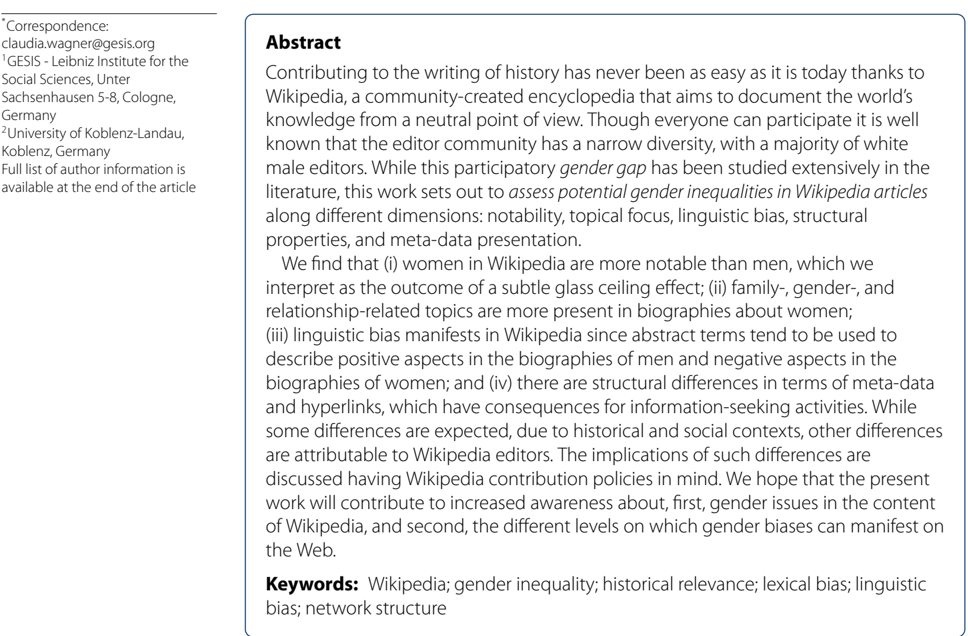
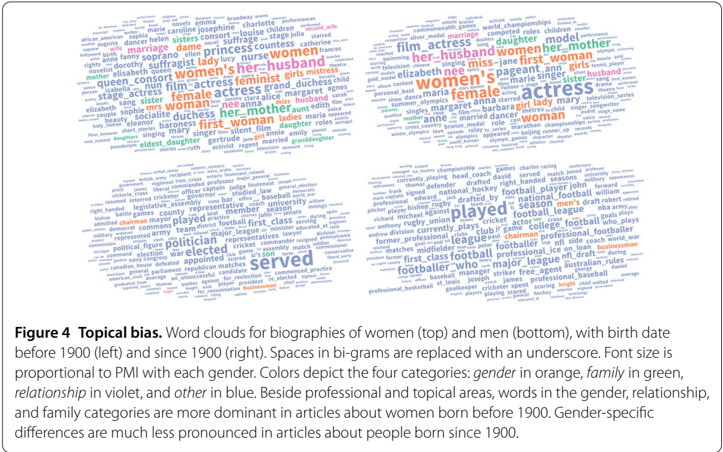
Contributing to the writing of history has never been as easy as it is today thanks to Wikipedia, a community-created encyclopedia that aims to document the world’s knowledge from a neutral point of view. Though everyone can participate it is well known that the editor community has a narrow diversity, with a majority of white male editors. While this participatory gender gap has been studied extensively in the literature, this work sets out to assess potential gender inequalities in Wikipedia articles along different dimensions: notability, topical focus, linguistic bias, structural properties, and meta-data presentation. We find that (i) women in Wikipedia are more notable than men, which we interpret as the outcome of a subtle glass ceiling effect; (ii) family-, gender-, and relationship-related topics are more present in biographies about women; (iii) linguistic bias manifests in Wikipedia since abstract terms tend to be used to describe positive aspects in the biographies of men and negative aspects in the biographies of women; and (iv) there are structural differences in terms of meta-data and hyperlinks, which have consequences for information-seeking activities. While some differences are expected, due to historical and social contexts, other differences are attributable to Wikipedia editors. The implications of such differences are discussed having Wikipedia contribution policies in mind. We hope that the present work will contribute to increased awareness about, first, gender issues in the content of Wikipedia, and second, the different levels on which gender biases can manifest on the Web.
Overview
The claims and statistics of this paper haven’t been checked yet.
Free: it reads the open-access text and checks the first 5 claims that cite a source we can check. Create a free account to check every claim.
Integrity signals
Registry
Cites
Statistics
Figures
Verification
Claims the paper makes
The claims and statistics of this paper haven’t been checked yet.
Free: it reads the open-access text and checks the first 5 claims that cite a source we can check. Create a free account to check every claim.
Claims other papers make about this one
Each is checked against this paper’s own text: does it say what the citing paper says it does?
In the citing paper
“However, our approach may not work similarly for other types of machine learning models such as those built on recurrent neural networks, which are sensitive to word order and syntax, and it does not address subtler instances of bias, such as the association of broader topics with gender (e.g., women and relationship-and family-related topics) [75].”
From Addressing age-related bias in sentiment analysis, (2018) · cites this paper as [75]
Self-check
Percentages, sums and reported differences re-computed from the paper’s own numbers.
The self-check needs the paper’s full text.
Citations
Cites
Collective dynamics of ‘small-world’ networks
Watts, D. J., & Strogatz, S. H. (1998) · Nature · doi:10.1038/30918 · Cited by 43,060
The anatomy of a large-scale hypertextual Web search engine
Brin, S., & Page, L. (1998) · Computer Networks and ISDN Systems · doi:10.1016/s0169-7552(98)00110-x · Cited by 16,004
Social categorization and intergroup behaviour
Tajfel, H., Billig, M. G., Bundy, R. P., & Flament, C. (1971) · European Journal of Social Psychology · doi:10.1002/ejsp.2420010202 · Cited by 5,562 · cited 2×
“At least three plausible explanations exist that describe why the glass-ceiling effect may be present in Wikipedia: (1) the narrow diversity of editors may foster the glass-ceiling effect since it is well known that individuals generally favor people from their in-group over people from their out-group [9, 34]; (2) me…”
BackgroundRecognizing contextual polarity in phrase-level sentiment analysis
Wilson, T., Wiebe, J., & Hoffmann, P. (2005) · Proceedings of the conference on Human Language Technology and Empirical Methods in Natural Language Processing - HLT '05 · doi:10.3115/1220575.1220619 · Cited by 3,345
DBpedia – A large-scale, multilingual knowledge base extracted from Wikipedia
Lehmann, J., Isele, R., Jakob, M., Jentzsch, A., Kontokostas, D., Mendes, P. N., Hellmann, S., Morsey, M., van Kleef, P., Auer, S., et al. (2015) · Semantic Web · doi:10.3233/sw-140134 · Cited by 3,168 · cited 1×
“DBpedia [22] is a structured version of Wikipedia that provides meta-data for articles; normalized article Uniform Resource Identifiers (URIs) that allow to interlink articles about the same entity in different language editions; normalized links between articles (taking care of redirections); and a categorization of…”
BackgroundLakoff, R. (1973) · Language in Society · doi:10.1017/s0047404500000051 · Cited by 3,138
Personality, Gender, and Age in the Language of Social Media: The Open-Vocabulary Approach
Schwartz, H. A., Eichstaedt, J. C., Kern, M. L., Dziurzynski, L., Ramones, S. M., Agrawal, M., Shah, A., Kosinski, M., Stillwell, D., Seligman, M. E. P., et al. (2013) · PLoS ONE · doi:10.1371/journal.pone.0073791 · Cited by 1,700 · cited 2×
“[30] H Andrew Schwartz, Johannes C Eichstaedt, Margaret L Kern, Lukasz Dziurzynski, Stephanie M Ramones, Megha Agrawal, Achal Shah, Michal Kosinski, David Stillwell, Martin EP Seligman, et al.”
BackgroundInfluentialGender differences in narcissism: A meta-analytic review.
Grijalva, E., Newman, D. A., Tay, L., Donnellan, M. B., Harms, P. D., Robins, R. W., & Yan, T. (2015) · Psychological Bulletin · doi:10.1037/a0038231 · Cited by 654
Language use in intergroup contexts: The linguistic intergroup bias.
Maass, A., Salvi, D., Arcuri, L., & Semin, G. R. (1989) · Journal of Personality and Social Psychology · doi:10.1037/0022-3514.57.6.981 · Cited by 654 · cited 4×
“well as our expectations for their behavior and attributes [23].”
BackgroundInfluentialWomen and news: A long and winding road
Ross, K., & Carter, C. (2011) · Media, Culture & Society · doi:10.1177/0163443711418272 · Cited by 345 · cited 1×
“Analysis of longitudinal data from the Global Media Monitoring Project (GMMP) spanning over 15 years indicates that the role of women as producers and subjects of news has seen a steady improvement, but the relative visibility of women compared to men has been stuck at 1:3 [27].”
Background
Research works printed but not linked: 16
- Lam STK, Uduwage A, Dong Z, Sen S, Musicant DR, Terveen L, Riedl J (2011) WP: clubhouse? An exploration of Wikipedia's gender imbalance. In: Proceedings of the 7th international symposium on Wikis and open collaboration, pp 1-10
- Hill BM, Shaw A (2013) The Wikipedia gender gap revisited: characterizing survey response bias with propensity score estimation. PLoS ONE 8(6):e65782
- Wagner C, Garcia D, Jadidi M, Strohmaier M (2015) It's a man's Wikipedia? Assessing gender inequality in an online encyclopedia. In: Ninth international AAAI conference on web and social media
- Beukeboom CJ (2014) Mechanisms of linguistic bias: how words reflect and maintain stereotypic expectancies. In: Social cognition and communication, pp 313-330
- Thomas G (1992) A position to command respect: women and the eleventh Britannica. Scarecrow Press, Metuchen
- Otterbacher J (2015) Linguistic bias in collaboratively produced biographies: crowdsourcing social stereotypes? In: Ninth international AAAI conference on web and social media
- Church KW, Hanks P (1990) Word association norms, mutual information, and lexicography. Comput Linguist 16(1):22-29
- Bird S, Klein E, Loper E (2009) Natural language processing with Python, 1st edn. O'Reilly Media, Sebastopol 19. Singhal A (2012) Introducing the knowledge graph: things, not strings. Official Google blog, May. https://googleblog.blogspot.co.uk/2012/05/introducing-knowledge-graph-things-not.html. Visited Oct 2015.
- Bridenthal R, Koonz C, Stuard SM (1987) Becoming visible: women in European history. Houghton Mifflin, Boston
- Skiena SS, Ward CB (2014) Who's bigger? Where historical figures really rank. Cambridge University Press, Cambridge
- Aragón P, Laniado D, Kaltenbrunner A, Volkovich Y (2012) Biographical social networks on Wikipedia: a cross-cultural study of links that made history. In: Proceedings of the eighth annual international symposium on Wikis and open collaboration, p 19
- Brown R (1995) Prejudice: its social psychology. Blackwell, Oxford
- Eom Y, Aragón P, Laniado D, Kaltenbrunner A, Gigna S, Shepelyansky DL (2014) Interactions of culture and top people of Wikipedia from ranking 24 language editions. PLoS ONE 10(3):e0114825
- APA (2000) General guidelines for reducing bias. In: Publication manual of the American Psychological Association, 6th edn. American Psychological Association, Washington
- Reagle J, Rhue L (2011) Gender bias in Wikipedia and Britannica. Int J Commun 5:1138-1158
- Murray C (2003) Human accomplishment. The pursuit of excellence in the arts and sciences. Perennial, New York
Cited by
Hogan, A., Blomqvist, E., Cochez, M., D’amato, C., Melo, G. D., Gutierrez, C., Kirrane, S., Gayo, J. E. L., Navigli, R., Neumaier, S., et al. (2022) · ACM Computing Surveys · doi:10.1145/3447772 · Cited by 1,904
“, labels and descriptions) for certain languages [276], social biases that under-represent people of particular genders or races [544], and so forth.”
Computational Social Science and Sociology
Edelmann, A., Wolff, T., Montagne, D., & Bail, C. A. (2020) · Annual Review of Sociology · doi:10.1146/annurev-soc-121919-054621 · Cited by 305
“Finally, Wagner et al. (2016) focus on the representation of women on Wikipedia.”
BackgroundBias in Large Language Models: Origin, Evaluation, and Mitigation
Guo, Y., Guo, M., Su, J., Yang, Z., Zhu, M., Li, H., Qiu, M., & Liu, S. S. (2026) · Electronics · doi:10.3390/electronics15091824 · Cited by 251
“For instance, if the user says, “I’m thinking of switching careers at 50,” the model might respond with comments like, “It might be difficult at your age,” reflecting a bias that older individuals face more barriers in the job market (Wagner et al., 2016).”
Bias in Large Language Models: Origin, Evaluation, and Mitigation
Guo, Y., Guo, M., Su, J., Yang, Z., Zhu, M., Li, H., Qiu, M., & Liu, S. S. (2024) · arXiv · doi:10.48550/arxiv.2411.10915 · Cited by 208
“For instance, if the user says, “I’m thinking of switching careers at 50,” the model might respond with comments like, “It might be difficult at your age,” reflecting a bias that older individuals face more barriers in the job market (Wagner et al., 2016).”
Getting the Most Out of Wikidata: Semantic Technology Usage in Wikipedia’s Knowledge Graph
Malyshev, S., Krötzsch, M., González, L., Gonsior, J., & Bielefeldt, A. (2018) · Lecture notes in computer science · doi:10.1007/978-3-030-00668-6_23 · Cited by 223
“, in the life sciences [4] and in social science [20].”
BackgroundUsing Facebook ad data to track the global digital gender gap
Fatehkia, M., Kashyap, R., & Weber, I. (2018) · World Development · doi:10.1016/j.worlddev.2018.03.007 · Cited by 150
Hogan, A., Blomqvist, E., Cochez, M., d’Amato, C., de Melo, G., Gutiérrez, C., Kirrane, S., Gayo, J. E. L., Navigli, R., Neumaier, S., et al. (2021) · Synthesis lectures on data, semantics and knowledge · doi:10.2200/s01125ed1v01y202109dsk022 · Cited by 256
Addressing age-related bias in sentiment analysis,
Diaz, M., Johnson, I., Lazar, A., Piper, A. M., & Gergle, D. (2018) · Proceedings of the 2018 CHI Conference on Human Factors in Computing Systems · doi:10.1145/3173574.3173986 · Cited by 138
“, women and familyrelated topics) [Wagner et al., 2016].”
BackgroundMulti-Dimensional Gender Bias Classification
Dinan, E., Fan, A., Wu, L., Weston, J., Kiela, D., & Williams, A. (2020) · Proceedings of the 2020 Conference on Empirical Methods in Natural Language Processing (EMNLP) · doi:10.18653/v1/2020.emnlp-main.23 · Cited by 85
Papakyriakopoulos, O., Hegelich, S., Serrano, J. C. M., & Marco, F. (2020) · Proceedings of the 2020 Conference on Fairness, Accountability, and Transparency · doi:10.1145/3351095.3372843 · Cited by 88
“This could be because Wikipedia extensively includes biographies of historical figures, in which women are typically associated with marriage and familial relations, while men are associated with concepts such as war and governance [95, 96].”
BackgroundMs. Categorized: Gender, notability, and inequality on Wikipedia
Tripodi, F. (2023) · New Media & Society · doi:10.1177/14614448211023772 · Cited by 91
“…articles (Adams et al., 2019; Adams and Brückner, 2015; Ford and Wajcman, 2017; Hargittai and Shaw, 2015; Hill and Shaw, 2013; Jemielniak, 2014; Konieczny and Klein, 2018; Reagle and Rhue, 2011; Shaw and Hargittai, 2018; Torres, 2016; Tripodi, 2017; Wagner et al., 2015; Wagner et al., 2016).”
BackgroundThe Pipeline of Online Participation Inequalities: The Case of Wikipedia Editing
Shaw, A., & Hargittai, E. (2018) · Journal of Communication · doi:10.1093/joc/jqx003 · Cited by 130
Gender differences in participation and reward on Stack Overflow
May, A., Wachs, J., & Hannák, A. (2019) · Empirical Software Engineering · doi:10.1007/s10664-019-09685-x · Cited by 119
“privileged groups from contributing and editing. Studies on Wikipedia nd that women are underrepresented as editors and also as subjects of the content leading to a skewed representation of knowledge [30, 42, 65, 35]. Similar patterns were found on OpenStreetMaps and Google MapMaker where the features identied on digi…”
BackgroundA little bird told me your gender: Gender inferences in social media
Fosch-Villaronga, E., Poulsen, A., Søraa, R. A., & Custers, B. H. M. (2021) · Information Processing & Management · doi:10.1016/j.ipm.2021.102541 · Cited by 98
Analyzing gender inequality through large-scale Facebook advertising data
García, D., Kassa, Y. M., Cuevas, √., Cebrián, M., Moro, E., Rahwan, I., & Cuevas, R. (2018) · Proceedings of the National Academy of Sciences · doi:10.1073/pnas.1717781115 · Cited by 107
“Social media data show the traces of gender inequalities from content biases and activity on Wikipedia (13, 14) to visibility and interaction disparities on Twitter (15–17) and professional gender gaps in LinkedIn (18).”
BackgroundHow language shapes prejudice against women: An examination across 45 world languages.
DeFranza, D., Mishra, H., & Mishra, A. (2020) · Journal of Personality and Social Psychology · doi:10.1037/pspa0000188 · Cited by 73
The Online Participation Divide
Hargittai, E., & Jennrich, K. (2016) · Palgrave Macmillan US eBooks · doi:10.1057/978-1-349-94925-0_13 · Cited by 79
Stereotype and Skew: Quantifying Gender Bias in Pre-trained and Fine-tuned Language Models
de Vassimon Manela, D., Errington, D., Fisher, T., van Breugel, B., & Minervini, P. (2021) · Proceedings of the 16th Conference of the European Chapter of the Association for Computational Linguistics: Main Volume · doi:10.18653/v1/2021.eacl-main.190 · Cited by 59
Who Makes Trends? Understanding Demographic Biases in Crowdsourced Recommendations
Chakraborty, A., Messias, J., Benevenuto, F., Ghosh, S., Ganguly, N., & Gummadi, K. (2017) · Proceedings of the International AAAI Conference on Web and Social Media · doi:10.1609/icwsm.v11i1.14894 · Cited by 62
The Atlas for the Aspiring Network ScientistPreprint
Coscia, M. (2021) · arXiv · doi:10.48550/arxiv.2101.00863 · Cited by 82
Konieczny, P., & Klein, M. (2018) · New Media & Society · doi:10.1177/1461444818779080 · Cited by 73
“This pattern of gender inequality, which we believe is of relevance to the macro-level topic of human development, has been indicated by exploratory studies of Lam et al. (2011), Reagle and Rhue (2011), Eom et al. (2014), Klein (2013a, 2013b, 2014), and Wagner et al. (2016).”
BackgroundWhite, man, and highly followed: gender and race inequalities in Twitter
Messias, J., Vikatos, P., & Benevenuto, F. (2017) · International Conference on Wirtschaftsinformatik · doi:10.1145/3106426.3106472 · Cited by 57
“There have been efforts quantifying differences and inequalities in many other social media, including Wikipedia [17, 42] and Pinterest [16].”
BackgroundAnalysing global professional gender gaps using LinkedIn advertising data
Kashyap, R., & Verkroost, F. C. J. (2021) · EPJ Data Science · doi:10.1140/epjds/s13688-021-00294-7 · Cited by 61
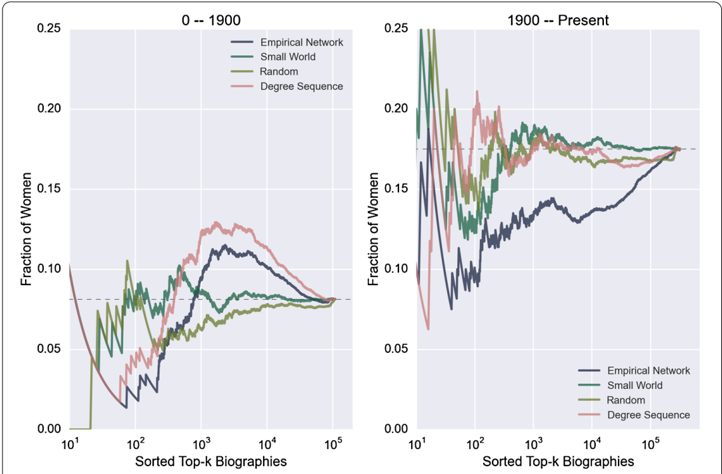
“Similarly, [70] found that the women with profiles on Wikipedia were likely to be more notable than men, suggesting an analogous type of glass ceiling effect where women had to pass a higher threshold to be captured on this online population.”
BackgroundHow Gender Debiasing Affects Internal Model Representations, and Why It Matters
Orgad, H., Goldfarb-Tarrant, S., & Belinkov, Y. (2022) · Conference of the North American Chapter of the Association for Computational Linguistics: Human Language Technologies (NAACL-HLT) · doi:10.18653/v1/2022.naacl-main.188 · Cited by 52
A Taxonomy of Knowledge Gaps for Wikimedia Projects (Second Draft)Preprint
Реди, М., Gerlach, M., Johnson, I. L., Morgan, J. T., & Zia, L. (2020) · arXiv (Cornell University) · doi:10.48550/arxiv.2008.12314 · Cited by 61
“The gender gap – the fact that the majority of Wikimedia content about people focuses on male subjects – is one of the most-studied examples of content gaps and well-documented in the research literature [3, 14, 31, 69, 75, 81, 92, 102, 136, 142, 167, 168, 210, 211] and interactive tools such as the Wikidata Human Gen…”
BackgroundDebiasing knowledge graph embeddings
Fisher, J., Mittal, A., Palfrey, D., & Christodoulopoulos, C. (2020) · Conference on Empirical Methods in Natural Language Processing (EMNLP) · doi:10.18653/v1/2020.emnlp-main.595 · Cited by 66
Addressing Age-Related Bias in Sentiment Analysis
Díaz, M., Johnson, I. L., Lazar, A., Piper, A. M., & Gergle, D. (2019) · International Joint Conference on Artificial Intelligence · doi:10.24963/ijcai.2019/852 · Cited by 53
Gender Differences in Familiar Face Recognition and the Influence of Sociocultural Gender Inequality
Mishra, M., Likitlersuang, J., Wilmer, J. B., Cohan, S., Germine, L. T., & Degutis, J. M. (2019) · Scientific Reports · doi:10.1038/s41598-019-54074-5 · Cited by 44
The Long Road Ahead: Ongoing Challenges in Contributing to Large OSS Organizations and What to Do
Guizani, M., Chatterjee, A., Trinkenreich, B., May, M. E., Noa-Guevara, G. J., Russell, L. J., Cuevas Zambrano, G. G., Izquierdo-Cortazar, D., Steinmacher, I., Gerosa, M. A., et al. (2021) · Proceedings of the ACM on Human-Computer Interaction · doi:10.1145/3479551 · Cited by 39
“Examples of such communities include Wikipedia, some crowdsourcing initiatives, and Open Source Software (OSS) projects.”
BackgroundThe Gendered Geography of Contributions to OpenStreetMap: Complexities in Self-Focus Bias
Das, M., Hecht, B. J., & Gergle, D. (2019) · CHI Conference on Human Factors in Computing Systems · doi:10.1145/3290605.3300793 · Cited by 41
“For example, research on Wikipedia has observed differences in the characterization and structure of biographical content about women [95, 96, 98] and the quality of content of greater interest to women [61].”
BackgroundMethodMeasuring Social Bias in Knowledge Graph EmbeddingsPreprint
Fisher, J., Palfrey, D., Christodoulopoulos, C., & Mittal, A. (2019) · arXiv · doi:10.48550/arxiv.1912.02761 · Cited by 38
Undesirable Biases in NLP: Addressing Challenges of Measurement
van der Wal, O., Bachmann, D., Leidinger, A., van Maanen, L., Zuidema, W. H., & Schulz, K. (2024) · Journal of Artificial Intelligence Research · doi:10.1613/jair.1.15195 · Cited by 53
“…distinguish dataset bias from model bias and consider their respective operationalizations: Word frequency information (e.g., Bordia & Bowman, 2019; Wagner et al., 2016; Zhao et al., 2019), bias classifiers (e.g., De-Arteaga et al., 2019; Dinan et al., 2020; Field & Tsvetkov, 2020), and surveys…”
BackgroundQuantifying gender preferences in human social interactions using a large cellphone dataset
Ghosh, A., Monsivais, D., Bhattacharya, K., Dunbar, R., & Kaski, K. K. (2019) · EPJ Data Science · doi:10.1140/epjds/s13688-019-0185-9 · Cited by 29
The Birth of Bias: A case study on the evolution of gender bias in an English language model
van der Wal, O., Jumelet, J., Schulz, K., & Zuidema, W. H. (2022) · Workshop on Gender Bias in Natural Language Processing (GeBNLP) · doi:10.18653/v1/2022.gebnlp-1.8 · Cited by 29
The Gender Divide in Wikipedia: Quantifying and Assessing the Impact of Two Feminist Interventions
Langrock, I., & González‐Bailón, S. (2022) · Journal of Communication · doi:10.1093/joc/jqac004 · Cited by 38
Napp, C. (2023) · PNAS Nexus · doi:10.1093/pnasnexus/pgad355 · Cited by 27
“…for career – family GS, R = 0.49 for math – liberal arts GS, and R = 0.42 for science – arts GS. GS measures are consistent but slightly different across sources, plausibly due to the variations in content, Wikipedia being more specific, and considered more objective and fact based (17, 37, 38).”
BackgroundInfluentialOeberst, A., von der Beck, I., Matschke, C., Ihme, T. A., & Creß, U. (2019) · British Journal of Social Psychology · doi:10.1111/bjso.12356 · Cited by 27
Quantifying gender biases towards politicians on Reddit
Marjanović, S. V., Stańczak, K., & Augenstein, I. (2022) · PLoS ONE · doi:10.1371/journal.pone.0274317 · Cited by 35
“While Reddit users make up a wider variation of people than news journalists, Wikipedia editors, and book authors [20, 24, 31, 43, 79], the population from which many other studies draw their data, the Reddit user distribution is still skewed towards white, college-educated men [40], though we take efforts to increase…”
BackgroundGender and country biases in Wikipedia citations to scholarly publications
Zheng, X. M., Chen, J., Yan, E., & Ni, C. (2022) · Journal of the Association for Information Science and Technology · doi:10.1002/asi.24723 · Cited by 27
“We include the United States, the United Kingdom, Canada, Australia, and New Zealand in the Anglosphere countries.”
BackgroundInfluentialAnalysing Gender Bias in IT Job Postings: A Pre-Study Based on Samples from the German Job Market
Böhm, S., Linnyk, O., Kohl, J., Weber, T., Teetz, I., Bandurka, K., & Kersting, M. (2020) · ACM SIGCPR Conference on Computer Personnel Research (SIGCPR) · doi:10.1145/3378539.3393862 · Cited by 33
“Results show an evidence for gender bias in Wikipedia where family-or gender-related words (e.g., “husband”, “women”, “marriage”, “child” ) are used more frequently in biographies of women than in biographies of men [44, 45].”
BackgroundUsing Facebook Ad Data to Track the Global Digital Gender GapPreprint
Fatehkia, M., Kashyap, R., & Weber, I. G. (2018) · SocArXiv (OSF Preprints) · doi:10.31235/osf.io/rkvb3 · Cited by 24
Exploring the gender gap in the Spanish Wikipedia: Differences in engagement and editing practices
Minguillón, J., Meneses, J., Puentes, E. A., Ferrán-Ferrer, N., & Fàbregues, S. (2021) · PLoS ONE · doi:10.1371/journal.pone.0246702 · Cited by 23
A study of gender in user reviews on the Google Play Store
Noei, E., & Lyons, K. A. (2021) · Empirical Software Engineering · doi:10.1007/s10664-021-10080-8 · Cited by 27
“Instead, we infer gender from user names (May et al. 2019; Wachs et al. 2017; Hannák et al. 2017; Wagner et al. 2016; Ford et al. 2017; Vasilescu et al. 2014).”
BackgroundMethodInfluentialControlled Analyses of Social Biases in Wikipedia Bios
Field, A., Park, C. Y., Lin, K., & Tsvetkov, Y. (2022) · International World Wide Web Conference (WWW) · doi:10.1145/3485447.3512134 · Cited by 37
“Analysis using methods such as latent variable models [3], lexicon counts, and pointwise mutual information (PMI) scores [18, 52] has suggested that pages for women discuss personal relationships more frequently than pages for men.”
BackgroundMethodInfluentialFreedom and Constraint in Digital Environments: Implications for the Self
Talaifar, S., & Lowery, B. S. (2022) · Perspectives on Psychological Science · doi:10.1177/17456916221098036 · Cited by 24
“For example, a large body of work has documented that Wikipedia editors are predominantly White men and that they produce a gender-biased corpus of articles (e.g., a woman must be more notable to merit a Wikipedia article than a man; Wagner et al., 2015, 2016).”
BackgroundHacking History: Redressing Gender Inequities on Wikipedia Through an Editathon
Hood, N., & Littlejohn, A. H. (2018) · The International Review of Research in Open and Distributed Learning · doi:10.19173/irrodl.v19i5.3549 · Cited by 21
“Wagner et al. (2016) determined that articles on women were more likely to include gendered words like “women,” “female,” and “lady” compared with articles about men that rarely use gendered words such as “man,” “male,” or “gentleman.” Graells-Garrido, Lalmas, and Menczer (2015) similarly found that women were more li…”
BackgroundInfluentialMiquel-Ribé, M., & Laniado, D. (2021) · Journal of Internet Services and Applications · doi:10.1186/s13174-021-00141-y · Cited by 20
“1 Even though it is often depicted as a lower percentage of women in biographies [3, 34 – 36], other authors have detected that it also affects the extent of meta-data, the language used to represent women, and the visibility in the Wikipedia network structure [37, 38].”
BackgroundQuantifying the Gap: A Case Study of Wikidata Gender Disparities
Zhang, C. C., & Terveen, L. (2021) · International Symposium on Open Collaboration · doi:10.1145/3479986.3479992 · Cited by 31
“in, as has been shown in multiple comparisons of language used in Wikipedia biographies [2, 14, 38].”
Background“Too Soon” to count? How gender and race cloud notability considerations on Wikipedia
Lemieux, M. E., Zhang, R., & Tripodi, F. (2023) · Big Data & Society · doi:10.1177/20539517231165490 · Cited by 19
“Notability criteria: who stays and who goes Wagner et al. (2016) suggest that a “ higher bar ” is set for women subjects on Wikipedia.”
BackgroundInfluentialSchmahl, K. G., Viering, T. J., Makrodimitris, S., Jahfari, A. N., Tax, D. M. J., & Loog, M. (2020) · Workshop on Natural Language Processing and Computational Social Science (NLP+CSS) · doi:10.18653/v1/2020.nlpcss-1.11 · Cited by 29
“However, if our goal is that articles about more important individuals (which might be read by more people) have higher impact on the bias calculation we could weigh articles based on notability [Wagner et al., 2016] at the embedding learning stage.”
BackgroundResultInfluentialWikipedia gender gap: a scoping review
Ferrán-Ferrer, N., Bóte-Vericad, J.-J., & Minguillón, J. (2023) · El Profesional de la Informacion · doi:10.3145/10.3145/epi.2023.nov.17 · Cited by 16
“…necessitate the inclusion of reliable sources and the demonstration of an individual’s notability in biography articles, certain studies, such as the work conducted by Wagner et al. (2015; 2016) have found gender disparities in content, indicating that offline biases aren’t the only explanation.”
BackgroundAn Analysis of Content Gaps Versus User Needs in the Wikidata Knowledge Graph
Abián, D., Meroño-Peñuela, A., & Simperl, E. P. B. (2022) · Lecture notes in computer science · doi:10.1007/978-3-031-19433-7_21 · Cited by 25
Never Too Late to Learn: Regularizing Gender Bias in Coreference Resolution
Park, S., Choi, K., Yu, H., & Ko, Y. (2023) · ACM International Conference on Web Search and Data Mining (WSDM) · doi:10.1145/3539597.3570473 · Cited by 31
“The BookCorpus dataset suffers from gender imbalance [27], and only 15.5% of the biographies are of women in English Wikipedia [8, 30].”
BackgroundInfluentialPostmortem memory of public figures in news and social media
West, R., Leskovec, J., & Potts, C. (2021) · Proceedings of the National Academy of Sciences · doi:10.1073/pnas.2106152118 · Cited by 15
“Since the bar for being mentioned in the news [45] as well as for being included in Freebase and Wikipedia [55] is higher for women than for men, the women included in the study are likely to be more inherently-noteworthy than the men included.”
InfluentialMüller, F. J. (2021) · Education Research International · doi:10.1155/2021/5534641 · Cited by 20
Examining Sentiment in Complex Texts. A Comparison of Different Computational Approaches
Munnes, S., Harsch, C., Knobloch, M., Vogel, J. S., Hipp, L., & Schilling, E. (2022) · Frontiers in Big Data · doi:10.3389/fdata.2022.886362 · Cited by 18
“In an analysis of Wikipedia profiles, Wagner et al. (2016) showed that women’s profiles were more likely than men’s to contain information on topics related to family, gender, and relationships and that the descriptions of men and women differed in the abstractness of positive and negative qualities.”
MethodInspiration, Captivation, and Misdirection: Emergent Properties in Networks of Online Navigation
Gildersleve, P., & Yasseri, T. (2018) · Springer proceedings in complexity · doi:10.1007/978-3-319-73198-8_23 · Cited by 15
“Whilst it is not immune to criticism on its accuracy [4], biases [5], and coverage [6] it has been meaningfully compared to the Encyclopedia Britannica [7].”
"(Weitergeleitet von Journalistin)": The Gendered Presentation of Professions on Wikipedia
Zagovora, O., Flöck, F., & Wagner, C. (2017) · ACM Web Science Conference (WebSci) · doi:10.1145/3091478.3091488 · Cited by 15
“In [11, 28, 29] differences between descriptions of male and female”
BackgroundSelf-citationGeBioToolkit: Automatic Extraction of Gender-Balanced Multilingual Corpus of Wikipedia BiographiesPreprint
Costa‐jussà, M. R., Lin, P. L., & España-Bonet, C. (2019) · arXiv (Cornell University) · doi:10.48550/arxiv.1912.04778 · Cited by 15
“Depending on the language and year of the study, the percentage of biographies of women with respect to the total of biographies ranges from a 13% to a 23% (Reagle and Rhue, 2011; Bamman and Smith, 2014; Wagner et al., 2016).”
BackgroundResultThe Wikipedia Diversity Observatory: A Project to Identify and Bridge Content Gaps in Wikipedia
Miquel-Ribé, M., & Laniado, D. (2020) · International Symposium on Open Collaboration · doi:10.1145/3412569.3412866 · Cited by 14
“Likewise, there exist other biases like the gender gap [3, 4] resulting in a lower percentage of women in biographies.”
BackgroundKurpicz-Briki, M. (2020) · ARBOR - Bern University of Applied Sciences Repository · doi:10.24451/arbor.11922 · Cited by 31
“Commonly used datasets such as Wikipedia have been proven to be biased (Wagner et al., 2015) (Wagner et al., 2016).”
MethodRepresentation of Music Creators on Wikipedia, Differences in Gender and Genre
Wang, A., Pappu, A., & Cramer, H. S. M. (2021) · Proceedings of the International AAAI Conference on Web and Social Media · doi:10.1609/icwsm.v15i1.18101 · Cited by 18
“Several past studies have examined gender representation on Wikipedia (Wagner et al. 2015, 2016; Reagle and Rhue 2011).”
BackgroundVisibility layers: a framework for systematising the gender gap in Wikipedia content
Beytía, P., & Wagner, C. (2022) · Internet Policy Review · doi:10.14763/2022.1.1621 · Cited by 12
Self-citationExploring Systematic Bias through Article Deletions on Wikipedia from a Behavioral Perspective
Worku, Z., Bipat, T., McDonald, D. W., & Zachry, M. R. (2020) · International Symposium on Open Collaboration · doi:10.1145/3412569.3412573 · Cited by 12
Kurpicz-Briki, M., & Leoni, T. (2021) · Frontiers in Big Data · doi:10.3389/fdata.2021.625290 · Cited by 17
Robust reputation independence in ranking systems for multiple sensitive attributes
Ramos, G., Boratto, L., & Marras, M. (2022) · Machine Learning · doi:10.1007/s10994-022-06173-0 · Cited by 12
“, by showing that Wikipedia (Wagner et al., 2016) and both OpenStreetMaps and Google MapMaker (Stephens, 2013) provide gender-biased representations of knowledge.”
D’Costa, M., & Saklofske, D. H. (2022) · Violence Against Women · doi:10.1177/10778012221132298 · Cited by 13
The Web Can Be Your Oyster for Improving Language Models
Li, J., Tang, T., Zhao, W. X., Wang, J., Nie, J., & Wen, J.-R. (2023) · Findings of the Association for Computational Linguistics: ACL (Findings of ACL) · doi:10.18653/v1/2023.findings-acl.46 · Cited by 20
Using Wikipedia Assignments to Teach Critical Thinking and Scientific Writing in STEM Courses
Gareis, J. A. L., Larson, E. I., Ardón, M., Berges, J. A., Brandt, J. E., Busch, K. M., Chraïbi, V. L. S., Gallagher, E. N., Hondula, K. L., Kincaid, D. W., et al. (2022) · Frontiers in Education · doi:10.3389/feduc.2022.905777 · Cited by 11
Visual Gender Biases in Wikipedia: A Systematic Evaluation across the Ten Most Spoken Languages
Beytía, P., Agarwal, P., Реди, М., & Singh, V. K. (2022) · Proceedings of the International AAAI Conference on Web and Social Media · doi:10.1609/icwsm.v16i1.19271 · Cited by 17
Gender and the invisibility of care on Wikipedia
Ford, H., Pietsch, T., & Tall, K. (2023) · Big Data & Society · doi:10.1177/20539517231210276 · Cited by 10
“It is also reproduced by some studies of gender gaps on the encyclopaedia that highlight how Wikipedia demonstrates gender biases that mirror biases outside of Wikipedia (e.g. see Jemielniak, 2016; Wagner et al., 2016: 22).”
BackgroundGeBioToolkit automatic extraction of gender-balanced multilingual corpus of wikipedia biographies
Costa‐jussà, M. R., Lin, P. L., & España-Bonet, C. (2020) · Language Resources and Evaluation · Cited by 10
Velilla, M. C., & Ferrán-Ferrer, N. (2024) · Journal of Documentation · doi:10.1108/jd-11-2023-0230 · Cited by 10
Aragón, P., Sáez-Trumper, D., Реди, М., Hale, S. A., Gómez, V., & Kaltenbrunner, A. (2018) · Proceedings of the International AAAI Conference on Web and Social Media · doi:10.1609/icwsm.v12i1.14990 · Cited by 13
Wikipedia Edit-a-thons as Sites of Public Pedagogy
March, L., & Dasgupta, S. (2020) · Proceedings of the ACM on Human-Computer Interaction · doi:10.1145/3415171 · Cited by 10
“Despite the use of a broad range of strategies used to run edit-a-thons, facilitators faced a number of deep-rooted challenges that represent systemic issues withWikipedia (documented in existing work such as [2, 21, 22, 56, 57]), and, in some cases, online peer production communities in general [36].”
BackgroundAutomatically Inferring Gender Associations from Language
Chang, S. Y., & McKeown, K. (2019) · Conference on Empirical Methods in Natural Language Processing (EMNLP) · doi:10.18653/v1/d19-1579 · Cited by 13
“…people talk to women and men (Voigt et al., 2018), as well as how people talk about women and men, typically in specific domains such as sports journalism (Fu et al., 2016), fiction writing (Fast et al., 2016), movie scripts (Sap et al., 2017), and Wikipedia biographies (Wagner et al., 2015, 2016).”
BackgroundExplaining classification performance and bias via network structure and sampling technique
Espín-Noboa, L., Karimi, F., Ribeiro, B., Lerman, K., & Wagner, C. (2021) · Applied Network Science · doi:10.1007/s41109-021-00394-3 · Cited by 11
“…betweenness centrality have been found to be sensitive to the choice of sampling methods (Leskovec and Faloutsos 2006; Galaskiewicz 1991; Costenbader and Valente 2003; Huisman 2009; Borgatti et al. 2006; Kossinets 2006; Wang et al. 2012; Lee and Pfeffer 2015; Li and Yeh 2011; Wagner et al. 2016).”
BackgroundSelf-citationThe Gender Gap in Wikipedia Talk Pages
Cabrera, B., Roß, B., Dado, M., & Heisel, M. (2018) · Proceedings of the International AAAI Conference on Web and Social Media · doi:10.1609/icwsm.v12i1.15053 · Cited by 9
“Although globally notable women are now being represented in Wikipedia, there seem to be more biographies of men that are notable in smaller, local communities, implying a glass ceiling that women must surpass in order to be included (Wagner et al. 2016).”
BackgroundThe gender gap on the Spanish Wikipedia: Listening to the voices of women editors
Ferrán-Ferrer, N., Castellanos-Pineda, P., Minguillón, J., & Meneses, J. (2021) · El Profesional de la Informacion · doi:10.3145/epi.2021.sep.16 · Cited by 9
“Moreover, it is well known that Wikipedia suffers from a severe and persistent gender bias (Hinnosaar, 2019; Massa; Zelenkauskaite, 2014; Wagner et al., 2016), reflected both in the community involved in the editing process (the majority of editors are men) and in the content itself (biographies of…”
BackgroundFace Verification with Challenging Imposters and Diversified Demographics
Popescu, A., Stefan, L., Deshayes-Chossart, J., & Ionescu, B. E. (2022) · IEEE Winter Conference on Applications of Computer Vision · doi:10.1109/wacv51458.2022.00122 · Cited by 11
Las universitarias en la Wikipedia en español
Sierra, Á. O., & Fernández, N. G. (2019) · Pixel-Bit Revista de Medios y Educación · doi:10.12795/pixelbit.2019.i54.08 · Cited by 7
Multilingual Entity Linking System for Wikipedia with a Machine-in-the-Loop Approach
Gerlach, M., Miller, M., Ho, R., Harlan, K., & Difallah, D. E. (2021) · ACM International Conference on Information and Knowledge Management (CIKM) · doi:10.1145/3459637.3481939 · Cited by 15
“While this helps to bootstrap the system with reliable suggestions, it can reinforce biases in the training data; this includes imitating overly linked articles and replicating existing issues such as gender-biases in the link-network [17, 43].”
Menking, A., McDonald, D. W., & Zachry, M. R. (2017) · ACM Conference on Computer Supported Cooperative Work (CSCW) · doi:10.1145/2998181.2998254 · Cited by 9
The Subversive Potential of Wikipedia: A Resource for Diversifying Political Science Content Online
Timperley, C. (2020) · PS Political Science & Politics · doi:10.1017/s1049096520000013 · Cited by 7
“Another literature emerging out of academic engagement with Wikipedia highlights the consequences of the contributor gender gap, particularly with respect to what content gets covered on the platform (Ford and Wajcman 2017; Gruwell 2015; Wagner et al. 2016).”
BackgroundAssessing Gender Bias in Wikipedia: Inequalities in Article Titles
Faleńska, A., & Çetinoğlu, Ö. (2021) · Workshop on Gender Bias in Natural Language Processing (GeBNLP) · doi:10.18653/v1/2021.gebnlp-1.9 · Cited by 12
“In their following analysis, Wagner et al. (2016) showed that gender inequalities can be observed also on other dimensions, e.g., women have to be more notable to have their biographies than men.”
BackgroundInfluentialNotable enough? The questioning of women’s biographies on Wikipedia
Martini, F. (2023) · Feminist Media Studies · doi:10.1080/14680777.2023.2266585 · Cited by 8
“Uncertainty has been shown to lead to more bias and inequality because editors must make subjective decisions about whether to include articles (C. Wagner et al. 2016).”
Morley, C., & Kuntz, P. (2019) · Terminal · doi:10.4000/terminal.5081 · Cited by 11
“Dans Wikipédia, largement utilisé en ingénierie des connaissances, les articles consacrés à des femmes soulignent souvent leurs statuts de femmes en précisant leurs maris, leurs enfants, et leurs parcours singuliers en tant que femmes (Wagner et al. 2016).”
BackgroundWikis und die Wikipedia verstehen: Eine Einführung
van Dijk, Z. (2021) · transcript Verlag eBooks · doi:10.14361/9783839456453 · Cited by 11
Gendered competencies and gender composition: A human versus algorithm evaluator comparison
Merritt, S. M., Ryan, A. M., Gardner, C. L., Liff, J., & Mondragon, N. J. (2023) · International Journal of Selection and Assessment · doi:10.1111/ijsa.12459 · Cited by 6
Mehler, A., Hemati, W., Welke, P., Konca, M., & Uslu, T. (2020) · Frontiers in Education · doi:10.3389/feduc.2020.562670 · Cited by 7
“Wagner et al. (2016) also present a multidimensional content analysis, now of a gender bias.”
BackgroundDobusch, L., & Dobusch, L. (2022) · KZfSS Kölner Zeitschrift für Soziologie und Sozialpsychologie · doi:10.1007/s11577-022-00836-5 · Cited by 8
“…wie FOSS oder die freie Online-Enzyklopädie Wikipedia, die einen dezidierten Offenheitsanspruch verfolgen, kämpfen mit persistenten oder sogar verstärkten Ausschlüssen in Form von Diskriminierungen und strukturellen Ungleichheiten (vgl. z.B. Reagle 2012; Wagner et al. 2016; GitHub 2017).”
BackgroundHollink, L., van Aggelen, A., & van Ossenbruggen, J. (2018) · ACM Web Science Conference (WebSci) · doi:10.1145/3201064.3201108 · Cited by 6
“[10] use two metrics to estimate how “notable” a person in a reference corpus is.”
BackgroundMethodInfluentialGender difference in candidature processes for Brazilian elections
Cardoso, M., Mendes, R. S., Souza, J. T. G., & Ribeiro, H. V. (2019) · Physica A Statistical Mechanics and its Applications · doi:10.1016/j.physa.2019.122525 · Cited by 6
“In the scenery of the participation in on-line communities [11,12] revealed that women are likewise in disadvantage in relation to men.”
BackgroundViés de Gênero em Biografias da Wikipédia em Português
Salles, I., & Pappa, G. L. (2021) · Anais do Brazilian Workshop on Social Network Analysis and Mining (BraSNAM) · doi:10.5753/brasnam.2021.16142 · Cited by 5
“Em um trabalho subsequente [Wagner et al. 2016], os autores mostram que as mulheres presentes nas biografias da Wikipédia são mais notáveis na média do que os homens, o que sugere que mulheres devem ser mais notáveis para serem retratadas na Wikipédia.”
BackgroundLeveraging Wikidata to Build Scholarly Profiles as Service
Lemus-Rojas, M., Odell, J. D., Brys, L. F., & Rojas, M. R. (2022) · KULA knowledge creation dissemination and preservation studies · doi:10.18357/kula.171 · Cited by 5
“…in the character and the quantity of content about women, and the structural features of Wikipedia that contribute to these inequities (Bear and Collier 2016; Ford and Wajcman 2017; Graells-Garrido, Lalmas, and Menczer 2015; Lir 2019; Sun and Peng 2021; Wagner et al. 2015; Wagner et al. 2016).”
BackgroundThe Gender Perspective in Wikipedia: A Content and Participation Challenge
Ferrán-Ferrer, N., Miquel-Ribé, M., Meneses, J., & Minguillón, J. (2022) · International World Wide Web Conference (WWW) · doi:10.1145/3487553.3524937 · Cited by 5
“Moreover, it is well known that Wikipedia suffers from a strong and persistent gender bias in different ways [27, 37, 54].”
Quantifying the Gap: The Gender Gap in French Writers’ Wikidata
Conroy, M. (2023) · Journal of Cultural Analytics · doi:10.22148/001c.74068 · Cited by 5
Intersections of open educational resources and Information literacy
Cullen, M. A., & Dill, E. (2022) · Bibliothèque et Archives nationales du Québec (Québec government) · Cited by 5
The AI Democratization Paradox: Evidence from Decentralized Knowledge Communities
Zhu, K., & Walker, D. (2026) · Management Science · doi:10.1287/mnsc.2024.04717 · Cited by 4
Metadata
- Authors
- Wagner, C., Graells-Garrido, E., Garcia, D., & Menczer, F.
- Affiliations
- GESIS - Leibniz Institute for the Social Sciences (DE)
- Indiana University Bloomington (US)
- Corresponding author
- Wagner, Claudia
- Venue
- EPJ Data Science
- Published
- 2016-03-01
- Volume
- 5
- Issue
- 1
- ISSN
- 2193-1127 (ISSN-L)
- OpenAlex
- W2292253565
- Semantic Scholar
- 165111af64a34d5769f3ee8cbeada5c6618cf8c7
- Cited by
- 115
- References
- 20
- Citations by year
- 2026: 9 · 2025: 9 · 2024: 3 · 2023: 15 · 2022: 18 · 2021: 28 · 2020: 11 · 2019: 11 · 2018: 8 · 2017: 2 · 2016: 1
- FWCI
- 20.65
- Type
- journal article
- Language
- en
- Open access
- gold
- doi.org
- Locations
- EPJ Data Science (publishedVersion, cc-by)
- arXiv (Cornell University) (submittedVersion)
- Social Science Open Access Repository (GESIS – Leibniz Institute for the Social Sciences) (submittedVersion, cc-by)
- KOPS (University of Konstanz) (submittedVersion, cc-by)
- arXiv (Cornell University)
- Topics
- Social Sciences › Communication › Wikis in Education and Collaboration
- Physical Sciences › Computer Science › Artificial Intelligence › Ethics and Social Impacts of AI
- Social Sciences › Gender Studies › Gender and Technology in Education
- Keywords
- Wikipedia, gender bias, glass ceiling, notability, language bias, gender asymmetry, article metadata, hyperlink structure, information seeking
About these checks
Registry, retraction, Cites and statistics results are computed, not judged, with one exception: a printed reference that no index lists is read once by a model before it counts as a citation error. Claims are extracted by a model and kept only when their quote appears verbatim in the text; each cited source is then checked, with a model’s help, for whether it says what the claim relies on. Those verdicts can be wrong — read the claim’s quote and the cited source before relying on one.
Statistics and arithmetic are recomputed, not judged.
Confidence bands are shown only for fields calibrated on our annotated test set. None is calibrated yet, so no band is shown.
What counts as a claim ›How we measure confidence ›How we check this ›
Are you an author, or do you see a problem with this page? Request a review
Data sources
Bibliographic data: Semantic Scholar, OpenAlex, Crossref.
Contains information from the Semantic Scholar Academic Graph Datasets, made available under the ODC Attribution License (ODC-BY 1.0).
Semantic Scholar’s data is described in: Kinney, R., et al. (2023). The Semantic Scholar Open Data Platform. arXiv:2301.10140.
