

The DOI matches its Crossref record; 29 of the 31 references it cites were found in a registry or an index; 13 of the 18 sources its claims cite were checked for support.
Conserved non-Noether charge in general relativity: Physical definition versus Noether’s second theorem
Open accessAbstract
Compares a covariant energy/entropy definition in general relativity with pseudo-tensor and quasi-local definitions and discusses expanding-universe cases.
Overview
CoChat Summary
## TL;DR
The paper argues that standard energy definitions in general relativity derived from Noether’s second theorem—such as pseudotensor, Komar, ADM, and related quasi-local charges—are “improper” in the sense that their conservation is an identity from local symmetry, not a dynamical statement. It contrasts these with the authors’ earlier covariant charge \(Q[\zeta]\), which is conserved only when equations of motion are used and is claimed to give physically sensible energy/entropy in examples like black holes, collapse, and FLRW cosmology.
## Key findings
- The paper shows that Noether’s second theorem yields two broad classes of conserved charges in GR: a non-covariant pseudotensor type and a covariant Komar-integral type, and states that both are conserved off-shell, i.e. without using equations of motion.
- For Schwarzschild black holes, the authors report that their definition gives the finite black hole energy, while Noether-theorem-based energies require subtracting an infinite vacuum contribution for \(\Lambda=0\); even then, agreement occurs only in \(d=4\).
- For gravitational collapse, they report that their energy is conserved and equals the final black hole mass after collapse.
- For the FLRW expanding universe, their construction yields a conserved generalized charge interpreted as entropy, whereas the Noether-theorem-based pseudo-tensor energy is stated to be zero and physically trivial.
## Methods
- The paper is a theoretical comparison of conserved-charge constructions in general relativity, centered on Noether’s second theorem versus the authors’ covariant charge proposal.
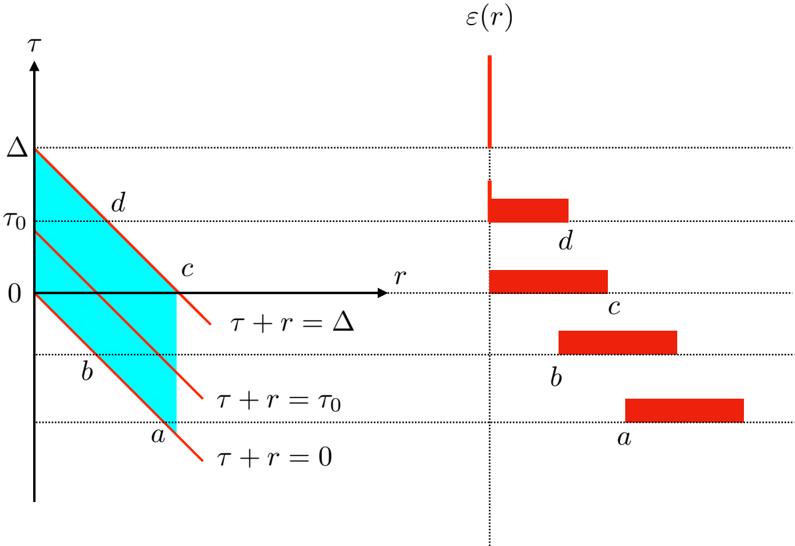
- It analyzes several explicit spacetime examples: vacuum, Schwarzschild black holes, gravitational collapse of thick light shells, and homogeneous/isotropic FLRW cosmology.
- The main analysis derives conservation laws from the Einstein equation, the Bianchi identity, and local symmetry arguments, then compares the resulting charges with the authors’ proposal \(Q[\zeta]\) and with pseudotensor/Komar/ADM-type charges.
## Limitations
- The paper itself notes that the initial condition for the vector field \(\zeta^a(x)=\beta(x)n^a(x)\) is not fixed by a general principle, and says the problem of defining local temperature from matter distributions is left for future work.
- The text makes evident that many formulas are presented only schematically in the provided full text because the equations are not decoded here; this limits direct inspection from the supplied version.
Model-written summary. Check it against the paper before relying on it.
Integrity signals
Registry
Cites
Statistics
Figures

Verification
Claims the paper makes
12 Valid · 1 Not valid · 2 Not checked · 63 Own results and interpretations
The cited sources support only part of this claim — read each source’s verdict below.
In the paper
“we demonstrate that (almost) all existing definitions of the energy in general relativity can be regarded as a conserved charge implied by the Noether's 2nd theorem for local symmetries[12].”
What the sources say
- Partly supportedcites [12] [12] E. Noether, Gott. Nachr. 1918 (1918), 235-257 doi:10.1080/00411457108231446 [arXiv:physics/0503066 [physics]]. - sourceExperimental — accuracy not yet measured
Section § 1 links Theorem II, which concerns invariance under transformations involving arbitrary functions, to energy-conservation relationships in general relativity. The paper does not establish that almost all existing definitions of energy in general relativity are conserved charges; it also describes the failure of proper energy-conservation laws in that setting. The citing authors frame the broader classification as their own demonstration. (LLM, conf=0.85)
boostedstates an association- Asserted: passes — The authors put it forward as true.
- Checkable: passes — It can be checked against evidence.
- Load-bearing: passes — The paper’s conclusions depend on it.
- Based: passes — The paper gives a reason why it holds.
- Partly supported
The cited sources support only part of this claim — read each source’s verdict below.
In the paper
“whose conservations are merely identities implied by the local symmetry and always hold without using equations of motion.”
- Also stated in: § 2.4 Cautions on charges from Noether's second theorem · plain
“the Noether's 2nd theorem tells that currents associated with local symmetries are always conserved without using equations of motion of dynamical variable.”
What the sources say
- Partly supportedcites [12] [12] E. Noether, Gott. Nachr. 1918 (1918), 235-257 doi:10.1080/00411457108231446 [arXiv:physics/0503066 [physics]]. - sourceExperimental — accuracy not yet measured
In § 2, the paper shows that a combination associated with an infinite (local) symmetry has identically vanishing divergence, without imposing field equations. But § 3 says the conservation law Div B = 0 follows on putting the Lagrange expressions to zero. Thus the off-shell identity applies to a particular combination, not unqualifiedly to every associated current. (LLM, conf=0.88)
plainstates a cause- Asserted: passes — The authors put it forward as true.
- Checkable: passes — It can be checked against evidence.
- Load-bearing: passes — The paper’s conclusions depend on it.
- Based: passes — The paper gives a reason why it holds.
- Rests on an assumption not shown here.
- Also stated in: § 2.4 Cautions on charges from Noether's second theorem · plain
Every source the paper cites for this claim was checked and supports it.
In the paper
“our proposal for a covariant definition of the energy and its generalization in general relativity, which requires equations of motion[10, 11], and thus is not a charge from the 2nd theorem.”
- Also stated in: § 2.4 Cautions on charges from Noether's second theorem · plain
“our proposal for a proper and covariant definition of charges in general relativity, which are conserved only after equations of motion for gravity and matters are satisfied.”
What the sources say
- Supportedcites [10] [10] S. Aoki, T. Onogi and S. Yokoyama, Int. J. Mod. Phys. A 36 (2021) no.10, 2150098 doi:10.1142/S0217751X21500986 [arXiv:2005.13233 [gr-qc]]. - source
Section 2, ‘Conserved charge from covariantly conserved current’ (page unavailable), defines the covariant energy charge using a matter energy-momentum tensor whose covariant conservation is required to establish that the charge is conserved. Section 3.1, ‘Schwarzschild black hole’ (page unavailable), explicitly invokes the equation of motion when applying the definition to calculate energy. (LLM, conf=0.84)
- Supportedcites [11] [11] S. Aoki, T. Onogi and S. Yokoyama, Int. J. Mod. Phys. A 36 (2021) no., 2150201 doi:10.1142/S0217751X21502018 [arXiv:2010.07660 [gr-qc]]. - source
Section 2.1 (p. 2) describes the covariant charge definition and says it yields energy when the vector field generates time translation. Section 3.2 (p. 6) states that a dynamical variation must satisfy the matter equations of motion and, when the metric is dynamical, the Einstein equation or its variant. This supports the attributed requirement in the paper’s dynamical gravitational setting. (LLM, conf=0.85)
plainstates a causen = 3- Asserted: passes — The authors put it forward as true.
- Checkable: passes — It can be checked against evidence.
- Load-bearing: passes — The paper’s conclusions depend on it.
- Based: passes — The paper gives a reason why it holds.
- Also stated in: § 2.4 Cautions on charges from Noether's second theorem · plain
Every source the paper cites for this claim was checked and supports it.
In the paper
“Even in more general cases, the entropy S so defined is conserved in general relativity[11].”
What the sources say
- Supportedcites [11] [11] S. Aoki, T. Onogi and S. Yokoyama, Int. J. Mod. Phys. A 36 (2021) no., 2150201 doi:10.1142/S0217751X21502018 [arXiv:2010.07660 [gr-qc]]. - source
Section 3 (p. 4) identifies the defined entropy with a conserved charge and states that its current satisfies a continuity equation. The Discussion (p. 10) confirms conservation in the situations considered, while noting that changed boundary conditions or failure of energy-momentum conservation can violate it. (LLM, conf=0.91)
plain- Asserted: passes — The authors put it forward as true.
- Checkable: passes — It can be checked against evidence.
- Load-bearing: passes — The paper’s conclusions depend on it.
- Based: passes — The paper gives a reason why it holds.
- Supported
Every source the paper cites for this claim was checked and supports it.
In the paper
“Without a mixing between time and space components for the metric and the energy-momentum tensor, the entropy density s is also conserved[11].”
What the sources say
- Supportedcites [11] [11] S. Aoki, T. Onogi and S. Yokoyama, Int. J. Mod. Phys. A 36 (2021) no., 2150201 doi:10.1142/S0217751X21502018 [arXiv:2010.07660 [gr-qc]]. - source
Section 3.1 (p. 5) states that entropy density is locally conserved when both the matter-flow component Jᵢ and the metric shift vector Nᵢ vanish. These are the time–space mixing terms described in the claim. (LLM, conf=0.95)
plainstates a cause- Asserted: passes — The authors put it forward as true.
- Checkable: passes — It can be checked against evidence.
- Load-bearing: unclear — It is unclear whether the paper’s conclusions depend on it.
- Based: passes — The paper gives a reason why it holds.
- Supported
36 more claims
Create a free account to see all 78 claims and every source verdict.
- It may state two separate claims as one. 27
- Probably not a substantial claim. 13
Claims other papers make about this one
Each is checked against this paper’s own text: does it say what the citing paper says it does?
The cited source says what the claim attributes to it.
In the citing paper
“The invariance of the Einstein-Hilbert action under the general coordinate transformation x µ → x µ + ξ µ ( x ) implies that a current K µ [ ξ ] = ∇ ν [ ∇ [ µ ξ ν ] ] is covariantly conserved, ∇ µ K µ = 0, without using equations of motion (EOM)[3, 4], as you can explicitly check it using the antisymmetry:”
From Is energy conserved in general relativity? (2025) · cites this paper as [3]
Citations
Cites
Die Grundlage der allgemeinen Relativitätstheorie
Einstein, A. (1916) · Annalen der Physik · doi:10.1002/andp.19163540702 · Cited by 3,468
Black hole entropy is the Noether charge
Wald, R. M. (1993) · Physical Review D · doi:10.1103/physrevd.48.r3427 · Cited by 2,496
Gravitational waves in general relativity, VII. Waves from axi-symmetric isolated system
Bondi, H., Van der Burg, M. G. J., & Metzner, A. W. K. (1962) · Proceedings of the Royal Society of London. Series A. Mathematical and Physical Sciences · doi:10.1098/rspa.1962.0161 · Cited by 2,426
Republication of: The dynamics of general relativity
Arnowitt, R., Deser, S., & Misner, C. W. (2008) · General Relativity and Gravitation · doi:10.1007/s10714-008-0661-1 · Cited by 2,284
Gravitation, an introduction to current research
Sewell, G. L. (1963) · Journal of the Franklin Institute · doi:10.1016/0016-0032(63)90691-4 · Cited by 1,942
Quasilocal energy and conserved charges derived from the gravitational action
Brown, J. D., & York, J. W. (1993) · Physical Review D · doi:10.1103/physrevd.47.1407 · Cited by 1,793
A Stress Tensor for Anti-de Sitter Gravity
Balasubramanian, V., & Kraus, P. (1999) · Communications in Mathematical Physics · doi:10.1007/s002200050764 · Cited by 1,658
The Dynamics of General RelativityPreprint
(2004) · Cited by 1,515
Stability of gravity with a cosmological constant
Abbott, L. F., & Deser, S. (1982) · Nuclear Physics B · doi:10.1016/0550-3213(82)90049-9 · Cited by 1,075
Covariant Conservation Laws in General Relativity
Komar, A. (1959) · Physical Review · doi:10.1103/physrev.113.934 · Cited by 930
Research works printed but not linked: 2
- Noether E., 1918, Gott. Nachr., 1918, 235
- Geroch R. P., 1986, Conf. Proc. C, 861214, 138
Cited by
Energy and entropy in the geometrical trinity of gravity
Gomes, D. A., Jiménez, J. B., & Koivisto, T. (2023) · Physical review. D/Physical review. D. · doi:10.1103/physrevd.107.024044 · Cited by 44
Gomes, D. A., Jiménez, J. B., & Koivisto, T. (2023) · Journal of Cosmology and Astroparticle Physics · doi:10.1088/1475-7516/2023/12/010 · Cited by 34
Deriglazov, A. A. (2022) · Universe · doi:10.3390/universe8100536 · Cited by 10
“[45] Sinya Aoki, Tetsuya Onogi, Conserved non-Noether charge in general relativity: physical definition versus Noether’s second theorem, Int.”
BackgroundAnalytic models for gravitational collapse
Aoki, S., & Ovalle, J. (2025) · Physical Review D · doi:10.1103/physrevd.111.024037 · Cited by 7
Noether’s 1st theorem with local symmetries
Aoki, S. (2022) · Progress of Theoretical and Experimental Physics · doi:10.1093/ptep/ptac160 · Cited by 6
Metadata
- Authors
- Aoki, S., & Onogi, T.
- Affiliations
- Center for Gravitational Physics, Yukawa Institute for Theoretical Physics, Kyoto University, Kitashirakawa Oiwakecho, Sakyo-ku, Kyoto 606-8502, Japan
- The University of Osaka (JP)
- Venue
- International Journal of Modern Physics A
- Publisher
- World Scientific Pub Co Pte Ltd
- Published
- 2022-08-10
- Volume
- 37
- Issue
- 22
- ISSN
- 0217-751X (ISSN-L)
- 1793-656X
- OpenAlex
- W4207087328
- Cited by
- 12
- References
- 31
- Citations by year
- 2026: 2 · 2025: 3 · 2024: 1 · 2023: 4 · 2022: 2
- FWCI
- 1.00
- Type
- journal article
- Language
- en
- Open access
- green
- arxiv.org
- Locations
- International Journal of Modern Physics A (publishedVersion)
- arXiv (Cornell University) (submittedVersion)
- Institutional Repositories DataBase (IRDB) (submittedVersion)
- Kyoto University Research Information Repository (Kyoto University) (submittedVersion, cc-by-nc-nd)
- arXiv (Cornell University)
- Funders
- Japan Society for the Promotion of Science (JP16H03978, JP18H05236, JP18K03620)
- Topics
- Physical Sciences › Physics and Astronomy › Astronomy and Astrophysics › Relativity and Gravitational Theory
- Physical Sciences › Physics and Astronomy › Nuclear and High Energy Physics › Black Holes and Theoretical Physics
- Physical Sciences › Physics and Astronomy › Astronomy and Astrophysics › Cosmology and Gravitation Theories
- Keywords
- entropy, Noether's second theorem, quasilocal energy, black hole mass, gravitational collapse, cosmic expansion, general coordinate transformations
About these checks
Registry, retraction, Cites and statistics results are computed, not judged, with one exception: a printed reference that no index lists is read once by a model before it counts as a citation error. Claims are extracted by a model and kept only when their quote appears verbatim in the text; each cited source is then checked, with a model’s help, for whether it says what the claim relies on. Those verdicts can be wrong — read the claim’s quote and the cited source before relying on one.
The claim verdicts this report counts are experimental: their accuracy is not yet measured.
A language model drew the claims from the paper on 2026-10-10, under version 3 of the claim definition (model deepseek-v4.1-flash, prompt extract-v3).
A second model labelled each claim on 2026-10-10 (model jev-1.13-20260917, definition revision gold-guideline-v0.2).
Cited sources are checked with a language model’s help (gpt-6-sol).
Statistics and arithmetic are recomputed, not judged.
Confidence bands are shown only for fields calibrated on our annotated test set. None is calibrated yet, so no band is shown.
What counts as a claim ›How we measure confidence ›How we check this ›
Are you an author, or do you see a problem with this page? Request a review
How to cite
Cite CoChat for the checks on this page, and the paper for its own findings.
- This page
- CoChat. (2026). Citation check: Conserved non-Noether charge in general relativity: Physical definition versus Noether’s second theorem. https://app.cochat.ai/papers/10.1142/s0217751x22501299
- The paper
- Aoki, S., & Onogi, T. (2022). Conserved non-Noether charge in general relativity: Physical definition versus Noether’s second theorem. International Journal of Modern Physics A. https://doi.org/10.1142/s0217751x22501299
Data sources
Bibliographic data: Semantic Scholar, OpenAlex, Crossref.
Contains information from the Semantic Scholar Academic Graph Datasets, made available under the ODC Attribution License (ODC-BY 1.0).
Semantic Scholar’s data is described in: Kinney, R., et al. (2023). The Semantic Scholar Open Data Platform. arXiv:2301.10140.
