

When Machine Unlearning Jeopardizes Privacy
Open accessThe DOI matches its Crossref record; 82 of the 82 references it cites were found in a registry or an index; 14 of the 28 sources its claims cite were checked for support.
Abstract
This paper performs the first study on unintended information leakage caused by machine unlearning and proposes a novel membership inference attack.
Overview
CoChat Summary
## TL;DR
The paper shows that machine unlearning can unintentionally leak membership information by letting an attacker compare outputs of the original and unlearned models. Across multiple datasets and model types, the proposed attack often outperforms classical membership inference, especially on well-generalized models.
## Key findings
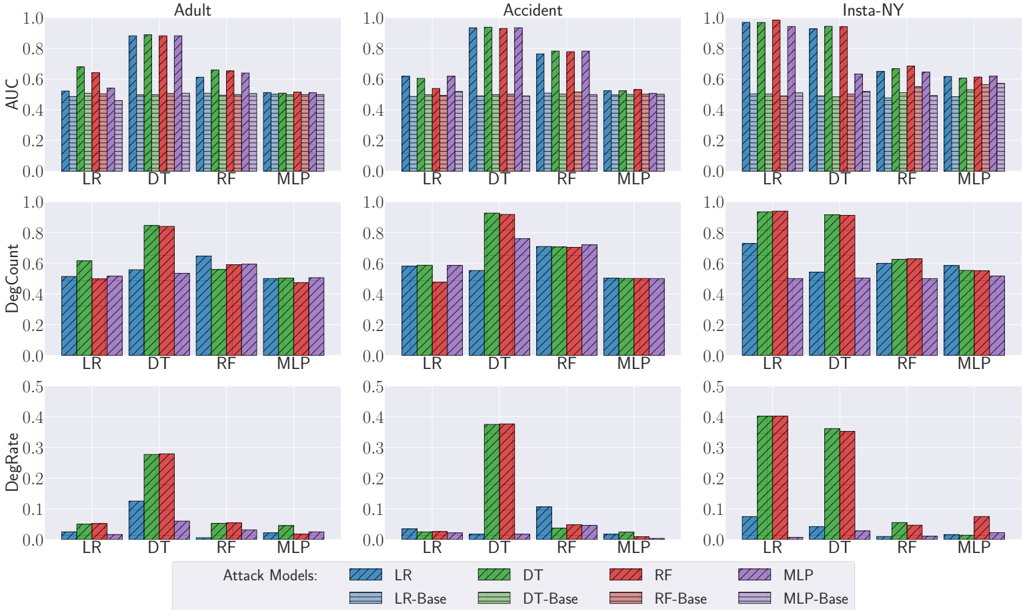
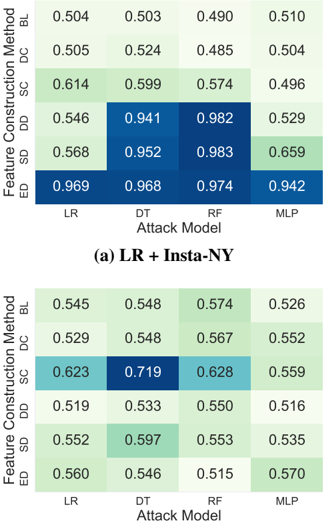
- On categorical datasets, the attack “consistently better[s] than classical membership inference” and achieves up to 0.48 improvement in AUC; the best reported DegCount and DegRate are 0.94 and 0.40.
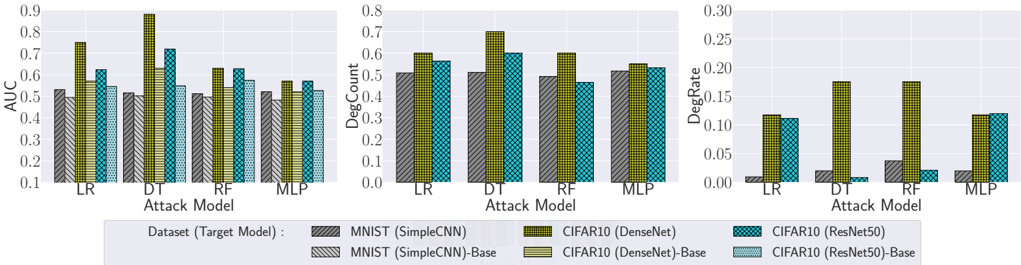
- On image datasets, the attack also outperforms classical membership inference in all settings; for CIFAR10 + DenseNet, the paper reports an overfitting level of 0.439, with the highest privacy degradation, while MNIST + SimpleCNN has overfitting < 0.05 and the lowest degradation.
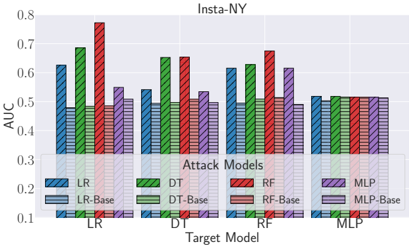
- For a well-generalized decision tree on the Adult dataset, classical membership inference is near random with AUC = 0.497, while the proposed attack reaches AUC = 0.882; the paper also reports DegCount = 0.85 and DegRate = 0.28 for this example.
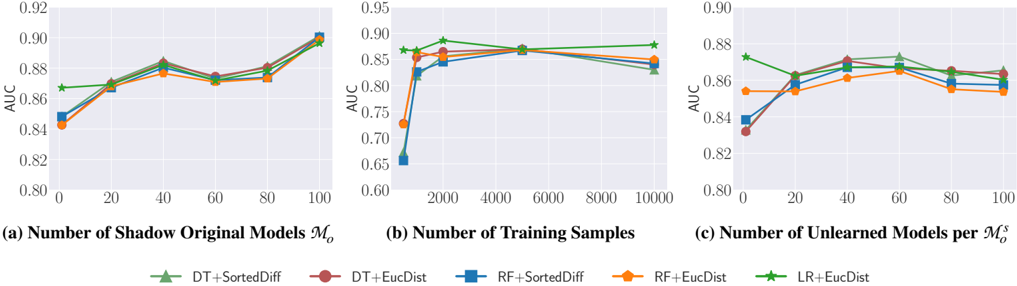
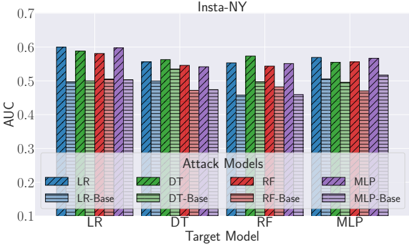
- Transfer is strong: in one dataset-transfer example, the attack AUC drops only 1% (from 0.944 to 0.931) when moving from Insta-NY → Insta-LA for a decision tree target model.
- Against the approximate SISA unlearning method, attack performance drops compared with retraining from scratch, indicating SISA reduces the influence of a specific sample on the global model.
## Methods
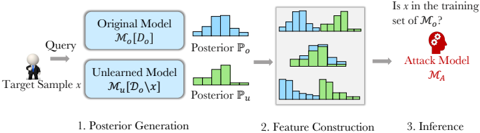
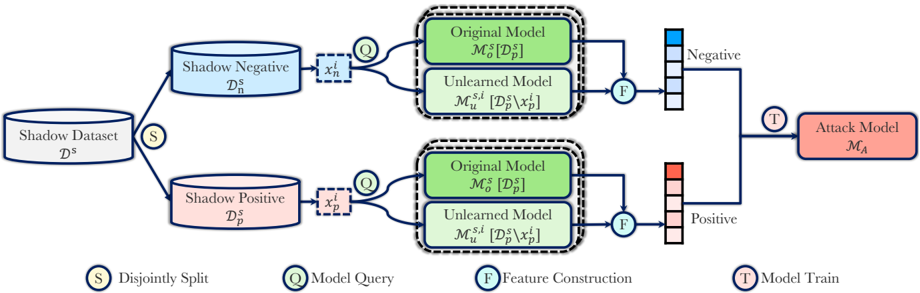
- The paper studies black-box membership inference in machine unlearning: the adversary queries both the original model and the unlearned model, extracts their posterior outputs, constructs features from both, and trains a binary attack model.
- It evaluates on categorical datasets (Adult, Accident, Insta-NY, Insta-LA) and image datasets (MNIST, CIFAR10, STL10) using target models including logistic regression, decision tree, random forest, MLP, SimpleCNN, DenseNet, and ResNet50.
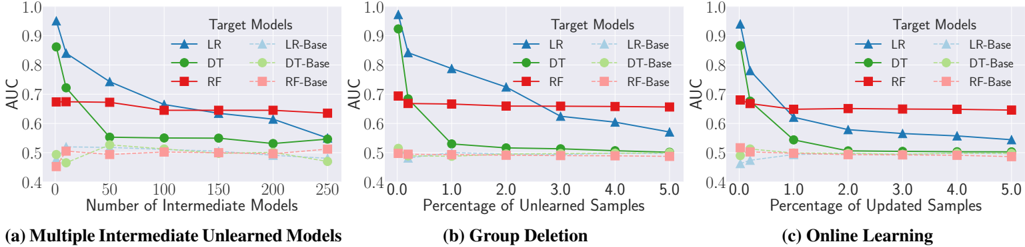
- Main analysis compares feature constructions (DirectConcat, SortedConcat, DirectDiff, SortedDiff, EucDist), tests overfitting effects, shadow-model transferability, multiple intermediate unlearned models, group deletion, online learning, and defense mechanisms.
## Limitations
- The paper explicitly notes that the evaluation of the attack in other scenarios is deferred to Section 6, and that some experiments are limited by space; for example, the multiple-intermediate-models experiment is concentrated on Insta-NY with three target models.
- The defense DP-SGD is only reported for logistic regression because it can only be applied to models that undergo gradient updating; this is stated in the paper.
- Evident from the text: several reported results are based on selected datasets/models and some figures/tables are partially summarized in the excerpt, so the paper’s broader empirical coverage is not fully visible here.
Model-written summary. Check it against the paper before relying on it.
Integrity signals
Registry
Cites
Statistics
Figures
Verification
Claims the paper makes
5 Valid · 1 Not valid · 5 Not checked · 94 Own results and interpretations
Every source the paper cites for this claim was checked and supports it.
In the paper
“This is consistent with the conclusion of previous studies [60, 64] that classical membership inference (which uses plain posterior information) performs well on overfitted target models.”
What the sources say
- Supportedcites [60] [60] Ahmed Salem, Yang Zhang, Mathias Humbert, Pascal Berrang, Mario Fritz, and Michael Backes. ML-Leaks: Model and Data Independent Membership Inference Attacks and Defenses on Machine Learning Models. In Network and Distributed System Security Symposium (NDSS) . Internet Society, 2019. 1, 3, 4, 6, 8, 13, 14 - source
The Experimental Setup (page not provided) reports that more-overfitted target models are more vulnerable to membership inference, with substantially stronger attack performance on a highly overfitted model. The Membership Inference section (page not provided) describes an attack that uses the target model’s output posteriors to predict membership. (LLM, conf=0.91)
- Supportedcites [64] [64] Reza Shokri, Marco Stronati, Congzheng Song, and Vitaly Shmatikov. Membership Inference Attacks Against Machine Learning Models. In IEEE Symposium on Security and Privacy (S&P) , pages 3-18. IEEE, 2017. 1, 3, 4, 8, 12, 13, 14 - source
The attack overview (p. 4) says the membership-inference attack uses the target model’s prediction vector of class probabilities. “Effect of overfitting” (p. 11) reports that larger train–test accuracy gaps are associated with higher membership-inference precision. The paper also cautions that overfitting is not the only factor affecting attack success. (LLM, conf=0.92)
plainstates an association- Asserted: passes — The authors put it forward as true.
- Checkable: passes — It can be checked against evidence.
- Load-bearing: passes — The paper’s conclusions depend on it.
- Based: passes — The paper gives a reason why it holds.
- Supported
The cited sources support only part of this claim — read each source’s verdict below.
In the paper
“For the well-generalized target models, exploiting the plain posterior information has shown to perform poorly in terms of membership inference [60, 64].”
What the sources say
- Supportedcites [60] [60] Ahmed Salem, Yang Zhang, Mathias Humbert, Pascal Berrang, Mario Fritz, and Michael Backes. ML-Leaks: Model and Data Independent Membership Inference Attacks and Defenses on Machine Learning Models. In Network and Distributed System Security Symposium (NDSS) . Internet Society, 2019. 1, 3, 4, 6, 8, 13, 14 - source
The Experimental Setup discussion of Figure 2 reports that models with less overfitting are less vulnerable to membership inference: the Adult target model had only a 2% training–testing accuracy gap, and the attack achieved about 0.5 precision and recall. The paper describes this attack as using the target model’s output posteriors. (LLM, conf=0.87)
- Partly supportedcites [64] [64] Reza Shokri, Marco Stronati, Congzheng Song, and Vitaly Shmatikov. Membership Inference Attacks Against Machine Learning Models. In IEEE Symposium on Security and Privacy (S&P) , pages 3-18. IEEE, 2017. 1, 3, 4, 8, 12, 13, 14 - sourceExperimental — accuracy not yet measured
Section F (p. 11) reports near-random membership-inference precision for a target model with nearly identical training and test accuracy, and Section VII (p. 12) links attack success to generalizability. But the paper evaluates a trained attack model using prediction outputs, not a separate method that exploits only plain posterior information; it also says overfitting is not the only factor affecting leakage. (LLM, conf=0.84)
plain- Asserted: passes — The authors put it forward as true.
- Checkable: passes — It can be checked against evidence.
- Load-bearing: passes — The paper’s conclusions depend on it.
- Based: passes — The paper gives a reason why it holds.
- Supported
A result the paper reports from its own data — it cites no other source for it, so there is none to check. The quote shows it is in the paper.
In the paper
“More importantly, we show that our attack in multiple cases outperforms the classical membership inference attack on the original ML model, which indicates that machine unlearning can have counterproductive effects on privacy.”
boostedstates an association- Asserted: passes — The authors put it forward as true.
- Checkable: passes — It can be checked against evidence.
- Load-bearing: passes — The paper’s conclusions depend on it.
- Based: passes — The paper gives a reason why it holds.
- Rests on 5 assumptions not shown here.
A result the paper reports from its own data — it cites no other source for it, so there is none to check. The quote shows it is in the paper.
In the paper
“We notice that the privacy degradation is especially significant for well-generalized ML models where classical membership inference does not perform well.”
- Also stated in: § When Machine Unlearning Jeopardizes Privacy · plain
“In particular, we observe that privacy is especially degraded because of machine unlearning in the case of well-generalized models.”
plainstates a cause- Asserted: passes — The authors put it forward as true.
- Checkable: passes — It can be checked against evidence.
- Load-bearing: passes — The paper’s conclusions depend on it.
- Based: passes — The paper gives a reason why it holds.
- Rests on 5 assumptions not shown here.
- Also stated in: § When Machine Unlearning Jeopardizes Privacy · plain
A result the paper reports from its own data — it cites no other source for it, so there is none to check. The quote shows it is in the paper.
In the paper
“We further investigate four mechanisms to mitigate the newly discovered privacy risks and show that releasing the predicted label only, temperature scaling, and differential privacy are effective.”
- Also stated in: § When Machine Unlearning Jeopardizes Privacy · plain
“publishing only the predicted label, temperature scaling, and differential privacy can effectively prevent our attack.”
plainstates a cause- Asserted: passes — The authors put it forward as true.
- Checkable: passes — It can be checked against evidence.
- Load-bearing: passes — The paper’s conclusions depend on it.
- Based: passes — The paper gives a reason why it holds.
- Rests on 5 assumptions not shown here.
- Also stated in: § When Machine Unlearning Jeopardizes Privacy · plain
58 more claims
Create a free account to see all 105 claims and to verify the 8 references still open.
- Probably not a substantial claim. 16
- It may state two separate claims as one. 28
- The quote only partly states this claim. 2
Claims other papers make about this one
Each is checked against this paper’s own text: does it say what the citing paper says it does?
The source backs part of the claim, not all of it — or backs it for a different population, condition or comparison.
In the citing paper
“Thus, a membership inference attack or a poisoning attack would reveal a significant amount of detailed information about the unlearned samples [78, 108].”
From Machine Unlearning: A Survey (2024) · cites this paper as [78]
Experimental — accuracy not yet measuredThe cited source says what the claim attributes to it.
In the citing paper
“This could exacerbate user privacy issues if an attacker has access to the model before and after the unlearning operation [78].”
From Machine Unlearning: A Survey (2024) · cites this paper as [78]
Citations
Cites
Deep Residual Learning for Image Recognition
He, K., Zhang, X., Ren, S., & Sun, J. (2016) · 2016 IEEE Conference on Computer Vision and Pattern Recognition (CVPR) · doi:10.1109/cvpr.2016.90 · Cited by 235,474
Densely Connected Convolutional Networks
Huang, G., Liu, Z., Van Der Maaten, L., & Weinberger, K. Q. (2017) · 2017 IEEE Conference on Computer Vision and Pattern Recognition (CVPR) · doi:10.1109/cvpr.2017.243 · Cited by 48,566
Deep Learning with Differential Privacy
Abadi, M., Chu, A., Goodfellow, I., McMahan, H. B., Mironov, I., Talwar, K., & Zhang, L. (2016) · Proceedings of the 2016 ACM SIGSAC Conference on Computer and Communications Security · doi:10.1145/2976749.2978318 · Cited by 6,578
The Algorithmic Foundations of Differential Privacy
Dwork, C., & Roth, A. (2014) · Foundations and Trends® in Theoretical Computer Science · doi:10.1561/0400000042 · Cited by 5,557
Membership Inference Attacks Against Machine Learning Models
Shokri, R., Stronati, M., Song, C., & Shmatikov, V. (2017) · 2017 IEEE Symposium on Security and Privacy (SP) · doi:10.1109/sp.2017.41 · Cited by 4,754 · cited 10×
“, Po and Pu , also referred to as confidence values [64].”
BackgroundMethodResultInfluentialAn analysis of single-layer networks in unsupervised feature learning
Coates, A., Ng, A. Y., & Lee, H. (2011) · International Conference on Artificial Intelligence and Statistics · Cited by 4,675
The Limitations of Deep Learning in Adversarial Settings
Papernot, N., McDaniel, P., Jha, S., Fredrikson, M., Celik, Z. B., & Swami, A. (2016) · 2016 IEEE European Symposium on Security and Privacy (EuroS&P) · doi:10.1109/eurosp.2016.36 · Cited by 3,993
The Algorithmic Foundations of Differential Privacy
Dwork, C., & Roth, A. (2013) · doi:10.1561/9781601988195 · Cited by 3,856
Practical Black-Box Attacks against Machine Learning
Papernot, N., McDaniel, P., Goodfellow, I., Jha, S., Celik, Z. B., & Swami, A. (2017) · Proceedings of the 2017 ACM on Asia Conference on Computer and Communications Security · doi:10.1145/3052973.3053009 · Cited by 3,495
On calibration of modern neural networks
Guo, C., Pleiss, G., Sun, Y., & Weinberger, K. Q. (2017) · arXiv · doi:10.48550/arxiv.1706.04599 · Cited by 3,435
Research works printed but not linked: 1
- [63] Reza Shokri, Martin Strobel, and Yair Zick. Exploiting Transparency Measures for Membership Inference: a Cautionary Tale. In The AAAI Workshop on PrivacyPreserving Artificial Intelligence (PPAI) . AAAI, 2020. 14 -
Cited by
Fast Yet Effective Machine Unlearning
Tarun, A. K., Chundawat, V. S., Mandal, M., & Kankanhalli, M. (2021) · arXiv · doi:10.48550/arxiv.2111.08947 · Cited by 190
“Some researchers have studied the unintended privacy risks resulting from the existing unlearning methods [34], [35].”
BackgroundFast Yet Effective Machine Unlearning
Tarun, A. K., Chundawat, V. S., Mandal, M., & Kankanhalli, M. (2024) · IEEE Transactions on Neural Networks and Learning Systems · doi:10.1109/tnnls.2023.3266233 · Cited by 182
“Some researchers have studied the unintended privacy risks resulting from the existing unlearning methods [34], [35].”
BackgroundChundawat, V. S., Tarun, A. K., Mandal, M., & Kankanhalli, M. (2023) · IEEE Transactions on Information Forensics and Security · doi:10.1109/tifs.2023.3265506 · Cited by 162
“The possible information leakage in the existing machine unlearning methods as discussed in [23] also motivated us to look towards a completely data-free approach to unlearning.”
Xu, H., Zhu, T., Zhang, L., Zhou, W., & Yu, P. S. (2024) · ACM Computing Surveys · doi:10.1145/3603620 · Cited by 164
“Thus, a membership inference attack or a poisoning attack would reveal a signiicant amount of detailed information about the unlearned samples [78, 108].”
BackgroundUnrolling SGD: Understanding Factors Influencing Machine Unlearning
Thudi, A., Deza, G., Chandrasekaran, V., & Papernot, N. (2022) · 2022 IEEE 7th European Symposium on Security and Privacy (EuroS&P) · doi:10.1109/eurosp53844.2022.00027 · Cited by 135
“Machine unlearning has since been extended to deep neural networks (DNNs) [7, 8, 9, 10, 11, 12, 13], and its privacy implications have been studied [14, 15, 16].”
BackgroundChen, M., Zhang, Z., Wang, T., Backes, M., Humbert, M., & Zhang, Y. (2022) · Proceedings of the 2022 ACM SIGSAC Conference on Computer and Communications Security · doi:10.1145/3548606.3559352 · Cited by 133
Self-citationA Survey on Federated Unlearning: Challenges, Methods, and Future Directions
Liu, Z., Jiang, Y., Shen, J., Peng, M., Lam, K., Yuan, X., & Liu, X. (2024) · ACM Computing Surveys · doi:10.1145/3679014 · Cited by 236
“When the FU system receives an unlearning request, it can follow either the passive unlearning approach, where the target client exits the system immediately, or the “Active unlearning" approach, where the target client chooses to stay and participate in the unlearning process.”
Machine Unlearning: Solutions and Challenges
Xu, J., Wu, Z., Wang, C., & Jia, X. (2024) · IEEE Transactions on Emerging Topics in Computational Intelligence · doi:10.1109/tetci.2024.3379240 · Cited by 237
“1) Problem Definition: Machine unlearning refers to the process of removing the influence of specific training data points on an already trained machine learning model [26].”
BackgroundInfluentialA Survey of Machine Unlearning
Nguyen, T. T., Huynh, T. T., Ren, Z., Nguyen, P. L., Liew, A. W.-C., Yin, H., & Nguyen, Q. V. H. (2025) · ACM Transactions on Intelligent Systems and Technology · doi:10.1145/3749987 · Cited by 164
“ShallowAttack [23] Python Pytorch Model-agnostic https://github.”
InfluentialDescent-to-Delete: Gradient-Based Methods for Machine Unlearning
Neel, S., Roth, A., & Sharifi-Malvajerdi, S. (2020) · arXiv · doi:10.48550/arxiv.2007.02923 · Cited by 96
Boundary Unlearning: Rapid Forgetting of Deep Networks via Shifting the Decision Boundary
Chen, M., Gao, W., Liu, G., Peng, K., & Wang, C. (2023) · IEEE Computer Society Conference on Computer Vision and Pattern Recognition/Proceedings - IEEE Computer Society Conference on Computer Vision and Pattern Recognition/Proceedings · doi:10.1109/cvpr52729.2023.00750 · Cited by 247
“MIA aims to infer whether a data record was used to train a target ML model or not [16, 21, 28], and its ASR is widely used as an evaluation metric to verify the privacy guarantee of an unlearning method [1,5,23,30].”
MethodSelf-citationSurvey: Leakage and Privacy at Inference Time
Jegorova, M., Kaul, C., Mayor, C., O'Neil, A. Q., Weir, A., Murray-Smith, R., & Tsaftaris, S. A. (2022) · IEEE Transactions on Pattern Analysis and Machine Intelligence · doi:10.1109/tpami.2022.3229593 · Cited by 77
A Review on Machine Unlearning
Zhang, H., Nakamura, T., Isohara, T., & Sakurai, K. (2023) · SN Computer Science · doi:10.1007/s42979-023-01767-4 · Cited by 141
“[7] propose that machine unlearning methods can also be attacked and leak the privacy of models in specific scenarios, such as membership inference attacks [57–60].”
BackgroundApruzzese, G., Anderson, H. S., Dambra, S., Freeman, D. M., Pierazzi, F., & Roundy, K. (2023) · IEEE Conference on Secure and Trustworthy Machine Learning (SaTML) · doi:10.1109/satml54575.2023.00031 · Cited by 199
Heterogeneous Federated Knowledge Graph Embedding Learning and Unlearning
Zhu, X., Li, G., & Hu, W. P. (2023) · International World Wide Web Conference (WWW) · doi:10.1145/3543507.3583305 · Cited by 118
Menard, P., & Bott, G. J. (2024) · Information Systems Journal · doi:10.1111/isj.12544 · Cited by 122
“Additionally, while such approaches will help mitigate data permanence, machine unlearning is not yet a perfect process (Chen et al., 2021).”
A Survey of Machine Unlearning
Nguyen, T. T., Huynh, T. T., Ren, Z., Nguyen, P. L., Liew, A. W.-C., Yin, H., & Nguyen, Q. V. H. (2022) · arXiv · doi:10.48550/arxiv.2209.02299 · Cited by 193
“ShallowAttack [23] Python Pytorch Model-agnostic https://github.”
InfluentialFedME 2 : Memory Evaluation & Erase Promoting Federated Unlearning in DTMN
Xia, H., Xu, S., Pei, J., Zhang, R., Yu, Z. H., Zou, W., Wang, L., & Liu, C. (2023) · IEEE Journal on Selected Areas in Communications · doi:10.1109/jsac.2023.3310049 · Cited by 77
“The machine unlearning schemes compared with ME 2 (our machine unlearning scheme) are Finetune [42], Random Labels [25], Fisher [43], and PGD [16].”
BackgroundMethodLearn to Forget: Machine Unlearning via Neuron Masking
Ma, Z., Liu, Y., Liu, X., Liu, J., Ma, J., & Ren, K. (2022) · IEEE Transactions on Dependable and Secure Computing · doi:10.1109/tdsc.2022.3194884 · Cited by 130
“[46] studied the member privacy leakage problem caused by machine unlearning and presented potential ways to mitigate the problem.”
BackgroundRecent Advances of Differential Privacy in Centralized Deep Learning: A Systematic Survey
Demelius, L., Kern, R., & Trügler, A. (2025) · ACM Computing Surveys · doi:10.1145/3712000 · Cited by 112
“Chen et al. [38] proposed a new black-box MIA that exploits both the original and the unlearned model.”
Unleashing the potential of AI for pathology: challenges and recommendations
Asif, A., Rajpoot, K., Graham, S., Snead, D. R. J., Minhas, F., & Rajpoot, N. (2023) · The Journal of Pathology · doi:10.1002/path.6168 · Cited by 75
Athena: Probabilistic Verification of Machine Unlearning
Sommer, D. M., Song, L., Wagh, S., & Mittal, P. (2022) · Proceedings on Privacy Enhancing Technologies · doi:10.56553/popets-2022-0072 · Cited by 51
“[14] try to infer the privacy loss resulting from performing unlearning.”
BackgroundNo Privacy Left Outside: On the (In-)Security of TEE-Shielded DNN Partition for On-Device ML
Zhang, Z., Gong, C., Cai, Y., Yuan, Y., Liu, B., Li, D., Guo, Y., & Chen, X. (2024) · IEEE Symposium on Security and Privacy (S&P) · doi:10.1109/sp54263.2024.00052 · Cited by 101
“Recent work has consistently employed ML-D OCTOR for membership inference [86], [23], [18].”
MethodSelf-citationAdvancing Differential Privacy: Where We Are Now and Future Directions for Real-World Deployment
Cummings, R., Desfontaines, D., Evans, D., Geambasu, R., Huang, Y., Jagielski, M., Kairouz, P., Kamath, G., Oh, S., Ohrimenko, O., et al. (2024) · Harvard Data Science Review · doi:10.1162/99608f92.d3197524 · Cited by 156
Learn What You Want to Unlearn: Unlearning Inversion Attacks against Machine Unlearning
Hu, H., Wang, S., Dong, T., & Xue, M. (2024) · IEEE Symposium on Security and Privacy (S&P) · doi:10.1109/sp54263.2024.00248 · Cited by 104
“Despite the progress of machine unlearning techniques towards protecting privacy, recent studies [13], [15], [26] show that different kinds of vulnerabilities can exist in machine unlearning.”
BackgroundInfluentialFederated Unlearning and Its Privacy Threats
Fei, W., Li, B., & Li, B. (2023) · IEEE Network · doi:10.1109/mnet.004.2300056 · Cited by 61
“…train a shadow model to mimic the behavior of the target model, generating training data for the attack model. o There are two key assumptions on an adversary’s knowledge [11], [13]: (1) the target model architecture, and (2) a local shadow dataset from the same distribution as the target dataset.”
BackgroundMethodInfluentialTowards Probabilistic Verification of Machine Unlearning
Sommer, D. M., Song, L., Wagh, S., & Mittal, P. (2020) · arXiv · doi:10.48550/arxiv.2003.04247 · Cited by 38
Liu, G., Xu, T., Ma, X., & Wang, C. (2022) · IEEE Transactions on Information Forensics and Security · doi:10.1109/tifs.2022.3155921 · Cited by 52
Threats, Attacks, and Defenses in Machine Unlearning: A Survey
Liu, Z., Ye, H., Chen, C., Zheng, Y., & Lam, K. (2025) · IEEE Open Journal of the Computer Society · doi:10.1109/ojcs.2025.3543483 · Cited by 103
“Compared to [48], the membership inference attack outlined in [49] necessitates less information, relying solely on the Top-1 value of the confi-dence vectors, namely, the inferred label.”
InfluentialLiu, H., Wu, Y., Yu, Z., & Zhang, N. (2024) · IEEE Symposium on Security and Privacy (S&P) · doi:10.1109/sp54263.2024.00120 · Cited by 85
“These shadow models are then employed to generate features for training a neural network-based attack model [22], [26], [27], [33].”
Machine Unlearning: Taxonomy, Metrics, Applications, Challenges, and Prospects
Li, N., Zhou, C., Gao, Y., Chen, H., Zhang, Z., Kuang, B., & Fu, A. (2025) · IEEE Transactions on Neural Networks and Learning Systems · doi:10.1109/tnnls.2025.3530988 · Cited by 134
“1) MU-Specific Membership Inference Attack (MU-MIA): Because D u often tends to contain more sensitive information than D r , the goal of the MU-MIA is to determine whether a target sample is forgotten data [127].”
Self-citationNo Matter How You Slice It: Machine Unlearning with SISA Comes at the Expense of Minority Classes
Koch, K., & Soll, M. (2023) · IEEE Conference on Secure and Trustworthy Machine Learning (SaTML) · doi:10.1109/satml54575.2023.00047 · Cited by 53
“Besides allowing effective machine unlearning, SISA seems to protect well from attacks on privacy as the aggregation step of SISA reduces the influence of individual samples on the final prediction [13].”
BackgroundExact-Fun: An Exact and Efficient Federated Unlearning Approach
Xiong, Z., Li, W., Li, Y., & Cai, Z. (2023) · Proceedings · doi:10.1109/icdm58522.2023.00188 · Cited by 67
Right to Be Forgotten in the Age of Machine Learning
Dang, Q.-V. (2021) · Advances in intelligent systems and computing · doi:10.1007/978-3-030-71782-7_35 · Cited by 57
Feature-Based Machine Unlearning for Vertical Federated Learning in IoT Networks
Pan, Z., Ying, Z., Wang, Y., Zhang, C., Zhang, W., Zhou, W., & Zhu, L. (2025) · IEEE Transactions on Mobile Computing · doi:10.1109/tmc.2025.3530529 · Cited by 40
“These methods systematically reduce the impact of data points on the model’s learned parameters through direct modification techniques, although they often require significant computational resources [34], [35].”
Olszewski, D., Lu, A., Stillman, C., Warren, K., Kitroser, C., Pascual, A., Ukirde, D., Butler, K. R. B., & Traynor, P. (2023) · ACM SIGSAC Conference on Computer and Communications Security (CCS) · doi:10.1145/3576915.3623130 · Cited by 85
Learn to Unlearn: Insights Into Machine Unlearning
Qu, Y., Yuan, X., Ding, M., Ni, W., Rakotoarivelo, T., & Smith, D. B. (2024) · Computer · doi:10.1109/mc.2023.3333319 · Cited by 43
Label‐only membership inference attacks on machine unlearning without dependence of posteriors
Lu, Z., Liang, H., Zhao, M., Lv, Q., Liang, T., & Wang, Y. (2022) · International Journal of Intelligent Systems · doi:10.1002/int.23000 · Cited by 36
“Membership inference in machine unlearning can be traced back to the attack proposed by Chen et al. 32 Their attack mainly depends on the output posteriors of the original model and the unlearned model, which are used as the input of the adversary model.”
MethodProof of Unlearning: Definitions and Instantiation
Weng, J., Yao, S., Du, Y., Huang, J., Weng, J., & Wang, C. (2024) · IEEE Transactions on Information Forensics and Security · doi:10.1109/tifs.2024.3358993 · Cited by 52
“Additionally, recent inference attacks [20], [28] on unlearned models are out of consideration.”
BackgroundBelt and Braces: When Federated Learning Meets Differential Privacy
Ren, X., Yang, S., Zhao, C., McCann, J. A., & Xu, Z. (2024) · Communications of the ACM · doi:10.1145/3650028 · Cited by 41
“On the other hand, existing machine unlearning has been demonstrated to leak privacy by observing the differences between the original and unlearned models [11].”
Learning with Recoverable Forgetting
Ye, J., Fu, Y., Song, J., Yang, X., Liu, S., Jin, X., Song, M., & Wang, X. (2022) · Lecture notes in computer science · doi:10.1007/978-3-031-20083-0_6 · Cited by 63
An overview of machine unlearning
Li, C., Jiang, H., Chen, J., Zhao, Y. L., Fu, S., Jing, F., & Guo, Y. (2024) · High-Confidence Computing · doi:10.1016/j.hcc.2024.100254 · Cited by 36
Real-Time Trajectory Synthesis with Local Differential Privacy
Hu, Y., Du, Y., Zhang, Z., Fang, Z., Chen, L., Zheng, K., & Gao, Y. (2024) · IEEE International Conference on Data Engineering (ICDE) · doi:10.1109/icde60146.2024.00137 · Cited by 20
“Since the data collector is not always trusted, sensitive information about an individual’s locations may be revealed by adversaries [11], [12], [44], [32], which limits the practical applications of trajectory stream analysis.”
BackgroundSelf-citationMachine Unlearning: Its Nature, Scope, and Importance for a “Delete Culture”
Floridi, L. (2023) · Philosophy & Technology · doi:10.1007/s13347-023-00644-5 · Cited by 29
“, 2021), and management issues (MU can also be subject to malicious attacks (Chen et al., 2021)).”
BackgroundLi, D., Zhang, Z., Yao, M., Cai, Y., Guo, Y., & Chen, X. (2025) · ACM Transactions on Software Engineering and Methodology · doi:10.1145/3707453 · Cited by 37
“Recent work has consistently employed ML-Doctor for membership inference [18, 24, 121].”
Self-citationSupporting Trustworthy AI Through Machine Unlearning
Hine, E., Novelli, C., Taddeo, M., & Floridi, L. (2024) · Science and Engineering Ethics · doi:10.1007/s11948-024-00500-5 · Cited by 40
ERASER: Machine Unlearning in MLaaS via an Inference Serving-Aware Approach
Hu, Y., Lou, J., Liu, J., Ni, W., Lin, F., Qin, Z., & Ren, K. (2024) · ACM SIGSAC Conference on Computer and Communications Security (CCS) · doi:10.1145/3658644.3670398 · Cited by 38
A survey on machine unlearning: Techniques and new emerged privacy risks
Liu, H., Xiong, P., Zhu, T., & Yu, P. S. (2025) · Journal of Information Security and Applications · doi:10.1016/j.jisa.2025.104010 · Cited by 45
A Dataset Auditing Method for Collaboratively Trained Machine Learning Models
Huang, Y., Huang, C.-Y., Li, X., & Li, K. (2022) · IEEE Transactions on Medical Imaging · doi:10.1109/tmi.2022.3220706 · Cited by 23
“A large body of recent work focus on different models of unlearning [17], [18], [19], [20], [21], [22], [23].”
BackgroundDual-Server-Based Lightweight Privacy-Preserving Federated Learning
Zhong, L., Wang, L., Zhang, L., Domingo‐Ferrer, J., Xu, L., Wu, C., & Zhang, R. (2024) · IEEE Transactions on Network and Service Management · doi:10.1109/tnsm.2024.3399534 · Cited by 14
“Although FL avoids the need for users to share their local data, the local gradients sent by a user to the server may leak sensitive information on the user’s data set [8], [26], [37], [52].”
BackgroundGuaranteeing Data Privacy in Federated Unlearning With Dynamic User Participation
Liu, Z., Jiang, Y., Jiang, W., Guo, J., Zhao, J., & Lam, K. (2024) · IEEE Transactions on Dependable and Secure Computing · doi:10.1109/tdsc.2024.3476533 · Cited by 31
“These include leakages from discrepancies between trained and unlearned models [7], [15], [22], [41], as well as those arising from dependencies between adaptive unlearning requests [9].”
Learning to Unlearn for Robust Machine Unlearning
Huang, H., Foo, L. G., & Liu, J. (2024) · Lecture notes in computer science · doi:10.1007/978-3-031-72943-0_12 · Cited by 46
SeqMIA: Sequential-Metric Based Membership Inference Attack
Li, H., Li, Z., Wu, S., Hu, C., Ye, Y., Zhang, M., Feng, D., & Zhang, Y. (2024) · ACM SIGSAC Conference on Computer and Communications Security (CCS) · doi:10.1145/3658644.3690335 · Cited by 33
Self-citationA survey of security and privacy issues of machine unlearning
Chen, A., Li, Y., Zhao, C., & Huai, M. (2025) · AI Magazine · doi:10.1002/aaai.12209 · Cited by 32
Finding MNEMON: Reviving Memories of Node Embeddings
Shen, Y. C., Han, Y., Zhang, Z., Chen, M., Yu, T., Backes, M., Zhang, Y., & Stringhini, G. (2022) · ACM SIGSAC Conference on Computer and Communications Security (CCS) · doi:10.1145/3548606.3559358 · Cited by 19
Self-citationLanding AI on Networks: An Equipment Vendor Viewpoint on Autonomous Driving Networks
Rossi, D., & Zhang, L. (2022) · IEEE Transactions on Network and Service Management · doi:10.1109/tnsm.2022.3169988 · Cited by 22
“However, as pointed out in [145] these algorithms are not immune to attacks, so that machine unlearning can have counterproductive effects on privacy.”
BackgroundTowards Improving Privacy of Synthetic DataSets
Kuppa, A., Aouad, L. M., & Le‐Khac, N. (2021) · Lecture notes in computer science · doi:10.1007/978-3-030-76663-4_6 · Cited by 28
Class Clown: Data Redaction in Machine Unlearning at Enterprise Scale
Felps, D., Schwickerath, A., Williams, J., Vuong, T., Briggs, A., Hunt, M., Sakmar, E., Saranchak, D., & Shumaker, T. (2021) · Proceedings of the 10th International Conference on Operations Research and Enterprise Systems · doi:10.5220/0010419600070014 · Cited by 12
“Chen (Chen et al., 2020) introduces explicitly leveraging the MI attack to directly measure how much privacy information has been degraded.”
BackgroundEvaluation of Machine Unlearning Through Model Difference
Wang, W., Zhang, C., Tian, Z., Yu, S., & Su, Z. (2025) · IEEE Transactions on Information Forensics and Security · doi:10.1109/tifs.2025.3571666 · Cited by 15
“Machine unlearning operations unavoidably create two versions of the model: one before and one after unlearning [22].”
InfluentialGoldfish: An Efficient Federated Unlearning Framework
Wang, H., Zhu, X., Chen, C., & Veríssimo, P. (2024) · International Conference on Dependable Systems & Networks/Proceedings · doi:10.1109/dsn58291.2024.00035 · Cited by 21
“Recent studies [18]–[20] have demonstrated that attackers, such as a malicious central server, can exploit clients’ local gradients to mount attacks that reconstruct private training samples of the clients.”
A Survey on Knowledge Editing of Neural Networks
Mazzia, V., Pedrani, A., Caciolai, A., Rottmann, K., & Bernardi, D. (2024) · IEEE Transactions on Neural Networks and Learning Systems · doi:10.1109/tnnls.2024.3498935 · Cited by 52
“This task is gaining relevance due to its applications in data privacy [121], security [122], and compliance with regulations such as GDPR [123].”
QuickDrop: Efficient Federated Unlearning via Synthetic Data Generation
Dhasade, A., Ding, Y., Guo, S., Kermarrec, A.-M., de Vos, M., & Wu, L. (2024) · International Middleware Conference · doi:10.1145/3652892.3700764 · Cited by 24
“To further assess the effectiveness of unlearning with QuickDrop, we conduct a membership inference attack (MIA) on the unlearned model, which follows related work on MU [9].”
Subject-Level Membership Inference Attack via Data Augmentation and Model Discrepancy
Liu, Y., Jiang, P., & Zhu, L. (2023) · IEEE Transactions on Information Forensics and Security · doi:10.1109/tifs.2023.3318950 · Cited by 15
“This sensitivity can make it more likely for the tree-structured attack model to obtain information about the subjects [16].”
BackgroundMethodInfluentialSCU: An Efficient Machine Unlearning Scheme for Deep Learning Enabled Semantic Communications
Wang, W., Tian, Z., Zhang, C., & Yu, S. (2024) · IEEE Transactions on Information Forensics and Security · doi:10.1109/tifs.2024.3516576 · Cited by 14
“We choose the backdoor-based evaluation method rather than membership inference attack (MIA) methods because back-door accuracy is more oblivious than MIA to evaluate if the sample is unlearned from the model [39].”
TAPE: Tailored Posterior Difference for Auditing of Machine Unlearning
Wang, W., Tian, Z., Liu, A., & Yu, S. (2025) · International World Wide Web Conference (WWW) · doi:10.1145/3696410.3714875 · Cited by 19
Generative Adversarial Networks Unlearning
Sun, H., Zhu, T., Chang, W., & Zhou, W. (2025) · IEEE Transactions on Dependable and Secure Computing · doi:10.1109/tdsc.2025.3564992 · Cited by 23
“A membership inference attack (MIA) is a popular unlearning measurement in classifier unlearning works [13], [44].”
BackgroundMachine Unlearning: An Overview of the Paradigm Shift in the Evolution of AI
Jaman, L., Alsharabi, R., & Elkafrawy, P. (2024) · Learning and Technology Conference (L&T) · doi:10.1109/lt60077.2024.10469232 · Cited by 14
“The unlearning process itself poses privacy risks in various ways [7].”
BackgroundAppro-Fun: Approximate Machine Unlearning in Federated Setting
Xiong, Z., Li, W., & Cai, Z. (2024) · International Conference on Computer Communications and Networks (ICCCN) · doi:10.1109/icccn61486.2024.10637564 · Cited by 11
Comparing Different Membership Inference Attacks With a Comprehensive Benchmark
Niu, J., Zhu, X., Zeng, M., Zhang, G., Zhao, Q., Huang, C., Zhang, Y., An, S., Wang, Y., Yue, X., et al. (2025) · IEEE Transactions on Information Forensics and Security · doi:10.1109/tifs.2025.3550070 · Cited by 19
“…broadly categorized into two distinct types based on their output characteristics: indiscriminate attacks (e.g., [5], [6], [9], [10], [11], [12], [13], [14], [15], [16], [17], [18], [19], [20], [21], [22], [23], [24], [25], [26], [27]) and fine-grained attacks (e.g., [28], [29], [30], [31], [32],…”
Self-citationMachine Unlearning by Reversing the Continual Learning
Zhang, Y., Lu, Z., Zhang, F., Wang, H., & Li, S. (2023) · Applied Sciences · doi:10.3390/app13169341 · Cited by 24
Self-citationExploring Unlearning Methods to Ensure the Privacy, Security, and Usability of Recommender Systems
Leysen, J. (2023) · ACM Conference on Recommender Systems (RecSys) · doi:10.1145/3604915.3608862 · Cited by 10
“have discussed membership inference attacks as a measurement of privacy degradation [4].”
BackgroundMachine unlearning in brain-inspired neural network paradigms
Wang, C., Ying, Z., & Pan, Z. (2024) · Frontiers in Neurorobotics · doi:10.3389/fnbot.2024.1361577 · Cited by 9
Machine Unlearning Methodology Based on Stochastic Teacher Network
Zhang, X., Wang, J., Cheng, N., Sun, Y., Zhang, C., & Xiao, J. (2023) · Lecture notes in computer science · doi:10.1007/978-3-031-46677-9_18 · Cited by 17
TruVRF: Toward Triple-Granularity Verification on Machine Unlearning
Zhou, C., Gao, Y., Fu, A., Chen, K., Zhang, Z., Xue, M., Dai, Z., Ji, S., & Zhang, Y. (2025) · IEEE Transactions on Information Forensics and Security · doi:10.1109/tifs.2025.3565991 · Cited by 7
“This model access aligns with previous unlearning research [3], [7], [18], [45].”
Self-citationMachine Unlearning for Seizure Prediction
Shao, C., Li, C., Song, R., Liu, X., Qian, R., & Chen, X. (2024) · IEEE Transactions on Cognitive and Developmental Systems · doi:10.1109/tcds.2024.3395663 · Cited by 10
“MIA is proposed with an aim to infer whether a sample was used to train a target machine learning model or not, and the ASR is widely used to evaluate the privacy guarantee of unlearning methods [22], [48], [49], [50].”
Hong, Y., Timperley, C. S., & Kästner, C. (2025) · IEEE/ACM International Conference on AI Engineering – Software Engineering for AI (CAIN) · doi:10.1109/cain66642.2025.00021 · Cited by 15
“For example, applications may unintentionally amplify biases [1] or introduce privacy risks [2].”
A Survey on Recommendation Unlearning: Fundamentals, Taxonomy, Evaluation, and Open Questions
Li, Y., Feng, X., Chen, C., & Yang, Q. (2025) · IEEE Transactions on Knowledge and Data Engineering · doi:10.1109/tkde.2025.3638174 · Cited by 53
“Furthermore, attackers can exploit the differences between the model parameters before and after unlearning to design more sophisticated and effective attacks [19].”
Conditional Matching GAN Guided Reconstruction Attack in Machine Unlearning
Zhang, K., Wang, W., Fan, Z., Song, X., & Yu, S. (2023) · Globecom · doi:10.1109/globecom54140.2023.10437231 · Cited by 12
“For the machine unlearning process, since the unlearned data belongs to the original model and not belongs to the unlearned model, [9] proposed the membership inference attack.”
BackgroundMethodInfluentialHow to Forget Clients in Federated Online Learning to Rank?
Wang, S., Liu, B., & Zuccon, G. (2024) · Lecture notes in computer science · doi:10.1007/978-3-031-56063-7_7 · Cited by 12
Black-Box Based Limited Query Membership Inference Attack
Zhang, Y., Zhou, H., Wang, P., & Yang, G. (2022) · IEEE Access · doi:10.1109/access.2022.3175824 · Cited by 7
“However, While machine learning brings convenience to people’s lives, it also brings severe challenges to data privacy and security, such as adversarial sample attacks[1], attribute attacks[2] and inference attacks[25].”
BackgroundSelf-citationEvolutionary computation and machine learning in security
Picek, S., & Jakobović, D. (2022) · Genetic and Evolutionary Computation Conference Companion (GECCO Companion) · doi:10.1145/3520304.3534087 · Cited by 6
“[37] Min Chen, Zhikun Zhang, Tianhao Wang, Michael Backes, Mathias Humbert, and Yang Zhang.”
BackgroundFederated Learning for Medical Image Analysis: Privacy-Preserving Paradigms and Clinical Challenges
Hu, J., Yang, Z., Wang, P., Zhao, G., Huang, H., Zong, Z., & Wu, D. O. (2025) · Transactions on Artificial Intelligence · doi:10.53941/tai.2025.100010 · Cited by 13
Towards Reliable Forgetting: A Survey on Machine Unlearning Verification
Xue, L., Hu, S., Lu, W., Shen, Y., Li, D., Guo, P., Zhou, Z., Li, M., Zhang, Y., & Zhang, L. (2026) · ACM Computing Surveys · doi:10.1145/3807451 · Cited by 30
Self-citationDuplexGuard: Safeguarding Deletion Right in Machine Unlearning via Duplex Watermarking
Zhang, X., Zhang, C., Lou, J., Wu, K., Wang, Z., & Chen, X. (2024) · IEEE Transactions on Dependable and Secure Computing · doi:10.1109/tdsc.2024.3456811 · Cited by 9
“Machine unlearning [12], [13], [14] is an emerging line of research proposed strictly to practice RTBF.”
CRFU: Compressive Representation Forgetting Against Privacy Leakage on Machine Unlearning
Wang, W., Zhang, C., Tian, Z., Liu, S., & Yu, S. (2025) · IEEE Transactions on Dependable and Secure Computing · doi:10.1109/tdsc.2025.3542092 · Cited by 9
“For instance, Chen et al. [6] proposed membership inference attacks to infer which data samples are present in the erased dataset.”
InfluentialA survey on large language models unlearning: taxonomy, evaluations, and future directions
Le-Khac, U. N., & Truong, V. (2025) · Artificial Intelligence Review · doi:10.1007/s10462-025-11376-7 · Cited by 16
“In other words, differential privacy makes it challenging to retrace the training data samples via model output examination, and therefore prevent MIA (Jayaraman and Evans 2019; Chen et al. 2021).”
DPMLBench: Holistic Evaluation of Differentially Private Machine Learning
Wei, C., Zhao, M., Zhang, Z., Chen, M., Meng, W., Liu, B., Fan, Y., & Chen, W. (2023) · ACM SIGSAC Conference on Computer and Communications Security (CCS) · doi:10.1145/3576915.3616593 · Cited by 21
Self-citationThe Price of Forgetting: Data Redemption Mechanism Design for Machine Unlearning
Cui, Y., & Cheung, M. H. (2024) · International Conference on Communications · doi:10.1109/icc51166.2024.10622287 · Cited by 8
“The consumed time of Retraining from Scratch [8] and SISA [7] against the various unlearning ratios are shown in Figure 1c and Figure 1d, respectively.”
BackgroundMethodInfluentialSoK: Privacy-Preserving Collaborative Tree-based Model Learning
Chatel, S., Pyrgelis, A., Troncoso-Pastoriza, J. R., & Hubaux, J. (2021) · Proceedings on Privacy Enhancing Technologies · doi:10.2478/popets-2021-0043 · Cited by 22
“This functionality, also referred to as the right to be forgotten, can jeopardize privacy, in particular for tree-based models [30].”
BackgroundFP$$^2$$-MIA: A Membership Inference Attack Free of Posterior Probability in Machine Unlearning
Lu, Z., Wang, Y., Lv, Q., Zhao, M., & Liang, T. (2022) · Lecture notes in computer science · doi:10.1007/978-3-031-20917-8_12 · Cited by 9
Enhancing AI safety of machine unlearning for ensembled models
Ye, H., Guo, J., Liu, Z., Jiang, Y., & Lam, K. (2025) · Applied Soft Computing · doi:10.1016/j.asoc.2025.113011 · Cited by 5
SMS: Self-Supervised Model Seeding for Verification of Machine Unlearning
Wang, W., Zhang, C., Tian, Z., & Yu, S. (2025) · IEEE Transactions on Dependable and Secure Computing · doi:10.1109/tdsc.2025.3615615 · Cited by 7
“Moreover, conducting MIA from the user’s side is complex as it requires users having the adversary’s capability [26], [27] to mimic the training model and prepare the probe data.”
Information Leakage from Data Updates in Machine Learning Models
Hui, T., Farokhi, F., & Ohrimenko, O. (2023) · ACM Workshop on Artificial Intelligence and Security (AISec) · doi:10.1145/3605764.3623905 · Cited by 3
Re-ID-leak: Membership Inference Attacks Against Person Re-identification
Gao, J., Jiang, X., Dou, S., Li, D., Miao, D., & Zhao, C. (2024) · International Journal of Computer Vision · doi:10.1007/s11263-024-02115-6 · Cited by 6
“Attack Model Consistent with prior research Shokri et al. (2017), Long et al. (2018), Salem et al. (2018), Yu et al. (2021), Chen et al. (2021), we employ a multi-layer per-ceptron (MLP) for membership inference.”
Unlearning Vision Transformers Without Retaining Data via Low-Rank Decompositions
Poppi, S., Sarto, S., Cornia, M., Baraldi, L., & Cucchiara, R. (2024) · Lecture notes in computer science · doi:10.1007/978-3-031-78122-3_10 · Cited by 10
“To address these limitations, some works aim to accelerate the retraining process [4,10,21,44].”
Advancing ensemble learning against unlearnable data
Hapuarachchi, T., & Xiong, K. (2025) · Neurocomputing · doi:10.1016/j.neucom.2025.130422 · Cited by 3
Fast yet versatile machine unlearning for deep neural networks
Chen, K., Zhang, D., Mi, B., Huang, Y., & Ли, Ж. (2025) · Neural Networks · doi:10.1016/j.neunet.2025.107648 · Cited by 8
TCGU: Data-Centric Graph Unlearning Based on Transferable Condensation
Li, F., Wang, X., Cheng, D., Zhang, W., Chen, C., Zhang, Y., & Lin, X. (2025) · IEEE Transactions on Knowledge and Data Engineering · doi:10.1109/tkde.2025.3638465 · Cited by 14
“…descriptions of these two methods as follows: Membership Inference Attack: Following [11], [12], we apply an enhanced membership inference attack [33], the attacker with access to both the original and the unlearned model could determine whether a specific node is indeed revoked from the…”
Self-citationMitigate noisy data for smart IoT via GAN based machine unlearning
Ma, Z., Yang, Y., Liu, Y., Liu, X., & Ma, J. (2024) · Science China Information Sciences · doi:10.1007/s11432-022-3671-9 · Cited by 3
“For SISA, referring to [46], we set shards to 10, and each shard trains a constituent model by orderly and incrementally letting 10 slices of the shard participate in the model training.”
MethodRMR: A Relative Membership Risk Measure for Machine Learning Models
Bai, L., Hu, H., Ye, Q., Xu, J., Li, J., Fang, C., & Shi, J. (2025) · IEEE Transactions on Dependable and Secure Computing · doi:10.1109/tdsc.2025.3551921 · Cited by 6
“For example, regularization techniques [5], [11], [38] and confidence score perturbation [5], [39], [42] are widely used to prevent membership inference attacks.”
Metadata
- Authors
- Chen, M., Zhang, Z., Wang, T., Backes, M., Humbert, M., & Zhang, Y.
- Affiliations
- Helmholtz Center for Information Security (DE)
- University of Virginia (US)
- CISPA Helmholtz Center for Information Security, Saarbrücken, Germany
- University of Lausanne (CH)
- Venue
- Proceedings of the 2021 ACM SIGSAC Conference on Computer and Communications Security
- Publisher
- ACM
- Published
- 2021-11-12
- Pages
- 896-911
- ISSN
- 1543-7221 (ISSN-L)
- OpenAlex
- W3023153742
- Semantic Scholar
- 4ebdc89a4dac0d05d8a2567e3b7849be198cb0ba
- Cited by
- 195
- References
- 66
- Citations by year
- 2026: 33 · 2025: 61 · 2024: 45 · 2023: 30 · 2022: 20 · 2021: 6
- FWCI
- 11.67
- Type
- conference paper
- Language
- en
- Open access
- green
- serval.unil.ch
- Locations
- ACM SIGSAC Conference on Computer and Communications Security (CCS) (publishedVersion)
- VU Research Portal (publishedVersion)
- SERVAL (Université de Lausanne) (publishedVersion, other-oa)
- arXiv (Cornell University) (submittedVersion)
- IRIS (submittedVersion)
- VU Research Portal (submittedVersion)
- arXiv (Cornell University)
- Funders
- Helmholtz Association (ZT-I-OO1 4)
- National Science Foundation (1931443)
- Purdue University (Bilsland Dissertation Fellowship)
- David and Lucile Packard Foundation (Packard Fellowship)
- Topics
- Physical Sciences › Computer Science › Artificial Intelligence › Privacy-Preserving Technologies in Data
- Physical Sciences › Computer Science › Artificial Intelligence › Adversarial Robustness in Machine Learning
- Social Sciences › Sociology and Political Science › Privacy, Security, and Data Protection
- Keywords
- machine unlearning, right to be forgotten, membership inference attacks, information leakage, temperature scaling, differential privacy, privacy preservation
About these checks
Registry, retraction, Cites and statistics results are computed, not judged, with one exception: a printed reference that no index lists is read once by a model before it counts as a citation error. Claims are extracted by a model and kept only when their quote appears verbatim in the text; each cited source is then checked, with a model’s help, for whether it says what the claim relies on. Those verdicts can be wrong — read the claim’s quote and the cited source before relying on one.
The claim verdicts this report counts are experimental: their accuracy is not yet measured.
A language model drew the claims from the paper on 2026-10-11, under version 3 of the claim definition (model deepseek-v4.1-flash, prompt extract-v3).
A second model labelled each claim on 2026-10-11 (model jev-1.13-20260917, definition revision gold-guideline-v0.2).
Cited sources are checked with a language model’s help (gpt-6-sol).
Statistics and arithmetic are recomputed, not judged.
Confidence bands are shown only for fields calibrated on our annotated test set. None is calibrated yet, so no band is shown.
What counts as a claim ›How we measure confidence ›How we check this ›
Are you an author, or do you see a problem with this page? Request a review
Data sources
Bibliographic data: Semantic Scholar, OpenAlex, Crossref.
Contains information from the Semantic Scholar Academic Graph Datasets, made available under the ODC Attribution License (ODC-BY 1.0).
Semantic Scholar’s data is described in: Kinney, R., et al. (2023). The Semantic Scholar Open Data Platform. arXiv:2301.10140.
